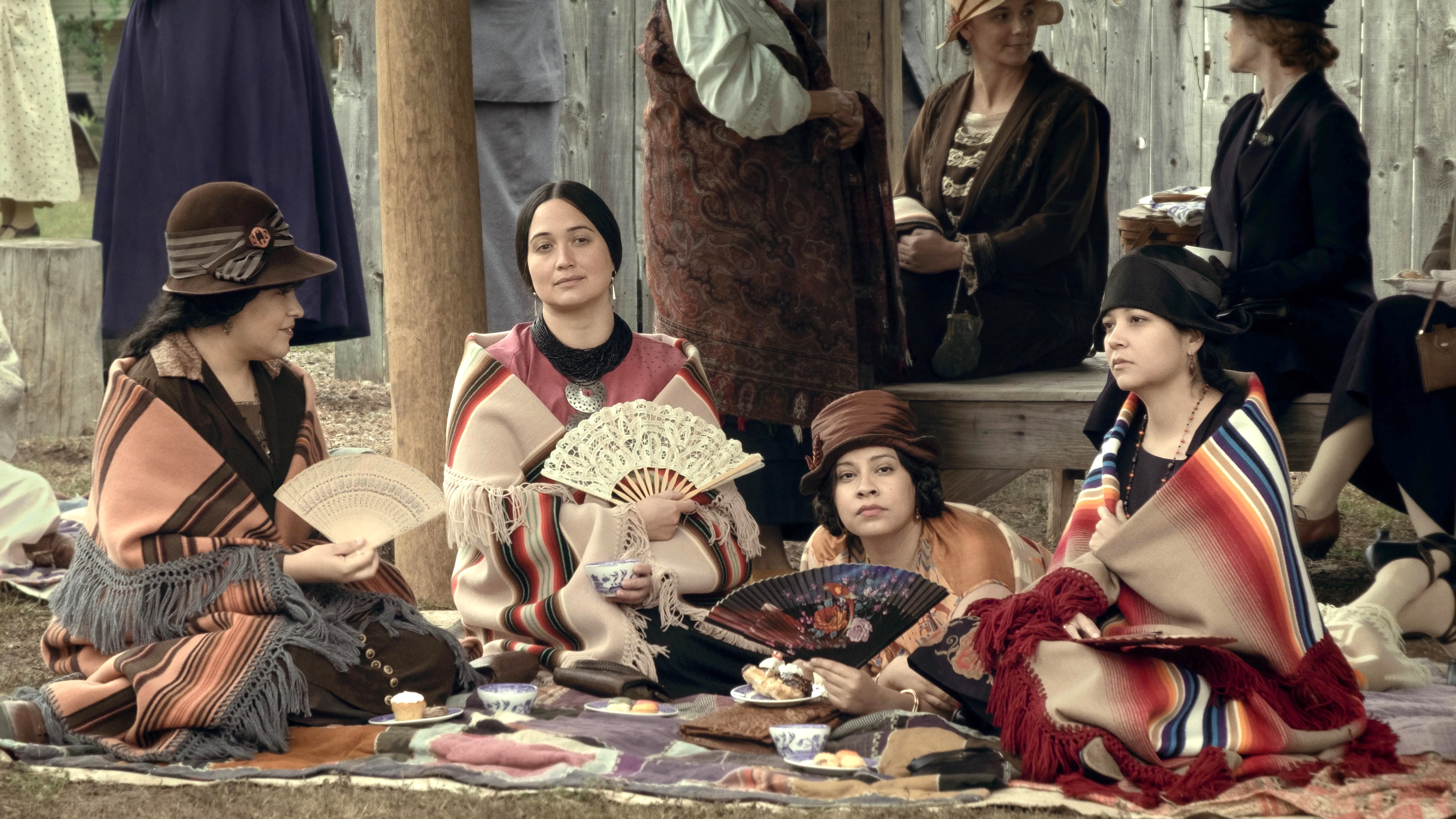
Film

Spider-Man: Across the Spider-Verse

04/06/23

Cineworld, Edinburgh

In 2018, Spider-Man: Into the Spider-Verse caught a lot of people napping. At that time, the Marvel Universe pretty much dominated the public movie-going imagination and here was something completely unexpected: Lord and Miller’s animated extravaganza – which had the temerity to take on the big guys. It was, quite literally, like nothing we’d seen before.

A lot has happened over the intervening years. Marvel are not quite the force they once were, with recent offerings (though still profitable) failing to reach the dizzy heights they’ve previously climbed to. And the weight of expectation for Across the Spider-Verse is palpable. Can this Sony Studios sequel really hope to put lightning into the bottle a second time?

Well, yes, as it turns out, it can. The credit sequence alone offers more imaginative filmmaking than we’re used to seeing in the average Marvel feature.

Sixteen months after the events of Into, Gwen Stacy (Hailee Steinfield) is having a hard time getting on with her life on Earth-65. After accidentally killing Peter Parker (Jake Johnson), she’s understandably depressed – and she can’t help but miss her old pal Miles Morales (Shameik Moore), who is inconveniently stranded in a completely different dimension. On Earth 1610, he’s still negotiating everyday life with his cop father, Jefferson (Brian Tyree Henry), and his nurse mother, Rio (Luna Lauren Vélez), whilst continuing his secret adventures as our friendly neighbourhood Spider-Man.

But when Gwen is visited by another couple of Spider-People, Miguel O’Hara (Oscar Isaac) and Jessica Drew (Issa Rae), they give her a handy bracelet that allows her to slip easily between dimensions. Time to give Miles a quick visit? Well, why not? Doing so couldn’t possible mess up the old twisty-turny-timey-wimey configurations… could it?

It would be pointless to try and convey more of the plot here because it’s complicated and mind-bending in the best possible sense. It’s to Lord and Miller’s credit (they wrote the script with Dave Callahan) that at no point do I feel bewildered by what’s happening onscreen. The true triumph, however, is the ever-changing beauty of the many different art techniques used to illustrate the story: from realist to impressionist; from pastel shades to psychedelia. Across the Spider-Verse is a mesmerising, eye-popping spectacle that feels like being plunged headlong into a fabulous maelstrom of sonic fury.

And it’s also more than that. The sprightly script keeps throwing snarky one-liners at me, the story counterpoints teenage angst with the minefield of parental responsibility and, with the arrival of The Spot (Jason Schwartzman), I’m offered a super-villain like none I’ve ever seen before. Best of all, I’ve rarely seen a film that feels more inclusive than this – that gleefully throws in a pregnant, afro-wearing, motorbike-riding Spider-Woman, just because it can.

My only real criticism? In a film with a running time of two hours and twenty minutes, surely the story arc could have reached some kind of standalone conclusion? When the ‘To Be Continued’ message hits the screen, I let out an audible groan. I can only hope I won’t have to wait another five years for part three, because I’d be happy to sit down and watch it right now. But hey, if my one negative comment is that I am left wanting more, that’s a good thing, surely?

Miss this one and weep. And folks, I know I say this a lot but please, please don’t wait for streaming. If ever a film was designed to be seen on the biggest screen possible, this is the one.

5 stars

Philip Caveney

Master Gardener

23/05/23

Cameo Cinema, Edinburgh

Paul Schrader is the man who wrote Taxi Driver, which became one of Martin Scorcese’s most celebrated films – but, as a director, Schrader’s career has been rather less spectacular. He prefers to concentrate on smaller stories that feature flawed protagonists who harbour dark secrets. Master Gardener, which forms a kind of loose trilogy with his earlier efforts, First Reformed and The Card Counter, seems to follow the same format.

The master gardener of the title is Narvel Roth (Joel Edgerton), a skilled horticulturalist who works on the extensive estate (clearly a former plantation) owned by Norma Haverhill (Sigourney Weaver), with whom he enjoys (if that’s the right word) the occasional sexual encounter, a process which seems to hark back to some kind of mistress/slave tradition. Narvel is nonplussed when Norma asks him to take on a new trainee, her great niece, Maya (Quintessa Swindell), who – Norma tells him – has been through ‘some issues’, and whom she has barely ever met.

Maya is a mixed race woman in her twenties and we soon discover that her foremost issue is that she’s a drug addict. She and Roth hit it off, despite the fact that he has a habit of distilling everything down to ponderous lectures about the nurture of plants – but we have already been tipped off, via the plethora of bizarre tattoos on Narvel’s torso, that he’s had a very different life before he became a gardener, one in which the swastika featured prominently. When Maya is attacked by a drug dealer, Roth takes it upon himself to be her protector – a move that incurs Norma’s anger.

There are several elements here that really don’t convince. For one thing, Maya must be the most wholesome looking drug addict in history, while her ‘beating up’ comes down to a polite cut on her bottom lip. Norma’s vitriolic reaction to Roth’s interest in the girl, on the other hand, seems totally overblown. And when the story heads along the all-too-familar trope of a tough white man becoming the saviour of a younger female, there’s an overpowering sense of ‘seen it all before’. Brief flashbacks to Roth’s earlier life (as a much more hirsute hired killer) kindle even more questions. Where did that encyclopaedic knowledge of horticulture come from in the first place? From the White Supremacists’ Handbook? And why is Maya so ready to forgive him for his previous excesses?

Some earnest twaddle about ‘new shoots’ and ‘the seeds of love growing like the seeds of hate’ fail to explain any of this and, by the time we arrive at the (again faintly unbelievable) conclusion, I’m starting to feel relieved that this is a free Picturehouse screening and that I haven’t actually had to pay for a ticket to see this movie.

Schrader has quite a history in cinema and it would be unfair to dismiss him on the strength of one film, but he can (and has) made much better ones than this.

2.8 stars

Philip Caveney

Beau Is Afraid

21/05/23

Cineworld, Edinburgh

Beau would appear to have every reason to be afraid.

When we first encounter Beau (Joaquin Phoenix), he’s living in a run-down flat in the heart of an American city that appears to have been set-dressed by Hieronymus Bosch. There are rotting bodies lying in the street, vicious fights are breaking out on every corner and he can’t even visit the convenience store without being pursued by a naked man who wants to stab him. His ever-smiling therapist (Stephen McKinley) tells him that it’s all the result of anxiety and makes sure he’s topped up with as many unpronounceable drugs as he can swallow – but he must be sure to take them with WATER!

A long-planned and somewhat overdue visit to his domineering mother, Mona (Patti Lupon), is the catalyst for a paranoiac sequence of unforeseen events, that put Beau into the hands of seemingly friendly couple, Grace (Amy Ryan) and Roger (Nathan Lane). But once ensconced in their home in the country, he soon realises that everything there is not as cosy as it seems. Why does the couple’s teenage daughter, Toni (Kylie Rogers), appear to hate him? And what’s the story with Jeeves (Denis Ménochet), the deranged army veteran who lives in a caravan in the garden? Why does he look at Beau in that sullen, threatening manner? The entire film plays like an endlessly protracted nightmare from which its lead character cannot awaken and though Beau still strives to make that all-important visit to his Mom, everything he does is destined to go horribly, catastrophically wrong…

Ari Aster is an interesting director, who excels at amping up an audience’s anxiety levels and, in the process, creating genuinely terrifying scenarios – but I felt his two previous features, Hereditary and Midsommar, both careered out of control in their final stretches and Beau Is Afraid suffers from the same complaint. While there are many memorable scenes here and a degree of invention that puts Aster amongst the forefront of contemporary filmmakers (check out the lengthy sequence where Beau wanders through a series of gorgeous animated landscapes), there’s still the conviction that he’s not quite as in control of his own storytelling as he needs to be.

With a bladder-straining running time of nearly three hours, the film’s conclusion feels needlessly protracted and there are some sections here – particularly a lengthy oedipal confrontation with his mother – that could probably have been edited out to make a tighter, more coherent movie.

Make no mistake, this is still a recommendation, because much of what’s on display here is absolutely dazzling. But you really can have too much of a good thing.

4.2 stars

Philip Caveney
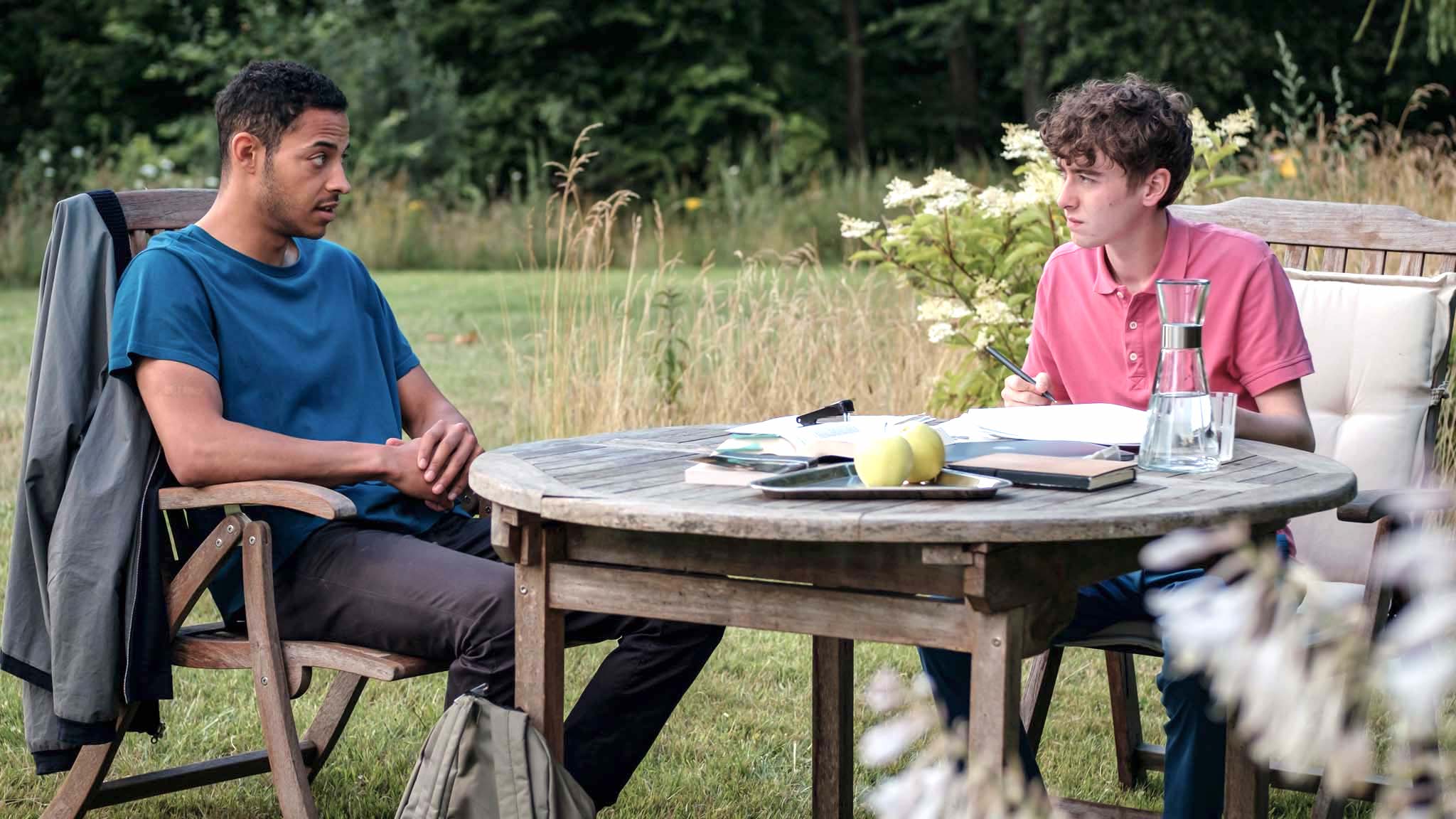
Air

12/05/23

Amazon Prime

After a brief and unspectacular appearance at UK cinemas, Air moves swiftly onto streaming and is now available on Amazon Prime. It’s hard to understand what attracted Ben Affleck to this story in the first place. It’s essentially an expensive puff-piece for Nike – a film that conveniently ignores the company’s dubious track record of sweatshops and child labour and, instead, offers a story about one man’s ‘heroic’ gamble to launch a new product.

It’s 1984 and, while Nike are doing excellent business in the running shoe stakes, their basketball division is trailing behind Adidas and Converse. The company’s resident talent scout, Sonny Vaccaro (Matt Damon), is keen to find a young basketball star to help boost sales, but company CEO, Phil Knight (Ben Affleck), can only find a measly $250k for him to spend on the project – for which he’s expected to engage the services of three or four players.

But Vaccaro decides instead to spend the entire amount on one rising star, Michael Jordan – and, what’s more, to design a shoe based around the young player’s identity: the Air Jordan. But how can he convince the man not to sign with one of Nike’s powerful competitors? Vaccaro directs his pitch to Jordan’s influential mother, Deloris (Viola Davis), sensing that she’s the real power behind the throne.

Directed by Affleck and written by Alex Convery, Air captures the look and feel of the early 80s, with plenty of bad haircuts, nasty brown furniture and some truly horrible fashions. It also offers a propulsive soundtrack of MOR hits – Springsteen, ZZ Top… what could possibly go wrong? Well, plenty as it turns out. The main problem is that Air sets itself up as an edgy game of chance. Will Vaccaro’s risky gamble actually pay off? Or will it go tumbling down in flames? The problem, of course, is that we all know the outcome from the word go, a fact that effectively robs the story of any sense of jeopardy it might have hoped for.

The overriding result is that it’s very hard to care about what happens.

It’s also galling to see a true story that revolves around a young, Black sportsman peopled almost entirely by prosperous white males. These unlikeable figures spend most of their time hurling insults at each other, especially powerful sports agent, David Falk (Chris Messina). Oddly, Michael Jordan himself appears only as a voiceless figure with his back turned to the camera (apart from a brief post-credits sequence with Jordan eulogising his mother in a speech). This only serves to emphasise how little authority he has in a business deal that will earn him – and Nike – billions of dollars in revenue.

And no amount of placatory strap lines about charity donations and sports foundations can lessen the fact that this is a rather sordid story about rampant capitalism, which comes cunningly disguised as a tale of maverick heroism.

Jog on, Nike.

2. 4 stars

Philip Caveney
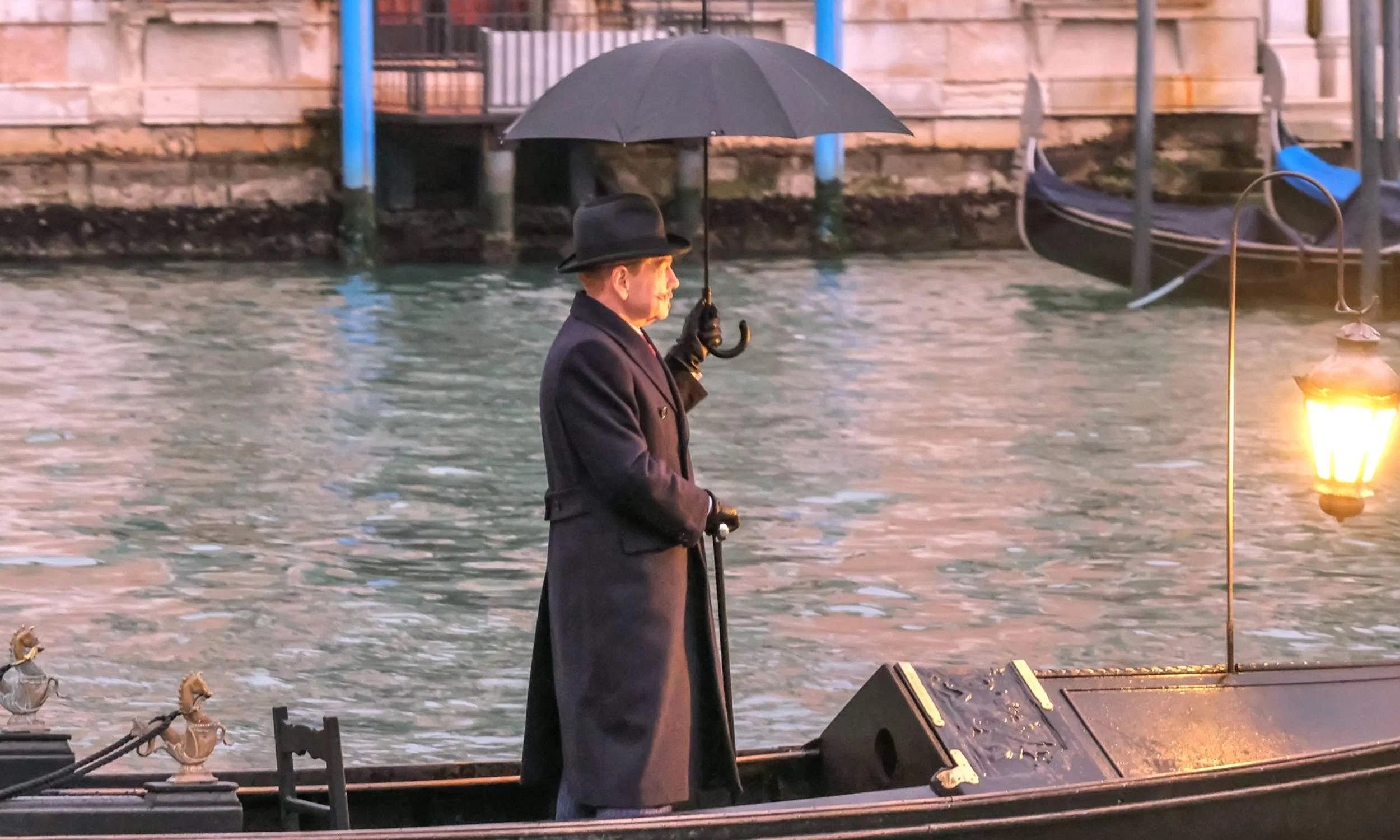
Are You There God? It’s Me, Margaret

10/05/23

Cineworld, Edinburgh

I was an avid reader as a child, so of course I devoured Judy Blume’s novels. Are You There, God? It’s Me, Margaret was the first one I chanced upon in our village library, its long title drawing my eye. I’d never seen a book with a name like that before, and – I soon realised as I scanned the blurb – I’d never read one that dealt with such subjects either. Periods, bras and… God?

I wasn’t especially interested in the God stuff. I don’t think that has as much resonance here in Britain as it does in Blume’s native USA; we’re a much more secular place, and there are loads of kids in every classroom who don’t know or care what religion they are. Periods, however, and breast acquisition: they were just as relevant in my Welsh primary school as in Margaret’s New Jersey one.

Blume’s novels work because she doesn’t trivialise kids’ experiences. Sure, menstruation and supportive underwear soon lose their allure and become mundane once you’ve got them, but when you’re young and they’re ahead of you, their mystery looms large.

Writer/director Kelly Fremon Craig’s adaptation is faithful to its source material, and bound to be a smash with the novel’s ninety-million readers. It’s a simple tale: the eponymous Margaret (Abby Ryder Fortson) is eleven years old and living her best life. She’s just enjoyed a fun time at summer camp, and is excited to be returning home to her family in New York – her mom, Barbara (Rachel McAdams), her dad, Herb (Benny Safdie), and her Grandma, Sylvia (Kathy Bates). As far as Margaret and Sylvia are concerned, things are fine exactly the way they are – but Barbara and Herb have other ideas. They want to move out of their cramped apartment to a house in the suburbs, where Herb has found a better job, and Barbara can try out being a stay-at-home-mom.

At first, life in New Jersey seems okay. Precocious pre-teen Nancy (whose verve and sparkle is marvellously captured by Elle Graham) makes a beeline for Margaret, and invites her to join her friendship group. Unlike Margaret’s old friends, these girls are obsessed with growing up, and she is soon initiated into a world of body-consciousness and crushes, not to mention fashion rules. “No socks!” says Nancy, “And you have to wear a bra!”

Margaret follows obediently, although she’s not entirely on board. She’s still trying to figure out who she is. Herb is Jewish and Barbara is Christian, and they’ve never taken Margaret to any kind of church, telling her she can choose her own path when she’s old enough. So when her new teacher suggests she might research different religions for her sixth-grade project, Margaret is intrigued. Maybe this way she’ll find some of the answers she needs. And so she embarks on her quest, visiting the synagogue with Sylvia, a Presbyterian church with her pal, Janie (Amari Alexis Price), a Methodist church with Nancy and a Catholic confessional with her classmate, Laura (Isol Young). But God proves elusive, and Margaret eventually realises there are some problems she needs to sort out on her own…

This is a delightful movie, the characterisations bold but convincing, avoiding easy caricature. Fortson is perfectly cast as Margaret, imbuing her with just the right amount of self-consciousness and uncertainty. Bates shines as the slightly overbearing Sylvia, entirely redeemed by her devotion to her granddaughter, while McAdams exudes kindness and sensitivity. It’s a slight tale, but it’s beautifully told, and I’m taken right back to my own childhood. As a piece of nostalgia, it absolutely works, but I’m sure its appeal is wider than that. Today’s adolescents are bound to love it too.

4. 4 stars

Susan Singfield

The Unlikely Pilgrimage Of Harold Fry

06/05/23

Cineworld, Edinburgh

Adapted from her own novel by Rachel Joyce, The Unlikely Pilgrimage of Harold Fry is a curious confection, occasionally poignant and life-affirming, but just as often stepping into quasi-religious territory and offering moments that can most charitably be described as ‘twee’. And it must also be said that the most pertinent word in the title is ‘Unlikely’.

Harold (Jim Broadbent ) and Maureen (Penelope Wilton) are living a life of quiet desperation somewhere in Devon, when a letter arrives from Harold’s old friend, Queenie, who is now in a hospice in Berwick-on-Tweed, approaching the end of her life. It’s clear from Maureen’s reaction that there’s something about her husband’s relationship with this woman that disturbs her, but she stays quiet as he pens a hasty reply to Queenie and then sets off to post his letter. But a chance conversation with a young assistant in the garage, where Harold stops to buy milk, prompts him to make a decision. He will deliver his reply by hand – and he will walk all the way there, a distance of nearly five hundred miles, with no special equipment and no preparation.

At various points along the way, Harold encounters a series of strangers, who in various ways help him to accomplish his self-imposed pilgrimage, but none of these characters is given enough to do to make this anything other than a two-hander – and every step of the way, Harold is haunted by memories of the awful tragedy that changed his life forever…

Watching this is a strangely unsettling experience. One moment I’m thinking that it’s doing something really clever, the next I’m close to tears as a genuinely affecting moment tugs at my heartstrings – but then, all too often, I’m wincing as a really banal revelation comes leaping out of left field to slap me right in the kisser. Both Broadbent and Wilton are seasoned performers, and do the best they can with the material, but I can’t help feeling sorry for Wilton, who – as Maureen – is reduced to spending the first half of this film sulking at home while her husband strides off on what feels like a capricious whim.

The uneven tone coupled with the glacial pace conspire to make the film feel longer than its moderate running time. I haven’t read the source novel, so I don’t know how faithful an adaptation this is but, at the end of the day, there’s something here that doesn’t quite come off. File this one under S for ‘Should-Have-Been-Better’.

2.8 stars

Philip Caveney
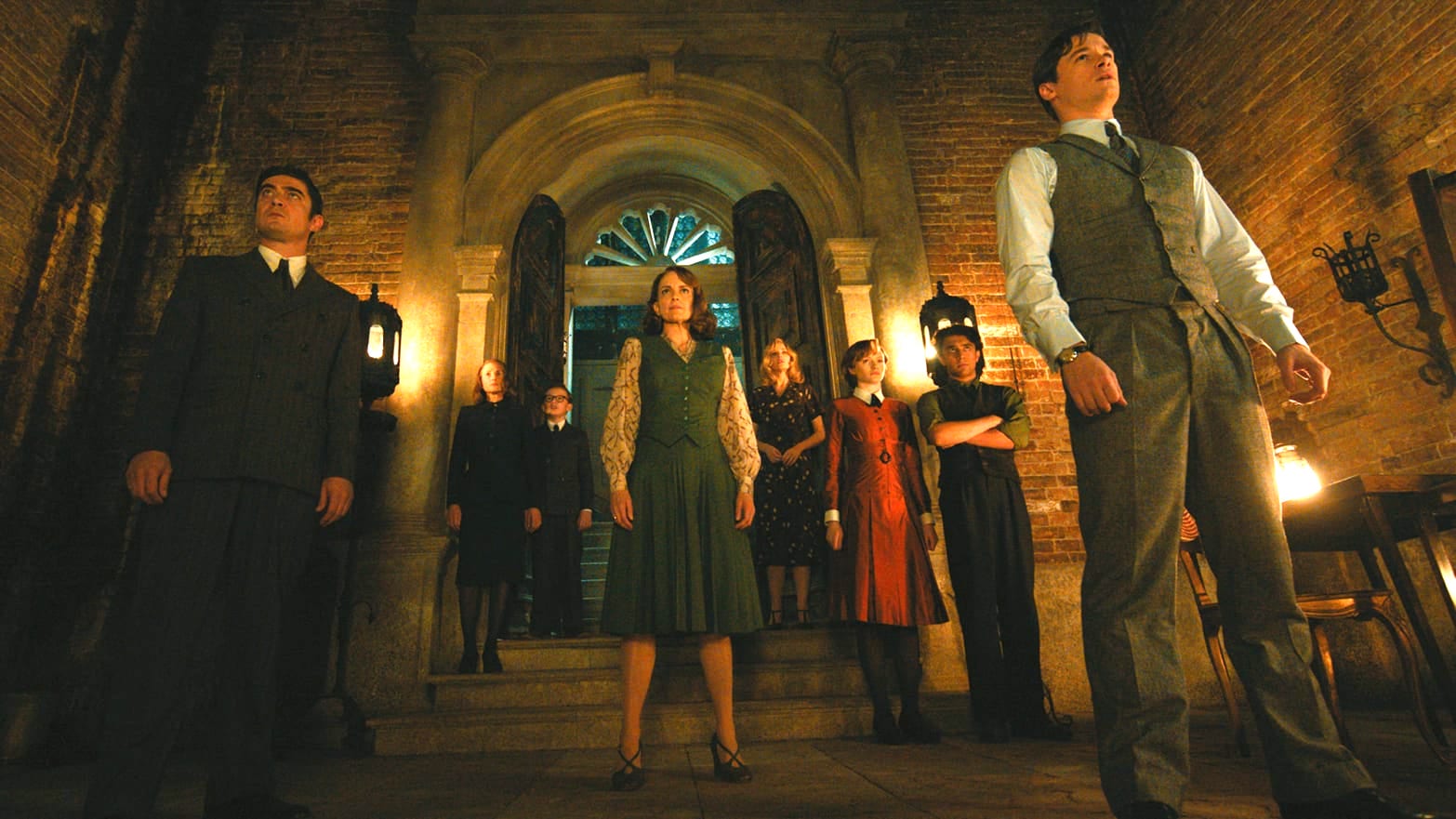
Guardians of the Galaxy: Volume 3

03/05/23

Cineworld, Edinburgh

Marvel Studios have had a lean time of it lately, with audiences and critics alike underwhelmed by their offerings, even if they do continue to generate huge profits. From their many properties, only two have continued to hold any allure for me: Spider-Man and Guardians of the Galaxy, mostly by virtue of the fact that neither of them takes itself too seriously.

Of course, since the previous GOTG, a lot of water has gone under the proverbial bridge. Writer/director James Gunn has been cancelled, sacked by Marvel and then installed at DC films, where he’s risen through the ranks like a meteor. He’s finally back at Marvel as a revered guest to helm the third (and allegedly final) instalment of the franchise he created.

But the fact that Volume 3 has a running time of two-and-a-half hours gives me cause for suspicion. Is it going to go all earnest on us? Well, yes and no.

When we hook up with The Guardians, they are struggling to get on with their everyday lives in a place called Knowhere – a quirky new colony they’ve set up. Peter Quill (Chris Pratt) is mourning the death of Gamora (Zoe Saldana), who Marvel fans will remember was one of the many characters snapped out of existence by Thanos in Avengers: Endgame. A version of her still exists, mind you, but she has no memory of her previous life and is now a Ravager under the command of Stakar Ogord (Sylvester Stallone, who appears to be cruising through his role on autopilot). Gamora has no memory of the fact that she and Quill were once lovers, which is… awkward to say the least.

Volume 3 devotes a large part of its running time to an origin story for the team’s most enigmatic member, Rocket (voiced by Bradley Cooper), and for me – against all expectations – these are the scenes that have the most impact, effectively adding heartbreak to a story that previously relied more on its comedy chops. There’s still plenty of the latter in evidence, especially in the bickering between Mantis (Pom Klementieff) and the endearingly dim-witted Drax (Dave Bautista). Meanwhile, Nebula (Karen Gillan) seems to have beef with just about everybody she encounters, which can get a bit wearing.

But the Guardians’ everyday life is rudely disrupted by the arrival of a remarkably buff Will Poulter as genetically-engineered golden boy, Adam Warlock. He’s been sent by megalomaniac geneticist, The High Evolutionary (Chuckwudi Iwuji) to collect Rocket (with whom The High Ev has an old score to settle). Pretty soon, there’s a major battle going on.

While I appreciate this is a comic book movie and there have to be some large scale punch-ups, I surely can’t be the only viewer who’s getting a little tired of watching spandex-clad characters being repeatedly smashed through brick walls, causing multiple explosions as they go? Sadly there’s an awful lot of that going on, and another issue for me is that, as the story progresses and the Guardians get split up, I’m not always sure where said punch-ups are taking place at any given time. Indeed, there’s so much fighting going on that, even with that portentous running time, the film sometimes feels curiously over-stuffed.

I know I’m fond of using the curate’s egg analogy but it’s never felt more appropriate than it does for Volume 3. Yes, there’s plenty to enjoy here; I won’t argue the point. But there are also some extended action set-pieces that have me wishing for access to a fast-forward button. Maybe it’s just me. Perhaps there are people out there who want more of that and less of anything new. I don’t know. Die hard Guardians fans will probably want to sit through till the bitter end for the by now obligatory post-credit sequences, the first of which is slightly baffling, while the second can only have significance for the kind of people who would choose GOTG as a specialist subject on Mastermind. (I confess I had to Google it. It helps if you’ve seen the Guardians Holiday Special on Disney + – apparently.)

Despite my grumpiness, I like a lot of this – but not quite enough of it to merit a four-star review. And a final caption announcing that ‘The Star-Lord Will Return’ does not exactly fill me with anticipation. Maybe that’s enough Guardians for one lifetime.

3. 8 stars

Philip Caveney
Polite Society

30/04/23

Cineworld, Edinburgh

Sixteen-year-old Ria (Priya Kansara) and her older sister, Lena (Ritu Arya), have always had big plans: Ria will be a stuntwoman, and Lena an artist. But, while Ria remains committed to a kickass future, Lena’s given up. She’s dropped out of art school, and spends her days lying listlessly in her room. Then, at an Eid ceremony, Lena meets Salim (Akshay Khanna) and she’s smitten. He’s rich, handsome, kind and devoted – what’s not to love? Before long, the couple are engaged.

Ria is distraught: Lena is her role model. If Lena’s dreams can be so easily derailed, what does that say about her own chances? What’s more, there’s something decidedly fishy about Salim. Surely sabotaging the wedding is the right thing to do…

Written and directed by Nida Manzoor, Polite Society is a chaotic delight. A mash-up of martial arts, romcom and coming-of-age genres, it’s engaging, cartoonish, funny and exciting. It’s also a warm-hearted and affectionate portrayal of the British-Pakistani community.

Everything here is dialled up to eleven. When Ria and Lena fight, they really fight: heads crack, blood pours, doors and mirrors break. But the extreme violence, bright colours and melodramatic storyline work well to symbolise the heightened emotions of adolescence, where everything feels like the end of the world.

It’s a densely-packed piece, with some more nuanced details too. I like the fact that we never discover whether Lena actually is ‘good enough’ at art: she clearly has some talent, but maybe she’s right to drop out of art school. Not everyone can realise their early promise; not everyone retains the same ambitions as they age. While Ria’s still in her Matilda-When-I-Grow-Up phase, Lena has moved on… I also like the depiction of the girls’ kind-hearted parents (Shobu Kapoor and Jeff Mirza), indulging their daughters’ aspirations, but much happier when Lena decides to get married. It feels believable. Raheela (Nimra Bucha) makes a wonderfully chilling villain, while Seraphina Beh and Ella Bruccoleri (as Ria’s schoolfriends, Clara and Alba) are charming as the comic relief.

Polite Society is a delicious modern fairy-tale: Prince Charming is put firmly in his place, and the damsel takes charge of her own destiny. We’re left believing that Ria really might actually leap and kick her way into her fantasy future.

4.1 stars

Susan Singfield

Good: NT Live

28/04/23

Cameo Cinema, Edinburgh

We miss the first screening of Good due to health issues and are resigned to our fate, but happily The Cameo Cinema offers this encore screening just as we’re scratching our heads and wondering what we should see tonight.

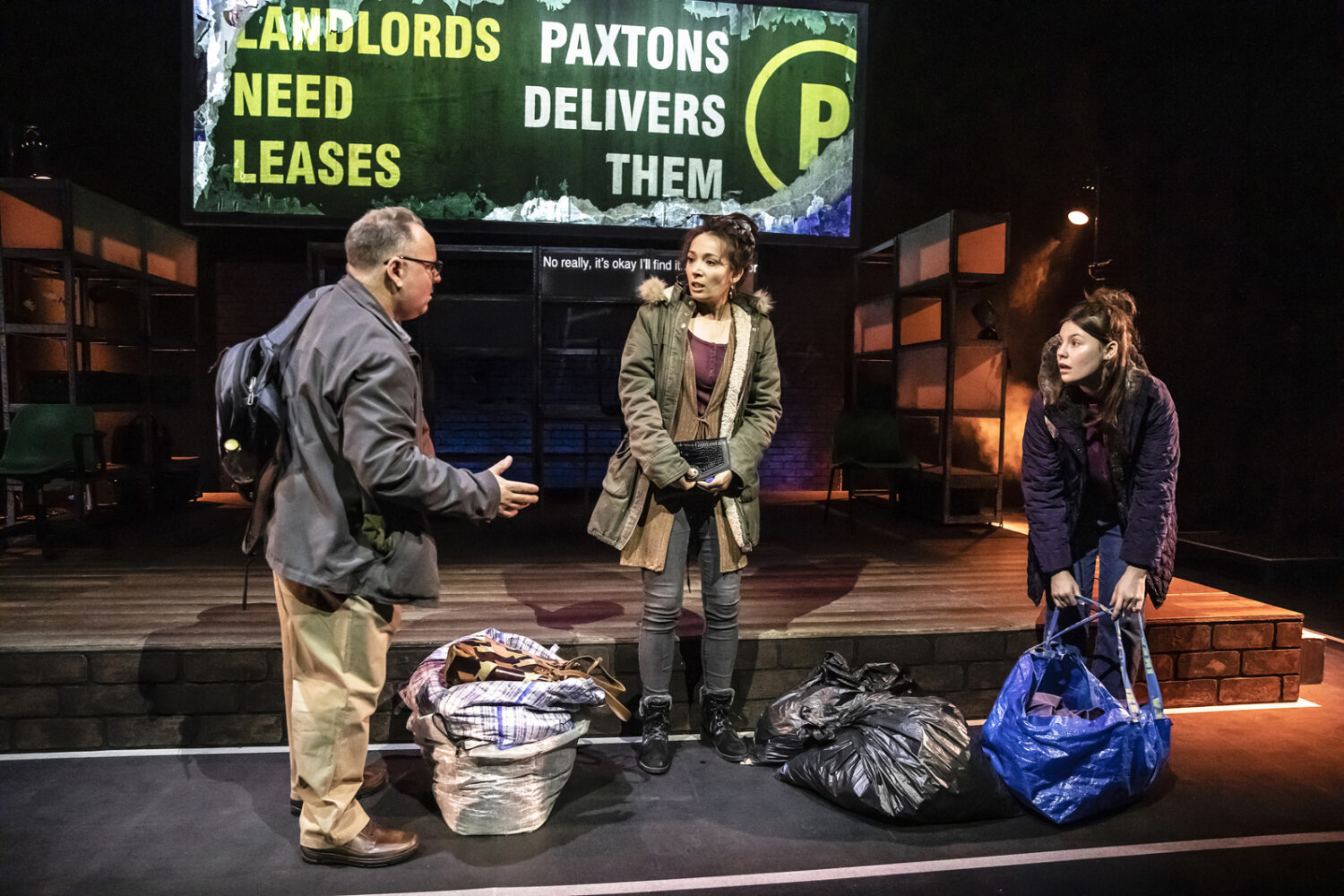
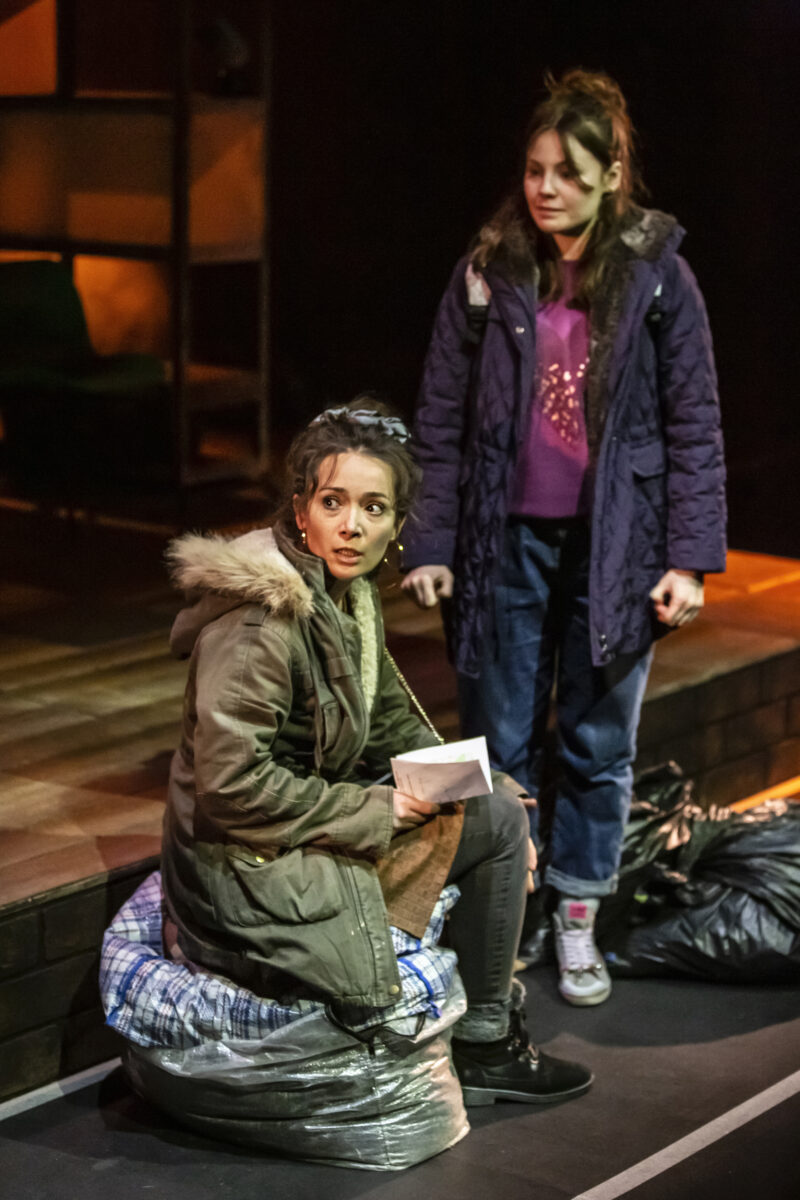
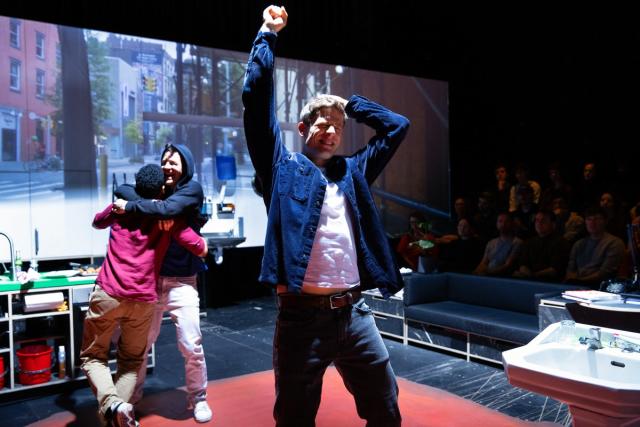
Written by the comparatively little known C P Taylor (who tragically died soon after Good had its London premiere in 1981) this excoriating piece of theatre feels weirdly askew from the opening scene. Why has set designer, Vicki Mortimer opted to use so little of the Harold Pinter Theatre’s stage, confining the action to a narrow, wedge shaped, performance space, which only really opens up at the play’s startling conclusion?

Well, it’s this confined quality which emphasises the chilling claustrophobia of the piece, the story of a man consumed by his own hubris and his willingness to repeatedly spin his own heinous crimes as the actions of a ‘good’ person.

The man in question is Halder (David Tennant), a German literary professor whose published works catch the eyes of important people in the rising Nazi party, and who is invited to join their swelling ranks. But there’s an obvious problem with this suggestion: Halder’s best friend, psychiatrist Maurice (Elliot Levey), is Jewish and doesn’t see why he should be expected to hide the fact. Meanwhile, Halder is struggling to maintain a marriage to his hapless wife, Helen (Sharon Small), whilst looking after his mother, who is stricken by dementia – and he’s also starting an affair with one of his students, Anne. How is he going to square all these issues to his own satisfaction whilst proudly taking his place in the ranks of the SS? And at what point will he decide that he’s being asked to go too far?

Tennant, making his long awaited return to the West End, is incredibly assured in the complex role of Halder, switching from slyly funny to chillingly mercenary with aplomb. At one point, he even sings and dances with absolute authority, personifying the charmer with a steely inner self. Levy too is excellent, both as Maurice and in the other roles he inhabit, but for me it’s Small who really commands the stage, flicking effortlessly between her three female characters – and the persona of an alpha male SS commandant – simply by changing her voice and her posture. It’s a superbly nuanced performance that ensures I’m always fully aware of who she is embodying at any given moment.

Essentially a three-hander (although the play does feature other performers in its final stages), Good is an ambitious and original piece of theatre that makes me wonder what Taylor might have achieved if only he’d lived longer.

4 stars

Philip Caveney

How To Blow Up a Pipeline

21/04/23

Cineworld, Edinburgh

Make no mistake, How To Blow Up a Pipeline is a polemic – a powerful call to environmental action, so naked I occasionally find myself wondering how the film’s makers ever managed to sneak this onto the screens of a multiplex. Perhaps it’s because it comes cunningly disguised an a nail-biting thriller, constantly keeping the viewer on edge as a bunch of ramshackle eco warriors tinker clumsily with potentially deadly explosives as they draw up their plans to… well, the clue’s in the title.

The protagonists of the story each have their own reasons for hating the oil industry so see their actions not as terrorism, but as self defence. Michael (Forrest Goodluck) is a native Americans, who’s endured years of being pushed around by the government and has grown tired of pursuing more gentle approaches to protest. Theo (Sasha Lane) is suffering from incurable leukaemia, caused by living in proximity to an oil refinery, while her partner, Alisha (Jayme Lawson) is prepared to go to any lengths to help Theo achieve retribution. Good ol’ boy, Dwayne (Jake Weary), has seen the land his family has farmed for generations stolen by the oil industry with no compensation offered, while Shawn (Marcus Scribner) and Xochitl (Ariela Barer) are grimly determined to make a change at any cost.

And what of young couple, Rowan (Kristine Froseth) and Logan (Lucas Gage, looking uncannily like a young Hugh Grant)? Who is Rowan covertly sending text messages to? And does Logan even know she’s doing it?

Co-written by Barer and based on a book by Andreas Malm, the film is tautly directed by Daniel Goldhaber and has a devastating habit of cutting away from scenes of high anxiety to insightful flashbacks, depicting each characters’ first steps on their journey to where they are today. And while you sometimes think you know exactly where all this is headed, there’s a cleverly assembled final twist that few viewers will see coming.

The film’s ecological message comes across loud and clear and it’s hard to argue with the grit and determination of these disparate characters who come together to pursue a common goal. The ensemble cast all deliver strong performances and the propulsive narrative of the story has me thoroughly gripped, right up to its final frames.

Does a pipeline suffer its titular fate? You’ll have to watch the film to find out.

4 stars

Philip Caveney