Film

Indiana Jones and the Dial of Destiny

28/06/23

Cineworld, Edinburgh

Steven Spielberg’s Raiders of the Lost Ark (1981) was a near-perfect movie, a fast-paced action adventure that harked back to the classic serials of the 1940s. It made a huge profit off a comparatively low budget, so – inevitably – there were going to be sequels. Indiana Jones and the Temple of Doom (1984) and Indiana Jones and the Last Crusade (1989) may not have had the perfection of their whip-tight progenitor, but were decent enough efforts in their own right. And that’s probably where the whole enterprise should have ended. 2008’s The Kingdom of the Crystal Skull was – to put it mildly – a major miscalculation, despite being helmed by the usually dependable Spielberg. For a very long time, there were vague rumours of a fifth outing which remained exactly that. Rumours.

After all, Harrison Ford was getting a bit long in the tooth, so… maybe not?

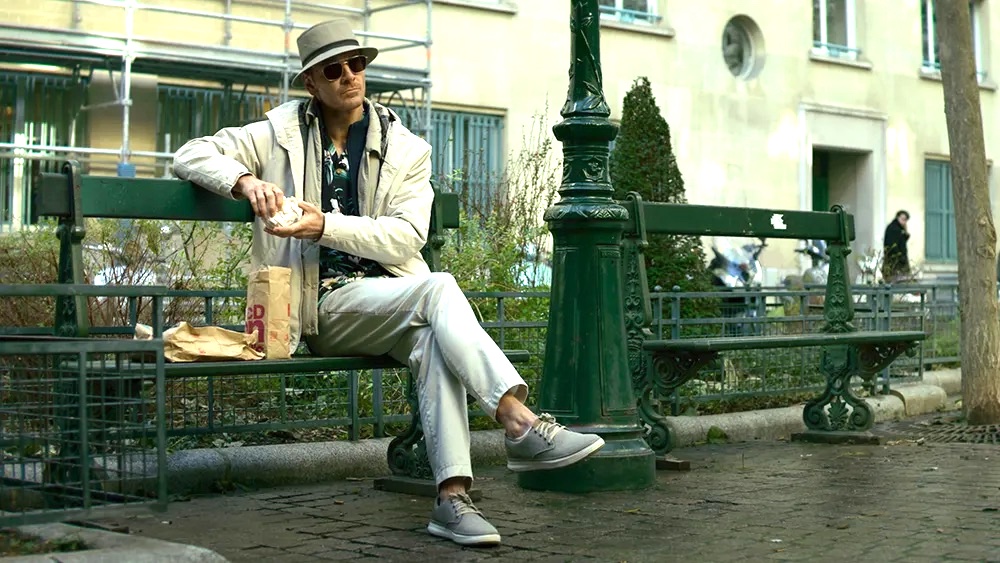
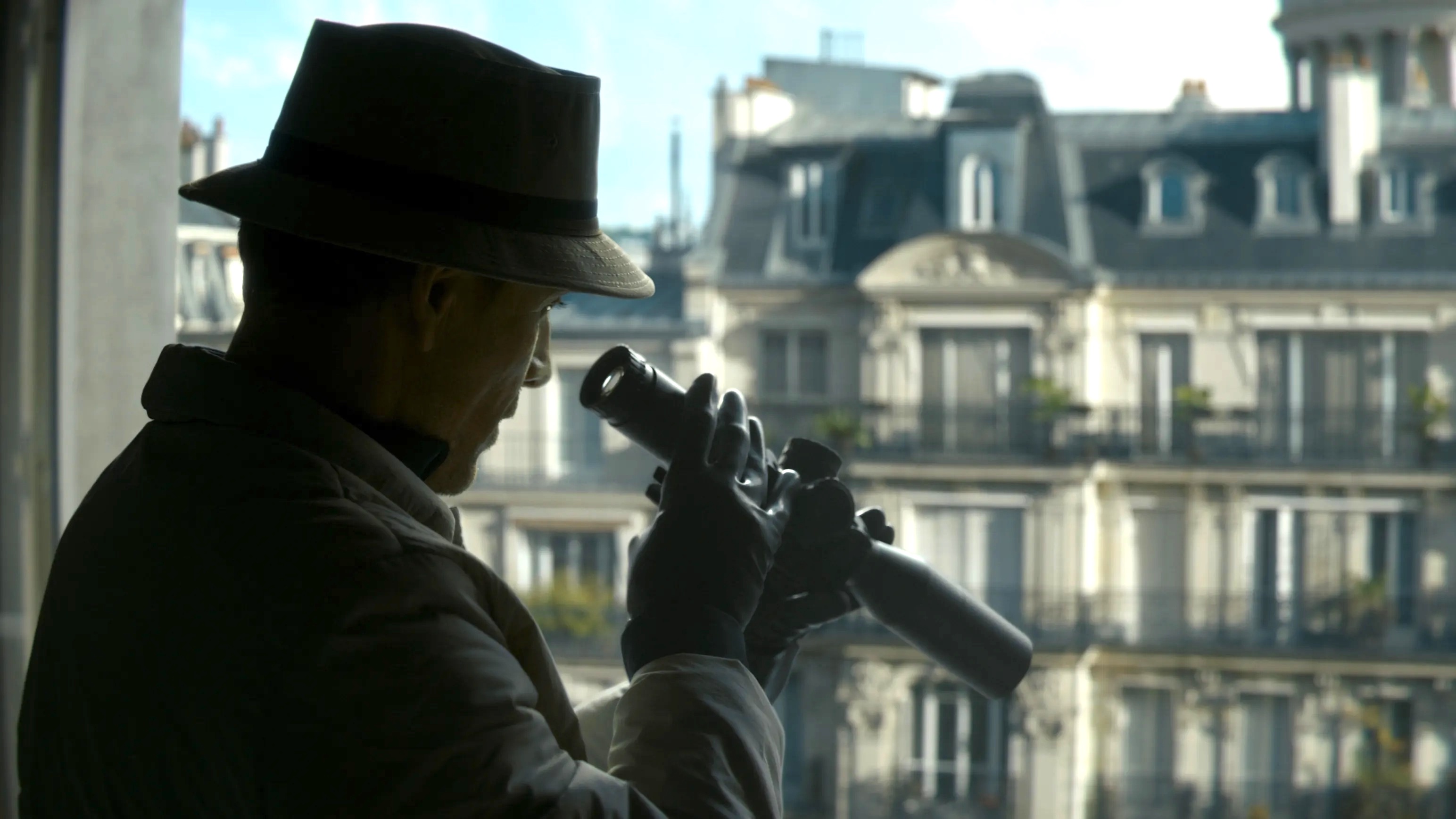
But now, directed by James Mangold, and written (mostly) by Jez Butterworth and his brother John Henry, everyone’s favourite archeologist is back in the game. When we reunite with him it’s via a flashback. It’s 1944, the Germans are rapidly losing the war and, thanks to the wonders of de-aging software, Indy looks like his former self. He’s working alongside his old pal Basil Shaw (Toby Jones) and the two of them are attempting to rescue an ancient antiquity, the Lance of Longinus, from a Nazi train packed with loot. Indy has just been taken prisoner, but needless to say, he’s soon free and wandering the length of the train, looking for the artefact. Also present is Dr Voller (the always excellent Mads Mikkelson), who has already decided the lance is a fake but has discovered instead, on the same train, the titular device (or at least half of it), built by Archimedes and capable of… well, that would be telling. A lengthy action set-piece ensues and it’s pretty good, serving as a promising opener.

But then we move to 1969. Mankind has just landed on the moon and Dr Jones is now earning a crust as a University lecturer, though his students seem much more interested in listening to rock music and smoking dope. Retirement beckons and it’s made very clear that Indy has lost his mojo. Then along comes his Goddaughter, Helena (Phoebe Waller-Bridge), who is also very interested in the Dial of Destiny, but mostly because she plans to sell it to the highest bidder. To give her fair credit, Waller-Bridge gives the franchise a much-needed update, and she’s good on the smart-arse wisecracks, but I’m not sure I quite buy her as an adrenalin-powered action hero. Then again, if I can accept an eighty-year-old male in the role, maybe anything is possible.

The bad guys soon come a-calling and, what do you know, they’re being led by Dr Voller, who has his own unthinkable plans for Archimedes’ invention and won’t hesitate to carry them out. Indy and Helena team up and a game of cat and mouse ensues with some protracted chases. A lengthy sequence featuring Ford on horseback (or at least, his stunt double) is perhaps the film’s standout, but the problem here is that there are just too many of these pursuits. A really complicated one featuring our heroes in a tuk tuk definitely overstays its welcome.

There are frequent nods to those earlier films – some of which work, others which feel meh – and there’s a surprisingly touching scene when Indy tells Helena about what happened to his son and why he and Marion Crane (Karen Allen) are no longer an item. John Rhys-Davies shows up once again as Sallah, but is given very little to do here and, naturally, Helena has a keen young assistant in the shape of Teddy (Ethan Isadore), who seems able to turn his hand to most things, including at one point piloting a plane. As you do.

With a running time over two-and-a-half hours, it’s to Dial of Destiny’s credit that it never really runs out of steam and, if the final conceit is hard to swallow, well, this is a series that’s known for it’s supernatural reveals. (Just don’t overthink the space-time continuum stuff because, on reflection, much of it really doesn’t add up.) I leave feeling that I’ve been suitably entertained but, before I’ve even made the short walk home, I’ve thought of at least half a dozen questions that remain maddeningly unanswered.

So, this is far from the disaster I anticipated but, when held up against that brilliant opening shot of Raiders, it’s frankly not in the same league. I can’t help feeling that, now it’s out in the world, this particular treasure chest should be triple-locked and left in a quiet place to gather dust.

3.8 stars

Philip Caveney
Asteroid City

25/06/23

Cineworld, Edinburgh

If you were ever looking for the film director equivalent of Marmite, Wes Anderson might just be your best bet. His detractors delight in pointing out that he always makes the same film, but that’s a ridiculous over-simplification. While I’d be the first to admit that his films do have an unmistakable look – that you can see one frame, taken at random from any one of his many features, and know instantly that it’s his work – we rarely make that complaint about artists who work with paint and canvas.

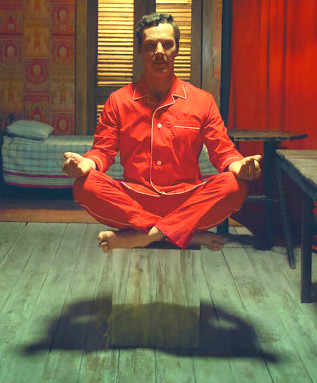
Asteroid City has all of the man’s familiar hallmarks: those sumptuous, vividly-coloured landscapes dotted with unlikely looking ramshackle buildings; a massive roster of A listers, all of them prepared to swallow their pride in return for delivering just a line or two of quirky dialogue; and that weird detachment from reality, those bizarre situations seemingly created to point up the artificiality of the whole undertaking. For me, these are the elements that confirm Anderson as a unique and brilliant filmmaker. But then, I’ve been a fan ever since Rushmore in 1998.

The film opens in stark black and white with an earnest narrator (played by Bryan Cranston) talking about the creation of a new play by hotshot writer, Conrad Earp (Edward Norton), and the play’s tortuous path to production – and then we cut to the full-colour, wide-screen film adaptation of the same story. War photographer Augie Steenbeck (Jason Schwartzman) arrives at the titular desert town with his son, Woodrow (Jake Ryan), who is one of five gifted children invited to attend a ceremony where one of them will be presented with a prize for their latest invention.

Woodrow and his three little sisters have some devastating news to deal with first, but their father seems far more interested in the presence of screen actor, Midge Campbell (Scarlett Johansson), who has her own gifted daughter, Dinah (Grace Edwards), in tow. It’s not long before Dinah and Woodrow begin to develop an interest in each other…

But this is about as far as any rational plot outline can take us. From this point, madness ensues in the form of a group of singing cowboys, the aforementioned weird childhood inventions and a WTF alien visitation. And, as the tale enfolds, we are treated to regular visits back to the monochrome world of the original theatrical version, where we see the actors in the film actually being the actors and learning to handle their roles, whilst commenting on the artificiality of the whole experience. Meta? Well yes, but clearly that’s the point.

If this sounds hard to get your head around, don’t despair, because the sparky script by Anderson and Roman Coppola keeps the pot bubbling happily away as the story unfolds. I find myself laughing at the wonderful absurdity of some of the situations – and is the director making a comment on cinema’s general inability to handle theatrical material with any sense of conviction?

It’s heartening to see that a sizeable audience has come out for this on a rainy Sunday afternoon and also to read that Asteroid City has enjoyed a bigger opening weekend than the latest Transformers movie. Perhaps a lot more people out there are acquiring a taste for Marmite.

4.6 stars

Philip Caveney
Greatest Days

18/06/23

Cineworld, Edinburgh

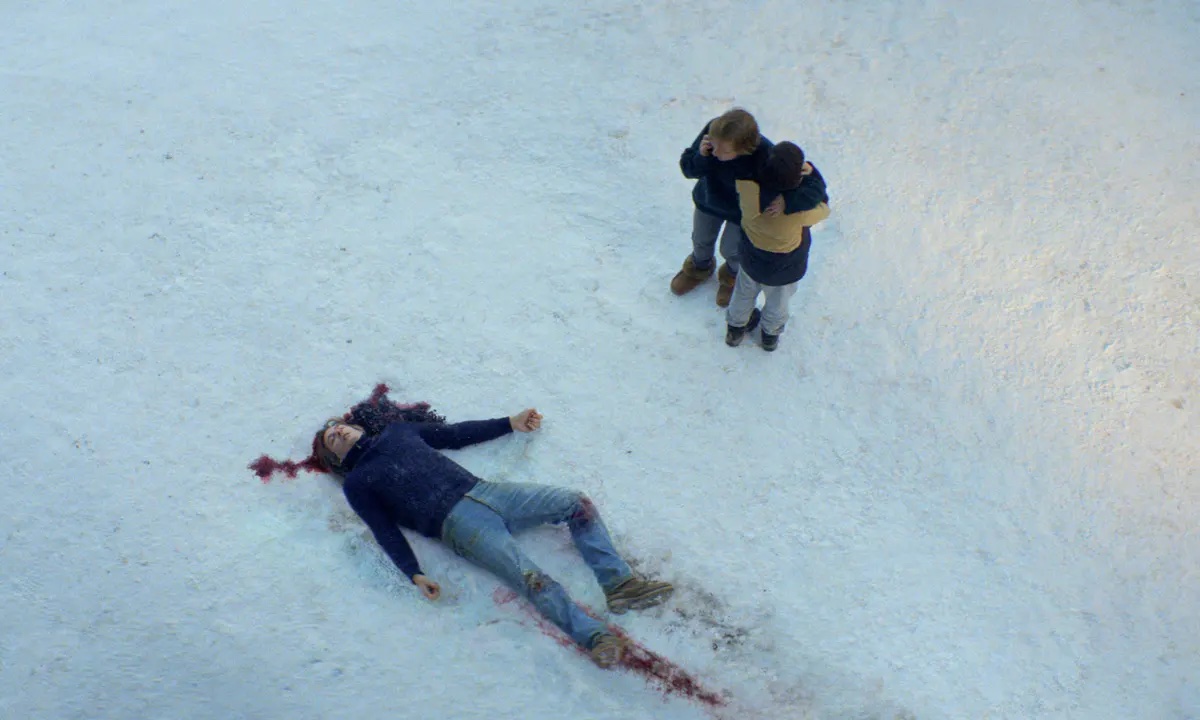
Back in the 1990s, when Take That took the world by storm, I was very anti-boyband. They’re still not really my thing (I’m no aficionado, but I tend to prefer bands that form organically and, you know, play their own instruments). Still, now that I’m a bit older and less tribal, I have to admit that TT did have some banging tunes (Rule the World and Shine are the best, to my mind), although I don’t think I’ll ever feel anything other than incredulous that The Samaritans actually had to set up a helpline for distressed fans when the group announced that they were splitting up. Like… what?

Greatest Days, a colour-by-numbers jukebox musical, leans into the deep emotional connections young followers attach to their oblivious heroes, mining Take That’s back catalogue to mixed effect. Teenager Rachel (Lara McDonnell) is obsessed. Things aren’t great at home – her mum and dad spend all their time arguing – so she retreats into a fantasy life, where ‘the boys’ help her out. An early dance routine, where the Take-That-Alikes pop out of kitchen cupboards to pass her utensils, lift her up to the overhead cupboards and stir her spaghetti hoops fills me with hope: it’s bold and theatrical and a lot of fun. (Sadly, it’s a technique that soon outstays its welcome: too many similar scenes follow, and it all starts to feel a bit overdone.) Her pals, Heather, Zoe, Claire and Debbie (Eliza Dobson, Nandi Sawyers-Hudson, Carragon Guest and Jessie Mae Alonzo), are all equally fanatical, and their friendship reaches its apotheosis the night that Debbie gets them all tickets to a gig in Manchester.

Fast forward twenty-five years. Rachel has grown up to be Aisling Bea (Heather, Zoe and Claire have morphed into Alice Lowe, Amaka Okafor and Jayde Adams respectively, while the adult Debbie is notably absent). Grown-up Rachel is a nurse, and still obsessed with the boys, forcing the kids on her ward to listen to what they perceive as her terrible music taste. She loves her job and her sweet-natured boyfriend, Jeff (Marc Wootten), but something is missing. When she wins a radio phone-in competition, she’s suddenly faced with the opportunity to put that right, to reconnect with the old gang and see their favourite band one last time, as they perform a reunion gig in Athens…

With such a lively, amiable cast and some gloriously OTT big numbers (neither boarding an easyJet flight nor travelling on a night bus have ever looked even a tenth as glamorous as they do here), there’s a lot to like about Greatest Days. However, it’s very uneven, as if writer Tim Firth and director Coky Giedroyc have thrown a match into a box of unlabelled fireworks, some of which prove spectacular and light up the sky (sorry, couldn’t resist), while others fizzle out like proverbial damp squibs. The revelation that the statues in the fountain are the boys, for example, should be a cheeky little wink of a moment, but instead is drawn out into a boring ten-minute montage of selfie-taking. The central premise seems a little overwrought too.

A pleasant – if ironically forgettable – trip down memory lane, Greatest Days probably isn’t going to relight anyone’s fire (I know, I’m doing it again) but, if you’re a fan of ‘the boys’, then you’ll probably enjoy it, so you’d better hot-foot it to the cinema before you run out of time.

3 stars

Susan Singfield

Chevalier

14/06/23

Cineworld, Edinburgh

Chevalier is the latest Hollywood film to cast light on an important Black historical figure, previously relegated to a footnote. It’s too little, too late of course, but at least it is a start…

Kelvin Harrison Jr plays the titular Chevalier, Joseph Bologne, a young Black prodigy. The illegitimate son of Georges de Bologne (Jim High), a wealthy plantation owner, and Nanon (Ronke Adekoluejo), an enslaved Senegalese woman, Joseph’s musical proficiency spurs his father to uproot him from Guadeloupe, dumping him in a posh Parisian conservatory, where his violin skills – and knowledge of courtly etiquette – can be honed. Fortunately for Joseph, he is as good with a foil as he is with a bow, and his ability to lunge and parry proves useful, both literally and metaphorically, as he tries to make his way in French society.

The mid-1700s were turbulent times in France, but – for much of this film’s duration – Joseph is closeted from the outside world. Instead, he is protected by his talents, roped in to tutor Marie Antoinette (Lucy Boynton), and fêted by the opera-loving toffs. It’s not all plain sailing, of course: there are repeated slights as well as some open hostility, but – for a while – things seem to be going his way. But when he throws his hat in the ring as a contender to lead the prestigious Paris Opéra, it soon becomes apparent that he has overstepped the mark, and that the establishment will not countenance what they perceive as his presumption. Time to take him down a peg or two, they decide, and a trio of divas, led by La Guimard (Minnie Driver), announce that they will never deign to take orders from a “mulatto”. Joseph appeals to his ally, Marie Antoinette, but she refuses to act. Perhaps he shouldn’t be surprised to learn that a monarch believes in birthright…

But perhaps the Queen shouldn’t be surprised to learn that a victim will want revenge, and that her rejection is the final straw. Nanon, newly freed and reunited with her son in France, has already made some headway educating him about the ways of the world. Now the scales have truly fallen from his eyes, and there is only one thing for it: the Chevalier must join the revolution.

Directed by Stephen Williams, this is a handsomely mounted film, Stefani Robinson’s script sticking largely to the facts, although there is a little artistic license taken with the central romance, with much made of the scant historical information available. Here, Joseph embarks on a doomed affair with Marie-Josephine (Samara Weaving), wife of the vengeful Marquise de Montalembert (Marton Csokas). I think this is a good idea as, although the characters are all well-drawn, and Harrison Jr is particularly compelling, there’s not an awful lot of plot here. This really is Chevalier‘s main problem: the middle third sags. Another strand would help enormously: I’d love to have learned more about Nanon, for example, and her journey from slave to free woman.

Nonetheless, this is a rewarding and informative film, which will hopefully help to restore Bologne’s name to the musical canon.

3.7 stars

Susan Singfield

The Flash

14/06/23

Cineworld, Edinburgh

If Marvel Studios are having a thin time of things lately, spare a thought for DC, who have long struggled to establish a coherent onscreen presence for their cohort of superheroes and seem to feel obliged to put Batman into just about every film they produce. Flash is no exception to this rule. As for its titular hero, the producers must have been tearing their hair out when Ezra Miller’s off-screen controversy threatened to blow the whole project out of the water before it even got off the starting blocks. But here it finally is and, largely by virtue of not taking itself too seriously, it’s more entertaining than most of the recent comic book-inspired movies I’ve recently witnessed.

Barry Allen/The Flash (Miller) is managing to strut his stuff around the city, but is mostly playing second fiddle to everybody’s favourite hero, Batman (Ben Affleck). An opening sequence where The Flash saves a series of babies falling from a collapsing building sets the stall out well. But like most superheroes, Barry is haunted by something dark in his past – in his case, the murder of his mother, Nora (Maribel Verdú), a crime for which Barry’s father is currently serving time in prison, though Barry is convinced of his innocence. When Barry discovers that, by running at a particular speed, he can time travel, he hits on the idea of going into the past and changing one small detail, in order to save his mother’s life.

Before you can mutter ‘space time continuum’ the deed is done and suddenly everything is weirdly different. Barry meets his younger, goofier self, reconnects with an entirely different Batman (played once again by Michael Keaton) and learns that Eric Stoltz is now the lead actor in Back To the Future, a clever running gag that’s used to great effect. More worryingly, Barry has now lost his powers and needs to rekindle them if he is ever going to get back to his own time.

And he really needs to because, thanks to Barry’s time-tinkering, General Zod (Michael Shannon) is back, intent on destroying the entire planet…

Look, set down like that, it does sound like utter piffle, but Flash manages to play it all with real panache, thanks to Andy Muschietti’s assured direction and a witty script by Christina Hodson and Joby Harold. It’s only in the final third, that – predictably – the film begins to sag under the weight of its own hubris. The usual apocalyptic punch-up ensues and I can’t help reflecting that, where Across the Spider-Verse managed to juggle literally hundreds of manifestations of its lead character without ever becoming muddled, Flash‘s attempt to do something similar with the character of Superman just becomes incomprehensible. Supergirl (Sasha Calle) is also a player in this film but, apart from supplying a kind of get-out clause when everything is beyond salvation, she remains disappointingly 2D.

Still, there’s a satisfying conclusion to it all and a likeable final joke to send me on my way with a smile on my face. And if you ever wondered what Nicholas Cage’s Superman would have looked like, had it ever got off the ground, here’s your chance to find out.

3.8 stars

Philip Caveney
Reality

11/06/23

Cameo Cinema, Edinburgh

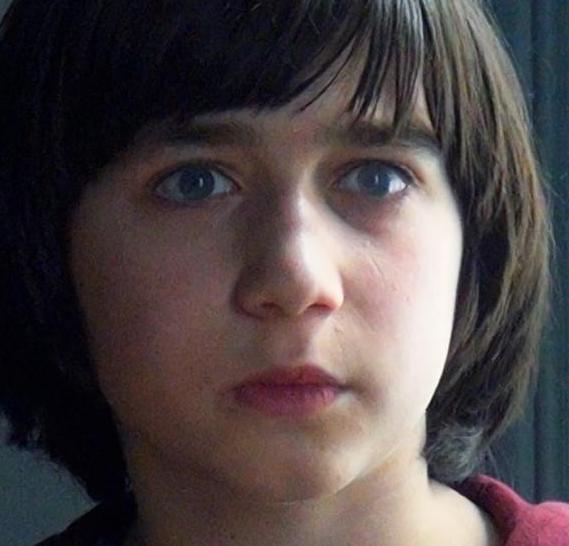
You may not be familiar with the name Reality Winner. And if you think it sounds like a nom de plume, invented for a would-be game-show participant, let me assure you that she’s a real person, who only recently finished serving a four year jail sentence for… well, here’s the thing. Some would say that she betrayed her own country. Others would argue that she went to jail for daring to expose something that really should have been in the public domain in the first place.

I know which camp I belong to.

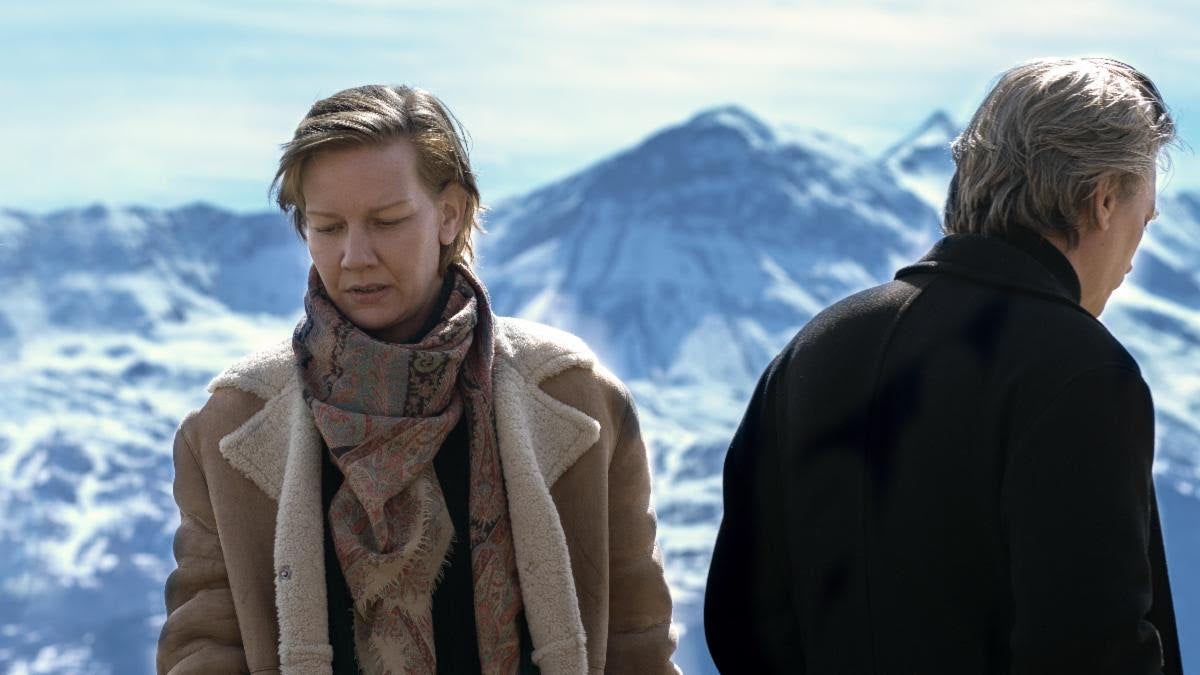
And anyone who would suggest that a well-written screenplay can easily swing a viewer in its preferred direction should note that Tina Satter’s intriguing film (her debut as a director) cannot be accused of misrepresentation, because the actors in this true life drama speak words taken verbatim from a transcript of the original FBI interview tape.

We meet Reality (Sydney Sweeney) as she returns from a shopping trip to be confronted by Agents Garrick (Josh Hamilton) and Taylor (Marchant Davis), who show her their ID badges and then announce they have some very important questions to ask her. Its 2017, shortly after Donald Trump has fired James Comey. Reality is ex-airforce, now working for a government contractor as a translator of Farsi (though she’s actually much more proficient in Pashto). The two agents are investigating the recent leak of classified documents to online publication, The Intercept – documents that claim to provide proof of Russian interference in the 2016 United States election.

The interview gets under way, the two agents continually pushing and prodding their suspect. They are by turns genial and menacing and, under their combined onslaught, Reality’s confident stance soon begins to crumble…

There are no real surprises here – the case is already a matter of record – and this is a deceptively simple piece but, as the interview progresses, I form the powerful conviction that Reality Winner has been used as a sacrificial lamb in order to deter others from going down a similar path. Found something dodgy? Pretend you never saw it! Think you’ve found proof of underhand behaviour? Look the other way! Or face the consequences.

Sweeney’s portrayal of the titular character is extraordinary, offering an equal mix of vulnerability and self-conviction. There are flashes of directorial brilliance when lines of dialogue, redacted by the FBI from the tape, cause the characters themselves to vanish temporarily from the screen, the ultimate unreliable narrators. I’m pretty sure I’ve ever seen this idea done before but it’s an extraordinary flourish in an important film that deserves to be seen by as wide an audience as possible. Judging by the sparse crowd at this afternoon’s screening, that may not be happening – but it should.

I leave the theatre seething with indignation, reflecting that American politics is sinking ever deeper into the mire and that British politics (based on news received while actually writing this review) seems to be heading in the same direction.

4.6 stars

Philip Caveney

The Covenant

09/06/23

Amazon Prime

Since the glory days of Lock Stock and Two Smoking Barrels, Guy Ritchie’s cinematic status has steadily declined, reaching its nadir in his truly dreadful King Arthur epic, Legend of the Sword, a film that had me laughing for all the wrong reasons. So I approach this Amazon Original with some caution, despite having heard good things about it.

I’m happy to report that this powerful and propulsive war movie, based on a true story, represents a solid return to form for the director.

It’s March 2018 and, deep in Taliban-occupied Afghanistan, Master Sergeant John Kinley (Jake Gyllenhall) is carrying out a routine vehicle inspection, which results in the detonation of an IUD device that claims the life of his interpreter. His replacement is Ahmed Abdullah (Dar Salim), a man disliked by many of the American troops, but Kinley is impressed by his quiet authority. He employs Ahmed and quickly learns to trust the man’s instincts. He also appreciates that, because Ahmed’s son was murdered by the Taliban, he’s not going to compromise his role. Like all the other native interpreters, Ahmed is lured by the promise of an American visa and passport for himself and his immediate family.

When Kinley’s team raids a possible insurgent arms cache North of Bagram air base, they find themselves overwhelmed by the sudden arrival of Taliban reinforcements. All but Kinley and Ahmed are killed in the ensuing carnage, while Kinley is so badly injured that he is close to dying. But Ahmed saves his life, loads him aboard a wooden cart and pushes him for miles across mountainous territory, risking everything in his heroic determination to get Kinley to safety.

When, weeks later, Kinley awakens in a hospital in California, he is told – much to his horror – that Ahmed is still back in Afghanistan, where he is on the Taliban’s ‘most wanted’ list. The offer of repatriation has been conveniently overlooked. Kinley owes Ahmed a debt that he feels must be repaid. After months of trying to arrange a rescue through official channels, Kinley realises that this is something he’s going to have to organise himself…

The Covenant is a tightly-directed action movie that manages to generate genuine suspense in the telling. A lengthy sequence representing Ahmed’s epic journey – framed through the memories of Kinley as he travels through the mountains of Afghanistan – shows considerable directorial flare as the events come back to a drunken Kinley in a series of near-hallucinatory images. If I’ve a criticism, it’s that neither Kinley’s wife, Caroline (Emily Beechum), nor Ahmed’s wife, Basira (Fariba Sheikhan), are given enough to do or say in the screenplay, which is written by Ritchie with Ivan Atkinson and Marn Davies. A female perspective would be a useful addition, I think – particularly considering that Caroline is a major factor in the decision to launch a rescue attempt.

The movie’s postscript points out that hundreds of interpreters were cruelly abandoned when the American military pulled out of Afghanistan. Many of them were executed by the Taliban, while others are still in hiding. The Covenant is therefore more than just a well-directed ‘shoot ’em up.’ It’s also a damning indictment of yet another shameful chapter in recent American history.

4 stars

Philip Caveney

Thelma & Louise

07/06/23

Cineworld, Edinburgh

I bloody love Thelma & Louise. Doesn’t everyone? I live by Louise’s famous mantra, “You get what you settle for.” So now, thirty-two long years after its initial release, I’m beyond excited to finally get the chance to see it on the big screen (I was living in Germany when it first came out, and only had it on a grainy VHS). This 4k restoration is an absolute treat, the vast American landscapes bathed in sunlight and glorious in their bleak beauty.

The eponymous duo have planned a weekend away. Louise (Susan Sarandon) is pissed off with her boyfriend, Jimmy (Michael Madsen), and wants to shake him out of his complacency, while Thelma (Geena Davis) is desperate for a break from the shackles of her unhappy marriage to pig-about-town, Darryl (Christopher McDonald). It’s just supposed to be a couple of nights at a friend’s cabin – fishing, swimming, chilling out. But when a pitstop turns ugly and a thug called Harlan (Timothy Carhart) tries to rape Thelma, Louise sees red and shoots him. From then, they’re on the run.

The genius of Ridley Scott’s film lies in the ordinariness of its two heroines. They’re not high-flyers or especially skilled, and neither of them has ever asked for much. But Harlan’s transgression is the final straw: like most women, these two have endured a lot from men, and they know the law won’t help them. And, having crossed the line, they’re surprised by how much fun there is on the other side. As Thelma puts it, “Everything looks different now. You feel like that? You feel like you got something to live for now?”

In a way, it’s a shame that Callie Khouri’s magnificent script stands the test of time so well. I had hoped it would feel dated, that I wouldn’t feel the need to cheer for women calling out catcalls, or find myself nodding at the frustrating truth that nobody is going to find a man guilty of assaulting a woman who’s been seen dancing with him. But here we are in the future – and when a woman’s crying like that, she still isn’t having any fun.

Despite all the serious stuff, I’d forgotten just how funny this film is, with scores of laugh-out-loud moments. Thelma and Louise are both wonderfully sassy and unabashed, and there are likeable men here too, in the form of avuncular cop, Hal (Harvey Keitel), and the world’s most handsome and politely-spoken armed robber, JD (Brad Pitt).

This re-release is every bit as much of a treat as I hoped it would be, and I can’t recommend it highly enough. For a deeper dive into its magic, you could also listen to Episode 4 of the latest series of Karina Longworth’s excellent podcast, You Must Remember This: Erotic 90s, where she shines a light on its enduring legacy.

5 stars

Susan Singfield

War Pony

06/06/23

Cineworld, Edinburgh

War Pony makes for harrowing viewing. Set – and filmed – on the Pine Ridge Reservation in South Dakota, it chronicles the everyday lives of the resident tribe, the Lakota. It’s clear from the outset that their traditional way of life has all but disappeared, brought out only occasionally in a splash of sound and colour to entertain the tourists. The film focuses mostly on the lives of two young men, who are trying their best to deal with the blows that their existence throws at them.

Matho (Ladainian Crazy Thunder) is perhaps twelve years old, living with his father, a meth dealer. A bit of a dreamer, Matho drifts aimlessly through school, preferring to read an obscure book about magic that he carries with him everywhere than to focus on the curriculum. By night, he and his four best friends run amok around the reservation, making drug deals, getting wasted and generally causing mayhem. After a violent row with his father over some pilfered drugs, Matho is kicked out and winds up bunking in the home of another dealer. But then his father dies under suspicious circumstances (something Matho may have inadvertently caused) and now he must fend for himself any way he can.

Bill (Jojo Bapteise Whiting) is in his twenties, already the father of two sons (to two different women, one of whom is in jail). He gets by with a sleepy grin and a relaxed WTF manner, but he too has to wheel and deal to make ends meet. In his world, everything has a price and, when he finally hits on his game plan, it’s fairly unconventional. He will purchase a female poodle and become a dog breeder, selling the resulting puppies for big profits. Meanwhile, a chance encounter with a local white farmer leads to him obtaining a paid position – not bad for a kid from the ‘res’.

But unfortunately, part of that job is to act as a chauffeur to the various young Native American girls whom his new employer likes to sleep with…

Though the two lead characters have nothing in common and only meet in one brief scene, the film is quick to point out that Matho is somehow already in rehearsal to be exactly like Bill one day, provided he manages to survive long enough. The repeated (unexplained) reappearance of a bison, the creature around which the Lakota’s lifestyle once centred, strikes a powerful and thought-provoking element. The creature no longer has any place here: he has become an almost surreal symbol of a lost identity, just as Matho and Bill too, are stranded. The latter no longer even knows how to speak his own language.

Utilising a cast of mostly non-professionals and written by Native Americans, Franklin Sioux Bob and Bill Reddy – in collaboration with directors Riley Keogh and Gina Gammell – War Pony feels totally authentic, a gritty and realistic piece that highlights the plight of a displaced people with absolute authority. Though there are occasional snatches of humour in the twists and turns of the story, most of what happens to the characters here is profoundly distressing.

But this is an important story that deserves to be seen by big audiences and the sizeable crowds at this Unlimited screening suggests that there are plenty of people ready and willing to watch it.

4 stars

Philip Caveney

The Boogeyman

04/06/23

Cineworld, Edinburgh

Horror movie The Boogeyman is one huge unsubtle metaphor – but it’s none the worse for it. The eponymous villain represents negative emotions – sorrow, misery, rage, etc. – and he needs dealing with before he kills you.

Sisters Sadie (Sophie Thatcher) and Sawyer (Vivien Lyra Blair) certainly know all about negative emotions. It’s only a month since their mother was killed in a car crash, and they’re struggling to adapt. Sawyer can’t sleep until her dad, Will Harper (Chris Messina), has checked her closet for monsters, and even then she needs her ball lamp next to her. Sadie is trying to put on a brave face, but her school friends aren’t really there for her. Meanwhile Will – a therapist, no less – completely refuses to talk about their mom at all.

When Lester Billings (David Dastmalchian) shows up at Will’s home office one day, he brings more than his sadness with him. His children have been killed by a mysterious boogeyman, he says, but the police suspect Lester has murdered them himself. He’s frantic with grief and wants Will’s help to cope. Instead, the insidious monster that’s following him turns its attention to the Harper family and begins to wreak havoc…

Based on a short story by Stephen King and directed by Rob Savage, The Boogeyman builds suspense well. The family dynamics are convincingly drawn, and the just-out-of-sight boogeyman feels genuinely scary (as ever, he’s a little less frightening once made corporeal).

There are a few plot holes that let the film down overall. Lester’s widow, Rita (Marin Ireland), for example, seems to be surviving on candlelight and bullets. No one’s eaten in that kitchen for some time, that’s for sure, and why haven’t the neighbours reported all the gun shots? If the police think Lester’s a killer, why isn’t he in custody? And, if the monster can only get you in the dark, why does no one ever turn on a room’s main light?

All in all, this is a fun little film. It doesn’t bear much scrutiny, but it assuredly entertains.

3.5 stars

Susan Singfield