Film

Renfield

16/04/23

Cineworld, Edinburgh

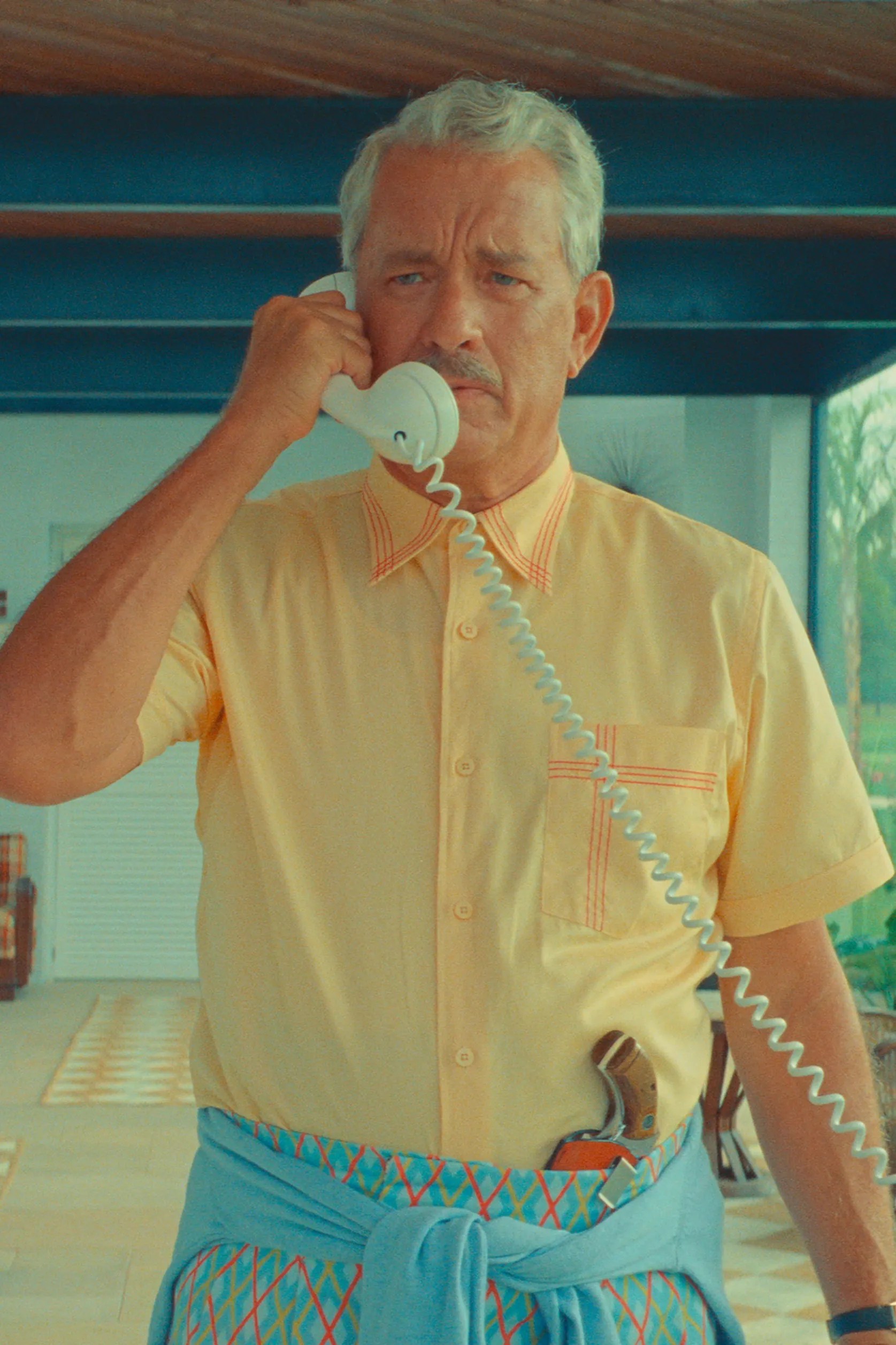
The vaults of Universal Studios contain a huge horror legacy, which remains largely unexplored. In 2017, a Tom Cruise-led reworking of The Mummy was intended as an introduction to a whole raft of films featuring Universal-inspired gods and monsters. I liked the film, but few others did and the resulting box office put a swift end to those plans. Of course, Dracula is the studio’s best-known bogeyman, so something was sure to happen eventually. With Renfield, director Chris McKay’s approach to er… revamping the Count is to focus on his eponymous insect-eating sidekick, whilst dialling the comedy – and the gore – all the way up to 11.

The result is an enjoyable, if somewhat uneven romp, that for the most part galumphs cheerfully through a whole series of decapitations, dismemberments and bodily explosions, without ever really pausing long enough to catch its breath. In this account of the classic tale, Renfield (Nicholas Hoult) has finally become disenchanted with his role as chief cook and bottle-washer to Count Dracula (Nick Cage, channeling a mix of Bela Lugosi and Lon Chaney). After ninety years in the post, Renfield realises that he’s trapped in a toxic relationship. But there are some advantages to being him. For instance, his constant diet of insects has given him the ability to harness prodigious strength and to perform gymnastic fight moves. (No idea why. Let’s move on.)

But he’s gradually coming around to the idea that there must be more for him in the duo’s latest haunt (New Orleans) than the irksome task of finding an endless supply of people for his master to consume.

So he joins a 12-step self-help group for people in co-dependent relationships, where he meets others who – like him – are suffering through adversity. And then he encounters hard-assed cop, Rebecca Quincy (Awkwafina), who is struggling to make headway in a corrupt police force that’s actually being run by powerful Queen-pin, Bella Francesca (Shoreh Aghdashloo). Renfield and Rebecca are clearly attracted to each other, though the relationship remains curiously chaste. They team up to take on Bella Francesca, only to discover that her gang now has a new recruit – Dracula himself – and he’s determined that his former accomplice won’t get the better of him.

Renfield is good fun, provided the unrestrained splatter doesn’t put you off. (If the sight of a man being beaten to death with his own dismembered arms doesn’t strike you as outrageously funny, then maybe this isn’t the film for you.) Mind you, it’s not all rampant gore and cheap laughs. In an early section, there’s lovely use of footage from Todd Browning’s 1931 Dracula with Hoult’s and Cage’s faces spliced onto the bodies of Dwight Frye and Bela Lugosi. It gives a brief insight into the kind of film this might have been – but such subtlety is in pretty short supply and we’re soon catapulted back to the carnage.

Hoult has always been a likeable screen presence and carries this along by sheer force of personality, while Cage is clearly having a whale of a time with his role. Sadly, Awkwafina doesn’t get an awful lot to do except look sullen and shoot a lot of people. And it probably doesn’t do to dwell too much on the plot, which is every bit as cartoonish as the action.

Overall, this is fun, but at the end of the day, it must be said that there isn’t an awful lot to… ahem… get your teeth into.

3.7 stars

Philip Caveney

The Son

15/04/23

Amazon Prime

The Son, Florian Zeller’s follow-up to the hugely successful The Father, is every bit as bleak as the first instalment in his adapted-from-the-stage trilogy. (The Mother – yet to be made into a film – is, by all accounts, no cheerier.) The Son is simpler and less complex, without any of the clever disorientation that earned its predecessor a ‘best picture’ gong. But that’s okay: the telling suits the tale.

Although Zen McGrath plays Nicholas, the titular son, this is really Peter (Hugh Jackman)’s story: the focus is on his perception of his relationship with his child. Peter loves Nicholas, that much is clear, but his marriage to Kate (Laura Dern), Nicholas’s mum, is over. He’s got a new girlfriend, Beth (Vanessa Kirby), and a new baby boy, Theo (Max and Felix Goddard). The split has not been easy: Kate is devastated, unable to refrain from sharing her hurt with Nicholas, and Beth is struggling to cope with the demands of a new baby. “You’re working. All. The Time,” she tells Peter – repeatedly. Nicholas can’t cope. He feels lost and abandoned. He stops going to school and begins to self-harm. And then he asks to move in with his dad.

The Son is a detailed account of the myriad tensions that form relationships, the delicate threads we weave and break in our clumsy attempts to love. Despite all the trappings – good jobs, swish apartments, private schooling, therapists – the adults around Nicholas are clueless; they don’t know how to help him. It’s a convincing portrayal of depression seen from the outside: Nicholas is closed and inarticulate, angry that no one understands him, but unable to say what’s wrong. He veers between sullen silence and long, rambling attempts to explain his pain. None of it helps. Peter desperately wants to be a better dad than his own father (a scene-stealing cameo from Anthony Hopkins), whose ‘man up’ putdowns are breathtakingly cruel. But there’s a limit to what anyone can do. The film feels like an illustration of a tragic truth: depression is difficult to live with, and there’s not always a way to help someone ‘get over it’, no matter how much you love them.

McGrath inhabits his role convincingly, his misery etched large. Dern and Kirby also make the most of what are, it must be said, quite limited roles, circling around the pivotal father-son. But just as this is Peter’s story, so it is Jackman’s film, and he proves that he really is a triple threat. From Marvel hero to all-singing, all-dancing Showman, he’s done it all – and here, he’s demonstrating that he can do gravitas too.

Slow-paced and claustrophobic, The Son isn’t a big film like The Father. Instead, it’s a quiet and sometimes chillingly sad meditation on a young man’s mental health problems in a world that’s ill-equipped to deal with them.

The tragedy is that it seems so ordinary.

4 stars

Susan Singfield

Dungeons and Dragons: Honour Among Thieves

05/04/23

Cineworld, Edinburgh

Once the domain of a modest group of aficionados, the roleplaying game of Dungeons and Dragons has lately become a worldwide obsession, which perhaps accounts for this big-budget production. It’s presumably been given the ‘Honour Amongst Thieves‘ suffix to differentiate it from the dismal Jeremy Irons movie of 2000, which attempted to walk the same path, but failed to endear itself to critics and viewers alike. Thankfully, this incarnation, directed by John Francis Daley and Jonathan Goldstein, is a different kind of beast entirely. It’s actually great fun.

It’s the story of Edgin (Chris Pine) a former Harper (or minstrel), more recently a professional thief. When we first meet him, he’s languishing in prison, sharing a cell with his BF, Holga (Michelle Rodriguez), a kick-ass warrior who never wastes words when her sword can do the talking. She’s also very fond of potatoes. Edgin has a desperate plan to escape from captivity because he needs to get back to his daughter, Kira (Chloe Coleman), who he’s left in the care of his former friend and fellow-thief, Forge (Hugh Grant), after the tragic death of her mother. 

Once out of prison, Edgin hears about a mystical Tablet of Awakening, which has the power to bring a dead person back to life. For obvious reasons, he resolves to find it. So he heads for the city of Neverwinter, where Edgin is now the head honcho, supported by his advisor, the powerful Red Witch, Sofina (Daisy Head). Along the way, Edgin and Holga recruit failed magician Simon (Justice Smith) and shapeshifter Doric (Sophia Lillis) to their cause – and, with the help of the mysterious and ridiculously handsome Xenk (Rége-Jean Page), they set off on a long and complicated quest to find an ancient bronze helmet that will help them locate the fabled tablet. Suddenly, we’re in a heist movie.

If this all sounds horribly generic, relax. Dungeons and Dragons: Honour Amongst Thieves can most accurately be described as a romp, fuelled by a clever script that has a massive trump card up its sleeve, which it’s not afraid to use. Whenever events threaten to become too po-faced, too pompous for comfort, out come the jokes, the quips and the sarcastic asides. It works like a dream.

Yes, there are CGI beasts, including a fearsome dragon; there are huge battles and eye-popping special effects sequences; there are witches and ogres and long-leggedy beasties – but the creators of the film are canny enough not to linger too long on any of these details, allowing Edgin’s quest to move on to the next hurdle, the next obstacle, the next massive punch up. There’s a second trump card in the familiar form of Hugh Grant, who, as the villainous, double-crossing Forge, offers yet another character study of the kind he’s been revelling in ever since his renaissance in Paddington 2. He’s not the only good thing here, but he’s definitely one of the best of them.

It all builds confidently to a genuinely heart-warming conclusion that rounds off the adventure in style. Stay in your seats long enough for a brief, but funny post credit scene!

I’ve no idea if this will appeal to devotees of the game, but as an outsider, I find this D&D adventure a ton of fun.

4.2 stars

Philip Caveney
The Night of the 12th (La Nuit du 12)

02/04/23

Cameo Cinema, Edinburgh

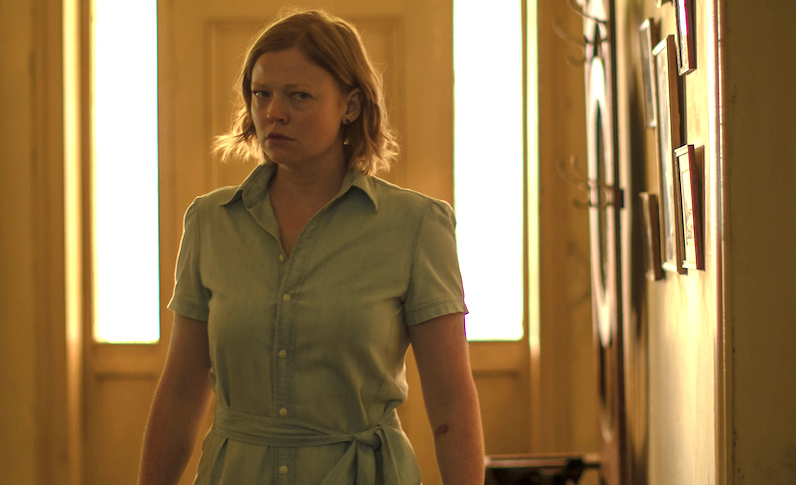
Written by Gilles Marchand and directed by Dominik Moll, The Night of the 12th features few of the traditional tropes we might expect to find in a crime procedural. It’s based around an (unsolved) real-life murder and, though it occasionally gives the impression that there may be a satisfying solution waiting for us at the film’s conclusion, it steadfastly refuses to supply one. Here is a story that is far more interested in the effects that a crime has on those assigned to investigate it than in the crime itself. It’s a brave decision on the part of the filmmakers but one that – for me at least – feels suspiciously like a game-changer.

It’s the night of October 12th 2016 and Clara (Lula Cotton-Frapier) leaves the house of her friend, Stéphanie (Pauline Serieys), in the picturesque mountain village of Grenoble, to walk the short distance home. But on her way back, she’s approached by a masked stranger, who flings petrol into her face and sets her ablaze. Her body is discovered the following morning, burned almost beyond recognition.

Newly appointed police chief Yohan Vivès (Bastien Boullion) is assigned to head up the resulting murder investigation, assisted by his close friend, irascible older cop, Marceau (Bouli Lanners). Marceau is currently having serious marital issues, which make him even more unpredictable than usual and Yohan spends much of his time reigning in Marceau’s excesses. Yohan also makes a mess of breaking the news of the murder to Clara’s mother.

The team of investigators soon uncover a whole parade of suspicious males, many of whom have, at some point, enjoyed a sexual relationship with Clara. They range from a toxic bully, who has been previously arrested for beating up a girlfriend; a local weirdo living in a squat close to the murder scene; and a rapper, who has openly threatened to ‘burn’ Clara in the lyrics of one of his recorded songs, available to view on YouTube. But what initially promises to be an open and shut case keeps leading the team of investigators along a series of dead ends and, as the days, months and years slip inexorably by, Yohan is increasingly affected by his total inability to make any headway with the case…

The Night of the 12th exerts a powerful grip and its overarching theme appears to be a meditation on the nature of evil. It also explores an awful truth: that it is generally men who commit such terrible crimes against women, and it’s also mostly men who are tasked with solving them. When a new female judge (Anouk Grinberg) takes over, Yohan finds himself reinvigorated by her presence and ready to give the case one last push. But is it a change that’s come too late to be of any help?

Dark, brooding and mysterious, The Night of the 12th will surely infuriate those who prefer their mysteries to have a definitive answer, but it manages to keep me hooked right up to the final frame and, for me, that’s enough to recommend it as one to watch. I’ll be the first to acknowledge, however, that the film won’t be for everyone. Watch this for the journey rather than for the final destination.

4.2 stars

Philip Caveney
Heathers: The Musical

28/03/23

Cameo Cinema, Edinburgh

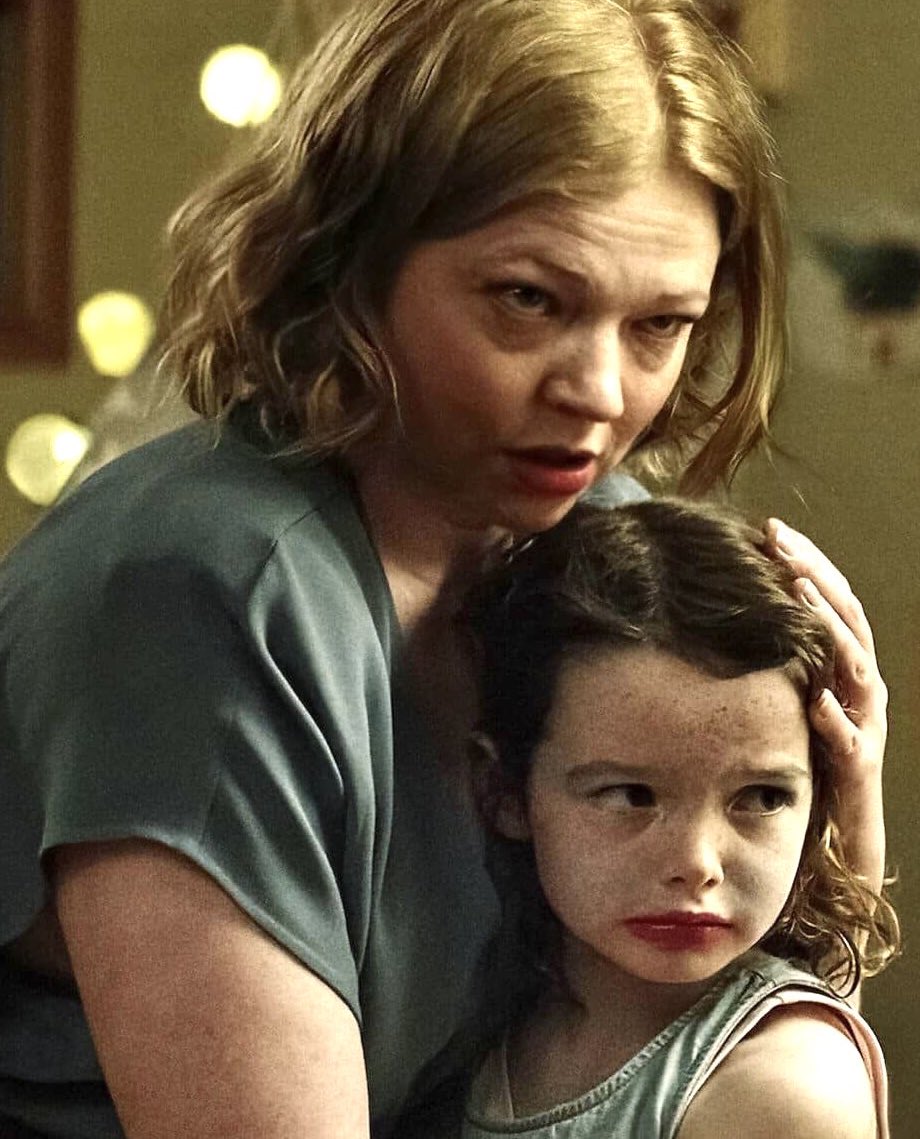
In 1988, I was seventeen – and so was Veronica Sawyer. “You’re right; it really blows.” Luckily for me, high school in Abergele wasn’t quite as combative as it was in Sherwood, Ohio, and I never had to murder anyone. I did love Heathers though, and not just because Winona Ryder starred in it.

Written by Daniel Waters and directed by Michael Lehmann, the gloriously anarchic Heathers soon gained cult film status, so it’s no surprise that it morphed into a musical a decade or so later, nor that this stage version also has longevity. Here we are in 2023; unlike me, Veronica is still a teenager, still navigating the halls of Westerberg High, still trying to fit in.

The plot is sprawling and bonkers, the humour dark. Tired of being bullied, Veronica (Ailsa Davidson) comes up with a cunning plan: she will use her excellent forgery skills to bribe the three most popular girls at school into letting her hang around with them. In return for a fake hall pass or two, Heathers Duke, McNamara, and Chandler (Vivian Panka, Teleri Hughes and Maddison Firth) give Veronica a makeover and the status she craves. And sure, she feels bad about turning her back on her best pal, Martha (Mhairi Angus), but it’s a matter of survival, right?

Except not everyone survives. Heather Chandler’s cruelty becomes too much for Veronica, and she longs to escape the stifling ‘friendship’. Enter bad boy JD (Simon Gordon). He takes an interest in Veronica’s problems – and offers some pretty drastic solutions. For a while, Veronica is drawn to his sexy brand of nihilism, but soon realises he is dangerous. Can she extricate herself before even more damage is done?

It’s no easy feat to make a rambunctious, feelgood musical about murder, attempted rape, homophobia, suicide and school shootings, but writers Kevin Murphy and Laurence O’Keefe seem to have done just that. Despite its age, the show clearly still resonates: tonight’s screening is full, and the audience is mostly young women – who probably only know Winona from her role in Stranger Things. It’s an unabashedly schlocky piece of theatre, as camp as Christmas and – despite the body count – just bursting with life. I like the slight softening of JD’s character (he’s less sympathetic in the film, without as much backstory), and the constant presence of Heather Chandler’s kimono-clad ghost works well: she’s the most dynamic character in the play, and it would be a shame to lose her in the first act.

Directed by Andy Fickman, the chorus numbers are vibrant and the choreography suitably zippy, maximising the potential of The Other Palace Theatre’s small stage. Davidson shines in the lead role, her vocals impressive and her characterisation spot on. With its bright colour palette and bold delivery, Heathers provides the same kind of high-octane girl-power as Six.

“I know who I’m eating lunch with on Monday. Do you?”

4.3 stars

Susan Singfield

To Leslie

20/03/23

Now TV

Ryan Binaco’s script for To Leslie doesn’t have a lot of plot: woman wins lottery, pisses the money and years away on booze, then finds her way to recovery. But that doesn’t matter, because this is essentially a character study – an examination of the impact of sudden wealth and (local) fame on a person ill-equipped to deal with it.

Andrea Riseborough is magnificent in the title role. Her best actress Oscar nomination might have come as a surprise, but it makes sense. She’s utterly compelling, embodying that recognisable mix of grit and vulnerability we’ve all seen in addicts. Under Michael Morris’s direction, we’re shown what lurks beneath the glamorous exterior of the world’s richest country – the shameful underbelly of the rural blue-collar folk, with their dilapidated, no-hope towns and miserable motel lives. When, having exhausted all other avenues, Leslie has to come ‘home’, it’s to a community that’s furious with her, because she’s exposed the lie they all live by. A winning ticket isn’t enough if you’ve already lost in the lottery of life. And Nancy (Alison Janney) isn’t going to let her off the hook.

It’s not a great film: there’s nothing here we haven’t seen before, no fresh insights or profound revelations. What’s more, there’s something a little uncomfortable about the spectacle of Leslie’s decline; it feels a bit like poverty tourism. “You wouldn’t want people watching you,” her son, James (Owen Teague), tells her, when she suggests going to the zoo. “They do,” she says. And we are – but there is much to admire too. I like the way that Leslie’s problems are solved within her own community, not by a middle-class outsider, or a big organisation. Instead, it’s down to her to make the change, to begin to see the possibility of a future where she can make peace with her failings. In this, she is aided by the kindly Sweeney (Marc Maron), who offers her a job cleaning up in his motel, and the quiet, non-judgemental friendship she so badly needs.

Riseborough veers between desperation and fury, hurt and vitriol, and the depiction is always nuanced and believable. Leslie’s burn-it-all-down attitude is heartbreaking to watch (there’s a clear exposé here of why a simple ‘roof over their head’ approach isn’t enough to solve the homelessness problem), and her redemption, when it comes, feels very well-earned – even if it is too heavily signposted early on.

In the end, To Leslie is a rather ordinary cautionary tale, elevated by an extraordinary performance. And that’s all I’ve got time to say, because I need to pop to the shops for a ticket for tonight’s lottery…

3.6 stars

Susan Singfield

Pearl

18/03/23

Cineworld, Edinburgh

The opening scenes of Pearl have the look of a 40s Technicolour Hollywood feature, right down to the swirling calligraphy of the titles. The remote farmstead where the main action takes place is eerily reminiscent of The Wizard of Oz. But it doesn’t take long to establish that the magic generated by rising horror star, Mia Goth, is going to be of a much darker variety than anything witnessed by Dorothy and the Munchkins. What might have happened to the girl from Kansas if she hadn’t been swept up by that whirlwind?

It’s 1919 and teenager Pearl (Goth) is struggling to come to terms with the harsh realities of the Spanish Flu pandemic. Her immigrant mother, Ruth (Tandi Wright), is constantly worried about anti-German sentiment from the people in town, and spends much of her time scolding Pearl for her fanciful notions. Pearl’s unnamed father (Matthew Sunderland) has suffered a stroke and is confined to a wheelchair, unable to move a muscle, while Pearl’s own husband is fighting in occupied France. She’s left with repetitive chores around the farm and, in her spare moments, some powerful fantasises about becoming a star of stage and screen. She’s convinced that she has what it takes to get there, if only somebody will give her a chance.

In town to pick up supplies, she meets a handsome young man (played by David Corenswet), a projectionist at the local cinema, who takes the opportunity to show her some of the pornographic clips from his private collection. He assures her that a girl with her looks has everything she needs to become a sensation. When a church in town announces that they are looking for a dancer for a new travelling show, Pearl senses an opportunity to shine – and Lord help anyone who gets in her way…

Pearl is a prequel to director Ti West’s earlier offering, X (which I confess I haven’t seen), and it’s eventually destined to be part of a trilogy, but it hardly matters because this assured film, co-written by Goth and West, is strong enough to stand alone. Essentially a vehicle for Goth to strut her stuff, it’s a simple but affecting tale of a young woman afflicted by mental health issues, who becomes increasingly unable to separate reality from dreams. She also has an unfortunate predilection for doing unspeakable things with a pitchfork, aided and abetted by a friendly local alligator – a useful addition when it comes to disposing of evidence.

There are some genuinely unnerving scenes here – a sequence where Pearl enjoys leisure time with a scarecrow is a particular stand out and I also love the dance sequence where what Pearl sees in her head is markedly different from what’s actually occurring. It’s this stark contrast between the real and the imagined that is the true strength of this remarkable feature, and it’s clear from the outset that Goth – if not Pearl – is destined for stardom.

Pearl won’t be for everyone – there are some bloodthirsty scenes in the mix that are not recommended for those of a nervous disposition – but the film is horribly compelling and maintains its momentum right up to its extraordinary final scene.

4.2 stars

Philip Caveney
Allelujah

17/03/23

Cineworld, Edinburgh

This film boasts a starry cast. Indeed, with comedy queen Jennifer Saunders in the lead role, alongside British acting legends such as Judi Dench, Julia McKenzie, Derek Jacobi and David Bradley – not to mention the brightly-hued, smiling posters – it promises to be a clever-but-gentle affair, something pleasant for a Sunday afternoon.

It’s not.

Adapted (and updated) by Heidi Thomas from Alan Bennett’s 2018 stage play, Allelujah is an ode to the NHS, as gnarly and wonderful, inspiring and infuriating as the institution itself. I feel like I’ve been lured in by the publicity, before being punched in the gut by a polemic – but I’m not complaining. This is the movie equivalent of a protest song; it’s timely and vital.

Sister Gilpin (Saunders) and Dr Valentine (Bally Gill) work at ‘the Beth’ – a small, crumbling, Yorkshire hospital, specialising in geriatric care. They’re fighting a losing battle against closure, despite the fundraising efforts of local volunteers, but they forge on anyway, doing their best for the elderly patients who need them, offering them compassion and dignity in the last stages of their lives.

Joe (David Bradley) likes it in the Beth. He doesn’t want to go back to the Rowans, the care home where he’s miserable. But his son, Colin (Russell Tovey), is the film’s antagonist, the malevolent Tory hatchet man, who views the hospital dispassionately, from a purely numbers perspective. His relationship with his dad is thorny, but – as they soften towards one another – will he change his mind about the NHS?

Actually, it’s not as clear cut as that. Nothing here is. Under Richard Eyre’s directorship, Allelujah‘s narrative arc is awkward and jarring; it never leads where I anticipate. Instead, it keeps confounding my expectations, pulling me one way and then another, wrong-footing me. Some of the political grandstanding is a little clunky – there are speeches occasionally, in lieu of dialogue – but all of this adds up to something really impactful.

If Sister Gilpin is a microcosm of the Beth, embodying its best and worst, then the Beth is a microcosm of the NHS, encompassing its triumphs and its disasters, its shortcomings and its accomplishments. The final scenes, depicting the heroic work our doctors and nurses did during the pandemic, provide a stark reminder of why we have to fight to keep our health service. It might be troubled, but it’s glorious and it’s ours. “You dismantle it at your peril.”

As the credits roll, there’s a stunned silence in the cinema. Then someone begins to applaud. And we all join in.

5 stars

Susan Singfield

Rye Lane

15/03/23

Cineworld, Edinburgh

Imagine, if you will, a Richard Curtis style romcom, where two young people meet, have a whirlwind romance and celebrate whichever part of London they happen to live in. But with a big difference, because in this film all the leading characters are Black, while a few well-known white actors are relegated to tiny cameo roles. What’s more, the area where the story is set is depicted in such exquisite detail it almost becomes a character itself. That is essentially what Rye Lane is: a love letter to Peckham, previously immortalised onscreen in er… Only Fools and Horses.

The film opens in a unisex public toilet stall at an art gallery, where Dom (David Jonsson) sits weeping loudly. He’s bewailing the breakup of his six year relationship with Gia (Karene Peter), who – it turns out – has been cheating with Dom’s best friend, the handsome but dim-witted Eric (Benjamin Sarpong-Broni). The cause of the breakup? Dom has spotted Eric’s distinctive private parts in the background of a Messenger call to Gia. Awkward.

Into the toilet wanders Yas (Vivian Oparah), a vivacious young woman with an unconventional worldview. She believes that people can be divided into two basic categories: those who wave at boats and those who don’t. Yas overhears Dom’s distress and notices his footwear, so when she encounters him later, she feels impelled to become involved in his situation. At first the two of them seem to have absolutely nothing in common, but when Yas comes to Dom’s rescue during an awkward conciliatory meeting with his ex, their budding friendship is given a considerable power charge. Throwing all caution to the wind, he and Yas head off for a wild, adventurous day out…

If this all sounds depressingly familiar, don’t be fooled. Debut director Raine Allen-Miller has crafted a delightful odyssey across South London, backed up with vivid cinematography and a witty (sometimes downright hilarious) script by Nathan Bryan and Tom Melia. But the film’s real trump card is its vibrant depictions of everyday life in Peckham, throwing a whole set of dazzling locations and eccentric local inhabitants into the mix. What we get is a riot of open-air markets, street performers, public parks and an adrenalin-charged karaoke session. The film never allows one set-up to overstay its welcome, but keeps moving restlessly onwards to its heartwarming conclusion.

Okay, at the end of the day, Rye Lane may just be a slice of entertaining fluff but it is realised with such vigour and ingenuity that, long before we hit the end credits, I’m totally sold (and talking of end credits, stay in your seat for a brief but very funny outtake!). Anybody looking for a recharge should check this out without further delay. It’s utterly charming and the best fun I’ve had in the cinema for quite some time.

4.4 stars

Philip Caveney

65

11/03/23

Cineworld, Edinburgh

It was clear before 65 even arrived that something was amiss with this project. Two planned release dates were swiftly abandoned, as though the project were seeking a landing at a time when not much else was happening cinema-wise. On paper, the premise sounds good. Adam Driver versus dinosaurs? What could possibly go wrong?

From the get-go, 65 requires viewers to accept a pretty unlikely set-up – that somewhere in the universe, sixty-five million years ago, a planet existed where the inhabits looked human, acted human and some of them even spoke perfect English. This is by no means a spoiler, it’s spelled out in text in the film’s opening moments. Mills (Driver) is a spaceship pilot, who has recently been charged with the task of heading up a two-year mission (we’re never given any of the details of what he’s expected to achieve out there). He’s agreed to leave his – everyday sexism alert! – un-named wife (Nika King) and his daughter, Nevine (Chloe Coleman), back on his home planet because the latter is suffering from an unspecified illness and Mills will now be earning triple his usual wages, which will no doubt pay for all those pesky hospital bills.

A year or so later, he’s travelling through space in a ship that’s also carrying a group of anonymous passengers in suspended animation (again we’re not trusted with an explanation for this), when a sudden meteor strike sends the ship hurtling towards an unknown planet. Mills survives the subsequent crash, along with a nine-year-old girl, Koa (Ariana Greenblatt). Now the two of them must somehow make their way to the ship’s escape pod, which is inconveniently stranded on top of a mountain.

The planet? It’s Earth. And it’s heavily populated by dinosaurs…

The term ‘stripped-back’ has never felt more appropriate – and, while the set-up strains credulity, it’s simply and effectively done. But once Mills and Koa are installed on this hostile planet, the film has nothing left but a series of frantic chases as our two heroes are pursued hither and thither by a bunch of scaly co-stars with no higher ambition than to eat their visitors. While the film looks great (the scenes shot in the Florida Everglades are particularly eye-catching), the inevitable result is monotony.

Attempts to vary things up are mostly centred around Mill’s recorded memories of his daughter – though, curiously there are none of his wife. (Did they fall out? We don’t know!) I am asked to suspend my disbelief every time a miraculous event saves Mills and Koa, allowing them to escape apparently certain death by a hair’s breadth. Written and directed by Scott Beck and Bryan Woods, who created the superior A Quiet Place, I can’t help feeling that at some point there must have been a lot more information built into this film, cut out piece-by-piece after successive test screenings, perhaps. This may account for the finished movie’s relatively lean running time, and I suspect that, somewhere in the archives, there’s a director’s cut, which features a lot more information than we’re offered here.

It’s by no means a terrible film. The dinosaurs are decently rendered in CGI and I’m genuinely excited by the first attack – but, by the seventh or eighth, I find myself looking at my watch, wondering when I’ll be able to achieve escape velocity.

2. 8 stars

Philip Caveney