Film

The Apprentice

19/10/24

Cineworld, Llandudno

We’re in Wales, visiting Susan’s mum, but Brenda is a bit of an anti-Trump-obsessive and like us, she’s been eagerly awaiting the release of The Apprentice. It’s clearly time to flex the Unlimited card. Abi Abbasi’s biopic couldn’t have come at a more inopportune time for Trump. Of course he’s threatened legal action, though I’m pretty sure that Abbasi’s film doesn’t feature anything that isn’t already common knowledge to those who’ve read some of the numerous books about the man – but what it does, very effectively I think, is to illustrate how the Trump-monster was made and shaped.

Like most beasts, he’s learned his craft through imitation.

When we first meet Donald (Sebastian Stan) it’s 1973 and he’s essentially a slum landlord in New York City, trying his level best to please his ever-critical father, Fred (Martin Donovan), and deal with his alcoholic older brother Freddy (Charlie Carrick). The family fortune has already been made and the Trumps are currently fighting allegations that they have been discriminating against their African-American tenants – but Donald is looking for ways to better himself and has a vision of turning the long-derelict Gulf and Western building into a gleaming new construction called Trump Tower. But he knows he can’t do it alone.

Then he falls into the company of Roy Cohn (Jeremy Strong), a ruthless lawyer, best known at this point for securing the death penalty for the Rosenbergs, a man who will stop at nothing to get his own way. He takes Donald under his wing and quickly drills into him his personal mantra. Never admit defeat, the truth is what you say it is and always act as though you’ve won, even if you haven’t.

Pretty soon, Trump has become the perfect acolyte, copying all of Cohn’s traits and even doubling down on them. When Donald meets and falls for Ivana Zelničková (Maria Bakalova), there’s a moment where it seems as though the film might be about to let him off the hook. His clumsy attempts to seduce her make him seem almost… relatable – but the feeling is short-lived. The monster soon comes back to the fore and the scene where his affectations turn against his former love is shocking to say the least.

Sebastian Stan does a pretty good job of capturing Trump’s gradual deterioration into the beast we know. Holding back the man’s distinctive hand gestures and vocal affectations until the film’s final furlong, he literally grows into the role. Strong, meanwhile, submits an extraordinarily chilling performance as Cohn: lean, cadaverous, almost alien, he surveys everyone he meets with the same dead-eyed stare. Here is a man who hides his real identity behind a mask, who puts down his enemies with a barrage of verbal abuse, while secretly pursuing a dissolute life with complete abandon. He’s totally toxic and yet, his ultimate treatment by Trump, when he has outlived his use, is all the more shameful because of that toxicity – and it’s hard not to feel some sympathy for him.

Abas meanwhile, captures the look and feel of the changing decades with a skilful combination of found footage and reimagined scenes. His use of music is inspired. Using Yes Sir, I Can Boogie as Ivana’s unofficial theme tune is particularly effective.

Trump can (and surely will) protest that releasing The Apprentice when he is gearing up for the fight to become the US President for a second term is inexcusable – but, as this film so clearly portrays, when it comes to a dirty, underhand fight, this is a man with considerable experience of his own.

4.3 stars

Philip Caveney

Timestalker

13/10/24

The Cameo, Edinburgh

The release of a new Alice Lowe film is a cause for celebration. Actor/writer/director – and as far as I know, she might do the catering as well – Lowe is adept at ensuring that a modest budget goes a long, long way. Her debut feature, Prevenge, was released way back in 2017, shot while she was pregnant (of course it was), so Timestalker has been many years in ahem… gestation. It’s probably best described as a fantasy set across hundreds of years, and the central theme is the general futility of pursuing the heart’s desire.

We first meet Agnes (Lowe) in the 1600s in Scotland, where she’s a lonely spinster, much gossiped about by her neighbours, who pays the occasional visit to a masked preacher, a man given to talking about the dawning of a new religion. When said preacher is arrested and brought to a public place for torture and execution (they made their own entertainment those days), his mask is removed, revealing the handsome face of actor Aneurin Barnard. Agnes is instantly and irrevocably smitten. Attempting to approach him, she trips and falls face first onto the executioner’s axe, which is the bloody end of her.

Except that it’s not. She’s promptly reborn in the 1790s, rich but bored, with a toxic husband played by Nick Frost. This Agnes has a penchant for wearing some truly monumental wigs but she’s missing something in her life. When she spies the visage of a handsome highwayman – Barnard again – her passion is reignited and she is, once more, in pursuit of love. But of course it’s doomed to end badly. With each transformation, her luck fails to improve and an added problem is that every new persona harbours memories of the one before… and where exactly does Cleopatra fit into all this?

Lowe’s sparky script is laced with deadpan humour, and cinematographer Ryan Eddleston has a lot of fun aping the look of celebrated films. If the opening sequence is Witchfinder General, then the 80s New Romantic section has the muted, pastel tones of Adrian Lyne’s Flashdance – and Lowe has the perm to back it up. Sadly, the budget doesn’t quite stretch to making the Manhattan locations look entirely convincing.

Tanya Reynolds does a good job of embodying the various iterations of Agnes’s perennial sidekick, Meg, and Jacob Anderson is quietly impressive as different versions of a character simply known as Scipio. Frost continues to be suitably malevolent in every loathsome bloke he portrays.

While it might sound faintly bewildering on the page, the myriad twists and turns of the plot are confidently handled and there are some cleverly placed visual clues – a huge heart hidden in a forest, a brightly plumaged songbird in a cage – to keep reminding us of what’s gone before.

As ever with Lowe’s work, the spirit of pure invention is kept proudly to the fore and I find myself wondering what this formidable film maker could achieve given a hundred-million-dollar budget. Until that unlikely event actually happens, why not seek out your nearest independent cinema and sample the delights of her latest gem? It’s well worth your time and money.

4 stars

Philip Caveney
A Different Man

05/10/24

Cineworld, Edinburgh

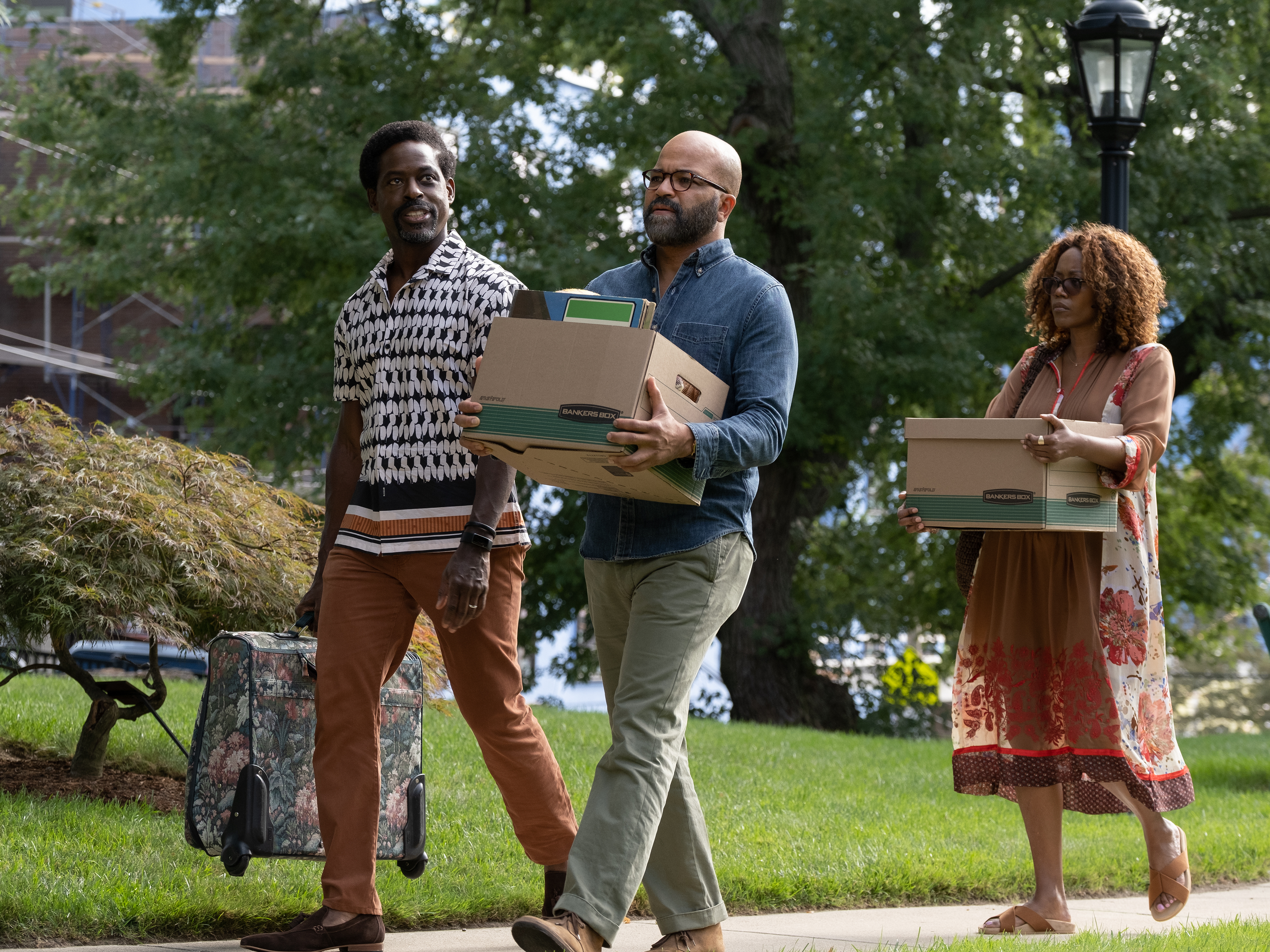
It’s not hard to imagine actor Adam Pearson’s delight on first reading the script for A Different Man. The film, a three-hander, was written expressly for him – and, my word, it gives him a chance to show what he can do. It also challenges our preconceptions and prejudices around disability and disfigurement – but not in any obvious, seen-it-all-before way.

Writer-director Aaron Schimberg has a cleft palate, so he knows something of how it feels to look different. Pearson, meanwhile – along with his character, Oswald, and Sebastian Stan’s character, Edward – has neurofibromatosis, which is a lot more noticeable. Edward copes by keeping his head down and trying to make himself small. He’s quiet, unassuming, and sadly accepting of his lot. He is an actor, but he doesn’t get much work – unless you count condescending corporate training videos of the ‘how to behave around your disabled colleagues’ variety.

And then two things happen.

First, Edward is offered the chance to take part in a drug trial for a revolutionary new treatment that will transform his appearance. Next, he meets his new neighbour, aspiring playwright Ingrid (Renate Reinsve), and begins to develop feelings for her. She’s nice to him – but recoils when he makes a tentative move.

He decides to take the plunge.

As the tumours begin to literally fall from his face (courtesy of some pretty impressive prosthetics), a new Edward emerges, smooth-skinned and conventionally handsome. Keen to shuck off his old identity as well as his deformities, he informs everyone that Edward has committed suicide and rebrands himself as ‘Guy’. Before long, he’s living the dream, with a well-paid job, a luxury flat and an active sex life. What more could he want?

The answer, it turns out, is the starring role in Ingrid’s off-off-Broadway play, Edward, which is all about her friendship with her tragic neighbour. But she’s not sure about giving Guy the part – it wouldn’t be authentic and surely a disfigured actor ought to get the role? But, she has to admit, there’s something compelling about Guy, even if he does have to wear a mask on stage.

And then Oswald turns up, cheerily intrigued by the idea of the play with a central part he feels he was born for. He’s keen to see how Ingrid has written the character and what Guy brings to the role. He looks like Edward used to look, but that’s where the similarity ends. Because Oswald is no one’s victim. He’s a happy, talented, popular man, keen to grasp new opportunities, comfortable in his own skin. Edward can’t cope, his cocksure persona crumbling in the face of Oswald’s frank and open confidence. Before too long, he finds himself replaced…

The three central performances are all impressive, although Pearson is the one who shines. Stan is believably conflicted as the shy, awkward Edward, his true nature visible to the viewer even when he’s swaggering and trying to inhabit his brave new world. Reinsve, meanwhile, is perfect as the deluded Ingrid, convincing herself that she’s not only well-intentioned but also alert to discrimination, despite the self-serving nature of her work, and the fact that she keeps referring to Beauty and the Beast as her inspiration.

A Different Man is well-crafted on every level but, primarily, it is a clever piece of writing, as multi-layered as Stan’s prosthetics, unflinching in its examination of how non-disabled people view those with disabilities. Without offering any easy answers, it also explores the ideas of authenticity and appropriation, all the while avoiding anything resembling a cliché. This is the sort of script that sparks ethical discussions – akin in some ways to American Fiction, The Substance or Scottish playwright Kieran Hurley’s Mouthpiece.

Nuanced, shocking, intelligent and insightful, this is a memorable movie for all the right reasons.

4.7 stars

Susan Singfield

Joker: Folie à Deux

04/10/24

Cineworld, Edinburgh

Todd Philips’ 2019 film, Joker, was cinematic Marmite. For every viewer that loved it (and I was firmly in that camp), there was an equal number of comic book fans who detested it, largely because the film had no truck with the conventions of the genre that inspired it. Instead, here was an unflinching exploration of a mentally ill man, abandoned by the healthcare system and ultimately championed by a bunch of deluded followers. It was grubby, brutal and utterly devastating.

Folie à Deux is equally divisive, though this time around what has incensed most social media pundits is the fact that the film is… well, there’s no other way to say this: a musical. In 2024, the genre appears to have fallen into total disrepute with movie fans, to the extent that even films like Wicked are reluctant to depict any actual singing and dancing in their trailers in case it puts off potential viewers.

Go figure.

It’s two years after the events of Joker and Arthur Fleck (Joaquin Phoenix) is languishing in Arkham State Hospital, overseen by callous prison warder Jackie (Brendan Gleeson), who seems to delight in humiliating him at every opportunity. (Interestingly, it’s Jackie who tells the nearest thing to an actual joke in this story and, it has to be said, it’s a corker.)

Arthur is fast approaching his day in court, schooled by his defence lawyer Maryanne (Catherine Keener), who is pretty sure that a plea of ‘dissociative identity disorder’ will save him from the death penalty. And then, attending an in-prison musical therapy session where inmates are encouraged to sing their troubles away, Arthur meets Harleen ‘Lee’ Quinzel (Lady Gaga) and, for the first time in his life, he has a reason to want to survive… and to slap that makeup back on his gaunt visage.

The term ‘musical’ is used quite loosely here. Phoenix and Gaga work their way through a series of solid gold bangers from the likes of Sinatra and Jaques Brel, but it’s made clear from the outset that these sequences occur in the cerebral landscape of Arthur’s head, his way of making sense of what’s happening to him. (Those with long memories may be reminded of Dennis Potter’s Pennies from Heaven, which adopted a similar approach.) A scene where Arthur is being interviewed by TV journalist Paddy Meyers (Steve Coogan) is a good case in point. Midway through the interview, Arthur suddenly breaks into song and dances around his cell – but Paddy remains blissfully unaware of his antics.

Phoenix is an actor of extraordinary ability and he slips into this unfamiliar discipline with his usual aplomb, using his newly slimmed-down frame to accentuate every move. Gaga, who has much more experience in the field, is also sensational, able to imbue an old chestnut like Get Happy with a strangely sinister edge, making me feel that I’m hearing it for the first time. As with the previous film, Philips steadfastly refuses to moderate his approach for the spandex brigade, doubling down on the grime and squalor. Folie à Deux is every bit as unsparing and unforgiving as its predecessor, whilst somehow managing to retain a beautiful humanity.

This may not be the perfectly-honed movie that was Joker, but for my money, it runs it a close second and is far (very far) from the embarrassing misfire that so many are describing it as. Some irate comic fans seem to have been hoping for a rerun of its predecessor, but what would be the point of that? I can’t help feeling they’ve somehow missed the point.

But then, I’m always happy to admit that I love a good musical.

4.6 stars

Philip Caveney
His Three Daughters

01/10/24

Netflix

Vincent (Jay O’Sanders) is rapidly approaching the end of his life and his daughters have come to his Manhattan apartment to be with him when he finally expires. Katie (Carrie Coon) is the eldest of them, a natural organiser, working alongside hospice worker, Angel (Rudy Galvan), to ensure that all loose ends are securely tied up. She’s trying to ensure that the Do Not Resuscitate order that Vincent wanted is in place. She’s also trying to write her father’s obituary.

The youngest daughter, Christina (Elizabeth Olsen), a slightly dippy Grateful Dead fan, spends much of her time singing to Vincent and making needy phone calls to her husband and young daughter.

And then there’s step-sister, Rachel (Natasha Lyonne). Though not Vincent’s biological daughter, she has actually lived in his apartment for years and in some ways seems to be the most profoundly affected by his approaching death. She’s clearly determined to be as blitzed as humanly possible when the end arrives, courtesy of the seemingly endless supply of spliffs she smokes at every given opportunity.

This gentle and quirky film, written and directed by Azazel Jacobs, is essentially a character study, which plays the three very different women against each other, as they chat, reminisce and argue. Sparks fly when they finally address long-held grudges and feuds. Confined entirely to Vincent’s apartment, this could easily feel claustrophobic, but all three performances are strong enough to carry the feature along. Lyonne perhaps gets the most interesting role, drifting through the situation with a manic grin and a WGAF attitude, as the clock inexorably ticks through the closing hours of Vincent’s life.

There’s an unexpected revelation in the final furlong that initially makes me think that Jacobs has just ruined everything he’s spent so much time building – but happily that feeling is short-lived and it quickly becomes clear that he knows exactly what he’s doing.

His Three Daughters is a delightful and affecting film that has many insightful things to say about the human condition and our attitude to death. And if that sounds grim, don’t worry. There’s plenty here to make you smile. Don’t be surprised if, like me, you come away from this singing Five Little Ducks.

Just saying.

4.2 stars

Philip Caveney
The Outrun

27/09/24

Cineworld, Edinburgh

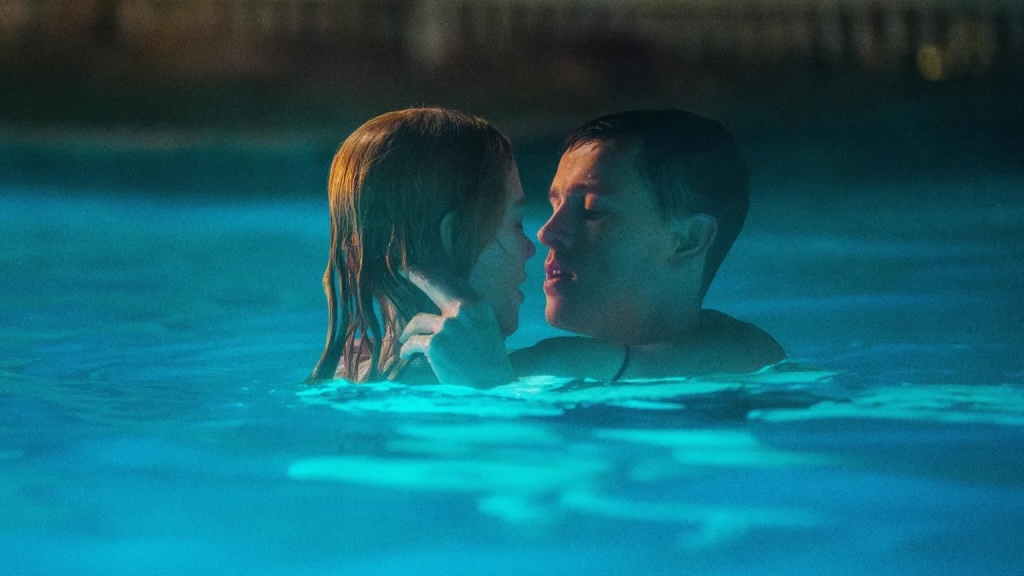
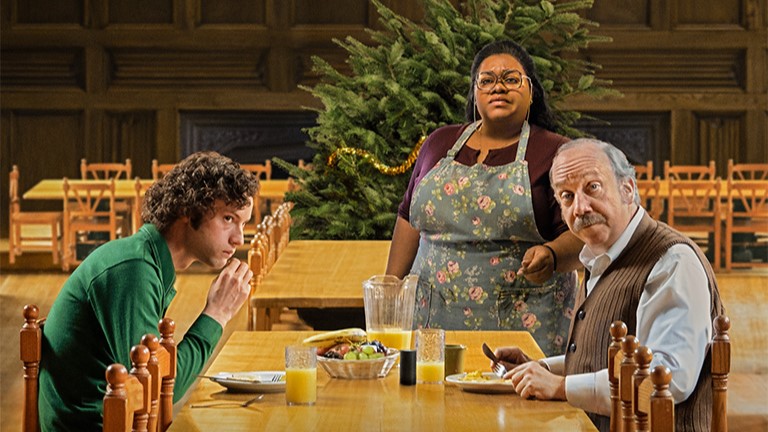
Rona (Saoirse Ronan) has issues with alcohol. At first, it’s all good fun as she downs drink after drink and dances the night away with boyfriend Daynin (Papa Essedieu), becoming ever more playful, ever more gregarious, the life and soul of every party. But she never knows quite when to accept that enough is enough and, inevitably, it all ends in tears and recrimination. Pretty soon, Daynin has had enough of her unpredictability – so Rona heads back home to the island of Orkney, where her separated parents live, in the hope of getting her act together.

But finding help is difficult. Her father, Andrew (Stephen Dillane), still runs a sizeable sheep farm, but is now living in a caravan, plagued by the bi-polar episodes that have affected him for most of his life. Mum, Annie (Saskia Reeves) has found religion and has made friends in the church community. Of course she cares about what’s happening to her daughter, but she is hard pressed to know what to do for the best.

Rona is determined to free herself from the powerful grip of booze. So she embarks on the 12 step programme pioneered by Alcoholics Anonymous – and, when she begins to falter, she takes a post with the RSPB on the even more remote island of Papa Westray, where she will spend her time living in a tiny hut while she searches for an endangered bird, the corncrake…

On paper, it sounds like a pretty grim premise, but this dazzling feature, based on a memoir by Amy Liptrot, with a screenplay co-written by Liptrot and Daisy Lewis, never puts a foot wrong. Nora Fingscheidt (who directed the wonderful System Crasher) keeps her foot on the accelerator, cutting and swerving back and forth between Rona’s turbulent childhood, her hedonistic escapades in London and her gradually evolving relationship with the power and beauty of the ancient landscape of her new/old home.

The different settings bleed effortlessly into each other, powered by regular bursts of pulsing electronic music. A frenzied nightclub session can suddenly appear to be taking place underwater, with seals (selkies?) as Rona’s dance partners – and her interactions with the people of Papa Westray are warm and totally authentic. All the various strands are brilliantly pulled together in a powerful crescendo. A thrilling climax, where Rona is confronted by a stunning realisation, is absolutely overwhelming.

Of course, a film as free-wheeling as this one this can only work when it’s anchored around an extraordinary performance – and Ronan is mesmerising in the fractured central role, moving through such a variety of different guises that it’s sometimes hard to believe that it’s all the work of just one actor. The film’s message rings out loud and clear.

I haven’t seen a movie that so eloquently pins down the destructive nature of alcohol since Thomas Vinterberg’s Another Round. And that’s high praise, indeed.

4.6 stars

Philip Caveney
The Substance

21/09/24

Cineworld, Edinburgh

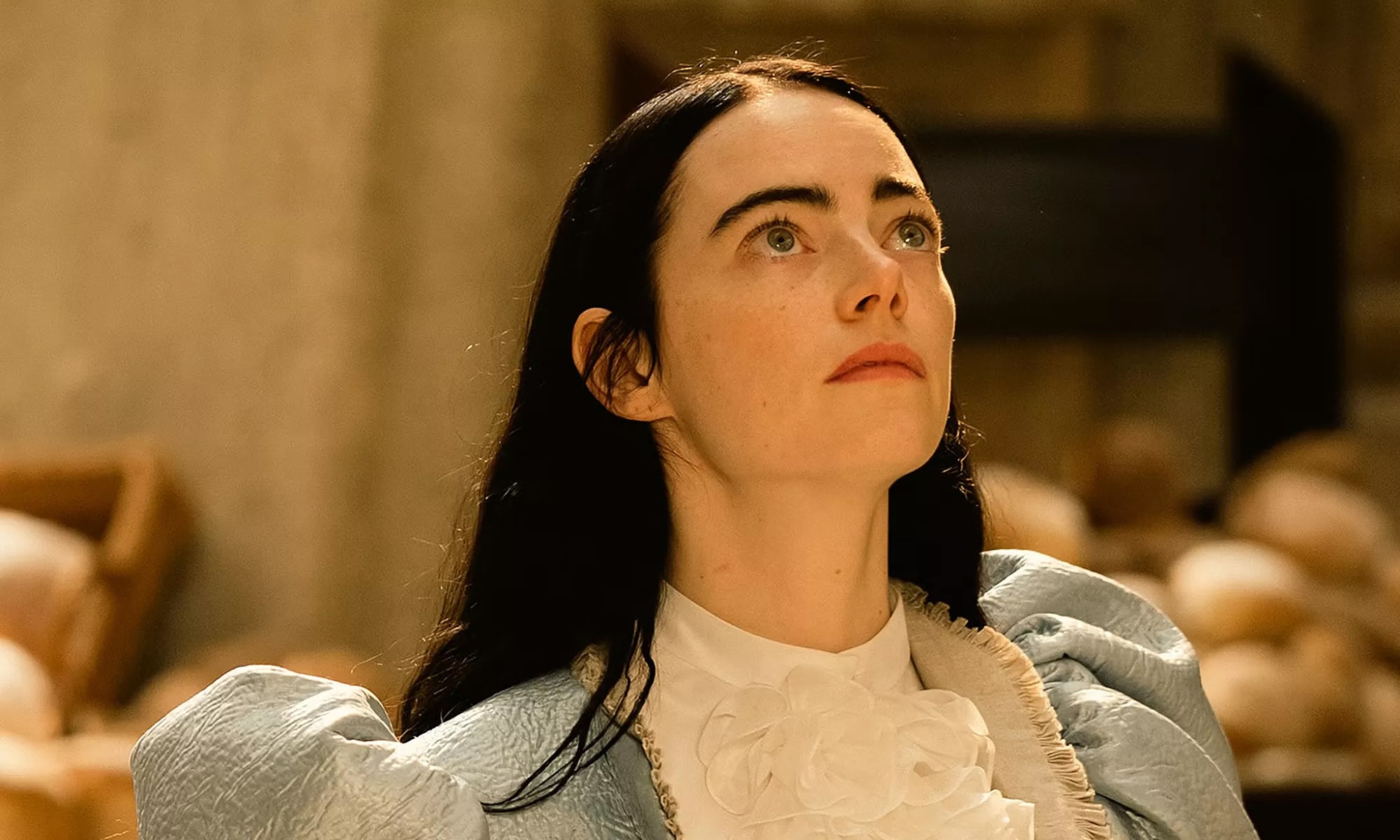
Every once in a while, a film opens with a sequence so striking that the viewer becomes instantly aware that they are in the presence of a powerful new voice in cinema. The Substance is a perfect case in point. In close-up, an egg is injected with something that causes the yolk to spilt into two. Then we watch as a pair of workmen instal a new star on Hollywood’s Walk of Fame – and, in an ensuing time-lapse, we see that star deteriorating over the decades until it is a cracked, grubby version of its former self, suffering the final indignity of having a burger and fries spilled on it.

The star belongs to Elizabeth Sparkle (Demi Moore), once a bona-fide movie star, but now the leading light in the world of TV physical fitness shows. She’s fast approaching sixty and still looks great, working hard to keep her physique as she needs it to be. But her world is rocked when she overhears her toxic producer, Harvey (Dennis Quaid), talking on the phone, announcing that Elizabeth is now ‘too old’ for her role and that he wants a replacement as soon as possible – somebody younger.

Then, after a car crash (from which Elizabeth emerges unscathed), a handsome young hospital assistant slips her a note, alerting her to the existence of the titular drug, which promises to release a fresh new version of the user’s self. Like most Faustian deals, it comes with some very strict rules (bend them at your peril) but, in a shockingly visceral sequence, ‘Sue’ (Margaret Qualley) is born.

Now the two women must learn to co-exist, each one spending a week in the real world, while the other sleeps and regenerates. And of course, it’s all doomed to go horribly wrong…

This sophomore project from writer/director Coralie Fargeat – I have yet to see her debut film, RevengeThe Substance plays like a fable, a weird Grimms’ fairytale for the modern age. There are shades of The Picture of Dorian Gray here, allusions to Snow White and her stepmother’s ‘Mirror Mirror’ mantra, and several visual echoes of classic films like The Shining and Carrie. What’s more, the astounding practical makeup effects will remind many older film fans of early David Cronenberg and Brian Yuzna – though the eye-popping splatter sequences used here make movies like The Brood and Society look positively restrained by comparison.

But this is so much more than imitation. The Substance is an adept and powerful meditation on the subject of ageing and the ways in which women are constantly shackled and devalued by it – and how we all fall into the trap of enabling this sad state of affairs.

Moore is extraordinary in this film, delivering what might just be her finest screen performance (certainly her most unfettered), while Qualley makes the perfect foil. And Quaid, who I haven’t seen onscreen in quite a while, is gloriously, revoltingly odious here, making even the act of eating seafood a stomach-churning spectacle.

But it’s Fargeat who really deserves all the accolades. The Substance is surely one of the most provocative and affecting films of the year. I’m already excited to see where she will go next. But a word of warning: this won’t be for everyone. Those who shrink from body horror, blood and nudity are going to find plenty here to trigger them, particularly in the harrowing final stages, where Fargeat keeps pushing the gory imagery as far it can possibly go.

And then, she returns to that Hollywood star, and ties everything up in one delightful, blood-spattered package. If this sounds like your cup of haemoglobin, be sure to watch it on the big screen.

5 stars

Philip Caveney
Lee

14/09/24

Cineworld, Edinburgh

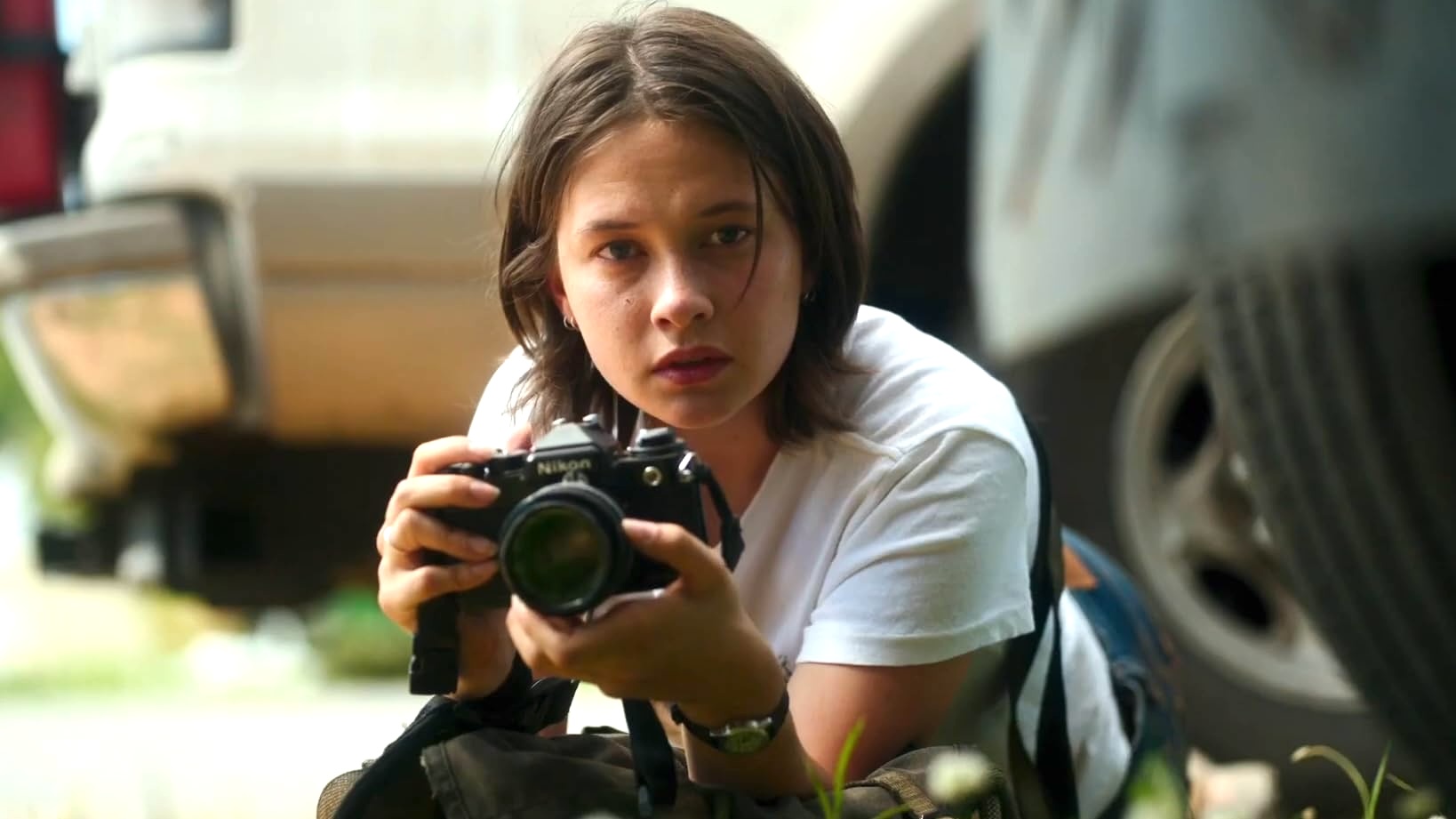
This biopic is as much a tribute to photojournalism as it is to its protagonist, Lee Miller. In an age where AI-trickery can make us doubt our own eyes, it is a timely reminder of why we need to document what’s really happening in the world. In the 1940s, no one wanted to believe in concentration camps or desperate, scapegoated women being hanged for collaboration. War photographers forced people to confront the grim realities, to understand the scale of the horrors that had been unleashed.

Miller trod a lot of paths in her life, but Lee, directed by Ellen Kuras, focuses on her work during the second world war. There’s a framing device: wannabe journalist Antony (Josh O’Connor) is interviewing the now elderly photographer, his questions evoking stories told in flashback. Her previous work as a fashion model and artists’ muse is acknowledged in a brief but revelatory early scene, where she wonders what on earth she’s going to do with her life now that she’s aged out of – and is bored by – all that. When she meets Roland (Alexander Skarsgård), marriage beckons but it’s not enough. Miller is a formidable woman and she needs to forge her own path.

Kate Winslet is marvellous as Lee, shimmering with pent-up energy and drive. Her Miller is motivated by righteousness as well as ambition: she’s a woman and, what’s more, she knows the camera from the other side; she can tell a different story from her male counterparts. If that means barging her way in and ignoring ‘no women’ regulations, then so be it. Her work is important. Not that she’s a loner: she’s sociable and enjoys working alongside her male colleague and friend, David Scherman (Andy Samberg).

The real Miller was indomitable, and Winslet absolutely does her justice. This is a powerful performance, harnessing the grit and determination that allowed Miller to capture such provocative and controversial images, many of which are recreated here.

Perhaps the biggest surprise for me is the realisation that Miller’s war correspondence work was done for Vogue magazine, then edited by Audrey Withers (Andrea Riseborough). I’ve never read Vogue; I thought it was all fashion and frivolity. Its serious side is a revelation, much like Miller’s shocking photos must have been for those who previously knew her only as a model.

The cinematography – by Pawel Edelman – captures the brutality of war: the scarred landscapes, chaos and traumatised faces. We also see how, ninety years ago, fascism trumpeted its arrival but still caught people by surprise. There’s a lesson here, and it’s not a subtle one.

Focus. Flash. Snap.

See.

4.3 stars

Susan Singfield

Speak No Evil

12/09/24

Cineworld, Edinburgh

A cut above the usual Blumhouse productions, Speak No Evil is a multi-faceted psychological thriller. Directed by James Watkins, this is an adaptation of a 2022 Danish movie of the same name (which I confess I haven’t seen). It’s also the title of my thriller novel from 1993, but I’m going to be gracious and overlook that fact. Suffice to say that if the aim of the film is to put viewers on the edge of their seats and keep them there for an hour and fifty minutes, then it succeeds in spades.

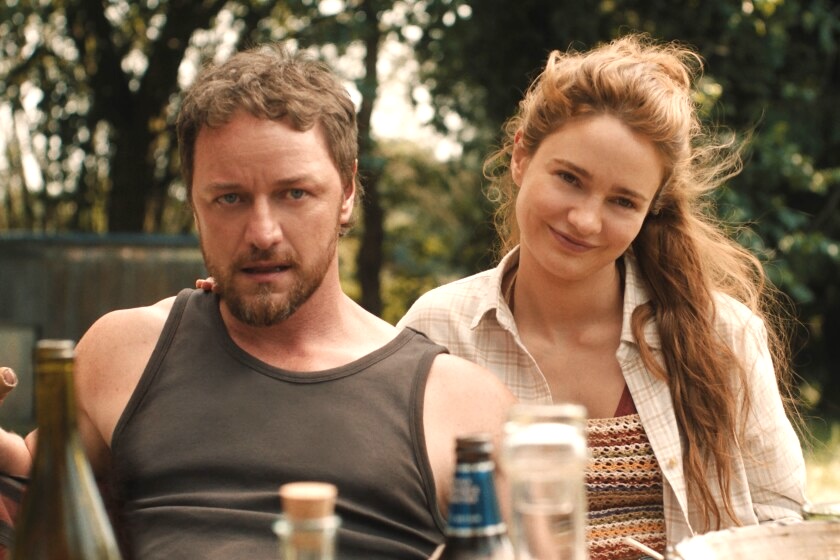
American couple, Ben (Scoot McNairy) and Louise (Mackenzie Davis), take their needy daughter, Agnes (Alix West Lefler), on holiday to Italy. Ben and Louise are currently going through a rough patch in their relationship and are looking to heal some wounds, so when they fall into company with irrepressibly confident British couple, Paddy (James McAvoy) and Ciara (Aisling Franciosi), they find themselves irresistibly pulled into their orbit. Paddy and Ciara also have a child in tow, the sullen and uncommunicative Ant (Dan Hough), who Paddy – a doctor no less – asserts is suffering from a rare condition that makes him virtually unable to speak.

The six holidaymakers get along surprisingly well. In a reversal of the usual national stereotypes, it’s the Americans who are all prim and repressed and the Brits who take delight in being loud, swaggering and generally unfettered. Then Paddy invites his new acquaintances to leave the pressures of their lives in London to enjoy a post-holiday visit to his lovely home in the West Country. Ben and Louise are at first somewhat unsure, but eventually decide to give it a go. After all, what can possibly go wrong?

Um, plenty as it turns out – but the clever thing about the screenplay (co-written by Watkins with Christian and Mads Tafdrup) is that the ensuing shenanigans at Paddy and Ciara’s suspiciously-palatial homestead are always kept just the right side of believability. This script takes its time to fully establish the American characters, so that we really care when things inevitably begin to go haywire for them. There’s a gradual evolution from edgy confrontation into the realms of full-blown horror. At first, it’s just Paddy and Ciara’s lack of propriety that’s the issue – but, as more and more boundaries are crossed, so the suspense rises to almost unbearable levels.

McAvoy’s Paddy is a wonderfully nuanced creation, by turns warm, emotive, sly and ultimately terrifying – but all the characters are nicely played and Davis in particular excels as she is increasingly compelled to compromise her beliefs. If the film’s latter stages are reminiscent of Sam Peckinpah’s Straw Dogs, well that was a very long time ago (1971 to be precise). Suffice to say that, as the narrative approaches its final furlongs, I find myself having to restrain myself from shouting advice at the screen. You know the kind of thing.

‘Don’t go back in there!’ ‘Look behind you!’ And that perennial favourite, ‘Forget about the cuddly toy!’ (You’ll need to see it to fully understand.)

One thing’s for sure. I’m never going to hear The Bangles performing Eternal Flame again without thinking of this nail-biter. Those of a nervous disposition will probably want to give this a miss, but cinematic thrill-seekers like me are going to enjoy it right down to the final frame, when they may – as I did – realise they’ve been holding their breath for a bit too long…

5 stars

Philip Caveney

Beetlejuice Beetlejuice

06/09/24

Cineworld, Edinburgh

The juice is loose!

Look, there’s no getting around the fact that Beetlejuice Beetlejuice isn’t a very good film. That’s not to say I don’t enjoy it. I do; I’m not immune to nostalgia. I was seventeen when the original movie was released and I loved Winona. “I myself am strange and unusual,” was every teenage goth girl’s clarion call and Lydia Deetz was my style icon for the next decade. So of course I’m watching Tim Burton’s long-awaited sequel on the day of its release.

It’s been thirty-six years but Ryder has barely changed. Nor has Michael Keaton: his Beetlejuice is as repellant as ever. Still, at least his lust for Lydia is a bit less creepy now that she’s an adult.

Adult Lydia is a celebrated medium. This makes me laugh: it’s gloriously obvious. She’s in the middle of recording her TV show when her stepmum, Delia (Catherine O’Hara) calls with bad news: Lydia’s dad, Charles, has died. It’s time to head back to the haunted house in Winter River, with dodgy boyfriend Rory (Justin Theroux) and angry daughter Astrid (Jenna Ortega) in tow. It’ll be fine. All she has to do is stay away from the model village in the attic and make sure no one says “Beetlejuice” three times.

Beetlejuice. Beetlejuice. Beetle… Oops.

Sadly, from hereon in, the plot veers out of control, as wild and unpredictable as its eponymous antihero. In the underworld, a brilliant sequence where Beetlejuice’s ex-wife, Delores (Monica Bellucci), declares vengeance on him even as she’s stapling her dismembered body parts back together peters out into nothing, squandering a fun idea and a strong performance. Willem Dafoe is similarly under-used as Wolf Jackson, a dead actor struggling to differentiate between himself and the long-running character he played. It’s a neat set-up with nowhere to go. Meanwhile, in the land of the living, Rory is pressuring Lydia to marry him, Delia is turning Charles’ death into an art installation, and Astrid – still mourning her own dad, Richard (Santiago Cabrera) – has met a cute boy (Arthur Conti), who likes reading almost as much as she does… It’s scattershot to say the least.

Of course, when you throw this much at something, some of it sticks – but there’s a lot of wastage. The animated sequence showing Charles’ death is nicely done, but it feels like a segment from a different film. Even more out of place is the black-and-white Italian flashback, the nod to horror pioneer Mario Bava an easter egg for the wrong audience.

It’s much more of a kids’ film than I remember. In fact, Beetlejuice Beetlejuice reminds me of Alice in Wonderland (Lewis Carroll’s original, not Burton’s dismal remake). The imagery is remarkable, there are a lot of memorable characters and some gorgeous set pieces – but the rambling story doesn’t make much sense. Still, I guess there are worse insults. Alice isn’t exactly a failure, and maybe Beetlejuice X 2 will prove similarly popular. At tonight’s screening, the prevalence of gleeful tweenagers in stripy costumes suggests it well might.

So why not go see it and judge for yourself? If you’re happy to sit back for a couple of undemanding hours of gothic silliness, buy your ticket now. You get a free demon possession with every exorcism…

3 stars

Susan Singfield