Film

Joy

23/11/24

Netflix

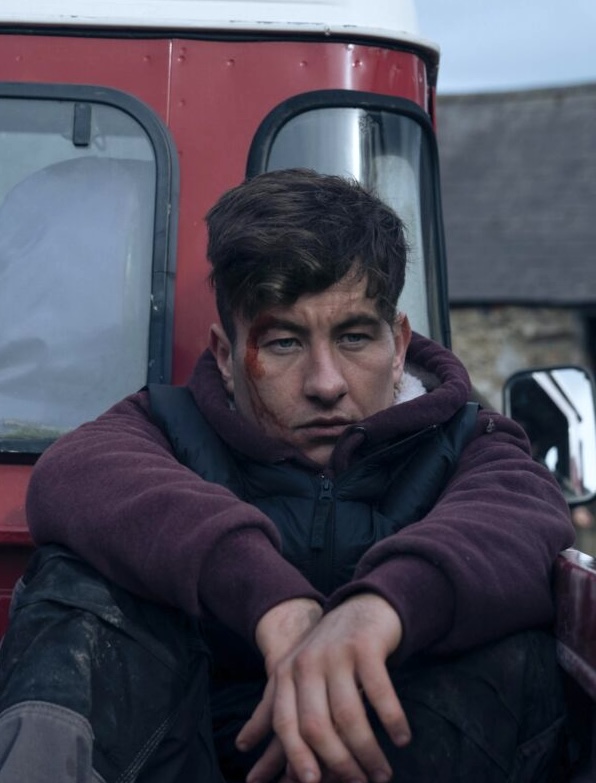
For people of a certain vintage, the name of Bob Edwards might ring a bell. He was, of course, the doctor who came up with the concept of Invitro Fertilisation and who, after years of tireless work, was behind the birth of Louise Brown – the first ‘test-tube baby’ as the press of the era dubbed her. You’ll probably also have heard of Patrick Steptoe, the surgeon whose advances in keyhole surgery made the whole process a possibility.

But the name Jean Purdy is certainly not as familiar. The third member of the team, an embryologist, Purdy worked alongside the two men (and, indeed, as this film suggests, was ultimately the driving force that brought their work to completion). And yet, to a great degree, her contribution has been largely airbrushed from history. She didn’t even merit a mention on the memorial plaque at Oldham General Hospital (Louise Brown’s birthplace) until 2015.

This story begins in 1965 when we meet Purdy (Thomasin McKenzie), freshly graduated from nursing school, being interviewed by Edwards (James Norton), who has recently embarked on the project that will occupy him for many years. His aim is simple: to provide an answer to all those would-be parents who have been prevented from having children because of a simple quirk of nature. Edwards and Purdy quickly become a duo. But their first goal is to enlist the help of Steptoe (Bill Nighy), who – though brusque and dismissive at first – is soon won over, largely by Purdy’s direct, no-nonsense approach.

The trio duly embark on years of experimentation as they work towards their ultimate goal. Underfunded and mocked by the tabloid press (who dub Edwards ‘Doctor Frankenstein’), it’s a long hard road – and it’s not until 1978 that their years of work finally bear fruit. Along the way, Jean’s relationship with her own mother is broken. Gladys (Joanna Scanlon) is deeply religious and sees this whole endeavour as ‘sinful’ and ‘unnatural.’ She cuts her daughter out of her life and even asks her not to attend the church they have both gone to for years. It’s only when Gladys falls ill that an uneasy alliance is finally established.

Purdy also nurtures a secret: she herself suffers from endometriosis and is unable to have the child that she has always longed for…

Jack Thorne’s screenplay is beautifully understated, as is Ben Taylor’s direction, which effortlessly catches the drab look and feel of the 60s and 70s. The three leads handle their roles with considerable aplomb and McKenzie in particular is wonderfully affecting, managing to convey her character’s inner turmoil with little more than a wistful look and a sidelong glance. As somebody who has personal experience of the benefits of IVF in the form of my much-loved daughter (and I fully appreciate how easy it was for me as the male in the relationship), I don’t mind admitting that some of the scenes here have me filling up.

Joy is a ‘small’ film, which probably accounts for the fact that it’s not competing with the likes of Gladiator 2 at your local multiplex and, instead, has gone straight to streaming. But it’s really worth the watch. It tells a fascinating true story of courage and determination.

And in its own quiet way, it’s a remarkable film.

4.3 stars

Philip Caveney

Wicked: Part One

22/11/24

Cineworld, Edinburgh

It’s gratifying to see the cinema so busy on this icy cold November evening. There’s been a lot of speculation recently about movie-goers being averse to musicals – indeed, there was a notable absence of songs in the trailer for this very film. But, if tonight’s showing is anything to go by, there’s plenty of life in the genre yet. Just not, perhaps, when it strays into the DC universe (Joker: Folie a Deux, I’m looking at you).

Oddly, considering how often I’m at the theatre, I’ve never actually seen Wicked on stage, so the movie is my introduction to the tale. This is clearly not the case for most of the audience: there’s an abundance of green clothing and nail varnish, a lot of excited pre-film chatter and groups of women in the loos afterwards discussing where the film diverges from the show they know and love. Thankfully for the industry, the reactions I overhear are universally positive.

For me, there are a couple of negatives. First, I’m not super-happy about the fact that this is just ‘Part One’. I always feel cheated by movies that only tell me half a story and, although the central relationship between Elphaba and Galinda has a satisfying arc, the dark hinterland – the genocidal capture and destruction of speaking animals – is barely developed at all. Second, with the exception of Defying Gravity, none of the songs seems particularly memorable.

For the most part, though, Wicked is great. For those not in the know, it’s the origins story of the opposing magical forces of good and evil from The Wonderful Wizard of Oz, i.e. The Wicked Witch of the West and Glinda, the Good Witch of the North. In this prequel to L Frank Baum’s novel, Elphaba (Cynthia Erivo) and Galinda (Ariana Grande) meet at boarding school, where they are forced to share a room. Initially, they despise one another: Elphaba is powerful, studious and green, while Galinda is rich, popular and, well… blonde. But opposites attract, and over time they learn to see the good in one another, forging a strong friendship – which even survives the strain of their attraction to the same guy, Fiyero (Jonathan Bailey). When their history professor, a goat called Dr Dillamond (Peter Dinklage), is arrested and forcibly removed from their classroom amid nefarious plans to cage all speaking animals, Elphaba’s sorcery teacher, Madame Morrible (Sandra Yeoh), encourages her to go to the Emerald City, to plead with the Wonderful Wizard (Jeff Goldblum). But all is not as it seems…

Erivo and Grande are perfectly cast as the mis-matched pair, both utterly captivating in their roles. While Erivo provides the emotional depth – Elphaba is a study in suppressed yearning – Grande is the comic relief, all fluffy self-absorption and steely sweetness. It’s a delightful pairing.

Thanks to Alice Brooks’ cinematography, the film looks sumptuous. Oz has been gloriously rendered by designer Nathan Crowley: it’s a little bit steam-punk, a little bit Middle Earth, a truly fantastical land. I love the repeated cog motif, in Shiz academy’s library, on the Oz train and – naturally – in the Emerald City’s Royal Palace. Director Jon M Chu has created a superb stage-screen hybrid, combining established musical theatre-style choreography with a very modern filmic sensibility. LGBTQ+ themes are brought to the fore, with many explicitly queer-coded characters, and lots of deliberate ambiguity, so that we – along with the Ozians involved – are made to ponder where the line is drawn between platonic and sexual attraction, between friendship and love. It works well, emphasising the teenage protagonists’ heightened emotions. No wonder young adults love this story so much.

Judging by tonight’s screening, Wicked: Part One looks certain to be a box office success. I just wish I didn’t have to wait a year for Part Two.

4.1 stars

Susan Singfield

,

Gladiator 2

17/11/24

Cineworld, Edinburgh

Back in the year 2000, Gladiator was a significant game-changer. Ridley Scott’s sword and sandal epic, starring a lean, mean Russell Crowe, wowed audiences and critics alike. It was nominated for twelve Oscars and actually won five, including Best Picture and Best Actor for Crowe. Over the intervening years, Scott has often stated his intention of doing a sequel, if only he could find the right story. And finally, nearly twenty-five years later, I’m sitting in front of an IMAX screen, eager to see what he’s come up with.

I seriously doubt that Gladiator 2 will be picking up any awards (except perhaps for special  effects) because I suspect that galley has sailed. And to be honest, in most respects it plays more like a re-run of the original than an honest-to-goodness sequel. But don’t let that put you off.

It’s some thirty years after the death of Maximus when we first meet Lucius (Paul Mescal), a soldier living and working in Numidia, alongside his wife, Arishat (Yuval Gonen.) But it isn’t long before a huge fleet of Roman warships, led by General Marcus Acasius  (Pedro Pascal), appears on the horizon. As ever the Romans are looking to extend their empire and this is just the next step in their bid for world domination. An epic battle ensues, replete with giant trebuchets and fusillades of arrows. In the carnage, Arishat is killed and Lucius taken prisoner and ferried back to Rome. On the long sea voyage he (understandably) nurtures a desire for revenge on Acasius. 

Rome is no longer the glorious empire it once was. Ruled by despotic brothers, Geta (Joseph Quinn) and Caracalla (Fred Hechinger), it’s become a place where corruption holds sway and where cunning players like gladiator-master, Macrinus (Denzel Washington), can rise to positions of influence. Does the latter have bigger ambitions than buying and selling gladiators? Well, naturally he does.

Macrinus quickly spots a quality in Lucius that he feels he can exploit and gets him into the arena at the earliest opportunity. Lucius, it turns out, has the ability to pulverise all who oppose him, even if he does pause every so often to quote Virgil. Could it be that he has some connection to the late Maximus? When we learn that Acasius’s wife is Lucilla (Connie Nielsen – the only major character to return from the original film), it soon becomes clear where this story is headed…

Gladiator 2 could justifiably be criticised for failing to explore new ideas, but this film’s DNA is all about its sheer sense of scale. Scott has always been a master of battle scenes, and lovers of spectacle can hardly complain about being short-changed in that department. Deep into his eighties now, Scott is a director who knows how to capture massive action set-pieces at testosterone-fuelled levels that are rarely even attempted these days. Wherever possible, he utilises real sets and thousands of extras in order to convey their magnitude.

There are some call-backs to the first film – scenes featuring wheat, whole lines of dialogue lifted from Gladiator 1 and that trope of stooping down to pick up a handful of earth, as though such actions can be inherited. And screenwriter David Scarpa even throws in a cheeky ‘I am Spartacus’ moment, which I think is fair enough under the circumstances. A suitably beefed-up Mescal effortlessly places a sandal-clad foot onto the A list while Washington is clearly having a whole ton of fun, camping it up as a devious player, who will seemingly let nothing get in the way of his rise to power.

There are a couple of missteps. An early dust-up in the Colosseum has Lucius and his fellow-captives pitched against a tribe of what appear to be shaved baboons, CGI creations that seem to have wandered in from some kind of demented science-fiction movie – and quite how the skinny, blonde-haired kid from the flashbacks has grown up to be Paul Mescal is one for the geneticists of the world to figure out.

But if the aim of this film was to go bigger and louder than what came before (and I suspect that was exactly the object of the exercise) then it has succeeded in spades. The sequence where a pitched sea battle is enacted in the flooded coliseum is an extraordinary slice of action cinema (and, before you Google it. let me assure you such things did actually happen – though the addition of sharks might be a touch of artistic license). Likewise, Scarpa’s cast of characters is, for the most part, loosely based around real historical figures.

I know I say this a lot but don’t wait for streaming. See this on the biggest screen available and, as you watch, ask yourself that all important question:

“Am I not entertained?” For me, the answer is, most definitely a resounding, “Yes, I am entertained!”

4.5 stars

Philip Caveney

Paddington in Peru

11/11/24

Cineworld, Edinburgh

After the success of Paddingtons 1 and 2, it was perhaps inevitable that a third instalment would eventually amble into view. But previous director Paul King did set a high bar. His films were perfect family-friendly adventures that kept both children and adults thoroughly entertained. King has now transferred his talents to the somewhat under-appreciated Wonka franchise, so this time out, directorial duties fall to Dougal Wilson, while the screenplay is the work of four writers, one of whom is original scribe Simon Farnaby.

As the title suggests, the third film sees Paddington and his adoptive family, the Browns, leaving their London home in search of Paddington’s beloved Aunt Lucy (voiced by Imelda Staunton), who has gone missing from her nun-run retirement village, deep in the jungles of Peru. The alarm has been raised by the Reverend Mother (Olivia Colman, in yet another scene-stealing role). It’s apparent pretty much from the outset that there’s something a bit dodgy about her – though she’s still unmistakably, adorably, Olivia Colman, singing and dancing her socks off. Once in Peru, the Browns – Hugh Bonneville, Emily Mortimer (replacing Sally Hawkins), Madeleine Harris and Samuel Joslin, accompanied as before by Mrs Bird (Julie Walters) – fall in with mysterious riverboat captain, Hunter Cabot (Antonio Banderas) and his daughter, Gina (Carla Tous). Cabot is introduced via an obscure film reference (Werner Herzog’s 1982 jungle odyssey, Fitzcarraldo), that only a few movie buffs are likely to spot.

A convoluted South American adventure dutifully ensues with occasional nods to Indiana Jones and the like, but it must be said that this isn’t quite as sure-footed as the previous offerings. Paddington (Ben Whishaw) is still utterly delightful and just as prone to pratfalls, but the slapstick isn’t as assured and the ‘fish-out-of -water’ premise of the first film doesn’t really work so well in a jungle. Furthermore, with just about every actor that has appeared in the series popping up for an obligatory cameo, plus scenes where Cabot is haunted by no fewer than five of his gold-obsessed ancestors, the film feels too busy and over-stuffed for its own good. There’s also a tendency for the film’s messages to be pounded home with a huge mallet rather than trusting younger audiences to take them on board.

Don’t get me wrong, Paddington in Peru has enough endearing moments to make it worth the watch and I’m sure youngsters will still be suitably entertained by the little bear’s antics but, all things considered, this offering comes in a good distance behind its predecessors.

Make sure you stay in your seats through the lengthy credits for a welcome call-back to (yet another) character from one of the earlier movies. Sadly, although I’m happy to see him, this only serves to emphasise that the latest adventure doesn’t offer anyone else quite as memorable.

3.8 stars

Philip Caveney

Blitz

09/11/24

Cameo Cinema, Edinburgh

Steve McQueen is always a fascinating filmmaker and I love the fact that I never quite know what to expect from him. Blitz is an Apple Original, destined to start streaming soon, but I would urge anyone interested to seek out an independent cinema where it’s showing, because this is a film that deserves to be seen on the big screen. As the name suggests, it’s set in 1940 as London undergoes the Blitzkreig, bombed on an almost nightly basis by the Luftwaffe.

The story is centred around George (Elliott Heffernan), a young mixed-race boy, who lives with his mum, Rita (Saoirse Ronan), and his grandad, Gerald (Paul Weller), in a little terraced house in the city. George has never met his father, who we learn (in flashback) has been deported back to Grenada for entirely nefarious reasons. As the bombing becomes more intense, the government’s plan for the mass evacuation of children from the city is announced. George is reluctant to leave his mum but, together with a bunch of other youngsters, he’s put aboard a train heading for the safety of the countryside.

But George has other plans and, at his first opportunity, he jumps off the train and starts to make his way back along the track in the direction of home…

What ensues repeatedly puts me in mind of a YA adventure as George encounters a whole selection of characters on his way home: kindly Black air-raid warden, Ife (Benjamin Clémentine); callous Fagin-esque thieves, Albert (Stephen Graham) and Beryl (Kathy Burke); and a trio of friendly young boys who keep challenging George to do ever more reckless things. His odyssey is intercut with scenes of what’s happening to Rita: working in a munitions factory; heading out on the town with her friends, Doris (Erin Kellyman) and Tilda (Hayley Squires); even performing a song for the BBC when a live series visits the factory. Episodic it most certainly is but, unlike most of the Sunday evening dramas it might be compared to, the stakes here are perilously high and happy endings are by no means assured. Whenever the story is in any danger of heading towards sentimentality, McQueen (who also wrote the screenplay) finds a way to snatch it back and amp up the jeopardy, never allowing us to forget that these are dangerous, unpredictable times – and not everybody is destined to make it to the end of the line.

The production values are first-class throughout, the depictions of the war-torn city sometimes awe-inspiring, occasionally verging on high art. Blitz also offers a fresh insight into the era, the war seen from the point of view of a boy who suffers from racial slurs on a daily basis. A scene where George wanders through a deserted shopping arcade looking at an exhibition depicting the subjugation of slaves is particularly affecting; so too, an extended sequence at the Café de Paris which depicts a Black orchestra playing for the entertainment of exclusively white, upper-class customers – a frantic, sexually-charged show which is destined to be interrupted in heart-stopping fashion.

Ronan, as ever, portrays her character with absolute assurance and even demonstrates a decent singing voice but it’s Heffernan who is handed the biggest challenge here, carrying this powerful and affecting film with absolute authority. I’ve seen some decidedly lukewarm advance reviews for this, and am at a loss to understand why some critics have failed to appreciate its evident charms. It’s epic filmmaking of the highest order. As I said, it will be on your televisions soon, but it won’t look as awesome as it undoubtedly does on a cinema screen.

4.6 stars

Philip Caveney
Small Things Like These

03/11/24

Cineworld, Edinburgh

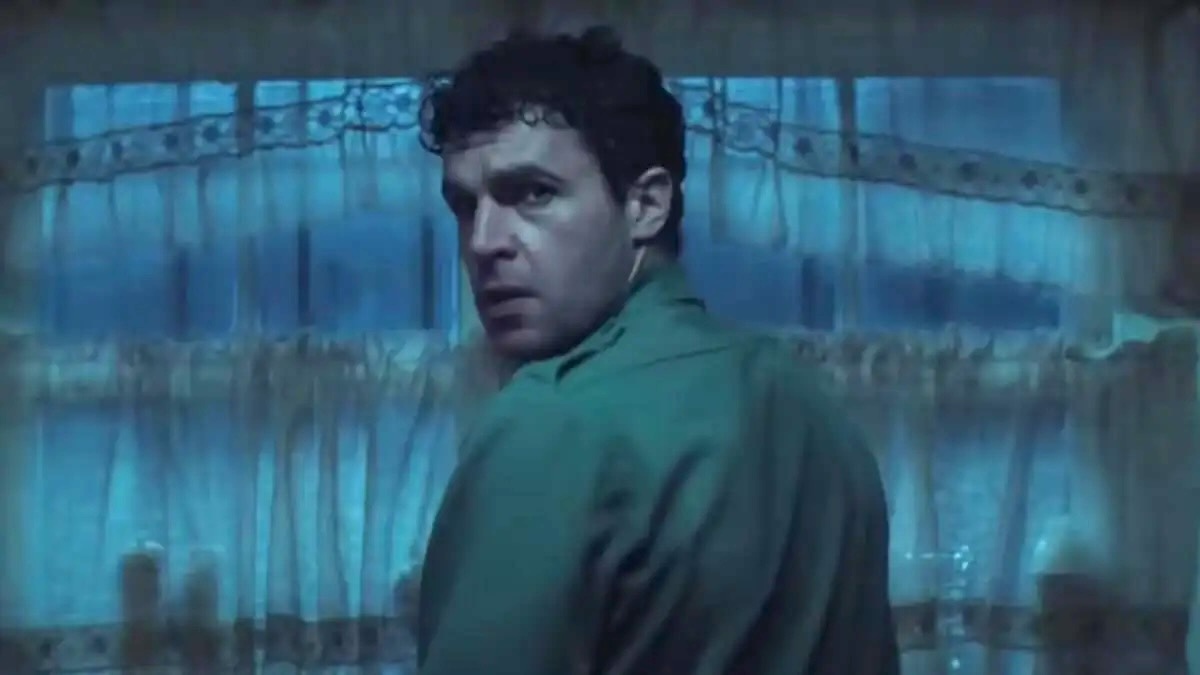
Some films are like icebergs. There’s a lot more going on beneath the surface than we are actually shown onscreen. Small Things Like These, directed by Tim Mielants and adapted by Enda Walsh from the novella by Claire Keegan, is a good case in point.

Set in a small town in Ireland some time in the early 1980s, it’s the story of Bill Furlong (Cillian Murphy), a mild-mannered coal man, who spends most of his time distributing sacks of fuel to the local community. He rises in the small hours every morning and plies his trade through all weathers. Every night he comes home to his wife, Eileen (Eileen Walsh), and his five daughters, living cheek by jowl in their little house. His first task is always to scrub his dirt-encrusted hands clean. But some things are not so easily erased.

One of his regular delivery slots is to the local convent and, when visiting the place, he cannot help but notice the seemingly endless ranks of teenage girls, pressed into service in the laundry and the kitchen, working like slaves for the nuns, under the steely command of Sister Mary (Emily Watson). When he finds one of the girls, Sarah (Zara Devlin), who is pregnant and being made to sleep in the coal shed as a punishment, the incident kindles a series of powerful memories from his childhood, when young Bill (Louis Kirwan) and his unmarried mother – also called Sarah (Agnes O’Casey) – were taken into the home of a kindly local woman, Mrs Wilson (Michelle Fairley).

In terms of plot, there isn’t much more to be said but what there is – in abundance – is a sense of steadily mounting pressure as older Bill, a man who finds is hard to be confrontational, who can barely muster half a dozen words in any given conversation, gradually arrives at the realisation that he has to do something about a situation that will allow him no rest.

Murphy manages to evoke so much with just smouldering expressions and the occasional panic attack, while Watson submits a powerful cameo as Sister Mary: cold, supercilious, calculating, willing to bribe Bill with cash to procure his silence about some of the things he’s witnessed. Meanwhile, everyone else in the community is urging him not to make waves, pointing out that the nuns have the power to make things really difficult for him and his family.

And Christmas is coming… why rock the boat?

As somebody who was raised as a Catholic, I identify with much of what I see here – and as the film builds to its powerful conclusion, I find my anger rising along with it. Small Things Like These won’t be for everyone – so much of the story is left for the viewer to mull over and conjecture about – but for my money it’s a little gem, a film that pins down the dark iniquities that are all too often committed in the name of religion. It’s possibly the bleakest ‘Christmas’ movie ever.

The film is dedicated to all the women who suffered in the ‘Magdalene laundries’ of Ireland before they were finally done away with in the – believe it or not – late 1990s.

4 stars

Philip Caveney
Anora

02/11/24

Cineworld, Edinburgh

Sean Baker excels at placing marginalised people centre stage and showing them in all their complex, multi-faceted glory. Transgender sex workers (Tangerine), motel-dwelling families (The Florida Project), washed-up porn stars (Red Rocket): they’ve all emerged from his films as so much more than mere victims or villains. This time, his camera is focused on exotic dancers and escorts.

The eponymous Anora (Mikey Madison) – or Ani, as she prefers to be known – works in a New York strip club. In the opening stretches of the film, the emphasis is on the ordinariness of her job: Ani moves from client to client with practised ease, using the same lines, the same moves, spending her break in the staff room, chatting to her co-workers while eating a Tupperware-packed meal.

But one night, a young Russian turns up at the club, demanding an escort who can speak his language. Thanks to her Russian grandmother, Ani fits the bill, although she prefers to speak English because her accent is “terrible”. Ivan (Mark Eidelshtein) turns out to be the son of a billionaire oligarch, and he’s willing to pay handsomely for Ani’s time. He’ll give her $15k if she’ll spend a week with him in his mansion as his girlfriend.

Of course Ani agrees. Why wouldn’t she? Ivan is fun: he’s blithe, impulsive, generous and wild. Ani is many of these things too, although she can’t afford to be so carefree. In Vegas – where they’ve gone on a whim in his private jet – Ivan proposes. “Don’t mess about with this,” Ani cautions him. He’s not messing, he reassures her. And so they get married.

But there’s no happy-ever-after here because Ivan is a long way from Prince Charming. He’s a spoilt brat, infantilised by indulgent parents, who – when they learn of his inappropriate match – send their henchmen (Karren Karagulian, Yura Borisov and Vache Tovmasyan) to set things straight. Like the child he is, Ivan responds by running away…

The middle section of the film combines a comic caper with a tragedy, as Ani and the henchmen try to track Ivan down. The humour is slapstick but the emotions are raw. Madison is extraordinary in the central role, a firebrand of a character, lighting up the screen. While Karagulian and Tovmasyan – as brothers Toros and Garnick – provide the comedy via their ineptitude, Borisov – as Igor – is an altogether more serious and thoughtful character. Even stooges are fully fleshed-out in a Baker film.

In the closing stretches, we see how flawed the Cinderella model is. The social commentary here is fierce: rich people hold all the aces. The fallout is shocking and Baker skilfully leads us to a final scene of utter devastation.

5 stars

Susan Singfield

Heretic

31/10/24

Cineworld, Edinburgh

It’s Hallowe’en so it feels only natural to take in a creepy movie on this most auspicious of days. We’re reviewing some theatre tonight, so we decide to nip in to an afternoon showing of Heretic, which is having advance screenings prior to its full release tomorrow. The trailers have been promising (though, annoyingly, they show far too much of the actual film for my liking) and the idea of seeing Hugh Grant explore his darker side sounds like fun, so in we go.

Sister Barnes (Sophie Thatcher) and Sister Paxton (Chloe East) are Mormon missionaries whose thankless daily ritual is to go out into the world to try and enlist converts to their faith. In early scenes we see them cycling around an unnamed backwater of America, being roundly ignored by everyone they approach – apart from some teenagers who pull down Sister Paxton’s skirt in order to catch a glimpse of her ‘magic underwear.’

Pretty soon, however, they arrive at the remote home of Mr Reed (Grant), who invites them in for a chat, assuring them that ‘his wife’ is on the property, so it will all be above board. His house is… unusual, and as it turns out, he’s rather well read on the subject of religion – indeed, he’s made a study of the world’s four main faiths and is more than happy to share what he’s learned. It isn’t long before he’s telling the two young women that the Book of Mormon is a sham, that all religions are essentially the same and that Radiohead’s Creep is a direct steal from The Hollies’ The Air That I Breathe.

He also has a riddle for them to solve – one that requires them to risk everything they believe in. And he assures them that they will witness a miracle…

It would be a crime to reveal more about this curious concoction, other than to say that writer/directors Scott Beck and Bryan Woods create a dark sense of foreboding from the opening scenes onward and that Heretic’s early stretches become a sort of cod-philosophical discussion about the nature of belief. Religion, we are assured, is basically a construct created to exercise power over those who follow it.

The film is essentially a three-hander. (A back story featuring a church elder (Topher Grace) who is looking for the two young women is so brusquely handled that I can’t help feeling that some of it has been lost in the edit.) Grant meanwhile is having a whale of a time, playing up the erudite, hoity-toity malevolence to the max. Both Thatcher and East do an excellent job of portraying their respective characters’ mounting anxiety as they head deeper and deeper into the brown stuff.

It’s in the film’s last third that I start to have serious doubts about the whole enterprise. Once the full scale of the Reed residence is revealed, the logical part of my brain can’t stop wondering about the impossibility of a lone man keeping such a complicated establishment in running order. I mean, what are the maintenance costs? Why has he created such a complex labyrinth in the first place? And how has he managed to do it without anybody noticing?

The final twist seems to want to have its cake and eat it – are we seeing something that’s actually happening or is just a twisted vision in the head of one of the characters? Well, that will ultimately depend on your own beliefs, I suppose. I’ve been suitably entertained by what I’ve witnessed onscreen, but I’m left with the conviction that Heretic isn’t anywhere near as clever as its creators would like to think it is. But on the other hand, I haven’t seen anything else quite like it.

Happy Hallowe’en!

3.4 stars

Philip Caveney
The Wild Robot

27/10/24

Cineworld, Ediburgh

In what will almost certainly be one of Dreamworks’ final in-house animations, The Wild Robot pulls out all the stops, making this one of the most visually stunning productions outside of Studio Ghibli. In its early sections, it also deploys some perfectly-timed slapstick sequences that are laugh-out-loud funny.

This is the story of Rozzum Unit 7134 (voiced by Lupita Nyong’o), an AI ‘household assistant’ accidentally deposited on a Pacific island and inadvertently switched on by an exploratory rodent looking for food. ‘Roz’ immediately starts wandering the unfamiliar landscape, frantically seeking out suitable tasks to accomplish, but there are no humans to be assisted and the island’s resident wildlife inevitability see the new arrival as something to be feared. Determined to make a success of this unexpected situation, Roz sets out to learn all the different creatures’ languages so that she can adapt to their individual needs.

But things become complicated when she accidentally kills a nesting goose and crushes all but one of its eggs. She manages to save the surviving egg from the attentions of hungry fox, Fink (Pedro Pacal), and when it finally hatches, the chick – who Roz eventually names Brightbill (Kit Connor) – imprints on Roz, perceiving the robot as his mother. Roz now has some clearly designated tasks to accomplish. Brightbill needs to learn to eat, swim and then fly before he and the rest of the local goose population set out on their yearly migration. Assisted by Fink and a knowledgable possum(Catherine O’ Hara), Roz has to make some serious adjustments to her usual mode of practice…

As I said, The Wild Robot, based upon Peter Brown’s novel, is an impressive piece of animation, sometimes breathtaking in its depictions of the island’s landscape and its various inhabitants. Huge flocks of birds and butterflies are rendered in such detail that it sometimes feels like I’m watching a heightened David Attenborough documentary. Writer/director Chris Sanders also makes some canny observations about the nature of AI and its capacity for adaptation.

A shame then that in the final third, the script increasingly feels the need to have some of the characters making cringe-making fridge-magnet-style observations about the nature of love and understanding – Bill Nighy’s migration leader is a particular case in point. Those elements are already being shown in ways that even the youngest of audiences can comprehend, so such mawkish pronouncements feel like a mis-step. Also, the cynical part of my brain makes me wonder how, in the loving multi-species community that eventually evolves on the island, the carnivores will ever manage to survive.

But perhaps that’s just me.

Quibbles aside, this is a beautiful and genuinely moving film that explores some fascinating ideas. If it does prove to be Dreamworks’… ahem… swan song, then it’s an impressive note to end on.

4 stars

Philip Caveney
Smile 2

24/10/24

Cineworld, Edinburgh

The release of Smile was a genuine cause for celebration – an 18 certificate film that was actually scary and didn’t depend on costly special effects to achieve its goals. I loved the film, concluding my review by hoping that writer/director Parker Finn would resist the urge to turn it into a franchise. Two years later, here’s the unpromisingly titled Smile 2 and it’s time for me to eat a large slice of humble pie, because the sequel is bigger, gnarlier and, it must be said, way more ambitious than its predecessor. It manages to skilfully expand the original theme into a great big metaphor about the perils of stardom, drug addiction and fan worship. It’s better than the original, which let’s face it, hardly ever happens.

Skye Riley (Naomi Scott) is a celebrated pop diva, looking to relaunch her stalled career after a devastating car crash, which claimed the life of her partner, Paul (Ray Nicholson), and left her badly injured. Her body still carries the scars of the various operations she’s undergone in order to get back in the game but, compelled by her ever-pushy manager (and mother) Elizabeth (Rosemarie DeWitt), Skye is in rehearsal for the big tour that will hopefully propel her back into the charts. So – no pressure there.

When a back injury prompts her to visit her former drug supplier, Lewis (Lukas Gage), in the hope of scoring some prescription pain killers, she encounters a man who is under the grip of the mysterious inner demon that we encountered in the original film. (A pre credits sequence has quickly shown us how he came to be next in line for a helping of horror.) Lewis is grinning happily, even as he beats himself to death with a dumb bell.

Understandably not wanting to be associated with his death, Skye flees the scene but, as she goes gamely on with rehearsals, she’s horribly aware that something is wrong. The world of pop music inevitably has more than its fair share of grinning onlookers but, as the days slip by, there seem to be more and more of them and a mounting air of madness infects everything that Skye does, even when she reconnects with former best friend, Gemma (Dylan Gelula).

What’s more, her time is fast running out…

Scott is terrific in the lead role, acting up a storm as Skye moves from anxiety to fear to utter terror – and she also handles the musical elements with assurance, singing Cristobal Tapia de Veer’s compositions with enough authority to convince me that she really could cut it as a pop star if ever she desired such a career. Finn manages to construct a whole series of jump-scares that really do catch me unawares. The pop world gives him the opportunity to throw in plenty of unsettling images: the star-struck young fan with braces on her teeth who can only stare and smile; the malevolent stalker who wants much more than just an autograph – and the gurning dance troop invading Skye’s apartment at one point is an absolute triumph.

There’s also a toe-curling sequence where Skye is invited to be guest presenter for a major children’s charity and… well, let’s just say that things do not run as smoothly as she would like. As the pressure mounts, and poor Skye can’t even look into a mirror without seeing something terrifying, Smile 2 becomes a masterclass in runaway anxiety. What next, I wonder? Smile 3: The Musical?

If anyone can make that work, Parker Finn is clearly the man for the job.

4.8 stars

Philip Caveney