
Film

The End

30/03/25

The Cameo, Edinburgh

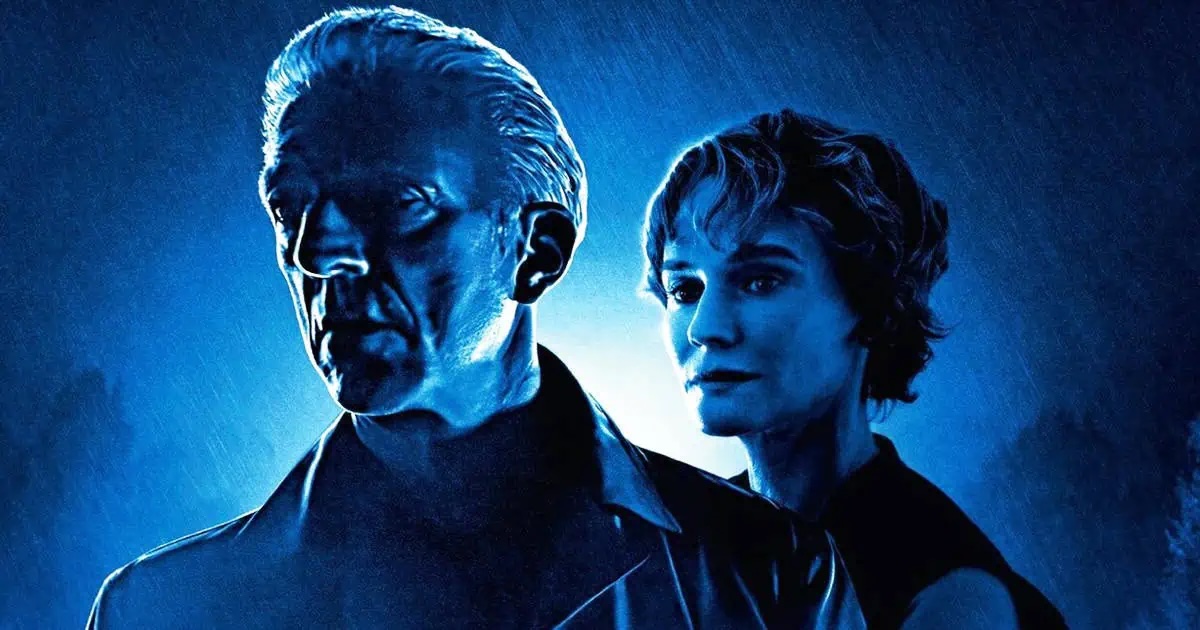
Joshua Oppenheimer might not be the most prolific of directors, but he’s certainly one of the most original. The documentary-maker’s first foray into fiction is a case in point: who else would offer us an unsettling post-apocalyptic… musical?

The setting is an oligarch’s nuclear bunker. There’s been some kind of climate disaster, precipitated by the billionaire’s fossil fuel company. Most of humanity is dead, but – decades after the fallout, far below the earth – a chosen few still live in luxury, albeit in the confines of some eerie salt mines.

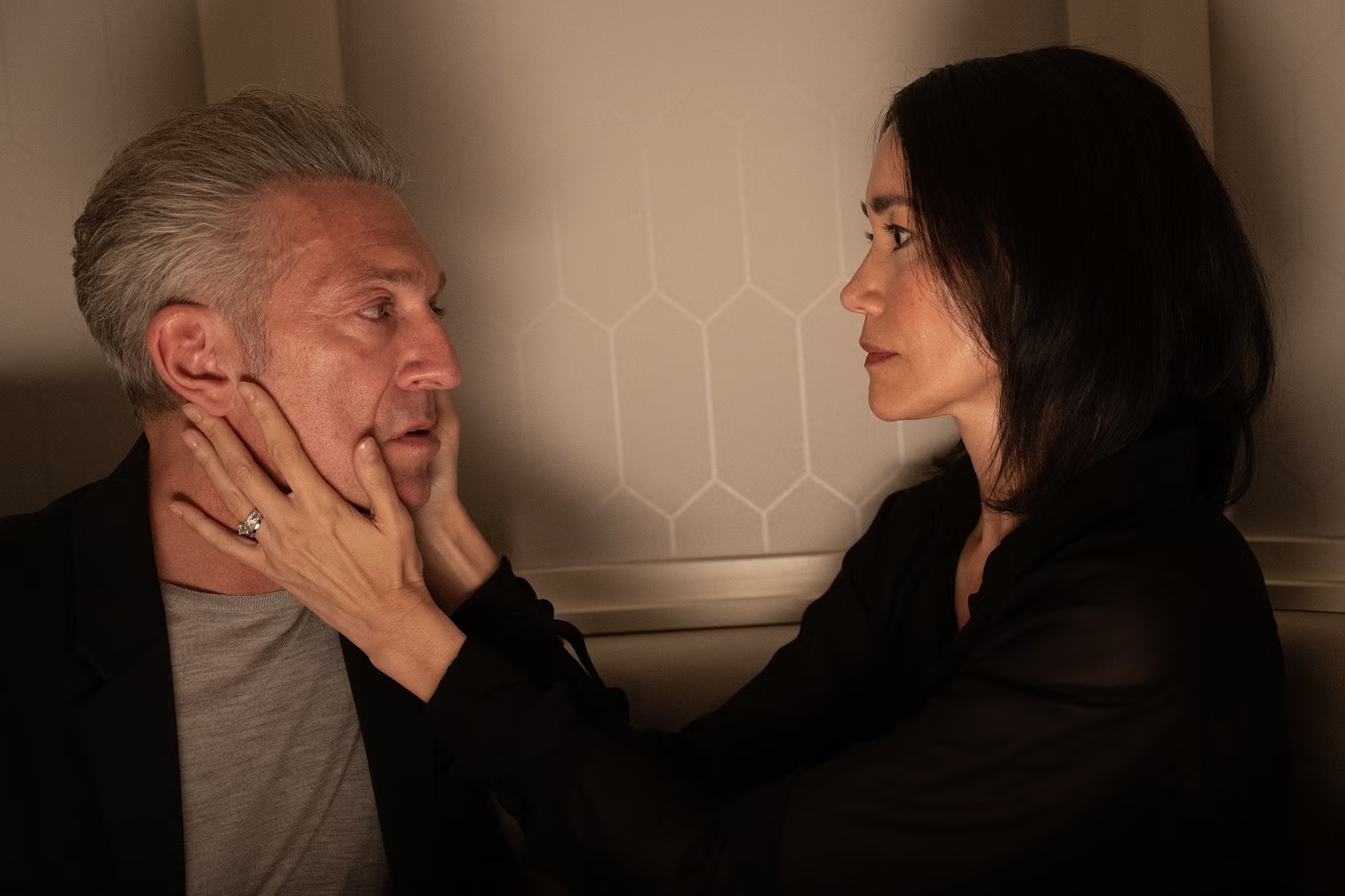
Father (Michael Shannon) is the oligarch, Mother (Tilda Swinton) his wife and Son (George McKay) their twenty-year-old child, born underground. He has never seen the sky, never met anyone outwith their small circle – and never questioned his parents’ tales about their former lives. Instead, he immerses himself in building an intricate model of all the outside places he’s only ever heard about.

The bunker has three more occupants: Friend (Bronagh Gallagher), Butler (Tim McInnerny) and Doctor (Lennie James). The trio are touted as “part of the family” but it’s pretty clear they’re here to serve, to take care of the cooking, the cleaning and the rich people’s health. Father spends his time working on a self-aggrandising autobiography, resisting Son’s attempts to offer editorial advice, while Mother fusses endlessly over the exact positioning of the priceless artworks on the walls. Life ticks by, one day much like another, an opulence-clad monotony that fulfils none of them.

And then Girl (Moses Ingram) turns up. She’s the first outsider Son has ever met, and he’s smitten. But she’s had to leave her family behind, and her survivor’s guilt opens up new avenues of thought for Son. Why has his family been chosen, out of everyone, to inhabit this haven? And why, when the place is vast, are there so few of them? Once he starts to ask questions, everything changes…

Mikhail Krichman’s cinematography is sumptuous: the scenes in the salt mines are particularly beautiful, but every shot is a work of art, as meticulously framed as the Renoirs and Monets decorating the bunker.

The film is billed as a musical but, despite the lengthy spoken sections, it feels more like an opera, with its formality of tone and portentousness. The music by Marius De Vries and Josh Schmidt amplifies the heightened emotions, but the vocal parts are sensibly kept simple, which suits the non-singers in the cast (such as Swinton). Ingram, Gallagher and McKay are more accomplished, and they are given the most to do.

Despite its bloated running time, The End is a thought-provoking and startlingly unconventional movie, quite unlike anything else on the big screen. It’s not one you’ll find at a multiplex, but it’s definitely worth the price of a ticket at your local indie (or Picturehouse) cinema.

4.3 stars

Susan Singfield

Dr Strangelove: National Theatre Live

29/03/25

Cineworld, Edinburgh

In 1964, I watched Stanley Kubrick’s dark satire, Dr Strangelove, in an RAF cinema somewhere in darkest Lincolnshire. I was thirteen years old, arguably a bit too young to fully appreciate its biting satire, but I remember being absolutely terrified by the apocalyptic ending, which left me feeling decidedly nervous about the world’s future.

Fast forward to the early 1980s, where I attend a stand-up gig at the Old Grey Mare pub in Didsbury, Greater Manchester. Friends have encouraged me to go along and catch a gifted young impressionist called Steve Coogan, who they predict ‘has a promising future ahead of him.’ It costs me fifty pence to get in and the funniest routine is the one where Coogan adopts the persona of a BBC reporter, commentating on a live tragedy unfolding in… er… Camberwick Green.

What I could never have predicted is that in 2025, Coogan would be starring in an adaptation of Kubrick’s film, adapted by Armando Iannucci from the original screenplay co-written by Kubrick and Terry Southern – and, perhaps more pertinently, that a story that played like an outrageous spoof in the 1960s feels suspiciously like a cautionary warning in the present day.

Brigadier General Jack D Ripper (John Hopkins) has a paranoid breakdown and orders a B52 bomber, piloted by Major TJ ‘King’ Kong (Coogan, in one of four roles) to drop a nuclear device on a target in the Soviet Union. President Merkin Muffley (also Coogan), after being briefed by General Buck Turgidson (Giles Terrera), finds himself presented with the tricky task of contacting the Russian President to warn him of the incoming attack. The Russian premier is understandably not too happy about the situation, especially when he learns that the aircraft is maintaining complete radio silence, and that the attack can therefore not be called off.

A whole series of disastrous events ensue…

This brilliantly-staged production is a weird hybrid – part play, part film – and at times it is astonishing in its sheer invention. Coogan is extraordinary. Like Peter Sellars before him, he also takes on the role of RAF officer Group Captain Lionel Mandrake and, of course, the titular Dr S, a man who can’t seem to stop himself from making involuntary Nazi salutes… (Now where have I seen that recently?) Some of the lightning-fast costume changes he’s obliged to undergo are so slickly done that I’m left gasping.

But it’s not just Coogan who excels here. Hopkins plays the cigar-chomping, alpha male, Jack D Ripper with panache, while Terrera milks plenty of laughs as the scheming, self-serving Turgidson. There’s a huge cast at work here and every one of them is drilled to perfection.

Hildegard Bechtler’s set design is accomplished, opening and closing to disclose a wild variety of settings, even managing to convincingly place the audience in the cockpit of a B52 bomber, flying over mountainous terrain. Iannucci handles the adaptation with a light touch, capturing the original film perfectly and only occasionally tweaking the script to accommodate more recent references.

You don’t have to have seen the original to appreciate this superb production, but it might prompt many to investigate it on streaming. Kubrick made many great films over his long career and was famously pernickety about his work. But I have no doubt that he would be absolutely delighted by what director Sean Foley and his team have done with what could be the filmmaker’s greatest achievement.

5 stars

Philip Caveney

Flow

23/03/25

Cineworld, Edinburgh

We managed to catch nearly all of this year’s Oscar nominated films at the cinema before (or shortly after) the event, but news that the widely-admired The Wild Robot hadn’t taken the gong for ‘best animation’ came as something of a surprise. Only a few minutes into Flow, which is finally on general release, that surprise is quickly annihilated. I often think that the word ‘masterpiece’ is overused but this groundbreaking animation by Latvian director Glints Zilbalodis is so accomplished, it’s all-too easy to see why it was handed the top award. The fact that it was made for a budget of three-million dollars – utilising free software package, Blender – only adds to the accomplishment.

Zilbalodis – who co-wrote the story with Matiss Kaza and Ron Dyens – eschews any of the long-established tropes we’ve come to expect from this genre. There are no talking animals voiced by well-known actors, the creatures that make up the cast can only miaow, bark, screech and grunt at each other and yet, somehow, that all adds to the wonder of the thing. The influences on the verdant look of this strange new world are more Miyazaki than Disney. Much of what I see on the big screen is quite simply breath-taking.

We’re somewhere in the near future and, while initially the world looks intact, there’s no sign of any humans, other than their empty houses and the everyday things they’ve left behind. Our hero is a black cat, who wanders across the countyside engaged in a never-ending search for food. He has a run-in with a pack of dogs, one of them an affable-looking golden retriever, but the confrontation is rudely interrupted by the arrival of a herd of fleeing deer. This is followed by a sudden and unexplained tsunami, a biblical flood that sets water levels rising at a terrifying speed.

The cat is lucky enough to encounter a sailboat drifting on the torrent but, once aboard, he finds it is already occupied by a capybara; though the two creatures have nothing in common, they quickly learn to co-exist. It’s not long before they are joined by the aforementioned retriever, an acquisitive lemur and a lanky secretary bird, who – it turns out – is pretty good at steering boats. Together they sail onwards, heading now towards a mysterious range of peaks on the far horizon. But what’s waiting for them there?

Flow is a great big allegory wrapped up in an enigma, one that fairly bristles with references. Climate crisis? Right there. Biblical references? Yup, you’ve got them – and not just Noah’s Ark. Allusions to death and what happens when creatures confront it? Oh, yes. It’s probably worth mentioning that there’s a lot of peril in this U certificate story and that some of its strands may not be suitable for younger viewers. While there’s no real violence to speak of, there is evidence of nature red in tooth and claw, so parents should think carefully before taking their smaller offspring along.

For older children and grown-ups, there’s a wonderful feast of viewing to be had, backed by soaring electronic music – composed by Zilbalodis (is there no end to this man’s talents?) with Rihards Zaļupe. Afterwards, there are great discussions to be had about all the different themes touched on by this ambitious, inspired, and sometimes downright challenging story.

It took five years to create Flow – and I’m already looking forward to exploring wherever Zilbalodis takes me next.

5 stars

Philip Caveney
Black Bag

15/03/25

Cineworld, Edinburgh

Meanwhile, back in the most unconvincing retirement since Frank Sinatra announced his ‘final’ tour, Steven Soderbergh has a new film. (We reviewed his previous effort, Presence, in January.) So he’s more productive than most of his peers and, if it sometimes feels as though he’s simply ticking some boxes here – “Ooh, I haven’t done a proper spy movie before!” – Black Bag is yet another notch on his belt, even if it seems like his latest opus is a little too understated for comfort.

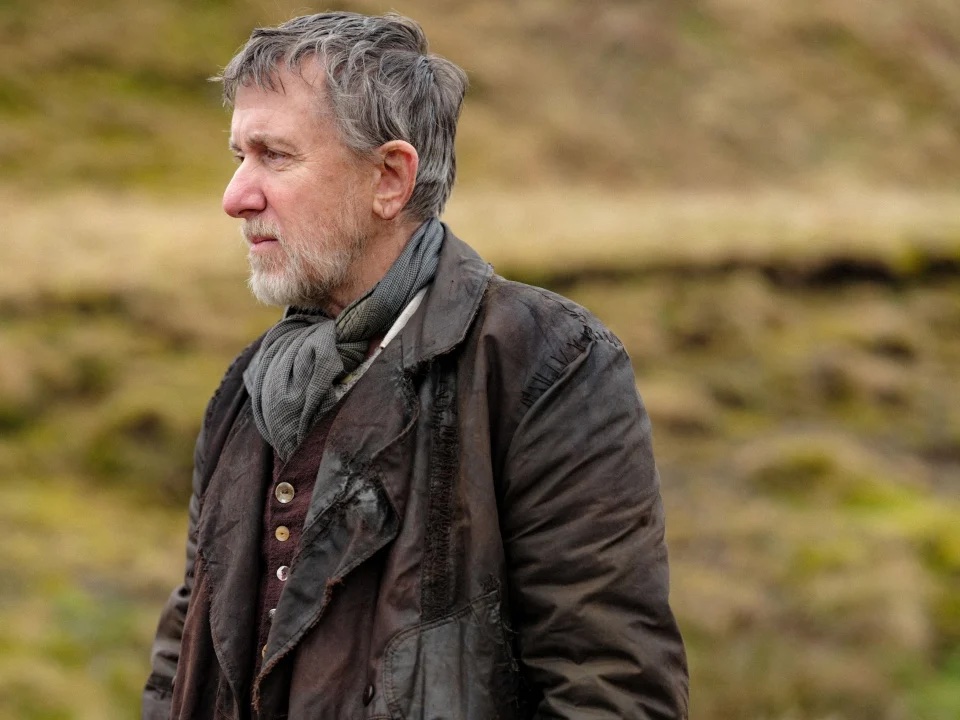
British intelligence officer George Woodhouse (Michael Fassbender) is contacted by his superior, ‘Meachum’ (Gustaf Skarsgaard), to investigate the leak of a top-secret software programme called ‘Severus.’ (It might just as readily have been named ‘McGuffin.) All we really know about Severus is that, if it falls into the wrong hands, thousands of people could die, though exactly how is a matter of conjecture. Meachum warns George that amongst the suspects is Woodhouse’s wife and fellow-operative, Kathryn (Cate Blanchett), who – George has to reluctantly admit to himself – has been behaving rather suspiciously of late. But he trusts her implicitly… doesn’t he? Meachum gives George a week to find out who is responsible but, shortly afterwards, Meachum succumbs to an unlikely heart attack and dies.

George is a meticulous operative and he promptly invites the four other suspects – all of them fellow spies – to a dinner party at his house, where he spikes a bowl of curry with a truth serum (after first warning Kathryn not to eat any). But who is the most likely candidate for this betrayal? Could it be satellite imagery expert, Clarissa (Marisa Abela)? Her current boyfriend, Freddie (Tom Burke), who is himself having an affair with… somebody? What about the agency psychiatrist, Zoe (Naomi Harris), who is privy to all their secrets? Or her current squeeze, James (Regé Jean Page), a man who is perhaps a little too cool and handsome to be entirely trustworthy?

To add a little extra spice, the agency’s overall boss, Arthur Steiglitz (Pierce Brosnan), would also appear to have some skin in the game…

Black Bag is, I suppose, a slice of cold-war claustrophobia. The title refers to the two-word excuse given by operatives when they don’t want their recent escapades to be investigated too closely. Soderburgh keeps everything bubbling along as David Koepp’s script switches slickly back and forth between the various machinations, and there are some cyber-tech scenes where suspects are investigated by hidden cameras… but there’s a problem here: it’s that I’m simply not invested enough in the characters to care what happens to them. The most interesting scene is the one where the four suspects undergo lie-detector tests and Soderbergh has fun cutting back and forth between their respective POVs, but that’s not really enough to keep me hooked through the entire hour-and-a-half run time.

And the closing scene’s final ‘twist’ doesn’t feel like enough justification for the whole enterprise. So, decent-ish, I guess, but certainly not up there with the director’s finest work.

So, let’s see what he has up his sleeve. It occurs to me that he’s never really done a cannibal holocaust movie. Who knows? It could just happen.

3.2 stars

Philip Caveney

Mickey 17

09/03/25

Cineworld, Edinburgh

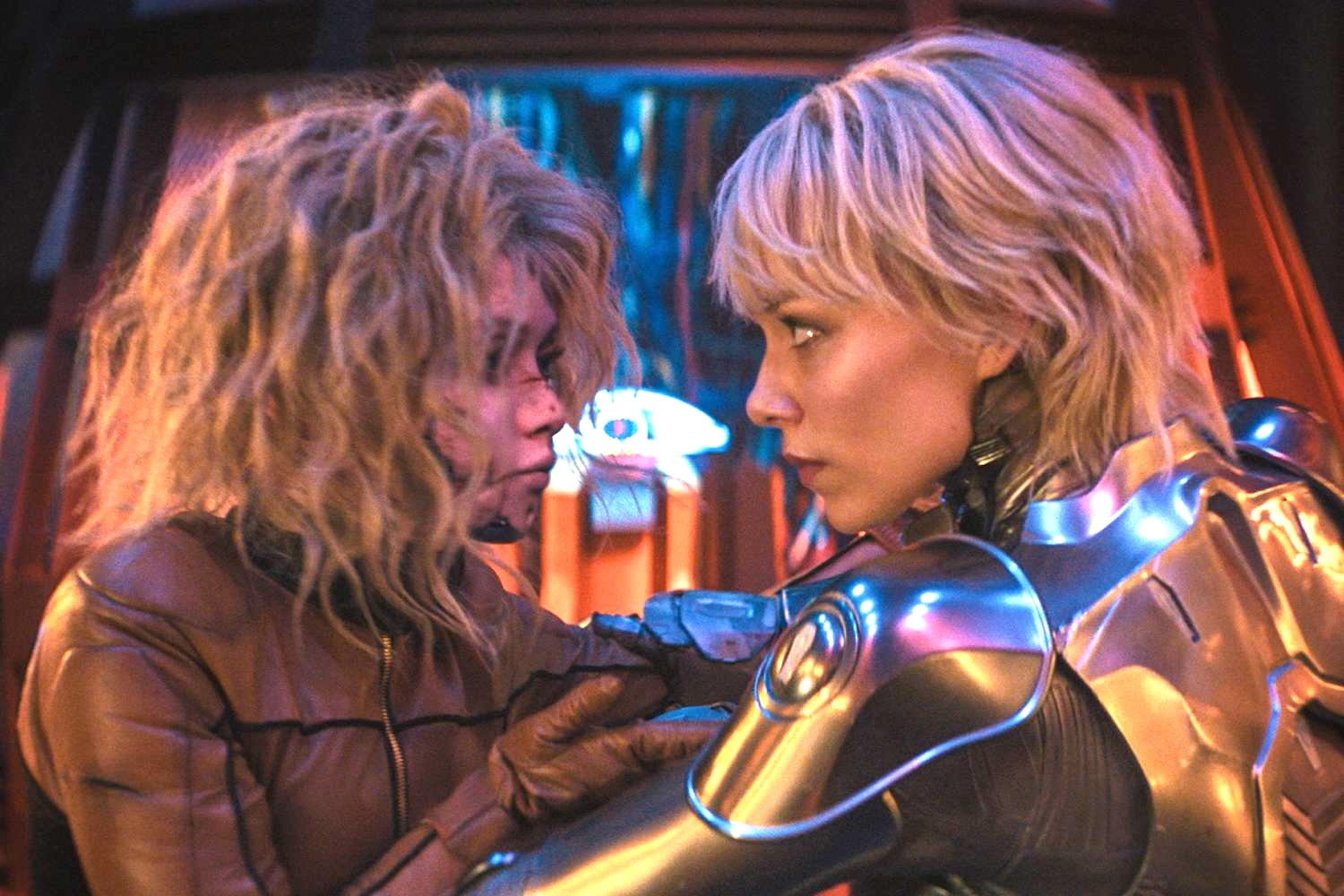
After several lengthy delays, Bong Joon-Ho’s follow-up to 2019’s Oscar-winning smash, Parasite, finally makes it into the UK’s multiplexes. Mickey 17 is frankly nothing like its eminent predecessor, closer in tone to the director’s earlier films like Snowpiercer and Okja, the kind of futuristic sci-fi adventures that first helped him build his stellar reputation.

It’s 2054 and the world (as widely predicted) is going to hell in a handcart – so much so that its inhabitants are literally fighting for places on an upcoming space mission to seek out a new habitable planet. The mission is spearheaded by failed Presidential candidate, Kenneth Marshall (Mark Ruffalo), a man so obsessed with his own image he grabs every opportunity to film himself looking suitably heroic. He’s always accompanied by his clingy, sauce-obsessed partner, Yifa (Toni Collette), whose ideas he quickly appropriates and passes off as his own.

Shy, bumbling Mickey Barnes (Robert Pattinson) and his dodgy best friend, Timo (Steven Yeun), have pressing reasons to secure berths on Marshall’s spacecraft. Their recently launched Macaron business has gone tits-up. Timo financed the venture by borrowing money from a famously terse mobster who is known for exacting recompense from defaulters by the liberal application of a chainsaw – so making themselves scarce seems like a good idea.

Timo (typically) manages to land himself a plum role on the mission, but poor Mickey has to resort to signing himself up as an ‘Expendable.’ As the mysterious ‘Red Hair’ (Holiday Grainger) explains, he will be expected to undertake a series of potentially lethal experiments whilst on board, but no matter, because all his genetic information will be stored in a database. In the event of his death, the company will simply print a new version of him, all ready to start over. What could possibly go wrong?

On the long journey, Mickey’s luck appears to change for the better when he clicks with security officer, Nasha (Naomi Ackie), and enjoys a loving and sexual relationship with her, even though such shenanigans are openly discouraged by Marshall. But once the ship has landed on the ice-bound planet of Niflheim, Mickey begins to appreciate how easily his life can be repeatedly snatched away from him, as he is used as a guinea pig to test out the potentially deadly atmosphere. And once that problem is solved, there are the native creatures to deal with: huge woodlouse-like beasts, quickly dubbed by Yifa as ‘Creepers.’ But are they really as ominous as they look?

Mickey 17 has all the hallmarks of Bong’s sci-fi work. It looks astonishing, particularly the footage on Niflheim, where countless numbers of Creepers go on the rampage. Pattison is terrific in the title role and in the scenes where he has to be both Mickeys 17 and 18, manages to subtly convey the tiny differences between them with considerable skill. Ruffalo also shines in a role where the similarities with the USA’s current president are clearly entirely intentional. (Ironically, the fact that the film’s been held back for so long only serves to accentuate the character’s monstrous ego and constant need to self-aggrandise – all familiar from watching the traits play out on the daily news reports.)

I’d be lying if I said that this is a perfect film. For one thing, there are far too many characters and even a running time of two-hours-seventeen-minutes fails to offer enough space for Bong to fully explore them all. You will briefly spot the likes of Thomas Turgoose and Tim Key in cameo roles, but it’s the female characters in particular who are given short shrift. Grainger’s early appearance suggests that ‘Red Head’ is going to be important to the story but she just fades away as the film progresses. Collette does the best she can with what little Yifa is given to work with, but it’s never really enough.

That said, I find the film fascinating and I love the lo-fi nature of the future of space exploration, full of glitches and hiccups – and the ways in which the lust for personal glory will always vanquish the need to act with compassion towards strangers. Bong (who also wrote the screenplay, based on a novel by Edward Ashton) seems to delight in his central premise, that the rights of the individual come pretty low down the pecking order in the pursuit of so-called progress.

Characters constantly ask Mickey Barnes the same question: ‘What’s it like to die?’ To which he is never able to supply a satisfactory answer. And perhaps that’s because the central premise is so elusive – that age-old mystery about mortality and what it really means. To be – or not to be?

Mickey 17 is proof, if ever needed, that even when he’s not quite firing on all cylinders, Bong Joon-Ho is still one of the world’s most downright watchable directors. I have a blast with this. However, those who come expecting Parasite 2 will definitely be disappointed.

4 stars

Philip Caveney
The Last Showgirl

02/03/25

Cineworld, Edinburgh

I haven’t seen any of Pamela Anderson’s previous work (Baywatch never appealed) so my knowledge of her is limited to three headline facts: red swimsuit, sex tapes and – recently – no make-up. I’m not surprised that this reductive list doesn’t do the woman justice, but I am impressed by her nuanced performance in Gia Coppola’s latest film.

Anderson is Shelly, the titular last showgirl, still strutting her stuff in a Vegas casino. The clock is ticking, both for Shelly and the show itself. They’re both past their sell-by dates, and they’re being pushed aside for newer, brighter, fresher fare. But the fifty-seven-year-old has devoted her whole life to Le Razzle Dazzle and she doesn’t know who she is without it. News of the show’s impending closure is utterly devastating.

The sacrifices Shelly has made are huge. For more than thirty years, she has placed this job before her marriage, her security, even before her daughter, Hannah (Billie Lourd). But it turns out her bosses owe her nothing in return: no pension, no severance pay, no training for a different job. And, this being the USA, she won’t even have any health insurance when the curtain falls for the final time. What has it all been for?

Kate Gersten’s screenplay is deceptively simple, a layering of vignettes that slowly build to something quite profound. We already know how vampiric the industry is, sucking the last drop of blood from its initially willing victims before callously discarding them and calling, “Next!” Here, we see what happens to the husks it leaves behind.

At its heart, The Last Showgirl is a film about delusion, about the myths we tell ourselves to justify our lives. Shelly clings to the idea that Le Razzle Dazzle is a cut above, a Parisian-style extravaganza of glamour and elegance. But when Hannah sees the show, she bursts her mom’s balloon. “I’d hoped it would be worth it,” she says, before eviscerating Shelly’s dream, denouncing it as tawdry and outmoded, a nude show like any other – nothing special at all.

And Shelly’s not the only one. Her old friend Annette (Jamie Lee Curtis) gave up dancing long ago, and claims to be happy working as a hostess on a casino floor. But she is sent home whenever the place is quiet, her boss favouring her younger colleagues. No wonder she drinks; no wonder she gambles. Jodie (Kiernan Shipka) is only nineteen, but she’s already starting to realise the costs of pursuing her art, as her family disown her. Meanwhile, Eddie (Dave Bautista) is immune to the devastation. He’s a nice guy, seemingly quiet and kind, but he’s not at the mercy of a sexist world. He’ll be kept on to do the lighting for the next batch of sexy young women who come to the venue to perform.

The Last Showgirl is – ironically – an unshowy film. The social commentary is sharp but it’s cleverly-cloaked; the characters bold but the performances restrained. There’s a lot going on beneath the rhinestones and feathers.

4 stars

Susan Singfield

I’m Still Here

01/03/25

Cineworld, Edinburgh

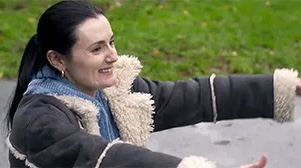
Directed by Walter Salles and based on the true story of lawyer and activist, Eunice Paiva – brilliantly played by Fernanda Torres – I’m Still Here is the deeply affecting story of a mother, who, after her husband’s sudden disappearance, is obliged to pick up the pieces of her shattered life and forge a new one for herself and her family. Torres’ performance has already won her a Golden Globe for Best Actress and she could well figure in this year’s Oscars.

The story begins in Rio Di Janeiro in 1971, where a military dictatorship has been in power for seven years and where citizens can be stopped and searched, even arrested without warning. Eunice lives a comfortable existence in the affluent sea-side Leblon neighbourhood with her husband, Rubens (Selton Mello), a civil engineer and former politician. The couple have five children – four daughters and a son – and they are planning to build a spacious new home on a plot of land close by. Life is eventful and fulfilling and features a lot of parties, where Eunice’s soufflé figures prominently.

But all the family’s long-cherished ambitions come crashing down one night when six men, claiming to belong to the Brazilian military, enter the house and take Rubens to some unspecified location for ‘questioning’. Some time later, Eunice and one of her daughters, Eliana (Luiza Kosovski), are also arrested. Forced to put on blindfolds, they are taken to the same unknown destination and interrogated for twelve days. When they are eventually released there’s still no word of Rubens and it begins to dawn on Eunice that her husband has become one of ‘the Disappeared’ – those luckless individuals lost to the ruthless machinations of the state. The family is going to have to rethink its plans and start over…

I’m Still Here is a powerfully affecting (and, given recent developments in the USA, utterly terrifying) story of what can happen when a far-right government is given free rein to act as it pleases. Salles cannily uses the framing device of a series of staged photographs, marking different occasions across the family’s history. The sense of passing time is beautifully captured in both Adrian Tejido’s sun-kissed cinematography and Warren Ellis’s nostalgic soundtrack. As the years pass we see the hope that Rubens might one day return gradually diminish.

The script by Murilo Hauser and Heita Lorega – based on the autobiography of Eunice’s son, Marcelo Rubens Paiva – captures the unfolding narrative with absolute authority. A heartbreaking coda towards the film’s poignant conclusion has me in floods of helpless tears. This film is both an accomplished recollection of a piece of recent history and a stark warning about where the world could so easily be heading.

This might not be the most showy of this year’s Oscar nominations, but it may just be the most powerful – and Torres’ performance is truly extraordinary.

5 stars

Philip Caveney
The Monkey

23/02/25

Cineworld, Edinburgh

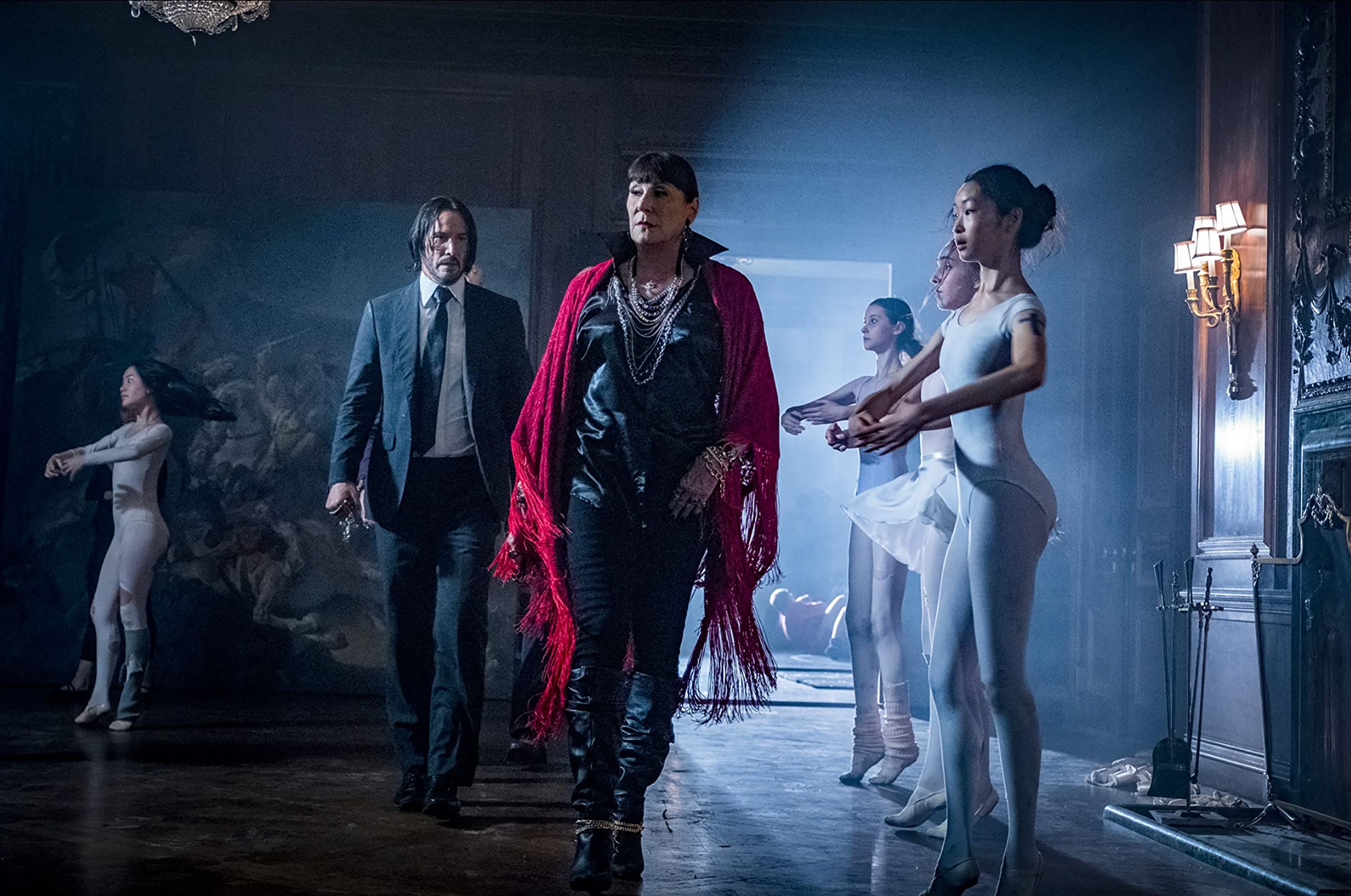
Director Osgood Perkins scored a palpable hit last year with Longlegs, a slow-burn horror that simmered with an overpowering sense of dread. So the news that he is helming an adaptation of Stephen King’s The Monkey (itself inspired by WW Jacobs’ classic short story, The Monkey’s Paw) leads me to expect that this will deliver more of the same. So I’m taken somewhat off-balance when the film promptly reveals itself as an absurd black comedy with lashings of gore. The result is never particularly scary, but it does prompt a surprising amount of incredulous laughter.

It begins in flashback, as the father of twin boys, Hal and Bill (both played by Christian Convery), attempts to gift an unwanted ‘toy’ to a thrift store, with unexpectedly gruesome results. The toy in question is the titular simian, a wind-up automaton that plays a drum to the tune of ‘I Do Like To Be Beside the Seaside.’ Once activated (by turning the key in its back), it has a nasty habit of ensuring that somebody in the immediate vicinity will get horrifically mangled, for no apparent reason other than it’s a nasty little pest who enjoys doing that kind of thing.

After their father ‘goes out for cigarettes and never returns,’ Hal and Bill grow up under the care of their understandably disturbed mum, Lois (Tatiana Maslany). One night, when searching through their absent father’s belongings, the boys discover the monkey in its box. Probably not a good idea to wind the key, you might think, but hey, kids will be kids…

By adulthood, the two brothers (now played by Theo James) have drifted apart. Hal is the father of a teenage boy, but after his marriage break-up, only gets to spend one night a year with Petey (Colin O’Brian) and – wouldn’t you know it – that one night is when the malevolent monkey chooses to make its timely reappearance…

There’s much I like about this film: Nico Aguilar’s dark, brooding cinematography is suitably eye-catching and the gnarly splatter effects – created by no less than sixteen people in the arts department – take a wonderfully Heath Robinson approach to the task of dissembling human bodies. Much of the resulting mayhem is entertaining. The monkey itself is an engaging creation, positively oozing menace in every shot. But not everything in the production is quite so positive.

While a host of interesting characters manage to pop up to deliver Perkins’ sparky dialogue, no sooner have they appeared than they’re being messily spread across the screen and the effect is that this feels like a film that’s almost entirely peopled by bit players (or players in bits?). Perkins himself cameos as ‘Uncle Chip’ but gifts with only one line of dialogue before he gets turned to mush, while Elijah Wood doesn’t fare much better as Petey’s stepfather, Ted, though – to be fair – he’s one of the few characters who actually survives. Furthermore, a sub-plot featuring a man called Thrasher (Rohan Campbell) is so clumsily inserted into the action that for a while it only serves to confuse me, particularly when the actor is also obliged to play two characters.

I’m clearly not the only one with misgivings. Half an hour into the screening, three viewers get up and march determinedly out of the auditorium. Those with a predilection for comedy in a deep shade of anthracite may (like me) laugh out loud at what they’re watching and will possibly revel in the WTF final scenes.

But The Monkey is a tricky little beast and one thing is for sure: it won’t be for everyone.

3.7 stars

Philip Caveney
Bridget Jones: Mad About the Boy

22/02/25

Cineworld, Edinburgh

Watching a Bridget Jones movie is like catching up with an old schoolmate – not necessarily someone you were especially close to back in the day, but with whom there’s enough shared history to make these meet-ups fun. No doubt this is particularly true for “women of a certain age” – Bridget’s age; my age – who’ve grown older with her as part of our cultural landscape.

Thankfully, Bridget (Renée Zellwegger) has finally grown wiser; I found her ditsy-fuck-up persona a wee bit irritating when I last saw her (in 2016’s Bridget Jones’s Baby). What was endearing in a woman barely into her thirties, contemplating the fact that she’s somehow suddenly supposed to be an adult, was just irksome in a pregnant forty-something with a kick-ass job. Now in her fifties, Bridget has settled into success: she’s proud of the skills that make her such an excellent TV producer, and she’s even prouder of Billy and Mabel (Casper Knopf and Mila Jankovic), her two delightful kids.

But this iteration of Bridget is a lot sadder too: she’s a widow. Her husband, Mark Darcy (Colin Firth), was killed a couple of years ago on a peace-keeping mission in the Sudan. The issue of mourning is nicely handled, staying just the right side of mawkish. We see Bridget and her kids slowly moving forward, acknowledging their grief while also trying to find joy. The new levels of emotional depth work well, but this is still essentially a rom-com, so there’s a raft of unsuitable guys for Bridget to dally with.

First up is her old flame, Daniel Cleaver (Hugh Grant). Bridget has him firmly in the friend-zone nowadays, and I like this development. He’s as much of a player as he ever was – his language inappropriate; his attitude to women still neanderthal – but he’s rendered (more or less) palatable thanks to his kindness to Bridget and his rueful acknowledgement of his own failings. Also, of course, Grant imbues him with a rogue-ish charm, so it’s hard to hate him as much as I might in real life.

So, if Cleaver’s not a contender for a new relationship, who is? Enter Roxster (Leo Woodall) and Mr Wallaker (Chiwetel Ejiofor). The former is a twenty-nine-year-old PhD student, all rippling muscles and boyish smile; the latter is Billy’s uptight primary school teacher, a stickler for rules and punctuality – although he does turn out to have a decent set of abs as well. It’s no surprise that Bridget finds herself drawn to Roxster – nor that Mr W reveals a softer side, which makes her like him too. Which one will Bridget end up with? (Things might have moved on – at least Bridget doesn’t seem to hate her body any more – but the story hasn’t strayed so far from its ‘happy ending’ cliché that she might conceivably choose to be alone.)

Zellwegger is as likeable as ever, and I have tears in my eyes as I see Bridget emerging from her misery to recover some of her ebullience – dancing and laughing and being silly. It’s great to see her old friends and adversaries pop up as well: director Michael Morris and scriptwriters Helen Fielding, Dan Mazer and Abi Morgan successfully present a parade of ‘greatest hits’ shout-outs without ever making them seem shoe-horned into place. Big knickers? Check. Penguin pyjamas? Check. Falling over? Check. Check. Check. Running after a lover in the snow? Big check.

In short, I like this film a whole lot more than I’m expecting to. Bridget will never be my bestie, but I’d love to check in with her when we’re both in our sixties, and see what scrapes she’s getting up to then…

4 stars

Susan Singfield

The Importance of Being Earnest: NT Live

20/02/25

Dominion Cinema, Edinburgh

Despite having lived a mere thirty-minute walk from Morningside’s Dominion Cinema for the past decade, we’ve somehow failed to set foot inside – and we dare to call ourselves cinephiles! So tonight’s NT Live screening of The Importance of Being Earnest is extra exciting for us, as it’s also an opportunity to explore a new venue.

So let’s begin with that. The Dominion is undeniably boojie; indeed, it’s the fanciest cinema either of us has ever graced. The design is art deco (think flocked wallpaper, geometric shapes and a colour palette of gold, red and black); our seat is a super-comfy reclining sofa, with privacy screens and side tables. We pour our drinks (sparkling water and alcohol-free lager, since you ask) and sit back, feet up, more than ready to enjoy ourselves in these opulent surroundings.

I’ve seen, read and taught this play so many times that I know it almost by heart, but that’s not to its detriment. After all, the script is so packed with recognisable aphorisms that few in the audience are likely to be surprised by what is said; with Earnest, it’s all in the delivery.

And what delivery it is! Directed by Max Webster, this is an overt celebration of queerness, Wilde’s subtext amplified to the nth degree. From the opening number, where Algernon (Ncuti Gatwa) shimmers in pink-sequinned drag, to the exuberant Mardi Gras-style finale, the closet door is flung wide open, making for a fabulously unsubtle show. To quote the wild wit himself, “moderation is a fatal thing; nothing succeeds like excess.” Webster has certainly taken this to heart.

The plot – for those who need a reminder – is at once frivolous and deadly serious. On the surface, it’s a frothy farce, all mistaken identity and foolish foppery. Underneath, it’s about repression – about the lengths people are forced to go to when their very natures are outlawed. Unbeknownst to each other, both Algernon and his best friend, Jack (Hugh Skinner), have found inventive ways to circumvent society’s disapproval of their predilections. Algernon has a pretend-friend, Bunbury, whose ill health Algy uses to excuse himself from dreary social events, while Jack has an alter-ego – an imaginary older brother called Ernest – who gets into mischief whenever he visits the city.

But things become complicated when Jack falls in love with Algy’s cousin, Gwendolen (Ronke Adekoluejo), whose mother, Lady Bracknell (Sharon D Clark), is far from pleased about the match. In desperation, Jack confesses his lies to Algy – who, true to form, responds by assuming Ernest’s identity for himself, and heading off to Jack’s country house to woo his pretty young ward, Cecily (Eliza Scanlen). Throw in a conflicted clergyman (Richard Cant), a dithering governess (Amanda Lawrence) and a couple of manservants (both played by Julian Bleach), and the scene is set for some merry mayhem.

The multi-racial casting within a period drama (courtesy of Alastair Coomer and Chloe Blake) gives the piece a contemporary edge, as do the occasional strains of recent-ish pop music and a cheeky allusion to one of London’s gay hotspots. Gatwa’s newfound fame as Dr Who also helps this production to appeal to a hip young audience, as does the sexual fluidity of the characters.

Clark’s depiction of Lady Bracknell is inspired: she brings a whole new dimension to the part, dispelling all my preconceptions of the character. Here, those oh-so-familiar lines are imbued with a haughty charm to create a formidable British-Jamaican matriarch without so much of a hint of Dench. Adekoluejo’s Gwendolen is a chip off the old block, saved from monstrousness by her cleverness and humour. In contrast, Scanlen’s Cecily is deliciously weird, a mix of doe-eyed intensity, sweetness and steel. But there are no weak links here: even Bleach, in the minor roles of Lane and Merriman, makes his mark, creating two distinct but equally absurd personae, evoking laughter with the simplest of smirks or stumbles.

More than anything, though, this is Skinner and Gatwa’s show, the focus firmly on the men’s friendship and their journey towards coming out. Their performances are jubilant and euphoric, and yet deceptively weighty, carrying with them real emotional heft. I can’t help thinking about Wilde, condemned to hard labour for his homosexuality, and wondering what he’d make of this? Surely, it would gladden his heart to see his characters finally set free.

5 stars

Susan Singfield