Film

Hallow Road

17/05/25

Cineworld, Edinburgh

In an era where we’re increasingly led to believe that, to be successful, a motion picture requires a massive special-effects budget and a cast of thousands, Hallow Road provides solid evidence that this doesn’t have to be the case. Essentially a micro-budget two-hander, the drama unfolds almost entirely inside a moving car – and I’d need to go back to 2013’s Locke to find another film with comparable DNA.

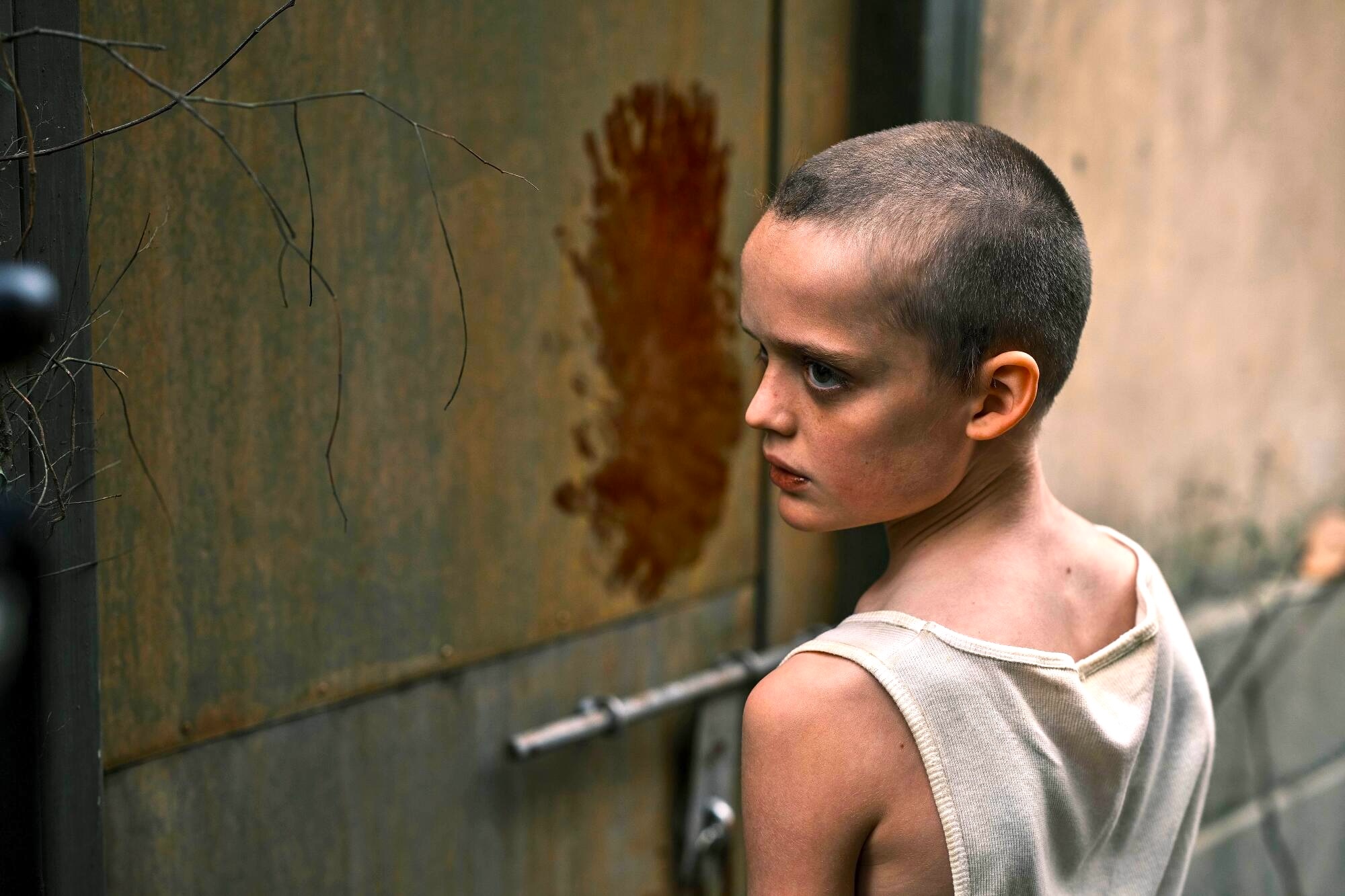
But director Babak Anvari and debut screenwriter William Gillies have created a taut, compelling psychological thriller that has me hooked from the word go – and on the edge of my (driving) seat right up to the final scene.

We open on a series of clues: the aftermath of an interrupted dinner. Meals are left unfinished, glasses are still half full of wine. Then we meet Maddie (Rosamund Pike) and her husband, Frank (Matthew Rhys), and we learn that they sat down earlier that evening for a meal with their daughter, Alice (Megan McDonnell). There was a heated row and Alice left the house, jumped into Frank’s car and drove away into the night.

Now, in the early hours of the morning, Alice – who for the purposes of this drama is never more than a disembodied voice on the phone – calls Maddie in a state of absolute terror. Driving along Hallow Road, deep in a forest, she has hit – and possibly killed – a young woman. Frank and Maddie bundle frantically out into the night, in the family’s second car, start heading for their daughter at speed. Maddie, a trained paramedic, attempts to talk Alice through the complexities of CPR; Frank, on the other hand, wants to find a solution to the problem and is more than ready to take the rap for the accident, provided he can get there before anyone else.

The journey plays out, more or less in real time…

And no, this doesn’t exactly sound like the ingredients for a spell-binding narrative, yet Hallow Road ticks all the boxes, amping up the suspense with every passing mile, until I am almost breathless with anxiety. I can’t say much more about what happens from this point other than to mention that, in its latter stages, the film seamlessly achieves an intriguing genre-jump into the realms of folk horror and offers a conclusion that I really don’t see coming.

Both Pike and Rhys give wonderfully nuanced performances, pulling us in to this conceit with consummate skill, while McDonnell manages to convey a whole world of bewilderment and terror through her very effective voice performance. And if you’re thinking that a small-scale film like this will be just as effective on streaming, let me add that cinematographer Kit Fraser’s wonderfully atmospheric night-time visions deserve to be seen on the biggest screen you can find.

5 stars

Philip Caveney

Bonnie and Clyde: The Musical

04/05/25

Dominion Cinema, Edinburgh

Jesse James. Billy the Kid. Butch Cassidy.

America has long had an infatuation with the myth of the outlaw and Bonnie Parker and Clyde Barrow are simply more recent examples of the phenomenon. They carried out their crimes – and met with a deadly reckoning for their transgressions – in the early nineteen-thirties at the height of the Great Depression. The two young criminals were deified in their own lifetimes, largely due to the poems that Bonnie wrote about their exploits and, after their deaths, by several images that were found on a camera that belonged to them. But they had to wait until 1967 to be fully rediscovered, when Arthur Penn’s visceral film about the two criminals brought them back to the attention of young audiences around the world.

Filmed in London’s West End in January 2022 to a sold-out crowd all wearing face masks (a reminder that we had just come through a grim time in our own history), this assured musical offers an intelligent reassessment of Bonnie and Clyde’s familiar story. It begins at the end of their journey with a grim account of the number of bullets that were fired at them in their final moments (130, if you’re interested), before backtracking briefly to their respective childhoods. Young Bonnie (Bea Ward) is already starstruck, singing a song about her favourite movie star, Clara Bow, who she longs to emulate. Young Clyde (Albert Atack) despairs of his family’s hardscrabble existence and is making putative plans for an escape that only a generous infusion of cash can facilitate.

Pretty soon they’ve grown up. Bonnie (Frances Mayli McCann) is working as a waitress when she first encounters the smooth-talking Clyde (Jeremy Jordan). He’s recently absconded from prison but still finds time in his frantic schedule for a little romance. There’s an instant attraction between them, and almost from the word ‘go’, they are inseparable. Clyde’s older brother, Buck (George McGuire), welcomes Clyde’s latest sweetheart, but Buck’s God-fearing wife, Blanche (Natalie McQueen), isn’t quite so entranced by her – and makes her feelings clear.

However, it’s only a matter of time before Buck and Blanche are drawn in to the couple’s irresistible orbit and, as The Barrow Gang graduates from robbing general stores to robbing banks, retribution is patiently biding its time…

Directed by Nick Winston with book by Ivan Menchell and songs by Frank Wildhorn and Don Black, Bonnie and Clyde: The Musical is a powerful retelling of this familiar tale, the songs ranging from blues-infused upbeat thumpers to soulful ballads. From time to time, ‘The Preacher’ (Trevor Dion Nicholas) strides on to deliver some gospel-soaked anthems, clinically parting his congregation from their hard-earned cash in exchange for excerpts from the Bible. The sense of desperation looms large. A scene where the gang stage a bank robbery only to discover that the vaults are completely empty is a particular eye-opener. This is a point in history when people are compelled to take desperate measures.

The performances are uniformly strong. Jordan captures Clyde’s unflagging determination to better himself and his steadily-mounting realisation that he is doomed, while Mayli McCann excels as a woman so under her partner’s spell that she is helpless to resist the inevitable slide towards her own destruction. McQueen offers a deliciously-funny performance as the disapproving Blanche, somehow managing to make every line she utters a searing condemnation.

I find myself wondering how Winston will attempt to recreate the carnage of the duo’s final moments, but happily, he doesn’t even try, preferring to leave them at an intimate moment shortly before they set off on their final journey. And on reflection, that seems the wisest approach.

We all know what happened to Bonnie and Clyde – and the essence of these two legendary figures is not how they died but how they lived.

4.8 stars

Philip Caveney

Thunderbolts*

02/05/25

Cineworld, Edinburgh

I’ve been decrying Marvel’s deplorable lack of ambition for so long that, when the studio finally comes up with something that’s genuinely different from what’s gone before, I feel mean when I say that it’s still not quite enough. But more of that later.

Thunderbolts* – and no, that isn’t a typing error, there really is an asterisk in the title, though I honestly haven’t the faintest idea why – is a superhero movie with a difference. The team of players we are presented with are all misfits in one way or another. I guess you could argue that DC’s Suicide Squad offers a similar premise, but it’s more cleverly handled here. Chief among our pound-shop players is Yelena Belova (Florence Pugh), the sister of the now-deceased Black Widow. Once a larger-than-life adrenalin-junkie, Yelena spends all her time miserably doing the bidding of Valentina Allegra de Fontaine (Julia Louis-Dreyfus), a crooked politician with her eye on world-domination. (Hmm. I wonder where they got that idea?)

Yelena has lost touch with her father, Alexei (David Harbour), who now plies a trade as a chauffeur, and she longs for something that will make her feel like she’s actually doing some good. Sent out on yet another thankless mission – to destroy one of de Fontaine’s secret laboratories – Yelena discovers that two others have also been handed the same task. They are shape-shifter Ava Starr (Hannah John-Kaman), and John Walker (Wyatt Russell), a kind of below-parr Captain America knock-off. After a thankless skirmish, the three of them decide to join forces rather than continue to oppose each other and, before leaving, they rescue a seemingly ordinary guy called ‘Bob,’ (Lewis Pullman), who they find wandering about the place looking vaguely confused.

Once back in the real world, the ‘team’ quickly adds congressman Bucky Barnes (Sebastian Stan, last seen by B&B as the odious Donald T in The Apprentice) and, of course, Yelena’s dad, who has been itching for an excuse to ditch the new job and get back into his old Red Guardian outfit. It’s Alexei who comes up with the titular name for the assembly but it isn’t long before they are being pitched by the opportunistic de Fontaine as ‘The New Avengers.’

Thus far, Thunderbolts* feels rather ordinary: too many characters struggling for screen time and going through the same over-familiar tropes – but Bob, it turns out, is the film’s secret weapon in more ways than one, especially once he discovers his own hidden powers. He metamorphoses into a kind of alternate Superman, a dark, brooding figure whose actions are motivated by depression and paranoia and who is much more interested in destroying the world than saving it. He’s also not above rubbing out cute little children who get in his way – a move unthinkable in most superhero films.

While director Jake Schreier takes too long to reveal this trump card, once it’s out there, the proceedings pick up immediately and actually start to feel – dare I say it? – genuinely interesting, which is not a quality I’ve seen in a Marvel film for quite some time. And if nothing else, here’s proof that Florence Pugh is now a major box-office star, always capable of finding new depths in any persona she chooses to take on. Her Yelena is much more than a 2D comic brought to life.

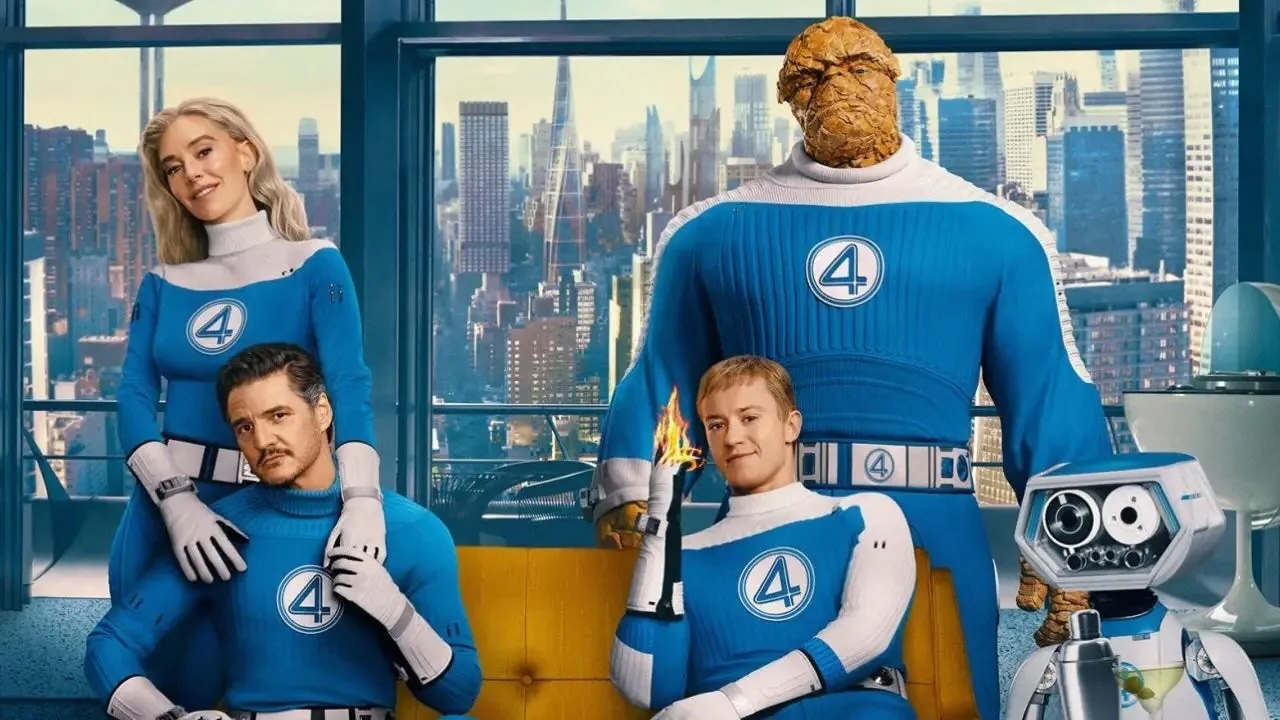
For those who care about such things, there are two post-credit sequences. The first is brief and actually makes me laugh out loud. The second is more complex and offers a glimpse of upcoming Marvel release, The Fantastic Four, but you’ll need to stay in your seats until the bitter end if you want to catch it. It remains to be seen if that seemingly-doomed quartet can be rescued from the doldrums, but for now, Thunderbolts* is way better than expected.

3.6 stars

Philip Caveney

Havoc

27/04/25

Netflix

Welsh filmmaker Gareth Evans first came to prominence with his martial arts epic The Raid in 2011. An inevitable sequel (imaginatively entitled The Raid 2) followed in 2014, but his last big-screen release, The Apostle (2018), came and went with barely a ripple. So Havoc is clearly an important project for Evans. Which may explain why it feels like the very definition of the word ‘overkill.’

To be fair, it starts well. The action takes place in an unspecified American city – actually a heavily-CGI’d Cardiff. Grizzled cop Walker (Tom Hardy) is at an all-night garage, hastily trying to buy a Christmas gift for the twelve-year-old daughter he rarely ever sees. (Mind you, we don’t get to see much of her either.) Walker, it quickly becomes clear, is a dodgy copper, but then he’s not alone. Every member of the police force we meet in this story is on the take, apart from Ellie (Jessie Mai Li), who has only recently taken up her post as Walker’s sidekick.

After a drug deal goes wrong, Charlie (Justin Cornwell), the son of crusading politician, Lawrence Beaumont (an underused Forest Whitaker), finds himself hunted by a vengeful Chinese gang leader, who lost her own son in the resulting gunfire. Walker is ‘persuaded’ by Beaumont – yes, he’s also dodgy – to rescue Charlie, in exchange for a pardon for former crimes…

But the plot hardly matters, since Havoc – as the name might imply – is mostly an excuse to string together a series of action set-pieces. The first of them, the aforementioned ‘drug deal gone wrong’, is nicely staged, with some artfully-filmed slo-mo sequences and, what’s more, it’s relatively brief. But having dipped his bread in the old red stuff, Evans (who also wrote the screenplay) seems determined to serve up an ‘all-you-can-eat’ buffet of mayhem and murder.

The action becomes increasingly incoherent. People don’t just get shot and fall down, they dance around the screen spouting blood like human colanders. There’s a seemingly inexhaustible supply of ammunition and the Chinese drug gang employs an infinite number of human targets, all of whom appear to exist simply to run gleefully towards their own destruction. You’d need an abacus to keep a record of the body count.

For me, the main problem here is that, aside from Ellie, every character I meet is a villain of the lowest order and, while it’s not impossible to get audiences to root for bad people, you first have to know something about them in order to care what happens. But I know hardly anything about anybody and that includes Walker. Somewhere in this mess, excellent actors like Timothy Olyphant and Richard Harrington struggle to make any impression, as they are inextricably lost in a tidal wave of blood and bullets. As Havoc thunders towards its final, protracted punch-up, I’m already wistfully looking forward to the credits.

This one is clearly made for diehard action freaks and doubtless it will scare up some kind of an audience on Netflix – but for me it’s too loud, too messy and too downright unbelievable.

2.8 stars

Philip Caveney

SIX The Musical Live!

27/04/25

Cineworld, Edinburgh

We first saw SIX The Musical in 2018 on its triumphant return to the Edinburgh Fringe. A year earlier, as a bare-bones student production, it had garnered a lot of attention. Now it was back with a big budget and a lot of buzz. We duly went along to the purple upside-down cow tent dominating George Square Gardens (AKA the Udderbelly) and immediately understood what all the fuss was about. With its high-octane energy and witty lyrics, this re-writing of herstory was bursting with vim and invention. Afterwards, we bought the album and listened to it on repeat.

We saw it a second time when it came to the Festival Theatre on tour, now with a different cast. The production was as compelling as ever – but those Udderbelly Queens will always reign as far as we’re concerned.

So we’re delighted to see that an original-cast reunion performance has been filmed; what’s more, it’s included in our Cineworld Unlimited plan. What better way to spend a Sunday morning than engaging in a little Fringe-nostalgia, and trying to suppress the urge to sing along with some of our favourite songs?

It’s astonishing to think that Lucy Moss and Toby Marlow were still at uni when they wrote this juggernaut, which now boasts more than a thousand performances both in the West End and on Broadway, to say nothing of its wider global reach. Their combined talent is truly awesome and, directed by Liz Clare, the musical absolutely deserves its huge success.

The conceit is simple: each of Horrid Henry’s wives thinks she’s the most historically important. Unable to come to a consensus, they decide to battle it out via the medium of song, so that the audience can judge who’s suffered the most and is therefore the most deserving. It’s hardly a spoiler to reveal that, in this feminist reframing, they end up setting their differences aside and embracing their sisterhood. After all, together they amount to more than just one word in a stupid rhyme, right? Combined, they’re the main reason anyone remembers Henry at all.

They sing in herstorical order: Jarneia Richard-Noel (Catherine of Aragon – divorced), Millie O’Connell (Anne Boleyn – beheaded), Natalie Paris (Jane Seymour – died), Alexia McIntosh (Anne of Cleves – divorced), Aimie Atkinson (Katherine Howard – beheaded) and Maiya Quansah-Breed (Catherine Parr – survived). The songs are wonderfully distinct, incorporating Latin-American-tinged funk, a plaintive ballad and thumping Teutonic techno. Each Queen earns every minute of her time on the throne.

For anyone who hasn’t seen it, grab the chance while you can: this version, filmed live at London’s Vaudeville Theatre, comes with a précis of the production’s journey, as well as a pre-show cast interview, and has several showings a day in multiplexes this week. You’d be hard pressed to find a more dynamic and entertaining group of dead women to spend your time with.

5 stars

Susan Singfield

Pink Floyd at Pompeii

25/04/25

Cineworld, Edinburgh

I first saw this film in the cinema fifty-three years ago…

Wait. Stop. Can that be right? I mean, I understand that I’m getting old but… fifty-three years? But, yes, the dates do check out. And amazingly in 1972, when Pink Floyd at Pompeii was released, I had already been a fan of the band for half a decade. In 1967, in what was my final year at a rather horrendous boarding school in Peterborough, I was entranced enough by the Floyd’s second single, See Emily Play, to actually use some of my pocket money to buy a mono copy of their debut album, The Piper At the Gates of Dawn. Returning to school with it held proudly under my arm, I found myself surrounded by a gang of bigger boys, who sneeringly informed me that the Floyd were ‘degenerates who took drugs’ -unlike their favourite band, The Beatles. They then threw me to the ground and attempted to stamp all over my new purchase but luckily I was able to shield the album with my own body and it survived to be played another day.

I took great delight the following morning in strolling over to my assailant’s breakfast table and dropping a copy of a newspaper in front of them. The banner headline on page one was, “‘I took LSD,’ says Paul McCartney.”

The years rolled on. In 1969 I finally saw the band live at the Liverpool Philharmonic performing Umma Gumma, managing to procure a ticket for the equivalent of what might these days fall down the back of the average sofa. I emerged with the demeanour of somebody who had just witnessed the second coming of Christ. I remember that at one point the band wore gas masks and played in the midst of bright red smoke. I was by now a rabid fan.

Which finally brings me to this re-release. In 1972, director Adrian Maben persuaded the band to go to the ancient ruins of Pompeii, set up their equipment in an empty arena and run through excerpts from their new album, Meddle, plus a selection of live favourites (Careful With that Axe, Eugene; A Saucerful of Secrets; Set the Controls for the Heart of the Sun). There’s no audience present unless you count the various film technicians and road crew, standing stripped to the waist in the baking sun and watching with apparent indifference as David Gilmour, Roger Waters, Richard Wright and Nick Mason unleash a barrage of sonic mayhem. On the directorial side there’s little in the way of special effects. Cameras, mounted on rails, prowl restlessly around the musicians as they play, sometimes tracking along behind stacks of sound equipment. At key moments in the Blitzkrieg, images of ancient statues, bubbling lava pits and fiery sunsets are inserted into the mix, Maben seeming instinctively to know when to augment a particular sound with a visual counterpoint.

What’s new here is the massive scale of an IMAX screen, a pin-sharp print and a crisp, clear digital sound mix that captures every last musical nuance in perfect detail. There are cutaways to the band ensconced at Abbey Road studios, working on what will be Dark Side of the Moon. The wonderful advantage of hindsight shows four young men who are quietly confident that their new brainchild will be good, but completely unaware that in just one year, they will be releasing one of the biggest-selling – and many would claim – greatest albums in history.

The next time I saw Floyd live, it was at Wembley Stadium, with that massive state-of-the-art show that included the infamous exploding aeroplane and levels of technical razzle-dazzle that changed the rock business forever. But it’s at Pompeii that I prefer to remember them, a youthful quartet just beginning to nuzzle hungrily at the edges of greatness, blissfully unaware of everything that’s about to follow. And I’m amazed to discover that Maben’s film is so ingrained in my memory that I can remember key shots and images as they unfold. It’s one hour and thirty-two minutes of sheer heaven for me and, glancing around the packed auditorium, I can see I’m not alone.

Stars? For me, this one can’t be anything less than the maximum allowed. After all, I’ve waited a very long time to see it. Again.

5 stars

Philip Caveney

Warfare

19/04/25

Cineworld, Edinburgh

After the ferocity of Civil War, perhaps it was inevitable that Alex Garland’s next project would see him heading further into the world of military action – though it must be said that Warfare, co-written and co-directed with former marine Ray Mendoza (depicted in the film by D’Pharoah Woon-A-Tai), may qualify as the most realistic slice of it ever recreated on camera. Based on a real event, which took place in November 2006 in Ramadi, Iraq, it follows a platoon of Navy SEALS into action, as they occupy a house and await incoming Iraqi forces.

We first meet the platoon in their downtime as they watch an Eric Prydz workout video featuring some statuesque women and one man, bobbing about to the strains of Call On Me. The men laugh along and react to each other’s antics, letting off steam before heading into action. But the fun is short-lived. All too soon, they’re sneaking down darkened streets, singling out the house where they are going to hole up overnight while they wait for things to kick off. Two Iraqi families live there and are taken captive and secured in one room ,while the troops take up their positions, keeping watch for the insurgents they are told are gathering in this area.

As a new day dawns, I begin to recognise some of the actors. That’s Will Poulter as Erik and Joseph Quinn as new recruit, Sam. And there’s Cosmo Jarvis as the sniper, Elliott. But I can’t recall seeing a film where recognising the actors matters less, because this is a true ensemble piece, the characters’ identical uniforms making it difficult to tell them apart, just as it must be in reality. 

Warfare does exactly what it says in the title. It takes you from your safe seat in the cinema and plonks you down in the midst of the action – and it’s not somewhere you really want to be. There are none of the tropes that we so often associate with movies about war. There are no heroes here, no villains, no miraculous dodging of incoming bullets, no conveniently-timed lulls in the action.

At first what there is in abundance is waiting. The troops sit around, bored, longing for the action to start but only so it will eventually be over. And I share that awful anticipation with them. I flinch at every unexpected sound; I hold my breath whenever a radio crackles into life. And, when the action does come, it occurs with such unexpected shock that I find myself wincing at every explosion, every unexpected rattle of gunfire. 

The real-life event I spoke of is actually a tragedy. This is not the story of a platoon of soldiers who act with extraordinary valour and emerge with everything intact. It’s the story of a bunch of guys who have their asses handed to them in a string bag. It’s hard to watch and occasionally even harder to stomach, because there’s very realistic injury detail here and the troops who went through the experience have contributed all their memories to ensure that nothing is left out.

Warfare is truly game-changing. Does it qualify as entertainment? The truth is, I’m really not sure that it does, but it feels to me like an important film and a unique achievement, a construct that doesn’t try to tailor its narrative in an attempt to make it more palatable, preferring to depict warfare as it really is: bloody horrible. 

Those of a nervous disposition may want to give this one a wide berth – and anybody out there who harbours illusions about the nobility of war is about to have them well and truly shattered.

4.6 stars

Philip Caveney 

Drop

18/04/25

Cineworld, Edinburgh

I’m not at all sure about Drop at first. It begins with a woman trying to escape a brutal attack from a violent man, the camera lingering on her battered face, so I’m worried it’s going to tread the ‘female suffering as spectacle’ path – and that, therefore, I’ll hate it. Thankfully, this approach is limited to the opening scene, and things quickly take a turn for the better.

The woman, Violet (Meghann Fahy), is a psychotherapist, specialising in survivors of domestic abuse. She knows what they’ve endured because she’s been there too. Since her ex’s death, dating hasn’t exactly been her priority: she’s been focusing on raising her son, Toby (Jacob Robinson), and building her career. But her sister, Jen (Violett Beane), thinks it’s time that Violet had some fun, and persuades her to meet up with the guy she’s been chatting to via social media. He seems nice, and Jen’ll babysit Toby. What’s the worst that can happen?

Henry (Brandon Sklenar) is almost too good to be true. He’s handsome, charming and easy to talk to. Sure, the fancy restaurant he’s suggested for their date is situated on the top floor of a soaring skyscraper, but how is he supposed to know that Violet’s afraid of heights? Palate has an excellent reputation and a lovely atmosphere. Surely this is the start of something promising…

But then Violet begins to receive mysterious ‘digi-drops’ (airdrops), which gradually grow more threatening in tone. Digi-drops can only be sent within a fifty-metre radius, so she knows they’re coming from within the restaurant. But, of course, there are countless people glued to their phones; how can she identify who’s responsible? And anyway, that’s soon the least of her worries because, before she knows it, she’s being instructed to murder her date – and, if she refuses, her tormenter says he will kill her son.

If the premise sounds preposterous, that’s because it is, but the script – by Jillian Jacobs and Chris Roach – is genuinely thrilling, the tension ramped up with each passing minute. Fahy convinces as the desperate woman, fighting an unseen enemy with everything she’s got, and the plot is twisty, turny and delightfully unpredictable. Indeed, under Christopher Landon’s direction, Drop exhibits as much sophistication as Palate‘s Michelin-starred dishes – until we reach the final scenes, where ‘bold’ segues into ‘bonkers’ and ‘believability’ flies out of the smashed window.

In the end, the good outweighs the bad, and I leave the cinema more than satisfied by this exciting whodunnit with its appealing central duo and intriguing cast of suspects.

4 stars

Susan Singfield

The Penguin Lessons

16/04/25

Cineworld, Edinburgh

Adapted from Tom Michell’s memoir by the ever industrious Jeff Pope, The Penguin Lessons begins in 1976, when Michell (Steve Coogan) is a somewhat disaffected English teacher, beginning a new post in a private school in Argentina. He arrives in a country that has recently undergone a brutal coup and takes up his post under the watchful gaze of Headmaster Buckie (Jonathan Pryce), a man who prefers to put the needs of the school first and pretend that the current political upheaval is of no consequence. The only friend Tom makes on the staff is Tapio (Björn Gustafsson) a well-meaning but humourless Finlander, who seems to have the knack of saying the wrong thing every time he opens this mouth.

On a brief visit to Ecuador, Tom chances upon a group of oil-covered penguins washed up on a beach. One of them is still alive and – mainly because he’s trying to impress a young (married) woman he’s met in a dancehall – Tom takes the luckless bird back to his hotel room and cleans him up. Having acquired the penguin – Tom dubs him ‘Juan Salvador’ – he finds it impossible to get rid of it, the penguin following him hopefully everywhere he goes. Eventually, Tom has no option but to take Juan Salvador back to the school and keep him hidden in his room… until, in a moment of madness, fuelled by the indifference of his privileged pupils, Tom is prompted to bring the creature into the classroom…

The Penguin Lessons could so easily descend into a mawkish comedy at this point – and there’s no denying that Juan Salvador (or at least the penguin actor who portrays him) is impossibly cute, coaxing adoring sighs from the audience every time he waddles engagingly onto the screen. But Pope’s script skilfully touches on darker themes, dealing with the brutal regime of the Junta and the plight of the ‘disappeared,’ the thousands of people arrested by Perón’s forces. Tom manages to distance himself from the situation until Sofia (Alfonsina Carrocio), the daughter of the school’s housekeeper, Maria (Vivian El Jaber), is arrested on the street and taken away to be ‘interrogated.’

Coogan is on impressive form here, portraying Tom as a cynical, hardbitten loner with something lurking in his past. The short scene where we discover the reason for his remoteness is affecting because it is so understated and yet so utterly believable; likewise, the scene where Tom is prompted to confess to Maria that he could have tried to help Sofia as she was being arrested but was ‘too scared.’

Peter Cattaneo directs with a lightness of touch that effortlessly fuses the film’s disparate elements. There are many who will criticise its ambition but, to my mind it’s beautifully handled: a funny, touching story set against a tumultuous background.

And now, if you’ll excuse me, I’m off to p-p-p-pick up a penguin.

4 stars

Philip Caveney
Mr Burton

11/05/25

Cameo Cinema, Edinburgh

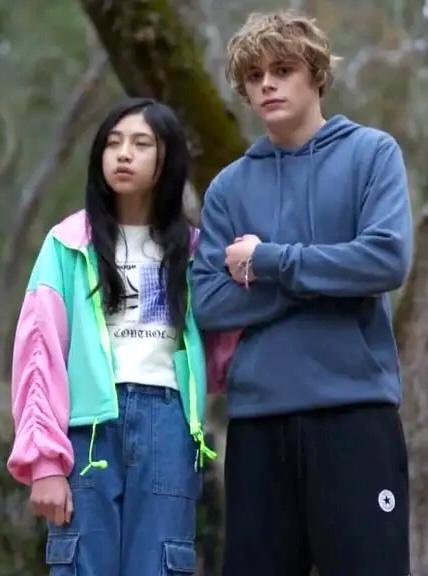
The theme of the ‘inspirational teacher’ is a well-worn cinematic device but, in the case of Mr Burton, it does have the advantage of being true. The titular Mr B (impeccably played by Toby Jones) is a quiet, but authoritarian teacher in a little school in Port Talbot, a man nursing his own thwarted ambitions as a playwright.

We join the story in 1942, when Mr Burton is doing his level best to instil a love of Shakespeare into his students, despite the glowering presence of the coal mines that threaten to claim those young men who are not thrown into the maelstrom of the Second World War. Burton is somewhat bemused to discover that the pupil who has the strongest response to his English literature lessons is Richard Jenkins (Harry Lawtey), a boy all-but abandoned by his coal miner father, Dic (Steffan Rhodri). Richard is obliged to live in the overcrowded home of his sister (Aimee Ffion-Edwards) and her resentful husband, Elfed (Anuerin Barnard).

When Richard shows considerable promise in a amateur production set up by Burton, the teacher is prompted to take the boy under his wing, giving him lessons in elocution in an attempt to erase his local accent, even finding him (and paying for) accommodation with his landlady, Ma Smith (Lesley Manville). Inevitably, tongues begin to wag as suspicious observers cast doubt on Mr Burton’s intentions.

When he takes the step of adopting the boy and lending him his surname, in the hope of getting him a scholarship at Oxford, the gossip intensifies…

Written by Tom Bullough and Josh Hyams and directed by Marc Evans, Mr Burton is an atmospheric period piece that captures the hardscrabble era in which it’s set. Jones is as assured as ever in a role that allows him to give little away, while Leslie Manville is a perfect foil for him – and makes a very decent fist of the Welsh accent. But it’s Lawtey’s star-making turn as Richard Jenkins/Burton that provides the heart and soul of this film. He’s utterly convincing as a shy, vulnerable teenager in the first half and then, when the action skips onward several years, convincingly nails Richard Burton’s sonorous tones and lithe sexuality, as he struggles to come to grips with his breakthrough role as Prince Hal in Stratford.

Lawtey’s astonishing transformation – and the astute comparison with the way that Hal shrugs off his former mentor, Falstaff in Henry IV – ensures that Mr Burton is a riveting piece about the importance of nurture and the many ways in which teaching can provide that all-important first step on the path to greatness.

4.4 stars

Philip Caveney