Film

The Last Showgirl

02/03/25

Cineworld, Edinburgh

I haven’t seen any of Pamela Anderson’s previous work (Baywatch never appealed) so my knowledge of her is limited to three headline facts: red swimsuit, sex tapes and – recently – no make-up. I’m not surprised that this reductive list doesn’t do the woman justice, but I am impressed by her nuanced performance in Gia Coppola’s latest film.

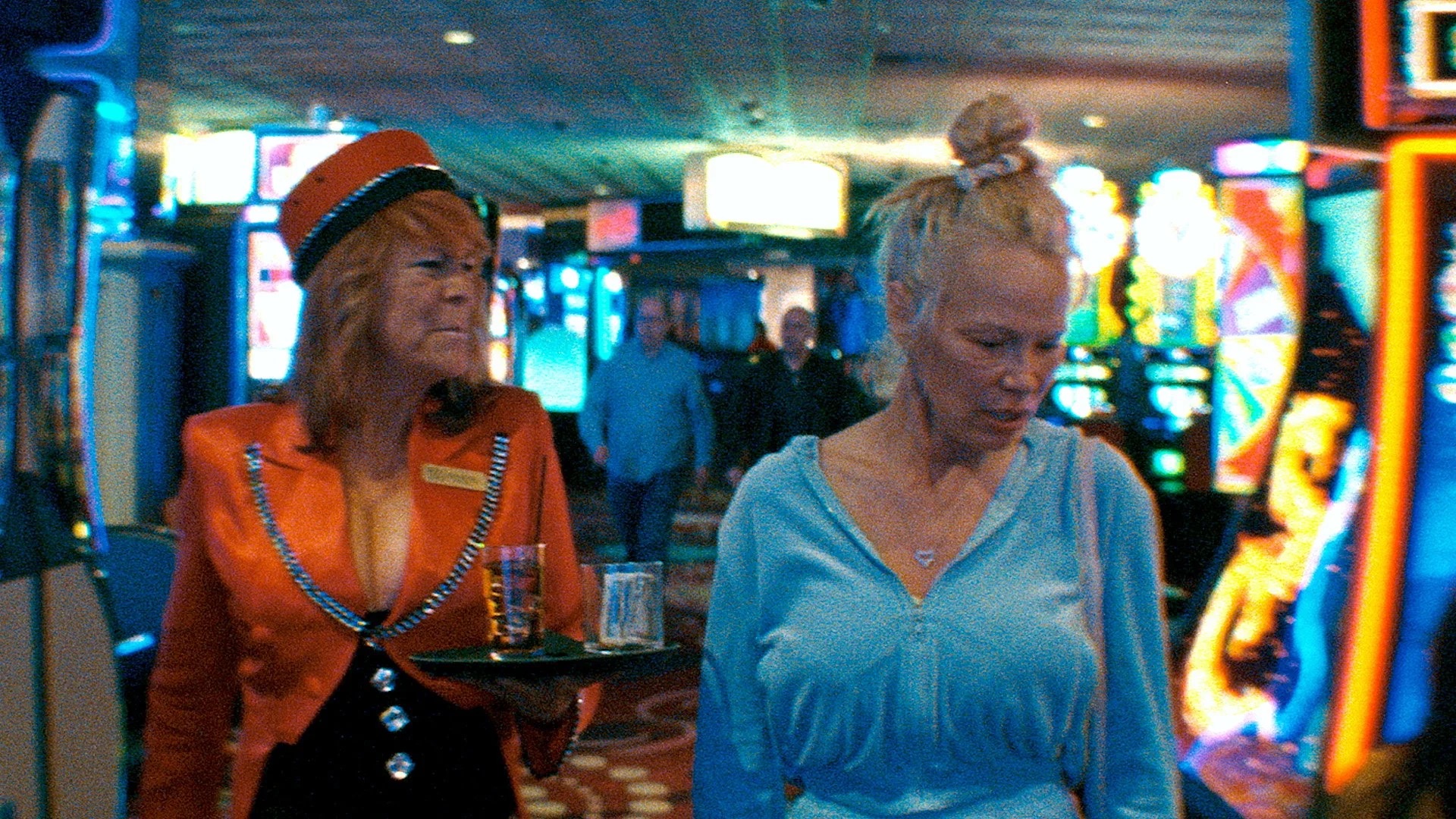
Anderson is Shelly, the titular last showgirl, still strutting her stuff in a Vegas casino. The clock is ticking, both for Shelly and the show itself. They’re both past their sell-by dates, and they’re being pushed aside for newer, brighter, fresher fare. But the fifty-seven-year-old has devoted her whole life to Le Razzle Dazzle and she doesn’t know who she is without it. News of the show’s impending closure is utterly devastating.

The sacrifices Shelly has made are huge. For more than thirty years, she has placed this job before her marriage, her security, even before her daughter, Hannah (Billie Lourd). But it turns out her bosses owe her nothing in return: no pension, no severance pay, no training for a different job. And, this being the USA, she won’t even have any health insurance when the curtain falls for the final time. What has it all been for?

Kate Gersten’s screenplay is deceptively simple, a layering of vignettes that slowly build to something quite profound. We already know how vampiric the industry is, sucking the last drop of blood from its initially willing victims before callously discarding them and calling, “Next!” Here, we see what happens to the husks it leaves behind.

At its heart, The Last Showgirl is a film about delusion, about the myths we tell ourselves to justify our lives. Shelly clings to the idea that Le Razzle Dazzle is a cut above, a Parisian-style extravaganza of glamour and elegance. But when Hannah sees the show, she bursts her mom’s balloon. “I’d hoped it would be worth it,” she says, before eviscerating Shelly’s dream, denouncing it as tawdry and outmoded, a nude show like any other – nothing special at all.

And Shelly’s not the only one. Her old friend Annette (Jamie Lee Curtis) gave up dancing long ago, and claims to be happy working as a hostess on a casino floor. But she is sent home whenever the place is quiet, her boss favouring her younger colleagues. No wonder she drinks; no wonder she gambles. Jodie (Kiernan Shipka) is only nineteen, but she’s already starting to realise the costs of pursuing her art, as her family disown her. Meanwhile, Eddie (Dave Bautista) is immune to the devastation. He’s a nice guy, seemingly quiet and kind, but he’s not at the mercy of a sexist world. He’ll be kept on to do the lighting for the next batch of sexy young women who come to the venue to perform.

The Last Showgirl is – ironically – an unshowy film. The social commentary is sharp but it’s cleverly-cloaked; the characters bold but the performances restrained. There’s a lot going on beneath the rhinestones and feathers.

4 stars

Susan Singfield

I’m Still Here

01/03/25

Cineworld, Edinburgh

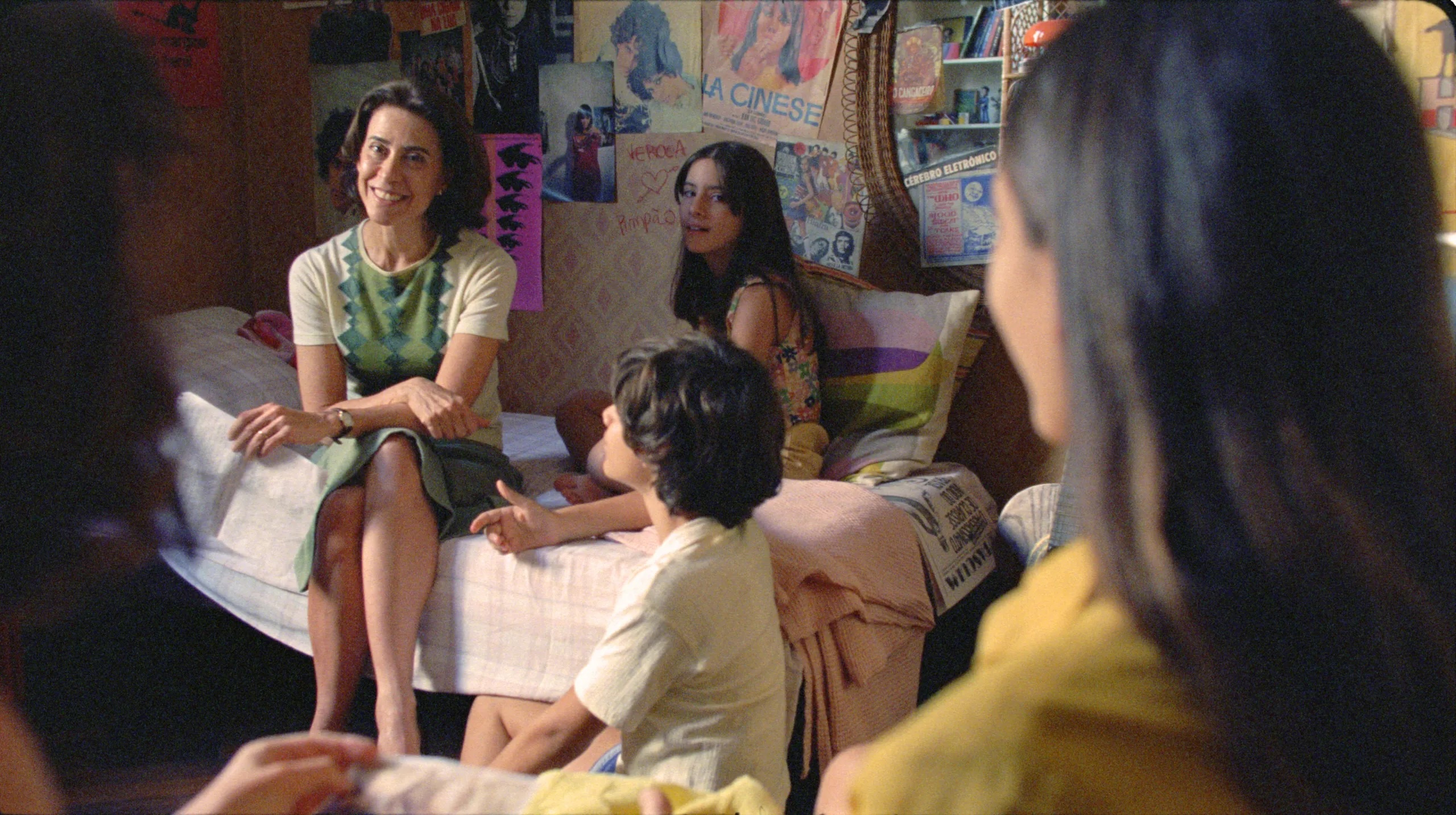
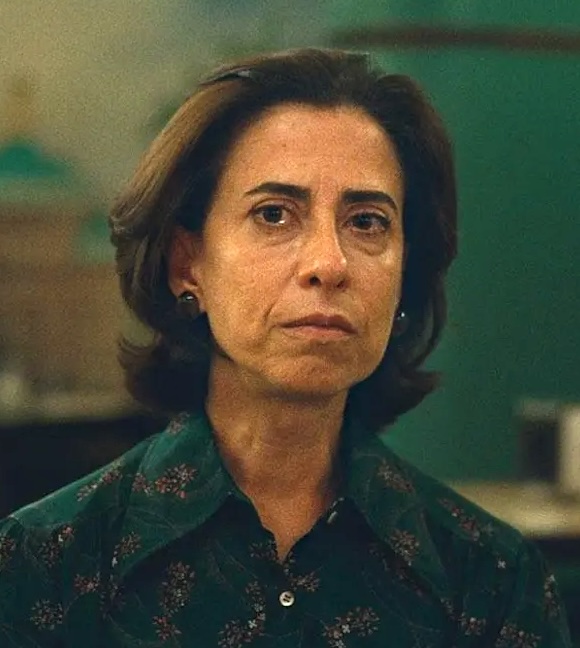
Directed by Walter Salles and based on the true story of lawyer and activist, Eunice Paiva – brilliantly played by Fernanda Torres – I’m Still Here is the deeply affecting story of a mother, who, after her husband’s sudden disappearance, is obliged to pick up the pieces of her shattered life and forge a new one for herself and her family. Torres’ performance has already won her a Golden Globe for Best Actress and she could well figure in this year’s Oscars.

The story begins in Rio Di Janeiro in 1971, where a military dictatorship has been in power for seven years and where citizens can be stopped and searched, even arrested without warning. Eunice lives a comfortable existence in the affluent sea-side Leblon neighbourhood with her husband, Rubens (Selton Mello), a civil engineer and former politician. The couple have five children – four daughters and a son – and they are planning to build a spacious new home on a plot of land close by. Life is eventful and fulfilling and features a lot of parties, where Eunice’s soufflé figures prominently.

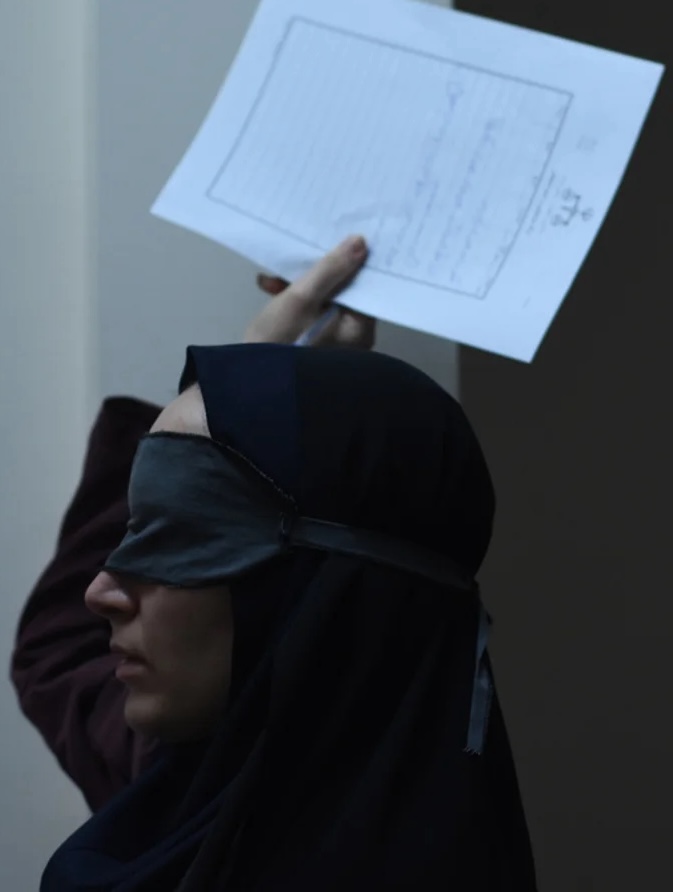
But all the family’s long-cherished ambitions come crashing down one night when six men, claiming to belong to the Brazilian military, enter the house and take Rubens to some unspecified location for ‘questioning’. Some time later, Eunice and one of her daughters, Eliana (Luiza Kosovski), are also arrested. Forced to put on blindfolds, they are taken to the same unknown destination and interrogated for twelve days. When they are eventually released there’s still no word of Rubens and it begins to dawn on Eunice that her husband has become one of ‘the Disappeared’ – those luckless individuals lost to the ruthless machinations of the state. The family is going to have to rethink its plans and start over…

I’m Still Here is a powerfully affecting (and, given recent developments in the USA, utterly terrifying) story of what can happen when a far-right government is given free rein to act as it pleases. Salles cannily uses the framing device of a series of staged photographs, marking different occasions across the family’s history. The sense of passing time is beautifully captured in both Adrian Tejido’s sun-kissed cinematography and Warren Ellis’s nostalgic soundtrack. As the years pass we see the hope that Rubens might one day return gradually diminish.

The script by Murilo Hauser and Heita Lorega – based on the autobiography of Eunice’s son, Marcelo Rubens Paiva – captures the unfolding narrative with absolute authority. A heartbreaking coda towards the film’s poignant conclusion has me in floods of helpless tears. This film is both an accomplished recollection of a piece of recent history and a stark warning about where the world could so easily be heading.

This might not be the most showy of this year’s Oscar nominations, but it may just be the most powerful – and Torres’ performance is truly extraordinary.

5 stars

Philip Caveney

The Monkey

23/02/25

Cineworld, Edinburgh

Director Osgood Perkins scored a palpable hit last year with Longlegs, a slow-burn horror that simmered with an overpowering sense of dread. So the news that he is helming an adaptation of Stephen King’s The Monkey (itself inspired by WW Jacobs’ classic short story, The Monkey’s Paw) leads me to expect that this will deliver more of the same. So I’m taken somewhat off-balance when the film promptly reveals itself as an absurd black comedy with lashings of gore. The result is never particularly scary, but it does prompt a surprising amount of incredulous laughter.

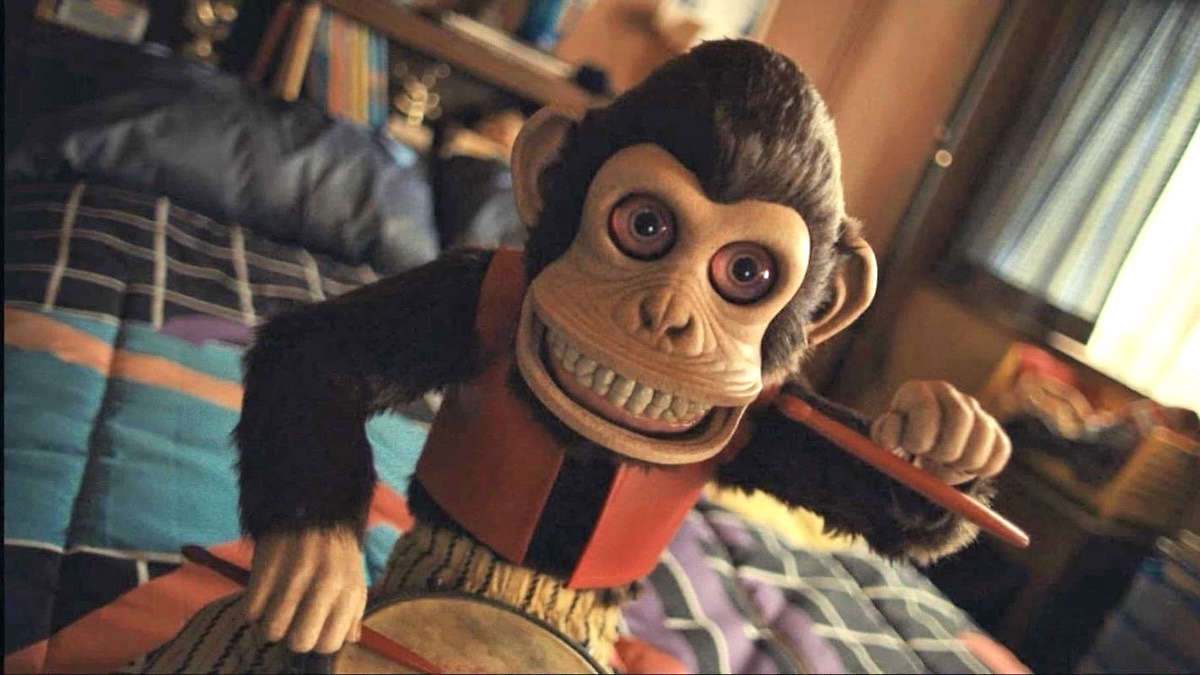
It begins in flashback, as the father of twin boys, Hal and Bill (both played by Christian Convery), attempts to gift an unwanted ‘toy’ to a thrift store, with unexpectedly gruesome results. The toy in question is the titular simian, a wind-up automaton that plays a drum to the tune of ‘I Do Like To Be Beside the Seaside.’ Once activated (by turning the key in its back), it has a nasty habit of ensuring that somebody in the immediate vicinity will get horrifically mangled, for no apparent reason other than it’s a nasty little pest who enjoys doing that kind of thing.

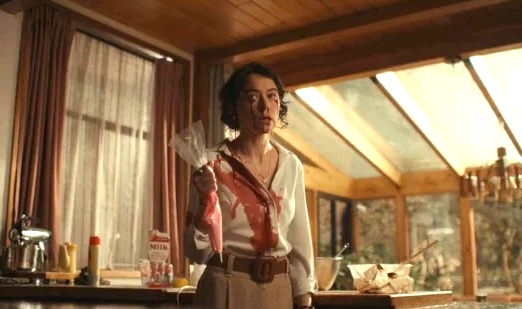
After their father ‘goes out for cigarettes and never returns,’ Hal and Bill grow up under the care of their understandably disturbed mum, Lois (Tatiana Maslany). One night, when searching through their absent father’s belongings, the boys discover the monkey in its box. Probably not a good idea to wind the key, you might think, but hey, kids will be kids…

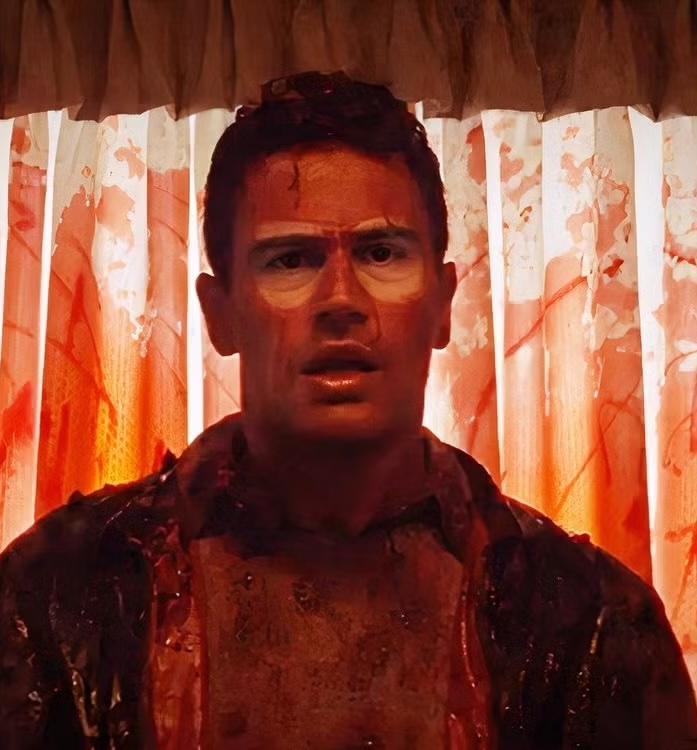
By adulthood, the two brothers (now played by Theo James) have drifted apart. Hal is the father of a teenage boy, but after his marriage break-up, only gets to spend one night a year with Petey (Colin O’Brian) and – wouldn’t you know it – that one night is when the malevolent monkey chooses to make its timely reappearance…

There’s much I like about this film: Nico Aguilar’s dark, brooding cinematography is suitably eye-catching and the gnarly splatter effects – created by no less than sixteen people in the arts department – take a wonderfully Heath Robinson approach to the task of dissembling human bodies. Much of the resulting mayhem is entertaining. The monkey itself is an engaging creation, positively oozing menace in every shot. But not everything in the production is quite so positive.

While a host of interesting characters manage to pop up to deliver Perkins’ sparky dialogue, no sooner have they appeared than they’re being messily spread across the screen and the effect is that this feels like a film that’s almost entirely peopled by bit players (or players in bits?). Perkins himself cameos as ‘Uncle Chip’ but gifts with only one line of dialogue before he gets turned to mush, while Elijah Wood doesn’t fare much better as Petey’s stepfather, Ted, though – to be fair – he’s one of the few characters who actually survives. Furthermore, a sub-plot featuring a man called Thrasher (Rohan Campbell) is so clumsily inserted into the action that for a while it only serves to confuse me, particularly when the actor is also obliged to play two characters.

I’m clearly not the only one with misgivings. Half an hour into the screening, three viewers get up and march determinedly out of the auditorium. Those with a predilection for comedy in a deep shade of anthracite may (like me) laugh out loud at what they’re watching and will possibly revel in the WTF final scenes.

But The Monkey is a tricky little beast and one thing is for sure: it won’t be for everyone.

3.7 stars

Philip Caveney

Bridget Jones: Mad About the Boy

22/02/25

Cineworld, Edinburgh

Watching a Bridget Jones movie is like catching up with an old schoolmate – not necessarily someone you were especially close to back in the day, but with whom there’s enough shared history to make these meet-ups fun. No doubt this is particularly true for “women of a certain age” – Bridget’s age; my age – who’ve grown older with her as part of our cultural landscape.

Thankfully, Bridget (Renée Zellwegger) has finally grown wiser; I found her ditsy-fuck-up persona a wee bit irritating when I last saw her (in 2016’s Bridget Jones’s Baby). What was endearing in a woman barely into her thirties, contemplating the fact that she’s somehow suddenly supposed to be an adult, was just irksome in a pregnant forty-something with a kick-ass job. Now in her fifties, Bridget has settled into success: she’s proud of the skills that make her such an excellent TV producer, and she’s even prouder of Billy and Mabel (Casper Knopf and Mila Jankovic), her two delightful kids.

But this iteration of Bridget is a lot sadder too: she’s a widow. Her husband, Mark Darcy (Colin Firth), was killed a couple of years ago on a peace-keeping mission in the Sudan. The issue of mourning is nicely handled, staying just the right side of mawkish. We see Bridget and her kids slowly moving forward, acknowledging their grief while also trying to find joy. The new levels of emotional depth work well, but this is still essentially a rom-com, so there’s a raft of unsuitable guys for Bridget to dally with.

First up is her old flame, Daniel Cleaver (Hugh Grant). Bridget has him firmly in the friend-zone nowadays, and I like this development. He’s as much of a player as he ever was – his language inappropriate; his attitude to women still neanderthal – but he’s rendered (more or less) palatable thanks to his kindness to Bridget and his rueful acknowledgement of his own failings. Also, of course, Grant imbues him with a rogue-ish charm, so it’s hard to hate him as much as I might in real life.

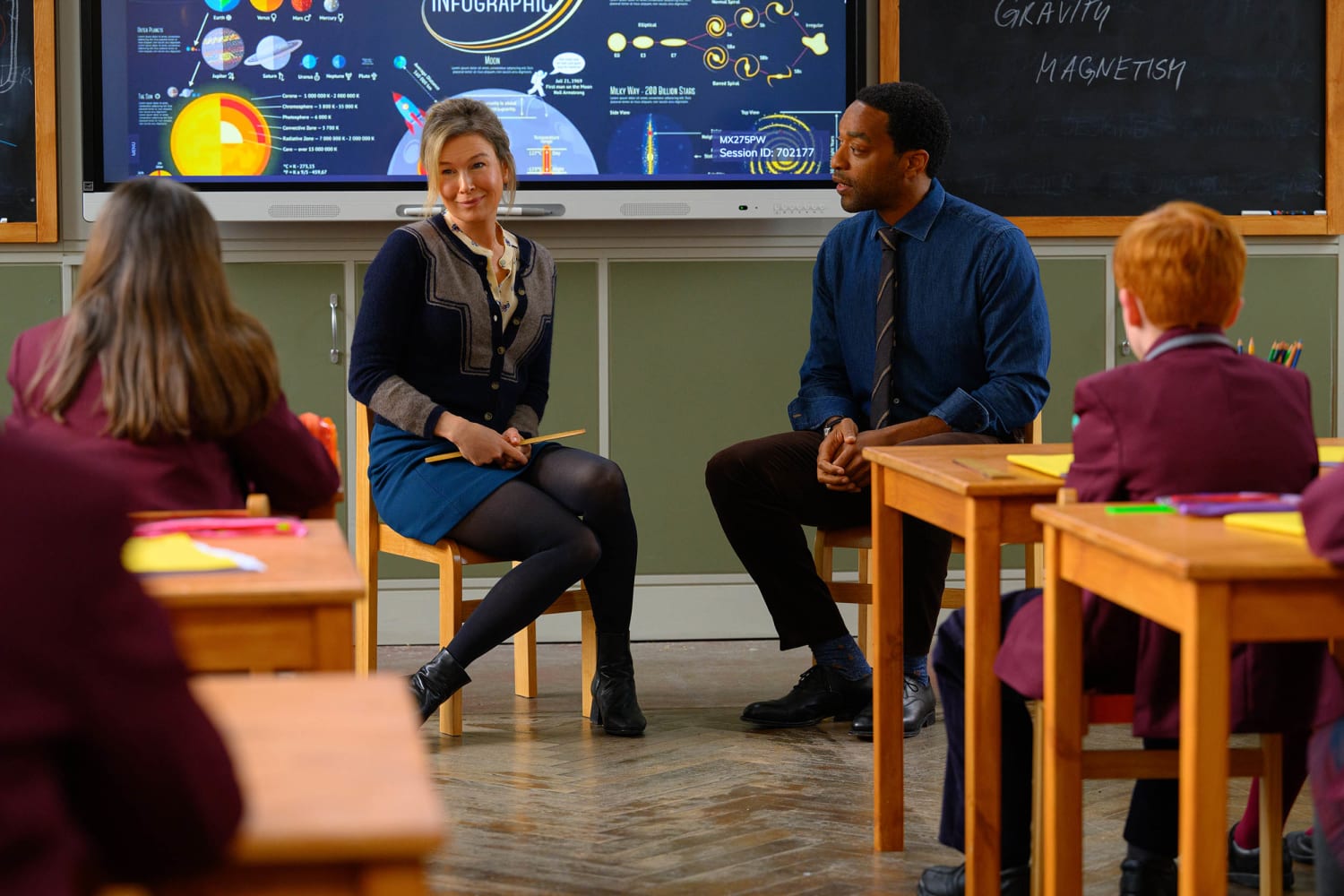
So, if Cleaver’s not a contender for a new relationship, who is? Enter Roxster (Leo Woodall) and Mr Wallaker (Chiwetel Ejiofor). The former is a twenty-nine-year-old PhD student, all rippling muscles and boyish smile; the latter is Billy’s uptight primary school teacher, a stickler for rules and punctuality – although he does turn out to have a decent set of abs as well. It’s no surprise that Bridget finds herself drawn to Roxster – nor that Mr W reveals a softer side, which makes her like him too. Which one will Bridget end up with? (Things might have moved on – at least Bridget doesn’t seem to hate her body any more – but the story hasn’t strayed so far from its ‘happy ending’ cliché that she might conceivably choose to be alone.)

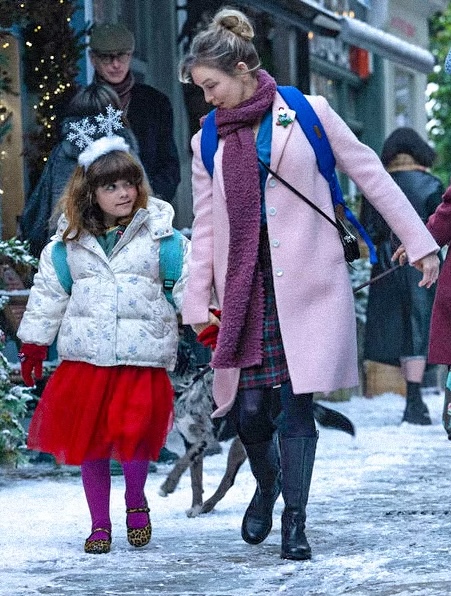
Zellwegger is as likeable as ever, and I have tears in my eyes as I see Bridget emerging from her misery to recover some of her ebullience – dancing and laughing and being silly. It’s great to see her old friends and adversaries pop up as well: director Michael Morris and scriptwriters Helen Fielding, Dan Mazer and Abi Morgan successfully present a parade of ‘greatest hits’ shout-outs without ever making them seem shoe-horned into place. Big knickers? Check. Penguin pyjamas? Check. Falling over? Check. Check. Check. Running after a lover in the snow? Big check.

In short, I like this film a whole lot more than I’m expecting to. Bridget will never be my bestie, but I’d love to check in with her when we’re both in our sixties, and see what scrapes she’s getting up to then…

4 stars

Susan Singfield
The Importance of Being Earnest: NT Live

20/02/25

Dominion Cinema, Edinburgh

Despite having lived a mere thirty-minute walk from Morningside’s Dominion Cinema for the past decade, we’ve somehow failed to set foot inside – and we dare to call ourselves cinephiles! So tonight’s NT Live screening of The Importance of Being Earnest is extra exciting for us, as it’s also an opportunity to explore a new venue.

So let’s begin with that. The Dominion is undeniably boojie; indeed, it’s the fanciest cinema either of us has ever graced. The design is art deco (think flocked wallpaper, geometric shapes and a colour palette of gold, red and black); our seat is a super-comfy reclining sofa, with privacy screens and side tables. We pour our drinks (sparkling water and alcohol-free lager, since you ask) and sit back, feet up, more than ready to enjoy ourselves in these opulent surroundings.

I’ve seen, read and taught this play so many times that I know it almost by heart, but that’s not to its detriment. After all, the script is so packed with recognisable aphorisms that few in the audience are likely to be surprised by what is said; with Earnest, it’s all in the delivery.

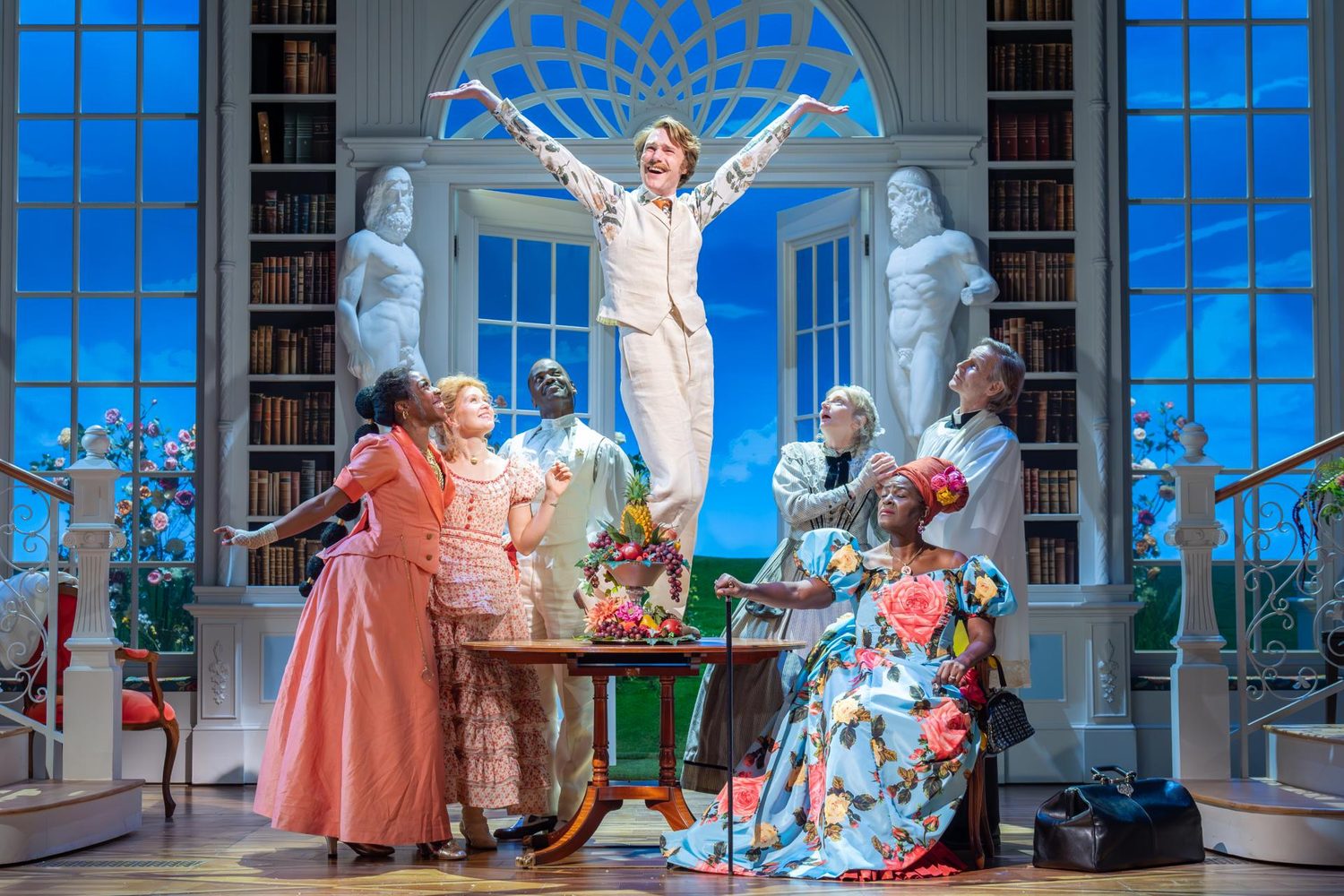
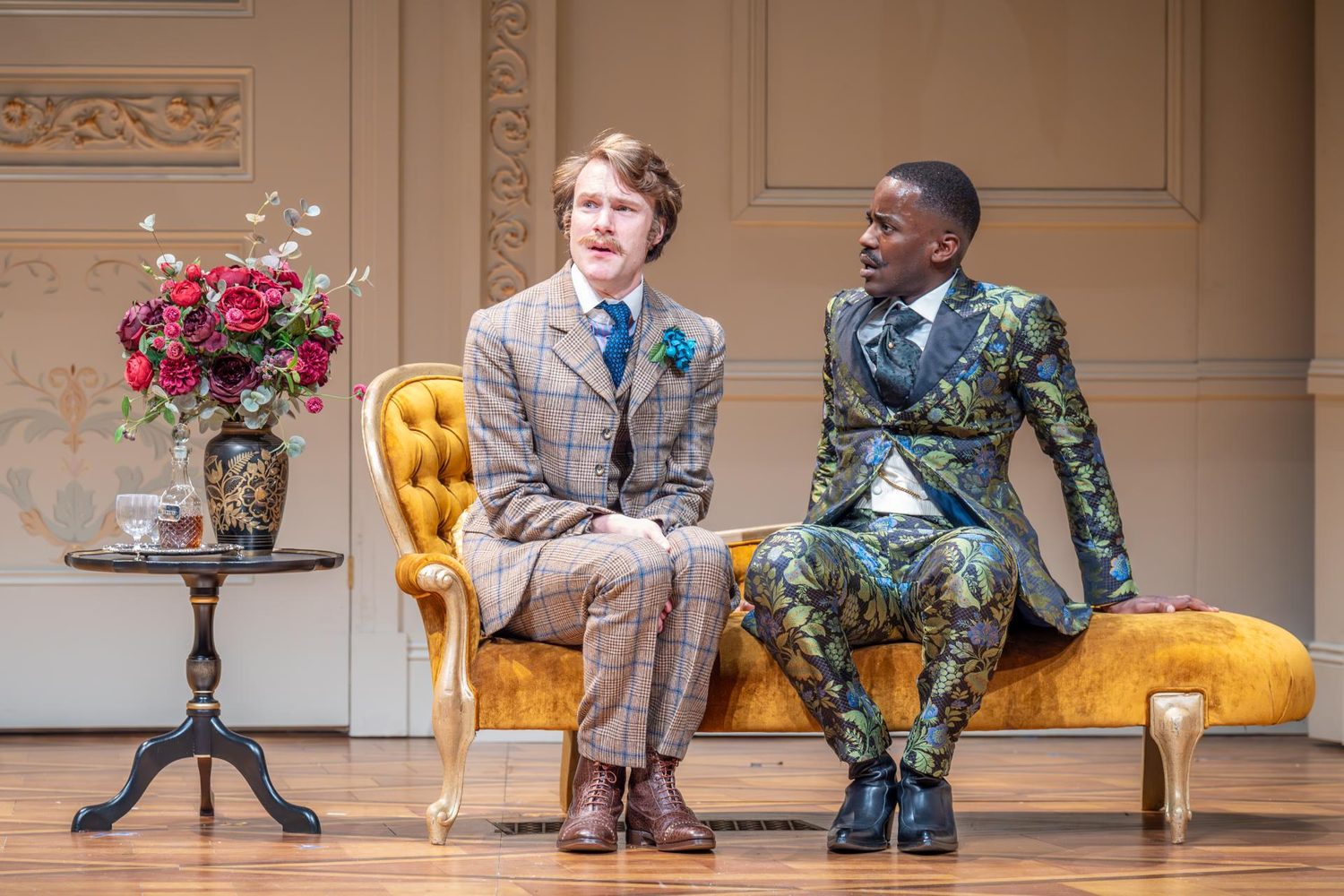
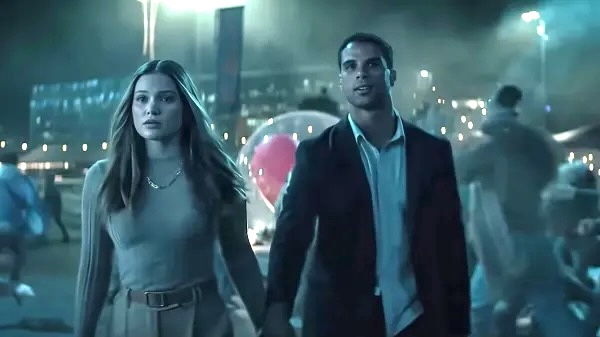
And what delivery it is! Directed by Max Webster, this is an overt celebration of queerness, Wilde’s subtext amplified to the nth degree. From the opening number, where Algernon (Ncuti Gatwa) shimmers in pink-sequinned drag, to the exuberant Mardi Gras-style finale, the closet door is flung wide open, making for a fabulously unsubtle show. To quote the wild wit himself, “moderation is a fatal thing; nothing succeeds like excess.” Webster has certainly taken this to heart.

The plot – for those who need a reminder – is at once frivolous and deadly serious. On the surface, it’s a frothy farce, all mistaken identity and foolish foppery. Underneath, it’s about repression – about the lengths people are forced to go to when their very natures are outlawed. Unbeknownst to each other, both Algernon and his best friend, Jack (Hugh Skinner), have found inventive ways to circumvent society’s disapproval of their predilections. Algernon has a pretend-friend, Bunbury, whose ill health Algy uses to excuse himself from dreary social events, while Jack has an alter-ego – an imaginary older brother called Ernest – who gets into mischief whenever he visits the city.

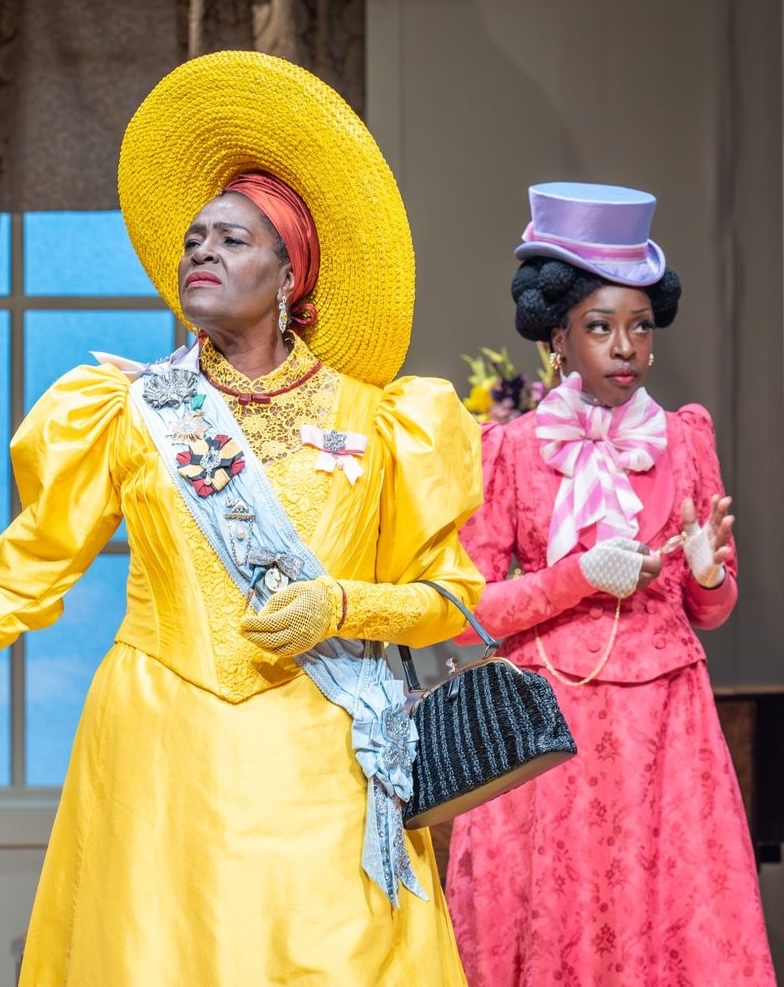
But things become complicated when Jack falls in love with Algy’s cousin, Gwendolen (Ronke Adekoluejo), whose mother, Lady Bracknell (Sharon D Clark), is far from pleased about the match. In desperation, Jack confesses his lies to Algy – who, true to form, responds by assuming Ernest’s identity for himself, and heading off to Jack’s country house to woo his pretty young ward, Cecily (Eliza Scanlen). Throw in a conflicted clergyman (Richard Cant), a dithering governess (Amanda Lawrence) and a couple of manservants (both played by Julian Bleach), and the scene is set for some merry mayhem.

The multi-racial casting within a period drama (courtesy of Alastair Coomer and Chloe Blake) gives the piece a contemporary edge, as do the occasional strains of recent-ish pop music and a cheeky allusion to one of London’s gay hotspots. Gatwa’s newfound fame as Dr Who also helps this production to appeal to a hip young audience, as does the sexual fluidity of the characters.

Clark’s depiction of Lady Bracknell is inspired: she brings a whole new dimension to the part, dispelling all my preconceptions of the character. Here, those oh-so-familiar lines are imbued with a haughty charm to create a formidable British-Jamaican matriarch without so much of a hint of Dench. Adekoluejo’s Gwendolen is a chip off the old block, saved from monstrousness by her cleverness and humour. In contrast, Scanlen’s Cecily is deliciously weird, a mix of doe-eyed intensity, sweetness and steel. But there are no weak links here: even Bleach, in the minor roles of Lane and Merriman, makes his mark, creating two distinct but equally absurd personae, evoking laughter with the simplest of smirks or stumbles.

More than anything, though, this is Skinner and Gatwa’s show, the focus firmly on the men’s friendship and their journey towards coming out. Their performances are jubilant and euphoric, and yet deceptively weighty, carrying with them real emotional heft. I can’t help thinking about Wilde, condemned to hard labour for his homosexuality, and wondering what he’d make of this? Surely, it would gladden his heart to see his characters finally set free.

5 stars

Susan Singfield

Captain America: Brave New World

18/02/25

Cineworld, Edinburgh

Heading to the screening for this, I have a wistful recollection of earlier times, when going to see the latest Marvel movie was actually something to look forward to. You know, Avengers Assemble, Guardians of the Galaxy, that kind of thing. It wasn’t so very long ago and yet it already feels like a distant memory. These days, the best I can hope for is, ‘Maybe it won’t be terrible.’

Marvel Studios are victims of their own success. Too many sequels, too many prequels, too much product. But as long as the crowds keep coming, they’ll continue, right?

There are maybe eight people in the huge IMAX auditorium this afternoon, which makes me suspect that I’m not the only one who’s bored with the MCU’s recent output. And okay, Deadpool & Wolverine did make an almost indecent amount of money – largely, I think, by daring to opt for a 15 certificate instead of the more usual 12A, but it was no masterpiece. It makes me wonder how much longer the studio can survive offering insipid releases like Captain America: Brave New World.

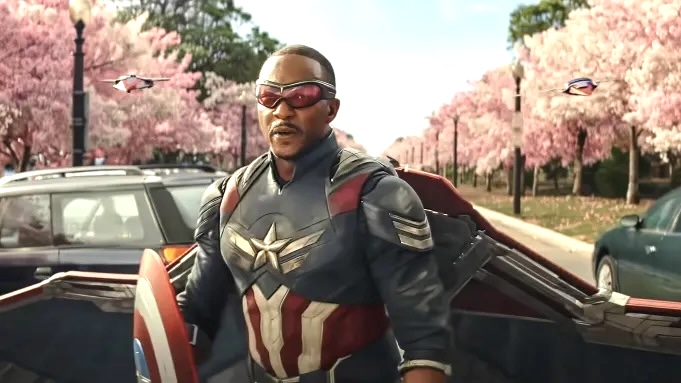
Mind you, on paper, it sounds surprisingly promising. Get this: recently elected American president, Thaddeus Grant (Harrison Ford) is showing signs of instability. (Given the current situation in the USA, this could have played out like a clever satire, but all too predictably, it doesn’t.) Grant sends Sam ‘Cap’ Wilson (Anthony Mackie) and Joaquin ‘Falcon’ Torres (Danny Ramirez) to Mexico to combat sneering villain, Sidewinder (Giancarlo Esposito), who has stolen some… er… classified items. A massive punch-up duly ensues. Lots of people die in polite 12A fashion – there’s no blood to speak of and the cameras never really register the impact that big explosions have on the human anatomy.

When Sam and Joaquin return victorious, exhibiting a kind of smug self-satisfaction that’s hard to endure, they discover that President Grant is acting very strangely indeed. He appears to have become fixated on the discovery of a new metal called adamantium, which can only be found on the mysterious ‘Celestial Island,’ and which he’s desperately keen to get his mitts on. On a trip to the White House, Sam and Joaquin witness an assassination attempt on the president, which is initiated by their old friend, super soldier Isaiah Bradley (Carl Lumbly). Afterwards, he has no explanation for his behaviour…

But look, I don’t know why I’m bothering to go into the alleged ‘plot’, which took no less than five screenwriters to create, since it’s mostly an excuse to throw together a series of action set-pieces, leading up to the penultimate scene where Grant mutates into… well, if I say it here, there will doubtless be indignant cries of, ‘Plot spoiler!’ – even though what happens has been blatantly revealed in all the film’s trailers and even features on the poster. I hope they paid Ford a lot of money to converted into pixels and I also hope that ace actor Tim Blake Nelson was paid a shit-ton of the stuff to wander about sporting a head like a rotting cauliflower and muttering dark threats in the role of evil genius Samuel Sterns.

I’m left with the inevitable questions. Why does Torres talk and act like a hyperactive teenager when he’s clearly in his 30s? What were those ‘classified items’ anyway? And how come, when a man turns into a Hulk, he still has a pair of pants that fit him?

At least this one comes in at just under two hours, for which relief much thanks, but if ever proof were needed that Marvel have squeezed this franchise as thin as it will go, surely here it is. But no, as the inevitable post-credit sequence grimly intones, Captain America will return…

Which sounds more like a threat than a promise.

2. 3 stars

Philip Caveney

Heart Eyes

16/02/25

Cineworld Edinburgh

We are romantic sorts here at Bouquets & Brickbats, so come Valentine’s Day (or at least, forty-eight hours after it) we seek out this timely tale of a young couple who set out for a romantic night on February 14th… only to find themselves being pursued by a relentless serial killer. We’ve all been there.

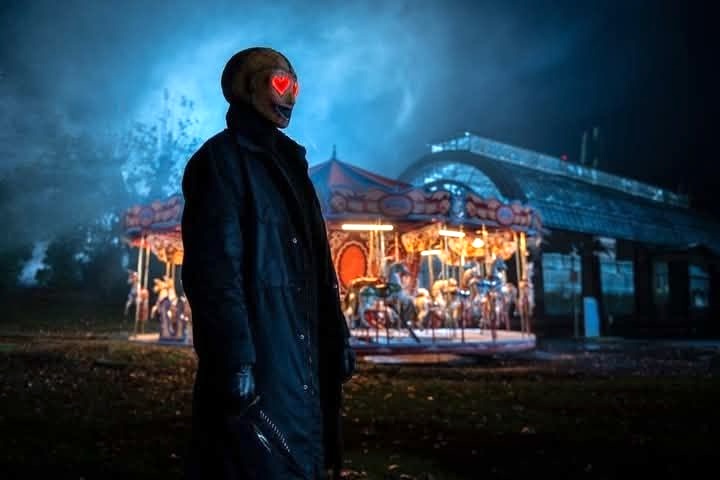
Despite that unprepossessing title, Heart Eyes, directed by actor Josh Ruben and written by Phillip Murphy, Christopher Landon and Michael Kennedy, is a spirited mash-up, mixing familiar elements from famous rom-coms with gnarly images from slasher movies. In a snappy pre-credits sequence, we see the titular killer (named because of the heart-shaped goggles he wears over the inevitable fright mask) interrupting the romantic proposal of Patrick (Alex Walker) and Adeline (Lauren O’Hara) in a very aggressive manner. Suffice to say, it gets messy.

Credits done, and we learn that Heart Eyes (thus dubbed by the ever-sensitive press) has been active for a couple of years, and these Valentine slaughters are an annual occurrence. He moves to a different city for each successive spree. This time it’s Seattle.

And does this put people off celebrating the event? No, it does not. Go figure.

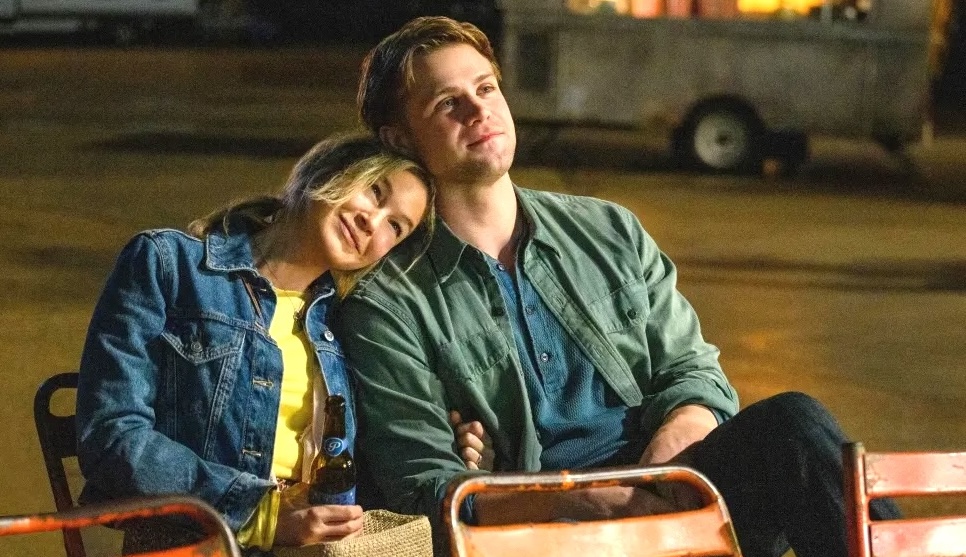
We meet Ally (Olivia Holt), who works at an advertising agency and has just angered her boss, Crystal (Michaela Watkins), by attempting to pitch a romantic ad campaign that’s based around the subject of er… death. It doesn’t go down well. Crystal introduces Ally to Jay (Mason Gooding), handsome, smooth-talking and almost definitely there to take Ally’s job away from her. Jay suggests that the two of them should head out for dinner so they can discuss the way forward. She points out that it’s Valentine’s Day and he assures her that everything will be fine…

Heart Eyes isn’t exactly reinventing the wheel here, but I have fun with the premise. Ruben seems to delight in propelling his leads along a twisting path of unforeseen – and sometimes preposterous – events. The danger here, of course, is that rom-com fans will be put off by the regular bouts of gory 18-certificate violence while hardcore fright fans will be sniffy about the romantic stuff. For those who can enjoy both, this is a propulsive ride that flings viewers gleefully from one situation to the next, often with tongue firmly in cheek. 

If some of the ‘twists’ don’t exactly take me by surprise – Chekov’s metal straw, I’m looking at you – there are plenty of lines that manage to catch me in the chuckle muscles, especially those from Ally’s rom-com obsessed best friend, Monica (Gigi Zumbado).

If you see this in the cinema, make sure you stay in your seat for a mid-credit scene, which most of the viewers at the screening I attend manage to miss. For once, this is actually worth waiting for.

4 stars

Philip Caveney

The Seed of the Sacred Fig

09/02/25

Cineworld, Edinburgh

Written, co-produced and directed by Mohammad Rasoulof, The Seed of the Sacred Fig is a monumental achievement, filmed in secret to avoid censorship by Iran’s Ministry of Culture and Islamic Guidance, which restricts depictions of social issues, criticism of the regime – and female hair. When this movie was selected for the 2024 Cannes Film Festival, Rasoulof was sentenced to eight years in jail, as well as a flogging and a fine. He fled to Germany, a perilous escape. And he’s not the only one: almost all of the actors have had to leave their homeland too. Only Soheila Golestani remains in Iran, where she has faced numerous interrogations and is currently banned from either working or leaving the country.

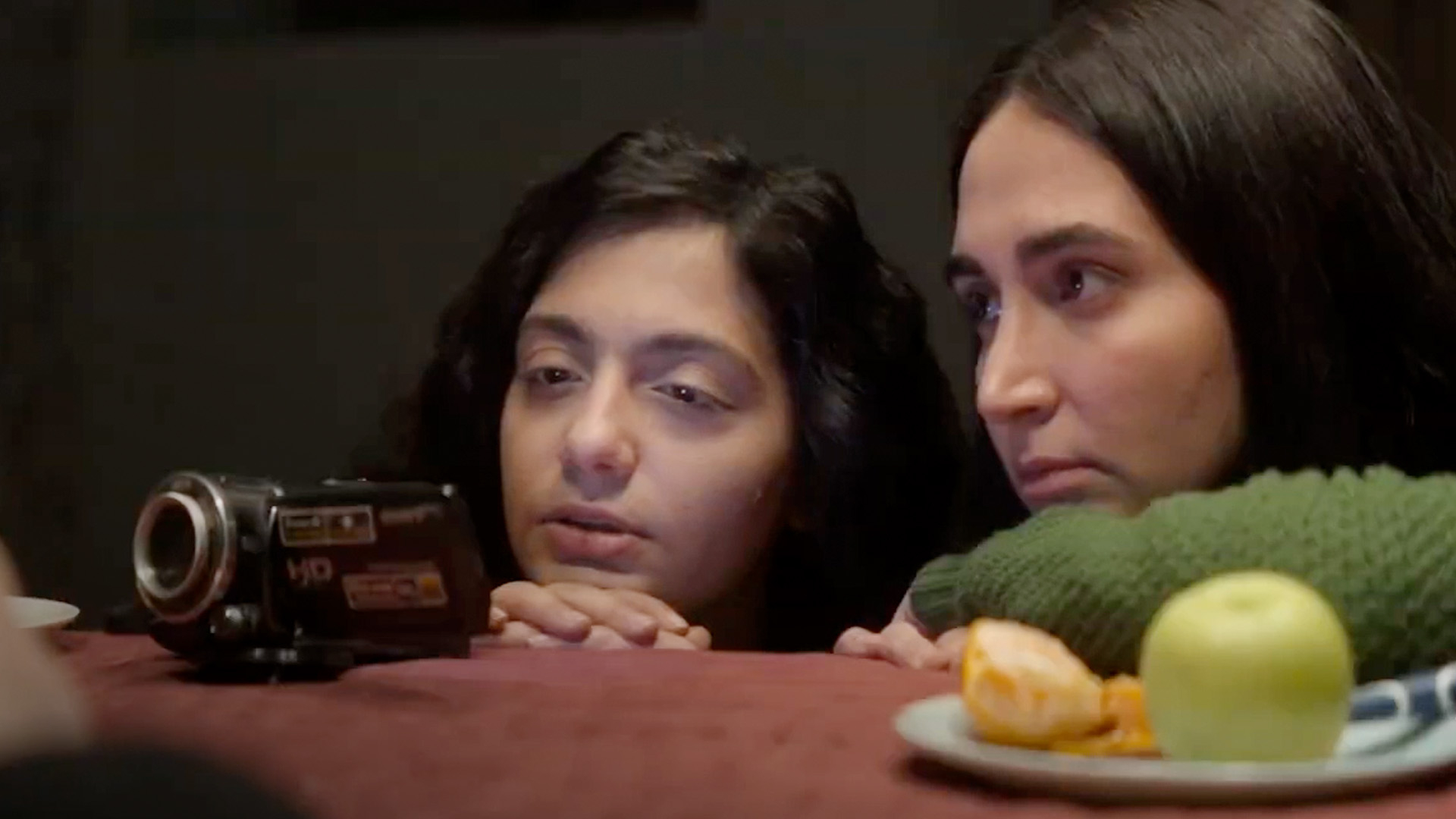
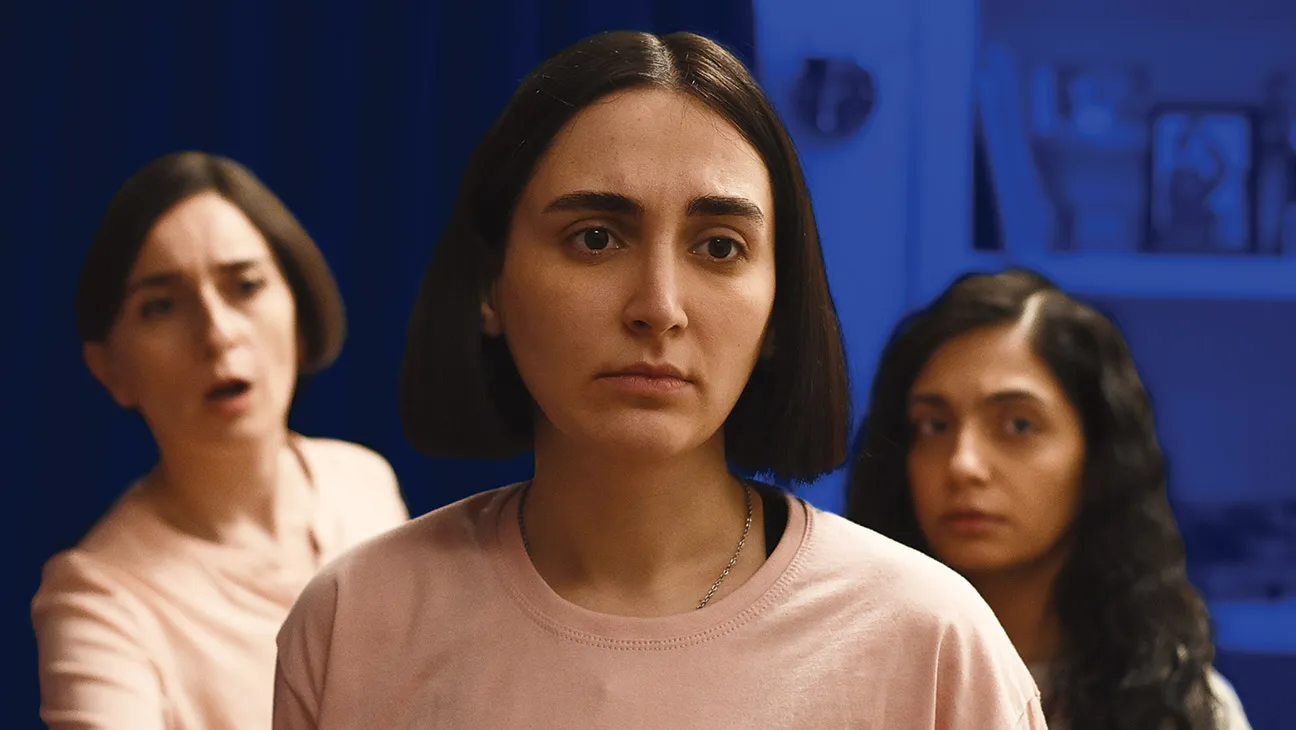
Golestani plays Najmeh, mother to college student Rezvan (Mahsa Rostami) and teenage schoolgirl Sana (Setareh Maleki). The story opens with the news that her husband, Iman (Missagh Zareh), has been promoted to the prestigious role of ‘investigator’ for the revolutionary courts. The family’s celebrations are tinged with foreboding, as Iman warns his daughters that they need to be careful. They can’t tell anyone about his work, they can’t post pictures of themselves on social media, and their behaviour must be beyond reproach. ‘Investigators’, we learn, are tasked with deciding which criminals should face the death penalty – and there’s an inherent danger from those seeking revenge. Alone in their bedroom, Iman shows Najmeh the gun his boss has given him. “For protection,” he says. She’s terrified.

The timing could hardly be worse. The fictional Iman’s promotion coincides with the real-life Mahsa Amini’s death in police custody, after being arrested for contravening morality laws (i.e. refusing to wear a hijab). As angry young protestors flood the streets, demanding change, the government responds in force. Suddenly, Iman is coerced into signing hundreds of death warrants every day. It takes its toll, especially as he soon finds himself at odds with his outspoken daughters.

The family functions as a microcosm for Iranian society. Iman represents the government, whose strictures Najmeh accepts and therefore perpetuates. Rezvan agrees with the protestors, but she’s passive and obedient, and doesn’t dare to act. Sana, on the other hand, has no such compunctions: she wants her freedom and she’s ready to do whatever it takes.

And then Iman’s gun goes missing. He knows that only three people have had the opportunity to take it, and so he subjects his family to a terrifying interrogation, illuminating the allegorical nature of the title. Just as the sacred fig is a parasitic plant, which grows around and eventually strangles its host, so the regime corrupts Iman. By the end, its tendrils have destroyed him, and the honourable, loving man he used to be is completely gone.

This isn’t a perfect movie, but it’s a mightily impressive one: the mind boggles at the thought of the bravery it must take to participate in something so important and with such high stakes. The almost three-hour running time gallops by, and I am completely invested in the family’s drama, while also learning more about Iranian politics. The four main actors are all utterly compelling, their characters entirely credible, even in the final act, where the plot is more figurative than literal, and everything spirals out of control.

The Seed of the Sacred Fig has been nominated for the best international feature Oscar (albeit representing Germany and not Iran) and I sincerely hope it wins. According to Rasoulof, the Iranian authorities won’t announce verdicts on those members of his cast and crew who stand accused of “spreading immorality and propaganda” until the result is announced. They don’t want the adverse publicity.

As art, as protest, as an act of courage, this is a film you don’t want to miss.

4.8 stars

Susan Singfield
Bring Them Down

09/02/25

The Cameo, Edinburgh

In the Wild West, as we all know, men are men and they have vengeance in their hearts. And naturally they always take the law into their own hands. In the case of Christopher Andrews’ directorial debut, Bring Them Down, we’re talking about the West of Ireland, somewhere near Athenry, judging by what’s printed on the side of a van. The story is set in the present day but you’d be forgiven for thinking that it’s some time in the 1950s.

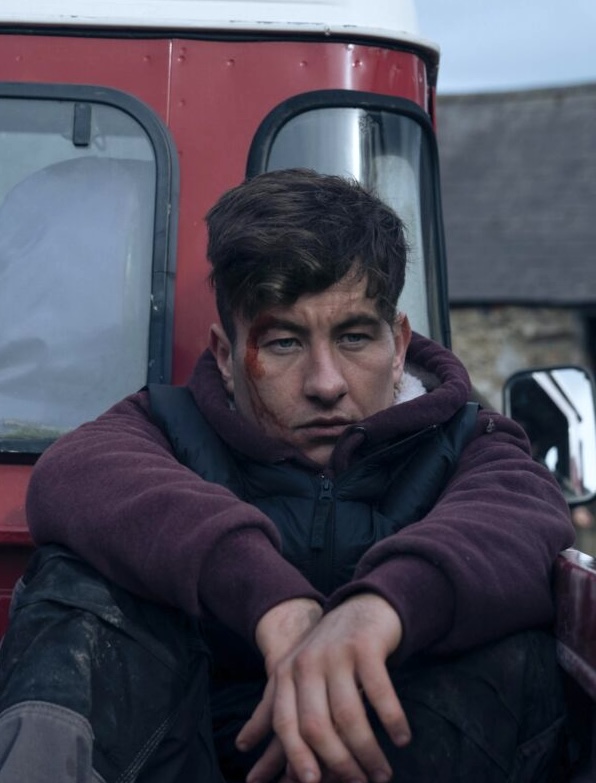
Michael O’Shea (Christopher Abbott) is a sheep farmer, stranded out in the middle of picturesque nowhere with his disabled father, Ray (Colm Meany), grumbling and snarking in the background. The two of them are constantly in dispute with their neighbour, Gary (Paul Ready), who is building holiday homes on adjoining land and seems to be spoiling for a fight. It doesn’t help that Gary is married to Caroline (Nora-Jane Noone), with whom Michael shares a troubled history (as we’ve seen in the film’s opening flashback). Gary and Caroline have a son, Jack (Barry Keoghan), who is tormented by the fact that his parents are in financial straits and appear to be on the verge of splitting up. He’s desperately on the lookout for ways to earn some extra money.

When somebody steals a couple of the O’Shea’s rams, Michael discovers them in Gary’s herd. He is at first reluctant to challenge his neighbours but, spurred on by his father’s angry tirades, Michael soon succumbs and sets off on a bloody quest for vengeance…

A more reductive view of the Irish would be hard to imagine. Every male character we meet seems intent on hurting, taunting or maiming those who get in their way and these people are seemingly unaware that the Garda even exist. Somewhere around the halfway point, Andrews’ script does a backward loop and offers a fresh perspective on what we’ve seen up to now, to indicate that things are not entirely as they seem, but it hardly helps matters, and I simply cannot credit one scene where Jack and his pal Lee (Aaron Hefferman) embark on an escapade so heinous it beggars belief.

There are other problems here. Keoghan is supposedly a teenager (Jack certainly acts like one) but unfortunately looks every day of his actual thirty-two years; and, while Abbott (an American actor, last seen undergoing supernatural changes in Wolf Man) makes a halfway decent stab at an Irish brogue and even delivers lines in Gaelige, this is thick-eared stuff that appears to offer an unpleasant subtext, suggesting that women shouldn’t be allowed to leave their men, as it messes them up.

Bring Them Down at least does what it says on the can. I leave the cinema wishing I’d skipped this film and looked elsewhere for a afternoon’s entertainment.

2.6 stars

Philip Caveney

September 5

08/02/25

Cineworld, Edinburgh

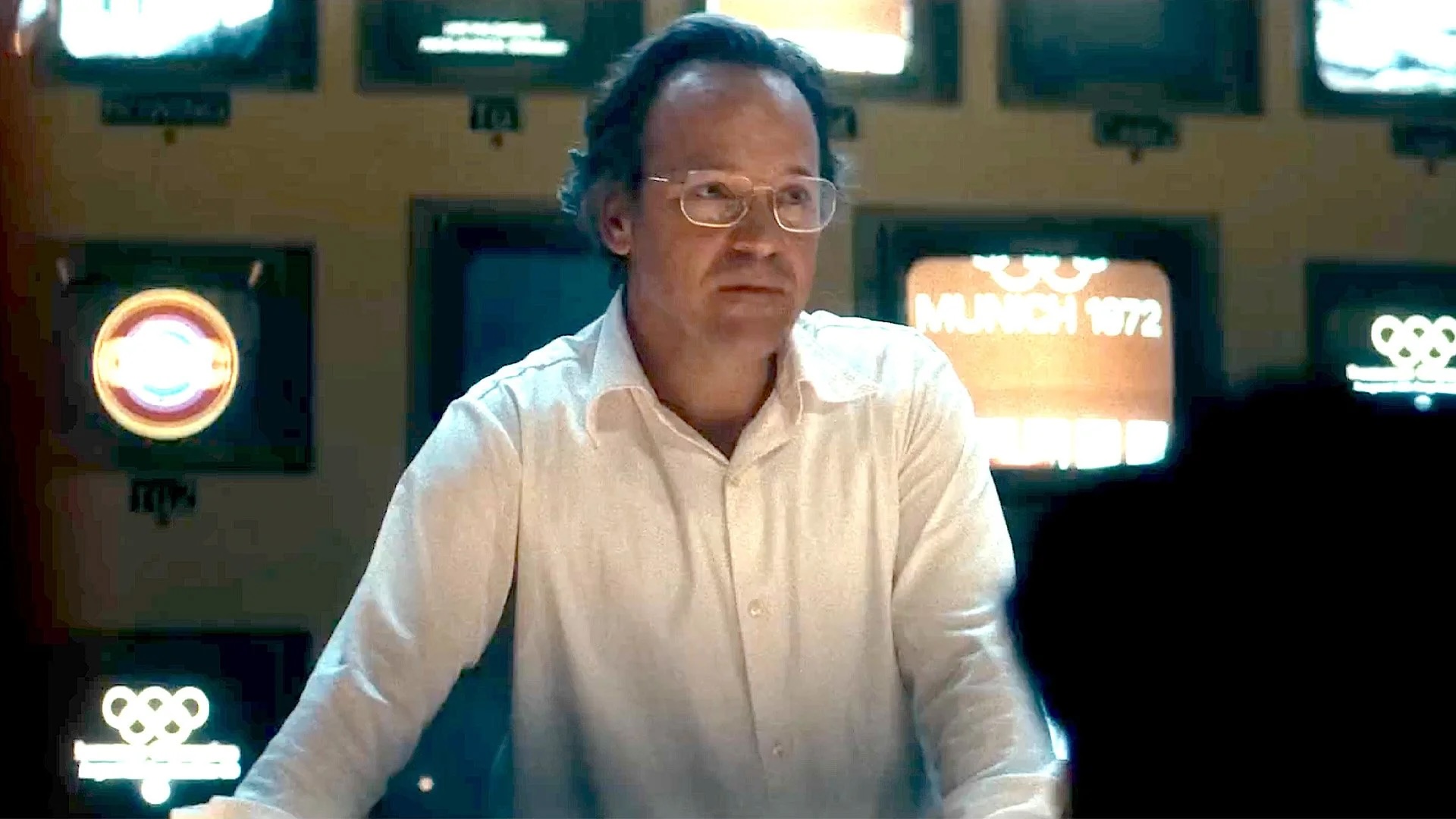
It’s September 1972 and in Munich the sports department of ABC television are busy in their studio in the Olympic village, beaming live coverage of the Games to viewers all over the world. In this pre-digital age, they need to use every trick at their disposal to ensure that they capture the action. And then some of them hear the sound of gunshots…

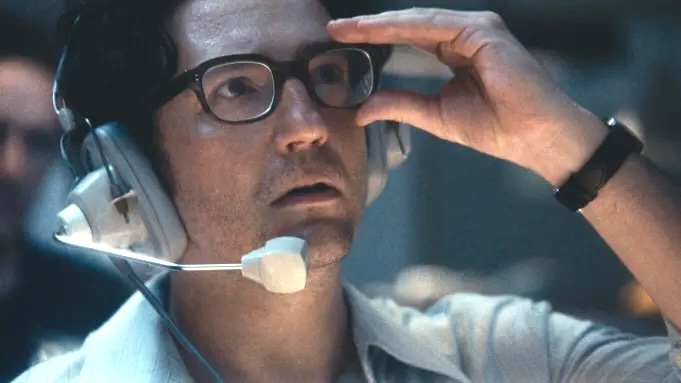
Swiss director Tim Fehlbaum’s ingenious account of this true-life story, written by Fehlbaum, Moritz Binder and Alex David, is a dark claustrophobic tale, which adopts the same approach as the broadcast team, never pointing the finger of blame but simply laying out what happens in meticulous detail. Geoffrey Mason (John Magaro), a relatively inexperienced studio director, has been handed the opportunity to helm today’s coverage and is anxious to do a good job, under the ever watchful gaze of head man, Roone Arlege (Peter Sarsgaard), and producer, Marvin Bader (Ben Chaplin).

But when eleven members of the Israeli team are taken hostage by the Palestinian Black September group, the stakes are suddenly kicked into the stratosphere. The terrorists announce that, if their demands are not met, they will kill one athlete every hour…

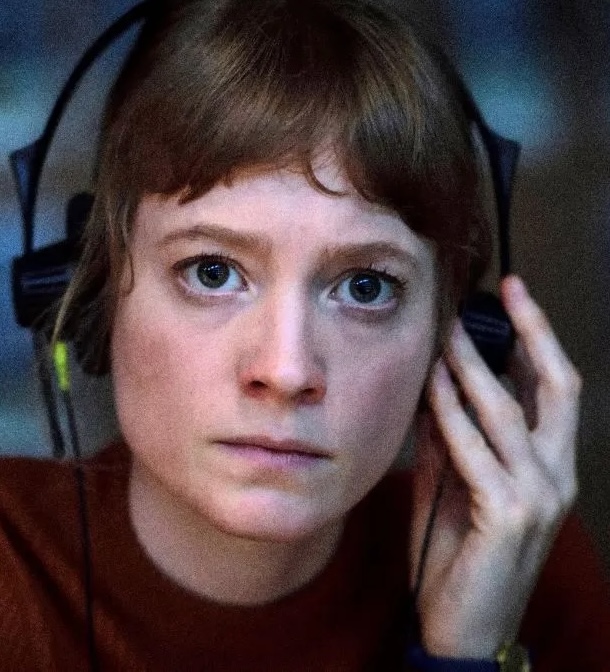
Arlege is determined that, as the crew closest to the action, the sports team must hang on to this ‘scoop’ at all costs. It is their responsibility, he claims, to ensure that the unfolding story is shown to the world. As the only person in their office who can speak German, young assistant Marianne Gebhardt (Leonie Benesch) finds herself pressed into service as an interpreter, horribly aware that she has been plunged headlong into a demanding position.

I’m old enough to actually remember the event but its shocking outcome (I’m almost ashamed to admit) has drifted into the mists of time. Consequently, September 5 wracks me with suspense throughout, the tension steadily mounting as the film hurtles towards its shattering conclusion.

Fehlbaum’s production team has done an incredible job here, seamlessly interweaving found footage with authentic recreations of the era and using sequences featuring the original presenter, Jim McKay, to great effect. I’m constantly impressed by the inventiveness of the original technicians, who have to come up with all kinds of tricks and shortcuts to ensure that their coverage reaches the widest possible audience.

It’s sobering to learn that the live broadcast (one of the very first of its kind) was seen by more than 900 million viewers. But be warned, this is real life and therefore not one of those action romps that results in a neat, heartwarming, happy ending. Nonetheless, it’s an assured and provocative film that’s earned its Oscar nomination for Best Original Screenplay.

4.4 stars

Philip Caveney