The recent success of Rian Johnson’s Knives Out seems to have rekindled a cinematic interest in whodunits. Johnson’s sequel, Glass Onion, is due out soon (on Netflix) but, meanwhile, on the big screen there’s See How They Run, a lighthearted spin on the genre, directed by Tom George (previously best known for TV’s This Country) and written by Mark Chappell.
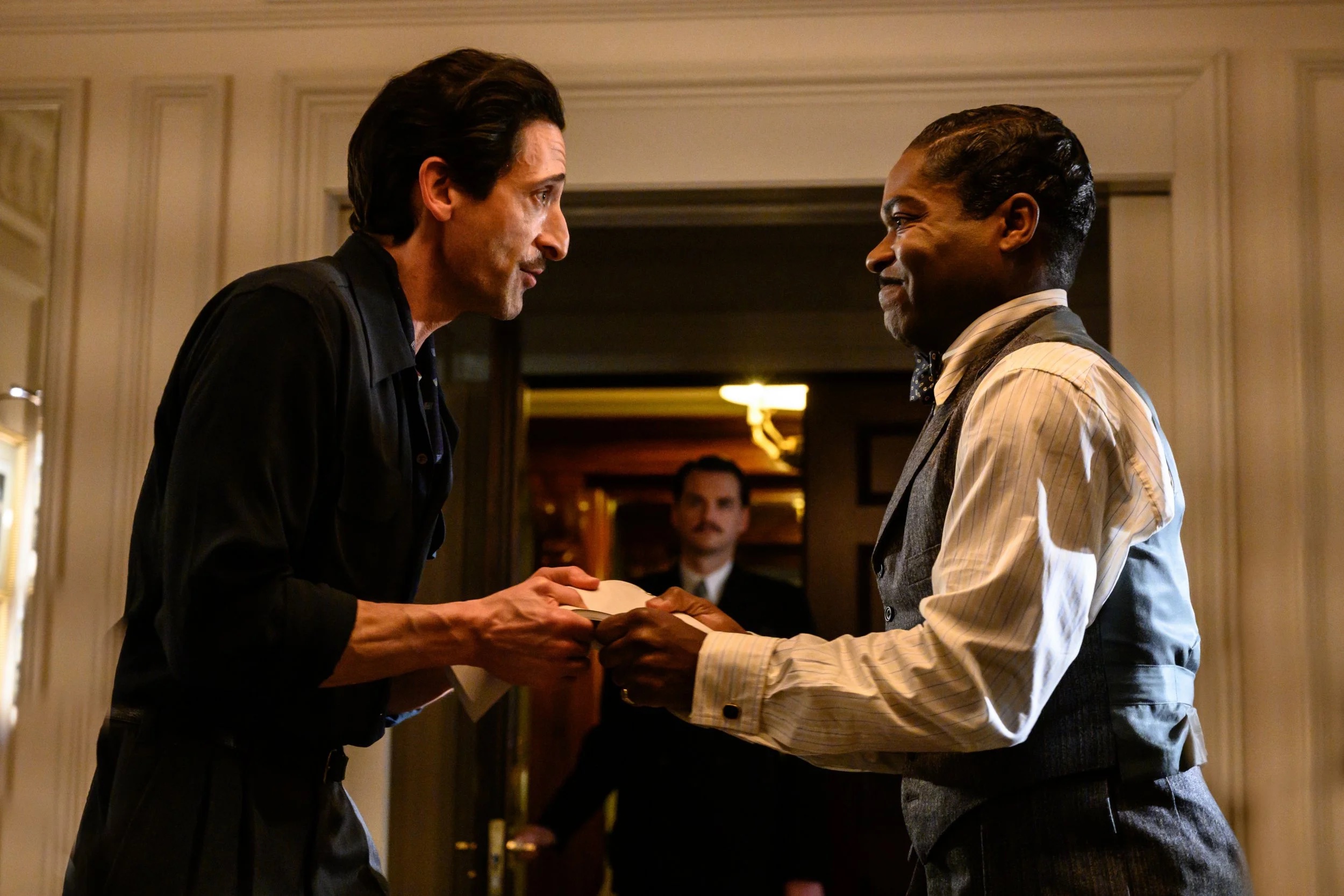
It’s 1953 and Agatha Christie’s The Mousetrap is already approaching its one hundredth performance. Moves are afoot to turn it into a motion picture, spearheaded by odious American screenwriter Leo Kopernick (Adrien Brody) who wants the chosen screenwriter, Mervyn Cocker-Norris (David Oyelowo), to amp up the sex and violence to make it more screen-worthy. Okay, so there is a clause in the play’s contract, stating that it can never make the transition into film until its theatrical run has ended… but that won’t be long, surely?
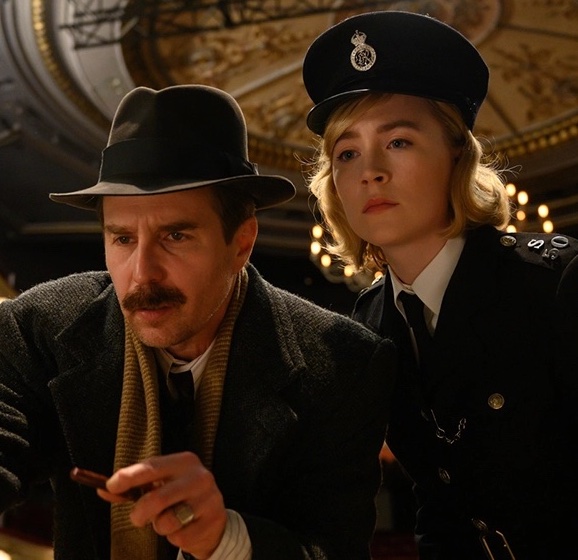
Kopernick quickly winds up dead (don’t worry, this is in no way a spoiler) and suspicion initially falls on Cocker-Norris. But, as rumpled, hard-drinking Inspector Stoppard (Sam Rockwell) soon begins to discover, there are lots of people in the cast and crew who have reasons to bear a grudge – and anyway, he has his hands pretty full with his over-eager assistant, Constable Stalker (Saoirse Ronan).
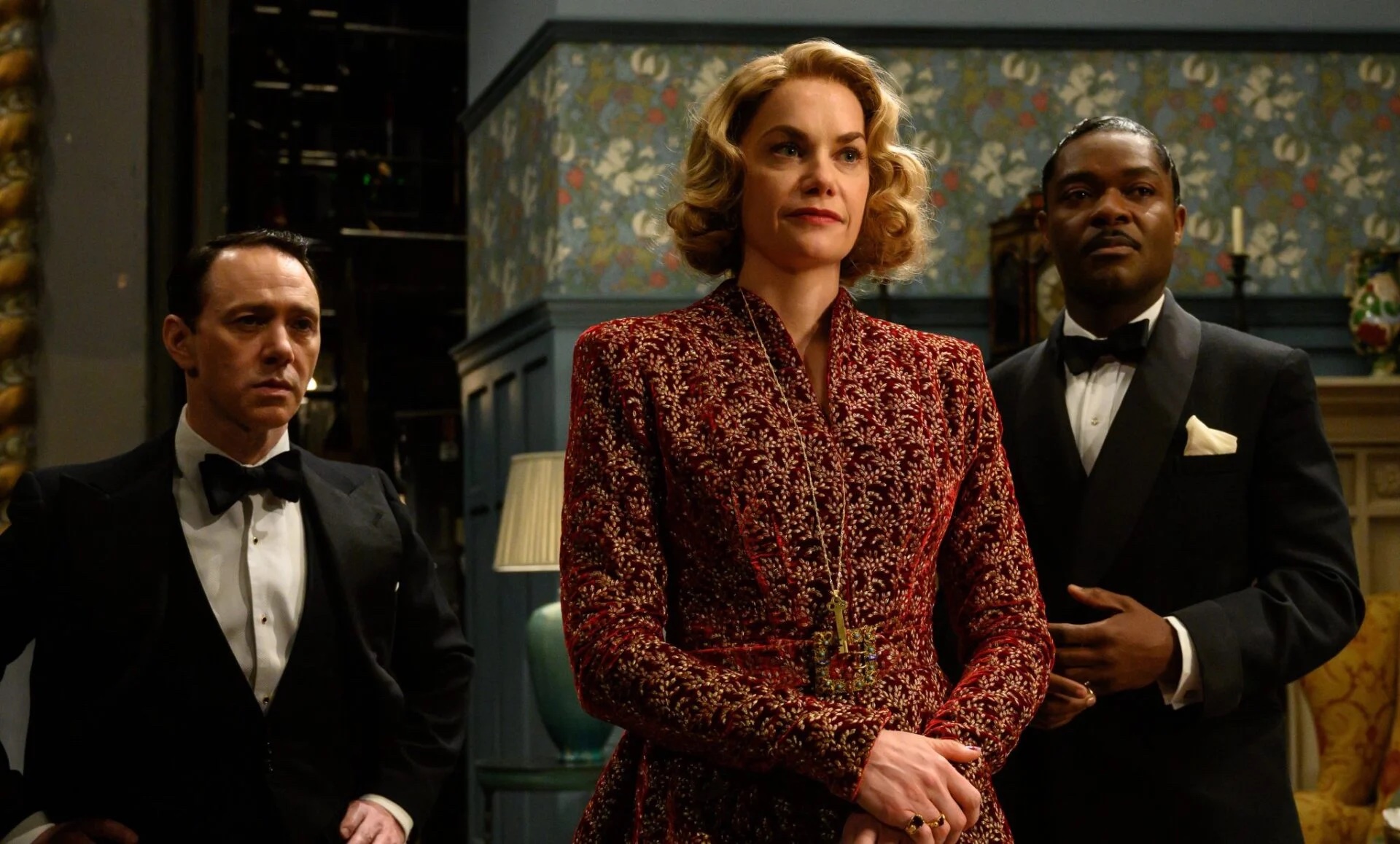
See How They Run is a tremendously likeable film, virtually stuffed to the gills with big-name actors having a ball in small roles, many of them based on real life characters. Harris Dickinson offers a nicely judged Richard Attenborough (who starred in The Mousetrap‘s original production) and Pearl Chanda is excellent too as his wife and co-star, Sheila Sim. Rockwell does a suitably world-weary turn as Stoppard, but for my money it’s Ronan who really makes this fly, creating an absolutely adorable character, determined to make her mark in a world that has until now been entirely dominated by men. Plaudits should also go to comedian Tim Key, who does a brilliant job of embodying a loathsome police commissioner.
As you might expect, the script is as meta as you like, with plenty of in-jokes and sly references for theatrical fans to pick up on – but, more importantly perhaps, this is funny throughout, with some perfectly timed pratfalls thrown in for good measure. While it’s hardly destined to linger for long in a viewer’s mind, it’s nonetheless a very pleasant way to spend a well-paced hour and thirty-eight minutes.
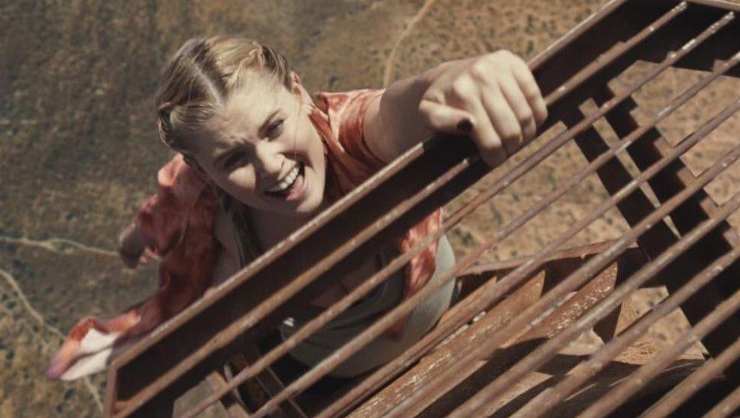
Nearly twelve months after Becky (Grace Caroline Currey) loses her husband, Dan, in a tragic mountain climbing accident, she’s become a hard-drinking recluse, increasingly alienated from her worried father, James (Jeffrey Dean Morgan).
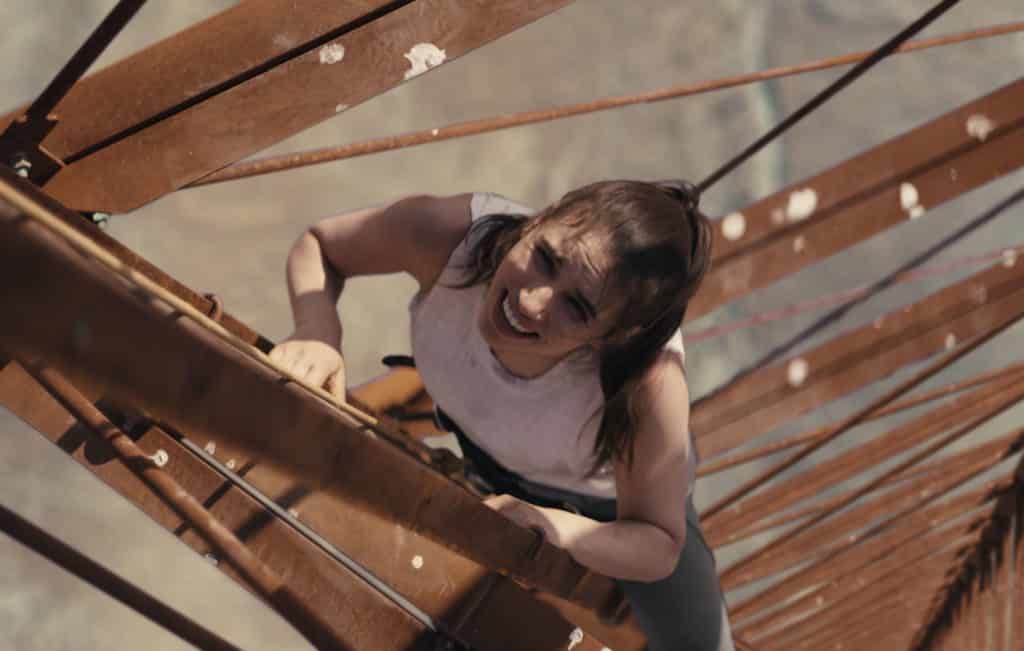
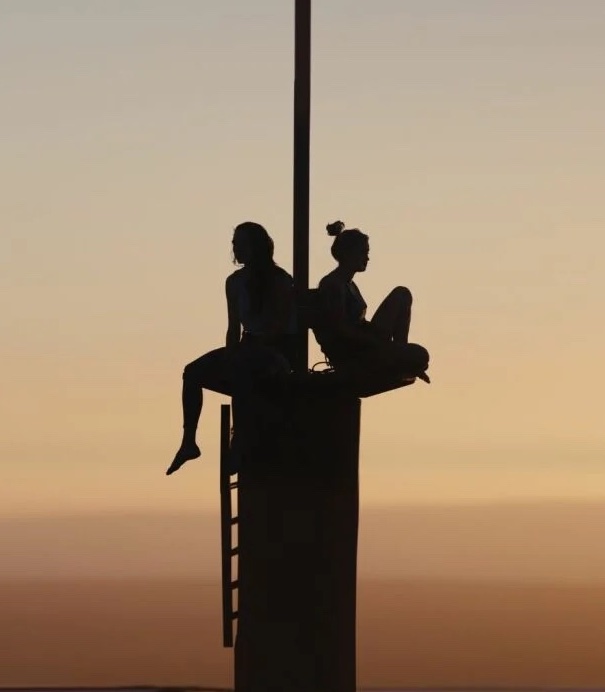
Then, out of the blue, she’s approached by Hunter (Virginia Gardner), who was with Becky and Dan on that fatal climb. Hunter is pursuing a new interest as a YouTuber, specialising in dangerous stunts while shouting “Whoo-hooh” into her iPhone. She wants Becky to accompany her on a different kind of climb, ascending a ladder to the top of an ageing TV tower, which – we are casually informed – is the fourth highest in the USA.
After some doubts, Becky agrees to the trip and before you can say ‘bad idea’, the twosome are clambering gamely upwards into the heavens…
Fall is a simple idea and one that doesn’t auger well for a one-hour-forty-seven-minute duration – so it’s to director Scott Mann’s credit that the story (co-written by Mann and Jonathan Frank) gets its tenacious hooks into you very quickly and holds you in a state of extreme anxiety right up to its conclusion.
Everything that can go wrong does go wrong: bad workmanship, hungry vultures, and Hunter’s insistence on pushing every boundary. It all adds to the torment, but it’s so cleverly handled, there’s barely time to consider how silly it all is. Furthermore, while I can’t be sure how much of this was actually done for real by stunt performers, it looks all-too convincing.
If some of the ‘revelations’ are perhaps a little too obviously sign-posted, there are others that really jerk the rug from under you (a perilous thing to do when you’re hundreds of feet in the air).
As somebody who isn’t good with heights this is a particularly intense experience but, it’s a thriller and I can hardly complain that I’ve been shortchanged.
First, a little bit about George Miller. I’m a big fan.
He is, of course, the Antipodean director who gave the world the Mad Max movies – and who, after an interval of twenty-seven years, did the near impossible by returning to the franchise and delivering what is arguably the finest action movie of 2015 – Mad Max: Fury Road. But wait, there’s more! What about The Witches of Eastwick? Brilliant film! And what about Babe? And, er… okay, I haven’t seen Happy Feet but it was a massive hit with the kids.
I guess what I’m saying is that Miller is no one-trick pony. And if nothing else, Three Thousand Years of Longing is proof of that. Co-written by Miller and based on a short story by AS Byatt, this is a film about the enduring power of storytelling. It wears its literary credentials with pride – indeed, the film is divided up into ‘chapters’ – and the result is enchanting in the most literal sense of the word.
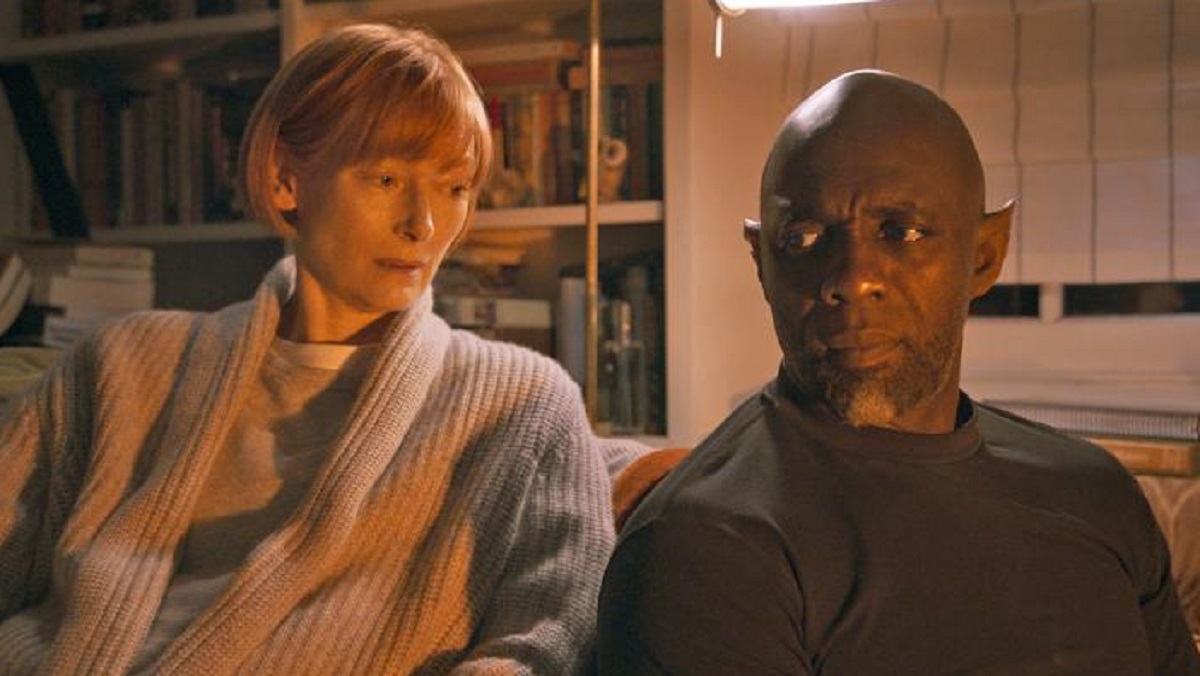
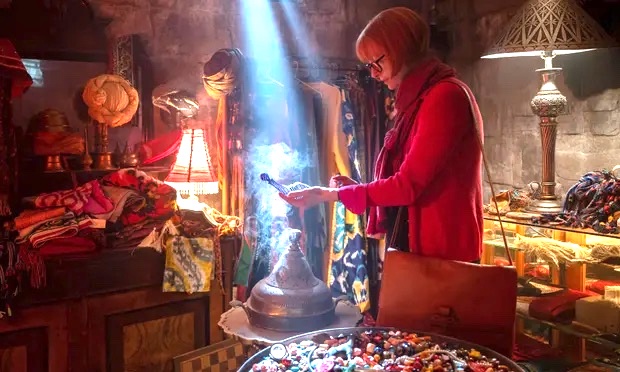
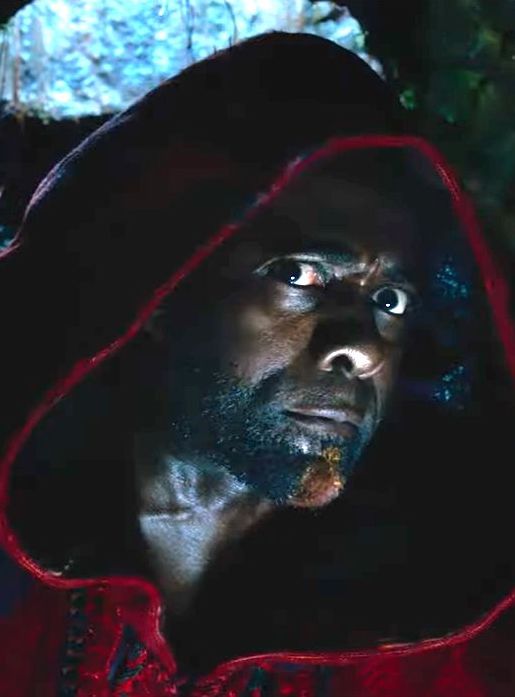
Alithea (Tilda Swinton) is a narratologist (it’s a real thing), who has devoted her life to the study of stories. At one point, she makes the brilliant observation that “all gods and monsters outlive their purpose and are reduced to the role of metaphor”. On a trip to Turkey, where she’s been booked to speak at a literary conference, she buys a souvenir at the old bazaar in Istanbul, an ancient glass bottle. Whilst attempting to clean it with an electric toothbrush, Alithea accidentally releases its occupant, The Djinn (Idris Elba), who has spent a lot of time locked up in a variety of similar vessels.
It isn’t long before he and Alithea are exchanging extracts from their respective life stories…
I love this film, which offers a magical, Arabian Nights-style odyssey through a series of exotic landscapes, peopled by a host of fascinating characters. It would be so easy to get this wrong, ‘othering’ the various magical creatures who stride through the ensuing adventures, but Miller never puts a foot wrong and there’s a delicious fluidity to John Seale’s epic cinematography and Margaret Sixel’s editing, which mean the unfolding stories are never allowed to stagnate. Elba gets to escape from lion-thumping duties (see Beast) to prove his acting chops, and Tilda Swinton is as delightfully enigmatic as ever.
“You can’t put the genie back in the bottle,” is a well known adage, but apparently you can, as The Djinn learns to his regret. Also, faithfulness is so often taken for granted by the people who receive it. One other thing: this may be the first movie I’ve seen where the COVID pandemic is visually referenced with crowds of people in an auditorium wearing face masks. This was a big event in world history and yet most film makers have chosen to ignore it. Why?
Three Thousand Years of Longing probably won’t put a huge amount of bums on seats (I suspect that it’s too thoughtful, too labyrinthine to be a big hitter), but it’s nevertheless a gorgeous, exciting slice of cinema that’s clearly the work of a director who, in his late seventies, is at the peak of his powers.
One thing you can’t say about I Came By is that it’s predictable. Indeed, Babek Anvari’s contemporary thriller seems to go out of its way to upend the conventions of its chosen genre. The average viewer is pretty unlikely to guess where everything is ultimately headed.
Toby (George MacKay) and his best friend, Jay (Percelle Ascot), are self-styled urban guerillas, who specialise in breaking into the homes of the rich and powerful and decorating their living room walls with that titular line of graffiti. We quickly realise that Toby is a bit of a hypocrite, coming from the kind of privilege he rails so vociferously against. His Mum, Lizzie (Kelly Macdonald), is a comfortably-off psychologist and the family home in London looks decidedly swish, even if Toby never bothers to wash the dishes.
When Jay discovers that his girlfriend, Naz (Varadu Sethu), is pregnant, he decides it’s time to clean up his act and promptly bales out of the double act, so Toby has to go it alone when he breaks into the house of former judge, Hector Blake (National Treasure Hugh Bonneville, for once playing a thoroughly bad egg). Toby discovers something rather horrible in the cellar but his attempts to call out the law to sort things out come to nothing. Blake is a regular squash partner of the Chief Constable, so he’s protected. Toby decides he’ll have to take matters into his own hands…
It would perhaps be unfair to reveal anything else about the plot and I rather admire Ansari’s (and co-writer Namsi Khan’s) dogged determination to resist anything too clichéd. What’s more, I Came By has some interesting points to make about race and privilege. But there are real problems here, chiefly in the storytelling, where no figure is really allowed to come to prominence – the four main stars all seem to be playing bit parts in a pointlessly complicated narrative. There are sizeable time shifts that are not well signalled and some of the occurrences should be filed in the ‘rather unlikely’ category. My eyebrows are raised at several points.
Still, those who like to be constantly surprised may want to give this one a go. It’s arguably worth clicking the Netflix button just to watch dear old Hugh doing some really unpleasant things.
Truth, they say, is stranger than fiction. In Brian MacKinnon’s case, the two are intertwined. He’s the Peter Pan of Glasgow, the perennial schoolboy who returned – aged thirty-two – to the classrooms of his youth, determined to press rewind and try again, hoping for a different outcome second time around. Because MacKinnon had only ever had one desire: to become a doctor. And, if at first you don’t succeed…
…then you change your name to Brandon Lee and pretend to be sixteen. Right?
Right.
My Old School, directed by Jono McLeod, is a little masterpiece. The documentary blends animation with archive footage; audio recordings of MacKinnon with lip-synching from Alan Cummings; former classmates’ recollections with teachers’ regrets. Perhaps McLeod’s insider-status helps: he was actually there, one of Brandon’s peers; he’s able to acknowledge how benign MacKinnon’s deception was, as well as how bloody weird. There’s no attempt here to sensationalise, to turn this into something creepy or dangerous. Instead, the focus is on how strange – and ultimately sad – MacKinnon’s story is.
Cummings manages to convey MacKinnon’s peculiar blend of arrogance and vulnerability, and the animation (by Rory Lowe et al) has a retro Grange Hill vibe that suits the period. Brandon’s school pals come across as a kindly, forgiving bunch, more bemused than outraged by his deception.
In the end, there’s a terrible sense of poignancy, as we realise that everyone else has moved on, their schooldays firmly behind them. They’re busy living their lives: they are pharmacists, comedians, parents, carers, wrestlers, business leaders – and film makers. Meanwhile, MacKinnon is stuck, clinging to the past, chasing the memory of a broken dream.
The frenzy of the Fringe is over. It’s been beyond wonderful to see our city so vibrant again, after two quiet years. We’ve seen a startling range of exciting shows, covering many genres. We’re exhausted – but it’s not quite over yet. It’s time to award our virtual bouquets to the best performances we saw. The standard seemed higher than ever this time: has the break given writers and performers more time to sharpen their acts, or were we just lucky with the productions we chose? Either way, there were lots of contenders in each category, but we’ve narrowed them down to our favourite five.
So, without further ado, we present our choice of the best shows we saw at Edfest 2022.
THEATRE
An Audience with Stuart Bagcliffe (ZOO Playground)
An Audience with Stuart Bagcliffe is the sort of play which exemplifies the Fringe at its best. Written by Benny Ainsworth and directed by Sally Paffett (Triptytch Theatre), this ingeniously constructed monologue features Michael Parker as the titular Stuart, delivering Ainsworth’s script with consummate skill.
A Very Old Man With Enormous Wings (Summerhall)
Based on a short story by Gabriel García Márquez and adapted for the stage by Dan Colley, Manus Halligan and Genevieve Hulme Beaman, this is the tale of Elisenda and Palayo, two impoverished people who live in a rickety shack on the edge of a small town. Their tale is related by Elisenda (Karen McCartney) in a deliciously sinister style. She’s aided by Palayo (Manus Halligan), who barely utters a word, but moves humbly around the stage, using a curious mixture of handicrafts and high-tech devices to illustrate the story – a series of simplistic figurines, illuminated by tiny cameras and lights, take us into their miniature world.
Sap (Roundabout @ Summerhall)
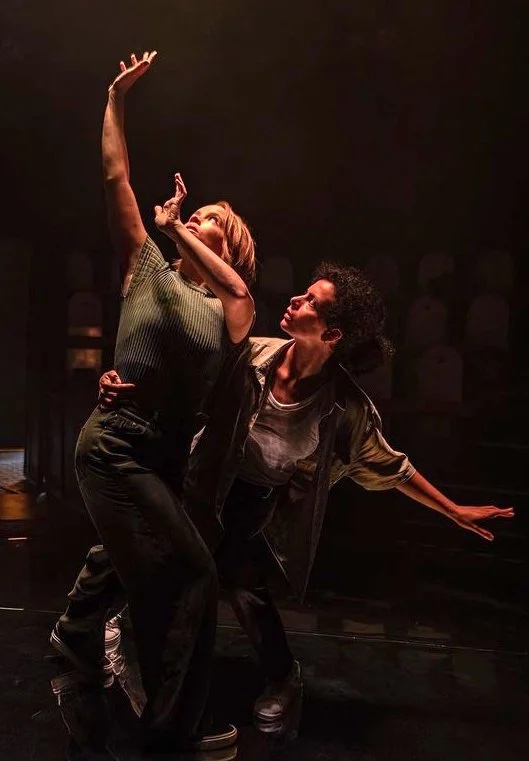
Rafaella Marcus has scripted a deliciously labyrinthine tale about sexual identity (specifically bi-invisibility), one that cleverly assimilates a Greek myth into its core. The maze-like structure is beautifully captured by Jessica Clark and Rebecca Banatvala’s hyper-physical performances, directed by Jessica Lazar and Jennifer Fletcher.
Hungry (Roundabout @ Summerhall)
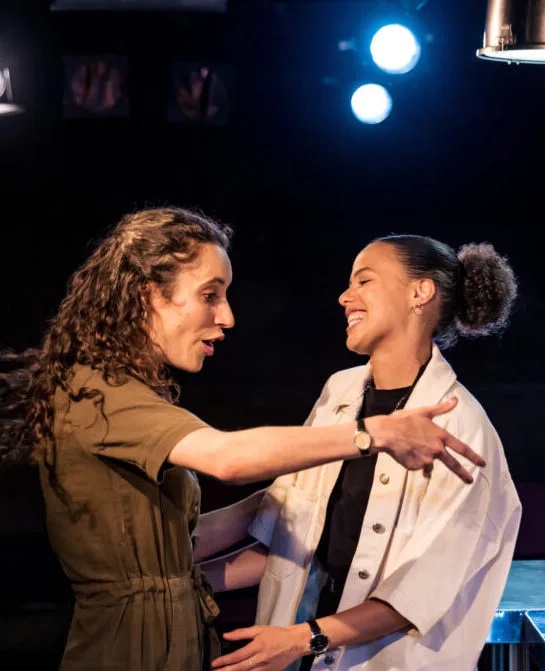
Chris Bush’s sharply written two-hander examines the relationship between Lori (Eleanor Sutton), a chef from a relatively privileged background, and Bex (Melissa Lowe), a waitress from the local estate. Hungry is a class act, so assured that, even amidst the host of treasures on offer at this year’s Roundabout, it dazzles like a precious gem.
The Tragedy of Macbeth (Assembly Roxy)
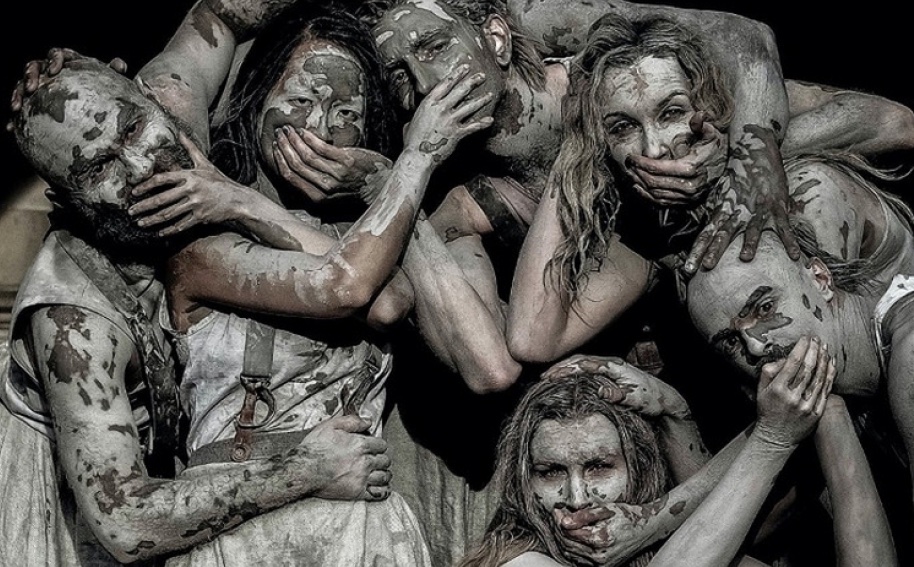
Let’s face it, we’ve all seen Macbeth in its various shapes and guises – but I think it’s fairly safe to say we’ve never seen it quite like this. Flabbergast Theatre’s eight-strong cast reel around the stage, plastered in mud and raving and flailing around like demented beings. This is a play about the madness brought on by the seductive power of hubris, so it feels entirely appropriate. It explodes, it capers, it struts its fretful stuff upon the stage and signifies plenty…
COMEDY
Feeling Afraid as if Something Terrible is Going to Happen (Roundabout @ Summerhall)
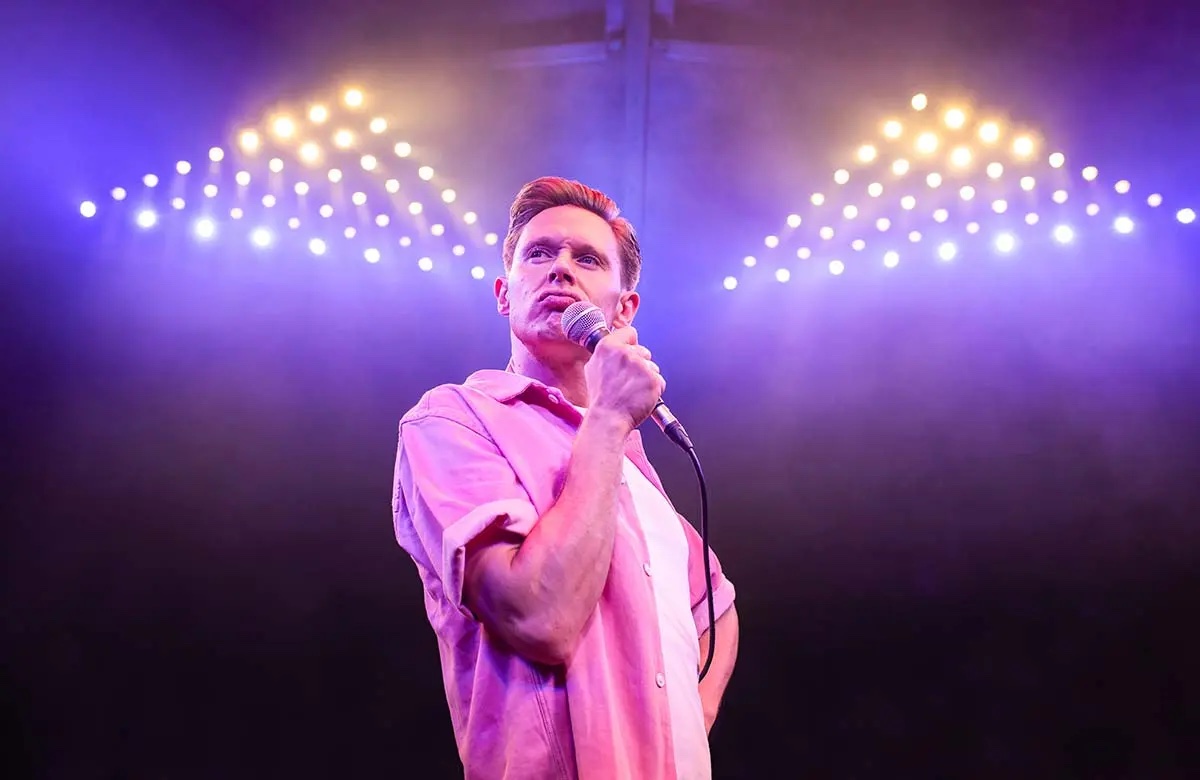
Both Samuel Barnett and Marcelo Dos Santos deserve huge praise for what is undoubtedly one of the best collaborations between writer and performer that I’ve ever witnessed. The narrator is working me like a master magician, mesmerising me, misdirecting me, even scattering a trail of clues which I somehow manage to overlook. The result? When the piece reaches its conclusion, I feel as though I’ve been punched in the solar plexus.
Kylie Brakeman: Linda Hollywood’s Guide to Hollywood (Gilded Balloon Patterhoose)
Making her Edinburgh Fringe debut, Kylie Brakeman delivers her cleverly scripted lines with consummate skill, and the whip-smart, snarky one-liners flow like honey laced with vinegar. It’s more than just a series of laughs. It also nails the cynicism and hypocrisy of the movie industry with deadly precision. I leave convinced that Brakeman (already a major name online, with over sixty million views) is destined to play much bigger venues than this one.
Emily Wilson: Fixed (Pleasance Courtyard)
Emily Wilson’s Fixed is part musical, part stand-up and part catharsis. She appeared on The X Factor USA back in 2011, as one half of the earnestly named duo, Ausem. “Because my best friend’s called Austin, and my name’s Emily, so together we’re Ausem!” She was 15 and thought she was destined to become a star. But then she hit a snag. The judges decided they liked Austin, but not Emily… What emerges is a thoughtful commentary on fame, ambition and exploitation, and it’s riveting.
Christopher Bliss: Captain Wordseye (Pleasance Courtyard)
Christopher Bliss (Rob Carter) is a new name to me and I can only regret that it’s taken me this long to encounter him. He’s that rarest of things, a brilliant character comedian… and a literary genius to boot. I can’t wait for his words of advice on poetry, which I have long considered my Achilles heel…
The Anniversary (Pleasance Dome)
Jim (Daniel Tobias) and Barb (Clare Bartholomew) are eagerly preparing for their 50th wedding anniversary but they’re not always in control of things and some of the items in the finger buffet might better be avoided. This handsomely mounted helping of slapstick from Australian company, Salvador Dinosaur, features no real dialogue, just gibberish and the occasional mention of each other’s names – but the soundtrack is far from silent. It’s essentially a piece about the indignities of ageing, replete with references to forgetfulness, dodgy bowels and the ill-advised over-application of both prescription drugs and prunes. It ought to be tragic but it’s somehow horribly funny.
SPECIAL MENTIONS
Fills Monkey: We Will Drum You (Pleasance Courtyard)
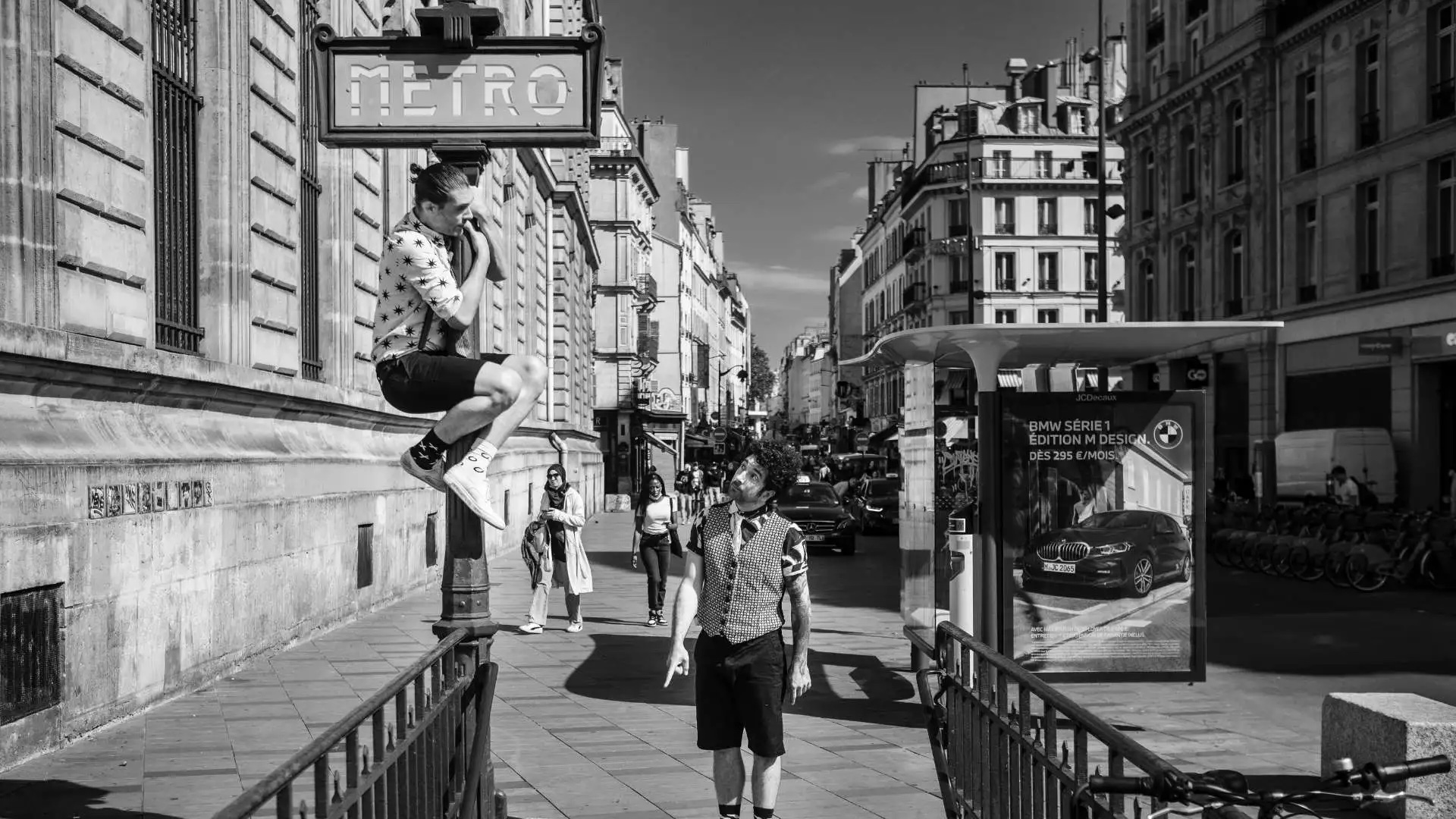
Sebastian Rambaud and Yann Coste are two brilliant percussionists, the kind of people you imagine could go through an entire day without ever breaking beat. They begin with conventional sets of drums, hammering out thrilling polyrhythms as the audience claps along. But they have an air of competitiveness about them and the stakes keep rising. It really helps that the two percussionists are also accomplished clowns. Working under the direction of Daniél Briere, they’ve devised a show that switches back and forth through a whole series of scenarios, never lingering too long in one place to ever feel repetitive.
Manic Street Creature (Roundabout @ Summerhall)
Manic Street Creature, written and performed by Maimuna Memon, is an assured slice of gig theatre that focuses on the subject of mental health from a slightly different perspective – that of the carer. Memon tells the story through a sequence of songs being recorded in a studio session. She’s a confident, assured performer, with a thrilling vocal range, accompanying herself on acoustic and electric guitars, keyboards and shruti box. When everything’s in full flow, the story takes flight and I feel myself propelled along by its urgent, rhythmic pulse.
The Ofsted Massacre (The Space @ Surgeon’s Hall)
Phil Porter’s script feels like it’s been torn from the inside of a stressed-out teacher’s head: a revenge fantasy, born of despair. It’s also a very funny play, drawing on Shakespeare, while lampooning staffroom stereotypes and exposing every cliché. This production, by Kingston Grammar School’s sixth form drama students, is a triumph. The young cast embrace their roles, eliciting gales of laughter from the audience with their well-timed punchlines and impressive slapstick.
Making a Murderer: The Musical (Underbelly Bristo Square)
Like millions of others across the UK, I was transfixed by the Netflix documentary, Making A Murderer – so when I spot a poster on the Royal Mile with the words ‘The Musical‘ tacked onto the end, I’m intrigued – and simultaneously doubtful. Isn’t that going to be… disrespectful? But, in the capable hands of writer Phil Mealey, MAMTM offers a compelling version of the familiar events, a fresh perspective on the story that never feels like a cheap shot. The songs are terrific throughout, ranging from spirited rockers to plaintive ballads. What’s more, the production supports (and is supported by) The Innocence Project.
The Tiger Lillies: One Penny Opera (Underbelly Bristo Square)
Describing an act as ‘unique’ is often considered a cop-out, and yet I can’t think of a more appropriate word to describe The Tiger Lillies, three remarkable musicians currently strutting their inimitable stuff at The Cow Barn on Bristo Square. Originally formed way back in 1989, they’ve been through a number of personnel changes over the years, though the macabre compositions of singer-songwriter Martyn Jacques have remained a constant. They describe themselves as “Brechtian Punk Cabaret”, and who am I to argue with them?
Listen! Hear that? The swishing noise is the sound of thousands of tourists reaching for their pens and crossing ‘African Safari’ off their bucket lists.
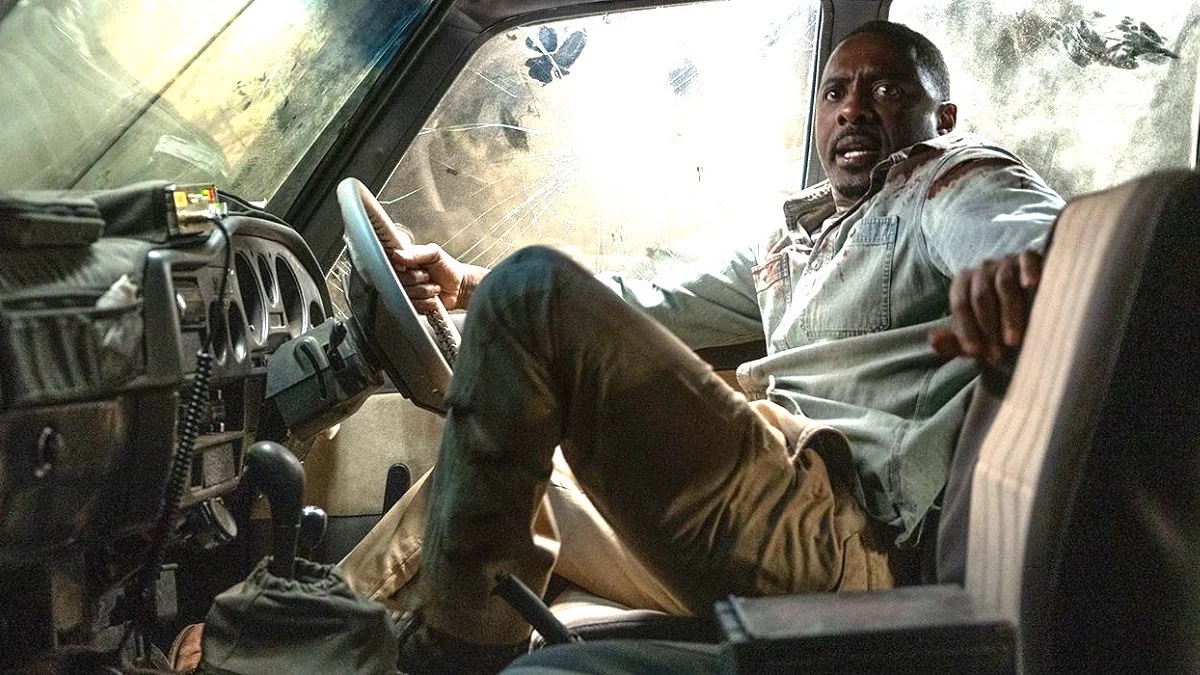
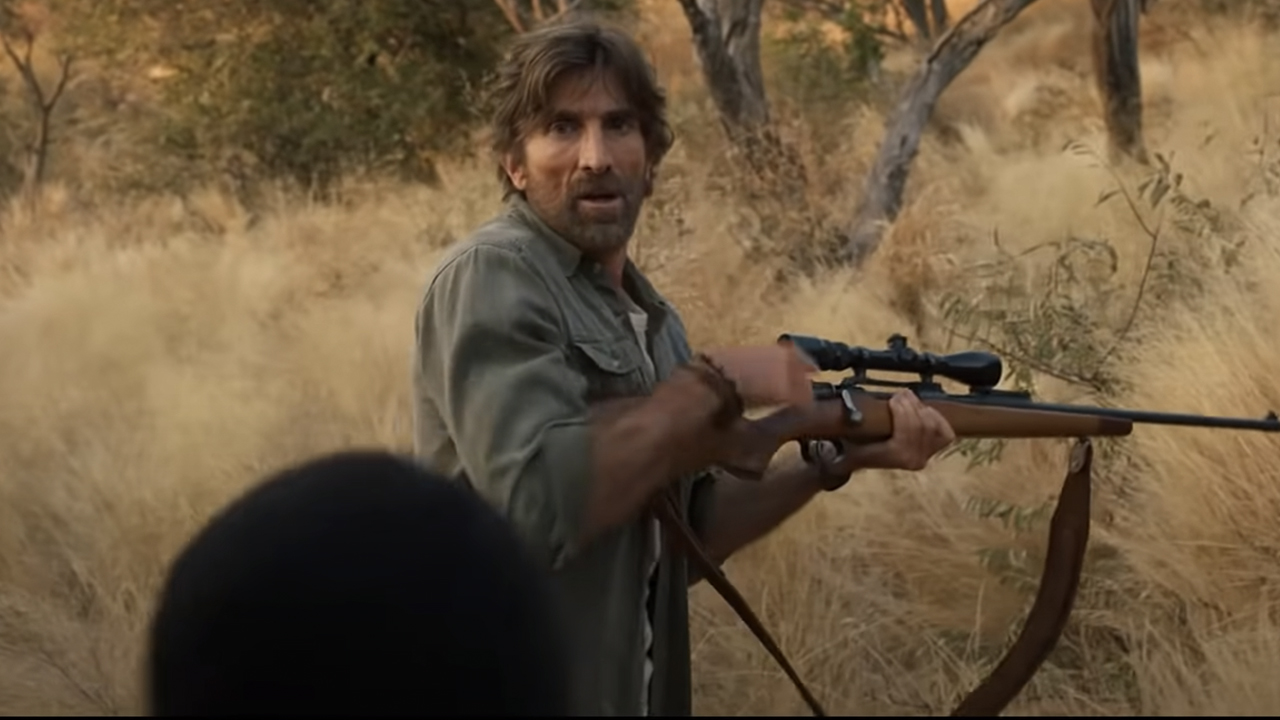
In the rather generically titled Beast, American doctor Nate Samuels (Idris Elba) takes his two young daughters, Meredith (Liana Samuels) and Norah (Leah Jeffries), back to the remote part of Africa from where their late mother originated. Since his wife’s death from cancer, Nate has become somewhat distanced from the girls, so he’s arranged to hook up with his old pal, game warden, Martin Battles (Sharlto Copley), for a family holiday, that will be part safari, part tribute, part bonding experience.
What Nate and his companions don’t know is what’s happened in the film’s opening scenes, where a group of poachers have slaughtered an entire pride of lions but have failed to kill the dominant male, who is understandably miffed and looking for vengeance. This is a lion who appears to share genes with Michael Myers. He’s unstoppable – and it isn’t long before the safari has turned into a desperate attempt to survive…
Beast may essentially be a kind of landlocked Jaws, but it’s nonetheless effectively done. Screenwriters Ryan Engle and Jaime Primak Sullivan team with director Balthasar Kormákur to assemble a lean machine of a film, that alternates between Nate’s attempts to reconnect with his daughters and a series of nerve-shredding suspense sequences. I find myself flinching and gasping at every sound, as the Samuels are chased, cornered, clawed and battered, always in dire danger of becoming lion fodder. Those who dislike injury details will find themselves looking away from the screen at key points.
It’s surprisingly effective. The titular beast has been CGI generated, but is nevertheless very convincing – there’s none of the dead eyed, ‘uncanny valley’ look that affects so many computerised critters – and I find myself suitably terrorised throughout. There are some nicely integrated dream sequences too, one of which really throws me a googlie. Despite its ‘Man v Monster’ storyline, this isn’t any kind of retro macho piece: there’s nuance aplenty, and the two young girls are well-rounded, believable characters, who play an integral part in their own survival.
This isn’t going to change your life, but those who relish the idea of seeing Idris Elba punch a lion in the face will certainly get a kick out of Beast. The African tourist board, on the other hand, may not look quite so kindly upon it.
Edfringe 2022 is gradually coming to a halt. Technically, there are still a few more days to go, but for us, sadly, this is where it ends. There are other places we need to be. As ever, after the buzz of watching and reviewing fifty-plus productions, we’re exhausted and looking forward to a rest.
But there’s still one last show to see.
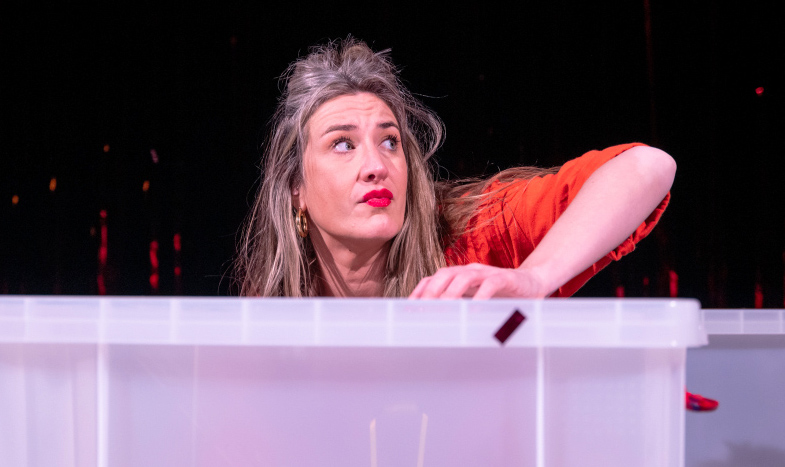
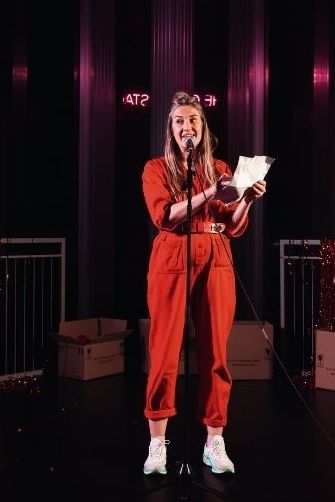
Headcase is a memoir of sorts, written and performed by Kristin McIlquham (she’s quick to tell us that nobody ever knows how to pronounce her surname). On our way in, we’re provided with little red notebooks, because this is a show all about making lists. She’s been doing it for much of her life. ‘To do’ lists, mostly. You know the kind of thing. ‘Get a decent boyfriend, buy a flat in London.’ And now, fast approaching forty, she makes a new one. ‘Write a play about what happened to my dad. And get a brain scan.’
When she was six years old, Kristin’s father suffered a brain aneurysm. He was in a coma for some time and, when he finally emerged from sleep, he no longer recognised his own family and had to learn how to do things that should have been second nature to him. And he had to come to terms with what had happened to him. Now it’s Kristin’s turn to do the same. That title was his suggestion, by the way, based upon his favourite joke. He’s gone now, but Kristin’s passion to tell his story remains.
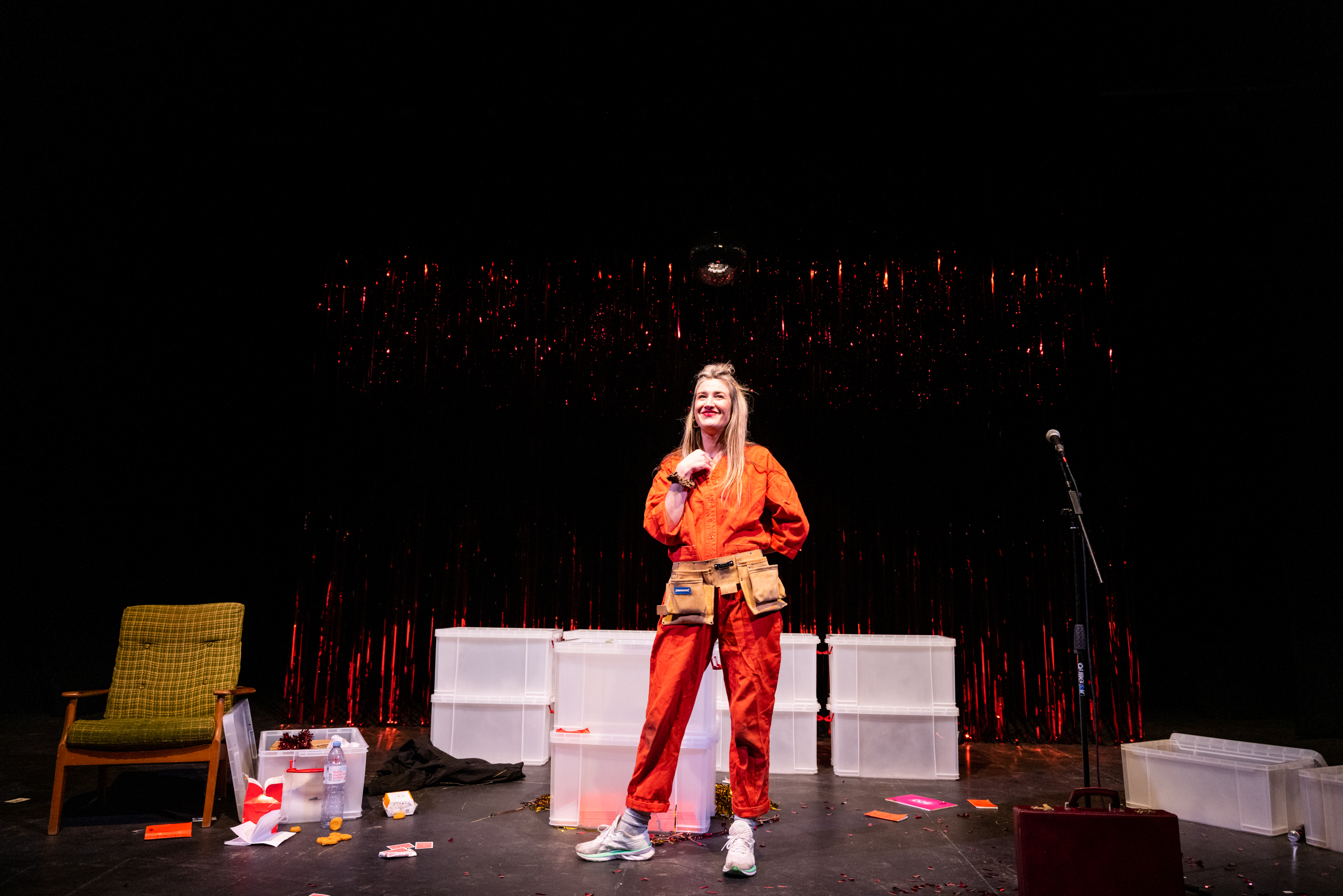
Headcase is an interesting piece, both funny and poignant. The stage is stacked with transparent packing boxes, filled with hundreds of notebooks, no doubt symbolising the emotional baggage Kristin has accumulated over the years. Every so often, she takes items from those boxes or from the leather tool belt around her waist, items that prompt certain memories. Musical cues tell us exactly where we are in the story. Along the way, Kristin fields awkward phone calls from her mother and is constantly interrupted by the voice of her therapist (Juliet Garricks) and, at key points, her father (Nicholas Karimi), a garrulous Glaswegian, with a habit of saying the wrong thing.
Nicely paced, the story switches from incident to incident, never losing momentum. I would like to see the notebooks we are given – and the things we’re asked to write in them – more convincingly integrated into the piece but, nonetheless, this is engaging stuff, designed by Zoë Hurwitz and directed by Laura Keefe. It’s a satisfying way to finish off what’s been an exciting and talent-packed Edinburgh Fringe.
And on that note, good night and goodbye, Edfringe 2022. We’re already looking forward to seeing you again in August 2023.
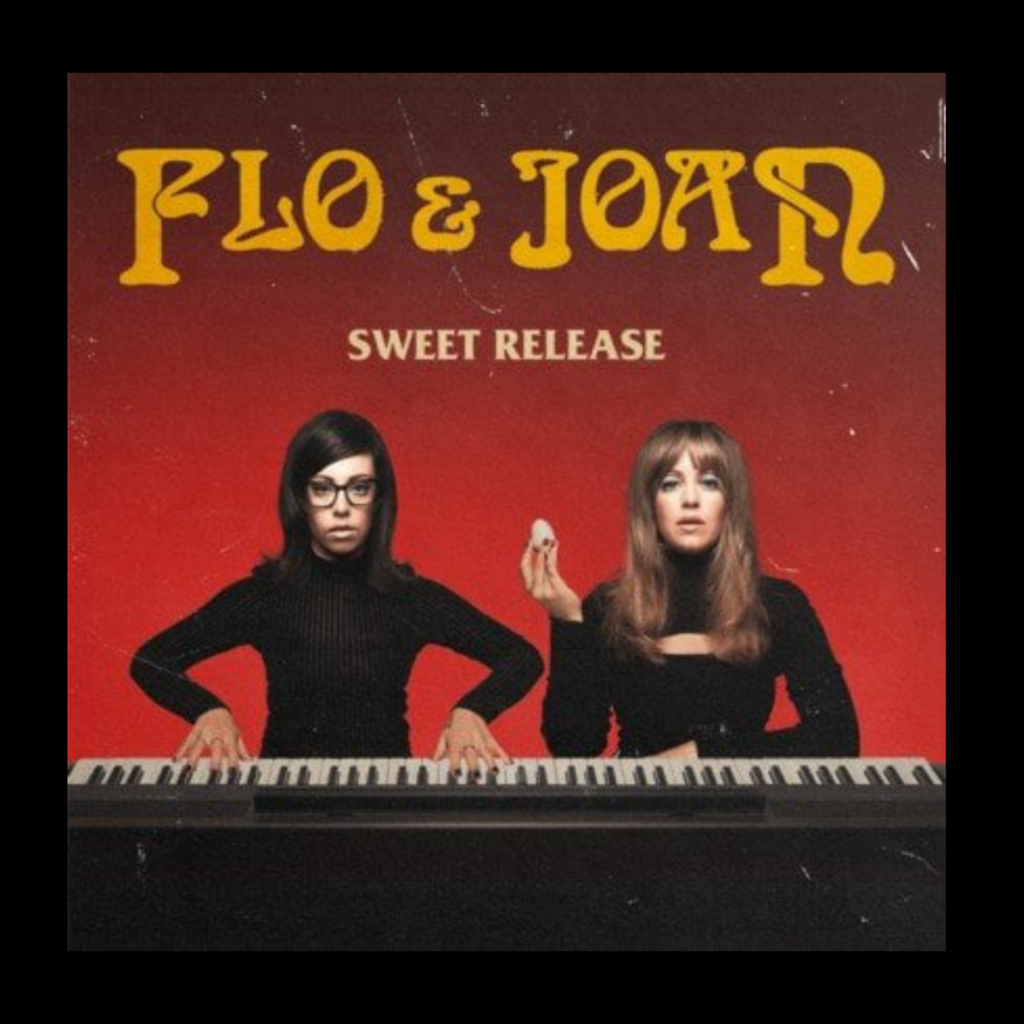
Friday night at 8pm feels like the perfect time to see Flo & Joan. The crowd are up for a laugh: work is done for the week and the majority seem to be a few pints in, but no one’s obnoxiously pissed. This is an interlude in people’s nights, I guess: a fun hour to give the evening some shape, before the serious drinking starts. That’s how it feels, at any rate. And it’s none the worse for it.
Sisters Rosie and Nicola Dempsey are completely at ease: they’re natural performers, and their act is perfectly honed. Sweet Release is everything you’d expect it to be: clever lyrics, catchy tunes, assured musicianship, lovely voices and lots of funny chat. It’s light, but there’s an edge; it’s not all candyfloss. This show is rockier than the last one we saw (Before the Screaming Starts), with a punchy backing-track to occasionally augment the sound. There’s a full drum kit too, and this helps to make the show feel bigger, and well-suited to the packed out 250-seat venue (which is large, by Fringe standards).
I particularly like the disco dancing number: Rosie’s trademark deadpan expression clashes sublimely with the silly moves, and there’s an extended motif about parents’ ornaments, which seems to resonate with everyone. (Even as I snigger, I find myself wondering which of our trinkets my step-daughter shudders at – although I don’t think we’ve anything as spectacularly awful as the item Flo & Joan reveal.)
Of course, there are only two more chances to catch them here in Edinburgh, but the duo have a fairly extensive autumn tour scheduled, so why not treat yourself?
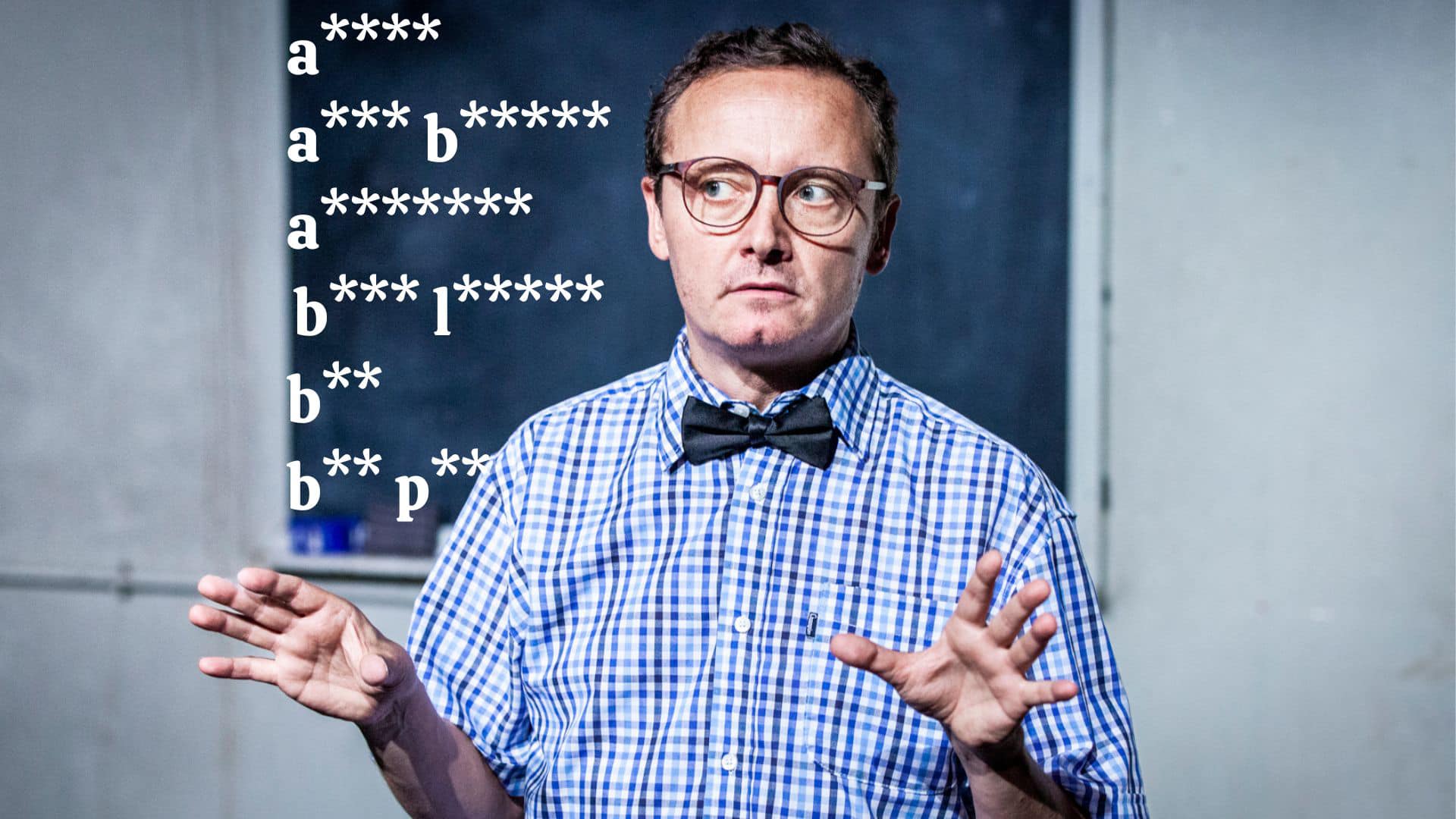
I’m sitting in a lecture theatre and a man is writing rude words on a chalkboard, pausing occasionally to give me a stern look whenever I get a fit of the giggles. I’m not exactly sure why this is so funny, but it really is. And then the lecturer begins to tell his story and it’s not funny any more.
His name is Remi and he moves from his native Poland to Glasgow in order to pursue his dream of being an actor. But one night, walking home, he is accosted by two men who rob him and beat him up. The attack affects him profoundly, stirring within him a sense of paranoia, that steadily gets worse until it threatens to overwhelm him.
Written and performed by Remi Rachuba and directed by Marcus Montgomery Roche, Intruder is a difficult play to get a handle on. Rachuba is a fearless actor, who expends so much energy during the show you feel he could run the National Grid all by himself. Arranged on the floor in front of him are pairs of shoes which he uses to signify the different characters and situations he’s talking about. (Was it Lawrence Olivier who famously always began with the shoes?) Remi changes roles as easily as he changes his footwear.
I love the repeated tics that he employs to denote his deteriorating frame of mind: those uneasy glances over his shoulder, the shuddering paroxysms when his dark thoughts overwhelm him. I also love the simple gleefulness of the dance routine he indulges in on one of the rare occasions when he feels happy.
But there are some issues here. I’m not always entirely sure where and when a particular scene is set. There’s much talk of Glasgow, but then I hear him mention places I know are in Edinburgh. Of course, this might be intentional, but it throws me occasionally. And, while it’s only right that some of the lines are delivered in Polish, this also adds to a sense of disorientation.
Rachuba is an extraordinary stage presence and it will be interesting to see where he goes next. Meanwhile, there are just two more chances to catch this intriguing show.
















 Bouquets & Brickbats