Author: Bouquets & Brickbats

When Marnie Was There

09/04/20

Netflix

We’re continuing our Ghibli odyssey, courtesy of Netflix, and tonight’s selection is 2014’s whimsical When Marnie Was There. Adapted from Joan G Robinson’s 1967 Norfolk-based novel, Keiko Niwa’s script moves the action to a small Japanese coastal town, where asthmatic twelve-year-old Anna is sent for a summer of clean air and recuperation.

Anna (Sara Takatsuki) is a troubled kid: fostered because her parents are dead; socially awkward and unpopular at school; good at art but too self-conscious to let anyone see her work; habitually tongue-tied, but volatile – so that, when she does speak, it’s usually in anger. A holiday in the countryside with the kindly Oiwas (Susumu Terajima and Toshie Negishi) is just what she needs, for her mental as well as her physical health.

On a solitary walk in the marshland, Anna spots a derelict mansion, and feels strangely drawn to the place. There, she meets Marnie (Kasumi Arimura), a mysterious blonde girl, who lives in the house with her parents and servants. The friendship that develops is fierce, intense – and, at Marnie’s insistence, secret. Anna becomes obsessed; her feelings for Marnie are all-consuming. But not everything is as it seems…

When Marnie Was There is as beautifully crafted as you’d expect from this deservedly renowned studio: the drawings are delicate and sumptuous and full of emotion. The images of water and food are particularly lush, the latter almost making my mouth water.

And if the story is light and the revelations predictable, it’s nonetheless charming and very well told.

4 stars

Susan Singfield

The Habit of Art

07/04/20

Original Theatre Company

In the normal run of things we would have been seeing this at the King’s Theatre just a few days ago, and basing our review around that performance. But these are very far from normal times and, consequently, this revival of Alan Bennett’s 2009 production, directed by Philip Franks, can now be accessed directly from The Original Theatre Company’s website for just a few pounds.

Ostensibly a play about the odd friendship between WH Auden (Matthew Kelly) and Benjamin Britten (David Yelland), The Habit of Art is made more interesting by allowing the audience to be observers at a rehearsal for the play, taking place in a scruffy church hall. We are afforded an insider’s view complete with all the mistakes, digressions and conflicts that exist in such situations. In effect, each actor is portraying not just the character they embody in the biographical play, but also the actor who portrays that character – which probably makes this sound a lot more complicated than it actually is. Don’t worry, the metatheatre all falls into place.

Auden, in the latter years of his career, has been reduced to living in rooms at his college in Oxford, where he meets occasional friends and regularly entertains rent boys, who supply him with his daily bout of fellatio. He is unexpectedly visited by his biographer, Humphrey Carpenter (whom he briefly mistakes for that day’s supplier of sexual favours), and later by Britten, whom Benjamin hasn’t seen for thirty years and is keen to discuss his latest project, a planned adaptation of Thomas Mann’s Death in Venice. (Mann, incidentally, was Auden’s Father-in-law.)

Bennett has a lot of fun dealing with the subject of homosexuality, still illegal in the 1970s when this play is set, and the secret that drove these two great artists. Auden talks much about the titular habit – how creative minds are constantly disposed to creating work, long after any real need to do so has vanished from their lives, and the moment when he seizes upon the desperate hope that Britten is thinking of offering him a collaboration is the play’s pivotal scene. Both Kelly and Yelland offer assured performances, and they are well supported by Veronica Roberts as the ever capable stage manager, Kay, and by John Wark as Donald, who can’t quite rid himself of the notion that, in playing Humphrey Carpenter, he’s actually nothing but a ‘device.’

This witty and engaging performance, even when condensed onto our tiny screen at home, is worth seeking out, but it makes me long to have seen it in the theatre, where it really belongs. Still, interested parties will find it at www.originaltheatre.com

4 stars

Philip Caveney


Much Ado About Nothing

04/04/20

Digital Theatre

It’s the casting that initially draws us to this one. I mean, David Tennant and Catherine Tate? In a Shakespeare comedy? Intriguing, right? And here it is on Digital Theatre, filmed live at the Wyndham, London, in 2011, the perfect choice for a locked-in Saturday night.

Robert Delamere’s production cannily sets the antics in 1980s Gibraltar. Post Falklands war, there’s a celebratory air about the place with swaggering white-uniformed naval officers coming ashore to interact with the sun bathing locals. Claudio (Tom Bateman) has his sights set on Hero (Sarah McRae), whom he wishes to marry, but fellow officer Benedick (Tennant), a proud bachelor boy, is insistent that he will never ever go down the marriage path. He and the equally sarcastic Beatrice (Tate) already have a well established enmity towards each other, but when Benedick’s friends set up a scheme to convince him that Beatrice is secretly smitten by him, the couple’s adversarial history goes straight out of the window and something suspiciously like true love begins to bloom…

Much Ado About Nothing is a Shakespeare play I barely know – and let’s be honest, on the page his comedies can come across as a bit on the dull side. So this is something of a revelation – indeed, it has to be one of the funniest adaptations of the bard I can remember seeing. Most of the laughs are generated by the caustic interplay between Benedick and Beatrice – and even if Tate occasionally looks as though she’s about to ask Tennant if she’s bovvered, I have to admit that she handles her role with consummate skill. Tennant too, is superb, his comic timing impeccable. 

But it’s more than just a double act. The design is spectacular, with the regular use of a revolving stage showing us the action from a continually changing perspective. The scene where Benedick spies on his gossiping friends whilst becoming messily entangled with a decorating table is just inspired, and Beatrice too gets a similar scene where, caught up on a workman’s harness, she is hauled into the air, flailing helplessly around while her co-stars struggle to make themselves heard over the audience’s laughter.

I also love the masked disco, where the play’s characters, dressed as various 80s celebrities – Adam Ant, India Jones, Miss Piggy! –  dance around,, occasionally breaking off into little huddles to further develop the story. And yes, the story is a bewilderingly frivolous one, with characters playing complicated tricks on each other for no convincing reason, but it hardly matters. Two hours and forty one minutes whizz by like magic.

This is a superb slice of comic theatre that should please ardent Shakespearos and the lead couple’s sizeable fan bases alike. Interested parties will find it at digitaltheatre.com 

4.8 stars

Philip Caveney


The Peanut Butter Falcon

03/04/20

Curzon Home Cinema

One of the most interesting actorly transformations of recent years is the one undertaken by Shia LaBeouf. Formally regarded as a bit of a twonk about town, he recently delivered the excellent Honey Boy, the film he wrote whilst undergoing rehab – and now here’s another winner, in the shape of The Peanut Butter Falcon, an appealing buddy movie set in the wetlands of North Carolina, though in this case, the writing duties are handled by Tyler Nilson and Michael Schwartz, who also co-direct,

La Beouf plays Tyler, who – since the death of his much-loved older brother – is eking a precarious living as a crab fisherman. Tyler isn’t too fussy about occasionally robbing the traps of his more successful neighbours and this inevitably leads him into violent conflict with them. He’s soon obliged to go on the run from those he has crossed swords with.

But his escape bid coincides with that of runaway, Zak (Zack Gottsagen), who has managed to escape from the care home where he has been unfairly sequestered for far too long. Zak is a young man with Downs Syndrome.  There’s nobody else prepared to take charge of him, but he is understandably bewildered to be locked up with old age pensioners like his friend, Carl (Bruce Dern). Zak is also obsessed with a series of old videos featuring his longtime wrestling hero, Salt Water Redneck (Thomas Hayden Church), and he’s determined to make his way to the man’s ‘wrestling school’ to meet him in person.

At first Tyler and Zak make for uncomfortable travelling companions but, as they progress across the waterlogged landscapes of their homeland, an appealing ‘chalk and cheese’ friendship begins to develop. It’s not long before Tyler is fuelling Zak’s ambition to be a professional wrestler, even coming up with the titular nickname for his intended career. But somebody is looking for Zak. Eleanor (Dakota Johnson), the carer formally charged with looking after him, has been told, in no uncertain terms, to find him and bring him back to face further incarceration…

This is a charming and affectionate film, which, though it occasionally strays uncomfortably close to schmaltz, nonetheless carries its powerful central message with considerable aplomb. Gottsagen is an assured performer and so is La Beouf, for that matter, though his deep Southern-fried accent occasionally has me wishing that Curzon Home Cinema offered the option of subtitles for English language features (something they’re still working on).

Niggles aside, this is a delightful, heartwarming tale. We missed it’s recent cinematic release and here’s a welcome opportunity to catch up with it.

4.2 stars

Philip Caveney

One Man, Two Guvnors

02/04/20

National Theatre Live

Recordings of live theatre are the closest we can get to the real thing right now. It’s not the same, of course, especially not as an iMac is the largest screen we have. But it’s a whole lot better than nothing and, like thousands of others, we’re sitting on our sofa at 7pm tonight, ready to take advantage of the first of the National Theatre’s free YouTube screenings, a welcome Corona-distraction if ever there was one.

It’s One Man, Two Guvnors this evening, which we saw at The Lowry back in 2011 and thoroughly enjoyed. And it’s long enough ago for us to relish the chance to see it again, to retain an element of surprise at the humour, to have forgotten the punchlines to the jokes.

James Corden is magnificent in the lead role (the ‘one man’ of the title, Francis Henshall); it’s easy to see why his performance was so lauded, earning him a coveted Tony award. He’s brimming with talent, and I’ll never understand why he’s anathema to so many people. I defy them to watch this and remain unimpressed.

Based on Goldoni’s eighteenth century play, The Servant of Two Masters, Richard Bean’s farcical script transposes the action to 1960s Brighton, where Henshall finds himself doubly employed, acting as ‘minder’ not only to Stanley Stubbers (Oliver Chris), but also to Roscoe Crabbe (Jemima Rooper) – a situation made more complex by the fact that Stubbers is in hiding after murdering one… ahem… Roscoe Crabbe. Hapless Henshall tries to juggle the two jobs and fails at every turn. It’s ridiculous, nonsensical stuff – and I love every minute.

Nicholas Hytner’s direction is spot on, and the skiffle band covering the scene transitions is a lovely idea that pays real dividends. But it’s Cal McCrystal’s choreography of the physical comedy that really stands out, a dynamic blend of clowning and drama that ensures there’s never a dull moment. The storyline is pretty slight, but holds up for three hours because of the vitality of the performances.

One Man, Two Guvnors is available on the National Theatre’s YouTube channel until next Thursday, the 9th April, when Jane Eyre will take its place.

Don’t miss the chance to see it. After all, what else have you got to do?

5 stars

Susan Singfield

Midnight Run

28/03/20

Since new cinema releases are hard to come by, we’ve decided to take a fresh look at some old favourites and reappraise them through a contemporary lens. Are they still as good as we thought they were? First out of the (DVD) box is Midnight Run (1988), directed by Martin Brest.

I first saw this film on its cinematic release (so in Manchester, I guess) and I went to it with no real expectations. Brest was, at that time, best known for his work on Beverly Hills Cop, a big-hitting feature for Eddie Murphy, and I pretty much thought it would be just another genre piece. But it’s much more than that, largely because of the wonderful chemistry between Robert De Niro and Charles Grodin, which turns this comedy crime caper into what used be known as a ‘buddy movie.’

De Niro plays Jack Walsh, former cop turned bounty hunter, working for bails bondsman, Eddie Moscone (Joe Pantoliano.) Moscone has recently put up the bail for accountant, Jonathan Mardukis (Grodin), who has stolen two million dollars from mafia big wig Jimmy Serrano (Denis Farina), money which he has promptly donated to charity. Serrano is eager to have his revenge and, meanwhile, the FBI, led by Agent Alonzo Mosely (Yapphet Kotto), are also very interested in talking to Mardukis. Can Walsh find his quarry and bring him in for trial before violent retribution catches up with him?

Of course, Midnight Run has all the genre tropes you’d expect from a film like this – hair raising shoot-outs, extended car chases and bruising punch ups  – but it’s in the developing relationship between Walsh and Mardukis that the film really shines. This, of course, features De Niro when he was still at the top of his game, able to convey so much with just a look and a shrug. Watch the heart-wrenching scene where Walsh is suddenly confronted by the teenage daughter he hasn’t seen in nine years and you are witnessing a masterclass in understatement. Grodin, meanwhile, plays his polar opposite, a calm and relaxed character, somehow nurturing despite his invidious position as the man who everybody wants to kill.

The witty screenplay by George Gallo fairly bristles with memorable one liners (I’m delighted to find that I can still remember most of them after all these years) and there’s also a hilarious turn from John Aston as dim-witted rival bounty hunter, Marvin Dorfler. The extended running ‘punch’ gag between him and Walsh is perfectly played throughout.

What seems particularly weird when viewing this from a contemporary perspective is all that gratuitous smoking – characters enjoy cigarettes on planes, trains, in offices, on the subway… just about everywhere you can think of. And of course, there are no mobile phones, so there are countless scenes of people talking from phone booths or running into bars just in time to pick up a receiver.

But these idiosyncrasies aside, Midnight Run stands time’s acid test. It’s still hugely enjoyable. Martin Brest had a few more successes waiting for him down the line, not least guiding Al Pacino to his Oscar win for Scent of a Woman in 1992, but this remains his most satisfying piece of work, the perfect choice for a locked-down life.

4.6 stars

Philip Caveney


Emerald City

26/03/20

Digital Theatre 

We’ve managed to find ways to get our cinematic fix from home, but what about theatre? In the normal run of things, we’d be out two or three times a week watching shows, but these are extraordinary times. Thank goodness then for Digital Theatre, which, for a modest £9.99 per month, gives us access to a whole range of top-level productions. A quick glance through their offerings reveals that there’s plenty of Shakespeare on there, musical theatre and a lot more – but tonight we’re in the mood for something completely new to us, so we opt for the Australian National Theatre’s production of Emerald City by David Williamson.

Set in the 1980s, it’s the story of Colin (Mitchell Butell), a critically acclaimed screenwriter, recently moved from arty Melbourne to money-obsessed Sydney, where all the big Australian film deals happen (think Australia’s Hollywood). Colin and his wife, Kate (Lucy Bell), who works in publishing, move into a modest apartment with their children (whom we never see nor have any real sense of) and Colin sets about writing a long cherished project, based on his Uncle’s wartime experiences. His hard-bitten agent, Elaine (Jennifer Hagen), isn’t keen on the premise, which she feels just isn’t commercial enough.

At a party, Collin encounters Mike (Ben Winspear), a wannabe screenwriter with more ambition than his slender talents can support – but he does have a bullish approach that seems to get results. The two men team up on Colin’s project, though Mike is clearly more keen to work on his own idea, a kind of Australian Miami Vice. Colin soon finds himself unhealthily fixated on Mike’s girlfriend, Helen (Kelly Paterniti), and she is clearly interested in him. As the two men’s lives become increasingly entangled, Colin’s professional integrity – and Kate’s – come up against some unexpected challenges.

At first, I’m not at all sure about this production. The garish and unconventional stage set is rather unsettling, with the actors moving out into the audience, along a kind of V-shaped thrust design. Characters keep breaking off from conversations with each other to confide their innermost thoughts to the audience which again, takes a little time to get used to. But, once into the rhythms of Williamson’s approach, the piece embeds itself and starts to pay dividends.

This is a dry and witty play that constantly points up how difficult it is to have integrity in a world that is so fixated on financial results. The eternal conflict between art and commerce provides the real meat of this story. Winspear offers a bruising depiction of toxic masculinity and Hagen somehow manages to be the personification of every literary agent I’ve ever met. Some of the developments are wildly funny – I love the idea of a publisher flying first class to the Booker Prize ceremony when the author of the nominated book has decided not to go because she disagrees with the very idea of it!

I have thus far had no knowledge of Australian theatre but Emerald City proves to be a rewarding first dip into its unknown waters.

4.2 stars

Philip Caveney
Portrait of a Lady On Fire

25/03/20

Curzon Home Cinema

The current global pandemic has had devastating consequences for so many people that it seems somehow petty to complain that, as ardent movie fans, we’re trying to deal with the much less disastrous irritation of having no new movies to review. But nevertheless, the problem exists.

Of course, films are readily available on streaming services such as Netflix , but there’s not much there that we haven’t already viewed elsewhere – so, when we hear about Curzon Home Cinema, where there’s no monthly contract and where recently released films can by rented for a set fee, we are naturally keen to try it out. Prices range from £4.99 to £9.99 and there are discounts for those who choose to become members. Portrait of a Lady On Fire is our first foray into the service.

This handsome French production has all the familiar tropes of a classic Gothic horror: an empty house in a remote location; dark candlelit corners; there’s even what appears to be a ‘ghostly’ presence haunting its corridors. But writer/director Céline Sçiamma clearly has other intentions and what gradually emerges here is a tragic love story enacted in a period when such love was strictly forbidden.

Portrait painter Marian (Noémie Merlant) arrives on an unnamed island. She’s been commissioned by Lan Contesse (Valerio Golino) to paint a portrait of her daughter, Hélöise (Adèle Haenel), who – after the death of her older sister – is about to be betrothed to a man she has never met. But Hélöise – understandably – really isn’t in the mood to have her portrait painted, so Marian is going to have to spend as much time as she can with her and produce the portrait in secret. Locked up together in the house, with just young maid Sophie (Luàna Bajrami) for company, Marian and Hélöise grow closer by the day…

This is a gorgeous film, featuring beautifully nuanced performances from the two leads and gifted with some sumptuous cinematography. It’s a strikingly feminist story, clearly demonstrating the unfairness of womanhood in the 18th century. But it’s strongest suit is in the depiction of an artist at work, as Marian gradually builds her images from rough lines in charcoal to the finished product. There’s also a stunning set piece where we fully understand the full meaning of that unwieldy title and also a bitter-sweet coda that drives the film’s powerful message straight to the heart.

Curzon Home Cinema is surely the place to procure your cinematic fix.

4.6 stars

Philip Caveney

The Cat Returns

16/03/20

Netflix

When the world goes mad, when cinemas across the UK close their doors, and when all major film releases are pushed back for months, what does a movie reviewer do for entertainment? Well, the recent rash of Studio Ghibli films, streamed on Netflix, seems a promising source to explore.

We’ve seen many of the big hitters, of course, but here’s something we missed on its first release in 2002. Directed by Hiroyuki Morita (who directed Akira and The Ghost in the Shell), The Cat Returns tells the story of Haru (Chizuru Ikewaki), a shy seventeen-year-old schoolgirl, whose life is completely upended when she saves a cat from being run over by a truck. It turns out that he’s no ordinary moggie, but Prince Lune (Takayuki Yamada), the heir to the magical Cat Kingdom. What’s more, he’s determined to reward Haru for her good deed, even though showering her with mice isn’t as well-received as he expects.

This features the usual enchanting hand-drawn animation and a storyline that owes more than a passing debt to Alice in Wonderland – indeed, there are whole sequences here that pay homage to Lewis Carroll’s most famous book and the similarities are too marked to be accidental. While Alice finds her way to Wonderland by following a white rabbit, Haru follows podgy white cat, Muta (Tetsu Watanabe), and ends up in an equally bewildering destination.

Much like that story, the plot here meanders into some very eccentric backwaters and doesn’t make very much sense, but that’s not really a problem. I love the character of Baron (Yoshihiko Hakamada), a super-cool cat who sports a sharp suit and bowler hat and has more than a dash of 007 about him – and Tetsurô Tanba’s Cat King is also entertaining, a clumsy buffoon, intent on marrying his son off to Haru (I know, weird, right?).

While The Cat Returns may not be top flight Ghibli, it’s nonetheless quirky and inventive enough to make an hour and fifteen minutes pass in the blink of a cat’s eye. And right now, that’s a bonus.

3.5 stars

Philip Caveney
Misbehaviour

15/03/20

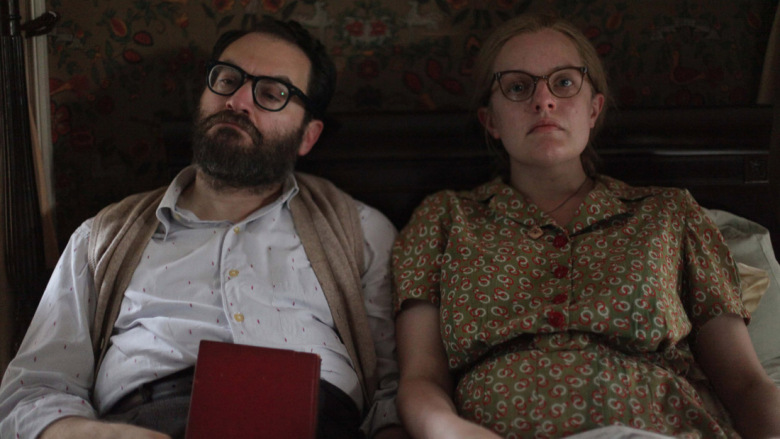
Misbehaviour chronicles the true-life weirdness of the 1970 Miss World pageant, notable both for being disrupted by the Women’s Liberation Front and for celebrating its first ever black winner. This tension between different types of progressiveness keeps the film interesting as it explores the nuances inherent in trying to effect change.

Gugu Mbatha-Raw plays Jennifer Hosten, ‘Miss Grenada,’ who made history by placing first in the contest. For her, Miss World is all about representation and opportunity: there are little black girls, she tells white activist Sally Alexander (Keira Knightley), who will see her on TV and know that they can be successful too. And she’s hoping that the exposure will give her a chance to achieve her dream of becoming a broadcaster. She’s composed and dignified, utilising the competition for her own ends. It’s difficult to argue with her point of view.

But that’s where this film succeeds: it doesn’t try to argue with her. It allows for the fact that competing narratives can be simultaneously true. Because Alexander and the rest of the Women’s Libbers aren’t wrong either: it is appalling to see women weighed, measured, paraded and graded. It is appalling that this is what women have to do in order to succeed.

But even within the activists, there is space for difference. Jo Robinson (Jessie Buckley)’s direct action mantra is a world away from Alexander’s ‘get a seat at the table and fight from within’ approach. As writers Rebecca Frayn and Gaby Chiappe make clear, there is no one path to righteousness. But one thing is certain, the Miss World pageant is an outmoded model, and casually misogynistic men like organiser Eric Morley (Rhys Ifans) and Bob Hope (Greg Kinnear, on fine form) are going to have to face the fact that their time is up.

Misbehaviour is a gentle film, despite its themes of outrage and activism. There’s no post #MeToo hint of inappropriate sexual attentions being foisted on the contestants; instead, director Philippa Lowthorpe concentrates on the insidiously benign sexism that pervaded the era, and on the bravery of the women who called it out, on whose shoulders today’s young feminists stand.

Thank you.

4.3 stars

Susan Singfield