Author: Bouquets & Brickbats

Cherry

16/03/21

Apple TV

The Russo Brothers – Anthony and Joe – are among the most successful filmmakers in history. Avengers: Endgame was, until recently, the most watched film ever (it was only a judicious re-release of Avatar that put that particular trophy back into James Cameron’s hands and that may be a temporary arrangement). It was always interesting to speculate about where the Russos would go next.

On the face of it, this Apple Original film seems a surprising move for them. Adapted from Nico Walker’s semi-autobiographical novel, it mostly concentrates on the life on just one man. Even though he’s played by Spider-Man’s Tom Holland, he’s a pretty ordinary Joe, not given to wandering about in brightly coloured spandex or indulging in extended punch-ups with supervillains. This is, ostensibly, an intimate story – and yet, the Russo’s bombastic style somehow gives it an epic scope, an almost operatic quality, which is enhanced by Henry Jackman’s stirring score.

When we first meet Cherry, he’s in the process of robbing a bank (not his first time) and is chatting amiably to the audience as he goes about it, a daring conceit that really pays off. He’s also about to make a decision that will change his life irrevocably.

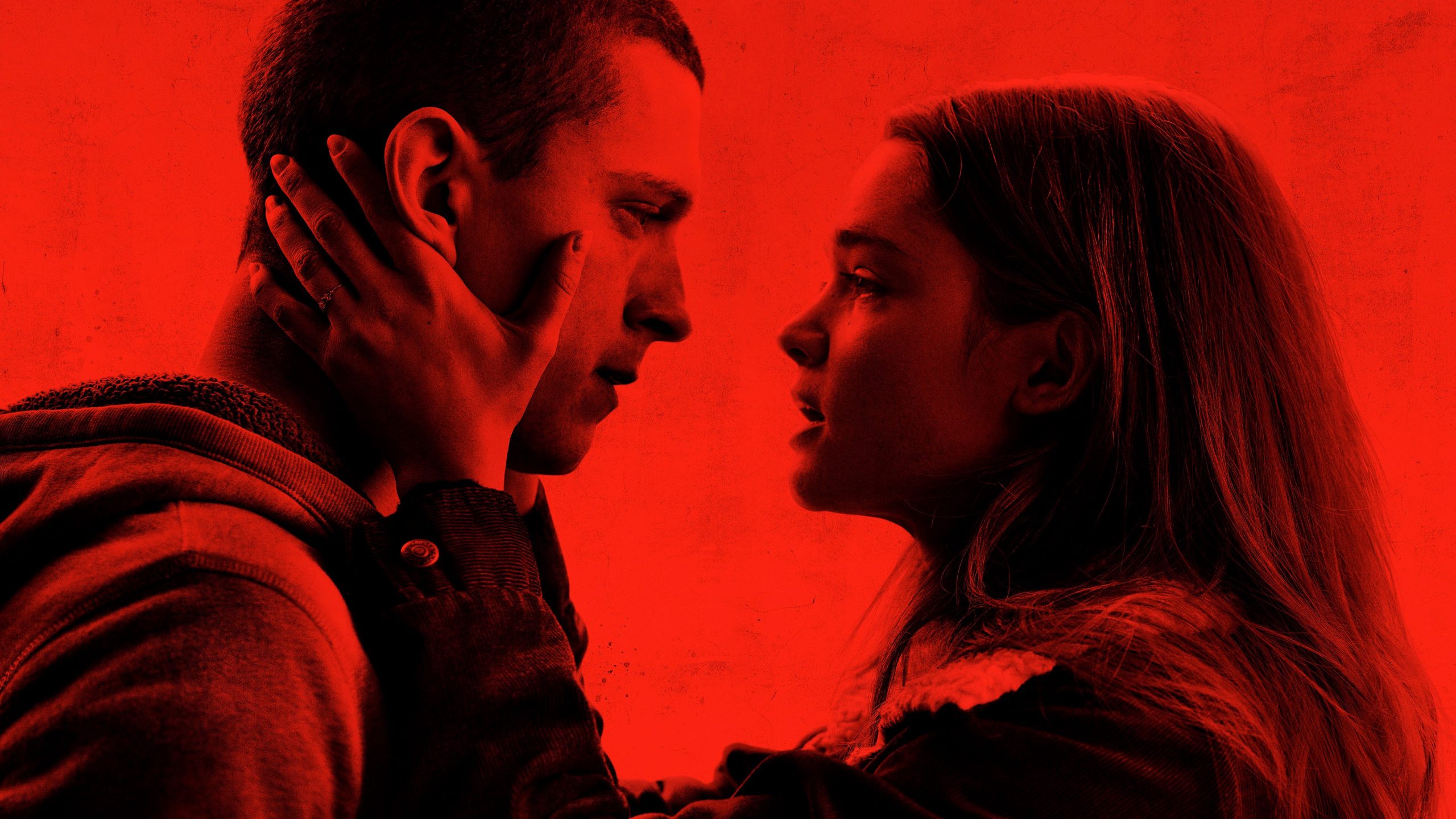
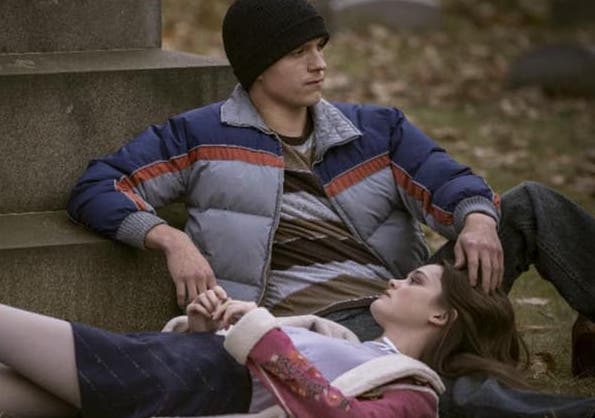
It’s at this point that the film whisks us way back to his fresh-faced teenage years, where, in the first of a series of separate episodes, he encounters Emily (Ciara Bravo), the young woman who will become his significant other. A romance duly ensues but, after Emily announces she wants to move to Montreal, Cherry rashly enlists in the army, realising too late that his partner has changed her mind. and he cannot change his. Soon afterwards, he’s plunged headlong into military training and, subsequently, armed combat. The film’s initial brash, cheerful tone veers into darker waters and keeps on going, full speed ahead.

Once out of the armed forces, and suffering from undiagnosed PTSD, Cherry seeks solace in drugs. At first he’s merely overindulging in Xanax and OxyContin, but then he and Emily start the long descent into hardline heroin addiction, in a series of no-holds-barred sequences that make Trainspotting look like a nice day at the funfair. Yes, this is unremittingly bleak subject matter but the story never relaxes its stranglehold on my attention. I find myself compelled as much as I’m appalled and, occasionally, I’m dazzled by unexpected bursts of brilliance.

The director’s final tour de force is the unfolding of fourteen years of narrative in one mesmerising tracking shot, accompanied by Puccini’s Vissi D’Arte. It’s an audacious move and really shouldn’t work, but somehow it’s pulled off with a flourish. Hats off to Tom Holland, who manages to give his all to a role that sees him age from boy to man with absolute conviction.

This really won’t be for everyone – the film never hesitates to show the depths that can be plumbed when drug addiction holds sway. Others have accused the Russo’s of employing style over content, but I disagree. Cherry’s story must be an all too familiar one for so many young soldiers, put through the mincer of warfare and then left to make their own way back into everyday existence. With its epic feel, Cherry makes that story both heroic and tragic in equal measure.

4.6 stars

Philip Caveney

Adam

15/03/21

BBC iPlayer

Trans men must be one of the most under-represented groups in the UK. I read a lot of news; I watch a lot of films and, when there are no pandemic restrictions, I am an avid theatre goer. But, despite the (anecdotal) fact that I know more trans men than I do women, I very rarely see them referred to; their stories largely seem to go untold.

Adam, then, is important not just because of what it says, but because it exists at all – and on a mainstream platform too. The BBC is under fire at the moment, but we shouldn’t forget what it offers us. If commercial viability is the only factor by which content is judged, marginalised people remain invisible to the masses, their experiences rendered forever ‘fringe.’

Indeed, Adam premiered at the Edinburgh Fringe in 2017, a National Theatre of Scotland production at the Traverse Theatre, where it was highly acclaimed. This new version, written by Frances Poet and directed by Cora Bissett and Louise Lockwood, again stars Adam Kashmiry as himself, and chronicles his experiences as an Egyptian trans man, alone and frightened in a Glasgow flat, awaiting the results of his asylum application. Adam can’t return to Egypt: revealing his true identity there could result in his death. But he can’t use his gender identity to claim asylum in the UK until he transitions, and he can’t transition until he is granted asylum. Trapped in this double bind, no wonder Adam struggles to cope…

This hour-long film is beautifully constructed. It does always feel more like a play than a movie, but that’s not to its detriment. Yasmin Al-Khudhairi appears as Adam’s female-looking outer self, and offers us an occasional and understated glimpse into how others perceive him. The rest of the supporting cast is strong too, especially Neshla Caplan as a sour-faced immigration officer. But this is Adam Kashmiry’s story, and it is his film too: his performance is compelling, haunting – and heartwarming. Because, although this story is one of unimaginable hardship and pain, it’s also one of triumph over adversity. Here he is: a free man, telling his own tale.

4.4 stars

Susan Singfield

Kyloe at Home

15/03/21

http://www.kyloerestaurant.com

We’re in the middle of a pandemic and we’re both longing for a proper Sunday dinner – you know the kind of thing: a succulent roast joint, crispy potatoes, lashings of gravy. Of course, not so very long ago, such meals could be found at the drop of a hat in any number of restaurants and bars around our home city. Kyloe was always first choice for the old Sunday dinner, though. There’s much to be said for that wonderful feeling of anticipation, as you watch a huge joint being carved right in front of you before being dispensed onto dining plates…

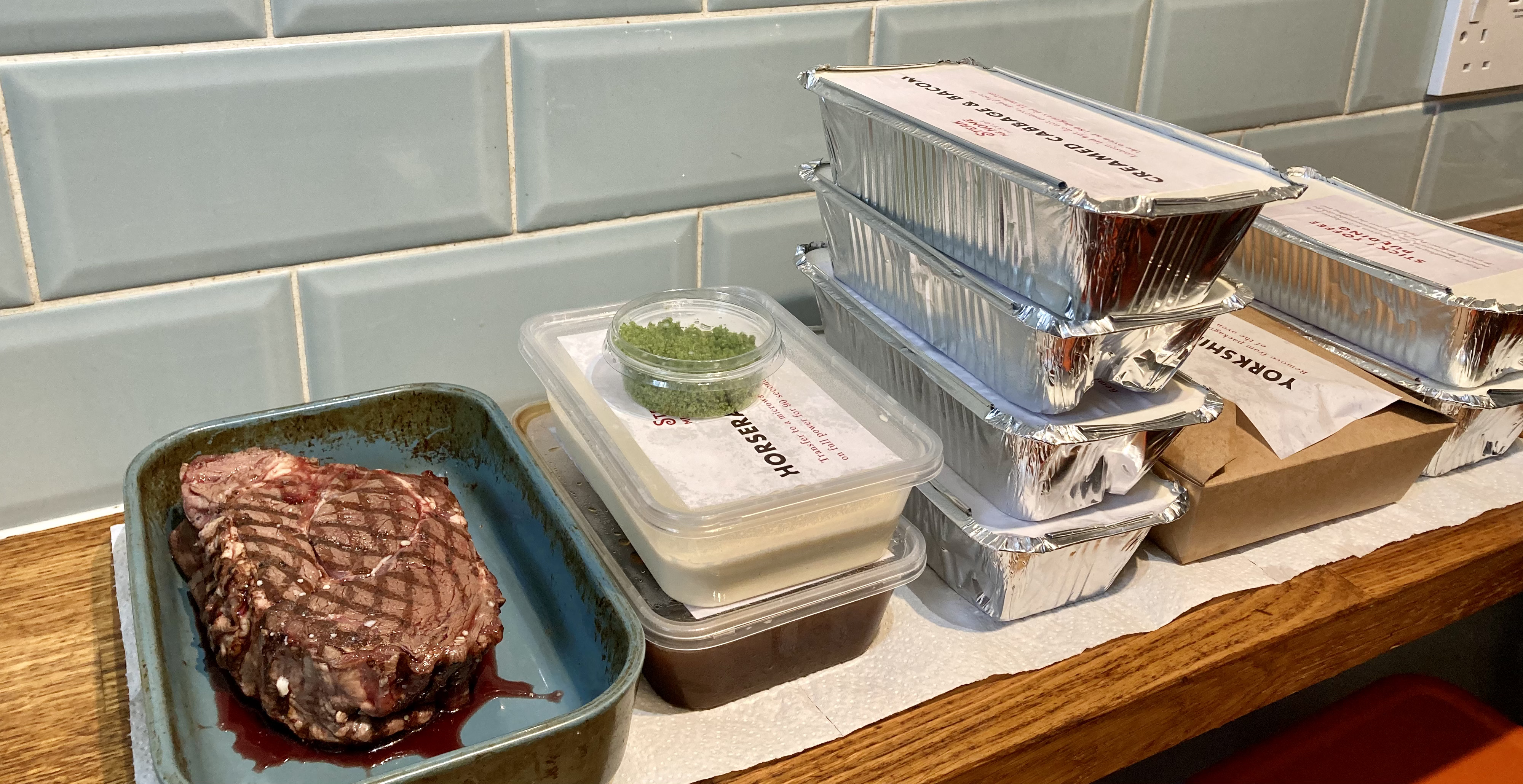
Ah well, until those days can be properly recaptured, Kyloe has set up an ‘at home’ dining experience – which is why on the first available Sunday, we find ourselves wandering over to McLaren’s on the Corner in Bruntsfield (it’s part of the same group, Signature Pubs), where we collect a surprisingly huge cardboard box containing everything we need to create the kind of repast we’ve been dreaming of.

The first thing to say is that Kyloe have thought this through very carefully. The ‘dine at home’ experiences we’ve tried thus far have varied in how simple they are to put together. This one is reassuringly easy. We switch on the oven at 180 degrees and, at clearly designated intervals, we add another container to those already there, leaving ourselves free to indulge in a couple of aperitifs. We’ve ordered a dinner for two and, working on the B & B belief that a side of mac’ n’ cheese goes with just about anything, we’ve added that for a fiver extra.

Once arranged on a plate, the dinner is both generous in proportion and everything you’d expect from this kind of meal. The roast rib of beef is sumptuous, the potatoes crispy, the cabbage and bacon mouthwatering. There’s a container of horseradish sauce to be served hot (not usually a favourite of ours but this one rocks) and naturally there’s a pair of large, crispy Yorkshire puddings, which, when filled with the other veg and ladled with a rich, red wine gravy are just what we were hoping for.

Puddings, I hear you ask? Well, yes, there are some perfectly serviceable sweets – a vanilla cheesecake with raspberry jus and a sticky toffee pudding with a thick gooey sauce. Only the latter of these is a bit disappointing (a portion of custard might have been a welcome addition) but if I’m honest, this is really all about the main course and Kyloe have done an excellent job of providing a spectacular Sunday dinner at home.

Not that I wouldn’t prefer to dine in their excellent restaurant, but fingers crossed on that score.

4.6 stars

Philip Caveney
Trial by Fire

08/03/21

Netflix

Trial by Fire belongs in what’s fast becoming a familiar category in cinema – a based-on-a-true-story account of a person’s lamentable dealings with the American judicial system. Inspired by David Grann’s article in the New Yorker in 2009, Edward Zwick’s movie adaptation had its premiere in May 2018 and thereafter got somewhat lost in the shuffle. Now it’s getting a second chance on Netflix, and it’ thoroughly deserves to be seen, even if the story is unremittingly bleak and feels uncomfortably similar to recent releases like Just Mercy and Clemency. The overriding message, however, is crystal clear: capital punishment is a bad idea, especially in a system where the poor and under-privileged have the odds so heavily stacked against them.

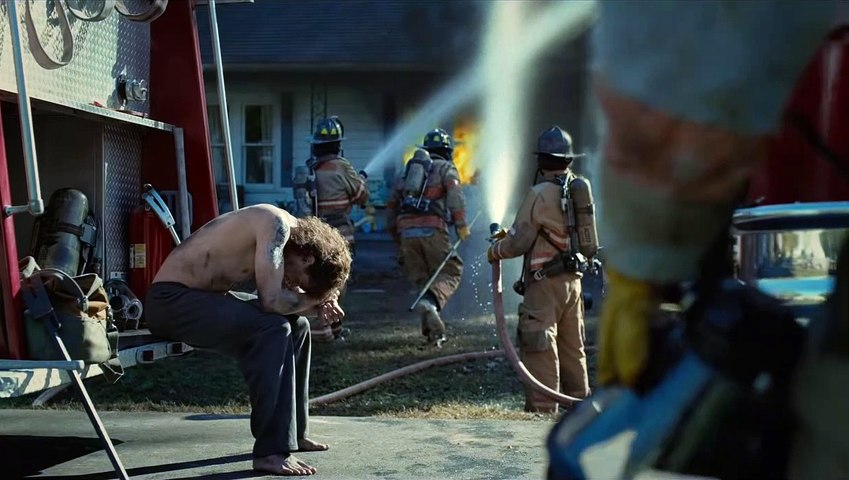
Cameron Todd Willingham (Jack O’ Connell) is a mouthy young man with a predilection for heavy metal and infidelity. He’s maintaining a stormy relationship with his wife, Stacy (Emily Meade), and struggling to care for his three young kids. He’s not particularly likeable, is constantly quarrelling with Stacy (generally over his affairs with other women), and has a history of violence. But everyone who knows him agrees on one thing: he loves his kids. When a devastating house fire takes their lives and he manages to survive the conflagration, the investigating officers have no doubt in their minds that he set the fire deliberately – and, in the absence of any proof, they’re perfectly happy to fabricate some.

So Cameron winds up on Death Row, sitting in a cell and waiting for his turn for the lethal injection…

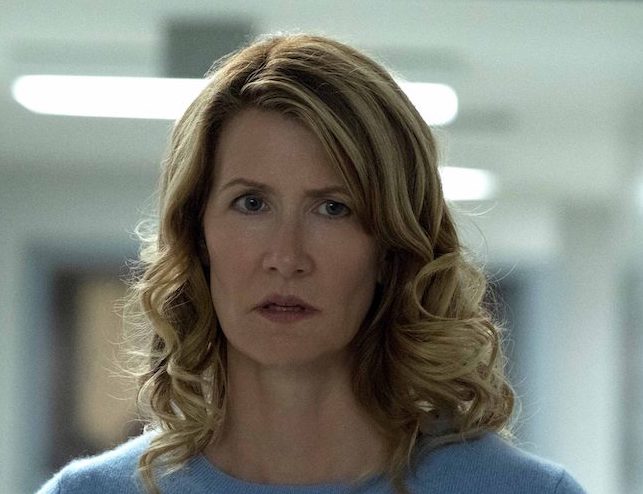
Years drift by. Cameron mellows a little, he learns how to maintain friendships with fellow prisoners and acquires an education. A chance meeting between playwright Elizabeth Gilbert (Laura Dern) and a prison reformer affords him the first real visitor he’s had in years. Elizabeth is surprised to find him a compelling and likeable character, so she decides to visit him on a regular basis. As the two of them grow closer, she is encouraged to start looking into the flimsy case that sent him to prison in the first place. It doesn’t take her long to discover some shocking irregularities in the prosecution’s account of what went on.

But she is to discover that finding proof of a man’s innocence – and getting the powers-that-be to reopen his case – are two very different things.

In fiction, of course, this story would be depicted as a desperate race against time, with a phone call offering a pardon coming through at the last possible moment, but Geoffrey S. Fletcher’s screenplay sticks doggedly to the facts of the case. Consequently, the final stretches of this film are an angry howl of protest, a cogent plea for sanity to prevail. Sadly, it’s unlikely to change anything, but you’ll be hard-put to sit through this without feeling a mounting sense of resentment simmering within you. Both O’ Connell and Dern offer compelling performances, and Chris Coy does excellent work in the role of a prison guard, who starts off as an arrogant bully but is gradually redeemed.

But, like I said – this is grim stuff, not for the faint-hearted. On this evidence, can the USA really continue to claim that it has anything resembling a functioning system of justice?

4.2 stars

Philip Caveney

Capone

03/03/21

Netflix

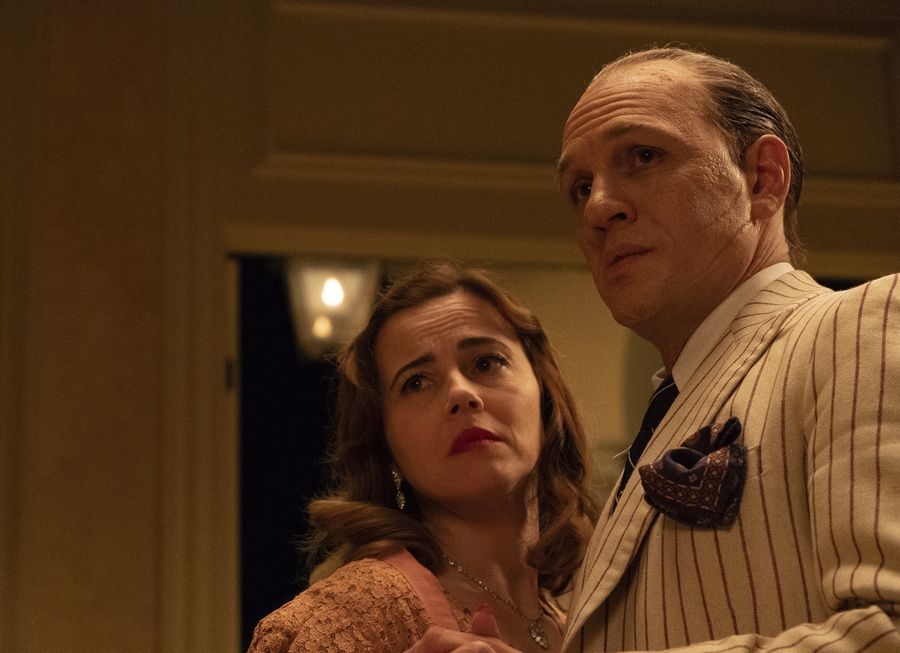
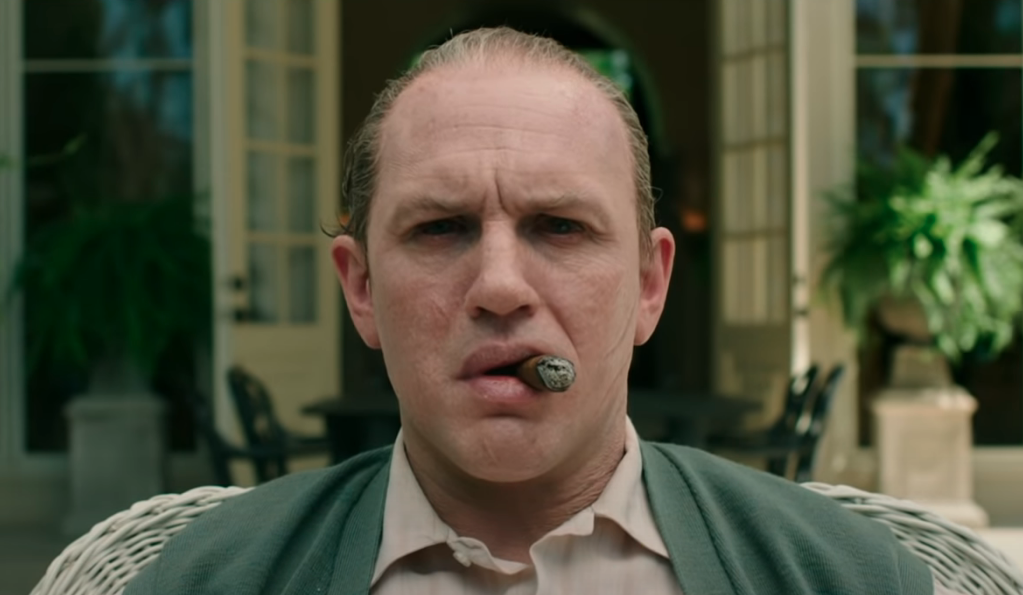
Al Capone is perhaps the best known gangster in American history. He’s been the subject of many films and portrayed by a whole host of celebrated actors; perhaps most famously by Paul Muni in Scarface and by Robert De Niro in The Untouchables. But he’s never been depicted as he is in Josh Trank’s downbeat film.

Capone is set in the dog days, towards the end of the gangster’s life. ‘Fonse’ has recently been released from prison and is suffering horribly from the neuro syphilis that has plagued him since his teens. Locked up in a palatial mansion somewhere in Florida, with devoted wife Mae (Linda Cardellini) at his side, and with regular visits from Doctor Karlock (Kyle MacLachlan), he regularly falls prey to vivid hallucinations that take him back to revisit experiences from his bloody hey day – from visits to booze-fuelled jazz clubs to crawling across heaps of bloodied bodies after a massacre he’s orchestrated.

Fonse no longer knows what is real and what is illusion and, unfortunately, this also extends to viewers of the film. While it might sound like a promising conceit on paper, it’s actually infuriating, particularly when the screenplay (also by Trank) refuses to stick to any kind of internal logic. I’m fine when I’m seeing odd happenings from Capone’s point of view, but what about when they are apparently witnessed by some of the other characters in the story? Is Capone’s old pal Johnny (Matt Dillon) actually still alive or just a vivid memory from the past? And who is the mysterious kid who keeps phoning Fonse from Cleveland? While I don’t insist that every loose end needs to be tied up, too much here is simply left hanging.

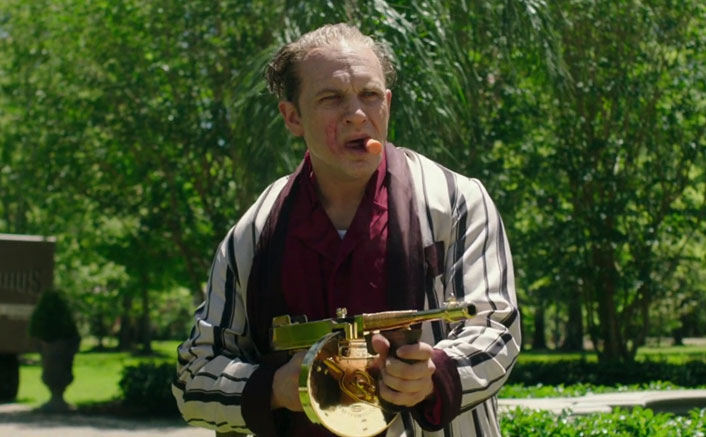
Hardy is generally a gifted performer but he’s saddled here with a thankless central role that offers him little chance to shine. Swaddled in some pretty unconvincing makeup, with a cigar (or a carrot) clenched relentlessly between his teeth, his dialogue is rarely more than a series of grunts and incoherent curses. He’s actually more eloquent when he’s noisily filling one of the oversized nappies he’s forced to wear, after suffering a few malodorous accidents in bed. Also… his constantly stoned expression makes him look a dead ringer for a grumpier version of Bernard Bresslaw from the ‘Carry On’ films.

The film’s one hour and forty-seven minutes’ duration consequently unfolds at a funereal pace, with very little in the way of progression. I feel rather like I am stuck in a traffic jam, trying to figure out what little I can see through the windscreen, and constantly wondering when I might be moving onwards again. I stick with it to the bitter end, but really have to force myself.

There’s probably a fascinating film to be made about the end of Capone’s life but, sadly, this isn’t it. Josh Trank probably had a coherent vision for his film; somehow it’s been lost in the mix.

2.5 stars

Philip Caveney

The Secret Garden

28/02/21

Amazon Prime Video

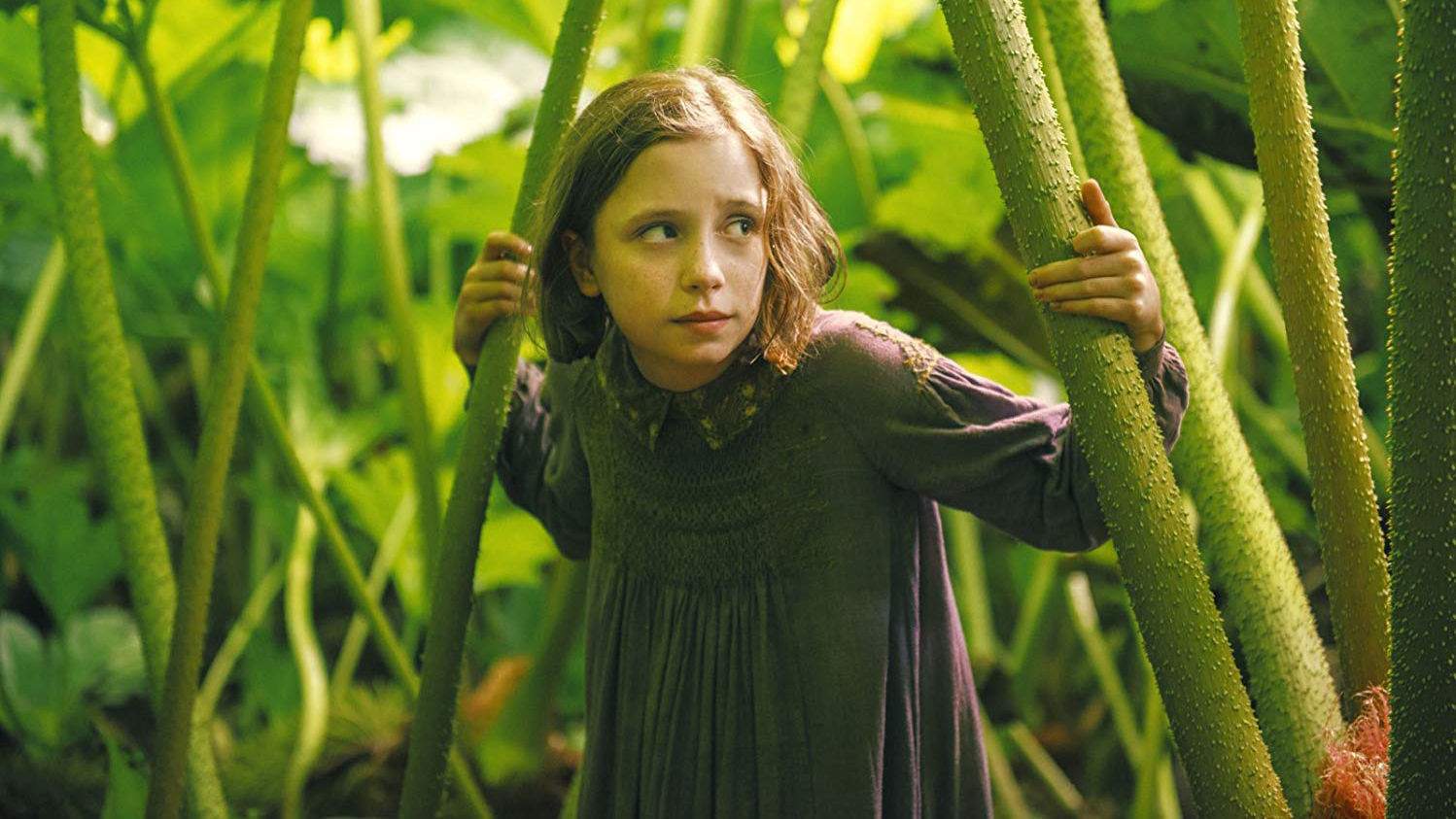
It’s a hundred and ten years since Frances Hodgson Burnett’s The Secret Garden was first published, but its appeal remains undiminished. I remember fondly the copy I had, part of a collection called ‘Children’s Classics for Girls’ (my brother had ‘Children’s Classics for Boys,’ but we both read all of them, of course, because gender boundaries are stupid, and no one knows that better than kids). I remember my grandad (who worked for MGM) enthusing about the 1949 film version too, because it was mostly shot in black and white, but changed to glorious technicolour in the titular garden. I didn’t actually see it until I was grown up, but I carried that image in my head for years.

Mary Lennox (Dixie Egerickx) is ten years old, and living in India. Her family is rich and British, but their enormous wealth and privilege can’t save them. This latest movie adaptation changes the context, so that it’s 1947, and we see the turmoil outside the Lennox mansion, caused by Partition. In the novel, Mary’s parents die of cholera. Here, it seems, they are victims of understandably violent protest. One by one, the servants leave, and Mary is left alone: orphaned, adrift.

In the novel, Mary is spoiled: a demanding, contrary madam, who needs to be brought down a peg or two. Here, director Marc Munden offers us a more sympathetic perspective: how can a child be held accountable for her bad manners? She has been parented in a distant, remote way; raised to expect others to obey her commands. What this Mary needs is love and attention – but that’s in short supply. Found, eventually, by British soldiers, Mary is shipped off to a cold, grey England she has never seen, to live with an uncle she doesn’t know. And she never gets to know him, really, because Archibald Craven (Colin Firth) is every bit as unreachable as her own parents were, willing to do his duty and provide for his niece, but completely uninterested in actually seeing her. The ancestral home, Misselthwaite Manor, is enormous, so it’s easy for them to live separate lives.

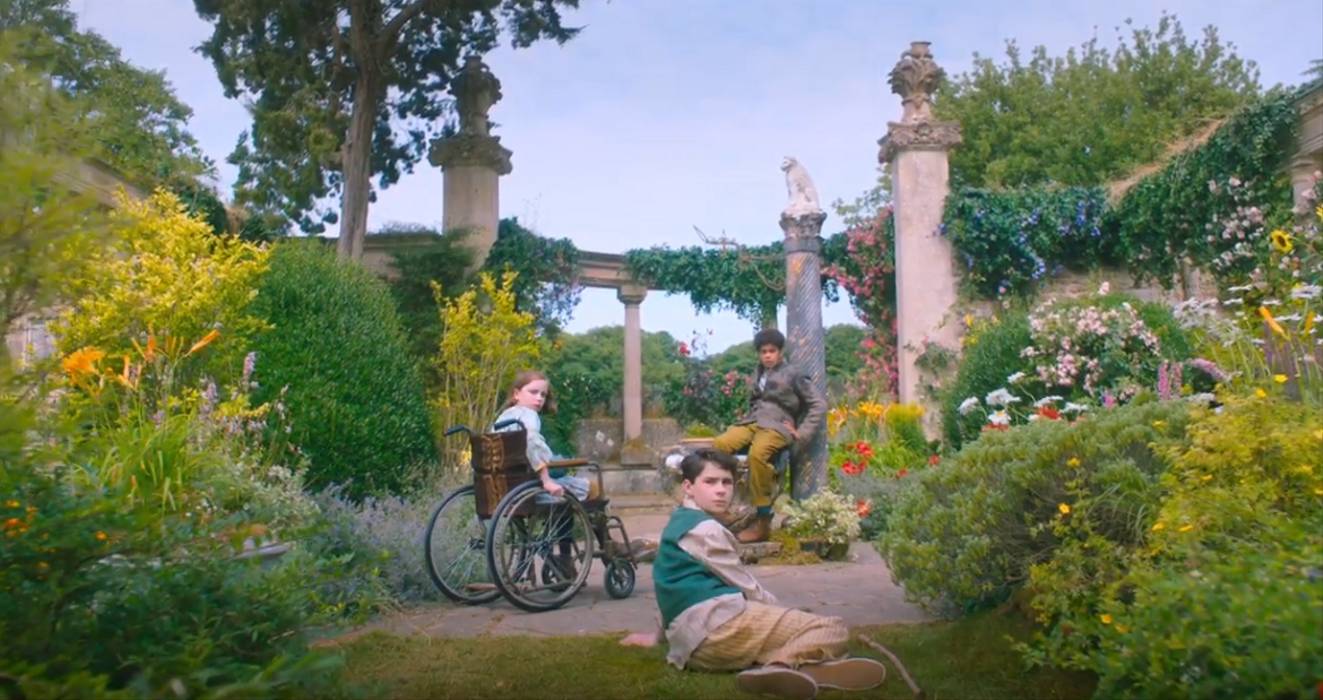
As in India, Mary spends most of her time in the company of servants. Here in Yorkshire, this means the formidable Mrs Medlock (Julie Walters) and the down-to-earth Martha (Isis Davis). While befriending Mrs Medlock is out of the question, Martha proves more amiable, and her brother Dickon (Amir Wilson), whom Mary meets while exploring the estate, soon becomes Mary’s playmate. Together, they roam the vast grounds, take care of a lame dog and, one day, discover a way into a walled garden, which has been locked ever since Archibald’s wife – Mary’s aunt – died, many years ago. This secret, magical place becomes their sanctuary. The idea of transformation is integral to the book, so it’s a little odd that Jack Thorne’s script seems almost to toss this idea aside. Whereas Hodgson Burnett has the children working hard every day to restore the garden to its former glory, here they just play in it. This undermines the central tenet of the story: that gardens (and children) need tending if they’re to grow well.

Take cousin Colin (Edan Hayhurst), who is bedridden, and supposedly out of bounds. He’s another neglected child, trapped by his father’s fears. Archibald thinks Colin has inherited his hunch back, and keeps his son ‘safe’ by cutting him off from the world. Mary hears him crying in the night and decides that what he really needs is to play outside. Like Clara in Johanna Spyri’s Heidi, it turns out that his disability can be ‘cured’ by a bit of fresh air and a positive attitude. (I don’t know if this is as deeply offensive as it seems on the face of things or if it’s a true reflection of poor medical practice at the turn of the last century. Even if the latter is true, does this still apply in 1947?) Still, it’s a transformative move: like the garden, both Colin and Mary become stronger, happier people once they’re shown a bit of love.

This is a good-looking film, and the children all perform well. I like the fact that Mary’s story is contextualised, both by the opening scenes in India and by the old equipment lying around the Manor, a reminder of its recently being requisitioned as a war hospital. But both Walters and Firth are criminally under-used (why cast such great actors if you’re not going to give them anything to do?) and it’s a shame that the garden itself never seems magical; in fact, it’s almost indistinguishable from the rest of the estate, and it’s not clear why this place in particular matters so much to the children. From black and white to technicolour might seem hack nowadays, but I think this movie needs an equivalent trick.

3.6 stars

Susan Singfield

I Care a Lot

21/02/21

Amazon Prime

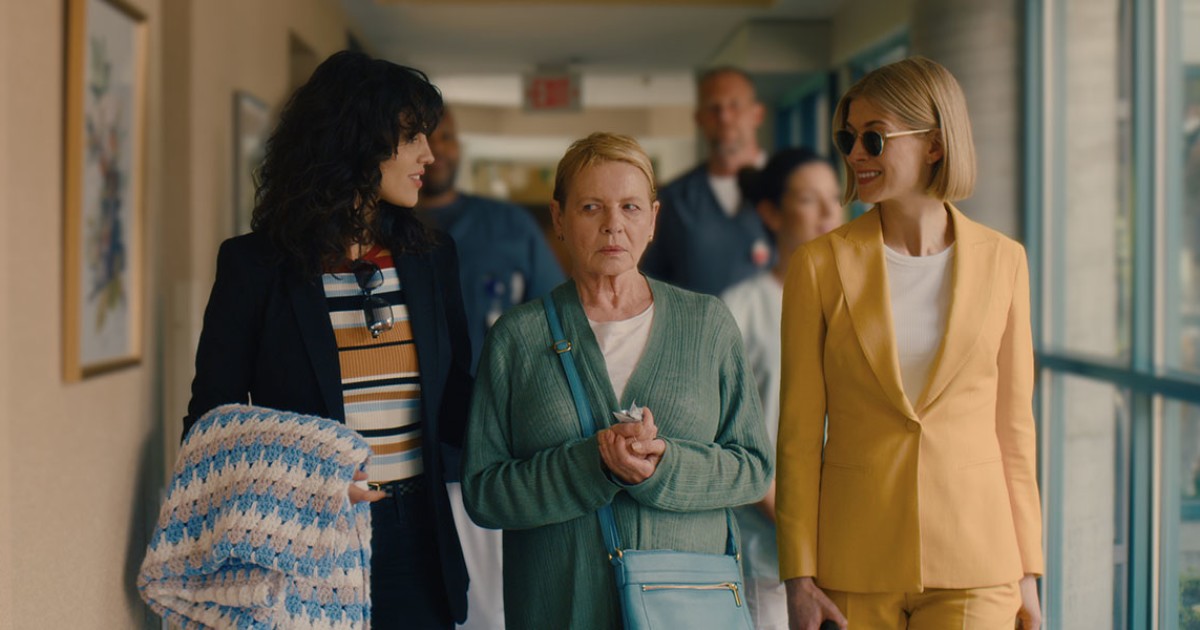
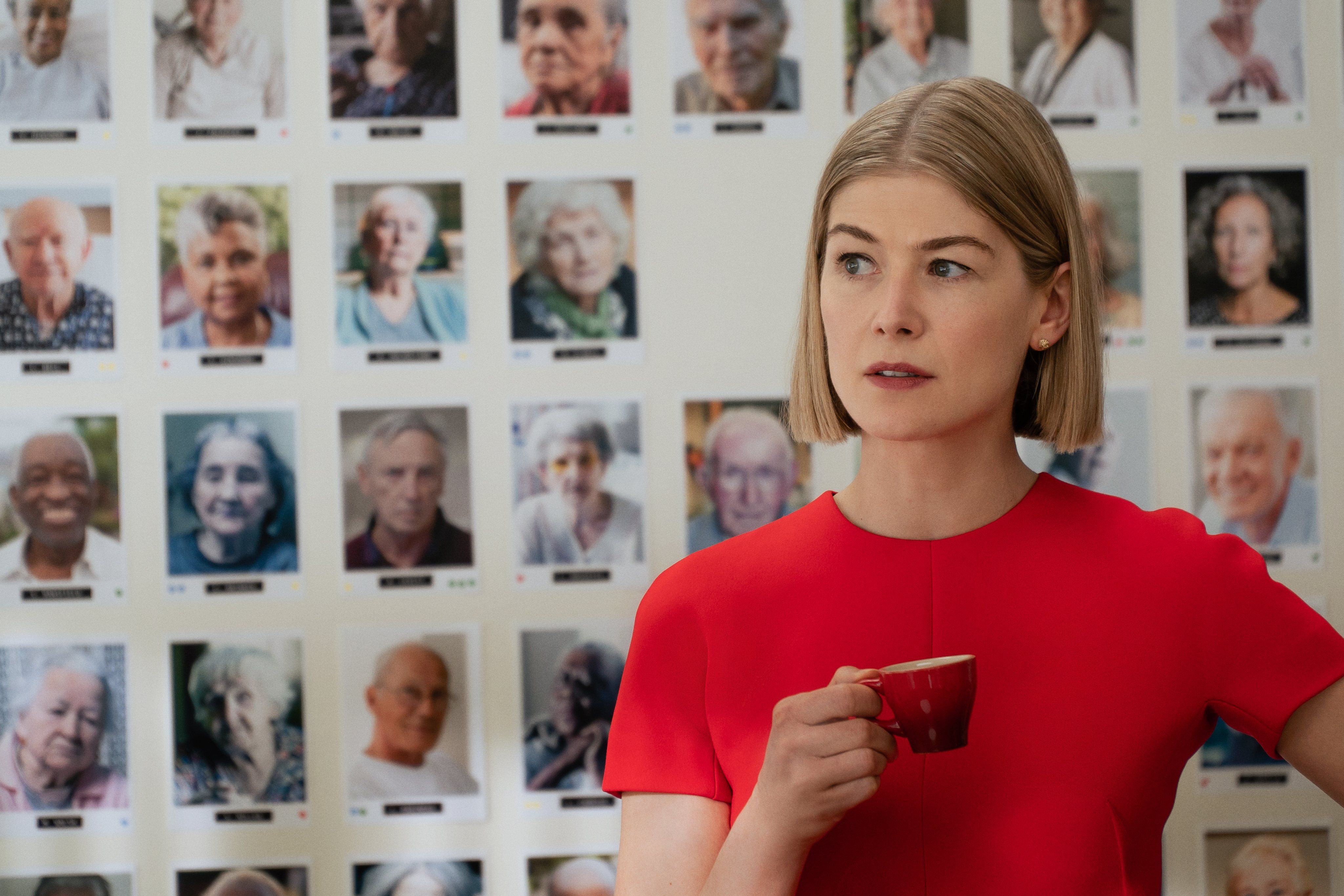
The ‘carer’ in this story is Marla Grayson (Rosamund Pike), a woman who – it soon becomes clear – cares only for herself and her lover, Fran (Eliza Gonzalez). Exploiting the law by bribing doctors, Marla has become adept at identifying vulnerable elderly people and getting herself appointed as their legal guardian, whereupon she is free to exploit them for her own profit. She gleefully sells off their homes, their possessions, the little treasures they have accumulated over the years, paying herself a healthy wage from the proceeds and siphoning off whatever she thinks she can get away with.

If it all seems a bit far-fetched, think again. In America, such shenanigans are perfectly permissible and writer/director J Blakeson has no hesitation in pointing up the iniquities of the system.

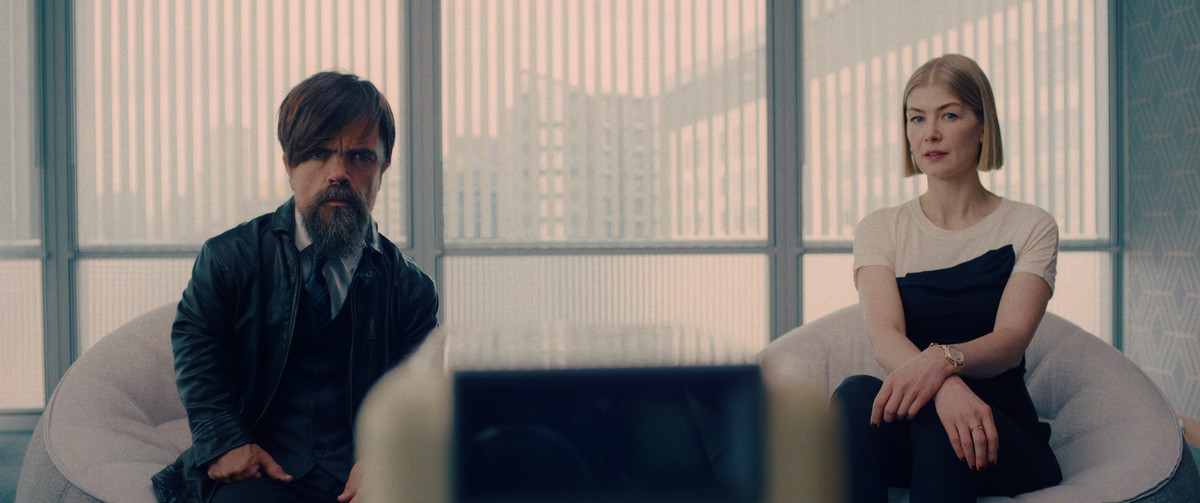
Marla sets her sights on her latest victim: rich loner, Jennifer Paterson (Dianne Wiest). Before Jennifer quite knows what’s happening to her, she is drugged up and incarcerated in a care home. It’s at this point that Marla realises she may have bitten off more than she can chew. The records state that Jennifer has no kin, but it turns out she actually has a secret son, Roman (Peter Dinklage), a man who – though small in stature – is a powerful and ruthless criminal, who will stop at nothing to get his beloved momma back.

I Care a Lot has a great deal going for it, not least what could be a career-best performance from Pike, whose portrayal of Marla is extraordinary. She paints her as a venomous, heartless machine, able to mask her raging avarice behind a dazzling smile and a haircut of such precision it looks like it’s been achieved using a set square. Wiest is pretty good too, but she’s criminally under-used here, which is a shame, because she has been gifted with the film’s finest one-liner. And Dinklage also convinces as a ruthless mafioso, a man you really don’t want to get on the wrong side of.

The main problem for me however, is that there’s really nobody in this story to root for, since every character I’m introduced to is as venal and self-centred as the last. Even Jennifer isn’t the innocent she at first appears to be. It really says something when the people on the right side of the law are even viler than those who are openly flouting it, but it’s not enough for me. I find myself wanting a character – just one – that I can actually relate to.

The film’s middle section boils down to a series of complicated tussles between Marla and Roman, both of them intent on beating the other at all costs. Though these scenes are cleverly staged, they are somehow less interesting than the film’s central tenet. However, just when I think it’s all going off the rails, Blakeson manages to snatch everything back with a conclusion that comes swaggering in out of left field and actually leaves me gasping. I really don’t see it coming.

I Care a Lot isn’t perfect, but when it’s good, it’s very good and – for the best part of its nearly two hours’ running time – it does manage to keep me glued to the screen. It also makes me rage with anger at what can happen to elderly people locked up in the moral maze of the American health care system.

4 stars

Philip Caveney

Greenland

18/02/21

Amazon Prime Video

Greenland is a disaster movie starring Gerard Butler.

I appreciate that in normal circumstances this opening sentence might be enough to dissuade many viewers from the idea of further investigation, so let me quickly add that it’s nothing like the usual Gerard Butler experience. At no point during this film does his character attempt to take on a comet with his bare hands, nor does he stare at the sky and bellow something incomprehensible. Indeed, so restrained is his performance that the nearest he comes to his regular screen persona is in a brief sequence where he buries a clawhammer in someone’s skull – but, even then, he has been severely provoked.

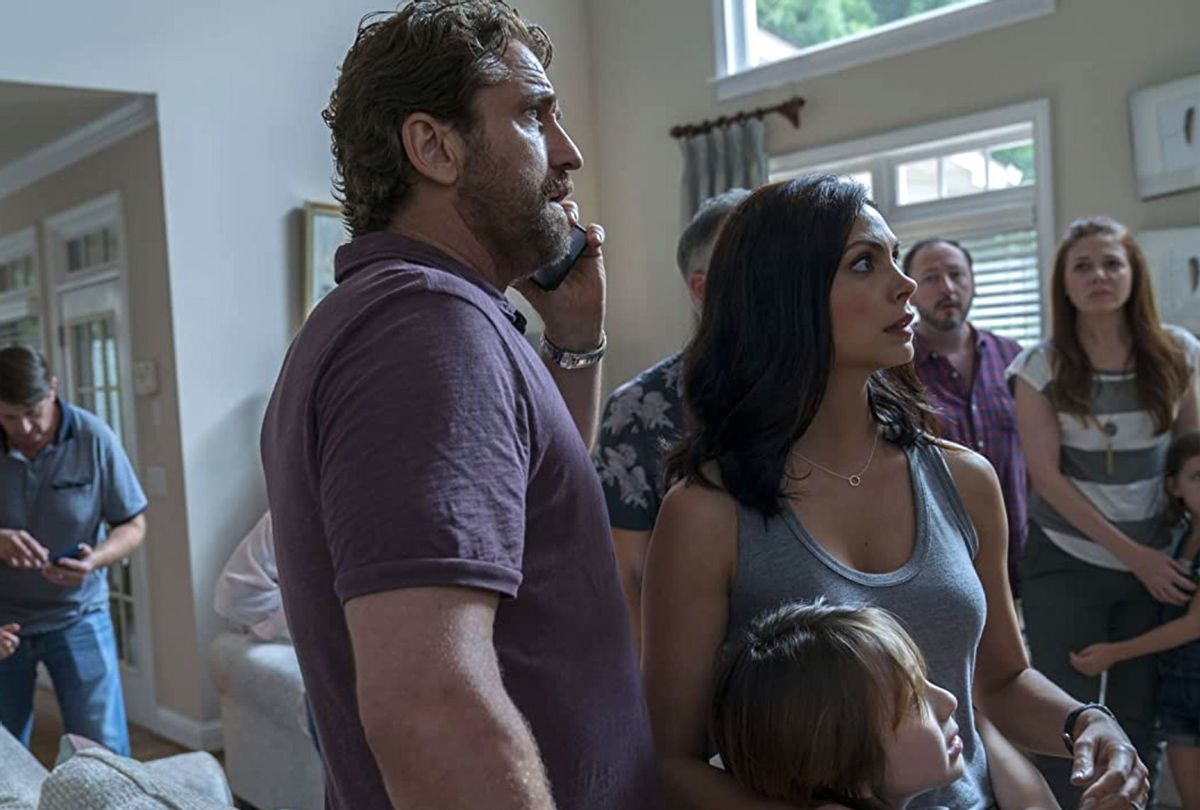
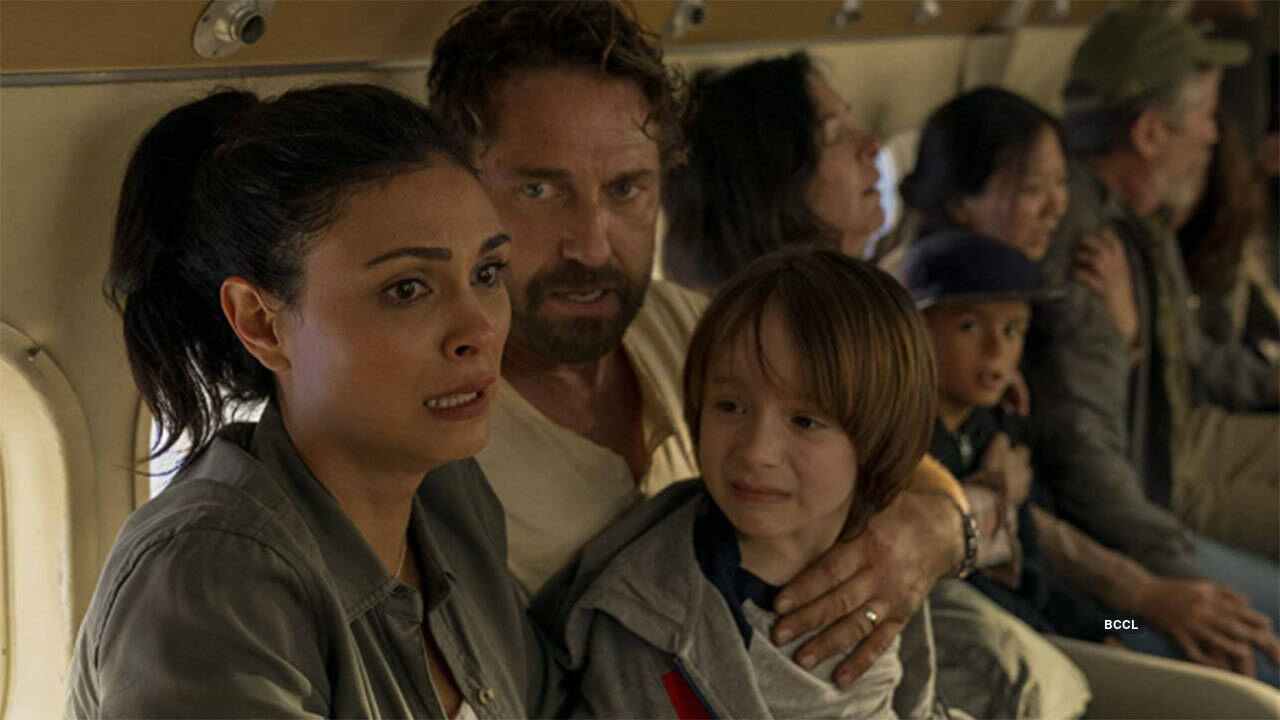
Butler plays structural engineer John Garrity, an everyday Joe, getting though a normal working week, and then hurrying home to try and patch up a failing marriage with estranged wife, Alison (Morena Baccarin), before doing the shopping for his young son’s birthday party. Nathan (Roger Dale Floyd) is a diabetic (a fact that will figure prominently later on). He’s excited by the news that a comet, innocuously named Clarke, will soon be passing close by the earth, and it promises to provide quite a light show when its fragments begin to enter the atmosphere.

But in the supermarket, John receives a strange phone call informing him that he, together with his wife and child, have been allotted seats on a military aircraft taking them to ‘an emergency shelter.’ They must drop everything, pack a bag and report to the nearest air force base. John’s first thought is that it’s some kind of hoax. But then parts of Clarke start hitting the earth with terrifying force and all thoughts of a celebration are abandoned as the family’s first consideration becomes an urgent need to make that flight…

Greenland manages to avoid the pitfalls that blight so many of its disaster-movie predecessors. Director Ric Roman Waugh and writer Chris Sparling ensure that everything that happens is kept within the point of view of John and his family – even the inevitable explosive set-pieces are generally glimpsed on screens as they make their way across the country, a device which adds a queasy shot of realism to the proceedings. Unable to make their original flight, the trio head North, first playing a flying visit to Alison’s widowed father, Dale (Scott Glenn), and then making a desperate dash across the border into Canada, in the hope of getting aboard a flight bound for the titular island, where they are assured their only hope of survival lies.

Along the way, they encounter all kinds of hitches, most of them provided by people who haven’t been assigned a seat on a plane and who will go to just about any lengths to get their hands on one. Here is the proof, were it ever needed, that people under pressure are capable of terrible things.

The story mostly holds together (I’m sure I picked up a sizeable plot hole towards the end) and, to give the film its due, it keeps me hooked right up to the end credits and hammers through its two hour running time at a breathless, headlong gallop. It also supplies what must be Butler’s most credible performance yet. Will he follow this new path onwards or go back to his more usual “punch’em ups?” Only time will tell on that score.

4 stars

Philip Caveney

The White Tiger

13/02/21

Netflix

Adaptations of literary bestsellers are notoriously difficult to pull off, but clearly nobody mentioned this to writer/director Ramin Bahrani. He launches into his version of Aravind Adiga’s Booker-winning novel with such irresistible gusto, we’re swept up in it almost before we have time to draw breath. Dropping us briefly into a pivotal moment in our young protagonist’s life, he then flings us headlong into the character’s present, before winding us all the way back to the very beginning, the narrative powered onwards on a raft of irresistible Asian pop.

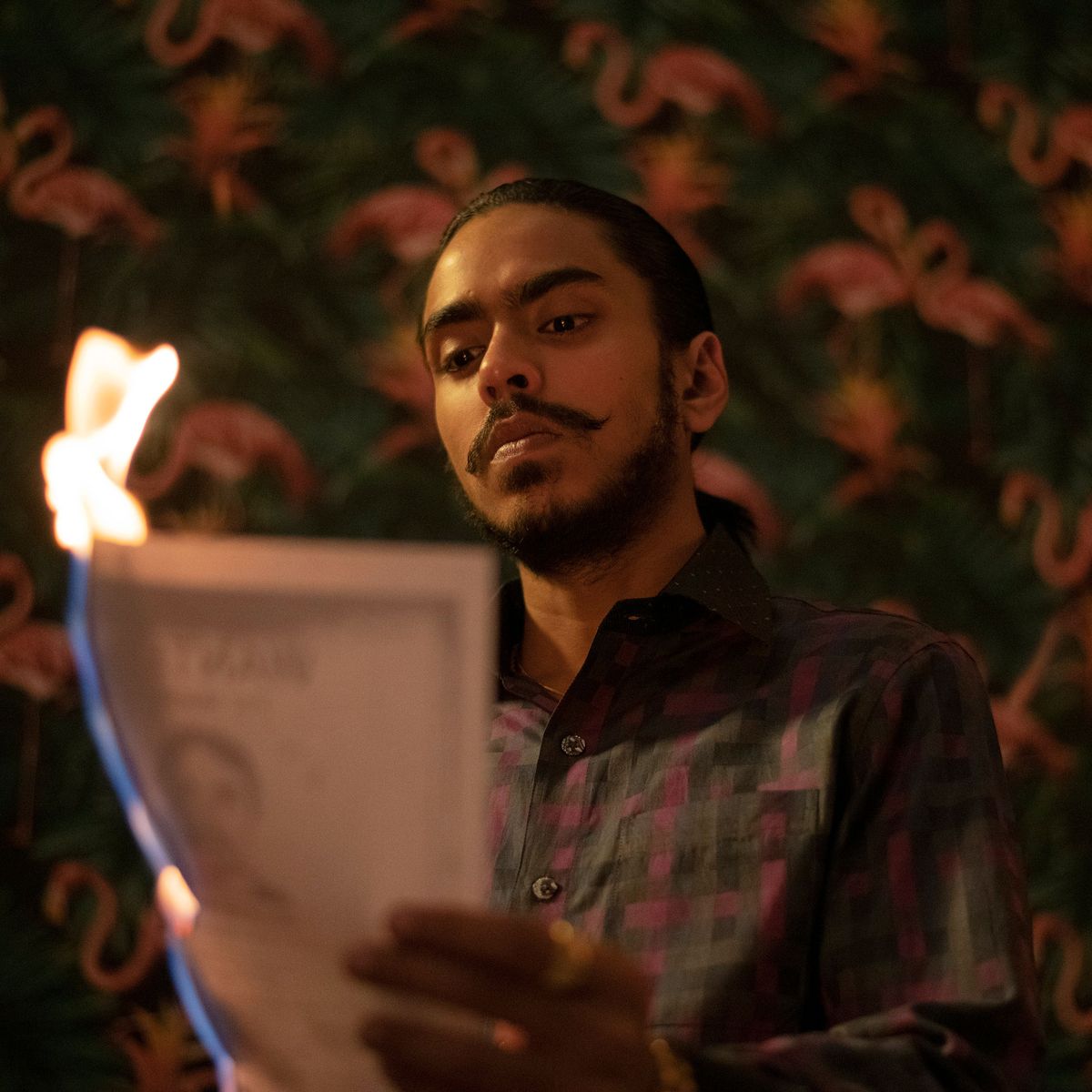
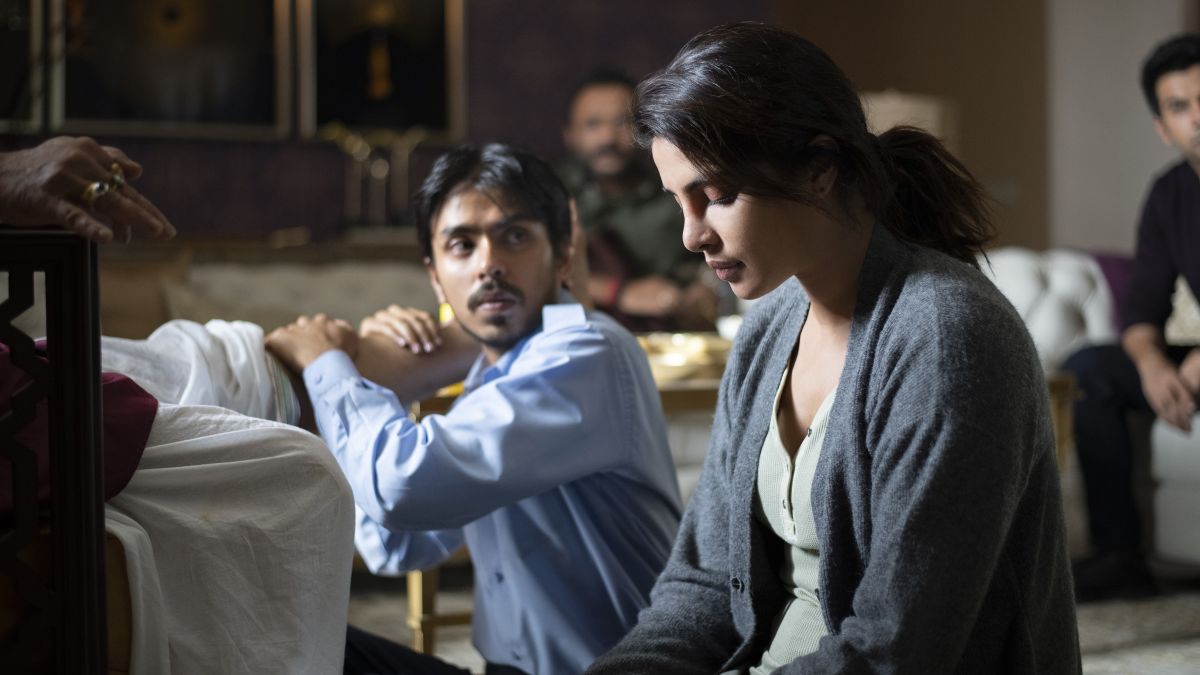
The White Tiger is, of course, the picaresque tale of Balram (Adarsh Gourav), as told to the Chinese Premier, We Jabao, on the eve of his trade trip to India. This is a narrative device that seems as unnecessary here as it did in the source novel, but no matter, it doesn’t really cause any problems. Balram is an impoverished kid from an impoverished family living in a rural village in India. He dares to dream of escaping from the seemingly endless cycle of poverty into which his caste – the sweet-makers – places him. After borrowing money from his grandmother for ‘driving lessons,’ he heads for Delhi and approaches the crooked landlord of his village, managing to acquire the job of driver to the man’s youngest son, Ashok (Rajkummar Rao), recently returned from America with his wife, Pinky Madam (Priyanka Chopra), in tow.

At first, the working relationship is cordial enough. Ashok appears to want none of the bowing and scraping that his father and older brothers demand from their employees, insisting that Balram calls him by his first name, urging him to refrain from opening doors for him, etc., but, when the narrative finally returns to that briefly glimpsed pivotal moment, it becomes clear that the yawning void between master and servant can never be successfully crossed – and that it’s going to take some drastic action of Balram’s part if he’s ever going to become his own man…

Built around an adorable central performance by Gourav, The White Tiger never pulls its punches and paints a vivid picture of a world where deceit and corruption appear to be an integral part of society: where those who dream of escaping to a better life must be prepared to tread on the lives friends and families in order to achieve their goals – and where nobody, not even a close family member, can ever truly be trusted.

This is a cracking film that hammers through its two hour and five minutes running time without ever running out of momentum. It’s vivacious, funny and occasionally heart-rending. If only all literary adaptations could be as sprightly as this one.

4.6 stars

Philip Caveney
The Banker

12/02/21

Apple TV

On the face of it, a ‘based on a true story’ film about two guys who decide to set themselves up as landlords sounds like it might make for fairly dull viewing.

But, when I tell you that the true story is set in America in the 1950s and 60s – and that the two guys in question are African Americans – you might begin to appreciate that there’s more to it than initially meets the eye.

In this Apple original, finally available after some protracted – and rather unpleasant – legal wrangles, Anthony Mackie stars as Bernard Garrett, a maths prodigy who, since childhood, has hankered after a career in real estate. He’s well aware, however, that the only way a man of his colour is likely to set foot in the swanky properties he longs to own, is if he’s wearing a janitor’s overalls. Undeterred, he sets to with a will and gradually begins to amass a portfolio. When he spots an opportunity to acquire the buildings where one of Los Angeles’ biggest banks is situated, he approaches wealthy club owner Joe Morris (Samuel L. Jackson) to help raise the necessary finance.

Joe himself owns quite a few properties around the city but has learned from experience that, even in liberal LA, nobody is going to allow two black guys to get away with something as audacious as openly owning such fancy real estate. So they hit on a plan: hiring Bernard’s employee and friend, the handsome, hapless and – crucially – white Matt Steiner (Nicholas Hoult) to be the visible ‘face’ of the enterprise. After some intensive coaching – which includes memorising complicated figures and (really important this) learning to play golf – the ruse works like a dream and soon Bernard and Joe (and Matt) are doing very nicely, thank you.

But then Bernard pays a visit to his father in his Texas hometown, and notices a nice little neighbourhood bank, all ready for the taking. Why not just buy the place? Then he can offer loans to the many black families in the area that can’t currently enjoy such a luxury. Joe is against the notion from the start, but Bernard manages to persuade him. Once again, they’ll put Matt in there as a figurehead. It worked before, right? But all three men are to discover that what works in Los Angeles just doesn’t fly in Texas…

The shameful truths behind this story are impossible to ignore. Certainly, for that first transaction, Bernard and Joe’s only crime is that their skin is the wrong colour. Think about that for a moment. Even in the supposedly progressive 1960s, two black men could not be seen to own expensive property. That is, although they could legally own it, in truth they couldn’t do so openly, because if it ever came to light, hundreds of horrified customers would close their accounts and run screaming in the direction of another bank. Kind of puts the great American Dream into sobering perspective, doesn’t it?

If I’ve made the film sound po-faced, it’s not. The screenplay, co-written by director George Nolfi, successfully mines what vestiges of humour there are in the situation, particularly in the early stretches when it all seems like a bit of a lark. Jackson’s caustic one-liners are particularly good. Of course, the treatment that Bernard and Joe subsequently receive at the hands of the American judicial system is anything but funny, though hearing that the case eventually helped to change the law does provide some consolation.

So if you’re ever going to watch a movie about two would-be landlords, this is definitely the one to go for.

4.2 stars

Philip Caveney