Month: November 2025

The Choral

09/11/25

Cineworld, Ediburgh

The year is 1916 and in the fictional Yorkshire town of Ramsden, the local choral society is drawing up plans for its next production – but the depredations of war have taken their inevitable toll. Most of the village’s males are either away fighting or already dead. Yet, ironically, with so many of them buried on the Western Front, the most under-employed person on the society’s committee is Mr Trickett (Alun Armstrong), the local undertaker.

The choral’s leader, Alderman Bernard Duxbury (Roger Allam), is painfully aware that his own voice is at best, average but, as the man who provides most of the funds for these productions – and who badly needs distraction after the death of his own son in the trenches – he presses ahead with his plans for the next show, in which he fully expects to sing the lead. 

With the former musical director recently enlisted, Duxbury is keen to acquire the services of Dr Henry Guthrie (Ralph Fiennes) as his replacement, but here too lie problems. Guthrie makes no secret of the fact that he lived and worked for several years in (whisper it) Germany! There are many locals who feel this taints him irrevocably – and why does he spend so much time in the library checking out news articles about the German navy? But other members of the committee, Mr Fyton (Mark Addy) and Mr Horner (Robert Emms), have to grudgingly admit that the man is a real talent.

But once they have him on board, what piece of music can the society possibly perform? Nearly every title they come up with has been written by a German! Eventually, Guthrie alights upon The Dream of Gerontius by Edward Elgar, a suitably British composer. Duxbury gives the title role his best endeavour, but it’s clear that something’s not working…

This original screenplay by Alan Bennett, directed by Nicholas Hytner, could so easily be one of those traditional feel-good features, with the plucky inhabitants of Ramsden coming together to create a masterpiece and performing it to a packed auditorium of spellbound locals – and, while this isn’t so very far from what’s actually delivered here, the telling steers clear of schmaltz and offers something more gritty, nuanced and realistic. 

Guthrie enlists many of his performers from the local hospital where soldiers, recovering from their injuries, are happy to have something else to concentrate on. And for the role of Gerontius, how about young soldier, Clyde (Jacob Dudman)? He has returned to his hometown minus his right arm, only to find that the girl he loves, Bella (Emily Fairn), has fallen for another boy in his absence. If ever there was someone with a real understanding of loss, here he is – and luckily, he has a decent voice.

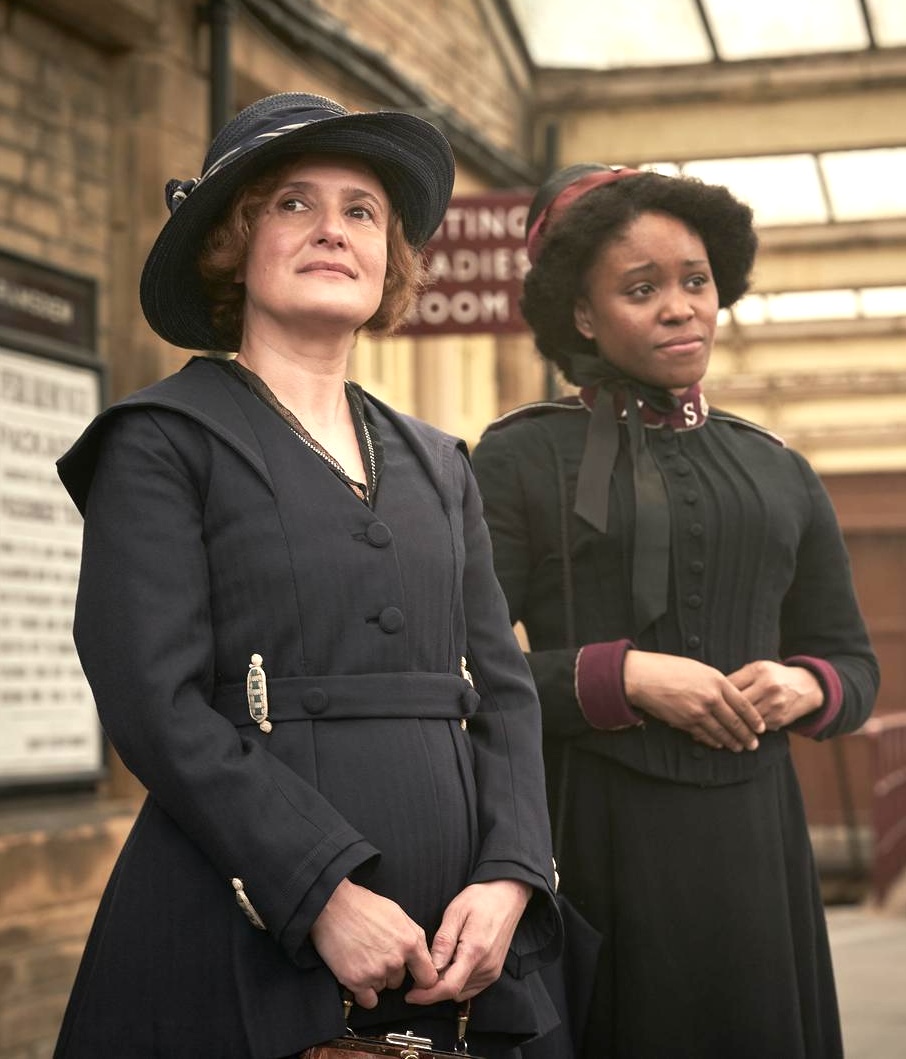
The production gradually starts to come together. When Salvation Army worker, Mary (Amara Okereke), innocently invites Sir Edward Elgar (Simon Russell Beale) along to see a rehearsal, nobody expects that he’ll actually turn up… or that he will turn out to be such a self-aggrandising bellend, maybe the one man who can stop the show in its tracks. There’s a genuine sense of jeopardy as realisation dawns.

But the element of The Choral that I find the most affecting is the depiction of the youths of the town, who use the whole enterprise as a means to meet members of the opposite sex, to have some fun and enjoy a laugh, all the time painfully aware that the clock is ticking, and that their 18th birthdays are fast approaching… along with their call-up papers.

The Choral is an engaging and melancholic piece that serves as a reminder of the awful injustice of war, and the healing power of communal art in times of tribulation.

4 stars

Philip Caveney
Predator Badlands

08/11/25

Cineworld, Edinburgh

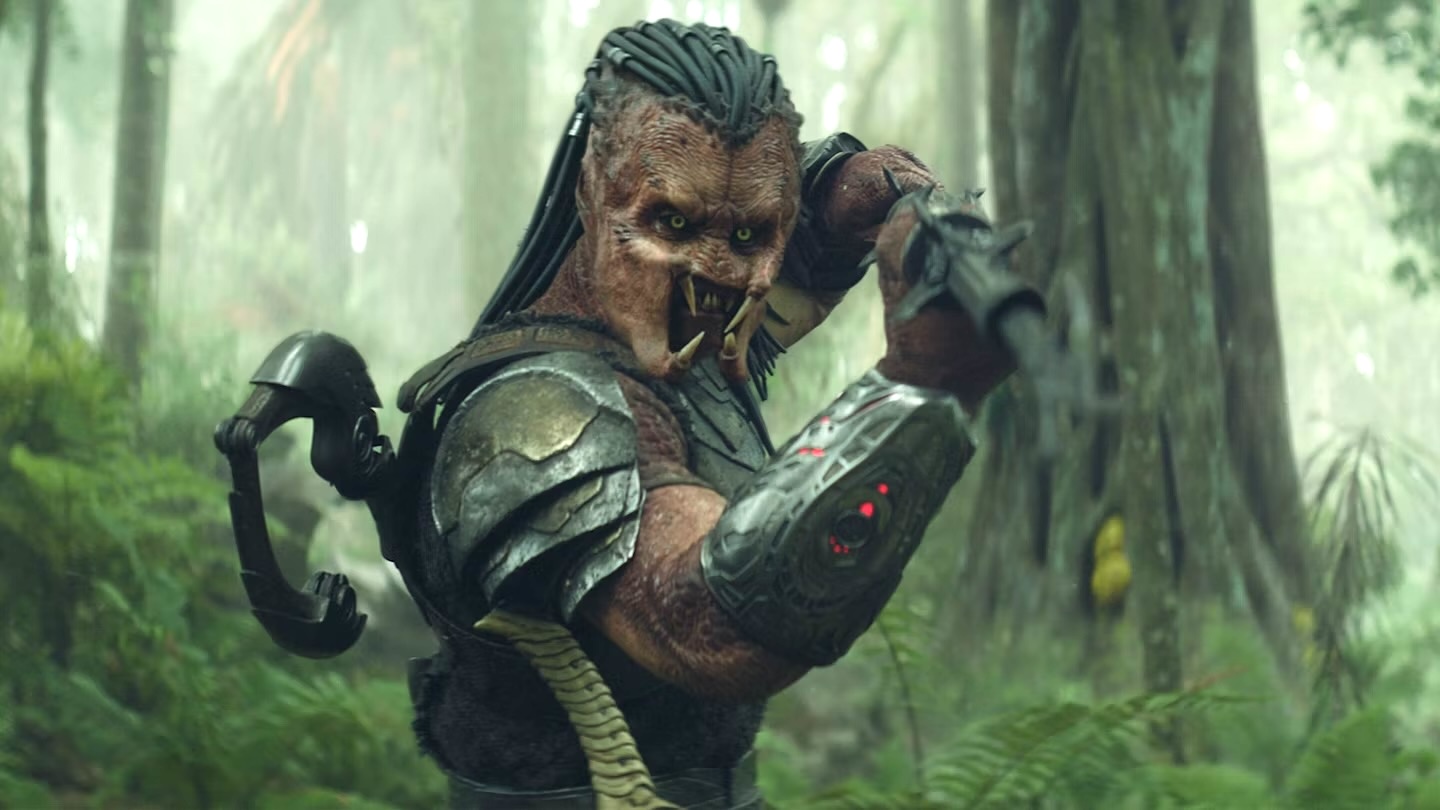
2022 was a pretty grim year for obvious reasons but one of its few bright spots was the opportunity to watch Dan Trachtenberg’s Prey on streaming. Those with long memories will remember the original Predator film, an Arnold Schwarzenegger vehicle from 1987. It introduced us to the titular alien hunter, a creature with a face like a crab doing press-ups on a mirror – and most definitely the villain of the piece. While the film was no masterpiece, it was a fun sci-fi / horror / shoot-‘em-up and it made a big splash at the box office. Inevitably there would be sequels.

Which is where the problems began. A whole barrage of them were released over the years, all inferior to the original. An attempt to combine them with the Alien franchise led to the most disappointing examples of a sorry bunch, turgid retreads of the same-old, same-old.

So when Prey was announced, my expectations were pretty low. However, Trachtenberg did something unexpectedly different with the premise, sending the whole thing back in time and pitting the villainous hunter against a bunch of Native Americans, armed only with bows and arrows, adding a compelling layer of social commentary. It worked big time. Now the pressing question is: can the director pull it off a second time?

And the answer is, yes, he can. The latest twist on the concept comes in the form of an unspoken question. What if the predator were more sympathetic?

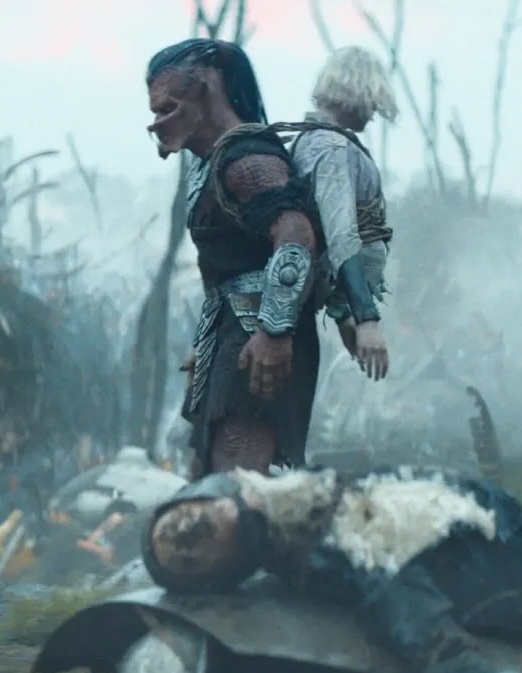
Dek (Dimitrius Schuster-Koloamatangi) is a bit of a disappointment to his father, Njohrr (Reuben de Jong). For one thing, Dek is noticeably smaller than the average Yautja warrior and nowhere near as ruthless as Dad would like him to be. In a fight with his big brother, Kwei, Dek can’t even bring himself to kill his bruv. Oh, the shame! His dad is determined to have him eradicated for this weakness but instead Dek heads off to the planet Genna with the intention of defeating the ‘unkillable’ Kalisk, thus proving himself to the old man beyond all reasonable doubt.

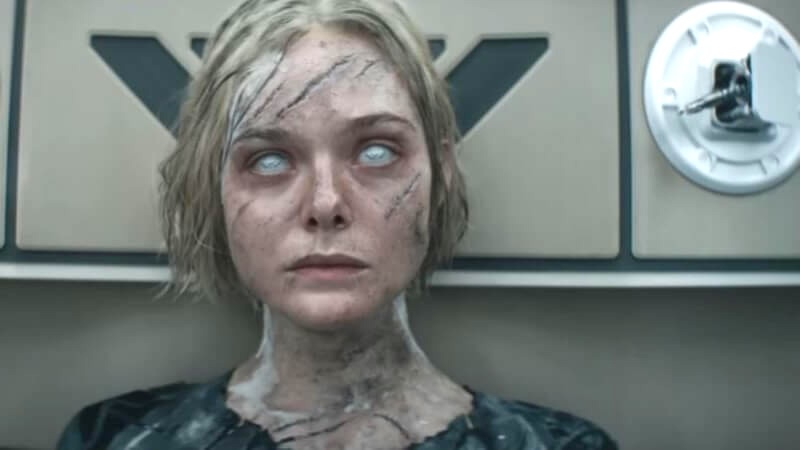
Once on Genna, Dek discovers that the place is a total death trap, featuring more predatory creatures than you could shake a plasma sword at. But then he bumps into Thia (Elle Fanning), a Weyland Yutani synthetic. Or rather, he bumps into half of her because, thanks to the Kalisk, she is now missing her lower body, though she’s determined to stay cheerful about the situation. Dek grudgingly takes her along with him, thinking that he will use her knowledge of the planet to locate the creature he is seeking. But as they travel, something unexpected occurs. He begins to care about her…

Hardcore Predator fans (apparently that’s a thing) have argued vociferously that this film has ‘softened’ the concept, but that’s fine in my book, because the interplay between Dek and Thia does make me feel for the characters in a way that even the original never managed. And for those who come to this series for the weird creatures and the rampant bloodshed, there’s still plenty of that thrown into the mix. (Weirdly, the fact that none of them is human has resulted in a 12A certificate, but the amount of carnage that goes on here feels, to my mind, more in the vicinity of a 15.)

My only real quibble is that the first fifteen minutes or so, set on Dek’s home planet, are so poorly lit that it’s sometimes hard to follow the action, but that issue is resolved the moment Dek blasts off Into space and things continue to improve as his friendship with Thia develops. I even liked Bud, a cute little alien that the duo encounter on their travels.

There are just enough elements from the Alien films here to show how blending two franchises can work seamlessly – one reference in the film’s latter stages is a particular delight (fans of Aliens will recognise it when they see it). Okay, so Predator Badlands won’t be picking up any awards at the Oscars but, for my money, this is is up there with the best films of the Predator cannon and, while you could argue that it’s a pretty low bar, it’s nonetheless a testament to Trachtenberg’s abilities that, once again, he has managed to breathe life into a dead Yautja.

4.2 stars

Philip Caveney

The Glass Menagerie

07/11/25

Royal Lyceum Theatre, Edinburgh

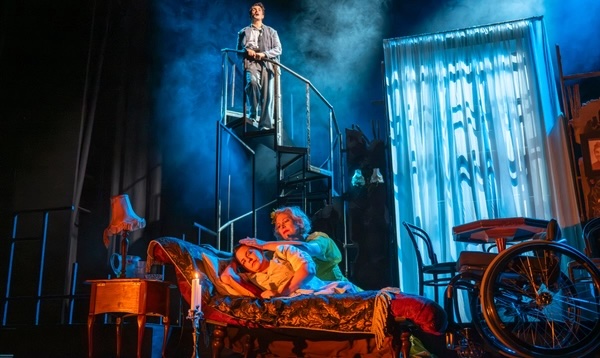
Directed by Andrew Panton, this production of The Glass Menagerie (from Dundee Rep, Citizens and the Royal Lyceum) is an altogether gentler and less histrionic affair than other interpretations I have seen – and all the more compelling for it. Emily James’ barely-there set echoes the characters’ fragility, underscoring the narrator’s opening assertion that the play “is not realistic.” The overt theatricality – the fourth-wall breaking; the exaggerated miming as the family eat a meal – paradoxically emphasises the underlying authenticity, the idea that this is “truth in the pleasant disguise of illusion”.

The time: 1937. The place: St Louis, Missouri. Our narrator is Tom Wingfield (Christopher Jordan-Marshall), and it’s no coincidence that he shares his initials with the playwright. The Glass Menagerie was described by Tennessee Williams as “a memory play,” a loosely autobiographical attempt to pin down his relationship with his emotional past – so it makes perfect sense that Tom should be an aspiring writer, desperate to escape the clutches of a dead-end job in a broken economy. He is consumed by the need for freedom in all its guises – creative, personal, sexual – bitterly resentful of his mother’s insistence that it is his duty to stay at home and provide for her and his sister.

His mother, Amanda (Sara Stewart), is the kind of fading Southern belle Williams is famous for, but – at least in this iteration – she’s less monstrous than Blanche DuBois or Maggie the Cat. This Amanda reminds me more of Austen’s Mrs Bennett: a woman made ridiculous by her desire to find a husband for her daughter, even though her zealotry makes perfect sense in a society where women are financially dependent on men. Stewart imbues Amanda with warmth and likability, while also making clear exactly why Tom finds her so intolerable.

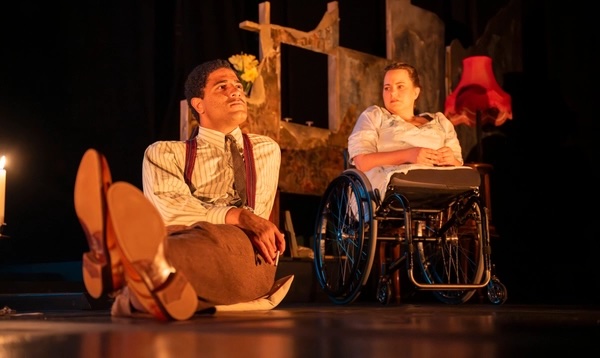
Amy Conachan’s Laura is irresistible. She is Tom’s older sister, but a combination of shyness and disability means that she is far less worldly-wise than him. In fact, they are opposites in almost every respect. While Tom finds the city too small and claustrophobic, Laura is agoraphobic, too terrified even to open the front door, let alone build a life for herself outside the home. Tom rails against his situation but Laura has ruefully accepted her lot in life, successfully side-stepping Amanda’s attempts to set her up on dates and dedicating herself to the care of her collection of delicate glass ornaments. So it’s all the more heartbreaking to see her open up to Tom’s kindly friend, Jim (Declan Spaine), only to have her hopes dashed by his smiling comment that he’d love to have a sister just like her. Exquisitely acted, the extended duologue between this pair is a real highlight for me.

The dreamy nature of the play is further emphasised by the music, liltingly performed by Spaine as the story unfolds, and Simon Wilkinson’s light design perfectly complements the ethereal atmosphere, at times illuminating the characters’ faces in such a way as to almost create cinematic close-ups, so that we’re forced to focus on their pain and misery.

This beautifully-realised production of The Glass Menagerie has only one more showing at the Lyceum, so you’ll have to be quick if you want to get yourself a ticket for tonight’s performance.

4.6 stars

Susan Singfield

Arlington

06/11/25

Traverse Theatre, Edinburgh

Rarely has the word ‘challenging’ felt more appropriate. Set in a dystopian near future, where an unexplained catastrophe appears to have afflicted the world, Enda Walsh’s Arlington plays out like some kind of enigmatic parable and, even after it’s finished, I cannot honestly say that I fully understand what it’s trying to say to me. But I do feel powerfully affected by it.

The play is divided into three distinct sections. In the first act, we meet Isla (Aisha Goodman), a young woman who has been kept prisoner in a Rapunzel-like tower since childhood and has only ever communicated with the outside world via a microphone to an unseen assistant. But now that man has gone, and The Young Man (Alex Austin) takes his place. He’s unsure of himself and clearly unfamiliar with the recording equipment, which leads to some genuinely awkward happenings and some caustically funny exchanges. He also strikes up an immediate connection with Isla, which eventually leads them both somewhere unexpected…

There’s an abrupt cut to the second part, which is essentially an extended dance sequence, performed by Jack Anderson – and this is, I think, the element that many viewers will find divisive. This is not to say that the piece isn’t brilliantly performed; indeed, it’s quite extraordinary, its central premise based (I think) on the many numbing repetitions that life imposes on us. At times, Anderson seems to virtually float around the stage, an ecstatic expression on his face, only the occasional flurry of sweat bearing testimony to the incredible effort he’s putting into this.

The dance goes on for – whisper it – twenty-five minutes – which according to your individual preferences will be either a joyful revelation or an ordeal to be got through.

And then we cut to the final section, where a bloodied Young Man has been made to take Isla’s place and is now being cruelly interrogated by a sardonic female voice. He’s also obliged to take part in humiliating gameshow-like endeavours, simply to be allowed to sleep…

Co-directed by Lucy Ireland and Jim Manganello, Arlington is ingeniously staged, the main action taking place on a raised dais with banks of surveillance equipment ranged below it. All too often I find myself watching events unfold via the monitors, drawn I suppose to the prurient nature of it. There’s also a huge projection screen behind the main stage on which images sporadically appear. These are sometimes very effective, especially an almost transcendental scene where Isla describes an imagined walk through a forest and it magisterially appears as she talks.

Each viewer will take from this play what they think its intention is. For me, it seems to confirm that, no matter how cruel and distancing the world may become, a meaningful relationship can always survive whatever onslaught is thrown at it – and that perhaps, in the end, love really is all that matters.

But I could be way off beam and, in a strange way, that is the play’s main strength. Those who like their theatre cut-and-dried may not warm to it but, long after leaving the theatre, some of the images linger in my mind’s eye, waiting for me to come up with new explanations for what they might actually mean.

4 stars

Philip Caveney
Baba

02/11/25

George Street, Edinburgh

We’re dubbing today the ‘Double-B’ – we’ve just been to Cineworld to see Bugonia and now we’re in Baba, keen to sate our hunger while we chat about the film.

Baba has been on our radar for a while. It’s part of the Scoop group, which also boasts the excellent Ox and Finch and – our favourite – Ka Pao. Like these, Baba is a fusion restaurant, this one blending Levantine cuisine with distinctly Scottish ingredients. The menu is very enticing.

After some deliberation, I decide to start with buffalo mozzarella. A generous portion of creamy cheese arrives, topped with sour cherries, harissa and basil, a flavour combo which comes as something of a revelation. It’s delectable. It’s served with pitta as standard but, as I’m in the process of working out if I have a gluten intolerance, I ask for the NGCI alternative. This takes the form of a paper bag filled with two charred slices of GF bread, which complement the mozzarella perfectly.

Philip opts for pan-fried cod cheeks, which come with prawns, merguez, butterbeans and toasted pitta. The dish as a whole is excellent, but it’s the prawns that stand out. They’re huge and wonderfully flavoured.

For our main, we decide to share a Baba mixed grill, comprising slow-cooked lamb shoulder, pork neck, chicken thigh and grilled veg, accompanied with harissa, zhug, tahini and herbs. It’s a simple dish, but the meat is tender and very well cooked, and we enjoy it immensely. We also have a side of blackened sweet potato, elevated by a mixture of saffron crème fraîche and harissa, which I’m planning to try to recreate at home.

Naturally we both want pudding. I have a dark chocolate and tahini crémeux, wiith sesame tuilles and my second helping of both cherries and crème fraîche, while Philip has a tahini cookie, with peanut praline, orange and chantilly cream. Both deliver the lip-smacking sweetness we’re craving, and we scrape our plates clean.

We leave the restaurant feeling pleasantly full, and head out into the November evening, debating whether or not to call at the Filmhouse bar for a (non-alcoholic) nightcap to round things off. Of course the answer is yes. After all, we’ve still got loads to discuss about the film, and what better place to do it?

4.4 stars

Susan Singfield

Bugonia

02/11/25

Cineworld, Edinburgh

Yorgos Lanthimos must qualify as one of the hardest-working directors in the business – and one of the most consistently brilliant. Since his breakout with The Lobster in 2015, he’s unleashed a whole string of knockout films and, as I’ve observed elsewhere, he has the gift of turning the wildest, most experimental ideas into palpable hits at the box office. If, in its opening scenes, Bugonia seems like his most straightforward story yet, don’t be fooled. Eyebrow-raising revelations are waiting an hour or so further down the line.

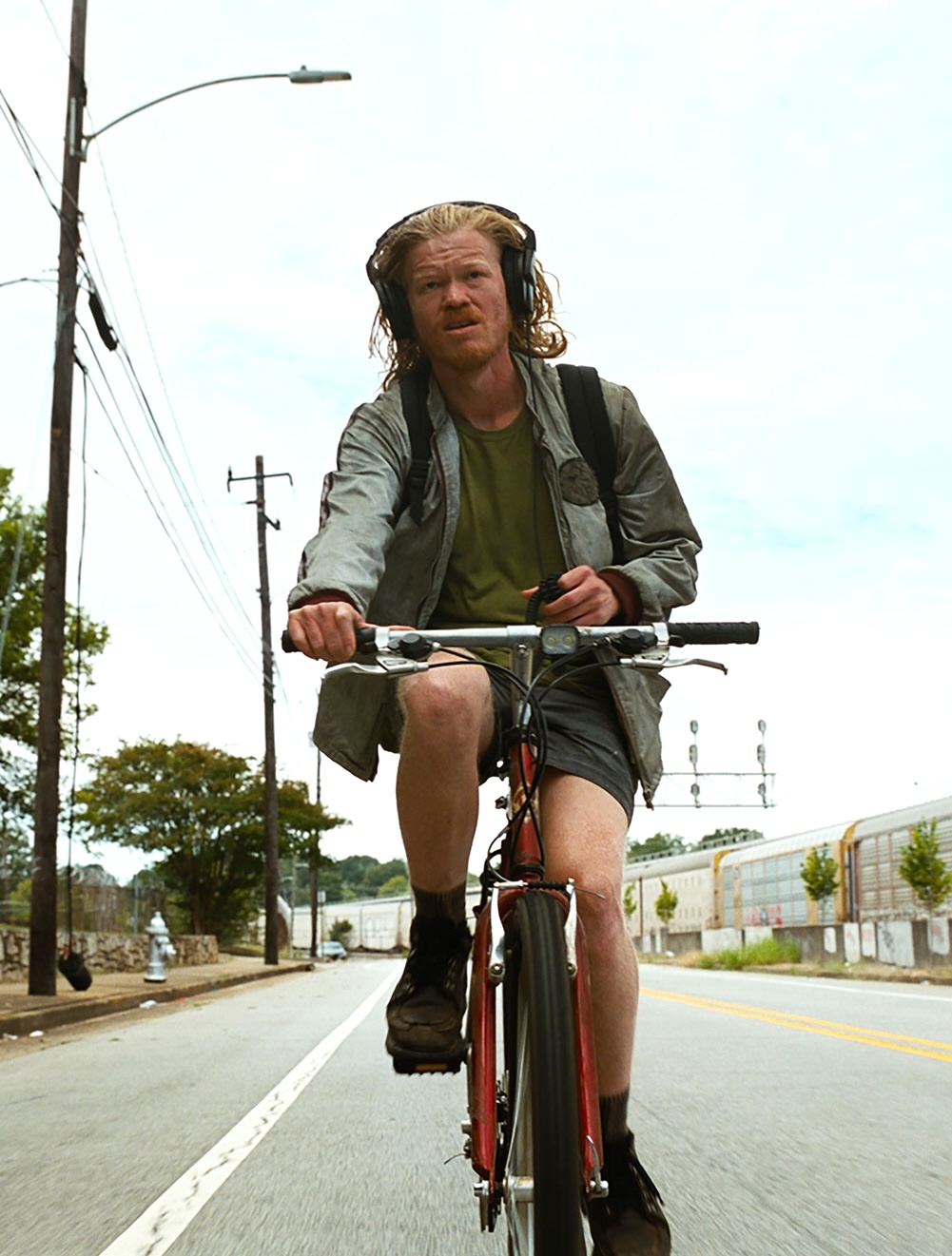
Michelle Fuller (Emma Stone) is the CEO of pharmaceutical megacorporation, Auxolith, located in an unspecified area of the USA – though surprisingly, much of the film was actually shot in and around High Wycombe. As she goes about her business, she’s blissfully unaware that her movements are being studied by Teddy Gantz (Jesse Plemons), a lowly worker at her company’s packaging warehouse.

In his spare time, Teddy studies internet conspiracies and has come to the conclusion that Michelle is actually an ‘Andromedan’ – an alien creature responsible for many of the problems currently facing humanity. She’s also indirectly responsible for the plight of his mother, Sandy (Alicia Silverstone), who is on life support after being used as a test case for one of Auxolith’s experimental drug projects. Worst of all, in Teddy’s mind, is the fact that Michelle is also directly responsible for the decline of the honeybee, which is key to the world’s survival.

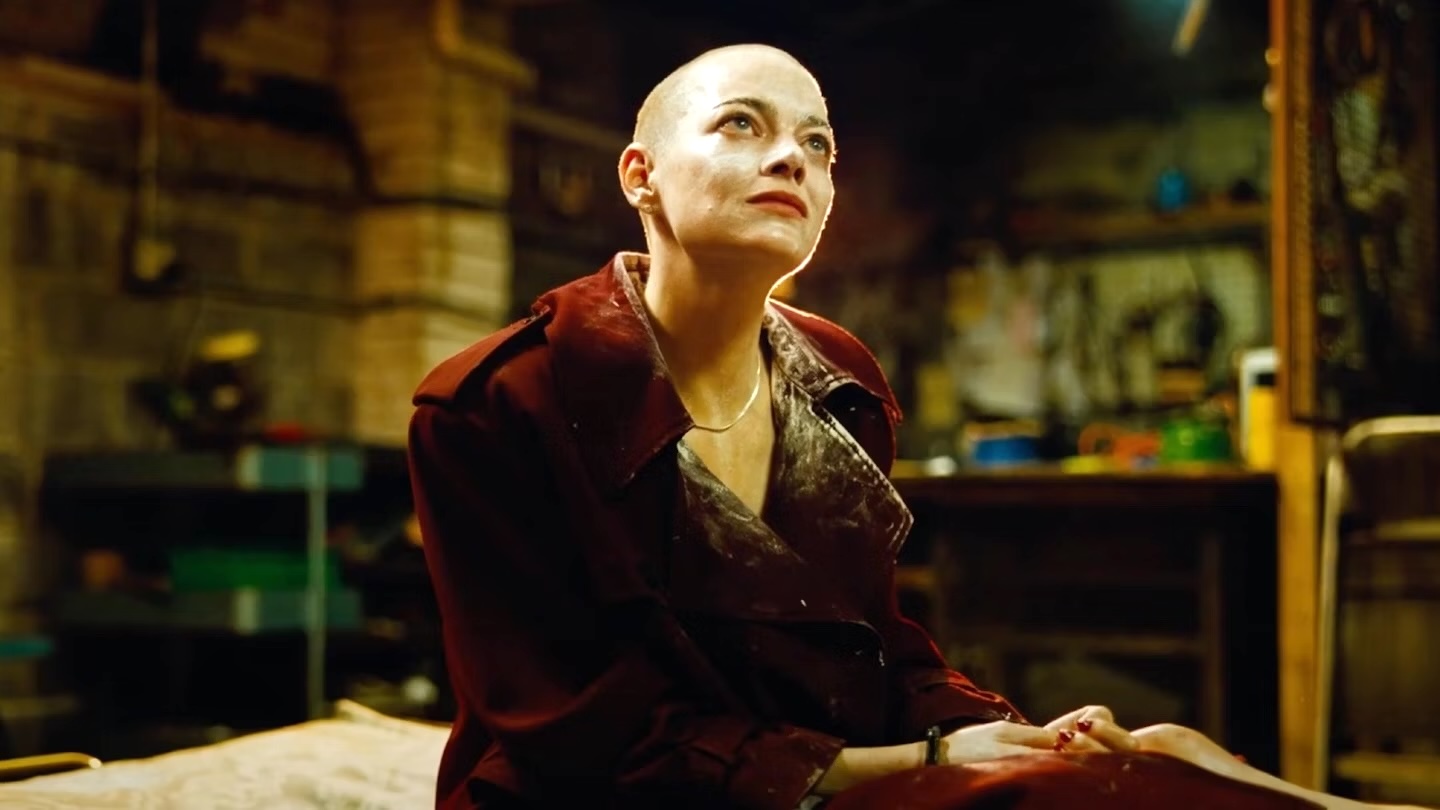
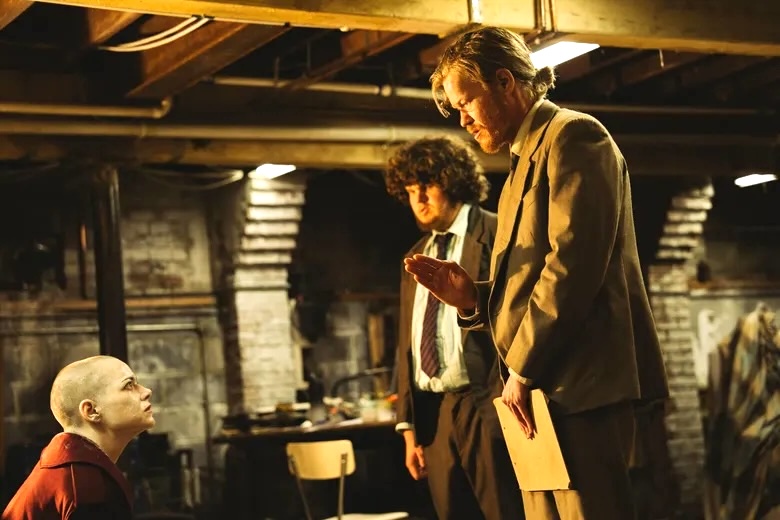
Assisted by his vulnerable cousin, Don (Aiden Delbis), Teddy kidnaps Michelle and the two men take her to their ramshackle home in the middle of nowhere. They take the precaution of shaving her head and covering her with antihistamine cream – to prevent her from contacting her ‘mothership’. Teddy wants to use Michelle as a bargaining tool with the Andromedan Emperor, so he can negotiate freedom for the human race. But first, Michelle must be interrogated…

It would be a crime to reveal any more about the plot but, once again, I find myself marvelling at Lanthimos’s ability to manipulate me as a viewer, leading me first in one direction, then in an entirely different one before dashing all my assumptions. There are moments here where I have to restrain myself from gasping out loud. Inspired by Save the Green Planet by South Korean filmmaker, Jang Joon-hwan (which I haven’t seen), Bugonia has been adapted by Will Tracey and, in its latter sections, incorporates elements of a high-stakes thriller as Michelle is obliged to use all her considerable skills to stay alive.

Both Stone and Plemons are utterly captivating in the central roles and it’s easy to see why they’ve become members of Lanthimos’s repertory theatre – while there’s something utterly adorable about Delbis as the hapless Don, unable to challenge the commands given to him by Teddy, even when it’s evident that they disgust and confuse him.

But the film’s true triumph is only revealed in a final extended sequence, where Lanthimos brings all the different strands of the story together to create a shattering, thought-provoking conclusion. The director has announced that he’s ‘taking a rest’ after this and, following a run that includes The Favourite, The Killing of a Sacred Deer, Poor Things and Kinds of Kindness, I’d say he’s definitely earned one.

5 stars

Philip Caveney

All of You

01/11/25

Apple TV

Simon (Brett Goldstein) and Laura (Imogen Poots) are best friends, who spend much of their time together, drinking and chatting shit in trendy London bars and nightclubs. From the moment we first encounter them, it’s pretty clear that they are just made to be a couple – but in the slightly futuristic world in which they dwell, the latest craze is a simple test that can identify the person who is your ‘soulmate.’ Simon is pretty cynical about the idea, but is prepared to pay the substantial sum for Laura to take the test and discover who her perfect match might be.

Then the story jumps forward several years. Laura is now married to Lukas (Steven Cree) – the affable and thoroughly likeable Scotsman who was identified in the selection process – and she’s pregnant with his child. But a complication has occurred and the only person handy to drive her to the local hospital is her old mate, Simon.

As the story continues in a series of flash forwards, it’s clear that at every stage, he’s still in thrall to Laura, ready to drop everything whenever she snaps her fingers – and, eventually, the inevitable consequence occurs…

All of You, co-written by Goldstein with director William Bridges, is a clever slice of minimalist cinema, one which trusts its audience to work out exactly what’s happening in each successive scene. Aside from the obvious flourishes – Goldstein’s beard varies in length from shot to shot – it also manages to convey more subtle changes in the characters as they grow older, amplifying those traits that are set in stone. It also features some fabulous locations around the UK.

Both Goldstein and Poots embody their roles with skill, hinting at the awful tragedy that lurks behind their jokey, smart-arse demeanours. From the word go, it’s clear that a reckoning is coming… but how and when will it occur?

If there’s a problem here, it’s that most viewers will (like me) think that one of the central duo is being a coward of the lowest order – I’ll leave it to you to decide which one that is – but it doesn’t make the eventual conclusion any less tragic. This Apple Original film didn’t qualify for a theatrical release but, for those with the appropriate subscription, it’s worth checking out. While it doesn’t exactly reinvent the wheel, it’s fresh enough to keep you hooked to the final frame.

3.6 stars

Philip Caveney