Tenet

The Creator

30/09/2

Cineworld, Edinburgh

Director Gareth Edwards made an impressive feature debut with Monsters in 2010, but followed it with a lacklustre Godzilla reboot and, in 2016, an underrated Star Wars standalone, Rogue One. The Creator marks a significant step up for him. This epic sci-fi adventure is set on a war-torn planet Earth in the year 2070 and its story – about the struggle between humans and AIs – could hardly be more topical, particularly as Edwards (who co-write the screenplay with Chris Weitz) takes it in an entirely unexpected direction. Who are the bad guys in this story? Wait and see.

Twenty-six years after a nuclear explosion has ravaged Los Angeles, Joshua (John David Washington) is an American Army operative, working under deep cover amidst AI forces, who are based in New Asia. He’s fallen in love with and is married to enemy scientist, Maya (Gemma Chan), which is complicated to say the very least, particularly as she’s now pregnant by him. But when the mission goes badly awry, Maya is caught in the crossfire and Joshua only just manages to escape with his life.

Some time later, he’s approached by Colonel Howell (Alison Janney), who has compelling evidence that Maya is still alive and wants Joshua to join a new mission to hunt her down. What’s more, she assures him, Maya is deeply involved in the creation of a new AI ‘super weapon’, something that American forces are desperate to eradicate. Sensing an opportunity to be reunited with his wife, Joshua agrees to the mission – but when he comes face to face with the new weapon, he is understandably bewildered. Alphie (Madeleine Yuna Voiles) is a child, possibly the most adorable-looking creature in the universe – and she may even contain Joshua’s own DNA.

What ensues is a fabulous slice of world-building, a series of breathless action sequences set against majestic eastern landscapes. There may be a little too much gunplay here for some – and the 12A certificate means that punches are occasionally pulled to try and constrain all that violence – but it’s impossible not to be swept up in the steadily rising suspense, as Joshua desperately tries to get Alphie to safety.

The Creator looks like a big expensive project but Edwards has brought the film in for a comparatively miserly eighty million dollars (it sounds like a lot but is a third of what these sci-fi extravaganzas usually cost). What’s more, the story, which sounds like broad strokes on paper, is considerably more nuanced than most sci-fi adventures and I find myself constantly impressed by the film’s invention, the grubby reality of the AI creations that populate this imagined world. Edward’s script fearlessly challenges our expectations about America. The usual Hollywood message is completely subverted and the age-old macho-saviour complex revealed as a toxic sham.

John David Washington makes a compelling hero (and, after Tenet, he must be relieved to star in a film that viewers can actually understand), while Madeleine Yuna Voiles is quite simply mesmerising as Alphie. If you like action and you like sci-fi, chances are you’ll enjoy The Creator. And happily, you won’t have to pay fifty million dollars to see it.

4.4 stars

Philip Caveney
Oppenheimer

22/07/23

Cineworld, Edinburgh

What do you do the day after you’ve seen Barbie? You watch Oppenheimer, of course, because some bright spark has decided that, as these two completely disparate films share the same release date, they shall henceforth be known as Barbenheimer. Well, fair enough. I’m just pleased to see the cinemas bustling again, which at least gives me some hope for their future. And I have the sense to see the films over two days, rather than as a bizarre double-bill.

Where Barbie was lighthearted and vivacious, Oppenheimer is deadly serious stuff, a biopic of the man who gave humanity the atomic bomb, along with the distinct possibility of destroying the planet we inhabit. Furthermore, with a running time of three hours, it’s clear that director Christopher Nolan wants us to ponder the titular character’s life in some considerable detail.

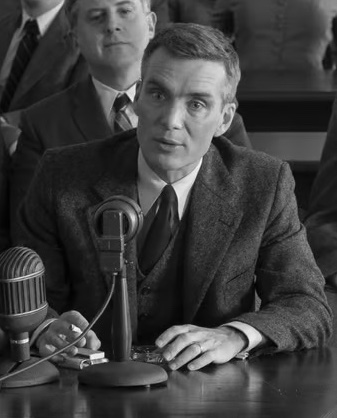
Nolan – still smarting, no doubt – from the underwhelming critical response for his previous offering, Tenet, has pulled out all the stops here, choosing to shoot the film using IMAX cameras. This at first seems an odd decision for a film where men in suits talk about physics but Nolan constantly cuts away to dazzling optical displays of nuclear fission, fizzing and popping like surreal fireworks, and there are impressive recreations of Los Alamos in New Mexico.

Ludwig Göransson’s score also impresses though it occasionally underpins some quite complicated dialogue (just as it did in Tenet) and I find myself wishing it would pipe down a bit. Just saying.

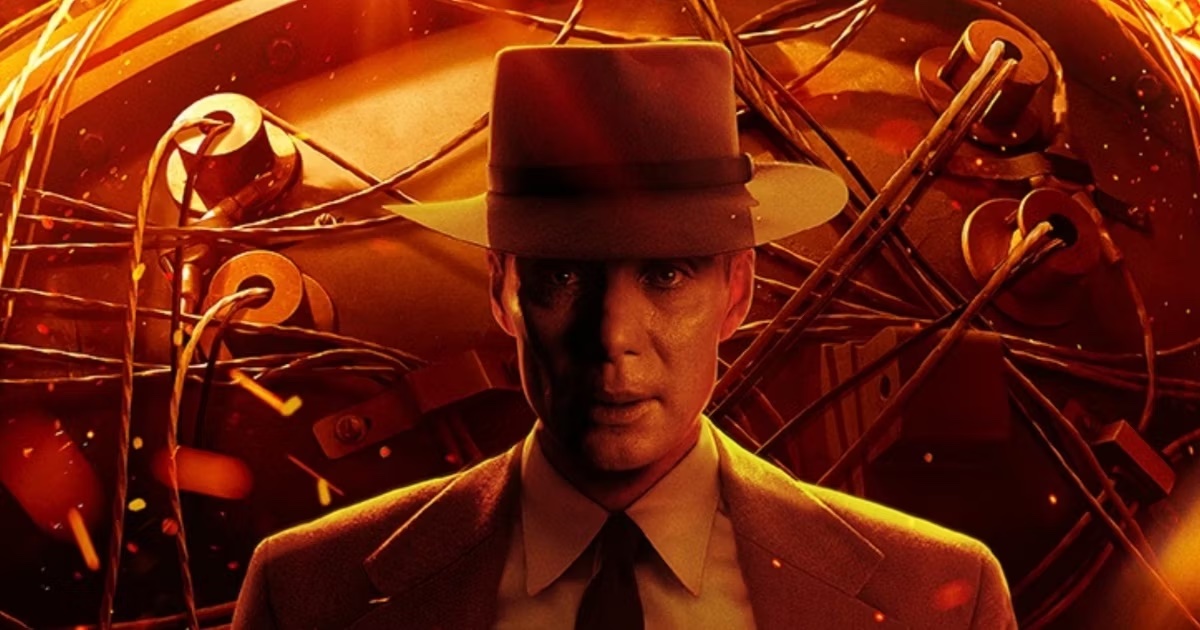
Cillian Murphy plays J. Robert Oppenheimer with considerable presence, managing to portray him convincingly at various stages of his life, from wide-eyed young student of physics to embittered elder statesman. Emily Blunt is quietly impressive as his wife, Kitty, and Robert Downey Junior is delightfully devious as Lewis Strauss, the man who sets Oppenheimer on the path to his ultimate destiny. The film boasts a massive cast that positively bristles with A listers, so many it feels pointless to mention them all – but I’ll make an exception for the assured performance of Matt Damon as Lt General Leslie Groves, the man who appointed Oppenheimer to oversee the Manhattan Project.

The screenplay, written by Nolan, sweeps confidently backwards and forwards through Oppenheimer’s chronology, never confusing and constantly throwing out disturbing questions about the nature of mankind’s eternal hubris. The potential danger that the complicated science might be hard to follow is not allowed to become a problem.

Ultimately, the central character emerges as a martyr, a brilliant man encouraged and seduced by the powers that be, then rejected and used as their scapegoat. Murphy’s chiselled features seem to stare out of that giant screen as if appealing for understanding for the torture he’s going through, the awful weight of responsibility resting on those narrow shoulders. I know little about Oppenheimer before I see this film and am now fascinated to learn more.

Oppenheimer keeps me hooked throughout and sometimes does the near impossible, creating suspense for an event I already know the outcome of. While this doesn’t quite measure up to Nolan’s finest work, it’s nonetheless an impressive film that deserves the plaudits it’s receiving.

And if it isn’t quite as assured as it’s shocking pink stablemate, well, this is a much tougher tale to tell… and a harder one to stomach.

4.4 stars

Philip Caveney

No Time to Die

06/10/21

Cineworld, Edinburgh

My first Bond film was everyone else’s first Bond film. Dr No.

It was 1962, I was eleven years old, sitting in a cinema in Singapore, and I remember being suitably dazzled by the experience. I’d honestly never seen anything quite like it before. I was probably a bit too young but, back then, nobody seemed to care too much about asking for your ID. After that, I considered myself a genuine Bond fan. From Russia With Love (still in my humble opinion the best in the series), Goldfinger, Thunderball… you know the rest. I think I saw every one of them, even after Sean Connery had jumped ship and the character went through more changes than Dr Who. I disliked Roger Moore in the role (too affable) but still watched the movies – and I reacted with various degrees of approval and bemusement as new incarnations appeared over the years.

I thoroughly approved when Daniel Craig delivered a great big kick up the franchise with 2006’s Casino Royale – even though the suspicion lingers that Eon Films had simply studied the Jason Bourne movies and borrowed some of its action tropes. Still, the series continued to have traction and 2012’s Skyfall ranks as one of the biggest earners of all time. So there’s no denying the Bond films’ longevity, nor the simple fact that, where Tenet failed to put bums back on seats, NTTD appears to be succeeding.

And now here we are, a full two years after its projected release, and No Time to Die marks Craig’s swan song as the world’s most successful secret agent. Little wonder so much hope has been pinned on 007’s return and little wonder too that the advertising preceding the film seems to go on for just about forever.

We (finally) begin in time-honoured fashion with a pre-credits sequence. A little girl is terrorised by a sinister masked villain in a snow-bound location. Years later, that little girl has grown up to be Madeleine Swan (Léa Seydoux) and she and Bond are enjoying a passionate love affair in a very picturesque part of Italy. But of course, we know, don’t we, that such happiness can’t go on for very long?

Visiting the grave of old flame, Vesper Lynde, Bond is lucky to survive an explosion – and then there’s a succession of breathless action sequences featuring cars and motorbikes and a leap from a bridge that would be ludicrous if some poor stuntman hadn’t actually had to do it for real. It’s perfectly timed, brilliantly executed, a joy to behold.

But then of course, comes that familiar theme music and the realisation that we’ve still got an entire film to sit through. Quite why that film has to be two hours and forty-three minutes long is a puzzle. Trim thirty minutes out of this sucker and you’d have a triumphant action flick, but hey, swan songs can’t be dismissed too lightly, and it has to be said that there’s still plenty here to enjoy. It’s clear from the get-go that a lot of holy cows are being slaughtered in the process. Long-running characters are summarily handed their termination notices, old preconceptions are briskly upturned and you can’t say that Eon haven’t done their level best to drag the old misogynist kicking and screaming into the twenty-first century. A black female 007? That would never have happened under the old guard’s watch. There are also some wry observations about Bond’s age and the more keen-eyed viewer will spot references to classic moments in earlier films.

Some of the familiar problems still linger. Villain Lyutsifer Safin (Rami Malek) may have sound reasons for wanting to inflict a deadly virus on his enemies but why does he feel the need to unleash the same punishment upon the entire world? And why is it still considered fair game to equate facial disfiguration with such evil?

But there are some surprises too. I have to admit that I really don’t see the final twist coming. And quite what happens from here is anybody’s guess. There are plenty of people saying that it should simply end, but given the potential earnings that a new Bond could generate, I’ll be very surprised if it does.

Maybe it will simply have to Die Another Day.

4.2 stars

Philip Caveney

Tenet

26/08/20

You have to feel a wee bit sorry for Christopher Nolan. He is the first film director of stature to pop his head above the parapet post-lockdown, and so Tenet has the daunting task of being the flag bearer, the film expected to tempt cinema-goers back into the multiplexes en masse. Both the Bond franchise and Disney’s Mulan, have recently baulked at the responsibility and who can blame them?.

Interestingly, it’s a Bond movie that most springs to mind watching Tenet, though it would be 007 On Acid, given that its plot elements are so incomprehensible, I feel singularly unqualified to say much about them. (Sadly, I don’t possess a PHD in quantum physics.) Suffice to say that Nolans’s regular obsession with time (and the manipulation of it) are taken to their ultimate conclusion here. The result is mind bending – and not always in a good way.

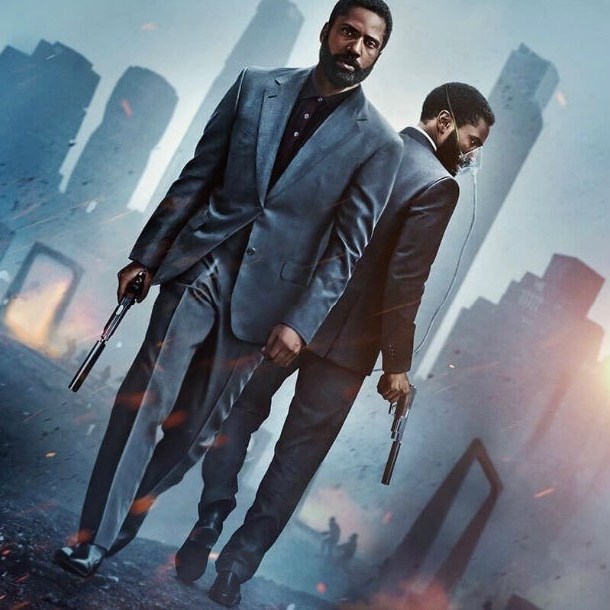
The hero of the film, a CIA operative known only as The Protagonist (John David Washington), is first encountered as a member of a team carrying out a (frankly baffling) assignment in the Kiev Opera House. After that, he is recruited for a special assignment, which is referred to only by the palindromic title and a certain hand gesture. It’s all about the reversal of time or, as one character puts it, ‘entropy’. What ensues is a whole series of action set-pieces, where fights, car chases and even explosions can run forwards or backwards – often simultaneously.

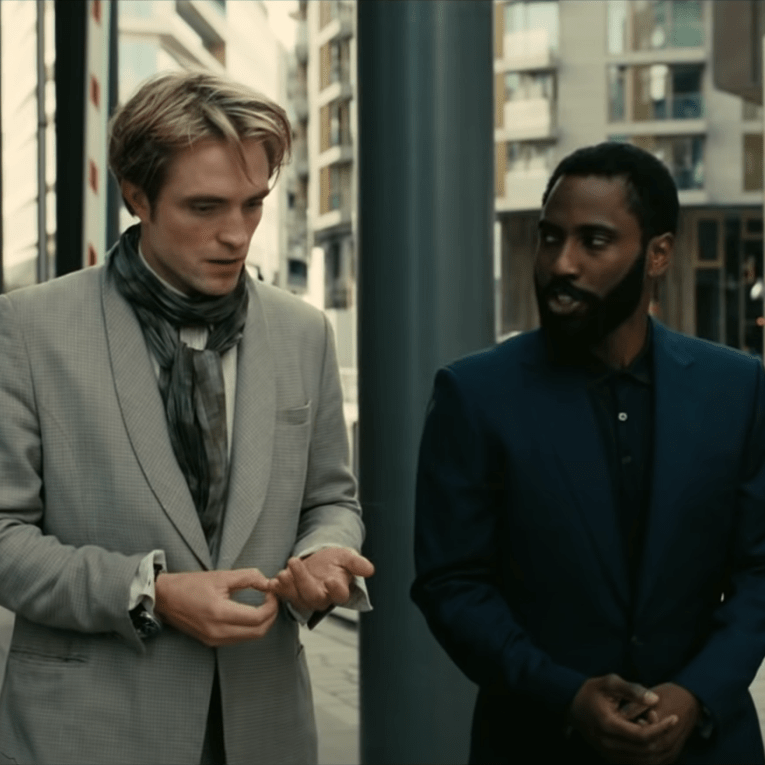
The Protagonist soon finds himself teamed with the more modestly monikered Neil (Robert Pattinson) and, shortly after that, becomes increasingly enmeshed in the lives of the enigmatic Kat (Elizabeth Debicki) and her husband, power-mad Russian arms dealer, Andrei (Kenneth Branagh). Andrei, it seems, has the power to end the world as we know it, and The Protagonist has been handed the job of putting a stop to his shenanigans – so, no great pressure there…

There’s no doubting the sheer scale and ambition of this work and there’s certainly plenty of brain-scrambling action on offer, but Nolan doesn’t do himself any great favours with the complexity of the plot and the fact that much of the expository dialogue is obscured by an overly intrusive soundtrack, courtesy of Ludwig Göronsson. Washington doesn’t really have the opportunity to emote enough for us to care what happens to him, while Branagh’s snarling, bellowing Andrei veers dangerously close to caricature. Debicki is good though, and Pattinson manages to exude a suave, laidback charm, which helps no end.

I find myself alternately enjoying parts of this and feeling frustrated by others. While I’m generally the last person to favour ‘easy’ stories, I’m not convinced that this is the kind of material designed to tempt Joe Public back to the cinema – though I also have to add that it did feel wonderful to be back there, even if this isn’t the best Christopher Nolan film ever (that would be The Prestige, by the way. Thanks for asking).

If you’re looking for something big, loud and packed with action, Tenet is probably the logical choice – just don’t expect to understand everything you see.

3.8 stars

Philip Caveney