
26/11/26
Assembly Roxy, Edinburgh
If there’s a better way to spend my lunch time than watching a play, I’ve yet to find it. As A Play, A Pie and A Pint approaches the end of its winter season in Edinburgh, we’re at the Assembly Roxy for this year’s penultimate show, determined to enjoy the good times while we can.
Because nothing lasts forever. In the near future, alone in a wrecked and looted Kelvingrove Museum, seventy-one-year-old Man (Stevie Raine) is facing the end of his extended prime. Up to now, he hasn’t had to deal with the iniquities of growing old. No arthritic joints, memory loss or waning libido for him! Despite the disapproval of his family and friends, he’s been indulging in the latest wellness trend: having blood transfused from a young donor. He intends to live long and prosper.
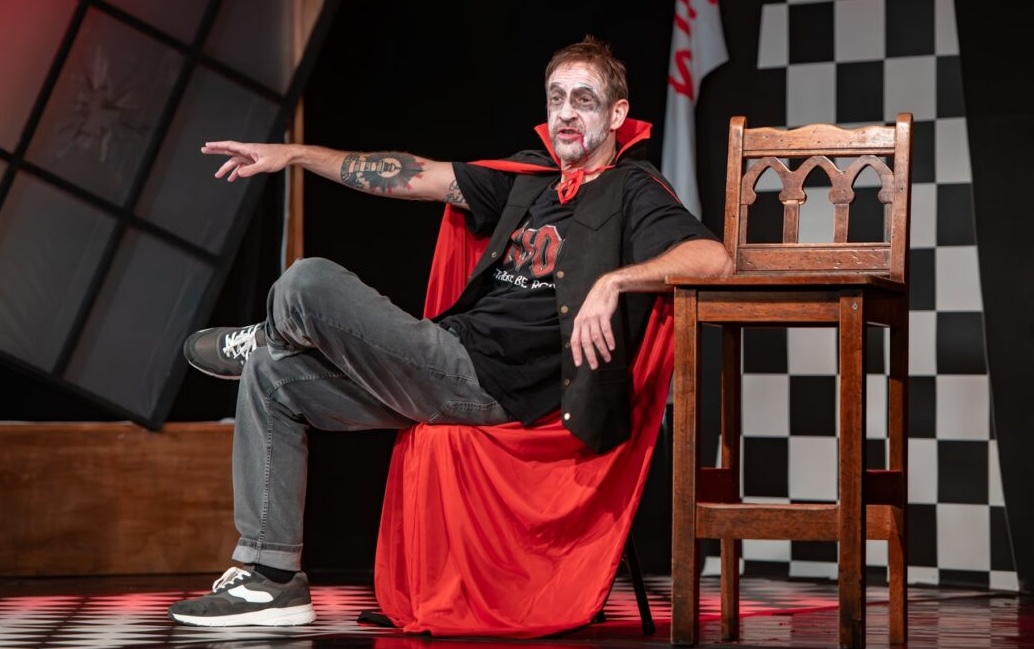
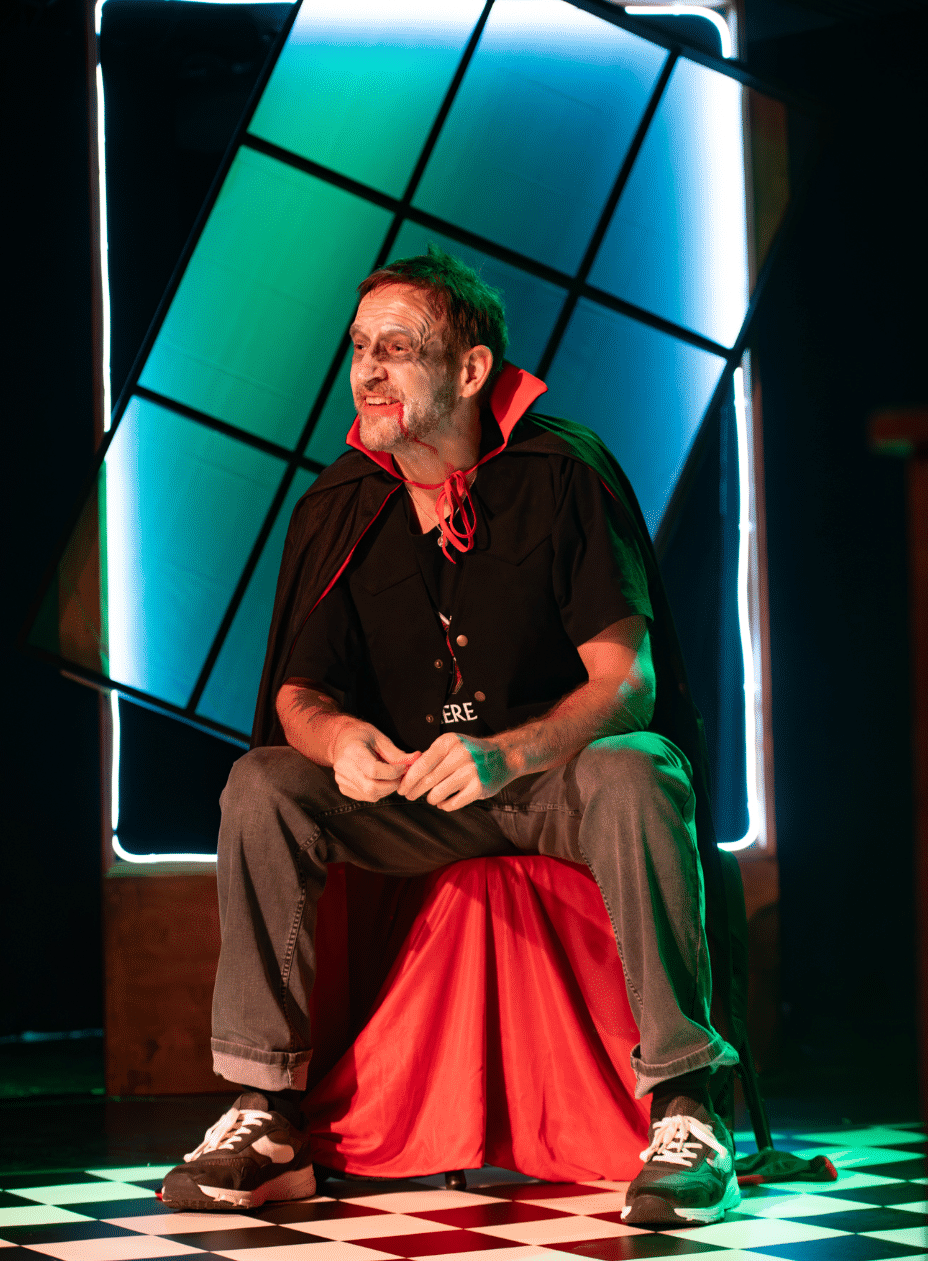
The allegory is as thinly veiled as Man himself (who has come to the museum’s centennial screening of Bela Lugosi’s Dracula dressed as the eponymous vampire, wearing a cheap cloak he bought from Amazon). The old are bleeding the young dry. It’s time they made way for a new generation…
Raine’s performance is impressive, delivered with energy and passion, making us care for the character despite his Erzsébet Báthory tendencies. Director Lesley Hart succeeds in making the piece kinetic, no mean feat with a script that is more first-person short story than dramatic monologue.
Playwright John Maley’s premise is strong: at what point will the youth rebel against a system that routinely exploits them and ignores their needs? In this speculative tale, generational conflict is pushed to its limits, the elderly asked to consider their complicity in societal inequality. I like the fact that, despite being an almost literal blood-sucker, Man is not a cartoon baddy. The largely middle-aged (and upwards) PPP audience can easily relate to him, especially as Maley starts off gently, using observational comedy to get us onside. We know all too well what it’s like to see a lined face in the mirror, to feel our knees protesting when we go for a run (if we can still run at all). Of course we could be tempted by a simple procedure promising to restore our erstwhile energy…
But at what cost?
I like the fact that Making Way avoids the trap of blaming the older generation for things outwith their control, while still confronting them (us) with some absolute truths about how poorly we are serving our young. However, I think there’s scope here to raise the stakes. We know that Man’s family disapproves of his parasitic habit but the consequences of their opprobrium seem to be minimal. Likewise, Man’s financial situation is described as ‘middling,’ which means he can’t afford to buy high quality blood. Are there any ramifications to settling for a cheaper option? I’d like to see some of these ideas explored in more depth, intensifying their impact.
Heather Grace Currie’s minimal set works really well: the stark black, red and white colour palette reinforces the play’s themes, and the cracked window and creepy artworks help to create a palpable sense of threat.
Making Way poses one of the most vexed questions of our time: in an ageing world, how do we make things fair for young people? We’re not offered any easy solutions (except, perhaps, don’t steal their blood) but we are warned of the consequences if we don’t find some answers soon.
3 stars
Susan Singfield

