30/10/26
Assembly Roxy, Edinburgh
The Assembly Roxy’s Downstairs theatre has been reconfigured for tonight’s event. We arrive just ten minutes before curtain up but no one’s been admitted yet. We join the other audience members hanging around the bar area and try to avoid the urge to peep behind the black curtain that’s separating us from the stage.
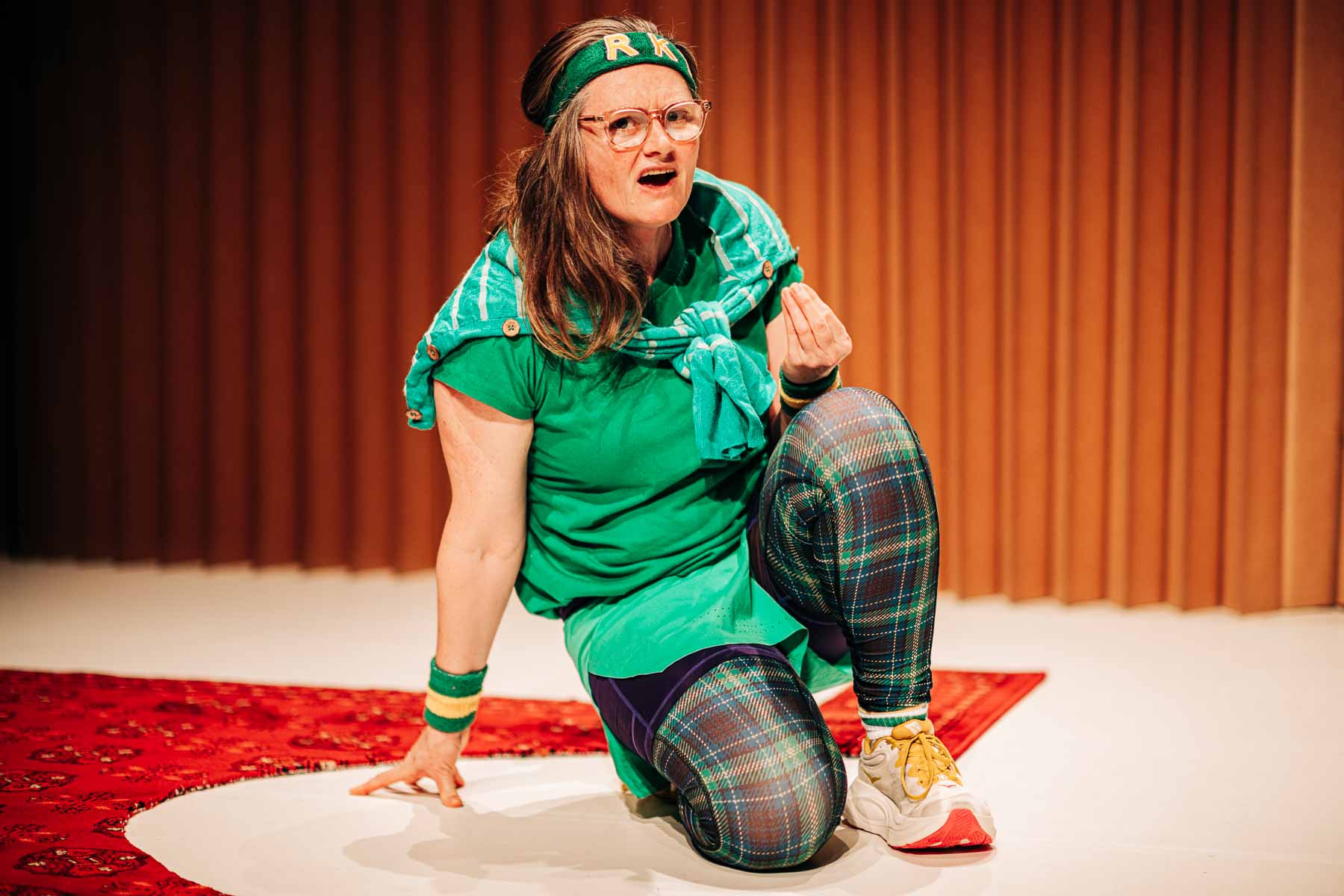
Suddenly, writer-performer Skye Loneragan appears, dressed in gym leggings and clutching a yoga mat. She tells us to follow her and so we do – around the outside of the curtain into a temporary corridor. Here, she reveals that the mat is in fact a red carpet. “It’s for you,” she says, rolling it out. The word ‘gratitude’ is printed on it. She tells us all the things she’s grateful for.
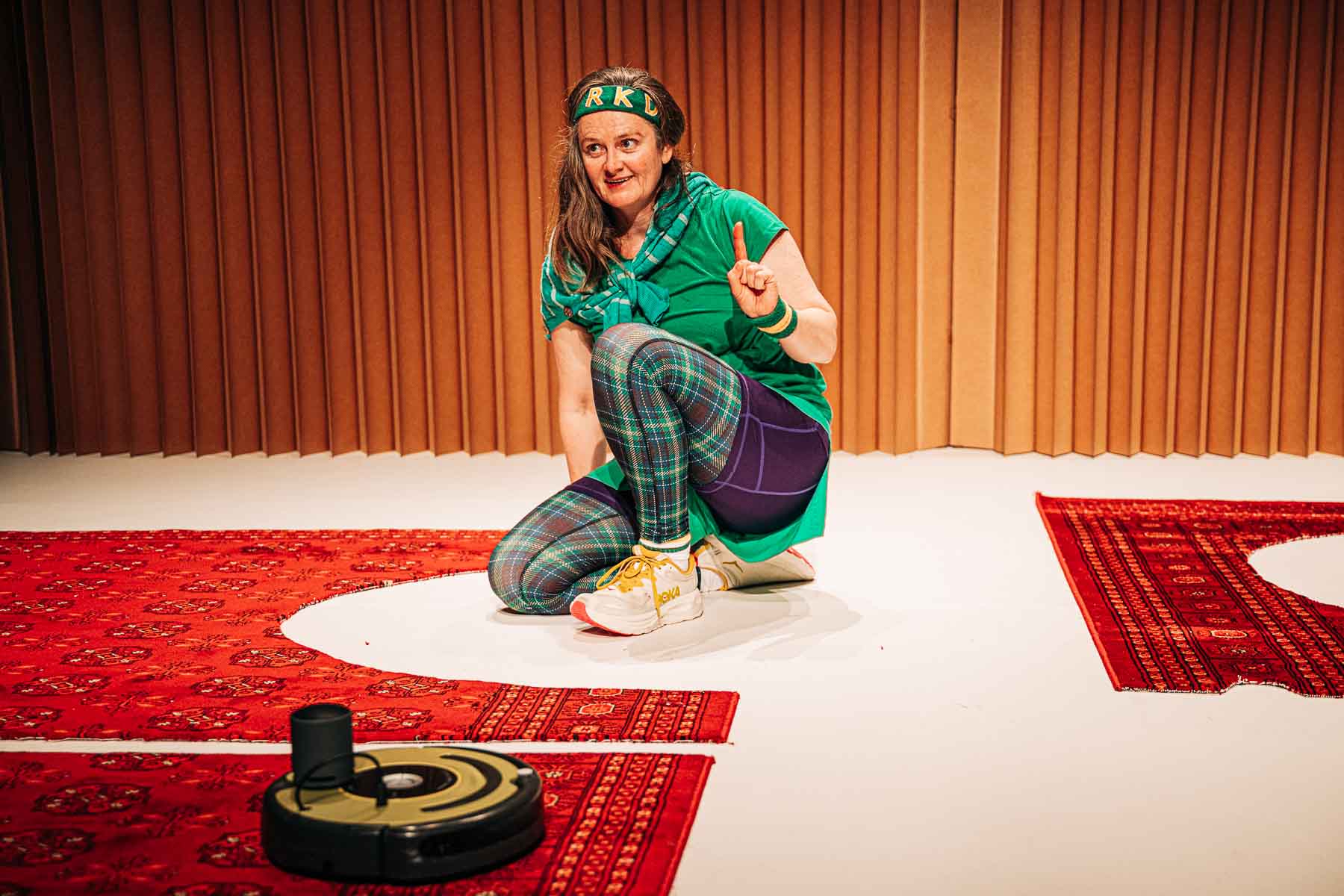
And then the curtain is pulled aside, the red carpet moved (we don’t get to walk on it after all) and we’re led inside. The square-shaped performance space has a single row of seating around three of its sides, and a set comprising a cardboard concertina backdrop and a large rug with strange patterns cut out of it. I’m intrigued.
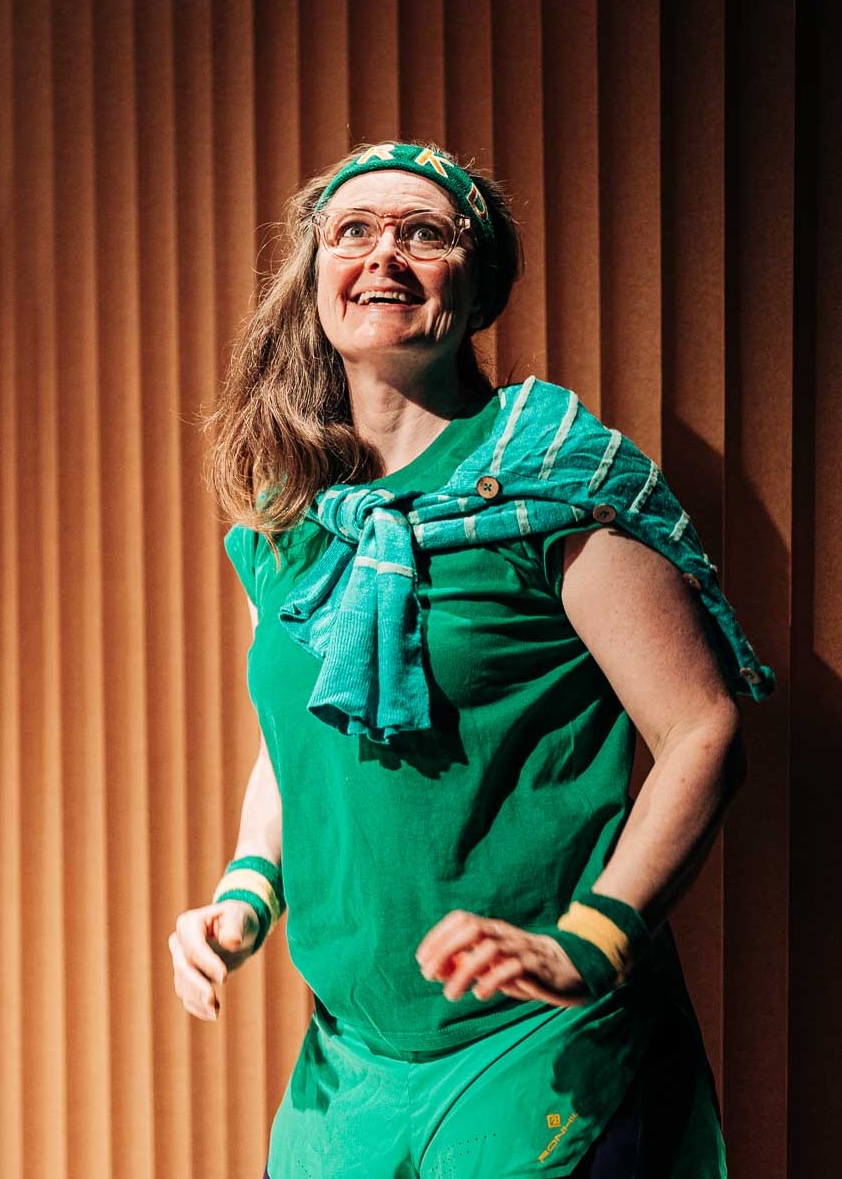
Directed by Stewart Ennis, the piece is part of the Scottish Mental Health Arts Festival, and its premise is quirky and engaging. The Olympic Games have added a new category, Coping Strategies, and SkyeC (an Australian) has been selected to represent Scotland. She’s a Registered Kitchen Dancer, who uses her untrained capers as a mechanism to help her deal with her problems. The trouble is, it doesn’t really seem to work… Like Shirley Valentine before her, SkyeC is reduced to talking to inanimate objects, although things have moved on since the 1980s, and – unlike Shirley’s wall – SkyeC’s Roomba can actually reply.
SkyeC has a lot to contend with. Her tiny, cramped flat is full to bursting. Her husband is working from home and must not be disturbed. Her mother is in another room, making querulous demands. There’s a daughter, who’ll need picking up from school shortly, and someone else (another relative?), who’s been sectioned and phones to plead with Skye to get them out. As if that weren’t already too much, there’s a film crew too, here to record Skye’s Kitchen Dancing routine.
She’s just hoping they don’t know about the online furore that’s led to her being cancelled…
There are a lot of interesting ideas here, but many of them feel under-explored. It’s all very scattershot and I can’t help feeling a more traditional story arc would improve things enormously, allowing the tension to build and the revelation about SkyeC’s cancellation to serve as a pay-off.
Apart from the narrow corridor to the mother’s room, I don’t really get a sense of the cramped space SkyeC performs in. She tells us about low ceilings and crawl spaces, but doesn’t realise them physically. In addition, the film crew seem to appear and disappear, so that I’m never fully convinced they’re actually there.
All in all, Kitchen Dancer has the kernel of a good idea but – in its current guise – it’s under-developed. I’d love to see a version of this where I feel fully immersed in SkyeC’s world and can really empathise with her situation.
3 stars
Susan Singfield