16/11/26
Apple TV
I’ve never heard of Judith Heumann until I see trailers for Oscar-winning writer-director Siân Heder’s third feature – but I’ve certainly seen the results of her activism: the dropped kerbs, ramps and railings now ubiquitous across America’s public spaces.
Fun fact: dropped kerbs were actually invented by a Brit, one Selwyn Goldsmith, an architect and wheelchair user, who saw them as a simple way to make the streets navigable for more people. Less fun fact: when it came to mandating disability access, the UK lagged behind the USA. Still, where one leads others follow – and Judy Heumann was one determined pioneer.
Of course, those structural modifications are only the tip of the iceberg. Less visible but just as important are the other rights Judy and her crew fought to secure, including access to education, work and independent living. I’d say she was inspiring, but her response to that particular word is well known. “Inspired to do what? Inspired to do something – or just inspired?” Hats off to Heder for eschewing the clichéd inspiration-porn this film’s intrepid protagonist would so clearly have despised.
British actor Ruth Madeley plays Heumann with real heart, imbuing her with a gloriously indomitable charisma. It’s easy to believe in her ability to lead a revolution, rousing support from far and wide – as well as in her ability to piss people off, thanks to her blunt verbal putdowns and unwillingness to compromise. In the end, of course, it’s the combination of these traits that makes her successful. (And no, that’s not a spoiler; it’s a matter of historical record.)
Her beef is with the government’s refusal to ratify Section 504, a modification quietly and anonymously added to the Rehabilitation Act in 1973, mandating nondiscrimination and accessibility for disabled people. Surely this should mean things are more equitable now but it’s 1977 and nothing has changed. Heumann and her fellow activists have had enough. What can they do to make themselves heard?
Whatever it takes.
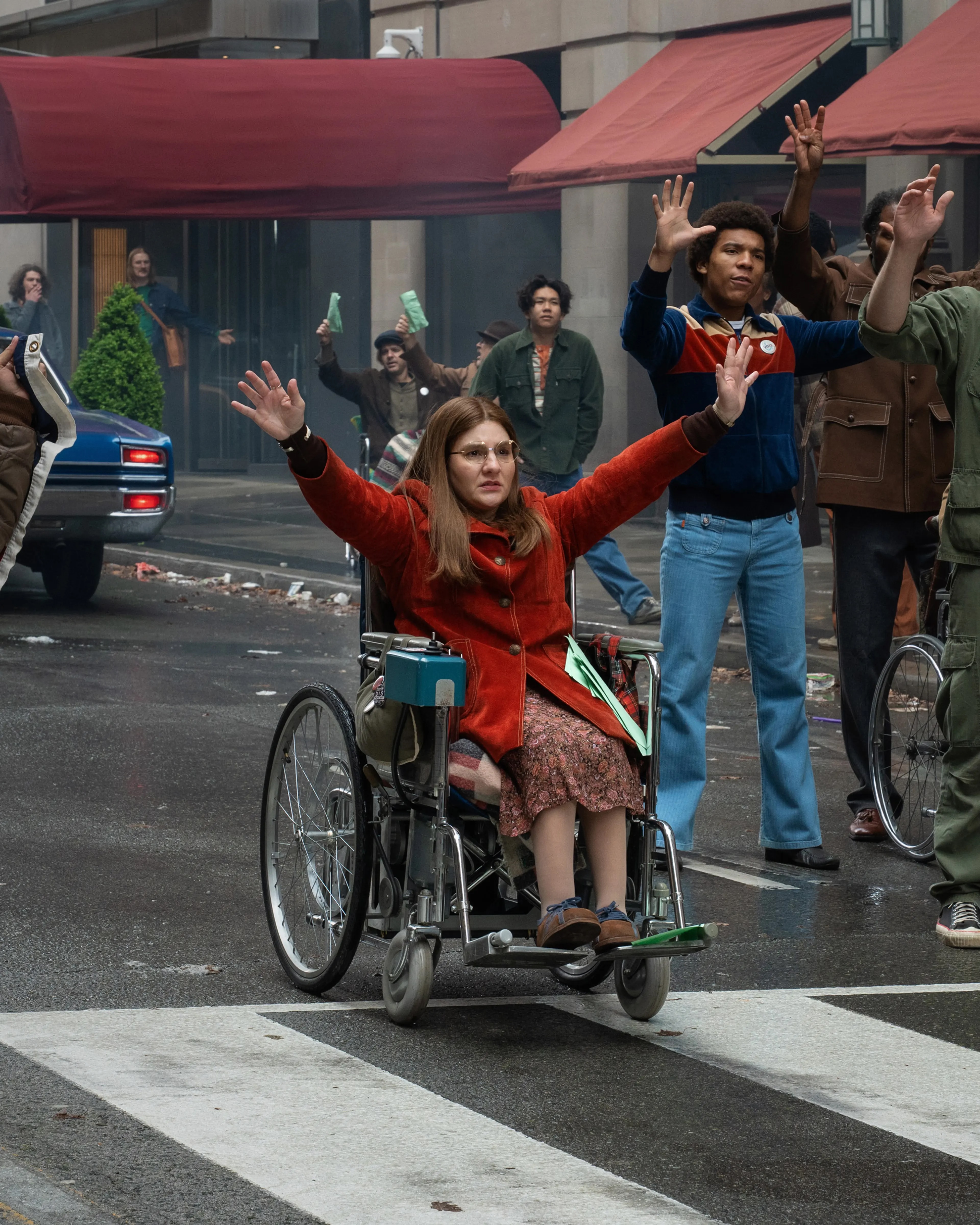
If banners and peaceful protests aren’t enough, they’ll stop traffic – literally – rolling their wheelchairs into the busy New York streets, forcing lorries and taxis to brake for them. They’ll storm government buildings – oxygen tanks, guide canes and head-pointers notwithstanding. They’ll stage the country’s longest ever sit-in, and form an intersectional coalition with other radical, marginalised groups, including the Black Panthers. Civil rights are for everyone.
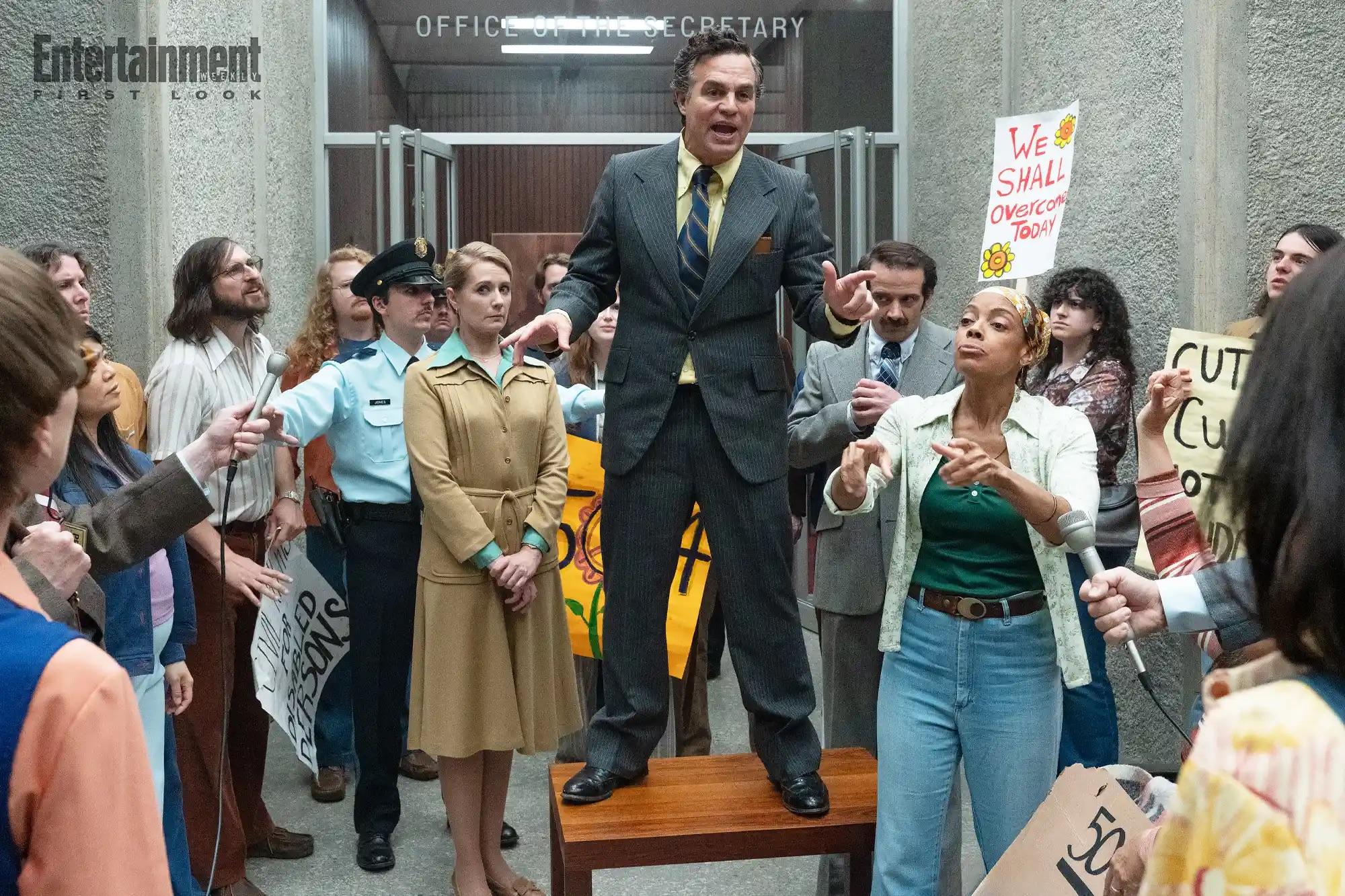
The story’s antagonist is the government’s secretary of Health, Education and Welfare (HEW), Joseph Califano (Mark Ruffalo), played here as a harried, over-worked official, fearful of the cost implications. He can see two things clearly: the effects on his budget and on his political career. He’s less bothered about the disabled people whose lives would be altered if he signed – and his ignorance makes it easier for him to disregard their needs. To this end, he refuses to engage with the activists, doing everything he can to shut down their protest without ever listening to them.
But he’s reckoned without Judy…
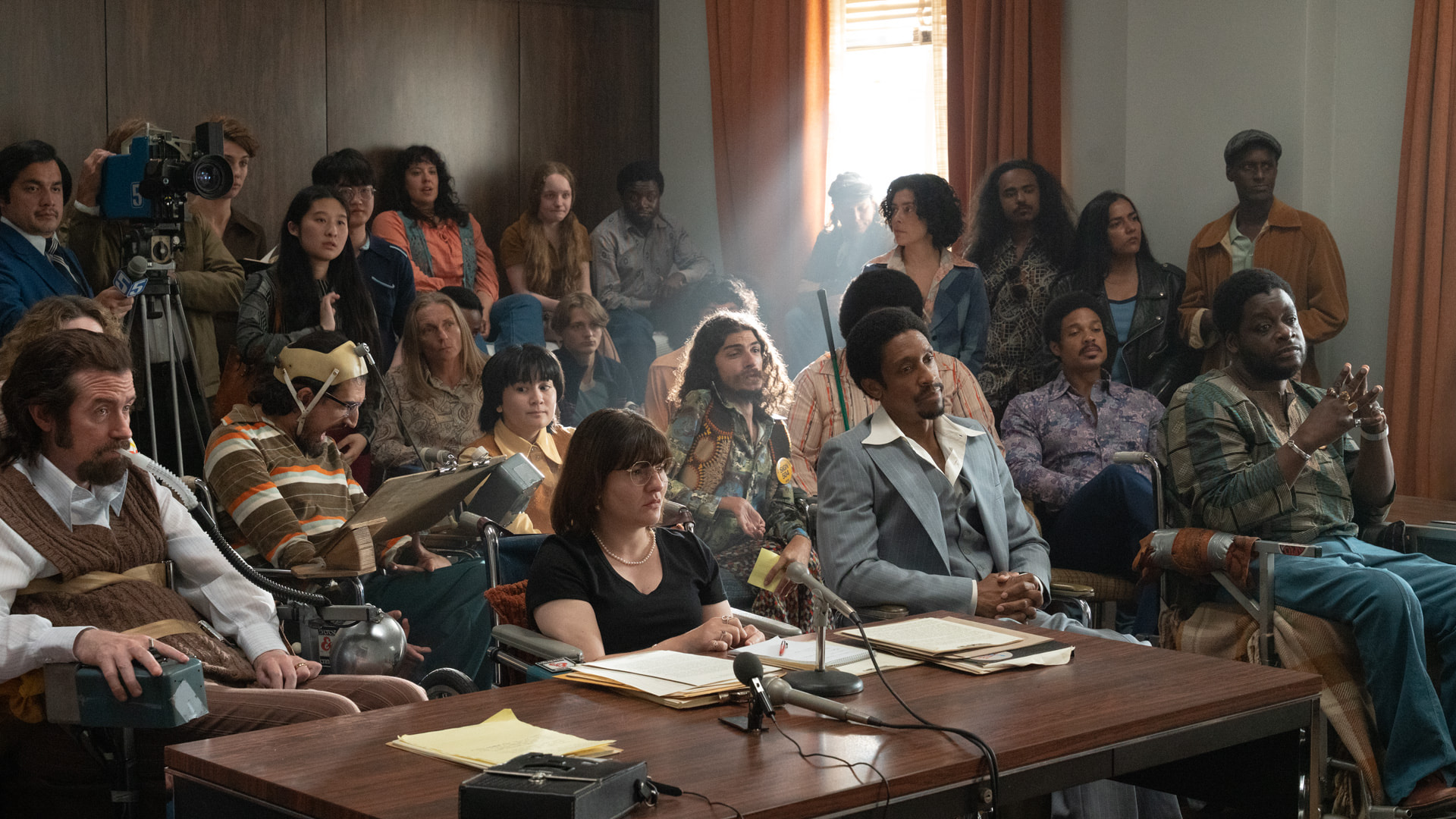
Heder and Rebekah Taussig’s script celebrates the disabled protestors without sanctifying them, presenting them as flawed and fallible as well as fabulous, as rounded human beings with the same needs and desires as non-disabled people. The sit-in isn’t a virtuous, modest affair. Sure, some of the activists need attendants to help with personal care; that apart, it’s exactly what you’d expect from a group of angry, determined, spirited young folk. There’s singing and dancing; there are squabbles and fights. There’s joy, despair, sex and drugs. More than anything, though, there’s resolve.
The protestors’ testimonies are perhaps the most powerful part of Being Heumann. When the disabled actors speak of how their characters have been disenfranchised – refused teaching licenses because their wheelchairs make them a fire hazard; unable to read because their schools didn’t offer braille – there’s an extra layer of authenticity from their lived experiences. Why is this the first time I’ve seen so many of them on screen? In particular, Madeline Delp, Andrew Pilkington, Charlie Rush-Reese and Rio Finnegan are fine performers; they deserve to be more visible outwith stories like this.
An important reminder of how rights are hard won (and easily lost), Being Heumann is well worth a month’s subscription to Apple TV.
And if it inspires you, make sure that inspiration spurs you to action. WWJD?*
4.3 stars
Susan Singfield
*What would Judy Do?

