
Shia LaBeouf

Megalopolis

03/10/24

Cineworld, Edinburgh

Well, I can’t say I wasn’t warned. Francis Ford Coppola’s long-nurtured passion project, Megalopolis, arrives garlanded with the kind of vitriolic advance reviews that instantly sank its chances of making any money at the box office. But why all the furore? What has the man done that’s so unspeakable? You’d think he’d murdered somebody. Instead, at the age of eighty-six, he’s made a vanity project, self-financing the hundred million dollar film by selling one of his vineyards. (We’ve all been there.) He hasn’t bankrupted a movie studio, which makes a refreshing change.

Lest we forget, Coppola has made some underwhelming films before. Yes, he gave us The Conversation, The Godfathers (One and Two) and of course, Apocalypse Now, but there was also One From the Heart and er… Jack, both of which were less than perfect.

It’s important to note that right from the opening credits, Megalopolis is described as ‘A Fable,’ so those who describe it as ‘unrealistic’ may be missing the point.

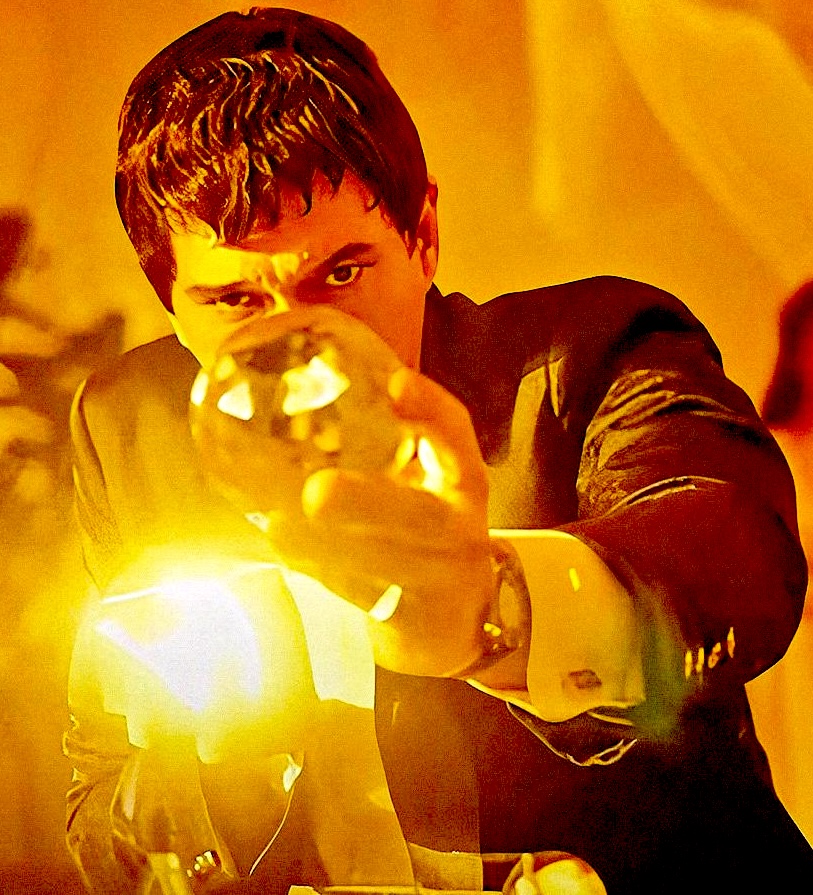
Somewhere in an imagined future, New York has become New Rome, and those that run the city have taken on the aspects of senators and emperors, strutting around in toga-like garments and looking very pleased with themselves. Cesar Catalina (Adam Driver) is a sort of genius / town-planner, who has discovered a mysterious and indestructible building substance called Megalon. He has also found a way to stop time by clicking his fingers (as you do) and has a penchant for lapsing into Shakespeare soliloquies for no apparent reason.

Cesar is currently intent on building the titular inner city area, which he believes will be the first step in creating a bright new future, but his main adversary in this project is Mayor Cicero (Giancarlo Esposito), who seems to be opposed to any kind of progress. Cicero’s daughter, Julia (Nathalie Emmanuel), on the other hand, finds herself increasingly drawn to Catalina and it’s not long before sparks begin to fly between them. It’s clearly going to cause trouble.

There are other powers at work in the city. TV presenter, Wow Platinum (Aubrey Plaza), is suffering from failing audience figures and is keen to take a step up in the world by marrying Cesar’s rich uncle, Hamilton Crassus III (Jon Voight). She uses her nephew, Clodio (Shia LaBeouf), to help her to get there, by any foul means he can devise. (The odious Clodio is clearly inspired by Donald Trump, right down to the bloody insurrection he foments and is perhaps the one place in the ‘fable’ that does relate to real life.)

Overall, Megalopolis doesn’t work and it’s not that it’s short of ideas. On the contrary, it is virtually struggling to contain them all and it doesn’t help that there are too many big names in cameo roles here, most of them improvising their lines. The likes of Dustin Hoffman and Talia Shire flit briefly across the screen and it feels as though Coppola, having secured their services, is unsure of exactly what to do with them. Sometimes, when you work too hard on a project, you stop seeing it objectively.

On the plus side, the film looks magnificent in IMAX, a succulent, shimmering wonder to behold (Coppola did his own cinematography) and, in the film’s latter stages, there are sequences that might best be described as psychedelic, the massive screen appearing to erupt at regular intervals in a blaze of light and colour. If you’re going to see this, do try to catch it in the cinema, because its going to lose all of its majesty on streaming. The running time of two hours and eighteen minutes soon elapses and, after everything that Coppola has given us over the years, surely it’s not too much to ask that movie buffs make the effort to actually go out to see it.

3 stars

Philip Caveney

Pieces of a Woman

10/01/20

Netflix

Pieces of a Woman is a hard film to like. It’s a powerful and, at times, harrowing account of a would-be mother’s experiences in contemporary America, highlighting the problems so often brought to light in a society predicated upon seeking blame for any failure – and where the consequences of such a failure inevitably entails a subsequent court case.

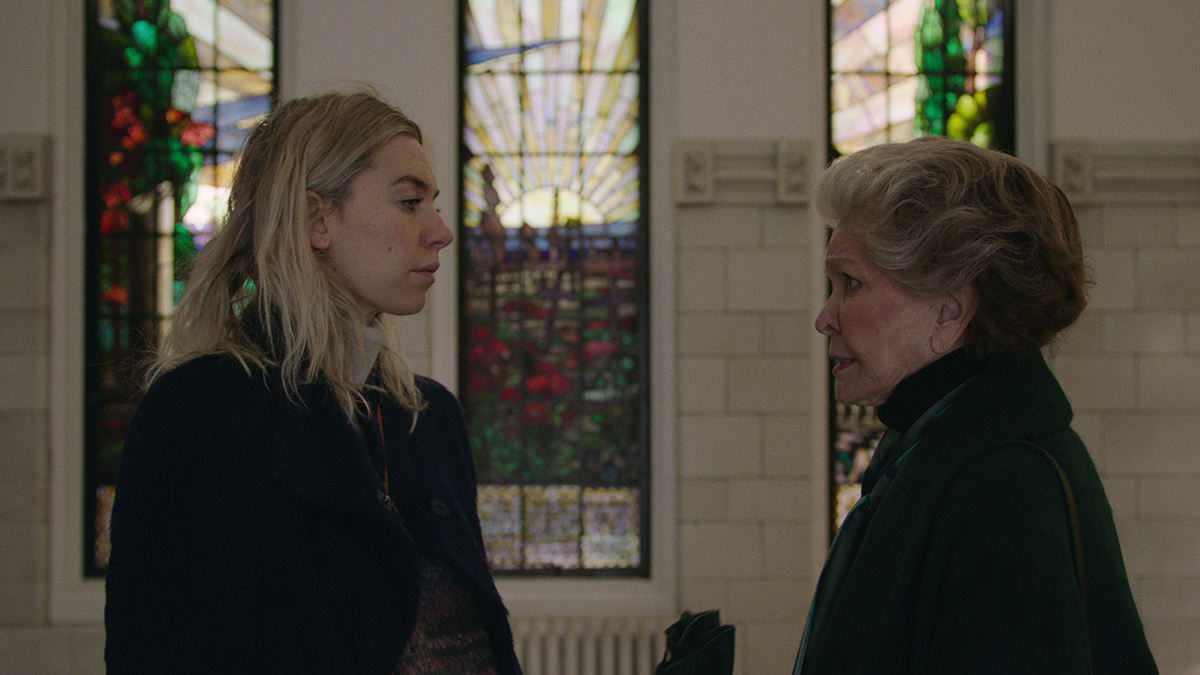
The would-be mother here is Martha (Vanessa Kirby). She and her construction-worker husband, Sean (Shia LaBeouf), are preparing themselves for the home-birth of their first child, which they already know is a girl. They are anticipating a magical experience. But, when their chosen midwife, Barbara, proves to be unavailable, a replacement is sent in the shape of Eva (Molly Parker). She appears to be perfectly competent and immediately establishes a rapport with Martha but, as the delivery develops, there are unforeseen complications, ones that ultimately lead to tragedy.

This first section is presented in real time and is compellingly performed by the cast, which only serves to make it all the more devastating – but it’s the year-long aftermath of this starting point that contains the film’s true message. As Martha struggles to come to terms with her loss, her wealthy and manipulative mother, Elizabeth (Ellen Burstyn), insists that blame must be apportioned for her daughter’s loss – and that Eva shall be the one to bear the brunt of it. The ensuing developments drive a wedge between Martha and Sean, that grows wider every day and their marriage suffers.

Writer Kata Wéber’s skilful narrative leads the viewer along a tortuous path. At first, it’s hard to like or feel sympathy for any of these characters, who all seem venal and self-centred, focused purely on their own happiness, and ready to crush anyone who stands in their way. It isn’t until the film’s closing sections that we finally find some redemption for them, and we realise that they are themselves broken by circumstance and by the overpowering weight of grief.

As I said, this is nobody’s idea of a fun night in watching Netflix, but it’s a story that will have resonance for many, and Kirby’s performance in the lead role is memorable. More than anything, it makes me thankful to live in a country where blame culture is less endemic, and where fewer lawyers lurk, waiting to monetise our misery.

4 stars

Philip Caveney

The Peanut Butter Falcon

03/04/20

Curzon Home Cinema

One of the most interesting actorly transformations of recent years is the one undertaken by Shia LaBeouf. Formally regarded as a bit of a twonk about town, he recently delivered the excellent Honey Boy, the film he wrote whilst undergoing rehab – and now here’s another winner, in the shape of The Peanut Butter Falcon, an appealing buddy movie set in the wetlands of North Carolina, though in this case, the writing duties are handled by Tyler Nilson and Michael Schwartz, who also co-direct,

La Beouf plays Tyler, who – since the death of his much-loved older brother – is eking a precarious living as a crab fisherman. Tyler isn’t too fussy about occasionally robbing the traps of his more successful neighbours and this inevitably leads him into violent conflict with them. He’s soon obliged to go on the run from those he has crossed swords with.

But his escape bid coincides with that of runaway, Zak (Zack Gottsagen), who has managed to escape from the care home where he has been unfairly sequestered for far too long. Zak is a young man with Downs Syndrome.  There’s nobody else prepared to take charge of him, but he is understandably bewildered to be locked up with old age pensioners like his friend, Carl (Bruce Dern). Zak is also obsessed with a series of old videos featuring his longtime wrestling hero, Salt Water Redneck (Thomas Hayden Church), and he’s determined to make his way to the man’s ‘wrestling school’ to meet him in person.

At first Tyler and Zak make for uncomfortable travelling companions but, as they progress across the waterlogged landscapes of their homeland, an appealing ‘chalk and cheese’ friendship begins to develop. It’s not long before Tyler is fuelling Zak’s ambition to be a professional wrestler, even coming up with the titular nickname for his intended career. But somebody is looking for Zak. Eleanor (Dakota Johnson), the carer formally charged with looking after him, has been told, in no uncertain terms, to find him and bring him back to face further incarceration…

This is a charming and affectionate film, which, though it occasionally strays uncomfortably close to schmaltz, nonetheless carries its powerful central message with considerable aplomb. Gottsagen is an assured performer and so is La Beouf, for that matter, though his deep Southern-fried accent occasionally has me wishing that Curzon Home Cinema offered the option of subtitles for English language features (something they’re still working on).

Niggles aside, this is a delightful, heartwarming tale. We missed it’s recent cinematic release and here’s a welcome opportunity to catch up with it.

4.2 stars

Philip Caveney

Film Bouquets 2019

Bouquets&Brickbats

Bouquets&Brickbats

Bouquets&Brickbats

It’s that time again when we award (virtual) bouquets to our favourite films of the year. As ever, the final choice may not always reflect the films that scored the highest at time of viewing, but rather those that have stayed with us most indelibly.

The Favourite (director – Yorgos Lanthimos; writers – Deborah Davis and Tony McNamara)

Capernaum (director – Nadine Labaki; writers – Nadine Labaki, Jihad Hojeily and Michelle Keserwany)

Eighth Grade (writer/director – Bo Burnham)

Booksmart (director – Olivia Wilde; writers – Emily Halperm, Sarah Haskins, Susanna Fogel and Katie Silberman)

Beats (director – Brian Welsh; writer – Kieran Hurley)

Rocketman (director – Dexter Fletcher; writer – Lee Hall)

Animals (director – Sophie Hyde; writer – Emma Jane Unsworth)

Hustlers (director – Lorene Scafaria; writers – Lorene Scafaria and Jessica Pressler)

Joker (director – Todd Phillips; writers – Todd Phillips and Scott Silver)

Monos (director – Alejandro Landes; writers – Alejandro Landes and Alexis Dos Santos)

Honey Boy (director – Alma Har’el; writer – Shia LaBeouf)

Little Women (director – Greta Gerwig; writers – Greta Gerwig and Louisa May Alcott)


Philip Caveney & Susan Singfield


Honey Boy

24/11/19

This semi-autobiographical tale, written by Shia LaBeouf and directed by Alma Har’el, is clearly the actor’s attempt to exorcise the demons of a troubled relationship with his father, though he’s wisely changed the names of the protagonists. We first meet ‘Otis’ (Lucas Hedges) in 2017, when he’s pursuing a hectic schedule as a movie actor, and abusing drugs and alcohol on a daily basis. When everything spins out of control and he’s involved in an alcohol-fuelled car crash, he’s faced with a stark choice: go into rehab for the PSTD he’s suffering from, or face a four year stretch in jail.

Naturally, he chooses the former option.

From here the film cuts back in time to find Otis, at the age of twelve (and played by Noah Jupe), already working in television. He’s living in a seedy motel with his father, James (LaBeouf), who is a Vietnam veteran, a former rodeo clown and a convicted felon. It’s James’ job to chaperone Otis: make sure turns up for work every morning; go over his lines with him; and try to ensure that his son stays on the straight and narrow. But it’s evident from the word go that James is a pretty terrible example of fatherhood, and in no position to hand out advice to anyone. Indeed, he’s given to dark rages, which he takes out on the boy. As Otis bitterly observes, James is with him for one reason only, because he’s paid to be there.

Having estabished the two versions of Otis, the screenplay cuts nimbly back and forth between them, the twelve-year-old desperately searching for some kind of affection from his old man, the twenty-two-year-old still trying to deal with the messed-up psyche he’s inevitably been left with. Watching this, it’s little wonder that LaBeouf’s own career has been so incendiary. (The screenplay was actually written while he was in rehab.) If there were ever any doubts about the importance of nurture to a growing child, this film underscores its worth in thick black marker pen.

It’s frankly nobody’s idea of a jolly picture, but it’s brilliantly acted by all three of its leads, and Alma Har’el’s vivid, fragmentary style suits the subject admirably, particularly in the short dream sequences that punctuate events, and in which older Otis is still attempting to cross the void that lies between him and his father. While I’m never quite convinced that the angel-faced Noah Jupe could grow up to look like Lucas Hedges, this is a mere detail.

Honey Boy is a powerful, emotive story, expertly told.

4.2 stars

Philip Caveney