Robert Pattinson

Die, My Love

16/11/25

Filmhouse, Edinburgh

Die, My Love, based on Ariana Harwicz’s acclaimed novel, is another irresistible movie from Scottish director, Lynne Ramsay. With a script by Ramsay, Enda Walsh and Alice Birch, this unflinching study of a woman’s postpartum psychological breakdown is as compelling as it is harrowing – and Jennifer Lawrence is frankly wonderful in the lead role.

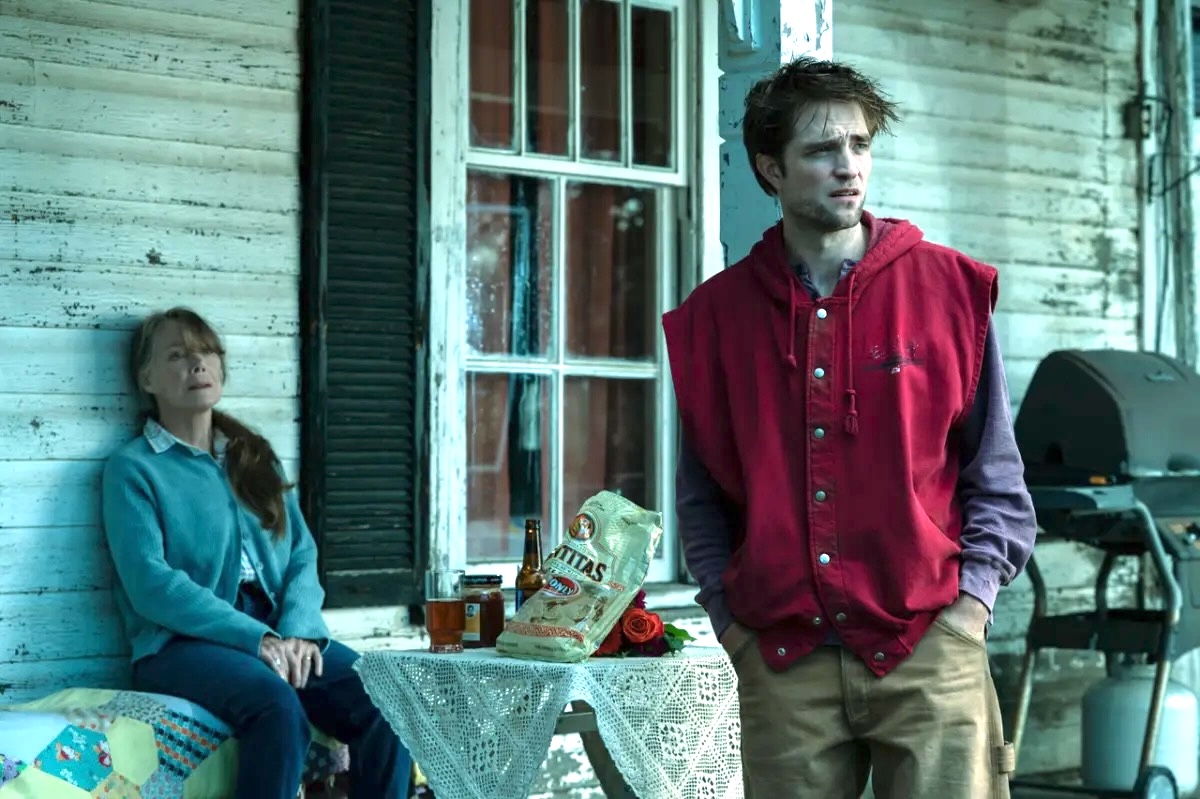
Grace (Lawrence) and Jackson (Robert Pattinson) are expecting their first baby and, in preparation for this new chapter of their lives, they move into Jackson’s deceased uncle’s house. They’re not fazed by the piles of leaves in every room, the old-fashioned decor or even a minor rat infestation: they’re young, excited and in love. They’ll make it work.

But once Grace gives birth to Harry, the spark between her and Jackson dies. She’s stuck at home: bored, resentful and unable to cope. Jackson’s job means that he can escape from the oppressive confines of their isolated house, but Grace’s work is writing; it doesn’t get her out and she can’t focus on it anyway. “I don’t do that any more,” she says.

She loves her baby but she feels trapped and abandoned. Jackson never wants to have sex with her any more, although the box of condoms in his car seems to be getting lighter by the week. She refuses to be just Harry’s mother: why can’t she also still be Grace-the-writer, Grace-and-Jackson, Grace-the-wild, the-impulsive, the-let’s-have-fun? With only Jackson’s bereaved mother, Pam (the fabulous Sissy Spacek), for company, Grace’s mental health begins to deteriorate, her behaviour becoming ever more erratic and dangerous.

Ramsay’s film is undoubtedly dark, but it’s bleakly funny too. Grace’s blunt responses to the platitudes she’s offered often fall into the “things-we-all-wish-we-could-say-but-can’t” category, and – if it weren’t for all the damage they cause – her devil-may-care actions are almost inspirational. I feel sorry for both Grace and Jackson, a couple trapped in a relationship that no longer works, dragging each other down in their attempts to meet society’s expectations of them. “Let’s get married,” says Jackson in desperation. Maybe a wedding is the glue they need to stick them back together?

Or maybe not…

More than anything, this movie reminds me of Charlotte Perkins-Gilman’s The Yellow Wallpaper; indeed, there are several overt references here to the 19th century short story, not least in Grace’s frantic stripping of the heavily-patterned wallpaper with her fingernails, or her crawling through the long grass just like Perkin-Gilman’s “creeping woman”. It’s not just the remote house and the remote husband, nor even the medicalisation of female emotions or the retreat into a fantasy world. More than any of that, it’s the mind-numbing boredom of the protagonist’s existence, and her refusal to accept this as her lot.

A real contender for my film of the year, Die, My Love is a bravura piece of movie-making: stark, beautiful and as uncompromising as its heroine.

5 stars

Susan Singfield

Mickey 17

09/03/25

Cineworld, Edinburgh

After several lengthy delays, Bong Joon-Ho’s follow-up to 2019’s Oscar-winning smash, Parasite, finally makes it into the UK’s multiplexes. Mickey 17 is frankly nothing like its eminent predecessor, closer in tone to the director’s earlier films like Snowpiercer and Okja, the kind of futuristic sci-fi adventures that first helped him build his stellar reputation.

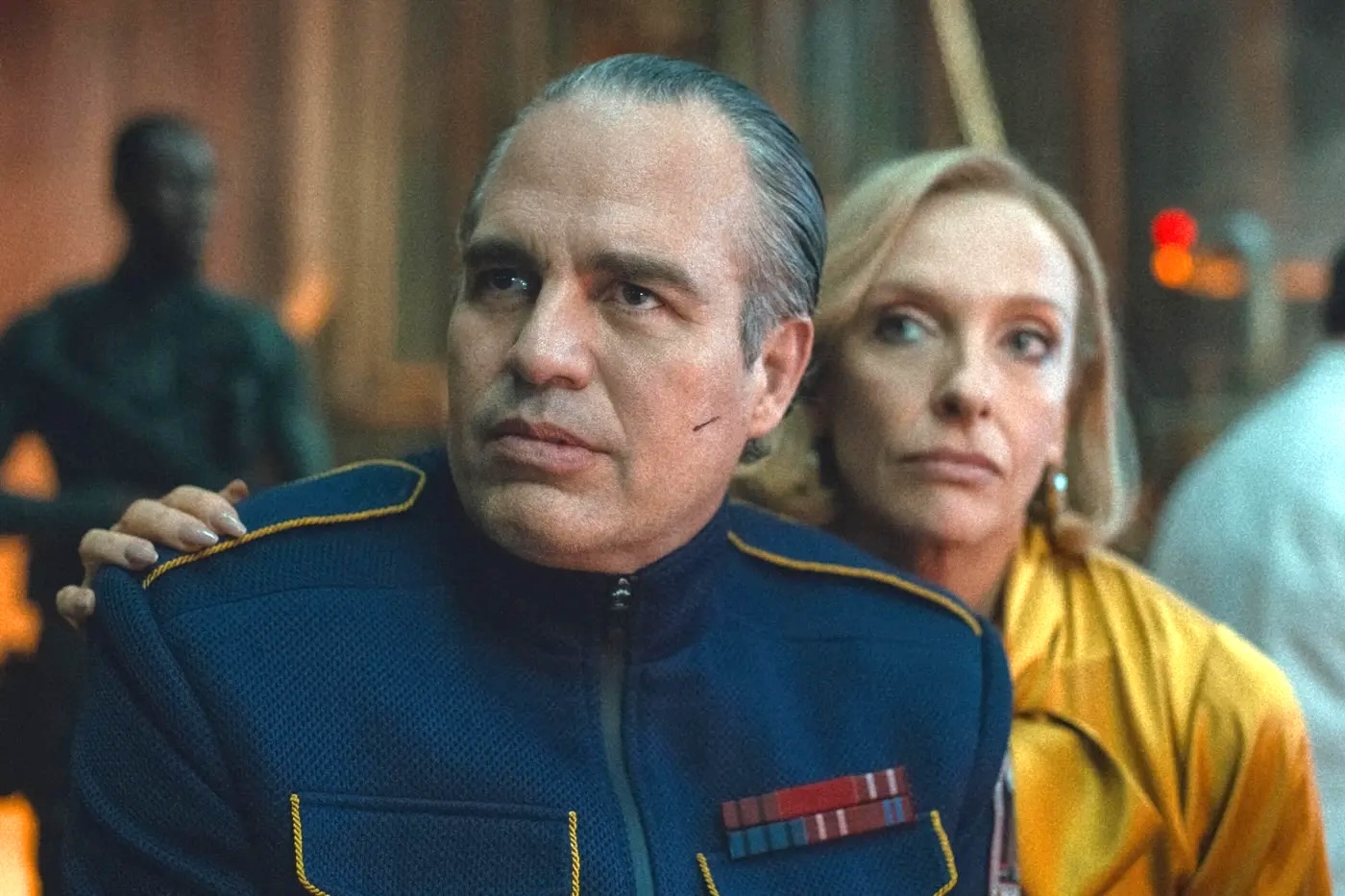
It’s 2054 and the world (as widely predicted) is going to hell in a handcart – so much so that its inhabitants are literally fighting for places on an upcoming space mission to seek out a new habitable planet. The mission is spearheaded by failed Presidential candidate, Kenneth Marshall (Mark Ruffalo), a man so obsessed with his own image he grabs every opportunity to film himself looking suitably heroic. He’s always accompanied by his clingy, sauce-obsessed partner, Yifa (Toni Collette), whose ideas he quickly appropriates and passes off as his own.

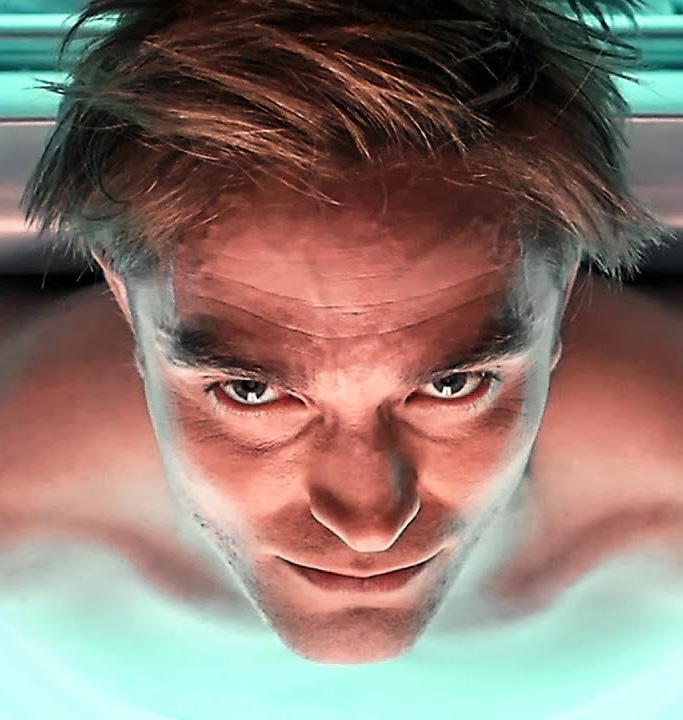
Shy, bumbling Mickey Barnes (Robert Pattinson) and his dodgy best friend, Timo (Steven Yeun), have pressing reasons to secure berths on Marshall’s spacecraft. Their recently launched Macaron business has gone tits-up. Timo financed the venture by borrowing money from a famously terse mobster who is known for exacting recompense from defaulters by the liberal application of a chainsaw – so making themselves scarce seems like a good idea.

Timo (typically) manages to land himself a plum role on the mission, but poor Mickey has to resort to signing himself up as an ‘Expendable.’ As the mysterious ‘Red Hair’ (Holiday Grainger) explains, he will be expected to undertake a series of potentially lethal experiments whilst on board, but no matter, because all his genetic information will be stored in a database. In the event of his death, the company will simply print a new version of him, all ready to start over. What could possibly go wrong?

On the long journey, Mickey’s luck appears to change for the better when he clicks with security officer, Nasha (Naomi Ackie), and enjoys a loving and sexual relationship with her, even though such shenanigans are openly discouraged by Marshall. But once the ship has landed on the ice-bound planet of Niflheim, Mickey begins to appreciate how easily his life can be repeatedly snatched away from him, as he is used as a guinea pig to test out the potentially deadly atmosphere. And once that problem is solved, there are the native creatures to deal with: huge woodlouse-like beasts, quickly dubbed by Yifa as ‘Creepers.’ But are they really as ominous as they look?

Mickey 17 has all the hallmarks of Bong’s sci-fi work. It looks astonishing, particularly the footage on Niflheim, where countless numbers of Creepers go on the rampage. Pattison is terrific in the title role and in the scenes where he has to be both Mickeys 17 and 18, manages to subtly convey the tiny differences between them with considerable skill. Ruffalo also shines in a role where the similarities with the USA’s current president are clearly entirely intentional. (Ironically, the fact that the film’s been held back for so long only serves to accentuate the character’s monstrous ego and constant need to self-aggrandise – all familiar from watching the traits play out on the daily news reports.)

I’d be lying if I said that this is a perfect film. For one thing, there are far too many characters and even a running time of two-hours-seventeen-minutes fails to offer enough space for Bong to fully explore them all. You will briefly spot the likes of Thomas Turgoose and Tim Key in cameo roles, but it’s the female characters in particular who are given short shrift. Grainger’s early appearance suggests that ‘Red Head’ is going to be important to the story but she just fades away as the film progresses. Collette does the best she can with what little Yifa is given to work with, but it’s never really enough.

That said, I find the film fascinating and I love the lo-fi nature of the future of space exploration, full of glitches and hiccups – and the ways in which the lust for personal glory will always vanquish the need to act with compassion towards strangers. Bong (who also wrote the screenplay, based on a novel by Edward Ashton) seems to delight in his central premise, that the rights of the individual come pretty low down the pecking order in the pursuit of so-called progress.

Characters constantly ask Mickey Barnes the same question: ‘What’s it like to die?’ To which he is never able to supply a satisfactory answer. And perhaps that’s because the central premise is so elusive – that age-old mystery about mortality and what it really means. To be – or not to be?

Mickey 17 is proof, if ever needed, that even when he’s not quite firing on all cylinders, Bong Joon-Ho is still one of the world’s most downright watchable directors. I have a blast with this. However, those who come expecting Parasite 2 will definitely be disappointed.

4 stars

Philip Caveney

The Batman

04/03/22

Cineworld, Edinburgh

Director Matt Reeves’ modest ambition for The Batman was to make ‘the best Batman movie yet.’

Well, he hasn’t done that – but he’s certainly made the longest. Weighing in at a bum-numbing two hours and fifty minutes, it brings to mind the conviction that while ‘less’ is often ‘more’, ‘more’ usually equals ‘less’ when it comes to movies. And, while this just about scrapes four stars in its present bloated form, it would have scored much higher with some judicious editing. I mean, like, excising fifty minutes.

What is it about Batman that makes directors keep returning to that oft-plundered well? The fact that this is a comic-book hero who doesn’t have any super powers is always appealing, and there’s that delicious interplay between the vigilante who takes the law into his own hands and those misguided fools who see him as a hero. In this regard, The Batman feels a lot more nuanced than many of its predecessors, but it’s also sobering to think that the best film of the franchise is the one that he doesn’t even feature in.

Joker, thanks for asking.

Mind you if you thought Christopher Nolan’s depiction of Gotham City was dark, prepare to turn the palette down several notches. Reeves’ Gotham (shot in studios all over the UK) is filmed in tones of obsidian and anthracite. In this Gotham, it never seems to stop raining and the city is ruled by corrupt public officials, who gleefully take bribes and exploit the working classes for their own enrichment. (Remind you of anywhere?)

It’s Hallowe’en and a masked villain called The Riddler (brilliantly played by Paul Dano, though we don’t actually see his face until late on in the proceedings) is gleefully murdering those in power, who have allowed their standards to slip. Batman/Bruce Wayne (Robert Pattinson), though hated by most of the police force, is invited to investigate the crimes by Commissioner Gordon (Jeffrey Wright), the only cop who trusts him.

The Riddler is leaving cryptic clues at the scenes of the crime and Batman is good at deciphering them. In the course of his investigations, he comes into contact with Selina Kyle (Zoe Kravitz), crime kingpin, Carmine Falcone (John Turturro), and The Penguin (an unrecognisable Colin Farrell, hidden beneath layers of latex and sounding for all the world like Robert De Niro).

As the proceedings unfold, it becomes clear to Bruce that his own father, whose murder initiated Bruce’s transition into the Caped Crusader, might not have been as innocent as his son has always supposed. Batman also comes to realise that there are many people out there who follow his vigilante tactics with relish – and who would really like to be him.

And, as loyal butler, Alfred (Andy Serkis) is quick to point out, Bruce’s father might have done the wrong thing – but for very sound reasons.

There’s a lot here that I really like. It offers a much more interesting vision of DC’s premier hero than we’re used to seeing – but too much time is spent wandering along dark alleyways that don’t advance the plot enough. It’s only as I’m starting to grow impatient with the film that it finally coalesces and ramps up the suspense, as it heads into a vaguely apocalyptic climax that is weirdly prescient and also, in a strange way, uplifting. Reeves has already proven his worth with the likes of Cloverfield and his astute retooling of the Planet of the Apes trilogy – but, inevitably, The Batman just feels too long for its own good.

This is a shame because Pattinson really works in the lead role (for once, I actually believe that nobody would suspect his Bruce Wayne of being Batman, since the two personas are so different). Kravitz is also compelling in the Catwoman role, and I fully expect to see her return to it. A nifty coda shows us exactly where Reeves plans to go next and, given the projected casting for the next lead villain, I have to confess I’m suitably intrigued.

But please, Matt, next time around… can we just have a bit less?

4 stars

Philip Caveney

The Devil All the Time

23/09/20

Netflix

Imagine the vibrant Americana of the Coen Brothers, twisted into a seething vat of venomous corruption and you’ll pretty much have the measure of The Devil All the Time. Directed and co-written by Antonio Campos and based on a novel by Donald Ray Pollock (who serves as our narrator), this is a multi-layered, labyrinthine slow-burner of a film, where a whole string of characters are linked by a series of weird coincidences. In Pollock’s bleak world view, the blame for most of the evil that plagues humanity can be laid squarely at the door of organised religion.

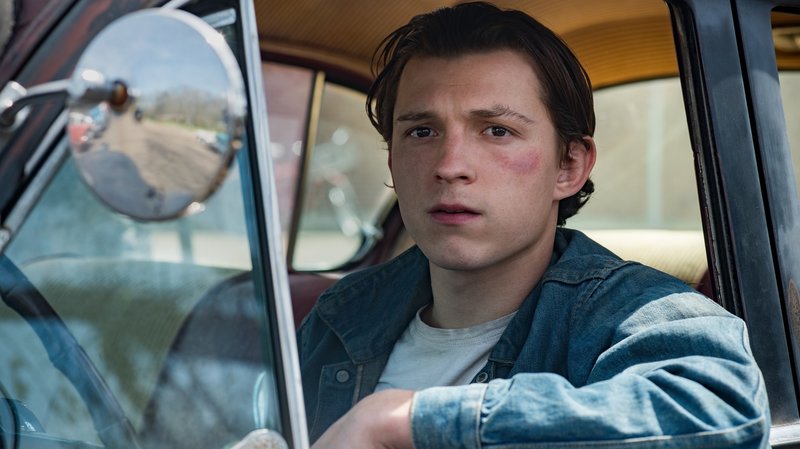
The central character, Arvon Russell (Tom Holland), is one of the few sympathetic human beings in this narrative, and even he is someone given to Old Testament levels of brutality towards anyone who wrongs his much-loved step sister, Lenora (Eliza Scanlen). Arvon’s violent tendencies stem from the treatment he received from his God-fearing Dad, Willard (Bill Skarsgard), who very much believed in the eye-for-an-eye approach and whose treatment of the family pet is particularly hard to stomach. Lassie Come Home, this really isn’t.  

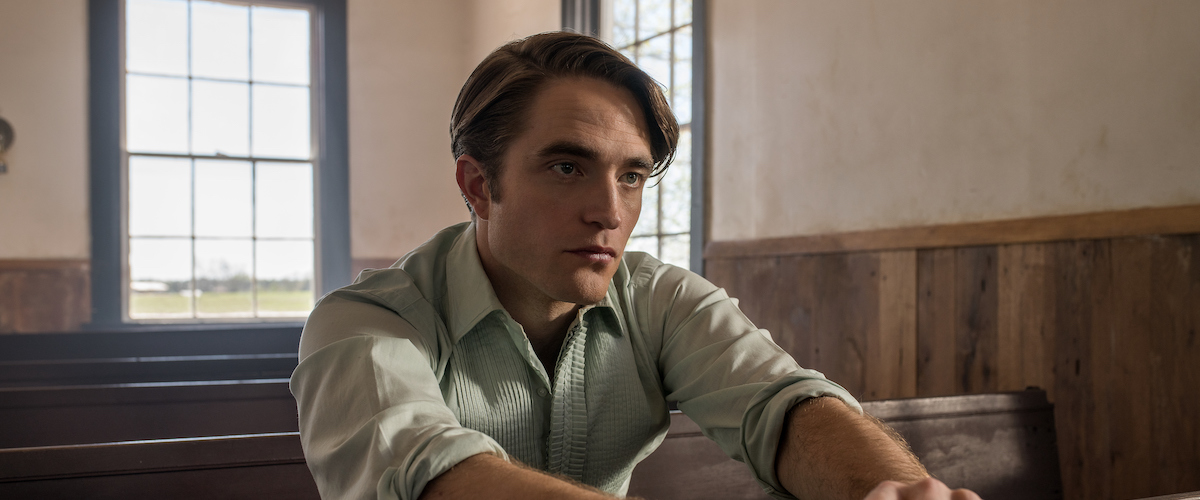
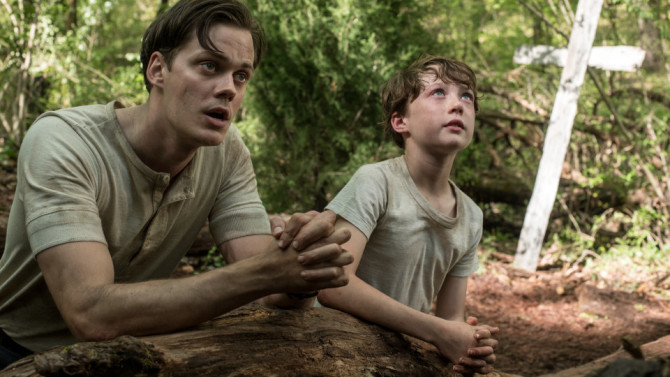
Elsewhere, we encounter the Reverend Preston Teagarden (Robert Pattinson), a sleazy preacher with a predilection for seducing young girls: crooked cop Lee Bodecker (Sebastian Stan) who’ll do whatever is necessary to further his ambitions, and a particularly vile couple, played by Jason Clarke and Riley Keough, who get their kicks from picking up young male hitchhikers…

On paper, it all sounds rather relentless but, unfolded as it is in a slow, measured narrative, it’s a surprisingly powerful brew. As Arvon is led inexorably deeper and deeper along the path to retribution, I find myself gripped right up to the final credits. It helps that a whole menagerie of talented actors submit nuanced performances here, particularly Holland who proves beyond a shadow of a doubt that there’s a lot more to him than slinging webs.

This may not be to everybody’s taste. As a vision of the United States, there’s little here resembling any kind of hope for the country’s collective soul. Indeed, it is a tale so excoriating, so morally bankrupt, that you can only feel a nagging worry for the society that spawned it. 

The Devil All the Time is a Netflix original, ready to watch whenever you have the time, or the nerve, to take it on.

4.2 stars

Philip Caveney

Tenet

26/08/20

You have to feel a wee bit sorry for Christopher Nolan. He is the first film director of stature to pop his head above the parapet post-lockdown, and so Tenet has the daunting task of being the flag bearer, the film expected to tempt cinema-goers back into the multiplexes en masse. Both the Bond franchise and Disney’s Mulan, have recently baulked at the responsibility and who can blame them?.

Interestingly, it’s a Bond movie that most springs to mind watching Tenet, though it would be 007 On Acid, given that its plot elements are so incomprehensible, I feel singularly unqualified to say much about them. (Sadly, I don’t possess a PHD in quantum physics.) Suffice to say that Nolans’s regular obsession with time (and the manipulation of it) are taken to their ultimate conclusion here. The result is mind bending – and not always in a good way.

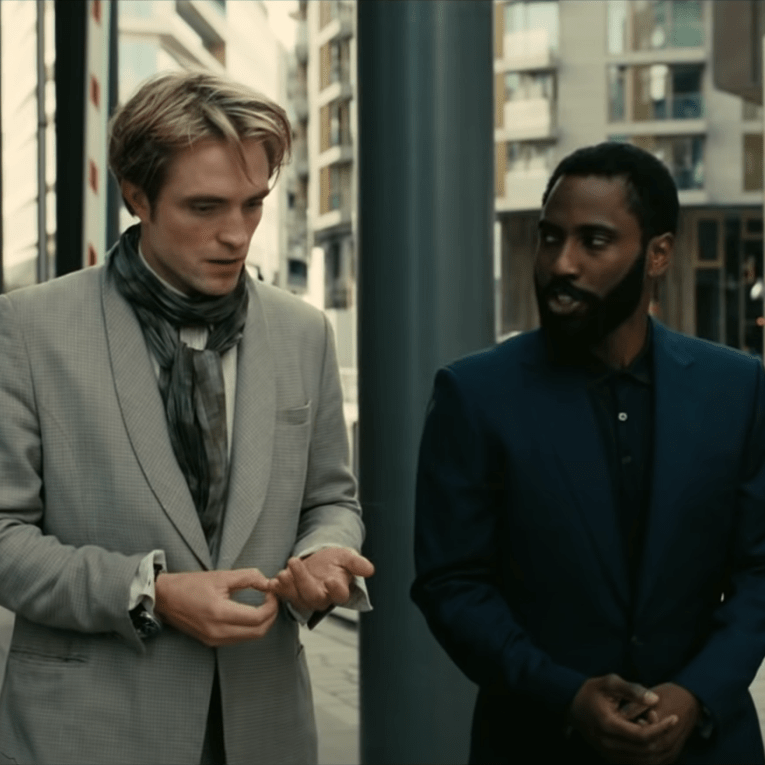
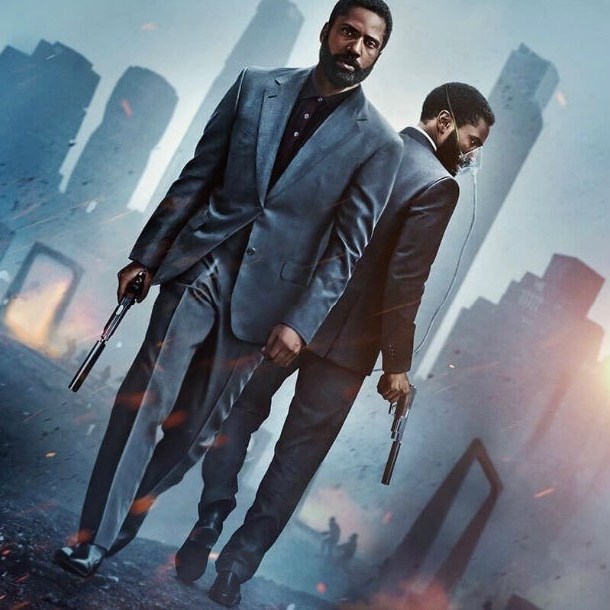
The hero of the film, a CIA operative known only as The Protagonist (John David Washington), is first encountered as a member of a team carrying out a (frankly baffling) assignment in the Kiev Opera House. After that, he is recruited for a special assignment, which is referred to only by the palindromic title and a certain hand gesture. It’s all about the reversal of time or, as one character puts it, ‘entropy’. What ensues is a whole series of action set-pieces, where fights, car chases and even explosions can run forwards or backwards – often simultaneously.

The Protagonist soon finds himself teamed with the more modestly monikered Neil (Robert Pattinson) and, shortly after that, becomes increasingly enmeshed in the lives of the enigmatic Kat (Elizabeth Debicki) and her husband, power-mad Russian arms dealer, Andrei (Kenneth Branagh). Andrei, it seems, has the power to end the world as we know it, and The Protagonist has been handed the job of putting a stop to his shenanigans – so, no great pressure there…

There’s no doubting the sheer scale and ambition of this work and there’s certainly plenty of brain-scrambling action on offer, but Nolan doesn’t do himself any great favours with the complexity of the plot and the fact that much of the expository dialogue is obscured by an overly intrusive soundtrack, courtesy of Ludwig Göronsson. Washington doesn’t really have the opportunity to emote enough for us to care what happens to him, while Branagh’s snarling, bellowing Andrei veers dangerously close to caricature. Debicki is good though, and Pattinson manages to exude a suave, laidback charm, which helps no end.

I find myself alternately enjoying parts of this and feeling frustrated by others. While I’m generally the last person to favour ‘easy’ stories, I’m not convinced that this is the kind of material designed to tempt Joe Public back to the cinema – though I also have to add that it did feel wonderful to be back there, even if this isn’t the best Christopher Nolan film ever (that would be The Prestige, by the way. Thanks for asking).

If you’re looking for something big, loud and packed with action, Tenet is probably the logical choice – just don’t expect to understand everything you see.

3.8 stars

Philip Caveney

The Lighthouse

05/02/20

It’s always frustrating, isn’t it, when others commend the work of a particular director and – for the life of you – you just don’t see what they love about it?

I’ve felt like that about Quentin Tarantino, pretty much since Pulp Fiction onwards; more recently, I really didn’t care for Robert Eggers’ debut film, The Witch, which many respected critics hailed as nothing short of a masterpiece. Now here’s his sophomore effort, The Lighthouse, which arrives in cinemas virtually creaking beneath the weight of the many superlatives that have been heaped upon it. Of course I have to give him a second chance, right?

This doom laden two-hander, shot in grainy black and white on 35mm stock and projected in a claustrophobic 1:19:1 aspect ratio, concerns the story of two ‘wickies,’ despatched to a remote lighthouse off the coast of New England, where they are to live and work for a month. Thomas Wake (Willem Dafoe) is an old hand, who lords it over new recruit Ephraim Winslow (Robert Pattinson), making him take on most of the menial duties while he reserves the tending of the light itself as his own personal privilege. He also mentions that Winslow’s predecessor went mad after seeing some ‘enchantment in the light’ and hints that something bad happened to him.

The two men embark on their dull and thankless routine, which is depicted in punishing detail. Wake is a drinker of alcohol and, though Winslow resists the temptation to join him at first, he soon succumbs. When a terrible storm maroons the men long past the time when they should have been heading back to the mainland, madness and depravity rapidly descend upon them…

Sadly, I am left completely unstirred by what ensues. Here is a ‘horror’ movie that completely fails to generate any sense of threat, an allegory that cloaks its meaning to an irritating degree. What we’re left with is a study of two tedious examples of toxic masculinity, who spend most of the time in silence and then ramble away in what Eggers insists is an aproximation of the language of the late 19th century, but which is mostly rendered unintelligible by the over-enthusiastic sound effects. They fight a bit too. And sing. And dance.

Winslow’s character has recurring dreams (possibly memories, it’s never entirely clear) of discovering a mermaid and having sex with her – sadly that appears to be the only role for a woman in this film – and there are visions of tentacles, floating logs and a severed head that might just belong to Winslow’s predecessor.

There are various attempts to allude to classical elements. The killing of a bird presaging disaster is surely a nod to The Ancient Mariner, while a climactic image seems to refer to the myth of Prometheus. But honestly, there’s so little incident in this film’s one hour, forty-nine minute run, that I spend most of my time feeling as bored as its two protagonists. Dafoe and Pattinson are both excellent actors, but neither is given enough to do here (unless you count Wake’s unbridled flatulence) and, when the final credits roll, I leave wondering, once again, what it is about Eggers that generates so much adoration?

I really wanted to like this film. And I gave it my best shot. Honestly.

2 stars

Philip Caveney


High Life

13/05/19

The first English language production by French auteur Claire Denis, High Life uses the conventions of a science fiction film to tell its rather bleak story, though there is little in the way of the kind of visual splendour you might expect to find in this genre. Here is a nuts and bolts future where space ships look like packing crates and space suits resemble things you might pick up in Gap. Monte (Robert Pattison) is a former Death Row inmate who, when we first meet him, is alone on a space ship with a baby. We then learn, through a series of flashbacks, how the two of them came to be there.

Monte, it turns out, was part of a team of prisoners, sent on a journey to a black hole deep in space in order to harness its energy. This crew of misfits is presided over by Doctor Dibs (Juliette Binoche), who – presumably spurred on by the knowledge that the mission is going to take longer than the average human life span – has become obsessed with the idea of starting new life aboard the ship. But instead of letting the crew just pursue things in the usual way of procreation, she keeps everyone heavily sedated. The male crew members have to submit a daily sperm sample to her, which she, in turn,  administers to the females.

Hardly surprising then, that deep resentment begins to simmer, and it’s only a matter of time before things kick off.

Denis has quite a reputation and it might be this, more than anything else, that has initiated the slew of glowing reviews this film has already garnered – but for the life of me, I can’t share this enthusiasm for it. It soon becomes apparent that, while the film’s setting might be futuristic, its sexual politics remain deeply entrenched in the stone age. And this prompts some worrying questions.

Why does Binoche’s character wander around the spaceship in a nurses’s outfit that is clearly several sizes too small for her? And why, in the extended sequence when she pleasures herself in the ship’s ‘fuckbox,’ does it look as though it has been choreographed to please some unseen male gaze, even though it’s been co-authored by Denis herself? There’s also a particularly nasty rape scene, later in the film, which culminates in the bloody death of the perpetrator, but which adds precisely nothing of value to the story. Presented as it is, it just feels salacious.

These are not the only problems I have with High Life. I learn very little about Monte and even less about his crew mates, which makes it hard for me to care about them when they end up as so much flotsam. I think that Monte has some feelings for Boyse (Mia Goth) but can’t be entirely sure – and what exactly is the story behind Monte’s childhood crime, only partially revealed in flashback? Finally… that harnessing of the black hole’s power… how was that supposed to work exactly? It seems a bit cavalier to use the conventions of a genre without properly thinking it through.

If High Life was the product of a debut director, it would be panned and quickly forgotten. But I fear it’s become one of those ‘Emperor’s New Clothes’ movies, with few people prepared to step up to the plate and denounce it as the wrong-headed, misogynistic muddle that it surely is.

Unless I’m missing something? Answers on a  postcard, please…

2.8 stars

Philip Caveney


The Lost City of Z

06/04/17

Colonel Percy Fawcett was the quintessential ‘Boy’s Own’ hero. When he went missing deep in the Amazon jungle in 1924, along with his elder son Jack, he became a cause celebre. Many rescue attempts were mounted, resulting in the deaths of over a hundred men and there has been untold speculation ever since about what might have happened to them. James Gray’s film is an attempt to give us a fuller picture of Fawcett and his extraordinary life. It’s an unapologetically old fashioned movie, one that takes its own sweet time to tell its complex story.

When we first meet Fawcett (Charlie Hunnam) in 1912, he’s an ambitious army officer, stationed in Northern Ireland. His attempts to further his career are constantly dogged by the bad reputation left by his dissolute father, but he is ably supported by his incredibly pragmatic wife, Nina (Sienna Miller). When Fawcett is approached by the Royal Geographical Society to helm an expedition into uncharted Bolivia, he sees an opportunity to advance his fortunes and readily accepts, even though it means he will have to leave Nina and his first child, Jack for what could be years. On route to Bolivia, Fawcett meets the man who will be his assistant, the taciturn Henry Costin (Robert Pattinson) and together they set off into the heart of the jungle. It is just the start of a whole series of explorations into the Mato Grosso and as time goes on, Fawcett becomes increasingly obsessed with the idea of a lost ancient civilisation, the titular Z – but all attempts to find it seem doomed to failure and his speculations about it are greeted with general ridicule by everyone back in England, who cannot bring themselves to believe that such ‘primitive savages’ could ever have been so sophisticated.

The film lovingly recreates the era of intrepid exploration and Hunnam is an appealing Fawcett, but the slow, at times almost hallucinogenic nature of the proceedings certainly won’t be to everybody’s taste. Furthermore, though the film sticks closely to the facts for the most part, it cannot help but slip into the realms of speculation in the final furlong. The truth is we do not know (and almost certainly never will know) what actually happened to Fawcett and his son – indeed it is this very nebulous quality that has contributed to the legend.

Nevertheless, though far from perfect, this is an intriguing and sometimes enthralling production that deserves your attention.

4.2 stars

Philip Caveney