Pleasance Courtyard

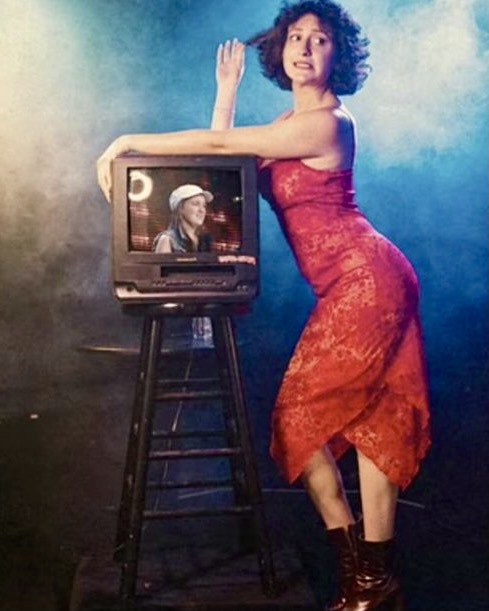
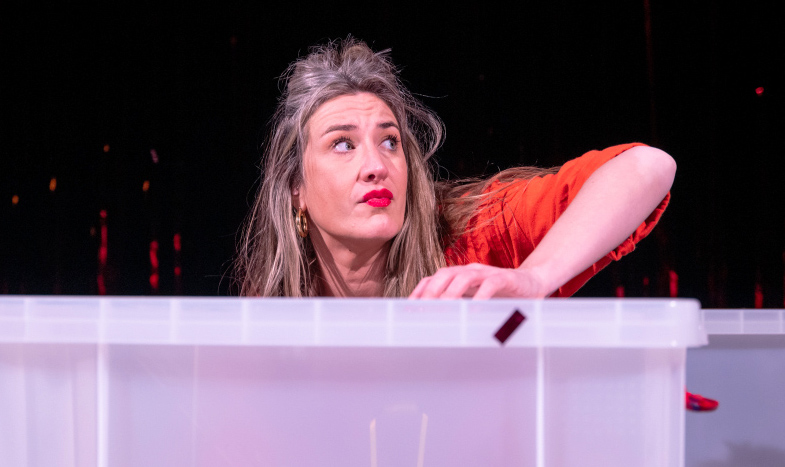
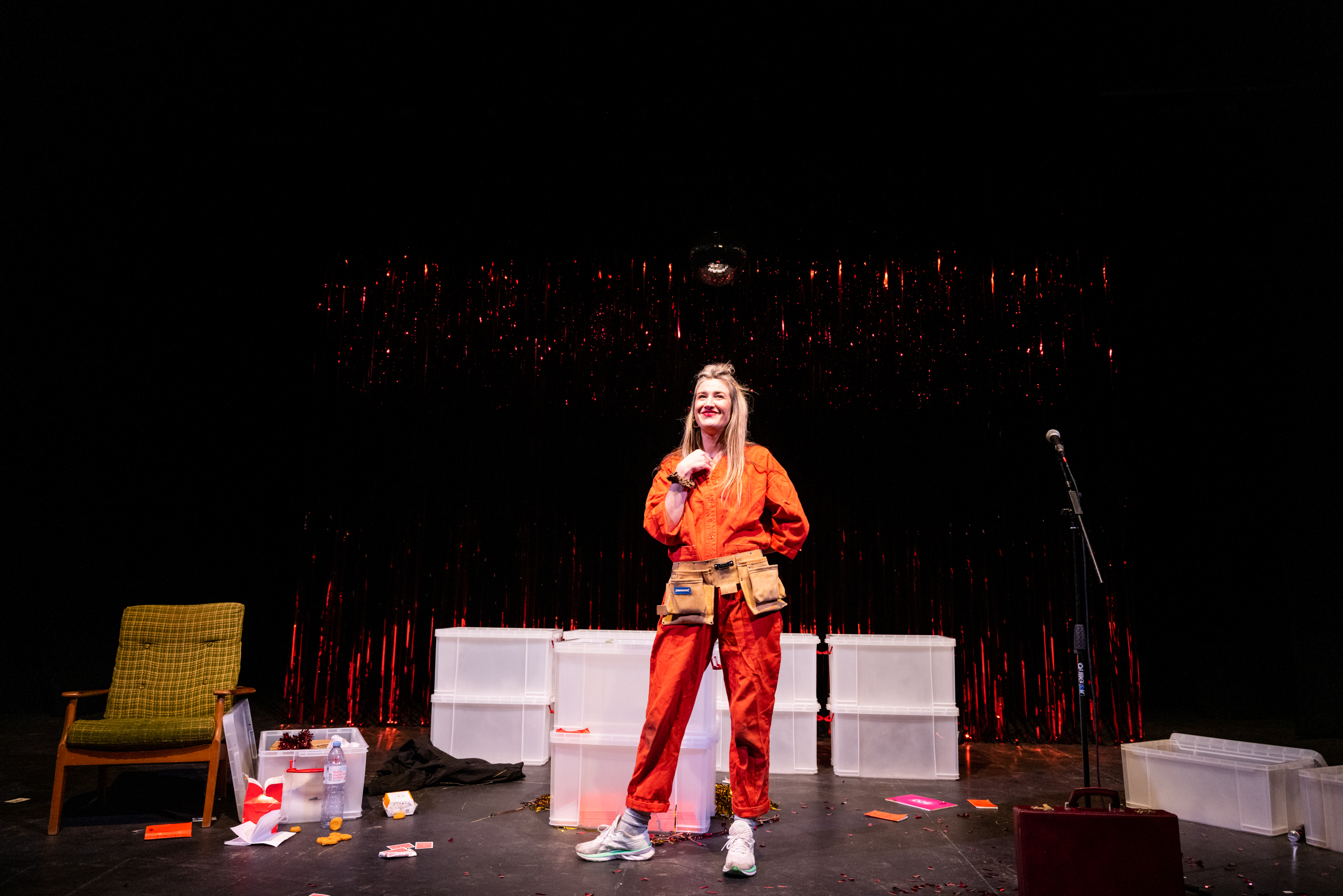
Tessa Coates: Get Your Tessa Coates, You’ve Pulled

21/08/22

Pleasance Courtyard (Beside), Edinburgh

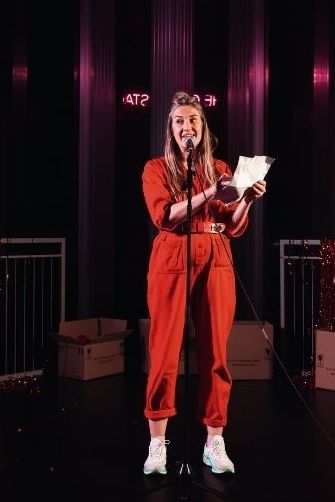
Whether Tessa Coates really is as ditsy and posh as the persona she creates seems almost immaterial: I’m hooked. From the moment she stumbles onto the stage, all swishy hair and giggles, I’m completely disarmed. I like her. I’m not sure why. I don’t think we’d have much in common. But she’s so lively and engaging, it’s impossible not to warm to her.

Coates has, she tells us, recently been diagnosed with ADHD. “No,” she corrects herself. “Just ADD. Without the H.” Hmm. She might not be clinically hyperactive, but she’s certainly excitable. And very, very easily distracted. At least, the on-stage version is. If the real-life Tessa is the same, then I guess we have someone else to thank for organising this Fringe run, and getting her to the show on time.

I like the way Coates leans into and acknowledges her privilege, mocking her own pony-riding past, and likening herself to an Enid Blyton character. Even if it is Anne. “The shit one.”

The show itself is a fairly straightforward “here are some silly things I’ve done” affair, detailing the scrapes Coates has tumbled headlong into, mainly because she doesn’t think things through. She leads us through a series of minor calamities: from high school embarrassments to dressage problems; from awkward elevator moments in LA to the Brighton half-marathon. It’s all delivered in the same vibrant, upbeat, appealing way, as ludicrous-but-ace as the pink ride-on electric kids’ car that dominates the stage.

Coates bought it on impulse, not realising it’d be both too small and too big. “It’ll be fine,” she tells us.

And it is.

4 stars

Susan Singfield

Lucy Porter: Wake-Up Call

12/08/22

Pleasance Courtyard (Forth), Edinburgh

Lucy Porter is as vivacious and likeable as ever – her bright-eyed enthusiasm is hard to resist. Perhaps she relies on this a little bit too much in this loosely-structured show, however, which seems to skirt around a point it never quite makes. 

The premise is ostensibly about a mid-life ‘crisis’, resolved by the wake-up call of the title. It’s relatable (most of the audience – including me – are in the same age bracket as Porter) but there isn’t really anything calamitous or, well, crisis-like here, just a vague sense of anxiety about getting old.

There are lots of laughs though. It’s a pleasant, meandering monologue, and Porter’s warmth and charm shine through. But I’m left wanting something more. That bed, for instance. It’s an enormous prop. It must be a pain in the arse to store and set up. But it’s a perfect example of Chekhov’s gun principle – if it’s not going to be used, what’s it doing there? (Okay, so it is used, in fact, but only for a nano-second, and not to any great effect.) 

An agreeable way to spend an hour, this one’s probably the perfect tonic if you’re in the mood for an undemanding treat. 

3 stars 

Susan Singfield 

Emily Wilson: Fixed

09/08/22

Pleasance Courtyard (Beneath), Edinburgh

Emily Wilson’s Fixed is part musical, part stand-up and part catharsis. Clearly a born performer, Wilson takes us on a tour of her youth, from beaming toddler to broken teen. It’s all been chronicled, of course: she’s 26 years old, a whole lifetime of phone recordings and insta-chats and YouTube videos. Oh, and primetime national TV too.

That’s the crux of the story: Wilson appeared on The X Factor USA in 2011, as one half of the earnestly named duo, Ausem. “Because my best friend’s called Austin, and my name’s Emily, so together we’re Ausem!” She thought her dreams had come true: she was 15 and destined to become a star. But then they hit a snag. The judges decided they liked Austin, but not Emily…

Wilson’s tale, co-written and directed by Sam Blumenfeld, is compelling. She’s a vivacious, funny, talented woman – and, while she’s disarmingly self-deprecating, she’s justifiably pissed off. The X Factor nearly destroyed her. How is a child supposed to process such public humiliation? How do the powerful adults in charge legitimise hurting her for viewing figures, for more dollars in their bulging bank accounts? Do the haters on social media sleep well at night, knowing they’ve made a young girl cry?

The past is detailed via a series of video clips and diary entries, interspersed with stand-up and original songs revealing Wilson’s current perspective. What emerges is a thoughtful commentary on fame, ambition and exploitation, and it’s riveting.

Oh, and she really can sing. Whatever Nicole Sherzinger says.

4.6 stars

Susan Singfield

Autopilot

06/08/22

Pleasance Courtyard (Forth), Edinburgh

Rowan (Cassie Bradley) is a geospatial engineer, working on the development of a driverless car. Nic (Hannah van der Westhuysen) is a freelance illustrator, who is struggling to forge a career in a notoriously difficult field. Autopilot chronicles the history of their relationship, from tentative beginnings to bittersweet conclusion. Playwright Ben Norris relates the two women’s history in a series of non-chronological episodes that cleverly entwine with each other.

This could so easily be baffling, but the story is expertly told, and it only takes a short while to connect with what’s happening. As the hidden truths about both characters are gradually revealed, so the story becomes ever more intriguing. Rowan and Nic, it becomes clear, are products of their respective upbringings, unable to shrug off the shackles that have claimed them since childhood – and each of them is concealing things from their partner for very different reasons.

I love the simplicity of the staging here, the two actors pacing restlessly around an empty stage with only light and sound to indicate the abrupt switches in time and place. Bradley and van der Westhuysen offer impressive performances, handling their roles with authority and somehow managing to convey the most intimate moments without ever physically touching. And I love the fact that ‘Alexa’ is somehow a third character in this story, ever present and presiding over the action as the tale unfolds.

Deceptively simple, but emotionally charged and ultimately compelling, Autopilot is well worth your attention.

4.5 stars

Philip Caveney

Skank

18/08/21

Pleasance Courtyard, Edinburgh

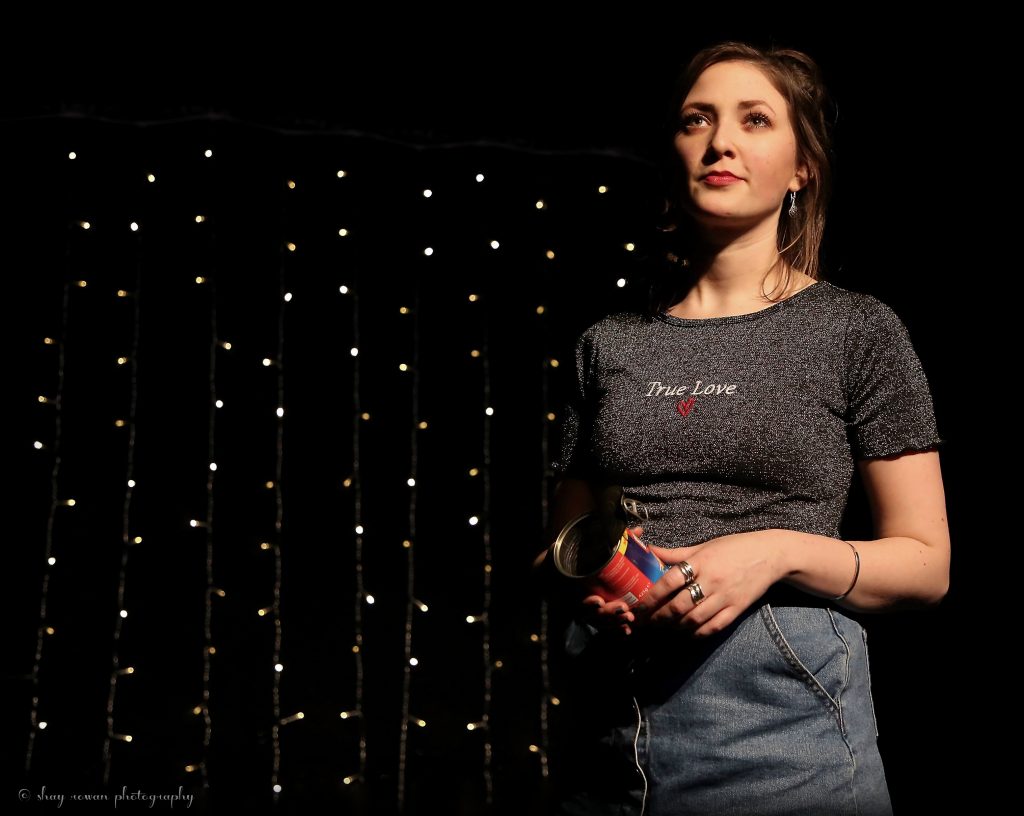
Skank is a surprise. I’m expecting a wry look at Millennial life, and – to some extent – that’s what I get. Clementine Bogg-Hargroves plays Kate, a young woman flitting from one temping job to the next, dreaming of being a writer but hardly ever actually writing anything. She won’t commit to a ‘proper’ job because the thought of it fills her with dread. She has nothing in common with her colleagues, but they seem to like her: she’s funny and sparky, and even has a crush on one of them. But Kate’s real life happens outside the office: in trendy coffee shops and pubs; in too much booze and one-night-stands; in knitting classes and doctor’s appointments.

Ah yes. Doctor’s appointments. Because this isn’t, it turns out, as light as it first seems. It’s a clever realisation of how people conceal their mental health problems. No one in the office can possibly have a clue about how anxious Kate is, all the time, of what her upbeat humour hides. As the play progresses, we see Kate unravel, all the while maintaining that same bubbly persona.

A smear test is the catalyst. An abnormality sends Kate spiralling, her tinnitus is out of control and she doesn’t know what to do. And why is it so bloody hard to recycle a baked beans tin around here?

Bogg-Hargroves truly inhabits the part, which makes sense, as it’s based on her own experience. She’s a charming, engaging performer, easily eliciting laughs from this afternoon’s audience. I cry too, because there is real heart here, and plenty of stuff that resonates. If at times it’s a little too close to home, a little difficult to bear, well, that’s the point, I think. That’s art, doing what art is meant to do.

There’s some lovely direction here (from Bogg-Hargroves and Zoey Barnes). The transformation of Kate’s desk into an examination table is simple and wonderfully offbeat, drawing a laugh all by itself. I like the little bit of puppetry too, and the pre-recorded offstage voices (sound tech by George Roberts) are a quirky and effective touch. (I do wonder, however, why the final voice is different from all the others; apart from this one, they’re all Bogg-Hargroves, who has an impressive range of accents and tones. Is this meant to signify something? If so, I don’t get it.)

Incidentally, the Pleasance Rear Courtyard is my favourite performance space so far this Fringe – the best example of a joyous outside/inside Covid-safe venue I’ve seen. And Skank is a delight too. Make time to see this. It’s a gem.

4.8 stars

Susan Singfield

Bard in the Yard: The Scottish Play

18/08/21

Pleasance Courtyard, Rear Courtyard, Edinburgh

What is the Edinburgh Fringe without a little Shakespeare, I hear you ask? Good question.

At B & B we’re always on the lookout for fresh interpretations of the Bard’s classics and here’s an interesting offering, staged in the well-ventilated confines of the Pleasance’s rear courtyard. The Scottish Play is a lively monologue, in which William Shakespeare (Caroline Mathison) strides onstage and tells us all about his current predicament. He’s been sent to Scotland by James the First to write ‘a Scottish play’ and, if he doesn’t deliver the goods, he could well end up with his head on a spike.

What better incentive could a playwright have?

So far, Will only has one dodgy soliloquy in his notebook – something about a dagger that also includes the word ‘erection’ – so he enlists three members of the audience to help him with the piece. They must make notes of anything he says that seems useable and, hopefully, by the end, he’ll have something that might just work.

Mathison is a confident and energetic performer, who manages to zip between silly and emotive with ease, seizing on the similarities between the pandemic and the plague (which affected so much of Shakespeare’s life) and making much play of it. The bit where she drenches her hands in sanitiser while singing ‘Greensleeves’ is a particular delight and I also enjoy the spirited renderings of several of the better-known soliloquies This is a piece that celebrates Shakespeare’s work and isn’t afraid to take risks with the material

But, what initially promises to be an immersive experience doesn’t really deliver on that score. Those three enlistees don’t actually have very much to do and, when one of them announces that his name is Macbeth, it isn’t picked up on and developed. Overall, the piece never seems entirely sure about what it wants to be – part knockabout comedy, part anguished recollection (as Will recalls his brother Edmund who died of the plague), it veers from one approach to the other and never finds a consistent tone.

By the end, Mathison is cavorting merrily around the stage, accompanied by ‘We Will Rock You’ handclaps from the audience. It’s all very jolly and lots of fun, but, with a sharper script, it could easily be more than that. Great venue though – and what might just be the catchiest title on this year’s fringe.

3.6 stars

Philip Caveney

Eugene

11/08/21

Pleasance Courtyard, Cabaret Bar, Edinburgh

The Edinburgh Fringe thrives on good ideas and there’s a great one one at the heart of Eugene.

Set in the not-too-distant future, this show takes the form of a presentation by ‘Hugh'(Daniel Nicholas), the CEO of Hubris Industries. (Think of the grandiose, over-sincere product launches that Apple are so fond of and you’ll get the general idea.) Hugh is here to present his new invention, Eugene. The titular star of the show is the world’s first superhuman Artificial Intelligence and is represented by a glowing cube on a rostrum. Hugh assures us it’s capable of controlling the entire planet’s electricity supply, whilst simultaneously solving climate change. In his pocket, Hugh has the three er… floppy disks needed to make all that happen.

Hugh is blissfully unaware that Eugene has already introduced itself to the audience, using lines of text on a big screen – and also on our mobile phones, via an app called The Difference Engine. Thus it’s established from the outset that Eugene is a mischievous character with a mind of its own and a propensity for telling us more about its creator than he would like us to know.

Then out strides Hugh to present his TED talk. Hugh is a delightfully monstrous creation: smarmy, self-possessed and, not to put too fine a point on it, is so up himself he’s lost all sense of proportion. His every announcement is accompanied by an artless pose and an inane laugh, a kind of deathly chortle. As the presentation continues, more and more of Hugh’s darkest secrets come bubbling to the surface – and it’s evident that his plan to get Eugene up and running as quickly as possible is probably not going to end well.

On the day I view the show, there are a few glitches with the technology, which I think throw Nicholas off his stride a little – and the middle section consequently feels somewhat muddled. This is a shame, because the idea of combining integrated captioning with live action is something I haven’t seen before and there’s so much potential here, I’d like it to be developed even further – because the show is at its best when that pesky AI is inviting us to break all the rules.

Even with some gremlins in evidence, Eugene is an enjoyable way to spend an hour at the Fringe.

4 stars

Philip Caveney
One Duck Down

23/08/19

Pleasance Courtyard (Above), Edinburgh

Festival-goers with young children to entertain will find plenty to enjoy in FacePlant Theatre’s One Duck Down. This lively family show is a charming mix of comedy and music, with an ecological theme.

Billy (Owen Jenkins) is a seventeen year old paperboy, who has lost his heart to the – clearly rather horrible – Cecilia Sourbottom (Alice Bounce). She keeps setting him Herculean tasks, telling him that only when he has achieved every one of them will she return his affection. His latest mission? To relocate the seven-thousand rubber ducks accidentally dropped into the ocean in 1992 (an event famously featured in David Attenborough’s Blue Planet television series).

Intent on proving his devotion, Billy sets off in a little boat, with only his unfailing optimism and a couple of sandwiches to get him through. En route, he encounters a rock’n’ roll-obsessed polar bear (Maxwell Tyler), a batallion of plastic-worshipping crabs, and a fearless bearded lady (Lydia Hourihan), who soon proves to be a worthier contender for Billy’s affection than the odious Cecilia.

It’s all done with good-natured zeal and bags of ingenuity: a myopic whale is somehow conjured out of a couple of sheets of painted cardboard; a host of skittering crabs are created using nothing more than pairs of red mittens. The costumes are garbage – quite literally; they’re made from throwaway items rescued from the trash. On the ecology front, however, it might have been preferable to concentrate less on recyling and cleaning up detritus and more on preventing the creation of waste in the first place, but this does get the idea across to even the youngest members of the audience that we all need to take drastic action if the planet is to be saved.

As the story romps amiably along, we’re treated to a selection of catchy songs, which soon have the audience joining in on the choruses – and those who enjoy groan-inducing puns will have an absolute field day here. My particular favourite? That famous seafaring novel, Moby Duck.

There are just a few days left to enjoy this, so gather up the kids and get on down to The Pleasance Courtyard, where the quest begins.

4 stars

Philip Caveney


Rhys James: Snitch

17/08/19

Pleasance Courtyard (Above), Edinburgh

One thing’s for sure: Rhys James is technically very good. There’s a full house tonight, and he has the audience in the palm of his hand. He’s confident, delivering his act at breakneck pace, never missing a beat. Structurally it’s masterful: the laughs keep coming, the callbacks are well-timed, and every – seemingly unrelated – strand is gathered together in a bravura finale.

And some of it is marvellous. I love the stuff about our peculiar atttitudes to serial killers – and the eerily accurate Tom Allen impression that accompanies it. There are some sharp observations about renting a flat, and the faux-advert-poetry is very droll indeed.

But, when the delivery is this impressive, it’s disappointing that some of the material is so mundane: lots of Peter Kay-style ‘do you remember that?’ material, and a long routine about bathing, which doesn’t really take us anywhere.

Maybe it doesn’t matter: certainly, tonight’s audience is roaring with laughter – and I’m joining in too. He’s funny. It’s just that I prefer my comedy a little more challenging, and James clearly has the ability to create something more memorable.

3.9 stars

Susan Singfield

Sexy Lamp

14/08/19

Pleasance Courtyard (Baby Grand), Edinburgh

I know I’m going to like this show as soon as I enter the room, and am offered a rhubarb and custard boiled sweet. There’s a huge jar of them being passed around, while Katie Arnstein – the writer/performer responsible – sits on stage, dressed in a leopard-print dressing gown, with a lampshade on her head. A quirky, inclusive atmosphere is established even before we have begun.

In some ways, Sexy Lamp could be dismissed as – yawn – yet another monologue about an actor struggling to cope, which is certainly a popular theme at this year’s Fringe. But this piece is so charming and well-crafted that it’s impossible not to warm to it – and it’s outward-looking too. Arnstein doesn’t just tell us about how she‘s dealt with her problems: she opens up her outrage; this is a call to arms.

Arnstein is immensely likeable. As she sheds the lampshade, she expounds Kelly Sue DeConnick’s theory about movies and plays: if there’s a scene where a woman can be replaced with a sexy lamp without derailing the plot, this indicates that something is awry.

From here, we learn about Arnstein’s childhood dream to be an actor – or, more specifically, to be Dorothy in The Wizard of Oz. That first young impulse stays with her, and leads her to drama school, then out into the world as an actor seeking work. And then, to her horror, exposes her to the unspeakable sexism rife in the industry.

To Arnstein’s credit, this never feels self-indulgent. Her indignation is real and justified, and presented with a clear understanding of how to win over an audience. Her feminism is expressed through witty songs (self-accompanied on the ukulele) and delivered with bags of natural charisma. As she struggles to assert herself, to define her own parameters, she sends a clear message to all of us: even in such a competitive industry, acquiescence is not always worth it; sometimes it’s better to say ‘no’ than it is to say ‘yes, and…’

4.6 stars

Susan Singfield