01/11/26
Cineworld, Edinburgh
Co-directed and written by Alex Huston Fischer and Eleanor Wilson (from an original short story by Ursula Wills), Wicker takes place in a picturesque medieval village somewhere in England, judging by the accents, though it’s actually filmed in Hungary. This is a place where people don’t have names so much as professional labels and it’s clear from the outset that, in this village, marriage is the all-important institution, prized above all else. New brides happily don metal collars to signal their new status and obedience to their husbands – though few of them seem enraptured by the resulting relationships and many spend most of their time dreaming of escape.
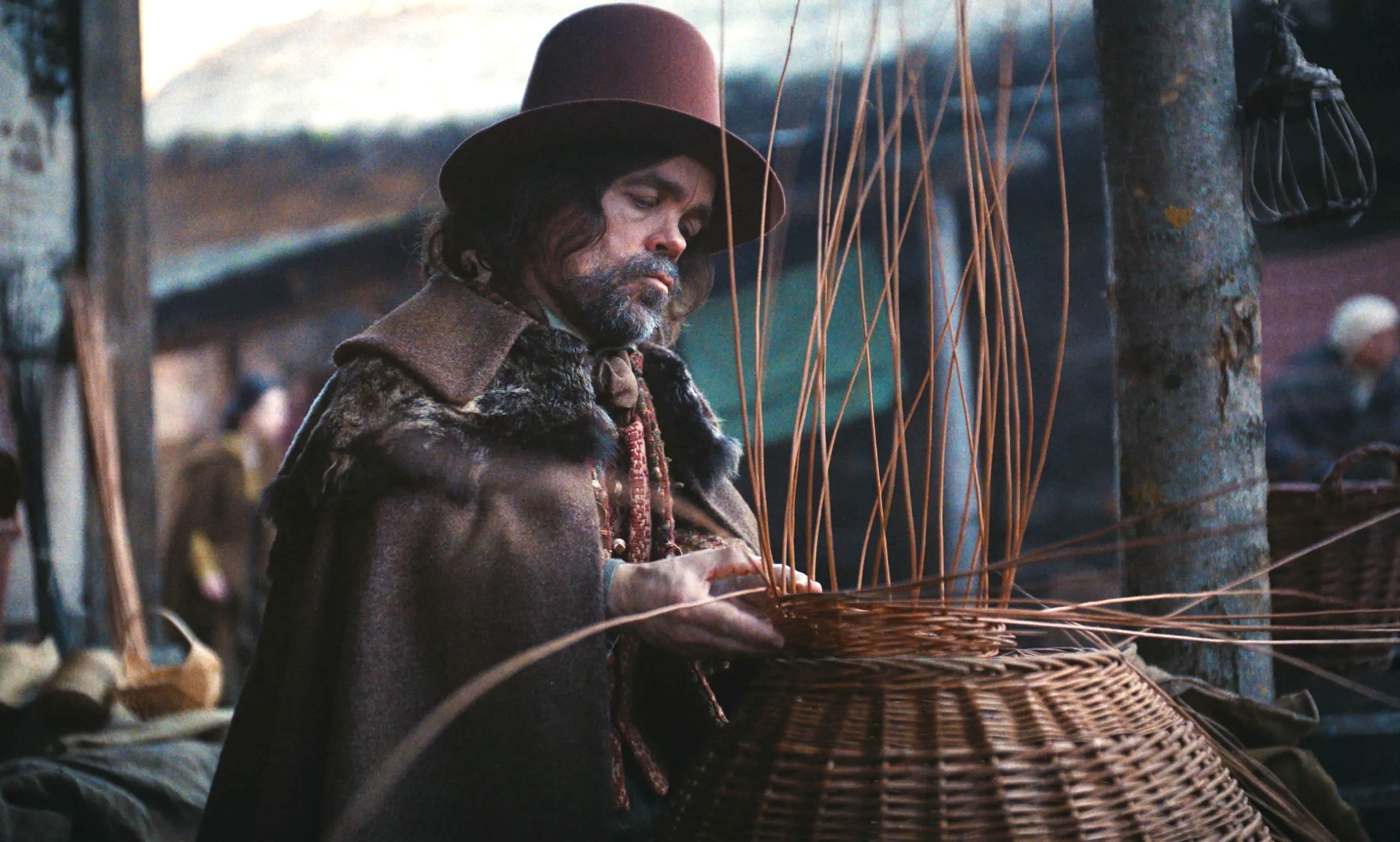
Fisherwoman (Olivia Colman) lives alone in a ramshackle dwelling by the river. We learn little of her past but it’s clear from the outset that she’s the butt of every joke in her community, mostly because she smells of the commodity she sells. The haughty, imperious Tailor’s Wife (Elizabeth Debicki) seems to relish belittling Fisherwoman at every opportunity and, since Tailor (Nabhaan Rizwan) is so prosperous, most of the other women in the village follow his wife’s lead. Eventually, something in Fisherwoman snaps and she makes the arduous journey to the remote cabin of Basketmaker (Peter Dinklage). She hands him some coins and instructs him to ‘make her a husband.’ He calmly tells her to be at the chapel in one month’s time.
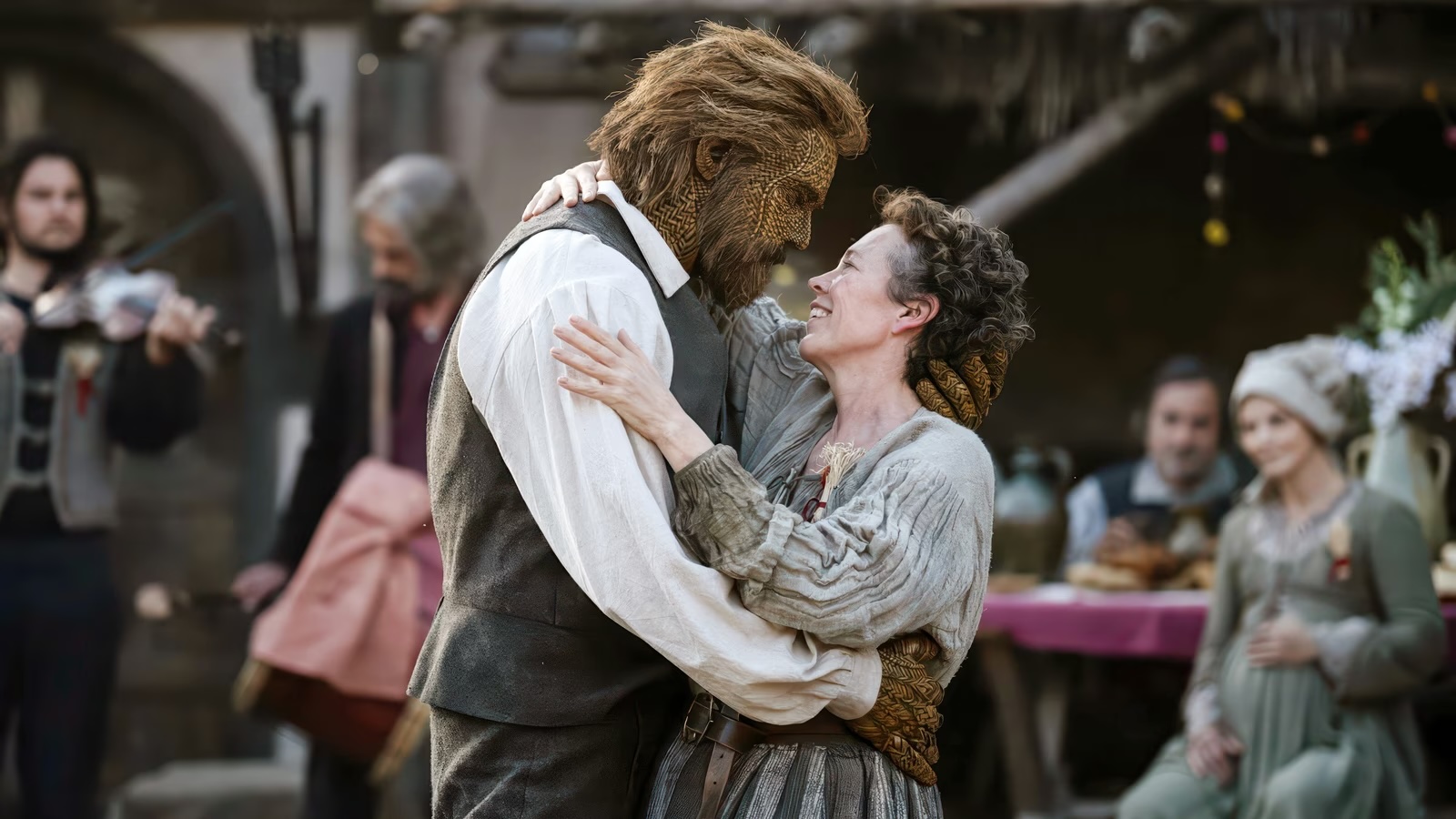
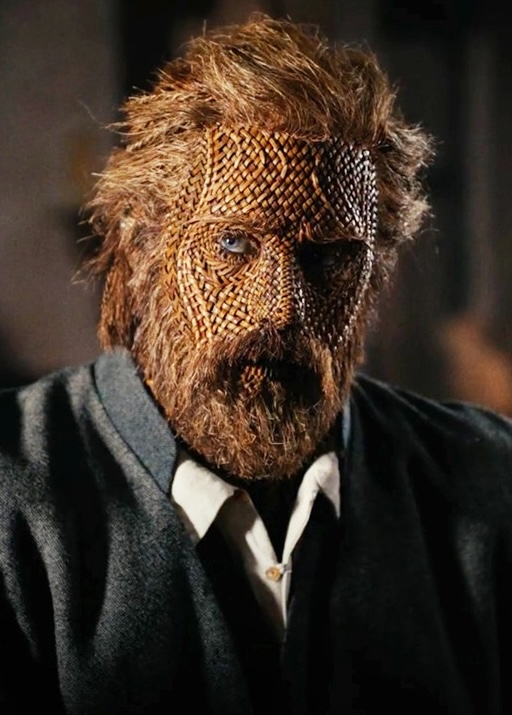
Sure enough, on the day in question, dressed in what passes for her Sunday best, Fisherwoman turns up to find her groom (Alexander Skarsgård) dutifully waiting for her. Skarsgård wears an extraordinary willow suit created by Weta Studios, which transforms him into something fantastic, while simultaneously allowing his distinctive features to shine through – a superb example of how practical effects can be the equal of anything CGI can achieve. Fisherwoman is initially unsure that she’s done the right thing. Her new amour tends to creak quite alarmingly but, from the marriage night onwards, he’s clearly determined to please her in any way he can and their lusty lovemaking ensures that their bed keeps breaking on a regular basis. Luckily Fisherwoman’s Husband is also quite handy with a hammer and nails.
But as the couple’s bond grows ever stronger, others watch with jealous eyes… and the gentlemen of the village are starting to feel that they’re being shown up as inferior to the wicker alternative.
Presented as a mix of folk tale and parable, Wicker is a truly enjoyable watch. Olivia Colman is always impressive and here she’s joined by a whole crowd of veteran actors, some of them in minor roles. Richard E Grant makes a brief but hilarious appearance as the village’s incompetent Doctor, while Phil Daniels is suitably rumbustious as Butcher, a man who believes that women are placed on this earth for one reason only. Debicki is quietly impressive as the villainess of the story, her lofty height cleverly exaggerated so that she’s literally looking down on all her neighbours – and Dinklage makes a fabulous job of the erudite Basketmaker, who has the ability to sum up everyone he encounters at a single glance.
While it’s undoubtedly little more than entertainment, Wicker is handsomely filmed by Lol Crawley and its various twists and turns keep me hooked throughout, right up to its wild conclusion. I’m amused to learn that some real-life basketmakers have expressed doubts about the techniques used in the Wicker Husband’s construction but, for me, the whole enterprise has been beautifully put together.
4.2 stars
Philip Caveney


