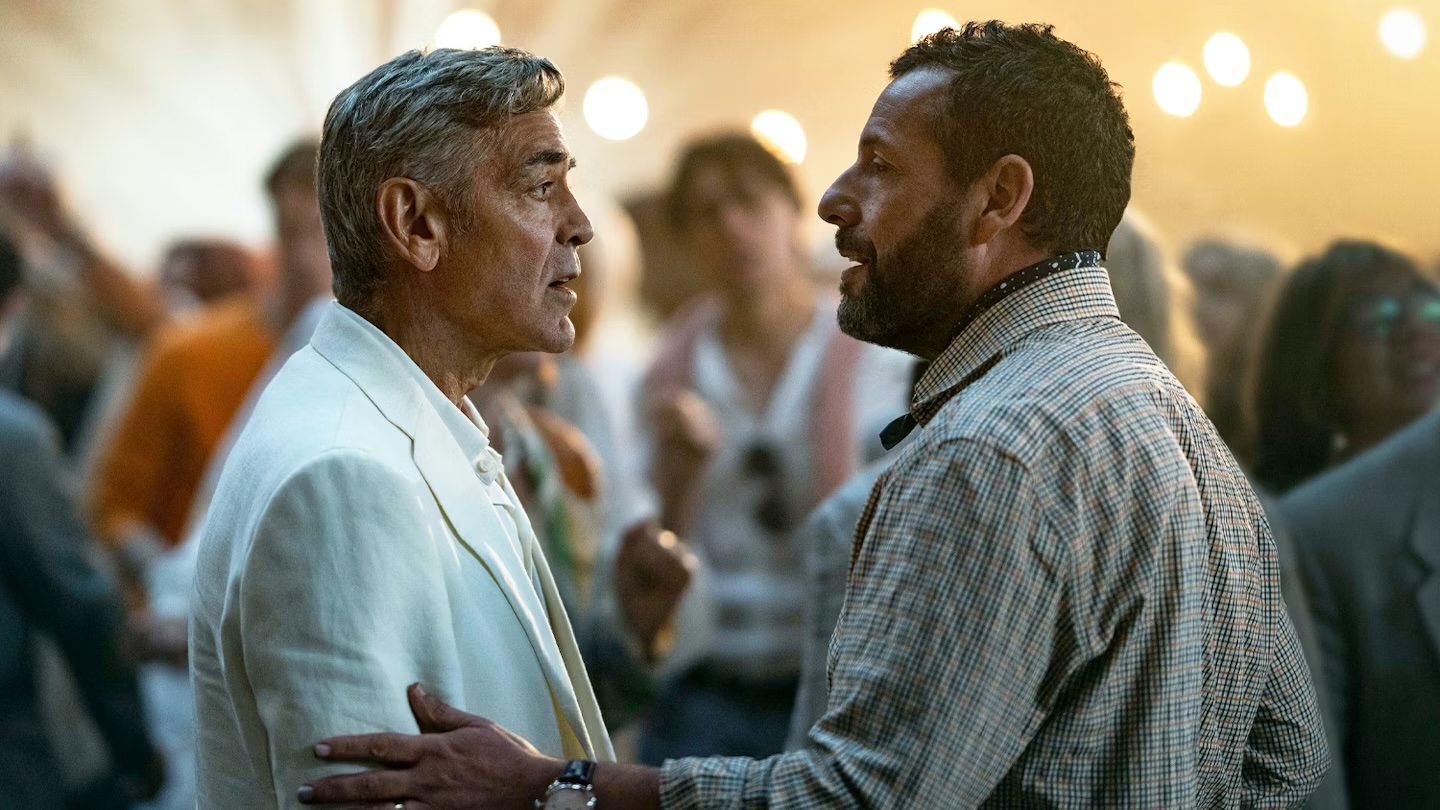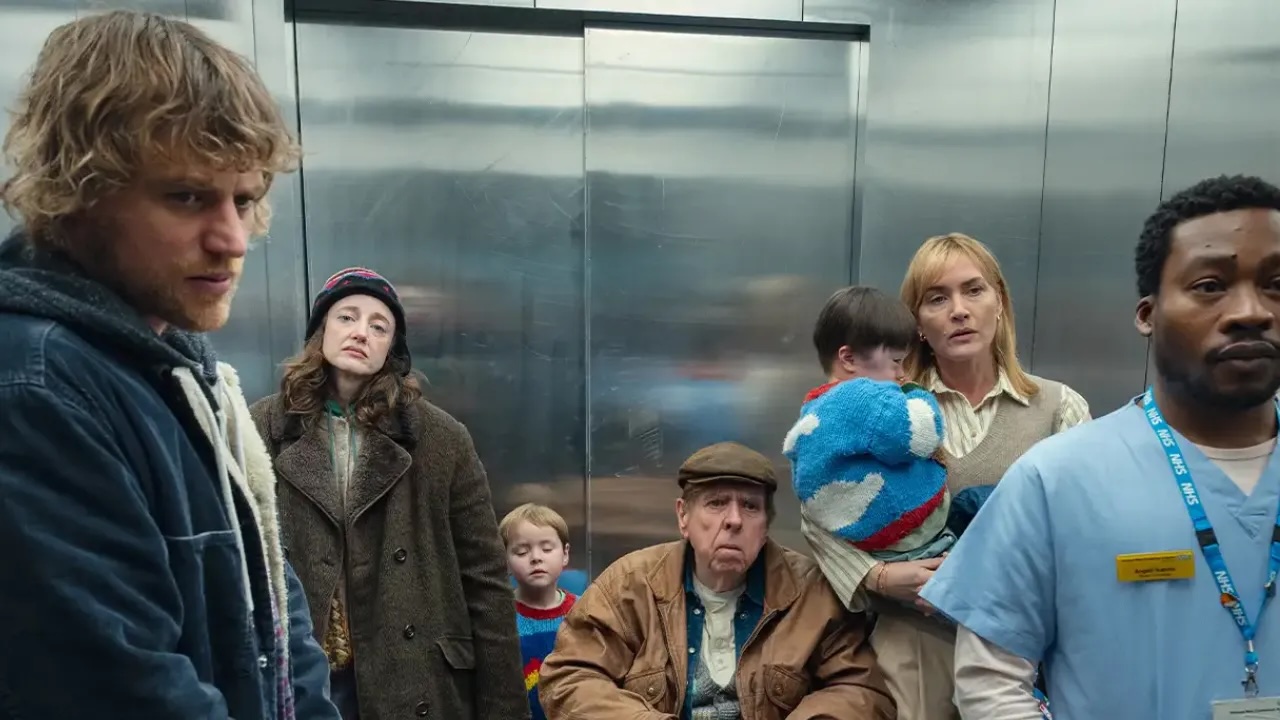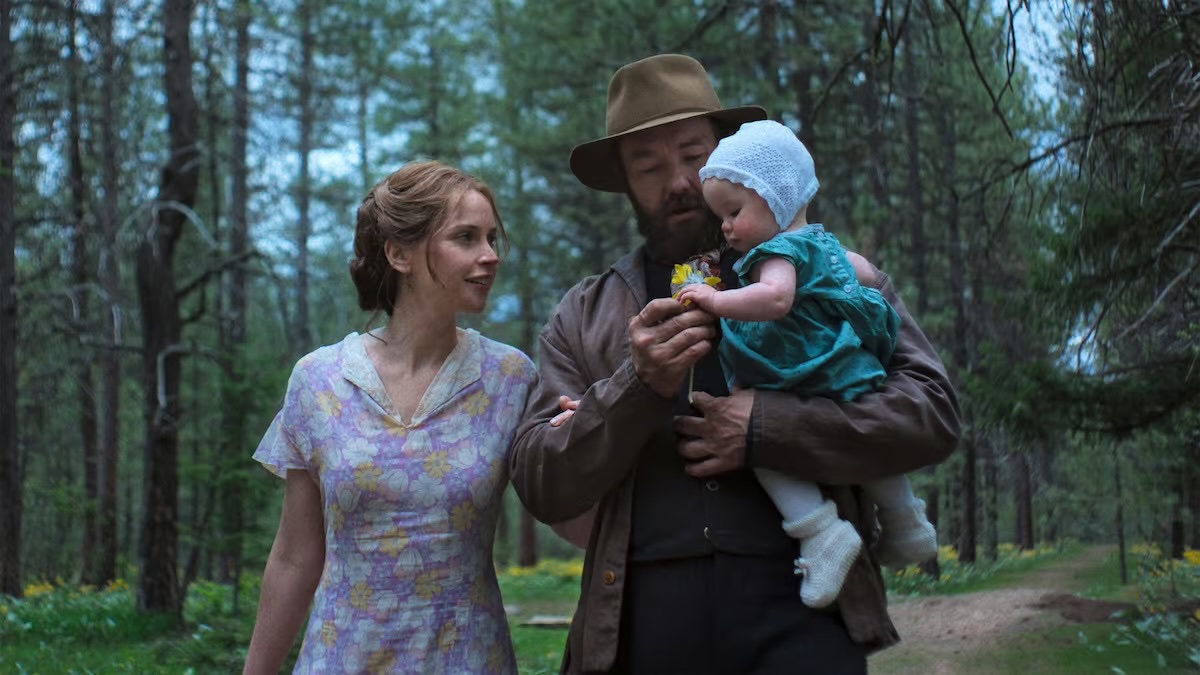

Netflix

Frankenstein

25/10/25

Filmhouse, Edinburgh

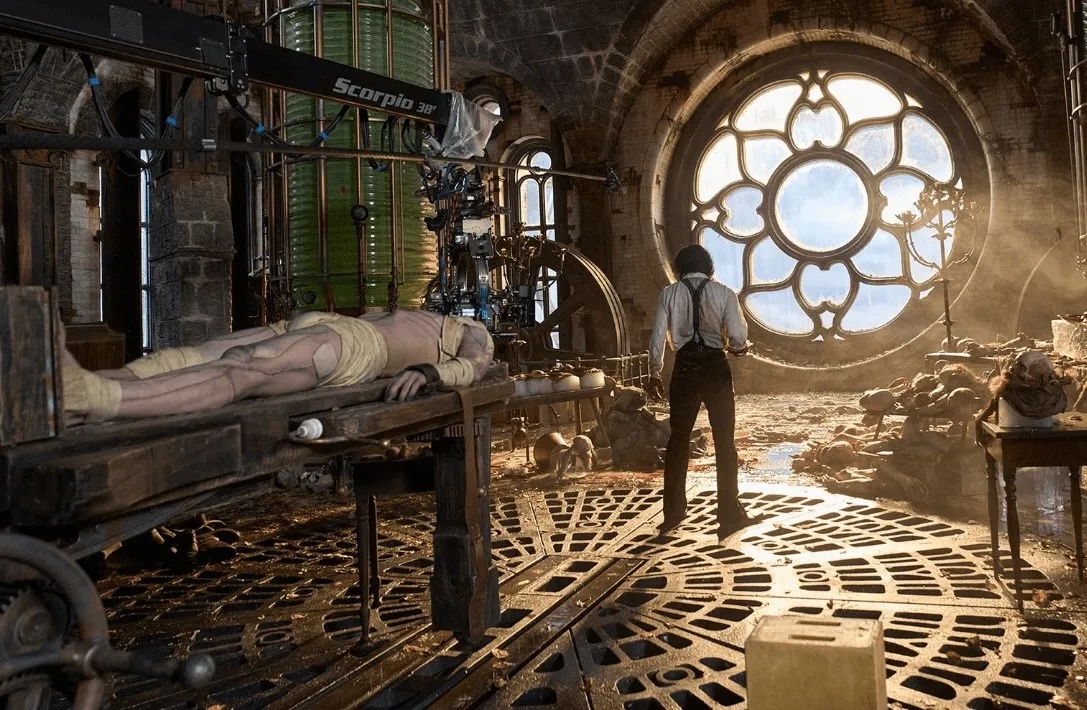
Guillermo del Toro was always going to make his version of Frankenstein one day – the seeds were sown in his 1992 Spanish-language film, Cronos, the first of his features that I ever saw in the cinema and the one that convinced me he had a big future ahead of him. 

Now he’s finally got around to doing the job properly, courtesy of Netflix, who stumped up the $120m budget. For a while it looked as though there wouldn’t be any chance of seeing it in an actual cinema before the transfer to streaming. This would have been a crime because del Toro’s adaptation of the tale looks absolutely sumptuous on the biggest screen at Filmhouse and I’m delighted to see that the auditorium is  pretty busy for a Saturday afternoon showing.

Frankenstein is, of course, one of the most filmed books in history, but it’s probably fair to say that only a handful of the 423 movie adaptations (not to mention the 287 TV episodes – yes, I did Google it) have come anywhere close to capturing the essence of Mary Shelley’s seminal horror story. While del Toro does throw in a few original twists of his own (of course he does!), he sticks fairly close to Shelley’s narrative – indeed, he’s even credited her as his co-screenwriter. The tale is told in three distinct parts.

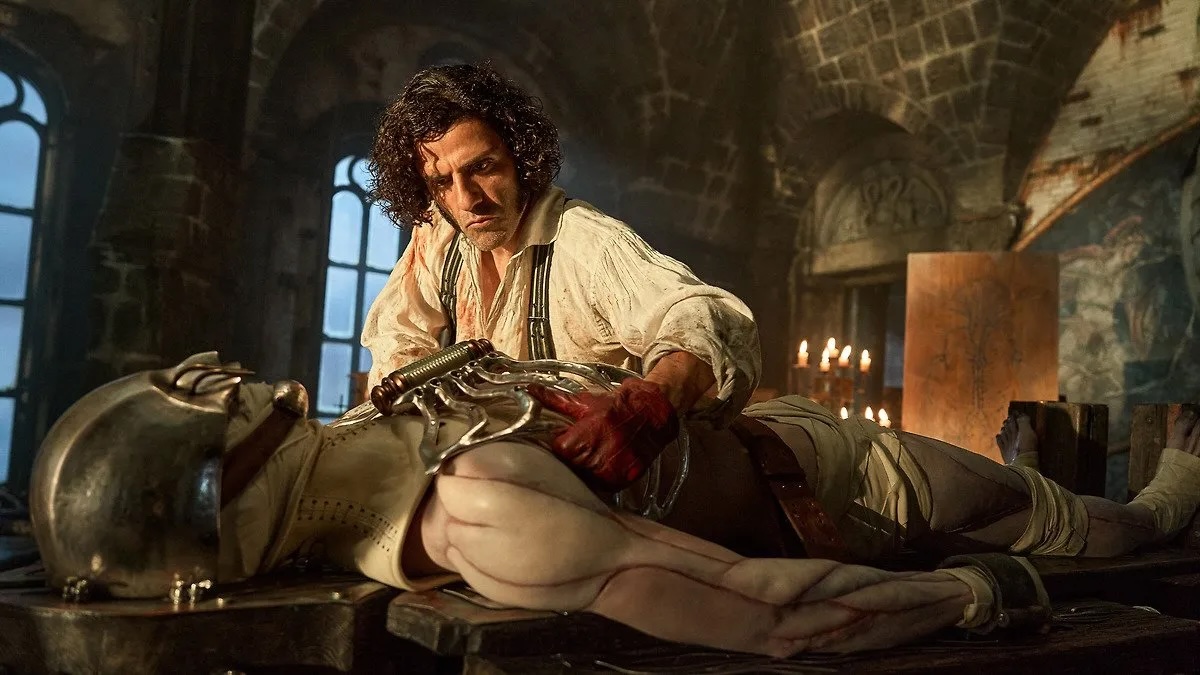
In the opening Prelude, we join Captain Andersen (Lars Mikkelsen) and the crew of his sailing ship, who are stranded on the ice in remote Arctic waters. There’s a sudden explosion nearby, from which the crew rescue Victor Frankenstein (Oscar Isaac), who has been pushed almost to the point of death by a monstrous assailant. After witnessing The Creature (Jacob Elordi) plunging into icy waters, they carry Victor onto the ship – but, once revived, he assures Andersen that his pursuer will not actually be dead and will surely come for him…

Before that happens, he needs to tell his story.

Victor then narrates The Creator’s Tale and we flashback back to his childhood where, under the rule of his despotic father, Leopold (Charles Dance), Young Victor (Christian Convery) first becomes obsessed with life and death. Keen-sighted viewers may spot something familiar about Victor’s barely-glimpsed mother, Claire. Something distinctly Oedipal is happening here.

We then cut to some years later. A grown-up Victor is causing controversy at medical school in Edinburgh with the grisly experiments he’s conducting on cadavers (and I get to revisit some of the sets that were evident around my home city in September 2024). We are introduced to Victor’s younger brother, William (Felix Kammerer), and his fiancée, Elizabeth (Mia Goth). We also meet Harlander (Christophe Waltz), a character created for the film, a wealthy man who, for clandestine reasons, is perfectly happy to finance Victor’s attempts to take his experiments all the way.

But Victor’s account is later contrasted with The Creature’s Tale, where we learn of the years when the monster and his creator were apart: how The Creature lived in a barn alongside a kindly blind man (David Bradley); how he mastered the art of speaking (with a distinctly Yorkshire accent); and how he slowly began to realise how shabbily he’d been treated…

It’s not just because I’m a devout Guillermo del Toro fan that I think this film is a million times better than every other Frankenstein-generated movie I’ve watched down the decades. Isaac is a revelation in the title role, nailing both the character’s sense of privilege and his fatal short-sightedness. Elordi, meanwhile, offers a fresh take on the Creature that really brings out his innate vulnerability and his desperate need to relate to others, something that’s been attempted before with much less success. 

The film is packed with sumptuous locations and thrilling action set-pieces, that have it hurtling through its lengthy running time. Cinematographer Dan Lausten captures every scene with an almost luminous intensity, Kate Hawley’s costume designs are exquisite, and there’s a beautiful score courtesy of Alexander Desplat. If I have a minor niggle it’s that the CGI-generated wolves in one long sequence aren’t quite as convincing as they need to be – and perhaps both Mia Goth and Felix Kammerer might have been given a little more to do?

But these are nitpicks. As ever in these situations, I’m urging people not to wait for this to drop onto streaming, because this level of filmmaking deserves to be watched on the biggest, brightest screen available, one of – dare I say it? – monstrous proportions.

I’ll get my coat.

4.8 stars

Philip Caveney

A House of Dynamite

12/10/25

Filmhouse, Edinburgh

It’s been quite some time since we saw anything from Oscar-winning director Kathryn Bigelow, but A House of Dynamite signals an auspicious return to the fray. This Netflix-financed epic will be streaming soon, but meanwhile it’s been granted a limited theatrical release. It’s big, glossy and features a host of well-known actors in relatively small roles, in a whole series of convincingly-recreated sets. It’s also one of the most utterly terrifying films I’ve ever seen.

At Fort Greely, Alaska, Major Daniel Gonzalez (Anthony Ramos) and his team detect the unannounced launch of an intercontinental ballistic missile, heading towards the United States. Moments later at the White House Situation Room in Washington DC, Captain Olivia Walker (Rebecca Ferguson) sees the incoming projectile on a giant screen and watches appalled as the terrifying statistics unreel. The missile’s current trajectory has it aimed squarely at the city of Chicago and – if unimpeded – in just eighteen minutes’ time, millions are going to die.

An attempt can be made to intercept the missile in the air but, as one observer comments, it will be “like trying to hit a bullet with a bullet.” And, should that fail, the only thing to be determined is the severity of the response. With no country claiming responsibility for the launch – indeed both Russia and North Korea are denying it – the decision must lie entirely with the POTUS (Idris Elba), who is in the middle of making a speech to a high school basketball team somewhere in the city.

And that eighteen minutes is ticking away…

Anyone expecting an exciting drama where a lantern-jawed hero runs athletically into view with a perfectly-timed maverick plan to save the world is going to be severely disappointed with A House of Dynamite. This is simply not that film. Instead, it’s the kind of story you watch with clammy palms as the threat steadily rises: the kind where you begin to realise that there really isn’t going to be any way of evading the devastating conclusion. There will be not scenes of relieved people hugging each other and fist-pumping beneath the Stars and Stripes as they realise the threat has been miraculously defused.

Instead we have human beings staring into the abyss as they see their hopes and dreams turning to smoke. And the realisation that this is the world we now live in, where one mistake can have cataclysmic consequences. Writer Noah Oppenheim opts to show the same eighteen minutes of the missile’s trajectory from three different perspectives. It’s only in the final third that we actually get to see the POTUS, as it dawns on him that he is going to have to select his country’s response to the situation from a handy booklet presented to him by an aide – a sort of IKEA manual for disaster – and that the repercussions of that decision will live with him forever. (Despite his helplessness, I find myself wistfully wishing that Idris Elba actually were the President of the US instead of the man who currently has his hands on the nuclear codes…)

This is a tough watch. I honestly cannot remember being so profoundly affected by a film since I first saw Peter Watkins’ film, The War Game, back in 1966. While I cannot in all honesty claim to have enjoyed watching A House of Dynamite, I believe it’s an important and brilliantly-directed film, with a powerful and important message at its core. I would urge everyone to see it and have a long, hard think about the awful truth it clarifies: that we as a species have built the unstable dwelling of the title – and that we are forever doomed to live with that knowledge unless we do something to change it.

5 stars

Philip Caveney

The Thursday Murder Club

01/09/25

Netflix

Oh dear. The first film of the month and it’s a stinker. I haven’t read Richard Osman’s best-selling novel (cosy crime isn’t really my thing) but I’m sure it deserves a better adaptation than this. His podcasts (which I do listen to) show him to be clever and erudite. This movie is neither.

All the right pieces are in play: popular source material, a stellar cast, the prettiest of English villages. There’s even cake – but sadly not enough to sweeten this twaddle.

The Thursday Murder Club comprises four wealthy pensioners: Elizabeth (Helen Mirren), Ibrahim (Ben Kingsley), Ron (Pierce Brosnan) and Joyce (Celia Imrie). They live in a stately home called Coopers Chase, which has been converted into the the most luxurious retirement apartments imaginable, and pass their time investigating the cold case files their fellow resident, Penny (Susan Kirkby), a former detective, has somehow managed to hold onto.

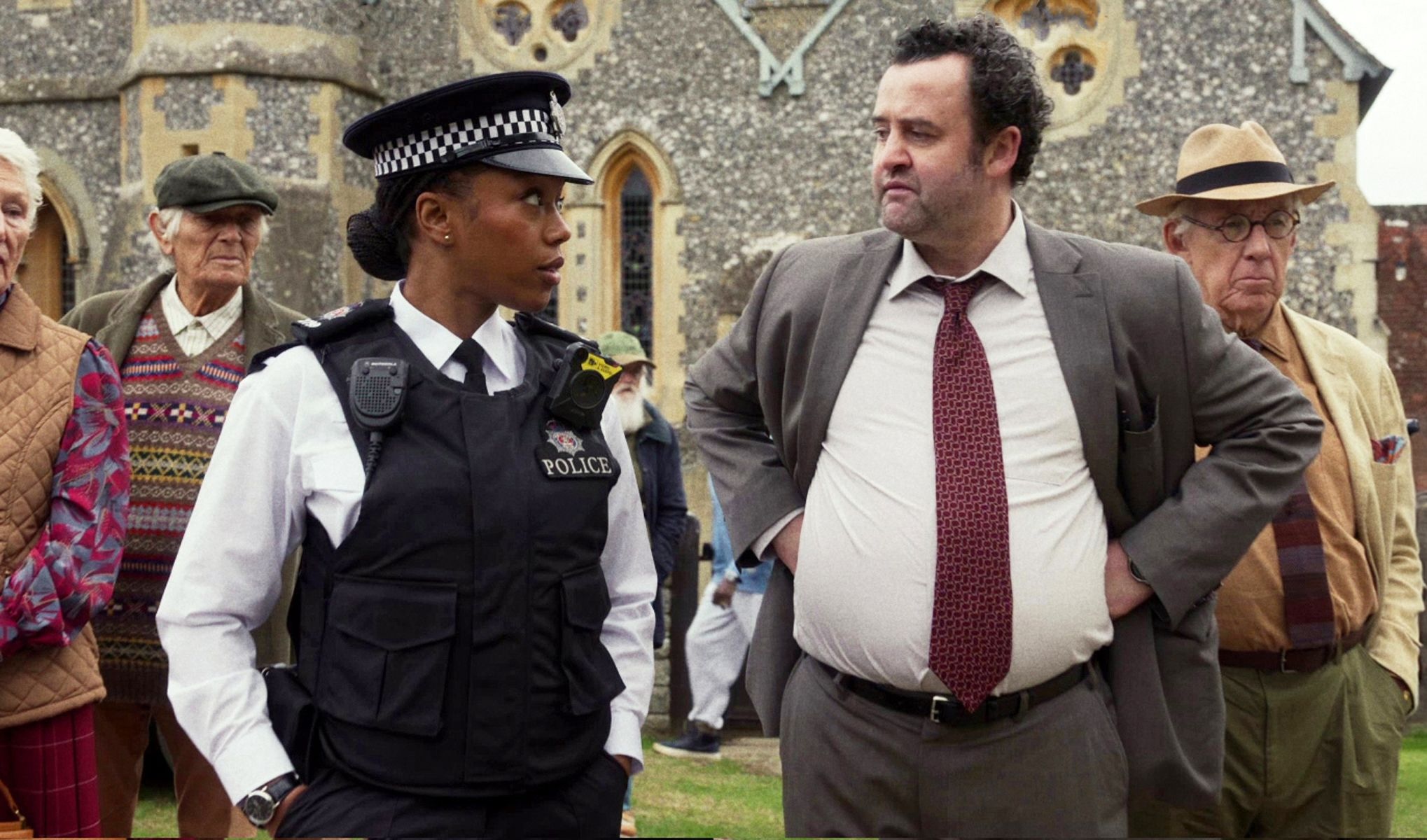
But when money-grubbing landowner, Ian Ventham (David Tennant), reveals his plans to redevelop Coopers Chase, murder is no longer confined to the past. The privileged pensioners can barely conceal their glee at having something real to get their dentures into, much to the dismay of local police officers, Chris Hudson (Daniel Mays) and Donna de Freitas (Naomi Ackie).

Amidst the lightweight sleuthing, some serious issues are raised, including people-trafficking and dementia. But these are hopelessly out of place, treated so glibly that it feels very uncomfortable. There’s some real snobbery at play here too, presumably unconscious: the working-class-man-made-good with his loud voice and tacky McMansion; the upper-class oldies with their mellow tones and oh-so-tasteful decor.

I want to find nice things to say because it’s Helen Mirren, for God’s sake. But hers isn’t even the most wasted talent – at least she’s in a lot of scenes. The wonderful Ruth Sheen barely gets a look in as Aunt Maud. (What’s the purpose of this character? She adds nothing to the plot.)

To quote a catchphrase that’ll only mean something to Gen X, here’s my suggestion: Just Switch Off Your Television Set and Go and Do Something Less Boring Instead.

2 stars

Susan Singfield

Havoc

27/04/25

Netflix

Welsh filmmaker Gareth Evans first came to prominence with his martial arts epic The Raid in 2011. An inevitable sequel (imaginatively entitled The Raid 2) followed in 2014, but his last big-screen release, The Apostle (2018), came and went with barely a ripple. So Havoc is clearly an important project for Evans. Which may explain why it feels like the very definition of the word ‘overkill.’

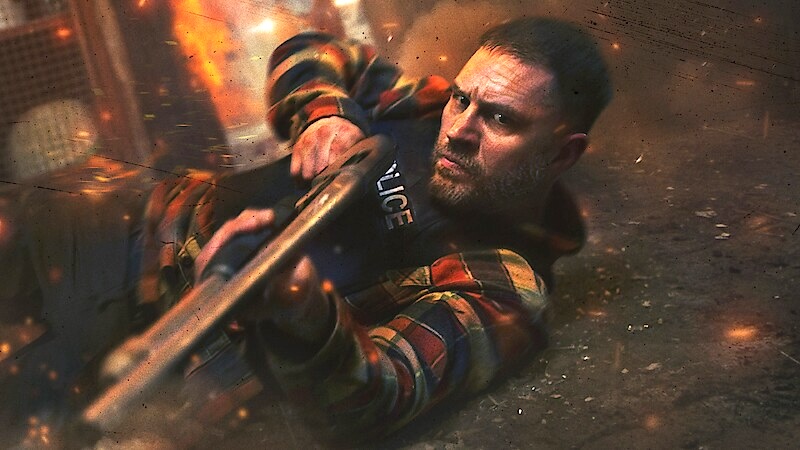
To be fair, it starts well. The action takes place in an unspecified American city – actually a heavily-CGI’d Cardiff. Grizzled cop Walker (Tom Hardy) is at an all-night garage, hastily trying to buy a Christmas gift for the twelve-year-old daughter he rarely ever sees. (Mind you, we don’t get to see much of her either.) Walker, it quickly becomes clear, is a dodgy copper, but then he’s not alone. Every member of the police force we meet in this story is on the take, apart from Ellie (Jessie Mai Li), who has only recently taken up her post as Walker’s sidekick.

After a drug deal goes wrong, Charlie (Justin Cornwell), the son of crusading politician, Lawrence Beaumont (an underused Forest Whitaker), finds himself hunted by a vengeful Chinese gang leader, who lost her own son in the resulting gunfire. Walker is ‘persuaded’ by Beaumont – yes, he’s also dodgy – to rescue Charlie, in exchange for a pardon for former crimes…

But the plot hardly matters, since Havoc – as the name might imply – is mostly an excuse to string together a series of action set-pieces. The first of them, the aforementioned ‘drug deal gone wrong’, is nicely staged, with some artfully-filmed slo-mo sequences and, what’s more, it’s relatively brief. But having dipped his bread in the old red stuff, Evans (who also wrote the screenplay) seems determined to serve up an ‘all-you-can-eat’ buffet of mayhem and murder.

The action becomes increasingly incoherent. People don’t just get shot and fall down, they dance around the screen spouting blood like human colanders. There’s a seemingly inexhaustible supply of ammunition and the Chinese drug gang employs an infinite number of human targets, all of whom appear to exist simply to run gleefully towards their own destruction. You’d need an abacus to keep a record of the body count.

For me, the main problem here is that, aside from Ellie, every character I meet is a villain of the lowest order and, while it’s not impossible to get audiences to root for bad people, you first have to know something about them in order to care what happens. But I know hardly anything about anybody and that includes Walker. Somewhere in this mess, excellent actors like Timothy Olyphant and Richard Harrington struggle to make any impression, as they are inextricably lost in a tidal wave of blood and bullets. As Havoc thunders towards its final, protracted punch-up, I’m already wistfully looking forward to the credits.

This one is clearly made for diehard action freaks and doubtless it will scare up some kind of an audience on Netflix – but for me it’s too loud, too messy and too downright unbelievable.

2.8 stars

Philip Caveney

The Remarkable Life of Ibelin

07/01/25

Netflix

Mats Steen (1989-2014) was only twenty-five when he died. The young Norwegian’s parents, Robert and Trude, had a lot to mourn: not only their son’s death but also the opportunities that had eluded him in life. Mats was born with Duchenne muscular dystrophy, an inherited disease that causes progressive muscle weakness. Although he could walk unaided as a child, by the time he reached adulthood, he could only move his fingers. Robert and Trude hated how limited Mats’ world was. He just played on his computer all day. He had no friends, had never been in love, rarely ventured beyond the four walls of his basement flat beneath their family home.

Or so they thought…

Reeling from his loss, Robert accessed Mats’ blog and left a message announcing his son’s death.

An avalanche of emails followed. And that’s when Robert and Trude discovered that, in fact, Mats had created a rich life for himself – online, within the World of Warcraft game. Here, he was Lord Ibelin Redmoore: a strong, handsome man, who went for a run every morning and socialised happily in the tavern at night. In role, he and his fellow gamers forged friendships, sharing secrets and heartaches, successes and fears. As Ibelin, in the mythical fantasy land of Azeroth, Mats was – ironically – more himself than he ever was in the real world, where too many people made judgements based on what they saw: at best pitying him; at worst assuming he was stupid.

Directed by Benjamin Ree, The Remarkable Life of Ibelin is an eye-opener, illuminating the power of RPGs. If other non-gamers are anything like me – and I suspect I’m fairly typical – they’ll have a vague idea of quests and shoot-’em-ups, but no real understanding of the games’ potency or potential. This documentary changes that.

Animators Rasmus Tukia and Ada Wikdahl bring Azeroth to the big screen, breathing life into Ibelin and the other avatars, including Mats’ first crush, Rumour (Lisette Roovers), and his friends, Reike (Xenia-Anni Neilson) and NikMik (MIkkel Neilson). The film cuts between home videos of Mats, talking heads of his family and friends, and cleverly animated sequences – creating a nuanced, layered biopic of a complex, intelligent young man.

There’s no denying that this is a heartbreaking piece of cinema; only the flintiest of hearts could fail to be moved. But it’s a celebration too – because Mats had many friends and made a lasting impact. Fantasy and reality are not just blurred, they’re inextricably bound.

4.3 stars

Susan Singfield

Rebel Ridge

01/01/25

Netflix

Rebel Ridge wrong-foots me. Thanks to the title and blurb, I am anticipating a standard vigilante-revenge flick, but writer-director Jeremy Saulnier has created something far more interesting: a horrifyingly credible tale of police corruption and the suffering it creates.

When ex-Marine Terry (Aaron Pierre) cycles into Shelby Springs with a backpack full of cash, local cops Marston and Lann (David Denman and Emory Cohen) spy an opportunity to simultaneously throw their weight around, impress their Chief (Don Johnson) and boost their small town’s coffers. The image is all too familiar: a couple of thuggish white officers initiating a spurious stop and search and threatening an innocent Black man’s life. Only this time they’ve chosen the wrong guy.

Because Terry isn’t just the kind of person who serves as a role model – strong and self-assured, calm and intelligent, driven by a strong sense of right and wrong – he’s also a martial arts expert. He doesn’t want vengeance but he does want his hard-earned money back so that he can bail his hapless cousin out of jail. However, there’s something rotten at the heart of Shelby Springs, and local court clerk Summer (AnnaSophia Robb) needs his help to root it out…

Despite its premise, Rebel Ridge isn’t a very violent film. In fact, Terry actively avoids physical conflict, using his combat skills only when absolutely necessary. Instead, the focus is on the insidious damage caused by a legal system more focused on protecting itself than the public it’s supposed to serve – an exposé of the way that self-interest trumps morality, leaving carnage in its wake.

David Gallego’s cinematography evokes the Wild West, underscoring the sense that Shelby Springs is a tyrannous and untamed place. Meanwhile, Terry is reminiscent of the ‘good cowboy’, the quiet hero who rides into town and restores order. Pierre is perfectly cast in this role, exuding dignity and strength as well as real emotional depth. When it comes, the final battle feels well and truly earned.

A clever hybrid of action movie and social commentary, Rebel Ridge gets 2025’s film viewing off to a flying start.

4 stars

Susan Singfield

Carry-On

16/12/25

Netflix

Apart from that unfortunate title – which inevitably calls to mind a series of vintage comedies starring the likes of Sid James and Hattie Jacques – Carry-On is a tense, propulsive thriller, anchored by a dramatically beefed-up Taron Egerton. It’s directed by Jaume Collet-Serra, the man who put Liam Neeson on the train journey to hell in The Commuter.

This is a Christmas movie in the same way that Die Hard is a Christmas movie. That is to say, the action of the film takes place on Christmas Eve and there are some strategically-placed seasonal songs. But it must also be mentioned that, in this story of an evil man trying to explode a case containing Novichok on a packed holiday airplane, love and peace are in decidedly short supply. Which is not to say this isn’t great fun. I personally had a ball with it, but I appreciate it won’t be to everyone’s taste.

Ethan Kopek (Egerton) works at LAX Airport in security. He and his partner, Nora (Sofia Carson), are soon to have an addition to their family, so Ethan understandably has promotion on his mind. To this end, he manages to persuade his boss, Phil Sarkowski (Dean Norris), to let him take a post in the baggage-scanning lane, which carries extra responsibility. Which is an understatement, because Ethan has unwittingly upset the meticulously-laid plans of ‘The Traveller’ (Jason Bateman). He has planned to get the aforementioned Novichok aboard a New York-bound flight and explode it, killing the two hundred and fifty passengers aboard. His excuse for doing so? Somebody is paying an awful lot of money for his services. (The Traveller appears to regard his fellow human beings as disposable items.)

Ethan soon has a stranger’s voice in his ear, instructing him to allow the lethal suitcase onto the plane or risk having Nora murdered. The Traveller’s equally loathsome partner, The Watcher (Theo Rossi), has his eye on her and a sniper rifle loaded and ready to go. Meanwhile, elsewhere, plucky cop Elena Cole (Danielle Deadwyler) has picked up the faintest trace of a clue at the scene of a recent murder and begins to think that something dodgy might be about to go down.

But it’s Christmas Eve and nobody wants to listen…

What ensues is Ethan desperately trying to outmanoeuvre the two villains by any means at his disposal, without incurring his partner’s death (so no pressure there). Elena gradually works out the clues that bring her closer and closer to the airport. But time is ticking steadily away. Is it already too late to stop this frightful incident from occurring?

Collet-Serra and writer T.J. Fixman provide a tale that has more twists than a python on itching powder and the many Christmas references are almost mockingly thrown at the viewer as the story unfolds. (A particular highpoint for me is a no-holds-barred punch up in a speeding automobile as Wham’s Last Christmas pumps out of the car stereo.) Buckle-up for a wild ride!

If some of the elements are a little too familiar – Ethan desperately trying to defuse a bomb as the timer counts steadily down to zero – the presentation always feels fresh enough to make you forgive these occasional transgressions. Is it believable? Well, no, not really, but that’s hardly the object of the exercise. I do like the fact that Fixman has the good sense not to push my credulity too far. People get shot/stabbed/poisoned here and they don’t keep reviving and coming back for more. Which makes for a welcome change.

Meanwhile, Egerton, who has never really convinced in his previous attempts to fill an action-hero role, is utterly convincing in Carry-On and, since this is a Netflix original, it’s there to watch whenever you’re ready to hit the start button.

Those who favour a heart-warming seasonal tale might prefer to wait for Wallace and Gromit.

4.2 stars

Philip Caveney
Emilia Pérez

11/12/24

Netflix

Jacques Audiard has always been an interesting and experimentlal writer/director, seeming to choose his projects at random and rarely sticking to a particular genre, throughout a career that began back in the early 90s. Emilia Pérez deals with the kind of subject matter that would frighten off many respected filmmakers. It’s a bizarre soap opera/fable about crime cartels, gender reassignment and the plight of ‘The Disappeared,’ the millions of people murdered by Mexican cartels. 

Oh, and did I mention that it’s also a musical?

Audiard throws himself headlong into the process with his usual glee and the upshot is that the film is being garlanded with nominations for all the big movie awards – and this at a time when many veteran directors are struggling to get their new projects even funded. If the object of the exercise is to get yourself noticed, Audiard is finally doing it big time. (His last film, The Sisters Brothers, an intriguing offbeat western, came and went with barely a ripple.)

Rita (Zoe Saldana) is an under-appreciated Mexican lawyer, who spends most of her time penning eloquent pleas to get the guilty off the hook. Out of the blue, she is contacted by notorious crime cartel boss. Manitas del Monte (played by trans actor, Karlas Sofia Gascón), a man so steeped in violence he now feels he has only one way of escaping an inevitable fate. He has always longed to be a woman, and wants Rita to secretly arrange gender reassignment for him. In return, he will make her fabulously wealthy and she can choose whatever future she wishes for herself. But Manitas will have to fake his own death and his wife, Jessi (Selena Gomez), and his two young boys can know nothing of their father’s new life.

Four years later, Rita meets Manitas again, but now she’s the titular Emilia, looking to reconnect with her wife and children by posing as the cousin they never knew they had. What’s more, Emilia wishes to atone for all the killing she instigated when she was Manitas…

Is Emilia Pérez a good film? Well, for me it has flashes of brilliance, but there are also some sizeable missteps. The songs, composed by Clément Ducol and Camille range from upbeat dance tunes to quirky half-spoken, half-sung observations about anatomy that sometimes veer close to the absurd. While these serve to highlight the fairytale unreality of the piece, the constant shifting of tone makes the film feel uneven. The ‘Mexican’ locations are pretty convincingly recreated (in France) by cinematographer Paul Guilhaume and I think the elements dealing with The Disappeared are genuinely moving. On the performance front, Saldana is an absolute powerhouse as the very adaptable Rita, singing and dancing up a storm – and it’s great to see her performing as a human being rather than as a green-skinned, spandex-clad alien!

As a cis male, I might have missed some of the nuances around the transgender elements of the story – and Gascón certainly delivers a compelling and heartfelt performance – but the process of transition seems to be used here as a metaphor for wiping the slate clean and beginning a new life, untainted by the past. However, the lesson Emilia ultimately learns is that this is impossible, and she has to do more than change the way she lives if she wants to atone for her earlier crimes. This makes the underlying message a little muddled.

But again, I feel I must tip my hat to Jacques Audiard who, at seventy years of age, is fearlessly going where few other directors would dare to tread. Long may he continue to thrive!

3.6 stars

Philip Caveney

Joy

23/11/24

Netflix

For people of a certain vintage, the name of Bob Edwards might ring a bell. He was, of course, the doctor who came up with the concept of Invitro Fertilisation and who, after years of tireless work, was behind the birth of Louise Brown – the first ‘test-tube baby’ as the press of the era dubbed her. You’ll probably also have heard of Patrick Steptoe, the surgeon whose advances in keyhole surgery made the whole process a possibility.

But the name Jean Purdy is certainly not as familiar. The third member of the team, an embryologist, Purdy worked alongside the two men (and, indeed, as this film suggests, was ultimately the driving force that brought their work to completion). And yet, to a great degree, her contribution has been largely airbrushed from history. She didn’t even merit a mention on the memorial plaque at Oldham General Hospital (Louise Brown’s birthplace) until 2015.

This story begins in 1965 when we meet Purdy (Thomasin McKenzie), freshly graduated from nursing school, being interviewed by Edwards (James Norton), who has recently embarked on the project that will occupy him for many years. His aim is simple: to provide an answer to all those would-be parents who have been prevented from having children because of a simple quirk of nature. Edwards and Purdy quickly become a duo. But their first goal is to enlist the help of Steptoe (Bill Nighy), who – though brusque and dismissive at first – is soon won over, largely by Purdy’s direct, no-nonsense approach.

The trio duly embark on years of experimentation as they work towards their ultimate goal. Underfunded and mocked by the tabloid press (who dub Edwards ‘Doctor Frankenstein’), it’s a long hard road – and it’s not until 1978 that their years of work finally bear fruit. Along the way, Jean’s relationship with her own mother is broken. Gladys (Joanna Scanlon) is deeply religious and sees this whole endeavour as ‘sinful’ and ‘unnatural.’ She cuts her daughter out of her life and even asks her not to attend the church they have both gone to for years. It’s only when Gladys falls ill that an uneasy alliance is finally established.

Purdy also nurtures a secret: she herself suffers from endometriosis and is unable to have the child that she has always longed for…

Jack Thorne’s screenplay is beautifully understated, as is Ben Taylor’s direction, which effortlessly catches the drab look and feel of the 60s and 70s. The three leads handle their roles with considerable aplomb and McKenzie in particular is wonderfully affecting, managing to convey her character’s inner turmoil with little more than a wistful look and a sidelong glance. As somebody who has personal experience of the benefits of IVF in the form of my much-loved daughter (and I fully appreciate how easy it was for me as the male in the relationship), I don’t mind admitting that some of the scenes here have me filling up.

Joy is a ‘small’ film, which probably accounts for the fact that it’s not competing with the likes of Gladiator 2 at your local multiplex and, instead, has gone straight to streaming. But it’s really worth the watch. It tells a fascinating true story of courage and determination.

And in its own quiet way, it’s a remarkable film.

4.3 stars

Philip Caveney
His Three Daughters

01/10/24

Netflix

Vincent (Jay O’Sanders) is rapidly approaching the end of his life and his daughters have come to his Manhattan apartment to be with him when he finally expires. Katie (Carrie Coon) is the eldest of them, a natural organiser, working alongside hospice worker, Angel (Rudy Galvan), to ensure that all loose ends are securely tied up. She’s trying to ensure that the Do Not Resuscitate order that Vincent wanted is in place. She’s also trying to write her father’s obituary.

The youngest daughter, Christina (Elizabeth Olsen), a slightly dippy Grateful Dead fan, spends much of her time singing to Vincent and making needy phone calls to her husband and young daughter.

And then there’s step-sister, Rachel (Natasha Lyonne). Though not Vincent’s biological daughter, she has actually lived in his apartment for years and in some ways seems to be the most profoundly affected by his approaching death. She’s clearly determined to be as blitzed as humanly possible when the end arrives, courtesy of the seemingly endless supply of spliffs she smokes at every given opportunity.

This gentle and quirky film, written and directed by Azazel Jacobs, is essentially a character study, which plays the three very different women against each other, as they chat, reminisce and argue. Sparks fly when they finally address long-held grudges and feuds. Confined entirely to Vincent’s apartment, this could easily feel claustrophobic, but all three performances are strong enough to carry the feature along. Lyonne perhaps gets the most interesting role, drifting through the situation with a manic grin and a WGAF attitude, as the clock inexorably ticks through the closing hours of Vincent’s life.

There’s an unexpected revelation in the final furlong that initially makes me think that Jacobs has just ruined everything he’s spent so much time building – but happily that feeling is short-lived and it quickly becomes clear that he knows exactly what he’s doing.

His Three Daughters is a delightful and affecting film that has many insightful things to say about the human condition and our attitude to death. And if that sounds grim, don’t worry. There’s plenty here to make you smile. Don’t be surprised if, like me, you come away from this singing Five Little Ducks.

Just saying.

4.2 stars

Philip Caveney