Luca Guadagnino

Queer

19/12/24

Cineworld, Edinburgh

The writing of William Burroughs is notoriously hard to film. (David Cronenberg came closest with The Naked Lunch in 1991.) Now Luca Guadagnino chances his arm with this adaptation of Burroughs’ 1985 novella, a belated sequel to his most celebrated novel, Junky. Queer, as adapted by Justin Kuritzikes, deviates dramatically from its source material in its second half and heads off in a startling new direction.

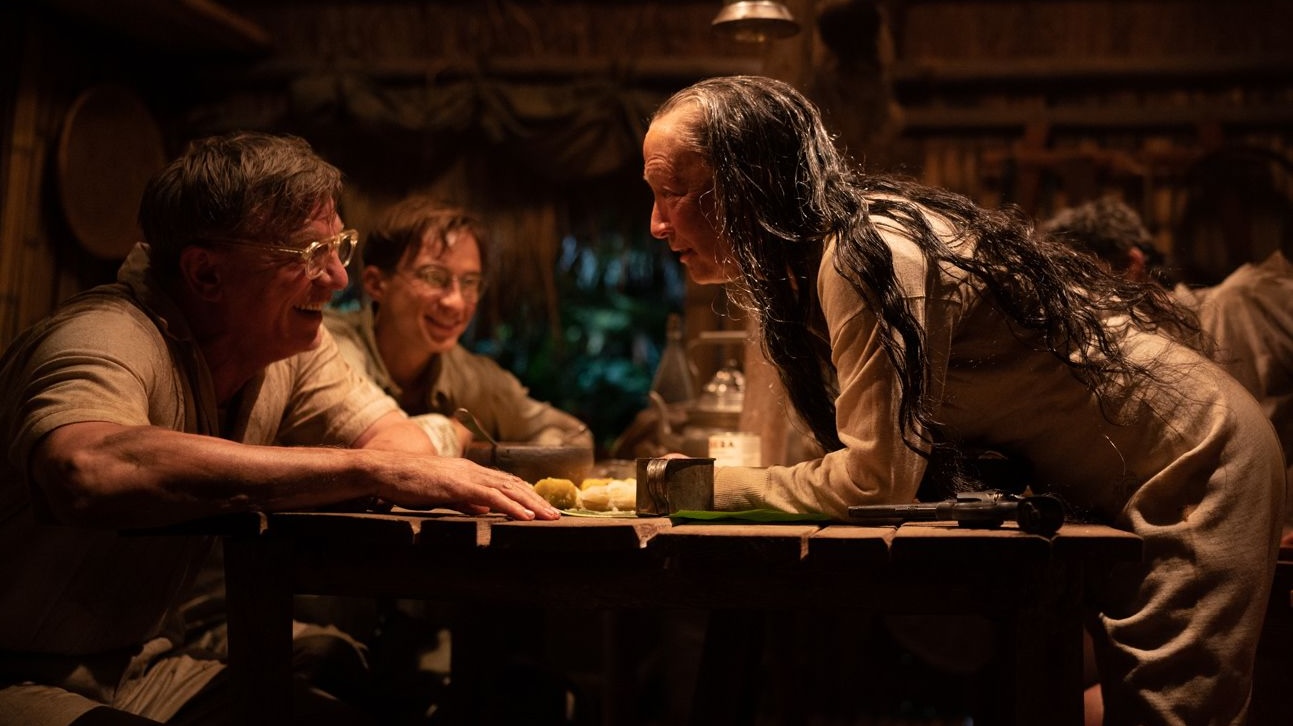
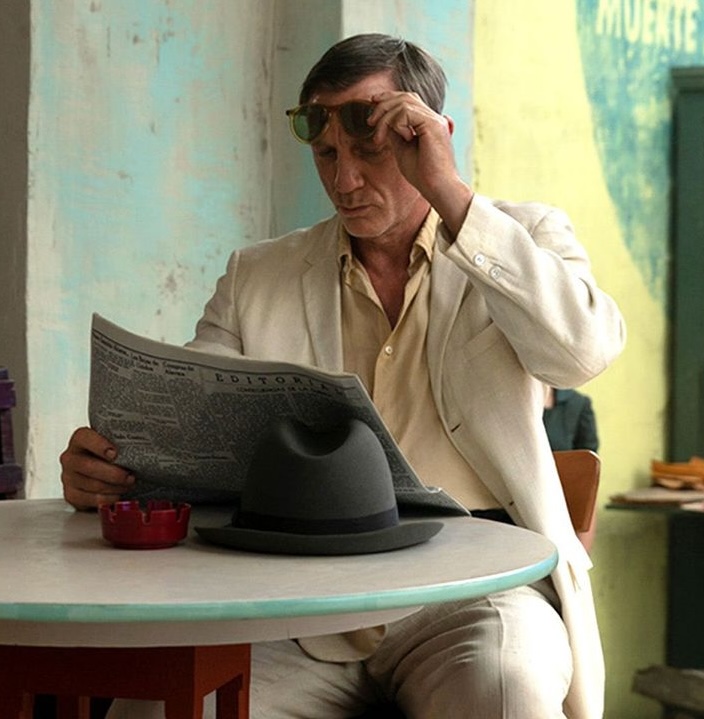
Daniel Craig, who seems determined to move as far away from his Bond persona as is humanly possible, plays Lee, a writer (but we never actually see him practising his craft). Craig does give the role his best endeavour, though it must be said it’s hard to believe that anyone could maintain such a buff physique on Lee’s daily diet of mescal, heroin and endless Camel cigarettes. He wanders the streets of Mexico City – which for the purposes of this film has been recreated in Rome’s Cinecita studios – and occasionally hires whichever young man catches his eye for rough sex in a sleazy hotel. But when his gaze falls on handsome young American, Eugene Allerton (Drew Starkey), he becomes hopelessly smitten and spends every waking hour attempting to get him into the sack.

Eventually, he succeeds in this mission but thereafter, Allerton treats him with such cool indifference that Lee becomes determined to learn more about him, so in the film’s second half, the duo set off to the jungles of Ecuador in search of a fabled drug called ayahuasca which is reputed to endow the user with telepathic powers…

Guadagnino is certainly an industrious filmmaker and I never know where he’ll go next. He’s already released the brilliant Challengers this year and I usually enjoy his work, but for me, he is prone to the occasional misstep. Suspiria felt puffed up with its own self-importance and Queer falls into that same category, a film that initially feels full of promise but ultimately delivers very little. Yes, it captures Burroughs’ seedy, nihilistic worldview, but like the source material, it’s strangely distancing and lacking in jeopardy and, frankly, none of the characters have qualities that an audience can root for – unless perhaps you count Jason Schwartzman’s fleeting appearance as Joe, Lee’s occasional drinking companion, who keeps being robbed by the young locals he sleeps with.

Lesley Manviile makes a late (almost unrecognisable) appearance as the feral, jungle-dwelling scientist, Dr Cotter, an expert in the aforementioned hallucinogen, and she helps Lee to achieve his goal of finding his inner self – but by this point I am already becoming uncomfortably aware of the film’s lengthy running time.

In its closing stages, Queer mostly feels uncomfortably reminiscent of Kubrik’s 2001: A Space Oddysey, which is not something I expected to say. And yes, it’s fine to refer to one of the more notorious episodes of Burroughs’ life, but to do so twice feels suspiciously like overkill. Kudos to Craig and Starkey who give this everything they have but, in the end, I just don’t care enough about what I’m watching to make this feel worth the effort.

2.8 stars

Philip Caveney

Challengers

21/04/24

Cineworld, Edinburgh

Challengers

I’m a huge tennis fan, but I’d be hard pushed to think of a non-documentary film that has ever come close to capturing the verve and excitement of the game. Until now. Luca Guadagnino’s Challengers manages to capture the gladiatorial nature of the sport and at the same time interweaves it with a stylish, sexy drama, which centres on three players and their complicated relationships. Guadagnino is a gifted filmmaker with both Call Me By Your Name and Bones and All as brilliant examples of the art. (I’ve just about forgiven him for his pretentious remake of Dario Argento’s Suspiria.)

The film opens midway through an intense tennis final between Art Donaldson (Mike Faist)  and Patrick Zweig (Josh O’Connor), who are playing under the baleful gaze of Art’s coach – and wife – Tashi Duncan (Zendaya). Art has been a top player but his star is waning; he’s still got the sponsorship deals earning him big money but he’s lost his mojo so, in a desperate attempt to rekindle his ambition, Tasha – who’s only ever really been motivated by her own thwarted obsession with tennis – persuades him to enter an open tournament, feeling that playing a series of lower seeds will be good for his confidence. Patrick is doing rather less well financially, living hand to mouth and at one point reduced to sleeping in his car – but he is playing to win.

From this point, the film flashes effortlessly back to thirteen years earlier, when the two young men, best friends since their first day at boarding school, encounter Tashi, the player everyone’s talking about. Both of them fall head over heels in lust with her and, in a playful scene in the men’s shared hotel room, Tashi announces that she will sleep with whoever wins the match when the two of them play tennis tomorrow…

It would be a crime to reveal much more about the plot from this point, but suffice to say that it takes some pretty labyrinthine twists and turns as it moves forwards and backwards in time, taking in everything that happens along the way.

There are strong performances from the three leads – nobody else gets much of a look-in – and while the story has some strong sexual content, it’s never allowed to feel prurient. It’s clear from the outset that Tasha is the main motivator in this three-way entanglement and she’s not about to be manipulated by anybody. 

Justin Kuritzke’s script is cleverly nuanced and sometimes wickedly funny, while Trent Reznor and Atticus Ross have created an atypical electronic score, one so propulsive that I find my feet tapping along to the urgent rhythms. For the most part it works brilliantly, though I do feel it’s occasionally overused. A special mention must go to the inventive cinematography of Sayombhu Mukdeeprom, particularly in the climactic stages of the final tennis match, which at one point has the camera careering madly back and forth across the court as though its been glued to a tennis ball.

Challengers is a grown up, slick and inventive feature, which is the work of a director at (ahem) the top of his game, set and match. 

4.6 stars

Philip Caveney

Film Bouquets 2022

2022 was a surprisingly good year for film, although – as cinephiles – it was worrying to note that audiences seemed happy enough to continue watching movies at home after last year’s lockdowns ended. Cinemas were feeling the pinch and there was a lot of talk of this being the end of an era, while others pinned their hope on Avatar: The Way of Water bringing people back in droves. Here at B&B, we’ve always believed that the big screen is the best possible place to watch a movie, so we were delighted to be back in our local multiplex and indie venues. Here’s our selection of the films that have really stayed with us throughout the year.

Belfast

Kenneth Branagh’s semi-autobiographical film was the first must-see of the year – an absolute joy, with a brilliant central performance from newcomer Jude Hill. This film is all about formative experiences, the kind that shape a young boy’s future.

Nightmare Alley

A new film from Guillermo del Toro is always cause for celebration. This bleak, dark tale is the work of a gifted director at the peak of his powers, handling a tricky subject with consummate skill.

Red Rocket

Director Sean Baker’s ability to depict working-class life is his real strength and Red Rocket, powered by astonishing performances by Simon Rex and Suzanna Son, offers a brilliant exploration of Trump’s America.

The Worst Person in the World

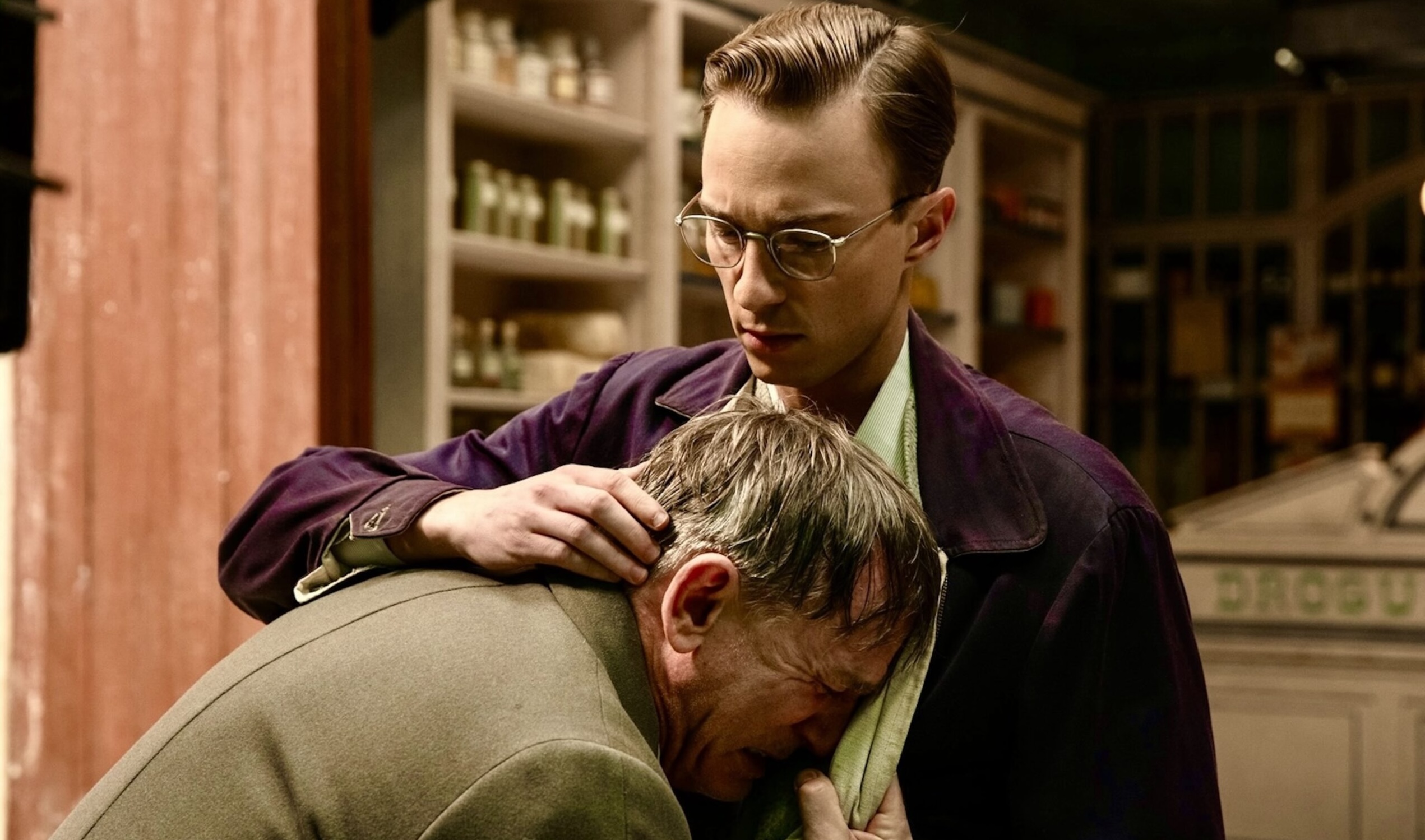
Joaquin Trier’s film is a rare beauty, a picaresque tale of life and love in contemporary Oslo. It’s built around a superb, award-winning performance by Renate Reinsve. A film that positively buzzes with invention.

Elvis

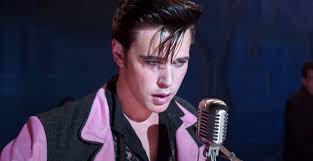
Baz Luhrmann’s biopic is a big, brash, noisy exploration of the late singer’s life and times. Against all the odds, Austin Butler makes the role his own and Tom Hank’s portrayal of the sleazy, manipulative Colonel Tom Parker is also right on the button.

Bones and All

Luca Guadadigno’s visceral tale of love and cannibalism is a brilliant reinvention of a well-worn trope which can be seen as an allegory about drug addiction. It’s brilliant stuff, but not for the faint-hearted – by turns romantic and repugnant.

She Said

This searing account of the uncovering of Harvey Weinstein’s crimes by two Washington Post journalists is timely and superbly recreated, with excellent performances from Carey Mulligan and Zoe Kazan in the central roles.

The Banshees of Inisherin

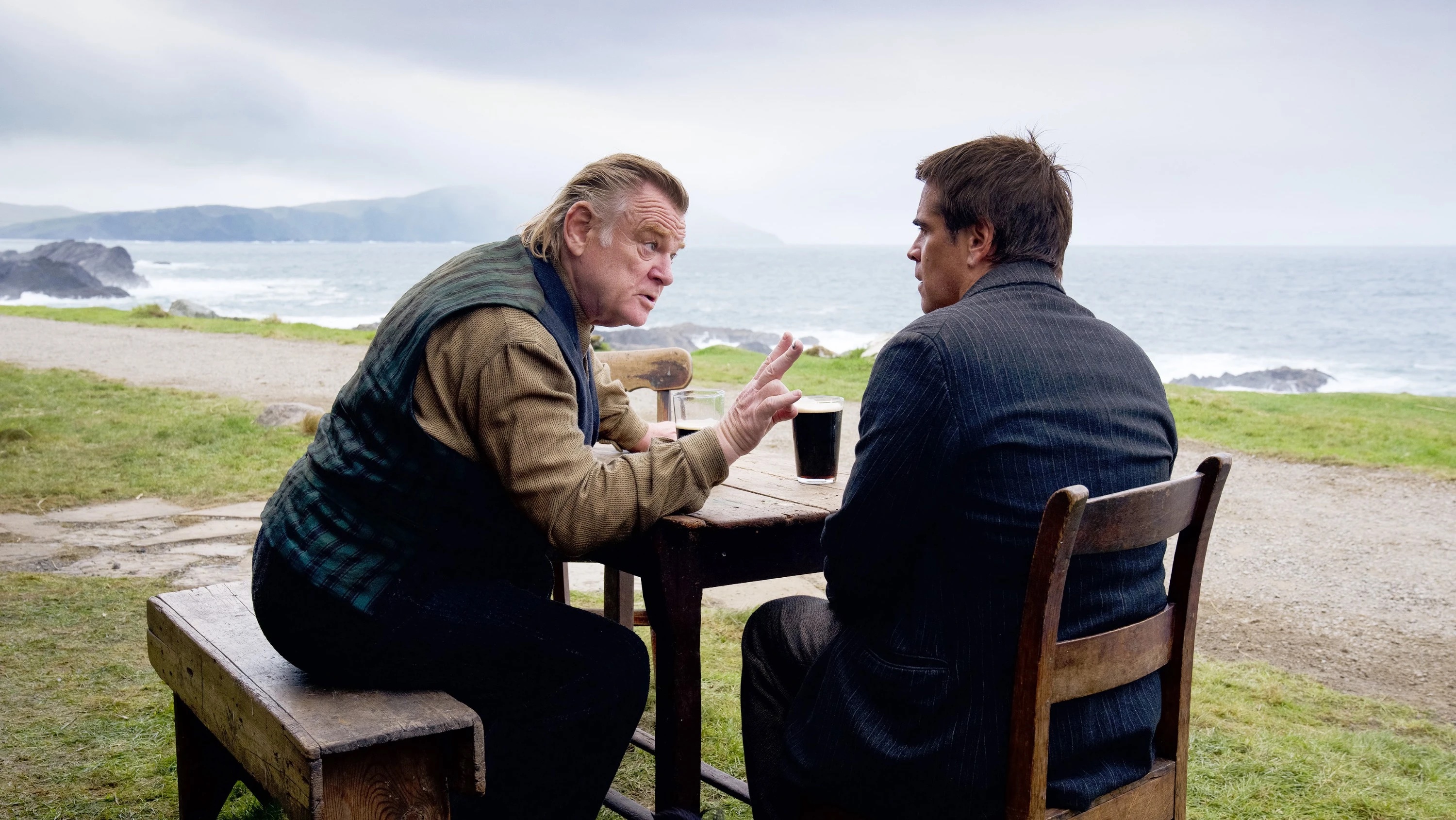
Martin McDonagh’s film is a beautifully observed contemplation of the thankless futility of human existence. This is his best offering since the sublime In Bruges, with wonderful performances from Colin Farrell and Brendan Gleeson.

Aftersun

A gorgeous film, sweetly sad and tinged with tragedy. Debut writer/director Charlotte Wells knocks it out of the park with her first feature, coaxing extraordinary performances from Paul Mescal and Frankie Corio. An absolute must-see.

Guillermo del Toro’s Pinocchio

Not content with one title in our selection, del Toro has two – despite the fact that we had to watch Pinocchio on the small screen. Few films deserve the description ‘masterpiece’ as thoroughly as this one.

Philip Caveney & Susan Singfield

Bones and All

31/11/22

Cineworld, Edinburgh

Every director is entitled to at least one mistake. In the case of Luca Guadagnino, the mistake was to follow the sublime Call Me By Your Name with a muddled, pretentious remake of Dario Argento’s classic horror, Suspiria. So it’s gratifying to report that Bones and All takes a significant step back in the right direction. With a screenplay by David Kajganich, based on a novel by Camille DeAngelis, it’s a film that recklessly crosses several genres but ultimately emerges as something quite unique – part horror film, part road movie, part love story – and the various components work together brilliantly.

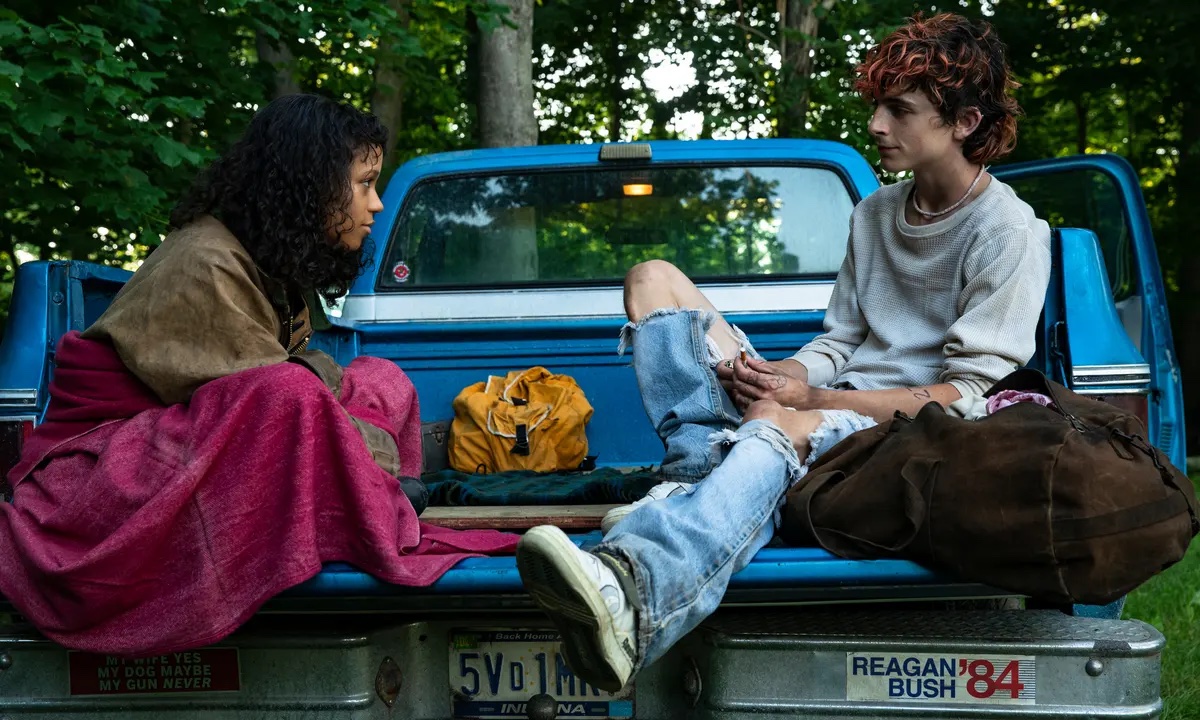
We’re on the shabby backstreets of Reagan’s America in the mid 1980s. Maren (Taylor Russell), an eighteen-year-old high schooler, lives with her father (played by André Holland), who keeps her under a tight rein, even locking her in her bedroom every night. But after receiving an invite to a slumber party, she sneaks out to join up with three friends for an evening of gossip, booze and makeovers. It’s all going swimmingly until, without warning, the fun stops…

After what happens, Maren and her dad are obliged to skip town and, shortly thereafter, Maren wakes up to finds herself abandoned. Her father has walked out, leaving only some money and a Walkman, with a lengthy explanation for his actions captured on cassette tape. Maren discovers that she is an ‘eater’ – someone who is drawn to feasting on human flesh, a condition passed onto her by her mother, who abandoned her when she was a baby. Maren decides her only option is to go in search of her mom in the hope of finding a solution to her problems.

En route, she encounters Sully (a deliciously creepy performance from Mark Rylance). He’s a fellow eater, who has managed to track her down by her familiar smell. Sully offers her companionship and claims he can be her protector, her guide to this unfamiliar new world – but, despite spending some time with him, even sharing one of his ‘meals’, she grabs the opportunity to escape at her earliest opportunity and goes on with her journey. And then she meets another of her kind, Lee (Timothée Chalamet), with whom she finds she has much more in common. The two of them bond and decide to travel together. As they drive across country, they begin to wonder if there is any escape from their current situation.

Calm, languorous and set against the epic scenery of the American West, Bones and All is an incredibly compelling story, by turns romantic and repugnant. Make no mistake, the feeding scenes are explicitly visceral and can be hard to take – the film’s 18 certificate is there for a reason. The central allegory of the story suggests many themes, but to my mind the key one is addiction. The more Maren and Lee strive to break out of the life they’ve begun to hate, the more circumstances conspire to pull them back into its tenacious grip.

Those who find gore unsettling may prefer to give this one a wide berth, but if you can tolerate some carnage, there’s so much here to admire. I can honestly say I’ve never seen another film quite like this one – and I’m fascinated to discover where Guadagnino goes next.

4.8 stars

Philip Caveney
Suspiria


18/11/18

After the sublime Call Me By Your Name, director Luca Guadagnino could probably have made pretty much any film he wanted to. For some reason, he’s landed on a remake of Dario Argento’s 1977 giallo masterpiece, Suspiria. This is starting to feel like a trend. After Steve McQueen’s recent reinterpretation of Lynda La Plante’s Widows, I wonder what we can expect next? Guillermo Del Toro’s On the Buses, perhaps?

I’ll admit that I’ve long had a soft spot for the original Suspiria. I first saw it at a University film society in the early 1980s. (I wasn’t even a student there, but they had the full uncensored cut, so naturally I inveigled my way in!) I had, I suppose, been expecting just another slice n’ dicer and was quite blown away by what I saw on the screen. To me, it was an almost overwhelming onslaught of vibrant colour, copious bloodshed and histrionic terror, quite unlike any other horror movie I’d ever seen. One thing it most certainly wasn’t was pretentious. Sadly, I can’t say the same about this film, which is long and rambling and only occasionally fizzes into enough life to fully command my attention. It feels as though it’s a long-cherished dream project for Guadagnino, and the problem with such an undertaking is that, while the director knows exactly what he’s trying to say at any given moment, the audience is not always quite so lucky.

The story is broken up into six acts, and is set in a divided Germany in 1977, where the news is all about the the Baader-Meinhoff separatists and their exploits in Entebbe. Patricia (Chloe Grace Moretz), a student at a prestigious dance academy in West Berlin, comes seeking the help of elderly (and suspiciously latex-faced) psychiatrist Dr Joseph Klemperer, before running off into the night, leaving her journal for Klemperer to read. We then meet Susie Bannion (Dakota Johnson), who duly arrives at the self-same dance academy, eagerly looking to enrol. At her audition, she manages to catch the eye of influential dance tutor, Madame Blanc (Tilda Swinton), but not everything here is as it appears…

While Guadagnino certainly doesn’t stint on the bloodletting and the nudity, he does attempt to intellectualise what was once a very straightforward tale of witchcraft and demonic possession, pulling in strands of other – seemingly disparate – stories,  with the result that they feel clumsily crowbarred into the proceedings. There’s the aforementioned Red Army Faction, and also Dr Klemperer’s tragic history during the Second World War, which, if nothing else, gives Suspiria’s original star, Jessica Harper, a brief cameo. And sadly, the only dancing in evidence seems to consist of people writhing around on the floor without recourse to any music.

Of course, this being a Luca Guadagnino film, it’s not a total loss –  there’s a decent sense of foreboding throughout and some truly jarring bits of body horror – but with a punishing running time of two hours and thirty two minutes, this one is only for the hardiest viewers and those, like me, who can’t resist seeing how a brilliant original has been reinterpreted.

I have to say, my major feeling here is one of profound disappointment.

3 stars

Philip Caveney

Call Me By Your Name

08/11/17

This slow, languorous, coming-of-age film by Luca Guadagnino has been stirring up some Oscar buzz recently, but it’s been a hard film to view with only one showing a day at the multiplexes – and even that in the morning! It’s easy enough to appreciate why it isn’t considered a ‘bums on seats’ vehicle – weighing in at two hours and twelve minutes, it certainly takes its own sweet time to play out and with not an awful lot in the way of storyline, it was never going to drag in the superhero crowd – but it recounts a tale of a young boy coming to terms with his own burgeoning sexuality, eloquently and without sensationalism. And that’s surely something worth supporting.

Set in Northern Italy in 1983, this is the story of seventeen year old Elio Perlman (Timothy Chalamet), a talented young musician who leads a very privileged existence in the country house belonging to his parents, a Professor of Classical Antiquity (Michael Stuhlbarg) and his wife, Annella (Amira Casar). With a cook and a gardener to cater for their every whim, there isn’t much to do to pass the time but lounge indolently around in the sunshine, eating, drinking, reading books and occasionally splashing about in a whole host of watery locations. Things change dramatically, however, when young and impossibly handsome American research assistant, Oliver (Armie Hammer) arrives at the house for a six week stay. At first, Elio finds the newcomer brash and arrogant, (and so do I, come to think of it) but as the barriers gradually start to come down, the two young men bond over their shared Jewish heritage and their love of music – and it isn’t very long before Elio realises he is falling hopelessly and wretchedly in love with Oliver…

That’s pretty much it as far as story goes, but there’s plenty here to enjoy, not least the ravishing cinematography that will have you pining for a long summer holiday in Italy. Chalamet is clearly something of a find, managing to convincingly demonstrate all of Elio’s doubts and fears, while Armie Hammer has clearly come a very long way since The Lone Ranger. A concluding speech by Stuhlbarg’s character felt a little overcooked, but I was nonetheless glad it was there, because here was a parent being completely non-judgemental about the sexuality of his son, which is a pretty rare, but very welcome thing to witness in a film.

There probably isn’t a great deal more to say about this, except perhaps, that in these short-attention-span times, films like this don’t often see the light of day – and if cinema chains won’t offer people enough opportunities to see them, they certainly aren’t going to survive for very much longer. If this comes to a screen near you, do take the opportunity to see it. It’s really rather charming.

And as for that Oscar buzz? Well, we’ll see in the fullness of time. It’ll be rather ironic if it wins something – a film that hardly anyone got the chance to see.

4.4 stars

Philip Caveney