King’s Theatre

Rebus: Long Shadows

09/10/18

King’s Theatre, Edinburgh

Edinburgh’s most famous detective is making his theatrical debut, and I’m really looking forward to seeing how the iconic character fares in his home town. But we spend all day unsure if the play is going ahead after lead actor Charles Lawson was taken ill on-stage last night – the sort of dramatic twist nobody wants to experience. We wish him a speedy recovery. In the meantime, we’re relieved to hear that understudy Neil McKinven has stepped into the role, and that the show will go on.

Long Shadows is a new, original Rebus story, co-written specifically as a piece of theatre by Ian Rankin and Rona Munro. It’s a sensible decision: instead of shoe-horning a complex novel into a two-hour slot, this tale is suited to its form, and pared down, free of the literary clutter that scuppers so many adaptations. It fits into the novels’ time line though: this is retired Rebus, unable to let the job go, still haunted by the ghosts of all the crimes he didn’t solve.

In this incarnation, though, the ghosts are made flesh, with murdered teenagers Maggie (Eleanor House) and Angela (Dani Heron) given a formidably physical presence, a sort of chorus of the dead. I like this device: it gives the girls a voice, makes them real characters instead of mere victims, showing us their combined strength instead of focusing on their frailty. There’s also wit in using these ghosts as stage hands, making the scene transitions seamless, and emphasising the idea that the girls help shape the narrative.

We’re in cold case territory. DI Siobhan Clarke (Cathy Tyson), Rebus’s longterm sidekick, finally has the chance to see known killer, Mordaunt (played tonight by Andy Paterson), pay for his crimes. Technology has improved, and there’s DNA evidence tying him to Angela’s murder, twenty-five years ago. He’s got away with it so far, and Siobhan is determined not to let any loose ends threaten this opportunity to take him off the streets. She visits Rebus to see what he remembers, to see if he has any idea what the defence might have hidden up its sleeve.

Inevitably, all roads lead to Cafferty, Rebus’s Moriarty, played here with great aplomb by John Stahl. He’s exactly as I imagine him from the books, all machismo and panache, charm and thuggery. And Maggie’s death, seventeen years ago, is woven expertly into the mix, brought to mind by the arrival on Rebus’s stair of her teenage daughter, Heather. It’s a clever plot, with twists and turns that keep me guessing. I can’t deny it’s all quite expositional, a lot of telling-not-showing of the past; we’re watching people sit and talk about events rather than seeing them unfold before our eyes. But it’s enlivened by the presence of those ghosts, the gobby teenagers who won’t be shut up, and by strong performances all round.

McKinven does a sterling job. In the first act, he’s faultless: the role belongs to him. He does have a script in the second act, but he doesn’t refer to it often. It makes sense: the first act is much more of an ensemble piece, and McKinven, in his usual multiple roles, clearly knows this section well. But the latter half is essentially a three-hander between Rebus, Cafferty and Clarke; presumably McKinven has habitually spent this time in his dressing room, relaxing, before appearing briefly in the concluding scene. No matter, the script stuffed into his pocket doesn’t look out of place – Rebus is always carrying case files around. And he only seems to need it to place what’s coming next: he’s acting the dialogue, not reading it. And maybe, by tomorrow, he won’t need it at all. Either Lawson will be back, or McKinven will have learned the lines.

The set, designed by Ti Green, is perhaps my favourite thing about this whole production. I love the simplicity of it, the economy. There are no unnecessary props or pieces of scenery; it’s as uncluttered as the script. But it’s wonderfully evocative: Edinburgh’s tall grey walls and winding paths, tunnels and closes, stairs and bridges, all there at once, their purpose and atmosphere changing with the light. It’s almost breathtaking when the streets of the Old Town are turned instantaneously into a glass penthouse on the Quartermile by the stupidly simple method of lighting the side panels from behind. It’s a revelation as remarkable as those related to the crime.

So, a welcome addition to the Rebus pantheon, and certainly a must-see for fans of the irascible ex-detective.

4 stars

Susan Singfield


Still Alice

25/09/18

King’s Theatre, Edinburgh

Still Alice started life as a novel, self-published by Harvard neuroscientist Lisa Genova in 2007. It tells the story of Dr Alice Howland, a – wait for it – Harvard neuroscientist with young onset dementia, charting the impact of this terrible disease on both Alice and her family. Its success led first to commercial publication, and then – such was its appeal – to adaptations for both stage and screen. The movie version (which we reviewed in 2015: https://bouquetsbrickbatsreviews.com/2015/03/17/still-alice/) secured Julianne Moore an Oscar, and it’s clear that the eponymous Alice requires a strong performer.

In fact, this touring production by the Leeds Playhouse utilises two strong performers in the central role. This is playwright Christine Mary Dunford’s masterstroke: Alice’s inner self (Herself) is played by Eva Pope, while her physical manifestation belongs to Sharon Small. The two start off almost identical, dressed in the same clothes, mirroring each other’s moves. Herself does not have much to say, because Alice can articulate her thoughts. As her condition worsens, however, Herself becomes louder and more vocal, speaking up when Alice can not. They become separate entities with bigger spaces between them, but Herself is never less than nurturing and protective. It’s an effective device, performed in an understated and unfussy way that makes it really powerful.

Of course, Alice is not the only one affected by her diagnosis and deterioration: the play focuses too on her family’s struggle to deal with this new version of their wife and mom. She’s no longer a fit and healthy high-achiever, a Harvard professor with an enviable career. Her son, Thomas (Mark Armstrong), who’s about to become a father, is especially troubled: he wants his mother back. He’s confused and angry; refuses to accept reality. Her daughter, Lydia (Ruth Ollman), seems to be coping better. She hasn’t always seen eye to eye with Alice (she’s chosen acting over academia, and Alice thinks this is a mistake), but she’s able to support her mother through her illness with an open mind and gentle acceptance.

But it’s Alice’s husband, John (Martin Marquez), who bears the brunt of the responsibility, and he does his best to care for his wife, while – sensibly – ensuring he looks after himself too. He’s a research scientist, and he doesn’t let his home life impinge on his career. Why should he? Alice has always been a careerist too; she wouldn’t want him to abandon his passions. This tension is beautifully realised, with sensitive direction from David Grindley, and a subtle, convincing performance by Marquez.

The set, designed by Jonathan Fensom, manages to be both naturalistic and metaphorical: we start with a cluttered stage, filled with the detailed trappings of a family home – a fitted kitchen, a three-piece suite – but, slowly, scene by scene, this paraphernalia is stripped away, until we’re left with an empty space, all we – and Alice – can see reduced to the present moment: two chairs, a handsome man with a checked shirt. What’s startling is that this is not an unhappy place; Alice has found peace and acceptance of a sort.

It’s a heart-breaking and thought-provoking piece, with much to recommend it. If I’ve a quibble, it’s the moment when Alice delivers a speech at an international conference. I want this to be more of a battle cry, or at least to illuminate something new; it doesn’t tell us anything we haven’t already learned by this point in the play. It’s a climactic scene,  pregnant with possibility, and I don’t feel it achieves all that it could.

Still, that doesn’t prevent this from being an important piece of theatre, and well worth going to see. It’s at the King’s until the 29th September, and will be at the Theatre Royal in Glasgow from the 13th to 17th November.

4.3 stars

Susan Singfield

Sherlock Holmes: The Final Curtain

28/05/18

King’s Theatre, Edinburgh

It’s November 1922 and Doctor Watson (Timothy Lightly) arrives at one of those new-fangled radio stations to talk about some of the cases he’s worked on with his old friend, Sherlock Holmes (Robert Powell). Unusually, he chooses to recount a case from the very end of their career and, via a surprisingly effective flashback device involving a slowly moving curtain, we are whisked to Devon, a few years earlier.

We find Holmes living in retirement where he is suffering from arthritis and devoting most of his spare time to two old hobbies, fly-fishing and bee-keeping. But when the dead body of a young woman is found on his private stretch of beach, Holmes simply cannot help putting in his six-penneth, even though he quickly discovers that he is already disconcertingly out of touch with the changing times. Then, he is paid an unexpected visit by Watson’s wife, Mary (Liza Goddard), who tells him that she has glimpsed the ghost of her dead son, James, back at 221B Baker Street. At first, Holmes is reluctant to return to his old haunt, but soon enough he’s there, where he learns that it’s not just the times that are changing. Watson is now dabbling in psychoanalysis and his relationship with Mary is strained to say the very least…

There’s lots to enjoy here – Powell and Goddard, seasoned stalwarts that they are, put in exemplary performances in the lead roles, the staging is rather splendidly done and it’s certainly an interesting idea to pit Holmes against unfamiliar technology, such as recording equipment, electric lighting and cinematography. If there’s a real problem, it lies with the script, which – though it does its best to incorporate classic lines from and references to the works of Conan Doyle – lacks the ingenuity and complexity of one of his labyrinthine plots. It’s dismaying, for instance, that our idle conjecture during the interval about a possible solution to the mystery turns out to be correct in every detail bar one – and that, only because the idea is so risible. It’s not that we’re great amateur sleuths, more that there simply aren’t many possibilities to choose from.

Holmes completists will certainly want to tick this one off their ‘to watch’ lists and it provides a decent evening’s entertainment – but playwrights do take on an immense weight of expectation when attempting to walk in the illustrious footsteps of Mr Conan Doyle and I’m not entirely convinced that The Final Curtain quite masters the challenge. But it’s fun watching somebody try.

3.2 stars

Philip Caveney


Sunshine On Leith

23/05/18

A show set in Edinburgh, about Edinburgh people, with music by two of the city’s most celebrated sons… little wonder the King’s Theatre is rammed to the rafters this evening and even less wonder that the audience is lapping up every line of Stephen Greenhorn’s earthy script. Which is not to take anything away from Sunshine On Leith. This exuberant, warm-hearted musical has much to recommend it.

Davy (played tonight by John McLarnon) and Ally (Paul James Corrigan) are two young friends, recently returned from a punishing tour of duty with the British army in Afghanistan. Delighted to have emerged in one piece, they head back to their homes in Leith (not Edinburgh, mind you. The script takes great pains to point out that there’s a big difference). Ally is going out with Davy’s sister, Liz (Neshla Caplan), a nurse dreaming of a brighter future, and she arranges a blind date for Davy with a colleague, English girl Yvonne (Jocasta Almgill). The two soon strike up a relationship but how far is Davy prepared to go in order to secure their future? Meanwhile, Davy’s parents, Rab (Phil McKee) and Jean (Hilary Maclean), are approaching their 30th anniversary and preparing to celebrate – but something from Rab’s past appears like a bolt from the blue, threatening to jeopardise the couple’s long-standing relationship.

Sunshine On Leith is an absolute charmer, a celebration of working class experiences and aspirations. It’s beautifully and economically staged, the revolving sets giving a genuine feel for the various locations and there’s a band onstage throughout the show from which key members interact with the cast and, at times, even establish characters in their own right.  And of course, there’s the music of The Proclaimers, which is cleverly tied to the story and, unlike many pop-culture musicals I can think of, is never allowed to feel superfluous. Even if they’re not your cup of Irn Bru, you cannot deny the power of the Reid brothers’ music and, from the opening chords of the climactic I’m Gonna Be (500 Miles), the entire audience is delightedly clapping hands and stamping feet with a force that seems to shake the beautiful old theatre to its very foundations. I’ve seen standing ovations here before, but they have rarely felt as well-earned or heartfelt as the one we witness tonight.

And if you don’t come out humming that poignant title song, well, there’s clearly something very wrong with you.

4.7 stars

Philip Caveney

Dr Jekyll & Mr Hyde

10/04/18

King’s Theatre, Edinburgh

I’ll admit it: I’ve a soft spot for Victorian potboilers, the more sensational and melodramatic the better. And Robert Louis Stevenson’s 1884 novella – about a doctor experimenting with a serum that transforms him into another man, thus allowing him to indulge in  vices without fear of tarnishing his reputation – ticks all those boxes, whilst also managing to be a deliciously clever treatise on the duality of human nature, our public and our private selves.

So I’m excited to see this stage version, adapted by David Edgar and starring Phil Daniels in not one, but both of the eponymous roles. I like this single casting, by the way – it’s much more expressive of the story’s heart than a double act could ever be. And Daniels performs the role with aplomb, at first clearly delineating between the gentlemanly Jekyll and the seamy Hyde, before slowly merging the two together as the lines between them blur.

This production, directed by Kate Saxon, has an old-fashioned, naturalistic charm: it’s very wordy, with characters expounding theories in long, uninterrupted speeches – much like the source material, I suppose. But it works. What they’re saying is fascinating, and I’m more than happy to listen hard and concentrate when I’m in the theatre, especially if the story is this exciting, with murder and mayhem at every turn (although this is made considerably more difficult by the family sitting in front of us, who keep getting up to go the toilet, and whose mobile phone rings during the first transformation scene).

The set is a triumph – a two-storey feat of ingenuity, allowing three completely different rooms to be depicted with a simple slide and turn of scenery, as well as a convincing outside street. Rosie Abraham’s singing over the transitions is haunting and evocative, reinforcing the unsettling atmosphere.

The supporting cast are all very good – Polly Frame as Jekyll’s sister, Katherine, and Grace Hogg-Robinson as Annie are especially affecting – but this is Daniels’ play, and he owns the stage. Of course he does; he’s Phil Daniels; we know he’s got talent. I’m extra glad he’s so good in Dr Jekyll & Mr Hyde because it means I can proudly show off to my friends, “I worked with him, you know” (okay, so it was way back in 1987, when I was fifteen, and I had a very small part in Screen Two’s Will You Love Me Tomorrow, and I had precisely zero scenes with him, but still…).

Check this out! It’s exactly as chilling and unnerving as it should be.

4 stars

Susan Singfield


The Weir

20/02/18

Conor McPherson’s much-acclaimed play premiered at the tiny upstairs theatre of the Royal Court in 1997 and was something of an overnight sensation. Over twenty years later, it’s still going strong. This touring production from Colchester’s Mercury Theatre has much to recommend it, but, in the spacious environs of the King’s Theatre, Edinburgh, it inevitably loses some of its intimacy. Predicated upon the Irish love of storytelling, it’s the tale of four men living in the wilds of County Leitrim – and a lone woman, who is invited into their most sacred stronghold, the titular local bar.

Jack (Sean Murray) is a garage owner, a cantankerous old batchelor with a fondness for Guinness and Silk Cut. Jim (John O’ Dowd) is his regular mechanic. Young Brendan (Sam O’ Mahoney) is the landlord of The Weir, which is replicated in every grimy detail and will be totally familiar to anyone who has ever experienced such establishments in rural Ireland. Finbar (Louis Dempsey) is a successful businessman and what passes for a big shot in these parts. He brings along Valerie (Natalie Radmall-Quirke) to introduce her to his friends. She is a ‘blow-in’, recently moved down from Dublin. The other men are convinced that Finbar, a married man, regards the new arrival as a potential romantic conquest, but that’s mostly conjecture on their part – and, as it turns out, she has other matters on her mind…

The scene is set for a series of unsettling ghost stories, recounted by each of the customers in turn. These are subtle affairs, brief inexplicable encounters, the kind of incidents discussed by drinkers the world over and ones that hint at the powerful pagan beliefs that still lurk behind the facade of modern sensibility. There are excellent performances from all five cast members and the characterisations seemed to me to be absolutely bang on. Sadly, however, it’s during these stories that I am most aware of the physical distance between the actors and large parts of the audience. I find myself holding my breath in an attempt to capture every word and, given that all the characters except Valerie deliver their lines in a broad Irish brogue, it isn’t always easy to be sure you’ve heard everything.

What’s the answer? A little more poke on the microphones, perhaps? And a little less of that eerie background music as each story approaches its conclusion? Hard to say. For sure, I want to be right up close to the actors, to feel that I am sitting in that bar alongside them, sharing the drink and the conversation.

Still, if a larger venue means the play is seen by a wider audience, then that’s no bad thing – and it may just be a worthwhile trade-off.

3.7 stars

Philip Caveney


Pressure

13/01/18

King’s Theatre, Edinburgh

The most momentous affairs of mankind can be influenced by the most unexpected elements. Take the weather, for instance. The British are seemingly obsessed with it and we all complain when the weathermen get it wrong – but some forecasts are way more important than others. Pressure tells the story of one of the many unheralded heroes of World War Two. It’s 1944 and Group Captain James Stagg (David Haig) is the meteorologist charged with the onerous task of predicting the conditions for D Day. He approaches the job weighed down by the certain knowledge that, if he gets it wrong, he could inadvertently cause the death of thousands of young allied troops.

This play, written by Haig and directed by John Dove, gives a fascinating insight into a little known historical incident. Stagg is presented as a gloomy and uncommunicative Scot, always reluctant to give a definitive answer (like most weathermen, I suppose) and simultaneously going through some personal pressures of his own. He lives in a world of isobars and barometer readings and has to answer directly to General Eisenhower (Malcolm Sinclair), who has 350,000 men standing by, waiting for the order to invade France. Luckily, Stagg also has Ike’s level-headed secretary Kay Summersby (Laura Rogers) on hand to guide him through the challenge of coming to the right decision and to help him argue against Ike’s own personal weatherman, who has a much more gung-ho approach to his work,

It’s to the play’s immense credit that all the talk about weather fronts and the constant unfurling of isometric maps never becomes boring – indeed the dialogue here often crackles with suspense and, as the time ticks steadily away towards D Day, we fully appreciate the enormity of Stagg’s ultimate decision, even though of course, history tells us that everything turned out all right in the end.

This is an absorbing story, cleverly told, and nicely acted by an ensemble cast – it’s well worth your time and money.

4.2 stars

Philip Caveney

Theatre Bouquets 2017

unknown-18

unknown-18

unknown-18

Once again we have been wowed by some fantastic theatre this year. Here, in order of viewing (and with the benefit of hindsight), are our favourite productions of 2017.

The Winter’s Tale – Lyceum Theatre, Edinburgh

The Winter's Tale

This thrilling, modern-day version of Shakespeare’s play was dynamic and audacious – with the whole fourth act recast in Scots. We loved every minute of it, especially Maureen Beattie’s performance as Paulina.

Chess: The Musical  – Festival Theatre, Edinburgh

Chess

The students from the Royal Conservatoire of Scotland thrilled the audience with a skilful display of all things theatrical. We loved the sophisticated choreography (often incorporating the real time use of video cameras) and choral singing that sent chills down our spines.

Nell Gwyn – King’s Theatre, Edinburgh

Nell Gwyn\

This superb production of Jessica Swales’ Olivier Award-winning comedy was a delight in just about every respect. From the superbly realised set, through to the opulent costumes and the lively period music, this was fabulous to behold.

Death of a Salesman – King’s Theatre, Edinburgh

Death of a Salesman

It was the direction that made this production so good: Abigail Graham did a wonderful job of clarifying everybody’s pain. And Nicholas Woodeson was perfect for the lead role, conveying Willy’s struggle with warmth and vitality.

The Toxic Avenger – Pleasance One, Edinburgh

The Toxic Avenger

A musical in the same vein that made Little Shop of Horrors such a pleasure, The Toxic Avenger was an unqualified delight, romping happily along powered by its own exuberance and the efforts of a stellar cast, who gave this everything they had – and then some.

The Power Behind the Crone – Assembly George Square, Edinburgh

The Power Behind the Crone

This was a wonderful piece of theatre, an exemplar of a Fringe show: beautifully scripted, and acted with precision and panache. Alison Skilbeck had absolute control of the material and created an impressive range of distinct, believable characters.

Seagulls – The Leith Volcano, Edinburgh

Volcano Theatre SEagulls at Edinburgh Fringe Festival

This was the most ambitious, exhilarating piece of theatre we saw this year. Site-specific productions – when the site is as spectacular and relevant as this (we were in an abandoned church, which had been flooded with forty-five tons of water) – can be truly exciting, and this one had a lot to offer.

Safe Place – Rose Street Theatre, Edinburgh

Safe Place

Safe Place provided a sensitive, insightful examination of the uneasy relationship between trans-activism and feminism. It asked (and answered) many questions, all within the framework of a nuanced and intelligent play.

Angels in America: NT Live – Festival Theatre, Edinburgh

Angels In America

Clocking in at just under eight hours, Tony Kushner’s play offered us a “gay fantasia on national themes” – a sprawling, painful and searingly funny depiction of New York in the 1980s, fractured and ill-prepared to deal with the AIDS epidemic. A truly iconic piece of theatre.

Twelfth Night/Romeo & Juliet – King’s Theatre, Edinburgh

Twelfth Night

Romeo & Juliet

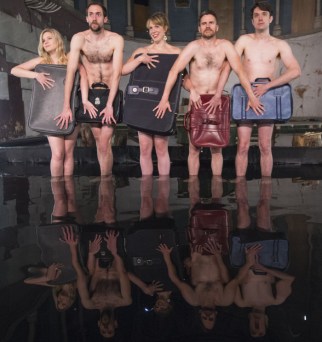
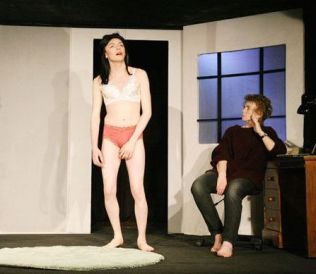
Merely Theatre gave us some ‘stripped-back’ Shakespeare, performing Twelfth Night and Romeo & Juliet in rep. The plays featured only five actors and the casting was gender-blind. It all made for an interesting dynamic and prompted us to re-examine familiar scenes.

Cockpit – Lyceum Theatre, Edinburgh

Cockpit

Cockpit was a witty, clever play, which saw the Lyceum transformed into a truly immersive space.  Director Wils Wilson served up a fascinating piece of theatre: arresting, thought-provoking, provocative and demanding – and it kept us talking for hours afterwards.

Cinderella – King’s Theatre, Edinburgh

Cinderella

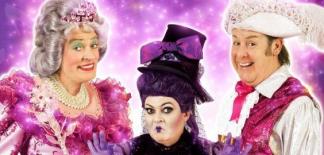
We never thought a pantomime would feature in any ‘best of’ list of ours but, for the second year running, the King’s Theatre’s stalwarts managed to wow us. Allan Stewart, Andy Gray and Grant Stott knew exactly how to work their audience, and the special effects were truly spectacular.

Susan Singfield & Philip Caveney

Cinderella

06/12/17

King’s Theatre, Edinburgh

It’s hard to believe but the pantomime season is already upon us! In Edinburgh, of course, that can mean only one thing: the annual Christmas panto at the King’s Theatre, presented once again (in fact, for the thirteenth year in succession!) by the ‘gleesome threesome’ of Allan Stewart, Andy Grey and Grant Stott. If you were worried that their enduring domination of this seasonal slot might have led to a certain sloppiness, don’t be misled. Cinderella is just as assured a production as ever, and the ease of the three performers with each other is evident from the off-set. The highest compliment I can give them is that they make this look so easy, when in fact pantomime is one of the hardest theatrical disciplines to get right.

Mind you, they don’t mind subverting some of the established rules of panto either. Why not have four dames, for instance? A nice one (Stewart as Fairy May), a mean one (Stott as Baroness Hibernia Hardup), and two that are … well, women (Clare Grey and Maureen Carr as the Ugly Sisters)? And who ever said that Cinderella (Gillian Parkhouse) and Prince Charming (James Darch) can’t be involved in some of the funniest scenes? Meanwhile, it’s left to Grey to deliver his usual dim-witted, prat-falling persona as Buttons. Okay, so some of his material may have sailed into Edinburgh with Noah, but my goodness, he makes me laugh!

So, what we get is a fine festive banquet, replete with colourful costumes, energetic dance routines, double entendres, local banter and lashings of general silliness. Any mistakes that occur are gleefully pounced upon and incorporated into the hilarity and there’s plenty of skilful audience interplay – anyone would think these guys know what they’re doing.  Just when I’m thinking ‘this is great but there’s nothing here to rival last year’s stunning ‘helicopter’ sequence’, the special visual effects team unleash a creation that has large sections of the audience – me included – gasping out loud in a ‘how did they do that?’ kind of way. 

If you and your family are looking to get into the festive spirit, this would be a really good place to start. Cinderella runs until January 21st and there are still some tickets available at time of writing, but please don’t hang about… they’re selling like the proverbial hot mince pies!

5 stars

Philip Caveney

Duet For One

31/10/17

King’s Theatre, Edinburgh

Tom Kempinski’s Duet for One has enjoyed considerable success – both critical and commercial – since it was first staged in 1980. And this production, directed by Robin Lefevre, has much to recommend it, not least an incredibly detailed set showcasing Dr  Feldmann (Oliver Cotton)’s extensive music collection.

But, somehow, it leaves me cold. I don’t think it’s the acting. Belinda Lang is wonderfully acerbic as Stephanie, the famous violinist struggling to cope after being diagnosed with multiple sclerosis. She’s funny and sad, strong and brittle, and her bravado and vulnerability are beautifully played. Cotton has a lot less to do as Feldman – this is undoubtedly Stephanie’s play – but he makes a decent fist of it, manipulating the many long silences expertly. And there’s a delicious awkwardness created by the direction, a horrible claustrophobia in Feldmann’s office, highlighted by Stephanie’s frustrated wheeling around the space in her motorised wheelchair, sitting staring at blank walls, turning her back on Feldman (and on us).

The problem, for me, is the play itself. I don’t think there’s enough in it, and what there is doesn’t quite convince. It all seems a bit one-note; nothing changes – not really. Sure, Stephanie is forced to confront reality, her façade of ‘getting on with it’ steadily eroded so that she has to finally face the truth of her situation, but it doesn’t feel like enough. Where’s Feldmann’s development? What does he learn from Stephanie? What’s the point of depicting a relationship like this one if there’s nothing symbiotic there?

In the end, it all feels too didactic (the lines about citalopram and venlafaxine in particular are as clunky as can be), like an advert for therapy, pop-psychiatry in play-form. It’s terribly earnest – dare I say, pompous? – and, despite those excellent performances, it really doesn’t work for me.

2.9 stars

Susan Singfield