

03/10/24
Cineworld, Edinburgh
Well, I can’t say I wasn’t warned. Francis Ford Coppola’s long-nurtured passion project, Megalopolis, arrives garlanded with the kind of vitriolic advance reviews that instantly sank its chances of making any money at the box office. But why all the furore? What has the man done that’s so unspeakable? You’d think he’d murdered somebody. Instead, at the age of eighty-six, he’s made a vanity project, self-financing the hundred million dollar film by selling one of his vineyards. (We’ve all been there.) He hasn’t bankrupted a movie studio, which makes a refreshing change.
Lest we forget, Coppola has made some underwhelming films before. Yes, he gave us The Conversation, The Godfathers (One and Two) and of course, Apocalypse Now, but there was also One From the Heart and er… Jack, both of which were less than perfect.
It’s important to note that right from the opening credits, Megalopolis is described as ‘A Fable,’ so those who describe it as ‘unrealistic’ may be missing the point.
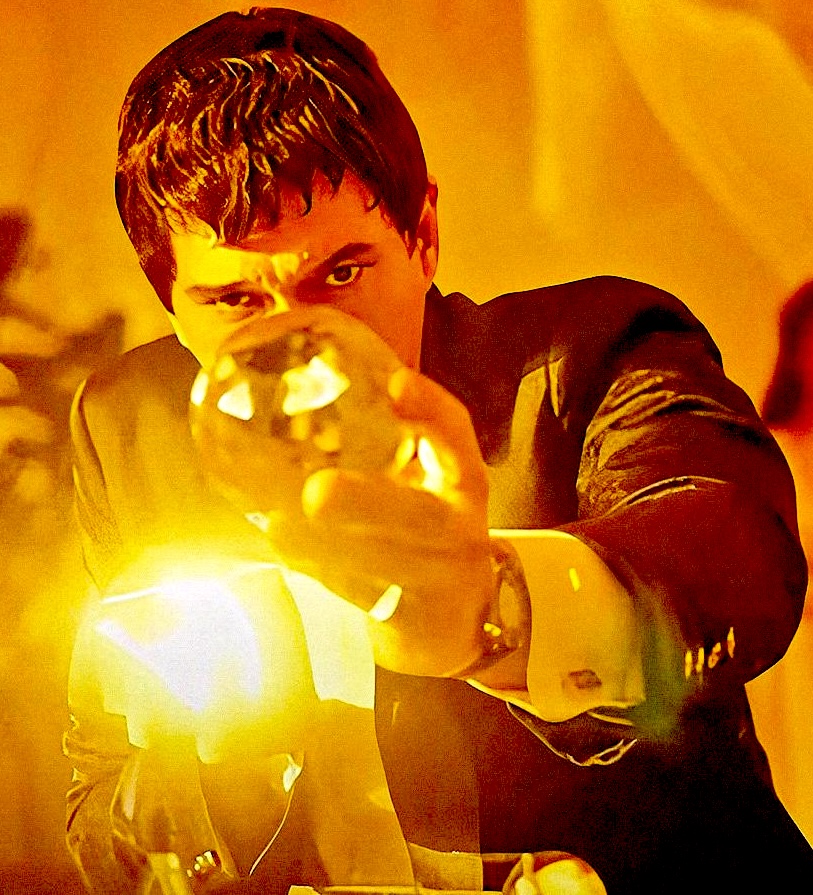
Somewhere in an imagined future, New York has become New Rome, and those that run the city have taken on the aspects of senators and emperors, strutting around in toga-like garments and looking very pleased with themselves. Cesar Catalina (Adam Driver) is a sort of genius / town-planner, who has discovered a mysterious and indestructible building substance called Megalon. He has also found a way to stop time by clicking his fingers (as you do) and has a penchant for lapsing into Shakespeare soliloquies for no apparent reason.
Cesar is currently intent on building the titular inner city area, which he believes will be the first step in creating a bright new future, but his main adversary in this project is Mayor Cicero (Giancarlo Esposito), who seems to be opposed to any kind of progress. Cicero’s daughter, Julia (Nathalie Emmanuel), on the other hand, finds herself increasingly drawn to Catalina and it’s not long before sparks begin to fly between them. It’s clearly going to cause trouble.
There are other powers at work in the city. TV presenter, Wow Platinum (Aubrey Plaza), is suffering from failing audience figures and is keen to take a step up in the world by marrying Cesar’s rich uncle, Hamilton Crassus III (Jon Voight). She uses her nephew, Clodio (Shia LaBeouf), to help her to get there, by any foul means he can devise. (The odious Clodio is clearly inspired by Donald Trump, right down to the bloody insurrection he foments and is perhaps the one place in the ‘fable’ that does relate to real life.)
Overall, Megalopolis doesn’t work and it’s not that it’s short of ideas. On the contrary, it is virtually struggling to contain them all and it doesn’t help that there are too many big names in cameo roles here, most of them improvising their lines. The likes of Dustin Hoffman and Talia Shire flit briefly across the screen and it feels as though Coppola, having secured their services, is unsure of exactly what to do with them. Sometimes, when you work too hard on a project, you stop seeing it objectively.
On the plus side, the film looks magnificent in IMAX, a succulent, shimmering wonder to behold (Coppola did his own cinematography) and, in the film’s latter stages, there are sequences that might best be described as psychedelic, the massive screen appearing to erupt at regular intervals in a blaze of light and colour. If you’re going to see this, do try to catch it in the cinema, because its going to lose all of its majesty on streaming. The running time of two hours and eighteen minutes soon elapses and, after everything that Coppola has given us over the years, surely it’s not too much to ask that movie buffs make the effort to actually go out to see it.
3 stars
Philip Caveney


 Bouquets & Brickbats