20/02/25
Dominion Cinema, Edinburgh
Despite having lived a mere thirty-minute walk from Morningside’s Dominion Cinema for the past decade, we’ve somehow failed to set foot inside – and we dare to call ourselves cinephiles! So tonight’s NT Live screening of The Importance of Being Earnest is extra exciting for us, as it’s also an opportunity to explore a new venue.
So let’s begin with that. The Dominion is undeniably boojie; indeed, it’s the fanciest cinema either of us has ever graced. The design is art deco (think flocked wallpaper, geometric shapes and a colour palette of gold, red and black); our seat is a super-comfy reclining sofa, with privacy screens and side tables. We pour our drinks (sparkling water and alcohol-free lager, since you ask) and sit back, feet up, more than ready to enjoy ourselves in these opulent surroundings.
I’ve seen, read and taught this play so many times that I know it almost by heart, but that’s not to its detriment. After all, the script is so packed with recognisable aphorisms that few in the audience are likely to be surprised by what is said; with Earnest, it’s all in the delivery.
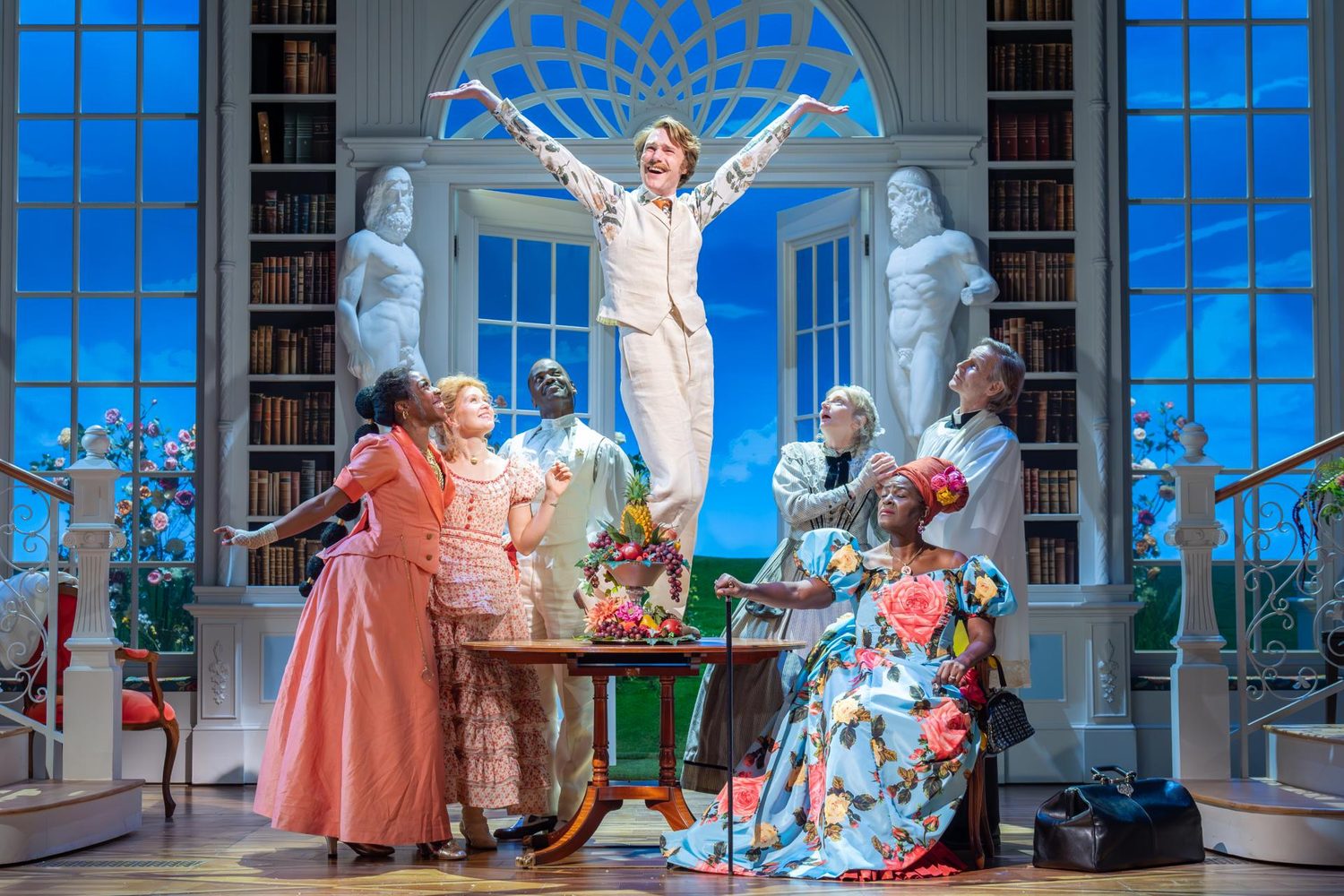
And what delivery it is! Directed by Max Webster, this is an overt celebration of queerness, Wilde’s subtext amplified to the nth degree. From the opening number, where Algernon (Ncuti Gatwa) shimmers in pink-sequinned drag, to the exuberant Mardi Gras-style finale, the closet door is flung wide open, making for a fabulously unsubtle show. To quote the wild wit himself, “moderation is a fatal thing; nothing succeeds like excess.” Webster has certainly taken this to heart.
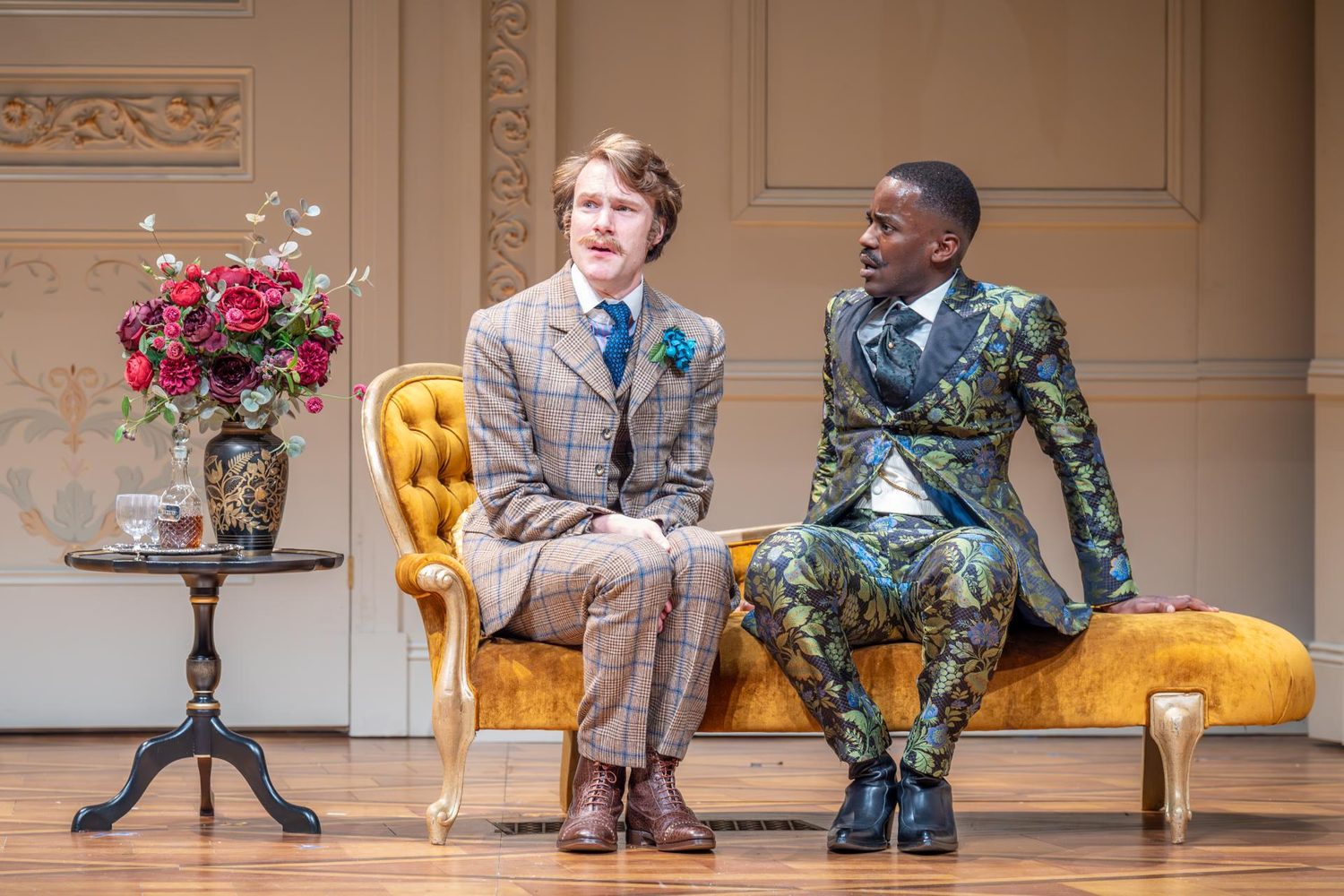
The plot – for those who need a reminder – is at once frivolous and deadly serious. On the surface, it’s a frothy farce, all mistaken identity and foolish foppery. Underneath, it’s about repression – about the lengths people are forced to go to when their very natures are outlawed. Unbeknownst to each other, both Algernon and his best friend, Jack (Hugh Skinner), have found inventive ways to circumvent society’s disapproval of their predilections. Algernon has a pretend-friend, Bunbury, whose ill health Algy uses to excuse himself from dreary social events, while Jack has an alter-ego – an imaginary older brother called Ernest – who gets into mischief whenever he visits the city.
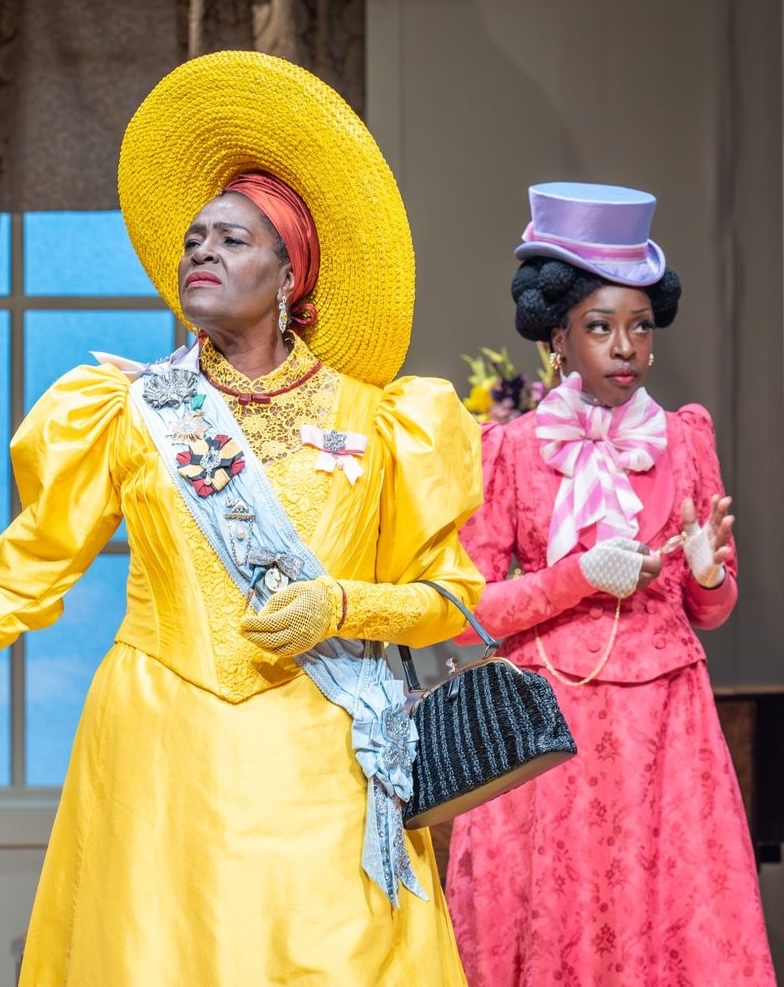
But things become complicated when Jack falls in love with Algy’s cousin, Gwendolen (Ronke Adekoluejo), whose mother, Lady Bracknell (Sharon D Clark), is far from pleased about the match. In desperation, Jack confesses his lies to Algy – who, true to form, responds by assuming Ernest’s identity for himself, and heading off to Jack’s country house to woo his pretty young ward, Cecily (Eliza Scanlen). Throw in a conflicted clergyman (Richard Cant), a dithering governess (Amanda Lawrence) and a couple of manservants (both played by Julian Bleach), and the scene is set for some merry mayhem.
The multi-racial casting within a period drama (courtesy of Alastair Coomer and Chloe Blake) gives the piece a contemporary edge, as do the occasional strains of recent-ish pop music and a cheeky allusion to one of London’s gay hotspots. Gatwa’s newfound fame as Dr Who also helps this production to appeal to a hip young audience, as does the sexual fluidity of the characters.
Clark’s depiction of Lady Bracknell is inspired: she brings a whole new dimension to the part, dispelling all my preconceptions of the character. Here, those oh-so-familiar lines are imbued with a haughty charm to create a formidable British-Jamaican matriarch without so much of a hint of Dench. Adekoluejo’s Gwendolen is a chip off the old block, saved from monstrousness by her cleverness and humour. In contrast, Scanlen’s Cecily is deliciously weird, a mix of doe-eyed intensity, sweetness and steel. But there are no weak links here: even Bleach, in the minor roles of Lane and Merriman, makes his mark, creating two distinct but equally absurd personae, evoking laughter with the simplest of smirks or stumbles.
More than anything, though, this is Skinner and Gatwa’s show, the focus firmly on the men’s friendship and their journey towards coming out. Their performances are jubilant and euphoric, and yet deceptively weighty, carrying with them real emotional heft. I can’t help thinking about Wilde, condemned to hard labour for his homosexuality, and wondering what he’d make of this? Surely, it would gladden his heart to see his characters finally set free.
5 stars
Susan Singfield


 Bouquets & Brickbats