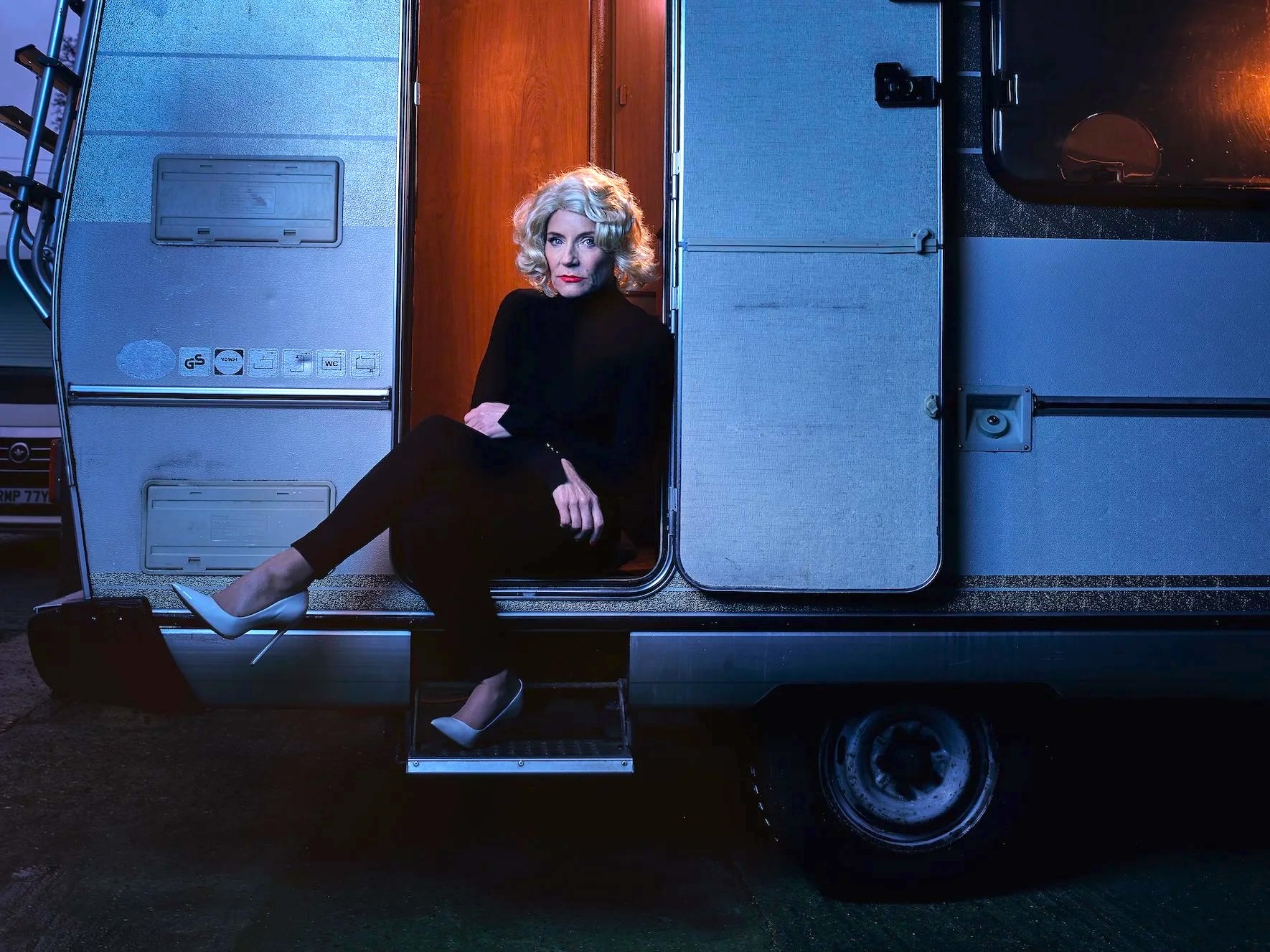
Our last Fringe show of 2025 is Motorhome Marilyn, a choice inspired by my mum, who listened to Michelle Collins talking about the play on Radio 4’s Woman’s Hour, and was taken with its backstory. Back in the late 90s, Collins was in LA, trying to build on her UK fame. While she was there, she noticed an old lady emerging from a dilapidated motor home, dressed as Marilyn Monroe. The image stayed with her for years until, in 2018, she mooted the idea for a play to her writer friend, Stewart Purmutt, and they started work on it. When Purmutt died in 2024, Ben Weatherill took over, and now Motorhome Marilyn – more than quarter of a century in the making – has finally parked up at this year’s Festival.
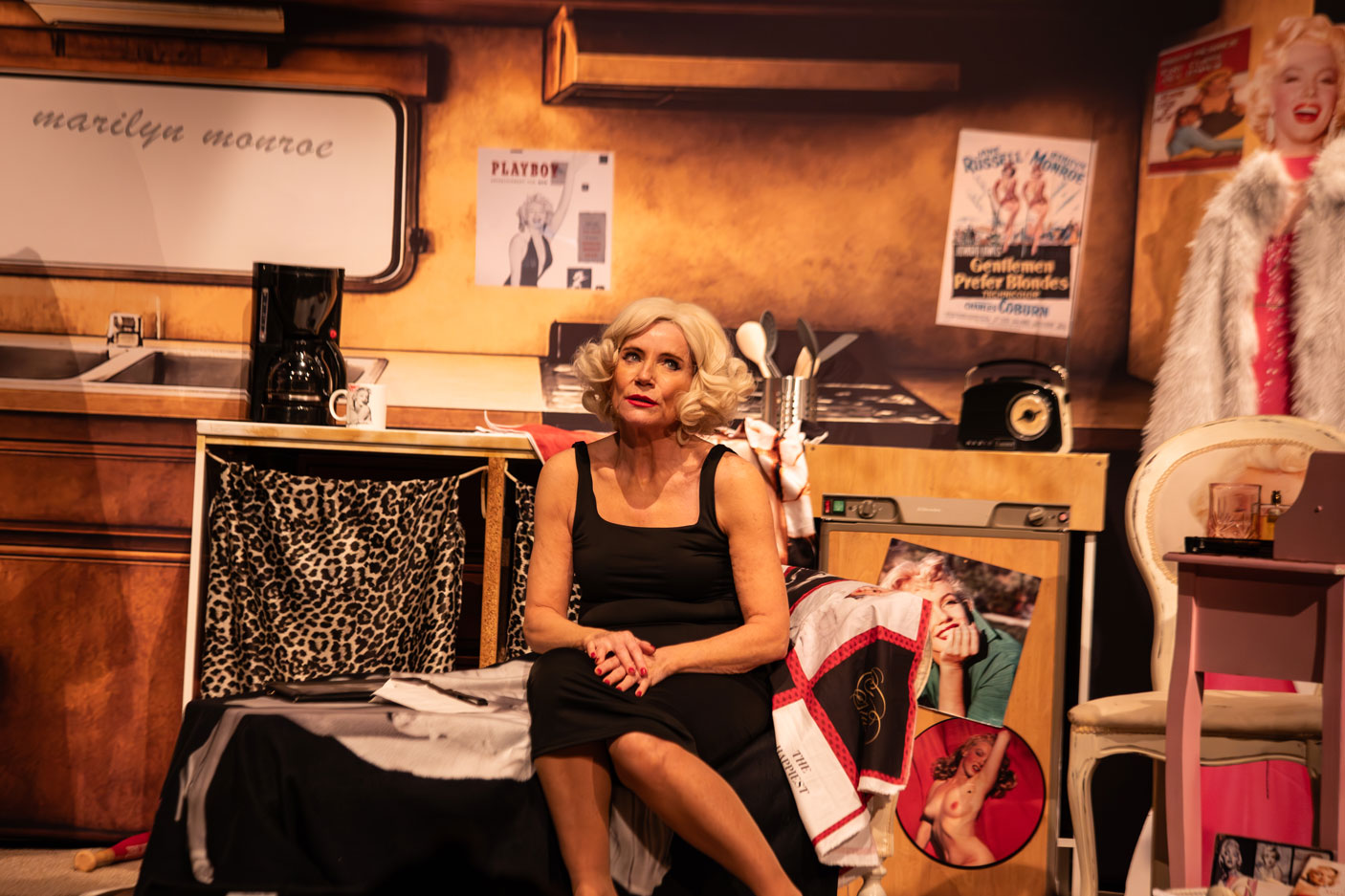
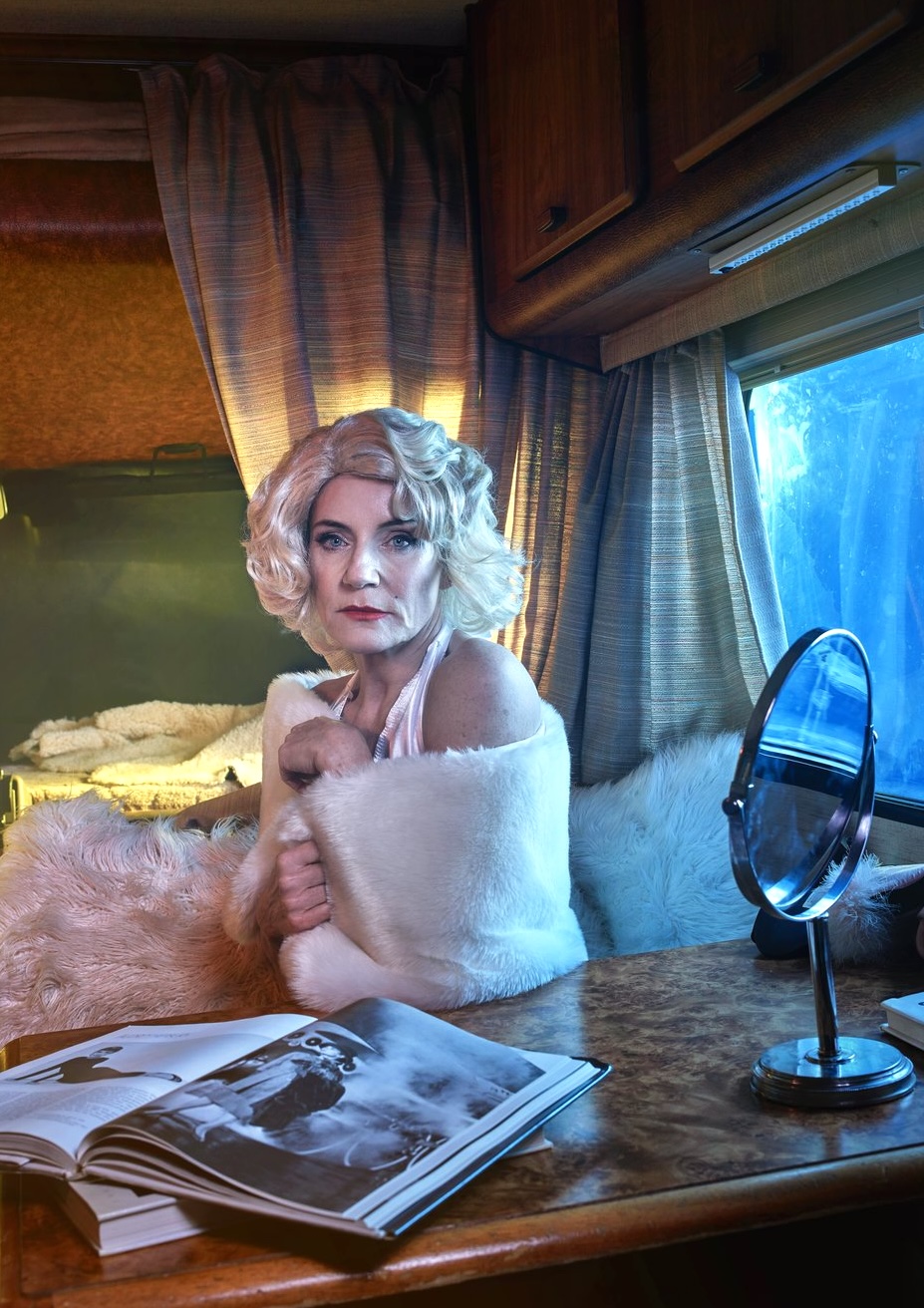
The set, by Joshua Beaumont and Matthew Emeny, is pretty lavish by Fringe standards. We’re inside a camper van, stuffed to the pop-top with Monroe memorabilia. There are posters, tea towels, mugs and cushion covers: if there’s an available surface, Marilyn’s face adorns it. And there’s Denise (Collins), a Marilyn lookey-likey, whose own identity has been subsumed over the years, so that she’s no longer sure who she really is.
There’s also Bobby, Denise’s confidante, who just happens to be a snake…
Directed by Alexandra Spencer-Jones, the story works quite well: there’s a Miss Havisham-like quality to Denise, who is tragically stuck in a role she’s aged out of. Her hopes for stardom have come to nought, but she’s nothing else to cling to, no option but to don that platinum-blonde wig and paint on a scarlet smile. Collins imbues the character with pathos, although there are moments when I’d like to to see her emotions heightened – with some Eastenders-style excessiveness, perhaps.
Occasionally, too much is spelled out for the audience: we are not left to infer anything, but spoon fed each detail. This detracts from the authenticity of the dialogue, which is a shame. Nonetheless, Motorhome Marilyn is a sometimes funny and always engaging piece of work, an ode to failure and broken dreams.
Gilded Balloon at the Museum (Auditorium), Edinburgh
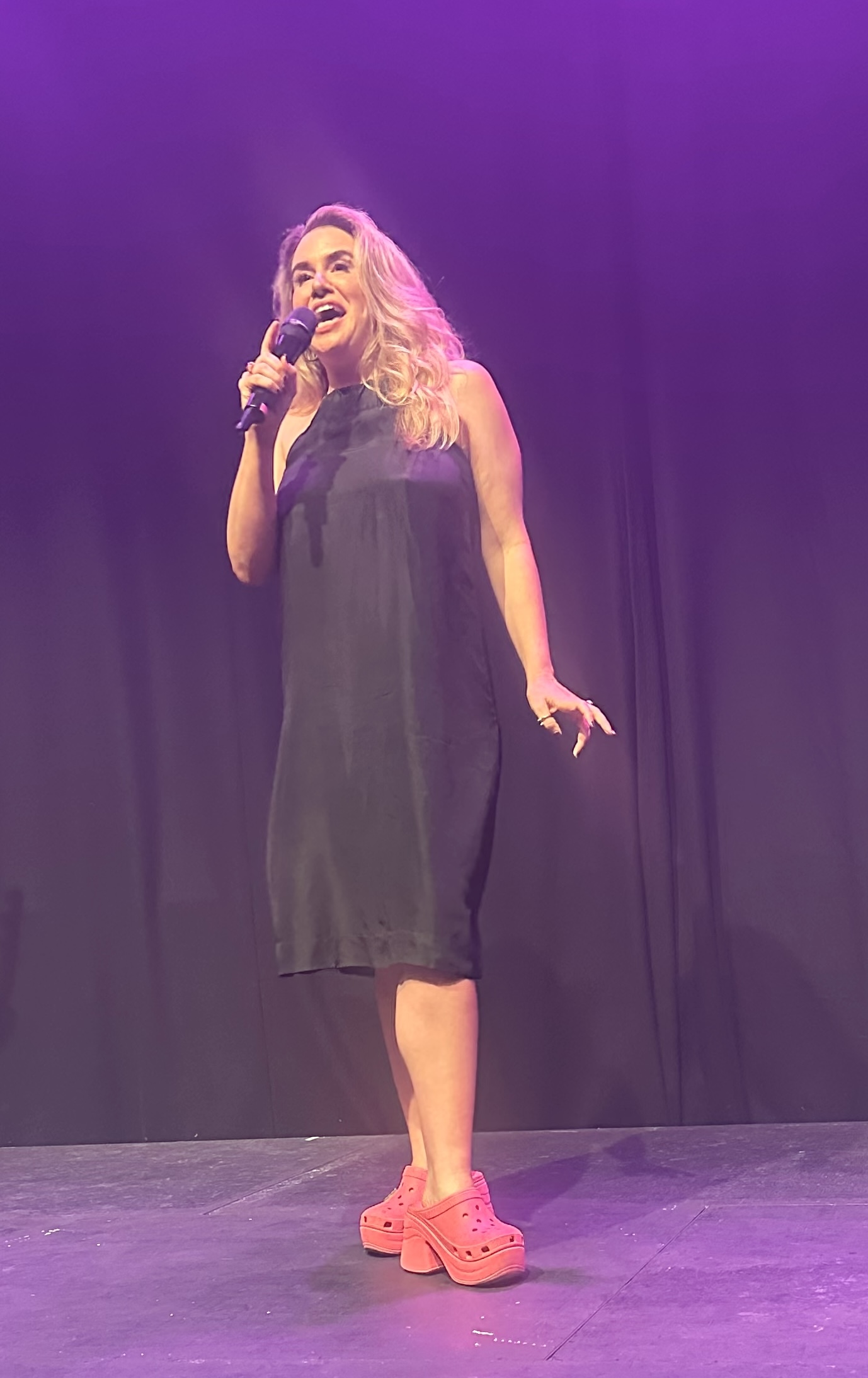
Ah, who doesn’t dread a wee-hours-of-the-morning shame spiral? It turns out that even the uber-confident Michelle Brasier has to deal with these joy-sapping tummy-churners. Yes, that’s right: the bold, brash, in-yer-face Aussie, who struts about the stage like she couldn’t give a flying fuck, even she lies awake wincing with embarrassment, remembering old slights, reliving awkward encounters. But, unlike most of us, Brasier decides to tackle them head-on.
The title of the show refers to something a mate said to her at the end of Year 6. Clearly, it resonated, making her second-guess herself for years, wondering what was wrong with her. I’m guessing Brasier is popular IRL: she comes across as warm and funny, open and engaging. But still, that comment niggled, chipping away at her self-esteem.
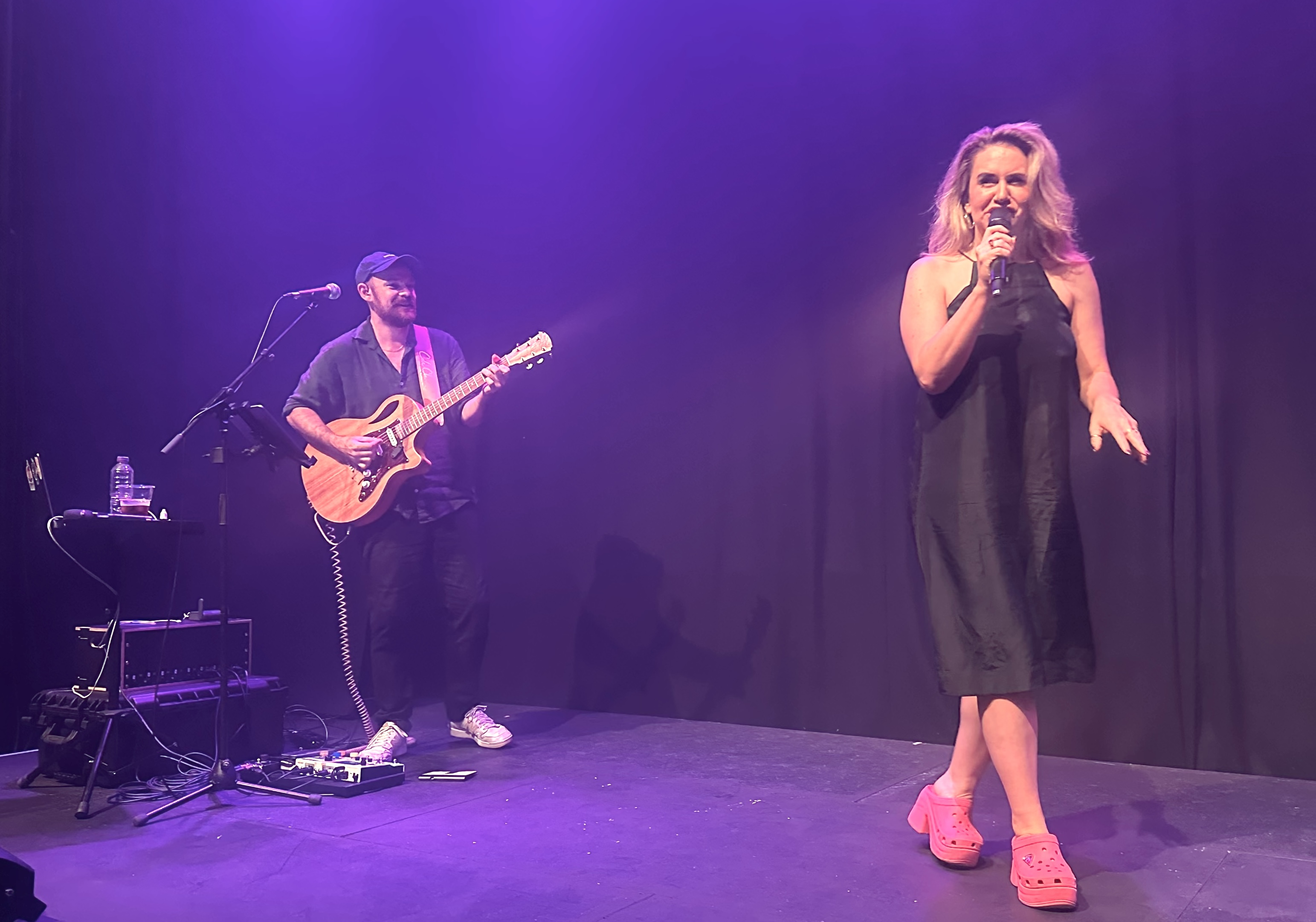
It’s a Shame We Won’t Be Friends Next Year is a gentler affair than last year’s Legacy and, to our great delight, this venue has much better sound. This really matters: we get to hear the full range of her impressive singing voice and can also discern most of what she says (her speaking rate still clocks in at a gazillion words per minute). IASWWBFNY is a nostalgic show, looking back at the hurtful moments that shaped her: that offhand remark from a primary school pal; a scathing comment from an industry snob; a brutal review from a snippy critic. Brasier decides to track them all down and demand answers.
With musical support from her partner, Tim Lancaster, the show is cleverly-crafted, as poignant as it is hilarious. And it’s not all about the bad stuff: there’s a lot here about the positive differences people can make, most notably the high-school drama teacher, who provided a safe space for her and other “freaks”, telling Brasier that she could fly and opening the window to a wider world. The standout for me is a song about her schoolfriend Sally, which makes me cry. Sensibly, there are no jokes in this section, just a beautiful reminder of why we need to “stand up for the dolls”.
Part self-reflection, part-eulogy to that drama teacher, IASWWBFNY is a memorable and thought-provoking hour of musical stand-up. And you’ll learn more about The Fast and the Furious franchise than you ever wanted to.
“I went to primary school with Baylie Carson’s stepmum.”
I know, it sounds like a Fringe show title, but it’s not. It’s just a fact. Summer 1982, North Wales: while the rest of our class dealt with the big move to high school, Kerry faced a more exciting change, emigrating all the way to Australia. And now, more than forty years later, I’ve climbed the stairs to the third floor of Edinburgh’s Patterhoose to see her stepdaughter perform. It’s a tenuous connection, but feels oddly significant. It’s lovely to see our peers succeed, and somehow even more lovely when it’s their children doing well.
And Carson is doing really well, recently appearing in West End productions of SIX (Anne Boleyn) and Mean Girls (Janis). They’re in the ascendant.
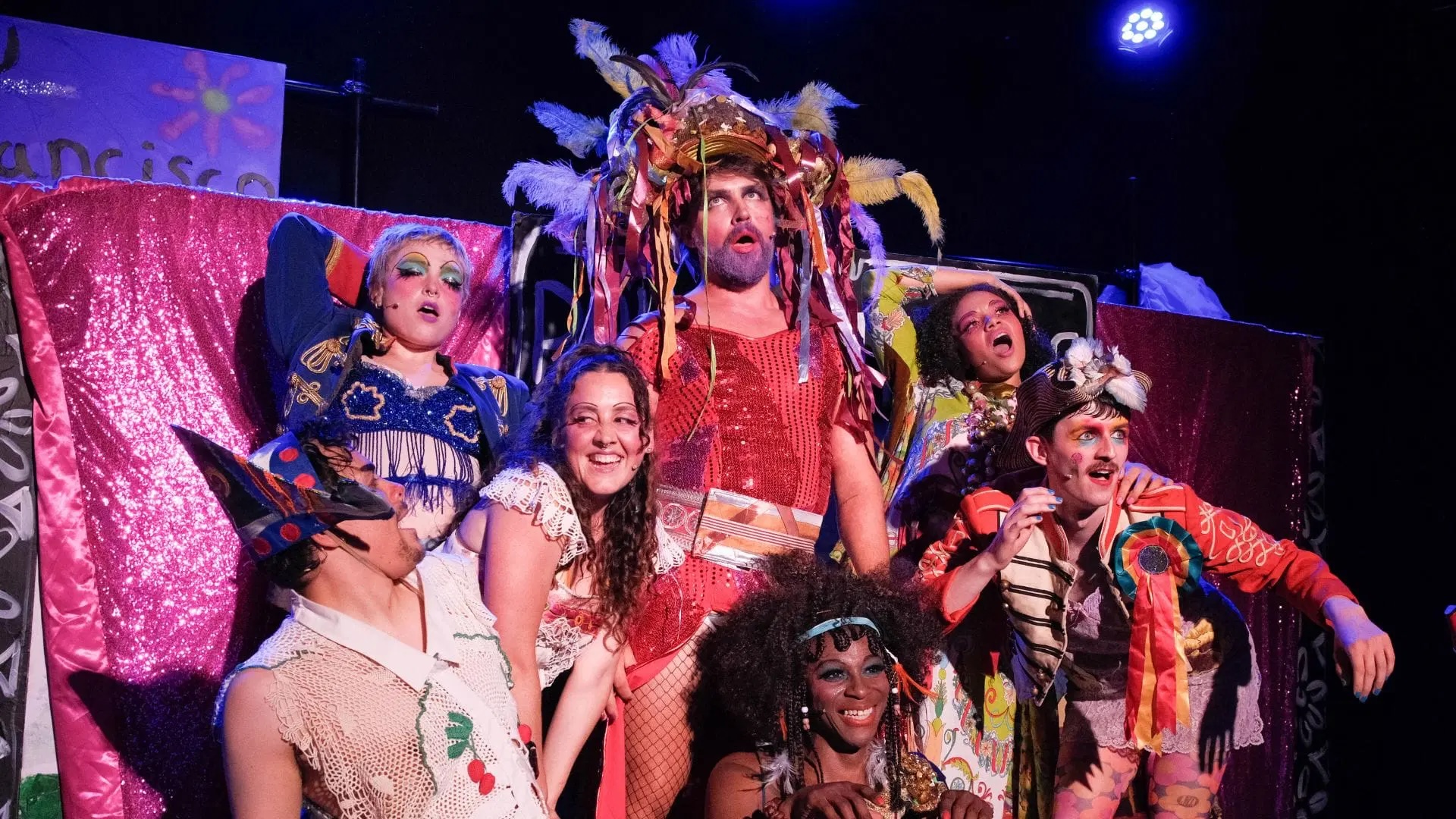
But tonight they’re here, part of a sequin-clad ensemble bringing the little attic room to life with this sparkling production of Midnight at the Palace.
The musical is based on a true story. It’s the late 1960s and San Francisco’s counterculture is booming. Radical Hibiscus (Andrew Horton) and disco-diva Sylvester (Gregory Haney) lead a ragtag group of hippies, freaks and drag-queens, known as The Cockettes, whose performances at the North Beach’s Palace Theater are legendary. As the group becomes successful, however, tensions begin to rise, especially when they get the chance to appear in New York. While the others are drawn by the allure of Broadway, Hibiscus believes that ambition corrupts. He wants to stay in California, true to his ideals, performing for free, refusing to be co-opted by ‘The Man.’
Perhaps to its detriment, Rae Binstock’s book doesn’t really focus on the conflict, but Brandon James Gwinn’s music is great, with some really catchy, memorable songs. The piece works best as a celebration of queer culture: the gaudy costumes and home-made props a riot of colour and joy; the vivacious performers full of sass and vim, gleefully waving two fingers at the normies, swallowing acid and quaaludes; singing, dancing, shagging around. However, there’s not much of a storyline, and it’s a shame that the fascinating political undercurrents are only referenced rather than explored.
Carson is a standout as Pam, the sweet country girl with a yearning for excitement, who hitches her way to The Golden City to find a family of friends. Their song Take Me Home is a highlight of the play. Haney is also fabulous as Sylvester, dominating the stage, while Horton’s A Crab on Uranus is a visual delight. I also really like the puppetry (John Waters and Divine are particularly amusing), and am mightily impressed by the dynamic dance routines Paul McGill manages to choreograph on such a small stage.
Midnight at the Palace is a blast: a spectacular, gender-bending kaleidoscope of fun.
Before Canadian comedian Graham Kay even enters the room, we’ve learned a lot about him – via PowerPoint. A series of images shows us two boys growing up into men, smiling, striking Spider-Man poses and playing up to the camera. They’re clearly very close.
Kay ambles onto the stage and introduces himself as an affable slacker. He wants to talk to us about his relationship with his autistic brother, Pete. “Do I mock him?” he asks rhetorically, before confirming, “Yes, I do.”
In fact, he doesn’t. Not much. Over the next hour, we learn a lot about Pete: how funny and endearing he is, and how much Kay loves him. We also learn how Kay’s own childhood was affected by having a sibling with additional needs – and the strange mixture of resentment and pride he feels when he considers their shared past.
There are some amusing stories and some heartbreaking ones, some seriously emotional moments and some lessons about love. It’s impossible not to warm to Kay as he looks out frankly into the audience, chuckling self-effacingly or – at one point – tearing up.
If I have a criticism, it’s that I don’t think he goes far enough. He’s somehow too polite, too nice about it all. I’d like to see him mine his anecdotes for their full potential, being a little more transgressive. What he unearths might be difficult or shocking, but it would give this show some extra punch.
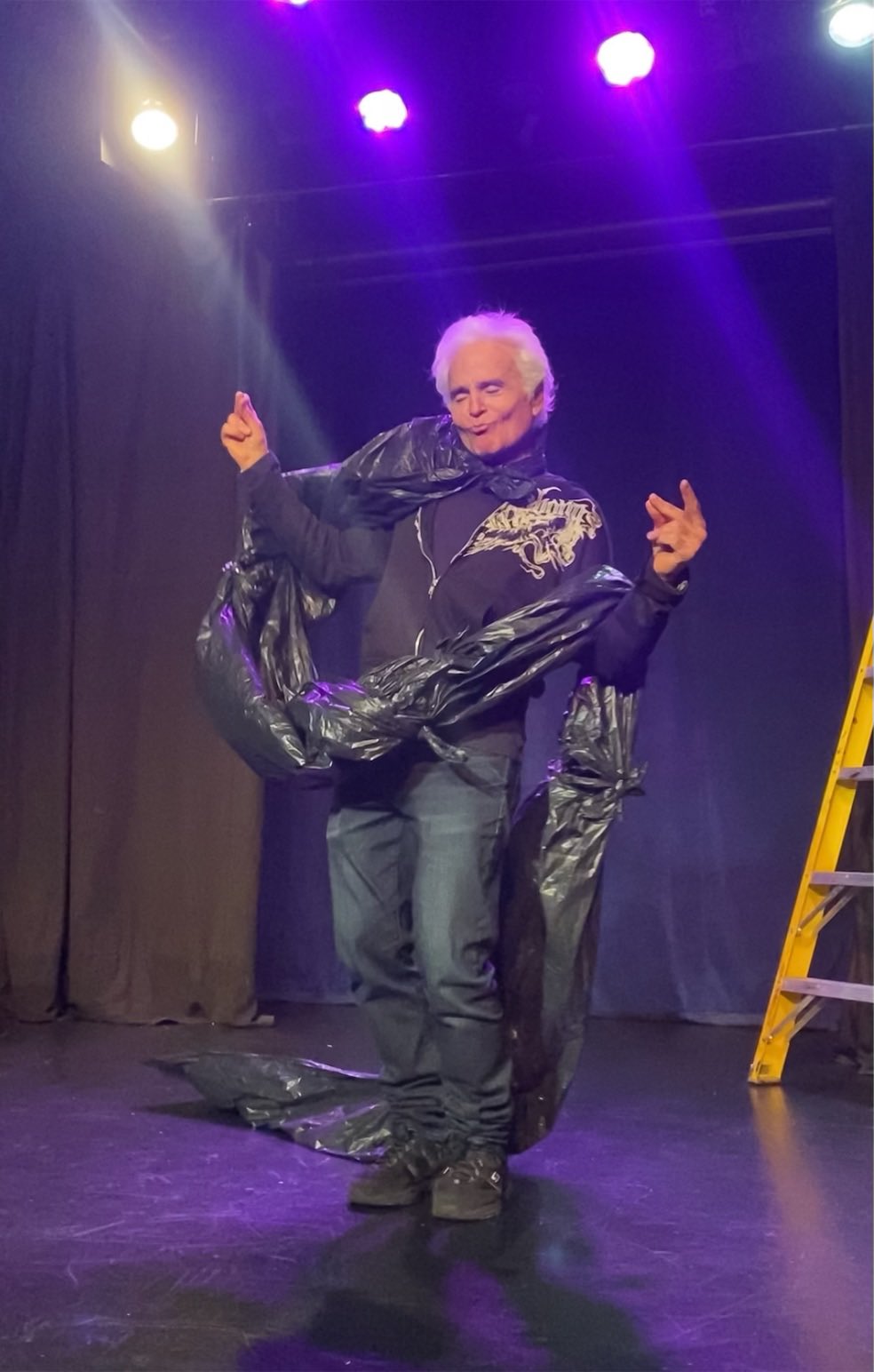
Nonetheless, Pete and Me is a gentle and affecting show by a likeable comedian. Hang on until the end for guest appearances by Berserko and Big Boss. “It’s crime fightin’ time!”
Mutant Olive 2.0 is a wild ride of a show. Adam Astra (Mitch Hara) is auditioning for a part in Hamilton Unplugged and he’s determined to stand out from the crowd. Sure, he’s an ex-addict, his headshot is twenty years out of date, and he’s left his props on the kitchen table but, as the audience becomes a room full of directors, producers and casting agents, we are urged not to let any of this cloud our view. He’s going to wow us with a Shakespearean monologue. What could be more appropriate?
Except, would we mind waiting just a minute, because his Dad’s calling? Sorry about that. The problem with his Dad is… “Okay. Puck. I am that merry wanderer of the night…” His phone rings again.
Hara is a kinetic performer, almost sparking with energy. He dazzles with his smile and prowls the small stage, lurching from sly camp to devastating emotion, somehow keeping us with him all the time. The stories of Astra’s childhood – his speed-freak alcoholic mother; his hitman father – seem utterly fantastical, but it turns out they are largely autobiographical, based on Hara’s own experiences.
The audition, of course, careens out of control, like the seventeen cars Astra has crashed whilst high. And in amongst all of the gloriously riotous, outrageous tales, we see the man emerge, scarred but intact, resolute in his determination to succeed on his own terms.
Directed by Carlyle King, Mutant Olive is a true delight. I’ll certainly be seeking out more of Hara and King’s work, starting with Smothered, their short form series on Amazon Prime. Meanwhile, do yourself a favour and head to the Gilded Balloon for a chance to see a fairy goblin in a whole new light.
Kathryn Bourne Taylor’s premise is a strong one: a ‘Where Are They Now?’ feature brought to life, starring everyone’s favourite plucky red-headed orphan. Leapin’ lizards! Little Annie is an adult! Unfortunately, she’s not a very happy one.
Long estranged from her billionaire adopted father, Annie is struggling to come to terms with his death. She’s angry about the environmental impact of his destructive business model, and bitter about a contract that means he owns the rights to all her songs. “My life has been made into a comic strip, a film, a Broadway musical – and I’ve got nothing to show for it,” she complains. She has a point. Why any kid would wanna be an orphan is beyond me.
Bourne Taylor makes for a believable millennial Annie, effortlessly embodying the familiar ‘please like me’ smile and can-do attitude. She nails Annie’s dazzling desperation, the knowledge that she’ll always have to sing for her supper.
I like the set up a lot, so I’m a little disappointed when the show pivots off in a whimsical direction, as Annie embarks on a mission to find a new sidekick (tragically, Sandy is long gone), and tries to resist opening the box that Daddy Warbucks has left to her. As charming as this stuff is, it’s very slight. There are early hints that we will be dealing with weightier stuff – the troubling power dynamic between a billionaire ‘saviour’ and an impoverished orphan; the effects of childhood neglect and trauma; the impact of sudden fame at an early age – but these are jettisoned in favour of something more kooky and ultimately less satisfying.
Grown Up Orphan Annie is a pleasant show, but I can’t help thinking it could be so much more.
Mystery House is screenwriter Wendy Weiner’s account of a genuine place, Winchester House. Created by the widow of the man behind ‘the rifle that won the West’, it has been a source of conjecture since its foundation stones were laid in 1866.
After her husband died from tuberculosis, Sarah ‘Sally’ Winchester devoted her life to creating this bizarre sprawling mansion with over two hundred rooms, where building work continued non-stop for thirty eight years until her death in the 1920s.
Was it because she was terrified of what might happen to her if she ever allowed the work to cease? Well, that’s the official line, anyway… Because, of course, the Mystery House is said to be haunted. In fact, Weiner begins her talk with a disclaimer. If anything of a supernatural nature should occur, she cannot be held responsible for our safety. This sounds weirdly promising, though the show doesn’t really deliver on that score.
Instead, Weiner shines a light on the ways in which women are so often diminished, their pursuits limited purely because they are women – something that Weiner herself has experienced in her brushes with the House of Mouse (Disney Studios). She skilfully interweaves other narratives into her presentation too: the story of her father and his battle with cancer and an account of Abraham Lincoln’s widow, Mary Todd, and the shoddy treatment she received after her husband’s assassination.
Weiner is a confident and likeable performer and she handles the various strands of the story with aplomb, cutting effortlessly back and forth as the narrative unfolds. And yes, the Winchester House does seem a fascinating place to visit, even if the promotional guides have amped up some of the creepier details.
The promotion for this monologue suggests that it’s heading into darker territory than it actually visits, and there’s part of me that would like to see that side developed a little more – but this is nonetheless a fascinating insight into the place that was the inspiration for Disney’s Haunted Mansion.
Chelsea Hart makes TikTok videos. It’s what they do. So they were taken by surprise when one of their posts went viral in Iran, sparking the kind of fame they never expected to have. After all, it’s not every day you accidentally join a revolution.
Hart is undoubtedly a born performer. Despite their slender frame, they have a huge presence, prowling the small stage. They’re compelling – I can’t look away, and it feels as if they are making eye contact with me almost the whole time. (I wonder if the rest of the audience experiences a similar sensation; is it the same trick as a portrait whose eyes follow you around a room?)
The material is wide-ranging, incorporating – among other things – tales of life in a small Alaskan town, revelations about Iranian culture, trans rights, opera, suicide, dick jokes, abortion and British sarcasm. There is a lot to unpack. In fact, there’s so much here that it’s almost to the show’s detriment: the whole thing feels scattershot and it’s hard to find the through-line that links it all together. There are analogies to be drawn, but they’re lost in the flurry. I think the structure could do with a little work: a stronger arc would lend the shocking ending more impact. I’d also like them to have shown us the original TikTok videos that brought them to the attention of the Iranians, to provide us with something concrete to establish the premise.
That’s not to say this doesn’t work. It does. It’s original and provocative: Hart has great energy and real, well, heart. They are expressive and engaging, exuding both confidence and vulnerability, and their outlook on life is genuinely inspiring. The show’s message is a fine one too: let’s learn from the united liberation movement the Iranian women are leading, and stop being so individualistic. Imagine what we could achieve if we all actually worked together, striving for something good.
The frenzy of the Fringe is over. It’s been beyond wonderful to see our city so vibrant again, after two quiet years. We’ve seen a startling range of exciting shows, covering many genres. We’re exhausted – but it’s not quite over yet. It’s time to award our virtual bouquets to the best performances we saw. The standard seemed higher than ever this time: has the break given writers and performers more time to sharpen their acts, or were we just lucky with the productions we chose? Either way, there were lots of contenders in each category, but we’ve narrowed them down to our favourite five.
So, without further ado, we present our choice of the best shows we saw at Edfest 2022.
THEATRE
An Audience with Stuart Bagcliffe (ZOO Playground)
An Audience with Stuart Bagcliffe is the sort of play which exemplifies the Fringe at its best. Written by Benny Ainsworth and directed by Sally Paffett (Triptytch Theatre), this ingeniously constructed monologue features Michael Parker as the titular Stuart, delivering Ainsworth’s script with consummate skill.
A Very Old Man With Enormous Wings (Summerhall)
Based on a short story by Gabriel García Márquez and adapted for the stage by Dan Colley, Manus Halligan and Genevieve Hulme Beaman, this is the tale of Elisenda and Palayo, two impoverished people who live in a rickety shack on the edge of a small town. Their tale is related by Elisenda (Karen McCartney) in a deliciously sinister style. She’s aided by Palayo (Manus Halligan), who barely utters a word, but moves humbly around the stage, using a curious mixture of handicrafts and high-tech devices to illustrate the story – a series of simplistic figurines, illuminated by tiny cameras and lights, take us into their miniature world.
Sap (Roundabout @ Summerhall)
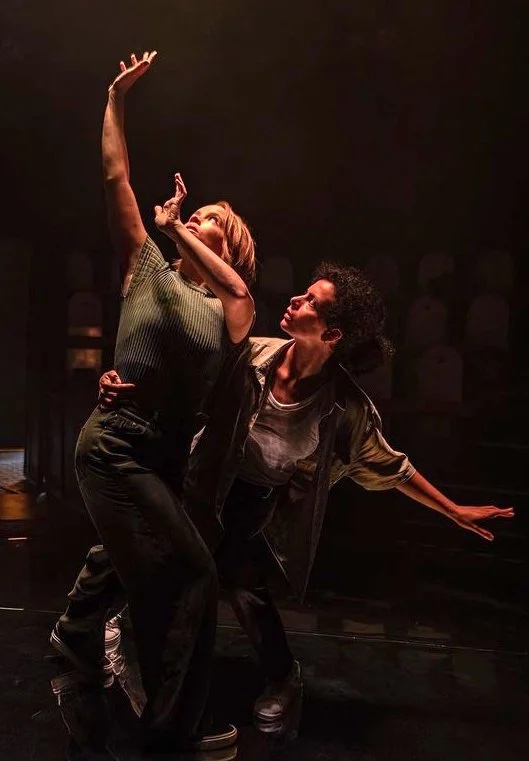
Rafaella Marcus has scripted a deliciously labyrinthine tale about sexual identity (specifically bi-invisibility), one that cleverly assimilates a Greek myth into its core. The maze-like structure is beautifully captured by Jessica Clark and Rebecca Banatvala’s hyper-physical performances, directed by Jessica Lazar and Jennifer Fletcher.
Hungry (Roundabout @ Summerhall)
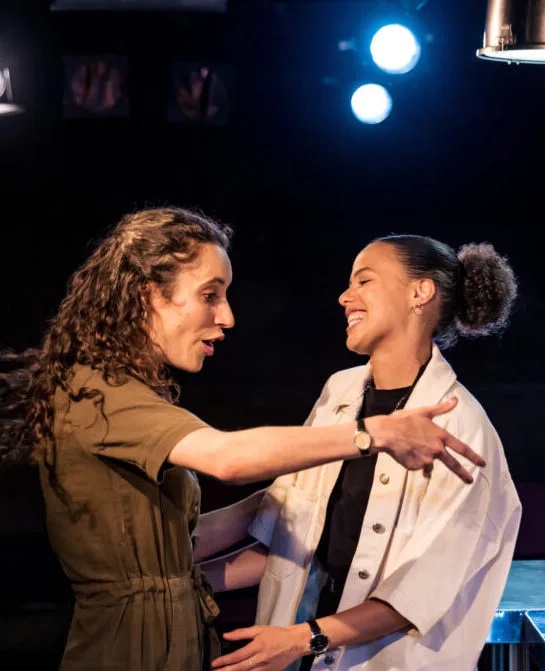
Chris Bush’s sharply written two-hander examines the relationship between Lori (Eleanor Sutton), a chef from a relatively privileged background, and Bex (Melissa Lowe), a waitress from the local estate. Hungry is a class act, so assured that, even amidst the host of treasures on offer at this year’s Roundabout, it dazzles like a precious gem.
The Tragedy of Macbeth (Assembly Roxy)
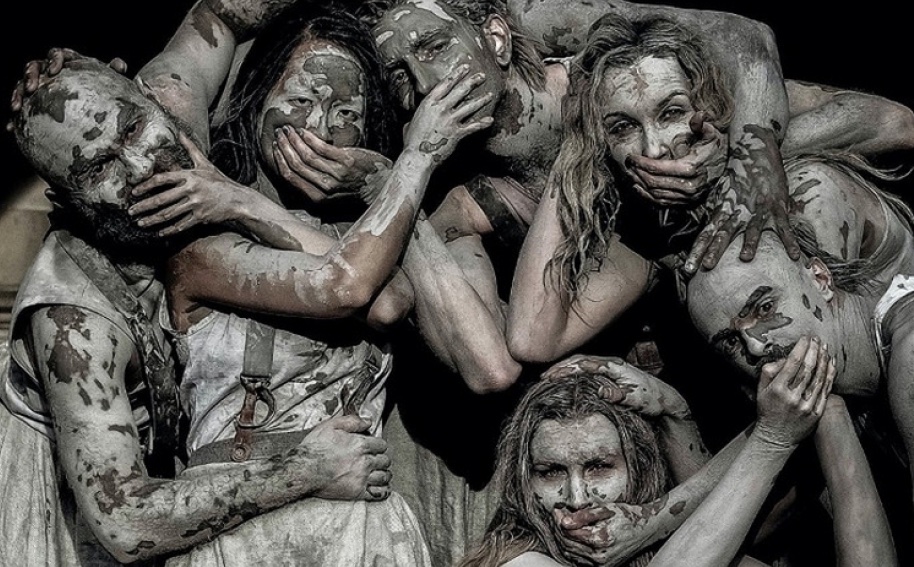
Let’s face it, we’ve all seen Macbeth in its various shapes and guises – but I think it’s fairly safe to say we’ve never seen it quite like this. Flabbergast Theatre’s eight-strong cast reel around the stage, plastered in mud and raving and flailing around like demented beings. This is a play about the madness brought on by the seductive power of hubris, so it feels entirely appropriate. It explodes, it capers, it struts its fretful stuff upon the stage and signifies plenty…
COMEDY
Feeling Afraid as if Something Terrible is Going to Happen (Roundabout @ Summerhall)
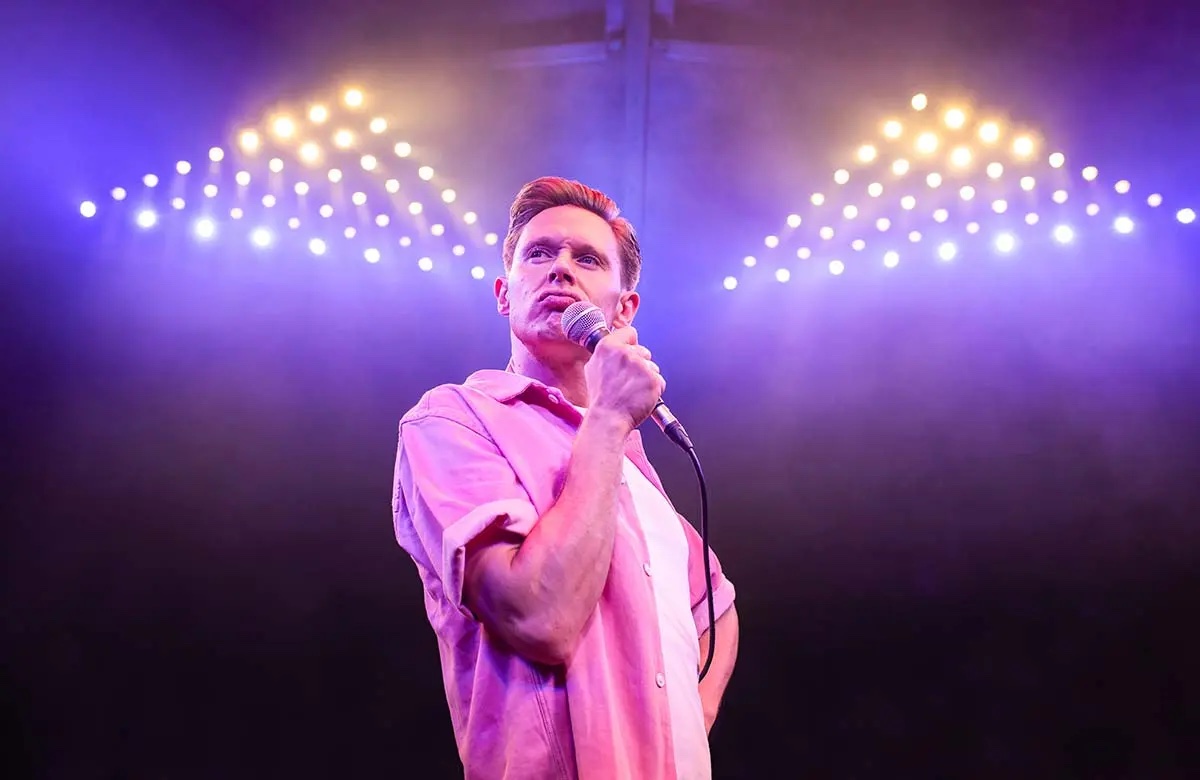
Both Samuel Barnett and Marcelo Dos Santos deserve huge praise for what is undoubtedly one of the best collaborations between writer and performer that I’ve ever witnessed. The narrator is working me like a master magician, mesmerising me, misdirecting me, even scattering a trail of clues which I somehow manage to overlook. The result? When the piece reaches its conclusion, I feel as though I’ve been punched in the solar plexus.
Kylie Brakeman: Linda Hollywood’s Guide to Hollywood (Gilded Balloon Patterhoose)
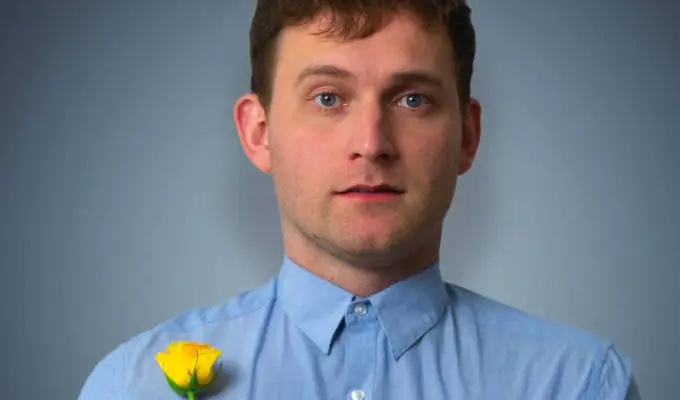
Making her Edinburgh Fringe debut, Kylie Brakeman delivers her cleverly scripted lines with consummate skill, and the whip-smart, snarky one-liners flow like honey laced with vinegar. It’s more than just a series of laughs. It also nails the cynicism and hypocrisy of the movie industry with deadly precision. I leave convinced that Brakeman (already a major name online, with over sixty million views) is destined to play much bigger venues than this one.
Emily Wilson: Fixed (Pleasance Courtyard)
Emily Wilson’s Fixed is part musical, part stand-up and part catharsis. She appeared on The X Factor USA back in 2011, as one half of the earnestly named duo, Ausem. “Because my best friend’s called Austin, and my name’s Emily, so together we’re Ausem!” She was 15 and thought she was destined to become a star. But then she hit a snag. The judges decided they liked Austin, but not Emily… What emerges is a thoughtful commentary on fame, ambition and exploitation, and it’s riveting.
Christopher Bliss: Captain Wordseye (Pleasance Courtyard)
Christopher Bliss (Rob Carter) is a new name to me and I can only regret that it’s taken me this long to encounter him. He’s that rarest of things, a brilliant character comedian… and a literary genius to boot. I can’t wait for his words of advice on poetry, which I have long considered my Achilles heel…
The Anniversary (Pleasance Dome)
Jim (Daniel Tobias) and Barb (Clare Bartholomew) are eagerly preparing for their 50th wedding anniversary but they’re not always in control of things and some of the items in the finger buffet might better be avoided. This handsomely mounted helping of slapstick from Australian company, Salvador Dinosaur, features no real dialogue, just gibberish and the occasional mention of each other’s names – but the soundtrack is far from silent. It’s essentially a piece about the indignities of ageing, replete with references to forgetfulness, dodgy bowels and the ill-advised over-application of both prescription drugs and prunes. It ought to be tragic but it’s somehow horribly funny.
SPECIAL MENTIONS
Fills Monkey: We Will Drum You (Pleasance Courtyard)
Sebastian Rambaud and Yann Coste are two brilliant percussionists, the kind of people you imagine could go through an entire day without ever breaking beat. They begin with conventional sets of drums, hammering out thrilling polyrhythms as the audience claps along. But they have an air of competitiveness about them and the stakes keep rising. It really helps that the two percussionists are also accomplished clowns. Working under the direction of Daniél Briere, they’ve devised a show that switches back and forth through a whole series of scenarios, never lingering too long in one place to ever feel repetitive.
Manic Street Creature (Roundabout @ Summerhall)
Manic Street Creature, written and performed by Maimuna Memon, is an assured slice of gig theatre that focuses on the subject of mental health from a slightly different perspective – that of the carer. Memon tells the story through a sequence of songs being recorded in a studio session. She’s a confident, assured performer, with a thrilling vocal range, accompanying herself on acoustic and electric guitars, keyboards and shruti box. When everything’s in full flow, the story takes flight and I feel myself propelled along by its urgent, rhythmic pulse.
The Ofsted Massacre (The Space @ Surgeon’s Hall)
Phil Porter’s script feels like it’s been torn from the inside of a stressed-out teacher’s head: a revenge fantasy, born of despair. It’s also a very funny play, drawing on Shakespeare, while lampooning staffroom stereotypes and exposing every cliché. This production, by Kingston Grammar School’s sixth form drama students, is a triumph. The young cast embrace their roles, eliciting gales of laughter from the audience with their well-timed punchlines and impressive slapstick.
Making a Murderer: The Musical (Underbelly Bristo Square)
Like millions of others across the UK, I was transfixed by the Netflix documentary, Making A Murderer – so when I spot a poster on the Royal Mile with the words ‘The Musical‘ tacked onto the end, I’m intrigued – and simultaneously doubtful. Isn’t that going to be… disrespectful? But, in the capable hands of writer Phil Mealey, MAMTM offers a compelling version of the familiar events, a fresh perspective on the story that never feels like a cheap shot. The songs are terrific throughout, ranging from spirited rockers to plaintive ballads. What’s more, the production supports (and is supported by) The Innocence Project.
The Tiger Lillies: One Penny Opera (Underbelly Bristo Square)
Describing an act as ‘unique’ is often considered a cop-out, and yet I can’t think of a more appropriate word to describe The Tiger Lillies, three remarkable musicians currently strutting their inimitable stuff at The Cow Barn on Bristo Square. Originally formed way back in 1989, they’ve been through a number of personnel changes over the years, though the macabre compositions of singer-songwriter Martyn Jacques have remained a constant. They describe themselves as “Brechtian Punk Cabaret”, and who am I to argue with them?
Louisa Fitzhardinge is an engaging performer, her nerdy enthusiasm both infectious and entertaining. This is a show about language and pedantry, and about learning to embrace who you really are. Fitzhardinge opens with some grammar gripes, then sings us her autobiography, explaining how an early love of reading led to a modern languages degree.
I relate to Comma Sutra well. I too completed a BA in German, and – like Fitzhardinge – went on to study Theatre. I’m a stickler for proper punctuation, and a fan of the Oxford comma. Her subject matter appeals to me.
In places, Comma Sutra is very good; there’s a lot of sprightly wordplay, and the final multi-lingual number is particularly impressive. Fitzhardinge has a lovely voice, and the songs are witty and fun. Sometimes it feels a little superficial though, those gags about apostrophes and misplaced commas perhaps too easy and unchallenging. I don’t mind the dad jokes and the terrible puns – but they’re not exactly demanding, and I find this section drags somewhat. I think I’d just like her to dig a bit deeper, to explore less charted territory.
Overall, though, I enjoy myself. It’s a pleasure to spend an hour in the company of this charming pedant, and I leave with a smile on my face as I think about ‘oak croissants’.
















 Bouquets & Brickbats