Edinburgh

Elio

23/06/25

Cineworld, Edinburgh

Here’s the thing: despite all the ‘gorgeous’ artwork and ‘fantastic’ world-building, on the whole, Elio is better described by adjectives like ‘generic’ and ‘forgettable’. It’s a shame because there’s a lot to like. It’s just that it all gets drowned in a sea of schmaltz.

Elio (Yonas Kibreab) is a lonely eleven-year-old orphan, obsessed with extra-terrestrial life forms. Since his parents’ death, he’s been living with his Aunt Olga (Zoe Saldaña), an ‘orbital analyst’ on a military base, where there is plenty of tech for studying the night sky. He’s convinced that Olga doesn’t really want him, and dreams of being abducted by friendly aliens and finally fitting in. It’s a sweet enough idea, although – dressed in his superhero cape and colander hat – Elio seems a lot younger than eleven. Have the film-makers ever talked to anyone that age?

It’s not much of a spoiler to say that Elio’s dearest wish comes true, transporting him to the Communiverse, an interplanetary organisation, where representatives from every galaxy meet to ensure the smooth running of the universe. He announces himself as Earth’s ambassador, befriends a slug-like creature called Glordon (Remy Edgerly) and embarks on the adventure of a lifetime. So far, so good – until the preachy life-lessons start to overwhelm the plot.

Directed by Adrian Molina, Elio is a frustrating film, nowhere near as sophisticated as Pixar’s usual output – not as funny, not as smart. It looks lovely: the bright colours are sure to appeal to kids (indeed, it almost seems designed with merch in mind) but there’s not much here to engage an adult audience. Julia Cho’s script dances around some interesting ideas – such as gender stereotypes and toxic masculinity – but wimps out of fully exploring them. The ultimate message seems to be ‘there’s no place like home’, which is disappointingly regressive, falling back on that same-old, same-old. Has nothing changed since Judy Garland’s day? Are we still supposed to give up on our dreams and choose the bleak monochrome of Kansas over the vibrant colours of Oz?

Elio is a watchable movie with enough excitement to hold the interest of younger viewers, although I doubt it’s sufficiently refined to appeal to those of Elio’s own age. It needs more edge, more bite, more jeopardy.

2.8 stars

Susan Singfield

Lollipop

17/06/25

The Cameo, Edinburgh

Lollipop is writer-director Daisy-May Hudson’s debut feature film – and what a promising start this is. Sure, she’s treading in the footsteps of working-class champions such as Ken Loach and Mike Leigh, but – if this fiercely female and decidedly 2020s tale is anything to go by – Hudson is also forging her own path.

‘Lollipop’ is Molly (Posy Sterling)’s childhood nickname, but she’s come a long way since those innocent days. She’s just spent four months in prison – for an unspecified crime – and is looking forward to getting out and being reunited with her kids, Ava (Tegan-Mia Stanley Rhoads) and Leo (Luke Howitt). But things have gone awry while she’s been away: not only has she had to give up her flat, but her flaky mum, Sylvie (TerriAnn Cousins), who was supposed to be looking after the children, has handed them over to social services instead. “Don’t start,” she says, when Molly confronts her, aghast. “I can’t cope with you starting.”

Of course, once they’re in the system, the children can’t just be handed back. There are teams of people tasked with ensuring their welfare. How can they return Ava and Leo to Molly’s care when she’s homeless, pitching her tent illicitly in the park, washing in a public loo? But it’s Catch 22: Molly isn’t a priority for housing because she hasn’t got her kids with her. She’s going round in circles, and that’s not helping her already fragile mental health. However caring the individual professionals are – and they are decent, compassionate women, on the whole – the process seems designed to deny her any possibility of making good.

A chance encounter with an old school friend, Amina (Idil Ahmed), offers a glimmer of hope. Amina has her own problems: she’s separated from her husband, and living in a hostel with her daughter, Mya (Aliyah Abdi). But Amina is a natural optimist with an abundance of energy, spreading joy in the simplest of ways. She hosts a daily ‘party’, where she and Mya dance to their favourite tunes, while a disco ball transforms their dismal walls with colour and light. When Molly reaches breaking point, afraid she’s going to lose her kids forever, it’s Amina who breaks her fall…

It’s impossible not to draw comparisons with the second series of Jimmy McGovern’s acclaimed TV series, Time, which saw Jodie Whittaker’s Orla facing a similar situation, fighting against a failing and underfunded system that not only hurts people but also encourages recidivism. This doesn’t detract from Lollipop‘s power; sadly, it only serves to highlight the ordinariness of this extraordinary horror.

Sterling imbues the central role with so much heart that I defy anyone not to cry when they see Molly lose the plot at a resource centre, not to hold their breath while they wait for the court’s verdict. Newcomer Ahmed is also perfectly cast, lighting up the screen with her ebullience, although Amina also experiences great pain. Cousins infuriates as the selfish Sylvie, letting Molly down at every turn, but somehow still evoking our pity, and young Rhoads is heartbreakingly convincing as a little girl negotiating adult trauma before she’s even hit puberty.

Lollipop is a devastating but beautifully-realised film, as vital and engaging as Sean Baker’s The Florida Project (with which it shares some DNA). It’s the sort of potent story that ought to be the catalyst for change. Let’s hope.

4.5 stars

Susan Singfield

Lyla

14/06/25

Royal Terrace, Edinburgh

It has become our regular habit to visit a Michelin-starred restaurant to celebrate Susan’s birthday. As she claims it always rains on the 16th June, we tend to vary the dates a little. We book for Lyla a couple of days before the actual date – but it rains anyway. We’ve been meaning to visit Lyla ever since acclaimed chef Stuart Ralston set it up in the location that previously housed the late Paul Kitching’s much-acclaimed 21212. (Four five-star rooms are bookable on the upper floor for those who want to stay – but we live within walking distance.)

We made this booking some time ago, before Lyla was voted ‘Scotland’s Best’ in the 2025 National Restaurant Awards. So it seems a propitious time to review the place.

Lyla offers tasting menus with an emphasis on seafood and we begin the evening up in the cosy bar, sipping on drinks and sampling three extraordinary amuse bouches: alp-blossom cheese with onion and quince; bluefin tuna, nori and kashu; and Lobster kohlrabi. They are all exquisite morsels bursting with flavour and provide a promising introduction to the ten-course tasting menu we’re about to experience.

Down in the dining room, we can’t help but note that tonight’s playlist could have been chosen with Susan in mind, a mix of The Cure, The Smiths and various other indie-rock bands, all played at just the right volume. I try to persuade her that I actually arranged this detail but she isn’t falling for it. In comes the first dish proper, a delicious creation featuring cured halibut, kelp and umai caviar and it is absolutely sumptuous – a vibrant mingling of intense flavours. As it turns out, so is everything else that comes to the table. I’m not going to list every dish, but I will pick out a few highlights – please note that the bar is set very high and, to be honest, there isn’t a false note anywhere in this varied menu.

I will shout about a fabulous hand-dived scallop, crispy on top, meltingly soft below, crowned with N25 caviar and nestling in a viscous puddle of sauce choron. Also a plump, tender langoustine wrapped in crispy rice noodles with an accompanying burnt apple ketchup deserves special praise. There’s a melt-in-the-mouth wagyu steak which is tender enough to slice with a butter knife – although, in a moment of theatre, we are invited to choose from an array of fancy-handled sharp blades.

There’s a laminated brioche which, when bitten into is like the most spectacular croissant you’ve ever tasted, and is served with two very different kinds of butter. As for puddings, how about a frozen Amalfi lemon yoghurt with kombucha? Or, prettiest of all, a strawberry-topped biscuit served with créme crue and rose?

It doesn’t stop there. We enjoy coffee at the end of the meal, which is accompanied by four exquisite petit fours, one of which – a malt dulcey bon bon – looks like a piece of lapis lazuli and tastes like heaven.

Of course, a great meal isn’t just about the food. The staff at Lyla are friendly, chatty, and happy to answer any queries. The kitchen is situated in an open area at the top of the room and it’s fascinating to witness the way the chefs and waiters work as a team, keeping the busy restaurant running with clockwork precision. Sometimes the big awards must be taken with a pinch of Himalayan rock salt, but in the case of Lyla, I have to admit that it’s earned its place at the top. What’s more, it has just claimed another (much less coveted) accolade: “The best meal I’ve ever eaten.”

5 stars

Philip Caveney

The Mountaintop

04/06/25

The Royal Lyceum, Edinburgh

Katori Hall’s 2009 play bristles with prescience in this stirring revival, directed by Rikki Henry. We’re in Room 306 of the Lorraine Motel, Memphis, where a tired, sick Dr Martin Luther King Jr (Caleb Roberts) is planning on writing through the night. But, as the night in question is April 3 1968, we know this work will never make it to completion. Instead, assassination awaits.

The great man’s famous “I’ve been to the mountaintop” metaphor is gloriously realised in Hyemi Shin’s set design, the room balanced precariously on a slab of jutting rock protruding from the dark earth, offering little protection from the Biblical storm raging outside. There are climbing ropes too, tethering King to earthly reality even as they call for his ascension.

As ever, MLK is up against it. He’s in Memphis to promote his Poor People’s Campaign, and to support the striking Black sanitation workers. He’s a divisive figure: a hero to those he’s championing; a thorn in the side of the establishment. White supremacists hate him. How can he allow himself to rest when there is so much injustice to address? He calls the motel’s reception to ask for coffee, and salvation arrives in the form of housekeeping. It’s Camae (Shannon Hayes)’s first day on the job, and she’s beyond excited to meet her idol. Of course he can have one of her cigarettes.

In this fictional encounter between the real-life martyr and the made-up maid, Hall illuminates the flawed reality of King, who was, after all, a mere mortal, as prone to weakness as the rest of us. What set him apart wasn’t saintliness, it was conviction, purpose, determination – and the belief that he could be the change. As he laments the failures of his beloved America, the message comes across loud and clear, and is particularly important today: you don’t have to be special to make a difference. You just have to show up and fight.

Roberts and Hayes make an electric duo in this fierce two-hander, which lurches from realism to expressionism with thrilling momentum. Roberts imbues his warts-and-all depiction of MLK with so much warmth and charisma that we forgive him his trespasses. After all, if God (with whom he argues via the motel’s landline) can summon him to Heaven, who are we to argue with Her? Hayes makes for a perfect antagonist, her spirited Camae proving more than a match for the mighty King, challenging him both politically and personally. Issues of race and equity are illuminated rather than undermined by the humour that punctuates the couple’s verbal sparring, and Camae’s final monologue, accompanied by Lewis den Hertog’s black and white video design, is a stark reminder both of MLK’s legacy and of the battles yet to come.

4.5 stars

Susan Singfield

The Salt Path

08/07/25

Update

In the aftermath of the bombshell dropped by Chloe Hadjimatheou in this weekend’s Observer, where she exposes the lies this story is based on, it feels right to reassess our original response to the movie. Our opening sentence included the words “raised eyebrows”. Perhaps we shouldn’t have been so gullible.

But we’re in good company, including Penguin Random House, Number 9 Films and more than two million readers worldwide. Chivalrous Jason Isaacs, sitting next to Raynor Winn on The One Show sofa, gently corrects her when she says it all began when she and her husband “got into a financial dispute”. “You were conned out of everything you had,” he says sympathetically. “You might not be able to say it but I can.”

The Winns’ audacity is breathtaking. According to Hadjimatheou, the real con-artist is Raynor, aka Sally Walker. Aka embezzler of £64k from her employer; aka borrower of £100k to pay back her ill-gotten gains and thus avoid a criminal trial. When their house was repossessed, it wasn’t because a good friend betrayed them; it wasn’t a naïve business investment gone wrong. It was the simple calling-in of an unpaid debt, ratified by the courts. Did Walker and her husband Ti-Moth-y really believe the truth would stay buried as they appeared on national television to publicise their untruths?

So how gullible were we, really? Like many, we believed the basic premise. Why wouldn’t we? Sure, it was clear that the exact circumstances of the couple’s slide into destitution were being glossed over, and of course their story was shaped into a neater narrative than real life provides. But we had no reason to doubt the fundamentals. (How could anyone have guessed they had a ‘spare’ property in France?) In fact, my interest piqued by the movie, I went on to read Winn’s books. I liked The Salt Path, although I was disappointed not to learn more about the calamitous investment. I found books two and three (The Wild Silence and Landlines) less interesting: just more of the same, but – now that the couple were housed and embracing successful careers – without the jeopardy. In these sequels, the focus shifts to Moth’s terminal illness, corticobasal degeneration, and the miraculous curative effect that hiking has for him. While the first book tentatively suggests that strenuous exercise might be beneficial for those with this rare condition, by the third we’re deep into dubious ‘wellness’ territory, with Winn’s ‘own research’ supposedly trumping anything a neurologist might purport to know.

Still, we won’t be taking down our review (you can read it in full below). We stand by it as a reaction to a well-acted and nicely-crafted film that we enjoyed. Of course, its message of grit in the face of adversity doesn’t have quite the same potency it did, now that we know the protagonists are a pair of grifters, but, if we can steel ourselves to view it as a work of fiction, it’s an affecting and moving piece.

Susan Singfield and Philip Caveney

01/06/25

Cineworld, Edinburgh

I’ve often remarked that real-life stories, depicted as fiction, would more often than not be the case for raised eyebrows. Take the case of Raynor and Moth Winn, for example: a married couple who, after a badly-judged business investment went tits up, found themselves evicted from their family farm, unable to obtain any financial help, bar a paltry £40 a week benefit. Around the same time, Moth was diagnosed with a rare (and inoperable) degenerative brain condition. Their response? To set off to walk the South West Coastal Path, a trip of hundreds of miles, telling themselves that if they just kept walking, something was sure to turn up…

Okay, so in a move they could surely never have anticipated, the book that Raynor wrote about the experience eventually went on to sell two million copies… but it would be a hard-hearted reviewer who begrudged them this success.

In this adaptation by Rebecca Lenkiewicz, we first encounter Raynor (Gillian Anderson) and Moth (Jason Isaacs) as they fight to save their last real possession – a small tent – from the ravages of the incoming tide. The couples’ back story is told in a series of fragmentary flashbacks, though director Marianne Elliott is less interested in the events that brought the couple to this sorry situation, than exploring the possibilities of what their newfound freedom brings them.

As the two of them progress on their journey, struggling at first but gradually adapting to a different kind of life, it becomes clear that there is something to be said for casting off the familiar shackles of a home and a mortgage. The couple find an inner strength they didn’t know existed and, along the way, they rediscover what drew them together in the first place. This could easily have been overly -sentimental but manages to pursue a less obvious route.

The story takes the duo across some jaw-dropping locations around Cornwall and Devon and the majesty of the scenery is nicely set against Chris Roe’s ethereal soundtrack. Anderson and Isaacs make a winning duo, conveying the real life couple’s indomitable spirit and genuine devotion to each other, while the various situations they stumble into range from the comical to the deeply affecting.

The film’s final drone sequence cleverly encapsulates its central message in one soaring extended shot. There have been some mean-spirited early reviews for The Salt Path but I find it genuinely moving and a cinematic journey worth sharing.

4.2 stars

Philip Caveney and Susan Singfield

Blinded By The Light

21/05/25

Traverse Theatre, Edinburgh

Drawing on the true story of a historical protest, Sylvia Dow’s Blinded by the Light illuminates two distinct timelines: first, the real-life miners who held a ‘stay-doon’ in the pit at Kinneil Colliery in 1982; second, the fictional inhabitants of a near-future dystopia, forced underground by the climate crisis and now occupying those same Bo’ness tunnels.

Nimbly directed by Philip Howard, the disparate worlds intersect seamlessly, the stories harmonising into something bigger and brighter than the sum of their parts. For Lily 7 (Holly Howden Gilchrist) and Freddie 9 (Reece Montague), the coal-black warren is a prison: they’ve never been ‘up’; never seen the grass or felt the rain; to them, the sun is nothing more than an enticing concept, gleaned from forbidden books. Meanwhile, two hundred years earlier, Andy (Rhys Anderson), Matt (Barrie Hunter) and Matt’s son, Jerry (Andrew Rothney), view the mine very differently. For them, it represents a well-loved way of life – not just their workplace but also their community. Of course, they also have friends and family in the outside world, but it’s their mining jobs that define them. The looming pit closure threatens everything they know and love.

Becky Minto’s simple set design works well. A steeply-raked wooden floor emphasises the precariousness of the situations, and the small footprint forces all five characters into close proximity, highlighting their interdependence across the centuries. The script employs repetition and echoes to stress these links, and Howard mines this (sorry!) for full effect, as the tunnels’ inhabitants occasionally finish each other’s lines or speak in perfect unison. A scene where Lily and Freddie place their palms in the handprints left by their ancestors is particularly affecting.

The performances are uniformly strong, but Howden Gilchrist and Rothney are the standouts for me, perhaps because their characters share a wide-eyed optimism, which makes their inevitable defeat all the more heart-rending.

In a play where light – or lack of it – is literally the point, the lighting designer’s role is even more important than usual. Colin Grenfell rises to the occasion, conveying the mine’s darkness while simultaneously directing our attention to the action as it unfolds. The clear distinction between the timelines is also achieved primarily through stage lighting (along with some wonderfully atmospheric sound design by Philip Pinsky).

Dow writes with a lightness of touch, exploring big political ideas without ever straying into the didactic or expositional. The plight of Britain’s striking miners, sacrificed to Thatcherism, is effortlessly laid bare, as is a warning about the bleak future we’re stumbling towards, with its shades of both Fahrenheit 451 and 1984.

Blinded by the Light has left Edinburgh now, but there are still two more chances to see this thought-provoking production: at St Andrews’ Byre Theatre on the 23rd May and Stirling’s Macrobert Arts Centre on the 24th. Catch it if you can!

4.3 stars

Susan Singfield

SIX The Musical Live!

27/04/25

Cineworld, Edinburgh

We first saw SIX The Musical in 2018 on its triumphant return to the Edinburgh Fringe. A year earlier, as a bare-bones student production, it had garnered a lot of attention. Now it was back with a big budget and a lot of buzz. We duly went along to the purple upside-down cow tent dominating George Square Gardens (AKA the Udderbelly) and immediately understood what all the fuss was about. With its high-octane energy and witty lyrics, this re-writing of herstory was bursting with vim and invention. Afterwards, we bought the album and listened to it on repeat.

We saw it a second time when it came to the Festival Theatre on tour, now with a different cast. The production was as compelling as ever – but those Udderbelly Queens will always reign as far as we’re concerned.

So we’re delighted to see that an original-cast reunion performance has been filmed; what’s more, it’s included in our Cineworld Unlimited plan. What better way to spend a Sunday morning than engaging in a little Fringe-nostalgia, and trying to suppress the urge to sing along with some of our favourite songs?

It’s astonishing to think that Lucy Moss and Toby Marlow were still at uni when they wrote this juggernaut, which now boasts more than a thousand performances both in the West End and on Broadway, to say nothing of its wider global reach. Their combined talent is truly awesome and, directed by Liz Clare, the musical absolutely deserves its huge success.

The conceit is simple: each of Horrid Henry’s wives thinks she’s the most historically important. Unable to come to a consensus, they decide to battle it out via the medium of song, so that the audience can judge who’s suffered the most and is therefore the most deserving. It’s hardly a spoiler to reveal that, in this feminist reframing, they end up setting their differences aside and embracing their sisterhood. After all, together they amount to more than just one word in a stupid rhyme, right? Combined, they’re the main reason anyone remembers Henry at all.

They sing in herstorical order: Jarneia Richard-Noel (Catherine of Aragon – divorced), Millie O’Connell (Anne Boleyn – beheaded), Natalie Paris (Jane Seymour – died), Alexia McIntosh (Anne of Cleves – divorced), Aimie Atkinson (Katherine Howard – beheaded) and Maiya Quansah-Breed (Catherine Parr – survived). The songs are wonderfully distinct, incorporating Latin-American-tinged funk, a plaintive ballad and thumping Teutonic techno. Each Queen earns every minute of her time on the throne.

For anyone who hasn’t seen it, grab the chance while you can: this version, filmed live at London’s Vaudeville Theatre, comes with a précis of the production’s journey, as well as a pre-show cast interview, and has several showings a day in multiplexes this week. You’d be hard pressed to find a more dynamic and entertaining group of dead women to spend your time with.

5 stars

Susan Singfield

A Little Inquest Into What We Are All Doing Here

24/04/25

Traverse Theatre, Edinburgh

As the title suggests, ThisEgg’s A Little Inquest Into What We Are All Doing Here takes the form of a legal hearing scrutinising the cancellation of their 2022 piece, The Family Sex Show. Some readers may remember the furore: news of the play, aiming to open up avenues for safe, open conversations about sex for children and parents, was picked up by extremist hard-right groups, and there were calls for it to stop. And so, before it was fully developed, the fledgling drama had its wings well and truly clipped. Venues, understandably scared by bomb threats, pulled out. Members of the company, their families and venue staff were called paedophiles and subjected to death threats. The pearl-clutching moral outrage had its intended effect, and The Family Sex Show never made it into production.

Lead artist and producer Josie Dale-Jones sits behind a desk and speaks into a microphone, laying out the details for us to consider. She is scrupulously even-handed, not only defending her much-maligned play, but also acknowledging some of the mistakes she made along the way.

The main focus, however, is on two issues.

First, our current approach to sex education does children a disservice. Not everyone has parents who are willing – or even able – to listen to their concerns and offer them sensible advice. Teachers have neither the time nor the training to deliver the guidance young people need in this area. So what’s the answer? Let them learn about sex and relationships from their equally ill-informed classmates? From porn? Or perhaps we should leave it to Andrew Tate to let them know what’s what? The Family Sex Show might have had its faults, but it should never have been cancelled without even being seen. How can we decry something without understanding what it is? At least ThisEgg were trying to make a difference. Who knows? Maybe this play would have been some youngsters’ salvation, helping them to navigate their way through their thorny adolescent years.

Second, being the victim of a wave of public vitriol is horrific. Dale-Jones reads out a selection of the violent, misogynistic emails and letters she received. They’re terrifying. Who are these people, who – hiding behind the anonymity of a jaunty email address – casually advise a stranger to commit suicide, or threaten to murder them, gleefully citing their parents’ address? They’re not so few in number that we can afford to rest easy. They walk among us. Maybe we’re related to them; maybe, unwittingly, we count them as friends. Unsurprisingly, the impact on the recipients’ mental health is devastating.

Dale-Jones is a committed performer, and the interrogative format of Abbi Greenland’s script stops the piece from feeling too didactic. The wider concerns are skilfully woven into her personal story, combining the macro with the micro to form a challenging and thought-provoking narrative.

About forty minutes into this hour-long production, there is a sudden shift of gear, and we find ourselves hurtling in an entirely unexpected direction. There’s glitter, tap-dancing, a second actor (Laurence Baker) – and a depiction of the dying throes of a longterm relationship. Here, director Rachel Lemon offers us a glimpse of the more private consequences of being silenced: the loss of confidence; the loss of self-esteem; the loss of income. This section is figurative, providing a stark contrast to the more literal earlier stretches. I like the audacity but, although there are some moments I enjoy and admire, I find it weakens the message overall.

Nonetheless, this is a clever, provocative piece of theatre, which raises a lot of important points for debate. It’s easy to see why it won a Fringe First award last year.

3.6 stars

Susan Singfield
Drop

18/04/25

Cineworld, Edinburgh

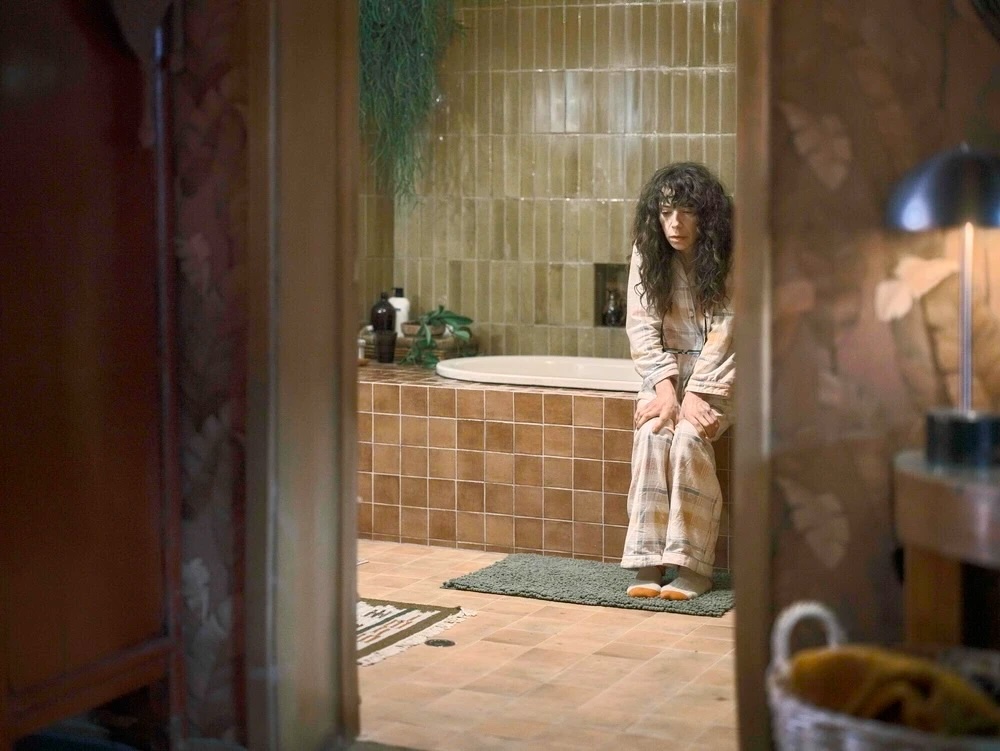
I’m not at all sure about Drop at first. It begins with a woman trying to escape a brutal attack from a violent man, the camera lingering on her battered face, so I’m worried it’s going to tread the ‘female suffering as spectacle’ path – and that, therefore, I’ll hate it. Thankfully, this approach is limited to the opening scene, and things quickly take a turn for the better.

The woman, Violet (Meghann Fahy), is a psychotherapist, specialising in survivors of domestic abuse. She knows what they’ve endured because she’s been there too. Since her ex’s death, dating hasn’t exactly been her priority: she’s been focusing on raising her son, Toby (Jacob Robinson), and building her career. But her sister, Jen (Violett Beane), thinks it’s time that Violet had some fun, and persuades her to meet up with the guy she’s been chatting to via social media. He seems nice, and Jen’ll babysit Toby. What’s the worst that can happen?

Henry (Brandon Sklenar) is almost too good to be true. He’s handsome, charming and easy to talk to. Sure, the fancy restaurant he’s suggested for their date is situated on the top floor of a soaring skyscraper, but how is he supposed to know that Violet’s afraid of heights? Palate has an excellent reputation and a lovely atmosphere. Surely this is the start of something promising…

But then Violet begins to receive mysterious ‘digi-drops’ (airdrops), which gradually grow more threatening in tone. Digi-drops can only be sent within a fifty-metre radius, so she knows they’re coming from within the restaurant. But, of course, there are countless people glued to their phones; how can she identify who’s responsible? And anyway, that’s soon the least of her worries because, before she knows it, she’s being instructed to murder her date – and, if she refuses, her tormenter says he will kill her son.

If the premise sounds preposterous, that’s because it is, but the script – by Jillian Jacobs and Chris Roach – is genuinely thrilling, the tension ramped up with each passing minute. Fahy convinces as the desperate woman, fighting an unseen enemy with everything she’s got, and the plot is twisty, turny and delightfully unpredictable. Indeed, under Christopher Landon’s direction, Drop exhibits as much sophistication as Palate‘s Michelin-starred dishes – until we reach the final scenes, where ‘bold’ segues into ‘bonkers’ and ‘believability’ flies out of the smashed window.

In the end, the good outweighs the bad, and I leave the cinema more than satisfied by this exciting whodunnit with its appealing central duo and intriguing cast of suspects.

4 stars

Susan Singfield
Ivor

15/04/25

Traverse Theatre, Edinburgh

It’s Scarlet’s twenty-first birthday, and she’s promised to spend it with her mum. Single-parent Sarah (Laura Harvey) is beyond excited: she’s not enjoying her empty nest, and is determined to go the extra mile for her student daughter (Alice Glass). A landmark occasion requires a significant gift – and what could be more significant than an actual iceberg?

The titular piece of polar glacier – “Ivor” – dominates both the family kitchen and the Traverse 2’s stage: a great big hulking metaphor, displaced and dangerous.

Scarlet’s not exactly delighted by the surprise. Not only is it weird, it’s also way too much. She feels suffocated by her mother’s ridiculous largesse. How now can she break the news that, in fact, she won’t be staying here after all? That she’s planning to go to London with her girlfriend, Jude (Betty Valencia), and has only popped in to collect something…

Jennifer Adam’s sprawling script encompasses ecological disaster, terrorism and helicopter parenting. The creaking, leaking iceberg symbolises more than the melting ice caps: it’s a reminder of the enormity of the task ahead for Jude and Scarlet, young women determined to save the world. Meanwhile, the petty squabbles and hypocrisies between the three loom just as large. It’s a lot to pack in to fifty minutes’ playing time and, although director Catriona MacLeod succeeds in pacing it well, I can’t help wishing there were a little less here. Valencia’s performance is strong, but I think the play would be more compelling without Jude, with a tighter focus on the mother-daughter dynamic, set against the ever-looming climate crisis.

Heather Grace Currie’s clever design almost fills the small stage with an Ivor comprising huge white sheets teased into peaks, which is quite an achievement on a small budget. Unfortunately, this affects the sight-lines, and I wonder if a more abstract construction – an up-lit empty frame, for example – might serve the piece better.

The idea behind Ivor is pleasingly quirky but, in its current form, it doesn’t really suit the PPP running-time. Given longer to develop its themes – Jude’s family’s experiences in Colombia in particular need a lot more attention – this could be a really fascinating play, with much to say about the troubled times we live in.

3 stars

Susan Singfield