Edinburgh

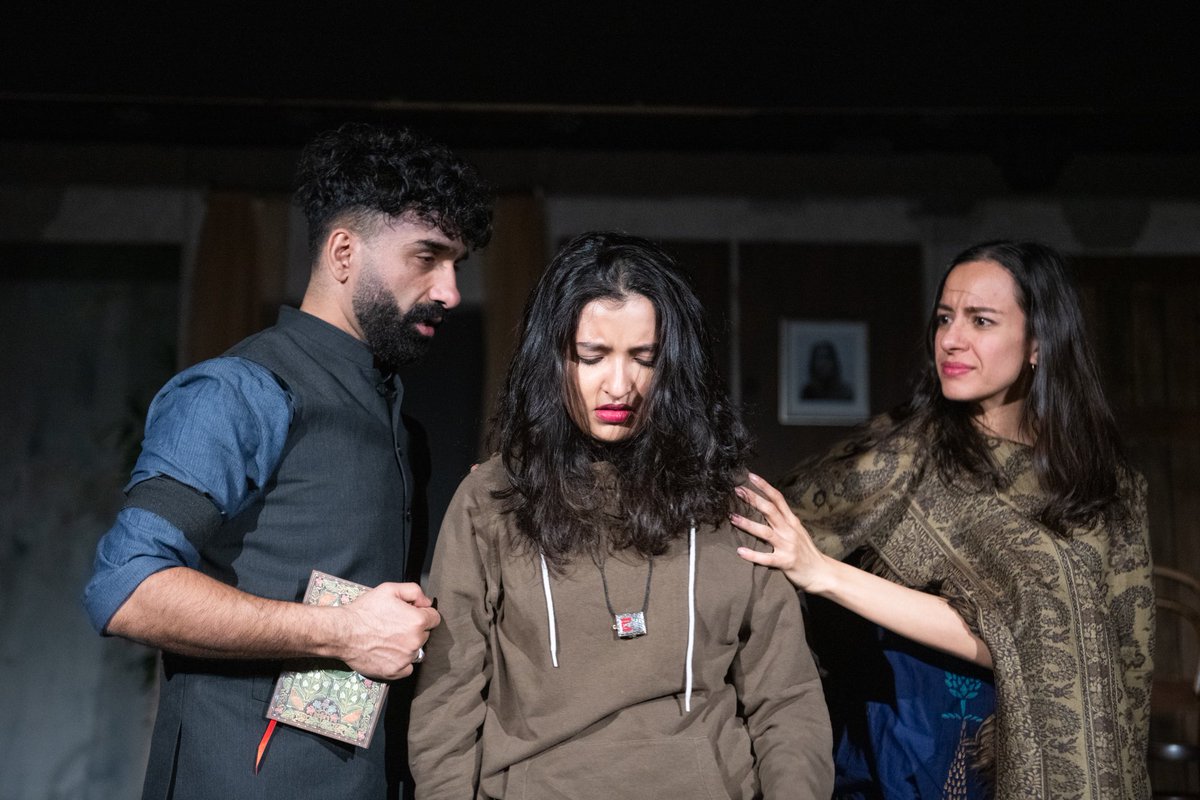
Break My Windows

27/09/22

Traverse Theatre, Edinburgh

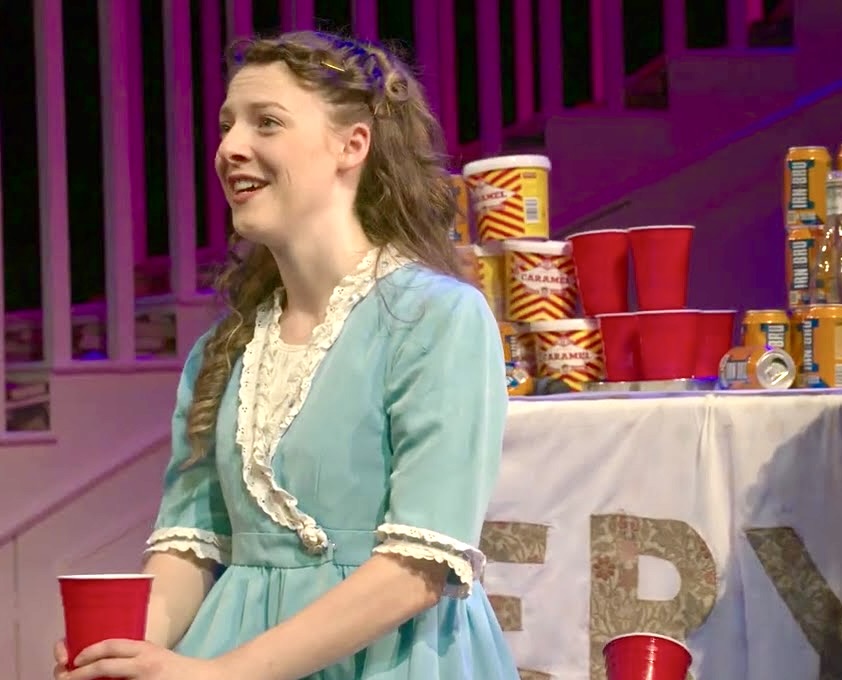
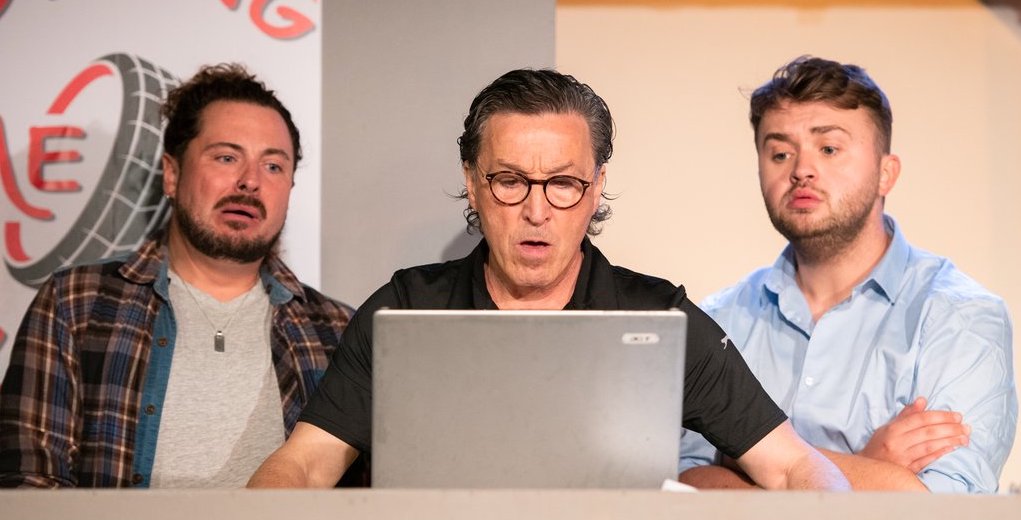
In an economy dominated by ‘funnel the capital upwards’ juggernauts like Uber, Yodel and Deliveroo, Eric (Tom McGovern)’s new company, Bring Me Wheels, is the logical conclusion. They all require drivers, right? So why not combine them, and concentrate even more money in a single pair of hands?

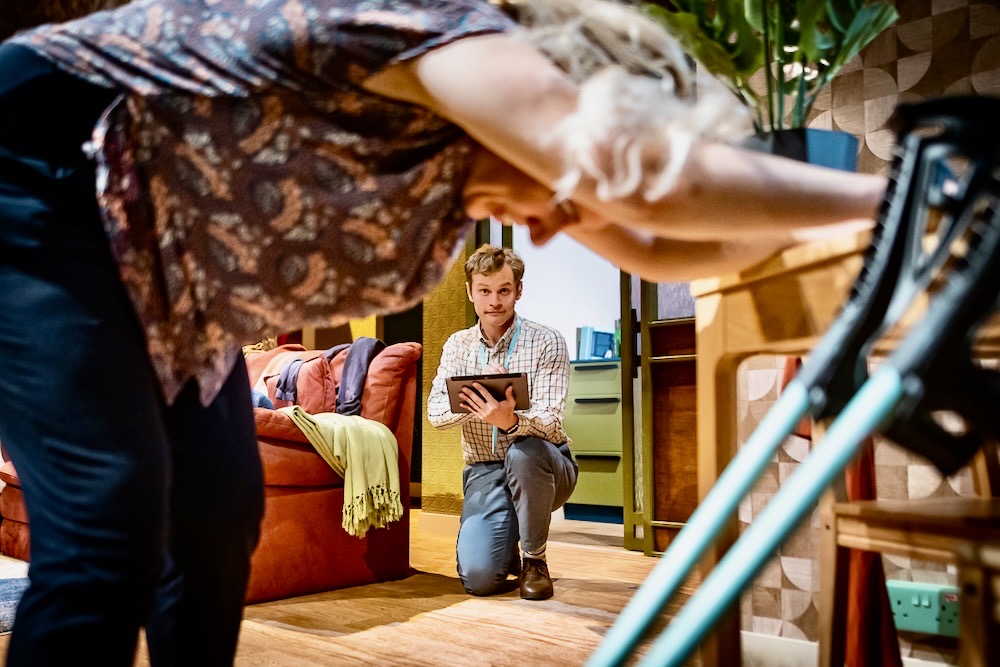
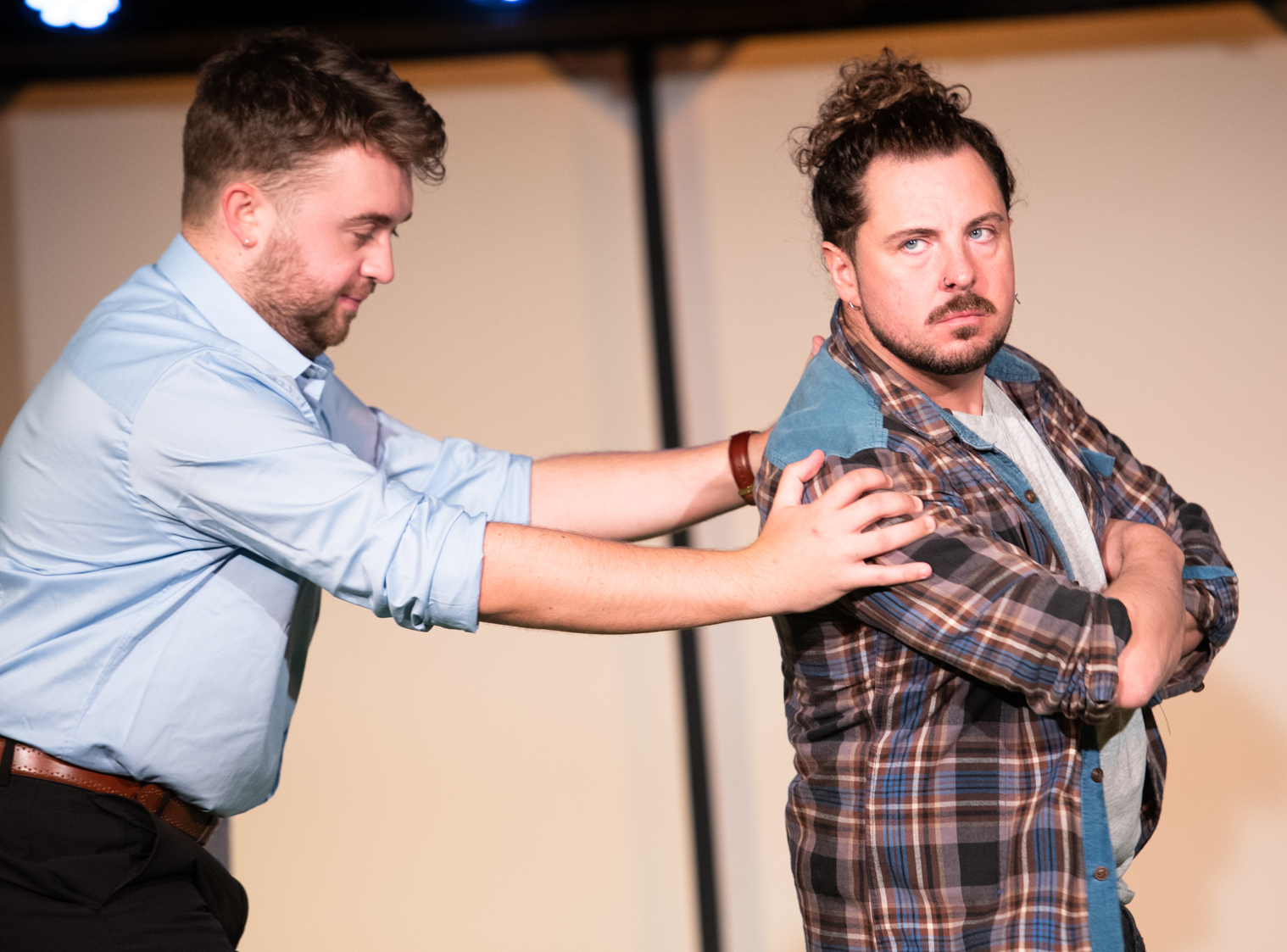
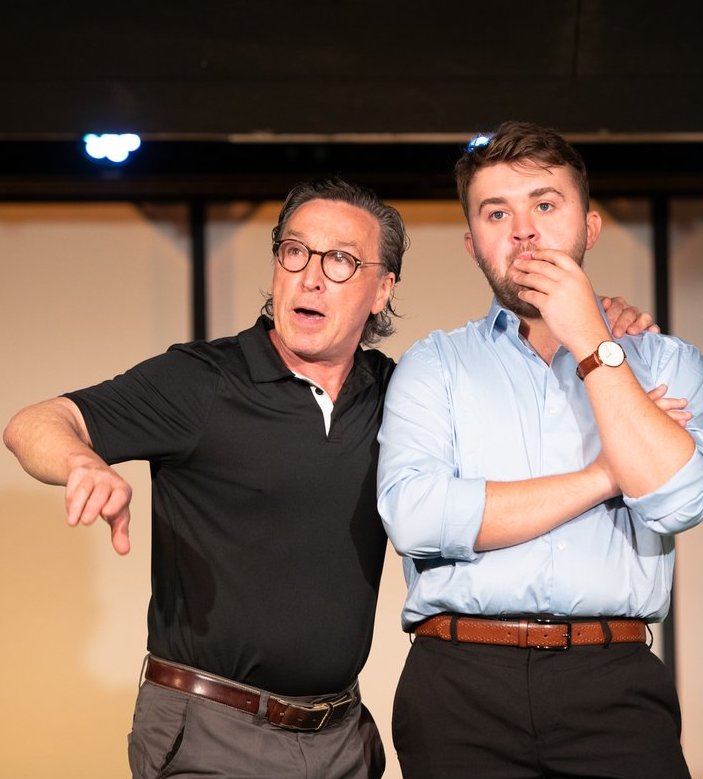
Speaking of hands, Eric has his fingers in a lot of pies, but Bring Me Wheels is especially close to his heart. He’s using it as an excuse to rebuild his relationship with his twenty-three-year-old son, Brandon (Ross Baxter), who hasn’t – as yet – got much to boast about on his CV. What better way to set him up than to make him manager of his dad’s shiny new start-up? But Brandon’s boyfriend, Sam (Jamie McKillop), has a lot to say about the inequities of late-stage capitalism, which puts a spoke in the Bring Me wheel. A bit of reading soon convinces Brandon that he’s not too keen on the business’s exploitative practices, although he does like living in a fancy flat and driving a brand new Tesla…

David Gerow’s script is nicely paced, and there’s plenty of humour to lighten the outrage. Directed by Ken Alexander, Break My Windows is as much an exploration of relationships as it is of the gig economy, and the chemistry between the three actors is palpable. At times it’s horribly tense, with Eric and Sam both entrenched in diametrically opposed views, and Brandon caught unhappily in the middle, snarked at by both of them, and repeatedly told to “keep your feelings out of this”. The politics are a little simplistic, perhaps, but that seems realistic too: you don’t have to spend too long on Twitter to see how binary and glib so-called debate can be. McGovern’s Eric is particularly funny – and strangely appealing, despite the odious views he espouses.

This thought-provoking piece is part of the latest A Play, a Pie and a Pint season, and it’s very fitting for a slice of lunchtime theatre.

3.7 stars

Susan Singfield

Flo & Joan: Sweet Release

26/08/22

Assembly Roxy, Edinburgh

Friday night at 8pm feels like the perfect time to see Flo & Joan. The crowd are up for a laugh: work is done for the week and the majority seem to be a few pints in, but no one’s obnoxiously pissed. This is an interlude in people’s nights, I guess: a fun hour to give the evening some shape, before the serious drinking starts. That’s how it feels, at any rate. And it’s none the worse for it.

Sisters Rosie and Nicola Dempsey are completely at ease: they’re natural performers, and their act is perfectly honed. Sweet Release is everything you’d expect it to be: clever lyrics, catchy tunes, assured musicianship, lovely voices and lots of funny chat. It’s light, but there’s an edge; it’s not all candyfloss. This show is rockier than the last one we saw (Before the Screaming Starts), with a punchy backing-track to occasionally augment the sound. There’s a full drum kit too, and this helps to make the show feel bigger, and well-suited to the packed out 250-seat venue (which is large, by Fringe standards).

I particularly like the disco dancing number: Rosie’s trademark deadpan expression clashes sublimely with the silly moves, and there’s an extended motif about parents’ ornaments, which seems to resonate with everyone. (Even as I snigger, I find myself wondering which of our trinkets my step-daughter shudders at – although I don’t think we’ve anything as spectacularly awful as the item Flo & Joan reveal.)

Of course, there are only two more chances to catch them here in Edinburgh, but the duo have a fairly extensive autumn tour scheduled, so why not treat yourself?

4.3 stars

Susan Singfield

The Ofsted Massacre

25/08/22

The Space @ Surgeon’s Hall (Grand Theatre), Edinburgh

In its opening stretches, The Ofsted Massacre feels horribly familiar, taking me back to my old job in secondary education. Head teacher Ros (Florence Chevallier) calls an emergency staff meeting, and tries to sound upbeat as she delivers the dread news to the staff of her FE college: “We’ve had The Call.” Anyone who’s worked in a school knows exactly what that means. An Ofsted inspection: a high-stakes obstacle course on an un-level playing field. The dice have been cast in advance, and the bouquets and brickbats are already inscribed – but still you have to drive yourselves onwards, just to survive. Phil Porter’s script feels like it’s been torn from the inside of a stressed-out teacher’s head: a revenge fantasy, born of despair.

It’s also a very funny play, drawing on Shakespeare, while lampooning staffroom stereotypes and exposing every cliché. Bullish head teacher with an inferiority complex? Tick. Ruthless business manager in a designer suit? Tick. Bumbling classics teacher, littering his speech with Latin? Tick. Ditsy RS teacher who doesn’t know what’s going on? Tick. Badger in the dining hall? Ti… wait; hang on a moment; what? They’re clever caricatures: instantly recognisable types, but imbued with enough humanity to add up to a lot more than that.

At first, the focus is on internal disputes and divisions. Business manager Liz (Lila Skeet) has a plan to game the system: send the ‘naughty’ kids on a trip with the weakest member of staff, and bring in super-teacher, Yvette (Amelie Scott), to plug the gap. Meanwhile, the janitor, Frank (Jake Francis), is dispatched to place a bug in the inspectors’ office, while nervous NQT Dylan (Lara Pilcher) is given the job of listening in…

But when lead inspector Mark (Toby Anderson) tells Ros that, despite her best efforts, failure and Special Measures loom, the staff finally unite – to form an army. And mayhem is unleashed…

This production, by Kingston Grammar School’s sixth form drama students, is a triumph. The young cast embrace their roles, eliciting gales of laughter from the audience with their well-timed punchlines and impressive slapstick. One standout moment is the revelation that drama teacher Joe (Fin James)’s relationship with his ex, Liane (Isabella Walsh-Whitfield) – now an inspector – failed because Joe just couldn’t let go of the past, couldn’t stop thinking about ‘him’, talking about ‘him’, focusing on… Michael Gove. Anouk Busset, as RS teacher Felicity, is a study in physical comedy, her heightened state of confusion a wonder to behold. Amelie Scott is also very funny indeed, her Little Miss Perfect act honed to, well, perfection.

The Grand Theatre can be an awkward space to perform in. Although it’s a big, airy room with a large stage, there are no wings, and so the backdrop is used for entrances and exits, which often looks clunky. KGS’s directors (Stu Crohill et al) show that it can be done: I think this is the first time I’ve seen a play here without being aware of this problem. Set changes and transitions are also elegant – despite the staffroom scenes requiring six large chairs – an object lesson in zero-fuss, well-orchestrated stage management (Phoebe Bowen et al). Camille Borrows and Meg Christmas deserve a shout-out for the costumes: they’re spot-on, and I’m impressed by the attention to detail as they deteriorate, along with the college’s chances of success.

There’s only one more opportunity to catch this show at this year’s Fringe. Don’t miss out – you’re in for a treat. Especially if you’ve ever dreamed of getting your own back on Ofsted…

4.3 stars

Susan Singfield

Gwledd (The Feast)

24/08/22

The Cameo, Edinburgh

A Welsh language horror feature on general release, showing at a cinema near me – a good 200 miles away from my native land? How can I resist? (Answer: I can’t.)

Another lure is the actor Annes Elwy. We were mesmerised by her performance as scary teenager Mia in the bilingual TV series Craith (Hidden); it was clear that hers was a name we’d hear again. And here she is, playing another scary teenager. No doubt she’s just as skilled in portraying different character types, but – ooh – she is adept at this. This time, she’s Cadi – a sullen, watchful kind of girl, a kitchen hand in the village pub, drafted in to help the local MP and his wife to host a dinner party for some important guests.

But something is rotten in the state of Cymru. Gwyn (Julian Lewis Jones) and Glenda (Nia Roberts) might seem successful: check out their swanky new house, stark and incongruous in the lush Welsh countryside. But they’re dancing with the devil, allowing local businessman, Euros (Rhodri Meilir), to drill their land for precious minerals. Their neighbour, Mair (Lisa Palfrey), is appalled. “What if She awakens?” she asks, when Glenda tries to persuade her to let Euros mine ‘the Rise’, part of which is on her farm.

But of course, She is already awake – and ready to exact revenge…

So far, so good. Gwledd, written by Roger Williams, has all the hallmarks of the folk horror films we love. Sadly, it has some issues too, which mean it doesn’t quite hit the mark.

The first problem is its glacial pace. I’m all for a bit of mounting dread, but the first hour is so slow it’s almost soporific. It’s like the scenes are being stretched to fill the running time, which isn’t a good look. And then there’s the recaps for the hard of thinking; director Lee Haven Jones needs to trust his audience more. I don’t need to see a flashback to a piece of glass being hidden: I noted it just thirty minutes ago; it was a memorable thing. In the end, the story is just a bit too obvious, and – although the stakes are definitely raised in the final stretches – it’s too little and too late.

There are plus points. Elwy is wonderfully enigmatic in this role, and Steffan Cennydd (Guto) and Sion Alun Davies (Gweirydd) clearly relish playing the hosts’ creepily twisted sons. The soundtrack, by Samuel Sim, is very atmospheric too, and it’s impressive to see how much gore can be wrung from what is obviously a small budget.

But in the end, even though I really, really want to like it, Gwledd feels like a bit of a let-down.

3 stars

Susan Singfield

Ben Miller’s Stand-Up Science

24/08/22

Laughing Horse @ The Three Sisters (The Wee Room), Edinburgh

You know when they say there’s not enough room to swing a cat? Here in The Three Sisters’ Wee Room, you’d be hard pressed to squeeze in a photo of a cat. The first joke of the gig appears to be the venue. It’s literally a cupboard. From September to July, it’s no doubt used for storing toilet rolls. I know it’s a trope of the Fringe: every available space will be pressed into service. But I’ve been to most venues, and this is a new low. There are twenty-three of us crammed inside an airless box. I find myself being a lot more churlish than usual. “You can’t keep selling tickets,” I say to the guy at the door, as venue staff bring along another small bench and attempt to direct two more punters inside. “The room fits twenty-five,” one of the bench-movers says, nicely. And proves her point by using the bench to prop open the door, and inviting the couple to sit facing the corridor.

I feel bad when I realise the guy at the door is actually Ben Miller (not that one), because I don’t want to make things difficult for him. It’s not his fault, after all. I’m sure he’d like a bigger room. Or, you know, an actual room.

Still, Miller (not that one) doesn’t seem fazed. Maybe he’s used to it by now. He introduces himself, and establishes the concept: we’re in a science lesson. And, despite his nervous supply-teacher vibe, he’s in perfect control. He asks a bit about people’s experiences of school, and reassures us that this lesson will be interesting, so long as we like to learn. And it is: in particular, the science behind his timid-looking stance. He has pectus excavatum, which means he has a concave chest, and that his heart and lungs are all squashed up inside (not to labour a point, but I know how they feel). The set is structured exactly like a lesson: there is some lecturing, a PowerPoint, a Q&A, and even a pop quiz, to check that we’ve been paying attention. It’s funny too. Miller (not that one) is adept at using his low-status persona to maintain a calm, gently humorous tone, even in the face of some very esoteric heckling, clearly intended to test his science credentials. This is stand-up-disguised-as-science, rather than Robin Ince-style science-disguised-as-stand-up, and I laugh a lot. I never knew I had a favourite element until now…

Miller (not that one) is also playing an evening slot at ZOO Playground, so – if you’re claustrophobic – maybe try to catch him there instead. If cheek-by-jowl doesn’t bother you, then head to The Three Sisters. Either way, this is definitely the most enjoyable science lesson I’ve ever attended.

3.5 stars

Susan Singfield

The Birds

22/08/22

The Space at Symposium Hall (Annexe), Edinburgh

I’m a fan of Daphne du Maurier’s short story,The Birds. I like the set-up, the idea of a family under siege, their home slowly transforming into a prison, and the frustration the central character, Nat, feels, when his neighbours dismiss his fears that something is amiss. Conor McPherson’s 2016 stage script dilutes this somewhat, replacing Nat’s family with two women, strangers to him and to each other. The disparate threesome, all seeking somewhere safe from the birds, hole up together in an abandoned house, where they struggle to get along. Much is made of the women’s rivalry, because – of course – they’re both attracted to Nat, and what else do women do but catfight over men? Gah. Still, at least there’s no caged loved birds, so we can be thankful for that…

St Michael’s Players (from Chiswick) certainly give this all they’ve got. Things start off promisingly, with Diane (Arabella Harcourt-Cooze), who’s been managing just fine on her own, tending to the injured Nat (Neil Dickins), who has just stumbled in. The tension between the two is tangible, especially when he rants about his ex-wife having him sectioned, all while swinging a hammer. Harcourt-Cooze is mesmerising here, watchful and tense – and, when the moment passes, there’s a palpable sense of relief in the room. But Diane and Nat get along well, until Julia (Georgina Parren) arrives, driving a wedge between them, the younger woman displacing the older. Julia wields her fecundity like a weapon, but she shouldn’t underestimate Diane…

The four actors (David Burles plays Tierney, a small but crucial part) perform well, and commit fully to their roles. However, I don’t think enough is made of the existential threat. Initially, the birds’ presence is clear: there are recorded sound effects, as well as some off-stage flapping, which combine to create an atmosphere of dread. However, as the play progresses, the outside danger becomes less pressing, and we’re soon embroiled in a domestic drama, with only occasional reminders that the apocalypse is happening just the other side of the door. I think the stakes need raising here: we need to feel afraid of what the birds might do, to believe that they are growing in number and becoming ever more dangerous. The noises need to be louder and more incessant, and we could do something visual too, even just a simple lighting effect. Without these elements, the play essentially doesn’t fly.

Which is a shame because there’s much here to admire – particularly those committed performances.

3 stars

Susan Singfield

There’s Nothing Quite Like Spaghetti Bolognese!

22/08/22

The Space on the Mile, Edinburgh

Let’s start with the elephant in the room: we are very definitely NOT this show’s target audience. It’s billed as suitable for 3+, which I’d say is about right – and the other adults here are accompanying wains. We’re not. We don’t have any. We wouldn’t usually come along to something designed for those so many years our junior, but we met Chloe Din (who stars as Penny) last week, while queuing for another show, and she talked us into it. What can we say? Her enthusiasm convinced us.

So here we are, and it’s a pleasure. Din and her co-star Dominic Myers have an easy rapport with their young audience, hitting just the right levels of pep and silliness. This play, adapted from a story by Ian Dunn (who also directs), is a cautionary tale, all about… pasta and sauce. Penny’s mum works for the NHS. She’s been doing lots of overtime, so she’s tired, and Penny’s dad is busy too, faced with the dual task of working from home and trying to find where his mischievous daughter has hidden his iPad. Unable to face another takeaway, Penny decides to help out – by cooking her mum’s favourite dinner, spaghetti bolognese. It’ll be a surprise she thinks.

And it is.

A very big surprise.

Because, after all her careful preparation, Penny’s dinner doesn’t just sit in the pan like dinners usually do, waiting to be served. Instead, it leaps out, and introduces itself as ‘Spag Bol.’ Penny is delighted with her new friend, and the pair embark on a series of adventures…

There’s Nothing Quite Like Spaghetti Bolognese! is an engaging and likeable piece of theatre. There is some audience interaction (we are split into three groups to provide the sound effects for the cooking scene, for example), but I think they would do well to include more of this. There are some repeated rhymes, which go down a storm with this young audience, and lots of lively songs, which also work well, despite a ‘ukelele malfunction’ when a string breaks about half way through, meaning that rather more of them are a cappella than I imagine is intended. No matter: Din and Myers forge on with gusto, and I doubt the children even notice.

Spag Bol’s costume deserves a mention of its own: it is a fantastic creation, imaginatively crafted from wool, and weirdly convincing.

The ending is a bit chaotic, and I’m not really sure why. It feels as if something has gone awry, because it finishes uncertainly with no clear signal that we’re done. The applause at first is tentative, and everyone looks confused. This is a shame, because it sends us out on the wrong note, wondering what happened rather than humming the final tune.

Still, if you’re in Edinburgh with small children and want to keep them entertained, this is sure to do the trick. If nothing else, it’ll serve as a warning not to play with their food…

3.7 stars

Susan Singfield

Tessa Coates: Get Your Tessa Coates, You’ve Pulled

21/08/22

Pleasance Courtyard (Beside), Edinburgh

Whether Tessa Coates really is as ditsy and posh as the persona she creates seems almost immaterial: I’m hooked. From the moment she stumbles onto the stage, all swishy hair and giggles, I’m completely disarmed. I like her. I’m not sure why. I don’t think we’d have much in common. But she’s so lively and engaging, it’s impossible not to warm to her.

Coates has, she tells us, recently been diagnosed with ADHD. “No,” she corrects herself. “Just ADD. Without the H.” Hmm. She might not be clinically hyperactive, but she’s certainly excitable. And very, very easily distracted. At least, the on-stage version is. If the real-life Tessa is the same, then I guess we have someone else to thank for organising this Fringe run, and getting her to the show on time.

I like the way Coates leans into and acknowledges her privilege, mocking her own pony-riding past, and likening herself to an Enid Blyton character. Even if it is Anne. “The shit one.”

The show itself is a fairly straightforward “here are some silly things I’ve done” affair, detailing the scrapes Coates has tumbled headlong into, mainly because she doesn’t think things through. She leads us through a series of minor calamities: from high school embarrassments to dressage problems; from awkward elevator moments in LA to the Brighton half-marathon. It’s all delivered in the same vibrant, upbeat, appealing way, as ludicrous-but-ace as the pink ride-on electric kids’ car that dominates the stage.

Coates bought it on impulse, not realising it’d be both too small and too big. “It’ll be fine,” she tells us.

And it is.

4 stars

Susan Singfield

Tickbox

20/08/22

Summerhall (Tech Cube 0), Edinburgh

Lubna Kerr emigrated from Pakistan to Glasgow when she was just a child. Now, many years later, she looks back on her life, growing up as an outsider, marginalised and stereotyped, and she rails – softly – against the constrictions she has endured.

The first constriction we hear about is in her own arteries. She’s in A&E with what the doctor is insisting is a stress-related heart problem. “But I’m not stressed,” Lubna demurs. She’s happy, isn’t she? What has she got to be stressed about?

Considering this question takes Kerr down a rabbit hole of remembrance, and she recounts for us the experiences that have shaped her, and led her here: to the hospital and to this stage – to two different kinds of theatre.

Kerr’s narrative is gentle and meandering, a wry and often self-deprecating account. There is humour and affection in her tale, and she has a very amiable presence; it’s easy to warm to her. Hers is a middle-class background: her mother laments the lack of household help and bemoans the size of their Govan flat; it’s not as fancy as she was used to, back in Pakistan. Their new neighbours assume Lubna’s dad is a shopkeeper or a bus driver, because that’s what the other brown people they know do. But her father is a scientist: he’s doing a PhD; he teaches at Strathclyde university. But being educated, being relatively well-off, these aren’t enough to protect the family from casual racism. Even at Brownies, where everyone seems to mean well, Lubna’s popularity comes courtesy of a badge the others can earn for meeting someone from the Commonwealth…

This is an immensely likeable show (and not just because we’re all given a Tunnock’s teacake), although it does feel a little too polite at times, and I would like to see the stakes raised. The running race, for example, feels thrown away: the build up is nicely done, but then it peters out, with no climax. I’m also not convinced that it’s necessary to try to hide the act of drinking water; Kerr walks behind a sofa several times during the show and, with her back to us, takes a sip from her bottle. I think it would look more natural and be less intrusive if she were to incorporate this into the show – and this would also give her the opportunity to interact with the set more effectively. There’s quite a lot of paraphernalia here that doesn’t really get used; if she had a vintage jug and water glass to go with the 1970s TV, etc., she could sit on the sofa and pour herself a drink as part of the action.

Tickbox offers a fascinating insight into life as an immigrant – and we leave, talking about the issues raised, and tucking into our teacakes.

3.4 stars

Susan Singfield

Ghislaine/Gabler

19/08/22

Greenside at Riddles Court, Edinburgh

Ghislaine Maxwell is largely defined by her relationships with men: she is Robert’s daughter and Jeffrey’s partner. But who is she now, alone in her prison cell, her father long-gone, her ex-lover also dead? She’s a woman of many parts: convicted sex-trafficker, erstwhile socialite, pampered rich-kid, penniless fighter – and the only person serving any time for the rapes that occurred at Epstein’s ‘parties’. The rapists themselves are either dead or free.

In this challenging piece of theatre, Kristin Winters draws a parallel between the enigmatic Ghislaine and Ibsen’s anti-heroine, Hedda Gabler. The similarities are, in fact, quite astonishing, although I wouldn’t have made the connection by myself. Like Ghislaine, Hedda grows up living in the lap of luxury, and is close to her difficult but rich father – and, like Ghislaine, his death leaves her (relatively) poor. Both women are known by their fathers’ names (Hedda’s married name is Tesman; Ibsen explains the title thus: “My intention in giving it this name was to indicate that Hedda as a personality is to be regarded rather as her father’s daughter than her husband’s wife”). Both women are corrupted by their circumstances, and abuse their power to hurt those weaker than themselves. They each seek to influence other people’s fates; they are hungry and twisted, and it is hard for others to understand what motivates them.

So, yes. The conflation makes perfect sense. And writer/performer Winters’ strange and complex play is as fascinating as the women themselves. It’s an exploration of something unknowable, that raises as many questions as it answers. It’s not an easy watch – and nor should it be. It’s as gnarly and difficult as Maxwell and Gabler, as opaque and unfathomable as their actions. Winters mixes physical and verbatim theatre, lines from Hedda Gabler, imagined internal monologue and dance – and the result is extraordinary. Winters’ intensity is almost unbearably disconcerting.

Perhaps the piece is a little too demanding of its audience: there’s an assumption that we’re au fait with not just the Epstein case (fair enough, that’s common knowledge), but also with Hedda Gabler (I’ve got that one, luckily), and with what happened to Robert Maxwell (in my case, just the ‘media-mogul-financial-misconduct-drowning’ elevator-pitch). I’d like maybe a tad more hand-holding to guide me through some of these details.

This is an intelligent and arresting play and, although I don’t enjoy it exactly, I guess I’m not supposed to. I’m provoked, intrigued, and – in the end – impressed.

4.1 stars

Susan Singfield