Edinburgh

Henderson’s

10/11/23

Barclay Place, Edinburgh

Some friends are up in Edinburgh for the weekend, so we arrange to meet at Henderson’s for a meal and a catch-up. The Henderson name is an Edinburgh institution: Janet opened the city’s first vegetarian restaurant way back in 1962. Sadly, the original venue closed in 2020 (due to the pandemic), but her grandson, Barrie, has since picked up the family (carrot?) baton, taking his turn to encourage the city’s residents to ‘Eat Better, Live Better’.

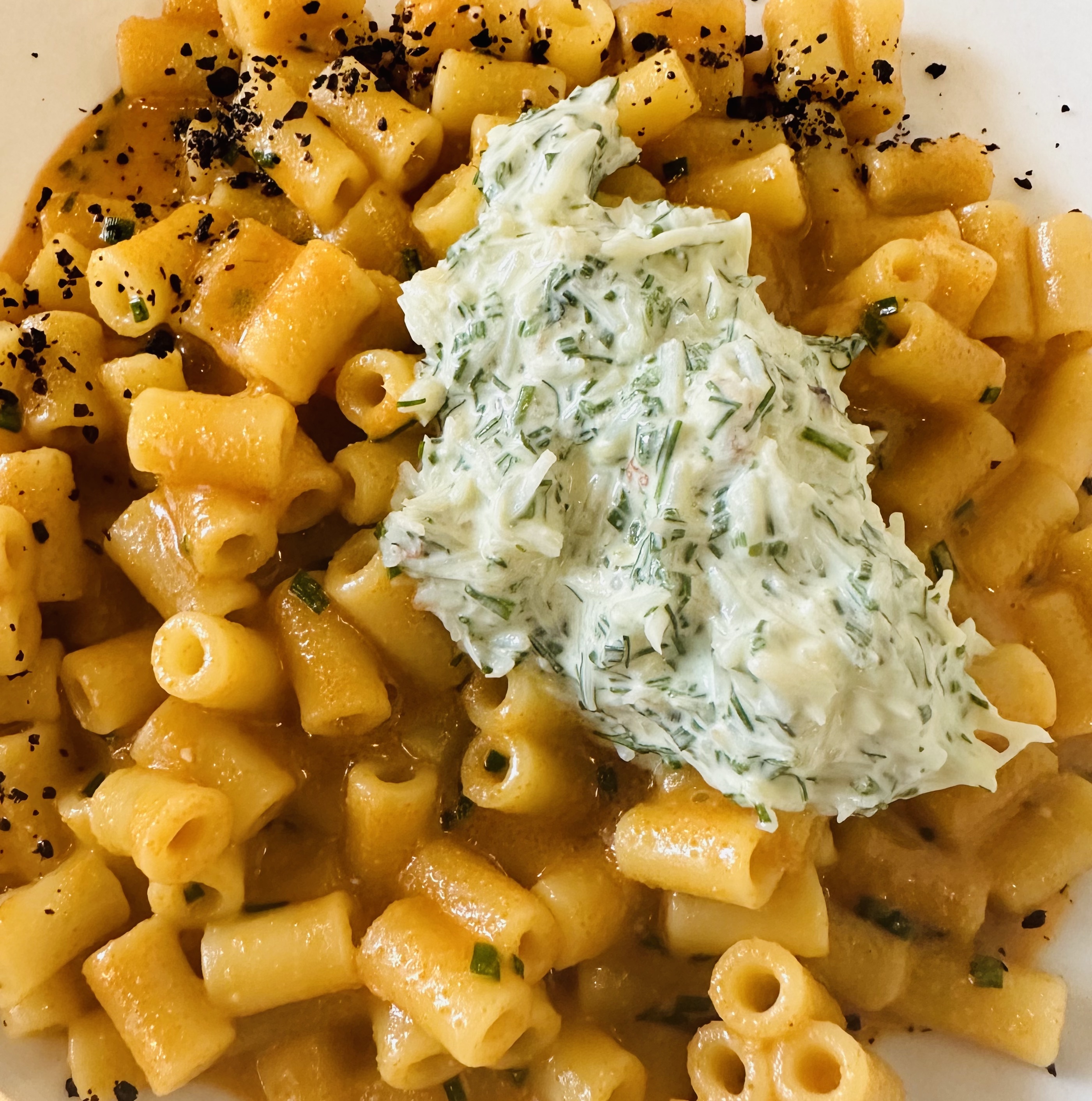
Philip chooses the vegan king oyster mushroom scallops for his starter, which are served with a cauliflower puree, samphire and seaweed flakes. It’s an impressive opening: the fungi’s texture and shape perfectly mimicking their seafood equivalent, and these are expertly cooked. One of our friends opts for gnocchi, with carrot purée, nasturtium pistou, toasted pumpkin seeds and almond parmesan crumb. He says it’s delicious.

Our other friend and I decide to eschew starters in favour of ‘nibbles’, reasoning that we don’t want to be too full to enjoy our mains. This is a mistake. Both her preserved lemon hummus and my butterbean, confit garlic and rosemary pate are very tasty and well-made, but they’re robust, generously-portioned and served with sourdough. We should probably have stuck with olives!

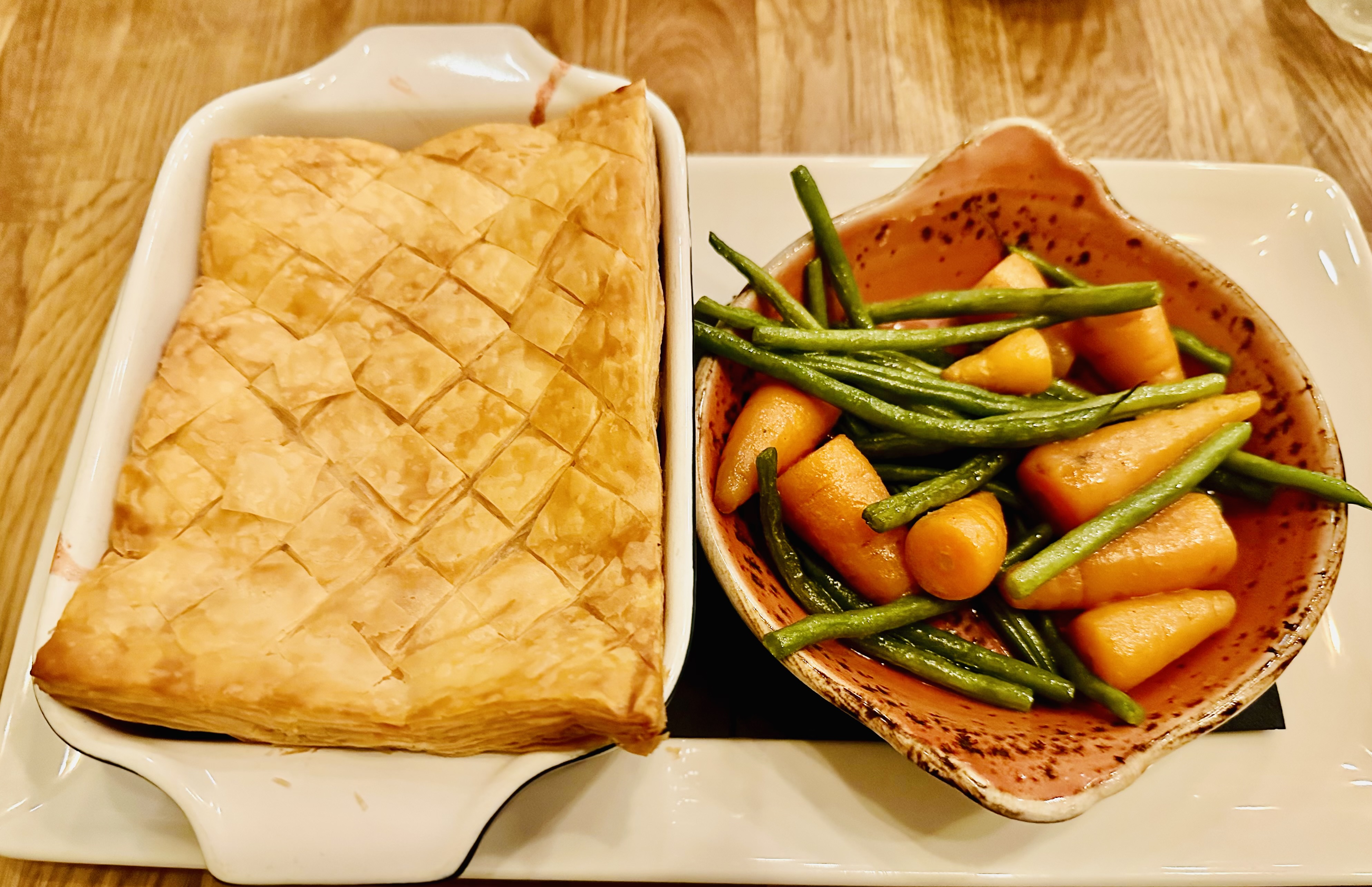
For our mains, three of us opt for the beetroot and black bean burger on a bouncy, homemade brioche bun. There’s also an onion ring, some caramelised onion and, because none of us is vegan, an extra layer of smoky cheddar. The burger comes with a side of skin-on chips, and a rather wonderful stout mayo. Philip – ever the outlier – has the beet bourguignon pie, which, despite its inelegant appearance, turns out to be the standout dish of the evening. Nestled beneath a flaky, golden pastry top is a rich, slow-cooked beetroot concoction, which he devours with gusto.

For pudding, our friends share a warm spiced fruit cobbler with homemade vanilla ice cream, while Philip and I go halvies on a slice of vegan biscoff cheesecake and a baked Alaska with banana ice cream and salted caramel topping. While Philip prefers the cheesecake (he likes its silky texture and the fact it’s not too sweet), I think the baked Alaska has the edge, precisely because it is so intensely sugary.

It’s great to spend time with our friends in these convivial surroundings. Throw in a couple of mocktails (I highly recommend the Noscow Mule) and you’ve got yourself a delightful evening.

4.1 stars

Susan SIngfield

Flip!

03/11/23

Summerhall, Edinburgh

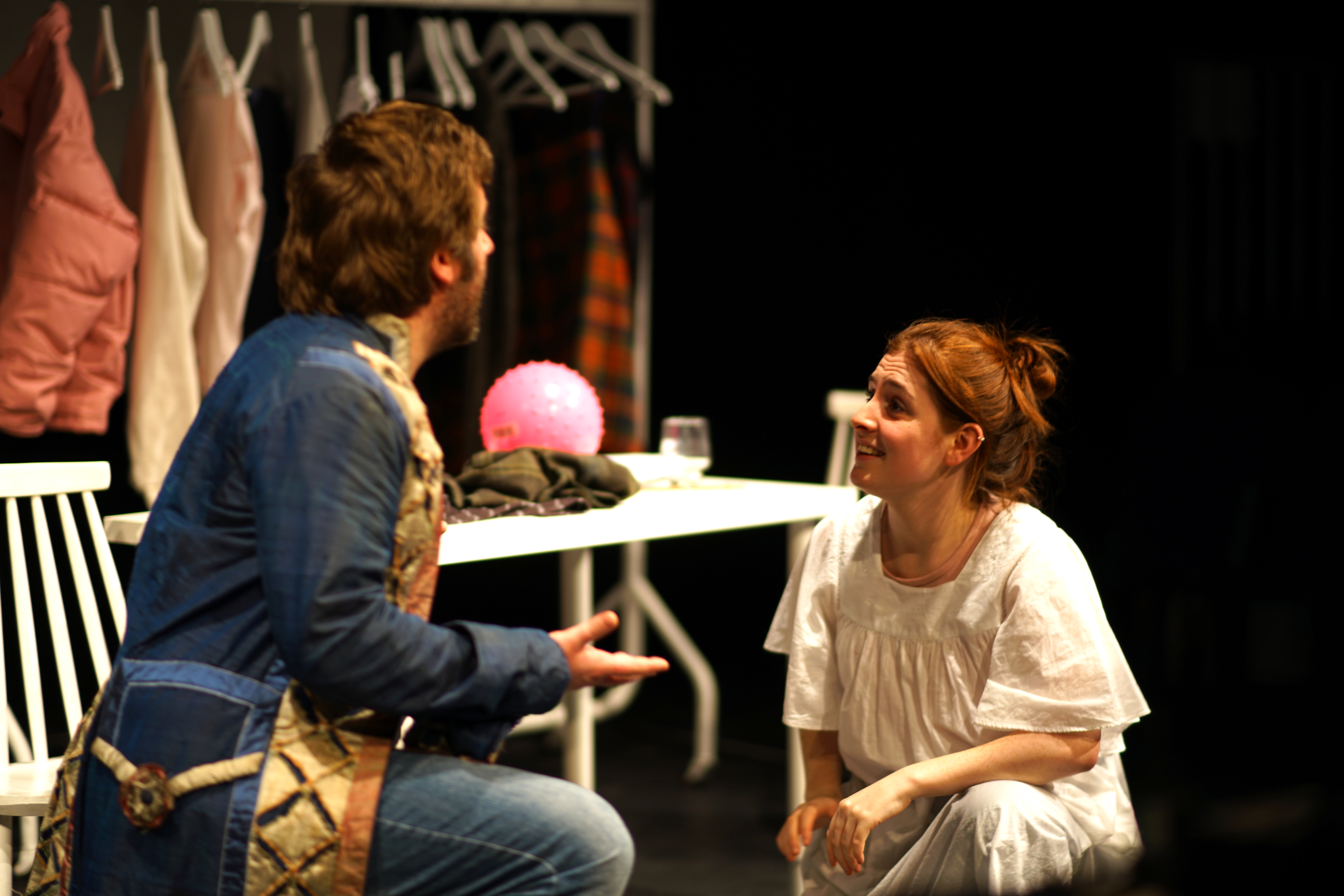
Racheal Ofori’s FLIP! is a fresh and keen-eyed take on the Faust story. Two young graduates, eager to make their mark, are enjoying moderate success on their WePipe channel. Their videos are vibrant and fun, full of silly catchphrases and exuberant dance routines, pragmatic beauty tips and off-the-cuff remarks. They’re enjoying making them – and it shows. For Crystal (Jadesola Odunjo), the collaboration and creativity are paramount, but Carleen (Leah St Luce) is hungry for cold hard cash. She has to be: unlike Crystal, she doesn’t have parents who can bankroll her, and her hard-earned degree doesn’t seem to be helping her to get a decent job.

So when a new app starts to gain traction, Carleen is all over it. FLIP! is hugely popular, its short video format both punchy and easily accessible. Crystal takes a bit of convincing – she’s not keen on the app’s style or ethos – but, before long, the duo are doing well. Until Crystal says something that other users don’t like, and she’s trending for all the wrong reasons…

Carleen is faced with a dilemma: should she stand by her friend and eschew her newfound notoriety, or sign a deal with FLIP! as one of their brand ambassadors?

Under Emily Aboud’s assured direction, FLIP! is a kinetic, engaging piece of theatre, turning an almost empty stage into a convincing digital universe. Aline David’s lively choreography helps to underscore the characters’ youth – their exuberance and naïvety – and both Odunjo and St Luce deliver flawless performances, charting the characters’ respective journeys from dreams to despair.

Because, of course, just as every action has an equal and opposite reaction, every exciting new promise of autonomy and riches soon has the sharks circling, working out how they can exploit it for their own ends. And FLIP! are no exception, cunningly demanding the rights to Carleen’s digital image and then using AI to create content for her. Sure, she’s making money, but she’s no creative control, no pride in her work. The fun has gone – and so has her best friend. But if she reneges on the deal, what then? FLIP! will just use someone else, and she’ll be back in a dead-end job. There’s no way out.

Ofori’s social commentary is sharp and incisive, and we leave the theatre with much to discuss. FLIP!‘s Edinburgh run is over now, but it’ll be at the Soho Theatre from 7th-25th November, so do try to catch it if you’re in London. It’s FLIP!pin’ great!

4.3 stars

Susan Singfield

The Grandmothers Grimm

01/11/23

Traverse Theatre, Edinburgh

The Grandmothers Grimm, written and directed by Emily Ingram, returns to Edinburgh for the final two nights of its latest tour. Premiered in 2017, this long-running play continues to resonate six years later, drawing in a sizeable crowd tonight at the Traverse.

Revisionist fairy tales are nothing new: like pantomimes, these stories survive because they’re endlessly adaptable. But this production, by Some Kind of Theatre, is more about intellectual property: who invented the stories, who owns them – and who gets the credit.

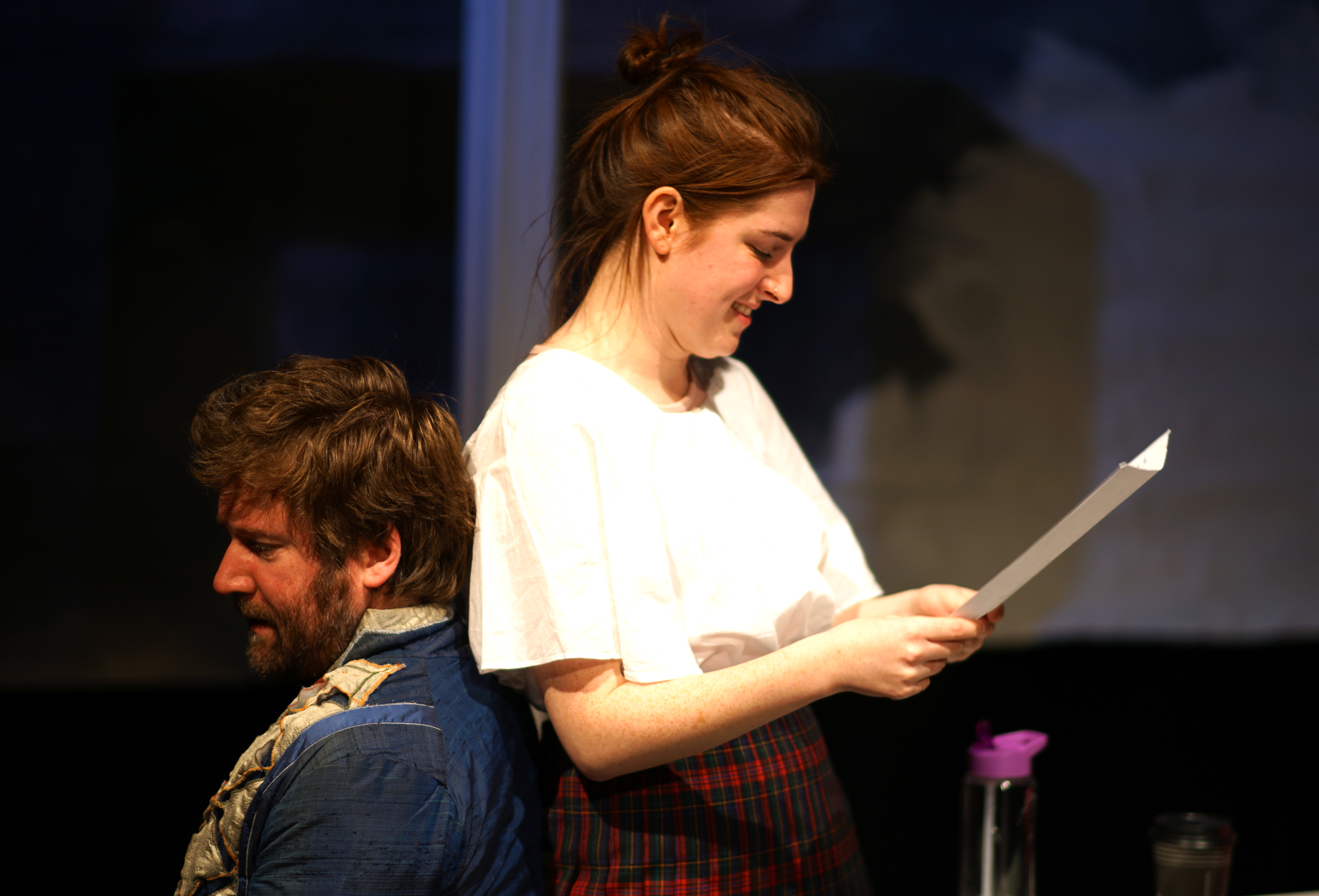
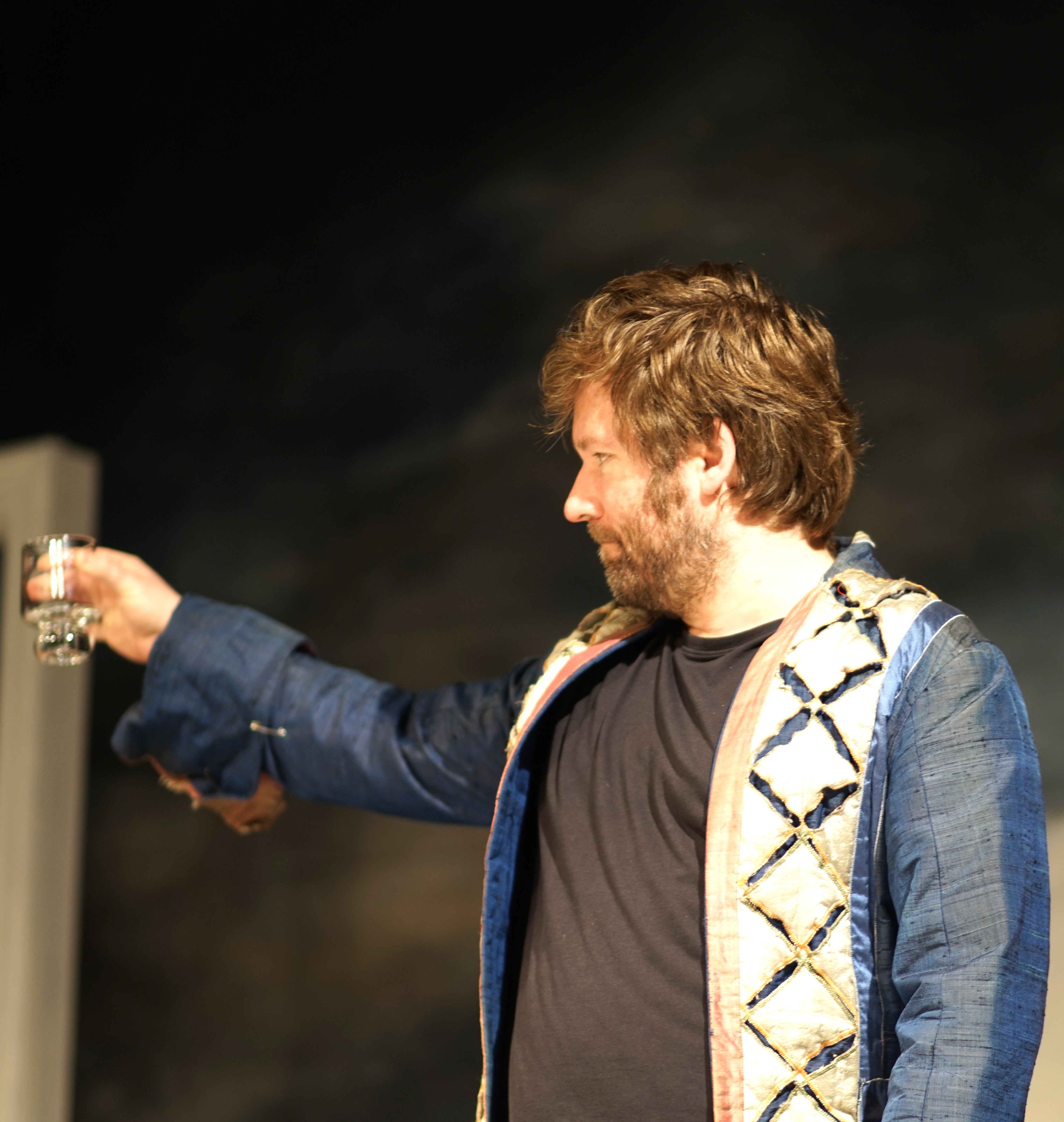
It’s no surprise to learn that the past was sexist (the present is pretty sexist too). But it is perhaps news that the Grimm brothers’ project – collecting traditional folk tales for a compendium – actually deprived a lot of working-class female storytellers of their living, like a nineteenth-century Spotify. After all, who’s going to pay to listen to an old woman tell them a story if they have ready access to a printed copy of the text? Jacob (Justin Skelton) and Wilhelm (Gerry Kielty) might argue that they never claimed authorship of the tales, readily acknowledging their process, but it was their names on the cover – and their profits in the bank.

Marie Müller (Ingram) opens the play, alone, weaving her narrative with practised ease. This, we understand, is how the stories were traditionally told: a paying audience listening, rapt, as an elderly, peasant woman draws us in. When Jacob and Wilhelm burst onto the stage, accompanied by the middle-class Marie Hassenpflug (Sophie Harris), it’s clear that Old Marie doesn’t stand a chance. She’s displaced, allowed to speak only for as long as it takes for the brothers to transcribe her words.

Hassenpflug doesn’t fare much better. She’s educated so the Grimms are superficially more respectful towards her. Nonetheless, they purloin her stories with a blatant disregard for her authorship; it doesn’t occur to them to credit her (a bit like those celebrity children’s authors, who don’t credit their ghost writers…). Harris imbues Hassenpflug with a fierce dignity, which makes for a stark contrast to the brothers’ pettiness.

Kietly’s Wilhelm is focused on sales. He thinks the stories need to be sanitised so that parents will buy them for their children. Skelton’s Jacob hates this idea: he doesn’t want to create the kind of sappy stories he associates with Charles Perrault. He favours a warts and all approach, arguing that the darkness is what makes the tales. I’d agree with him if it weren’t for the fact that his version of ‘authenticity’ denies the existence of the real originators.

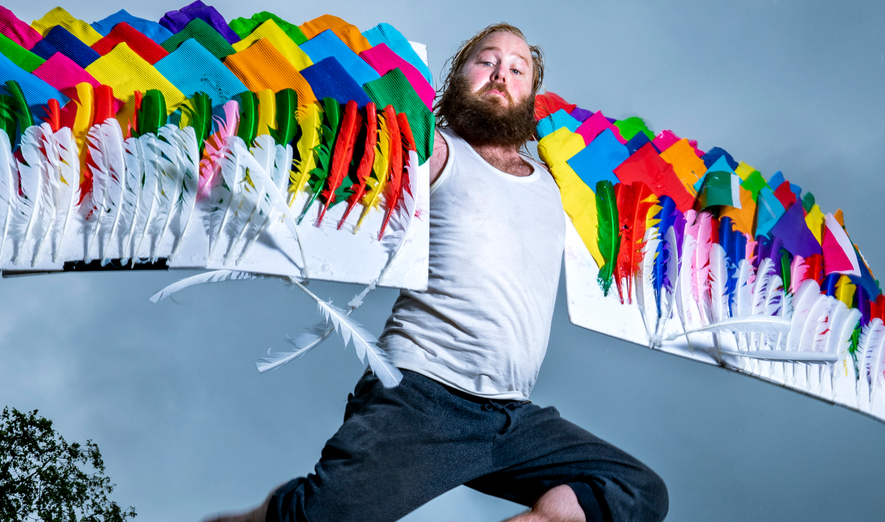
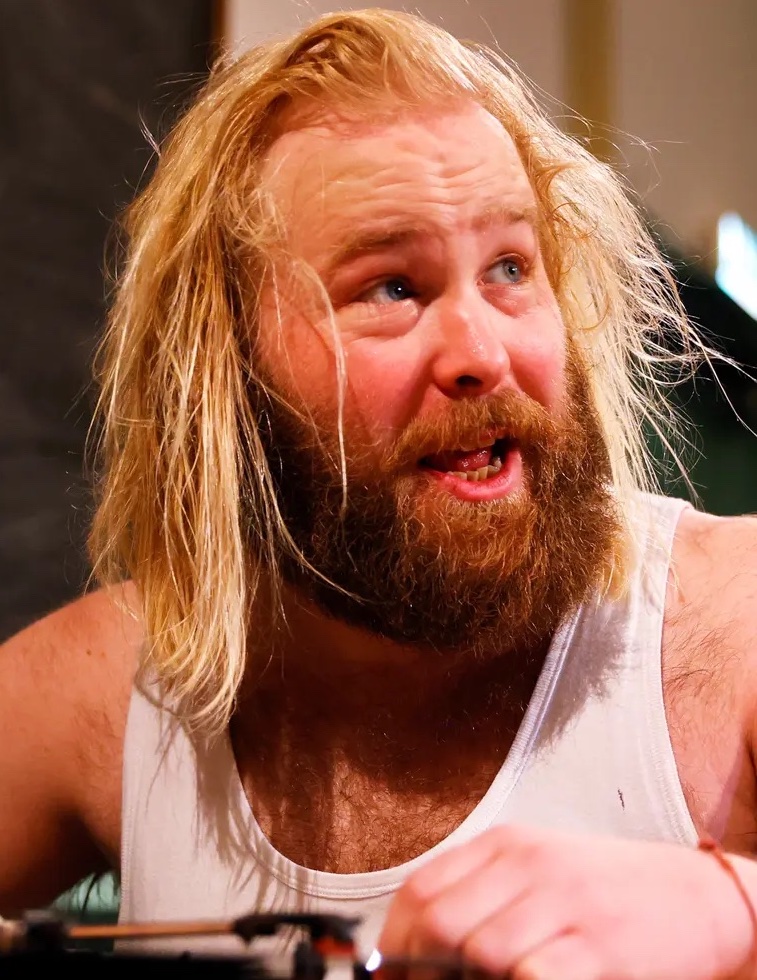
The staging could hardly be more simple: the performance area is almost empty, save for a desk and a couple of books; the only additional props are some feathers, cups and apples. This is no-frills, low-budget, black-box theatre – and none the worse for it. Skelton provides the comic relief, galloping round the stage as a donkey prince, as the quartet bring the various tales to life. It’s deftly done, so that we hear the original versions and then see them warped and changed. The pace never falters.

If The Grandmothers Grimm feels like a natural fit for the Edinburgh Fringe, then it’s nice to be transported back to August on this cold November night.

4 stars

Susan Singfield

Treason the Musical

27/10/23

Festival Theatre, Edinburgh

“Remember, remember, the fifth of November, gunpowder, treason and plot. I see no reason why gunpowder treason should ever be forgot.”

We haven’t forgotten, of course. Bonfire Night looms large in the national calendar: every year, we bundle up in hats and gloves for an evening of funfairs, ginger parkin and fireworks. Guy Fawkes is burned again and again, his straw-stuffed effigies punished annually for his attempted crime.

So no, he’s not forgotten. But what exactly do we remember?

On the way to the theatre, I realise just how shaky my own grasp of the history is. I know that Guy Fawkes and some Catholic collaborators attempted to blow up the Houses of Parliament and that it was something to do with the Reformation. I know that he was hung, drawn and quartered. And, um, that’s it.

So I’m fascinated to learn more about the context, to understand how James I/VI angered Catholics by reneging on his promise to stop persecuting them, sacrificing their freedom for his own financial gain. Ricky Allan’s songs and Charli Eglington’s book help to illuminate the lives of those forced to deny their faith. It’s a salient message: in a world of tyranny and subjugation, terrorism is inevitable.

Although Guy Fawkes (Gabriel Akamo) is the name we all know, this show, directed by Hannah Chissick, focuses primarily on Martha and Thomas Percy (Nicole Raquel Dennis and Sam Ferriday), opening with their illicit wedding and charting their troubled marriage. Although both actors deliver strong performances, this seems like something of a mis-step, as the ups and downs of their relationship are less interesting than the actual gunpowder plot, which is relegated into second place.

In fact, Fawkes barely features in the actual story here. Instead, he’s cast as an observer, a narrator, leading the audience through the events as they unfold. This has a curiously distancing effect: he never actually enters the scenes to interact with the other characters, so it appears as if he were not involved. This means that the ending, when he’s captured and tortured, feels unearned. We don’t know what he’s being punished for.

There’s a problem with the pacing too, particularly in the second act. While the first is punctuated with a little levity in the form of Oscar Conlon-Morrey’s Iago-like Robert Cecil, manipulating King James (Joe McFadden) with practised ease, the second is a far more sombre affair, with too many ballads getting in the way of the action. Dennis and Emilie Louise Israel (Anne Vaux) give it socks and their soaring voices are undeniably impressive, but it does get a little wearing listening to them worry about how ‘vulnerable’ their menfolk are, when I’m impatient to know what’s going on with the barrels of explosives and the attack on parliament.

There is much to like, however. I love Taylor Walker’s choreography: the ensemble work is impressive, the artful movement adding to the sense of menace and unease. And the vocals are impressive: perhaps Israel is the standout, but there are no weak links here. It’s a real pleasure to listen to these performers sing.

Best of all, the production looks sumptuous: between them, Philip Witcomb (set) and Jason Taylor (lights) have created a thing of beauty, all sliding doors and shafts of light; one moment a palace, the next a tunnel. The transitions are instant and almost magical, an exemplar of stagecraft’s sleight of hand. The moment when a boat comes sliding out of the darkness is thrilling, transporting us to the Thames at night, the tension immediately cranked right up.

So, although it smoulders rather than going off with a bang, this is certainly a handsome piece of work.

3 stars

Susan Singfield

Battery Park

26/10/23

Traverse Theatre, Edinburgh

Whatever happened to Battery Park? Back in the 90s, they were ‘the band most likely to happen’, but they suddenly – irrevocably – split, leaving just one iconic album for their many fans to remember them by. So where and why did it all go wrong.? The beauty of Andy McGregor’s love letter to the Britpop era is that it’s all done with such veracity it’s hard to believe that it’s a piece of fiction – that the titular band never existed.

The play opens in the present day. Angie (Chloe-Ann Tylor) is at University and she’s doing her dissertation on Britpop (of course she is!). She tracks down Tommy (Chris Alexander), drinking alone in his regular haunt at Greenock Bowling Club, and asks him for the inside story. He needs a little persuading but soon enough he’s reminiscing about his younger self (Stuart Edgar), his older brother, Ed (Tommy McGowan), and their best pal, Biffy (Charlie West), who is one of those guys who likes to hang around with musicians – a drummer. Tommy has been writing songs and, lured by the possibility of a paid gig at the aforementioned bowling club, the boys hastily put together their band.

But while Tommy can write a catchy song, he’s not that confident a performer, so when Lucy (also played by Tylor) mentions that her best friend, Robyn (Kim Allan), is a brilliant vocalist/guitarist, it’s a no-brainer. Robyn is confident, talented and determined to make it big, no matter what it takes. From their very first performance, the new line-up seems destined for success…

Battery Park captures the sweaty exuberance of a band’s early days with absolute authority, providing an inspired mix of drama and high-octane rock. Kenneth McLeod’s set design somehow manages to incorporate all the necessary jumble of instruments and amplification into the story without ever getting its leads tangled, and I find myself marvelling at the ingenuity: the speaker cabinet that doubles as a safe is inspired!

While the first act chronicles the band’s dizzy rise to the brink of stardom, Tommy has signalled from the outset that the second will detail its heartbreaking descent into ignominy. The resulting dramatic irony is almost too much to take. By the closing stages, I’m watching with tears in my eyes.

All the performers excel, both as actors and musicians – and it certainly helps that the band’s numbers (also written by McGregor) are a series of propulsive bangers, each one containing a memorable hook in the chorus. As the musicians hit the final chords of the closing song, the applause erupts, intense and heartfelt.

As gig theatre goes, this is a perfect example of the craft. Don’t miss it.

5 stars

Philip Caveney

Disfunction

24/10/23

Traverse Theatre, Edinburgh

Sadly, this is the final PPP of the season; Tuesday lunchtimes just won’t be the same without an invigorating hour of original theatre. Luckily, Disfunction (“with an ‘i'”) provides a rousing send-off. This is first-rate stuff: a beautifully distilled character study, with a slice of social commentary on the side.

Kate Bowen’s play tells the story of sisters Moira and Melanie (Maureens Beattie and Carr respectively) and a game they’ve been honing for fifty years. Their goddaughter, Tanya (Betty Valencia), thinks she’s found a way to monetise their creation – by turning it into a sort of reality-TV experience, where viewers can pay to watch them play. At its best, the game is all Taskmaster-style fun: one round requires a blindfolded participant to put a pin in a map and then (sans blindfold) make their way to wherever the pin lands. Caveat: no cars allowed. Oh, and once they get there, they need to take a photograph of themselves. With four animals.

At its worst, the game is an exercise in, well, dysfunction. With a ‘y’.

The Maureens are surely two of Scotland’s national treasures, aren’t they? It feels like a real privilege to see these two great actors in such an intimate setting. They clearly relish their roles, especially Carr, who gets the plum part of the sassy, self-destructive Melanie. But Beattie is just as impressive as the more reserved and taciturn Moira, and Valencia more than holds her own as troubled Tanya, all bright-eyed desperation, a paper-thin smile covering her pain.

Lu Kemp’s kinetic direction means that the characters are always in motion (notable moments include a hilarious performance of Whigfield’s Saturday Night routine), and highlights that peculiar combative closeness that defines so many families.

Are there any negatives? Not really. Disfunction‘s role-playing political round perhaps stretches credulity (if there are only three people playing and each one has to ‘be’ a politician, who has set the questions to catch the others out?), but that’s my only gripe. Otherwise, it’s a pure delight. After all, as Tanya so cannily perceives, who doesn’t want to watch a bunch of strangers tearing themselves apart?

4.5 stars

Susan Singfield

Don@Tokyo

15/10/23

Lothian Road, Edinburgh

It‘s not every day that a restaurant opens at the end of your street, but in the case of Don@Tokyo, that’s exactly what’s happened – and we couldn’t be happier about it.

When we first moved to Edinburgh eight years ago, the building that now houses the venue was a TSB bank. It closed in 2019 and, though there were mutterings about turning it into a wine bar, the arrival of COVID promptly finished off that idea. The place stood empty for years and quickly became virtually derelict and covered in graffiti, a real eyesore.

So when legions of workers appeared earlier this year and started to gut the place, working around the clock to get the job done, we were understandably delighted. In what seems an improbably brief space of time, the interior has been repurposed, refitted and redecorated and we’ve watched entranced as Don@Toyko has risen from the ashes. It’s now a bright, spacious, bustling Japanese restaurant with an eye-catching video display in the foyer, some quirky red figurines and even a semi-private dining room for larger parties. Best of all, they’ve preserved the beautiful old Victorian mosaic over the doorway that announces ‘Thrift is Blessing’.

We take our seats and somebody brings us the menu, a tablet with images of the various dishes on it and we tap through, wondering why there are so few mains to choose from. Then our waiter realises that there’s a glitch and that not all the meals are showing. He brings us a replacement and there’s a lot more there than we first thought. (Say what you like about ink and paper, you never have to turn it off and turn it on again.)

We decide to share some rainbow sushi: exquisite parcels of sticky rice featuring salmon, tuna and prawn – and some california rolls with crab, cucumber and avocado. Both are delicious, particularly when eaten with slices of the pickled ginger that accompanies them. 

We also order some soft shell crab. This is a tempura with not a hint of grease. The batter is as light as anything and the flesh beneath melt-in-the-mouth tender.

Best of all is the main course we share, a gyudon, slices of beef and egg on a bed of rice. It may not be the most picturesque item on the menu, but it’s rich and nourishing and we finish every last morsel.

From the drinks menu we choose a couple of cold teas, one with mango, the other with grapefruit. I’ve never been a big fan of tea but these sweet beverages work brilliantly with the food, the citrusy tang cutting through those savoury flavours and gooey textures.

A word of warning. The service here is really swift and we make the mistake of ordering everything up front, so it all arrives together. While this would clearly suit larger parties of people who like to mix and match their dishes, it’s less successful for two people seeking a quiet dinner. Next time, we’ll choose a dish, eat it and then order the next. What’s more, we’re so full towards the end, we ask to take half of the California rolls away with us, which proves to be no problem. They are transferred into a delightful little presentation box, ready for a delicious lunch the following day.

It’s early days for Din@Tokyo, with the staff clearly still getting the measure of the place, but on the basis of our first foray, it makes a welcome addition to the local eating scene. I’m sure we’ll be back for more before very much longer.

4 stars

Philip Caveney
Dracula: Mina’s Reckoning

11/10/23

Festival Theatre, Edinburgh

Bram Stoker’s Dracula is one of those novels, like Alice in Wonderland, that is more famous for its enduring imagery than for its story. Its iconic characters are part of the fabric of our culture, recognised instinctively, even by those who have never so much as picked up the book. Such tales are ripe for retelling, like ciphers waiting to be reshaped for our times.

Into that space steps Mina’s Reckoning, a reimagining of the world’s most famous vampire, written by Morna Pearson and directed by Sally Cookson. This all-female and non-binary production redresses the gender imbalances in the source material: here, the women are elevated from mere victims and damsels-in-distress and are actually afforded some agency.

Whitby is out and north-east Scotland is in, justified by the fact that Scots writer Emily Gerard provided much of the inspiration for Stoker’s novel: it was from her work that he learned about the Romanian superstitions that inform some of the most compelling ideas in his book. More specifically, we’re in Cruden Bay, in a women’s asylum, where some of the characters speak in the Doric dialect. The Scots angle works well, the rhythms of the language creating an earthy poetry. The play opens with Mina (Danielle Jam) banging on the asylum door, demanding to be let in. She has Jonathan’s journals and wants Dr Seward (a wonderfully comic Maggie Bain) to help her ward off the evil that’s on its way.

The long first act sticks pretty closely to Stoker’s tale, albeit with more jokes and some judicious pruning (the boring suitor sequences are gone, thank goodness, and so are the details of Jonathan’s interminable journey). The second, shorter, act is much better, precisely because this is where the creative reimagining takes place, allowing Mina to come into her own. It’s a shame that the piece skews this way: it feels unbalanced. I’d like a shorter set-up and a longer unravelling.

It’s a great idea to recast Dracula as a woman and Liz Kettle clearly relishes the role. She’s a bold presence, at once attractive and repellant, exactly as the Count should be. Here, the blood-sucker is more nuanced than her original incarnation, both supervillain and saviour. As Mina seals her Faustian deal, we recognise what Dracula is offering her, and understand exactly why she makes the choice she does.

Kenneth MacLeod’s set is both the production’s strength and its weakness. It’s clever and imposing, evoking the chillingly austere asylum as well as the grand gothic castle – all staircases and hidden corners – and I like the use of Lewis den Hertog’s video projections and Aideen Malone’s lights to stain the walls red with blood, turning them into journals, then night skies, then stormy seas. However, the set’s cage-like qualities – the bars and rails imprisoning the women – also create a sense of distance, so that it’s hard to feel close to the characters and to empathise with them. What’s more, it makes the whole play less scary because we’re not immersed in the ghoulish goings-on.

Benji Bower’s music is wonderfully eerie and evocative but the sound drowns out the dialogue at times, which is a shame, as it obscures some of the finer details of the plot. Likewise, the ensemble work is excellent, but comes at the expense of the individual characters, as the inmates of the asylum blend together.

Albeit a little uneven, there’s a lot to like about this NTS and Aberdeen Performing Arts production, in association with Coventry’s Belgrade Theatre. The powerful image of Kettle, striding the ramparts – grey hair flowing, coat tails billowing – is one that will stay with me for a long time.

3.8 stars

Susan Singfield

Disciples

06/10/23

Traverse Theatre, Edinburgh

Disciples is a compelling piece of performance art, combining poetry, music, movement and visual imagery. Conceived and directed by Rachel Drazek and written by Ellen Renton, it’s about belonging and expectations, interdependence and joy. It’s also about giving people the chance to take up space – especially those who are often denied that opportunity.

The five-strong cast of disabled women and non-binary people bring Drazek’s vision to life: this is the “bold and beautiful new piece of dance theatre” she aspired to make. The creative process, we learn in an illuminating after-show discussion, was a collaborative one, the piece devised in rehearsal before being shaped by Renton. It shows: the performers’ agency is palpable. The resulting production is nuanced and doesn’t shy away from difficult emotions, but the layering of ideas ultimately adds up to something joyful and positive, reinforcing the idea that we are all connected and inter-dependent.

The costumes, by Zephyr Lidell, are simple but striking, each performer clad in a single, shimmering colour. Visually impaired musician Sally Clay (yellow) is all optimism; her singing voice is ethereal and she plays the harp and ukulele with aplomb. But she’s more excited about the dancing: post-show, she reveals that this is a long way from her comfort zone, and that she’s delighted to have been challenged in this way. Indeed, this point is echoed by Rana Bader (red), who seems to embody passion and strength; she is bursting with energy and exuberance, making a gazillion press-ups look easy. She’s not used to demands being made of her, she says; in rehearsal rooms, she sees her non-disabled peers being given detailed notes, while she is patted on the head just for turning up. She prefers being pushed.

Laura Fisher (lavender) is a dancer, so graceful and elegant that they take my breath away, while Irina Vartopeanu (green), uses BSL in a way I’ve never seen before, incorporated into the piece, not as a straight interpretation of what others are saying but as an expression in itself. She’s vivacious and somehow diaphanous.

Emma McCaffrey (orange), last seen by B&B in the excellent Castle Lennox, explores the idea of inner rage; they are an engaging performer with a bold stage presence and bring the humour needed to balance this play.

Disciples is a thought-provoking, sensory piece, and well worth catching if you can.

3.6 stars

Susan Singfield

Group Portrait in a Summer Landscape

05/10/23

Lyceum Theatre, Edinburgh

Patriarch Rennie (John Michie) has invited a disparate group of people to his retirement party. He’s had to keep the guest list secret from his wife, Edie (Deirdre Davis), because – with the exception of her old pal, film star Jimmy Moon (Benny Young) – there’s no way she’d agree to hosting the people he has in mind. En route to the couple’s country house in the Scottish Highlands is their daughter Emma’s ex-husband, for example – even though their wedding ended acrimoniously and Charlie (Matthew Trevannion) is renowned for wreaking havoc wherever he goes. Of course, he maximises the antagonism by bringing along his latest girlfriend, Jitka (Nalini Chetty), and why wouldn’t Rennie ask the newly-betrothed Frank (Keith Macpherson) and Kath (Patricia Panther) to join the party? It’s not as if Frank’s always been in love with Emma (Sally Reid) or anything, is it? Oops. There’s an uninvited presence too: the ghost of Rennie and Edie’s son, Will (Robbie Scott), who watches over the day’s proceedings with increasing horror…

Playwright Peter Arnott says he set out to to write a ‘Scottish Chekhov’ and to some extent he has succeeded. At first it seems as though, unlike Chekhov, Arnott is looking back at the political moment that nominally serves as the play’s pivot; he has the advantage of hindsight to create dramatic irony. After all, we know the outcome of the 2014 Scottish independence referendum, the divisive topic inflaming the characters. But we soon learn that this is just a distraction: as Charlie says, it’s mere tinkering around the edges while ignoring the real revolution that is on its way, and which only the rich and ruthless will be able to survive.

If Arnott’s script is retro, then David Greig’s direction is decidedly contemporary, a deliberate jarring of styles that helps to illuminate the sense that something is changing, mirroring the mismatch between parochial politics and apocalyptic predictions, Chekhovian naturalism and magical realism. I like the dissonance.

Jessica Worrall’s set also leans into the contrast, a hyper-realistic backdrop juxtaposed with a more figurative interior: a glorious photograph of a Highland glen and a sketched-in kitchen-diner, symbolised by oversized shelving units, enormous tables and vast floral curtains.

Both Simon Wilkinson’s lighting and Pippa Murphy’s sound are integral to the production: the former spotlighting the snippets of conversation that combine to drive the plot, the latter signalling the shifts to the ghost’s point of view, as the sound distorts and fragmented memories play through Will’s Walkman. This supernatural presence is one of my favourite things about the play: Scott physicalises the spirit’s pain and confusion with a beautiful awkwardness.

The first act is very strong, an interesting set-up that promises something the second doesn’t quite deliver. Although the characters are all cleverly depicted, the piece feels somehow unfinished, as if the story arc has been cut short. Rennie’s revelation, when it comes, is anticlimactic, and I don’t quite buy it as a reason for inviting these particular people to his home (why would anyone ever invite Charlie anywhere?). But, even if it’s a little opaque and doesn’t offer any real answers to the issues it grapples with, Group Portrait in a Summer Landscape is an intelligent and ambitious play, leaving us with a lot to think – and talk – about.

3.8 stars

Susan Singfield