Edinburgh

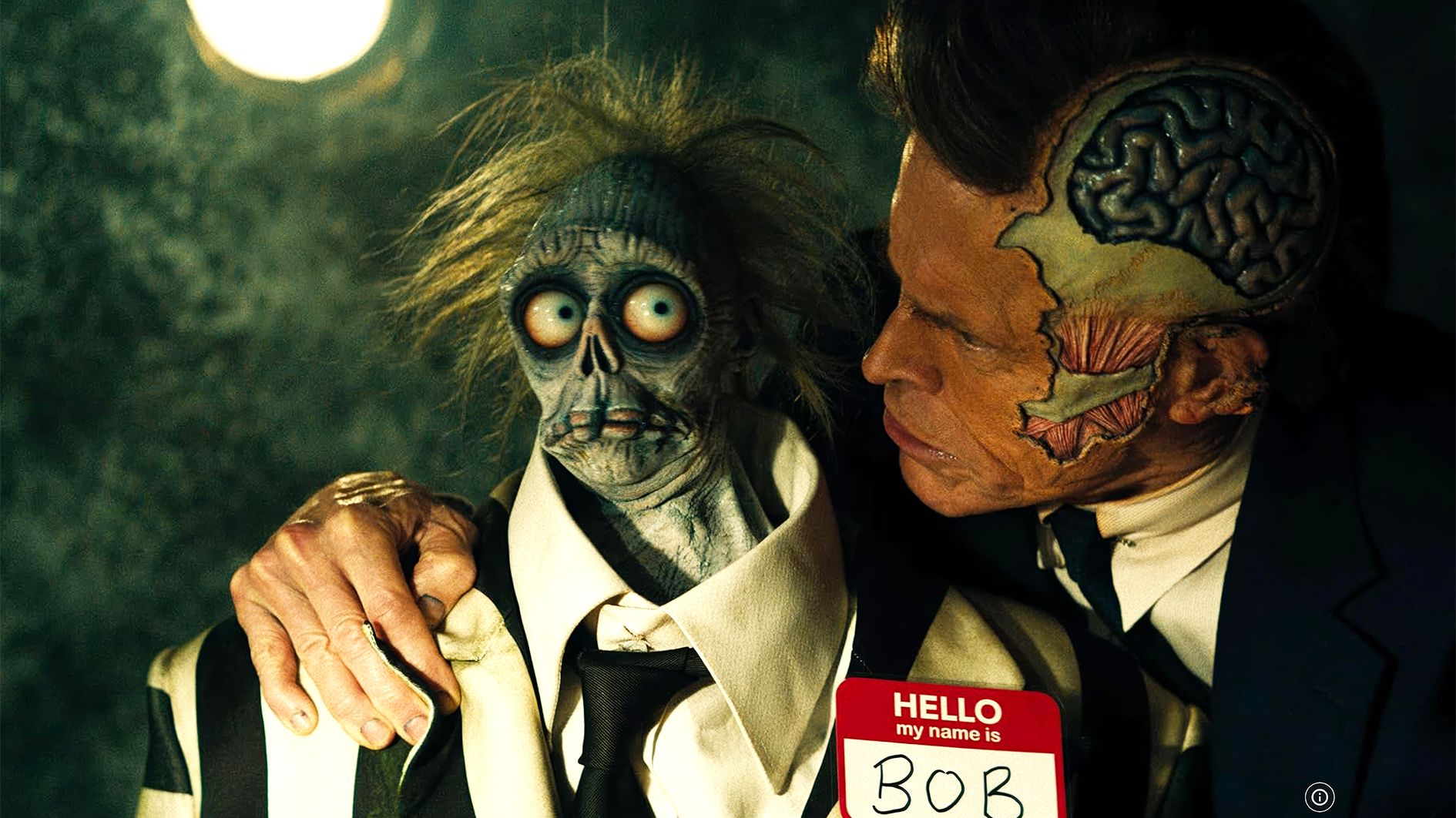
Beetlejuice Beetlejuice

06/09/24

Cineworld, Edinburgh

The juice is loose!

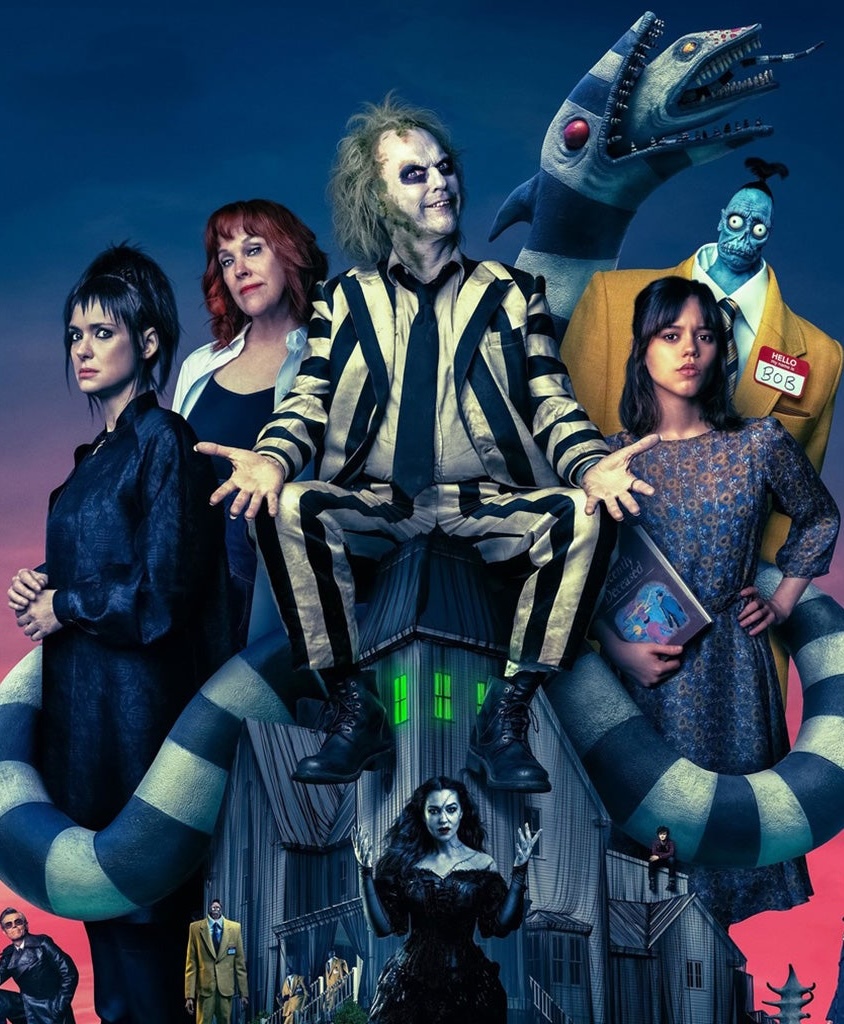
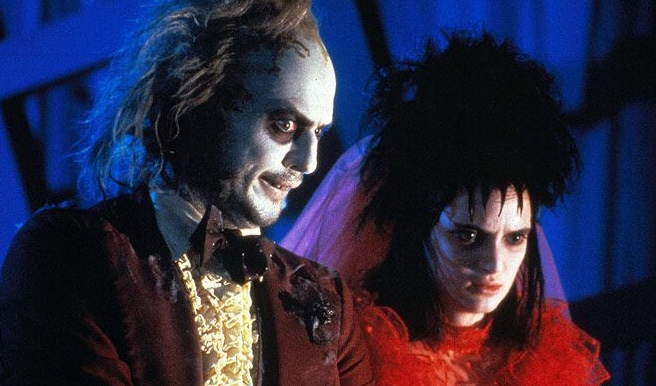
Look, there’s no getting around the fact that Beetlejuice Beetlejuice isn’t a very good film. That’s not to say I don’t enjoy it. I do; I’m not immune to nostalgia. I was seventeen when the original movie was released and I loved Winona. “I myself am strange and unusual,” was every teenage goth girl’s clarion call and Lydia Deetz was my style icon for the next decade. So of course I’m watching Tim Burton’s long-awaited sequel on the day of its release.

It’s been thirty-six years but Ryder has barely changed. Nor has Michael Keaton: his Beetlejuice is as repellant as ever. Still, at least his lust for Lydia is a bit less creepy now that she’s an adult.

Adult Lydia is a celebrated medium. This makes me laugh: it’s gloriously obvious. She’s in the middle of recording her TV show when her stepmum, Delia (Catherine O’Hara) calls with bad news: Lydia’s dad, Charles, has died. It’s time to head back to the haunted house in Winter River, with dodgy boyfriend Rory (Justin Theroux) and angry daughter Astrid (Jenna Ortega) in tow. It’ll be fine. All she has to do is stay away from the model village in the attic and make sure no one says “Beetlejuice” three times.

Beetlejuice. Beetlejuice. Beetle… Oops.

Sadly, from hereon in, the plot veers out of control, as wild and unpredictable as its eponymous antihero. In the underworld, a brilliant sequence where Beetlejuice’s ex-wife, Delores (Monica Bellucci), declares vengeance on him even as she’s stapling her dismembered body parts back together peters out into nothing, squandering a fun idea and a strong performance. Willem Dafoe is similarly under-used as Wolf Jackson, a dead actor struggling to differentiate between himself and the long-running character he played. It’s a neat set-up with nowhere to go. Meanwhile, in the land of the living, Rory is pressuring Lydia to marry him, Delia is turning Charles’ death into an art installation, and Astrid – still mourning her own dad, Richard (Santiago Cabrera) – has met a cute boy (Arthur Conti), who likes reading almost as much as she does… It’s scattershot to say the least.

Of course, when you throw this much at something, some of it sticks – but there’s a lot of wastage. The animated sequence showing Charles’ death is nicely done, but it feels like a segment from a different film. Even more out of place is the black-and-white Italian flashback, the nod to horror pioneer Mario Bava an easter egg for the wrong audience.

It’s much more of a kids’ film than I remember. In fact, Beetlejuice Beetlejuice reminds me of Alice in Wonderland (Lewis Carroll’s original, not Burton’s dismal remake). The imagery is remarkable, there are a lot of memorable characters and some gorgeous set pieces – but the rambling story doesn’t make much sense. Still, I guess there are worse insults. Alice isn’t exactly a failure, and maybe Beetlejuice X 2 will prove similarly popular. At tonight’s screening, the prevalence of gleeful tweenagers in stripy costumes suggests it well might.

So why not go see it and judge for yourself? If you’re happy to sit back for a couple of undemanding hours of gothic silliness, buy your ticket now. You get a free demon possession with every exorcism…

3 stars

Susan Singfield
Sing Sing

31/08/24

The Cameo, Edinburgh

It’s National Cinema Day and picture houses across the country are offering tickets for a mere £4. The Cameo is packed to the rafters. Does this mean that cinemas could sell out regularly if they lowered their prices, or is the mass turnout down to the sense of a special occasion?

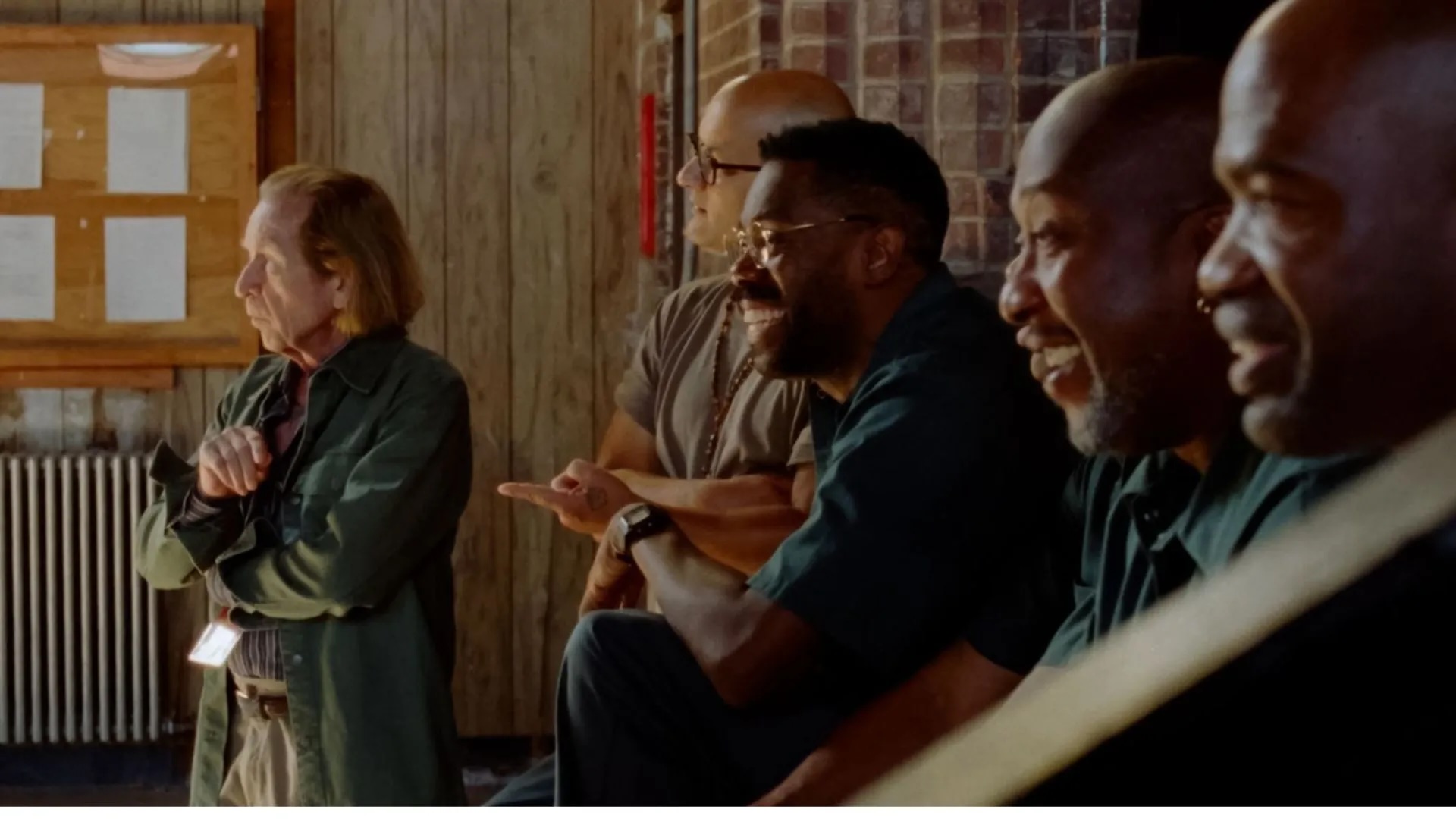
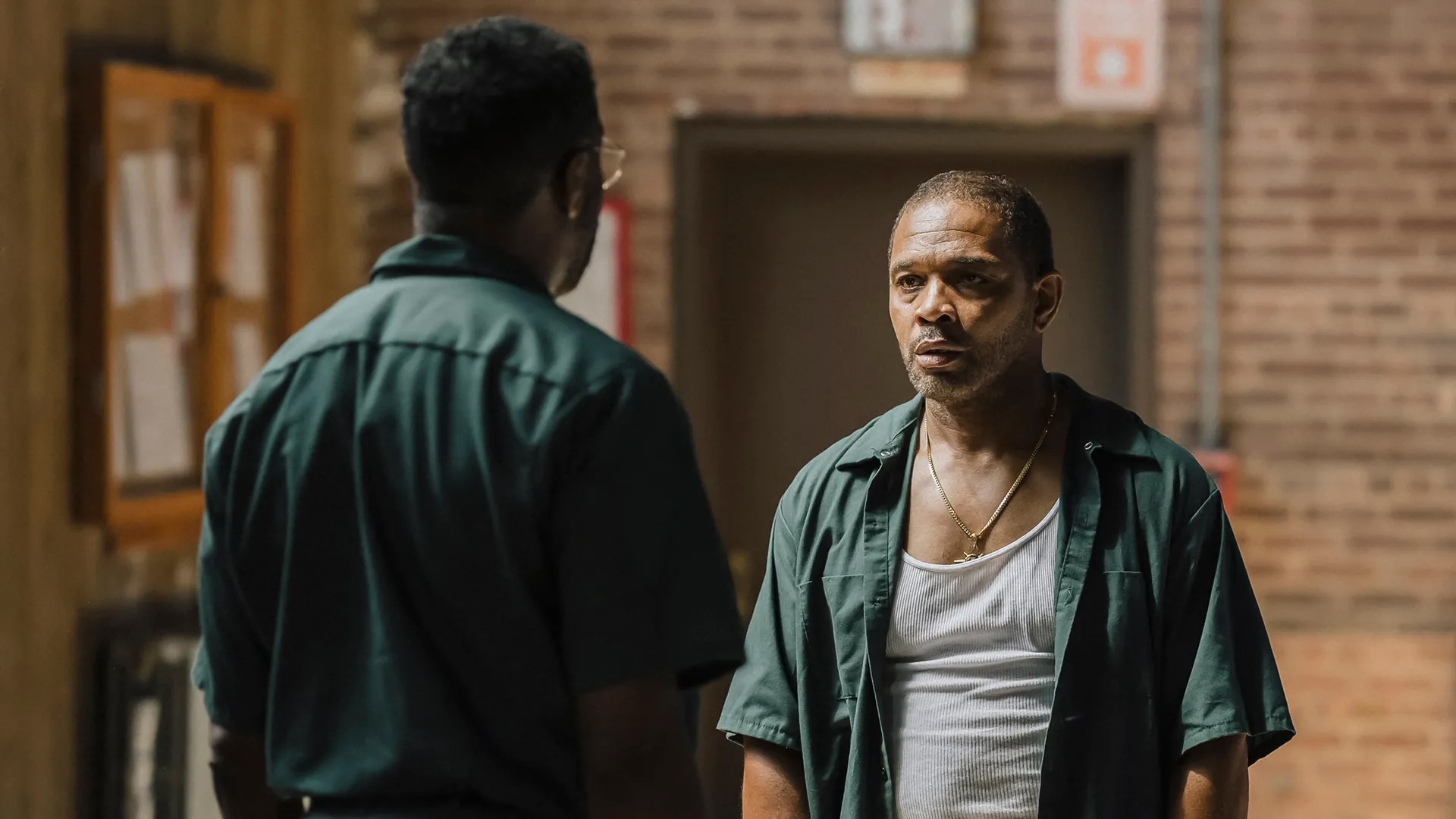
The programming is important too, of course. Sing Sing deserves to draw the crowds, even at full price. It’s a weighty, life-affirming piece of work, humanising the inmates of the titular maximum security prison. It’s also a timely reminder of why the arts are so important.

Based on John H. Richardson’s book, The Sing Sing Follies, Greg Kwedar’s movie is all about the RTA programme (Rehabilitation Through the Arts), which provides customised curricula of theatre, dance, music, etc. in prisons across the USA. Each jail has its own steering committee of prisoners, and external facilitators to help them explore their ideas. The benefits to both inmates and wider society are clear: by offering troubled people hope, allowing them the chance to explore their feelings and develop skills, to improve their self-esteem, the severity of infractions within prisons is reduced – and so is recidivism. The urge to punish, to make correctional facilities as unpleasant as possible, is perhaps understandable but it’s self-defeating. If we want a better world for everyone, we have to accept the evidence and give incarcerated people as many opportunities as possible to improve their circumstances.

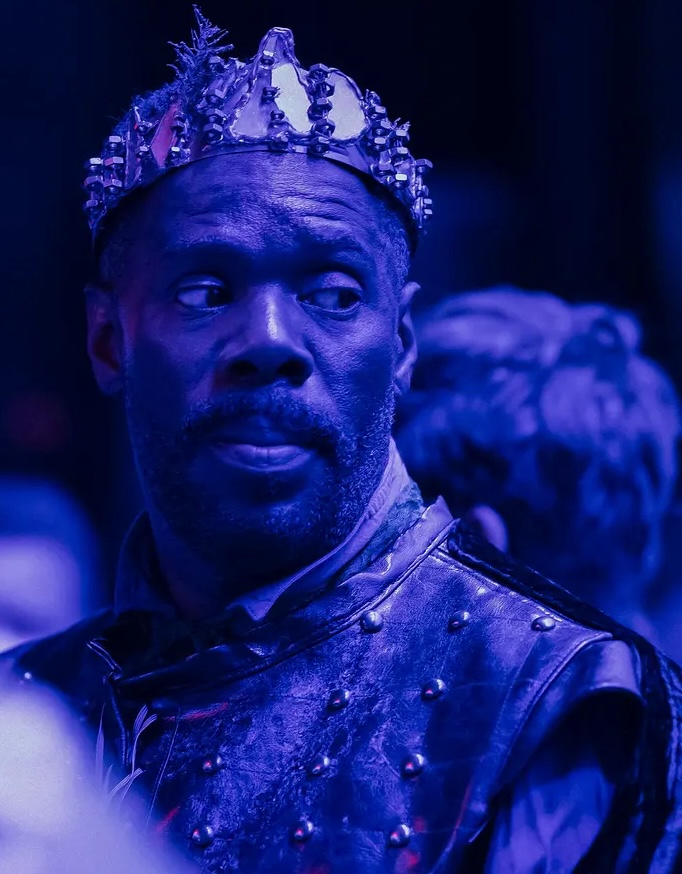
Colman Domingo makes a thoughtful, impressive John “Divine G” Whitfield, a central member of Sing Sing’s RTA group. Divine G – who has a cameo appearance – writes plays as well as performing in them, and also works tirelessly to support other inmates with their appeals. Apart from Paul Raci as volunteer drama leader Brent Buell, the rest of the cast comprises ex-prisoners playing themselves. Co-lead Clarence “Divine Eye” Maclin is especially affecting: his transformative journey from bullish gang member to esteemed performer might be predictable but it’s absolutely compelling.

We shouldn’t need reminding that theatre matters: we’ve known it forever. Thomas Keneally’s The Playmaker and Timberlake Wertenbaker’s Our Country’s Good both immortalise the real-life production of The Recruiting Officer performed by convicts deported to Australia in 1789. Margaret Atwood’s fictional account, Hag-Seed, doesn’t just illuminate The Tempest for a contemporary audience, it also advocates for arts in jail. Bertolt Brecht’s Lehrstücke (1920s and 30s) were created precisely to focus on the process of creating drama and the impact it has on actors. Here, in Clint Bentley’s gentle, often funny screenplay, we see again exactly how life-changing theatre can be.

Kwedar wisely steers clear of the violence we are accustomed to in prison movies: the menace is there, but it’s in the wings. Instead, we get to see the men at their best, when they’re engaged in something they really care about. As Sean “Dino” Johnson points out, “We get to be human in this room.”

And human they are. As a teacher of creative drama (albeit with children, not criminals), I’m not at all fazed by Buell’s bonkers-sounding playscript, Breakin’ the Mummy’s Code, which incorporates everyone’s ideas, including time travel, Freddy Krueger, ancient Egypt and, um, a couple of Hamlet’s soliloquies. That sounds just fine to me! It’s heart-warming to see how much it matters to the men, how seriously they take the acting exercises and the director’s notes, how much fun they have when they’re finally on stage.

Sing Sing is an important film, but it’s a highly entertaining one too. Beautifully crafted, with cinematography by Pat Scola, you’re guaranteed to leave the cinema with a smile on your face and a sense of hope for the future.

4.7 stars

Susan Singfield

The Sound of the Space Between

25/08/24

Zoo Playground, Edinburgh

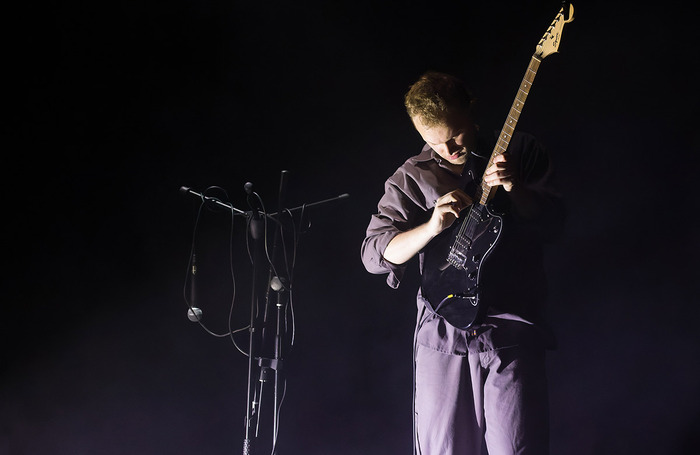
Harri Pitches’ debut hour, The Sound of the Space Between, is perhaps more performance art than ‘show’ – a series of soundscapes and images created with nothing more than a couple of fancy torches, some microphones and a loop pedal. The result is evocative and intense, a meditation on grief and longing.

There’s not a lot of narrative here – which I guess is the point. It’s an expression of feelings, a jumble of nightmares and memories, yearning and fear. Barefoot, clad in a pair of grey pyjamas, Pitches opens with the information that he’s suffering from sleep deprivation. This explains the hallucinatory dreamscape that takes hold of him every time he shuts his eyes. Eventually, he works out that he’s in a garden that he used to know when he was a child, and remnants of long-forgotten knowledge return to him – details gleaned from his dead grandparents. He misses them; their loss makes him regress to boyhood.

The soundscapes work well, enveloping the audience, so that it feels like we’re inside his head. If I have a criticism, it’s that it’s all a bit one-note, and doesn’t really build to anything. The heightened emotions are all there from the beginning and, once we learn quite early on that this is about bereavement, there is no further development of the theme.

Nonetheless, this is a heartfelt piece, and Pitches performs with absolute commitment. All I need to know now is where I can get one of those amazing torches.

3 stars

Susan Singfield

The Daughters of Roísín

24/08/24

Pleasance Courtyard (Bunker 1), Edinburgh

The Daughters of Roísín, written and performed by Aoibh Johnson, is an ode to the women of Ireland, whose histories are too often forgotten. Serving as a kind of companion piece to Luke Kelly’s 1980 poem, For What Died the Sons of Roísín? this play is a poignant reminder of what the country’s women sacrificed.

By now, we all know about the infamous Magdalene Laundries, where so-called ‘fallen women’ were sent to work before having their babies, which were then taken from them and sold to wealthy adoptive families. But even those who avoided the overt cruelty of the convents were failed by a Catholic state that viewed them as sinners.

Directed by Cahal Clarke, this play from Wee Yarn Productions tells the tale of Johnson’s great-grandmother, who fell pregnant as a teenager. Her vulnerability is highlighted by the phrase she uses to insist her parents let her go to a dance (“I’m almost an adult; I’m seventeen”), which segues into a mournful lament (“I’m only seventeen!”) when she discovers she is going to have a child. After all, how was she supposed to know? No one ever spoke about sex. She didn’t understand what she was doing.

Johnson’s performance is utterly compelling: she flits effortlessly between the past and the present, breaking the fourth wall to draw us in with direct questioning, then clipping up her hair and becoming the frightened young woman confined to her room, with only the tiniest of windows to peek out of for the nine months of her pregnancy. No one must see her; her ‘sickness’ would bring shame to the family. And, when she gives birth, the baby – Johnson’s grandfather – is spirited away and adopted.

This is a lyrical piece of work, blending poetry, song and prose, at once a scathing condemnation of the church and a love letter to Ireland’s lost women. Oisin Clarke’s simple lighting and sound work well, allowing breathing space for the moments of silence and darkness, which are eerily effective.

One of my favourite things about the Fringe is the sheer breadth of what’s on offer; I love the fact that serious plays like this sit alongside stand-up comedy and circus acts and everything in between. The Daughters of Roísín is a thought-provoking, important piece of theatre, and I’m glad it’s found a home here at the Pleasance.

4.3 stars

Susan Singfield
Failure Project

22/08/24

Summerhall (Anatomy Lecture Theatre), Edinburgh

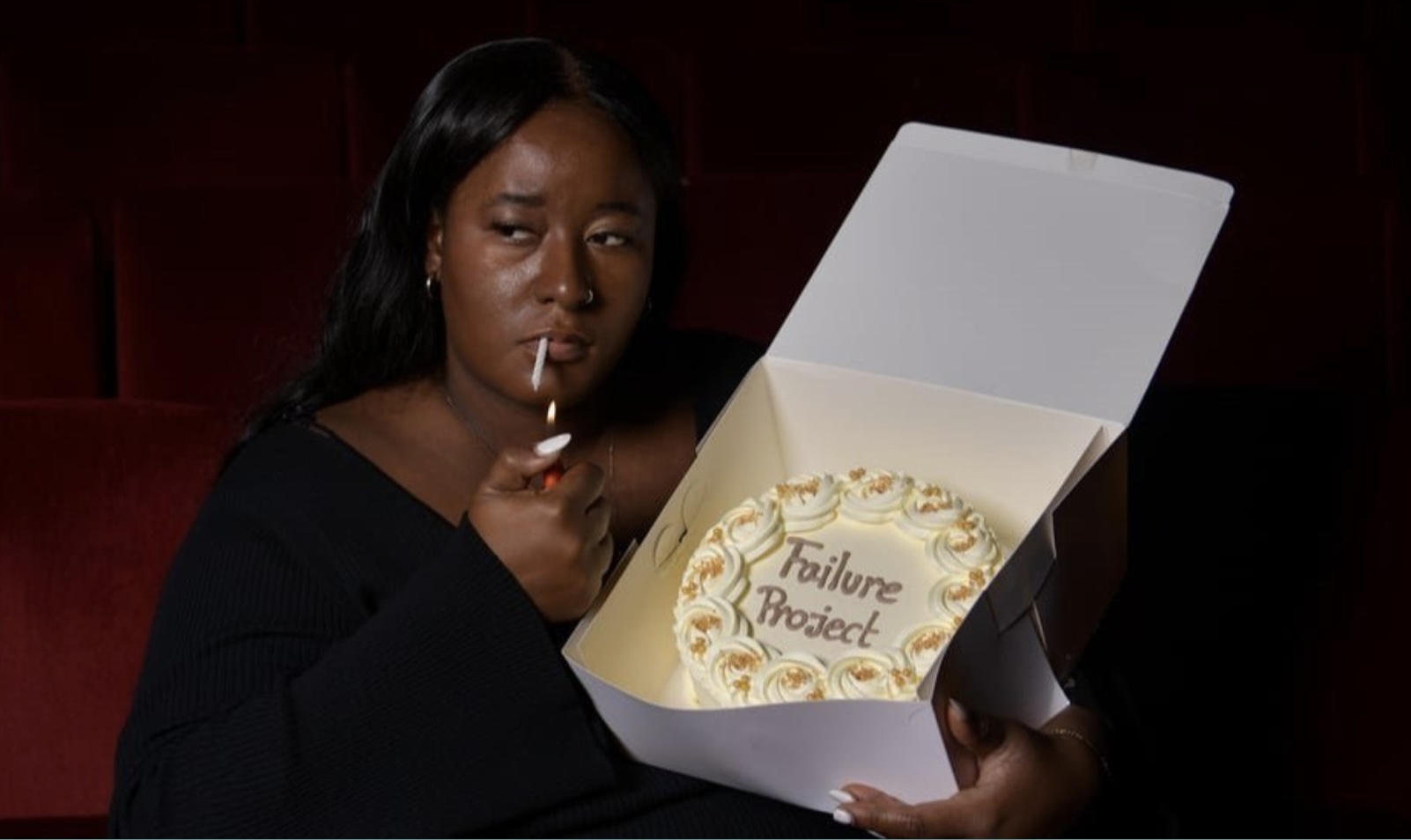
Ade Adeyami (Yolanda Mercy) is an up-and-coming British-Nigerian playwright/actor. Some recent success (including a BAFTA nomination) means that the world is her oyster – or, at least, that’s what people keep telling her. But none of the white theatre execs she meets have any interest in her idea for an uplifting play about Black women scientists; instead, they want something about slavery, some trauma porn that they can wallow in to make them feel – what? Virtuous? The one play she has had commissioned – based on her own experiences as a Black scholarship girl at a prestigious private school – is being systematically torn apart before her eyes: an influencer cast in lieu of Adeyami herself; a director who wants to change some details, so that the bullying refers to class rather than race because “it’s more universal.” Sigh.

Unhappy though she is, Adeyami cannot heave her heart into her mouth. She’s supposed to be grateful for the opportunities she’s being offered. She has to succeed. “You’re doing it for all of us,” another young, Black, aspiring playwright tells her. And so she nods, says nothing. Works on the rewrites, as required.

It’s all too much. The weight of expectation on her shoulders is unmanageable. It doesn’t help that the work she’s doing is all unpaid until someone wants to buy it, nor that her ‘boyfriend’ is so flaky. To cap it all off, her bestie isn’t picking up the phone.

Mercy – who also wrote the script – is an engaging performer, so that – although the piece is undeniably inward-looking, it never feels self-pitying. It’s more like a howl of rage that’s been hammered into shape before being presented to us, allowing us a glimpse into the overwhelming amount of effort and persistence it takes for a Black woman to make theatre – even when she’s hailed as a success. The sense of doom is palpable, Adeyami’s dreams of a glittering future hanging by a thread so delicate that it’s hard to imagine it won’t break.

Mercy talks directly to the audience, making the most of the intimate performance space, drawing us into her orbit and forcing us to feel Adeyami’s pain. The narrative arc is subtle but effective, the conversational tone belying the clever structure. There’s even a twist ending – and I don’t see it coming.

Despite its title, Failure Project is a success: warm and funny on the surface but with some serious depth.

4 stars

Susan Singfield

Michelle Brasier: Legacy

18/08/24

Gilded Balloon Patter Hoose (Doonstairs), Edinburgh

First up, a disclaimer. It’s not Michelle Brasier’s fault, but there’s something wrong with the sound in this room. I don’t know if it’s where we’re positioned – first row, far left, directly in front of a gigantic speaker – but the volume is so amplified that Brasier’s voice is distorted, and I find it hard to follow some of what she says. I leave the show with a headache.

It’s a loud, high-octane production anyway. But, if you can sit further back or in the middle, I’m sure that works in its favour. Aussie comic Brasier zips along at a frenetic pace. I feel breathless just sitting here, as if I’m one of those maximise-your-time people who listen to podcasts on double speed. Her stage persona (and maybe her real-life self, for all I know) is a diva-drama-queen, who warns us from the start that she has ‘main character energy’. This makes for a lively hour – with some deeper themes beneath the fun façade.

The conceit is simple. Visiting her local cinema, Brasier is handed an envelope with her name on it containing $10.50 in coins – but it’s not for her. She embarks on a quest to find this other Michelle Brasier and return the money. At first, I assume this means we’re setting off on a Dave Gorman-esque mission, but no – it’s very much an original tale and actually not really about any other Michelles at all. After all, this Brasier is the hero of her own story. She did tell is us that from the start. Even the most banal occurrences are exciting if they happen to her.

But not everything that happens is banal.

The threat of an early death laps at the edges of this musical comedy show, surfacing in the form of a refrain (“What if I die younger than I should?”), in the cyst she’s just had excised and in a terrifying plane journey. Brasier has a high risk of cancer and doesn’t want children. And so, as the title tells us, she’s concerned about her legacy. How will she be remembered? Will she be remembered at all?

I like her brash, bold approach to her story, and her amusing digressions along the way. She has some insightful things to say about the generational divide and the shock of realising that you’ve aged out of being cool. Her partner, Tim Lancaster, provides an interesting counterpoint, as well as guitar accompaniment and backing vocals. He’s quiet and, in comparison to Brasier, seems to move and speak at a glacial pace. This difference is cleverly mined for all its potential; he’s the perfect foil for her manic style.

This is well-crafted comedy with some catchy songs, and Brasier has the vocal skills to make it soar. Just be careful where you sit – and then prepare to be caught up in her infectious energy.

4 stars

Susan Singfield

300 Paintings

18/08/24

Summerhall (TechCube 0), Edinburgh

Aussie comedian Sam Kissajukian had an epiphany in 2021. Okay, so it turns out it was actually a manic episode, but he didn’t know he had bipolar at the time, so he really believed he’d seen the light. It was time, he decided, to turn his back on comedy and become an artist. So what if he’d never painted before? He had a beret. He was good to go.

We have his bipolar to thank for the art we see today: without the high levels of energy, the euphoria and the delusions that come with a manic episode, Kissajukian might never have rented a workshop, moved into it and obsessively painted massive (and tiny) pictures for several months. He might never have created the Museum of Modernia or held exhibitions of his work across Australia – or visited the Edinburgh Fringe with this fascinating show.

Of course, he wouldn’t have had to endure the crippling depression that followed either, but he’s doing well now, he tells us, so we’re allowed to laugh at the crazy, funny stuff he did.

300 Paintings is essentially a story about finding yourself and, although most of us won’t experience periods of transition with quite the same intensity as Kissajukian, the urge to escape our shackles and work out what we really want is very relatable. Unleashed from the need to please a drunken comedy audience, Kissajukian turns out to be extraordinarily creative. His ideas are inventive (literally) and exciting; his artwork primitive but fresh. He pushes every concept beyond its boundaries, so that this show is unlike anything I’ve seen before.

Kissajukian’s previous incarnation as a comic means he’s adept at communicating with the audience, even if the early morning is an unusual time for him to be awake. His easy-going patter makes the complex mental health issues accessible, and the projections of his artwork illustrate the story perfectly. Twenty-five of his paintings are on display here at Summerhall, the performance and exhibition inextricably linked.

Today’s show was sold out but, if you can get a ticket, 300 Paintings is an invigorating way to start your day.

4.2 stars

Susan Singfield

Deluge

15/08/24

Summerhall (TechCube 0), Edinburgh

Deluge typifies what I used to think the Fringe was – way back when, before I’d ever set foot in Edinburgh. I expected every show to be like this: artsy, meaningful and chock-full of expressive dance. Of course, now I’m both an old hand and an Auld Reekie resident, and I know that the 3000+ shows on offer here cover every form imaginable: from the mainstream and family-friendly to the wild and debauched; in venues as varied as traditional theatres, circus tents, tiny broom cupboards and former dissecting rooms. But in fact, there’s not actually a lot that conforms to those youthful preconceptions.

Deluge – a one-woman play by Brazilian theatre-makers Gabriela Flarys and Andrea Maciel – is very artsy, very meaningful and, yes, replete with expressive dance. And I am totally absorbed, lapping up every minute of this quirky, offbeat play.

The protagonist (Flarys) is in mourning. Her lover has left her and she is bereft. She is also covered in jam. What follows is a wonderfully eloquent evocation of loss, the whole grieving process externalised and made concrete. ‘The End’ itself is personified, while the emotions overwhelming her are represented by a cumbersome ladder and a constant drip-drip dripping sound, as inescapable as tinnitus.

The woman takes us back in time, to when she first met her ex-boyfriend. We bear witness to their love, and to the diverging dreams that eventually tear them apart. This is a multi-media production, cleverly utilising a keyboard, video projections and, most impressively of all, Flarys’ extraordinary physical skills, as she contorts herself every which way, a paroxysm of grief. Despite her unhappiness, the protagonist is an expressive and three-dimensional character, extrovert and full of life. She just needs to negotiate her way through this quagmire of misery…

The central metaphor – of grief as water, infiltrating the woman’s home and threatening to drown her – is beautifully realised, not least when she hopelessly tries to plug up the leaks with the jam her partner left behind. We all know bereavement and heartache, one way or another, and I found this section in particular spoke to me and my experiences.

Deluge is a profoundly moving piece of theatre, as ‘Fringey’ as it gets and none the worse for it.

4.3 stars

Susan Singfield

Gamble

15/08/24

Summerhall (Cairns Lecture Theatre), Edinburgh

Hannah Walker greets us as we wander into the Cairns Lecture Theatre. She’s dressed in a sharp suit featuring dollar bills and wearing a pair of snazzy high-heels. Without further ado, she launches into her intro, a razzle-dazzle rant about the joys of online gambling, backed up by a bright and zippy display on the video screen behind her.  She tells us about her youth, spent in a sleepy village in the UK, where the only bright spot was the occasional trip to the bingo. Even at a tender age, she tells us, she was being indoctrinated, taught that ‘having a flutter’ was perfectly acceptable.

But time moves on and she finds herself married to a man with a gambling addiction, unable to resist squandering eye-watering amounts of money on an almost daily basis. This show is Walker’s attempt to highlight the potential dangers of online gambling, the invidious ways in which it can entice and corrupt people into its clutches, convincing us that it’s just a bit of harmless fun. The show alternates between those brash, colourful enticements and clips of addicts, confessing how what originally seemed like a harmless pastime mutated into something utterly destructive. There’s also input from a clinical psychologist and an invitation to attend Zoom sessions, where people with a gambling problem can talk about their situation.

Walker and her co-creator (Rosa Postlethwaite) give this piece their all, but I’m left with the distinct impression that Gamble is trying to be too many things at once and that its potential is somewhat dissipated by a tendency to spread itself too wide and not all of the humour lands. Also, perhaps because Walker is so close to the issue (her husband is an addict, though thankfully in recovery), it doesn’t go hard enough to expose the depth of the potential problems. For example, the number of gamblers committing suicide is mentioned but never explored.

There’s no doubting the sincerity of Walker’s intentions and Gamble is a thought-provoking piece, which has plenty to say about a multibillion dollar industry that hides behind that cheerful, glittering façade. But I’d like to see its focus tightened in order to realise its full potential.

3 stars

Philip Caveney

A Knock on the Roof

14/08/24

Traverse Theatre, Edinburgh

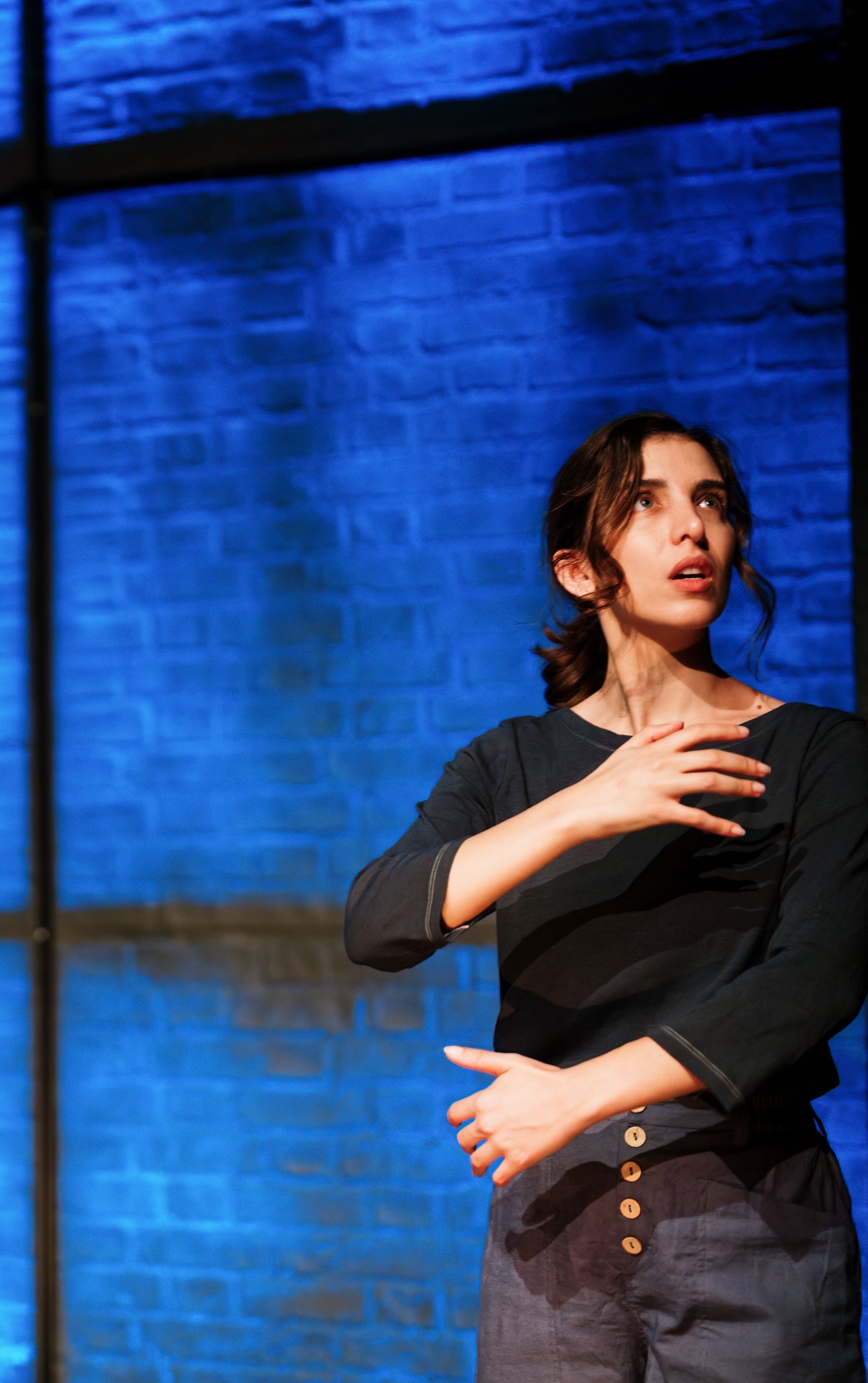
Written and performed by Khawla Ibraheem, A Knock on the Roof is a horrifying illustration of the realities of living under Israeli occupation.

Mariam’s ‘normal’ life sounds bad enough. The electricity supply only works for a few hours each day, so she has to be ready when it comes on – to charge her phone, wash the dishes, take a quick shower. Fresh water is in short supply, and she’s forbidden her son from swimming at the beach because the sea is so polluted.

When war comes – again – things are even worse.

Mariam’s biggest fear is the euphemistic ‘knock on the roof’ – a small bomb dropped on a residential building to give notice that a bigger one is on its way. This is a perverse distortion of the international humanitarian law requiring an effective warning before a civilian target is attacked, and it destroys Mariam’s mental health. Her husband is in England – working on his PhD, trying to forge a better life for them – so she’s on her own, looking after her young son and her elderly mother, and the anxiety is too much to bear.

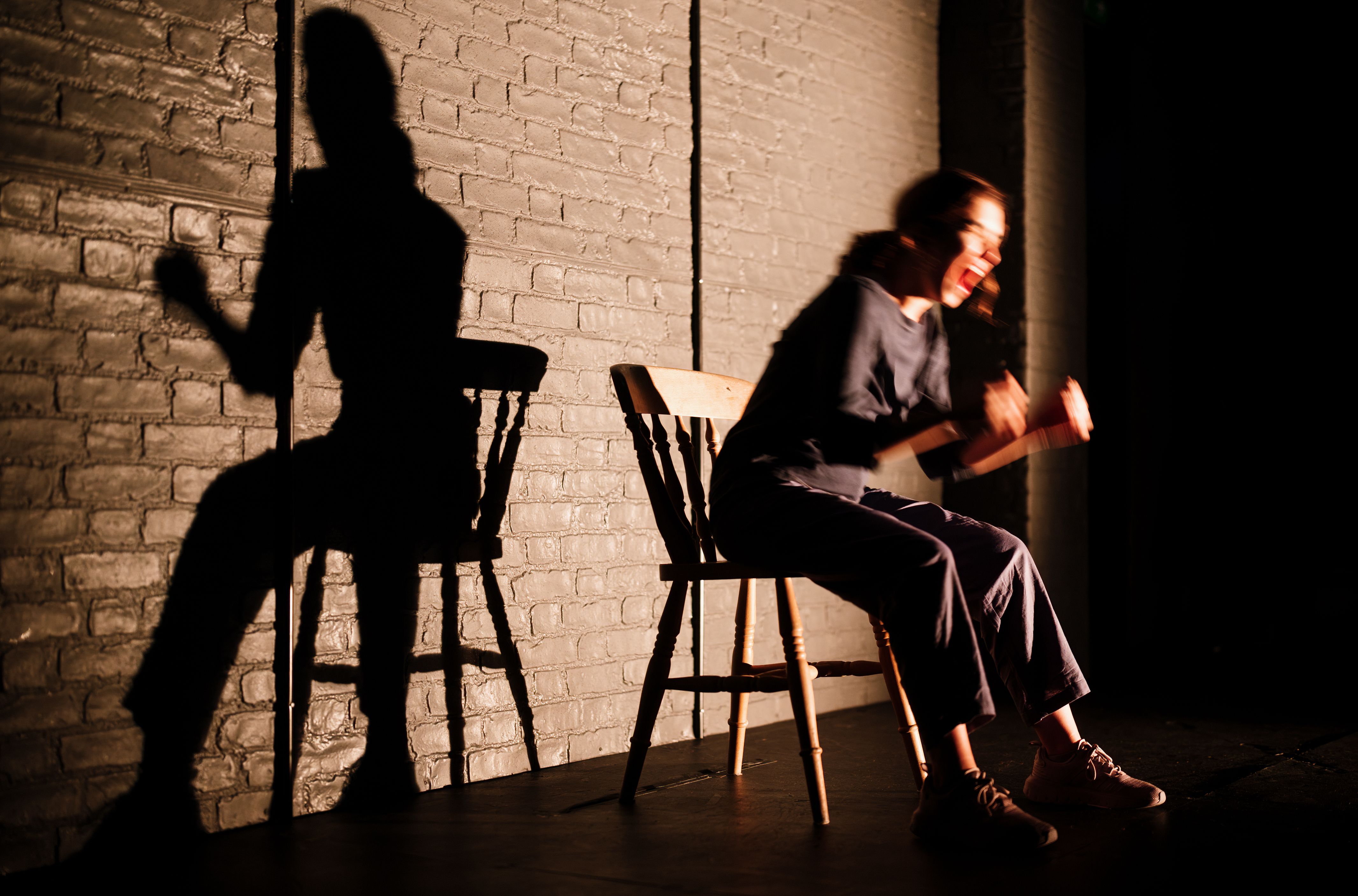
She begins to practise running, to maximise her chances of fleeing to safety in the five minutes she’ll have when the knock on the roof comes. Director Oliver Butler uses these sprints to make the monologue dynamic, Mariam’s kinetic force conveying her panic. This is further emphasised by the frantic pace of Ibraheem’s vocal delivery. In fact, sometimes she speaks so quickly that it’s hard to catch every word, but the gist is always clear, and it ensures we are in no doubt about how terrified she is.

The staging is almost completely stripped back, with a single chair the only prop. There is only one theatrical flourish in the whole play, and – when it comes – Hana S Kim’s projection is genuinely breathtaking.

If A Knock on the Roof begins to feel repetitive, then I guess that’s the point. This is how Mariam lives, repeating the same routine over and over, like a ritual. If she can get this right, she can save her son. In the end, she begins to wish for the bomb, because waiting for it is killing her…

An intense and heartfelt production with a vital message, A Knock on the Roof is a timely eye-opener, and an important part of Travfest 24.

4 stars

Susan Singfield