Edfest 2025

Motorhome Marilyn

24/08/25

Gilded Balloon Patter House (Doonstairs)

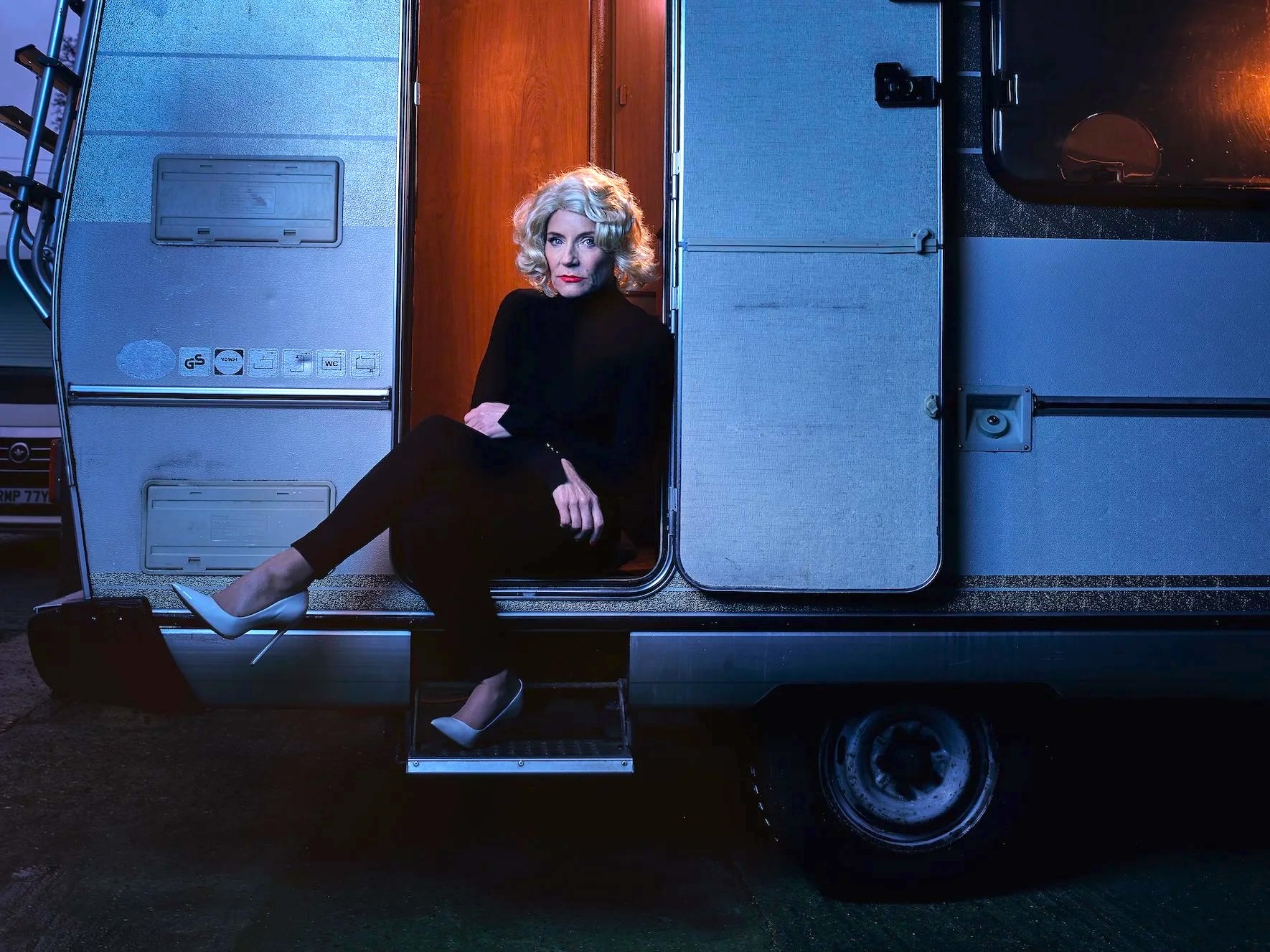
Our last Fringe show of 2025 is Motorhome Marilyn, a choice inspired by my mum, who listened to Michelle Collins talking about the play on Radio 4’s Woman’s Hour, and was taken with its backstory. Back in the late 90s, Collins was in LA, trying to build on her UK fame. While she was there, she noticed an old lady emerging from a dilapidated motor home, dressed as Marilyn Monroe. The image stayed with her for years until, in 2018, she mooted the idea for a play to her writer friend, Stewart Purmutt, and they started work on it. When Purmutt died in 2024, Ben Weatherill took over, and now Motorhome Marilyn – more than quarter of a century in the making – has finally parked up at this year’s Festival.

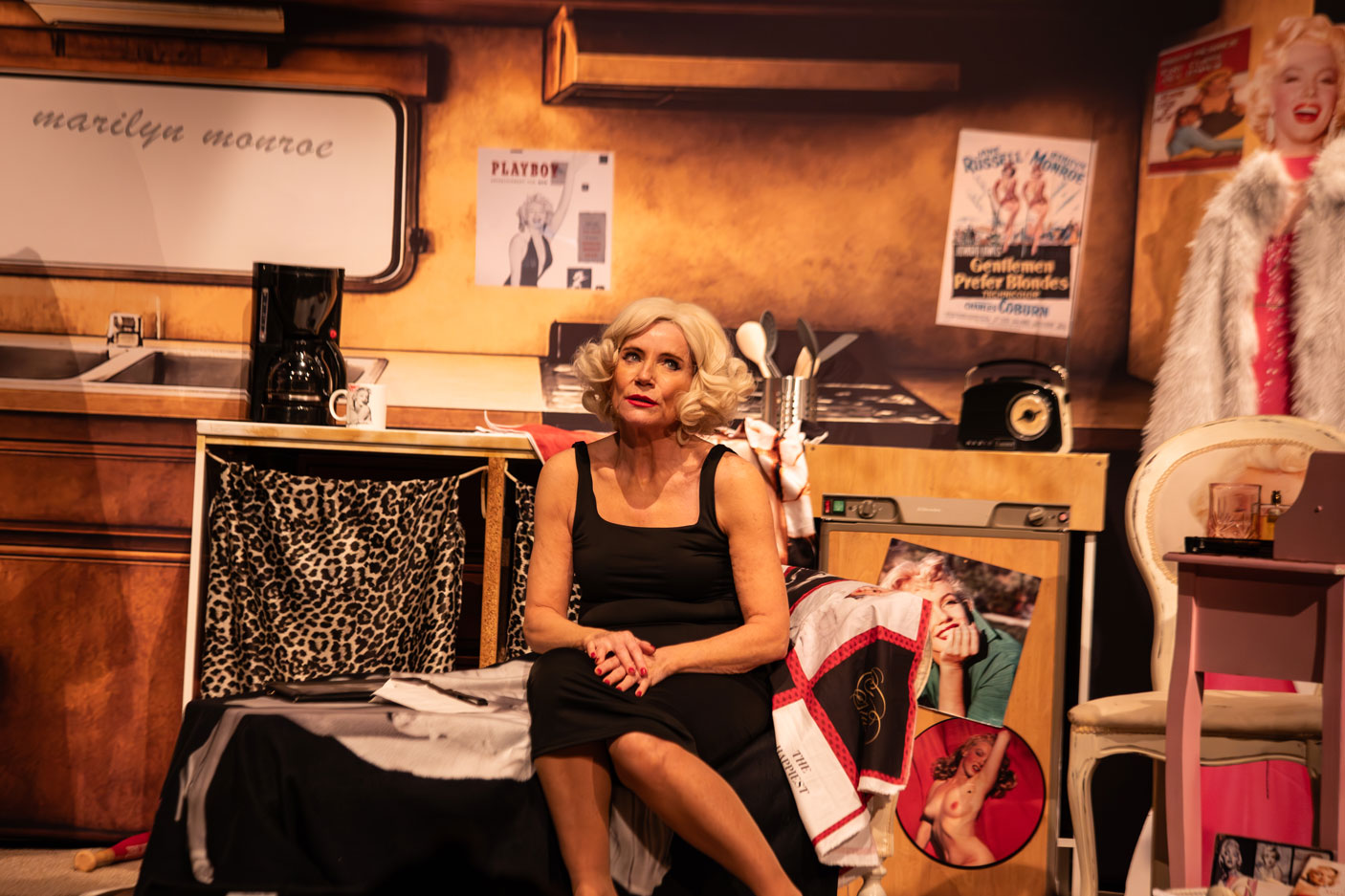
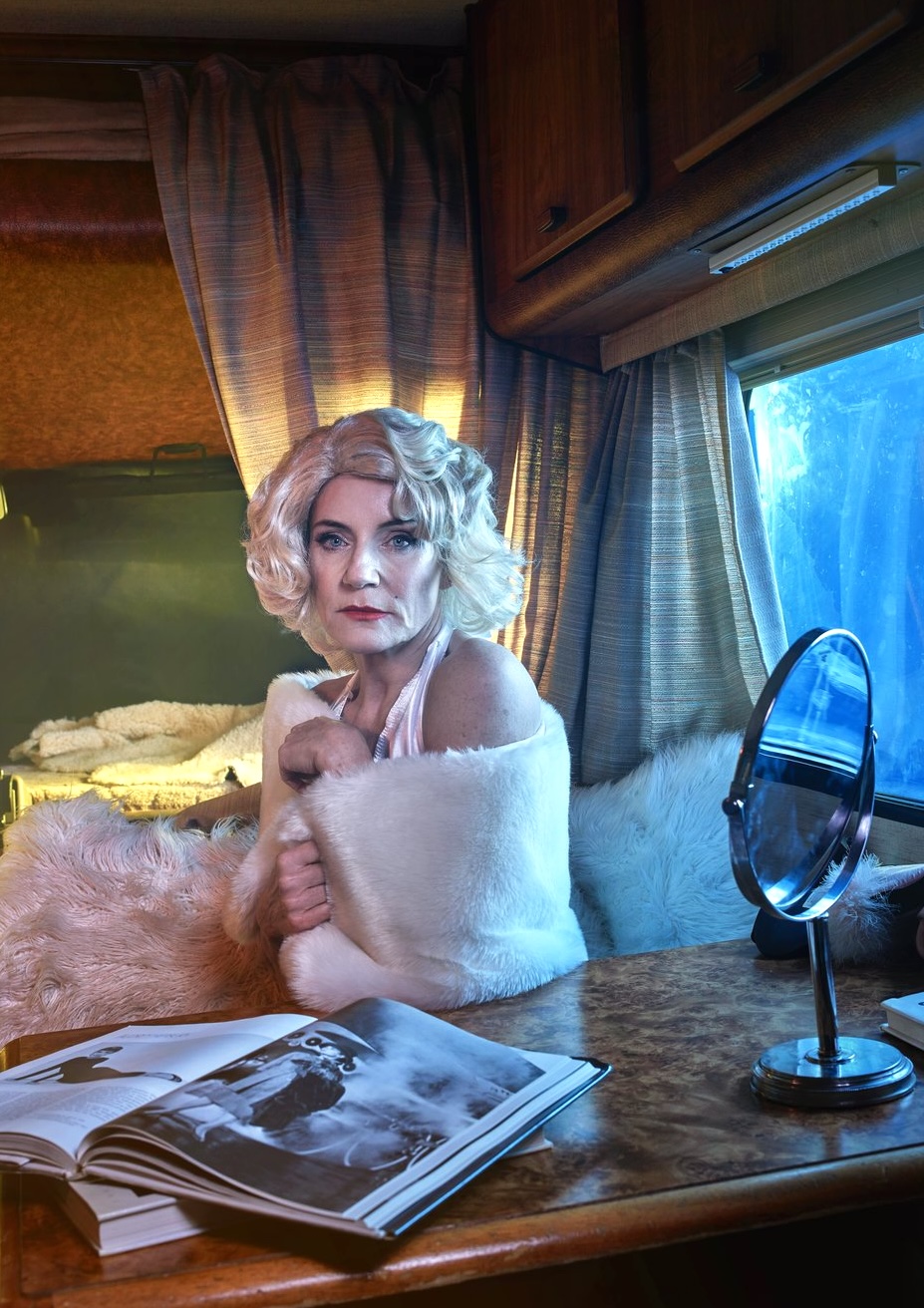
The set, by Joshua Beaumont and Matthew Emeny, is pretty lavish by Fringe standards. We’re inside a camper van, stuffed to the pop-top with Monroe memorabilia. There are posters, tea towels, mugs and cushion covers: if there’s an available surface, Marilyn’s face adorns it. And there’s Denise (Collins), a Marilyn lookey-likey, whose own identity has been subsumed over the years, so that she’s no longer sure who she really is.

There’s also Bobby, Denise’s confidante, who just happens to be a snake…

Directed by Alexandra Spencer-Jones, the story works quite well: there’s a Miss Havisham-like quality to Denise, who is tragically stuck in a role she’s aged out of. Her hopes for stardom have come to nought, but she’s nothing else to cling to, no option but to don that platinum-blonde wig and paint on a scarlet smile. Collins imbues the character with pathos, although there are moments when I’d like to to see her emotions heightened – with some Eastenders-style excessiveness, perhaps.

Occasionally, too much is spelled out for the audience: we are not left to infer anything, but spoon fed each detail. This detracts from the authenticity of the dialogue, which is a shame. Nonetheless, Motorhome Marilyn is a sometimes funny and always engaging piece of work, an ode to failure and broken dreams.

3.4 stars

Susan Singfield
Ghouls Aloud: Elysium

20/08/25

Appleton Tower, (Ruby)

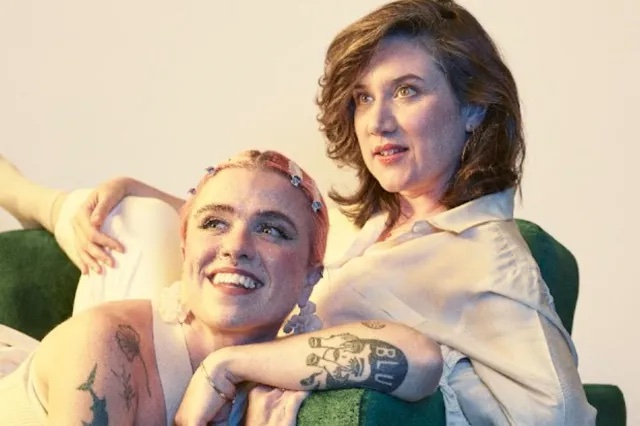
In the final week of Fringe 2025, it’s gratifying to chance upon an act that feels quite unlike anything else we’ve seen this year. Ghouls Aloud are Milly Blue and Jessie Maryon Davies, the former a singer/storyteller, the latter a musician. The show begins in straightforward fashion with a song, Blue accompanying herself on acoustic guitar, before breaking off and launching into a story, described by its creators as contemporary horror. It is, I suppose, a piece of gig theatre.

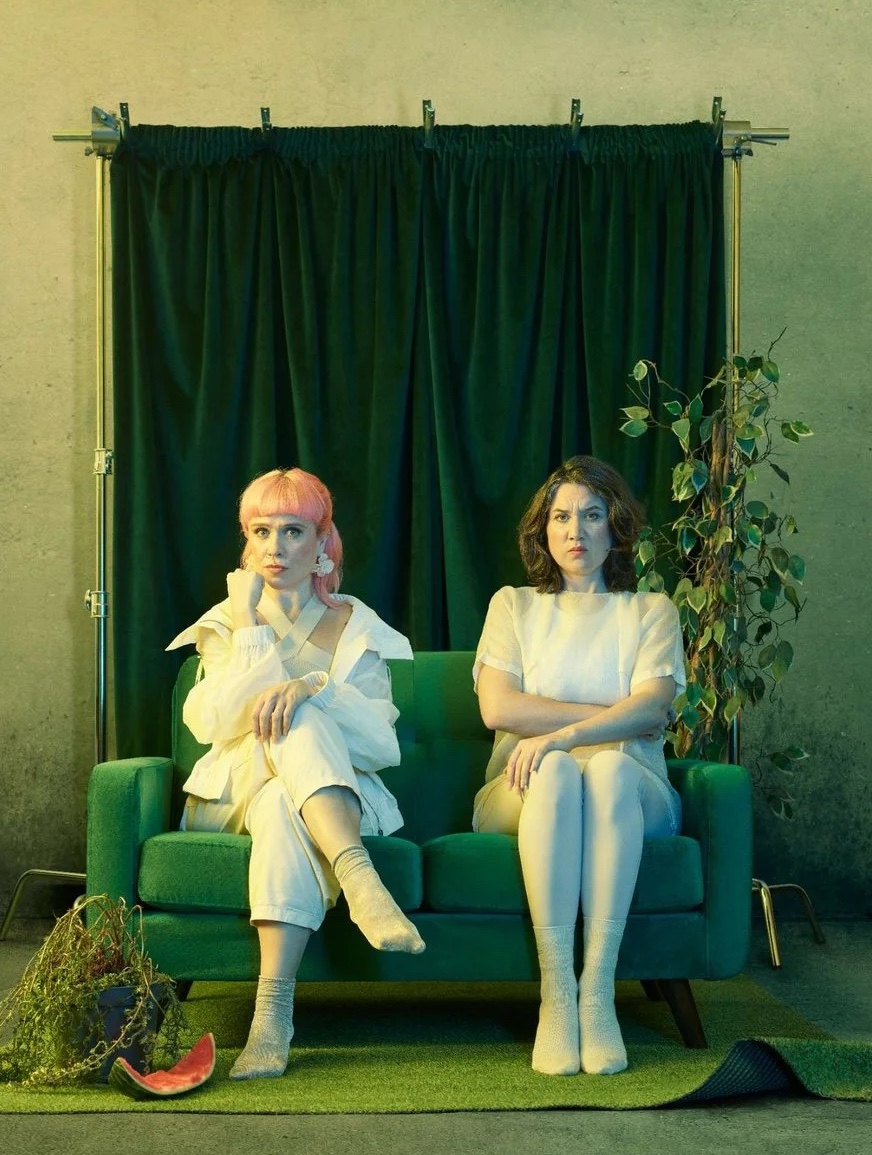
It’s the tale of a young couple who, with their new baby, move into the protective surroundings of Elysium Fields, a gated community somewhere in prosperous South London. ‘The woman’ (we don’t learn her name) likes the feel of their new home – with one exception. The little garden at the back of their house is covered with a layer of astroturf, and she vows to remove it to plant vegetables and wild flowers.

But she will learn that Elysium Fields has a dark history and there are things in its soil that might better be left undisturbed…

Blue becomes the central character of the piece and also personifies a clutch of others in and around Elysium Fields: friends, neighbours, the odd gatekeeper who the residents call ‘Penfold.’ Blue switches accents and mannerisms with great skill, so there’s never any doubt who she is portraying at any given moment. Maryon Davies also chips in with lines of dialogue, whilst supplying original keyboard compositions, ranging from beautiful melodic ballads to eerie, unsettling soundscapes as the tension begins to build.

Occasionally I find myself distracted by a few too many complications, minor characters who don’t really add enough to the narrative to earn their place, however skilfully they’re portrayed – and I’m not entirely convinced that a subplot that talks about the conflict between Israel and Gaza is a comfortable fit here – though arguably, that may be the point.

But I do admire the ambition of Elysium and the distinctive ways in which the duo go about telling the central story. If I am reminded of anyone, it’s the much-missed Will Greenway, who, for several years was a must-see at the Fringe and who also has a highly individual way of creating a story with music – albeit much more gentle than this. Overall, I find this compelling enough to keep me hooked right up to the unsettling final scene – and I’ll be interested to see what Ghouls Aloud come up with next.

4 stars

Philip Caveney

The Alchemy of Sadness

18/08/25

Space@Niddry Street, Edinburgh

Thiago (Oscar Fabela) works at a major public relations firm but, when we first meet him, he’s stuck at home, talking via his laptop to HR operative, Aurora (Kristen Tarrago). There has been an ‘issue’ between Latino Thiago and his pushy white boss, Liam (Zachary Story), one that has resulted in Thiago being ousted from his long-established post.

But who is to blame? Liam’s relationship with Thiago has alternated between staring at him in silence, openly flirting with him and then yelling at him to shape up. Thiago doesn’t know how to deal with these wildly contrasting attitudes. What does Liam actually want from him?

It doesn’t help that the two men have recently been handling the comeback of a notorious celebrity chef, who has been widely criticised and publicly shamed for his adversarial relationships with his own workforce. Thiago’s suggestion to base the chef’s return around the launch of a new menu centred on the concept of ‘gratitude’ has been well received by everyone who hears about it – including the chef himself. But since Thiago came up with the concept, why is Liam taking all the credit?

Written by Alex Garcia Lagua (inspired by his own time as a restaurant supervisor) and directed by Leticia Mora, this tight little three-hander examines the toxic environment of the office and the various ways in which people can find themselves exploited by their seniors. Furthermore, who owns an idea? The person who first thought it… or that person’s boss? Both Fabela and Story convince in their respective roles, while Tarrago doubles as the ultra-corporate Aurora and as Thiago’s no-nonsense work-mate, Mari.

I like that the drama is relatively low key. This isn’t some massive world-shaking event: instead, it’s entirely credible, the kind of issue that can be found in any workplace and which can profoundly affect the lives of those who suffer through it.

4 stars

Philip Caveney

Kanpur: 1857

06/08/25

Pleasance Courtyard (Beneath), Edinburgh

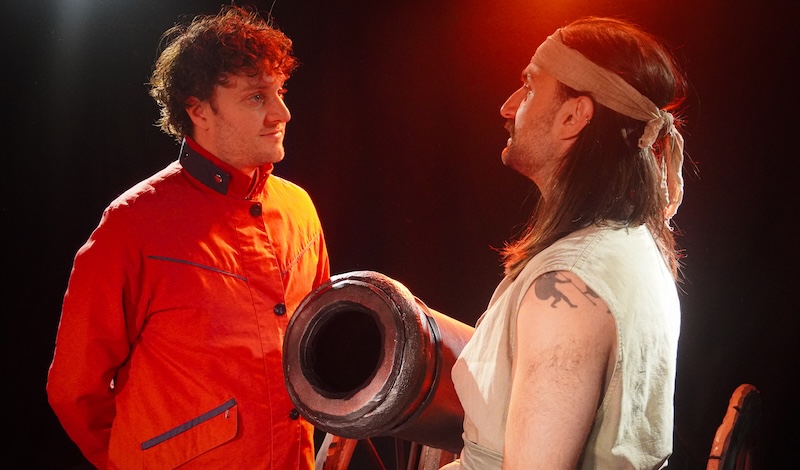
Set in Kanpur, India, in the aftermath of the so-called “Sepoy Mutiny,” an unnamed Indian (portrayed by the play’s author, Niall Moojani) is sentenced to death for insurrection. The captive is a Hijra, often described as ‘the third sex,’ who are traditionally assigned as male at birth, and can decide which gender they wish to assume in the fullness of time. The officer in charge of the execution, played by co-director Jonathan Oldfield, offers his victim an opportunity to speak, or rather demands that they do so. Afterwards, they will be strapped to a cannon and blown apart in front of a crowd of onlookers – or, as we’re known in these quarters, a Fringe audience.

A serviceable-looking cannon has been sourced, and it’s pretty much the only prop in evidence. I can’t help thinking about the difficulties of bringing such a cumbersome weapon down into the Pleasance Courtyard’s ‘Beneath’ performance space, but happily that’s not my job.

Oldfield’s officer serves in a distinguished Highland regiment, though his accent is – perhaps inevitably – cut-glass English. Now, he suggests, is the time for the condemned to explain what has brought them to this awful situation. A garrulous sort, the officer can’t stop interrupting his victim’s narrative, asking awkward questions, offering his own privileged perspectives, even at one point picking up a guitar and lending some lilting accompaniment.

Kampur: 1857 has interesting points to make about the nature of colonialism, reminding us that, during the conflict there have been acts of barbarism on both sides – though these observations come from Oldfield’s character, speaking from the more comfortable point of view of somebody who isn’t about to be evenly distributed across the landscape, and whose side’s reaction to the mutiny has been massively disproportionate.

The piece, which lies somewhere in that strange no-man’s-land between storytelling and drama is at its best when the two characters are exchanging views, bickering, joking, vainly trying to bring each other around to some shared worldview. Oldfield gets the best of it, his sneering superiority played at full-throttle, while Moojani’s dialogue is more reserved and contemplative. Meanwhile, tabla player Hardeep Deerhe provides a rhythmic accompaniment to his words.

It’s impossible not to feel swept up in the play’s final moments, as the victim waits, helpless and silent, their final seconds ticking inexorably away…

3.8 stars

Philip Caveney

Single Use

06/08/25

Pleasance Courtyard (Bunker Three), Edinburgh

Ella’s life is a muddle: she’s struggling to separate her mounting troubles and figure out how to deal with them. A bit like her recycling.

Ella (Verity Mullan) is an expert procrastinator. She’s unfulfilled by her bar job, but can’t be bothered to look for anything else. She likes the idea of her allotment, but tending to it is a step too far. She never pays her rent on time and doesn’t get on with her flatmate anyway. She cares about the planet, but it’s not her fault takeaways are delivered in plastic boxes – and who has the energy to cook? From the outside, it’s clear that Ella is depressed. It’s just that she hasn’t realised it yet.

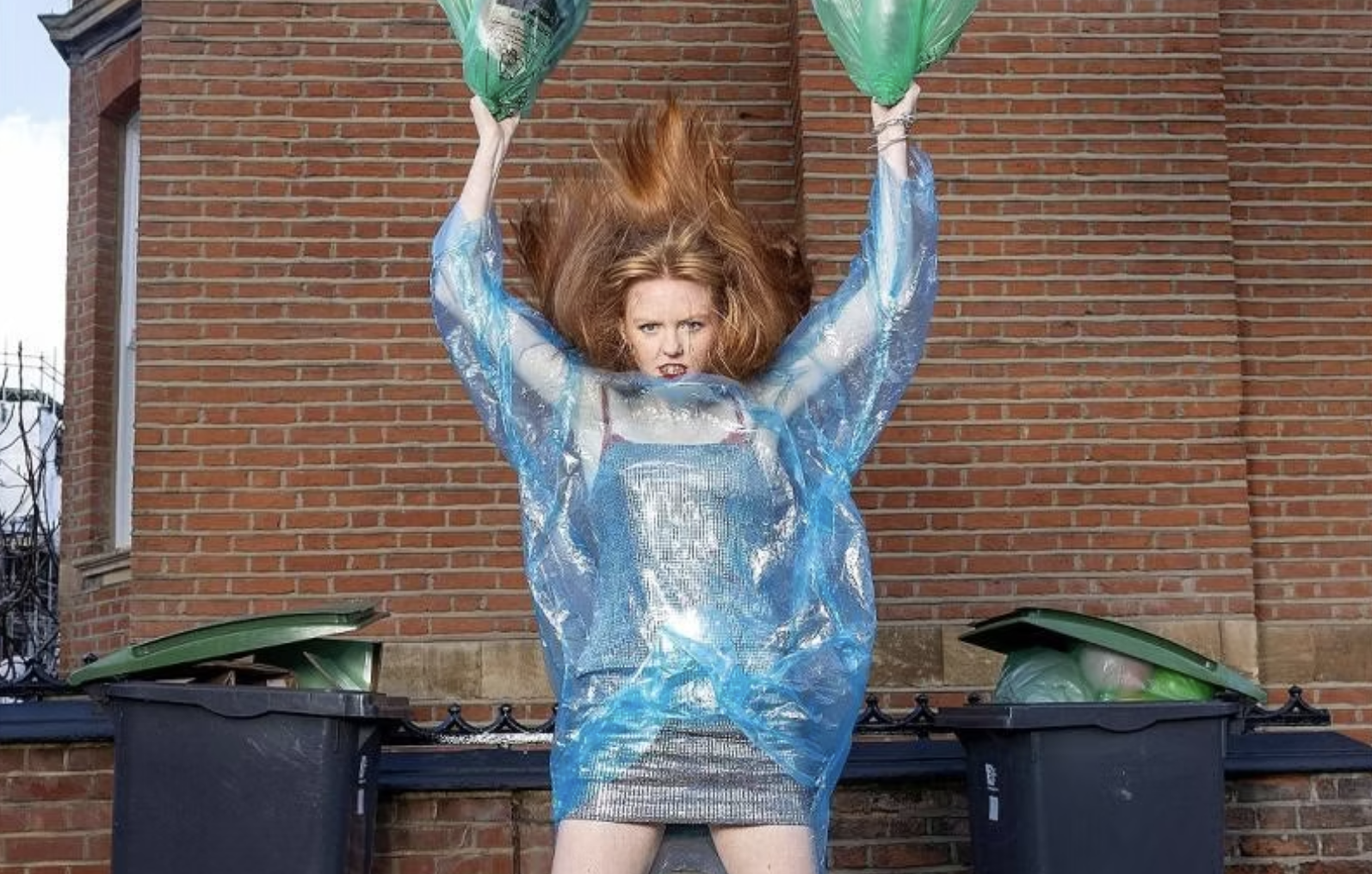
Written by Mullan and directed by Emma Beth Jones, Single Use works well as a character study. Mullan is an engaging performer, imbuing Ella with a winsome vulnerability and spark. I particularly enjoy the physical comedy – her exaggerated sense of repulsion as she deals with her icky bin bags; the slurping of beer from Tupperware – all perfectly complemented by Flick Isaac-Chilton’s sound design.

However, there are too many disparate plot strands competing for our attention and it’s not always clear who the various voice messages are from. I’m confused by ‘Stusi’ (Ella’s young stepsister), who is first described as someone to whom “puberty has not been kind” – leading me to assume that she is about thirteen years old – but then turns up in a car to give Ella a lift home. The climate crisis element feels particularly under-developed, with the tantalising messages from Malaysia left to fizzle into nothing.

Ultimately, there are some promising ideas here, but they perhaps need a little more cohesion and development for this piece to fully realise its potential.

3 stars

Susan Singfield

Charming

05/08/25

Greenside (Forest Theatre), George Street, Edinburgh

“And they all lived happily ever after…”

Everyone’s familiar with the traditional fairytale ending, but playwright Annie Lux has a question: what does that actually look like? Twenty years down the line, how are Prince Charming and Cinderella getting along? After all, she reminds us, there’s no mention of “together…” in that concluding line.

We meet Charming (Nigel Myles-Thomas) after a gruelling ‘petition day’. He’s tired, as tetchy as King Charles III faced with a leaky quill, and not at all inclined to see the insistent latecomer who’s waiting at his gate. But this last-minute petitioner is Cinderella’s fairy godmother (Claire Toeman) and, with a wave of her wand, she’s gained entry. Before he knows it, Charming is being served divorce papers. Cinderella wants out.

Directed by Lee Costello, Myles-Thomas imbues Charming with weary charisma, and his bewildered responses to Cinderella’s demands are very funny. I like the conceit that the characters know about the different versions of themselves, and use these as justification for their actions (“Only in Grimm! Not in Andersen!”), although I do wonder why punches are pulled. If we’re to acknowledge the ugly sisters having their toes chopped off in Grimm, why is there no mention of them having their eyes pecked out?

Apart from a brief appearance from Cinderella’s wicked stepmum (Margot Avery) – no iron shoes; no walking on fire – Charming is a two-hander and, while Avery makes a decent fist of the role, I don’t think her character has enough to do. To justify her sudden arrival in the final third, she needs to signal an escalation or be a catalyst for change, but that is not the case, so she just feels redundant. Another issue is the over-reliance on dialogue: nothing is conveyed without being spoken, which seems a shame as theatre is a visual art form and fairytales are so replete with imagery.

There are plenty of revisionist versions of this story, but not many focus on the characters in middle-age, and it’s interesting to see this whimsical representation of the effects of the passing years, even on those with charmed – and Charming – lives.

3 stars

Susan Singfield

Alright Sunshine

03/08/25

Pleasance Dome (Jack Dome), Edinburgh

Edinburgh playwright Isla Cowan is making quite a name for herself in Scottlish theatre – and it’s easy to see why. We’ve watched two of her previous pieces (2023’s And… And… And… and 2024’s To Save the Sea) and been mightily impressed; today’s production of Alright Sunshine is even better: an intense monologue about being a woman, being a police officer, and the darkness lurking behind sunny days on the Meadows. 

PC Nicky McCreadie (Molly Geddes) is dedicated to her job. It comes first: before her family, before her relationships, before her health (who has time for eggs for breakfast when there’s a Greggs on the way to work?). Her dad was polis too, and she’s determined to be the kind of officer he’d be proud of… if he were alive. She’ll be as strong, as focused, as brave as he always urged her to be. She won’t give in to her feelings. She won’t cry. She won’t be weak like her mum. She won’t be a girl.

Directed by Debbie Hannan, Cowan’s taut, almost poetic script is brought powerfully to life by Geddes’ mesmerising performance: a tour de force with real emotional heft. The playful, observational tone of the opening sections – where the park’s ‘timetable’ is humorously detailed – is skilfully undercut by the gradual disclosure that all is not okay in PC Nicky’s world. She’s seen too much, given up too much, suppressed too many emotions in her bid to be the perfect policewoman. Now that carefully-constructed carapace is breaking apart and she has no idea what she’s supposed to do.

It would be a crime to reveal any more than this; suffice to say that this is a compelling play with an important message at its heart. If you can watch it without giving in to your feelings, without crying, without being a girl, then you probably need to talk to someone. Soon.

5 stars

Susan Singfield

Shake Rag Hollow

02/08/25

Assembly (Front Room), Edinburgh

The Edinburgh Fringe is a place where precious gems can sometimes be unearthed in the unlikeliest places. Shake Rag Hollow is a perfect example of the phenomenon. This tightly-constructed three-hander, written by Arlene Hutton (whose Blood of the Lamb was also a bit of a revelation back in 2023) and directed by Eric Nightengale, is set at the top of a mountain in Southern Tennessee – though in reality, it’s taking place in an unprepossessing metal storage container on George Street. 

That gentle voice we can hear, extolling the virtues of the eponymous hollow, belongs to the late Sherman, who always loved this place, and delighted in revealing its charms to his young niece, Denise. But Sherman is long gone and now Denise’s daughter, Laurel (Sofia Ayral-Hutton), lives in the remote cabin with her grandmother, Pauline (Beth Links). Denise has been in prison for years, convicted of a horrendous crime, and Laurel has learned to despise the mother she has never met.

But then Denise (Dana Brooke) turns up unannounced, lugging a suitcase and looking for somewhere to stay. Recently released, Denise needs space to complete the online Masters in psychology she’s so close to achieving. Pauline grudgingly gives her daughter sanctuary, despite Laurel’s hostility – and, as Denise and Laurel gradually start to connect, unexplained mysteries from the past begin to resurface – raising questions that have remained unanswered for far too long…

This is a powerful play that gradually builds to a shattering crescendo. The three actors portray their characters with authority, allowing the audience to vividly imagine the rural setting, so that I can accept that an upturned table and a couple of chairs represent a wild forest through which Denise and Laurel must pick their way – and that a humble cardboard box really can hold the key to so many secrets. Brooke in particular manages to convey the inner desperation of her character, a woman seething with pent-up trauma, who has been obliged to live with a lie for decades and is now finally confronting the truth – and Ayral-Hutton is also compelling as the naïve and impressionable Laurel.

The climax when it arrives actually brings me to tears. This play deserves as big an audience as can be crammed into the available space, so my advice would be to book your tickets for this one before it’s swamped.

5 stars

Philip Caveney

Hold the Line

02/08/25

Pleasance Courtyard (Bunker Two)

Hold the Line is the type of theatre that speaks to its time. Right here, right now, when the nation’s beloved NHS has been starved of funds for the past two decades, is exactly the moment for writer/performer Sam Macgregor to shine a spotlight on one of its least glamorous aspects, the 111 non-emergency helpline.

Gary (Macgregor) is a call-handler. The job has more in common with other call-centre work than it does with what we usually think of as healthcare, but with emotional trauma thrown into the mix. In amongst the standard queries there are, of course, the timewasters, ranging from the humorously trivial (“I’ve got a lash in my eye”) to the pointlessly abusive (“Fuck off!”). But there are also desperate people who, unable to get a GP appointment or unwilling to face an eight-hour wait in A&E, stretch the definition of ‘non-emergency’ beyond recognition, forcing Gary to exceed his remit. He’s not a medic: how can he be responsible for matters of life and death? And yet here he is, the only point of contact in a situation he’s not trained for, as his boss tells him there’s no clinician available just yet, so keep the patient on the line… 

Macgregor imbues the protagonist with a raw humanity, while Gabriela Chanova takes on the supporting roles, most notably Tim, calling about his diabetic dad, and Tony, Gary’s supervisor. Regular disembodied tannoy announcements remind Gary (and us) that he has targets to meet, that ‘comfort breaks’ are essentially selfish, causing waiting times to escalate, and that everything he does is being monitored. There is no downtime, no space to process difficult calls and no information available about the outcomes. As so often seems to be the case, the caring professions are not cared for. 

Director Laura Killeen utilises the small space well: Tony’s agitated pacing back and forth along the same path, over and over, serves to underscore the repetitive nature of the work, as well as the  sense of being on a treadmill, going nowhere fast. I also like the simplicity of the design (by Nalani Julien) with its central focus on Gary’s desk, and the cunningly hidden phones, which are used to good effect in the frenetic ‘workout’ routine, highlighting Gary’s inner turmoil. 

I have just one criticism: the section where Macgregor plays ‘Top Brass’, showing how Tony faces the same pressures as Gary, makes some important points, but it’s somehow weaker than the rest of the play, the polemic less artfully disguised. 

That aside, Hold the Line is a tight two-hander, holding up a dark mirror to the state of our health service. Voices like Macgregor’s highlight what’s happening – and hopefully help to bring the change we need. 

4 stars

Susan Singfield