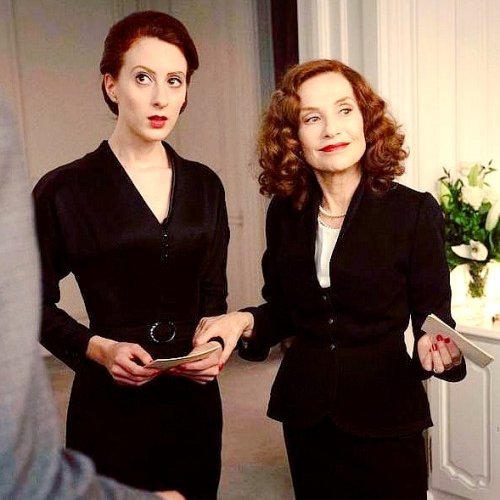
Diana Rigg

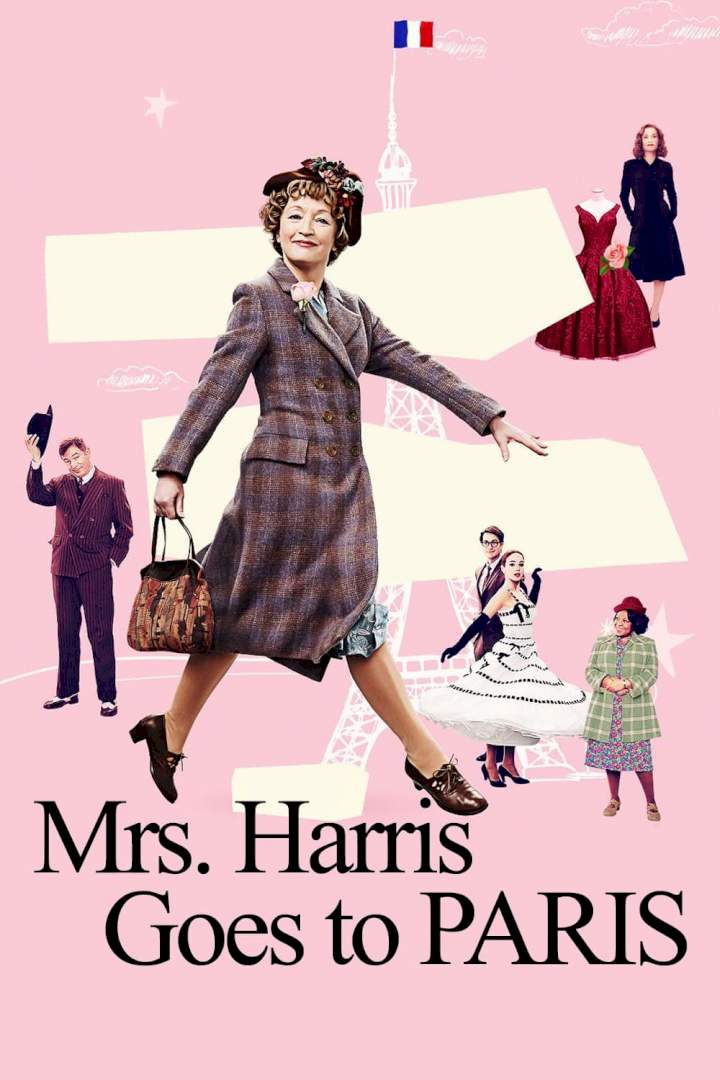
Mrs. Harris Goes to Paris

30/09/22

Cineworld, Edinburgh

I am poorly when I see the 1992 teleplay, Mrs ‘Arris Goes to Paris, nursing a cold. I am lying on my sofa with the TV on, drifting in and out of sleep. At one point, I wake up, and there are Angela Lansbury, Diana Rigg, and, wait, is that Fred from Corrie? Is this a fever dream? I find myself engaging with the story, and watching through to the end. On occasion, I mention it to friends, but nobody has ever heard of it. They look at me sceptically. I let it go…

So I’m weirdly excited about this latest iteration of the tale, which I now know is based on a novel by Paul Gallico. Lesley Manville stars as the titular Mrs Harris (her ‘H’ restored), with Isabelle Huppert and Jason Isaacs as the big name support.

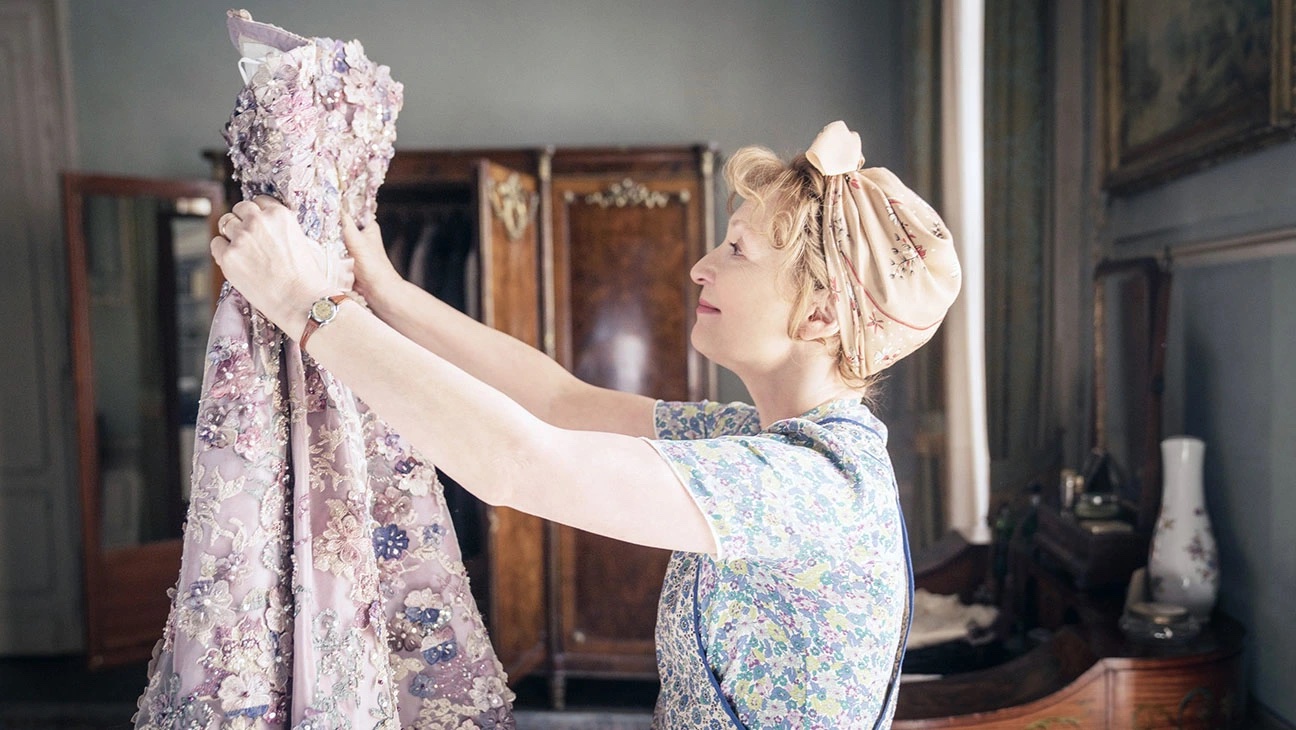
It’s London, 1957. Ada Harris knows in her heart that she’s a war widow, but she’s been waiting years for Eddie’s death to be confirmed. In the meantime, she’s working as a charwoman, cleaning up after a succession of indolent rich folk. She’s not unhappy exactly: she has a busy social life, drinking, dancing and ‘going to the dogs’ with her friends, Violet (Ellen Thomas) and Archie (Isaacs). But something is missing and, when Ada catches a glimpse of an exquisite couture gown in Lady Dant (Anna Chancellor)’s bedroom, she realises exactly what that missing something is…

A posh frock from Paris is beyond Mrs Harris’s slender means, but she’s a determined woman, and sets to with admirable grit, making savings wherever she can. Take the bus to work? No, not when she can walk. And what does she need with evenings out? Better to spend the time altering and repairing people’s clothes, bringing in a few extra shillings. Despite her hard work, however, that Dior dress is still way out of reach.

Until a series of fortunate events occurs, and – of course – she’s off to Paris! (Come on, that’s hardly a spoiler; it’s literally in the title.) The streets of the French capital appear to be paved with litter (there’s a bin strike, which we citizens of Edinburgh can certainly relate to), but Ada rises easily above the stink. She’s having the time of her life, and – with the help of André (Lucas Bravo), Natasha (Alba Baptista) and the dashing Marquis de Chassagne (Lambert Wilson) – she’s rediscovering her mojo. Sure, Mme Colbert (Huppert) is a bit sneery, and Mme Avallon (Guilaine Londez) seems to view her as an enemy, but so what? A couture gown is on its way; what could possibly go wrong?

Mrs Harris Goes to Paris is essentially a fairytale, although it’s not very grim. It’s a frothy concoction, signifying little, but it’s eminently watchable, with warm, engaging characters, and a satisfying (if predictable) story arc. Under Anthony Fabian’s direction, this primarily Hungarian production (no, I don’t know why either) is beautifully shot, and Felix Wiedemann’s cinematography really captures the ethereal beauty of the clothes, so vital to the tale. It’s refreshing to see a love story that doesn’t patronise an older woman, and I’m pleased that the ‘fish out of water’ stuff is played down. Ada is independent: she has lived alone through a war and is used to city life, and she mixes with all kinds. It’s no surprise that she can hold her own in a Parisian restaurant, nor that she’s unfazed by the unfamiliar etiquette of a Dior fashion show. Perhaps the most important theme is one of societal change: just as the political elite in Paris have to accept that the workers won’t settle for poverty wages any more, neither will Ada continue to put up with late payments and disrespect from her employers. The war was a real turning point, and its longterm implications are starting to be felt.

I don’t really know how this compares to the teleplay, because I wasn’t fully compos mentis when I was watching that, but I do know that it’s more enjoyable to see Mrs Harris finding her dream dress when I’m not in a Lemsip fug. And at the cinema too, which is always better (true fact, no counter-arguments accepted).

3.8 stars

Susan Singfield

Last Night in Soho

30/10/21

Cineworld, Edinburgh

Some cinema releases are more anticipated than others.

I’ve been a fan of director Edgar Wright ever since Spaced – and, through the ‘Three Cornetto‘ trilogy, the odd-but-enjoyable misfire that was Scott Pilgrim, and the wildly inventive Baby Driver, he’s delivered some of the most watchable films in recent cinema history. So, as soon as Last Night in Soho was announced, I was counting the days to its release. Too much anticipation can sometimes be a problem, but not in the case of this powerful psychological thriller. Chung-hoon Chung’s dazzling cinematography, the twisty-turny script (by Wright and and Krysty Wilson-Cairns) and a sparky soundtrack of solid gold 60s bangers all work together to make this a thrill ride from the opening credits onward.

After her mum’s suicide, Ellie Turner (Thomasin McKenzie) has led a sheltered life in Cornwall with her Gran, Peggy (Rita Tushingham) – though Ellie’s late mother still has an unnerving habit of watching her from mirrors. Ellie has always longed to be a fashion designer, so she heads off to the big city to take her place at the London College of Fashion. From the very start, she is uncomfortable in this unfamiliar environment, suffering the predatory advances of a cab driver, whose lascivious gaze threatens her from his rear view mirror. On arrival in her halls of residence, she is immediately alienated from her fellow students, a sneering, superior bunch who regard her as some kind of weird country bumpkin. She decides to be proactive and rents a bedsit on Goodge Place, presided over by the mysterious Ms Collins (Diana Rigg, having a great time in her final screen role). The tiny flat feels like a throwback to the 1960s but Ellie doesn’t mind. As evidenced by her dress designs and her vinyl record collection, it’s long been her favourite era.

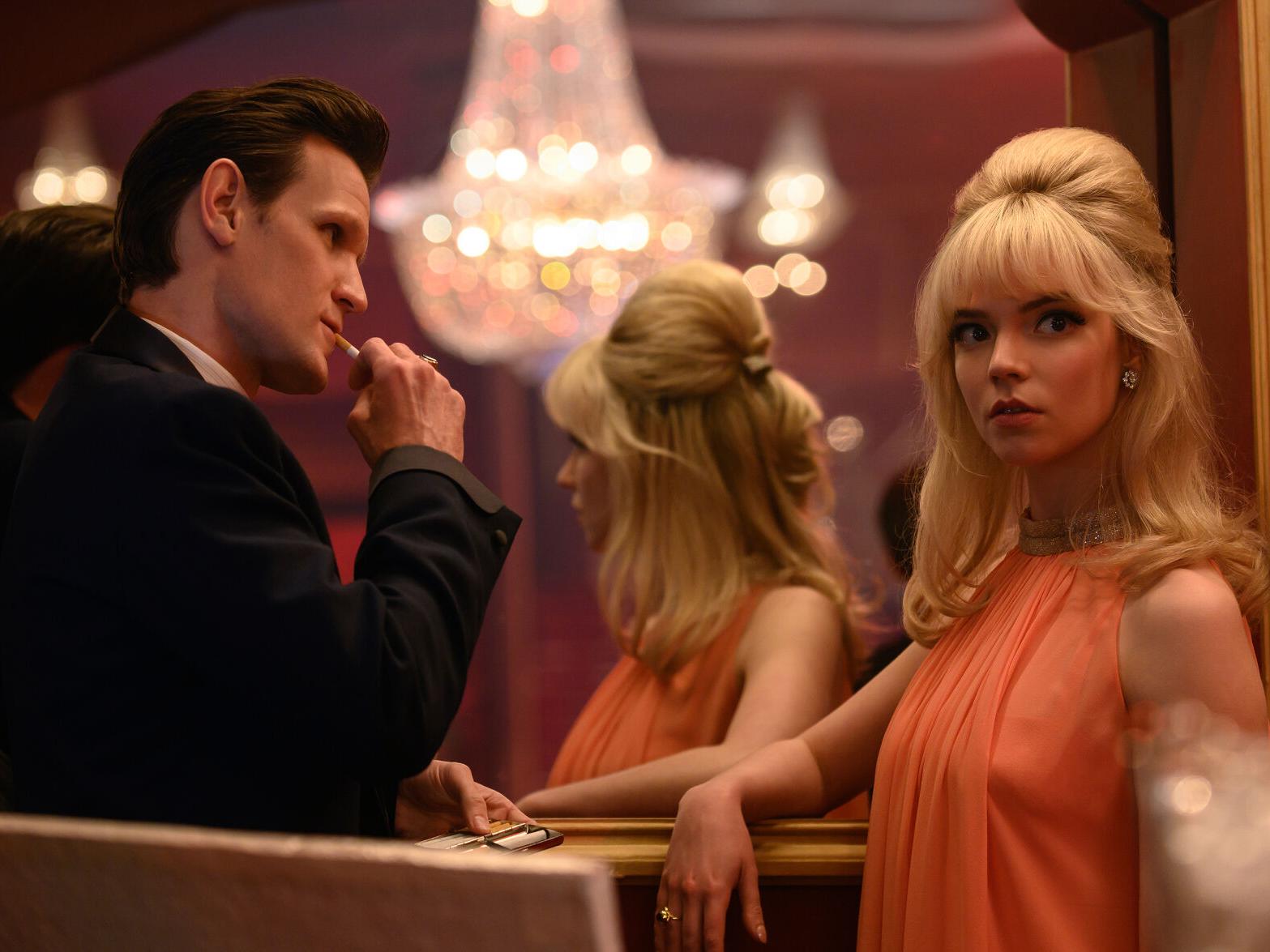
But from her first night there she has disturbing dreams about a young woman called Sandie (Anya Taylor-Joy), an aspiring pop star and would-be 60s fashion icon, who falls under the influence of sleazy ‘manager’ Jack (Matt Smith). Jack, it transpires, sees little difference between a pop star and a prostitute. The trouble is, Ellie is increasingly involved in the resulting relationship, finding herself observing – and then sharing – the indignities that are heaped upon Sandie at every turn. As these experiences become ever more violent, ever more carnal, Ellie begins a rapid descent into darkness. The problem is, to those around her in the present day, she appears to be losing her mind…

There’s nothing particularly new about this premise, but Wright’s approach to it is refreshingly different and, for the first forty minutes or so, he doesn’t put a foot wrong. The film swoops and soars and segues through the various unearthly set pieces with consummate skill, and, while terrible things happen to Ellie, she is never allowed to be ‘the victim.’ The underlying theme is the toxicity of Soho – the disturbing underbelly that lurks beneath the bright lights. This film is simultaneously a love letter to and a condemnation of the 1960s. Both McKenzie and Taylor-Joy are exceptional in their respective roles and the presence of Terence Stamp as the ‘silver haired gentleman’ is a wonderfully threatening addition (watching Stamp singing along to Barry Ryan’s Eloise is a masterclass in understated menace). There are also some real surprises packed into the script, ones that I genuinely don’t anticipate.

So what’s wrong, I hear you ask? Well, to be fair, not much, but to my mind there are a couple of missteps. The faceless armies of male ghosts that pursue Ellie relentlessly around the city are brilliantly realised, but there’s a moment where they start to feel overused. Haven’t we watched what is essentially the same scene a couple of times already? And… I’m being picky here… there’s John (Michael Ajao), Ellie’s only real friend from college, a man so sweet-natured he could rot your teeth at thirty paces, a fellow so forgiving, he would make Ghandi seem downright surly by comparison. It’s not Ajao’s performance that’s at fault but the dreadful lines of dialogue he’s obliged to come out with, quips that feel like they’ve been drafted in from an entirely more lighthearted project and are consequently jarring.

It’s only these two elements that make Last Night in Soho fall short of a perfect five stars. Niggles aside, the film is an absolute blast and another success to add to Wright’s growing score of brilliantly inventive movies. I haven’t stopped singing Cilla Black’s You’re My World since I stepped out of the cinema and, until you’ve seen it performed on a blazing staircase with an accompanying kitchen knife, you haven’t really experienced it at all.

Go see! You won’t be disappointed.

4.8 stars

Philip Caveney

Patrick MacNee: An Appreciation

Unknown Unknown-1

26/06/15

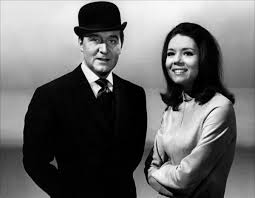
It’s one of my earliest memories from childhood; sitting with my parents in the little living room of whichever RAF home we were in then, waiting for our favourite programme to start. A little flickering screen in the corner. And then that music, Laurie Johnson’s strident theme, the brass section blasting out four notes which seemed to quite literally trumpet the programme’s title. The Avengers! The Avengeeeeers! Then the black and white credit sequence, cutting edge cool in the 1960s. And finally the episode itself, a delicious slice of surreal cold-war spy fluff as John Steed and Emma Peel took on the villains in their own spectacular style. These days of course, the same title conjures up images of brawny superheroes clad in latex and blessed with underwhelming ‘special’ powers, but in those far off times, it meant something quite different.

There had of course been an earlier series with Honor Blackman as Cathy Gale, but I don’t really remember that as clearly. The second series is imprinted so perfectly in my memory, that even now, more than fifty years later, I can recall entire scenes, even lines of the witty dialogue. I know that I was absolutely besotted with Diana Rigg who seemed to me the very epitome of feminine mystique – lithe, pretty, intelligent and powerful enough to fell a villain with one perfectly timed karate chop (even if, in long shot, you could sometimes see that she had been cunningly substituted by a burly bloke clad in an ill-fitting leather jumpsuit.) And of course, I saw all the later incarnations. I never really warmed to Linda Thorson as Tara King, but I did like Joanna Lumley as Purdey in The New Avengers, almost as much as I despised Gareth Hunt as the perpetually smirking ‘bit-of-rough’ Mike Gambit.

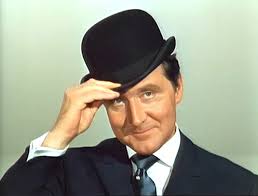
Through it all, Patrick MacNee’s John Steed remained unchanged, suave, stylish, outfitted in Saville Row’s finest suiting, his trademark bowler hat in place and his deadly weapon (an umbrella) poised ready to take out the toughest opponent. (Apparently, the umbrella was McNee’s idea. He’d been a naval officer in the war and had emerged from the experience with an intense dislike of violence of any kind, so much so, that he steadfastly refused to be pictured with a gun. ‘I’ll carry an umbrella,’ he suggested at an early script meeting and everyone went along with that. It was an inspired idea.)

Of course, the problem with a successful show like The Avengers was the danger that it might typecast the stars. Rigg had no problem escaping its clutches, becoming a major star of the theatre, but McNee didn’t manage much else but some forgettable television and an occasional film cameo; a shady psychiatrist in Joe Dante’s The Howling, a delightful turn as Sir Dennis Eaton-Hogg in This Is Spinal Tap, even a decent showing in a Bond film, opposite Roger Moore in A View To A Kill. But John Steed would remain his signature role, as much a fantasy image perhaps as those created by his female co-stars. In real life, you suspected, you’d actually hate someone like John Steed. With his Gentlemen’s Clubs, his impeccable manners and his old style courtesy, he was, even in the swinging 60s, something of a dinosaur – but MacNee’s charming manner made you believe that underneath it all he was a really nice chap, that should you bump into him in real life, he’d be every bit as charming as his fictional counterpart.

It’s always a jolt when you read that one of your earliest heroes has died. MacNee was 93 years of age, which by any standards is (as Steed himself might have observed) a jolly good innings. Back in the day, we tended to sneer at television shows. It’s only recently that TV has had something of a renaissance and we wax euphoric about the likes of Breaking Bad and True Detective. But The Avengers was an example of television at its most groundbreaking. Re-watching that opening credit sequence on YouTube still gives me the same thrill I had when I was a little boy. And if Patrick MacNee will always be John Steed in the nation’s memory, well that’s no bad thing. Because in his own way, he was one of the greats.

Philip Caveney