24/11/26
Festival Theatre, Edinburgh
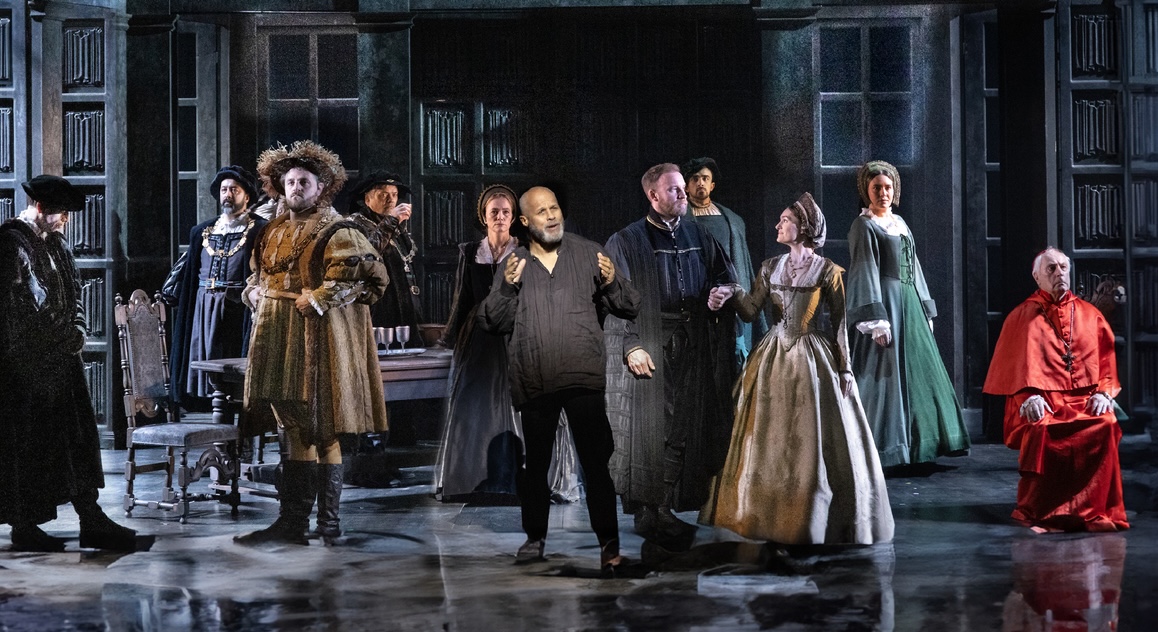
Robert Bolt’s A Man For All Seasons began life as a humble radio play, before debuting on stage in 1960 at London’s Globe Theatre (now the Gielgud). In 1966 it was adapted into a film, directed by Fred Zinnemann and starring Paul Scofield in the central role of Sir Thomas More. This new joint production from Church Theatre and Bath’s Theatre Royal, directed by Jonathan Church, is a handsomely-mounted drama with a stark set design by Simon Higlett and some splendid costumes by Debbie Bennett. A fifteen-strong cast is utilised to enact a famous piece of Tudor history.
It’s 1529 and King Henry VIII is growing anxious about his lack of an heir. His wife, Catherine of Aragon, has had several male babies but they’ve all died in childbirth. With this in mind, he’s decided to divorce her. It will, of course, necessitate altering a couple of tiny constitutional details. Since Henry will be going against the teachings of the Catholic faith, which currently reigns supreme in England, he’ll need to found a new religion – the Church of England. All this so he can marry his new amour, Anne Boleyn, who he believes has a much better chance of producing some suitable sprogs. Like a lot of Alpha males, Henry never considers that the lack of sons might originate with his own biology.
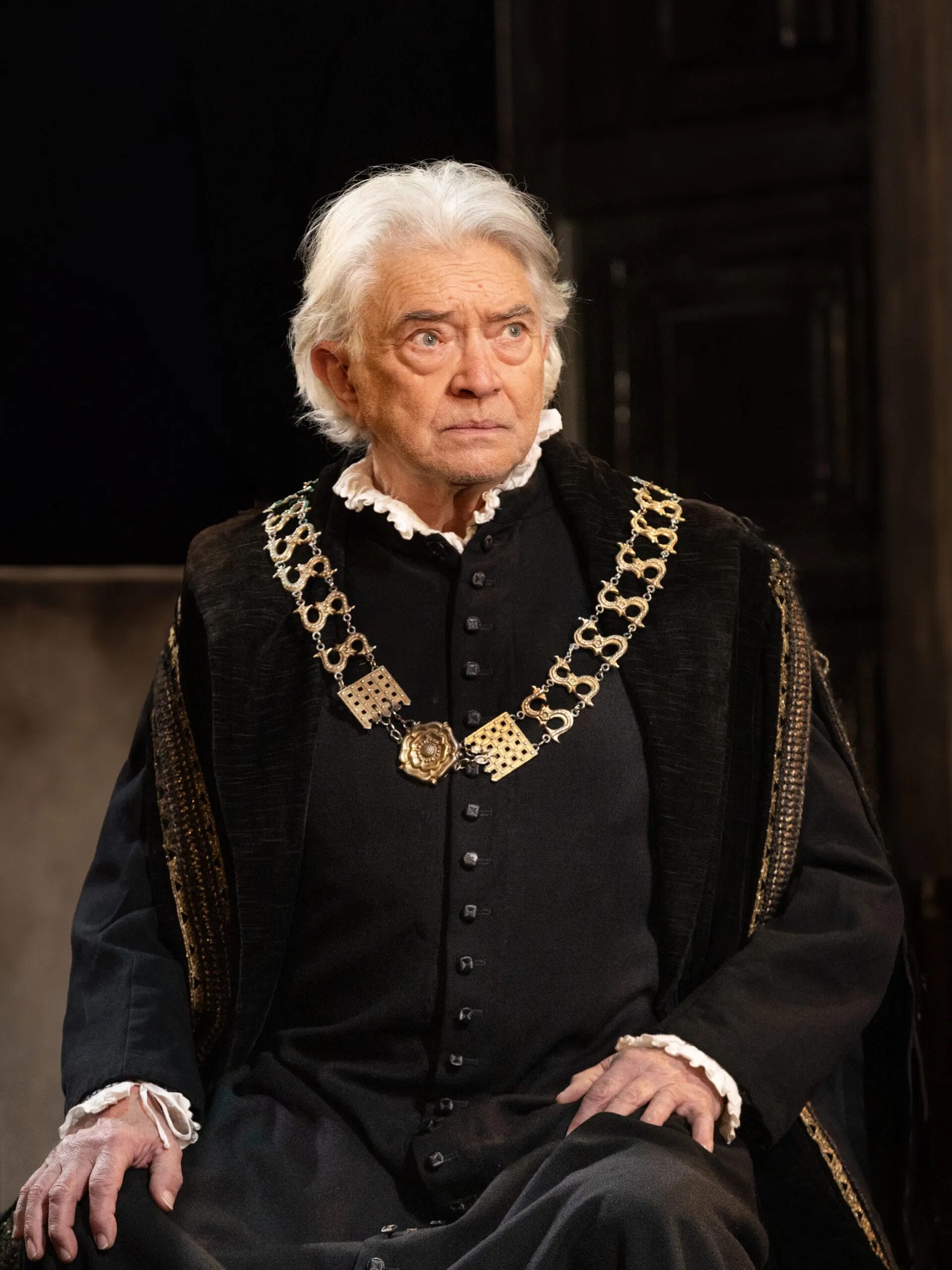
Henry’s right-hand man, Thomas Cromwell (Sam Philips), is prepared to push for any changes that will further his own ambitions and he finds a useful assistant in Richard Rich (Petter Losasso), who seems more than happy to carry out Cromwell’s instructions, even if it means biting the hand of a man who has been only ever been kind to him. The fellow in question is Lord Chancellor Sir Thomas More (Martin Shaw), apparently the only principled man in the country, who believes so adamantly in the teachings of Catholicism that he refuses point blank to acknowledge the divorce.
But how far is More prepared to go before he capitulates?
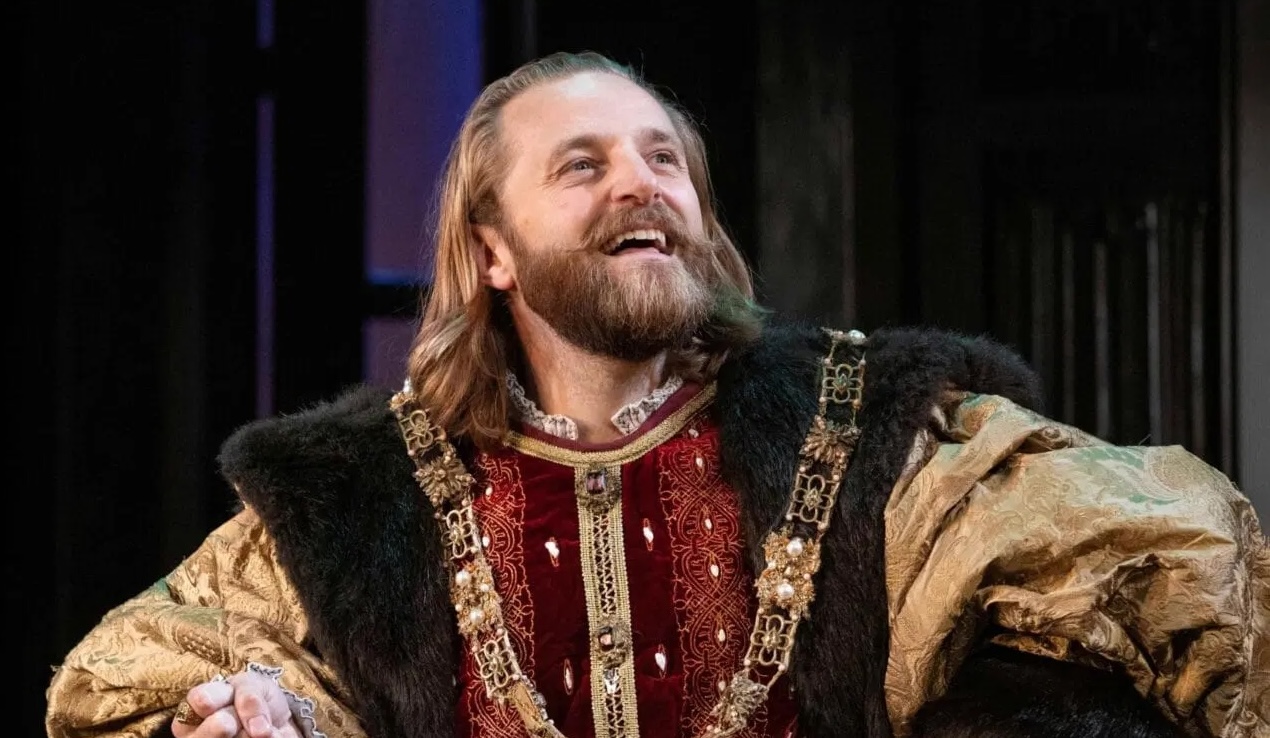
These somewhat sombre proceedings are introduced by The Common Man (Paul Kemp), who goes on to deliver a cheeky commentary as he shifts through a variety of characters, each of whom appears to have his own particular way of making easy money out of the privileged toffs he serves. This levity helps to lift what would otherwise be a solemn piece of theatre. Likewise, in the play’s first act, we’re treated to a visit from King Henry (Orlando James), a motormouthed egomaniac who seems determined to talk about any subject under the sun other than D.I.V.O.R.C.E. James’ performance is a particular delight and I’m sure I’m not the only one in the audience disappointed not to see more of him in Act Two.
Sir Thomas More is an altogether trickier role to bring off. Though he’s undeniably the still centre of this play – his stoicism is essentially the theme of the story – Shaw’s performance is almost too understated. I watch as More heads irrevocably closer and closer to his own destruction and I start to feel a little frustrated by his placid acceptance. Yes, he goes out with his integrity intact, but part of me would like to see a little more fire in the performance, a little more indignation. Furthermore, at times I do find myself struggling to make out some of Shaw’s dialogue.
The play’s radio origins may explain its lack of dynamism – this is a static account that is told rather than shown – and both More’s wife, Alice (Polly Kemp), and daughter, Margaret (Grace Molony), are given precious little to do. Again, this may be an accurate representation of a woman’s lot in Tudor England, but it doesn’t exactly make for riveting viewing. These issues mean that the second act loses some impetus as it heads steadfastly towards its inevitable conclusion.
A Man For All Seasons is a solid, traditional piece of theatre with a story that highlights the fact that, back in the day, royalty could get away with some terrible iniquities. It would be nice to to reflect that things have changed considerably since then but I suspect they really haven’t.
3.4 stars
Philip Caveney

