David Wilmot

Hokum

03/05/26

Cineworld, Edinburgh

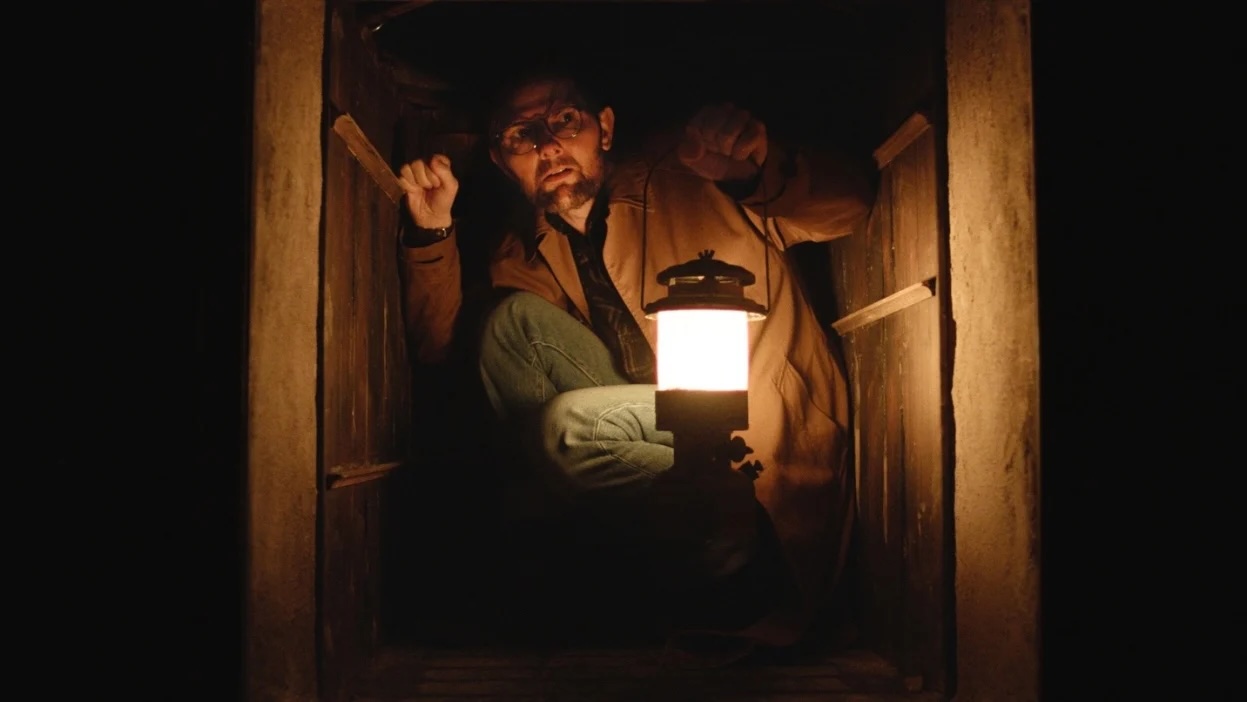
I emerge from Hokum thinking that this low-budget horror from Irish director, Damien MaCarthy, is aptly-titled. The term originated in American theatre in the early 20th century and is a combination of Hocus-Pocus and Bunkum. I have to say that the storyline here does not stand up to scrutiny – but nevertheless, I do find the result enjoyable, if occasionally confusing.

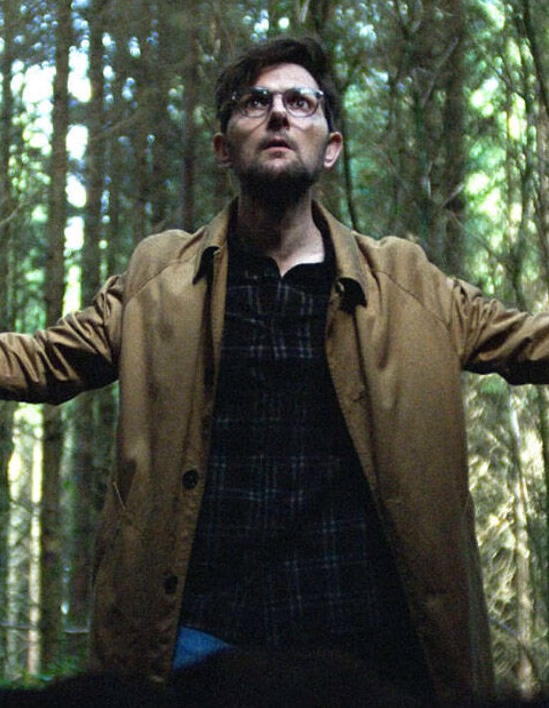
Ohm Baumann (Adam Scott, of Severance fame) is a successful author, currently putting the finishing touches to his bestselling ‘Conquistador ‘ trilogy. Indeed, the film begins with a short extract from the book’s planned ending, which could be best described as ‘flat.’ It’s also clear from early on that Ohm is being haunted by something from his past. Pretty soon, he’s left his native America and is driving through a remote part of Ireland, where’s he’s planning to visit the Bilberry Woods Inn, where his parents spent their honeymoon. He carries with him the ashes of said parents, which he is planning to scatter in the place where they were last happy. Next to a tree, apparently.

The hotel is one of those constructions that only exist in the minds of authors: dark, forbidding and peopled by a collection of odd balls that would have most travellers checking out without further delay – but Ohm is on a mission. He dutifully sprinkles the ashes of Mum and Dad, has an encounter in the woods with bearded weirdo, Jerry (David Wilmot), and then drinks a lot of whiskey whilst chatting to friendly bar steward, Fiona (Florence Ordesh). He outlines the ending of his new book to her, whereupon she charmingly tells him she won’t be reading it.

Mind you, Ohm is not the friendliest character himself, openly rude to pretty much everyone he meets and summarily insulting porter and wannabe author, Albie (Will O Connell), when he meekly suggests that Ohm might care to have a quick look at his manuscript. This kind of attitude is generally off-putting in a protagonist but somehow Scott manages to get away with it, eliciting laughs with his sneering comments.

But then there’s a dark development, after which Fiona goes missing – and Ohm becomes obsessed with finding out what happened to her…

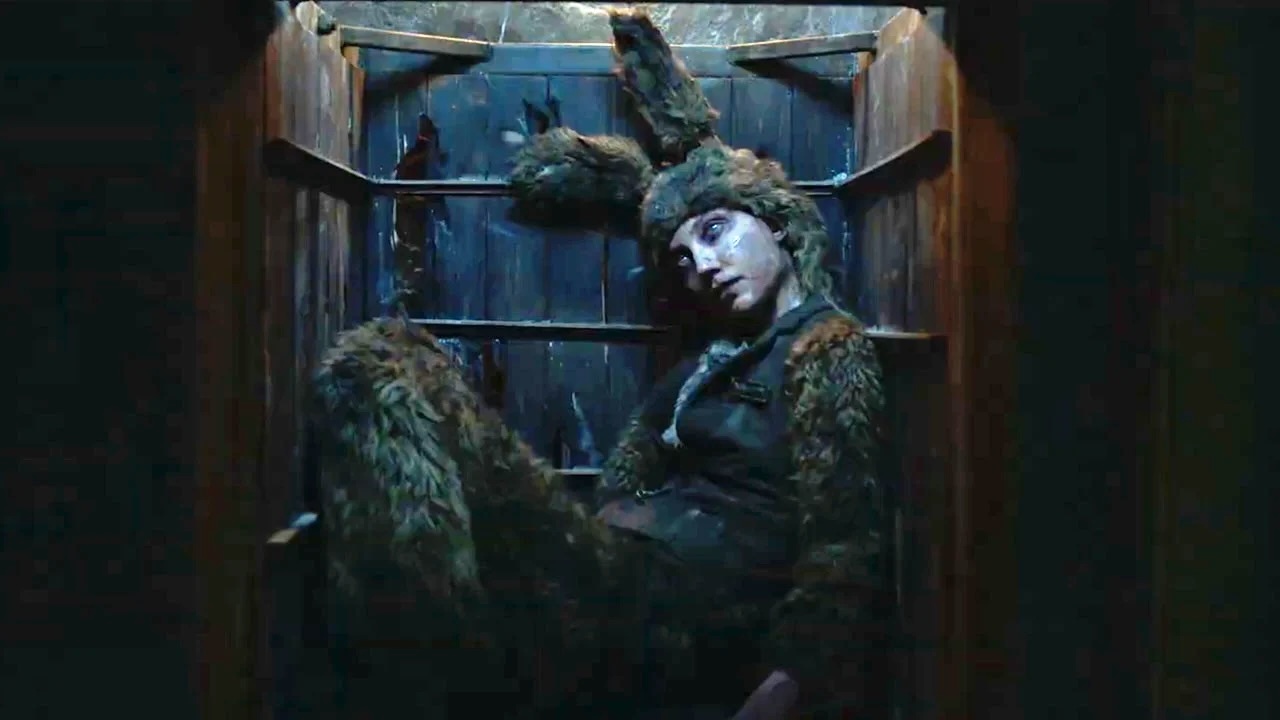
Hokum does a decent job of generating an eerie and unsettling sense of dread throughout, though I do occasionally find myself wishing somebody would turn some lights on. The inn, of course, harbours an open secret: the Honeymoon Suite (where Ohm’s parents stayed) is permanently closed to the public, because it’s haunted by ‘a witch’. Naturally, Ohm needs to get in there in his search for Fiona. If you can buy this premise, you’ll have a good chance of enjoying the supernatural shenanigans that ensue, though I do have some trouble with the very complicated geography of the various rooms, corridors and lifts that comprise the suite – and I can’t be the only one who’s puzzled when Ohm suddenly appears to be wearing a set of manacles. A later reference to the fact that his whiskey has been spiked with magic mushrooms feels like an attempt to cover up what is more likely a continuity error after some scenes have been edited out.

And perhaps most damning of all, the incident that has been haunting our antihero from the start – doubtless intended to be something of a revelation – is too broadly signposted to come as a surprise.

Hokum is another addition to the many decent horror films currently gracing the multiplexes, but it’s not really up there with the likes of Weapons, a film which manages to generate real terror without feeling the need to dim the lights at every opportunity.

3.6 stars

Philip Caveney

Calm With Horses

03/05/20

Curzon Home Cinema

There’s something of the young Marlon Brandon in Cosmo Jarvis’s performance in Calm With Horses; indeed, there are plot similarities here that make this feel like a West of Ireland homage to On The Waterfront. But that doesn’t detract from the film’s power, nor the intensity of the performances.

Jarvis plays ‘Arm,’ a promising boxer in his youth, whose career hit the skids when he accidentally killed an opponent in the ring. Now he’s reduced to being the hired muscle for the Devers clan, a family of criminals who hold sway over the town where he lives. Arm is accompanied by his minder, Dympna (Barry Keoghan), who is the nephew of Hector (David Wilmot), the gang’s head honcho. Dympna is desperate to prove his worth and seems capable of making Arm do pretty much anything, no matter how brutal, usually by getting him drunk and stoned beforehand. It’s clear though, that Arm is basically a decent bloke who’s taken a wrong turn back in the day.

He has a son, Jack, with his former partner, Ursula (Niamh Algar), but the boy is severely autistic, only really happy when he’s riding a horse (hence the title). Ursula wants to move Jack to Cork, where there are specialised schools that can help him, and she asks Arm for financial help, but Dympna manages to dissuade him; he has another job for Arm, one that requires him to more than just beat somebody up…

Nick Roland’s debut picture, with a screenplay by Joe Murtagh, is set in those parts of the West of Ireland where tourists would fear to tread – indeed, a visit to Paudi (Ned Dennehy)’s garage is not for the faint-hearted. It’s not just sides of beef he has hanging in that outbuilding. This is mostly Jarvis’s film, though Keoghan once again displays his uncanny knack of choosing the right role at the right  time, and Dennehy’s smirking, scowling performance shows why his is one of the most familiar faces in Irish cinema.

If there’s a certain inevitability to the story’s ending, it’s more than compensated for by the film’s raw power and those memorable characterisations. Those looking for a charming, lyrical tale of simple country folk may wish to look elsewhere.

4.2 stars

Philip Caveney


Ordinary Love

16/12/19

Written by Owen McCafferty and directed by Lisa Barros D’Sa and Glenn Leyburn, Ordinary Love is a poignant, heartfelt film, detailing the extraordinary ordinariness of dealing with a serious illness. Joan (Lesley Manville) and Tom (Liam Neeson) are the ‘normal people’ of the original title, a middle-aged couple who’ve been together all their adult lives. It’s a decade since their daughter died, and they’re coping, kind of, although they seem to have retreated into their dark, quiet, Northern Irish coastal home. They’re on auto-pilot really, muddling through and getting on.

But then Joan is diagnosed with breast cancer, and everything looks different – and yet somehow just the same. Life goes on: there’s still the supermarket shop to do, the gentle bickering about how much beer is too much beer, the nightly walks to feed the Fitbit. It’s just that, now, there are chemotherapy appointments too – and hair loss and existential fear. Their loneliness is cleverly revealed: ‘We’re both suffering,’ insists Tom, anguished, but Joan’s the one who can’t stop vomiting. ‘No, we’re not! This is happening to ME.’

Neeson is terrific in this role. He plays alpha-male ‘revenge dads’ so often that it’s easy to overlook his ability to inhabit subtler, more nuanced characters. His pain is palpable, his reserve convincing. Manville is less of a surprise – she’s superb, as you’d expect. I like the brittle, chin-up attitude she conveys, the doubt and terror just discernible. The supporting cast do a good job too, particularly David Wilmot as Peter, the primary school teacher with a terminal diagnosis, in whom Joan finds a confidante.

The movie is a timely reminder, too, of how much we need the NHS. A cancer diagnosis is stressful enough; grumbling half-heartedly about having to pay for hospital car parking ‘even when you’re a patient’ is the extent of the financial worries that add to Tom and Joan’s burden.

In the end though, it’s the mundanity that makes this film so heartbreaking. There’s no big cathartic moment, no dramatic revelation. But there is hope and there is love. Of the extraordinary, ordinary kind.

4.4 stars

Susan Singfield