David Greig

Wild Rose

20/03/25

Lyceum Theatre, Edinburgh

Rose-Lynn Harlan (Dawn Sievewright) has a dream: to appear on the stage of Nashville’s legendary Grand Ol’ Opry, belting out a country song – not a country and western song, mind you. It’s an important distinction. So, being banged up in prison for a year wasn’t part of the grand ol’ plan – but now she’s served her time and is finally able to head back to her mum, Marion (Blythe Duff), who has been dutifully looking after Rose-Lynn’s two young children, Lyle (Leo Stephen) and Wynonna (Jessie-Lou Harvie).

Rose-Lynn is dismayed to find that her kids have become disaffected by her long absence and that their former trust in her has been all but eroded. What’s more, they view her long-cherished dream as selfishness. And that’s not all that has changed. When she calls in at the Grand Ol’ Opry, Glasgow – where she previously had a residency – she discovers that her regular slot has been handed to the dreaded Alan Boyne (Andy Clark), a long-haired carpet fitter with a sideline as a charisma-free country singer.

Desperate to keep her head above water, Rose-Lynn takes a part-time post as a cleaner, working for the highly-privileged Susannah (Janet Kumah). She’s a go-getter and, once she’s heard Rose-Lynn sing, she becomes determined to put her in touch with legendary DJ Bob Harris, who Susannah believes might be able to offer some good advice.

Rose-Lynn realises that her long-cherished ambitions are still burning as fiercely as ever…

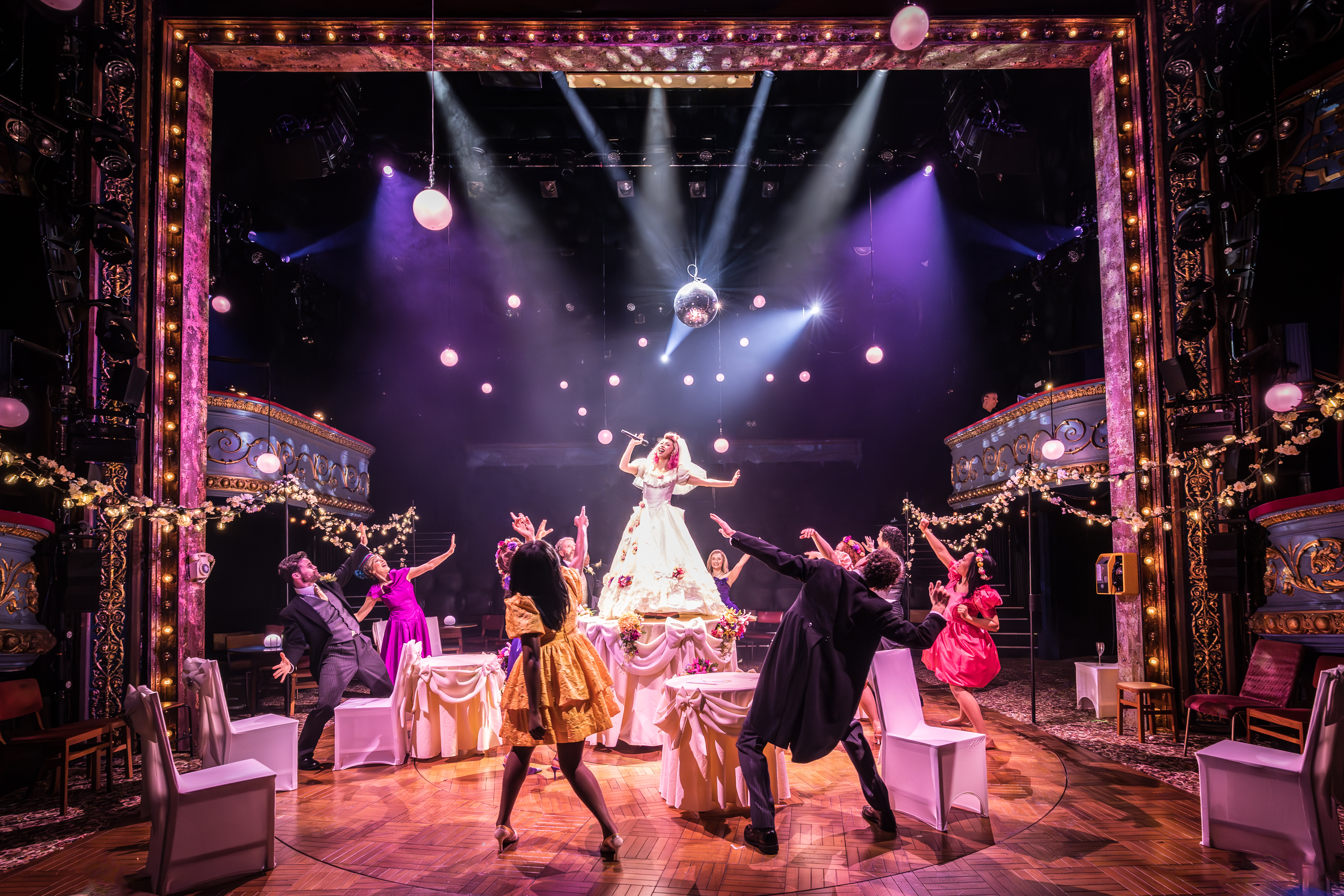
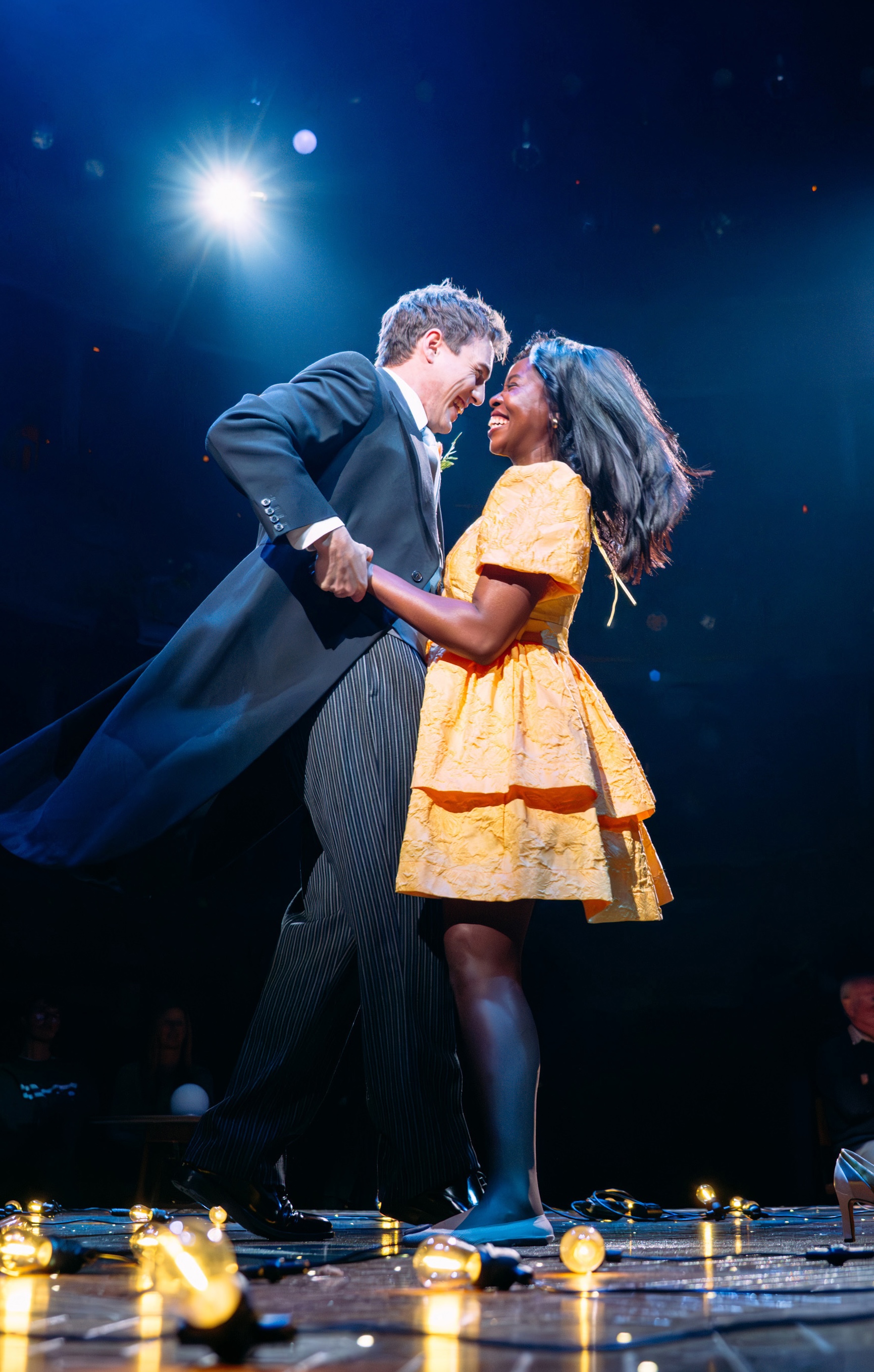
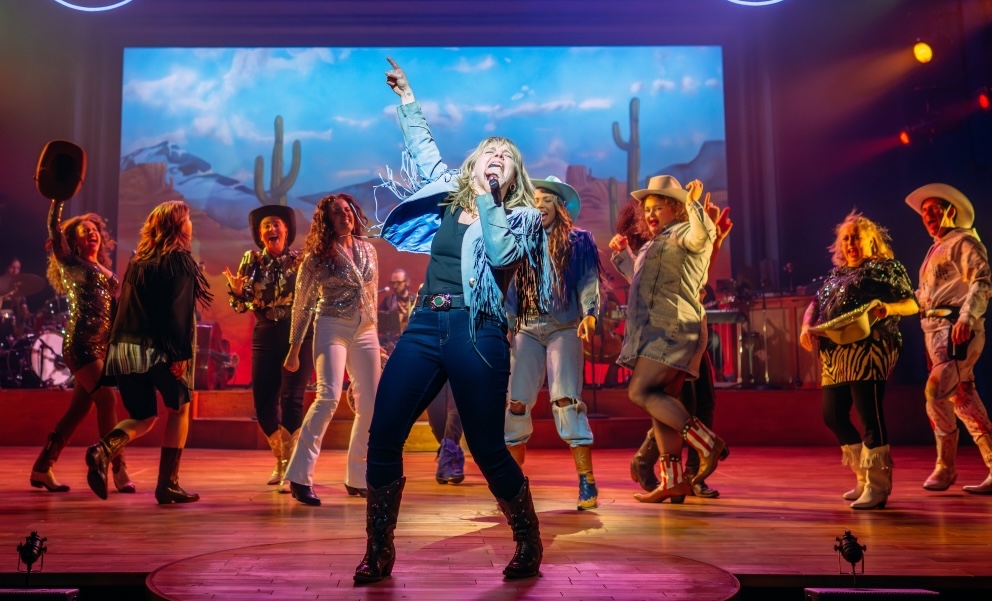
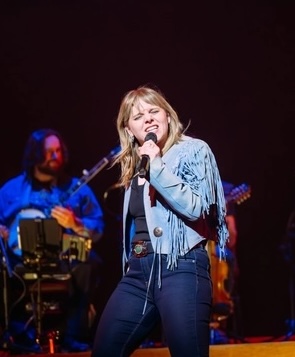
This assured version of the 2018 film (adapted by its original screenwriter, Nicole Taylor) makes a seemingly effortless transition to the stage. A prison-set opening where Rose-Lynn and her fellow inmates launch headlong into a propulsive rendition of Country Girl sets the tone perfectly, with Sievewright stepping into Jessie Buckley’s cowboy boots with absolute authority. An eight-piece band ranged across the back of the stage performs a varied selection of numbers, from banging rockers to lilting, steel-guitar layered ballads. And it’s not just Sievewright supplying the singing.

As bar-owner, Jackie, Louise McCarthy belts out her own fair share of raunchy vocals, Duff does a fabulous job with a haunting song of regret and even the two youngest members of the cast have the opportunity to shine as vocalists. Clark – who takes on a number of roles – proves himself an invaluable asset to the production, as does Hannah Jarrett-Scott, who appears as two (very different) characters.

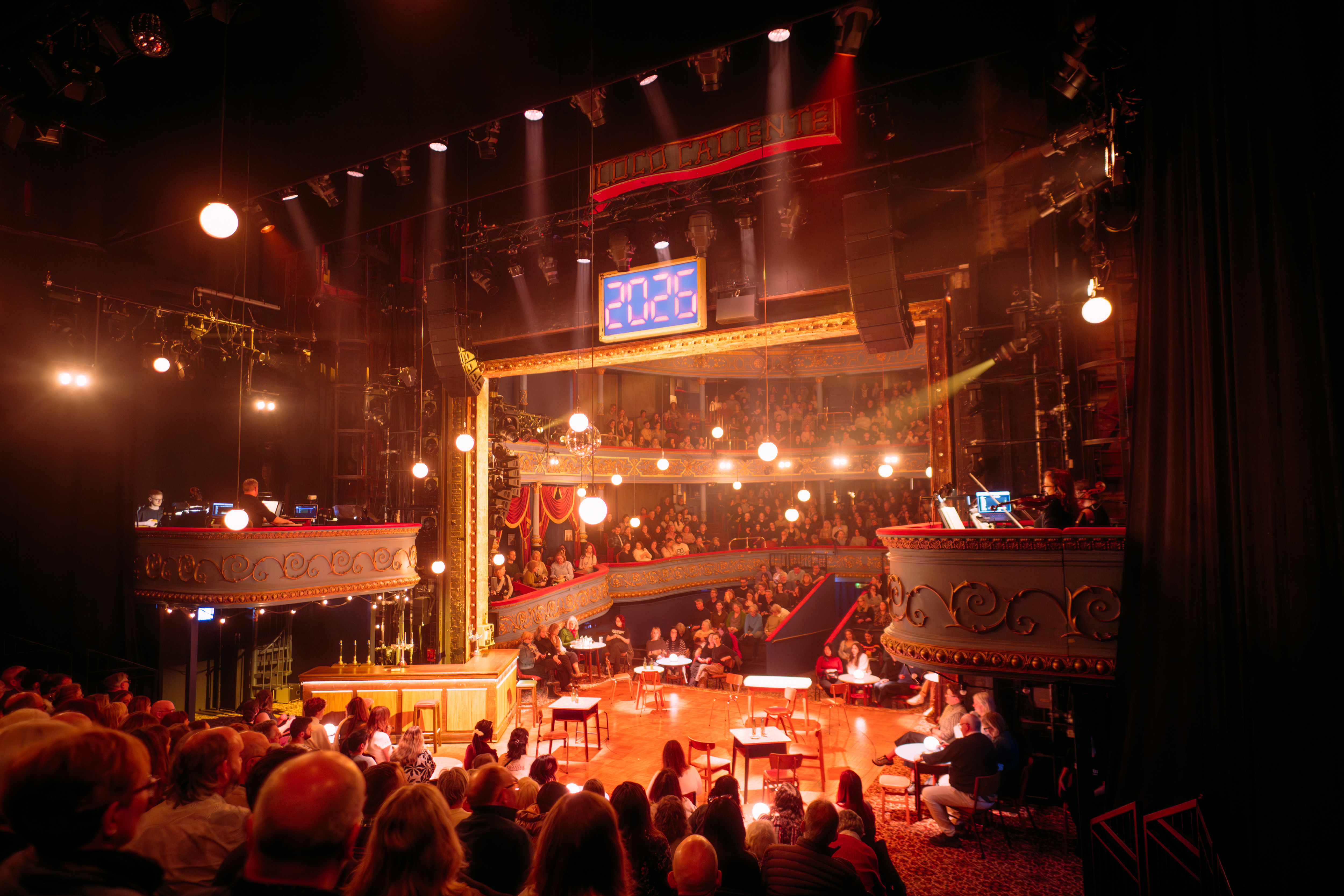
Chloe Lamford’s simple but effective set design works beautifully alongside Jessica Hung Han Yun’s inventive lighting and Lewis den Hartog’s simple-but-effective video design. John Tiffany handles the directorial reins with absolute aplomb. It’s worth mentioning, I think, that Wild Rose will be the final production under David Greig’s eight-year spell as the Lyceum’s artistic director. He leaves on an impressive high note.

Wild Rose is a fabulously entertaining story about ambition and acceptance, anchored by a knockout performance from Dawn Sievewright. Anyone in search of an uplifting night at the theatre will find it here. And you don’t have to be a die-hard country fan to enjoy this fabulous show.

5 stars

Philip Caveney

The Baddies

09/10/24

Lyceum Theatre, Edinburgh

The Baddies, David Greig and Jackie Crichton’s theatrical adaptation of Julia Donaldson and Axel Scheffler’s 2022 book, is well-pitched for its target audience of 3+. This morning’s audience is almost all made up of school trips, with rows of squirming, excited P1s and 2s eating snacks and being cajoled out of their jackets while waiting for the show to begin. The colourful set – designed by Jasmine Swan – intrigues them. Indeed, there’s one little girl in the front row who can’t seem to help getting out of her seat and walking towards the stage, drawn like the proverbial moth to the flame. Every time her teacher asks her to sit down, she does so – but she’s up again a moment later, eyes wide, mouth open.

But as soon as the show begins, she returns to her seat and watches, enthralled. And her reaction is a more important review of this production than anything I can write. Her classmates enjoy it too. The noise level in the auditorium bears testimony to the musical’s success: there are hundreds of young children here, clapping enthusiastically for the songs, waving their hands and shouting when required – but much quieter than the on-stage mice as the story carries them along.

A framing sequence introduces us to Mamma Mouse (Lottie Mae O’Kill), who wants to teach her three bad-mannered children (Dyfrig Morris, James Stirling and Rachel Bird) to say thank you, sorry and please, but it doesn’t go well. They’re more interested in having fun. To calm them down, she decides to tell them a bedtime story about a spotted handkerchief, and then we’re off, as they transform into the titular Baddies: Troll (Morris), Ghost (Stirling) and Witch (Bird). “We’re the very worst baddies,” they sing in the show’s catchiest number (courtesy of Joe Stilgoe) – but there’s a problem. They’re not. They’re rubbish at being bad. They can’t even scare the new young shepherdess The Girl (Yuki Sutton), who’s out in the mountains on her own for the very first time.

As an adult, I have to say that the story doesn’t do a lot for me. There’s not much of a narrative arc. I’d like the manners referenced in the opening sequence to have more bearing on the subsequent narrative. I’d also like Mamma Mouse to refrain from waving around her dirty hanky after exhorting the little mice to sneeze into it to catch the germs. But these are grown-up concerns and, as we’ve established, I’m not the target audience.

Stilgoe’s songs are light and catchy, but most of them are perhaps not sing-along-able enough for little children. I like Katie Beard’s direction: the slapstick is especially nicely done, with lots of silly near misses and amusing sound effects. O’Kill seems to be channelling Mary Poppins – and this works well for the piece, lending her a convincing authority over the proceedings, so that when she assures the audience in advance that, although there are some scary moments in the story, nothing bad happens and there’s a happy ending on its way, it’s clear that the children trust her and so relax into the tale.

But, for me – as for the little front row girl – it’s Swan’s design that steals the show. The set is a glorious riot of hidden delights, like a giant Polly Pocket, the mountainside opening up to reveal a fairytale cottage, while the costumes – although different from the book’s illustrations – seem somehow iconic. I can imagine them as popular Hallowe’en outfits.

The Baddies leaves Edinburgh on the 20th October for an extensive nationwide tour. If you’re a parent or a teacher and you have wee ones you want to treat, an hour in the company of this not-so-dastardly trio is pretty sure to please them.

4 stars

Susan Singfield

Two Sisters

15/02/24

Royal Lyceum Theatre, Edinburgh

As the title suggests, there’s more than a nod to Chekhov in David Greig’s new play, Two Sisters, currently premiering at Edinburgh’s Royal Lyceum Theatre, where he’s also artistic director. And it’s not all about the gun…

That’s not to say that this is an adaptation; it’s not. The plot, structure and cast of characters are very different. And yet it is, despite all that, a cleverly updated version of the same idea, embracing the Russian’s major themes – suffering, love, longing, change – and distilling his bitter humour and nihilistic worldview into something immediately recognisable to a modern audience.

Emma (Jess Hardwick) is a corporate lawyer, married to a hotshot businessman with his own plane. She’s also pregnant and sees her impending motherhood as some kind of deadline: if she can’t pen a novel before the baby’s born, then it will be too late. With this in mind, she books herself a caravan at the holiday park she used to visit with her family as a child. A whole week to herself, reminiscing and writing. What could be more perfect?

But she’s reckoned without her flaky older sister, Amy (Shauna Macdonald), who’s always ricocheting from one crisis to another. This time, her long-suffering husband has caught her shagging the plumber, so she’s come to cry on Emma’s shoulder. 

And rekindle an old flame…

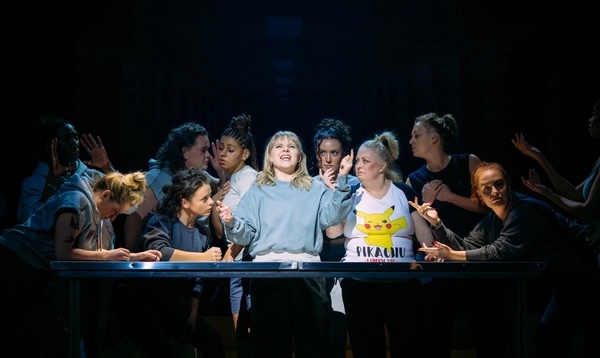
Directed by Wils Wilson, this is a slow-paced piece, reflecting the characters’ inertia. The chorus of teenagers embodies this listlessness too, at once pulsing with life and stymied by lethargy. They hang around the park, aloof and watchful. Nothing escapes their attention. It all matters too much, and yet it doesn’t matter at all.

Macdonald and Hardwick are a charismatic duo, the former’s sharp edges and barely-suppressed longing contrasting perfectly with the latter’s languid determination. Their relationship feels real and convincing. 

Lisbeth Burian’s wonderful set is like a brutal mirror, emphasising the grottiness of the seaside resort, with its peeling edges, dingy caravans and rusting climbing frame. Emma might be blind to the park’s fatal decline, indulging in nostalgia-fuelled fantasies of restoration, but we in the audience are all too aware that it is a lost cause. 

There are a few false notes. I find myself distracted by Lance (Erik Olsson)’s assertion that he’s only ever left Fife to visit Ibiza, when he clearly has a Swedish accent. I wonder too why Amy’s been sleeping in her car when she’s got a job in television; surely she can afford a hotel? These are minor points, but they snag, pulling me out of the drama. I also think that the fourth-wall-breaking teenage chorus could be given more to do; the play comes to life whenever they’re involved.

In true Chekhovian spirit, there is no easy take-home message here; the characters are not gifted with a happy ending, and the threads are not neatly tied. Instead we’re left with a sense of  melancholy. “Our life is not ended yet. We shall live! The music is so happy, so joyful, and it seems as though in a little while we shall know what we are living for, why we are suffering… If we only knew – if we only knew!”

4 stars

Susan Singfield

Group Portrait in a Summer Landscape

05/10/23

Lyceum Theatre, Edinburgh

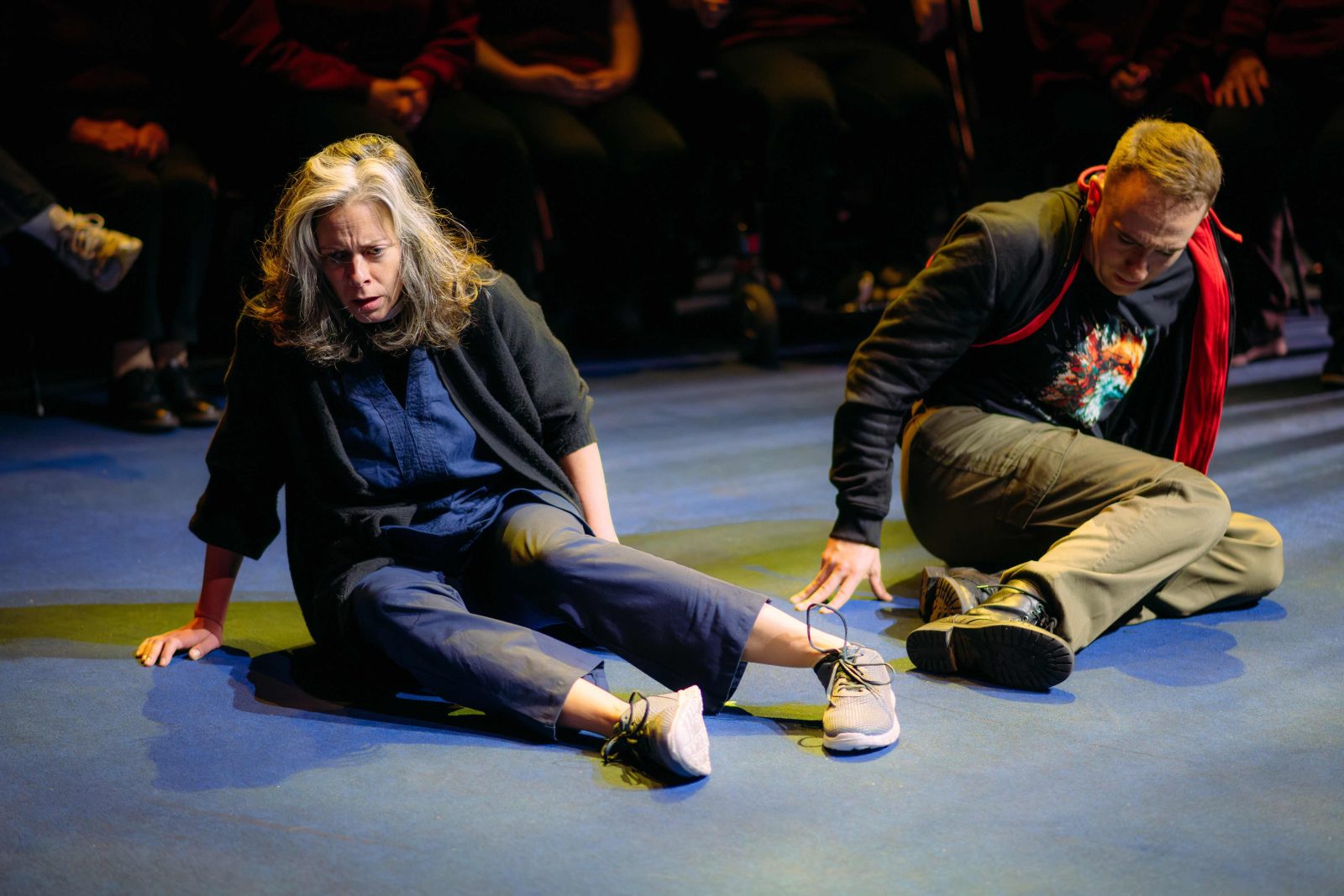
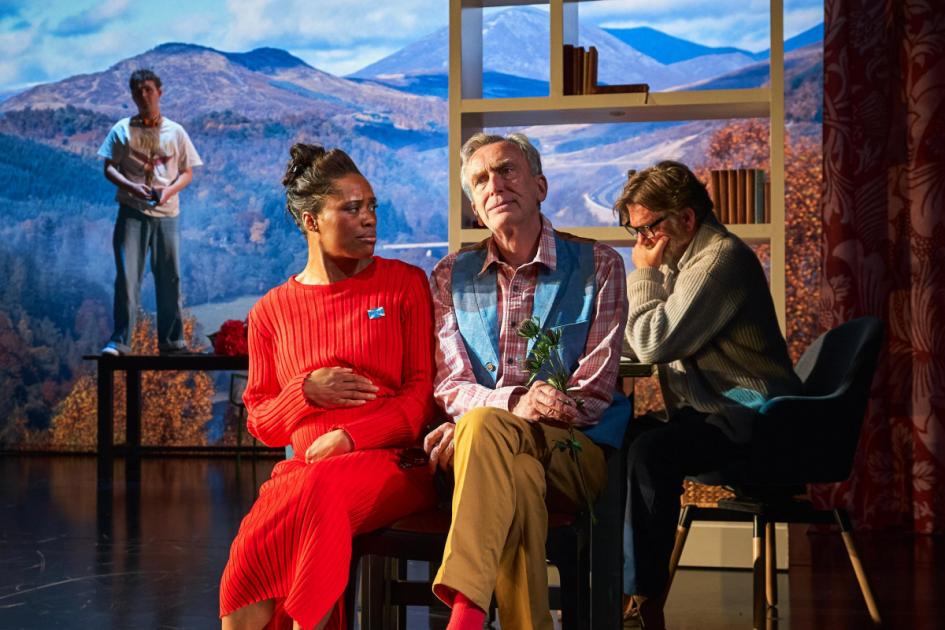
Patriarch Rennie (John Michie) has invited a disparate group of people to his retirement party. He’s had to keep the guest list secret from his wife, Edie (Deirdre Davis), because – with the exception of her old pal, film star Jimmy Moon (Benny Young) – there’s no way she’d agree to hosting the people he has in mind. En route to the couple’s country house in the Scottish Highlands is their daughter Emma’s ex-husband, for example – even though their wedding ended acrimoniously and Charlie (Matthew Trevannion) is renowned for wreaking havoc wherever he goes. Of course, he maximises the antagonism by bringing along his latest girlfriend, Jitka (Nalini Chetty), and why wouldn’t Rennie ask the newly-betrothed Frank (Keith Macpherson) and Kath (Patricia Panther) to join the party? It’s not as if Frank’s always been in love with Emma (Sally Reid) or anything, is it? Oops. There’s an uninvited presence too: the ghost of Rennie and Edie’s son, Will (Robbie Scott), who watches over the day’s proceedings with increasing horror…

Playwright Peter Arnott says he set out to to write a ‘Scottish Chekhov’ and to some extent he has succeeded. At first it seems as though, unlike Chekhov, Arnott is looking back at the political moment that nominally serves as the play’s pivot; he has the advantage of hindsight to create dramatic irony. After all, we know the outcome of the 2014 Scottish independence referendum, the divisive topic inflaming the characters. But we soon learn that this is just a distraction: as Charlie says, it’s mere tinkering around the edges while ignoring the real revolution that is on its way, and which only the rich and ruthless will be able to survive.

If Arnott’s script is retro, then David Greig’s direction is decidedly contemporary, a deliberate jarring of styles that helps to illuminate the sense that something is changing, mirroring the mismatch between parochial politics and apocalyptic predictions, Chekhovian naturalism and magical realism. I like the dissonance.

Jessica Worrall’s set also leans into the contrast, a hyper-realistic backdrop juxtaposed with a more figurative interior: a glorious photograph of a Highland glen and a sketched-in kitchen-diner, symbolised by oversized shelving units, enormous tables and vast floral curtains.

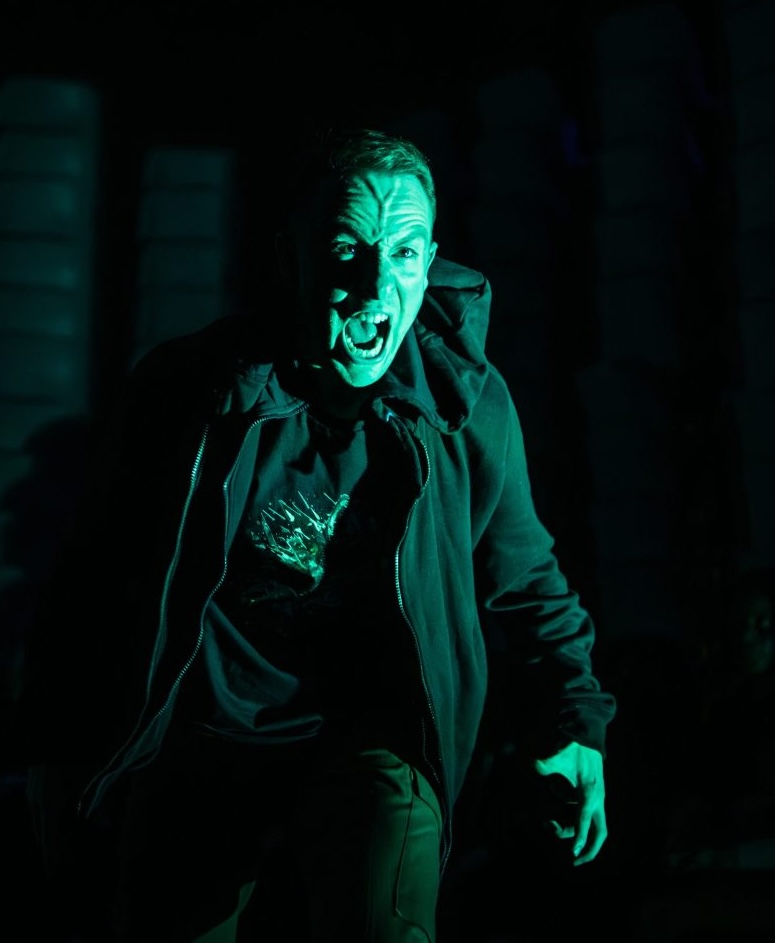
Both Simon Wilkinson’s lighting and Pippa Murphy’s sound are integral to the production: the former spotlighting the snippets of conversation that combine to drive the plot, the latter signalling the shifts to the ghost’s point of view, as the sound distorts and fragmented memories play through Will’s Walkman. This supernatural presence is one of my favourite things about the play: Scott physicalises the spirit’s pain and confusion with a beautiful awkwardness.

The first act is very strong, an interesting set-up that promises something the second doesn’t quite deliver. Although the characters are all cleverly depicted, the piece feels somehow unfinished, as if the story arc has been cut short. Rennie’s revelation, when it comes, is anticlimactic, and I don’t quite buy it as a reason for inviting these particular people to his home (why would anyone ever invite Charlie anywhere?). But, even if it’s a little opaque and doesn’t offer any real answers to the issues it grapples with, Group Portrait in a Summer Landscape is an intelligent and ambitious play, leaving us with a lot to think – and talk – about.

3.8 stars

Susan Singfield

Theatre Bouquets 2019

Bouquets&Brickbats

Bouquets&Brickbats

Bouquets&Brickbats

It’s time again to reflect on the year that has passed, and to reconsider all the wonderful (and not so wonderful) theatre we have seen. What lingers in the memory, cuts through this crowded arena even after many months? Which ideas still keep us up at night; what audacious direction still makes us smile? Here – in chronological order – are our picks of 2019.

Ulster American – Traverse Theatre, Edinburgh (writer – David Ireland; director – Gareth Nicholls

The Dark Carnival – Traverse Theatre, Edinburgh (writer/director – Matthew Lenton)

What Girls Are Made Of – Traverse Theatre, Edinburgh (writer – Cora Bissett; director Orla O’Loughlin)

Electrolyte – Traverse Theatre, Edinburgh (writer – James Meteyard; director Donnacadh O’Briain)

The Duchess (of Malfi) – Lyceum Theatre, Edinburgh (writer/director – Zinnie Harris)

Endless Second – Edinburgh Festival Fringe (Theo Toksvig-Stewart/Madeleine Gray/Camilla Gurtler/ Cut the Cord)

Who Cares? – Edinburgh Festival Fringe (Jessica Temple/Lizzie Mounter/Luke Grant/ Matt Woodhead/ LUNG & The Lowry)

Shine – Edinburgh Festival Fringe (Olivier Leclair/Tiia-Mari Mäkinen/Hippana Theatre & From Start to Finnish)

Solaris – Lyceum Theatre, Edinburgh (writer – David Greig; director – Matthew Lutton)

Clybourne Park –  Traverse Theatre, Edinburgh (writer – Bruce Norris; director – Michael Emans)

Mary Shelley’s Frankenstein – King’s Theatre, Edinburgh (writer – Rona Munro; director – Patricia Benecke)

Goldilocks and the Three Bears – King’s Theatre, Edinburgh (writers – Allan Stewart & Alan McHugh; director – Ed Curtis

Susan Singfield & Philip Caveney

Solaris

14/09/19

Lyceum Theatre, Edinburgh

As soon as I see Solaris advertised, I find myself thinking, ‘How the hell are they going to make this work onstage?’ Most of us familiar with the title will know it from the infamous Andrei Tarkovsky film of 1972. Rather fewer of us will have seen Steven Soderbergh’s 2002 remake, in which a bemused-looking George Clooney wanders listlessly around a space station, haunted by ghosts from his past.

But this version, adapted by David Greig from Stanislaw Lem’s 1961 source novel, sticks closely to the original concept, though it does take the opportunity to gender-swap the lead protagonist.

Psychologist Kris Kelvin (Polly Frame) arrives at a space station orbiting the planet Solaris, which is composed entirely of water. The crew have lost contact with Earth and Kris has been sent to find out what’s going on. She discovers that Sartorius (Jade Ogugua) and Snow (Fode Simbo) seem extremely discombobulated by recent events, which include the death of Kris’s old mentor, Dr Gibarian (Hugo Weaving, appearing courtesy of a series of videos that Gibarian is meant to have recorded before his demise).

It turns out that both Sartorius and Snow are being haunted by key characters from their pasts: alien dopplegangers, created from water, that eerily mimic the originals. Kris too is soon back in contact with Ray (Keegan Joyce), an old flame, who – she knows only too well – drowned years ago… and as she starts to rediscover what she liked about him in the first place, she becomes understandably torn between the strictures of science and her human emotions.

Despite its B movie premise, this production benefits from Hyemi Shin’s extraordinarily accomplished set design. A screen portrays a restless ocean, rising periodically to reveal a stark, roofed set, ingeniously devised so that – in the blink of an eye – it can transform into a different location aboard the space station. The arrival of Ray is at first a source of dark humour but, as the story goes on, it moves into more emotive territory as he begins to question what he actually is and, consequently, his reason for existence.

At the heart of Solaris lurks the grim spectre of loneliness; the story asks how far indivuals are prepared to go in order to ensure that they are loved. Matthew Lutton’s pacy direction keeps everything bubbling along nicely, and I particulary relish the presence of Sartorius’s drowned daughter (Almila Kaplangi/Maya McKee), which gives the events the delicious frisson of a traditional ghost story.

Solaris grips right up to its revelatory conclusion: even habitual sci-fi haters will find plenty to enjoy here.

4.8 stars

Philip Caveney

Touching the Void

26/01/19

Lyceum Theatre, Edinburgh

I have to confess that my first thought when I see this production advertised is, ‘How the hell are they ever going to put this on a stage?’

Anyone who has read Joe Simpson’s true account of his disastrous misadventure in the Peruvian Andes in 1985 – or seen Kevin MacDonald’s subsequent documentary – will know that Touching the Void is an epic story of adventure and survival against all the odds, with most of the action taking place on the remote peaks of an icebound mountain. The Lyceum has a reputation for inventive staging, but it’s clear from the get-go that this production will necessitate designer Ti Green and his crew to pull out all the stops.

David Greig’s canny adaptation begins – rather disturbingly for those who know the story – in a climber’s pub in Glencoe, where Joe Simpson’s sister, Sarah (Fiona Hampton), welcomes us all to her brother’s wake. She tells us she’s forgotten to make sandwiches and then cranks up the jukebox with a few eighties classics. Joe’s climbing partner, Simon (Edward Hayter), turns up, accompanied by the nerdy Richard (Patrick McNamee), the young man who served as assistant on Simon and Joe’s recent climb, and Sarah asks them for more information about what happened up on the mountain.

Simon begins by trying to explain the allure of mountain climbing by literally showing Sarah the ropes. They start small, by ascending an upended dining table, but pretty soon they are using ropes and winches to scramble up the sides of the proscenium arch. Sarah is astonished to find that she is enjoying the experience, but she still wants to know more…

And then Joe (Josh Williams) appears and, at the rear of the stage, a representation of the Peruvian mountain rears slowly into position so that Joe and Simon can re-enact their climb.

This is the point where the audience’s disbelief must be fully suspended if this is going to work – and I’m happy to report that it doeswork, quite brilliantly. Clambering about on a haphazard construction of metal and paper, the actors somehow manage to generate extraordinary levels of suspense, leading inexorably to the point where disaster occurs. It’s a heart-stopping moment, simply but convincingly staged.

If the play’s second half doesn’t quite fulfil the promise of the first, it is perhaps because it chooses to focus on the concept of solitude as a badly injured Joe is faced with the Herculean task of dragging himself back to base camp, accompanied only by a hallucinated version of Sarah, whose method of encouragement consists mostly of repeatedly whacking her brother’s broken leg with an ice axe. The characters of Simon and Richard are largely forgotten here and it might have helped to involve them a little more in the proceedings. Simon in particular seems poorly served. We never really share the feelings of guilt he must have had over what happened – indeed, we find out very little about what lurks behind his impassive expression.

That said, the story’s powerful conclusion, where we finally see the true grandeur of the mountain itself is undeniably exhilarating, and the four actors fully deserve their enthusiastic applause.

We’re all familiar with that famous quote about climbing a mountain ‘because it’s there.’ This production seems to live by a similar ethos, fearlessly tackling a subject that few theatre-makers would dare to attempt and, for the most part, taking it to dizzy heights.

4 stars

Philip Caveney

Glasgow Girls

23/01/19

King’s Theatre, Edinburgh

If you were told you were going to see a play about asylum seekers threatened with deportation, I doubt you’d imagine an exuberant production, but that’s exactly what Glasgow Girls is. A vibrant, pulsing, emotional whirl of a musical, with a vital message and a warm, fierce heart.

The girls in question are real: this piece, written by David Greig and directed by Cora Bissett, is based on their real struggles, their real lives.   They’re a disparate group, hailing from Somalia and Poland, Iraq and Kosovo, but they all end up in Glasgow’s Drumchapel High School. Here, they are brought together via Mr Girvan (Callum Cuthbertson)’s ESL class and, when Agnesa (Chiara Sparkes) – a Roma refugee from Kosovo – is threatened with deportation, they learn that the local community is on their side. As local matriarch, Noreen (Terry Neason), tells us, the working classes are often lazily depicted as racist or bigoted, but here the girls find true allies, prepared to pay far more than lip service to their cause.

The music makes sense: these are teenagers, as loud and demanding as they ought to be, with strong opinions and clear beliefs. If something’s wrong, they want to put it right. Theirs is, fundamentally, a simple tale. They are Scotland’s children now. And they are clearly shown here as more than just their troubled pasts, as more than numbers, more than problems, or outsiders. They’re people, with the same hopes and dreams as the rest of us, and surely – surely? – the same right to live good lives.

So of course they sing; of course they dance – why wouldn’t they? And the music complements the story well. There are upbeat, sassy, kick-ass songs and sombre ballads to temper them. The immigration officials’ robotic sequences are cleverly handled, and the voices are all commanding, bold as well as vulnerable.

I laugh as much as I cry, and I cry a lot while I am watching this. It’s a timely piece,  serving not just as a reminder that asylum seekers should be met with kindness rather than hostility, but also, actually, a call to action. If six school kids can make a difference, then why can’t we? We can all be Glasgow Girls.

4.3 stars

Susan Singfield
Creditors


01/05/18

Lyceum Theatre, Edinburgh

Wow. I thought I knew what I was getting here. Strindberg. Bleurgh. I mean, yeah, I know he’s an important playwright, one of the fathers of naturalism, etc., etc., but I’ve always found it hard to actually enjoy his plays. Even Maxine Peake’s 2012 performance of Miss Julie at the Royal Exchange in Manchester didn’t warm me to the material, despite her masterly performance. And then there’s the misogyny – all the Women’s Inferiority to Man stuff; he’s a difficult man to like.

And yet here I am, in the Lyceum Theatre, watching Creditors and loving every minute. I’m laughing, I’m listening, I’m enthralled, engaged. Because this production – by David Greig and Stewart Laing – is a prime example of the director’s art: the realisation of a vision that illuminates and animates the playwright’s words, breathing new life into old ideas. I’m hooked.

It’s a simple story: artist Adolph (Edward Franklin) is lonely. His beloved wife, Tekla (Adura Onashile) is away on business, and he’s missing her dreadfully. His new friend, Gustav (a wonderfully oleaginous Stuart McQuarrie), is a welcome distraction, but Gustav has his own agenda, filling Adolph’s head with doubts about his wife. On her return, Tekla is dismayed to discover that Adolph no longer trusts her, that he feels emasculated by her success. When she finally encounters Gustav, his nasty plan is revealed, and they are all left reeling from the emotional fall-out.

The performances here are all strong: I’m fully invested in all three characters, and there is real emotional heft in their relationships. But it’s the design and technology that really make this production shine, from the forced perspective of the holiday chalets that dominate the stage, to the Bergman-esque black and white  film we see projected live onto a screen, allowing us voyeuristic access to what’s going on indoors. The public exposure of internal, private matters both highlights and validates the introspective nature of the material, and it’s thrilling, actually, to  peep in illicitly.

Then there’s the eerie presence of the girl guides (played by a rotating cast of Lyceum Creative Learning participants), whose robotic uniformity and practicality provides a stark counterpoint to the emotional chaos of the main characters. They’re marvellous in a way that’s hard to pin down: solid yet abstract, staunch and ethereal, all at the same time.

It’s faultless, really – all of it. I can’t recommend this highly enough. And if, like me, you think you’ve seen all you want to of August Strindberg, well, maybe it’s time to think again.

5 stars

Susan Singfield

Rhinoceros

25/03/18

Lyceum Theatre, Edinburgh

There are, I’m told, people who “don’t like” theatre. And, of course, those people are absolutely entitled to their opinion. But, oh, how I wish I could take them by the hand and guide them to the Royal Lyceum, where Edinburgh’s International Festival and Istanbul’s Dot Theatre have joined forces to create something I’m sure would change their minds.

I’ve read Eugene Ionesco’s Rhinoceros, but I’ve never seen it performed. And, in Turkish director Murat Daltaban’s hands, something magical happens in that leap from page to stage. This is inspirational theatre: at once lively, accessible, thought-provoking and funny. It’s clever, clever stuff – and, judging by the excited, enthusiastic buzz in the theatre bar, it’s crowd-pleasing as well.

Speaking of crowds, that’s pretty much what this play’s about; more specifically, to quote the Lyceum’s artistic director, David Grieg, it’s about “the fragility of the individual in a time of crowds.” Ionesco witnessed the rise of fascism in 1930s Romania, and this play – with bewildered everyman, Berenger (Robert Jack), at its core – highlights the unsettling horror he must have felt at watching his world change. And, of course, the timing of this production is no accident, with the rise of the ‘alt-right’ and the increasing polarisation of political debate.

As the play opens, all seems well. The sleepy French village comes to life like an animated postcard, all bright hues and exaggerated dimensions. Characters and relationships are quickly established, and there is humour and energy in the exchanges, even when they become heated. But the sight of a rhinoceros (or are there two?) rampaging through the town results in the first real tension, the first real rift.

As growing numbers of rhinoceroses appear, Berenger – a drifter with a drink problem – is horrified to learn that they are his friends and neighbours, that the townsfolk are literally turning into these braying beasts. As more and more of them join the herd, Berenger becomes ever more isolated, a predicament that is illustrated beautifully by the ingenious set, reminiscent of a Chinese puzzle box, shrinking his ‘safe place’ until it’s perilous and unworkable.

This is a truly glorious production, as witty and vivacious as it is prescient. There are some great comic turns, most notably from Myra McFadyen as Papillon and Steven McNicoll as Jean. It’s visually stunning, and the sensual, Middle Eastern-inflected music adds to the mood of transformation, with musician Oguz Kaplangi onstage throughout.

Seriously, grab a reluctant theatre-goer and head along to the Royal Lyceum tonight. You’ll be changing hearts and minds.

5 stars

Susan Singfield