
Cineworld

Lee

14/09/24

Cineworld, Edinburgh

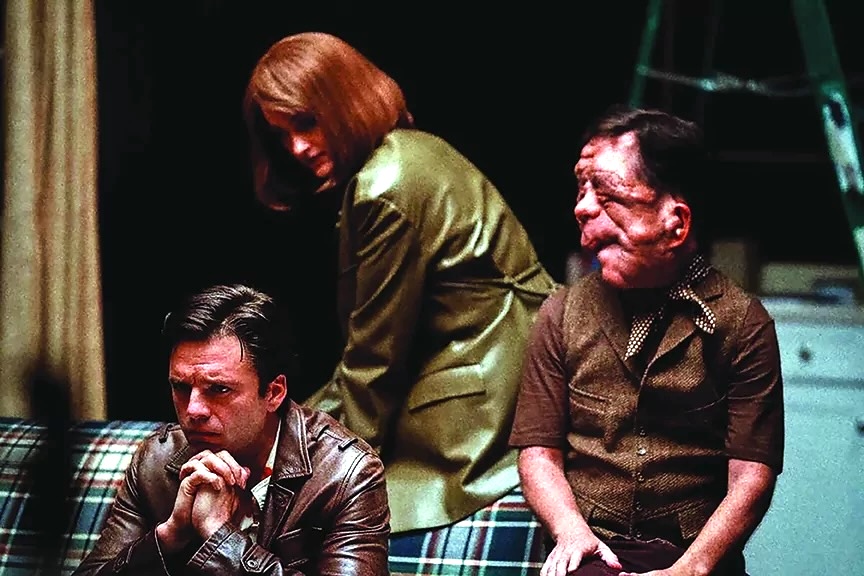
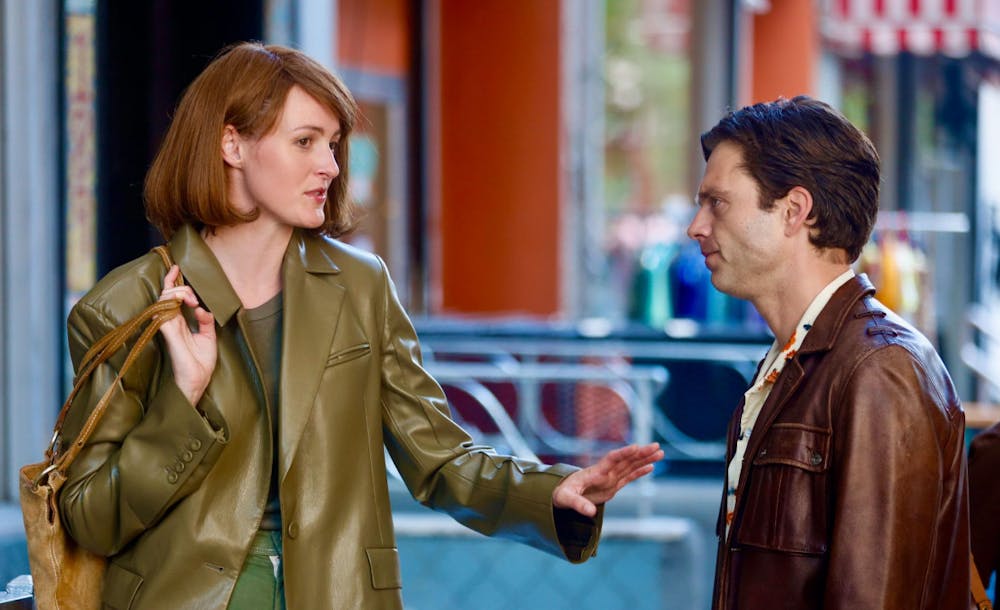
This biopic is as much a tribute to photojournalism as it is to its protagonist, Lee Miller. In an age where AI-trickery can make us doubt our own eyes, it is a timely reminder of why we need to document what’s really happening in the world. In the 1940s, no one wanted to believe in concentration camps or desperate, scapegoated women being hanged for collaboration. War photographers forced people to confront the grim realities, to understand the scale of the horrors that had been unleashed.

Miller trod a lot of paths in her life, but Lee, directed by Ellen Kuras, focuses on her work during the second world war. There’s a framing device: wannabe journalist Antony (Josh O’Connor) is interviewing the now elderly photographer, his questions evoking stories told in flashback. Her previous work as a fashion model and artists’ muse is acknowledged in a brief but revelatory early scene, where she wonders what on earth she’s going to do with her life now that she’s aged out of – and is bored by – all that. When she meets Roland (Alexander Skarsgård), marriage beckons but it’s not enough. Miller is a formidable woman and she needs to forge her own path.

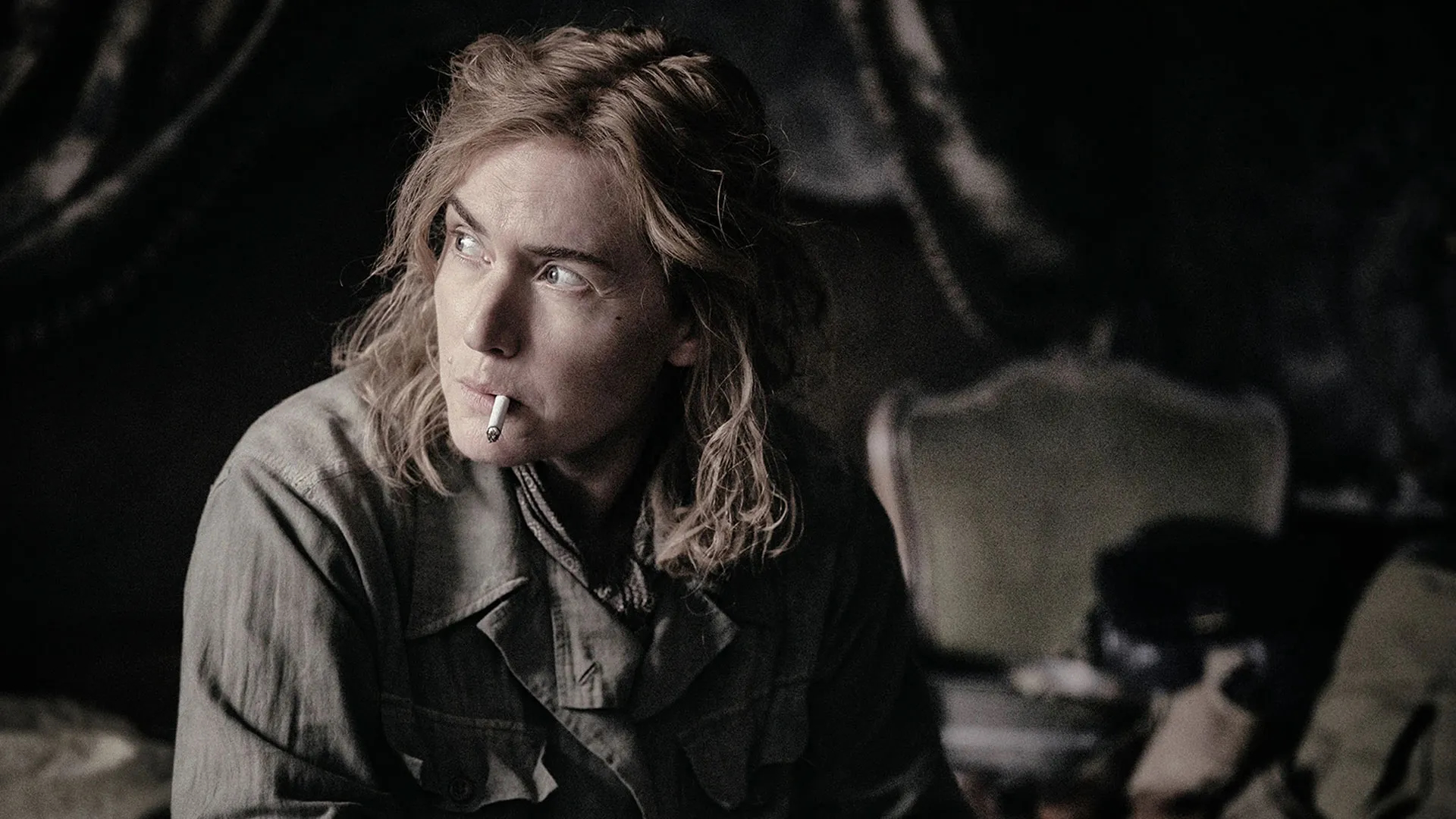
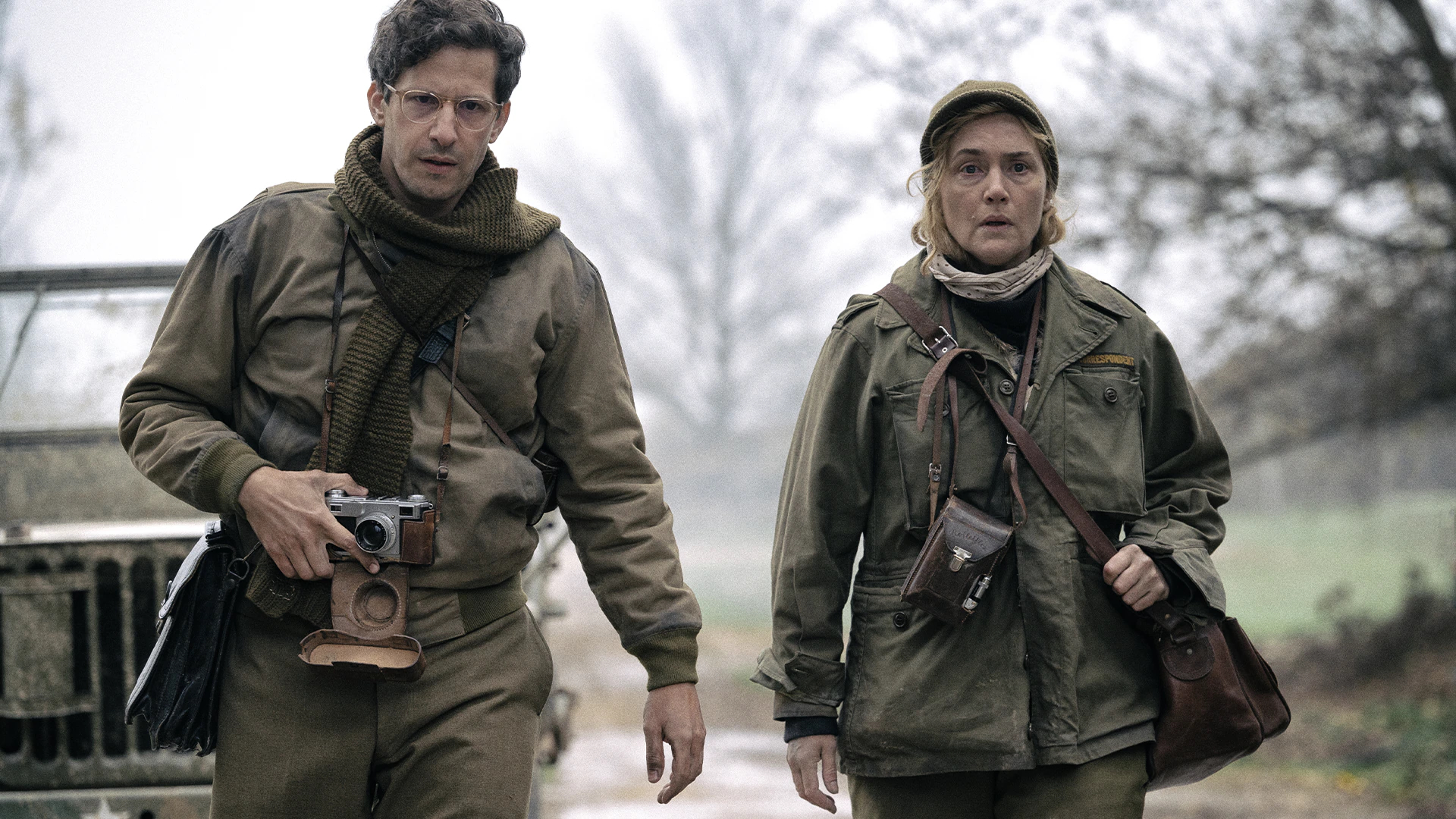
Kate Winslet is marvellous as Lee, shimmering with pent-up energy and drive. Her Miller is motivated by righteousness as well as ambition: she’s a woman and, what’s more, she knows the camera from the other side; she can tell a different story from her male counterparts. If that means barging her way in and ignoring ‘no women’ regulations, then so be it. Her work is important. Not that she’s a loner: she’s sociable and enjoys working alongside her male colleague and friend, David Scherman (Andy Samberg).

The real Miller was indomitable, and Winslet absolutely does her justice. This is a powerful performance, harnessing the grit and determination that allowed Miller to capture such provocative and controversial images, many of which are recreated here.

Perhaps the biggest surprise for me is the realisation that Miller’s war correspondence work was done for Vogue magazine, then edited by Audrey Withers (Andrea Riseborough). I’ve never read Vogue; I thought it was all fashion and frivolity. Its serious side is a revelation, much like Miller’s shocking photos must have been for those who previously knew her only as a model.

The cinematography – by Pawel Edelman – captures the brutality of war: the scarred landscapes, chaos and traumatised faces. We also see how, ninety years ago, fascism trumpeted its arrival but still caught people by surprise. There’s a lesson here, and it’s not a subtle one.

Focus. Flash. Snap.

See.

4.3 stars

Susan Singfield

La Chimera

11/09/24

Amazon Prime

We’re in Tuscany, some time in the 1980s. Dishevelled Englishman Arthur (Josh O’Connor) is sensitive, clever, sweet and engaging. He’s also a grave robber, recently released from an Italian prison and about to head right back to his life of crime.

First though, he has an important visit to make – to the grand but crumbling estate that is home to the aged Flora (Isabella Rossellini). Despite her gaggle of adult daughters’ cacophonous protestations, Flora is Arthur’s biggest champion. Years back, when he was a respectable archaeologist, he was in love with her other daughter, Beniamina (Yile Yara Vianello), now deceased. The bereaved duo cling to their mutual connection.

In fact, Arthur’s yearning for Beniamina is so intense that it allows him to transcend the barriers between past and present. With a dowsing rod, he can pinpoint the long-lost tombs of the Estruscan dead with unerring accuracy. He’s the natural leader of this band of thieves.

The moral questions raised are unsettling. Stealing trinkets from corpses seems inherently wrong, but Arthur and his troubadour friends are homeless, living in poverty. What good are treasures lying in the ground? What’s wrong with living people using them to earn a crust? The rich buyers – whom we glimpse at an exclusive auction – will never go to jail, but they’re the ones profiteering from the poor men’s crimes, turning a blind eye to the items’ provenance. After all, in his old profession, Arthur’s findings were deemed legitimate and sold to museums. Is there really any difference?

But then Arthur begins to fall for Italia (Carol Duarte), Flora’s singing-student-slash-maid. The future is beckoning. Can he stop looking back?

Alice Rohrwacher’s film is a panoply of oxymorons: a firmly realistic supernatural tale; bleakly comic; slow and exciting. Driven entirely by its own logic, there are surprises at every turn, but they all make sense within the story. The Tuscan landscape is beautifully evoked by cinematographer Hélène Louvart, and there’s an unnerving folksy element, caught in the songs and celebrations of the tomb raiders.

But it’s O’Connor’s fine central performance that really makes La Chimera. He embodies the quiet desperation the title connotes, faithful to his impossible quest.

4.1 stars

Susan Singfield

Beetlejuice Beetlejuice

06/09/24

Cineworld, Edinburgh

The juice is loose!

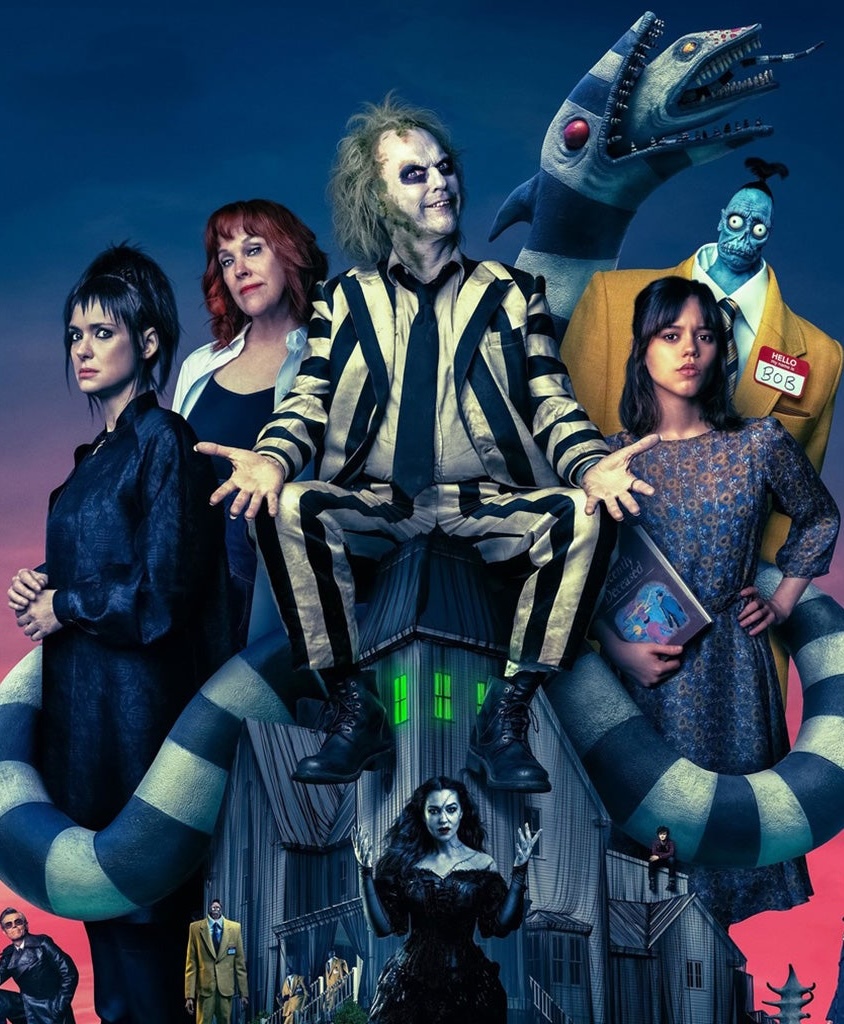
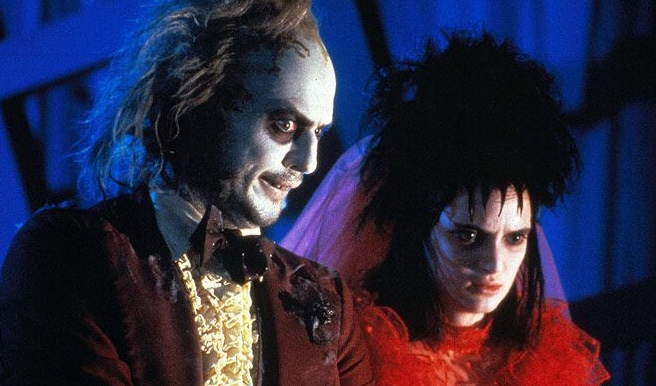
Look, there’s no getting around the fact that Beetlejuice Beetlejuice isn’t a very good film. That’s not to say I don’t enjoy it. I do; I’m not immune to nostalgia. I was seventeen when the original movie was released and I loved Winona. “I myself am strange and unusual,” was every teenage goth girl’s clarion call and Lydia Deetz was my style icon for the next decade. So of course I’m watching Tim Burton’s long-awaited sequel on the day of its release.

It’s been thirty-six years but Ryder has barely changed. Nor has Michael Keaton: his Beetlejuice is as repellant as ever. Still, at least his lust for Lydia is a bit less creepy now that she’s an adult.

Adult Lydia is a celebrated medium. This makes me laugh: it’s gloriously obvious. She’s in the middle of recording her TV show when her stepmum, Delia (Catherine O’Hara) calls with bad news: Lydia’s dad, Charles, has died. It’s time to head back to the haunted house in Winter River, with dodgy boyfriend Rory (Justin Theroux) and angry daughter Astrid (Jenna Ortega) in tow. It’ll be fine. All she has to do is stay away from the model village in the attic and make sure no one says “Beetlejuice” three times.

Beetlejuice. Beetlejuice. Beetle… Oops.

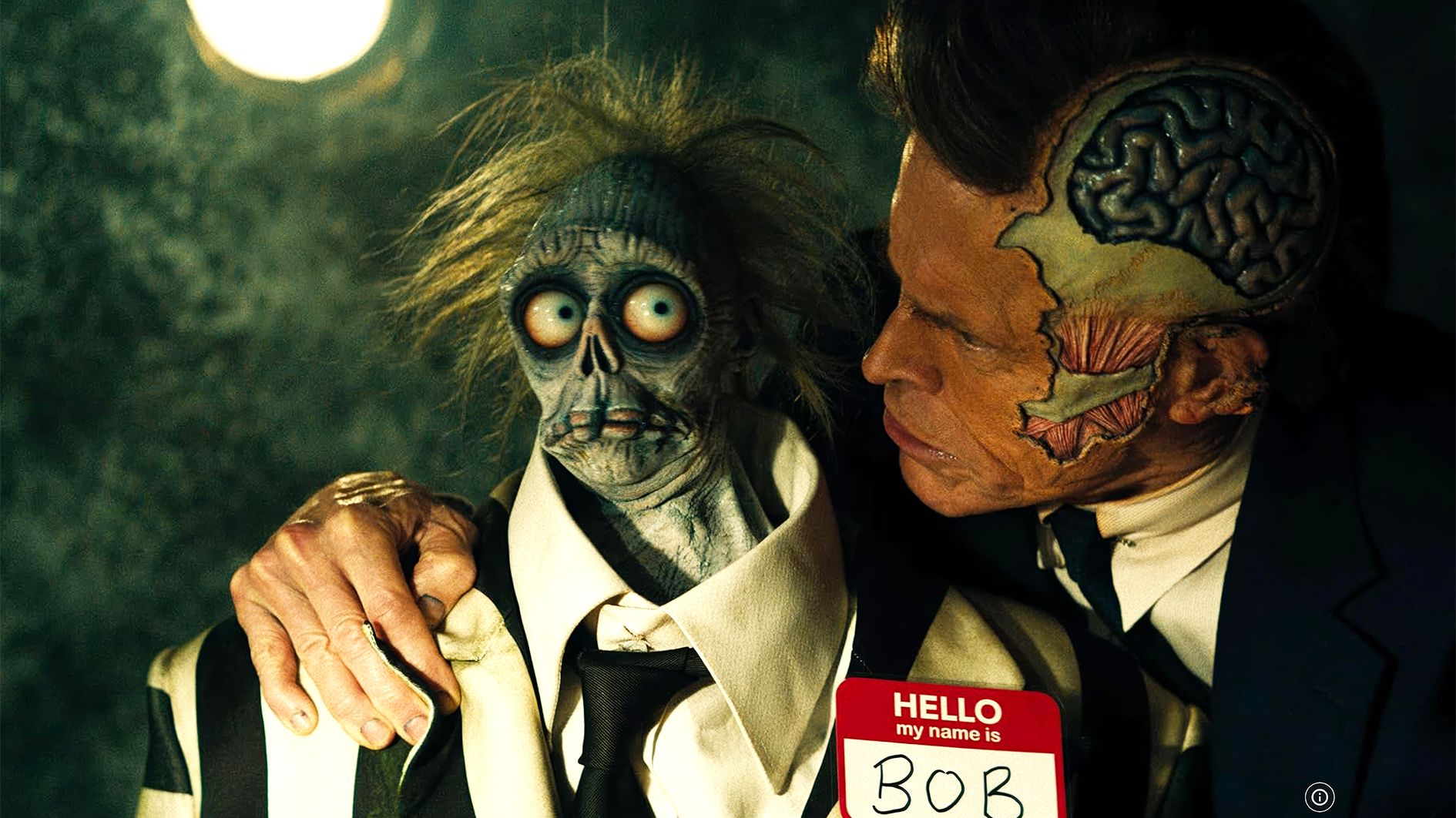
Sadly, from hereon in, the plot veers out of control, as wild and unpredictable as its eponymous antihero. In the underworld, a brilliant sequence where Beetlejuice’s ex-wife, Delores (Monica Bellucci), declares vengeance on him even as she’s stapling her dismembered body parts back together peters out into nothing, squandering a fun idea and a strong performance. Willem Dafoe is similarly under-used as Wolf Jackson, a dead actor struggling to differentiate between himself and the long-running character he played. It’s a neat set-up with nowhere to go. Meanwhile, in the land of the living, Rory is pressuring Lydia to marry him, Delia is turning Charles’ death into an art installation, and Astrid – still mourning her own dad, Richard (Santiago Cabrera) – has met a cute boy (Arthur Conti), who likes reading almost as much as she does… It’s scattershot to say the least.

Of course, when you throw this much at something, some of it sticks – but there’s a lot of wastage. The animated sequence showing Charles’ death is nicely done, but it feels like a segment from a different film. Even more out of place is the black-and-white Italian flashback, the nod to horror pioneer Mario Bava an easter egg for the wrong audience.

It’s much more of a kids’ film than I remember. In fact, Beetlejuice Beetlejuice reminds me of Alice in Wonderland (Lewis Carroll’s original, not Burton’s dismal remake). The imagery is remarkable, there are a lot of memorable characters and some gorgeous set pieces – but the rambling story doesn’t make much sense. Still, I guess there are worse insults. Alice isn’t exactly a failure, and maybe Beetlejuice X 2 will prove similarly popular. At tonight’s screening, the prevalence of gleeful tweenagers in stripy costumes suggests it well might.

So why not go see it and judge for yourself? If you’re happy to sit back for a couple of undemanding hours of gothic silliness, buy your ticket now. You get a free demon possession with every exorcism…

3 stars

Susan Singfield

MaXXXine

08/07/24

Cineworld, Edinburgh

All hail MaXXXine, the third instalment of Ti West’s acclaimed horror trilogy.

Full disclosure: although I loved the second (Pearl), I haven’t seen the first (X). I’m planning to remedy that tonight, courtesy of Amazon Prime Video. Still, I don’t mind watching things in the wrong order – I’m not bothered by so-called spoilers. It reminds me of being a kid and borrowing books from the library based on what was on the shelf, rather than on their position in a series. If they’re good, they usually stand alone. And MaXXXine is very good.

The magnificent Mia Goth returns as the lead and she’s every bit as compelling as I’ve come to expect. Although this sort-of feminist, sort-of arthouse take on an 80s slasher movie isn’t perhaps as exquisite as Pearl, it’s nonetheless irresistible – beautifully crafted and clearly born of real affection for the genre.

Maxine Minx (Goth) is a successful porn actress, looking to cross over into mainstream movies before her star begins to wane. When she impresses the imperious Elizabeth Bender (Elizabeth Debicki), director of the controversial The Puritan, she lands the lead in its imaginatively-titled sequel, The Puritan 2. But there’s a Satanist serial killer prowling LA’s streets, and a dodgy detective called John Labat (Kevin Bacon) is trying to rake up Maxine’s past. “Whatever’s happening in your life that’s getting in the way of this movie,” says Bender, “Squash it.” And Maxine is determined to do just that…

Cinematographer Eliot Rockett perfectly recreates the low-rent look of 80s movies, all flickering edges and fuzzy VHS. There is a knowing, meta-quality on display throughout, although not in the glib, mocking style of some recent fright flicks, which simply invert the well-worn tropes. This is more of a love letter to Hollywood horror, with key scenes played out in the Bates Motel and behind those big white letters on the hill.

The supporting actors are almost as arresting as Goth, Debicki and Bacon in particular lighting up the screen. I especially enjoy Bender’s self-indulgent rationalisation of The Puritan 2 as a serious piece of art, and the deliciously sleazy Labat’s attempts to assert his dominance over Maxine.

There’s a message here too, and it’s about as subtle as Maxine’s perm: puritanical religion is more dangerous than adult entertainment. Whether or not you agree, the point is seductively made, and MaXXXine is a gory delight.

4 stars

Susan Singfield

Hoard

19/05/24

Cineworld, Edinburgh

It’s London, some time in the 1980s. Cynthia (Hayley Squires) and her daughter Maria (Lily Beau Leach) are very close, with a whole host of funny rituals and secret games. They watch movies, threading popcorn on string; they dance until they fall over laughing; they go out at night, scavenging from bins.

The house is full to bursting. When she comes home from school, Maria has to climb over the detritus blocking the front door. Her pet ferret, Pearl, goes missing for days. She can’t find her PE kit. In trouble – again – for ‘forgetting’ it, she snaps at her mum. “I hate us. I’ve been to other people’s houses. They’re not like this.”

When the teetering mounds of junk literally crush Cynthia, Maria is taken into care.

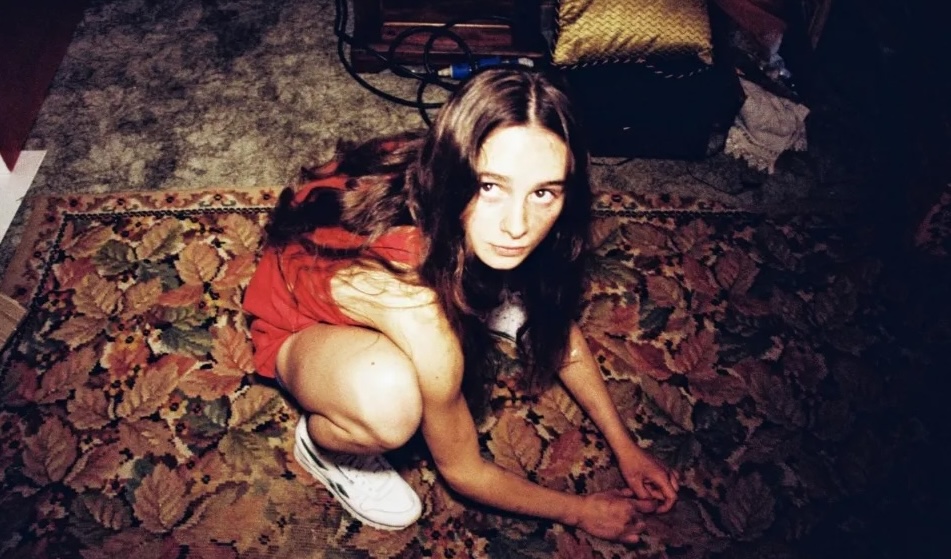
Fast forward to 1994. Maria (Saura Lightfoot Leon) is sixteen now. ‘Mum’ is Michelle (Samantha Spiro), who’s been fostering her for years. Despite still being something of an outsider, Maria has been functioning quite well. But there’s a perfect storm brewing: she’s left school but doesn’t have a job; her only friend, Laraib (Deba Hekmat), is moving away; and news comes in of Cynthia’s death. Enter thirty-year-old Michael (Joseph Quinn), an ex-foster kid of Michelle’s who needs a place to stay for a few weeks. He’s a refuse collector, and Maria finds herself drawn to him, his smell kindling childhood memories. And then she begins to emulate her mother’s hoarding ways…

There’s a lot to admire about Hoard. It’s an ambitious piece, and debut writer-director Luna Carmoon depicts Maria’s fracturing mental health with an unflinching eye, managing to convey both her inner turmoil and how she appears to those outside. The thread of images – fireworks, sherbert, tin drums, irons – is boldly interwoven; and the metaphor-made-literal bullfight scene is particularly memorable. Both Leach and Leon evoke empathy for Maria, convincingly portraying her complex character. Squires is wonderful as Cynthia too, her brittle joie de vivre always just about to crack.

The first act is brilliant, but the early stretches of the second are less compelling: I find it hard to believe in Maria’s relationship with Laraib and in her interactions with the people at the pub. I don’t understand why the lovely Michelle would keep inviting her friend, Sam (Cathy Tyson), to bring her daughters over to visit, when she knows that they bully Maria.

Things pick up again as Michael and Maria fuel each other’s neuroses, spinning further and further out of control. It’s a tough watch – even stomach-churning – but that’s okay; it should be. The resolution, when it comes, is perhaps a little pat, but it’s a relief nonetheless. A short coda provides a clue as to where the story comes from, apparently inspired by events from Carmoon’s own life.

If the ambition sometimes exceeds the execution, Hoard is never less than interesting, and Saura Lightfoot Leon is certainly one to watch.

3.2 stars

Susan Singfield

IF

18/05/24

Cineworld, Edinburgh

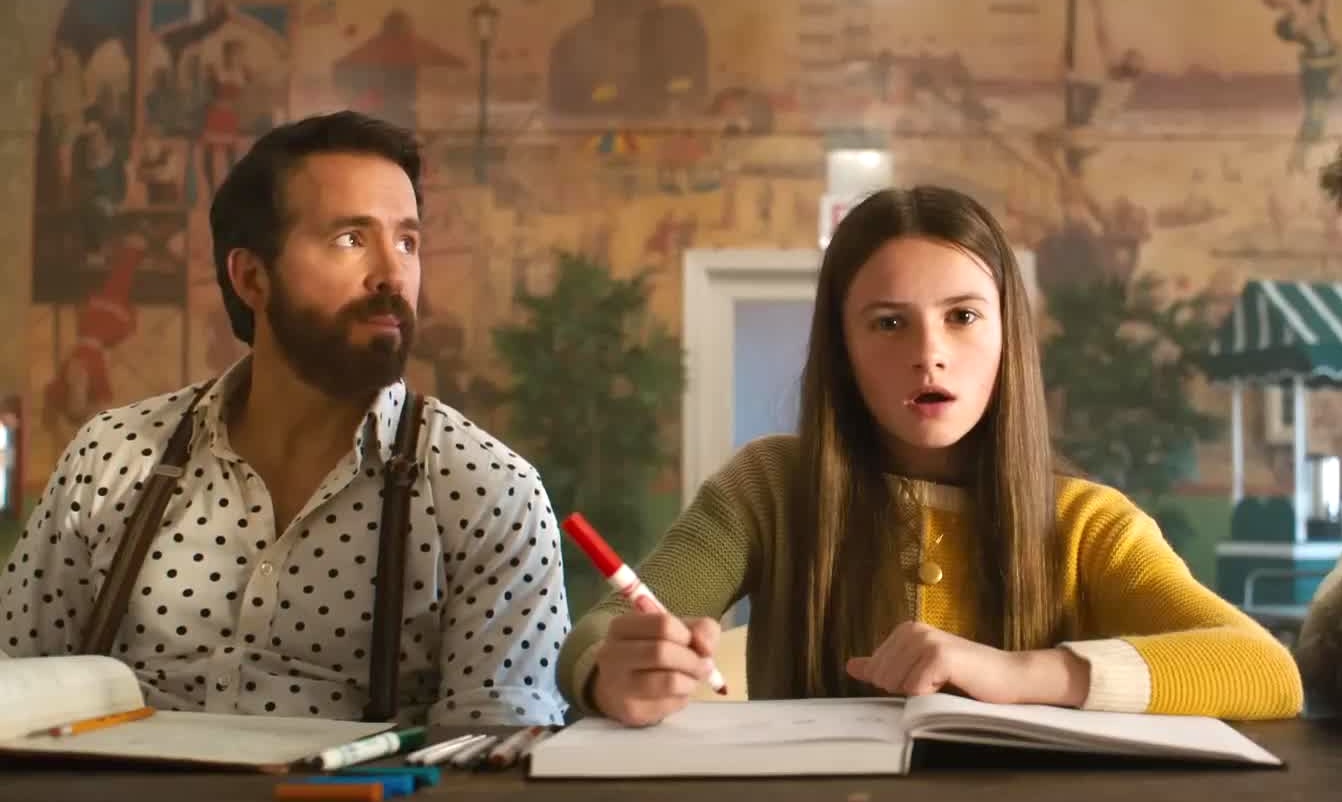
Written, produced and directed by John “A Quiet Place” Krasinski, IF is quite a departure for the filmmaker. Instead of the unsettling horror and dread he’s renowned for, this sentimental kids’ film is essentially an exhortation not to put away childish things. “You have to stop,” says twelve-year-old Bea to her prankster dad, who needs surgery for his broken heart. “Never!” he responds, twirling his IV pole in a tango, smiling into the googly eyes he’s placed on its bag.

Bea (Cailey Fleming) has been through the mill. Her mom (Catharine Daddario) died of cancer a few years ago, so she’s understandably terrified when her dad (Krasinski) falls ill. His hospital is in New York, so Bea stays with her granny (Fiona Shaw) in Brooklyn Heights for the duration. It’s close enough for her to visit every day, and also gives her a chance to reconnect with some early memories – although she’s quick to remind her well-meaning granny that she’s not a kid any more.

But Bea soon realises that something strange is happening in the apartment building. Catching a glimpse of a girl-sized ballerina-butterfly, she follows it up the stairs, where she discovers a room inhabited by a man called Cal (Ryan Reynolds), whose job is to care for the abandoned IFs of the title: imaginary friends whose children have grown up and forgotten them.

The IFs provide a welcome distraction. Of course, at twelve Bea is far too old for an IF of her own, but she’s more than happy to help Cal find new placements for all those languishing in a retirement home in Coney Island…

There’s a lot to like: Fleming is a delightful performer, there’s an impressive array of stars voicing the IFs, and the whole thing looks wonderful, the blend of live action and animation beautifully realised. The underlying message, though simple, is nicely conveyed, and there are some memorable set pieces, including a jubilant dance number to Tina Turner’s Better Be Good To Me.

But IF is a frustrating film. The storyline is muddled, with gaping flaws in its internal logic and some unconvincing details that distract from the flow. If it’s a contemporary piece – as it’s meant to be – why does no one have a smartphone? And why is a twelve-year-old girl allowed to wander around a strange city at night alone? The one time her granny asks where she’s been, Bea simply shrugs and tells her, “Out with friends.” If this were a tale of benign neglect, then that might suffice, but nothing else in the story suggests that’s the case.

What’s more, for something that’s supposed to be a comedy, it’s not very funny. Giant cuddly-monster Blue (voiced by Steve Carrell) sneezes a lot and blunders around banging into things, but never quite reaches the level of clowning that elicits a laugh. The emotional stuff is better: Bea’s fear of losing her father is tangible, as is her granny’s inept desire to make her happy. But even here, there are untapped resources: Nurse Janet and Benjamin, a sick little boy in the same hospital as Bea’s dad, are two great characters played by two great actors (Liza Colón-Zayas and Alan Kim), both criminally under-used.

All in all, IF is a perfectly watchable film – but there’s a better one in there, struggling to get out.

3 stars

Susan Singfield

Mothers’ Instinct

30/03/24

Cineworld, Edinburgh

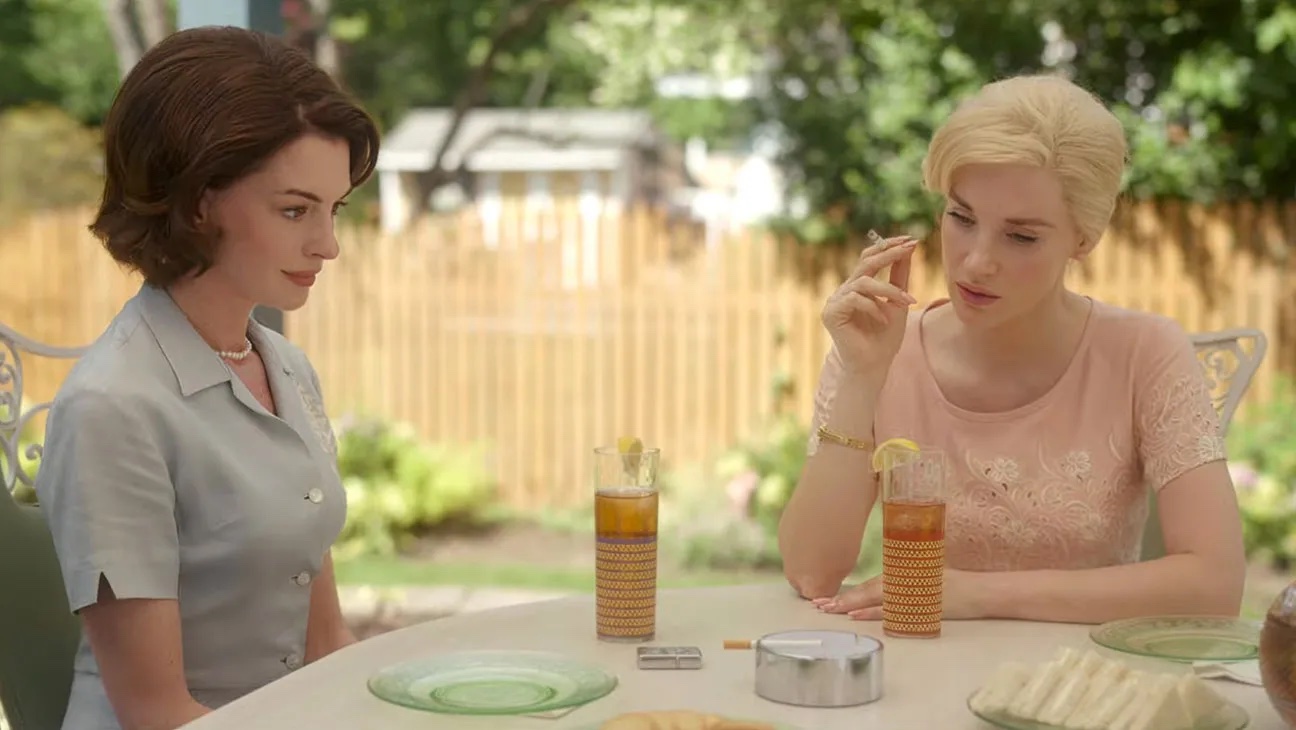
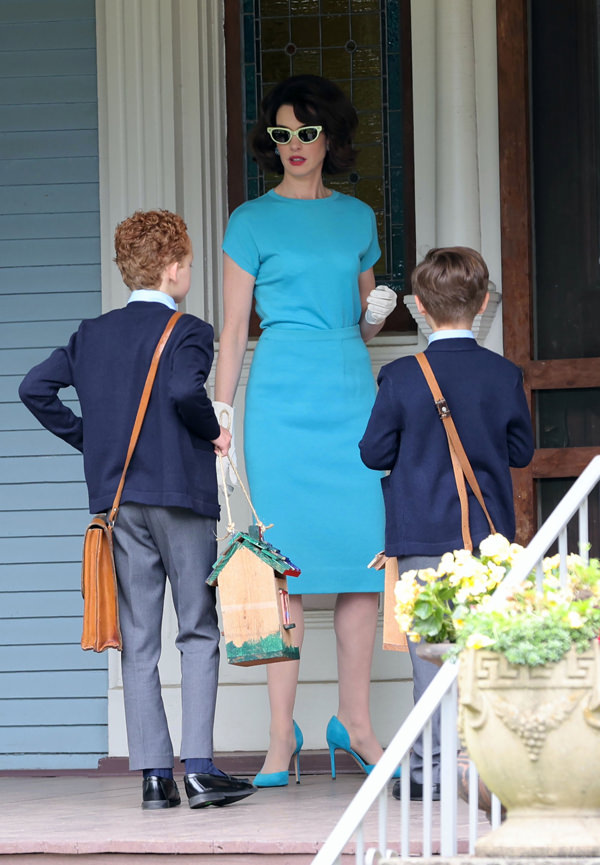
Benoît Delhomme’s directorial debut looks beautiful: every scene is a pastel-perfect work of art. Stepford-ish wives Celine (Anne Hathaway) and Alice (Jessica Chastain) are next-door neighbours, with identikit McMansions, impeccable wardrobes and lookalike husbands. Even their sons, Max (Baylen D. Bielitz) and Theo (Eamon Patrick O’Connell), are a matching pair: they’re best friends, just like their moms. But not everything in this 1960s paradise is as peachy as it seems, and Max’s sudden death exposes more than just grief…

Mothers’ Instinct works well in many ways: Hathaway and Chastain deliver performances as flawless as their characters’ powder-pink co-ords. Celine’s brittle devastation and Alice’s mounting unease are slowly revealed, leading us first one way and then another, as we’re not sure whose version of reality to believe. The tension crackles and there’s some fine melodrama at play here.

Sadly – and don’t read any further if you’re worried about spoilers – there’s also an embarrassingly regressive subtext: women without children are monstrous. A generous reading might be that this is what happens to women when motherhood is the only role they’re allowed (Alice, keen at the start of the film to return to her work as a journalist, is told by her husband to contribute something to her son’s school newsletter). But, as the film progresses, it feels more like an indictment of childless women: driven mad by the frustration of their most basic desire, they are dangerous and should be feared.

It’s 2024. I honestly thought this was going to go somewhere different, that it would tease us with the clichés and then pull the rug from under us. But no. This actually is the grieving-mother-turns-psycho insult that is suggested from the start.

In the face of this deep-rooted misogyny, it seems pointless to quibble about minor plot details, such as why the police wouldn’t suspect foul play when so many deaths occur in one small neighbourhood, or how a woman can walk on a lawn in stilettos without getting mud on her heels or crawl through a hedge without mussing up her hair.

Mother’s Instinct has a lot in common with its lead character: it’s beautifully put together, but fundamentally fucked up.

2.7 stars

Susan Singfield

Origin

10/03/24

Cineworld, Edinburgh

Origin isn’t like any film I’ve seen before. Structurally, it’s akin to a dramatised lecture – but if that sounds dry, then I’m doing it a huge disservice. Writer/director Ava DuVernay has taken an academic text and created an artist’s impression of both the work and its author. The result is multi-layered: at once instructive and provocative – and absolutely riveting.

Based on Caste: The Origins of Our Discontents by Isabel Wilkerson (played here by Aunjanue Ellis-Taylor), Origin isn’t an easy watch. Wilkerson’s central conceit is that all oppression is linked – that the Holocaust, US slavery and India’s caste system all stem from the same fundamental practice of labelling one group of people ‘inferior’. This perception is entrenched via eight ‘pillars’, including endogamy, dehumanisation and heritability. DuVernay has done a sterling job of distilling these complex ideas and making them accessible, but the volume of cruelty on display is devastating. Who are we? Why do we keep on letting this happen? Some scenes are particularly heartbreaking, for example the young Al Bright (Lennox Simms)’s humiliating experience at a swimming pool in 1951, and I can hardly bear to mention the visceral horror of seeing people crammed into slave ships.

Ellis-Taylor’s Wilkerson is very engaging. She’s not only fiercely intelligent, but also thoughtful and gentle. Despite the weighty topics that dominate her working life, she finds time to have fun with her husband, Brett (Jon Bernthal), and to look after her mum, Ruby (Emily Yancy). She feels real.

Wilkerson’s personal life anchors the movie, which begins with her looking at retirement homes with Ruby. We see how Trayvon Martin (Myles Frost)’s shooting sows the first seed of her thesis, and then we jump back and forth in time and place, bearing witness to Nazi book burnings and Bhimrao Ambedkar’s ‘untouchable’ status; to Elizabeth and Allison Davis’s undercover work with Burleigh and Mary Gardner, documenting the everyday realities of racism in 1940s Mississippi. It is to DuVernay’s credit that we are never in any doubt about where we are or what point is being made.

There are moments when the concepts need bullet-pointing for clarity, and this is neatly achieved by the addition of a literal whiteboard. We see Wilkerson laboriously erecting it, before covering it in notes about the pillars that hold oppression in its place. This helps to anchor the key arguments, making them easy to grasp and remember.

Origin is a demanding piece of cinema, but it’s worth the effort. I come away feeling both horrified and educated, looking at the world in a different way.

4 stars

Susan Singfield

The Holdovers

20/01/24

Cineworld, Edinburgh

Great Christmas movies are such rare creatures – hard to get right at the best of times – so when one arrives at multiplexes in late January, I can only put it down to circumstances beyond the filmmaker’s control. Alexander Payne’s The Holdovers definitely belongs on Santa’s nice list, and better late than never, I guess. 

The action takes place at Christmas 1970 and tells the story of a grumpy educator, who finds himself thrown into the company of a headstrong young student, and gradually begins to discover the true meaning of the festive celebration. Anybody thinking that this sounds a little like Ebenezer Scrooge is on the right lines, though any similarities to Charles Dickens’ classic tale may be entirely unintentional.

The curmudgeon in question is Paul Hunham (Paul Giametti), a classics teacher at elite New England boarding school, Barton Academy. Paul has taught there for years and is plagued by problems, including an eye condition and a rare syndrome that makes him smell of rotting fish. Perhaps unsurprisingly, thanks to his acerbic manner and his refusal to ever back down on any given subject, he’s disliked by pupils and staff alike. He’s obstinate, even when the school’s head virtually begs him to give a more forgiving exam grade to a boy whose father is one of the school’s most generous patrons.

As the Christmas holidays loom and snow blankets the countryside, Paul is assigned the thankless task of looking after those few pupils who, for whatever reason, are unable to make it home to their families. At first, there are five boys in this invidious position, but, when a wealthy father with his own helicopter intervenes to ferry most of them away on a skiing holiday, there’s only one of them stuck with the prospect of seeing in the New Year with Paul.

He’s Angus Tully (Dominic Sessa), a boy plagued by depression ever since the break up of his parents’ marriage, and currently struggling to make it through each day. The ill-matched duo’s only other companion is Mary Lamb (Da’Vine Joy Randall), the school’s head cook. She’s mourning the recent death of her only son, a former student at Barton, obliged to join the American army, when Mary can’t provide the necessary money to secure her Black son a place at one of the prestigious Universities his white classmates take for granted.

A merry trio indeed.

From these distinctly unpromising beginnings, Payne spins a moving, endearing and sweetly sad story about human interaction. As Paul and Angus begin to learn about each other, so their respective defences are gradually breached. The film, already nominated for several awards, demonstrates what a brilliant performer Giametti is when given the right material, while Sessa and Joy Randall are right there with him. The era is convincingly evoked (down to a set of vintage pre-credit titles) and Eigild Bryld’s stark, snow-bound cinematography captures the story’s bleak setting perfectly. As a former boarding school boy, I find myself constantly reminded of the occasional ‘holdover’ experiences from my own childhood.

Whether this film has the power to make waves against this year’s impressive raft of Oscar contenders remains to be seen, but I suspect that The Holdovers will be the Christmas film of choice for a lot of movie fans in years to come. But maybe I’m putting too much emphasis on the festive setting: a film this good is welcome any time.

4.8 stars

Philip Caveney

The Lesson

24/09/23

Cineworld, Edinburgh

The Lesson is one of those films that’s hugely enjoyable while you’re watching it, but falls apart when you try to analyse it – a bit like the airport novels its antihero, JM Sinclair, so witheringly disparages.

Sinclair (Richard E Grant) is a novelist of some renown – indeed, he is the subject of Oxford graduate Liam (Daryl McCormack)’s PhD thesis – but it’s been five years since he published anything. Since the death of his elder son, Felix, JM has been struggling; he writes daily, late into the night, but he just can’t finish his latest book. Meanwhile, his wife, Hélène (Julie Delpy), is determined that their younger son, Bertie (Stephen McMillan), should get into Oxford to study English literature, a feat which – despite his expensive schooling and obvious intelligence – can apparently only be accomplished by hiring a private tutor.

Enter Liam.

At first, the job seems like a dream come true. The Sinclairs live in the lap of luxury, their large country home filled with impressive artwork and attentive staff. Liam lodges in the guest house, swims in the lake, eats dinner with his idol and gets on well with Bertie; he even has time to finish his own first novel. But JM turns out to be a bruising presence and the family bristles with unhappy secrets; it doesn’t take long for the idyll to sour.

McCormack is a mesmerising screen presence (he surely has a big career ahead of him) and Grant, of course, is never less than interesting. Delpy imbues Hélène with an unsettlingly dispassionate and watchful air, while McMillan plays the innocent very convincingly – so that, no matter what chicanery is exposed, there’s someone we want to see being saved.

Director Alice Troughton does a good job of building the suspense: there’s a genuine sense of threat and the character dynamics are nicely drawn. The script, by Alex MacKeith, has some excellent moments, but also throws up some problems, not least the improbability of Liam’s ability to remember every word he’s ever read, on which the plot hinges. What’s more, although there are some genuine surprises, the main reveal is obvious from very early on, and there are several other details that just don’t ring true.

All in all, although The Lesson has its moments, it doesn’t quite live up to the movie it could be.

3.1 stars

Susan Singfield