
Cineworld

Wicked: For Good

06/12/25

Cineworld, Edinburgh

Despite being dazzling, bold and unashamedly in-your-face, Wicked: For Good somehow manages to fall flat. Perhaps the problem lies in the year-long gap between the two parts of this story; it’s like a glass of champagne that’s been left out too long and lost its fizz.

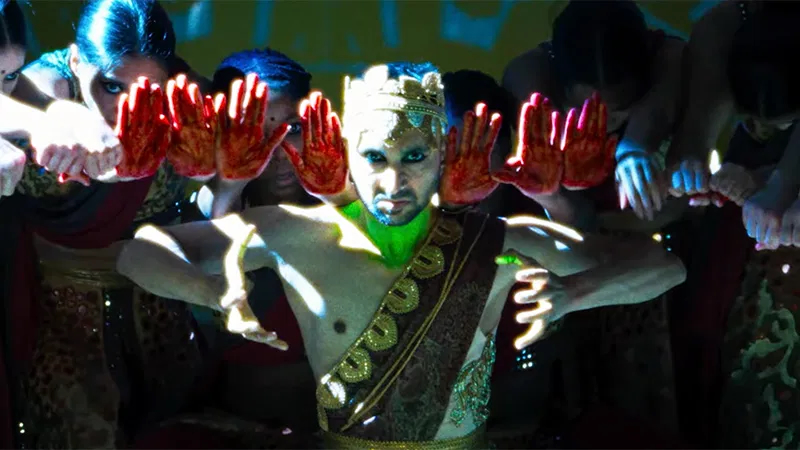
That said, in many ways I prefer this second act (which I’m refusing to call a sequel, because it isn’t: the story arc spans both films, and neither stands alone). At least there’s a resolution here, and I enjoy the creative ways the storyline feeds into The Wizard of Oz. Narratively, For Good – directed by Jon M Chu – is stronger than Wicked, but as a musical? I’m no aficionado, but even I can tell there’s only one real banger in this show (Defying Gravity), and it isn’t reprised here. As a result, the big song and dance numbers, even with Christopher Scott’s sumptuous choreography and the cast’s impressive vocals, just aren’t very memorable.

We catch up with Elphaba (Cynthia Erivo) and Glinda (Ariana Grande-Butera) after their erstwhile friendship has been well and truly shattered by the Wizard (Jeff Goldblum) and Madame Morrible (Michelle Yeoh). Neither young woman is exactly happy about the way the duo uses propaganda and misinformation to control the citizens of Oz but, while Glinda opts for a pragmatic, ‘if-you-can’t-beat-’em-join-’em’ approach, Elphaba favours revolution, exposing the truth at any cost. Each feels betrayed by the other…

The two leads are magnificent: perfectly cast and with crackling on-screen chemistry. Their combined talent is beyond formidable, and the strongest scenes are those where they’re together. But they’re let down by a histrionic script (by Winnie Holzman, Dana Fox and Gregory Maguire), where emotions are always dialled up to eleven, and unrequited love is enough of an excuse to destroy a realm. It’s all very teenage – and all very one-note. Nessa (Marissa Bode) fares especially badly, her death-by-Kansas-farmhouse so fudged that you wouldn’t know what had happened if you weren’t familiar with the tale.

There’s plenty to admire here: the production values are second-to-none, and the world-building is exquisite. I just think that it would have been better to make one excellent three-hour film rather than two quite good ones, whose combined five hours add up to less than the sum of their parts.

If you’ve already seen Wicked, then you’ll need to watch For Good to see how it all turns out. It’s not dreadful (there are certainly worse ways to spend a winter afternoon). But is it worth all the money and the hype? You’ll have to decide for yourself if you want to follow the yellow brick road back to Oz.

3.5 stars

Susan Singfield

Baba

02/11/25

George Street, Edinburgh

We’re dubbing today the ‘Double-B’ – we’ve just been to Cineworld to see Bugonia and now we’re in Baba, keen to sate our hunger while we chat about the film.

Baba has been on our radar for a while. It’s part of the Scoop group, which also boasts the excellent Ox and Finch and – our favourite – Ka Pao. Like these, Baba is a fusion restaurant, this one blending Levantine cuisine with distinctly Scottish ingredients. The menu is very enticing.

After some deliberation, I decide to start with buffalo mozzarella. A generous portion of creamy cheese arrives, topped with sour cherries, harissa and basil, a flavour combo which comes as something of a revelation. It’s delectable. It’s served with pitta as standard but, as I’m in the process of working out if I have a gluten intolerance, I ask for the NGCI alternative. This takes the form of a paper bag filled with two charred slices of GF bread, which complement the mozzarella perfectly.

Philip opts for pan-fried cod cheeks, which come with prawns, merguez, butterbeans and toasted pitta. The dish as a whole is excellent, but it’s the prawns that stand out. They’re huge and wonderfully flavoured.

For our main, we decide to share a Baba mixed grill, comprising slow-cooked lamb shoulder, pork neck, chicken thigh and grilled veg, accompanied with harissa, zhug, tahini and herbs. It’s a simple dish, but the meat is tender and very well cooked, and we enjoy it immensely. We also have a side of blackened sweet potato, elevated by a mixture of saffron crème fraîche and harissa, which I’m planning to try to recreate at home.

Naturally we both want pudding. I have a dark chocolate and tahini crémeux, wiith sesame tuilles and my second helping of both cherries and crème fraîche, while Philip has a tahini cookie, with peanut praline, orange and chantilly cream. Both deliver the lip-smacking sweetness we’re craving, and we scrape our plates clean.

We leave the restaurant feeling pleasantly full, and head out into the November evening, debating whether or not to call at the Filmhouse bar for a (non-alcoholic) nightcap to round things off. Of course the answer is yes. After all, we’ve still got loads to discuss about the film, and what better place to do it?

4.4 stars

Susan Singfield
I Swear

10/10/25

Cineworld, Edinburgh

I Swear follows a tried and tested feel-good formula. You know the one: a vulnerable protagonist struggles to live with a misunderstood condition until their saviour arrives in the shape of a kind and unassuming friend, allowing them to flourish. So far, so seen-it-all-before. But writer-director Kirk Jones gives the format a kick in the baws with this tale of grit and humour in the face of great adversity.

The film is elevated by two things: an extraordinary true-life story and a stellar cast. The central character is John Davidson, an MBE-decorated Scottish activist, who lives with Tourette syndrome and campaigns to raise public awareness. Played here by Scott Ellis Watson (as a teenager) and Robert Aramayo (as an adult), he lights up the screen, his frustration and sadness leavened by his innate sweetness – and the undeniable funniness of his inappropriate comments and sweary outbursts. “I’m a paedophile,” he says at a caretaking job interview, when informed that the role includes setting up a hall for youth groups to use. The same prospective employer asks him about his tea-making skills. “I’m good,” John assures him, “I use spunk for milk.”

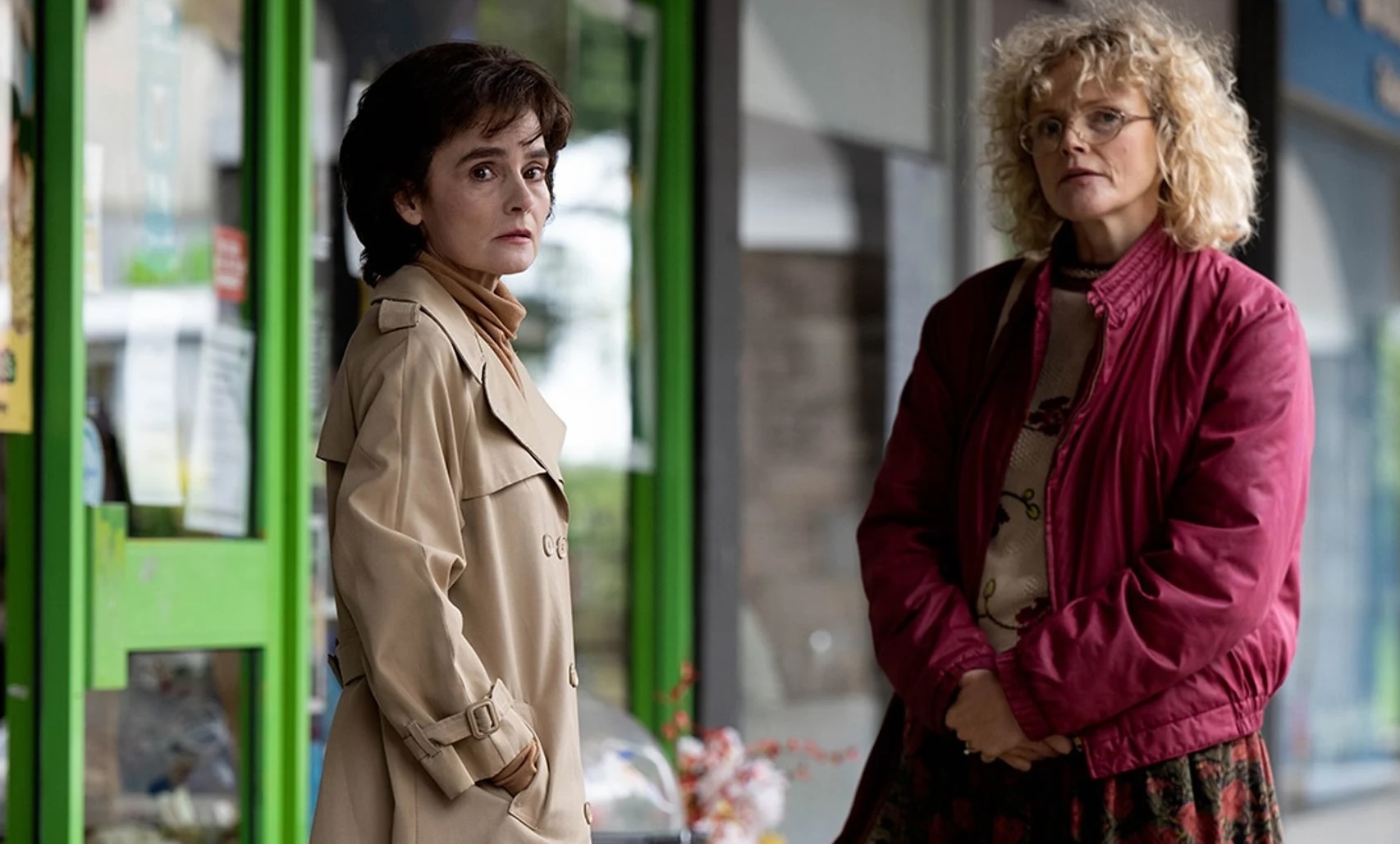
Despite the jocularity, Jones’ screenplay never mocks John, never laughs at him or belittles what he has to deal with every day. Instead, it’s an honest account of a young man floundering in a hostile world, rescued from despair by finding acceptance. John’s protector is his pal’s mum, Dottie (Maxine Peake), a mental health nurse with a terminal cancer diagnosis, who takes John in. While his own mum, Heather (Shirley Henderson), is uptight and puritanical, embarrassed by his language, making him sit apart from the family to eat because of his tendency to spit, Dottie ignores his tics and profanity, welcoming him at her kitchen table, telling him not to apologise for things he can’t help. She encourages him to see a future for himself: one where he can hold down a job and live independently.

Another positive influence in John’s life is his janitor boss, Tommy (Peter Mullan), who champions his young assistant, serving as both mentor and father figure. It’s Tommy who tells John he needs to raise awareness of his syndrome: “The problem isn’t Tourette’s; it’s people not knowing about Tourette’s.” It’s Tommy who stands up for John in court, when the judge seems ready to penalise him for contempt, unable to accept that his shouting is involuntary.

At the end of the movie, we see the real-life John, a familiar figure to those of us old enough to remember the 1989 BBC documentary, John’s Not Mad, which featured the sixteen-year-old Davidson. I’m a little confused as to why this influential TV programme is never mentioned in the film, as it must have made him something of a local celebrity and changed the way he was perceived. Still, he’s been spreading the word ever since, organising conventions, giving presentations to school kids and police officers, making sure that everyone knows about Tourette syndrome. We’ve no excuse for condemning those living with it to the years of misery John himself endured.

Engaging, enraging and hilarious, I Swear is something of a triumph.

As John himself might say, “Fuck off to the cinema and watch it, ya wankers.”

4.3 stars

Susan Singfield

A Big Bold Beautiful Journey

20/09/25

Cineworld, Edinburgh

I’ve never been a rom-com fan: too cynical for ‘rom’ and unamused by mawkish ‘com’. But – schmaltzy subtext notwithstanding – when it’s served up as beguilingly as this, you can count me in.

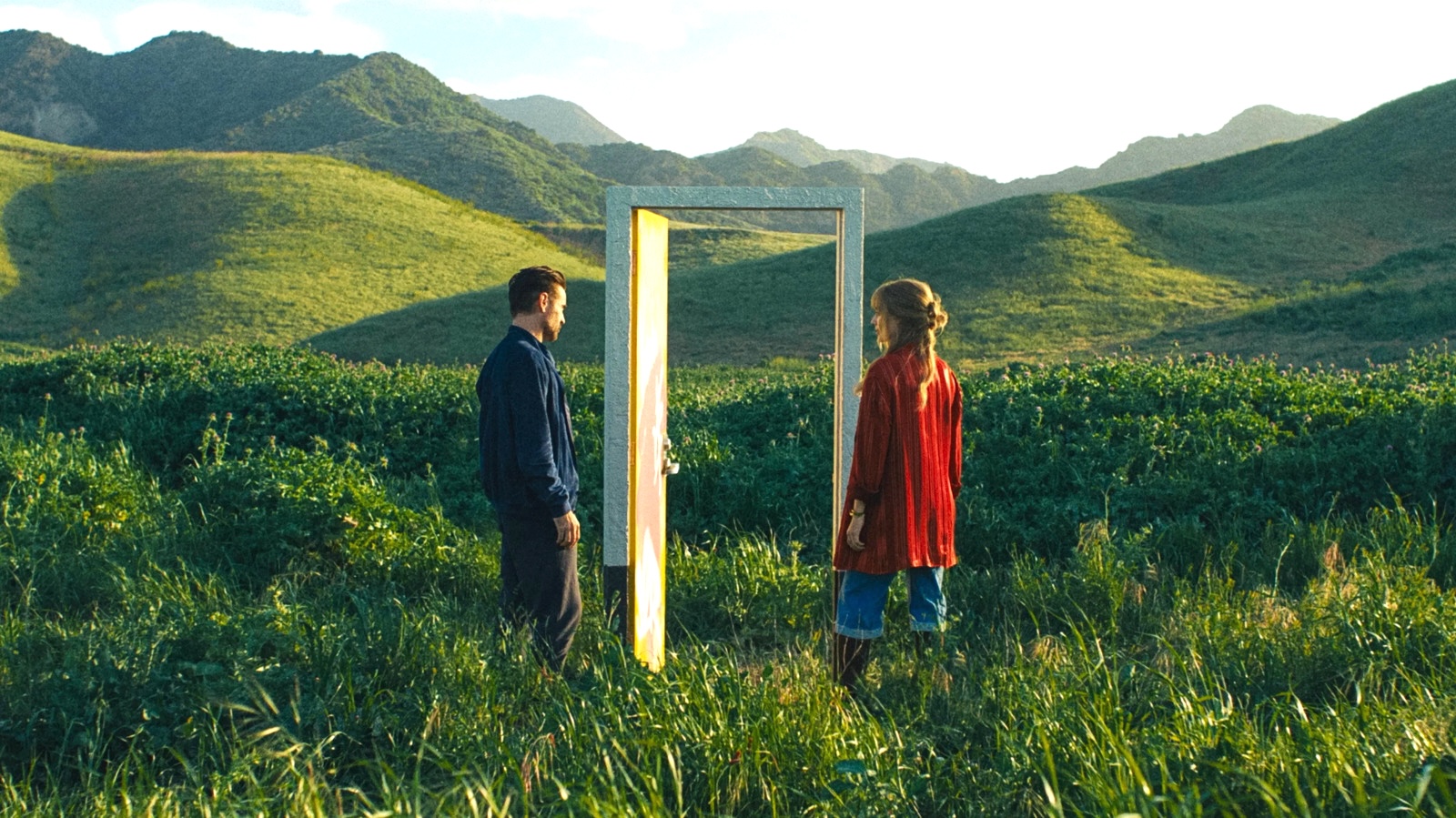
A Big Bold Beautiful Journey is a fantastical drama about a mundane situation. David (Colin Farrell) rents a car to travel to a friend’s wedding, where he meets Sarah (Margot Robbie). Their instant attraction is scuppered by the fact that they’re both commitment-phobes. So far, so ordinary. Luckily – for both audience and characters – David’s sat-nav has a mind of its own and, before long, their separate drives home have become a joint road-trip down Memory Lane towards Promising Future. Via magical doors.

Written by Seth Reiss and directed by Kogonada, ABBBJ adds up to more than the sum of its parts. It doesn’t hurt that the two leads are so likeable, nor that the cinematography (by Benjamin Loeb) is so vivid and picturesque. As the duo step through the various portals to the past, we are treated to some real visual delights: the art gallery Sarah used to visit after-hours with her mum, enraptured by her favourite painting of a grey couple with rainbow heads; the re-enactment of the high-school musical where David had the lead.

There’s some pleasingly quirky book-ending too, with Kevin Kline and Phoebe Waller-Bridge as the mysterious car rental company’s mechanic and cashier (respectively). These benign puppet masters have seemingly orchestrated both the meet-cute and its subsequent developments, their mystical business more about love than motor vehicles.

Is this enough to counteract the sentimental ‘open your heart’ messaging? Just about. More variety would help: the final third feels samey and repetitive and, without the thrill of inventiveness, the saccharine is just a little too cloying.

On the whole, however, I’m sold. This is an arch and idiosyncratic piece of cinema, quite unlike anything else at the multiplex this year.

3.7 stars

Susan Singfield

Inter Alia: NT Live

07/09/25

Cineworld, Edinburgh

What Suzie (Miller) Did Next was bound to garner a lot of attention. The mega-success of Prima Facie, starring the inimitable Jodie Comer, has catapulted the Aussie playwright into the limelight, and left the theatre world waiting with baited breath to see what else she has up her silk sleeve.

Inter Alia, a three-hander starring Rosamund Pike, serves as a kind of companion piece to the 2019 monologue, this time examining the legal system’s response to sexual assault from the vantage point of the Bench. Pike plays Judge Jessica Parks, a high-flying professional, juggling work and family life. She’s got the drive and energy to give both her all, but there’s no escaping ‘mom guilt’, however feminist you are. Still, she and her barrister husband, Michael (Jamie Glover), seem to be managing well: their teenage son, Harry (Jasper Talbot), isn’t exactly happy – he doesn’t really fit in at school and is the victim of some mild bullying – but he’s generally okay, mooching through his days and studying for A levels. He’s a gentle, sensitive boy, nothing like the entitled defendants Jess encounters in court, with their swaggering justifications for rape…

Until, one fateful night, when the ideals Jessica has long-espoused are suddenly called into question, along with her integrity. Who is to blame when a floundering young man commits a crime? And is it possible to be guilty and innocent at the same time?

Prima Facie‘s director, Justin Martin, is back on board for this follow-up polemic, and it’s just as gorgeously kinetic as the earlier piece, perfectly encapsulating the frantic nature of Jess’s life as she hurtles from conviction to kitchen, from case files to karaoke. The set, designed by Miriam Buether, is ingenious, a combination of the domestic and the professional, with props, costumes and doorways cunningly concealed in the kitchen units. At key moments, a wooded park is revealed beyond the dominant interiors, a glimpse into the outside world – both real and online – where Jessica isn’t in control, and which Harry has to learn to navigate for himself.

This is a gentler play than its predecessor, but no less audacious or thought-provoking. Pike is extraordinary in the lead role, and ably supported by her fellow actors. Miller doesn’t offer any easy answers or let anyone off the hook, but she expertly straddles the fine line between trying to understand assailants without diminishing their victims. Like those around us, we leave the cinema deep in discussion, trawling through our own experiences, trying to work out what we would do in Judge Jessica’s place.

I’m still not sure. But I do solemnly, sincerely and truly declare and affirm that Inter Alia is another searing commentary on our times, and – as such – another must-see from the National Theatre.

5 stars

Susan Singfield
The Thursday Murder Club

01/09/25

Netflix

Oh dear. The first film of the month and it’s a stinker. I haven’t read Richard Osman’s best-selling novel (cosy crime isn’t really my thing) but I’m sure it deserves a better adaptation than this. His podcasts (which I do listen to) show him to be clever and erudite. This movie is neither.

All the right pieces are in play: popular source material, a stellar cast, the prettiest of English villages. There’s even cake – but sadly not enough to sweeten this twaddle.

The Thursday Murder Club comprises four wealthy pensioners: Elizabeth (Helen Mirren), Ibrahim (Ben Kingsley), Ron (Pierce Brosnan) and Joyce (Celia Imrie). They live in a stately home called Coopers Chase, which has been converted into the the most luxurious retirement apartments imaginable, and pass their time investigating the cold case files their fellow resident, Penny (Susan Kirkby), a former detective, has somehow managed to hold onto.

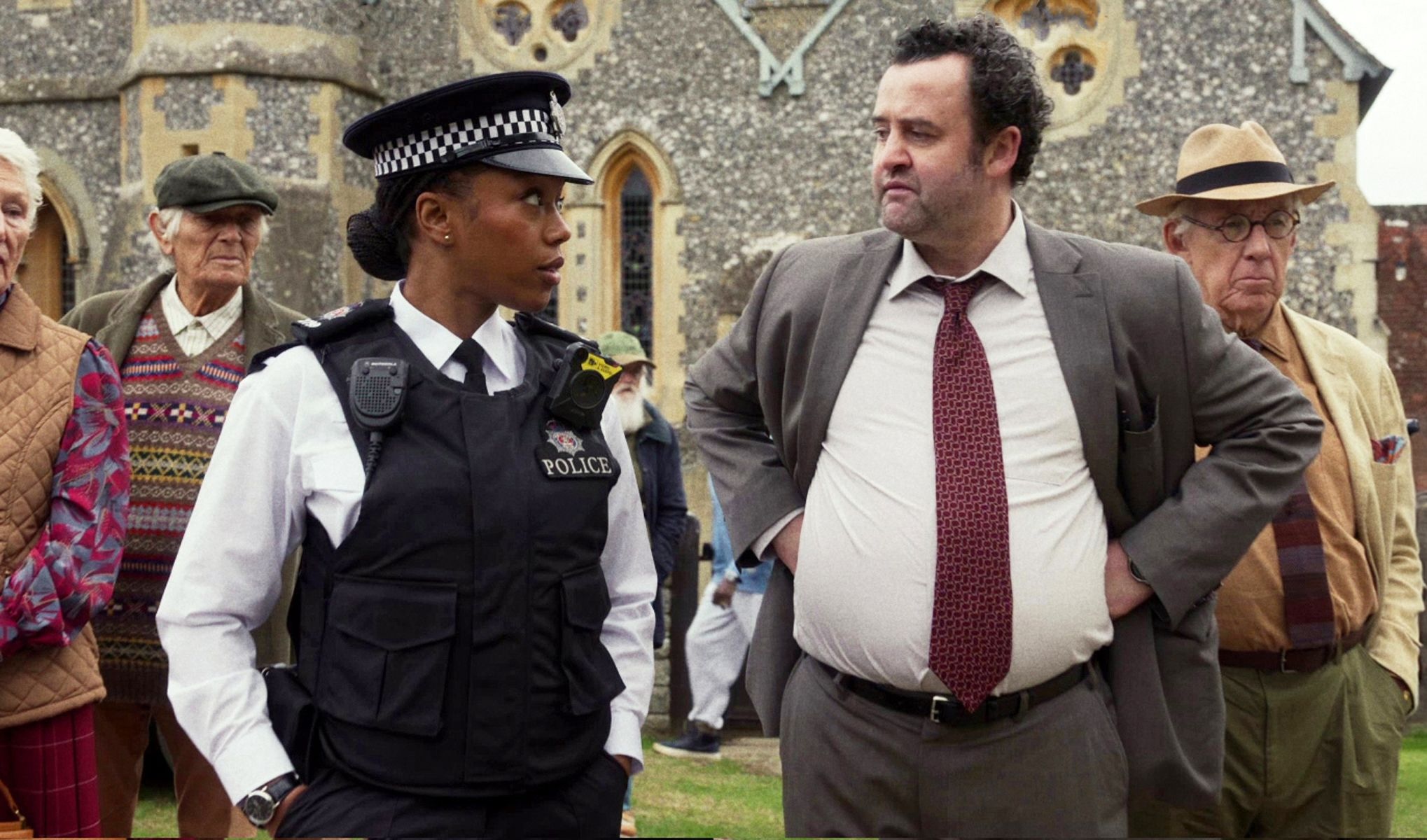
But when money-grubbing landowner, Ian Ventham (David Tennant), reveals his plans to redevelop Coopers Chase, murder is no longer confined to the past. The privileged pensioners can barely conceal their glee at having something real to get their dentures into, much to the dismay of local police officers, Chris Hudson (Daniel Mays) and Donna de Freitas (Naomi Ackie).

Amidst the lightweight sleuthing, some serious issues are raised, including people-trafficking and dementia. But these are hopelessly out of place, treated so glibly that it feels very uncomfortable. There’s some real snobbery at play here too, presumably unconscious: the working-class-man-made-good with his loud voice and tacky McMansion; the upper-class oldies with their mellow tones and oh-so-tasteful decor.

I want to find nice things to say because it’s Helen Mirren, for God’s sake. But hers isn’t even the most wasted talent – at least she’s in a lot of scenes. The wonderful Ruth Sheen barely gets a look in as Aunt Maud. (What’s the purpose of this character? She adds nothing to the plot.)

To quote a catchphrase that’ll only mean something to Gen X, here’s my suggestion: Just Switch Off Your Television Set and Go and Do Something Less Boring Instead.

2 stars

Susan Singfield
The Roses

30/08/25

Cineworld, Edinburgh

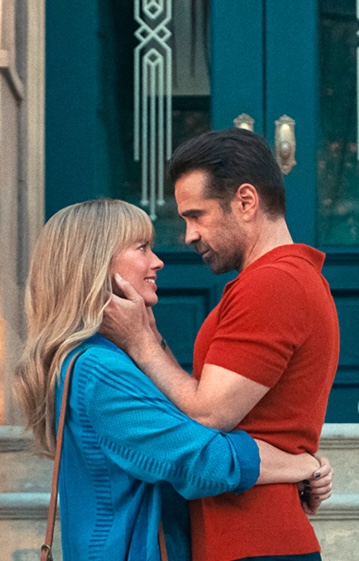
It’s an ill wind that blows nobody any good, so perhaps it shouldn’t come as a surprise to Theo Rose (Benedict Cumberbatch) when the very storm that shatters his career as an architect also heralds a renaissance for his restaurateur wife, Ivy (Olivia Colman).

Theo and Ivy have relocated from London to Northern California, where Theo has been commissioned to design a naval history museum. Ivy’s professional aspirations have been on hold since their two kids, Roy (Ollie Robinson/Wells Rappaport) and Hattie (Delaney Quinn/Hala Finley) came along, but now they’re busy with school and friends and she’s starting to get itchy feet. How long can she carry on cooking elaborate tasting menus for a family of four? Theo is nothing if not supportive, encouraging her to set up a new eatery, opening a few evenings a week.

But when Theo’s high-profile building collapses in a hurricane, he finds himself persona non grata in the architectural community, unable to find work. Meanwhile, seeking shelter from the same weather, an influential food critic is blown into Ivy’s restaurant, and her review catapults Ivy to stardom. It makes sense, then, for Theo to take over domestic duties, while Ivy capitalises on her success and expands her business.

But Theo finds it hard to cope with his sense of failure, and Ivy finds it hard not to resent his newfound closeness to their kids. Before long, their relationship begins to sour, their grievances mounting to monstrous proportions…

Directed by Jay Roach, The Roses is laugh-out-loud funny, as the couple’s responses to their problems escalate cartoonishly, their excesses both shocking and exhilarating to watch. At the same time, with such skilful actors in the lead roles, it’s also desperately sad: we’re bearing witness to the disintegration of a once-happy marriage, observing as two people find themselves travelling a path towards mutual ruin, unable to stop as the momentum builds.

Despite its destructive premise, The Roses turns out to be a feelgood kind of film. Based on the novel by Warren Adler and famously filmed as The War of the Roses in 1989, Tony McNamara’s script is bitingly funny, with lots of arch lines and bitchy humour to lighten the tension. The supporting cast provide some excellent comic relief – particularly Ncuti Gatwa as Jeffrey, Ivy’s loyal waiter, and Kate McKinnon as Amy, the couple’s sex-starved friend.

As for the ending? I don’t think it’s giving anything away to say that it’s best described as “audacious”.

4.3 stars

Susan Singfield

Bring Her Back

26/07/25

Cineworld, Edinburgh

Okay, so Bring Her Back is predicated on my least-favourite horror trope: the monstrous mother – in this case, a formerly-fêted counsellor, rendered grotesque by the tragic loss of her child. However, although I can’t deny being put off by the reductive motif, nor can I forget how highly I rated Danny and Michael Philippou’s 2022 debut feature film, Talk to Me, so I’m keen to see their sophomore effort.

And, while there’s no clever subversion of the aforementioned trope, I’m pleased to report that the Philippou brothers have made another gloriously unsettling movie. Sally Hawkins is terrifying as Laura, the scary foster-mum who takes in orphaned step-siblings, Andy (Billy Barratt) and Piper (Sora Wong). The pair just need somewhere to stay for a few months until Andy turns eighteen and can apply for guardianship of his sister, but Laura has other ideas. She’s desperate to replace her daughter, Cathy, who drowned in her now-empty swimming pool – and Piper is the perfect match. Not only is she the same age, height and build, she’s also partially sighted, just like Cathy was. She has no idea that Laura is dressing her in borrowed clothes…

Andy’s not happy, but he isn’t sure what’s making him so jumpy. Is it grief? After all, he has just lost his dad. He doesn’t want to be negative about Laura, who’s going out of her way for him and Piper, but why is the other foster kid, Olly (Jonah Wren Phillips), so uncommunicative, and why is he locked in his room?

Bring Her Back is a tight thriller, never overstaying its welcome. The body horror is minimal but shockingly potent (dentists in particular are likely to wince), and I find myself holding my breath and peeking at the screen from behind my hands. Hawkins embodies creepiness, her hyper-focused characterisation dominating the film exactly as it should, but there are also strong performances from the supporting trio of youngsters, who find themselves at Laura’s mercy. I like the way that cinematographer Aaron McLisky blurs the focus to allow us to see some scenes from Piper’s point of view, and the dialogue (by Danny Philippou and Bill Hinzman) is nicely scripted.

There are a couple of areas that could do with sharpening, such as what exactly has Laura done to Olly? And where has she found the how-to videos she obsessively watches? But these are minor quibbles, far outnumbered by the clever moments that make the whole thing eminently watchable.

Go see it, if you dare. Grapefruit.

4.3 stars

Susan Singfield
Elio

23/06/25

Cineworld, Edinburgh

Here’s the thing: despite all the ‘gorgeous’ artwork and ‘fantastic’ world-building, on the whole, Elio is better described by adjectives like ‘generic’ and ‘forgettable’. It’s a shame because there’s a lot to like. It’s just that it all gets drowned in a sea of schmaltz.

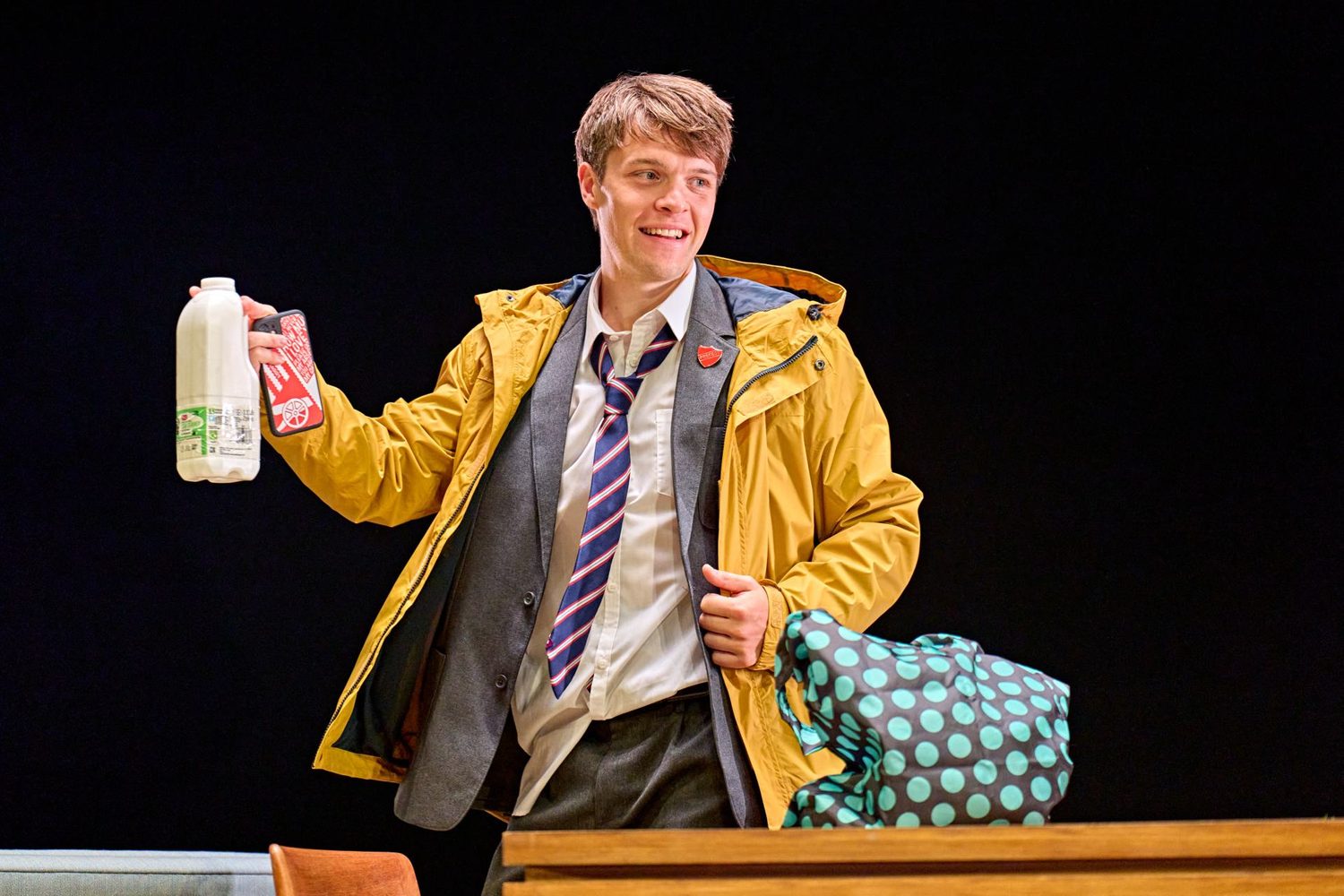
Elio (Yonas Kibreab) is a lonely eleven-year-old orphan, obsessed with extra-terrestrial life forms. Since his parents’ death, he’s been living with his Aunt Olga (Zoe Saldaña), an ‘orbital analyst’ on a military base, where there is plenty of tech for studying the night sky. He’s convinced that Olga doesn’t really want him, and dreams of being abducted by friendly aliens and finally fitting in. It’s a sweet enough idea, although – dressed in his superhero cape and colander hat – Elio seems a lot younger than eleven. Have the film-makers ever talked to anyone that age?

It’s not much of a spoiler to say that Elio’s dearest wish comes true, transporting him to the Communiverse, an interplanetary organisation, where representatives from every galaxy meet to ensure the smooth running of the universe. He announces himself as Earth’s ambassador, befriends a slug-like creature called Glordon (Remy Edgerly) and embarks on the adventure of a lifetime. So far, so good – until the preachy life-lessons start to overwhelm the plot.

Directed by Adrian Molina, Elio is a frustrating film, nowhere near as sophisticated as Pixar’s usual output – not as funny, not as smart. It looks lovely: the bright colours are sure to appeal to kids (indeed, it almost seems designed with merch in mind) but there’s not much here to engage an adult audience. Julia Cho’s script dances around some interesting ideas – such as gender stereotypes and toxic masculinity – but wimps out of fully exploring them. The ultimate message seems to be ‘there’s no place like home’, which is disappointingly regressive, falling back on that same-old, same-old. Has nothing changed since Judy Garland’s day? Are we still supposed to give up on our dreams and choose the bleak monochrome of Kansas over the vibrant colours of Oz?

Elio is a watchable movie with enough excitement to hold the interest of younger viewers, although I doubt it’s sufficiently refined to appeal to those of Elio’s own age. It needs more edge, more bite, more jeopardy.

2.8 stars

Susan Singfield

The Salt Path

08/07/25

Update

In the aftermath of the bombshell dropped by Chloe Hadjimatheou in this weekend’s Observer, where she exposes the lies this story is based on, it feels right to reassess our original response to the movie. Our opening sentence included the words “raised eyebrows”. Perhaps we shouldn’t have been so gullible.

But we’re in good company, including Penguin Random House, Number 9 Films and more than two million readers worldwide. Chivalrous Jason Isaacs, sitting next to Raynor Winn on The One Show sofa, gently corrects her when she says it all began when she and her husband “got into a financial dispute”. “You were conned out of everything you had,” he says sympathetically. “You might not be able to say it but I can.”

The Winns’ audacity is breathtaking. According to Hadjimatheou, the real con-artist is Raynor, aka Sally Walker. Aka embezzler of £64k from her employer; aka borrower of £100k to pay back her ill-gotten gains and thus avoid a criminal trial. When their house was repossessed, it wasn’t because a good friend betrayed them; it wasn’t a naïve business investment gone wrong. It was the simple calling-in of an unpaid debt, ratified by the courts. Did Walker and her husband Ti-Moth-y really believe the truth would stay buried as they appeared on national television to publicise their untruths?

So how gullible were we, really? Like many, we believed the basic premise. Why wouldn’t we? Sure, it was clear that the exact circumstances of the couple’s slide into destitution were being glossed over, and of course their story was shaped into a neater narrative than real life provides. But we had no reason to doubt the fundamentals. (How could anyone have guessed they had a ‘spare’ property in France?) In fact, my interest piqued by the movie, I went on to read Winn’s books. I liked The Salt Path, although I was disappointed not to learn more about the calamitous investment. I found books two and three (The Wild Silence and Landlines) less interesting: just more of the same, but – now that the couple were housed and embracing successful careers – without the jeopardy. In these sequels, the focus shifts to Moth’s terminal illness, corticobasal degeneration, and the miraculous curative effect that hiking has for him. While the first book tentatively suggests that strenuous exercise might be beneficial for those with this rare condition, by the third we’re deep into dubious ‘wellness’ territory, with Winn’s ‘own research’ supposedly trumping anything a neurologist might purport to know.

Still, we won’t be taking down our review (you can read it in full below). We stand by it as a reaction to a well-acted and nicely-crafted film that we enjoyed. Of course, its message of grit in the face of adversity doesn’t have quite the same potency it did, now that we know the protagonists are a pair of grifters, but, if we can steel ourselves to view it as a work of fiction, it’s an affecting and moving piece.

Susan Singfield and Philip Caveney

01/06/25

Cineworld, Edinburgh

I’ve often remarked that real-life stories, depicted as fiction, would more often than not be the case for raised eyebrows. Take the case of Raynor and Moth Winn, for example: a married couple who, after a badly-judged business investment went tits up, found themselves evicted from their family farm, unable to obtain any financial help, bar a paltry £40 a week benefit. Around the same time, Moth was diagnosed with a rare (and inoperable) degenerative brain condition. Their response? To set off to walk the South West Coastal Path, a trip of hundreds of miles, telling themselves that if they just kept walking, something was sure to turn up…

Okay, so in a move they could surely never have anticipated, the book that Raynor wrote about the experience eventually went on to sell two million copies… but it would be a hard-hearted reviewer who begrudged them this success.

In this adaptation by Rebecca Lenkiewicz, we first encounter Raynor (Gillian Anderson) and Moth (Jason Isaacs) as they fight to save their last real possession – a small tent – from the ravages of the incoming tide. The couples’ back story is told in a series of fragmentary flashbacks, though director Marianne Elliott is less interested in the events that brought the couple to this sorry situation, than exploring the possibilities of what their newfound freedom brings them.

As the two of them progress on their journey, struggling at first but gradually adapting to a different kind of life, it becomes clear that there is something to be said for casting off the familiar shackles of a home and a mortgage. The couple find an inner strength they didn’t know existed and, along the way, they rediscover what drew them together in the first place. This could easily have been overly -sentimental but manages to pursue a less obvious route.

The story takes the duo across some jaw-dropping locations around Cornwall and Devon and the majesty of the scenery is nicely set against Chris Roe’s ethereal soundtrack. Anderson and Isaacs make a winning duo, conveying the real life couple’s indomitable spirit and genuine devotion to each other, while the various situations they stumble into range from the comical to the deeply affecting.

The film’s final drone sequence cleverly encapsulates its central message in one soaring extended shot. There have been some mean-spirited early reviews for The Salt Path but I find it genuinely moving and a cinematic journey worth sharing.

4.2 stars

Philip Caveney and Susan Singfield