Cillian Murphy

Steve

05/10/25

Netflix

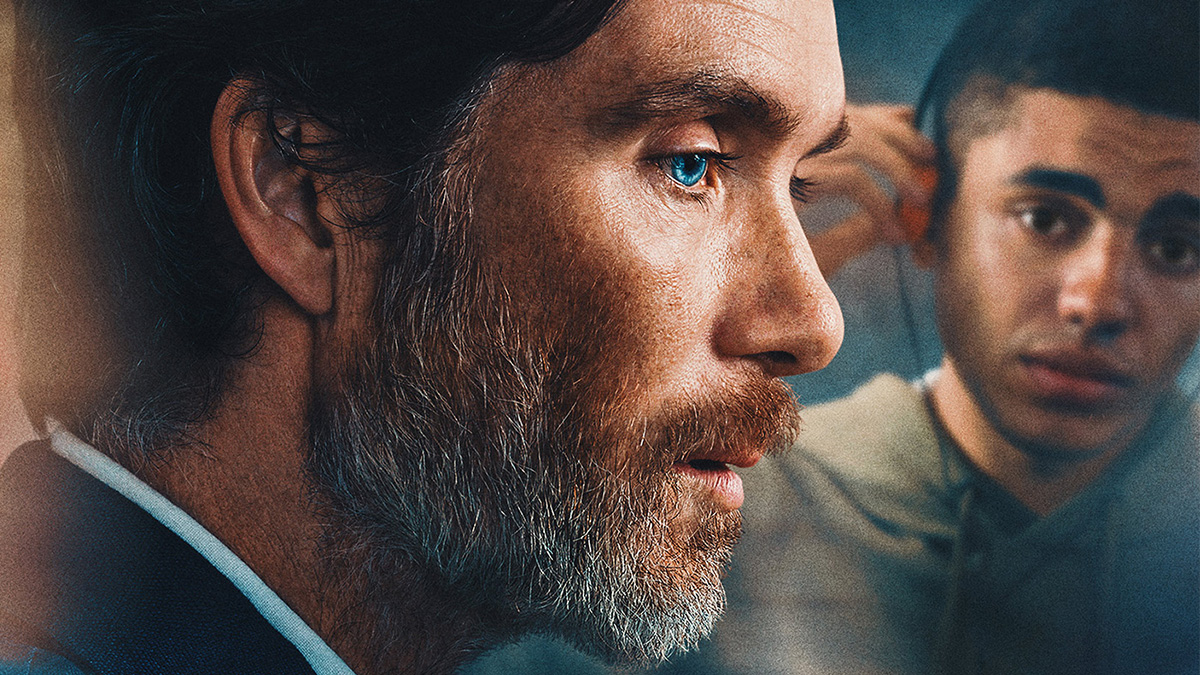
Adapted from his own book, Max Porter’s screenplay is a heart-wrenching tragedy, castng a merciless light on what we’re up against when it comes to helping troubled kids. There’s a change of title – the novella Shy becomes the movie Steve, indicating a shift in focus, from teenage protagonist (Jay Lycurgo) to forty-something headteacher (Cillian Murphy).

Shy and Steve are two sides of the same coin: two clever, gentle, unhappy men, with substance-abuse issues and deep seams of anger, always bubbling, ready to erupt. If Steve has better control of his problems, it’s only because he’s older and more experienced at hiding things.

Directed by Tim Mielants, the movie opens on an auspicious morning: a local news crew is visiting Stanton Wood, filming a segment about Steve’s experimental boarding school for challenging students. It’s a last-chance saloon for those who’ve been excluded from everywhere else, described by TV host Kamila (Priyanga Burford) as “a pre-Borstal”. The model is a Finnish one, Steve explains. We never quite learn what this entails – what pedagogical theories are being employed – but we do see that the staff genuinely care for the boys, treating them with love and respect and never talking down to them. Unlike their out-of-touch local MP, the loathsome Sir Hugh Montague Powell-pronounced-Pole (Roger Allam), who soon comes unstuck when he tries to patronise Shy.

Sadly, the institution is teetering on a knife-edge as sharp as any wielded by its inmates. Funding is an issue, of course, as is public perception. It costs £30k per annum to house a single young offender here. Are these “losers” worth it?

For Steve, the answer is a resounding yes – a sentiment echoed by his deputy, Amanda (Tracey Ullman), school therapist, Jenny (Emily Watson), and teachers, Andy and Shola (Douggie McMeekin and Little Simz). But there’s no denying it’s a taxing job, breaking up the near-constant fights between wind-up merchant Jamie (Luke Ayres) and coiled spring Riley (Joshua J Parker), dealing with the boys’ emotional trauma and protecting the grown-ups from their worst excesses.

In hindsight, maybe inviting a TV crew to immortalise the chaos isn’t the best idea Steve’s ever had…

And when two representatives of the school’s trust, Charlotte and Julian (Ruby Ashbourne Serkis and Ben Lloyd-Hughes), inform Steve that the school is being shut down, it’s more than he can bear. What will happen to the damaged children he’s worked so hard to protect? For most of them, Stanton Wood represents the only stability they know.

Murphy is riveting as the desperate Steve, and it’s heartbreaking to watch his hope unravel as the film goes on. The boys provide some light relief, their devil-may-care fuck-you attitudes affording some real laughs, even as they squander their chances, fail to live up to the goals they’ve been set. At Stanton Wood, they’re allowed to pick themselves up and try again. Shy serves as a symbol of redemption, and Lycurgo imbues him with a beautiful naïvety, so that we’re rooting for him every step of the way.

A thought-provoking indictment of a broken system, Steve is available to stream from Netflix, and – despite its title being the dullest I’ve ever come across – the film is well worth your attention

4.1 stars

Susan Singfield
28 Years Later

22/06/25

Cineworld, Edinburgh

The release of 28 Days Later in 2002 was something of a game-changer. A ‘sort of’ zombie movie, it made the idea of a powerful, rage-inducing virus – accidentally released from a secret laboratory – seem queasily credible, and was a monstrous hit at the box office. Director Danny Boyle and star Cillian Murphy were too embroiled in their sci-fi epic, Sunshine, to take on the 2007 sequel, 28 Weeks Later – so they handed the directorial reins to Juan Carlos Fresnadillo. I missed that film on first release, but caught up with it earlier this week and thought it was actually pretty decent. It introduced the idea of a quarantined UK, taken over by American military forces, who act with brutal force when everything goes tits-up – which, given recent world events at the time of viewing, has a chilling new sense of prescience.

So, what’s left for part three? Plenty, as it turns out, with Boyle and original screenwriter Alex Garland stepping back into the proceedings with fearless assurance. The time-honoured tradition with long-running franchises is to retread familiar territory, thus ensuring that original fans will stay on board. But Boyle and Garland have clearly had plenty of time to develop a new story arc, and – provided this opening instalment puts the requisite number of bums on seats – have two sequels waiting in the wings.

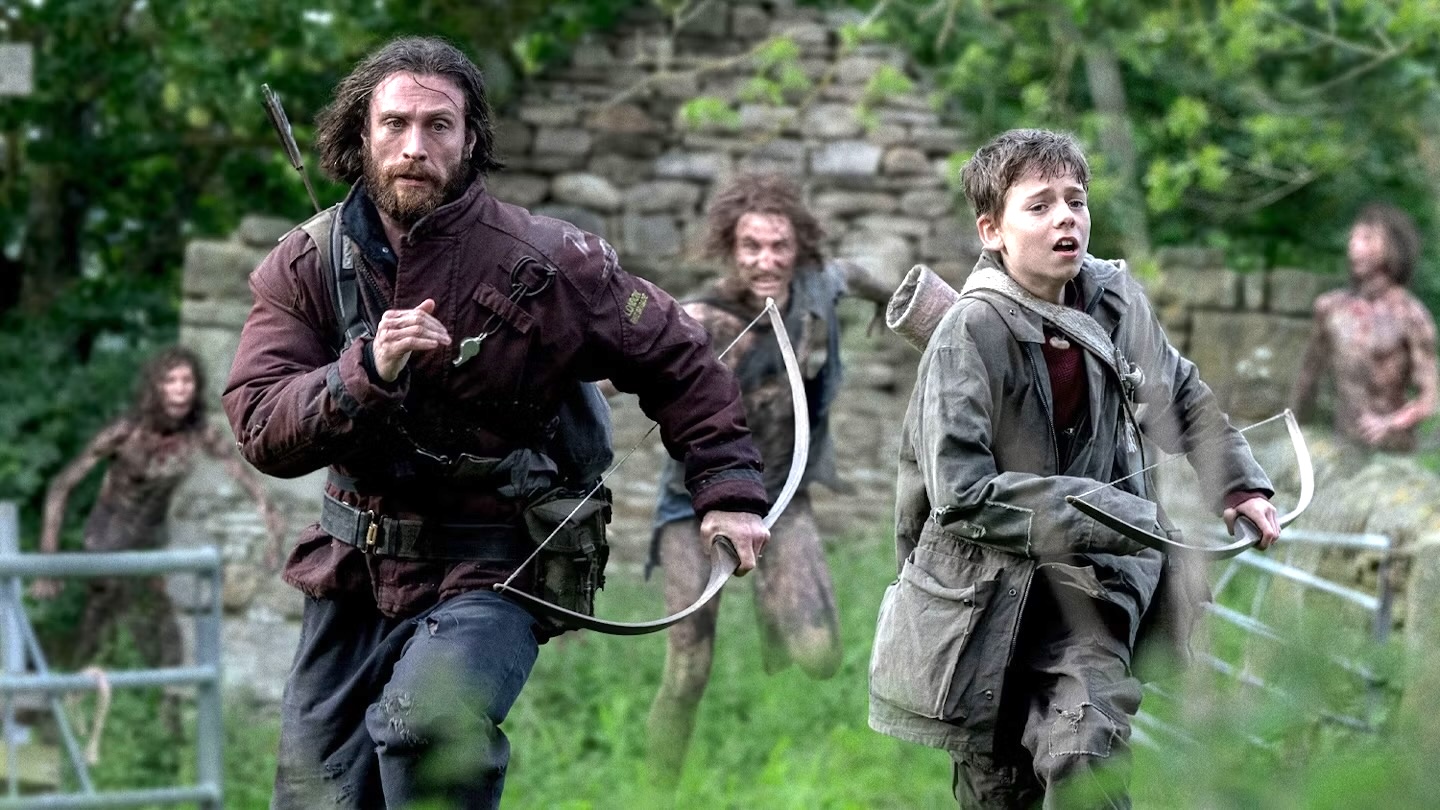
Time has moved on – by 28 years to be exact – and a community of survivors has been established on a remote island in the North East, connected to the mainland by a narrow causeway. This can only be crossed for a few hours each day at low tide, and the entrance gates are guarded around the clock. Spike (a strong performance from newcomer Alfie Williams) is thirteen years old and his father, Jamie (Aaron Taylor-Johnson), is preparing to take him to the mainland, where, in a long-established custom, he will kill his first ‘Infected’ with a bow and arrow. Spike goes along with the plan, even though he’s desperately worried about his mum, Isla (Jodie Comer), who is afflicted by a strange illness that makes her prone to forgetting who (and where) she is.

When Alfie hears talk of a mysterious doctor living somewhere out on the mainland, he decides to take his mum off the island in search of a cure…

This is a fabulous piece of cinema, shot almost entirely on iPhones, and crammed with so many references and allegories that it’s hard to take them all in with just one viewing. The community of uncompromising Geordies, proudly waving their St George flags and getting on with the basics of everyday life have completely shut themselves off from everything that’s happening over the water – and the filmmakers have taken considerable pains to establish the world building, making it all seem entirely credible. It’s very hard not to read this as a searing condemnation of Brexit and, in my opinion, that’s the filmmakers’ intention.

There are elements of folk horror woven into the script and the eerie atmosphere is beautifully accentuated by the music of the Young Fathers and the use of an old recording of Rudyard Kipling’s militaristic poem, Boots.

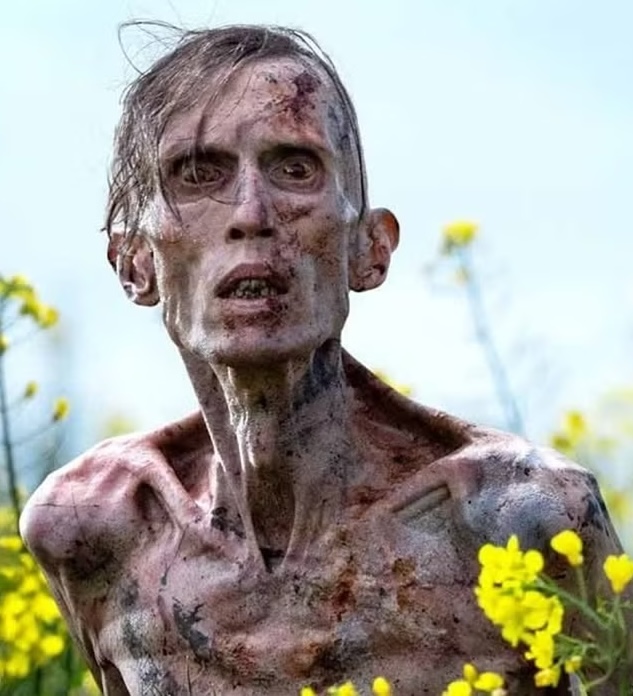
The first part of the story feels the most familiar. That hunting trip on the mainland gets out of hand and plunges Spike and Jamie headlong into the terrifying world of the Infected, where a new, faster, more powerful breed – The Alphas- are ruling the roost. These scenes are brilliantly handled with the suspense ramped up to almost unbearable levels. However, the second section heads off in an entirely different direction, introducing a detachment of Swedish Navy troops, who have been patrolling the UK coastline, and whose boat has run aground nearby. When Spike and Isla bump into young soldier, Erik (Edvin Ryding), the only survivor of his group, he provides some much-needed weaponry to help them to their destination.

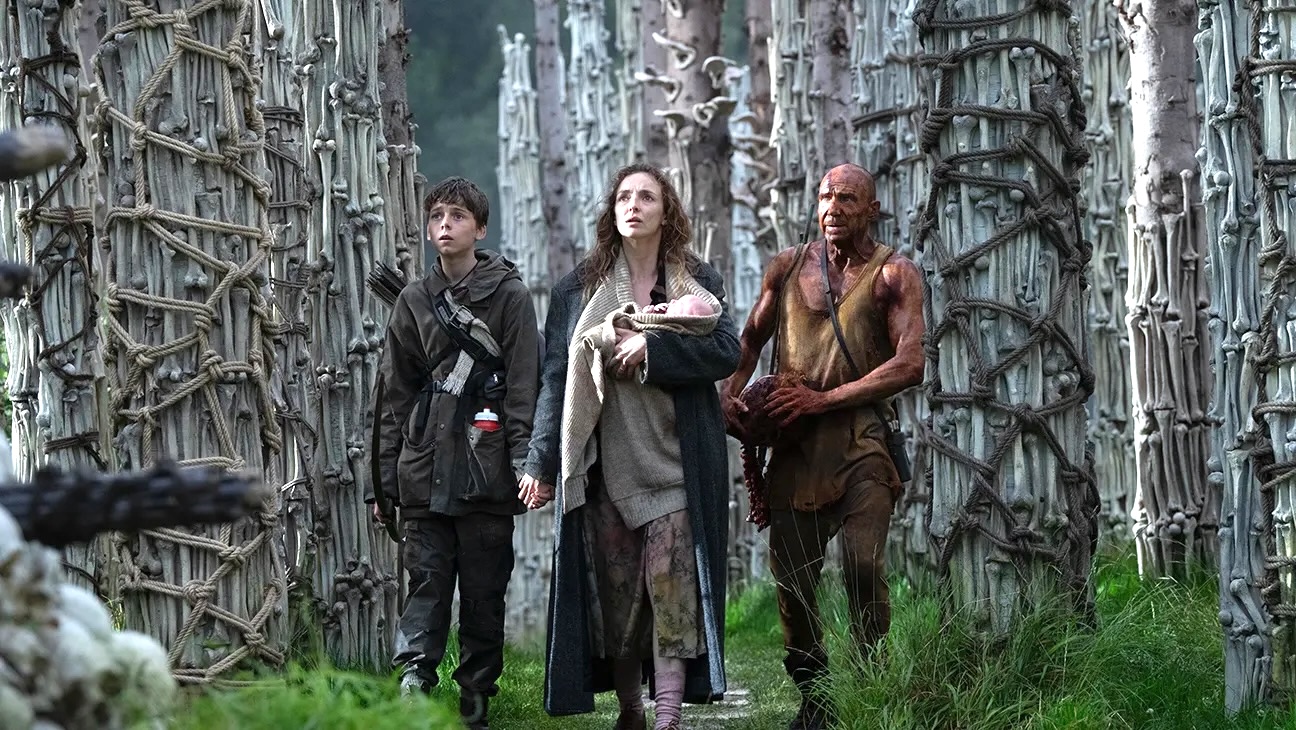
The film’s third section adds a plaintive and poignant note to proceedings as Isla’s plight becomes ever-more heartbreaking. When she and Spike finally encounter Dr Kelson (Ralph Fiennes), he’s living a monastic existence in the midst of a self-constructed homage to death, which he calls his memento mori. The character’s powerful resemblance to Captain Kurtz (from Apocalypse Now) is too marked to be accidental and Fiennes gives the character a calm, solemn dignity amidst all the madness.

And then we’re handed a conclusion so off the charts that it is sure to be divisive. It immediately solves a puzzle, established in the film’s opening scenes, while also offering disturbing questions about a character who has (quite literally) somersaulted into the storyline.

28 Years Later is a dazzling, uncompromising slice of horror cinema, that does the seemingly impossible: both continuing an established franchise and simultaneously reinventing it. I can only say that I can’t wait to see where this goes next.

5 stars

Philip Caveney

Small Things Like These

03/11/24

Cineworld, Edinburgh

Some films are like icebergs. There’s a lot more going on beneath the surface than we are actually shown onscreen. Small Things Like These, directed by Tim Mielants and adapted by Enda Walsh from the novella by Claire Keegan, is a good case in point.

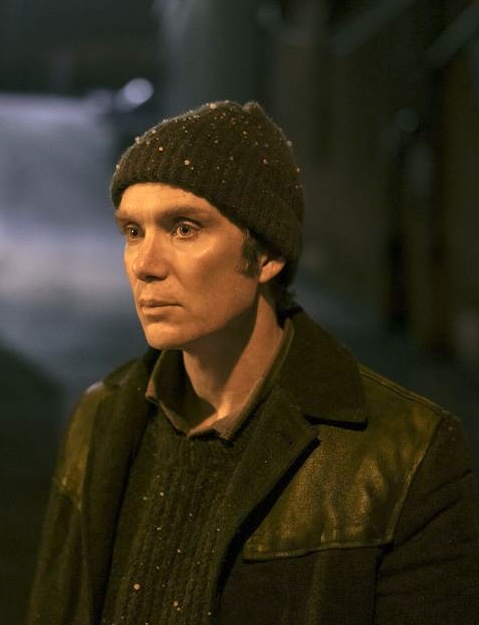
Set in a small town in Ireland some time in the early 1980s, it’s the story of Bill Furlong (Cillian Murphy), a mild-mannered coal man, who spends most of his time distributing sacks of fuel to the local community. He rises in the small hours every morning and plies his trade through all weathers. Every night he comes home to his wife, Eileen (Eileen Walsh), and his five daughters, living cheek by jowl in their little house. His first task is always to scrub his dirt-encrusted hands clean. But some things are not so easily erased.

One of his regular delivery slots is to the local convent and, when visiting the place, he cannot help but notice the seemingly endless ranks of teenage girls, pressed into service in the laundry and the kitchen, working like slaves for the nuns, under the steely command of Sister Mary (Emily Watson). When he finds one of the girls, Sarah (Zara Devlin), who is pregnant and being made to sleep in the coal shed as a punishment, the incident kindles a series of powerful memories from his childhood, when young Bill (Louis Kirwan) and his unmarried mother – also called Sarah (Agnes O’Casey) – were taken into the home of a kindly local woman, Mrs Wilson (Michelle Fairley).

In terms of plot, there isn’t much more to be said but what there is – in abundance – is a sense of steadily mounting pressure as older Bill, a man who finds is hard to be confrontational, who can barely muster half a dozen words in any given conversation, gradually arrives at the realisation that he has to do something about a situation that will allow him no rest.

Murphy manages to evoke so much with just smouldering expressions and the occasional panic attack, while Watson submits a powerful cameo as Sister Mary: cold, supercilious, calculating, willing to bribe Bill with cash to procure his silence about some of the things he’s witnessed. Meanwhile, everyone else in the community is urging him not to make waves, pointing out that the nuns have the power to make things really difficult for him and his family.

And Christmas is coming… why rock the boat?

As somebody who was raised as a Catholic, I identify with much of what I see here – and as the film builds to its powerful conclusion, I find my anger rising along with it. Small Things Like These won’t be for everyone – so much of the story is left for the viewer to mull over and conjecture about – but for my money it’s a little gem, a film that pins down the dark iniquities that are all too often committed in the name of religion. It’s possibly the bleakest ‘Christmas’ movie ever.

The film is dedicated to all the women who suffered in the ‘Magdalene laundries’ of Ireland before they were finally done away with in the – believe it or not – late 1990s.

4 stars

Philip Caveney

Oppenheimer

22/07/23

Cineworld, Edinburgh

What do you do the day after you’ve seen Barbie? You watch Oppenheimer, of course, because some bright spark has decided that, as these two completely disparate films share the same release date, they shall henceforth be known as Barbenheimer. Well, fair enough. I’m just pleased to see the cinemas bustling again, which at least gives me some hope for their future. And I have the sense to see the films over two days, rather than as a bizarre double-bill.

Where Barbie was lighthearted and vivacious, Oppenheimer is deadly serious stuff, a biopic of the man who gave humanity the atomic bomb, along with the distinct possibility of destroying the planet we inhabit. Furthermore, with a running time of three hours, it’s clear that director Christopher Nolan wants us to ponder the titular character’s life in some considerable detail.

Nolan – still smarting, no doubt – from the underwhelming critical response for his previous offering, Tenet, has pulled out all the stops here, choosing to shoot the film using IMAX cameras. This at first seems an odd decision for a film where men in suits talk about physics but Nolan constantly cuts away to dazzling optical displays of nuclear fission, fizzing and popping like surreal fireworks, and there are impressive recreations of Los Alamos in New Mexico.

Ludwig Göransson’s score also impresses though it occasionally underpins some quite complicated dialogue (just as it did in Tenet) and I find myself wishing it would pipe down a bit. Just saying.

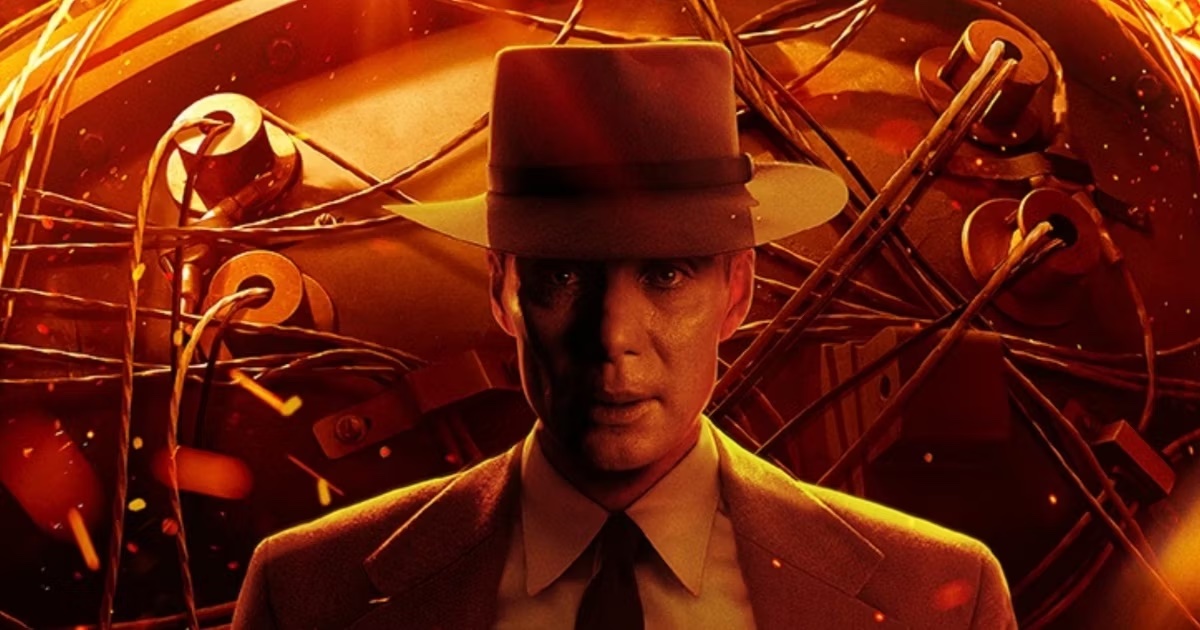
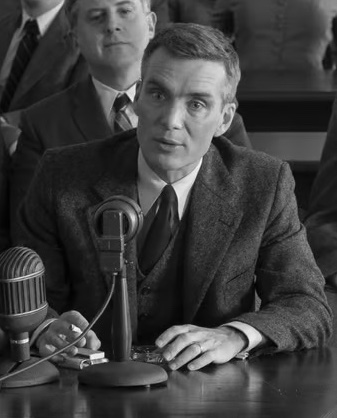
Cillian Murphy plays J. Robert Oppenheimer with considerable presence, managing to portray him convincingly at various stages of his life, from wide-eyed young student of physics to embittered elder statesman. Emily Blunt is quietly impressive as his wife, Kitty, and Robert Downey Junior is delightfully devious as Lewis Strauss, the man who sets Oppenheimer on the path to his ultimate destiny. The film boasts a massive cast that positively bristles with A listers, so many it feels pointless to mention them all – but I’ll make an exception for the assured performance of Matt Damon as Lt General Leslie Groves, the man who appointed Oppenheimer to oversee the Manhattan Project.

The screenplay, written by Nolan, sweeps confidently backwards and forwards through Oppenheimer’s chronology, never confusing and constantly throwing out disturbing questions about the nature of mankind’s eternal hubris. The potential danger that the complicated science might be hard to follow is not allowed to become a problem.

Ultimately, the central character emerges as a martyr, a brilliant man encouraged and seduced by the powers that be, then rejected and used as their scapegoat. Murphy’s chiselled features seem to stare out of that giant screen as if appealing for understanding for the torture he’s going through, the awful weight of responsibility resting on those narrow shoulders. I know little about Oppenheimer before I see this film and am now fascinated to learn more.

Oppenheimer keeps me hooked throughout and sometimes does the near impossible, creating suspense for an event I already know the outcome of. While this doesn’t quite measure up to Nolan’s finest work, it’s nonetheless an impressive film that deserves the plaudits it’s receiving.

And if it isn’t quite as assured as it’s shocking pink stablemate, well, this is a much tougher tale to tell… and a harder one to stomach.

4.4 stars

Philip Caveney

A Quiet Place: Part Two

04/05/21

Cineworld

A Quiet Place was, in many ways, an extraordinary film. The levels of tension it generated led to a new phenomenon in multiplexes across the world – audiences actually being afraid to munch their popcorn or slurp their soft drinks too loudly, for fear of attracting those audio-activated monsters to their auditorium. The main question in my mind when a second instalment was mooted was simply this: can they possibly hope to pull off the trick for a second time? Well, to a large degree, they have, and this despite the fact that (spoiler alert!) a major character was killed off at the end of the first movie.

Part Two opens with a flashback to Day One of the alien invasion, as Lee Abbott (writer/director/actor John Krasinski) wanders to a baseball game in his hometown, where his son, Marcus (Noah Jupe), is just about to step up to the plate. Then there’s some commotion in the skies above them and, before you can yell, ‘Scarper!” those nasty reptiles arrive on the scene and start killing people. All hell breaks loose and the focus moves from Lee to his daughter, Regan (Millicent Simmonds). We see much of the ensuing carnage through her viewpoint. Long sequences are enacted in total silence – Regan is hearing impaired – and with brilliant use of this device, the resulting action is a masterclass of impeccable timing and effective jump-scares.

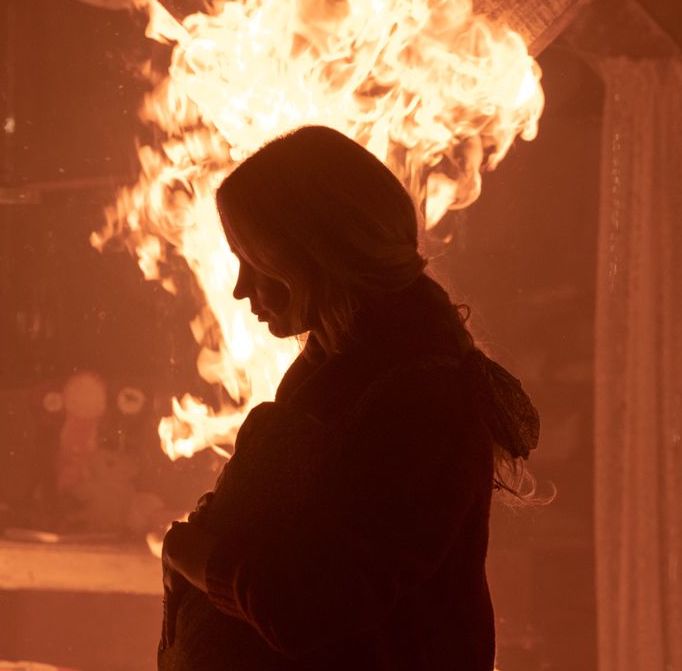
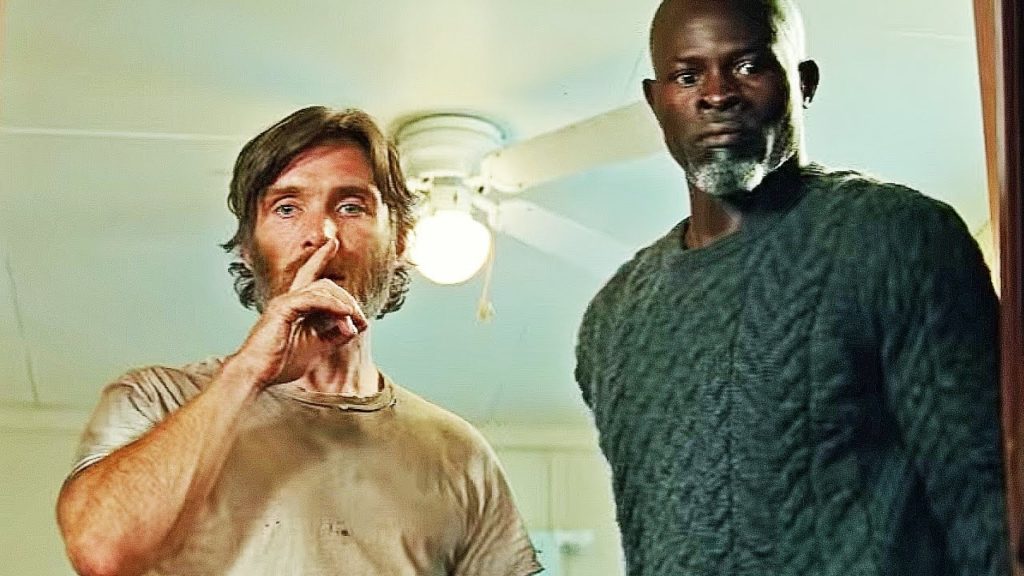
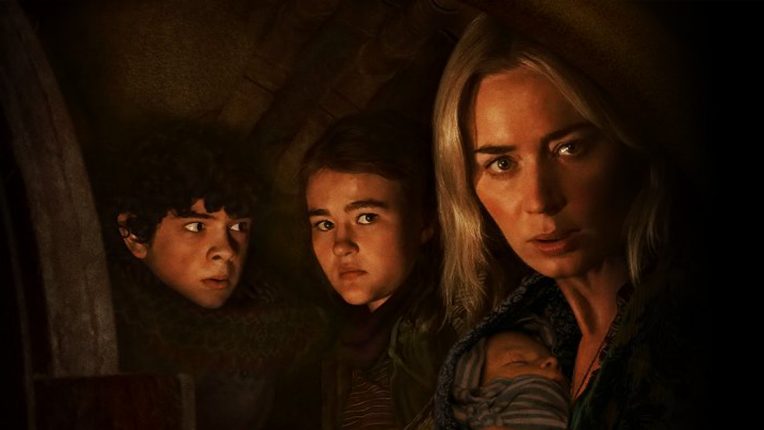
Then we cut back to where we left off in Part One. Evelyn (Emily Blunt) and her three children – one of them a newborn baby – are forced to wander off the silent path they’ve so painstakingly built to go in search of other survivors. Eventually they find one in the shape of Emmett (Cillian Murphy), a former friend of Lee’s, a man who is himself mourning the death of his wife and children. Can Evelyn persuade to forget his misery long enough to help her? And what’s the point if life is going to be the miserable existence that they’re all toiling through?

Well, the thing is, Regan has this cunning plan, one she’s convinced can give humans a competitive edge over the creatures that have invaded their planet. But making it work isn’t going to be easy…

Once again, the AQP team manage to raise the suspense to almost unbearable levels and at times I find myself holding my breath as the next nail-biting sequence unfolds. Okay, so this time out, there are a few implausibilities in the mix. In quieter moments, I find myself asking questions like, ‘Do these guys ever get to eat anything?’ Or, ‘How can Evelyn generate enough milk for that baby if she’s not getting any nutrition?’ and ‘How come the aliens only ever (okay, usually) arrive one at a time?’

And… while I’m being picky, Krasinski does pitch us a few too many cross-cut sequences where what’s happening in one scene mirrors the action in another one happening miles away. The first time you see it, it’s really impressive, but Part 2 is a little over-reliant on this conceit. And… if I’m really honest, the central message about the children needing to measure up to their fearless father is hammered home a little too forcefully for comfort.

But look, here’s the bottom line. As an immersive cinematic experience, A Quiet Place: Part Two does deliver on its main mission to thoroughly terrorise viewers – and that’s this series’ raison d’etre, surely? Emily Mortimer’s recent announcement that AQP is going to be a trilogy makes me sigh a little. Hardly anyone ever manages a successful hat trick, but of course, that’s all somewhere in the future. We’ll see.

For now, why not pop along to your socially distanced cinema and raise your stress levels even more than they already are? Come on, you know you want to.

4 stars

Philip Caveney

Anna

11/07/19

Director Luc Besson has been having a thin time of things lately. His love project, Valerian and the City of a Thousand Planets, was a baffling and expensive flop, so it’s little wonder he’s returned to more familiar ground with Anna, which has been awaiting release for some time. This histrionic spy-thriller has the feel of an 80s bonkbuster about it: patently absurd, but nonetheless rather enjoyable as it galumphs gleefully across the career of the titular hero (Sasha Luss), a young woman forced to become a high level assassin.

When we first meet her, she’s down at heel, addicted to drugs and enduring an abusive relationship with her no-good boyfriend, Piotr (Alexander Petrov), who gets her mixed up in some very bad business. But she is rescued (if that’s the right term) by KGB man, Alex (Luke Evans), who offers her an opportunity to ‘better herself.’ From this point, the film cuts to five years later – and from there to three years earlier; and we continue to switch back and forth in time like an out of control roller coaster. While it’s occasionally hard to keep track of exactly where we are, it means that the story often pulls the rug from under the viewer’s feet, throwing out some real surprises. It’s never dull.

Complications arise when CIA man, Lenny (Cillian Murphy), appears on the scene.  Anna carries on doing her missions, whilst longing for the freedom to walk away from something that has become an absolute chore.

Most of the familiar Luc Besson tropes are here: savage punch-ups with Anna taking on entire armies of black-suited hit men, casual executions in glamorous settings and young women slinking around in high end fashions (Anna’s cover identity has her posing as a model). There’s also a lovely turn from Helen Mirren as Anna’s chainsmoking KGB handler, Olga, having great fun in a show-off role.

Everything builds to a cross and double-cross conclusion and, while this isn’t Besson at his very best, it’ll certainly do until his next effort comes along. Just don’t think about that labyrinthine plot too much. You’ll tie your brain in knots.

4 stars

Philip Caveney

The Party

26/10/17

Shot in stark (and very unforgiving) black and white and confined pretty much to one set, The Party feels like the kind of thing that Mike Leigh has done so brilliantly in the past – indeed, if it resembles one of his works in particular, it certainly has echoes of Abigail’s Party about it. With a sprightly running time of one hour and eleven minutes, this film, written and directed by Sally Potter, canters amiably along but, though it can’t be accused of overstaying its welcome, it never entirely manages to blow you away.

Janet (Kristen Scott Thomas) is in the mood to celebrate. She’s just been appointed shadow health minister for the ‘opposition’ and has invited some close friends around for vol au vents and bubbly. They are: her snarky best friend, April (Patricia Clarkson), and her partner, the hippy-dippy faith healer, Gottfried (Bruno Ganz); feminist university lecturer, Martha (Cherry Jones) ,and her wife, Jinny (Emily Mortimer), who is currently expecting the patter of er… little triplets; and, definitely the odd one out at this gathering, handsome young property developer, Tom (Cillian Murphy), who explains that his wife, Marianne, will be ‘along later for dessert… or maybe just coffee.’ But it’s not destined to be a happy occasion, because Janet’s morose husband, Bill (Timothy Spall), has something he really needs to get off his chest…

Relentlessly middle class in its themes, the story is mostly about people being unfaithful to one another and, though the performances are generally pretty good, the protagonists cannot seem to help slipping into caricature. April can’t open her mouth without insulting somebody, Martha and Jinny say things in public that any rational person would surely save for later on, and Gottfried is so glib it hurts – but then maybe that’s entirely the point of him. Only Tom seems to have convincing reasons to act the way he does and, indeed, Murphy’s performance is the strongest one here – a man driven by jealousy to do something unspeakable.

Mind you, there’s a conclusion that I really don’t see coming and, all in all, this film makes a decent antidote to the steady diet of superhero movies we’re constantly being offered. I can’t help feeling though, that given the same set up and the same cast of characters, Leigh would have knocked this out of the park.

3.8 stars

Philip Caveney

Free Fire

28/02/17

In a relatively short career, director Ben Wheatley has created some exciting and groundbreaking films. His most consistent piece, Sightseers, is a delightful comedy with a dark and twisted heart – and his last outing, an adaptation of JG Ballard’s High Rise, though not perfect, was one of the most challenging pieces of dystopian cinema in a long time.

So it gives me absolutely no pleasure at all to report that Free Fire is an unmitigated dud. I came out of this advance screening asking myself just exactly what Wheatley thought he was trying to do here. This is the kind of film that forged Tarantino’s early reputation – indeed, if Free Fire resembles any other movie, it’s Reservoir Dogs. Now, I’ve been quite cutting about Tarantino over the years, suggesting that the man’s slender talent has been repeatedly overpraised but, seriously, Free Fire makes him look like a genius film-maker. It really is that bad.

It’s Boston in 1978. Actually, it’s a warehouse in Brighton, but it hardly matters since the action never bothers to step outside of that single location. IRA men Chris (Cillian Murphy) and Frank (Michael Smiley) are attempting to buy rifles for their cause; the deal has been arranged by South African popinjay, Vernon (Sharlto Copley) and his American friend Ord (Armie Hammer). Brie Larson plays Justine, a thankless token female role and, just in case that’s not enough, there’s also a token black man, Martin (Babou Ceesay, dressed like an extra from Shaft). In the opening stages of the film, there are admittedly a few witty lines thrown around. Enjoy them while you can, because this early promise is soon squandered.

Midway through the deal, an argument ensues between twitchy junkie, Stevo (Sam Riley) and one of Vernon’s goons, Bernie (Enzo Cilenti). It rapidly escalates and, inevitably, a gunfight ensues. You’d better like gunfights, by the way, because this one lasts for the rest of the movie, around eighty minutes of characters you don’t really know or care about hurling a mixture of bullets and F words at each other without pause or reason.

Perhaps Wheatley is trying to show the absurdity of violence. Perhaps he’s simply pushing the envelope of the genre, stripping it back to its basics. Whatever he is trying to do, it fails miserably. This is simply deadly boring. It also tests credulity to the limit as characters are shot again and again, but don’t have the decency to fall down and die. Quite how Wheatley convinced a troop of A list actors to appear in this nonsense remains the biggest mystery of all. (Christ, what did the screenplay look like?) Inevitably, there will be those who hail Free Fire as a work of genius, but that would be a re-run of The Emperor’s New Clothes. Unless the idea of an endless gunfight appeals to you – and I’ll admit that, in the right hands, it could conceivably have worked – this is one to file under D for disaster.

The screening is followed by a Q & A with Wheatley and actor Sam Riley – and it  speaks volumes when I admit that I bail out and head to a local bar for what feels like a well-earned drink. The only question I could have mustered would have been, ‘Why?’

A major disappointment.

1.5 stars

Philip Caveney

Anthropoid

anthropoid

11/09/16

Based on the true story of the WWII Operation Anthropoid mission to assassinate Nazi third-in-command Reinhard Heydrich, this is a hard-hitting film, which offers very little respite from the bleakness it portrays. It’s unflinching, forcing its audience to confront the awful brutality of war, the vile atrocities we commit in the name of patriotism or fear. And it’s quite difficult to watch.

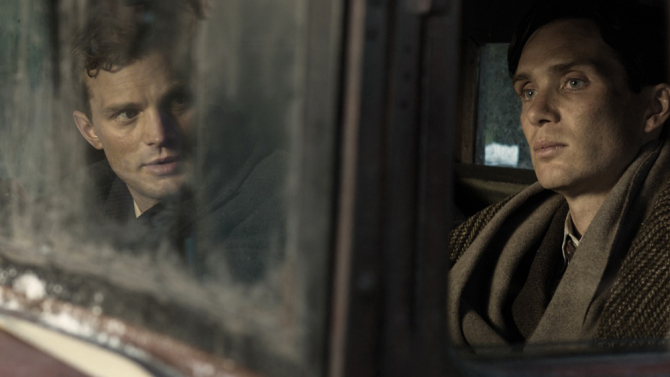
It’s 1942; Jan Kubis (Jamie Dornan) and Josef Gabcik (Cillian Murphy) have been tasked  with assassinating the Nazi leader of the protectorate, both to reassert the legitimacy of the exiled Czechoslovakian government, and as retribution for his harsh rule. Heydrich (who was also in charge of the so-called Final Solution) was clearly a hateful man, and this film focuses firmly on the victims’ experience; the Nazis are portrayed as a terrifying mass, with nothing to differentiate between them; they are uniformly evil. And that’s fair enough, I think; that’s how they would have appeared. I don’t imagine the people whose countries they occupied cared much about individual German soldiers’ situations, nor how propaganda and forced-conscription would have swelled the Nazi ranks. This film belongs to Jan and Josef, and the courage they and their tiny band of resistance fighters showed in taking on such a mighty foe.

The first half is slow and meticulous, focusing on the minutiae of living secretly and planning. Their developing relationships with Maria (Charlotte le Bon) and Lenka (Anna Geislerová) are subtly told, and the sense of imminent threat is ever present.

Once the assassination attempt is under way, the pace picks up, and the tension is unbearable. Indeed, the final battle is a fast-paced, relentless shoot-out, a bloodbath of the most ugly kind. No punches are pulled here. We see bullets rip through flesh. We see people being tortured until they lose all sense of who they are. But, ultimately, this is a tale of hope. Yes, human beings do terrible things. We can’t deny it. But other, better human beings will always try to bring them down. And, sometimes, they will succeed.

4.4 stars

Susan Singfield