Charles Dance

Frankenstein

25/10/25

Filmhouse, Edinburgh

Guillermo del Toro was always going to make his version of Frankenstein one day – the seeds were sown in his 1992 Spanish-language film, Cronos, the first of his features that I ever saw in the cinema and the one that convinced me he had a big future ahead of him. 

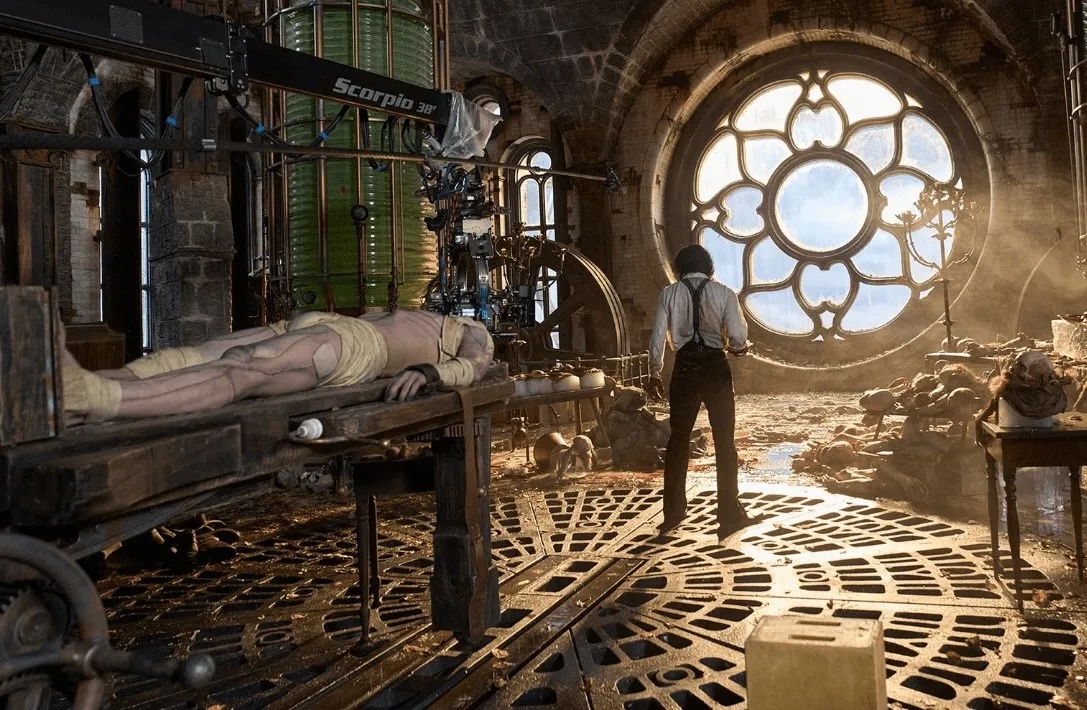
Now he’s finally got around to doing the job properly, courtesy of Netflix, who stumped up the $120m budget. For a while it looked as though there wouldn’t be any chance of seeing it in an actual cinema before the transfer to streaming. This would have been a crime because del Toro’s adaptation of the tale looks absolutely sumptuous on the biggest screen at Filmhouse and I’m delighted to see that the auditorium is  pretty busy for a Saturday afternoon showing.

Frankenstein is, of course, one of the most filmed books in history, but it’s probably fair to say that only a handful of the 423 movie adaptations (not to mention the 287 TV episodes – yes, I did Google it) have come anywhere close to capturing the essence of Mary Shelley’s seminal horror story. While del Toro does throw in a few original twists of his own (of course he does!), he sticks fairly close to Shelley’s narrative – indeed, he’s even credited her as his co-screenwriter. The tale is told in three distinct parts.

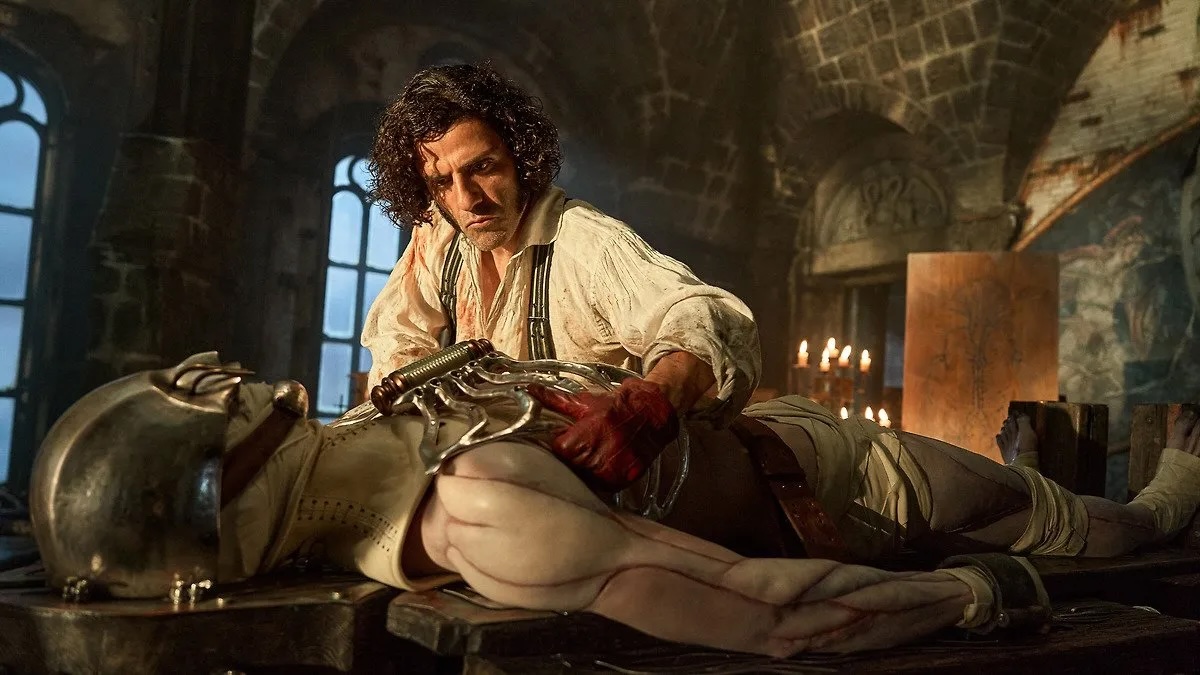
In the opening Prelude, we join Captain Andersen (Lars Mikkelsen) and the crew of his sailing ship, who are stranded on the ice in remote Arctic waters. There’s a sudden explosion nearby, from which the crew rescue Victor Frankenstein (Oscar Isaac), who has been pushed almost to the point of death by a monstrous assailant. After witnessing The Creature (Jacob Elordi) plunging into icy waters, they carry Victor onto the ship – but, once revived, he assures Andersen that his pursuer will not actually be dead and will surely come for him…

Before that happens, he needs to tell his story.

Victor then narrates The Creator’s Tale and we flashback back to his childhood where, under the rule of his despotic father, Leopold (Charles Dance), Young Victor (Christian Convery) first becomes obsessed with life and death. Keen-sighted viewers may spot something familiar about Victor’s barely-glimpsed mother, Claire. Something distinctly Oedipal is happening here.

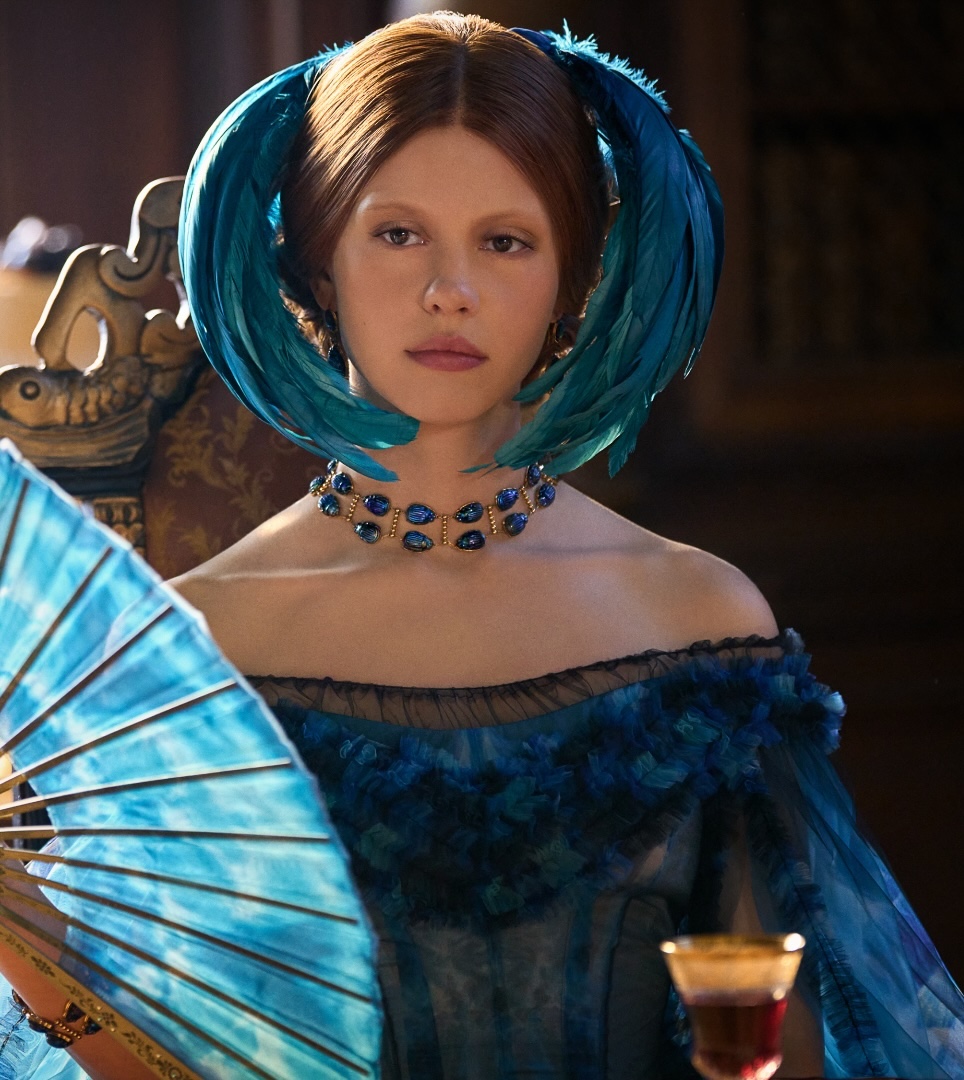
We then cut to some years later. A grown-up Victor is causing controversy at medical school in Edinburgh with the grisly experiments he’s conducting on cadavers (and I get to revisit some of the sets that were evident around my home city in September 2024). We are introduced to Victor’s younger brother, William (Felix Kammerer), and his fiancée, Elizabeth (Mia Goth). We also meet Harlander (Christophe Waltz), a character created for the film, a wealthy man who, for clandestine reasons, is perfectly happy to finance Victor’s attempts to take his experiments all the way.

But Victor’s account is later contrasted with The Creature’s Tale, where we learn of the years when the monster and his creator were apart: how The Creature lived in a barn alongside a kindly blind man (David Bradley); how he mastered the art of speaking (with a distinctly Yorkshire accent); and how he slowly began to realise how shabbily he’d been treated…

It’s not just because I’m a devout Guillermo del Toro fan that I think this film is a million times better than every other Frankenstein-generated movie I’ve watched down the decades. Isaac is a revelation in the title role, nailing both the character’s sense of privilege and his fatal short-sightedness. Elordi, meanwhile, offers a fresh take on the Creature that really brings out his innate vulnerability and his desperate need to relate to others, something that’s been attempted before with much less success. 

The film is packed with sumptuous locations and thrilling action set-pieces, that have it hurtling through its lengthy running time. Cinematographer Dan Lausten captures every scene with an almost luminous intensity, Kate Hawley’s costume designs are exquisite, and there’s a beautiful score courtesy of Alexander Desplat. If I have a minor niggle it’s that the CGI-generated wolves in one long sequence aren’t quite as convincing as they need to be – and perhaps both Mia Goth and Felix Kammerer might have been given a little more to do?

But these are nitpicks. As ever in these situations, I’m urging people not to wait for this to drop onto streaming, because this level of filmmaking deserves to be watched on the biggest, brightest screen available, one of – dare I say it? – monstrous proportions.

I’ll get my coat.

4.8 stars

Philip Caveney

The King’s Man

02/01/22

Cineworld, Edinburgh

I enjoyed Matthew Vaughn’s two Kingsman movies. A refreshing take on the spy genre, written with a nod and a cheeky grin, they provided easy, if undemanding, entertainment. After long delays caused by the pandemic, we finally get to see The King’s Man, a sort of origins tale, which explains how the Kingsman Agency came into being.

And, not to put too fine a point on it, this is a very different kettle of fish – some of which is well past its sell-by date. It isn’t that Vaughn’s screenplay (written this time without Jane Goldman) is short on ideas. There are just too many of them, fighting with each other for breathing space and frankly as risible as the proverbial box of frogs.

After the violent death of his wife in South Africa, Lord Oxford (Ralph Fiennes), a rich pacifist do-gooder swears to shield his young son from any possibility of warfare. Twelve years later, Conrad (Harris Dickinson) has grown to be a young man and, with the world hurtling headlong towards the conflict of the First World War, he decides he wants to be involved. He’s blissfully unaware that, over the intervening years, his father has created a special network of spies, working alongside two of his trusted servants, Polly (Gemma Arterton) and Shola (Djimon Hounsou). Working with other ‘domestics’ across the world, all with access to centres of government, the trio are able to gather evidence of any approaching catastrophe and take steps to avoid unnecessary lives being lost… yes, that really is the premise!

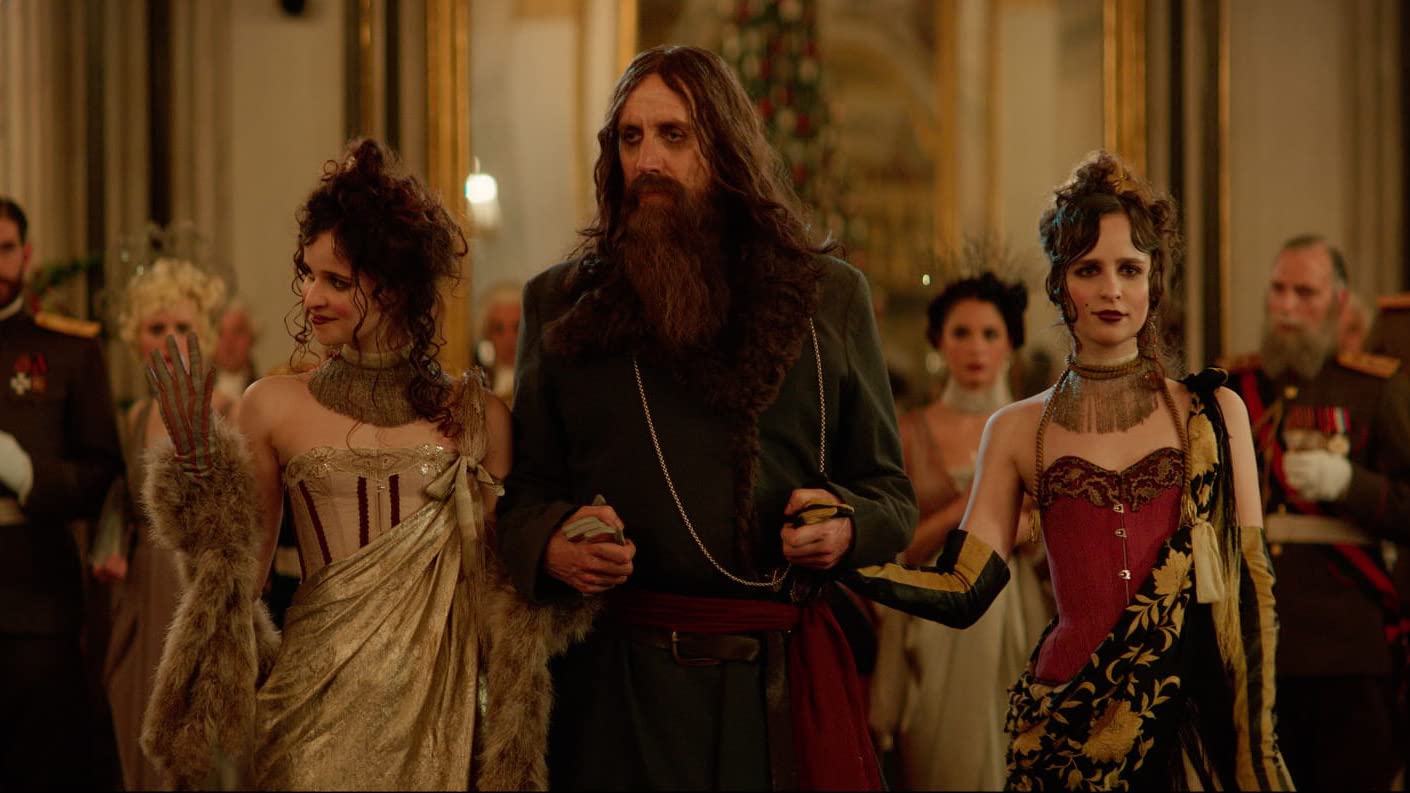
Cue a series of unlikely adventures, with Oxford and son working alongside Lord Kitchener (Charles Dance), being present at the assassination of Duke Franz Ferdinand and even taking on Grigori Rasputin (Rhys Ifans) in a martial-arts infused punch-up (actually one of the films better sequences). Meanwhile Tom Hollander struggles with a triple role as three of history’s most famous cousins – King George, Kaiser Wilhelm and Czar Nicholas – and ultimately, we learn that the entire war has been engineered by… No, I can’t tell you. Not without being embarrassed by the sheer absurdity of it. Put it this way. I seriously doubt you’ll see it coming.

While it’s true there are a couple of excellent action set-pieces in the later stretches of the film, there’s a long grim wait before we get to them, during which we are treated to a parade of caricatures that wouldn’t seem out of place in a Carry On film. There are also some conspiracy theories that frankly beggar belief. The final straw is the use of Dulce et Decorum est to pass comment on the senseless slaughter of the First World War. While Fiennes reads it beautifully, it’s hard not to imagine Wilfred Owen spinning in his grave as Vaughan makes a desperate attempt to have his Bakewell Tart and eat it.

The overall message here seems to be that humanity always depends on rich toffs to step in and bail them out of trouble when, once again, the rest of us make a mess of things. Fiennes, a superb actor, is worthy of better material than he’s given here and I’m not referring to the tailoring.

It’s a great shame, because clearly a lot of time, effort and money has been expended on this production. Released on Boxing Day in an apparent attempt to hoover up the Christmas market, I seriously doubt this will recoup what must have been a considerable investment.

Even during the festive season, there’s only so much cheese an audience can swallow.

2.8 stars

Philip Caveney

Mank

04/12/20

Netflix

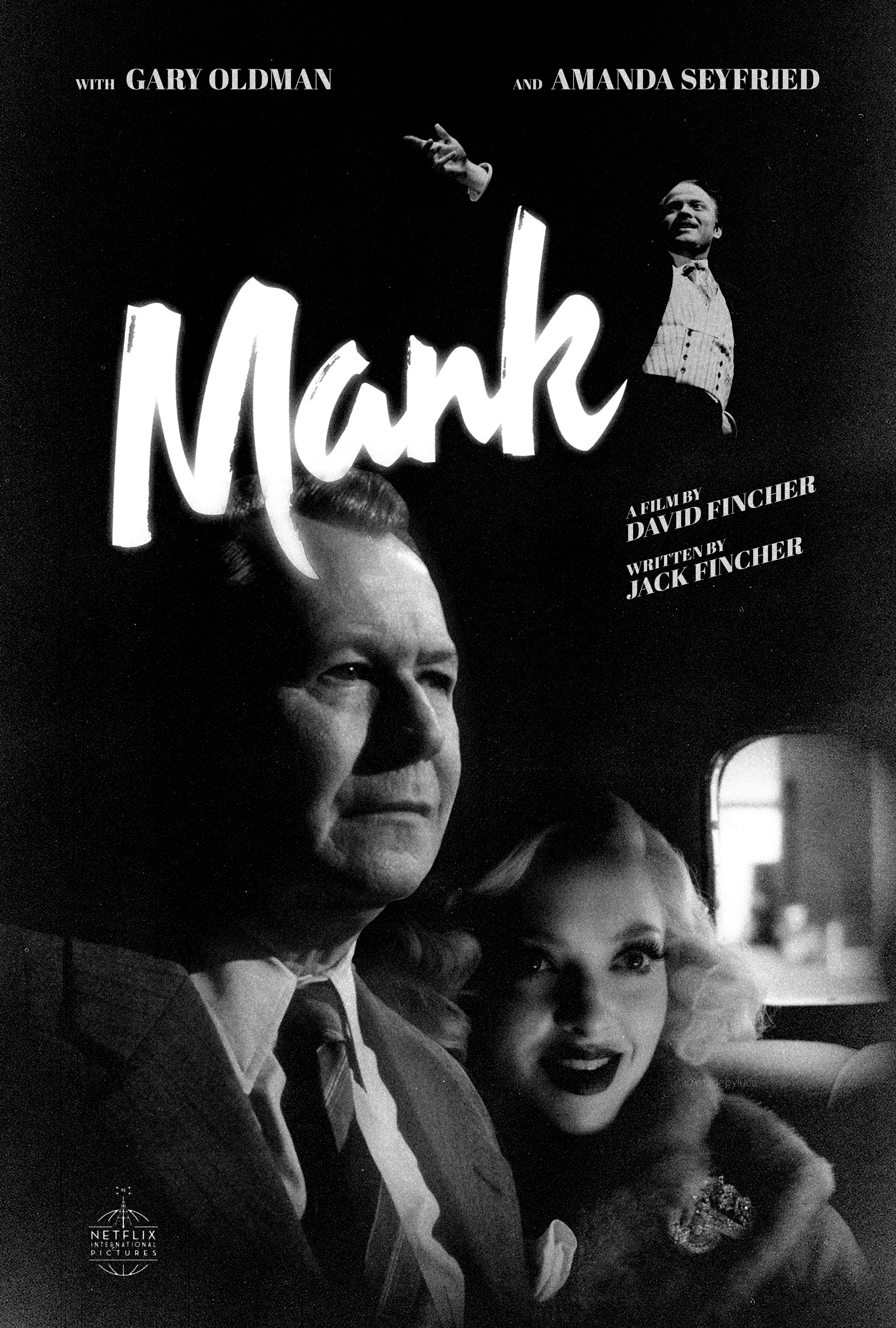
It seems I’ve been waiting for this film for just about forever. Director David Fincher first mentioned it as a possible follow up to Alien3 way back in 1992. With a screenplay by his father, Jack, it would focus on the creation of Citizen Kane. It would provide an answer to how much involvement Orson Welles actually had in the writing of that Oscar-winning screenplay and it would, of course, look into the allegations that the film was besmirched by the machinations of powerful newspaper tycoon, William Randolph Hearst.

Was I up for this? Yes, big time, because this is a story that has fascinated me since my youth. But, as it turned out, I was going to have to be patient…

And now, in one of the bleakest years in human history, it finally turns up, virtually unannounced on Netflix. Needless to say, I don’t allow a great deal of time to elapse before I tune in.

And it’s worth the wait. This is absolutely sumptuous, oozing class from every beautiful monochromatic frame, courtesy of cinematographer Erik Messerschmidt. Here is a faultless recreation of an era, right down to the visible scene descriptions, written clickety-clackety on a manual typewriter. From the opening credits onwards, Mank puts the viewer slap-bang in the early 1940s and keeps them immersed in that turbulent era right up until the final credits.

Washed-up screenwriter Herman J Mankiewicz (Gary Oldman) finds himself installed in a remote desert location, shortly after suffering serious injuries in a car crash. Sternly monitored by John Houseman (Sam Troughton) and ably assisted by English secretary, Rita Alexander (Lily Collins), he has been given the daunting task of writing the debut motion picture for Mercury Theatre’s Wunderkind, Orson Welles (Tom Burke). And he has just sixty days in which to do it.

It doesn’t help that Mank (as he is known to his friends) is an alcoholic. But he sets about the task with as much vigour as he can muster and, as he writes, his mind skips back and forth (rather like the screenplay he’s working on) over his changing fortunes in the Hollywood film industry.

We encounter Mank’s hostile relationship with muck-raking press baron, Hearst (Charles Dance), his platonic friendship with Hearst’s wife, Marion Davies (an almost luminous Amanda Seyfried), and his pugilistic dealings with the extremely unlikable Louis B. Mayer (Arliss Howard). There’s more – much more – in a packed two hours and eleven minutes; indeed, it’s probably fair to say that this is a story as rich and multi-layered as Kane itself. It’s also surprisingly prescient. The realisation that a super-rich newspaper proprietor can exert a powerful influence over the politics of a country, even going so far as to film fake news items to help steal an election, seems like a decidedly contemporary notion… but clearly that kind of thing has been going on for decades.

The film isn’t quite perfect. A scene where Mank goes on a (very long) drunken diatribe at one of Hearst’s lavish parties stretches credulity, and there are a few leaden missteps around the middle section, but these are minor blips in something that’s a giant step up from much of the so-so fodder that gets made. Fincher has created a warm, and moving testimonial to his late father’s memory, one that deserves to stand alongside the infamous movie it commemorates. Of course, it helps if you’re a fan of Kane in the first place, but it’s by no means essential.

If you’ve a couple of hours to spare, why not spoil yourselves? This is a superb piece of cinema.

4.8 stars

Philip Caveney

Fanny Lye Deliver’d

14/07/20

Curzon Home Cinema

Thomas Clay’s oddly titled film has clearly been a labour of love. Ten years in the making and set shortly after the end of the English Civil War, it’s been well reviewed elsewhere – and it stars Maxine Peake, surely the closest thing to a guarantee of quality that film lovers could reasonably ask for. So finally viewing the finished product comes as a crushing disappointment.

There are, of course, some good things to say about Fanny Lye Deliver’d. The look of the film is ravishing and the authenticity of the period setting sings out from just about every frame, putting me in mind of Michael Reeves’ wonderful Witchfinder General. A pity then that the authenticity doesn’t seem to extend to teaching the actors how to convincingly ride horses; they all look like they’ve never sat on a horse before, let alone ridden one. The musical score (composed by Clay and played on period instruments) is also rather good. But then there’s the story…

Fanny (Maxine Peake) is the hard-working wife of the much older John (Charles Dance), a former soldier and a hard taskmaster. It’s clear from the outset that Fanny is led a dog’s life, toiling from sunup to sundown, as she cares for her husband and her young son, Arthur (Zak Adams). The family’s routine is rudely disrupted by the arrival of Thomas Ashbury (Freddie Fox) and Rebecca Henshaw (Tanya Reynolds). The couple arrive stark naked and steal clothes from the Lye’s wardrobe but, when they explain that they have been set upon and rubbed of everything they own, the Lyes take them in, feed them, and tolerate their strange behaviour.

But a visit from the High Sheriff (Peter McDonald), who is in pursuit of two ‘heretics,’ changes everything, unleashing a whole series of violent events…

This might work if the visitors were charming enough to convince an audience that they really could fool a family like the Lyes into accepting their story, but, as played by Fox and Reynolds, they are about as likeable as a cockroach infestation. Quite why young Arthur would trust them – when their only interaction with him involves bullying him mercilessly – is therefore baffling.

We’re told that the two visitors represent a new sexual freedom, one that challenges the strictures of Puritanism,  but – when this supposed freedom seems to be demonstrated by its followers acting just as brutally as the people they supposedly oppose  – it doesn’t really cut the mustard. Furthermore, since the cathartic effect on Mrs Lye is the whole raison d’être for this story (narrated by Henshaw, years after the event) it’s frustrating to see how little opportunity Peake is given to shine, mostly having to convey Fanny’s inner turmoil with sidelong glances and occasional shrugs.

As if the nasty, spiteful storyline isn’t enough to put me off, the film has a slow, lumpen middle section, which drags remorselessly.  I find myself listening to Thomas Ashbury’s heavily accented drivel and vainly wish that Curzon Cinema would get around to offering subtitles for their films.

Fanny Lye Deliver’d feels like something of a missed opportunity, its good points totally swamped by an unpleasant and rather unconvincing storyline.

2.8 stars

Philip Caveney