07/11/26
Filmhouse, Edinburgh
I first saw The Devils on its initial release in 1971 at my local cinema in Queensferry, North Wales. I was twenty years old and, although a keen cinema-goer, I had yet to write my first film review. (That came two years later. You can probably guess the title. (Another excellent day for an exorcism.) I had read about The Devils in the press: indeed, I could hardly have missed it. My parents took The Daily Mirror and I can still remember how it warned me to steer well clear of it. It was ‘depraved’ and ‘salacious’ and featured ‘disgusting’ scenes depicting nuns indulging in rampant sexual antics.
Short of offering me free tickets, they couldn’t have got me there any quicker.
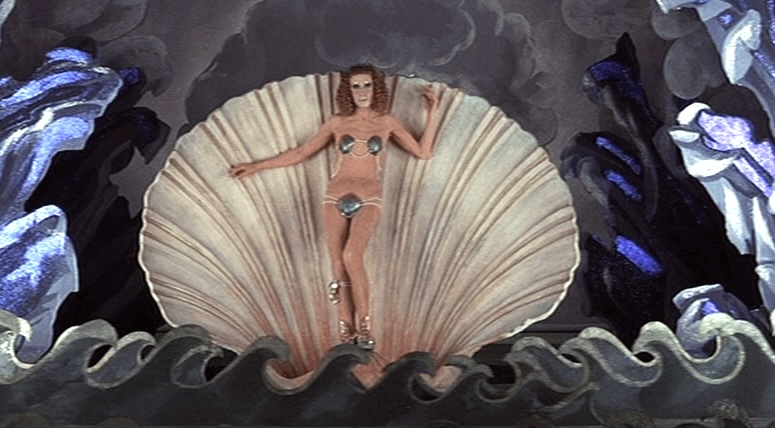
Ken Russell’s most controversial film was a searing vision of what can happen when the Catholic Church has total control of a country. From its opening scenes, where King Louis XIII (Graham Armitage) performs his dance interpretation of The Birth of Venus, I was utterly riveted. I remained so throughout its excoriating account of what happened in the walled city of Loudon in 1634 – a story so unrelentingly weird it couldn’t have been invented. It was only much later on I discovered that, in order to gain a cinematic release, the film had been drastically censored. Somewhere out there, those cut scenes still existed on discarded rolls of celluloid – but they were ‘lost.’
After that, things got even more complicated. After a search initiated by film critic Mark Kermode, the censored footage was eventually located by film archivist Tim Everett in the year 2000. So why did it take Warner Brothers another twenty-six years to reinstate them? Whatever the reason, the restored version is finally…. FINALLY here and gazing around a near sold-out Screen One at Edinburgh’s Filmhouse, where a brand new 35mm print of the film is about to be screened, I can only reflect what a tragedy it is that director Ken Russell died in 2011 and is no longer alive to witness this renaissance.
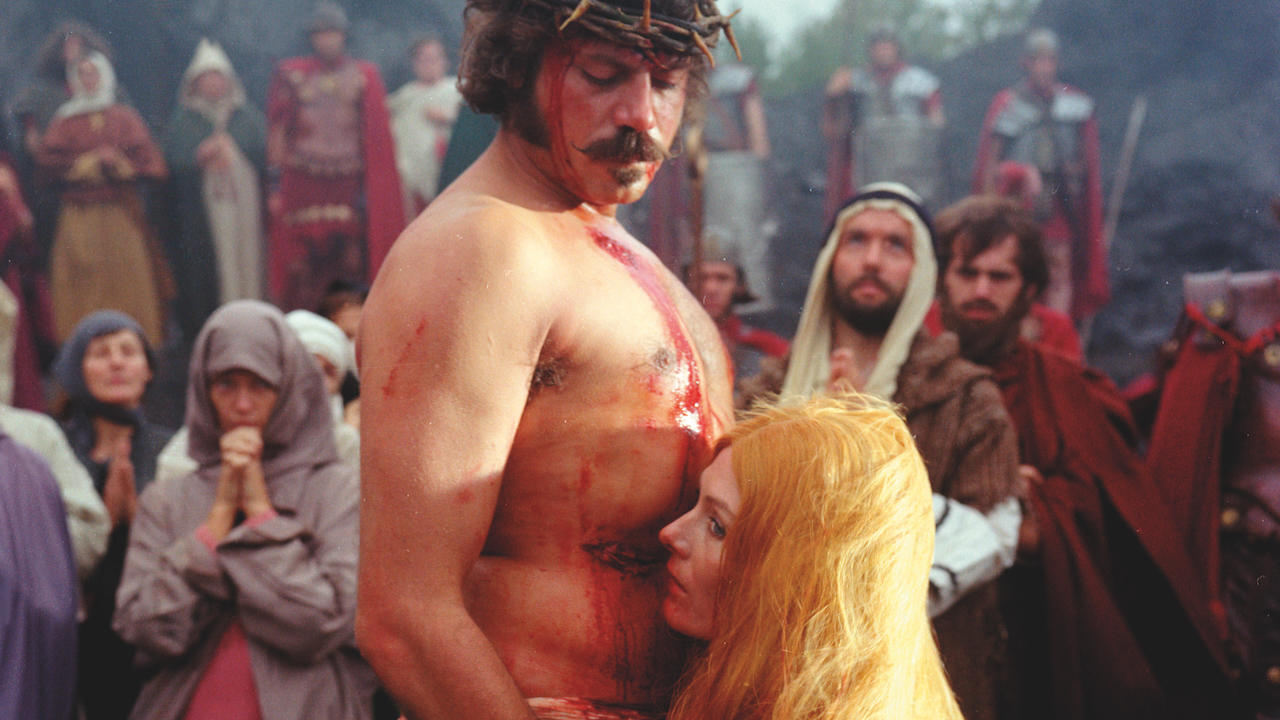
The walled fortress of Loudon is in uproar. Following the quelled Huguenot (Protestant) rebellion and a devastating plague that has killed thousands, French Catholic statesman Cardinal Richelieu (Christopher Logue) attempts to persuade Louis XIII to demolish the fortifications at various cities across France. He want to ensure that any remaining Huguenots can be more easily weeded out and executed. But the King has made a vague promise to the Governor of Loudon that his walls shall remain untouched. That Governor is now dead and the running of the city has fallen to the popular priest, Urbain Grandier (Oliver Reed). Richleau despatches Baron de Loubardement (Dudley Sutton) to take care of the matter, but Grandier, though dissolute and self-aggrandising, refuses to be swayed on the matter.
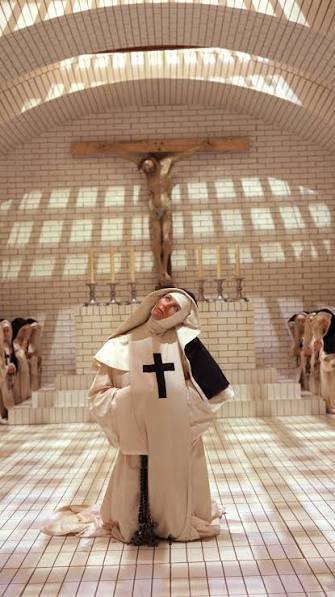
What Grandier doesn’t realise is that he has a secret admirer. Sister Jeanne des Anges (Vanessa Regrave), the Mother Superior at the city’s nunnery, has long admired him from afar – and, in her solitude, she’s started indulging in bizarre sexual fantasies in which he features prominently. When she discovers that Grandier has secretly wed Madelaine de Brou (Gemma Jones), Jeanne’s anger spills over into madness, causing her to speak openly about her fantasies – and when Baron de Loubardement hears about them, he spots an opportunity to bring down those walls…
The Devils is extraordinary on so many levels. Russell’s screenplay (adapted from the play by John Whiting) is wonderfully eloquent and clearly shows the extremes of what can happen when religious hysteria and superstition go head-to-head with power and political ambition. The set design by Derek Jarman (long before he himself embarked on a dazzling career as a film director) looks absolutely astonishing. Shirley Russell’s costume designs, David Watkins’ cinematography and Peter Maxwell Davies’ score all contribute to the vibrant and tangible nature of the film. Though Russell would go on the create many more excellent features, even finding ways to achieve impressive results long after the days when he could command decent budgets (reduced to making them in his garage towards the end), this is undoubtedly his masterpiece.
The performances too are exemplary. Redgrave portrays Jeanne’s inner demons with a series of sly glances and disturbing giggles, while Sutton is eloquently despicable as the oily Baron de Loubardement. It’s also interesting to see Reed – who latterly became better known as a hellraiser than as an actor – turning in a powerful and nuanced performance as Grandier, a man who was certainly a hypocritical philanderer, but surely didn’t deserve the awful fate that befell him. The supporting cast is made up of a whole host of actors who went on to achieve fame in differing ways. (Yes, that really is Brian Murphy as one of the leering ‘physicians’, who would go on to TV infamy as George in George and Mildred!) And of course, there’s Murray Melvin as Father Mignon, a far cry from the role in A Taste of Honey that first brought him to public attention but totally commanding as a conflicted fellow priest.
So, I have waited more than fifty years to see this film in the form that Ken Russell wanted it to be seen. Is it worth the wait? Yes. And I urge anybody reading this to go and see it for themselves, either in the 4K re-release or – if possible – in 35mm, where the film’s full vibrancy can be fully appreciated.
5 Stars
Philip Caveney

