Bill Nighy

Joy

23/11/24

Netflix

For people of a certain vintage, the name of Bob Edwards might ring a bell. He was, of course, the doctor who came up with the concept of Invitro Fertilisation and who, after years of tireless work, was behind the birth of Louise Brown – the first ‘test-tube baby’ as the press of the era dubbed her. You’ll probably also have heard of Patrick Steptoe, the surgeon whose advances in keyhole surgery made the whole process a possibility.

But the name Jean Purdy is certainly not as familiar. The third member of the team, an embryologist, Purdy worked alongside the two men (and, indeed, as this film suggests, was ultimately the driving force that brought their work to completion). And yet, to a great degree, her contribution has been largely airbrushed from history. She didn’t even merit a mention on the memorial plaque at Oldham General Hospital (Louise Brown’s birthplace) until 2015.

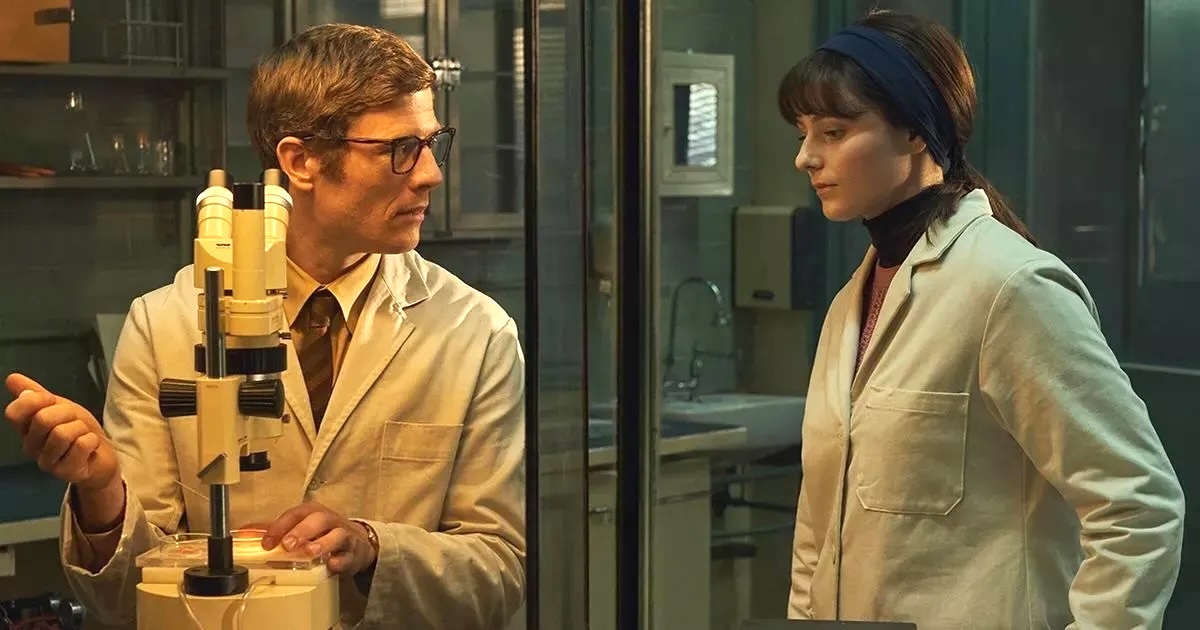
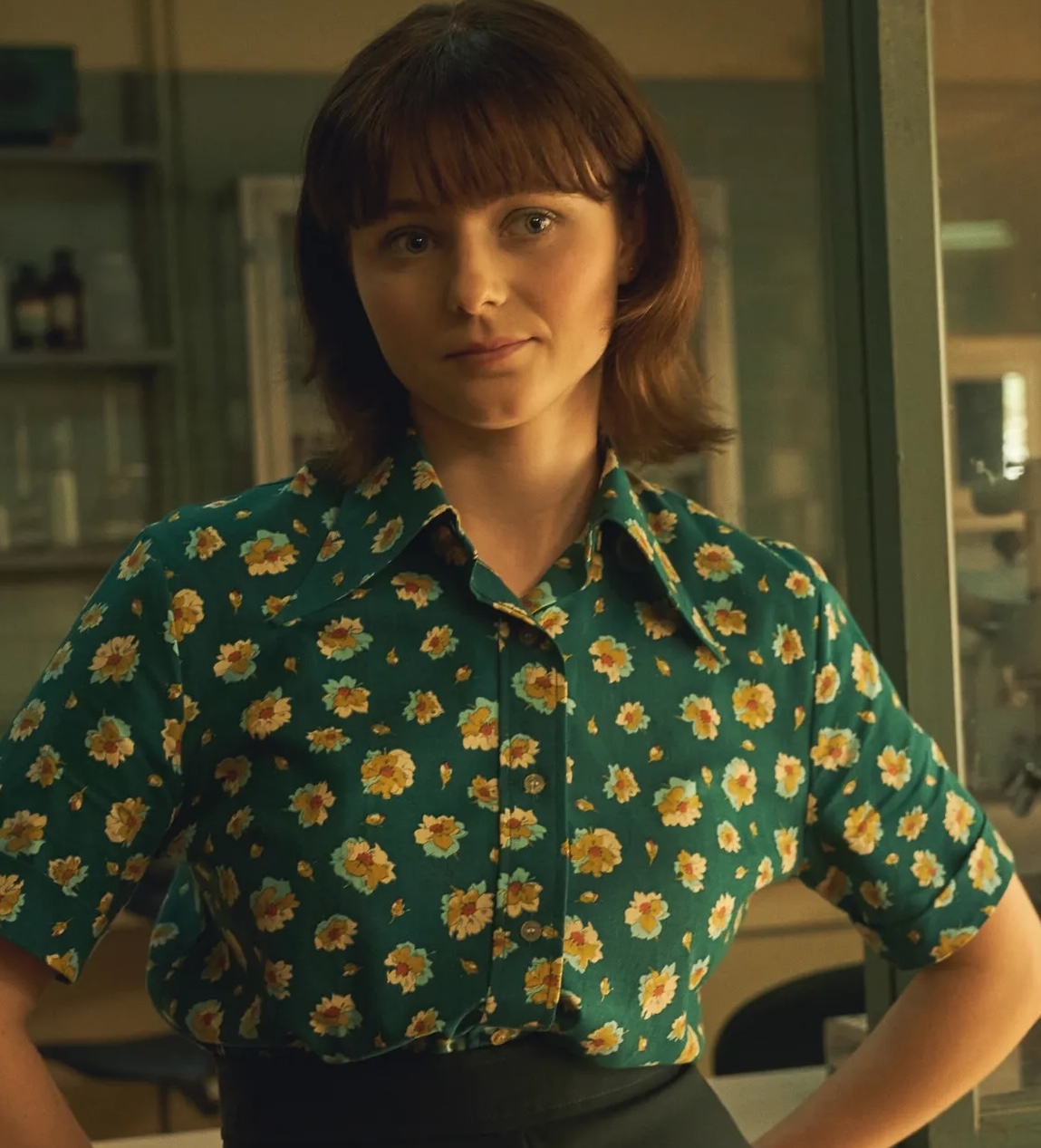
This story begins in 1965 when we meet Purdy (Thomasin McKenzie), freshly graduated from nursing school, being interviewed by Edwards (James Norton), who has recently embarked on the project that will occupy him for many years. His aim is simple: to provide an answer to all those would-be parents who have been prevented from having children because of a simple quirk of nature. Edwards and Purdy quickly become a duo. But their first goal is to enlist the help of Steptoe (Bill Nighy), who – though brusque and dismissive at first – is soon won over, largely by Purdy’s direct, no-nonsense approach.

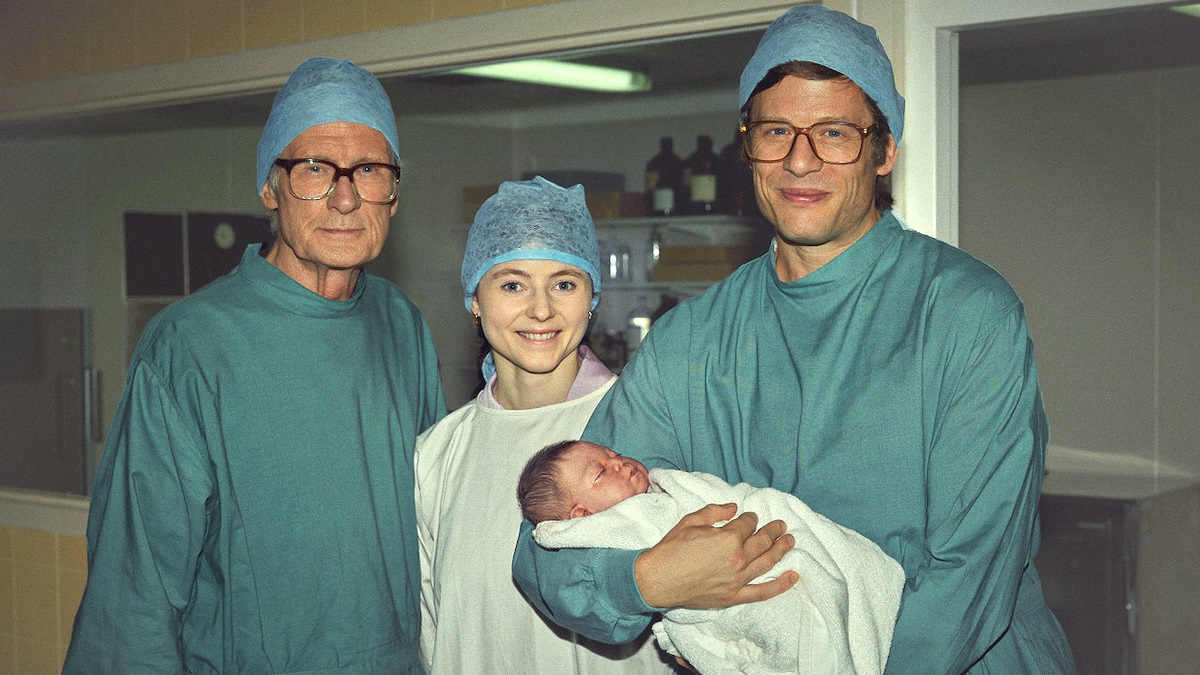
The trio duly embark on years of experimentation as they work towards their ultimate goal. Underfunded and mocked by the tabloid press (who dub Edwards ‘Doctor Frankenstein’), it’s a long hard road – and it’s not until 1978 that their years of work finally bear fruit. Along the way, Jean’s relationship with her own mother is broken. Gladys (Joanna Scanlon) is deeply religious and sees this whole endeavour as ‘sinful’ and ‘unnatural.’ She cuts her daughter out of her life and even asks her not to attend the church they have both gone to for years. It’s only when Gladys falls ill that an uneasy alliance is finally established.

Purdy also nurtures a secret: she herself suffers from endometriosis and is unable to have the child that she has always longed for…

Jack Thorne’s screenplay is beautifully understated, as is Ben Taylor’s direction, which effortlessly catches the drab look and feel of the 60s and 70s. The three leads handle their roles with considerable aplomb and McKenzie in particular is wonderfully affecting, managing to convey her character’s inner turmoil with little more than a wistful look and a sidelong glance. As somebody who has personal experience of the benefits of IVF in the form of my much-loved daughter (and I fully appreciate how easy it was for me as the male in the relationship), I don’t mind admitting that some of the scenes here have me filling up.

Joy is a ‘small’ film, which probably accounts for the fact that it’s not competing with the likes of Gladiator 2 at your local multiplex and, instead, has gone straight to streaming. But it’s really worth the watch. It tells a fascinating true story of courage and determination.

And in its own quiet way, it’s a remarkable film.

4.3 stars

Philip Caveney
The Wild Robot

27/10/24

Cineworld, Ediburgh

In what will almost certainly be one of Dreamworks’ final in-house animations, The Wild Robot pulls out all the stops, making this one of the most visually stunning productions outside of Studio Ghibli. In its early sections, it also deploys some perfectly-timed slapstick sequences that are laugh-out-loud funny.

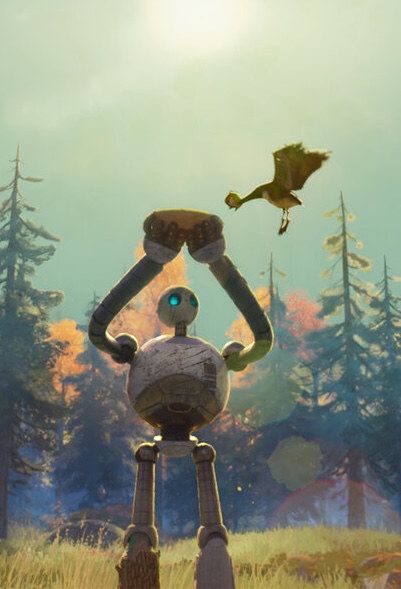
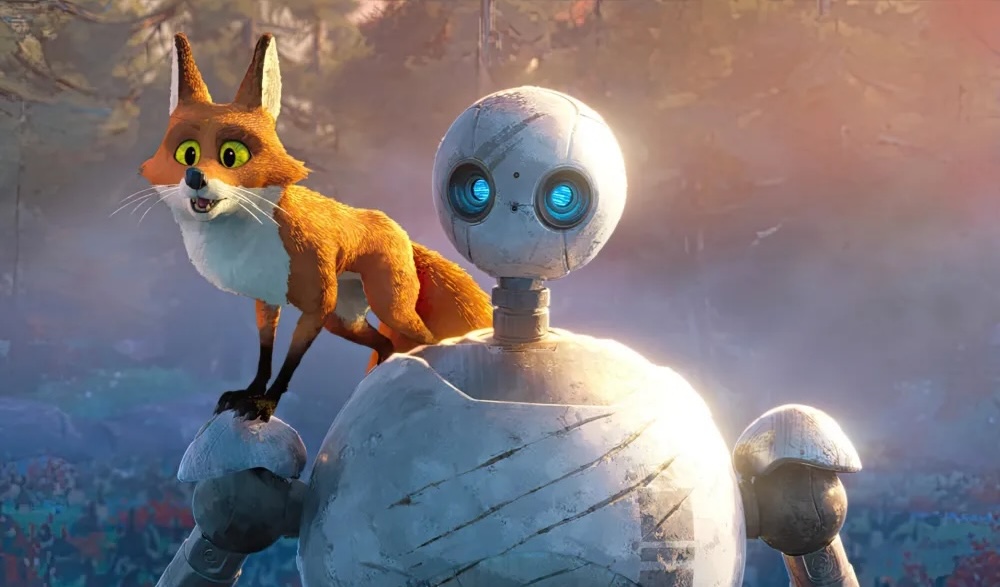
This is the story of Rozzum Unit 7134 (voiced by Lupita Nyong’o), an AI ‘household assistant’ accidentally deposited on a Pacific island and inadvertently switched on by an exploratory rodent looking for food. ‘Roz’ immediately starts wandering the unfamiliar landscape, frantically seeking out suitable tasks to accomplish, but there are no humans to be assisted and the island’s resident wildlife inevitability see the new arrival as something to be feared. Determined to make a success of this unexpected situation, Roz sets out to learn all the different creatures’ languages so that she can adapt to their individual needs.

But things become complicated when she accidentally kills a nesting goose and crushes all but one of its eggs. She manages to save the surviving egg from the attentions of hungry fox, Fink (Pedro Pacal), and when it finally hatches, the chick – who Roz eventually names Brightbill (Kit Connor) – imprints on Roz, perceiving the robot as his mother. Roz now has some clearly designated tasks to accomplish. Brightbill needs to learn to eat, swim and then fly before he and the rest of the local goose population set out on their yearly migration. Assisted by Fink and a knowledgable possum(Catherine O’ Hara), Roz has to make some serious adjustments to her usual mode of practice…

As I said, The Wild Robot, based upon Peter Brown’s novel, is an impressive piece of animation, sometimes breathtaking in its depictions of the island’s landscape and its various inhabitants. Huge flocks of birds and butterflies are rendered in such detail that it sometimes feels like I’m watching a heightened David Attenborough documentary. Writer/director Chris Sanders also makes some canny observations about the nature of AI and its capacity for adaptation.

A shame then that in the final third, the script increasingly feels the need to have some of the characters making cringe-making fridge-magnet-style observations about the nature of love and understanding – Bill Nighy’s migration leader is a particular case in point. Those elements are already being shown in ways that even the youngest of audiences can comprehend, so such mawkish pronouncements feel like a mis-step. Also, the cynical part of my brain makes me wonder how, in the loving multi-species community that eventually evolves on the island, the carnivores will ever manage to survive.

But perhaps that’s just me.

Quibbles aside, this is a beautiful and genuinely moving film that explores some fascinating ideas. If it does prove to be Dreamworks’… ahem… swan song, then it’s an impressive note to end on.

4 stars

Philip Caveney

Pride 10th Anniversary

30/06/24

Mareel, Lerwick, Shetland

We reviewed Pride on its initial release in 2014 and, ten years later, it’s given this timely rerelease. What strikes me most about it now is how relevant it still feels, the same – or similar – battles still needing heroes to fight them. I’m fascinated too by the stellar cast, many of whom have on to even greater things, notably Andrew Scott and George MacKay – and also Jessica Gunning, who (thanks to Baby Reindeer) has recently been catapulted to wider recognition.

If Pride made me weep first time around, it leaves me in floods today.

I post my original review here and absolutely stand by the observations, though in retrospect I might be tempted now to boost those stars to a full 5.

14/09/14

Cineword, Didsbury

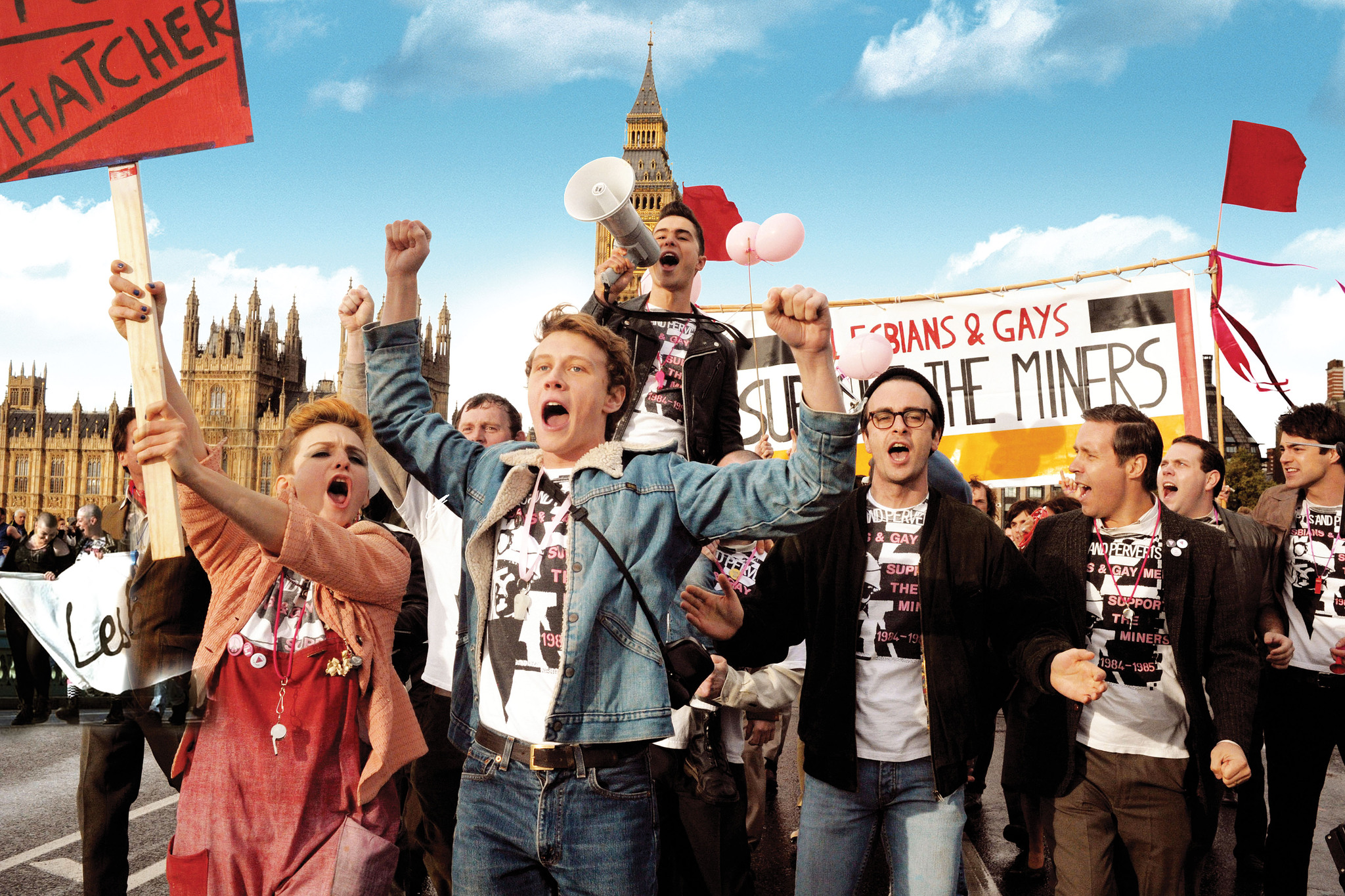
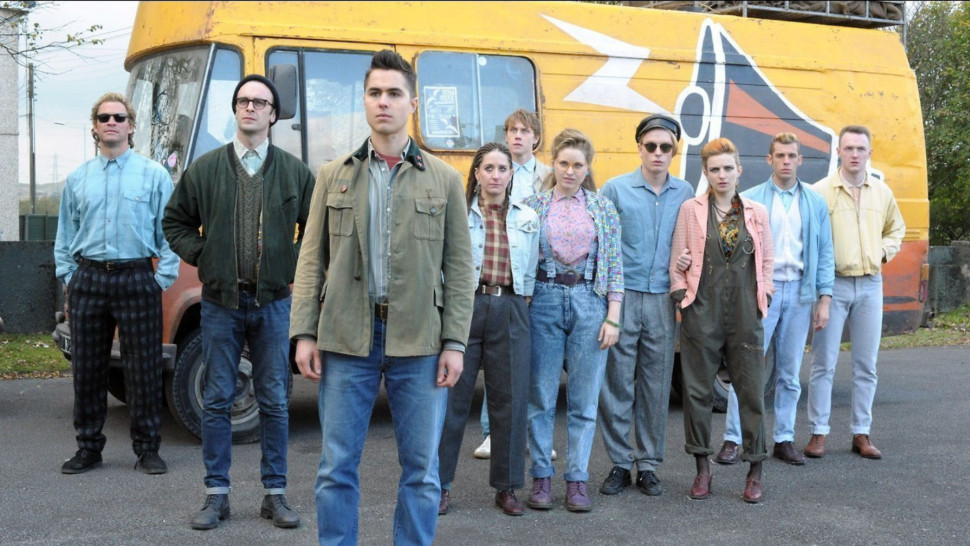
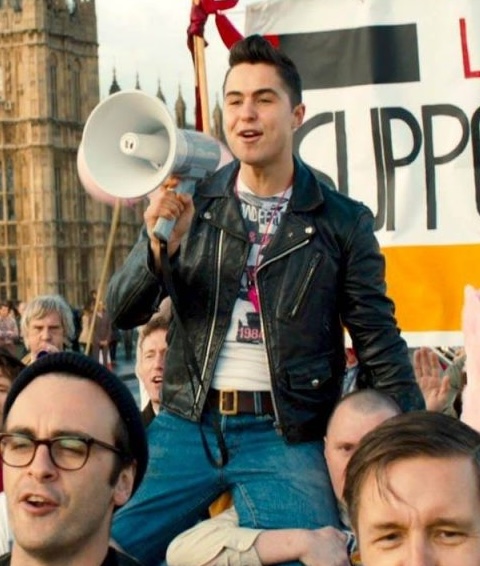
Set in 1984, at the height of the miners’ strike, Pride tells the true-life story of Mark Ashton (Ben Schnetzer), a young gay activist who manages to persuade a group of like-minded friends to form LGSM (Lesbian and Gays Support the Miners). They start to collect money on behalf of one particular group of strikers in South Wales and are so successful, it’s not long before the group meets up with likeable Union man, Dai (Paddy Considine).

He invites them to the sleepy village of Onllwyn, to meet the miners in person – where inevitably, they encounter resistance from some of the more reactionary inhabitants. But after a frosty initial reception, they start to find allies in some rather unlikely places…

Pride is simply irresistible. Cut from the same cloth as films like The Full Monty and Brassed Off, it features a terrific ensemble – Bill Nighy, George MacKay, Imelda Staunton and Dominic West are undoubted highlights, but the overall casting is note-perfect. While it occasionally plays for easy laughs (‘Dai, your gays have arrived!’), it’s never less than entertaining and also takes the opportunity to slip in some genuinely thought-provoking moments.

It would be a cold heart indeed that doesn’t shed tears at the film’s emotional conclusion. Like most ‘true-life’ stories, there remains the conviction that a little dramatic licence may have been exercised on some of the actual events, but nevertheless, this is a successful slice of drama, snappily directed by Matthew Warchus, wittily scripted by Stephen Beresford and one that manages to keep itself just the right side of sentimentality.

4.5 stars

Philip Caveney

Living

09/11/22

Cineworld, Edinburgh

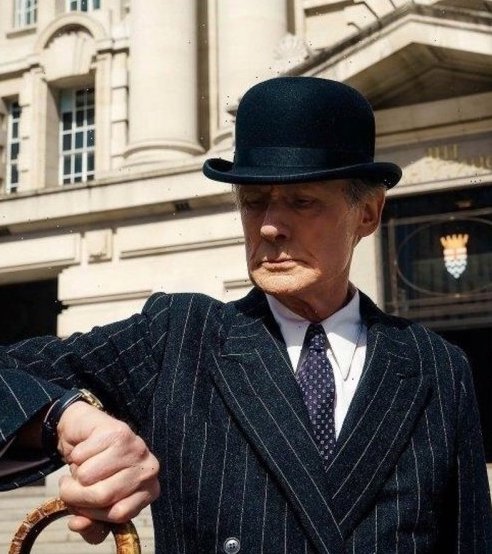
Scripted by novelist Kazuo Ishiguro and directed by Oliver Hermanus, Living is a remake of Akira Kurosawa’s celebrated film, Ikiru – the story of a man coming to the end of his life and desperately trying to right the wrongs of his wasted opportunities. Set in the same era as the original, the story is cleverly relocated to a city hall somewhere in London, where a battalion of bowler-hatted wage slaves put reams of printed paper into order. The office is presided over by Mr Williams (Bill Nighy) a man so grievously incapable of meaningful conversation, that the office’s sole female occupant, Miss Harris (Aimee Lou Wood), has secretly dubbed him ‘Mr Zombie.’

But when his doctor informs him that, courtesy of stomach cancer, he has only a few months left to live, Williams finds he is totally incapable of talking about it to his son and daughter-in-law, preferring instead to unload on a random stranger he meets in a cafe, louche ‘artist’, Sutherland (Tom Burke). Sutherland listens in bewilderment as Williams tells him that he’s never properly lived his life and his solution is to take Williams out on the lash, visiting a series of seedy bars and strip clubs. This offers Williams some momentary respite from his torture, but no real answers.

Next, he has a chance encounter with Miss Harris, and ultimately takes her into his confidence. These scenes could easily be creepy, but it’s clear that Williams is inspired not by lust, but by the young woman’s youth: her ability to take pleasure in the smallest things – like the knickerbocker glory she gleefully chooses when the two of them have lunch at Fortnum’s. It’s these scenes that are the film’s strongest suit and one lengthy monologue from Williams, as he recalls happier times, actually has me filling up with tears.

Ultimately, Living is all about the inability of people to communicate with each other and the point is eloquently made, but – given the film’s length and the fact that it moves with all the urgency of glacial erosion – it sometimes feels as though it makes it several times over. Williams’ elevation to a kind of sainthood, as his final moments are recalled by a passing police constable (Thomas Coombes), come dangerously close to mawkishness. Furthermore, there’s a part of me that feels there’s a kind of cheating going on here. Williams’ progressing illness is conveyed with little more than the occasional grimace and a discreet spot of blood on a handkerchief. Otherwise, he remains as perfectly attired and implacable as ever. None of the horrors of his cancer are ever shown and we all know, don’t we, that real life is never as convenient as that?

Still, there’s plenty to admire here. Nighy was doubtless put on this earth to play the role of Williams, his chiselled, impassive features somehow managing to convey the torment that lies beneath that calm exterior – and Wood is simply adorable as the ingenue who breezes briefly through the fusty atmosphere of the office, before moving on to better things. Kudos should also go to the sound department, for the lustrous music that underpins the films key moments, accentuating the poignancy and regret of the central premise. The era is convincingly evoked, right down to the opening and closing credits and Sandy Powell’s meticulous costume design is, as ever, spot on.

A final thought. I wonder if this – like the film that inspired it – would have looked even more sumptuous in black and white?

3. 8 stars

Philip Caveney

Emma.

14/02/20

Some people bemoan their prevalence, but I don’t object to remakes of classics, so long as they’re done well. Little Women was one of my favourite films of 2019, with Greta Gerwig demonstrating exactly how worthwhile such revisitings can be. I like the vim and vigour that seems to be on-trend, the opening up of old favourites to a brand new audience.

Admittedly, I’m puzzled – and a little irked – by the addition of a full stop to Emma.. It seems affected, a bit try-hard. I’m hardly mollified by the explanations I find on-line either: there’s a ‘period’ because it’s a period drama (doh!) or – worse – this is the final, definitive version of the tale. (No, that would be the book.)

Still, I’m keen to see Emma., particularly as the poster, trailer and cast list hint at something sprightly and fun. I love Jane Austen’s novel, and have enjoyed a range of adaptations (Clueless, obviously, is the best). Eleanor Catton is also a writer I admire. But, sadly, neither her script nor Autumn de Wilde’s direction offer us anything more than a pretty confection.

Speaking of which, there is a lot of pretty confectionary in this film, with towering four or five-layer cakes present on almost every table (disappointingly, we never see them cut; I’d like to know what they look like inside). The dresses are gorgeous too, and the furnishings. In fact, it’s all rather ravishing, but there’s almost no substance – an empty edifice, just like the cakes.

It never feels real. Every emotion seems transient, every slight soon forgotten. Emma (Anya Taylor-Joy) is, as we know, handsome, clever and rich. She’s unbound by the need to marry, as she is financially secure, and anyway, her father (Bill Nighy) needs her at home. To stave off the boredom of wandering around a big posh house and wearing nice frocks, she decides to indulge in a spot of match-making. But it takes Emma some time to realise that other people aren’t as privileged as her, and that her meddling can cause them actual hardship. For a modern audience, this is a problematic narrative, with its underlying assertion that we should all know our place. But this is never addressed, not even obliquely; in fact, if I didn’t know the source material, I don’t think I’d be able to ascertain the social hierarchy at all. The costumes don’t make it clear, nor do the characters’ interactions. Just sometimes we are told that a character is poor, or that their prospects aren’t too good.

The characters aren’t defined enough, either, especially the men. The differences between Mr Knightley (Johnny Flynn), Mr Elton (Josh O’Connor) and Frank Churchill (Callum Turner) are barely perceptible; in the novel, the three are worlds apart. In fact, although Flynn performs well in the role, I don’t think the script even makes clear who Knightley is; I’ll wager many a newcomer to the story assumes he’s Emma’s brother at first.

Mia Goth is the standout, imbuing the unfortunate Harriet Smith with real charm and naïvety. Her nervous reverence for Emma is perfectly drawn. Miranda Hart also puts in a decent turn as Miss Bates, offering us the film’s only real moment of authentic emotion and poignancy.

All in all, this feels like an opportunity missed, a waste of talent and potential.

2.9 stars

Susan Singfield

Sometimes Always Never

16/06/19

Scrabble can be a hard lesson for people like me, who are in love with language. We initially approach it, don’t we, thinking it will be an exercise in showing off our vocabulary, a chance to demonstrate how erudite we are? But we quickly learn that it’s really a brutal game of mathematics and that those players who have memorised a series of obscure, high-scoring two letter words are going to wipe the floor with us.

It’s this condumdrum that lies at the heart of Sometimes Always Never, a quirky and bitter-sweet story, written by Frank Cotterall Boyce and directed by Frank Hunter. It’s set in and around Formby, where Anthony Gormley’s distinctive sculptures haunt the sands, looking for all the world like bit-part players waiting for a chance to step into the action.

Alan (Bill Nighy) is a fascinating character, a retired tailor (the film’s title refers to the three buttons on a jacket and how you should wear them). He’s also a part time Scrabble-hustler. In the film’s downbeat opening, he meets up with his estranged son, Peter (Sam Riley) and the two of them go to have a look at the body of a dead man. Alan’s other son, Michael, you see, went missing years ago, following a heated argument over a game of… Scrabble, and Alan’s life since then has been dominated by his absence. The dead man turns out to be the missing son of Margaret (Jenny Agutter) and Arthur (Tim Mcinnery),  and, relieved, Alan heads home. But a couple of days later,  he arrives unnanounced at Peter’s house, where he pretty much moves in, much to the bafflement of Peter’s affable wife, Sue (Alice Lowe), and her teenage son, Jack (Louis Healy), with whom Alan ends up sharing a room. As the days pass and there is no sign of Alan going home, he begins to exert a peculiar influence over the family…

This is a deliciously oddball concoction which finds plenty of fun in the strange rituals that people employ in order to rub through their days. Nighy is as terrific as ever, though it does take a little while to adjust to the shock of hearing him speak with a Merseyside accent. Mind you, that also goes for Jenny Agutter, who manages to hide her own painfully plummy tones in a similar manner. It’s apparent from their first meeting that Alan and Margaret  have some chemistry between them.

Despite its charms, the film suffers a little from an inconsistency of tone. For instance, an early scene where Alan and Peter appear to be driving in a cardboard cutout car is a delight, but this approach isn’t used anywhere else – and a scene featuring Alexi Sayle as a random fisherman doesn’t really add anything to the story. Furthermore, any film that’s lucky enough to have Alice Lowe in the cast really ought to find a little more for her to do but, these reservations aside, this is mostly a cleverly judged cocktail of wry chuckles and poignant observations.

Not exactly earth-shattering stuff, then, but – in its own way – a satisfying and rather unique cinematic experience.

4 stars

Philip Caveney


The Limehouse Golem

11/09/17

This Ripper-esque murder mystery, adapted from the novel by Peter Ackroyd and written for the screen by Jane Goldman, has plenty of things to commend it, even if the story seems a little over-familiar. Bill Nighy (in a role originally intended for the late Alan Rickman) plays Inspector John Kildare, brought in by his superiors to investigate a series of grisly murders in the East End of London. Kildare, we quickly learn, has been passed over for promotion because he is a homosexual. The baffling nature of the crimes suggest he’s being offered as some kind of sacrificial lamb, somebody to take the inevitable hit when he fails to get a conviction.

Kildare is also drawn into the trial of former music hall star, Elizabeth Cree (Olivia Cooke), who stands accused of poisoning her husband, John (Sam Reid). The problem is that the dead man is one of the chief suspects for the Golem murders. The others are famous music hall star, Dan Leno (Douglas Booth), George Gissing (Morgan Watkins) and Karl Marx (Henry Goodman): yes, that Karl Marx! Assisted by Constable George Flood (Daniel Mays), Kildare starts his investigation – and quickly discovers that he is wandering into a very tangled web indeed…

So yes, plenty to enjoy here – superlative performances from most of the cast (especially Booth), an intriguing look at the kind of entertainment laid on in the music halls of the period (I have to say, people must have been easily pleased in those days – it’s not exactly comedy gold) and some convincing recreations of Victorian London in all its grubby glory.  And yet, something doesn’t quite gel. The story unfolds slowly and fitfully, feeling longer than it’s one hour and forty nine minute running time. It only generates a full head of steam as it moves towards the final half hour or so. Nighy is always a pleasure to watch, but I couldn’t help feeling he wasn’t really given enough to do here, required mostly to stand around and look perplexed.

It would be criminal to give away the ending, so I won’t – but suffice to say, that I thought it was one of the stronger elements of the film. Rookie director Juan Carlos Medina may not have the lightness of touch needed to make this work perfectly, but it’s nonetheless a decent effort.

Be warned, though, the visceral murder scenes are not for the squeamish.

3.8 stars

Philip Caveney

Their Finest

16/04/17

Ah,the British movie – still out there and still fitfully showing occasional signs of life, thank goodness. And trust me, films do not come much more British than Their Finest. (Terrible title, by the way, but based on a book called Their Finest Hour and a Half, which frankly isn’t very good either). However, the resulting film is much better than either title might lead you to expect.

It’s the early 1940s and London is suffering the worst excesses of the Blitz. Catrin Cole (Gemma Arterton) arrives for an interview at the Ministry of Information (Film Division) thinking that she’s applied for nothing more than a secretarial post, but she soon learns that she will be expected to write the ‘slop’ for the informational films the unit is currently producing. Slop, by the way, is the far from sympathetic term for anything uttered by the female actors in the films. Furthermore, Catrin is told, she obviously can’t be paid the same money as ‘the chaps in the unit’, but £2 a week sounds attractive to her, because she’s currently paying the rent on the flat she shares with her partner.

Ellis (Jack Huston), is a struggling artist who was badly injured in the Spanish Civil War and who moonlights as an (unpaid) ARP warden. The problem is he doesn’t much like the fact that Catrin is the money earner.  She finds herself seated at a desk next to opinionated young writer, Tom Buckley (Sam Claflin) and she’s soon caught up in the struggle to get across a woman’s point of view into the scripts they are producing. It’s clear too that Catrin and Sam are probably made for each other, if they would only realise it. Then, the unit’s boss, Roger Swaine (Richard E Grant), announces that a more ambitious project is in the pipeline – a true life story set against the turmoil of the evacuation of Dunkirk…

OK, there’s nothing particularly ground-breaking about this film, though it does have some decent ammunition in its armoury, not least the presence of Bill Nighy as over-the-hill actor, Ambrose Hilliard. Nighy’s scenes are probably worth the price of admission alone. He is fast approaching the role of National Treasure, an actor for whom the term ‘louche’ seems to have been specially created. His outrage at being asked to play the role of alcoholic old timer, Uncle Frank, is a joy to behold.

There are other pleasures too. The recreations of London during the blitz are nicely done, Arterton is as charming as ever and the film excels at demonstrating the arbitrary nature of life during wartime. A scene where Catrin chances on the aftermath of the bombing of a department store is very affecting. To lighten the mood, there are hilarious clips from the feature film that the unit is making, complete with dodgy miniature boats, unconvincing glass paintings of the evacuated troops and even the terrible acting of American war hero, Wyndham Best (Hubert Burton), drafted in to the movie to try and encourage the Yanks to engage with the war, raised a chuckle to two. And, just in case I’m in danger of painting this as a total laughter fest, the film also manages to lob in an unexpectedly heartbreaking emotional grenade that consequently had me in floods of tears.

All in all, this is a delightful film, well worth seeking out.

4.3 stars

Philip Caveney

The Second Best Exotic Marigold Hotel

MV5BMTU3MjkxNjc0OV5BMl5BanBnXkFtZTgwMjc0NDg0NDE@._V1_SX214_AL_

05/03/15

In 2011, The Best Exotic Marigold Hotel made the cinema industry sit up and take notice. Here was a modestly budgeted film that raked in a hefty profit, but more significantly, it took it from the kind of mature audience that cinema usually fails to attract (i.e. not just 12 year old boys). So it was inevitable that sooner, rather than later, there’d be a sequel. And here it is, complete with a title that sounds worryingly like a self-fulfilling prophecy. It should be remembered that the original film was based on a rather good source novel by Deborah Moggach. This one appears to be an original screenplay, if by original, you mean borrowing an idea that famously appeared in an episode of Fawlty Towers. The kindest thing you can say about it, is that it’s a curate’s egg of a film, good in parts but those parts are few and far between.

Sonny (Dev Patel) is soon to marry his fiancé, Sunaina (Tina Desai), but first he plans to expand his operation by opening a second hotel and at the film’s inception, has gone to America to seek finance. In this enterprise he’s aided by the caustic Mrs Donnelly (Maggie Smith) her character slightly diluted from her original bitchy incarnation, but nonetheless still awarded most of the funniest lines. Meanwhile the usual suspects from Marigold 1 parade around having affairs with each other (Celia Imrie’s character, Madge, appears to have turned into a borderline good time girl,) while Evelyn (Judy Dench) and Douglas (Bill Nighi) are still failing to connect, even when it’s perfectly clear that the two of them are simply made for each other. Into this hotbed of geriatric passion wanders Guy Chambers (Richard Gere) who might or might not, be the hotel inspector who can grant Sonny’s expansion plan. Before you can say, ‘Basil Fawlty,’ Guy has the hots for Sonny’s widowed mother and much (alleged) hilarity ensues. The problem is, that this is all so obvious, it might as well have been performed as a series of semaphore manoeuvres. A last minute ‘twist’ fails to offer any surprises whatsoever. And what’s happened to Sonny’s character? In Marigold 1, he was charming in a bumbling, hapless sort of way, but here he’s a car crash of a person who can’t open his mouth without offending everybody in the vicinity.

On one hand, TSBEMH deserves respect for daring to portray senior citizens as genuine characters with real lives and real concerns; on the other hand, points must be deducted for its outdated portrayal of India as a country that has somehow never escaped the bonds of colonialism. The first film managed to skirt skilfully around these issues, but this time it just wades on in, seemingly without thinking. The climactic wedding features lots of dancing and larking about, but also comes with a large dollop of sentimentality, which once again, the first film was careful to avoid.

So, second best by name and certainly second best by nature. Ideally, the film makers should have gratefully accepted their groundbreaking hit and moved on to another idea, but of course, the movie business will always respond to a hit by throwing more money in it’s general direction. Can we ‘look forward’ to The Third and Final Exotic Marigold Hotel? God, I hope not.

3 stars

Philip Caveney