Bedlam Theatre

Little Women

24/10/25

Bedlam Theatre, Edinburgh

First, a plea to the good people of Bedlam: for the love of all little women, good wives and little men, PLEASE stop leaving the fire exit door open during your productions. Christopher Columbus! It’s cold enough in this unheated theatre without letting in a blast of late October air! I wasn’t expecting to identify quite so closely with Amy after her fall through the ice, “shivering, dripping and crying” until she’s wrapped in blankets in front of a fire.

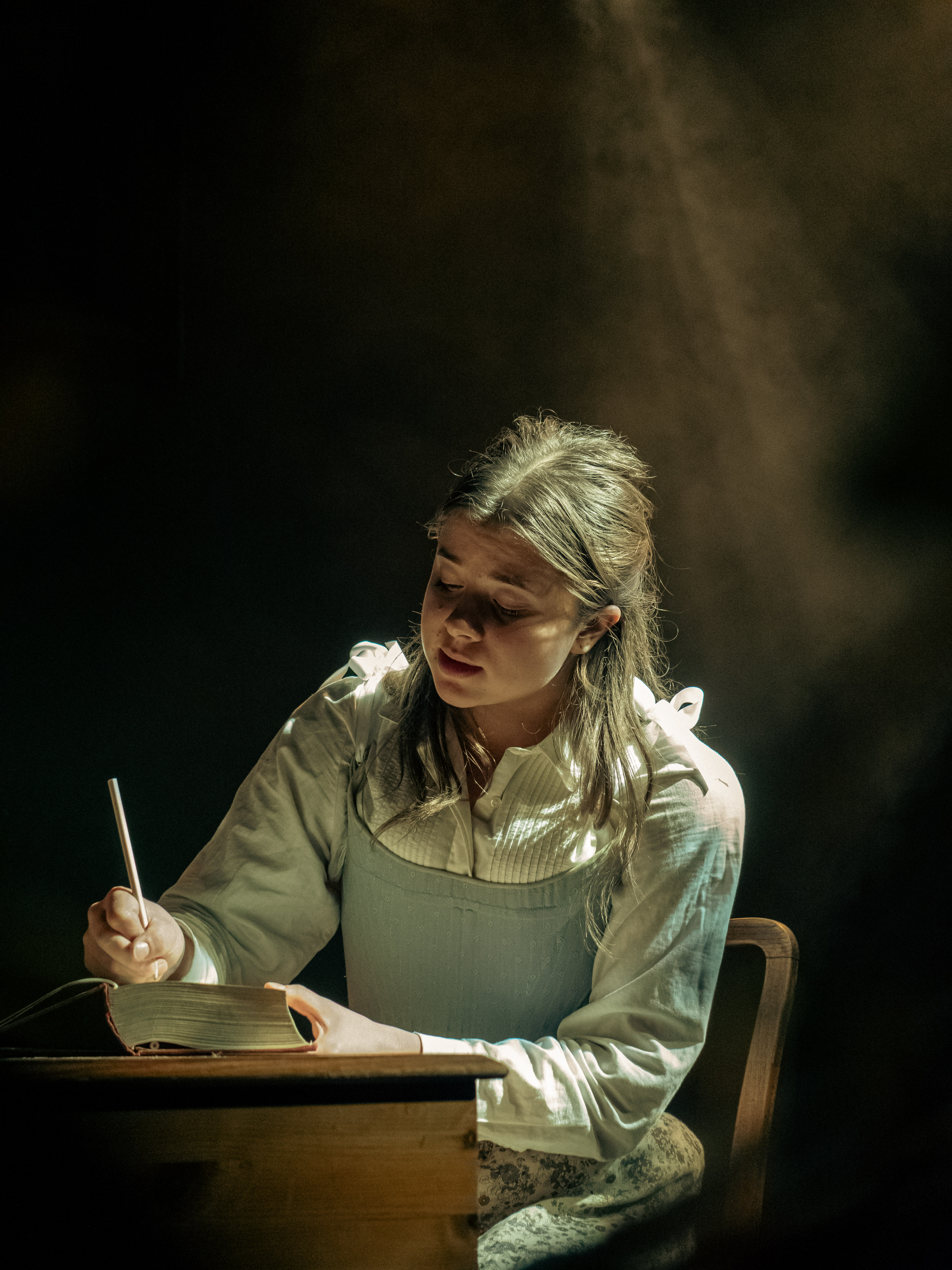
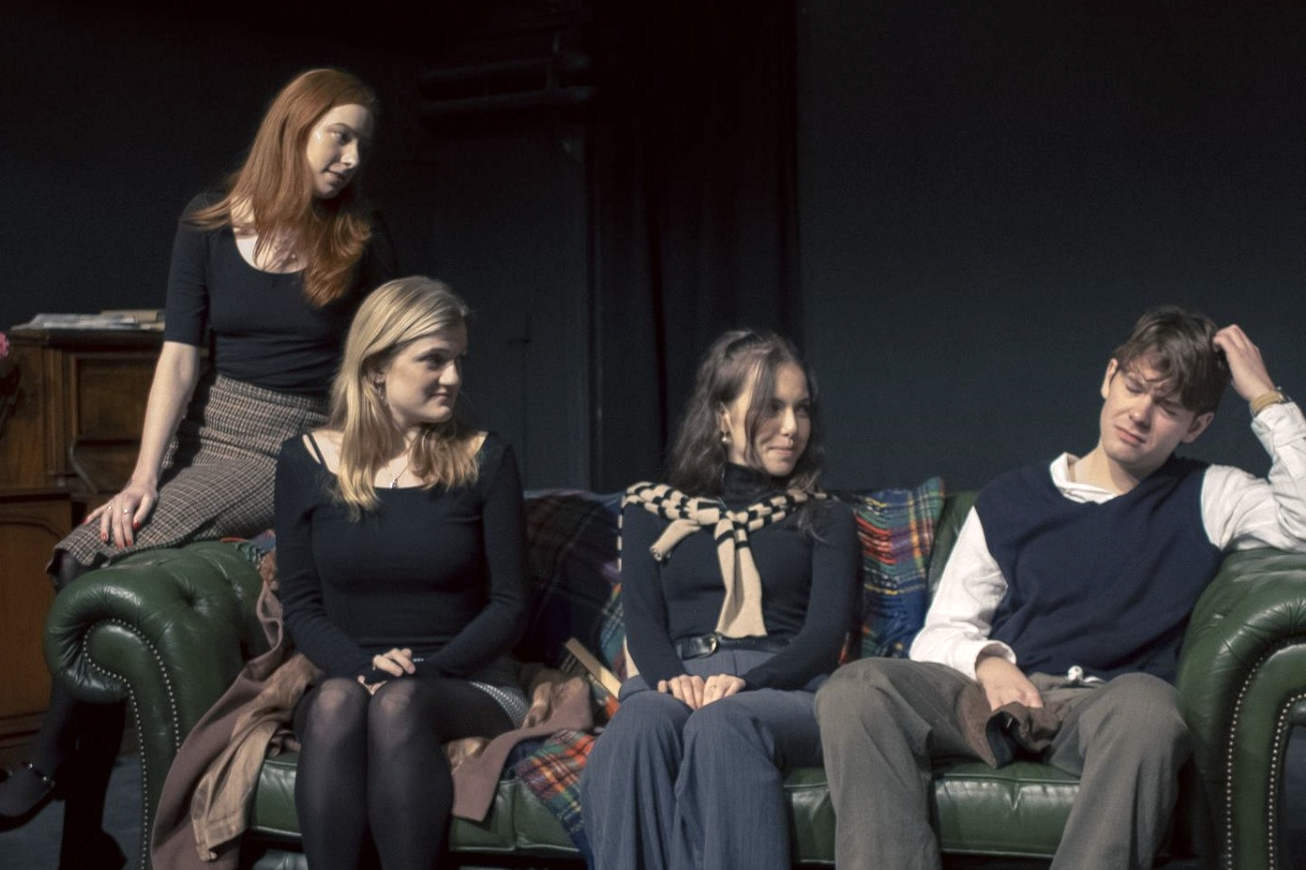
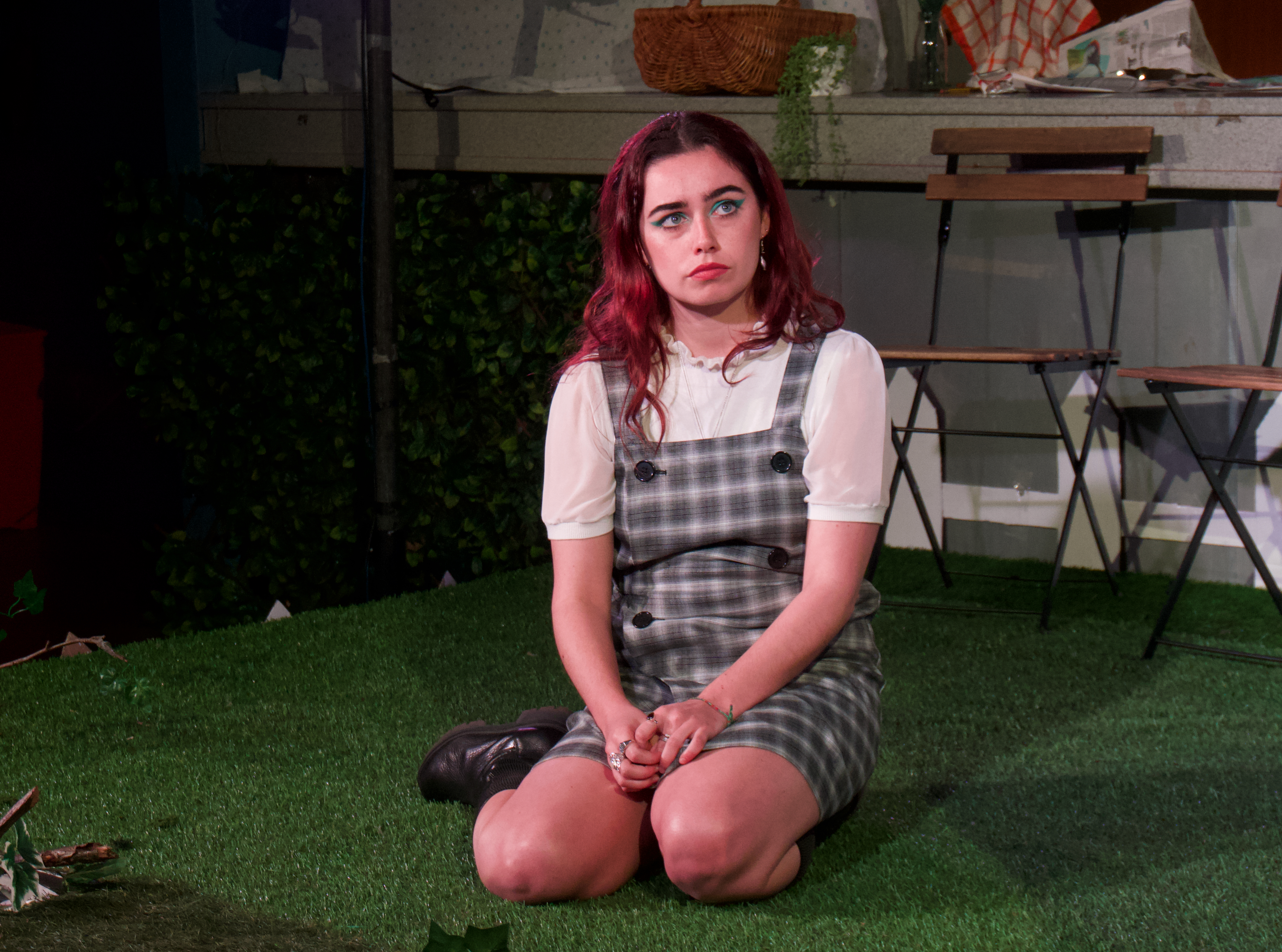
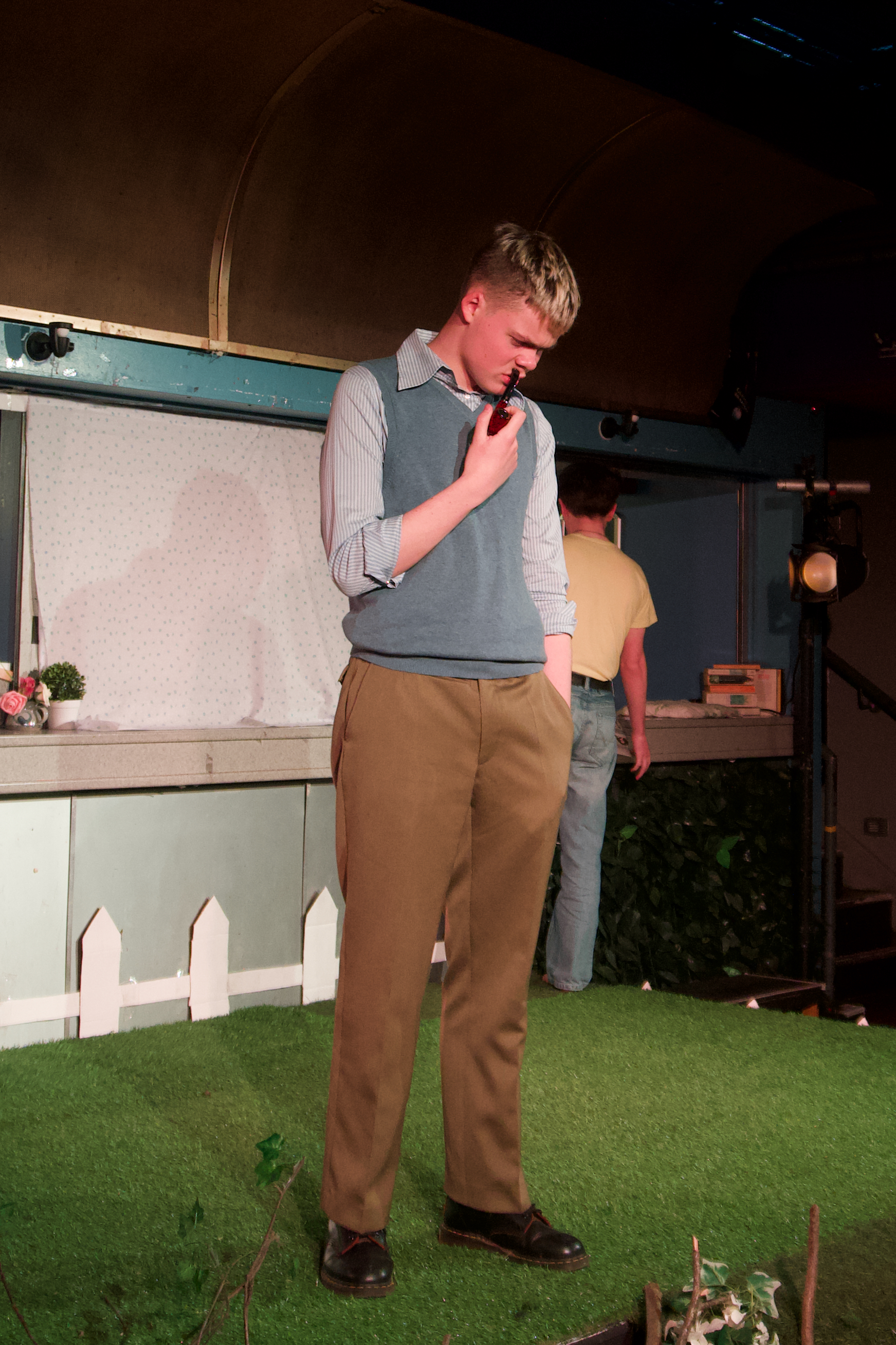
But, to quote Louisa May Alcott, “there is always light behind the clouds” and EUTC’s Little Women, directed by Lauryn McGuire and Meri Suonenlahti, is a case in point: a bright, sparky production, perfectly encapsulating the wholesome vivacity of the nineteenth-century New England classic.

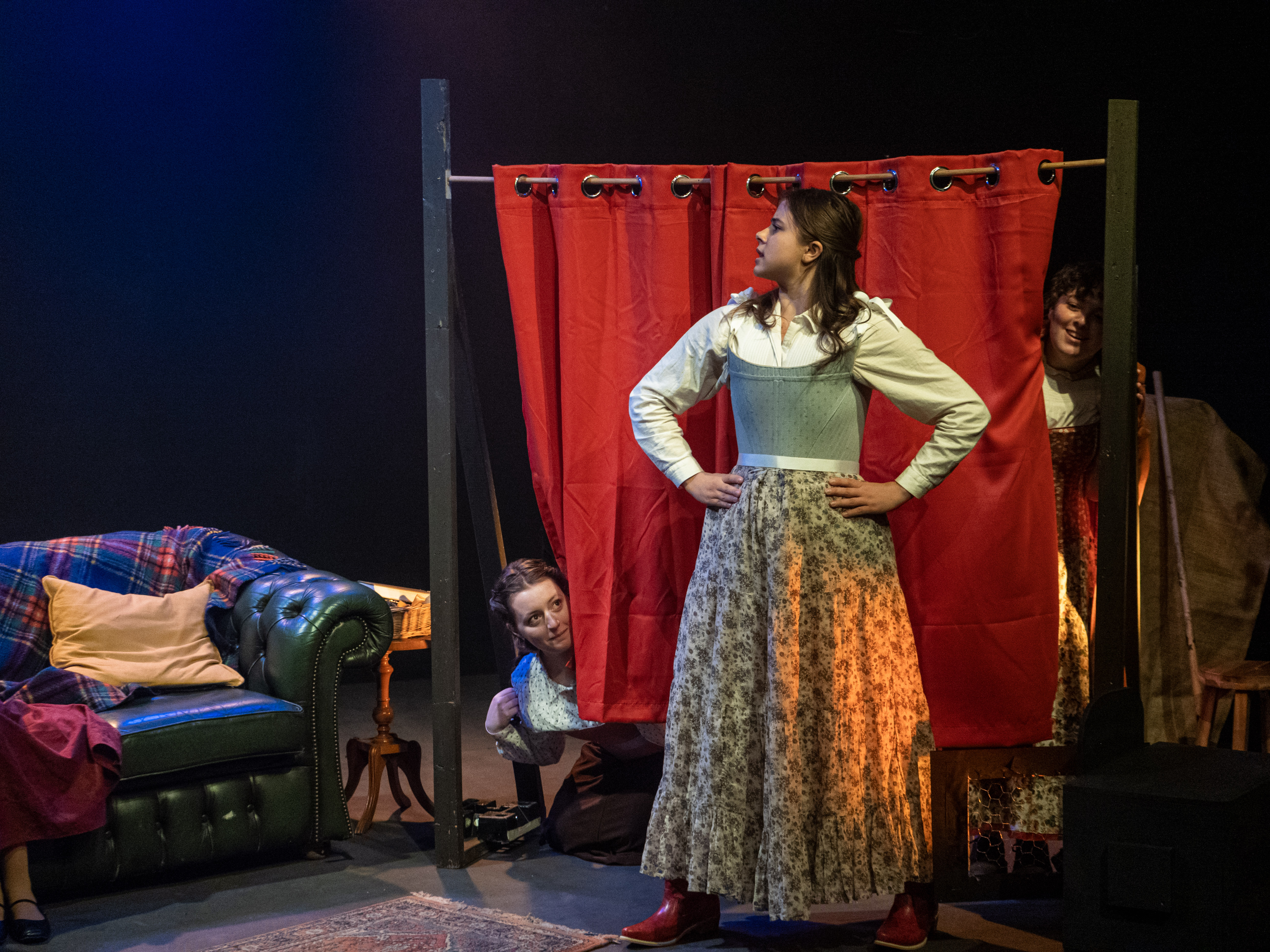
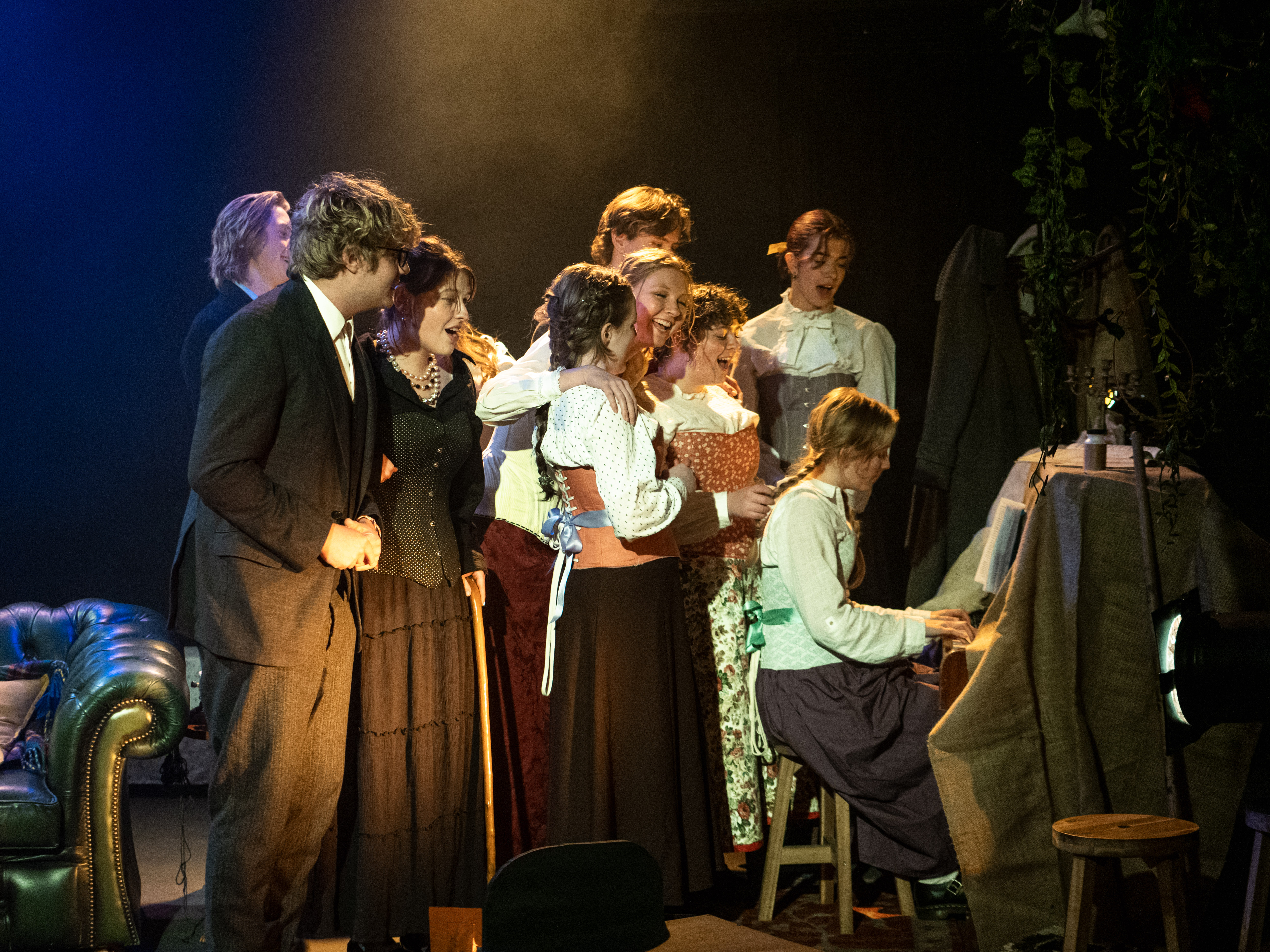
Not a lot happens in Little Women – the coming-of-age novel is character rather than plot-driven – so the play’s success relies on the actors’ embodiment of the four sisters. Liv De Pury excels as Alcott’s alter-ego, Jo, the irrepressible second child, who rails against the constraints of her gender and burns with ambition to become a writer. De Pury imbues the popular heroine with sass and drive, creating an engaging protagonist for us to root for. Sophie Davis’s Meg is a softer, sweeter young woman than Jo, but no less likeable, her warmth and kind nature almost palpable. Elsie Frith, as Beth, captures the girl’s gentleness and fragility, while Rachel McLaren shines as Amy, the melodramatic baby of the March family, eliciting much laughter from tonight’s audience.

The set (managed by Azalea Drace) works well, making the most of the small stage. A raised area represents Jo’s garret, with the rest of the performance space given over to the March family’s living room. The trusty green Chesterfield is back (it’s made an appearance in almost every show we’ve see in this venue), its period style especially appropriate for this piece. I also like the fact that the sisters actually play the old upright piano, rather than relying on recorded sound.

The costumes (managed by Millie Franchi) are similarly effective, making clever use of corsets to convert simple modern skirts into clear approximations of 1800s fashion.

The production as a whole works well. Dylan Kaeuper (Laurie) and Theodore Casimir-Lambert (John Brooke) provide excellent support as the love interests, while Roni Kane (Marmee), Hunter King (Father) and Rufus Goodman (Old Mr Laurence) are all impressively convincing as characters much older than themselves. Watching events play out, I feel transported back into the cocoon of my childhood, curled up in bed reading about these faraway adolescents and their travails.

I can’t urge you to buy a ticket because there’s only one performance left and I know that it’s sold out. But I can congratulate EUTC on another delightful production, allowing this good wife to indulge in a little nostalgia and leave the theatre with a great big smile on her face.

4.4 stars

Susan Singfield

Jellyfish

01/05/25

Bedlam Theatre, Edinburgh

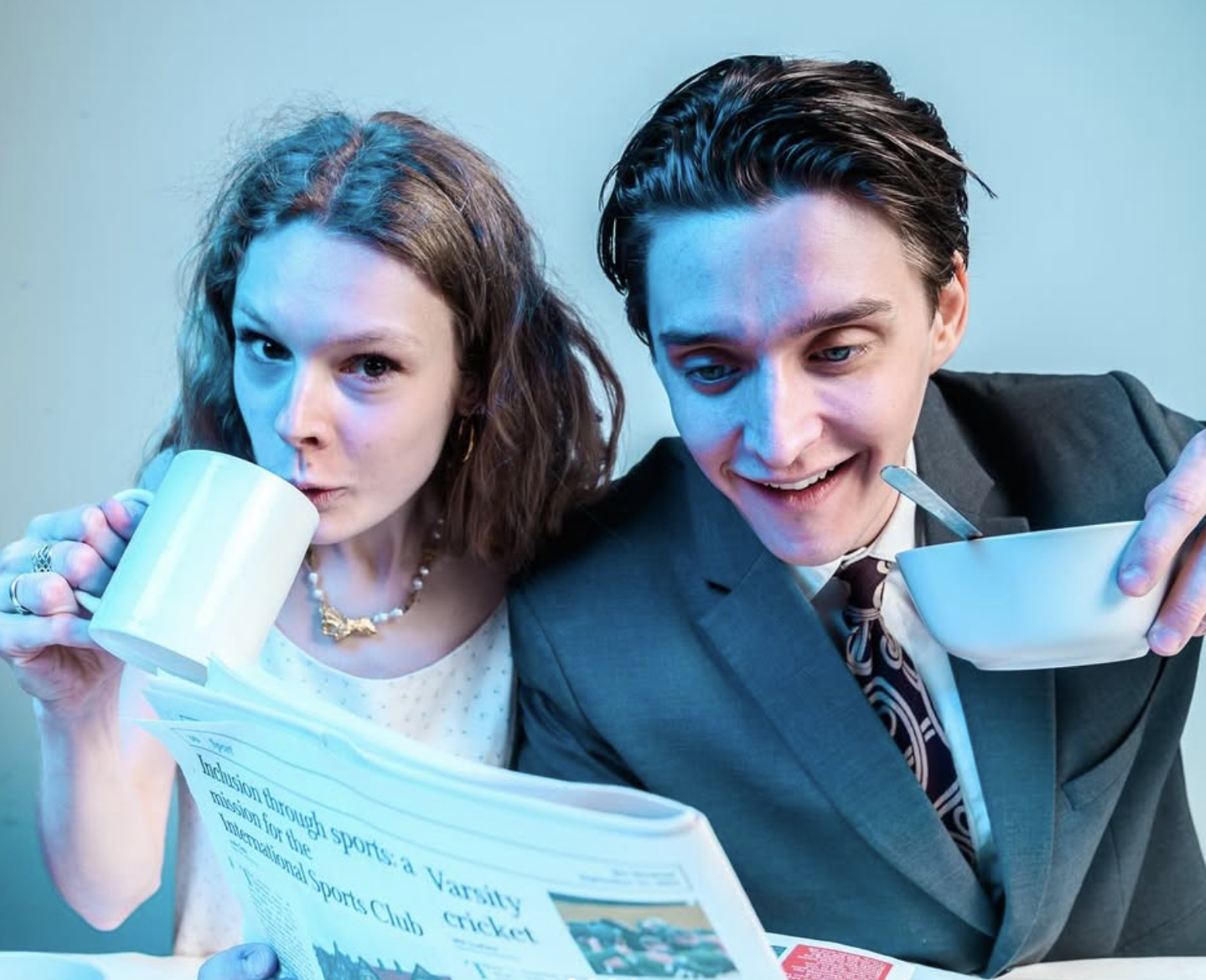
Smiff (William Osbon) and Willow (Raphaella Hawkins) are a married couple, hanging on in quiet desperation in their perfectly decorated home, somewhere in suburbia. Smiff has an addiction to tinned spaghetti and entertains dreams of owning a sailing boat, despite having no experience of marine life whatsoever. Willow just wistfully thinks about getting out of the house, maybe going for a picnic or a nice walk? Today, she thinks, could offer the perfect opportunity.

But then the Jellyfish shows up at the door. Again…

Anya McChristie does a fabulous job of depicting the titular invertebrate, a wildly unpredictable creature with its own language, who can switch from unbridled joy to deep despondency at the twitch of an imaginary tentacle. Smiff appears to be on the creature’s wavelength from the word ‘go,’ and the two of them quickly form a powerful bond. This leads to Willow feeling excluded from them – and her attempts to get to know the visitor – even trying to teach it the intricacies of her beloved Scrabble – seem doomed to failure…

Filfbag Theatre’s Jellyfish is an absurdist comedy about the human condition, written by Osbon, and recent winner of the University of Edinburgh’s English Literature Play Award. There’s plenty to like in this quirky production, directed by Tilda Seddon. Both Osbon and Hawkins inhabit their characters with absolute authority and I particularly enjoy the sequence where Smiff and his tentacled-chum decide to let rip by indulging in the most fun pastimes they can think of. Cue some very strange antics and bizarre facial expressions.

It’s not all giggles. The world beyond the walls of the couple’s home appears to be a dark and forbidding place, somewhere to venture at your peril. Can it really be that there’s nothing out there?

Fast-paced, inventive and full of surprises, audiences will have a lot of fun figuring out exactly what the the mysterious visitor represents – and those in stifling relationships will doubtless identify with some of the interactions between Smiff and Willow. Jellyfish will be at Bedlam Theatre until May 4th. If you want to catch this, you’d better get a wriggle on.

4 stars

Philip Caveney

Spring Awakening

12/03/25

Bedlam Theatre, Edinburgh

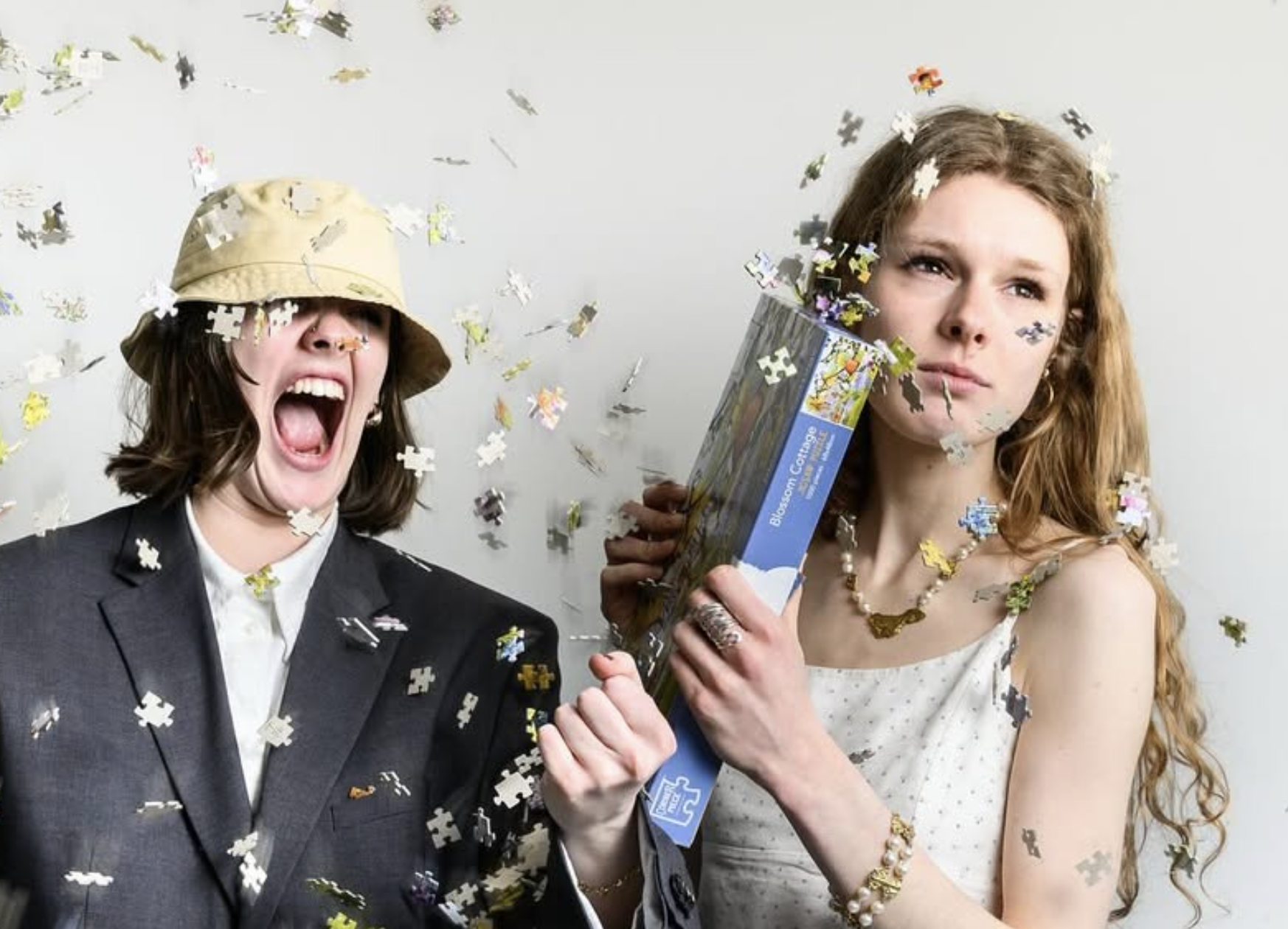
It’s mind-blowing to think that Frank Wedekind’s Frühlings Erwachen was written in 1890, when Kaiser Wilhelm II ruled the Deutsches Reich, Queen Victoria was on the British throne and Robert Gascoyne-Cecil (nope, me neither) was our PM. In a world where women weren’t even allowed to show their ankles, it’s not surprising that it was sixteen years before someone dared to stage this controversial exposé of the dangers of repression, with its bold depictions of teenage sexuality – not to mention rape, suicide and abuse.

Steven Sater and Duncan Sheik’s musical adaptation premiered on Broadway in 2006, exactly one hundred years after Wedekind’s play finally opened at Berlin’s Deutsches Theater, under the direction of Max Reinhardt. Despite the addition of some banging rock songs and more than a few profanities, this modern version actually pulls more punches than the original, most notably by omitting the rape and softening the ending. Nonetheless, it still has the capacity to shock, and to remind us that we make sex dangerous by hiding it, by making it taboo.

Set in 19th century Germany, this is a story about a group of young people coming of age under the stifling weight of moral expectations. Wendla (Hattie Sumners) asks how babies are made. Scandalised, her mother (Sophie Davis, who plays all the adult women) first shouts and then equivocates, condemning her daughter to an ignorance which will have severe consequences. Meanwhile, Moritz (Shaun Hamilton) is struggling to keep up with his schoolwork, and fear of failure takes him to a devastating place. Melchior (Daniel Fischer) seems stronger than the others: thanks to a combination of intelligence and a liberal mother, he’s more knowledgeable than his friends, and therefore better equipped to cope with life. Still, the authoritarian regimes of school and church soon drag him under too; no one is safe in this society.

Theatre Paradok’s production succeeds in conveying those most fundamental of teenage emotions: exuberance and despair (I’m guessing the student cast don’t have to dig that deeply to remember how raw and overwhelming those feelings can be). Sheik’s eclectic soundtrack is beautifully interpreted by musical directors Nonny Jones and Ruairidh Nicholson, the choral numbers being particularly impressive. The live band – hidden in the wings – are terrific, and plaintive solos by Sumners, Gemima Iseka-Bekano (Ilse) and Hamilton evoke some strong responses.

The show’s aesthetic is great. I love the androgyny of the costumes, with feminine dresses worn over masculine suits; the queer coding is fabulously done. The set is simple but very effective: items of underwear are stapled to a curtain framing a large gauze backdrop, onto which short animations and live videos are projected, creating an ethereal doubling effect and amplifying the characters’ emotions.

Directors Rue Richardson and Jane Morgan manage their large cast with aplomb. The play is dynamic and visually very appealing, from the arresting choreography (by Františka Vosátková, along with Richardson, Morgan and Andrea Adriana Prawono) to the boisterous shenanigans of the teenage boys. The gauze curtain makes metaphors literal: dead characters appear from ‘beyond the veil’, while ‘a veil is drawn’ over Wendla and Melchior’s lovemaking. However, Ernst (Michael Butler) and Hänschen (Max Middleton)’s homosexual relationship is placed boldly centre-stage – perhaps a subtle nod to the idea that some things shouldn’t be re-closeted.

I do have one criticism, and it’s the emergency exit door, stage left, which is open to the elements. Bedlam is a chilly venue at the best of times; tonight, with an outside temperature of 1°C, I could do without sitting in a freezing draught. And it’s not just the cold that’s a problem, there’s the noise of the city too: traffic and sirens and people passing by, all making a claim on my attention. I can see that the options are limited by the need to house the band, but – for the sake of one entrance and one exit – it’s surely not worth making the audience so uncomfortable.

Nevertheless, this production of Spring Awakening is a triumph: a lively, thought-provoking piece of theatre, as relevant now as it was more than a century ago.

4.2 stars

Susan Singfield


Theatre Bouquets 2024

It’s been an exciting year for theatre in Edinburgh, so in time-honoured tradition, here are our ten favourite productions from 2024, plus three special mentions.

The House (Traverse Theatre, Edinburgh)

“Everything about this performance – the lighting, the music, the props – is exquisite and I love the piece’s grisly sense of humour, its celebration of the darkness of the human soul…”

The Giant on the Bridge (Traverse Theatre, Edinburgh)

“A complex, labyrinthine piece that explores a whole range of different moods, moving from plaintive acoustic ballads to propulsive electric rock…”

Blue Beard (Lyceum Theatre, Edinburgh)

“All about the seductive allure of darkness, the impulse that makes us devour murder-mysteries and glamourise the bad guys…”

The Sound Inside (Traverse Theatre, Edinburgh)

“Adam Rapp’s exquisite play has all the qualities of a great novel, pulling me deeper and deeper into its labyrinthine heart, providing the audience with puzzles to solve and mysteries to ponder…”

VL (Roundabout at Summerhall, Edinburgh)

” A whip-smart comedy that also has some incisive things to say about the difficulties of adolescence and the importance of friendship…”

Summer of Harold (Assembly Checkpoint, Edinburgh)

“An hour-and-a-half of impressive theatre, with snort-out-loud humour as well as profound emotional moments…”

The State of Grace (Assembly Rooms, Edinburgh)

“Whenever I thinkI’ve got the measure of the piece, it twists in another new direction, giving fresh food for thought, breaking down the barriers that I’ve carried around in my head for years…”

A Streetcar Named Desire (Lyceum Theatre, Edinburgh)
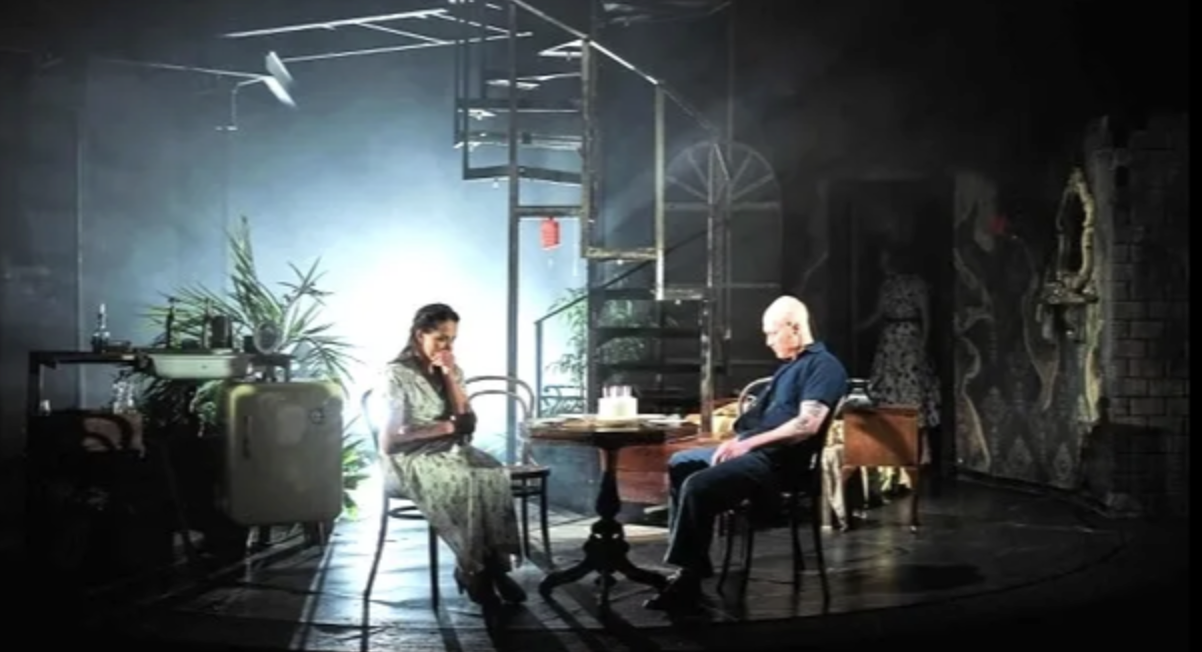
“Increasingly resembles a deranged carousel with the players caught in its unhealthy embrace, unable to get off the ride until it arrives at its ghastly destination…”

Angels in America: Part One – The Millennium Approaches (Bedlam Theatre, Edinburgh)

“It’s astounding what EUTC manage to achieve with their limited budget: the final scene in particular is a coup de théâtre…”

Treasure Island (Lyceum Theatre, Edinburgh)

“A must-see for the festive season – you’ll laugh, you’ll tremble, you’ll tap your feet to the jaunty jigs and reels!’

SPECIAL MENTIONS

The Little Shop of Horrors (Church Hill Theatre, Edinburgh)

Rebels and Patriots (Pleasance Courtyard, Edinburgh)

Weer (Traverse Theatre, Edinburgh)

Susan Singfield & Philip Caveney
Pygmalion

15/11/24

Bedlam Theatre, Edinburgh

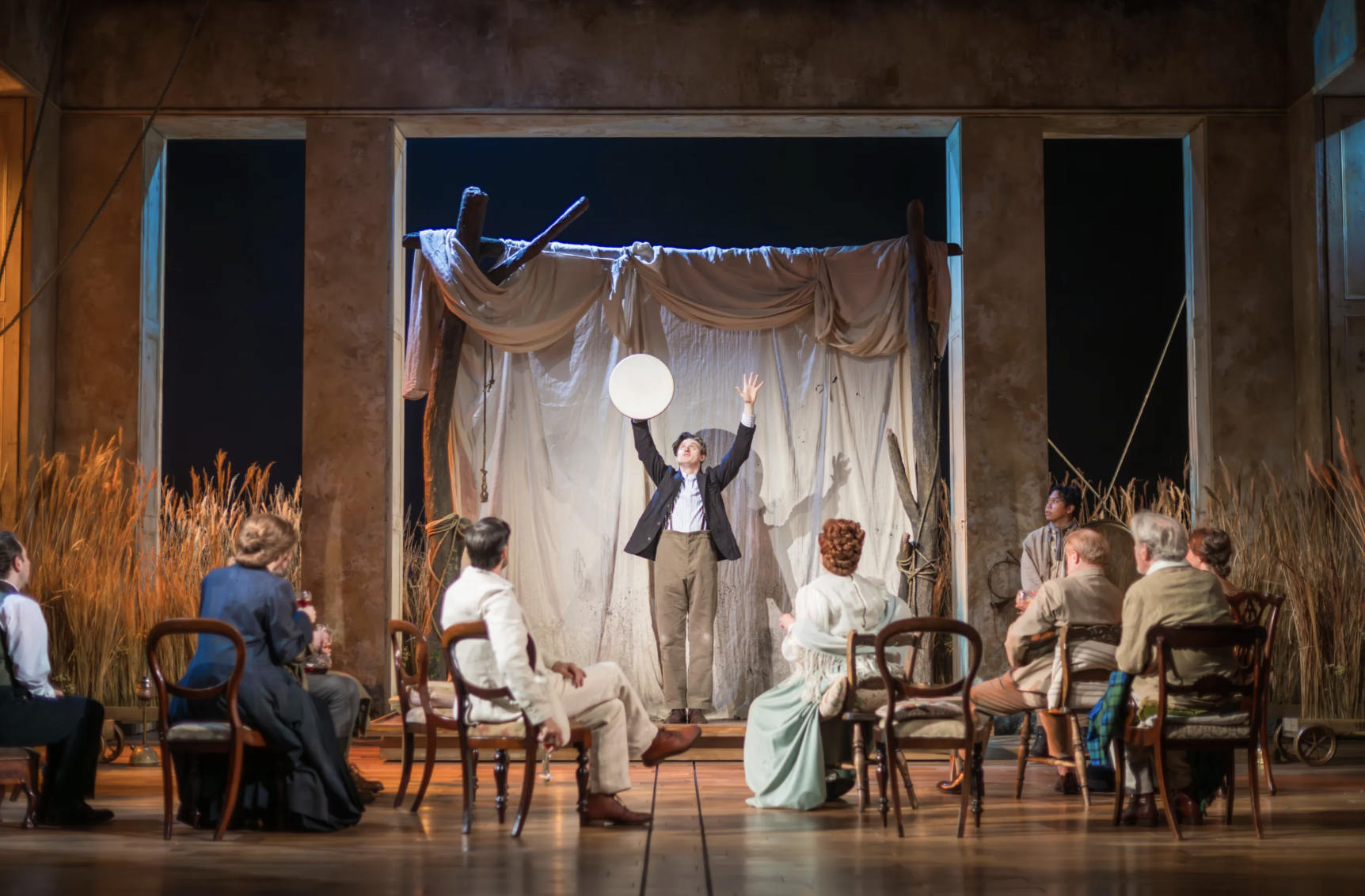
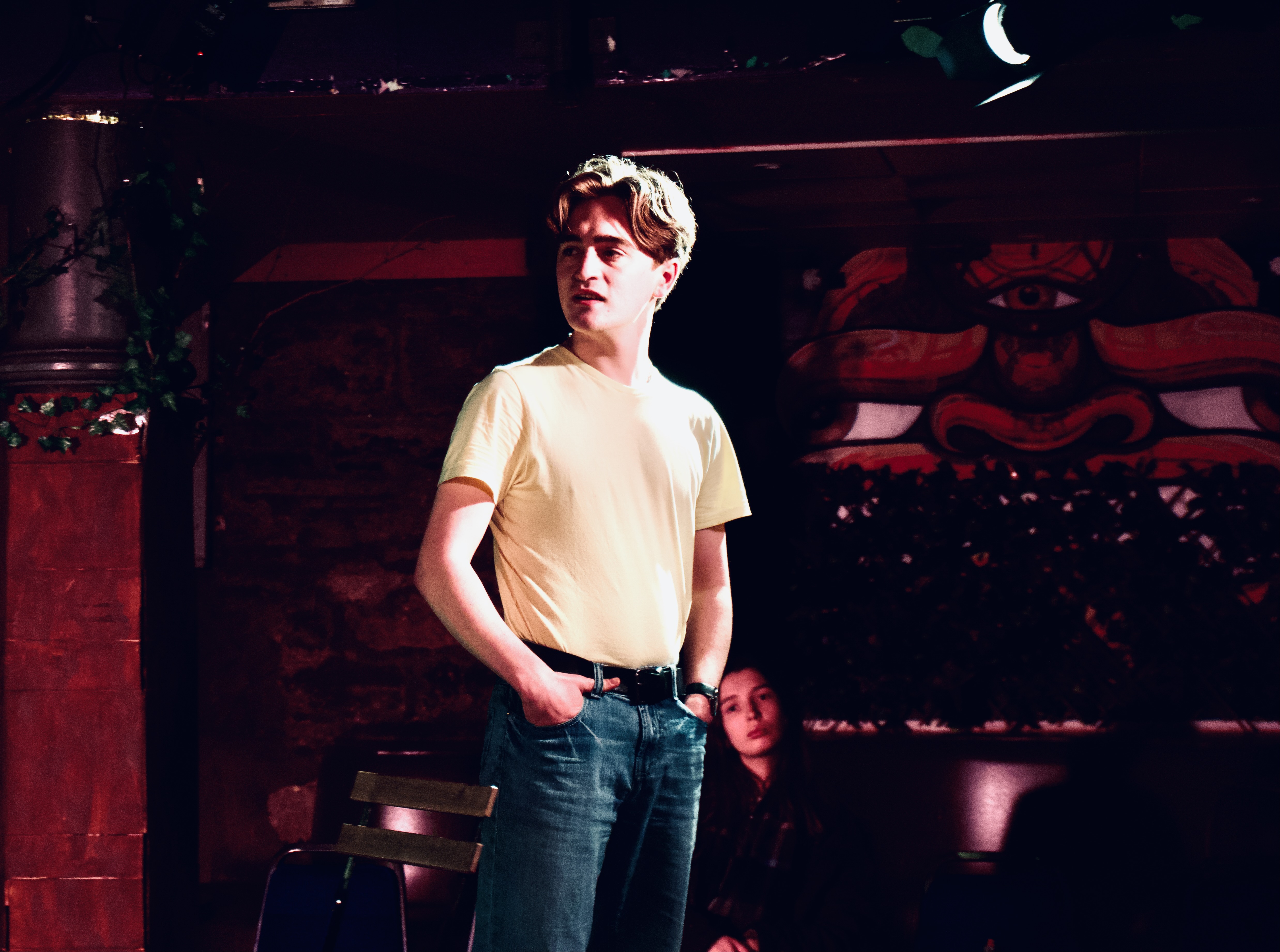
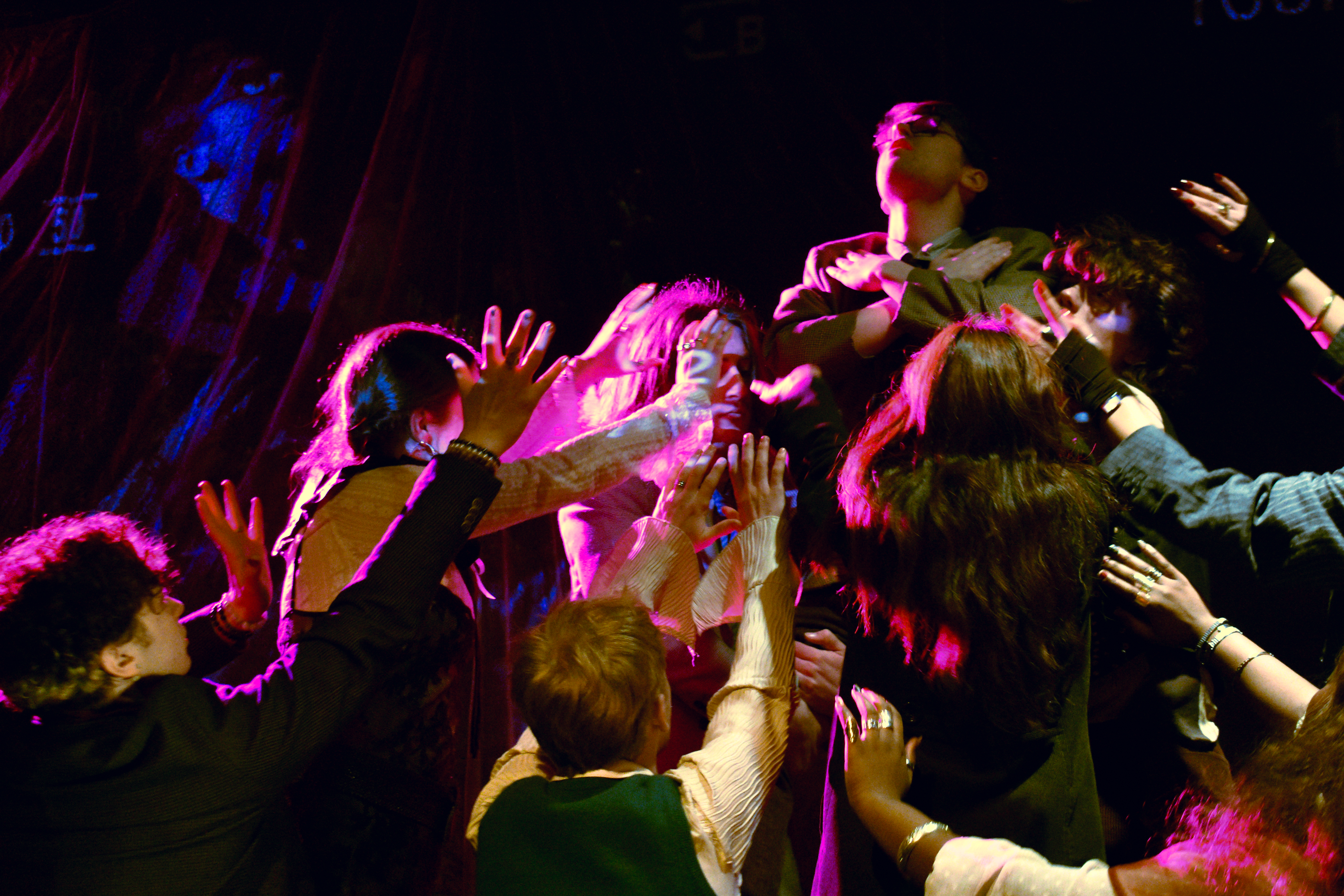
We last saw Pygmalion in 2010 at Manchester’s Royal Exchange Theatre, with Cush Jumbo and Simon Robson as the central duo. Fourteen years later, we’re at Bedlam, keen to see what EUTC will do with George Bernard Shaw’s famous tale of transcending social boundaries. The promo material promises an interesting modernisation, as working-class biology student, Eliza, fresh from Belfast, comes into the orbit of English trust fund baby, Henry, at Edinburgh university.

Directors Shira David and Victoria Ge do a good job of illuminating the play’s humour, the acerbic dialogue and pratfalls eliciting belly laughs from the audience. However, the updated premise doesn’t quite work for me. In the original version, Eliza is in real need and Henry’s tuition offers her a way out of her poverty. What’s more, in 1913, when the play was set, accents were directly linked to opportunity: if Eliza Doolittle could learn to speak like a lady, a different world would open up to her. I find myself struggling to see what’s in it for this Eliza. It’s asking a lot of an audience to accept that a student at a prestigious university is “in the gutter” just because she has an Irish accent – she sounds the same as my GP and local pharmacist, as film stars and TV presenters. We need to see more of her struggle to believe in it. An evening job selling flowers isn’t such a hardship, after all. Nor is it clear why this young Henry Higgins – himself a student – wants to take on the project. This isn’t helped by the scene transitions: long blackouts cover minimal scenery changes, slowing down the action and pulling us out of Eliza and Henry’s world, making it harder for us to suspend our disbelief.

Costume-wise, the coding needs to be clearer. Eliza has an expensive-looking hair cut and brand new Dr Marten’s at the beginning but keeps on her ripped tights even when she’s been re-styled. It also comes as a shock at the end of the play when Eliza says that Henry is too old for her, because that hasn’t been signalled prior to this moment.

Despite these misgivings, it’s an enjoyable production. Connie Bailie has all the requisite charm for Eliza and Frankie Reid is suitably churlish as Henry. George Laing’s Pickering is perhaps the most convincingly-drawn character – disinterested and affable, outwardly pleasant but ultimately untouched by Eliza’s plight. Michael Healey provides comic relief as the hapless Freddy Eynsford-Hill, while Lisa Gillham, Aislinn McSharry and Mia Cresswell-Melstrøm work well as a trio of posh young women, supportive of Eliza and rolling their eyes at their pal Henry’s all-too-familiar nonsense.

In the end, this is a laudable idea that doesn’t quite come off – but I remain impressed by EUTC’s drive and ambition. After all, “What is life but a series of inspired follies?”

3 stars

Susan Singfield

Angels in America: Part One – The Millennium Approaches

08/11/24

Bedlam Theatre, Edinburgh

New York playwright Tony Kushner’s 1991 “fantasia on national themes” is notoriously complex, but we’ve come to expect EUTC to tackle ambitious projects head-on, so we’re not surprised to learn that they’ve chosen this seminal play for their latest production. We’re excited to see what Gen Z will bring to this play about their Gen X predecessors, as they struggle to deal with a deadly epidemic, populist prejudice and rampant capitalism. Plus ça change, plus c’est la même chose… I’m guessing they can relate.

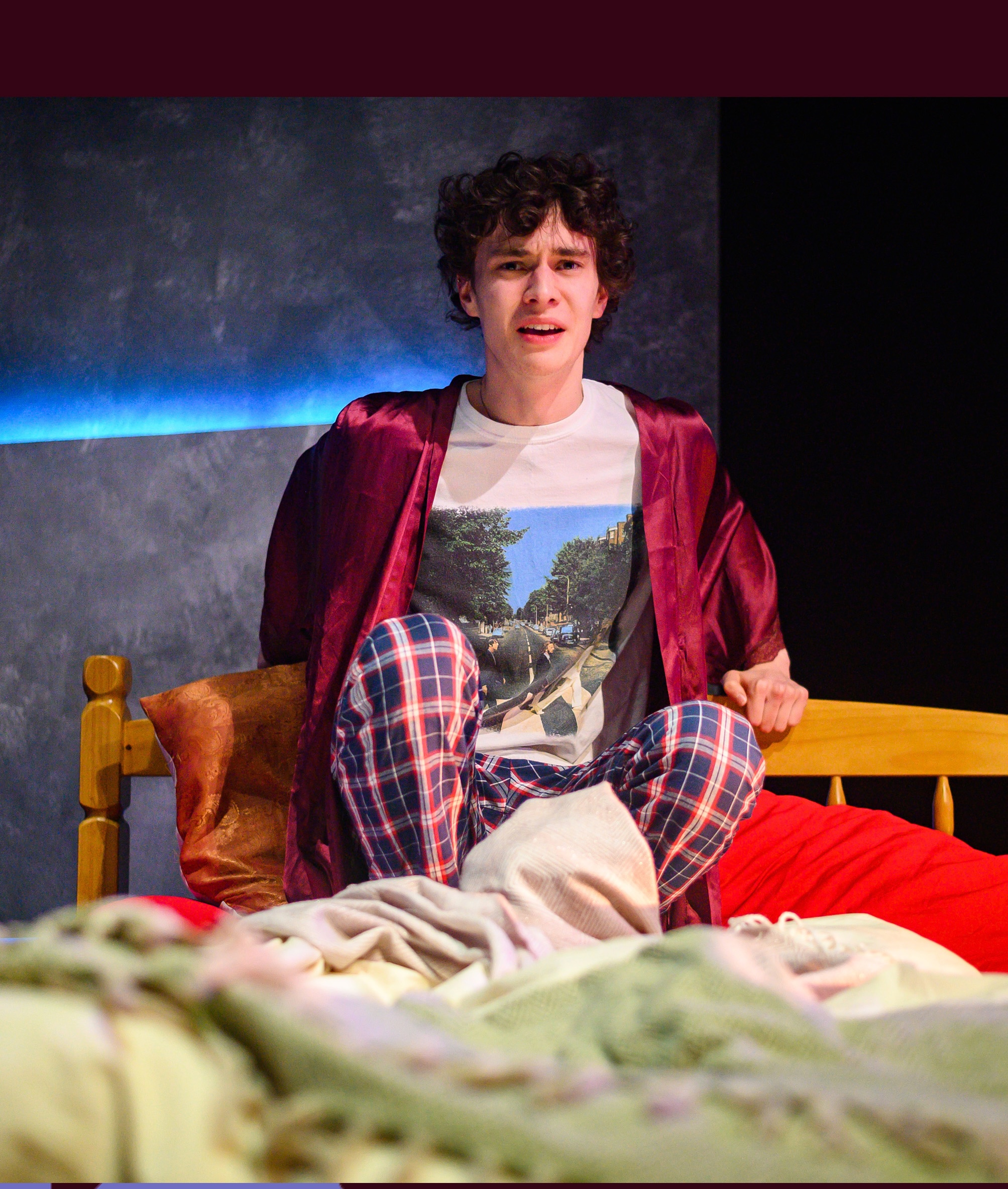
El Mair plays Prior Walter, a young man with a recent AIDS diagnosis and a distraught boyfriend. Louis (Leo Odgers) doesn’t want to deal with the realities of illness: the puke, the shit, the spectre of death. Prior is devastated by Louis’s abandonment, and retreats ever further into a fantasy world, ably assisted by the cocktail of drugs he has to take to manage his condition.

Meanwhile, Louis’s colleague, Joe (Will Grice), is facing demons of his own: his Mormon faith doesn’t allow him to acknowledge his homosexuality and remaining in the closet is killing him. But when he tries to come out to his mother, Hannah (Ava Vaccari, who excels throughout this production in a number of roles), she refuses to listen. “This conversation didn’t happen.” Of course, the secret also has a devastating impact on his wife, Harper (Natalia Campbell), who is addicted to Valium and, like Prior, plagued by visions.

As if Joe weren’t already dealing with enough pressure, his mentor, sleazy lawyer Roy Cohn (Hunter King) – the only real-life character in this fictional world – is determined to put Joe’s shiny good-boy persona to use, finding him a job in Washington DC, close to the seat of power. (“I make presidents,” he says, King’s already chilling performance heightened by the wider context, the combination of Trump’s re-election and Abi Abbasi’s recent film, The Apprentice, which details Cohn’s influence on the young Donald.)

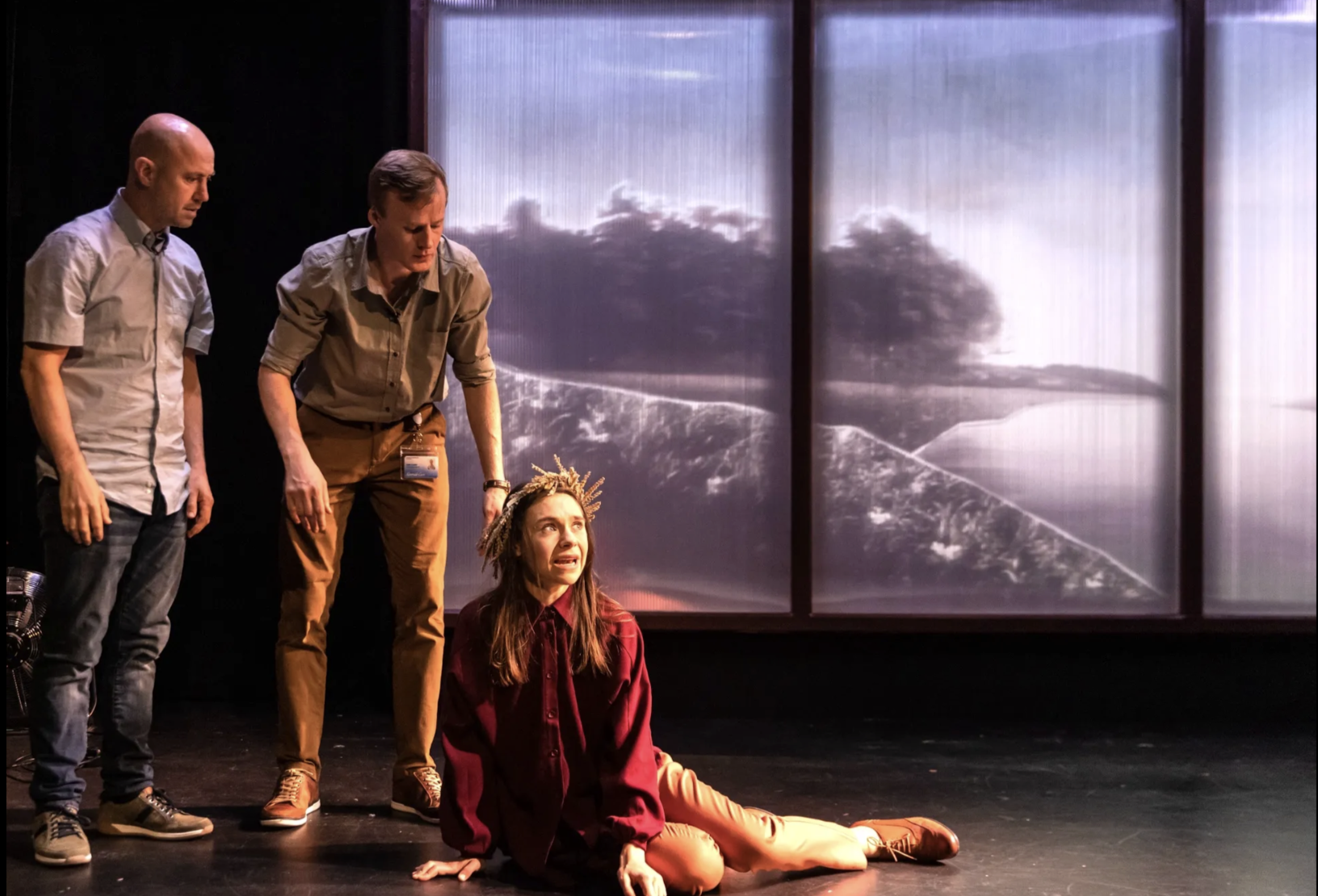
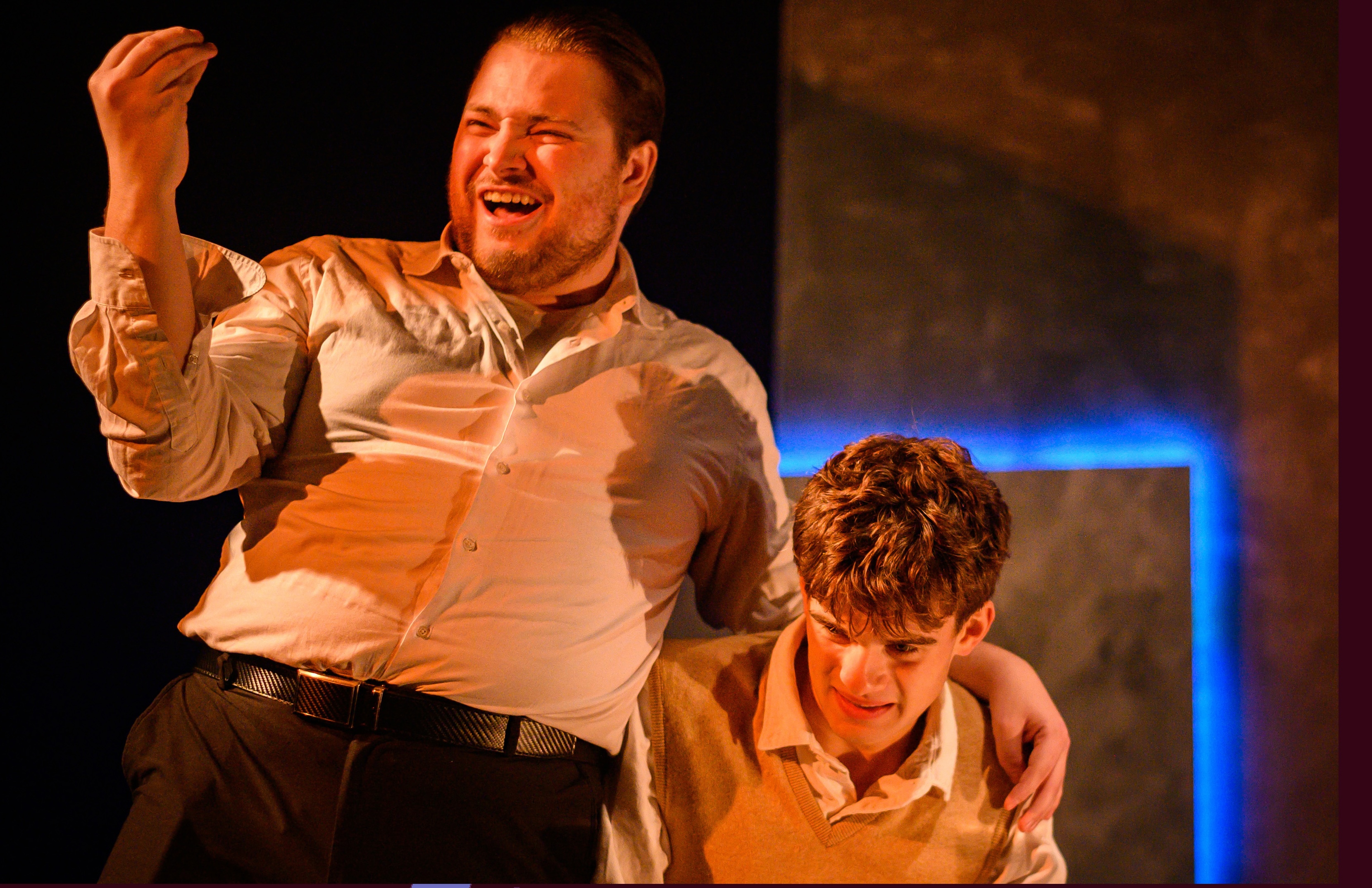
Directed by Meri Suonenlahti and Andrew More, Angels in America is a triumph. The student cast are more than up to it, imbuing their characters with heart as well as humour; there’s some real intelligence at play here. The naturalistic performance style works well, emphasising the strangeness of the more fantastical sequences, such as Harper and Prior’s dream meeting. Campbell and Mair, both talented actors, are especially compelling in this scene, their fragility writ large as they stare at each other ‘through a glass darkly’. Louis Handley’s set design mirrors these contrasts, the prosaic heaviness of the bed and desk and sofa juxtaposed by dreamily-lit pastel backdrops, which move on casters between each scene, so that the landscape subtly shifts and dips, illuminating the characters’ growing disorientation. Full use is made of the theatre’s history as a former chapel too, the huge blacked-out window above the stage lit to suggest the angels’ presence.

It’s astounding what EUTC manage to achieve with their limited budget: the final scene in particular is a coup de théâtre (I won’t say any more; I won’t spoil the surprise). Suffice to say, it’s worth bundling up in your winter woollies and heading to Bedlam to catch this one. Three and a half hours fly by like the eponymous angel. I only wish they were doing Part Two: Perestroika as well.

4.8 stars

Susan Singfield

All My Sons

29/04/22

Teviot Underground, Edinburgh

There are good playwrights and there are great ones. Arthur Miller definitely belongs in the latter category. It’s a brave student theatre group that dares to tackle one of his works but, down in the crowded basement of the Teviot Underground, EUTC take on his 1947 play All My Sons and, with great skill and determination, make it their own.

This is the story of the Keller family and it takes place entirely in the garden of their home. It’s the night after a storm has uprooted a beloved tree, planted three years earlier in memory of the family’s youngest son, Larry, a fighter pilot who went missing in the war. Patriarch and factory owner, Joe (Ted Ackery), has survived accusations of shipping defective airplane parts to the military during the conflict and has subsequently prospered, even though his partner, Steve, still languishes in jail, found guilty of the charge.

Joe’s devoted son, Chris (Conor O’ Cuinn), is in line to take over the family business, but it’s not going to be plain sailing. He is hopelessly in love with Ann Deever (Olivia Carpenter), Larry’s former fiancée and she, in turn, has feelings for him. But Chris’s mother, Kate (Lucy Melrose), steadfastly refuses to give up hope that her lost son will one day return – and accepting this new union would, for her, be the final nail in her missing son’s coffin.

As ever with student theatre, the staging here is clearly constrained by budget, but the set designers have applied themselves to the task with great ingenuity; and using the canteen area at the back of the stage to depict the interior of the family home is a terrific idea. Interestingly, the costuming evokes the late 1960s and snatches of Bob Dylan and The Doors on the soundtrack accentuate the idea that this is a tragedy that could just as easily be applied to the Vietnam War – or any other one, come to that. The spectre of profiteering from war is, I’m afraid, universal.

But what really comes across in this production are the performances, with the four leads in particular submitting thrilling interpretations of their roles. And it doesn’t end there. The supporting roles of the family’s neighbours – who all know that Joe is guilty but have conspired to overlook the fact – are also delivered with utter conviction. There’s no weak link here – and there’s a palpable moment in the middle of the first act, when you sense these young performers coming to the realisation that they have their characters nailed and are going to make them fly.

Into this volatile atmosphere comes George (Priya Basra), Ann’s older brother, now a successful lawyer, who has previously accepted Joe’s acquittal and refused to see his own father ever since the trial – until now, that is. Now he has talked to his father and the wool has finally been pulled from his eyes. He visits the Kellers intent on seeking revenge.

The slowly rising tension builds steadily to a climax of extraordinary power. It’s a hard-hearted soul indeed who won’t be moved to tears by its shattering conclusion. EUTC have achieved something here that they can be truly proud of and, if you have the chance to catch this performance, then I’d advise you to take it.

It’s an assured interpretation of one of Arthur Miller’s greatest works.

4.6 stars

Philip Caveney
Education, Education, Education


14/11/18

Bedlam Theatre, Edinburgh

This quirky little play, originally devised by The Wardrobe Ensemble, is the perfect vehicle for the EUTC, offering a real opportunity for these talented students to show their acting chops.

It’s 1997, and it’s Tobias (Max Prentice)’s first day at Wordsworth Comprehensive, where he’ll be working as a German language assistant. But this is no normal day: Tony Blair was elected as Prime Minister last night, and there’s a strange emotion pervading the staffroom. Could it be… hope? Might the ‘education, education, education’ mantra that’s propelled Blair to the top job actually translate into something real, like new textbooks, or permanent classrooms, or reduced class sizes?

Whatever. It’s still a school day. The bell still rings; there are still lunch duties and lesson covers – and the small matter of ‘muck-up day,’ as the Year 11s seize their opportunity to cause consequence-free chaos: they’re leaving this afternoon. And, amidst all this, there’s Lauren: troubled, angry, vulnerable Lauren (Lauren Robinson), who wants to go on a history trip to York, but who’s been told her past behaviour precludes her from such treats.

This is a lively, energetic production, with all actors (except Prentice) dual-rolling as staff members and pupils. Tobias’s outsider’s eye exposes the vagaries of our education system; he’s a positive, engaging character, a Brit-o-phile, more gently observant than sharply critical. The performances are all strong, but standouts include Fergus Head as ineffective head teacher, Hugh Mills, and Lauren Robinson as the self-destructive teen mentioned above. Robinson in particular excels at portraying a heartbreaking mix of fragility and bravado, the all-too-recognisable frustration of those who have too little autonomy.

The Brit-pop music provides a dynamic aural backdrop, and the high-octane dance moves and scene transitions all help this small cast to convince us we’re in a busy, bustling school. There are some sombre moments: Tobias’s flash-forward narrative reminds us that, although Blair did indeed inject a lot of much-needed money into the system, and things did improve considerably, this too has now passed: schools are academised and closing, begging parents for provisions, dropping ‘frivolous’ subjects from their timetables.

Don’t get me started. This one’s personal for me. I was a teacher for twenty-two years; I left because of what the job became. I’ve been a foreign language teaching assistant too (in Germany), so this play really speaks to me.

But even if your own experiences are vastly different from these, this is a piece well worth seeing. What happens in education affects us all.

And this is fun. So, you know – win, win.

4 stars

Susan Singfield

She Can’t Half Talk


31/10/18

Bedlam Theatre, Edinburgh

It’s Hallowe’en, but we’ve already done the spooky stuff. We carved our Jack O’Lantern days ago (the pumpkin soup is just a memory now), and we saw Dracula at the King’s last night. So tonight we eschew the Cameo’s Rocky Horror costume party, and head instead to Bedlam, where a series of monologues awaits.

Writer/director Sally MacAlister might still be a student (she’s in her third year here at Edinburgh), but her scripts are lively and assured. They’re original and sprightly, funny and sad. We’re impressed: this young playwright clearly has a bright future ahead.

The play comprises five unlinked twenty-minute monologues: there’s a foetus gleaning all she can about her mother and the outside world; a sex worker contemplating her future; a drag queen facing Christmas without his children; a tough kid refusing to accept her ‘victim’ label; a middle-aged woman raging against her dwindling sex appeal. They’re varied pieces, both in content and tone, and we’re intrigued by every one.

The Foetus is the quirkiest piece, a whimsical idea played with charm and vivacity by Julia Weingartner, and The Drag Queen (Myles Westman) the saddest, a tale of hidden truths, infused with gentle melancholy. The Camera Girl is outrageous and funny, with Megan Lambie’s bold, engaging performance really drawing out the laughs. There’s some interesting direction in this piece too: I like the use of Liam Bradbury as the banker, mirroring the girl’s movements as she tells the story of their disastrous date.

Perhaps the least credible is The Cougar: Kelechi Hafstad can clearly act and conveys the character’s emotions well, but she’s much too young for the part, and the writing here is less convincing too: I don’t think a fifty-eight year old would describe herself as ‘elderly’ nor compare herself to Helen Mirren (who’s fifteen years older, at seventy-three). Still, there are some lovely ideas in the script, and the delivery is witty.

My favourite is The Victim, a raw account of a teenage girl drawn into a cycle of rape and abuse. Tilly Botsford’s performance is mesmerising, and she really knows how to work a pause (the silence after the innocuous line, ‘She fell off a horse’ is the most powerful moment of the night).

All in all, She Can’t Half Talk is an impressive piece, and Sally MacAlister is clearly a name to watch out for.

Take a blanket and a hot drink though. Bedlam Theatre is really cold.

4.3 stars

Susan Singfield

Ken Cheng: Best Dad Ever

07/08/18

Bedlam

Ken Cheng is the standup comedian credited with the ‘joke of the Fringe award, 2017,’ as judged by comedy TV channel, Dave. This can either be regarded as an achievement or something he feels he’ll have to live up to in 2018. The joke? “I’m not a fan of the new pound coin, but then again, I hate all change.”

Which will give you an idea of how arbitrary the award is in the first place. Every year, we read the results with a general air of bemusement. Who picks the jokes? What qualifies any of them to be dubbed ‘the best?’ I suppose, as any comic will tell you, you needed to be there when it was actually said aloud. And I’ve no doubt that Cheng told it well.

As you might guess from his name, Ken Cheng is of Chinese descent – and much of the subject matter of this sly, erudite set is concerned with his ethnicity and the way it’s perceived by the various people he encounters. He’s very adept at nailing unconscious racism and hoisting the culprit by his or her own petard. His routine about the woman he meets at a party is nicely scathing, pointing out how everything she says is well-intentioned but misdirected. He also talks about his parents’ rather unusual marital arrangements; the fact that he was a bit of a child prodigy when it came to mathematics (and how much of a cliché this is); his giant collection of cuddly lambs – and, at one point, he even treats us to an extract from a science fiction novel he wrote when he was around seven years old, which demonstrates all too clearly what an unusual boy he must have been.

If it’s only occasionally laugh-out-loud funny, it’s consistently chuckle-worthy and Cheng is an affable presence up on the stage of Bedlam, holding his audience’s attention and rarely allowing things to lag. A moment towards the end of his set when somebody has to go out to use the loo, just as he’s building up to his big finish, is handled with remarkable restraint. This is an enjoyable show from a real craftsman – and there are probably several punchlines in here that Dave might like to consider for 2018.

3.5 stars

Philip Caveney