A Play A Pie and A Pint

The Last Cabaret on Earth

17/09/24

Traverse Theatre, Edinburgh

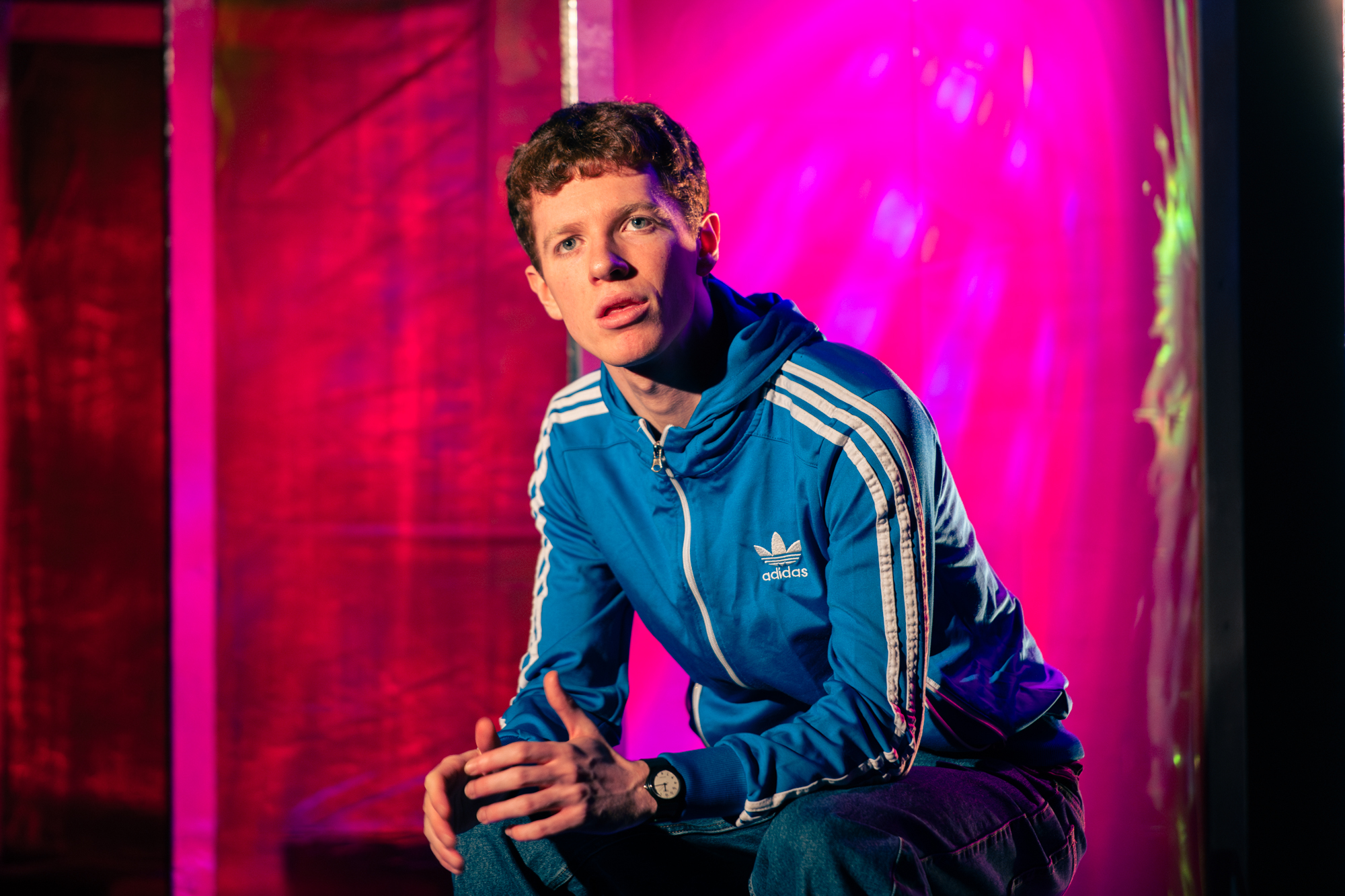
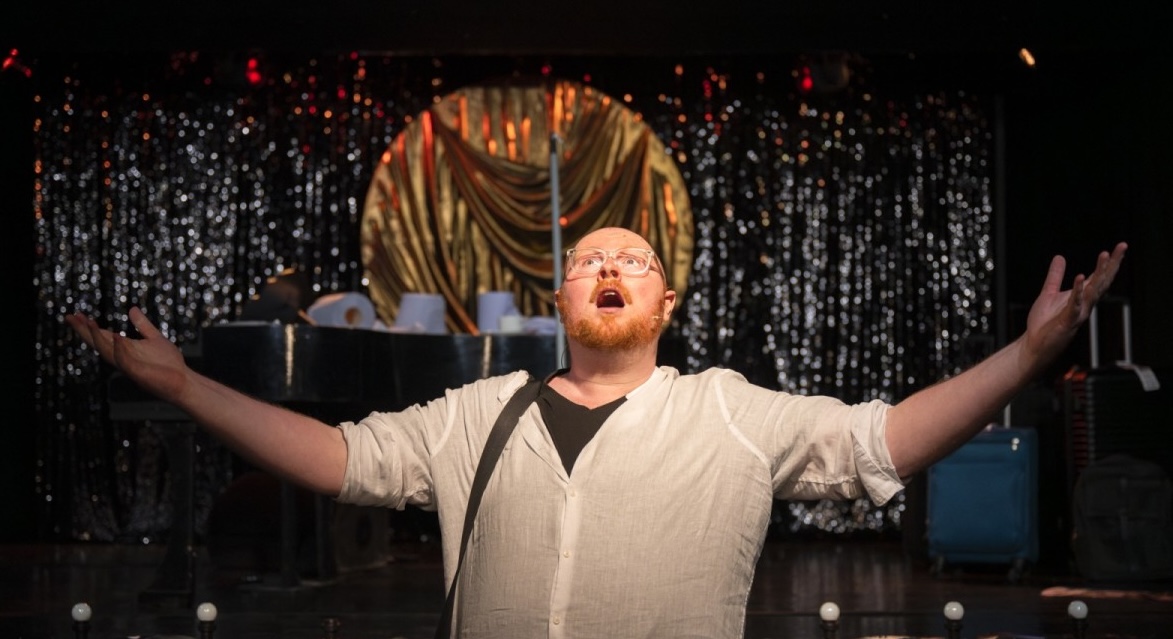
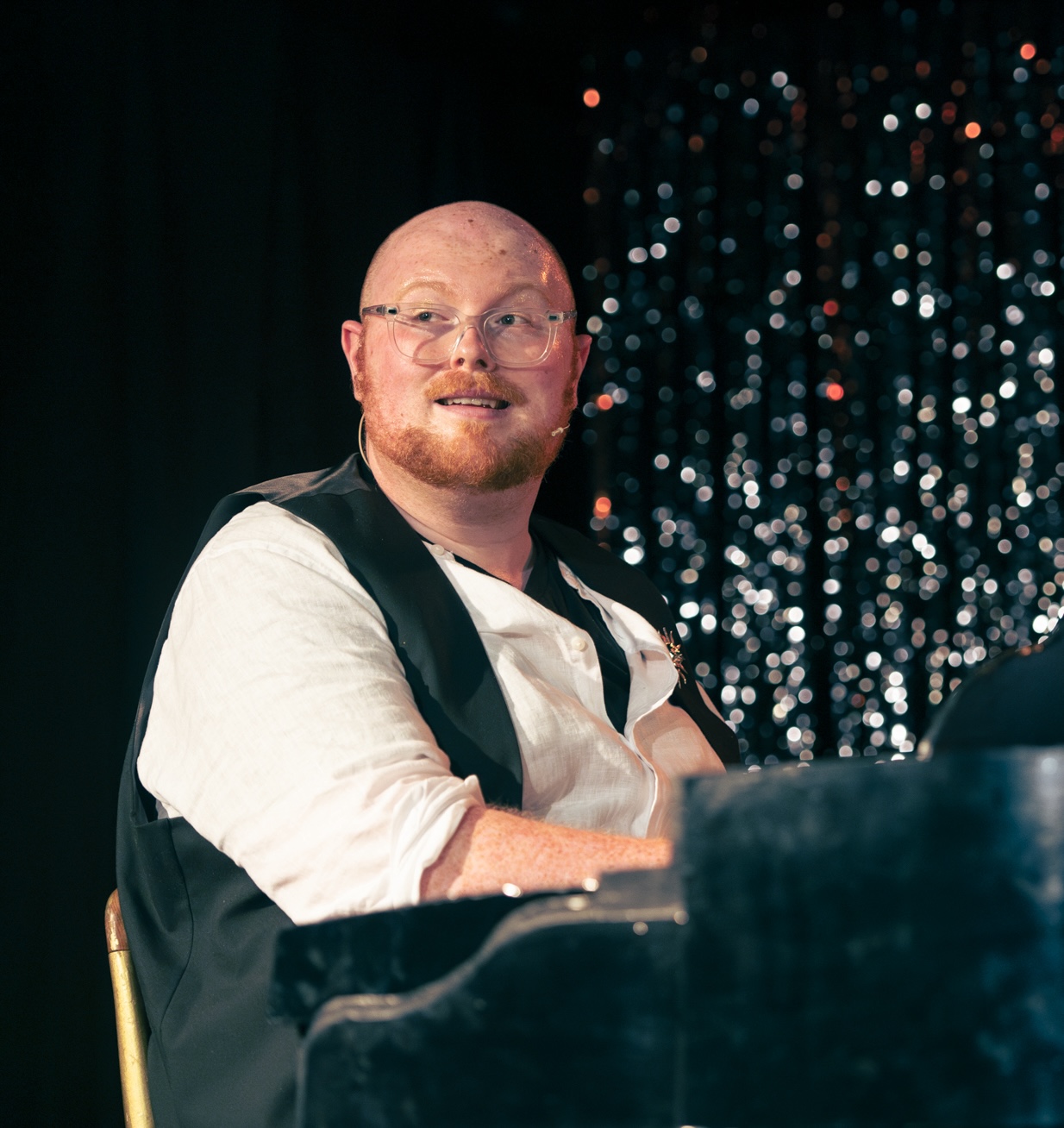
Almost before we know it, a new season of A Play, A Pie and A Pint is upon us for its – gasp! – 20th Anniversary run. This opening piece is part-play, part-cabaret and the title is not – as you might suppose – metaphorical, but quite literal. Due to a catastrophic solar event, the world is due to end in one hour (don’t panic!) and Sam (Marc Mackinnon) is stuck in a locked-down airport hotel, delivering his final show to a captive audience. That’s us, in case you were wondering.

He’s stranded hundreds of miles away from his longtime partner and co-creator, Mel, who can only contribute to the performance via a series of jumbled text messages. As the final hour ticks relentlessly away, Sam offers us some insight into his tortuous path into show-biz: the people who helped him on his way, the others who stood in his path.

One thing’s for sure: when the end finally comes, he’ll greet it with a song and a smile…

Mackinnon is an engaging actor and he delivers Brian James O’Sullivan’s script with considerable skill, performing a series of classic songs in a wonderfully distinctive style. Under Joe Douglas’s direction, Mackinnon lures the audience into his prematurely fading orbit. A sequence utilising an old glitter-ball and the torch from a mobile phone is particularly affecting.

I do have one reservation. Although the songs – ranging from Judy Garland to James Taylor – are beautifully sung and Mackinnon has a strong, plaintive voice, there isn’t much original material here. There is a charming little ditty about a man who lives in a house made of pasta (!) but I would like to hear more new compositions.

However, this apocalypse is weirdly captivating and a strangely delightful way to spend your last hour – even if the tragic conclusion seems horribly prophetic.

3.8 stars

Philip Caveney

The Scaff

02/04/24

Traverse Theatre, Edinburgh

For someone who has always maintained a complete indifference to the game of football, I do seem to be watching a lot of plays about it lately, all of them at the Traverse. And the thing is, the standard has been incredibly high. First up, there was the five-star masterpiece that was Moorcroft. Then there was the wonderful Same Team, which also found a fresh approach to its chosen subject. Now here’s The Scaff, the final offering in the A Play, A Pie and A Pint spring season, which I approach with some trepidation.

Can the Traverse really hope to pull off a hat trick?

Happily, it turns out that they can. Written by Stephen Christopher and Graeme Smith, this is an assured and acerbically funny play, centred around a school football team. Jamie (Bailey Newsome) and Frankie (Stuart Edgar) live and breathe for the game. They spend most of their time out on the pitch, helping the team’s star player, Coco (Craig McClean), to rack up the goals. They’re also friends with Liam (Benjamin Keachie), but one day Jamie overhears Coco referring to Liam as ‘a scaff’. And while there may be some truth in the accusation – Liam’s Mum does buy own-brand crisps and Liam is forced to play in Mitzuma football boots, for God’s sake – Jamie encourages Liam to take his revenge on Coco by unleashing a hard tackle in the next game.

Liam takes his friend’s advice with disastrous consequences. Coco’s resulting injury means that the team will be without their top scorer as they approach the school cup final. Liam is in disgrace – and can Jamie and Frankie even admit to being friends with a boy who is now little more than a pariah?

Of course, The Scaff is about so much more than football. It concentrates on the subject of friendship and the difficulties that life can throw into its path. It’s also about the the constant longing to be liked and the awful fear of thinking that you are hated for things you have no control over. And mostly, it’s about the difficulties of escaping from an identity that others have bestowed on you, a term that is as degrading as it is dismissive.

The performances of the four leads are strong, each actor convincing in his respective role. I particularly enjoy Keachie’s physicality as a boy almost crippled by anxiety, forever giving sidelong glances to his companions, beseeching them for support and also forgiveness. Director Jordan Blackwood handles the tricky problem of making a quartet of actors on a bare stage convince as team players, and the performers give it their best, leaping, twirling and launching savage kicks at an imaginary ball. They manage to pull off the illusion, with the audience reacting delightedly to each successive goal. I find myself yelling and clapping along with them, something that no actual football match has never managed to make me do.

It’s been another strong season for A Play, A Pie and A Pint, and The Scaff provides a winning finalé that scores on just about every level.

4.6 stars

Philip Caveney

Hotdog

26/03/24

Traverse Theatre, Edinburgh

Hotdog (Chloe-Ann Tylor) is all dressed up and ready to party! 

Wearing a garish hired costume and carrying a handbag, a phone and a bottle of lemonade, she’s leaving the sanctuary of her flat and heading off to an undisclosed location to strut her stuff. Outspoken and full of pent-up bile, she is determined that tonight she will be the life and soul of the party. She will dance and drink and curse and laugh out loud! She will sweep aside anybody who has a single bad word to say about her and show them who’s the boss.

But, as is so often the case, her forced exuberance only exists to mask a deeper, darker truth. Because something bad happened to Hotdog in the recent past – something that it’s going to take her a very long time to come to terms with.

Written by Ellen Ritchie and directed by Beckie Hope-Palmer, with an enchanting central performance  by Chloe-Ann Tylor, the latest piece from A Play, A Pie and a Pint is an astutely observed drama that deals with the subject of trauma. Tylor (most recently seen by B&B in  Same Team: A Street Soccer Story and in the fabulous Battery Park) talks directly to the audience, discussing her character’s uncompromising, no-holds-barred approach to life. She tells us about her apparent hatred of her over-protective mother and her revulsion for the kind of fridge-magnet things that people are prone to say to her. 

As she chips steadily away at the brittle carapace she’s constructed around herself, the real story gradually emerges – and it’s utterly heartbreaking.

Tylor is joined onstage by Ross Allan, who at first undertakes the role of a silent stage hand, ensuring that props, music cues and sound effects are there whenever Hotdog needs them. It’s only in the poignant final stretches that he becomes Andy, the proprietor of the chippy where Hotdog tends to finish up her evenings. As in his previous role, he is exactly the helping hand she needs, the one who keeps a caring eye on her. He’s also the bearer of a truth universally acknowledged – that Joni Mitchell is the greatest lyricist of all time.

Kenny Miller’s set might at first glance seem overly complicated, but all those meticulous white lines on the floor – like Hotdog’s motivation – eventually fall into place.

4 stars

Philip Caveney

Starving

12/03/24

Traverse Theatre, Edinburgh

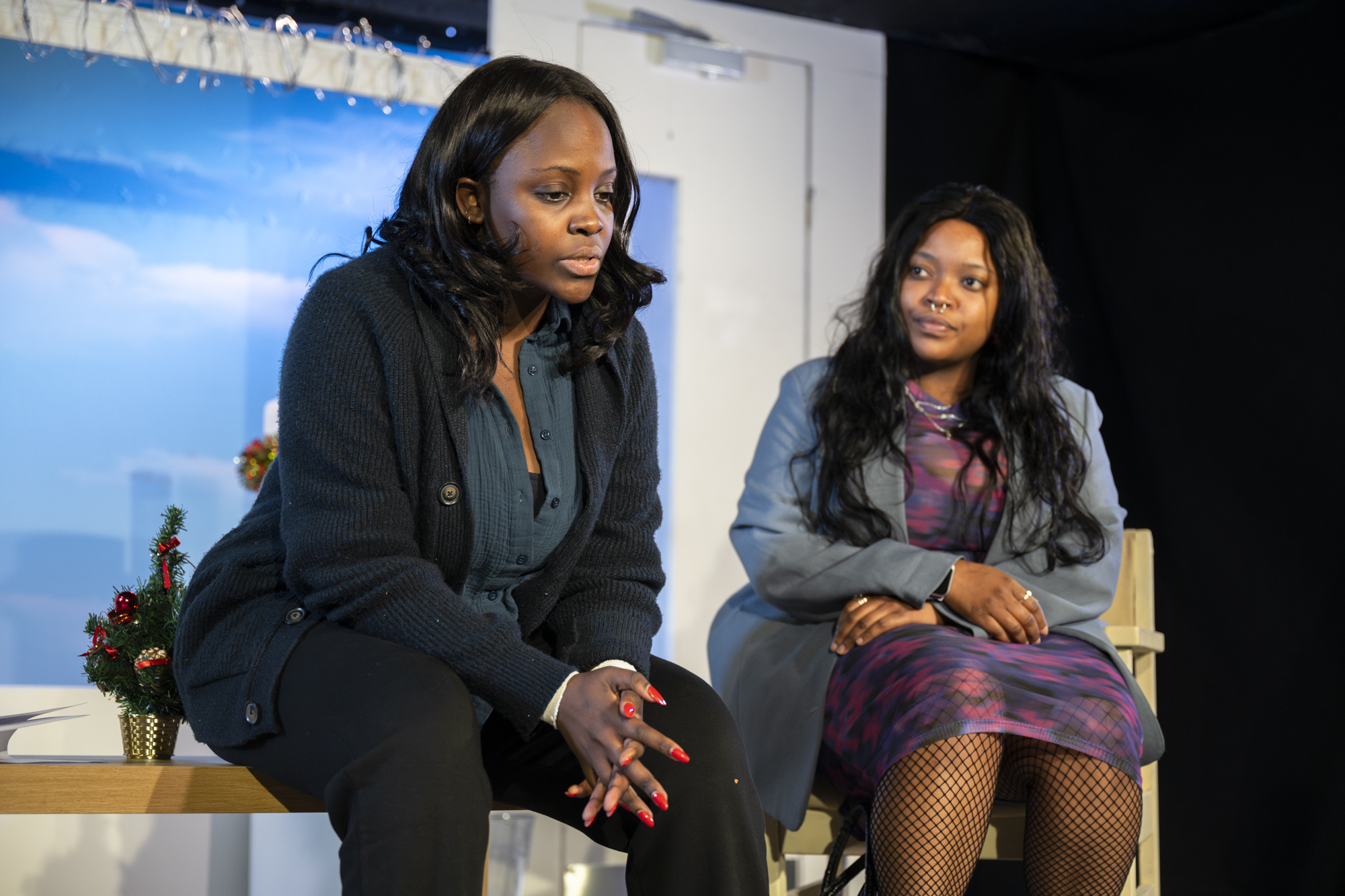
It’s December, 1972 and Scottish independence campaigner and all-round firebrand, Wendy Wood (Isabella Jarrett) is preparing to enter the fifth day of her hunger strike. She’s seventy-eight years old and this is just the latest in a long string of adventures.

It’s also December 2024 and, at the age of thirty, copywriter Freya (Madeline Grieve) is stuck in her Edinburgh flat, crippled by insecurity and afraid to venture out into the world she finds so overwhelming. She too hasn’t eaten for a while – but her hunger has more existential beginnings.

Somehow the two women find themselves occupying the same time and space. Which is all fine and dandy, until Freya checks out her companion on Wikipedia and discovers that A. She’s famous and B. She died in 1981.

Imogen Stirling’s sprightly debut play (we previously saw her performing in the fabulous Love the Sinner) flings these disparate characters together and explores what makes them so different. At the same time, it uncovers the qualities that they have in common. Director Eve Nicol has the good sense to keep the proceedings all stripped back, just a bright banner and a couple of microphones for those moments when the women need to vent their feelings – which they both do, volubly and admirably.

Jarrett is quite awesome as Wendy, staunch, bold and ever resistant to the idea of being told ‘no!’ (After the show, I also look Wood up on Wikipedia, and it’s quite the eye-opener). As Freya, Grieve handles her more nuanced character with absolute assurance. I find myself alternately amused and amazed by the breadth of the material covered here, and there’s plenty to make me think about the various political issues that are touched on. I also love the play’s exuberant conclusion, the two protagonists joining together in a rousing rap about the need for freedom.

Once again, A Play, A Pie and A Pint have come up with a production designed to brighten your afternoon. Don’t miss your chance to share it.

4.5 stars

Philip Caveney

Bread and Breakfast

05/03/24

Traverse Theatre, Edinburgh

The latest production in the A Play, A Pie and A Pint season offers a distinct change of pace. Who’s up for a good old-fashioned British farce? You know, the kind of vehicle that Brian Rix would have had a field day with back in the 1960s – slapstick characters painted with broad strokes and even broader dialogue.

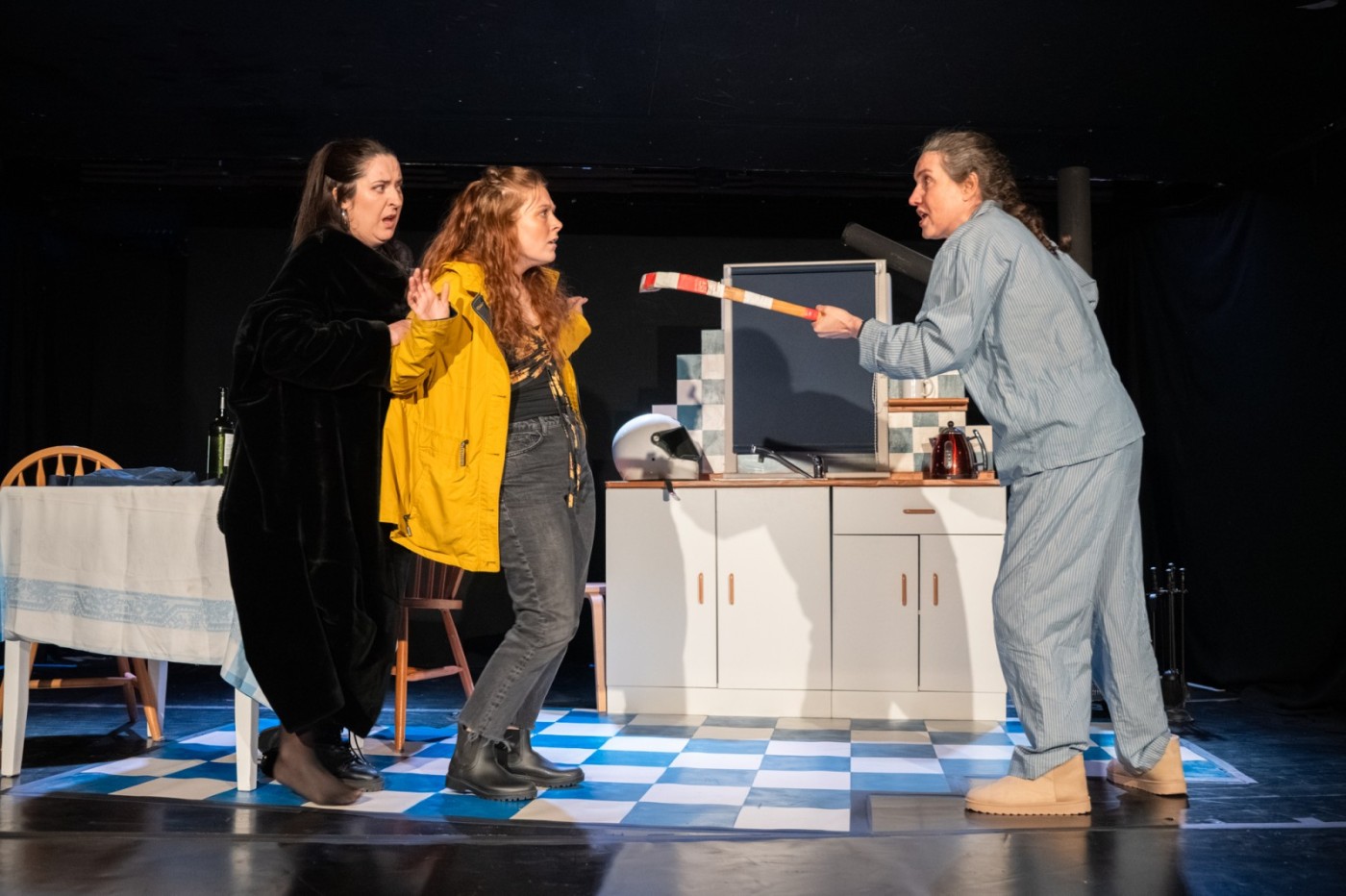
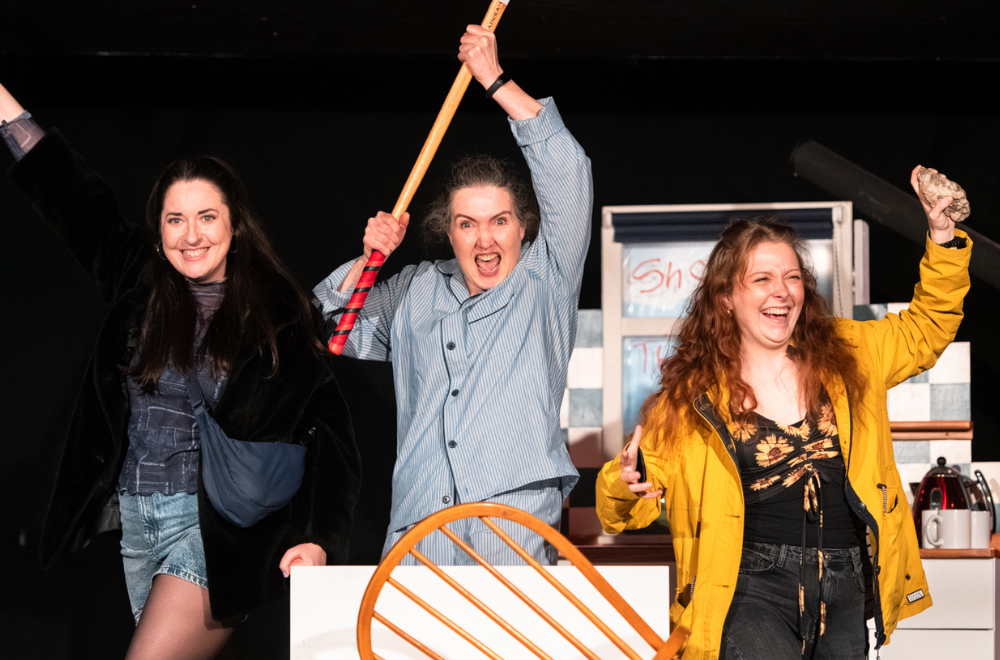
Welcome to Nessie’s Lodge, a bed and breakfast somewhere in the Highlands, a place where holidaymakers can relax in real style – provided they turn a blind eye to the indigestible food and the bedbugs… not to mention the rats. I said not to mention them! Proprietor Irene (Maureen Carr) is growing rather tired of the business, even though it boasts a single star from the AA. She dreams of selling the establishment to anybody who’s dumb enough to shell out money for it. But she’s continually hampered by her dimwitted young employee, Jo (Erin Elkin), who somehow manages to misinterpret every instruction she’s given. 

Then, in a distinctly Fawlty Towers twist, an AA restaurant inspector (James Peake) arrives out of the blue and the writing’s on the wall for Nessie’s Lodge. Also on the wall is a possibly priceless work of art that might just save Irene’s bacon…

Bread and Breakfast, written by Kirsty Halliday and directed by Laila Noble, has some genuinely funny lines in the mix, though there’s a worrying tendency to over-signal and over-explain them. Furthermore, it should also be said that those classic Whitehall farces were always anchored by absolute precision and excellent production values – which we can’t really expect from a modestly-budgeted lunchtime show.

The packed crowd at this afternoon’s show are clearly enjoying themselves, laughing throughout. As ever, stalwart actor Carr generates her own brand of potty-mouthed good humour; she’s a natural comic and has the audience in the palm of her hand. Elkin is excellent as Jo, giving her an edgy, almost manic appeal, as she flails from one hapless misunderstanding to another. Meanwhile Peake has the funniest moment of the show, as he delivers a spirited rendition of God Save Our Gracious Quing!  

If Bread and Breakfast isn’t quite to my taste, it’s nevertheless interesting to see a play so tonally different from anything I’ve previously seen at PPP.

3 stars

Philip Caveney

Jack

27/02/24

Traverse Theatre, Edinburgh

It’s a wet and miserable February day, but we don’t care because A Play, A Pie and A Pint is back – and if I say the new season starts with a whimper, that’s no bad thing. Because the whimper belongs to Jack.

And Jack is a puppy.

At first, our protagonist (Lawrence Boothman) isn’t too enamoured with his Christmas present. He doesn’t like dogs. They smell and they piss everywhere and they require a lot of care. But he can’t say that to ‘Him’, his un-named partner, can he? That’d be ungrateful. “Aw,” he says instead. “You shouldn’t have. Thank you.”

Of course, it doesn’t take Jack long to win the protagonist over, vet bills and chewed-up espadrilles notwithstanding. And when ‘He’ is killed in a car accident, Jack is both a source of comfort and a reason to go on.

Appealingly directed by Gareth Nicholls, Jack is a witty, engaging monologue, effortlessly straddling the line between acerbic humour and devastating emotion. Boothman reels us in from the opening lines and we’re absolutely with the protagonist as he mourns his lover and struggles to cope with his grief.

Liam Moffat’s nicely-crafted script paints a convincing portrait of a man adrift. The protagonist doesn’t know how to be a widower; he’s too young; there’s no template for him to follow. Heartbroken, he rebuffs his London friends but, away from the security of his crowd, he’s startled by the homophobia that denies the importance of his relationship and excludes him from his partner’s funeral.

The set, designed by Kenny Miller, is suitably simple: a raised platform with a sparkly backdrop, a single plastic chair and a ticker tape bearing captions for each successive ‘chapter’ of the protagonist’s story. Dogs really aren’t just for Christmas, it turns out.

So Jack gets this PPP off to a flying start. No, I’m not crying. You are.

4.4 stars

Susan Singfield

Disfunction

24/10/23

Traverse Theatre, Edinburgh

Sadly, this is the final PPP of the season; Tuesday lunchtimes just won’t be the same without an invigorating hour of original theatre. Luckily, Disfunction (“with an ‘i'”) provides a rousing send-off. This is first-rate stuff: a beautifully distilled character study, with a slice of social commentary on the side.

Kate Bowen’s play tells the story of sisters Moira and Melanie (Maureens Beattie and Carr respectively) and a game they’ve been honing for fifty years. Their goddaughter, Tanya (Betty Valencia), thinks she’s found a way to monetise their creation – by turning it into a sort of reality-TV experience, where viewers can pay to watch them play. At its best, the game is all Taskmaster-style fun: one round requires a blindfolded participant to put a pin in a map and then (sans blindfold) make their way to wherever the pin lands. Caveat: no cars allowed. Oh, and once they get there, they need to take a photograph of themselves. With four animals.

At its worst, the game is an exercise in, well, dysfunction. With a ‘y’.

The Maureens are surely two of Scotland’s national treasures, aren’t they? It feels like a real privilege to see these two great actors in such an intimate setting. They clearly relish their roles, especially Carr, who gets the plum part of the sassy, self-destructive Melanie. But Beattie is just as impressive as the more reserved and taciturn Moira, and Valencia more than holds her own as troubled Tanya, all bright-eyed desperation, a paper-thin smile covering her pain.

Lu Kemp’s kinetic direction means that the characters are always in motion (notable moments include a hilarious performance of Whigfield’s Saturday Night routine), and highlights that peculiar combative closeness that defines so many families.

Are there any negatives? Not really. Disfunction‘s role-playing political round perhaps stretches credulity (if there are only three people playing and each one has to ‘be’ a politician, who has set the questions to catch the others out?), but that’s my only gripe. Otherwise, it’s a pure delight. After all, as Tanya so cannily perceives, who doesn’t want to watch a bunch of strangers tearing themselves apart?

4.5 stars

Susan Singfield

Meetings with the Monk

17/010/23

Traverse Theatre, Edinburgh

Meetings With the Monk, this week’s offering from A Play, A Pie and A Pint, is a gentle affair, a study in both mental health and the limitations of live drama. Deceptively simple in tone, it explores these two issues in some depth – although the meta-theatricality arguably hogs the show.

Brian James O’Sullivan is our guide, the elision between writer, actor and character established right from the off, as he assumes the role of the front of house staff, pointing out the emergency exits and informing us about next week’s play. He’s chatty and friendly, explaining what’s going to happen, breaking down the performance into its component parts, ticking them off on a list as they occur. Introduction? Check. Exposition? Check. Rising action? Bring it on.

The story is almost incidental. The title sounds enticing (what do monks talk about?) but, actually, the meetings with the brothers are the least interesting things about this piece. It turns out that people who live cloistered lives don’t have all that much to say. Still, their soothing words have a profound effect on ‘Brian’, who’s struggling with depression, and thinks that taking a leaf out of his Granny’s book and going on a retreat might help. The Abbey is very different from his home in Glasgow and, in this quiet place, he finds the space to clear his head. 

O’Sullivan is a stand-up comedian and he uses that skill to his advantage. Although this piece isn’t a comedy by any means, his easy interaction with the audience means that we’re immediately on his side, and he knows just when to undercut a difficult topic with humour, so that it never feels too much, even when he’s talking about suicide. 

The set (by Gemma Patchett and Johnny Scott) is monkishly austere, while Ross Nurney’s lighting – appropriately – lightens the mood, a simple coloured spot indicating an abbey or the goodness that shines from Brother Felix.

Nimbly directed by Laila Noble, this is an enjoyable and thought-provoking play, although I do find myself wishing for a little more substance. I really enjoy the exploration of theatrical storytelling, but I’d also like a bit more plot or at least a bigger climax. Father Felix, who appears as a recorded voice – apparently, there are several different recordings, and O’Sullivan doesn’t know which will be played on the day – feels like a wasted opportunity. I keep waiting for him to say something memorable. 

Nonetheless, I applaud the experimental nature of Meetings With the Monk. It’s a quirky, original piece of writing, and one that invites much discussion afterwards..

3.6 stars

Susan Singfield
Stay

10/010/23

Traverse Theatre, Edinburgh

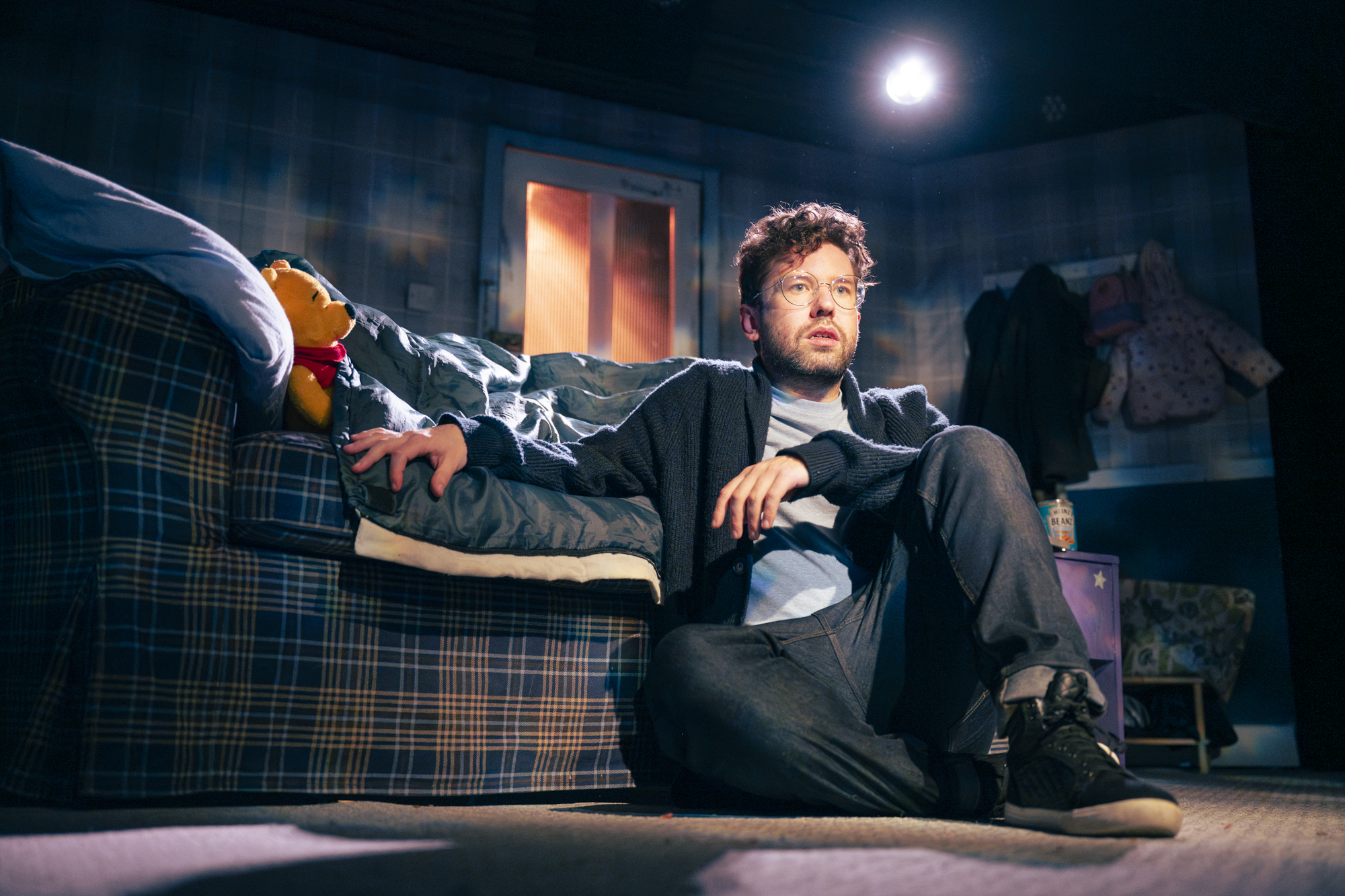
Stay, it turns out, is a musical, but lest that word should conjure images of hordes of costumed performers, leaping and gyrating across a stage, let me quickly point out that this is the latest in the Traverse Theatres’s A Play A Pie and A Pint season. It’s a two-hander. But its smallness of scale is more than made up for by its sweet, affecting nature and for the insights it offers into its difficult theme.

Rowan (Craig Hunter) and Kit (Daisy Ann Fletcher) meet up in their favourite corner of the local park. Rowan is carrying an urn containing somebody’s ashes: he’s finally prepared himself for the task of scattering them in the duck pond, but he needs back-up for this grim task and, of course, Kit is there, dressed in her hospital scrubs, ready to make jokes about every aspect of this solemn occasion.

The two of them were once lovers but four years ago something went badly wrong – and yet, somehow, Rowan doesn’t want his current girlfriend here today. For this challenge, Kit is the perfect choice…

Written by Jonathan O Neil and Isaac Savage and directed by Melanie Bell, Stay is a deceptively simple piece, its quirky plaintive songs recounting a poignant story about a relationship gone awry. Rowan is steady and dependable, Kit adorably scatty, forever taking the narrative off in unexpected directions, but together they have something special. Both leads deliver the plaintive, haunting songs with considerable skill and the piece is cunningly written, luring you in with its seemingly innocuous narrative, before heading off into darker territory and deftly delivering a climactic gut punch.

If I wanted to nitpick, I’d say there’s one song too many after that change of direction; nevertheless, Stay is a delightful piece of lunchtime theatre that will make you laugh and cry in equal measure.

4.5 stars

Philip Caveney

The Sheriff of Kalamaki

03/09/23

Traverse Theatre, Edinburgh

In this unusual two-hander by Douglas Maxwell, Paul McCole plays the eponymous law-keeper. It’s not an official role but alcoholic Dion is proud of the title, even if he did choose it himself. He swaggers (and staggers) his way through the bars and clubs of Zakynthos, seemingly unaware that he’s being used as a lookout by the local drug dealer. He’s a loveable character, his cheery bluster doing little to hide just how damaged and vulnerable he really is. His existence is precarious but he seems to be coping – until his apparently straight-laced brother, Ally (Stephen McCole), comes looking for him, after almost thirty long years…

Maxwell eschews a duologue in favour of two almost completely separate monologues, a structural device that mirrors the brothers’ estrangement. Dion, when we first meet him, is alone – as he has been since 1994. When Ally shows up, the ensuing conflict shows us how this situation began, and then it’s Ally’s turn to find himself bereft and isolated in Kalamaki, a solitary figure standing on a cliff, facing his demons, while in the town below him, everyone else is having fun. The script’s construction makes for an oddly unsettling experience, but I think it serves the story well.

Gemma Patchett and Jonny Scott’s set design is suitably stark: a raised platform, overshadowed by a huge, curved sheet that represents the sea and sky. This works well on a figurative level too, the brothers dwarfed by the natural world, the quarrel that once seemed so all-consuming now rendered petty and insignificant. After all, the planet’s burning: Ally’s plane is half-empty; tourists have turned their backs on the island’s unbearable heat and unpredictable wildfires.

Jemima Levick’s direction is lively and pacy, highlighting the superficial contrasts between the two men, while the real-life McCole siblings are both formidable performers, creating a convincingly acrimonious relationship. Their differences are slowly peeled away, revealing their essential similarities and exposing the myths we tell ourselves about what ‘a good life’ really is.

4 stars

Susan Singfield