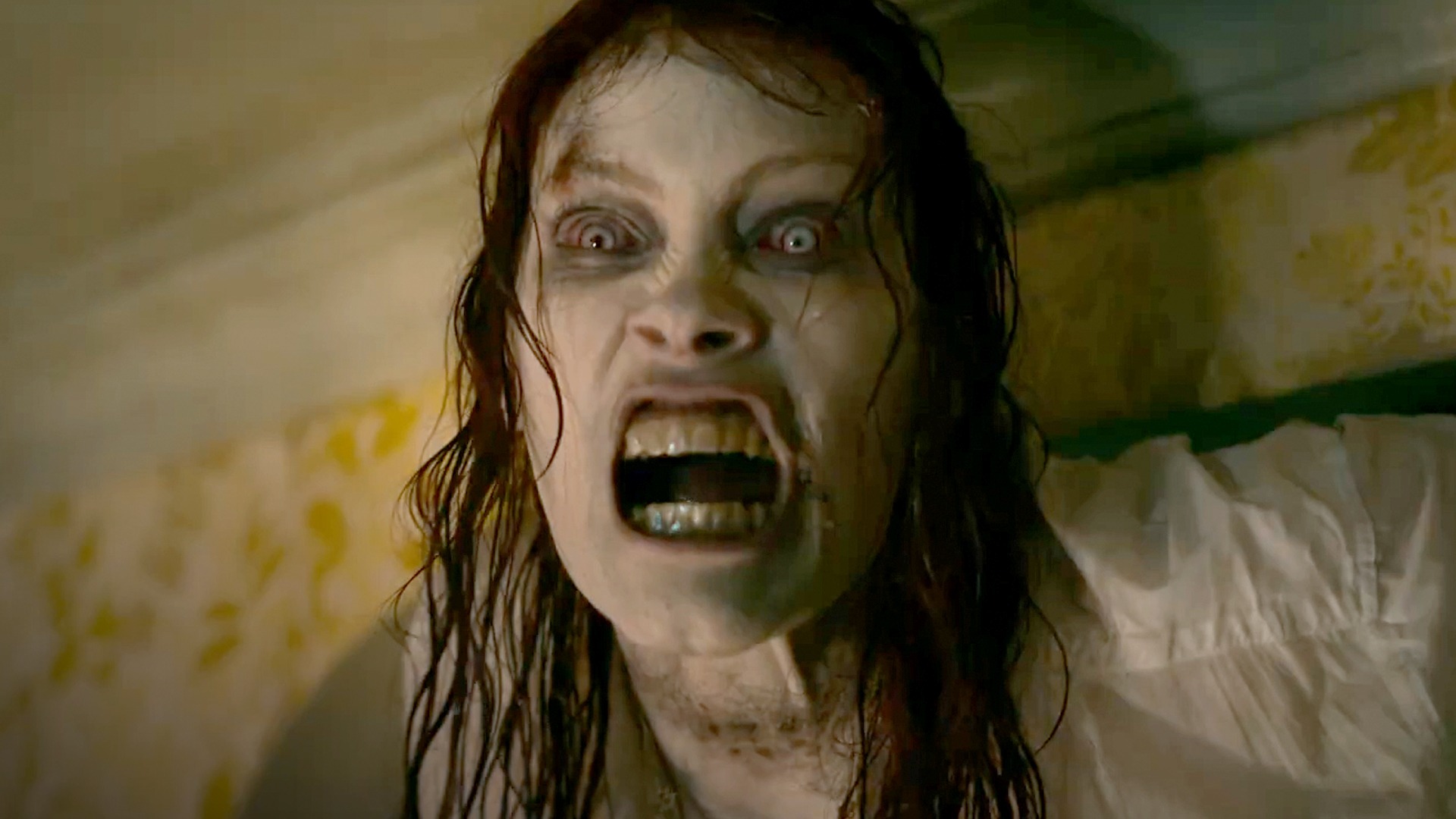
Family Tree

05/04/23

Traverse Theatre, Edinburgh

Henrietta Lacks is not a household name – but she should be. The cervical cancer that killed her also produced one of the most important cell lines in medical research, HeLa. Harvested from her tumour without consent, Lacks’ immortal cells (which continue to divide when most would die) have been crucial in the development of the polio vaccine, AIDS and cancer treatments, IVF and more. She died in 1951, but her cells live on, even proving invaluable in the fight against COVID.

So why haven’t we heard of her? The answer is sadly obvious: because she was a Black woman.

Mojisola Adebayo’s play sets out to right this wrong, to give Lacks the recognition she deserves. It also raises some very important questions about consent and compensation. This isn’t just an historic issue. Sure, the USA now has the ‘Common Rule’ clarifying the principles of ethical research, but certain biotech companies have made huge profits from patenting HeLa cell products – and none of the money has ever found its way to her descendants.

Directed by Matthew Xia, Family Tree is a challenging and confrontational piece of theatre, Adebayo’s writing poetic and arresting. Lacks (Aminita Francis) rises from her grave to undo her erasure, to demand we hear her version of the tale. She’s not alone in the graveyard: three slave women also rest there, finally at peace after enduring years of intrusive experimentation at the hands of the so-called father of modern gynaecology, Dr J Marion Sims. There are three Black NHS nurses too, felled by the pandemic in 2020. Ain (Mofetoluwa Akande) is full of righteous anger, mostly against the ‘Why People’ who claim to be allies until it’s inconvenient. Lyn (Aimée Powell) and Bibi (Keziah Joseph) are quieter and more philosophical, the latter using the leisure time that death affords her to finally read Toni Morrison. Although Lacks’ is certainly the most compelling narrative – she is, quite literally, centre stage – the other women’s stories are important too, contextualising Lacks’ experiences, and showing how she is just one link in a shocking, still ongoing chain. The actors are all electric, their performances poised and bold, intense and heartfelt.

However, despite the painful subject matter, this is not a piece of trauma porn. Although the story is about the horrendous ways Black women have been abused, Adebayo also shows the women’s strength and joy, turning them into dancing goddesses, recognising them for the queens they are.

4.3 stars

Susan Singfield

Dungeons and Dragons: Honour Among Thieves

05/04/23

Cineworld, Edinburgh

Once the domain of a modest group of aficionados, the roleplaying game of Dungeons and Dragons has lately become a worldwide obsession, which perhaps accounts for this big-budget production. It’s presumably been given the ‘Honour Amongst Thieves‘ suffix to differentiate it from the dismal Jeremy Irons movie of 2000, which attempted to walk the same path, but failed to endear itself to critics and viewers alike. Thankfully, this incarnation, directed by John Francis Daley and Jonathan Goldstein, is a different kind of beast entirely. It’s actually great fun.

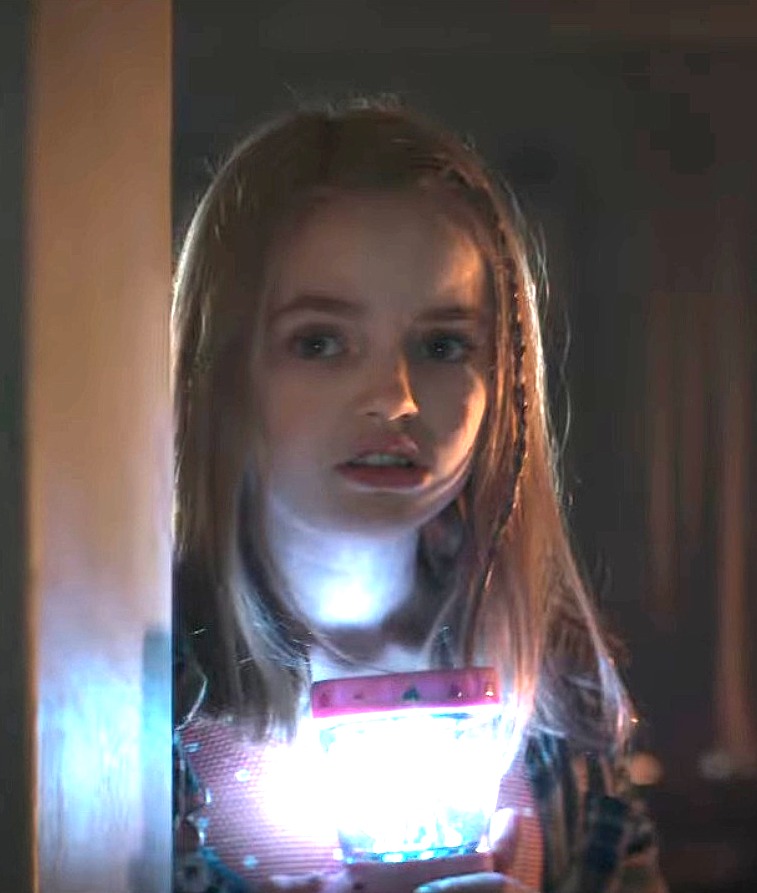
It’s the story of Edgin (Chris Pine) a former Harper (or minstrel), more recently a professional thief. When we first meet him, he’s languishing in prison, sharing a cell with his BF, Holga (Michelle Rodriguez), a kick-ass warrior who never wastes words when her sword can do the talking. She’s also very fond of potatoes. Edgin has a desperate plan to escape from captivity because he needs to get back to his daughter, Kira (Chloe Coleman), who he’s left in the care of his former friend and fellow-thief, Forge (Hugh Grant), after the tragic death of her mother. 

Once out of prison, Edgin hears about a mystical Tablet of Awakening, which has the power to bring a dead person back to life. For obvious reasons, he resolves to find it. So he heads for the city of Neverwinter, where Edgin is now the head honcho, supported by his advisor, the powerful Red Witch, Sofina (Daisy Head). Along the way, Edgin and Holga recruit failed magician Simon (Justice Smith) and shapeshifter Doric (Sophia Lillis) to their cause – and, with the help of the mysterious and ridiculously handsome Xenk (Rége-Jean Page), they set off on a long and complicated quest to find an ancient bronze helmet that will help them locate the fabled tablet. Suddenly, we’re in a heist movie.

If this all sounds horribly generic, relax. Dungeons and Dragons: Honour Amongst Thieves can most accurately be described as a romp, fuelled by a clever script that has a massive trump card up its sleeve, which it’s not afraid to use. Whenever events threaten to become too po-faced, too pompous for comfort, out come the jokes, the quips and the sarcastic asides. It works like a dream.

Yes, there are CGI beasts, including a fearsome dragon; there are huge battles and eye-popping special effects sequences; there are witches and ogres and long-leggedy beasties – but the creators of the film are canny enough not to linger too long on any of these details, allowing Edgin’s quest to move on to the next hurdle, the next obstacle, the next massive punch up. There’s a second trump card in the familiar form of Hugh Grant, who, as the villainous, double-crossing Forge, offers yet another character study of the kind he’s been revelling in ever since his renaissance in Paddington 2. He’s not the only good thing here, but he’s definitely one of the best of them.

It all builds confidently to a genuinely heart-warming conclusion that rounds off the adventure in style. Stay in your seats long enough for a brief, but funny post credit scene!

I’ve no idea if this will appeal to devotees of the game, but as an outsider, I find this D&D adventure a ton of fun.

4.2 stars

Philip Caveney

Wish You Were Dead

04/04/23

Festival Theatre, Edinburgh

Even hardworking police officers deserve a holiday now and then, which is why Inspector Roy Grace (George Rainsford), his wife, Cleo (Giovanna Fletcher), and their baby son, Noah, are visiting a remote château south of Paris. They’ve brought their resourceful American friend, Kaitlynn (Gemma Stryan), with them to act as chief babyminder. But a combination of bad weather conditions and terrible traffic means that they arrive at their destination far later than scheduled. They’ve been expecting to meet up with Kaitlynn’s boyfriend, Jack, but there seems to be no sign of him – and the place they’ve chosen as their stopover really isn’t what they were expecting. For one thing it’s a chambre d’hôte (a kind of glorified Airbnb) and, what’s more, there’s something very odd going on here…

This sixth stage adaptation of Peter James’ successful Inspector Grace crime series began life as a novella, inspired by a holiday from hell that James and his real life wife endured back in the day. It opens like one of those Bloodbath in the House of Death horror spoofs that we’re all so familiar with. It’s a dark and stormy night; there’s a creepy looking interior complete with a suit of armour; there are baleful paintings on every wall and (quelle horreur!) no internet reception! But any laughter generated here is entirely unintentional. The would-be holidaymakers keep stumbling across ominous clues and, as the plot slowly unravels, a tale of deception and cold revenge is gradually revealed.

But there are issues: too much of the dialogue doubles as exposition and too much of that dialogue is delivered in a declamatory style – while the presence of a swaggering bad guy with an old axe to grind (though decently played by Clive Mantle) is a familiar device I’ve seen too often for comfort.

As events steadily mount to a crescendo, complete with artlessly telegraphed ‘twists’ and decidedly unlikely decisions on the part of the villains of the story, I feel my patience wearing perilously thin. Michael Holt’s set design is impressive and deserves a better tale than the one that’s offered here. The ‘upstairs room’, glimpsed through a gauze screen, is a nice touch – though I’m pretty sure it was used in the previous James adaptation, Looking Good Dead.

In the end, I decide that this production is aimed at avid Peter James fans (of whom there are many) but, if I’m entirely honest, it’s really not for me.

2.5 stars

Philip Caveney

The Spark

04/04/23

Traverse Theatre, Edinburgh

It’s hard to believe it’s taken until now – the 2020s – for the term ‘perimenopause’ to enter popular discourse, although, ironically, my computer has just underlined it in red, signalling an unknown word – so maybe we’ve still got a way to go. Nevertheless, we’re moving inexorably away from hushed murmurings about ‘the change’ and oblique references to ‘hot flushes’, and instead naming all of the physical and mental symptoms of this life-altering process. It turns out it’s not just your periods petering to a halt. No such luck. Instead it’s some or all of the following: joint pain, exhaustion, menstrual cramps, decreased (or increased) libido, mood swings, anger, vaginal dryness, brain fog… it’s quite the gut punch. Almost literally.

In The Spark, playwright Kathy McKean explores the impact of the perimenopause on a politician. Robin (the brilliant Nicole Cooper) is struggling in a system that seems designed to constrain her. And whereas, in her younger years, she might have bitten her lip and done what needed to be done in order to get ahead, she’s at ‘that age’ now, and the fuck-it factor has set in. No, she won’t stand by while a group of men harass a young girl at a bus stop. No, she won’t deliver the anodyne presentation her speech-writer, James (Johnny Panchaud), has concocted – a bowdlerised version of her own from-the-heart first draft. No, she won’t accept that she’s powerless to affect change. Because otherwise, what’s it all for?

Directed by Gordon Barr, the three actors effortlessly illuminate the chaos inside Robin’s head, as her adversarial discussions with both James and her long-suffering GP, Maggie (Beth Marshall), build to a cacophony. Maggie’s got enough problems of her own – and she blames Robin for some of them. After all, Robin was, until recently, the minister for health. She knows how over-worked the nation’s doctors are; how can she possibly think Maggie has time to deal with what seems on the surface like a pretty bog-standard set of symptoms? Except that Robin’s menopausal heat seems to manifesting itself outside her body, and who knows where that will end…

The writing here is sharp and the delivery fast-paced and engaging. The Spark seems like a fitting finale to what has been a particularly strong season of A Play, a Pie and a Pint. It’s not perfect – it’s a simple idea that builds well at first, but doesn’t deliver the shocking crescendo it perhaps should, and maybe takes aim at the wrong target (I can think of many institutions more deserving of a middle-aged woman’s ire than the parliament at Holyrood). But it’s good to see this subject aired, and in such a witty, thought-provoking way.

4 stars

Susan Singfield

The Night of the 12th (La Nuit du 12)

02/04/23

Cameo Cinema, Edinburgh

Written by Gilles Marchand and directed by Dominik Moll, The Night of the 12th features few of the traditional tropes we might expect to find in a crime procedural. It’s based around an (unsolved) real-life murder and, though it occasionally gives the impression that there may be a satisfying solution waiting for us at the film’s conclusion, it steadfastly refuses to supply one. Here is a story that is far more interested in the effects that a crime has on those assigned to investigate it than in the crime itself. It’s a brave decision on the part of the filmmakers but one that – for me at least – feels suspiciously like a game-changer.

It’s the night of October 12th 2016 and Clara (Lula Cotton-Frapier) leaves the house of her friend, Stéphanie (Pauline Serieys), in the picturesque mountain village of Grenoble, to walk the short distance home. But on her way back, she’s approached by a masked stranger, who flings petrol into her face and sets her ablaze. Her body is discovered the following morning, burned almost beyond recognition.

Newly appointed police chief Yohan Vivès (Bastien Boullion) is assigned to head up the resulting murder investigation, assisted by his close friend, irascible older cop, Marceau (Bouli Lanners). Marceau is currently having serious marital issues, which make him even more unpredictable than usual and Yohan spends much of his time reigning in Marceau’s excesses. Yohan also makes a mess of breaking the news of the murder to Clara’s mother.

The team of investigators soon uncover a whole parade of suspicious males, many of whom have, at some point, enjoyed a sexual relationship with Clara. They range from a toxic bully, who has been previously arrested for beating up a girlfriend; a local weirdo living in a squat close to the murder scene; and a rapper, who has openly threatened to ‘burn’ Clara in the lyrics of one of his recorded songs, available to view on YouTube. But what initially promises to be an open and shut case keeps leading the team of investigators along a series of dead ends and, as the days, months and years slip inexorably by, Yohan is increasingly affected by his total inability to make any headway with the case…

The Night of the 12th exerts a powerful grip and its overarching theme appears to be a meditation on the nature of evil. It also explores an awful truth: that it is generally men who commit such terrible crimes against women, and it’s also mostly men who are tasked with solving them. When a new female judge (Anouk Grinberg) takes over, Yohan finds himself reinvigorated by her presence and ready to give the case one last push. But is it a change that’s come too late to be of any help?

Dark, brooding and mysterious, The Night of the 12th will surely infuriate those who prefer their mysteries to have a definitive answer, but it manages to keep me hooked right up to the final frame and, for me, that’s enough to recommend it as one to watch. I’ll be the first to acknowledge, however, that the film won’t be for everyone. Watch this for the journey rather than for the final destination.

4.2 stars

Philip Caveney

Castle Lennox

31/03/23

Lyceum Theatre, Edinburgh

The titular Castle Lennox is a hospital, but not as we know it. Places like this – providing long-term residential care for people with learning disabilities, shutting them off from the outside world – no longer exist. Here, playwright Linda McLean explores the pros and the cons: the deep, affecting friendships forged and the toxic regime, rife with bullying.

It’s 1969 and teenager Annis (Emma McCaffrey) is proving too much of a handful for her stepmother (Fletcher Mathers). Annis is lively, independent and full of fun, and she also has a learning disability, which means she’s eligible for enrolment at Castle Lennox. Simultaneously entranced and terrified by its fairytale appearance, Annis enters with hope as well as trepidation. But the staff nurse (Mathers again) takes against her, and – as the years tick inexorably by – Annis’s spirit seems to be quashed. Thankfully, there are also some moments of joy, such as her tentative romance with fellow patient, William (Gavin Yule) – but is she too institutionalised to cope when, twenty years later, Castle Lennox finally closes down?

Castle Lennox, directed by Maria Oller, is a joint production between the Lyceum and Lung Ha, Scotland’s leading theatre company for learning disabled actors. It’s a superb example of how empowering and inclusive drama can be, a cleverly-woven narrative that both supports and enables its fine cast, as well as engaging a sold-out house. McCaffrey shines in the lead role, but fellow actors Yule, Emma Clark (Jo) and Nicola Tuxworth (Marie) also stand out, the latter clearly relishing her devilish character.

But, although the individuals are great, it’s the choral scenes that really make this piece. Movement director Janice Parker creates a bold dynamic, evoking the cheerful chaos of the laundry and Saturday tea parties, and the performers are all absolutely on their game, singing and dancing with gusto and aplomb. BSL interpreter Rachel Amey is nicely integrated into the production, subtly assuming the role of Annis’s dead mother, reassuring her daughter when she’s feeling low.

Karen Tennent’s nifty set places us first in an enchanted forest, where a grand gateway yields to an altogether more prosaic and clinical space, where white curtains segregate the patients from outsiders – and from each other. The costume design (by Alison Brown) also helps to locate us both in time and place, and I like the way Annis’s clothes become drabber as the institution wears her down.

All in all, Castle Lennox is a delight, well-deserving of the standing ovation it receives tonight.

4 stars

Susan Singfield

Life of Pi

31/03/23

Cineworld, Edinburgh

Yann Martel’s novel, Life of Pi, was published in 2001 and won the Booker Prize the following year. In 2012, it was adapted into an impressive film, directed by Ang Lee. Of course, the inevitable next step was to adapt it for the stage, but that’s a very tall order. Would it be possible to convincingly present such a fantastical story in a theatre? Well, never underestimate what can be achieved with a suitable budget and state-of-the-art special effects. This version, beamed direct from London’s Wyndham Theatre as part of the NT Live season, is absolutely eye-popping.

The play opens in a hospital ward in Mexico, where our eponymous hero is being interviewed about his extraordinary survival in an open boat for 227 days, but his recollections are suddenly punctuated by a scene change so slick, I barely notice it happening, – until it has. 

It’s the 1960s and Piscine Molitor Patel (Hiran Abeysekera) lives in Pondicherry, India. Named after a swimming pool in France, he prefers his adopted nickname ‘Pi.’ His parents run a small zoo and Pi and his sister spend much of their time looking after the animals – including the latest arrival, a fierce Siberian tiger called Richard Parker.

And now it’s 1976 and, due to violent political unrest, Pi’s parents have decided to relocate their animals to a zoo in Canada. Pi, his family and all the animals board the Japanese freighter Tsintsum, and set off on a sea voyage. What could possibly go wrong? Well, plenty, as it happens. Pi ends up stranded in a lifeboat with only a zebra, a hyena, an orangutan and er… Richard Parker for company. 

Which is awkward, to say the very least.

To give him his due, Abeysekara offers an extraordinary performance in the lead role but, as you might expect, his efforts and those of his fellow performers are somewhat dwarfed by the aforementioned puppetry and special effects, which are quite frankly, off the scale. 

Let’s begin with Tim Hatley’s ingenious set designs, particularly those that deal with Pi’s adventures in the fateful lifeboat tossed upon stormy seas. Raging torrents of water appear to flood across the performance space, while shoals of fluorescent fish speed along just below the surface. I even gasp out loud at one point when Pi takes a nose dive onto an apparently solid stage… and disappears right through it, only to resurface in an entirely different spot a moment later. How have they done that? (With trapdoors, obviously, but it’s astonishing nevertheless.)

As are the animals – or, more accurately,  the puppets, designed by Nick Barnes, which are so intricately made that I actually keep forgetting they’re mechanical, which is ridiculous because I can quite clearly see the people operating them… and yet… and yet, I still believe they’re real, which is some accomplishment. Richard Parker is, of course, la bête du jour, the very essence of feline power, even able to switch into a comedic role as a fan of haute cuisine and back to a snarling, powerful predator, but – to be fair – every creature I see, right down to the swarms of multi coloured butterflies, is an astonishing creations.

Adapted by Lolita Chakrabarti and directed by Max Webster, Life of Pi is like a magician’s box of tricks. There’s a small part of me that feels sorry for the cast of (mostly excellent) actors struggling to make themselves seen amidst all that sturm und drang, but I guess it’s just – ahem – the nature of the beast.

4.3 stars

Philip Caveney
How Not To Drown

29/03/23

Traverse Theatre, Edinburgh

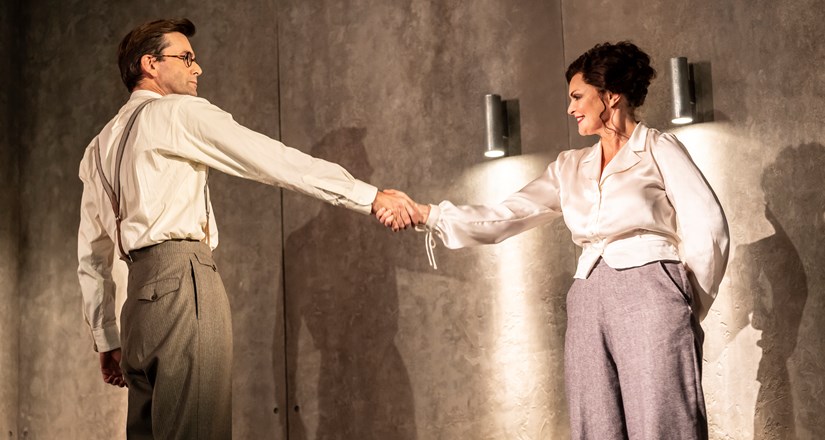
The first thing that captures my attention as I enter the auditorium is Becky Minto’s extraordinary set: a raised island of wooden planks, stark, powerful, simultaneously ramshackle and magisterial. There’s no other set dressing here, just two high towers of lighting on either side of the island, leaving lighting designer Zoe Spurr and composer/sound designer Alexandra Faye Braithwaite to layer on the atmosphere. Onto the dramatically sloping set climb the performers, five actors led by Dritan Kastrati, whose real life story is the inspiration for what we are about to watch (and who co-wrote the script with Nicola McCartney). But it’s clear from the outset that this will be an ensemble piece, as each of the actors in turn – Ajjaz Awad, Esme Bayley, Daniel Cahill and Sam Reuben – step forward to announce that they too are Dritan.

The drama unfolds, as the cast move back and forth on that precarious island, each actor in turn slipping into the role of Dritan, and skipping nimbly out again to portray a whole selection of other characters. There is never a moment’s confusion as to who is who. Director/ choreographer Neil Bettles has the cast drilled to perfection, as – with a modicum of props – they evoke a series of diverse locations and situations… and then, in a jaw-dropping coup de théâtre, the island begins to move.

Dritan’s story is one of abandonment and survival. At the age of eleven, he’s despatched by his well-meaning father from the family home in Albania, as war threatens to engulf the country. What follows is Dritan’s arduous attempt to get to his older brother somewhere in England, a difficult and sometimes dangerous journey. A sequence that portrays a perilous sea crossing feels horribly immersive, capturing the panic and uncertainty of the situation.

 Once in the UK, Dritan is confronted by the punishing series of hurdles faced by all young asylum seekers – a thankless procession of foster families, social workers and interpreters, each trying to give this boy whatever he asks for, but failing to provide him with the one thing he really needs: a family. We watch as his hopes and expectations crumble into dust.

How Not to Drown isn’t easy viewing, yet I wholeheartedly recommend it. It’s a powerful and affecting examination of the failure of bureaucracy, demonstrating all too clearly the problems that occur when it comes to caring for a child, cast adrift from everything he knows. Dritan Kastrati is only one of millions of people who have survived this awful situation, but his play brilliantly illuminates the experience like a beacon shining in a storm.

4.4 stars

Philip Caveney
Heathers: The Musical

28/03/23

Cameo Cinema, Edinburgh

In 1988, I was seventeen – and so was Veronica Sawyer. “You’re right; it really blows.” Luckily for me, high school in Abergele wasn’t quite as combative as it was in Sherwood, Ohio, and I never had to murder anyone. I did love Heathers though, and not just because Winona Ryder starred in it.

Written by Daniel Waters and directed by Michael Lehmann, the gloriously anarchic Heathers soon gained cult film status, so it’s no surprise that it morphed into a musical a decade or so later, nor that this stage version also has longevity. Here we are in 2023; unlike me, Veronica is still a teenager, still navigating the halls of Westerberg High, still trying to fit in.

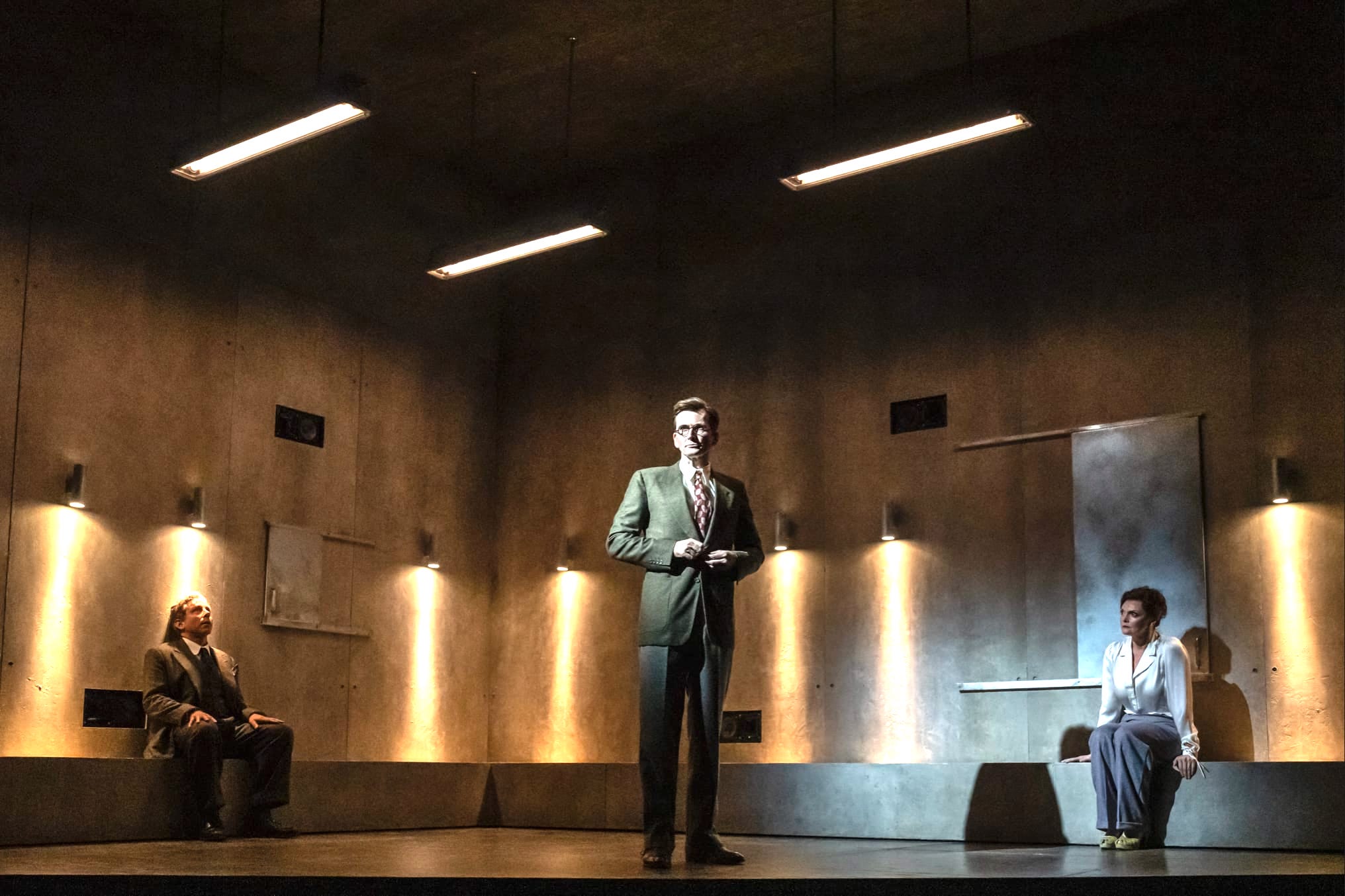
The plot is sprawling and bonkers, the humour dark. Tired of being bullied, Veronica (Ailsa Davidson) comes up with a cunning plan: she will use her excellent forgery skills to bribe the three most popular girls at school into letting her hang around with them. In return for a fake hall pass or two, Heathers Duke, McNamara, and Chandler (Vivian Panka, Teleri Hughes and Maddison Firth) give Veronica a makeover and the status she craves. And sure, she feels bad about turning her back on her best pal, Martha (Mhairi Angus), but it’s a matter of survival, right?

Except not everyone survives. Heather Chandler’s cruelty becomes too much for Veronica, and she longs to escape the stifling ‘friendship’. Enter bad boy JD (Simon Gordon). He takes an interest in Veronica’s problems – and offers some pretty drastic solutions. For a while, Veronica is drawn to his sexy brand of nihilism, but soon realises he is dangerous. Can she extricate herself before even more damage is done?

It’s no easy feat to make a rambunctious, feelgood musical about murder, attempted rape, homophobia, suicide and school shootings, but writers Kevin Murphy and Laurence O’Keefe seem to have done just that. Despite its age, the show clearly still resonates: tonight’s screening is full, and the audience is mostly young women – who probably only know Winona from her role in Stranger Things. It’s an unabashedly schlocky piece of theatre, as camp as Christmas and – despite the body count – just bursting with life. I like the slight softening of JD’s character (he’s less sympathetic in the film, without as much backstory), and the constant presence of Heather Chandler’s kimono-clad ghost works well: she’s the most dynamic character in the play, and it would be a shame to lose her in the first act.

Directed by Andy Fickman, the chorus numbers are vibrant and the choreography suitably zippy, maximising the potential of The Other Palace Theatre’s small stage. Davidson shines in the lead role, her vocals impressive and her characterisation spot on. With its bright colour palette and bold delivery, Heathers provides the same kind of high-octane girl-power as Six.

“I know who I’m eating lunch with on Monday. Do you?”

4.3 stars

Susan Singfield

Variant

28/03/23

Traverse Theatre, Edinburgh

The latest in this A Play, A Pie and A Pint season is Variant, written by Peter Arnott and directed by Kolbrún Björt Sigfusdöttir. It’s a distinctly Beckettian slice of absurdist theatre, a slippery two-hander that seems to question the very essence of identity. Who are we? Are we who we really think we are? And are the people we believe we are closest to, actually who they appear to be? Such heavy questions are just the tip of the iceberg in this taut and unsettling play.

A woman (Meghan Tyler) and a man (Simon Donaldson) saunter into the circular performance space, dressed in muted tones that perfectly match the simple setting. The woman begins to write in a notebook, the man reads a novel, but the silence is almost immediately broken by the arrival of a fly, buzzing annoyingly around the man’s head, interrupting his reading. He kills it. And then he pauses to make a remark to the woman.

‘I see you’ve changed your hair.’

But she quickly questions what he means by this. Was there something wrong with her hair before? Does he approve of what she’s done to it? Or would he have preferred something else? What’s wrong with her hair?

At first the conversation seems innocuous, the bickering of a long-married couple – but as it progresses, it becomes increasingly complicated, loaded with allusions to other things. I find myself asking questions. Are the two people actually married? Because isn’t this beginning to feel distinctly like an interview? And why does the woman keep steering the conversation into darker waters? Why are the images she refers to so violent?

Arnott’s play is cleverly constructed, raising many questions but offering no answers, and – just as we’re beginning to think we have a handle on it – the piece resets itself, and pursues another line of thought, steering us in a different direction. All credit to Tyler and Donaldson, who inhabit their complicated roles with absolute authority. If I’m not always entirely convinced that the piece has as much substance as it has ambition, it’s still nonetheless an engaging, and wryly amusing play, weighing in at a taut forty-five minutes, during which it switches back and forth like a cerebral rollercoaster. 

Did I like the play? Well, let me ask you something. What do you mean by the word ‘like’? Are you asking if it entertained me? Or puzzled me? Or even baffled me? Do you think I should review it? But then, what is a review? And perhaps more to the point, who’s writing this one? Oh, hang on a minute. I think it must be me. Whoever I am.

3.8 stars

Philip Caveney