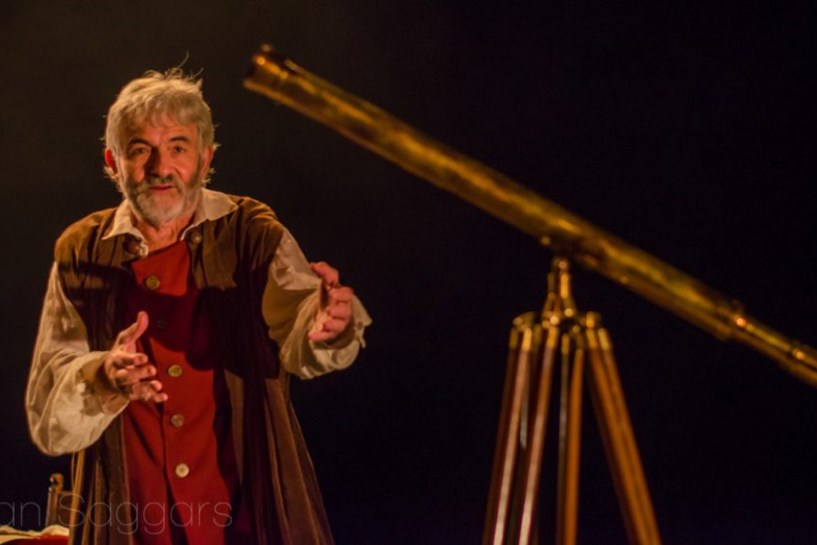
The Trials of Galileo

08/08/23

Greenside @ Infirmary Street (Mint Studio), Edinburgh

Veteran actor Tim Hardy is never less than excellent. Tucked away in this unassuming studio on Infirmary Street, his latest Fringe performance arrives without fanfare, but his reputation clearly precedes him: there isn’t a spare seat in the house. Of course, Galileo might have something to do with it too. It’s a cleverly chosen topic, curiously apposite in these post-truth times.

Written and directed by Nic Young, The Trials of Galileo is an insightful piece, illuminating a specific historical event, as well as the human and systemic failings that caused it. That event, of course, is the Roman Catholic Inquisition’s persecution of astronomer Galileo Galilei, in response to his assertion that the Earth revolves around the sun – contrary to the scriptures and therefore heresy. The great scientist’s frustration is palpable and compelling; it’s impossible not to wince as he does what surely most of us would do when threatened with torture, namely swallow down our fury and deny the truth we know. The description of that torture is horrifying, a stark and terrible reminder of what people are prepared to do to one another to stoke their egos or preserve their power.

Young’s words are finely-crafted, and Hardy knows how to give them weight, to cast light on the ridiculousness of Galileo’s situation: a great mind, forced to capitulate to those far stupider than he. How many people have suffered because of the blind faith religions (and quasi-religions, like Trumpism) demand, because inconvenient truths are hard to hear?

The biggest tragedy isn’t that Galileo was silenced; it’s that nothing much seems to have changed.

4.5 stars

Susan

Jo Caulfield: Razor Sharp

07/08/23

Stand 3, Edinburgh

As Fringe reviewers, we’re generally on the lookout for new acts. On the other hand, there are some old favourites that we just can’t stop returning to. Jo Caulfield is one such performer. This woman is an enigma, relentlessly old school in her approach, yet with an acidic edge that never feels old fashioned. She has the uncanny ability to nail her chosen target with a few carefully chosen put downs and move on to the next subject.

Razor Sharp is this year’s title and it sums her up very succinctly.

Out she comes and we can see she has a cob on about something and she isn’t holding back. People brave enough to sit in the front row are quickly excoriated, but here’s the thing: they love being demolished! A range of targets are unceremoniously despatched. Old grudges are aired in no uncertain terms. And, most importantly, we are all laughing uncontrollably, pretty much from the word go, at the comprehensive list of irritations she’s made notes on since we last saw her.

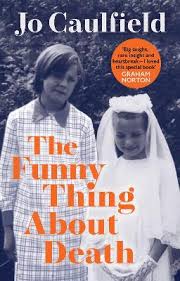
In a variation from her norm, she’s recently published a book, but – unlike many comics who go for the ‘how I became funny’ approach or the (inevitable) children’s series – she’s chosen to write about death, more specifically, the untimely demise of her beloved sister. Even more unusual, she’s donating all of the proceeds to Macmillan Cancer Support, and she’s already raised thousands of pounds. Yes, copies are available at the shows.

If you’re thinking that it all sounds a bit grim, relax. She reads a brief extract and, while there’s a thread of melancholy woven through the writing, it’s as incisive and bitingly funny as just about everything else she turns her attention to.

So, yes, there will probably be more groundbreaking comedians at the this year’s Fringe. There will be performers who will take you on a journey, who will make you look into your souls and rethink your very existence. But if you’re craving the experience of being absolutely helpless with laughter, this is where you need to come. And to those who quibble about her sharp edges, she has her own glorious riposte.

‘Unlikeable? Me? I’m fuckin’ delightful!’

4.7 stars

Philip Caveney

Alison Skilbeck’s Uncommon Ground

07/08/23

The Front Room, Assembly Rooms, Edinburgh

The last time we saw Alison Skilbeck, she was playing the role of Mrs Roosevelt in the comparative luxury of Studio 5, George Square. This year she’s appearing in The Assembly’s Front Room, a converted shipping container, but – as ever – she gives the performance her all, and we might as well be in a park somewhere in London, where the piece is set.

We first saw a Skilbeck performance back in 2017 (The Power of the Crone) and we’ve made a point of tracking her shows ever since, always interested to see where she’ll go next. The delightful thing is that we never really know what we’re going to get.

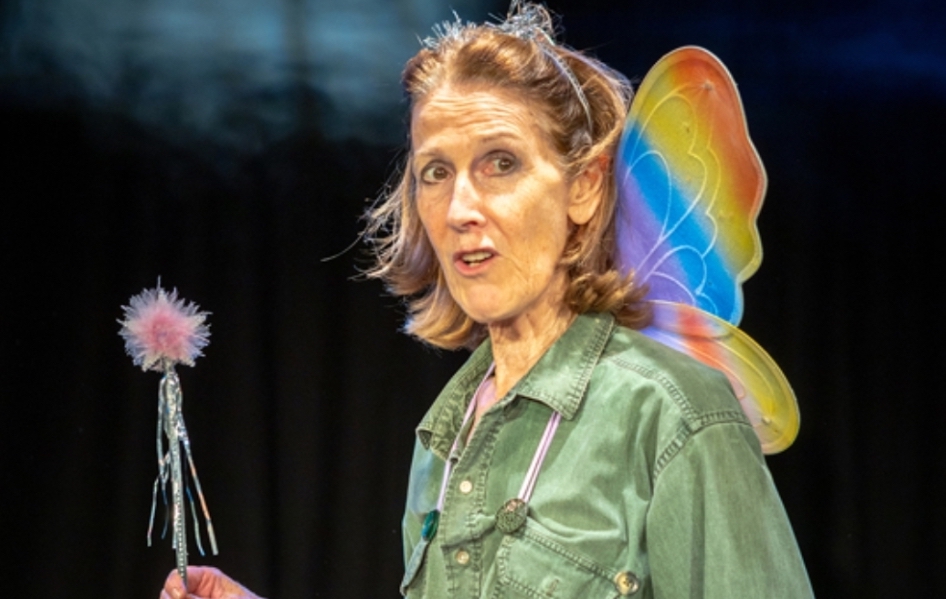
This year, she performs a collection of self-written monologues, set during lockdown. It features five human characters and one that … well, I don’t want to give too much away. As ever, she does that thing she always does, putting on a hat or a pair of fairy wings and suddenly inhabiting the character the item belongs to. These characters are not all female and they range from childhood to old age, but there’s something that interlinks them all, something we’re not fully aware of until the conclusion.

It’s a lovely piece of writing, gentle and lyrical, which captures the nuances of everyday speech with considerable skill, and an hour and ten minutes slips easily by. Along the way we are given some thoughtful insights into the human condition through the words of strangers we somehow end up caring about.

If this sounds like your cup of tea, it’s all waiting for you in a tin box on George Street.

4 Stars

Philip Caveney

After the Act

06/08/23

Traverse Theatre, Edinburgh

In 1988 I was in sixth form. I was (am) straight, and didn’t think I knew any gay people at all. No one was out. Nonetheless, when Section 28 was introduced – banning the promotion of homosexuality in schools – we all thought it was stupid. Not just cruel and regressive, but thick. We knew we couldn’t be encouraged into being gay, that no amount of advocacy by teachers – teachers! – could ever change who we were. Outlawing any positive mention of queer people though, that could hurt. We were only kids, but even we could see that.

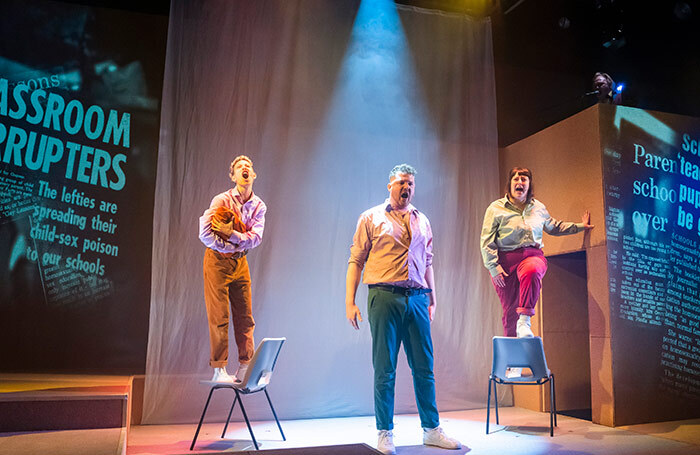
Breach Theatre’s After the Act shows just how much hurt there was. This musical, written by Ellice Stevens and Billy Barrett, with an original score by Frew, is a verbatim piece, relaying the experiences of LGBTQ+ students, teachers and activists who struggled and fought through Section 28’s fifteen-year reign. It’s both shocking and compelling, an object lesson in how to stage a polemic. By turning the words into songs, Breach Theatre give them extra weight and meaning, turning some into plaintive refrains and others into angry protest chants.

There are six performers onstage: two musicians (Ellie Showering and Frew) and four actors (Stevens, Tika Mu’tamir, EM Williams and Zachary Willis. Under Barrett’s direction, this is a lively, insistent piece; indeed, thanks to choreographers Sung-Im Her and Anouk Jouanne, the actors are always in motion, the interweaving stories physicalised into a complex web. Although the production is a serious one, focusing on some very real anguish, there are also moments of humour, of light shining through the darkness.

Much of what we’re shown is shocking. A couple of lesbian protestors disrupt the six o’clock news, and Nicholas Witchell – who wrestles one of them to the ground and puts his hand over her mouth so that Sue Lawley can carry on and read the day’s stories – is lauded as a hero rather than being done for assault. Another particularly striking statement comes from a member of Haringey Council’s Lesbian and Gay Sub-Committee, who notes, “We are at a disadvantage because we can only use rational argument, while the opposition are tapping into irrational fear and bigotry.”

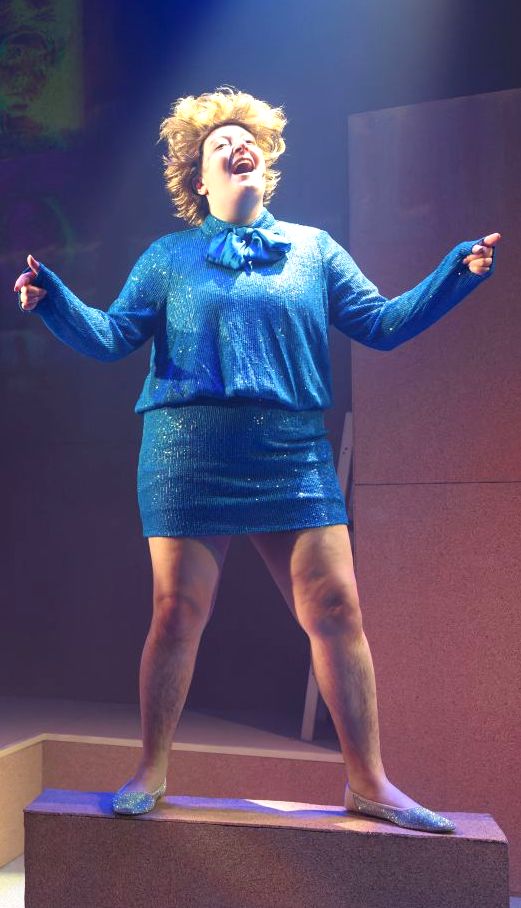
In the end, though, this is a triumphant piece of theatre. Stevens skewers Margaret Thatcher’s self-righteous ignorance in a comical depiction of the ex-PM: if she sounds ridiculous as she defends her nasty law, they’re her own words; she’s hoist by her own petard.

After the Act is vital viewing. Section 28 might have been relegated to the history books, but trans kids are in the middle of the same old battleground. We have to learn from what has gone before.

4.6 stars

Susan Singfield

The Grand Old Opera House Hotel

06/08/23

Traverse Theatre, Edinburgh

Occasionally you see a production that not only exceeds your expectations, but sends you out of the theatre exhilarated by its sheer invention. The Grand Old Opera House Hotel is one such play, a piece that fearlessly swings for the fences and hits all of its targets bang on. Part slapstick, part comic-opera, part mad-as-a-box-of-frogs spectacle, this is something you really don’t want to miss.

Aaron (Ali Watt) arrives at the titular establishment for his staff training and quickly learns that the recently rebuilt hotel is suffering from teething troubles. The electronic door numbers keep changing without warning, the lights flicker constantly and Aaron can hear people singing. A staff member tells him that, back in the day, the place was an actual opera house. It burned down sometime in the 1920s, killing the show’s cast in the process. Could Aaron be hearing their ghosts?

One of the singers he can hear is actually his opera-obsessed colleague, Amy (Karen Fishwick) – but Aaron doesn’t know that. He naturally thinks the place is haunted. If he just met up with Amy, in person, it would all be explained in an instant, but in a building with so many rooms, that’s not going to be easy…

It’s almost pointless to talk about the plot other than to say it all makes a twisted kind of sense. This delicious, sprawling extravaganza galumphs merrily through a whole gamut of different moods, characters and connections, barely stopping to draw a diaphragmatic breath. Isobel McArthur’s script is playful and exciting, while Ana Inés Jabares Pita’s set design opens up and interconnects like a Chinese puzzle box. Director Gareth Nicholls keeps his six-strong cast on their toes, moving through a whole series of lightning-fast costume changes, interacting, singing and sometimes even dancing for all they’re worth. It feels as though there are a lot more than half a dozen people on that stage. And in a way, there are.

McArthur keeps the pot simmering throughout, moving inexorably towards a tantalisingly prolonged conclusion. This is that rarest of creatures, an ambitious production that takes plenty of risks and somehow never puts a foot wrong. If you’re looking for something you’ll remember long after the final curtain, you’ve come to the right place.

5 stars

Philip Caveney

Adults

06/08/23

Traverse Theatre, Edinburgh

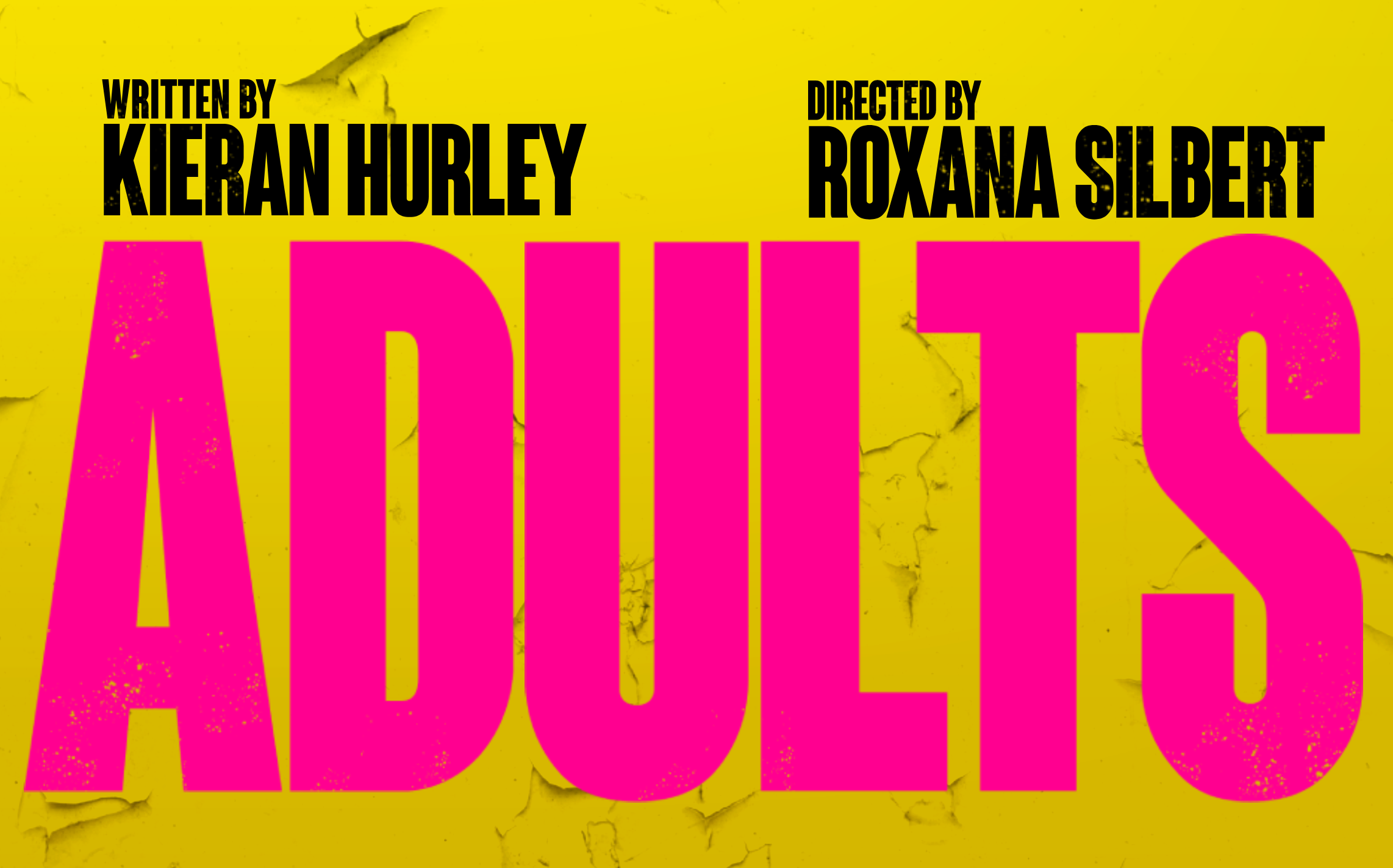
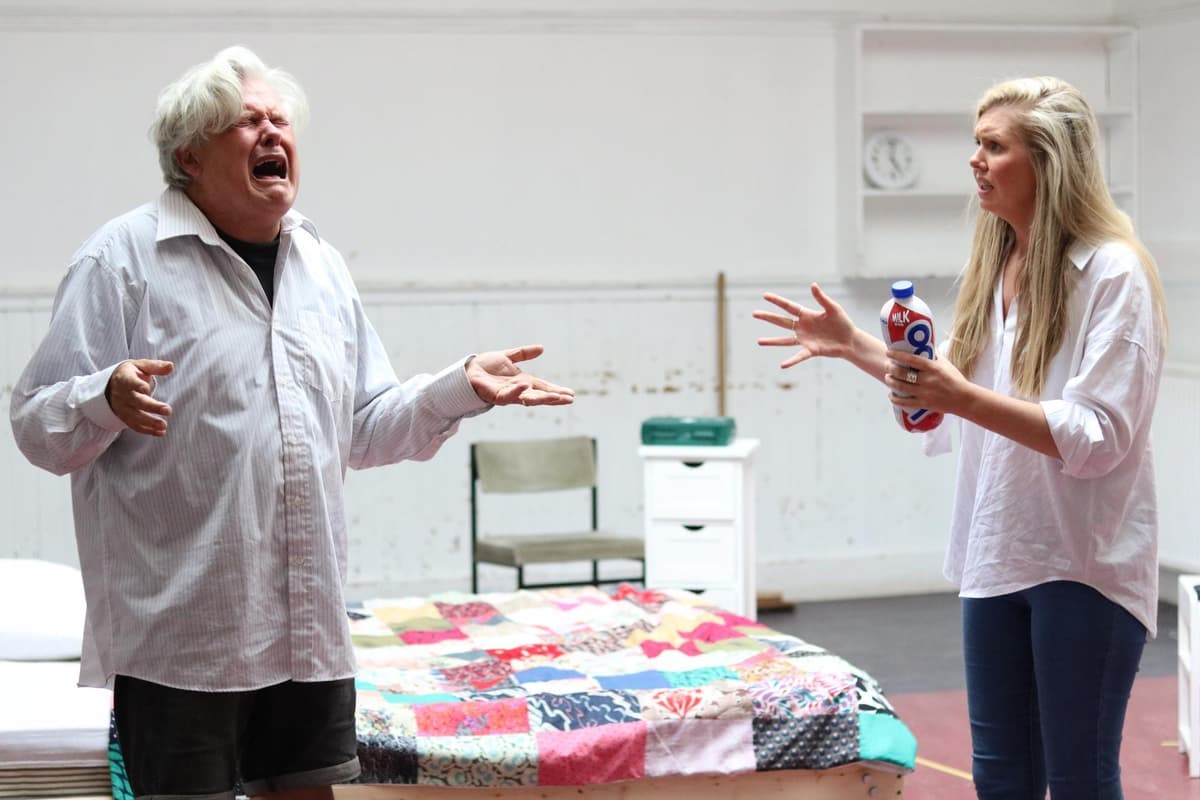
Zara (Dani Heron) has got things sorted, or as sorted as they can be, given the current state of the world. Admittedly, being a sex worker isn’t exactly living the dream, but her brothel is an ethical one – run as a workers’ collective – and she’s proud of the judgement-free service she and her colleague, Jay (Anders Hayward) provide. But still, it’s more than a little awkward when a new customer turns out to be her old teacher…

Mr Urquhart, or Iain (Conleth Hill), isn’t best pleased either. He was nervous anyway, and now he’s scared and embarrassed; he feels exposed. He’s only here to see if acting on his vague attraction to young men might help alleviate his misery, because he can’t go on as he is, hopeless and desperate, sick of his job, his marriage, even his kids…

As if the classroom reminiscences weren’t cringey enough, when Jay turns up – late – he’s got his baby daughter in tow. How can any of them collude in building a fantasy, when reality keeps intruding?

I’ve been a fan of playwright Kieran Hurley’s work since I saw Chalk Farm way back in 2013. He can always be relied upon to offer witty, thought-provoking material, with relatable, convincing characters, and Adults proves this once again. Both Zara’s skittish bravado and Jay’s reckless desperation are perfectly captured by Heron and Hayward, but it’s Hill’s depiction of Iain’s self-loathing and defensiveness that drives the piece. He’s done everything right, hasn’t he? So why does it all feel so wrong?

Directed by Roxanna Silbert, Adults has a stillness at its core, leading the audience to really listen, to hear what all three characters say, to see them for the complex, fascinating people they are. We’re all doomed, the message seems to be, so we might as well try to offer each other a bit of comfort while we can. Every generation will blame the one that’s gone before; it’s the way of the world. And every generation will fuck things up in their turn; we never manage to create that ‘better world’ we always say we want for our kids. It’s tragic – but here it’s belly-laugh funny too.

Sharp, incisive and hugely entertaining, Adults is another must-see offering from 2023’s TravFest.

4.4 stars

Susan Singfield

Sean and Daro: Flake It ‘Til They Make It

06/08/23

Traverse Theatre, Edinburgh

Due to circumstances beyond our control, we missed Sean and Daro on its initial release, so we’re delighted to discover it’s having a further run at TravFest 23. And deservedly so. This sprightly tale of two young Glaswegians seeking to become ice cream entrepreneurs finds a delicious sweet spot between comedy and tragedy – and runs with it. And any play that begins with an ode to the wonders of ice cream gets my vote any day of the week.

At his mum’s funeral, the moody and introspective Sean (Sean Connor) bumps into his old pal, Daro (Cameron Fulton), whom he’s lost touch with since going to Uni. Daro is the epitome of the unreliable best friend, the one your mum warns you about: full of ambition and hubris, but lacking anything with which to back it up. But he can talk like nobody’s business. Despite the solemness of the occasion, he’s soon persuaded Sean to use his inheritance – his mother’s flat – as collateral in a new shared enterprise. Together, they will become The Whippy Brothers, joint owners of an ice cream van. They will take to the highways and byways of Glasgow and make a proper killing, selling their sweet-tasting goods to all and sundry. After all, that’s how Duncan Bannatyne started, right?

But the road to success is a distinctly bumpy one – and there are plenty of obstacles they’ll need to navigate on their way…

Laurie Motherwell’s script is packed with hilarious observations and some moments of genuine pathos. Robert Softly Gale handles the direction with skill, giving the eponymous duo plenty of scope to interact with Karen Tennent’s simple but effective set. Connor and Fulton do not so much play their roles as inhabit them. As the spectacularly mismatched pals, they make a brilliant double act.

Anybody looking to leave their worries at the theatre door should seek out Sean and Daro without further delay. This isn’t just a plain cone – it’s served with a flake, a generous dash of sauce and extra hundreds and thousands on top.

4.6 stars

Philip Caveney

The Ballad of Truman Capote

05/08/23

theSpace at Niddry Street (Upper Theatre), Edinburgh

It’s 1966 and in New York’s swish Plaza Hotel, notorious author Truman Capote prepares to host a masked Black and White Ball, an occasion that will be attended by the most illustrious stars of the era. As he prepares himself for the evening, Capote muses about his life, his career and the critical reaction to his latest publication – a book that has launched him into literary superstardom and, at the same time, effectively ruined him.

Patrick Moy offers an uncanny impersonation of Capote, capturing the man’s strange lisping voice and effete mannerisms with aplomb. He parades restlessly around his hotel room, punctuating his observations with regular screwdriver cocktails and petulantly reading extracts from cruel reviews of In Cold Blood.

Andrew O’Hagan’s lyrical monologue offers us a glimpse into the titular character’s bizarre childhood and his curious relationship with fellow author, Harper Lee, but occasionally feels a little too dependent on name-dropping. Frank Sinatra, Marlon Brando, Marilyn Monroe and er…Princess Margaret? It’s like a Who’s Who of the 1960s and all these people are dancing to Capote’s tune.

But while we hear all about these luminaries, we never see them. Capote remains imperiously alone in his room, fielding telephone calls and gradually succumbing to the effects of alcohol as he relishes what will be his last moment of true power. It’s a curiously tantalising piece and I can’t be the only one wishing I could stay on to watch the delicious carnage that will ensue. 

Fans of Mr Capote – and there are many – are sure to enjoy Moy’s pitch-perfect performance, while O’Hagan’s script, though it lacks conflict, manages to effectively capture a significant moment in American history.

3 stars

Philip Caveney

Lady Dealer

05/08/23

Roundabout at Summerhall, Edinburgh

Charly (Alexa Davies) is fine… Okay, so she hasn’t got any friends, she never gets out of bed before noon, her girlfriend has left her and, although her chosen career pays well, her mum can’t help thinking that drug-dealing is a waste of her Oxbridge degree. Still, honestly, she’s fine.

But a power cut means she’s forced to sit in silence without the Beastie Boys to distract her, and she can’t charge her phones so her customers are unable to contact her. Now we see just how fragile Charly’s mental health really is. She embodies the word ‘brittle’ – sure, she presents a tough front with all that swagger, but oh, she shatters so easily. The minor change to her routine brings everything crashing down…

Written by Martha Watson Allpress, this rhyming monologue is a frenetic exploration of a character in crisis. It’s a novel idea: we’re used to seeing dealers depicted as baddies; we’re rarely invited to empathise with them. Here, Watson Allpress shows us how Charly found her path, how damaged and desperate she is. A little kindness is all it would take to change her life…

Roundabout’s small circular stage is dominated by three large speakers, creating a wall of sound and emphasising the narrow parameters of Charly’s world. Emily Aboud’s direction is as kinetic as the chaos in Charly’s mind: Davies circles the stage, pacing, her frantic thoughts made manifest.

The hour’s performance flashes by.

4.2 stars

Susan Singfield

Tink

05/08/23

Underbelly Bristo Square (Clover), Edinburgh

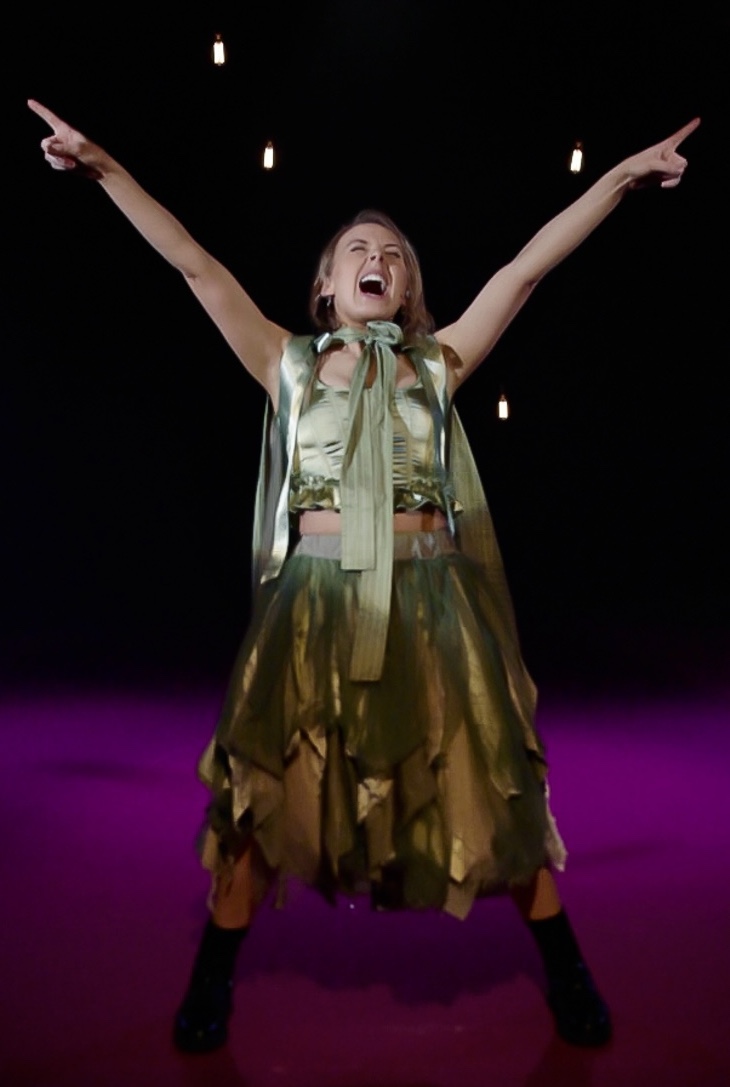
In this coming of age tale, a thoroughly modern Tink navigates the awkwardness of adolescence. This sassy young fairy is very different from that other Tinkerbell’s pal, Peter – she definitely wants to grow up. What she doesn’t want is to follow the trajectory of most fairies, getting smaller and smaller as she ages, until all her lovely light goes out. “I’m going to stay big forever,” she declares, aged five, picking up her guitar and delighting us with a song. She’s an accomplished player.

But of course, not even fairies are immune to the toxic messages imparted by the patriarchy, and teenage fairies struggle just as much as human girls when the whole world seems intent on diminishing their verve.

Wittily performed by Kat Kleve (who also wrote the songs), Tink is a charming piece. Kleve has a lovely singing voice and I’m glad she’s not prepared to shrink, to hide her light under a bushel and pretend she’s not as brilliant as she is.

Co-writer and director Lizzy Connolly has forged a dynamic piece, making impressive use of the tiny space. The staging is very detailed and precise: I’m in the front row so I can see the intricacy of the beautifully sewn costume and the convincing magazine mock-up. The hanging bulbs are simple but effective, evocative of a fairy glen, as well as providing literal reminders of the metaphorical dimming that occurs every time Tink’s exuberance is quashed. 

There’s a little of Greta Gerwig’s Barbie about Tink, the same heady mixture of celebration and critique. Gen Z women are showing us that fairies and feminism can co-exist. It’s an exciting revelation, and this is a gently empowering show.

4 stars

Susan Singfield