The Royal Hotel / Hotel Coolgardie

04/11/23

Cineworld, Edinburgh / Amazon Prime

We watch The Royal Hotel in the cinema. It’s fascinating. We know it’s based on a documentary, but how much of it is true? We head straight home and seek out Hotel Coolgardie.

Wow.

Hotel Coolgardie centres on two Finnish backpackers, Lina and Steph. When their wallets are stolen in Perth, they need to work to earn some money. An agency finds them a job serving drinks in a remote mining town. “You have to be able to cope with male attention,” they are warned. They don’t seem to notice the flashing red light. (Or perhaps they just feel reassured by the mitigating presence of a filmmaker.)

The pub is run by an odious landlord, who proudly informs the agency that it’s okay if the girls are inexperienced so long as they’re good-looking, and then takes great delight in bellowing at them when they arrive, belittling them for not understanding the local dialect and for not instinctively grasping the idiosyncrasies of his business. His clientele are heavy drinkers, and lewd behaviour is encouraged. “My customers grow an extra leg when new girls come into town,” he leers, as he puts out a sign announcing their arrival. In the bar, the men discuss who’ll be the first to ‘bag’ one of them. They know they’re being filmed; clearly, they don’t think they’re doing anything wrong.

Pete Gleeson’s documentary serves as a salutary lesson: when sexism and xenophobia are normalised, they thrive, especially within an isolated community. Coolgardie is not a safe place for Lina and Steph and, because they’re not willing to play along with the roles they’ve been assigned, they’re mocked and resented by the locals.

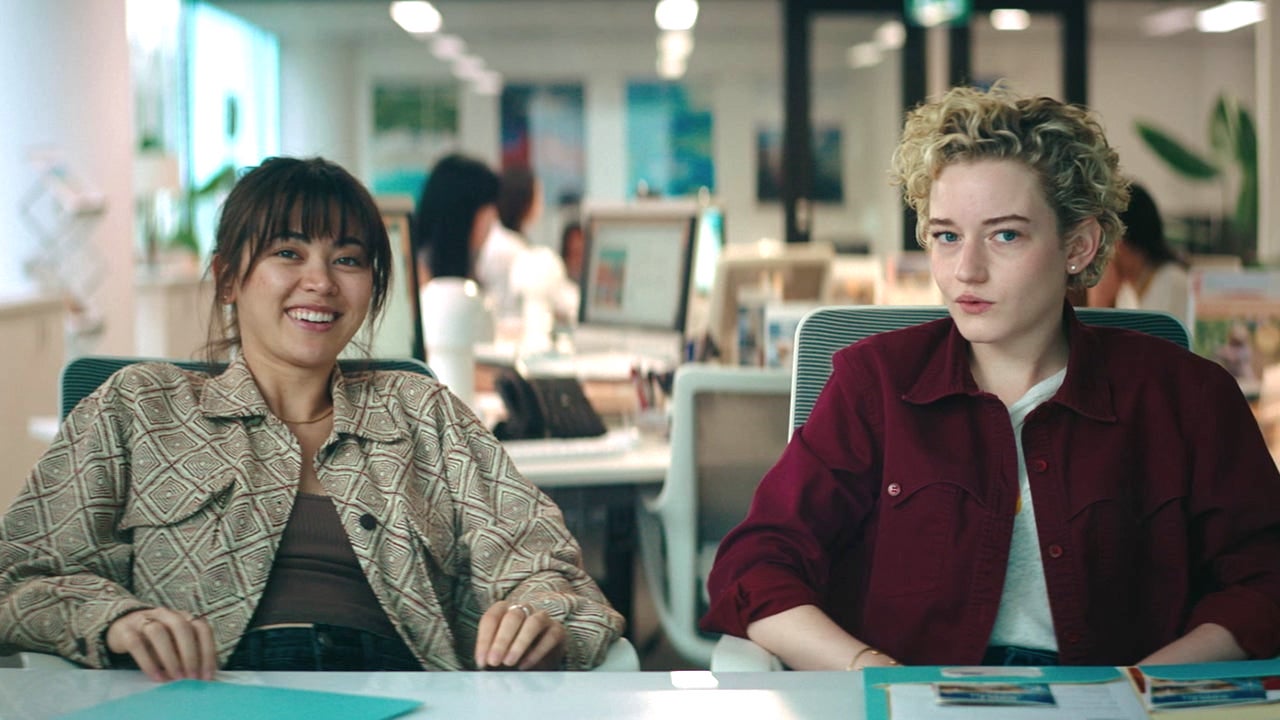
Writer-director Kitty Green seizes on the horror elements of this real-life set-up, highlighting the remoteness of the location as Canadian backpacking duo Hanna (Julia Garner) and Liv (Jessica Henwick) make their arduous bus journey through the empty desert. The Royal Hotel is dirtier and dingier than its counterpart; its customers nastier and more deliberate. The score, by Jed Palmer, ramps up the disquietude, and tension mounts as first Liv begins to assimilate, and then their only ally, Carol (Ursula Yovich), departs, leaving Hanna to face her adversaries alone.

Somehow, Green’s amplification makes the story less menacing. Gleeson’s documentary shows a more nuanced view of the community: we see the men’s vulnerability as well as their defensiveness, the insecurities that fuel their misogyny. This doesn’t excuse them or diminish their threat; in fact, it makes them more frightening because, unlike the cartoonish bad guys in Green’s film, they’re all-too recognisable. In the Royal Hotel, the men are uniformly terrifying; in the Hotel Coolgardie, there is a scale. “Canman” John Joseph Lowe, for example, has a genuinely sweet side. Sure, he’s a rambling drunk who demands too much of the girls’ attention and creeps them out by showering them with unwanted gifts, but he also looks out for them, drives them where they want to go and truly wants to help. On the other hand, “Pikey” – reincarnated in The Royal Hotel as Dolly (Daniel Henshall) – is a terrifying man, spewing hatred towards all women because no one wants to sleep with him. “It’s because I haven’t got a driving licence,” he says. “That’s not the reason,” Lina tells him. Henshall’s Dolly is horrible, but nothing he does is as scary as Pikey’s quiet, all-consuming rage.

What’s more, while Hotel Coolgardie‘s bogeyman is sexism, The Royal Hotel‘s seems to be Australia. The difference is subtly drawn, but it’s there. In the documentary, we see the magnification of a bigoted culture, flourishing in this particular spot thanks to an enabling landlord. In the movie, the implication is that Canada is somehow different, that the problem is specifically Australian working-class men.

Still, I wish that Gleeson had acknowledged his presence in Hotel Coolgardie; there’s something disingenuous in the way the film suggests the women are in real danger, when we know that he’s always there with them, filming everything, reducing their risk. But I still prefer it to Green’s film, which undermines the truth of Hanna and Liv’s situation by allowing them to ‘win’. The coda at the end of The Royal Hotel is far more chilling.

It makes sense to view these two films as a pair. My dearest hope is that the job agency stops sending young women out to places like Coolgardie. It’s not enough to warn them that they have to be okay with male attention. They need to warn the landlords instead: our clients have human and employment rights.

The Royal Hotel3.4 stars

Hotel Coolgardie – 4 stars

Susan Singfield

Flip!

03/11/23

Summerhall, Edinburgh

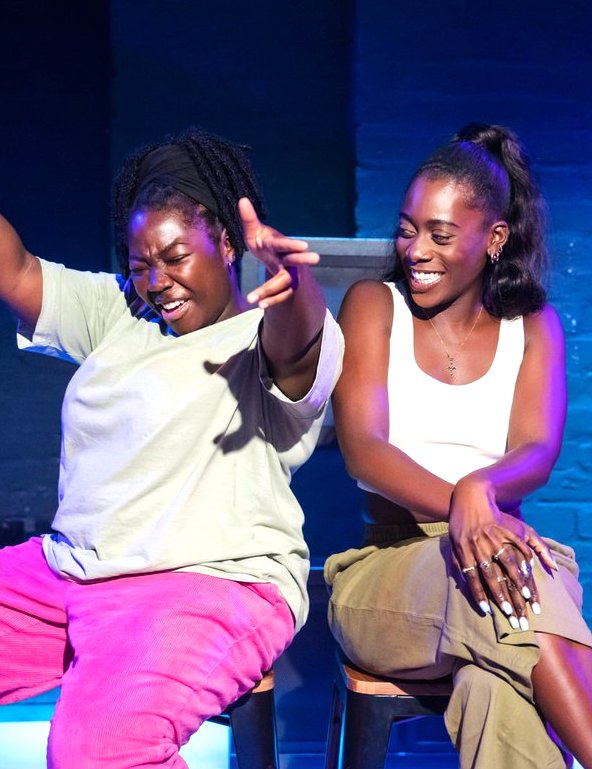
Racheal Ofori’s FLIP! is a fresh and keen-eyed take on the Faust story. Two young graduates, eager to make their mark, are enjoying moderate success on their WePipe channel. Their videos are vibrant and fun, full of silly catchphrases and exuberant dance routines, pragmatic beauty tips and off-the-cuff remarks. They’re enjoying making them – and it shows. For Crystal (Jadesola Odunjo), the collaboration and creativity are paramount, but Carleen (Leah St Luce) is hungry for cold hard cash. She has to be: unlike Crystal, she doesn’t have parents who can bankroll her, and her hard-earned degree doesn’t seem to be helping her to get a decent job.

So when a new app starts to gain traction, Carleen is all over it. FLIP! is hugely popular, its short video format both punchy and easily accessible. Crystal takes a bit of convincing – she’s not keen on the app’s style or ethos – but, before long, the duo are doing well. Until Crystal says something that other users don’t like, and she’s trending for all the wrong reasons…

Carleen is faced with a dilemma: should she stand by her friend and eschew her newfound notoriety, or sign a deal with FLIP! as one of their brand ambassadors?

Under Emily Aboud’s assured direction, FLIP! is a kinetic, engaging piece of theatre, turning an almost empty stage into a convincing digital universe. Aline David’s lively choreography helps to underscore the characters’ youth – their exuberance and naïvety – and both Odunjo and St Luce deliver flawless performances, charting the characters’ respective journeys from dreams to despair.

Because, of course, just as every action has an equal and opposite reaction, every exciting new promise of autonomy and riches soon has the sharks circling, working out how they can exploit it for their own ends. And FLIP! are no exception, cunningly demanding the rights to Carleen’s digital image and then using AI to create content for her. Sure, she’s making money, but she’s no creative control, no pride in her work. The fun has gone – and so has her best friend. But if she reneges on the deal, what then? FLIP! will just use someone else, and she’ll be back in a dead-end job. There’s no way out.

Ofori’s social commentary is sharp and incisive, and we leave the theatre with much to discuss. FLIP!‘s Edinburgh run is over now, but it’ll be at the Soho Theatre from 7th-25th November, so do try to catch it if you’re in London. It’s FLIP!pin’ great!

4.3 stars

Susan Singfield

Dead Dad Dog

02/11/23

Traverse Theatre, Edinburgh

John McKay’s quirkily titled play originally debuted at the Traverse in 1988, before transferring to the Royal Court Theatre in London – so it’s great to have the opportunity to see it back in its original home. This deceptively simple two-hander takes the form of a series of titled vignettes punctuated by snatches of classic 80s pop songs.

It’s early morning in Edinburgh and ‘Ek’ (Angus Miller) is preparing breakfast and psyching himself up for an interview at BBC Scotland, where he hopes to start a new career. He’s ill-prepared for the arrival of his father, Willie (Liam Brennan), a quiet man in a loud suit. Ek’s surprise is understandable: Willie has been dead for twelve years. He explains that he’s been granted the opportunity to visit Ek so that the two of them can ‘reconnect’. “Heaven,” he tells Ek, “is OK.”

The visit comes with some awkward conditions. Ek and his dear-departed Dad must remain within a few paces of each other at all times (otherwise there are disastrous side-effects). What’s more, Willie can be seen – and heard – by all and sundry. Which is awkward to say the very least. But Ek is determined to attend his job interview anyway, and even goes ahead with a date with his latest crush. A bad idea? Well yes, but this is hardly a realistic story and much pleasure is derived from the absurd comedic situations that the duo are obliged to stumble through.

Both Miller and Brennan offer assured and likeable performances and I love the simplicity of the staging, where one wooden chair is the only prop, pressed into service to represent a whole range of different things. There’s a strangely old-fashioned feel to the piece – so much has changed since 1988 – and sadly, a planned second half, featuring a more contemporary sequel, Sonny Boy, is unable to go ahead due to illness in the cast. (The current foul weather conditions might be part of the problem too.)

This is a shame, because added pleasure would surely stem from seeing how things have metamorphosed over the intervening years. Nonetheless, Dead Dad Dog is an entertaining piece. Liz Carruther’s direction keeps the pot bubbling merrily away and McKay’s script provokes much hilarity (and the occasional touch of pathos) as we go. Fingers crossed we get to see that sequel.

4 stars

Philip Caveney

The Grandmothers Grimm

01/11/23

Traverse Theatre, Edinburgh

The Grandmothers Grimm, written and directed by Emily Ingram, returns to Edinburgh for the final two nights of its latest tour. Premiered in 2017, this long-running play continues to resonate six years later, drawing in a sizeable crowd tonight at the Traverse.

Revisionist fairy tales are nothing new: like pantomimes, these stories survive because they’re endlessly adaptable. But this production, by Some Kind of Theatre, is more about intellectual property: who invented the stories, who owns them – and who gets the credit.

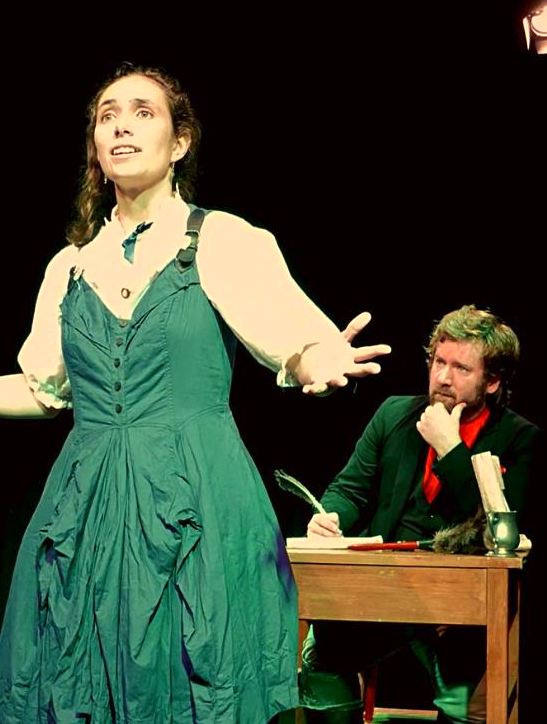
It’s no surprise to learn that the past was sexist (the present is pretty sexist too). But it is perhaps news that the Grimm brothers’ project – collecting traditional folk tales for a compendium – actually deprived a lot of working-class female storytellers of their living, like a nineteenth-century Spotify. After all, who’s going to pay to listen to an old woman tell them a story if they have ready access to a printed copy of the text? Jacob (Justin Skelton) and Wilhelm (Gerry Kielty) might argue that they never claimed authorship of the tales, readily acknowledging their process, but it was their names on the cover – and their profits in the bank.

Marie Müller (Ingram) opens the play, alone, weaving her narrative with practised ease. This, we understand, is how the stories were traditionally told: a paying audience listening, rapt, as an elderly, peasant woman draws us in. When Jacob and Wilhelm burst onto the stage, accompanied by the middle-class Marie Hassenpflug (Sophie Harris), it’s clear that Old Marie doesn’t stand a chance. She’s displaced, allowed to speak only for as long as it takes for the brothers to transcribe her words.

Hassenpflug doesn’t fare much better. She’s educated so the Grimms are superficially more respectful towards her. Nonetheless, they purloin her stories with a blatant disregard for her authorship; it doesn’t occur to them to credit her (a bit like those celebrity children’s authors, who don’t credit their ghost writers…). Harris imbues Hassenpflug with a fierce dignity, which makes for a stark contrast to the brothers’ pettiness.

Kietly’s Wilhelm is focused on sales. He thinks the stories need to be sanitised so that parents will buy them for their children. Skelton’s Jacob hates this idea: he doesn’t want to create the kind of sappy stories he associates with Charles Perrault. He favours a warts and all approach, arguing that the darkness is what makes the tales. I’d agree with him if it weren’t for the fact that his version of ‘authenticity’ denies the existence of the real originators.

The staging could hardly be more simple: the performance area is almost empty, save for a desk and a couple of books; the only additional props are some feathers, cups and apples. This is no-frills, low-budget, black-box theatre – and none the worse for it. Skelton provides the comic relief, galloping round the stage as a donkey prince, as the quartet bring the various tales to life. It’s deftly done, so that we hear the original versions and then see them warped and changed. The pace never falters.

If The Grandmothers Grimm feels like a natural fit for the Edinburgh Fringe, then it’s nice to be transported back to August on this cold November night.

4 stars

Susan Singfield
Roald Dahl/Wes Anderson

29/10/23

Netflix

A new film by Wes Anderson is always an interesting proposition. Four new films – the longest of which has a running time of just thirty-seven minutes – is a downright intriguing one.

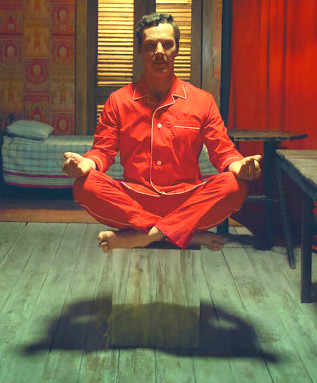
It must be said from the start that these are less motion pictures than illustrated stories (imagine, if you will, a kind of turbo-charged Jackanory and you’ll get the general idea). First up, there’s the aforementioned longest entry in the quartet, The Wonderful Story of Henry Sugar, which – to begin with – is told by Dahl himself (uncannily impersonated by Ralph Fiennes). The author begins to relate the story of the mysterious Imdad Khan (Ben Kingsley), a man who can see without using his eyes. Khan’s story is then picked up by two doctors (Dev Patel and Richard Ayoade) and they, in turn, transfer their attention to the titular character (played by Benedict Cumberbatch), a man who becomes obsessed with the notion of becoming an expert card cheat. (As you do.)

It’s all delivered as narration (at a breakneck pace) and, of course, the set dressing has the usual Anderson style: a series of exquisite puzzle-boxes, expertly linked together, opening and closing as the tale unravels. It’s beautiful to watch, but ultimately the story leaves me with a powerful sensation of so what?

The Swan (narrated by Rupert Friend) is, for me, the strongest narrative here, the distressing tale of a young boy called Peter (Asa Jennings), who is horribly bullied by a couple of local lads with access to a rifle (always a recipe for trouble) and which culminates in a poignant and rather distressing conclusion. The story is delivered by Friend as he wanders along a series of labyrinthine passageways and this is perhaps the most kinetic of the films.

The Rat Catcher features Fiennes as the central character, a rather creepy individual who visits a garage and offers his services to the proprietor (Friend again), while the tale is told by a narrator (Ayoade). The subtext of this one is rather less straightforward, as is the style. I can’t remember ever seeing an actor miming invisible objects in a film before! The rat catcher has assimilated all the qualities of the creatures he’s supposed to be eradicating and, when he fails in his attempts to locate them (in a haystack), he tries to make up for his failure in a demonstration of unpleasantness. Again, I feel that the story’s conclusion is rather underwhelming.

Finally there’s Poison, an account set in post-colonial India, in which Harry (Cumberbatch) lies in bed convinced that a krait (a venomous snake) is lying asleep on his chest and that the slightest move will cause it to bite him. A local police officer (Patel) and a doctor (Kingsley) are enlisted to resolve the situation and, to give them their fair due, they do their level best. The story culminates in a short and rather shocking demonstration of racism, which some viewers will find unsettling, but is surely the whole point of Dahl’s story – that former white rulers will always refuse to acknowledge their own failings. Strangely, Poison seems to have a similar theme to its predecessor.

With such brevity, it seems fairest to judge the four films as a whole – and indeed, Anderson has said that what attracted him to the idea is the notion that they comprise a kind of interlocking narrative. While this quartet is always visually compelling, I can’t help wishing that this inimitable director had settled on some better examples from Dahl’s extensive back catalogue. There are plenty to choose from.

If you have Netflix, they’re certainly worth clicking through. If nothing else, you’ll be charmed by their quirkiness and the uncompromising style that exemplifies Anderson’s approach to cinema.

3.4 stars

Philip Caveney

Treason the Musical

27/10/23

Festival Theatre, Edinburgh

“Remember, remember, the fifth of November, gunpowder, treason and plot. I see no reason why gunpowder treason should ever be forgot.”

We haven’t forgotten, of course. Bonfire Night looms large in the national calendar: every year, we bundle up in hats and gloves for an evening of funfairs, ginger parkin and fireworks. Guy Fawkes is burned again and again, his straw-stuffed effigies punished annually for his attempted crime.

So no, he’s not forgotten. But what exactly do we remember?

On the way to the theatre, I realise just how shaky my own grasp of the history is. I know that Guy Fawkes and some Catholic collaborators attempted to blow up the Houses of Parliament and that it was something to do with the Reformation. I know that he was hung, drawn and quartered. And, um, that’s it.

So I’m fascinated to learn more about the context, to understand how James I/VI angered Catholics by reneging on his promise to stop persecuting them, sacrificing their freedom for his own financial gain. Ricky Allan’s songs and Charli Eglington’s book help to illuminate the lives of those forced to deny their faith. It’s a salient message: in a world of tyranny and subjugation, terrorism is inevitable.

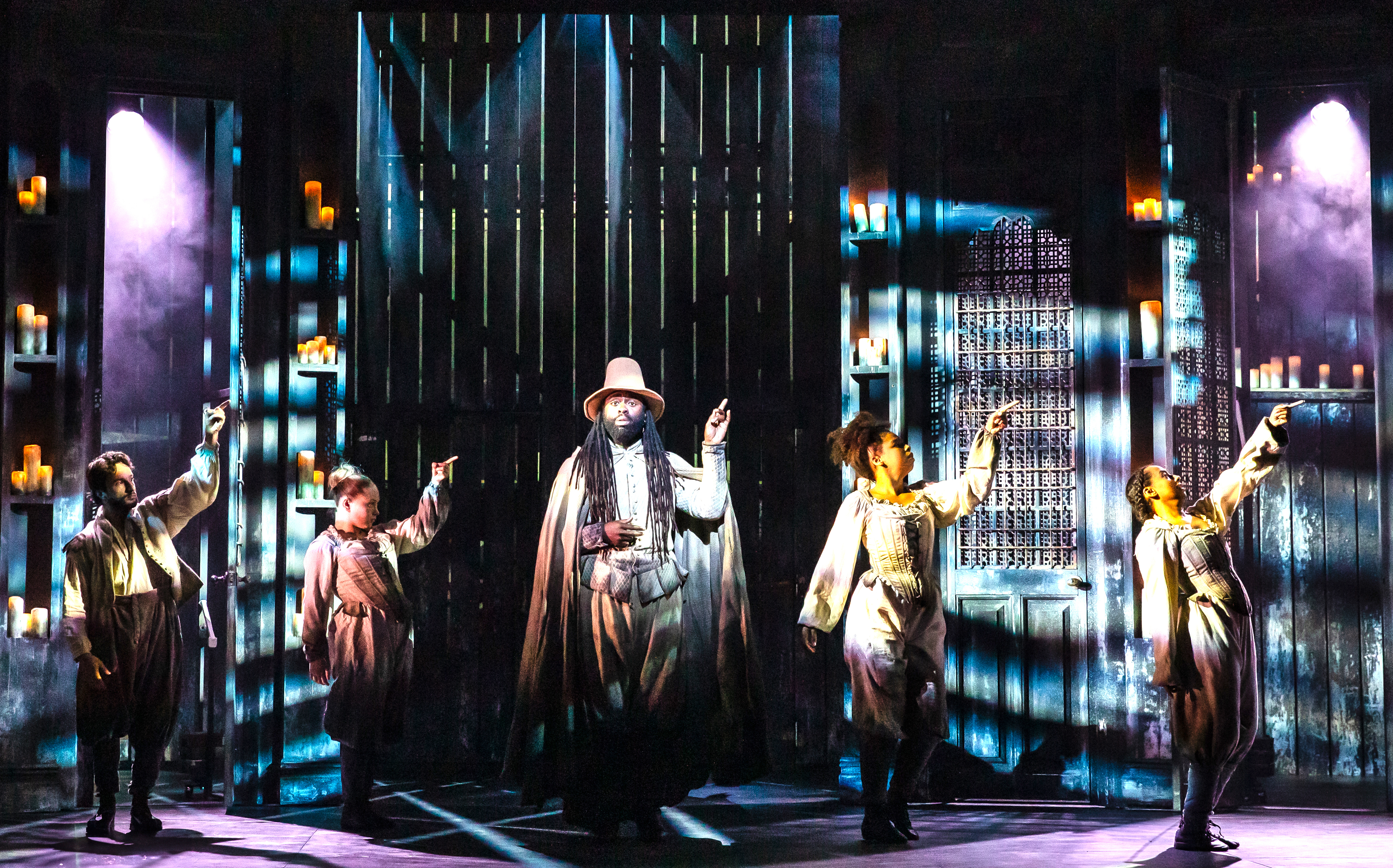
Although Guy Fawkes (Gabriel Akamo) is the name we all know, this show, directed by Hannah Chissick, focuses primarily on Martha and Thomas Percy (Nicole Raquel Dennis and Sam Ferriday), opening with their illicit wedding and charting their troubled marriage. Although both actors deliver strong performances, this seems like something of a mis-step, as the ups and downs of their relationship are less interesting than the actual gunpowder plot, which is relegated into second place.

In fact, Fawkes barely features in the actual story here. Instead, he’s cast as an observer, a narrator, leading the audience through the events as they unfold. This has a curiously distancing effect: he never actually enters the scenes to interact with the other characters, so it appears as if he were not involved. This means that the ending, when he’s captured and tortured, feels unearned. We don’t know what he’s being punished for.

There’s a problem with the pacing too, particularly in the second act. While the first is punctuated with a little levity in the form of Oscar Conlon-Morrey’s Iago-like Robert Cecil, manipulating King James (Joe McFadden) with practised ease, the second is a far more sombre affair, with too many ballads getting in the way of the action. Dennis and Emilie Louise Israel (Anne Vaux) give it socks and their soaring voices are undeniably impressive, but it does get a little wearing listening to them worry about how ‘vulnerable’ their menfolk are, when I’m impatient to know what’s going on with the barrels of explosives and the attack on parliament.

There is much to like, however. I love Taylor Walker’s choreography: the ensemble work is impressive, the artful movement adding to the sense of menace and unease. And the vocals are impressive: perhaps Israel is the standout, but there are no weak links here. It’s a real pleasure to listen to these performers sing.

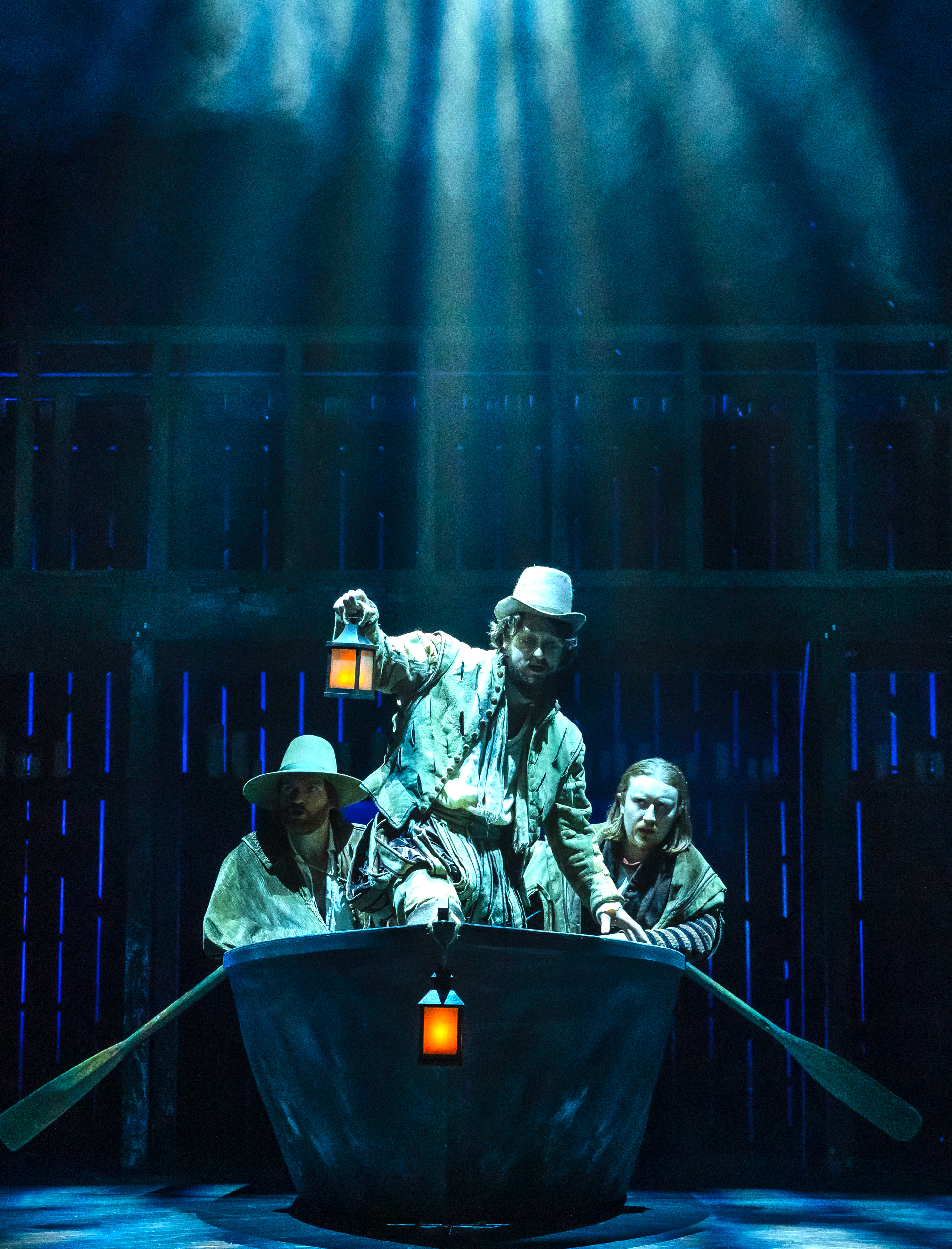
Best of all, the production looks sumptuous: between them, Philip Witcomb (set) and Jason Taylor (lights) have created a thing of beauty, all sliding doors and shafts of light; one moment a palace, the next a tunnel. The transitions are instant and almost magical, an exemplar of stagecraft’s sleight of hand. The moment when a boat comes sliding out of the darkness is thrilling, transporting us to the Thames at night, the tension immediately cranked right up.

So, although it smoulders rather than going off with a bang, this is certainly a handsome piece of work.

3 stars

Susan Singfield

Battery Park

26/10/23

Traverse Theatre, Edinburgh

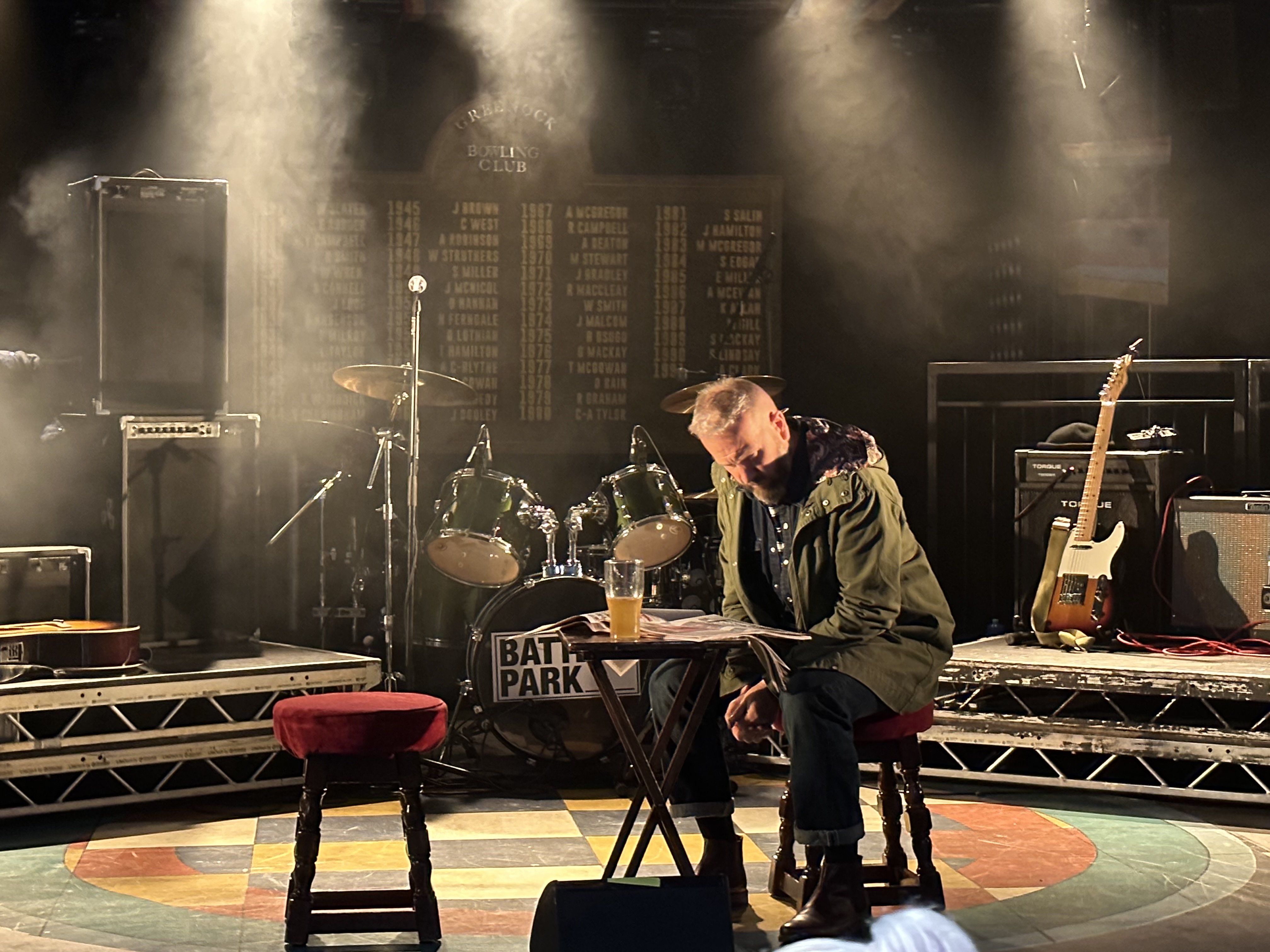
Whatever happened to Battery Park? Back in the 90s, they were ‘the band most likely to happen’, but they suddenly – irrevocably – split, leaving just one iconic album for their many fans to remember them by. So where and why did it all go wrong.? The beauty of Andy McGregor’s love letter to the Britpop era is that it’s all done with such veracity it’s hard to believe that it’s a piece of fiction – that the titular band never existed.

The play opens in the present day. Angie (Chloe-Ann Tylor) is at University and she’s doing her dissertation on Britpop (of course she is!). She tracks down Tommy (Chris Alexander), drinking alone in his regular haunt at Greenock Bowling Club, and asks him for the inside story. He needs a little persuading but soon enough he’s reminiscing about his younger self (Stuart Edgar), his older brother, Ed (Tommy McGowan), and their best pal, Biffy (Charlie West), who is one of those guys who likes to hang around with musicians – a drummer. Tommy has been writing songs and, lured by the possibility of a paid gig at the aforementioned bowling club, the boys hastily put together their band.

But while Tommy can write a catchy song, he’s not that confident a performer, so when Lucy (also played by Tylor) mentions that her best friend, Robyn (Kim Allan), is a brilliant vocalist/guitarist, it’s a no-brainer. Robyn is confident, talented and determined to make it big, no matter what it takes. From their very first performance, the new line-up seems destined for success…

Battery Park captures the sweaty exuberance of a band’s early days with absolute authority, providing an inspired mix of drama and high-octane rock. Kenneth McLeod’s set design somehow manages to incorporate all the necessary jumble of instruments and amplification into the story without ever getting its leads tangled, and I find myself marvelling at the ingenuity: the speaker cabinet that doubles as a safe is inspired!

While the first act chronicles the band’s dizzy rise to the brink of stardom, Tommy has signalled from the outset that the second will detail its heartbreaking descent into ignominy. The resulting dramatic irony is almost too much to take. By the closing stages, I’m watching with tears in my eyes.

All the performers excel, both as actors and musicians – and it certainly helps that the band’s numbers (also written by McGregor) are a series of propulsive bangers, each one containing a memorable hook in the chorus. As the musicians hit the final chords of the closing song, the applause erupts, intense and heartfelt.

As gig theatre goes, this is a perfect example of the craft. Don’t miss it.

5 stars

Philip Caveney

Disfunction

24/10/23

Traverse Theatre, Edinburgh

Sadly, this is the final PPP of the season; Tuesday lunchtimes just won’t be the same without an invigorating hour of original theatre. Luckily, Disfunction (“with an ‘i'”) provides a rousing send-off. This is first-rate stuff: a beautifully distilled character study, with a slice of social commentary on the side.

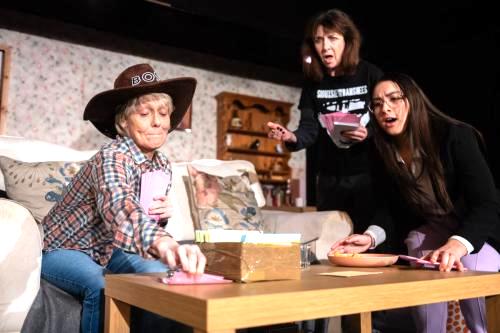
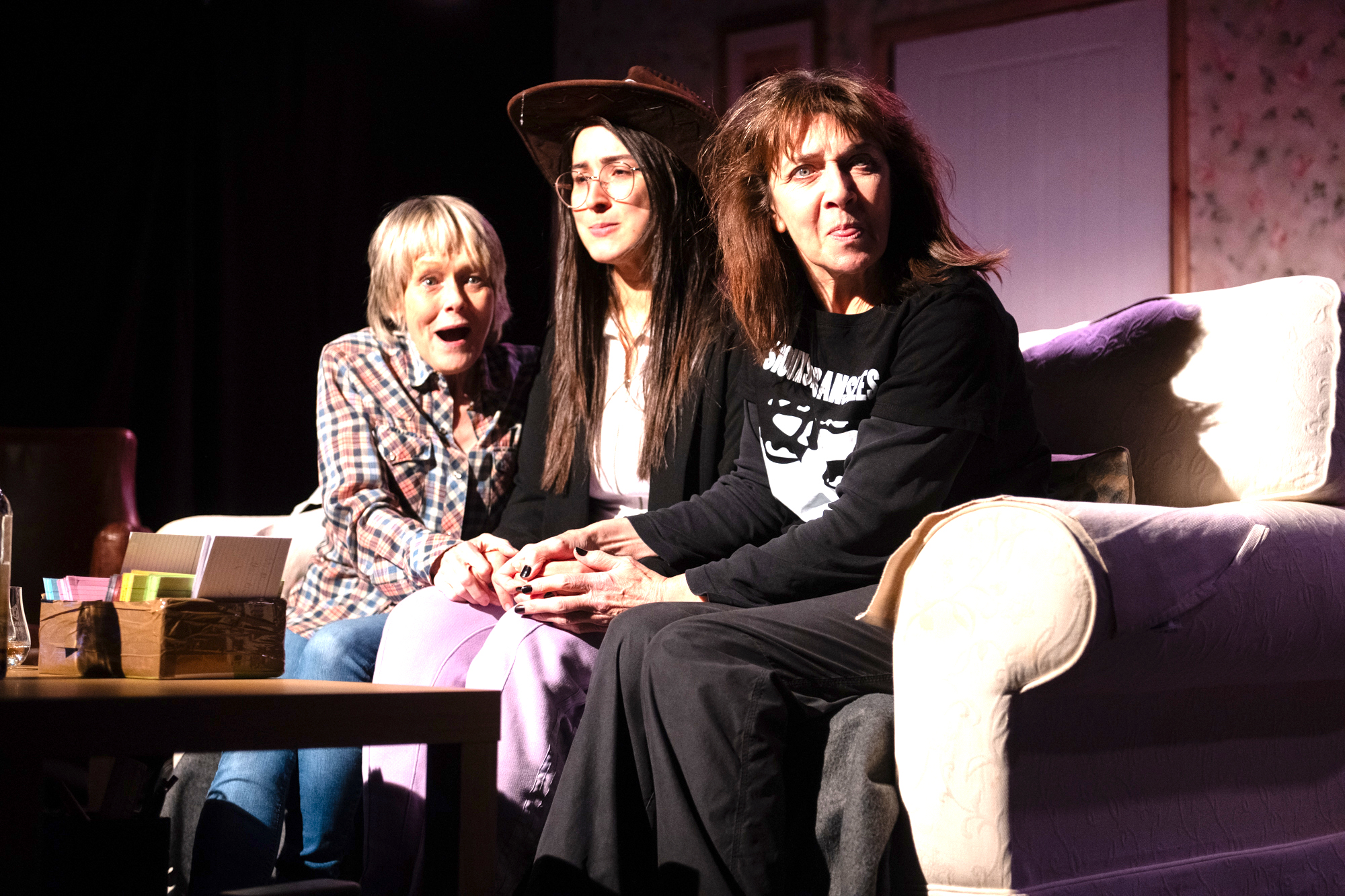
Kate Bowen’s play tells the story of sisters Moira and Melanie (Maureens Beattie and Carr respectively) and a game they’ve been honing for fifty years. Their goddaughter, Tanya (Betty Valencia), thinks she’s found a way to monetise their creation – by turning it into a sort of reality-TV experience, where viewers can pay to watch them play. At its best, the game is all Taskmaster-style fun: one round requires a blindfolded participant to put a pin in a map and then (sans blindfold) make their way to wherever the pin lands. Caveat: no cars allowed. Oh, and once they get there, they need to take a photograph of themselves. With four animals.

At its worst, the game is an exercise in, well, dysfunction. With a ‘y’.

The Maureens are surely two of Scotland’s national treasures, aren’t they? It feels like a real privilege to see these two great actors in such an intimate setting. They clearly relish their roles, especially Carr, who gets the plum part of the sassy, self-destructive Melanie. But Beattie is just as impressive as the more reserved and taciturn Moira, and Valencia more than holds her own as troubled Tanya, all bright-eyed desperation, a paper-thin smile covering her pain.

Lu Kemp’s kinetic direction means that the characters are always in motion (notable moments include a hilarious performance of Whigfield’s Saturday Night routine), and highlights that peculiar combative closeness that defines so many families.

Are there any negatives? Not really. Disfunction‘s role-playing political round perhaps stretches credulity (if there are only three people playing and each one has to ‘be’ a politician, who has set the questions to catch the others out?), but that’s my only gripe. Otherwise, it’s a pure delight. After all, as Tanya so cannily perceives, who doesn’t want to watch a bunch of strangers tearing themselves apart?

4.5 stars

Susan Singfield
Moorcroft

24/10/23

Traverse Theatre, Edinburgh

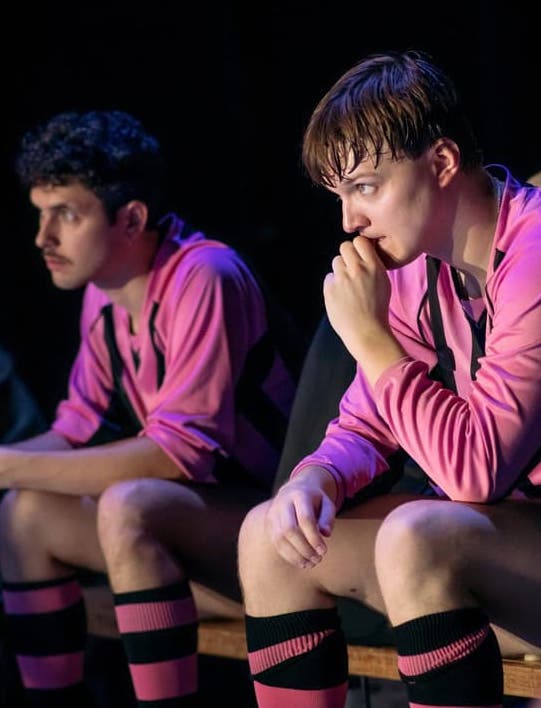
It’s Garry (Martin Docherty)’s 50th birthday and he’s not in the mood for a celebration. Instead, he prefers to think back to his teenage years and the wee amateur football team he put together with his best friends in Renfrew. He warns us in advance, this isn’t going to be an easy ride…

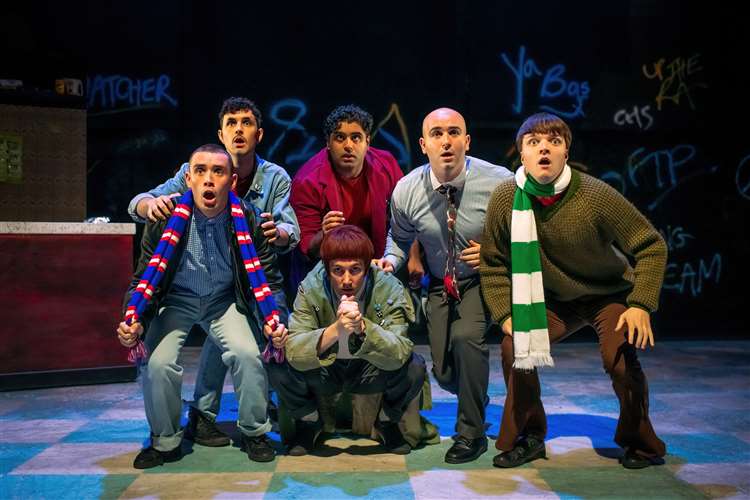
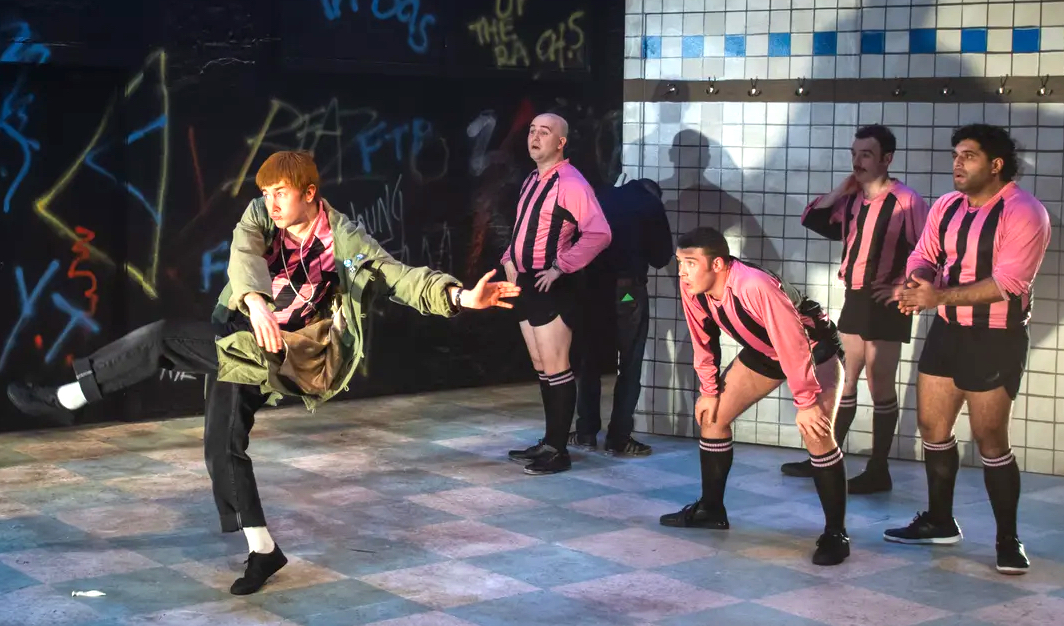
He assembles his crew. For starters, there’s Mick (Jatinder Singh Randhawa), once a promising member of a junior football team, now plying his trade as a hairdresser. There’s Tubs (Dylan Wood), who is gay – and in a 1980s small town, that’s seriously difficult – and there’s Paul (Sean Connor), struggling to cope with an abusive, alcoholic father. Noodles (Santino Smith) appears to be the most successful of the crew, with a decent job and the money to pay for some fancy football shirts (but should they be that shade of maroon?). Sooty (Kyle Gardiner) is a dedicated mod with a fishtail parka and no higher ambition than to ‘do a Quadrophenia’ and ride his scooter to Brighton, while Mince (Bailey Newsome) has an uncanny propensity for saying the wrong thing at the wrong time… every time.

But from their very first training session, the teammates work well together. The go from strength to strength, finding pleasure in the simple joys of kicking a ball around a pitch. They are blissfully unaware that darker times are inexorably closing in on them.

Moorcroft, written and directed by Elidh Loan, is a fabulous slice of theatre, one that moves effortlessly through a whole series of emotions. It swerves from raucous hilarity to visceral anger to heartrending tragedy with all the sure-footed precision of a well-drilled team. There are superb performances from the entire cast – particularly from Newsome as the slow-witted but oddly adorable Mince – and I especially enjoy the physical sequences as the team leap, twirl and kick their way through a series of energetic routines backed by a selection of 80s bangers. Loan knows exactly when to switch the mood. One minute I’m laughing out loud, the next my eyes are filling with tears.

It would be so easy to dismiss this as ‘a play about football’ but it’s much more than that. Moorcroft is a meditation on masculinity, its strengths, its weaknesses. It’s a reflection on the everyday deprivation of working-class life, and it’s a lament about the awful injustice of fate. Compelling and propulsive throughout, it never once relaxes its powerful grip.

It shoots, it scores. It’s a winner.

5 stars

Philip Caveney

Killers of the Flower Moon

22/10/23

Cineworld, Edinburgh

A quick glance at IMDB informs me that I first watched a Martin Scorcese movie way back in 1976 – Taxi Driver – and that I have seen pretty much every film he’s directed since. So naturally I am eager to see Killers of the Flower Moon, though somewhat apprehensive at its prodigious running time of three hours and twenty-six minutes. 

Set in the early 1920s, it tells the story of the Osage tribe, native Americans who, after being shunted unceremoniously from their Kansas homeland to a reservation in the wilds of Oklahoma, subsequently discover that the land they have been allocated contains vast quantities of crude oil – and that they are now the richest people per capita in the USA.

Of course, this being America, it’s complicated. For one thing, the Osage can’t just be allowed to own their own money. The very idea! In most cases, they must have a white guarantor to enable them to have access to it. And naturally, there are plenty of unscrupulous people in the vicinity, who are eager to put their hands on that wealth – even if it means arranging for the regular liquidation of certain members of the tribe. Suspicious deaths among the Osage are all too common, and such crimes are rarely even investigated.

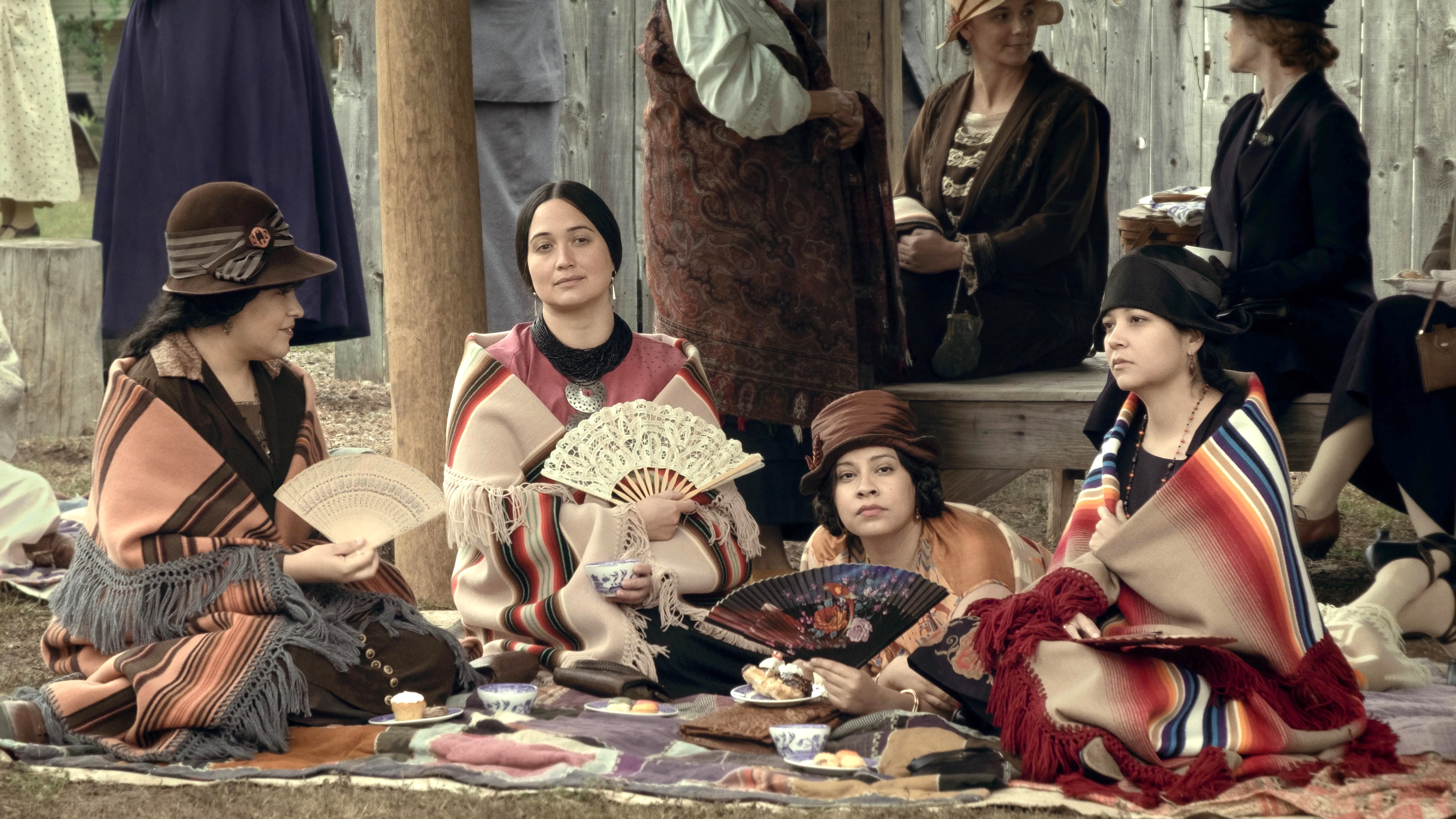
Chief among the white opportunists is rancher ‘King’ William Hale (Robert De Niro), who purports to be the tribe’s greatest friend and has even learned to speak their language, but who secretly wheels and deals to ensure that large amounts of Osage money keeps flowing in his general direction. When his nephew, First World War veteran Ernest (Leonardo DiCaprio), arrives looking to make a new start, Hale ensures that he crosses the path of Osage woman, Mollie (Lily Gladstone), telling Ernest that this will be an opportunity for both of them to make a killing…

There’s no doubt that this true story, based on the book by David Gran, makes for compelling viewing – and the film’s two-hundred-million dollar budget ensures that Scorcese’s evocation of the era is beautifully realised. Many of the great director’s touches are in evidence here: the matter-of-fact quality of the murders; the chilling depictions of everyday cruelty and avarice; and, as ever, there’s Scorcese’s uncanny ability to choose the perfect music to accompany any given scene.

There are also three extraordinary performances to savour. Di Caprio as the sullen, selfish and frankly not-very-bright Ernest may be a career-best display of acting. He plays the role as a kind of arrested adolescent with a constantly glum expression, as though he’s being admonished for something he’s done (or maybe hasn’t done). Old hand De Niro is horribly oleaginous as Hale, a man so utterly devious, it’s a wonder he can manage to walk in a straight line. And Gladstone is terrific as Mollie, managing to convey so much with a withering look, a shrug, a silence. Her calm presence is somehow this turbulent story’s anchor.

The film’s first and concluding thirds, the set-up and pay-off – when FBI man Tom White (Jesse Plemons) arrives to initiate a long-awaited investigation –  easily hold my attention, but that middle section feels decidedly baggy and and the constant stream of viewers nipping out for a judicious toilet break is really distracting. It prompts the inevitable question: does the film need to be so long? In my opinion, no. Trimmed back by an hour, this could have been even more satisfying. I can’t help but think wistfully back to the likes of Lawrence of Arabia and Doctor Zhivago, epic films that always included an intermission around the halfway mark for this very reason.

That said, I love Killer’s ironic coda, which presents an account of what we have just seen as a soapy ‘true crime’ vintage radio recording, and which also features a cameo from Mr Scorcese himself. But the film fails to mention the fact (which I read about elsewhere) that the heinous conditions that the Osage tribe suffers in this film persist to this day. They are still being stiffed by the oil companies, who have brazenly commandeered the ‘black gold’ that continues to bubble up from beneath their reservation. And their demands for justice remain unheard.

Land of the free? Don’t make me laugh.

4.2 stars

Philip Caveney