
The Taming of the Shrew

09/02/24

Pleasance Theatre, Edinburgh

It’s hard to believe it’s five years since we saw EUSC’s last version of The Taming of the Shrew; it feels much more recent. Directed by Tilly Botsford, it was a marked success.

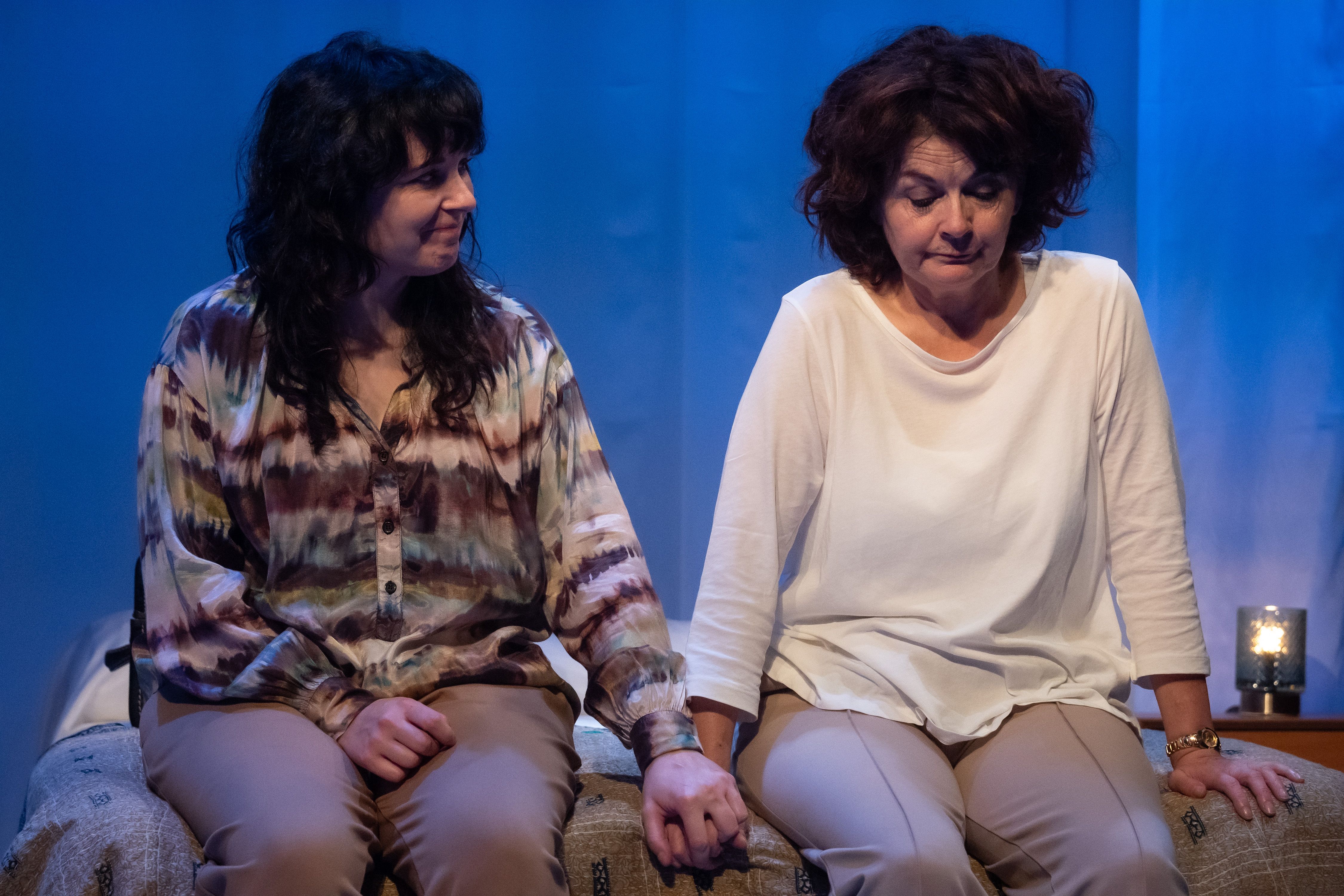
Any notion we have that it might be too soon for the student company to revisit this controversial play is soon dispelled when we realise how very different this interpretation is. Director Minna Gillett’s gender-swapped adaptation cleverly unearths the humour, reminding us that it was always intended to be a comedy, just like the fabulous 10 Things I Hate About You, which Gillett cites as inspiration.

Of course, the central relationship between ‘Petruchia’ (Maria Wollgast) and ‘Kit’ (Ted Ackery) is irredeemably toxic – she bullies and gaslights him into submission – but it doesn’t feel as problematic as the Petruchio/Kat pairing: Petruchia doesn’t have the weight of an entire patriarchal system behind her, and Kit isn’t institutionally broken. It’s still horrible on a personal level, less so on a political one.

Usually, the shrew is the lead role but here the tamer takes centre stage, and Wollgast shines as the suitor, oozing charisma as she struts and frets her hour upon the stage. Ted Ackery clearly relishes his turn as the brattish Kit, imbuing him with a surly teenage petulance and playing up the comic elements. Fraser Murray (as Tranio) has the house in stitches, while Anna Yarwood (as Grumia) and Juliet Gentle (as Biondella) both prove excellent clowns. Indeed, the whole company performs well; there is no weak link here.

The set, designed by Émilie Noël, is suitably fresh and contemporary, and impressively professional. In fact, everything about this show feels right. Gillett has got to the very heart of the piece, nimbly side-stepping or overturning all the problematic aspects in a simple, unfussy way.

This Shrew is a triumph.

4.6 stars

Susan Singfield
Argylle

07/02/24

Cineworld, Edinburgh

There’s a lot riding on Argylle. An expensive co-production between Paramount and Apple, with a cast of A-listers to die for, Matthew Vaughn’s high concept spy spoof is a valiant attempt to restore his box office fortunes after his last project, The King’s Man, pretty much sank without trace. But the new film has already opened to dismal advance reviews of the one and two star variety. Can it really be that bad?

It doesn’t help that at Edinburgh’s Cineworld, it can only be viewed in expensive special formats not covered by an Unlimited card. My gruelling session at the dentist’s this morning precludes me from being thrown around in a 4DX chair, so I opt for IMAX and settle down to watch – with the other four customers. Word has clearly got around.

Welcome to the world of best-selling novelist, Elly Conway (Bryce Dallas Howard), one of those annoying writers whose every publication is greeted with rampant adulation – and who has an irritating habit of reading the end of her latest books at launches, which is wrong on just about every level.

In her head, her titular spy hero, Argylle, is played by smooth, handsome Henry Cavill, so imagine her surprise when she climbs aboard a train to visit her parents and finds herself sitting opposite genuine spy, Aidan (Sam Rockwell). He’s more unkempt than his fictional counterpart, but just as deadly when push comes to shove, as it soon does. Aidan reveals that the plots of Ellie’s books are so near to actual real life happenings, that an evil cabal of terrorists are determined to take her out.

Ellie (and her cat, Alfie) follow Aiden into a dizzy world of punch ups, shoot outs and explosions. The plot is so ridiculously complex, it doesn’t bear scrutiny but – largely due to the fabulous chemistry between Dallas Howard and Rockwell – I find myself going along with it. There’s a jaw-dropping revelation every ten minutes or so (nobody is who you think they are, and sometimes they’re not who they think they are either) and Vaughn has the good sense to keep his foot on the accelerator so we don’t waste too much time pondering the stupidity of much of what’s happening.

It’s almost worth the price of admission for a delightful, extended ‘guns and gas masks’ dance sequence, which would have provided the perfect climax, but is almost immediately undermined by another lengthy set-piece that follows hard on its heels and doesn’t quite measure up to the one we’ve just seen.

In the end, Argylle is a little too overstuffed for comfort and I can’t help feeling that thirty minutes could be excised from this to deliver a leaner, meaner version that would play more effectively. That said, I have a good time with this.

Those who like post-credit sequences will probably be as baffled by the one we’re offered as I am. Something to do with The Kingsmen franchise? I give up.

If you enjoy high concept movies, you might care to give this one a whirl. At least you won’t be bored. But be warned, you’ll need to suspend your disbelief.

3.6 stars

Philip Caveney

American Fiction

03/02/24

Cineworld, Edinburgh

If these first few weeks are anything to go by, 2024 is going to be a good year for film. Cord Jefferson’s debut feature is a long way from your typical bums-on-seats blockbuster, but the cinema is hearteningly busy tonight. We’re in for a treat.

American Fiction is a clever, cerebral film, exploring the reductive nature of the Black stories that are promoted by white-controlled media. Thelonious ‘Monk’ Ellison (Jeffrey Wright) is a Black writer and professor, earning more from teaching than he does from his highbrow books. But in a brilliantly satirical scene, we see his white students complaining that he is making them uncomfortable by explicitly referring to the racist language deployed by the period authors they’re studying. When his white bosses back them up, Monk bristles: he isn’t the sort to back down easily. Before long, he’s been practically ordered to ‘take a break’, and so he heads reluctantly to Boston for a long overdue visit to his family, his employment status decidedly shaky. Is this what happens to Black people when they don’t comply with liberal white people’s notions of how to address racism? Wow.

To add to Monk’s woes, his agent (John Ortiz), calls to say that his latest manuscript hasn’t found a buyer. “It’s not Black enough,” Arthur tells him. “What does that mean?” asks Monk, although he knows exactly what it means. It means that his literary novels don’t conform to the blaxploitation model that white people like to indulge in; it isn’t anything like Sintara Golden’s runaway bestseller, We’s Lives in da Ghetto. As a fawning TV interviewer heaps praise on Golden (Issa Rae), Wright imbues Monk with an understated and entirely credible fury. In Bialystock-Blum mode, he pseudonymously dashes off a ridiculous pastiche of a Black novel and then watches incredulously as it become a huge success. He’d like to take the opportunity to go public and make his point – but his mom (Leslie Uggams) is sick, and someone has to pay for her care…

This well-written and often laugh-out-loud funny script, based on the novel Erasure by Percival Everett, deftly punctures the self-aggrandising nature of allyship, as white people vie to show off their woke credentials, often at the expense of the actual Black people sitting next to them. It’s also a beautifully-observed depiction of complex family dynamics, as Monk and his doctor siblings (Tracee Ellis Ross and Sterling K Brown) struggle to deal with their fractured relationships and their mother’s decline. It’s bold, intelligent – and also very accessible. The fourth-wall-breaking final ten minutes are especially audacious, but the entire two-hour run is a joy to behold.

Both thoughtful and thought-provoking, American Fiction is an impressive piece of work, deftly straddling the highbrow/lowbrow chasm that so infuriates its protagonist.

5 stars

Susan Singfield

The House

03/02/24

Traverse Theatre, Edinburgh

Imagine if you will a Punch and Judy show, elevated to the very peak of its puppetry potential – where, in an incredibly complex set, a whole cast of brilliantly-sculpted characters caper and bicker with all the subtleties of human comedians – and you’ve pretty much got what Sofie Krog Teater’s The House is all about. Appearing at the Traverse Theatre as part of the Manipulate Festival, this has a sold-out crowd screeching with laughter as it rockets to an uproarious conclusion.

We are told first of how a house can speak of what has happened within its walls, and then we’re shown the titular abode, an old crematorium. It’s been owned for years by an old woman who now lies in a four-poster bed up in the top bedroom, rapidly approaching her demise. Her nephew, Henry (who bears an uncanny resemblance to Stan Laurel), and his wife, Cora ( a cigarette constantly jutting from her mouth), run the business on her behalf. Cora knows that there’s a will that names them as their great aunt’s successors and she’s gleefully counting the days to the big payoff. But at the last minute, a lawyer is summoned and an important change is made…

Cora is intent on keeping the house for herself – and only the old woman’s faithful dog stands between her and justice.

I know that puppeteers Sofie Krog and David Faraco are concealed within that miniature house somewhere, because I definitely saw them climb inside it at the beginning. And I know they must be operating everything that happens, but the illusion is so brilliantly engineered, I forget about them completely as they unleash one ingeniously conceived bout of slapstick after another.

The puppets themselves are wonderful little creations, so full of character and nuance that they almost come alive as they scamper from room to room, trying to outwit each other. Everything about this performance – the lighting, the music, the props – is exquisite and I love the piece’s grisly sense of humour, its celebration of the darkness of the human soul. Oh, and did I mention that the house can revolve, to show us an entirely different view of what’s happening within?

If you haven’t managed to catch Sofie Krog Teater on this visit, do keep an eye out for them in future. This unique show offers a touch of genius that will brighten the day of anyone lucky enough to see it.

5 stars

Philip Caveney

The Color Purple

01/02/24

Cineworld, Edinburgh

Not so much an adaptation of Alice Walker’s 1982 novel (or Steven Spielberg’s 1985 film, for that matter), this ambitious production is based on the Broadway musical which first got to strut its stuff in the early 2000s and has gone through several iterations since. Inevitably, much of the novel’s more hard-hitting elements have been sanded and burnished for consumption by a mass audience.

Directed by Blitz Bazawule, with music composed by Kris Bowers, the result is a film that occasionally bursts into exuberant, joyful life but just as often feels bowdlerised as it struggles to make a song and dance about incidents that don’t quite fit the medium.

We first meet Celie (Phylicia Pearl Mpasi) when she’s a teenager, pregnant with her second child – by her father, Alfonso (Deon Cole). Mpasi brilliantly portrays Celie’s loneliness and distress, especially when, as he did with the previous baby, Alfonso takes the infant away from Celie without any explanation. Shortly thereafter, he offers her up as a bride to the heinous ‘Mister’ (Colman Domingo), a musician of sorts who has several motherless kids to care for in his ramshackle home down by the swamp. He needs somebody to get the place in shape and, if Celie is slow in following his orders, he’s all too ready to let his fists do the talking. Colman too, is utterly convincing as a man who’s never had his authority challenged by anyone.

Celie sets to work, determined to look after her new ‘family’ but when her beloved sister, Nettie (Halle Bailey), turns up saying that Alfonso has been making moves on her, Celie begs Mister to allow Nettie to move in with them. He agrees and inevitably, it isn’t long before he attempts to sexually assault her. When she dares to hit back, he throws her out of the house telling her never to return – and Celie has nobody to fight her corner.

The years move inexorably on – a scene where Celie views the changing seasons through the windows of the house as she ages is brilliantly handled. Celie (now played by Fantasia Barrino) has become inured to her own suffering, but redemption arrives in the form of vivacious blues singer, Shug Avery (Taraji B Henson), the woman who Mister reveres above all others and whom he’ll go to any lengths to please. When Celie and Shug form an unlikely alliance, it’s clear that change is in the air…

To give The Color Purple its due, Bazawule brings a whole host of invention to the difficult task of directing this piece, constantly exploring different approaches to a complex project. Cinematographer Dan Lautsen makes everything look luminous and remarkable and I particularly love a fantasy sequence set on a huge gramophone turntable. For me, the film is at its most successful during the big, ensemble pieces with scores of dancers whirling and leaping to vibrant, blues-inflected songs. I should also mention Danielle Brooks’ remarkable performance as Sophia, a powerful and assertive woman, eventually brought to heel by the injustice of the age. Brooks brings genuine verve to her portrayal and the scenes where she languishes in a prison cell provide the film’s most heartbreaking moments.

The relationship between Celie and Shug has been not so much downplayed as eradicated. In the book, it’s explicitly sexual; here it amounts to a quick snog in the cinema and a few meaningful looks, which I think speaks volumes about what makes contemporary American audiences uncomfortable. Why the subject of rape is deemed acceptable for depiction but a concensual lesbian relationship isn’t remains something of a head scrambler. Go figure.

The story’s conclusion, where everybody gathers to let bygones be bygones, feels every bit as unlikely as it did in the original story and, if I’m honest, it’s in this sequence where it all gets a little too schmaltzy for my liking. 

So, once again, here is another of those curate’s egg productions (a phrase I use far too often). It’s good in parts (sometimes very good) but elsewhere, I find the ingredients a little too bland for my taste.

3.6 stars

Philip Caveney

How To Have Sex

31/01/24

Mubi

Molly Manning Walker’s debut film comes screeching onto the screen like, well, a trio of teenage girls. Tara (Mia McKenna-Bruce), Em (Enva Lewis) and Skye (Lara Peake) have just finished their GCSEs and now they’re in Malia, buoyant, excited and ready to cut loose. They’re looking at seven days of sheer, unadulterated hedonism. And, as Skye keeps reminding her, Tara needs to seize the opportunity to lose her virginity.

At its heart, How to Have Sex is about peer pressure. The holiday resort’s formulaic enforced ‘fun’ doesn’t leave much space for dissent, especially when you’re sixteen and desperate to fit in. The girls really enjoy their first night, getting drunk, doing bad karaoke and eating cheesy chips, but the following morning, hungover, Skye puts the kibosh on all that. “We’re not going to get laid if we stick together all the time,” she says.

And from then on, Tara stumbles, adrift.

McKenna-Bruce is perfectly cast as Tara: all big eyes and yearning, wanting to find her place in the world. Meanwhile, Peake deftly captures Skye’s insecurity-turned-meanness, while Lewis shines as the only one of the three who is at ease with herself: unlike her friends, she knows who she is and what she wants. She’s got the grades, the career plan – and she’s comfortable with her sexuality, enjoying her holiday fling with Paige (Laura Ambler), their next-door neighbour at the hotel.

Paige’s room-mates are Badger (Shaun Thomas) and Paddy (Samuel Bottomley). There’s an unmistakable spark of attraction between Tara and Badger, but they’re both quite shy and soft underneath their brash surfaces – and swept along by the pressure to conform. They’d clearly like to be together but instead, hyped up by a baying nightclub mob, he goes onstage for an unsatisfactory public blow job, while she endures a miserable first shag with Paddy.

Molly Manning Walker convincingly evokes the teenage experience, and I especially like Tara’s palpable sense of not fitting in, not being able to enjoy herself in the same way as the others appear to be doing. Despite its in-your-face appearance, the film is actually pretty nuanced, the emotional and social complexity acknowledged and explored.

My only bugbear is a petty one: why are they talking about “getting ten As” when GCSEs have been graded by number since 2019?

Nitpicks aside, How to Have Sex is a sweeter, more engaging and thought-provoking film than its name and cover-image might suggest. Much like its characters.

If, like us, you missed this movie’s fleeting cinema release, you’ll be pleased to know that you can now catch it on Mubi.

4 stars

Susan Singfield
The Zone of Interest

28/01/24

Cineworld, Edinburgh

The opening credits roll, the title appears onscreen… and then it slowly fades to black and the screen goes blank. For a very long time. I’m starting to think that something has gone wrong but then I become aware of dull sounds: a hubbub of voices, the occasional twittering of birdsong. And I think I know why director Jonathan Glazer has engineered this. 

He is giving the audience an opportunity to relax and take a few deep breaths, something we will doubtless be thankful for later.

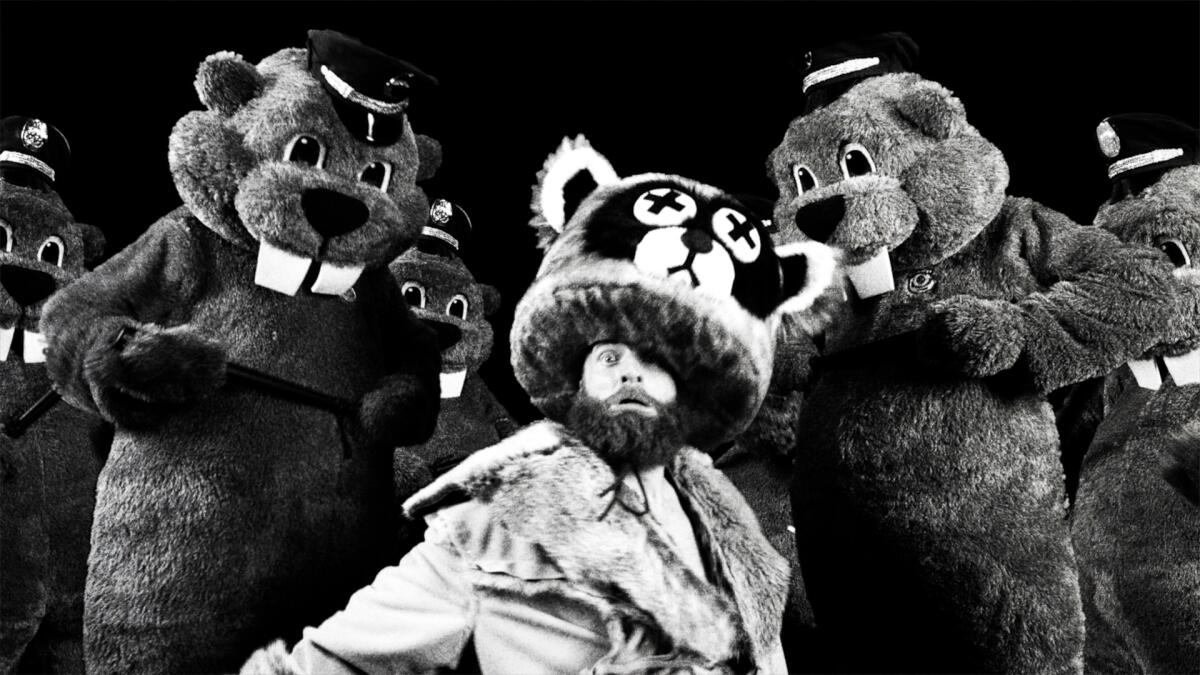
The screen finally illuminates and we observe a family enjoying a tranquil summer picnic on the banks of a river: a father, a mother and their children of various ages. They laugh and splash in the water and chase each other through the trees. And a little while later, the family pack up their things and head back through the verdant countryside to their lovely home with its extensive garden. We can’t help noticing though, that a high wall borders that garden, a wall topped with barbed wire. And on the far side of it, we can just see a tall chimney spouting a thick column of smoke…

Welcome to the family home of Rudolf Höss (Christian Friedel) and his wife Hedwig (Sandra Hüller). He, of course, is the commandant of Auschwitz and spends much of his time on the other side of the wall, committing atrocities on a daily basis. Meanwhile, Hedwig runs the home, keeping a sharp eye on her many servants and even playing gracious host to her mother, who can’t believe how lucky her daughter is to have such a lovely home and garden to spend her time in. Mother even peers towards the wall and wonders if that woman is in there. You know, the one she used to clean for…

The Zone of Interest, adapted by Jonathan Glazer from the novel by Martin Amis is an extraordinary film – stark, chilling and impossible to dismiss. This is about the mundanity of evil, the bureaucracy of mass murder. It’s a film in which smiling men in business suits sit around a table with charts and statistics and work out the best way they can feed ever more people into the ovens – and how, if the ovens are recharged in rotation, they can, in effect, wipe an entire race of people off the face of the planet. 

Rudolph, we see, does not think of himself as a monster; he’s simply a man working to the orders of his Führer, doing his best to accomplish the difficult task he’s been set. He loves his wife, his children, even his horse. But of course, real monsters are just everyday people fuelled by hierarchy, encouraged by their superiors to wade ever deeper into the sewer of depravity. People who obey without question.

Like the best horror films, The Zone of Interest understands that what frightens an audience most is what it doesn’t see. There are no torture scenes here, no images of people burning, starving or fighting for their lives. But there are sounds in the background, a constant mingling of shouts, moans, screams and gunshots – a relentless cacophony that gradually grows in volume as the film progresses, sometimes accompanied by Mica Levi’s hellish soundtrack.

I cannot stop thinking about what’s happening on the other side of the wall, cannot feel anything but appalled that human beings can inflict such savagery on each other. And I’d be a lot happier if I believed that such things could never happen again. But sadly, I don’t.

The film has a coda which I won’t reveal, only to say that it depicts the aftermath of the Nazis’ attempted genocide, showing in a few broad strokes the enduring, poisoned legacy that they left in their wake. This may not be a film to ‘enjoy’ in the traditional sense, but it is undoubtedly a cinematic masterpiece, and one which I would urge every viewer to see.

5 stars

Philip Caveney

All of Us Strangers

27/01/24

Cineworld, Edinburgh

All of Us Strangers is a curious creature. Not exactly a tale of the supernatural, not really a love story, it borrows elements from both genres and weaves them seamlessly together to create something that’s impossible to classify. More than anything else, this feels like a lament for lost opportunities – a meditation on longing and regret.

Written and directed by Andrew Haigh and based on a novel by Taichi Yamada, it tells the story of Adam (Andrew Scott), a lonely screenwriter, currently plying his trade in a near-empty high-rise somewhere in London. He’s currently attempting to write a screenplay based on a true incident from his childhood: the death of his parents in a car crash back in 1978, when he was eleven years old.

Adam’s musings are interrupted by the arrival of the man who appears to be the block’s only other resident. He’s Harry (Paul Mescal), currently halfway through a bottle of whisky and clearly looking for company. But Adam is nervous and politely refuses Harry’s advances.

Seeking inspiration, Adam makes the train journey to his parents’ old house in the suburbs of Dorking and is astonished to discover that both Dad (Jamie Bell) and Mum (Claire Foy) are still alive, looking exactly as he remembers them. The 70s aesthetic of their lives is convincingly evoked, right down to the soundtrack of Erasure and Frankie Goes to Hollywood, and his folks are eager to find out how their boy has fared since they last saw him.

And then, Adam reconnects with Harry and an intense sexual relationship develops, their first encounter sensitively captured, their wild hedonistic nights in London’s gay clubs accompanied by a succession of pounding nightclub bangers. But where are they – and the story – heading?

Essentially a four-hander – we never meet any other characters – this sweetly-sad narrative is anchored by impressive performances from the four stars. Scott, in particular, creates a beautifully-judged picture of loneliness and regret, a man struggling to come to terms with a world where he struggles to function. In the scenes where he’s enjoying some time with his parents, he effortlessly slips into a state of childlike wonder.

Many viewers have said that watching this moved them to tears, though I stay resolutely dry-eyed throughout. Perhaps this says more about me than it does about Haigh’s film, but what All of Us Strangers captures particularly well for me is the curious way a writer’s mind works; how half-remembered incidents from childhood can be developed into something tangible, the stuff of alternative reality, and how such discoveries can sometimes become almost overwhelming.

If not the five-star masterpiece I’ve been led to expect, this is nevertheless an exciting and provocative slice of contemporary cinema.

4.2 stars

Philip Caveney

Protest

27/01/24

Traverse Theatre, Edinburgh

Hannah Lavery’s 2023 play, Protest, makes a brief but welcome return to Edinburgh as part of its new tour, with two performances at the Traverse this weekend. Having missed it at last year’s International Children’s Festival, we’re delighted to have the chance to catch up with this lively, engaging production from Fuel, Imaginate, Northern Stage and the National Theatre of Scotland.

Amy Jane Cook’s set is a brightly-coloured children’s playground, the natural habitat of the P7 girls whose story this is. The climbing frames and running track serve both to entertain and to constrain, opening up possibilities at the same time as imposing limitations.

Through three cleverly-interwoven monologues, we learn about the challenges faced by these very different characters. Alice (Kirsty MacLaren) is a live wire – and the best runner in her class, so she’s outraged when a boy gets chosen for the final leg of the inter-form relay. Jade (Harmony Rose-Bremner) has always been proud of her family history but her happiness is “dented” when she faces racist abuse for the first time; suddenly, she doesn’t feel so secure in her home town. Meanwhile Chloe (Amy Murphy), a quiet, introverted child, has the weight of the world on her shoulders. She’s desperate to save the planet, but how can she do it on her own? She hasn’t got any friends and she can’t even ask her brother to help her any more, because he’s gone all moody since their dad left home.

But is any of these girls prepared to accept what’s happening? No way. They’ve got their Grans on their side, and they’re ready to stand up. To raise their voices. To protest.

Under Natalie Ibu’s assured direction, this is a vibrant, kinetic piece of theatre, the girls’ unselfconscious physicality propelling the action. Rarely still, they’re bursting with energy and enthusiasm, besides themselves with the injustice of it all and delighted with their efforts to put things right. It’s tonally spot-on, embracing the naïve optimism of eleven-year-olds – and reminding us how this might just be what we need to change the world.

Splendidly acted, this is a delightful and inspiring play, and I am pleased to see that it has attracted a young audience today. Children aged 8+ should get a lot from it – and the adults accompanying them are in for a thought-provoking treat as well.

4.3 stars

Susan Singfield
Little Shop of Horrors

25/01/24

Church Hill Theatre, Edinburgh

True confession time. Little Shop of Horrors is my favourite musical.

Sure, there are more serious shows out there, more portentous pieces, but there’s something about this silly, B-movie-inspired spoof that I find utterly irresistible. Based on a seldom seen 1960 Roger Corman produced film and adapted by Charles Griffith, with music by Alan Menken and lyrics by Howard Ashman, Little Shop of Horrors is a whole ton of fun, blessed with some of the most downright infectious songs ever written. Watch it through and you’re sure to emerge from the theatre singing one of them.

So when I hear that EUSOG have chosen it as their new production, I don’t need an awful lot of persuading. (That’s Edinburgh University Savoy Opera Group. Thanks for asking.) We’ve seen quite a few of their productions over the years and know that their standards are very high.

Lights down and pretty soon the trio of sirens, Crystal (Gemima Iseko-Behano), Ronnette (Marie Kende) and Chiffon (Duha Bilal) are soulfully introducing us to the story’s setting on Skid Row, where the titular florist’s shop can be found. It’s owned by Mr Mushnik (Hunter King) who keeps his two employees on a very tight rein. They are Seymour (Conor O’Cuinn), a hapless orphan with a flair for botanical experimentation, and Audrey (Allison Lavercombe), a tragic young woman currently suffering through an abusive relationship with sadistic dentist Orin Scrivello (Nash Nørgaard). 

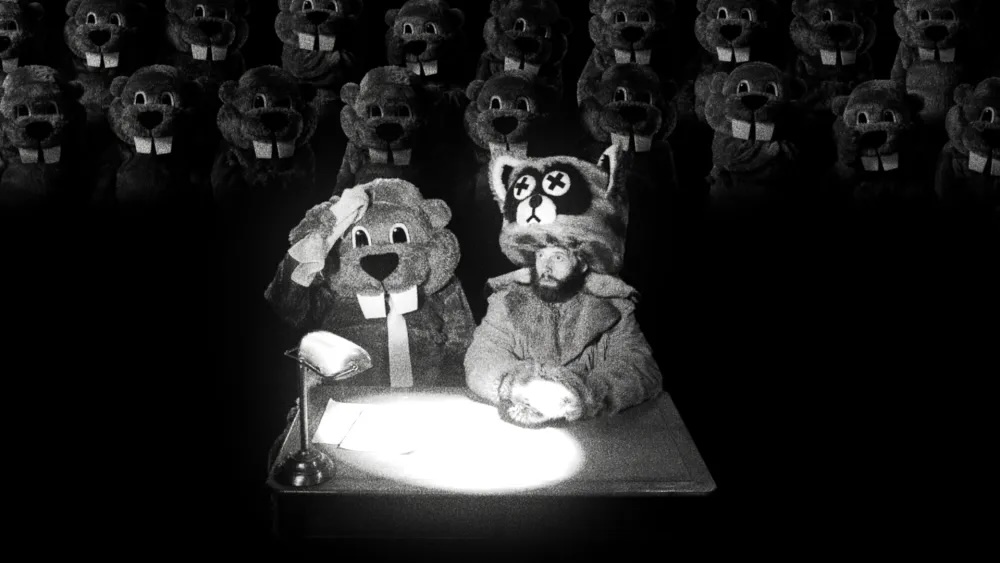
But Seymour has discovered an interesting new plant, (which he has named Audrey II). It turns out that said plant has a powerful hunger for very unusual (and problematic) food…

From the opening song, raunchily blasted out by a ten piece band, you know you’re in for an exhilarating ride. The production sticks fairly close to the original but there are a couple of timely tweaks. The character of Audrey is played less for laughs than in earlier versions – and let’s be honest, the subject of domestic abuse isn’t exactly ripe for giggles. As portrayed by Lavercombe, she’s a fragile and helpless victim, desperately seeking escape, so much so that her signature song, Somewhere That’s Green hits me more powerfully than ever before, taking me dangerously close to tears.

And then there’s Audrey II (Thaddeus Buttrey), who in this production has the ability to step out from  his green lair and wreak havoc. Buttrey’s powerful voice nails the role with absolute authority. Nørgaard delivers a slickly arrogant Scrivello and let’s not forget O’ Cuinn, who plays the central role of Seymour to absolute perfection. He and Lavercombe’s rendition of Suddenly Seymour is every bit as spellbinding as it should be.

But of course, this is an ensemble piece, with every member of the seventeen-strong cast giving it their all. I love the way they work together to represent the evil plant’s developing power, a flailing forest of green clad arms, reaching out towards the audience. Plaudits must go to co-directors Tom Beazley and Amy Stinton and to musical directors, Emily Paterson and Falk Meier. 

I leave singing (apologies for that!) There’s only two more chances to catch this joyful production, so grab a ticket if you can and get yourselves up to the Church hill Theatre in Morningside where the Mean Green Mother from Outer Space is just dying to meet you.

5 stars

Philip Caveney