Chicken Run: Dawn of the Nugget

24/12/23

Netflix

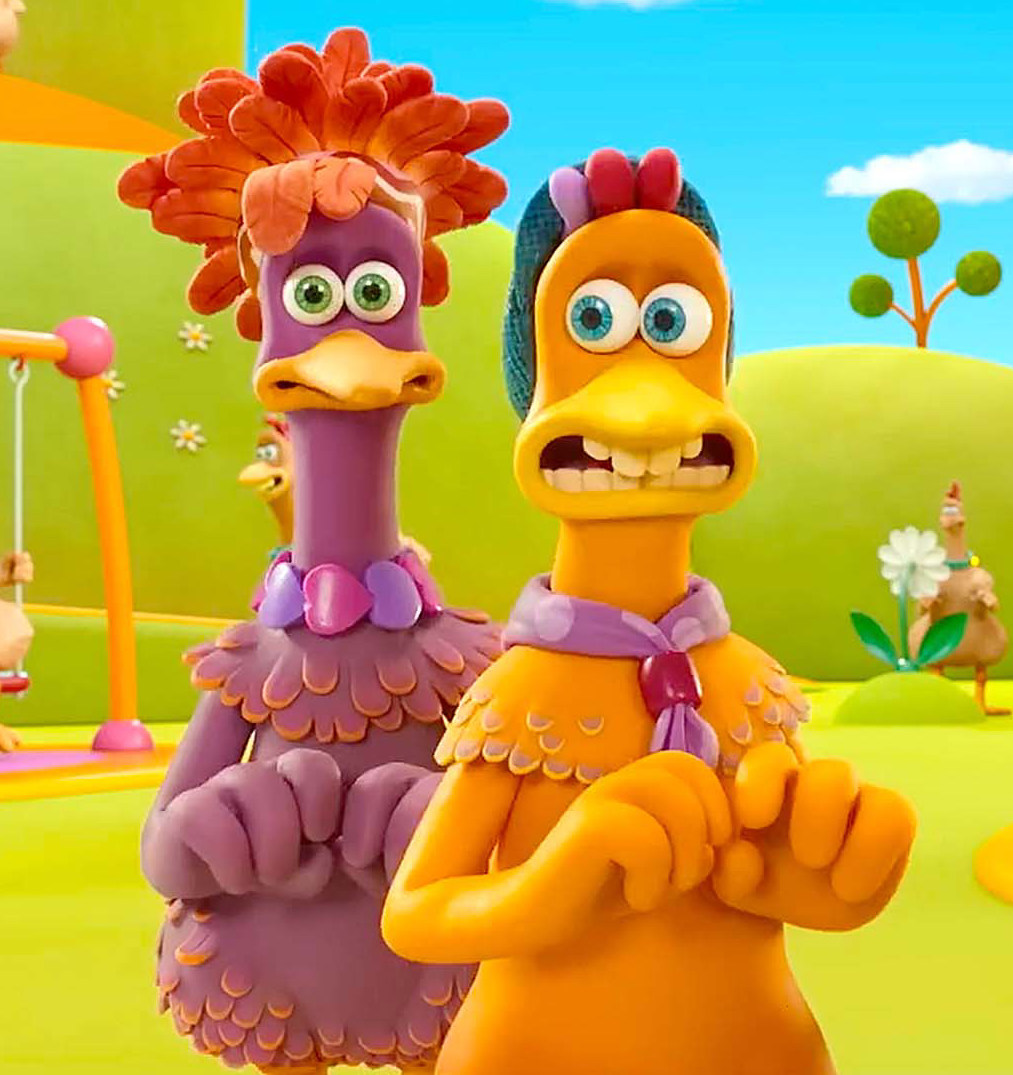
The trend for films being financed by (and galloping with indecent haste to) Netflix continues. Aardman Animations’ tardy sequel to Chicken Run is just the latest example of something that would have looked so much more impressive on a giant screen than it does on the average telly.

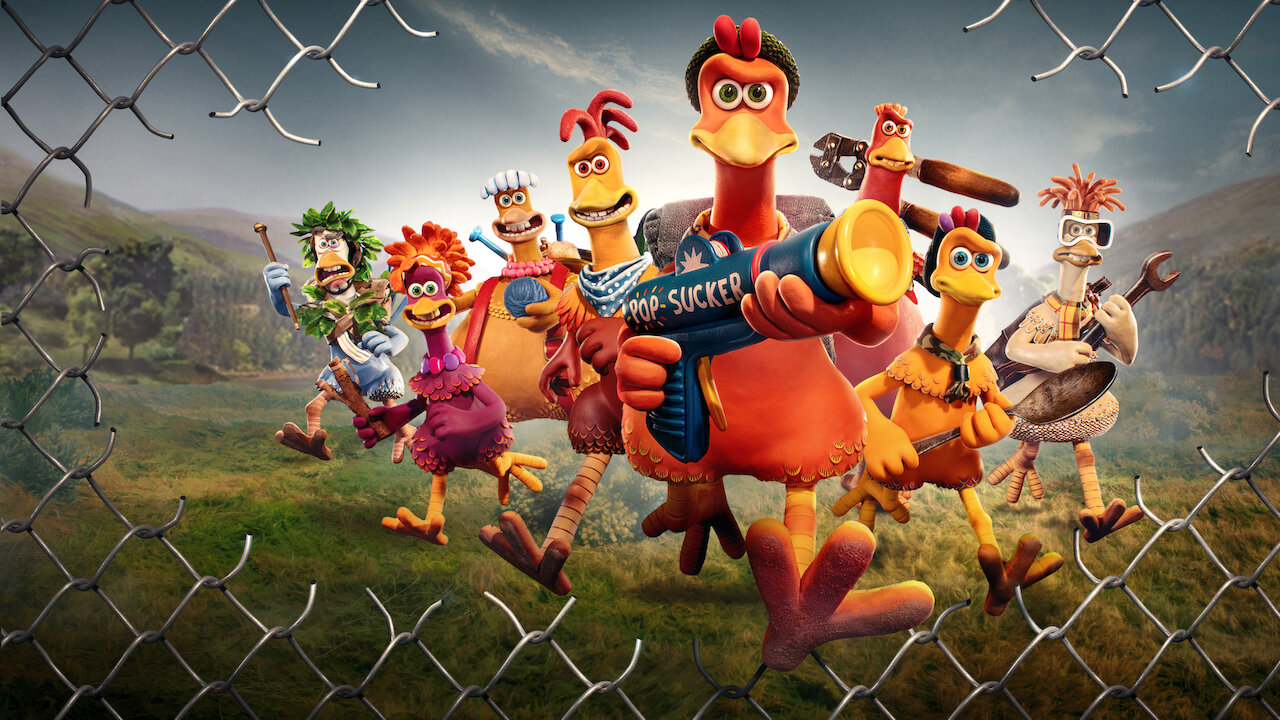
Dawn of the Nugget follows on from the first film with the escapee chickens living their best lives on a small island, where they grow their own food and work together as a team. Rocky (Zachery Levi, replacing Mel Gibson) and Ginger (Thandiwe Newton, replacing Julia Sawalha for less obvious reasons), are now the proud parents of an egg. This quickly hatches into Molly (Bella Ramsey), who has clearly inherited all her mother’s fearless qualities.

When workmen begin to clear some land on the other side of the water and new factory buildings are set up, Molly is eager to go across and investigate what’s going on, but Ginger urges her to be cautious. Of course she sets off on her own and, once on the far side, she bumps into Frizzle (Josie Sedgwick-Davies), a Scouse chicken who has heard great things about the new factory.

At first  it seems the twosome have discovered a place of refuge. But sinister happenings ensue before an old enemy reappears…

Dawn of the Nugget offers all the familiar tropes that the first film featured to such winning effect. No pun is left unspoken and several favourite characters make a welcome reappearance, including Jane Horrocks as the delightfully dim Babs and David Bradley as addled old rooster, Fowler.

The animation is beautifully handled and there are chases and spills aplenty, while the humour is innocuous enough to appeal to all age groups. But be warned, some viewers may find it hard to sit down to enjoy a chicken dinner after spending time in the company of this team of feathered lovelies. 

And if it seems a little late in the day to follow up that first film – twenty-three years to be precise – it matters not. This is great fun.

4 stars

Philip Caveney

Priscilla

22/12/23

Cameo Cinema, Edinburgh

Priscilla

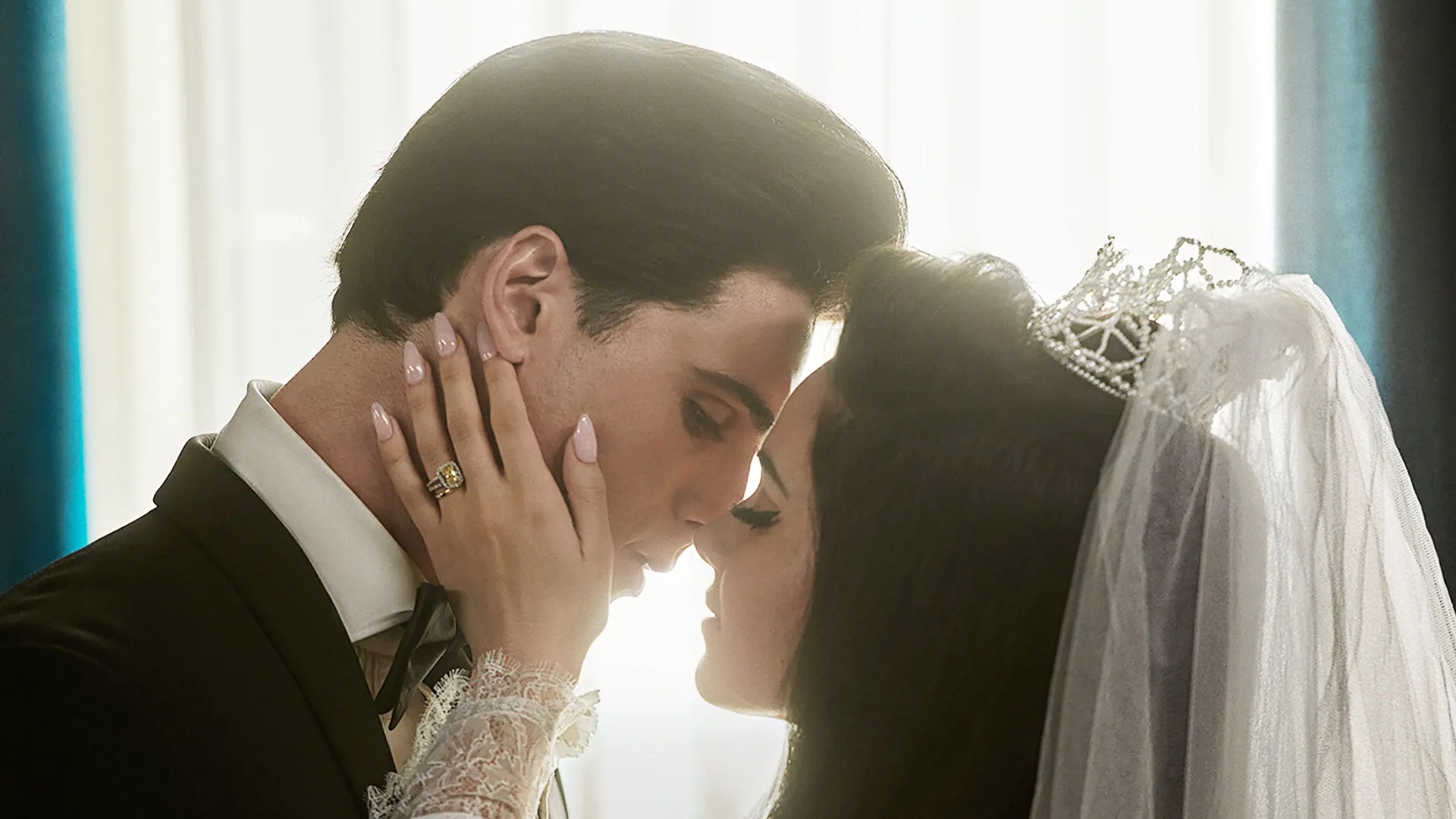
If Baz Luhrmann’s Elvis was a dazzling celebration of the singer’s career, Priscilla offers the polar opposite of that film – a true story with a dark underbelly that, viewed with the gift of hindsight, feels almost shockingly transparent. Presley emerges as a toxic human being, a man who manipulated and exploited a naive fourteen year old girl for his own purposes. 

And before you say, “Well that’s just director Sofia Coppola’s interpretation of what happened,” let me add that her screenplay is closely based on Priscilla Presley’s autobiography, Elvis and Me – and that she was one of the executive producers on the film.

We first meet her as a bored teenager on an Army base in Germany. Cailee Spaaeny submits an impressive performance in the title role, managing to convincingly portray her subject from her early teens to her late twenties. When a young officer approaches Priscilla and casually asks her if she’d like to meet Elvis Presley, of course she says yes! Like most other kids in the late 1950s, she is a big fan. And he is arguably the most famous person on the planet.

So, to the understandable consternation of her parents, Priscilla heads off to Elvis’s house and is soon chatting to the man himself, as played by Jacob Elordi, last seen being quintessentially English in Saltburn, but managing to inhabit Presley’s mumbling, brooding persona with considerable skill. The pair hit it off, big time.

When Elvis is posted back to America, a lengthy interval suggests that he may have forgotten about her but, out of the blue (and again, much to her parent’s understandable concern), she’s summoned to his new home, Graceland, where she’s invited to become a permanent fixture. No sex yet, not until she’s of age, but plenty of smooching and much manipulation from Presley, who coaxes her to change her hair, her makeup and her fashions – to become, in effect, his dream girl.

As Presley grooms Priscilla (and there really isn’t a more appropriate term for what he’s doing), so her own identity becomes increasingly erased – and who knows where it’s all going to end?

Coppola’s accomplished film is handsomely mounted, the period detail convincingly evoked over the changing decades and it’s interesting to note how cinematographer Phillippe Le Sourd keeps everything murky and claustrophobic in the film’s early stretches, mirroring young Priscilla’s view of the world she’s obliged to exist in. Le Sourd returns to the gloom in the film’s later scenes, as Presley slips inexorably into addiction to prescription drugs. In between, the screen sizzles and pops as the odd twosome actually begin to enjoy the advantages of being a couple.

Weirdly, I knew about their story from my own childhood. My sister was a member of Presley’s fan club and received a monthly magazine. In the early sixties, I read repeatedly about the man’s developing relationship with Priscilla. Of course, back then, I wasn’t mature enough to fully appreciate how profoundly creepy the whole arrangement was. Priscilla’s age was an open secret to the world but, blinded by Presley’s fame, we just kind of accepted it. Shame on us.

This is a fascinating film, one that digs a lot deeper than Lurhman’s (admittedly very enjoyable) biopic, exposing the ugly bumps and warts that lay beneath the shimmering surface of stardom. To say that it’s an eye-opener would be something of an understatement. 

4.3 stars

Philip Caveney

The Boy and the Heron

20/12/23

Cineworld, Edinburgh

At eighty-two years of age, Hayao Miyazaki, the co-founder of Studio Ghibli, has had more comebacks than Frank Sinatra. He’s been talking about retirement ever since Princess Mononoke way back in 1997, but has managed three major releases since then, not to mention a whole bunch of shorts. And now here he is once again, director and writer of The Boy and the Heron, still reaching for those impossible heights on the big screen – and mostly achieving them.

It’s evident at a glance that Ghibli continues to exert a powerful hold on lovers of quality animation. This advance IMAX screening (the film will officially be released in the UK on Boxing Day) is completely sold out, despite being in Japanese with subtitles. (We don’t mind, we prefer it that way but apparently it puts a lot of viewers off.) We’ve managed to secure a couple of seats in the very front row, the giant screen looming above us, making the whole experience incredibly immersive.

The story is loosely autobiographical, but I can only assume that this applies to the film’s almost hallucinatory opening scenes in World War 2 – otherwise I’m left to conjecture that Mizayaki had a very strange childhood! Tokyo teenager Mahito (Soma Santoni) awakes one night to the sound of an explosion and is told that the local hospital has been firebombed. He’s horrified, because he knows his mother is working there and, in a breathtaking action sequence, he dresses himself and runs frantically through the blazing city, in the desperate hope of rescuing her. But he’s too late.

A few years later, Mahito accompanies his father, Shoichi (Takuya Kimura), an aeroplane designer, out to the calm of the countryside. Shoichi is now married to his late wife’s sister, Natsuko (Yoshino Kimura), who is pregnant with what will be Mahito’s little brother or sister. Mahito soon discovers that his stepmother’s country house is a place of mystery and intrigue, serviced by a team of comical-looking… erm… grannies. But things take a darker turn when a sinister grey heron that hangs around the grounds starts talking, telling Mahito that his presence is required elsewhere…

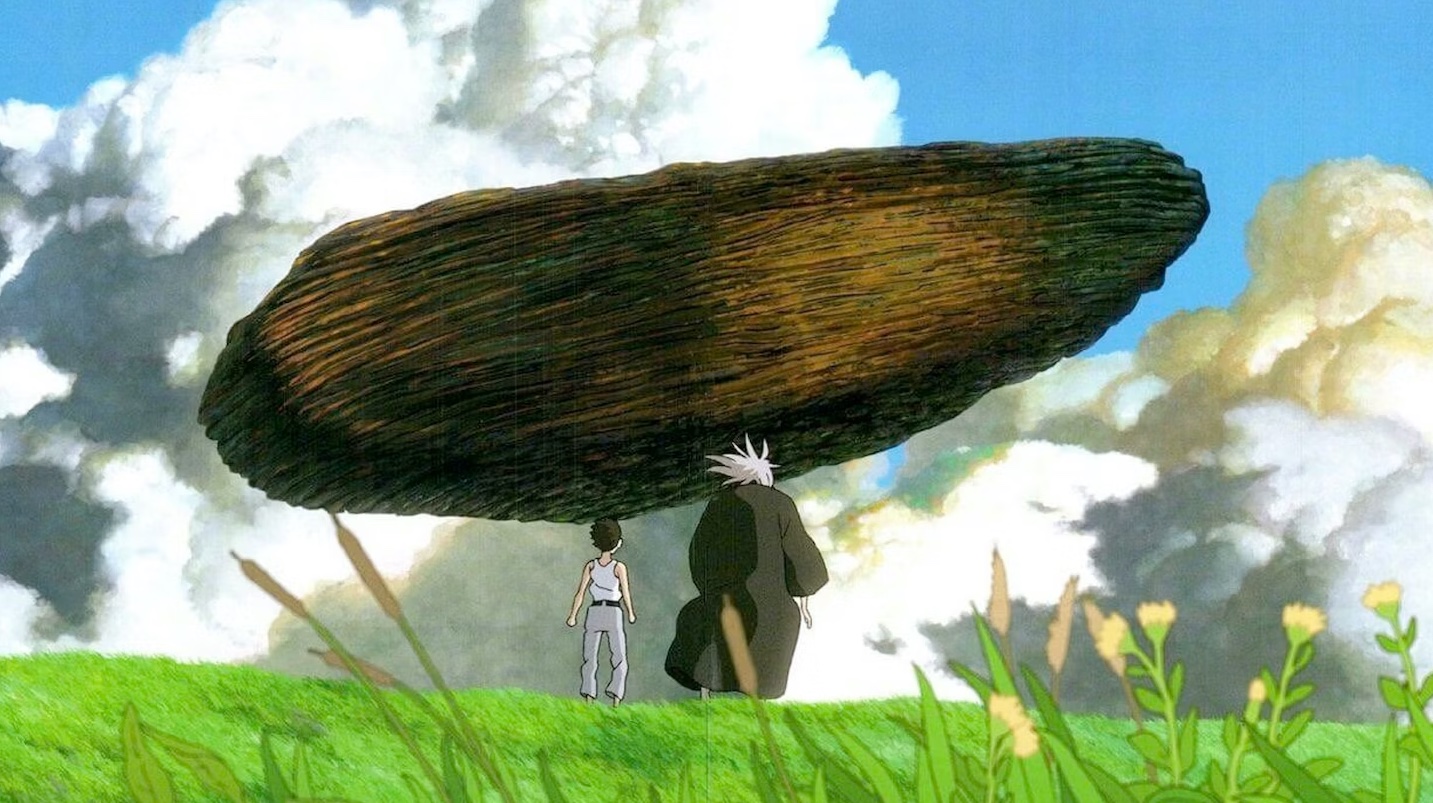
All the hallmarks of Studio Ghibli are present and correct and they’ve arguably never looked more ravishing. There are beautiful shimmering landscapes, ancient mouldering buildings and a succession of weird, dreamlike environments that seem to virtually erupt from the screen. And there’s that brilliant technique they always employ of illustrating food so perfectly, you can actually taste it. (One scene features fish entrails, so this isn’t always a pleasure!)

Aside from the fact that this particular tale focuses on a teenage boy (Ghibli’s lead protagonists are nearly always female), it feels like classic Ghibli dialled up to 11.

If there are some shortcomings, they are in the plot. It’s not that Miyazaki’s screenplay lacks interesting ideas. On the contrary, it’s stuffed with them, so many that they virtually do battle with each other to establish authority. While it’s perfectly fine for a storyline to be complex, it shouldn’t feel over-complicated and, since some of the fantastical goings-on are opaque to say the least, I too often find myself bewildered by what Miyazaki is trying to say. The inevitable questions that arise are left unanswered and, eventually, I decide that this is deliberate.

Perhaps it’s simply a case of an elderly man with a lifetime’s experience trying to cram all of it into a couple of hours. It’s hard not to see the mysterious wizard-like figure, obsessed with balancing various pieces of polished stone on top of each other in order to ‘make the world work’, as a version of the great director himself, trying to puzzle out the enormity of his own astonishing career.

As the credits roll, I find myself wondering if I might manage to slot this film in for a second viewing – maybe even the upcoming dubbed version with a host of Hollywood talent providing the voices. The Boy and the Heron is that kind of movie, the sort that has you pondering its various possibilities long after you’ve left the cinema. See it on the big screen, in IMAX if you can. You may be puzzled, but you won’t be disappointed.

4.2 stars

Philip Caveney
Don@Tokyo – lunch deal

18/12/23

Lothian Road, Edinburgh

It’s a couple of months since Eat@Tokyo opened for business and (hardly surprising since it’s right at the end of our street) we visited within days of its launch. We were impressed and said we’d be back, but we usually only return to a restaurant if there’s something new to talk about. So the fact that Don@Tokyo has launched a lunchtime special is exactly the excuse we’ve been looking for.

We make the gruelling thirty second slog along the street and take our seats. This lunch deal is reassuringly simple: you get one of three main courses and a soft drink (or a mug of green tea) for a total of just £8.90.

Susan goes for the veg poke bowl, while I choose the chicken katsu ramen. The former is a generously-sized dish full of delicious ingredients: avocado, red onion, tofu, edamame beans, radishes, sweet corn and more, all nestled on a bed of gooey, sticky rice. The latter is an equally generous portion of noodles in a creamy broth, liberally sprinkled with red onion, sweet corn and greens, with half a perfectly-judged boiled egg nestling in the mix. This is accompanied by a breadcrumb-coated chicken breast which comes with a little side dish of a mayonnaise mix that I try (and fail) to get the recipe for. Ah well, a restaurant must have its secrets, I guess.

Both dishes are both utterly delicious, the kind of hearty, aromatic food that you want to eat every last scrap of and then lick the bowl. They’re nourishing and comforting too, setting us up for a happy and productive afternoon.

There’s also a third choice – beef gyudon, which I sampled on my first visit and have already spoken about elsewhere. https://bouquetsbrickbatsreviews.com/2023/10/16/eattokyo/. It was the best thing we tasted on our previous visit.

When a takeaway fish and chips or even a couple of pizzas can set you back £30 or more, this lunch deal represents excellent value for money and, when you honestly cannot fault a single element of the meal you’ve just eaten, there’s really only one score that makes sense. Office workers looking for a change from their usual sandwich and packet of crisps should check out this offer at their earliest opportunity. Those on a tight deadline will appreciate the fact that the food arrives at an almost unbelievable speed.

What’s not to like?

5 stars

Philip Caveney

Godzilla Minus One

15/12/23

Cineworld, Edinburgh

Believe it or not, Godzilla is fast approaching his 70th birthday. His first screen outing was in 1954 in Ishirō Honda’s titular film, which featured a man in a rubber suit, clumsily demolishing a miniature cardboard city. Over the years, Japanese company Toho Films has produced more than thirty motion pictures starring the giant reptile, but has never managed to equal the excitement of that first venture.

More recently, American studios have tried to get in on the act, expending billions of dollars in attempts to come up with a decent version of the tale, but it has to be said that, while they’ve usually managed to get the visuals up to snuff, the human elements – even when played by bankable talent – have been found wanting. So when I start hearing rumours that Takashi Yamazaki’s Godzilla Minus One is well worth seeing, I’m initially doubtful. Honestly? Hasn’t this idea been done to death?

I’m delighted to report that my doubt was misplaced. This is surely the best version of the story since it came into existence.

It’s 1945 and Japan is rapidly losing the war. Would-be kamikaze pilot Koichi (Ryunosuke Kamiki) bottles out of going through his final mission; instead, he touches down on the remote island of Odo, claiming a fault with his plane. But the crew of engineers based there can find nothing wrong with it. And then the island comes under attack from the big G, and Koichi fails to protect the resident engineers, who are all chomped to bits except for their officer, Sosaku (Munetaka Aoki), who brands Koichi a coward.

Later, in the bombed-out ruins of Tokyo, Koichi meets a young woman called Noriko (Minami Hamabe), who is looking after Akiko, a little orphan girl she has found abandoned in the devastation, and the three of them set up as a kind of impromptu family. Koichi thinks his luck has finally changed when he lands a paid job with a crew of men aboard a little wooden boat. Their mission is to detect and detonate some of the hundreds of Japanese and American mines that still litter the waters around Tokyo. At least, that’s what they’re told.

But of course it’s only a matter of time before that pesky reptile rears its ugly head again and decides to head ashore on the rampage…

The strength of writer/director Yamazaki’s film is that he’s provided us with human characters who we actually care about, before launching headlong into all that destruction. Make no mistake, the big action sequences are there, and they are suitably impressive – but they don’t dominate the proceedings. The balance between the two different strands is masterfully done and everything builds to a climax that has me holding my breath.

Be warned, despite a 12A certificate, this film isn’t really suitable for youngsters and I note a couple of families leaving early, their kids unable to handle the subtitles and the visceral action sequences. But big kids like me, who have despaired for years of ever seeing new life breathed into this franchise, should take the opportunity to check this one out on the big screen.

It may have taken seventy years but we finally have a Godzilla worth watching.

4.2 stars

Philip Caveney

Maestro

14/12/23

Cameo Cinema, Edinburgh

Like several other recent films, Maestro has been bankrolled by Netflix and consequently ended up with a fleeting theatrical release before moving on to the streaming service. Much of the advance publicity has been caught up in the furore generated by writer/actor/director Bradley Cooper’s controversial decision to use a prosthetic nose in order to look more like his chosen subject, Leonard Bernstein, a complex issue I don’t feel qualified to wade into.

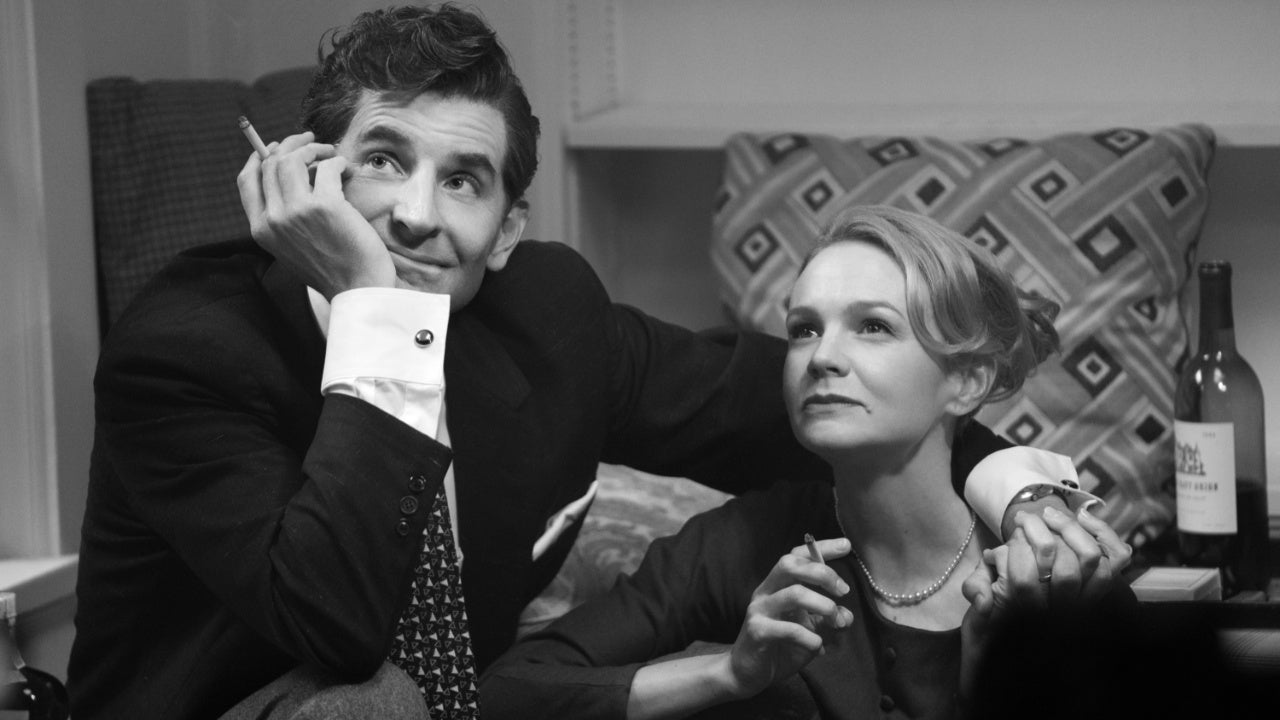
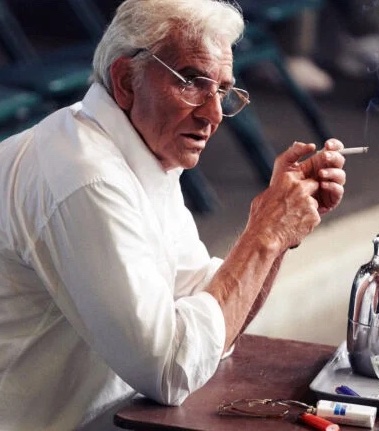
The film itself is undoubtedly accomplished and Cooper’s performance moves beyond impersonation, as he captures the composer’s restless nature, depicting him as a powerful, chain-smoking force of nature, a man constantly warring between his evident devotion to his wife, actor Felicia Montealegre (Carey Mulligan), and the succession of male lovers that drift into his orbit. He’s also at war with himself, lamenting his inability to concentrate on the classics he loves because of his commitments to provide music for various film and broadway productions. (When these include the likes of West Side Story, it’s hard to commiserate with him.)

Set over decades, the two actors enact their roles with absolute authority, while cinematographer Matthew Libatique uncannily captures the different eras with a range of camera techniques and varying aspect ratios. The effect is that the images gradually grow in scale as the years unfold. An early monochrome sequence where the two young lovers watch of production of On The Town and end up dancing with the cast is a particular highlight.

This is perhaps a film to admire rather than enjoy, with the story so tightly focused on the central characters that supporting players are barely given the opportunity to make much of an impression. Sarah Silverman as Leonard’s snarky sister Shirley comes the closest, but she’s only occasionally onscreen. Lovers of classical music will doubtless respond favourably to the long intervals where Bernstein conducts massive orchestras and choirs in his distinctive animated style, while those who are oblivious to its charms may feel distanced and (dare I say it?) a little bored by the excesses. Happily for me, I belong to the former category.

Maestro is a handsome, brilliantly executed film, one that belies the fact that this is only Cooper’s second outing a director. (2018’s A Star is Born was his debut; thanks for asking.) Made with the full cooperation of the Bernstein family, this is something of a Marmite movie. Mulligan (who is top-billed) submits a powerful performance as a woman compelled to a lifetime of compromise and her later scenes, where she slowly succumbs to illness, are devastating.

Many will decide to wait a week or so to stream this at home but it does deserve to be seen on the biggest screen available and with a speaker system that can do justice to that magnificent score.

4 stars

Philip Caveney
Same Team – A Street Soccer Story

12/12/23

Traverse Theatre, Edinburgh

Street Soccer Scotland is a charity using football for positive social change, and Street 45 is its women’s programme. It makes perfect sense. Team sports promote both physical activity and social connection; they provide a sense of purpose and help build self-esteem. People experiencing poverty, homelessness or addiction; those in the care or criminal justice systems; those with mental illness or other support needs: all too often, they’re marginalised, excluded. Street Soccer Scotland aims to create a sense of hope and opportunity for them.

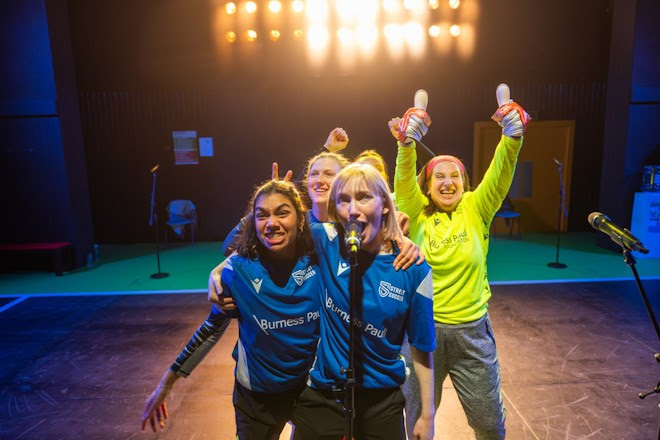
Same Team – A Street Soccer Story serves a similar purpose: to remove the stigma associated with certain life experiences, to celebrate the women at the centre of the tale – and to raise awareness of this most deserving charity. It’s also a cracking good play.

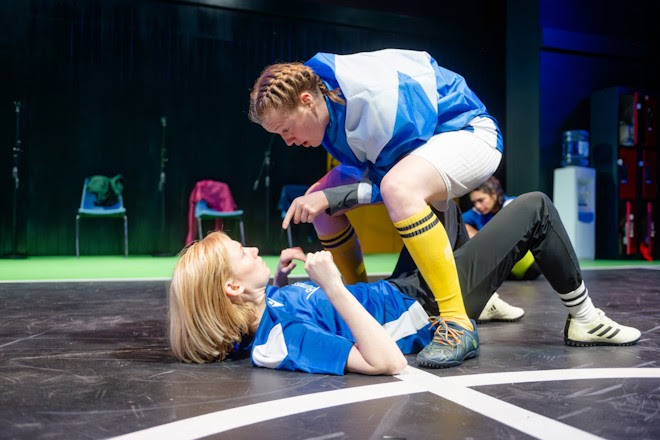
As we take our seats, five women drift onto the stage dressed in sports gear, stashing their belongings in lockers and beginning to warm-up. “Are you here for the try-outs?” they ask us. Several audience members get up and join in the running drills. (Spoiler: they don’t make the squad.)

Jo (Chloe-Ann Tylor) is chosen as captain. Of course. She’s the star player, and this is Scotland’s chance to win the Homeless World Cup. “There are five rules,” she tells her team. “Players always come first. We look to the future. We never leave anyone behind. We place others before ourselves. We keep our promises.”

The rules are not always easy to follow. The women’s lives are complicated. Single parent Sammy (Kim Allan) is facing eviction – again. Her teenage sons are hard work, and she’s not looking forward to moving back in with her disapproving mother. Middle-class Lorraine (Louise Ludgate) has been unceremoniously dumped by her husband after twenty years. She’s staying on a neighbour’s couch and fretting about her perilous finances.

Things are even harder for teenager ‘The B’ (Hannah Jarrett-Scott), who has only just come out of prison. She’s brittle and defensive, unable to secure a job. Meanwhile, her ex-classmate Noor (Hiftu Quasem) is still at school. She lives with her grandfather – her Nana – and he’s got dementia. A chance meeting between the pair proves fortuitous, as The B tells Noor about the Change Centre. “There’s loads going on, like fitba… You were always a good player. There’s trials on for my old team. You should come along.”

And Jo. Well. Jo’s got problems of her own.

But for a few hours each week, the women leave their troubles at the edge of the pitch and focus on the game. Their commitment to the team and to each other gives them something important to feel proud of. Slowly, they let their guards down, opening up to one another and forging friendships. Their shared sense of purpose binds them together.

Written by Robbie Gordon and Jack Nurse in collaboration with the women from the Dundee Change Centre, Same Team is a heartwarming and affecting piece of drama. The narrative is clear-eyed and unsentimental, affording the characters the dignity and respect they deserve. Director Bryony Shanahan maintains the kinetic pace appropriate to the theme, with softer, sadder moments punctuated by riotous cheering or flashes of anger. The movement feels real – even though we never see a ball or an opposing team. The light and sound (by Lizzie Powell and Susan Bear respectively) are integral to the atmosphere, especially once we arrive at the World Cup in Milan. I particularly like the way the different countries’ flags appear in the floodlights.

Perhaps I don’t quite buy finicky Lorraine’s inclusion in the team; perhaps some of The B’s jokes don’t need explaining by the other characters, but this is compelling and important theatre, with five impressive performances from the ensemble cast. Jarrett-Scott is a gifted comic actor, always able to undercut even the most heart-breaking scenes at exactly the right moment. Tylor brings the emotional heft, her Jo a smouldering fuse just waiting to explode.

Same Team – A Street Soccer Story is playing at the Traverse until the 23rd December, and – although it’s not a festive tale – it embodies the spirit of the season. Grab yourself a seat in the stands and get ready to cheer.

Oh, and make sure you know the words to Flower of Scotland.

4 stars

Susan Singfield

Wonka

08/12/23

Cineworld, Edinburgh

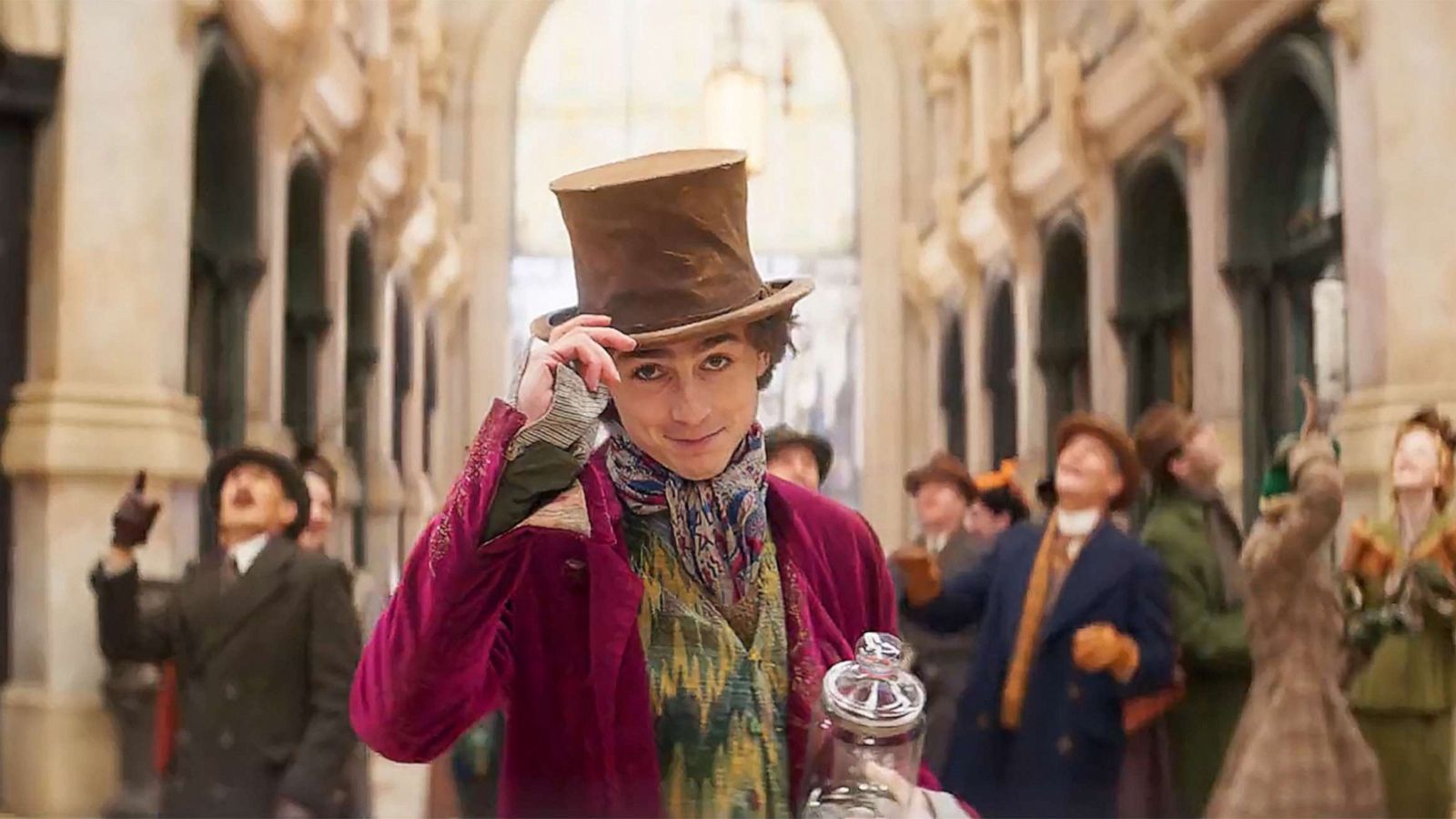
The omens were always good for Wonka. Director Paul King and writer Simon Farnaby have already delivered two brilliant (5 star) Paddington films, but were willing to assign the upcoming Paddington in Peru to other hands in order to focus on this origin tale based around Roald Dahl’s most celebrated character. What’s more, Timothée Chalamet – who seems to have the uncanny ability to choose box office winners with ease – was signed up for the title role right from the very beginning.

And sure enough, Wonka turns out to be as sure-footed as you might reasonably hope, powered by a deliciously silly story and some sparky songs by Neil Hannon, plus a couple of bangers salvaged from the much-loved 1971 film starring Gene Wilder. Laughter, music and magic: they’re all here in abundance.

In this version of the tale, the young Willy Wonka arrives in a city that looks suspiciously Parisian (but is actually Oxford). His masterplan is to pursue an ambition he’s had since childhood: to create the world’s most delicious chocolate.

Armed with an original recipe from his late mother (a barely glimpsed Sally Hawkins) and augmented by some magical tricks he’s picked up along the way, Wonka has mastered the chocolatier’s arts to the final degree, but has somehow neglected to learn how to read. Which explains why he soon ends up as a prisoner, working in a hellish laundry run by Mrs Scrubbit (Olivia Colman, for once playing a convincingly loathsome character) and Mr Bleacher (an equally odious Tom Davis). It’s here that Wonka acquires a small army of workmates, including Noodle (Calah Lane), a teenage orphan who has mysterious origins of her own and who soon proves to be Wonka’s most valuable ally.

When he’s eventually able to sneak out and pursue his main goal, he quickly discovers that the local chocolate industry is dominated by three powerful and devious men, Slugworth (Paterson Joseph), Prodnose (Matt Lucas) and Fickelgruber (Matthew Baynton), who are willing to go to any lengths to protect the stranglehold they currently enjoy. They see Wonka as a potential threat and will stop at nothing to eliminate him…

Mostly, this works a treat. Chalamet is an astute choice for the lead role, capturing the man-child quality of young WW, whilst still managing to hint at the darker elements that lurk deep within him. Lane is suitably adorable and, if the triumvirate of evil chocolate barons never really exude as much malice as you’d like, it’s no big deal. The only real misstep is the fate of the local police chief (played by Keegan Michael-Key), who takes bribes in the form of chocolate and who steadily puts on more and more weight, until he’s almost too big to fit in his car. While this fat-shaming device may be true to the ethos of Mr Dahl, it feels somewhat out of place in a contemporary story.

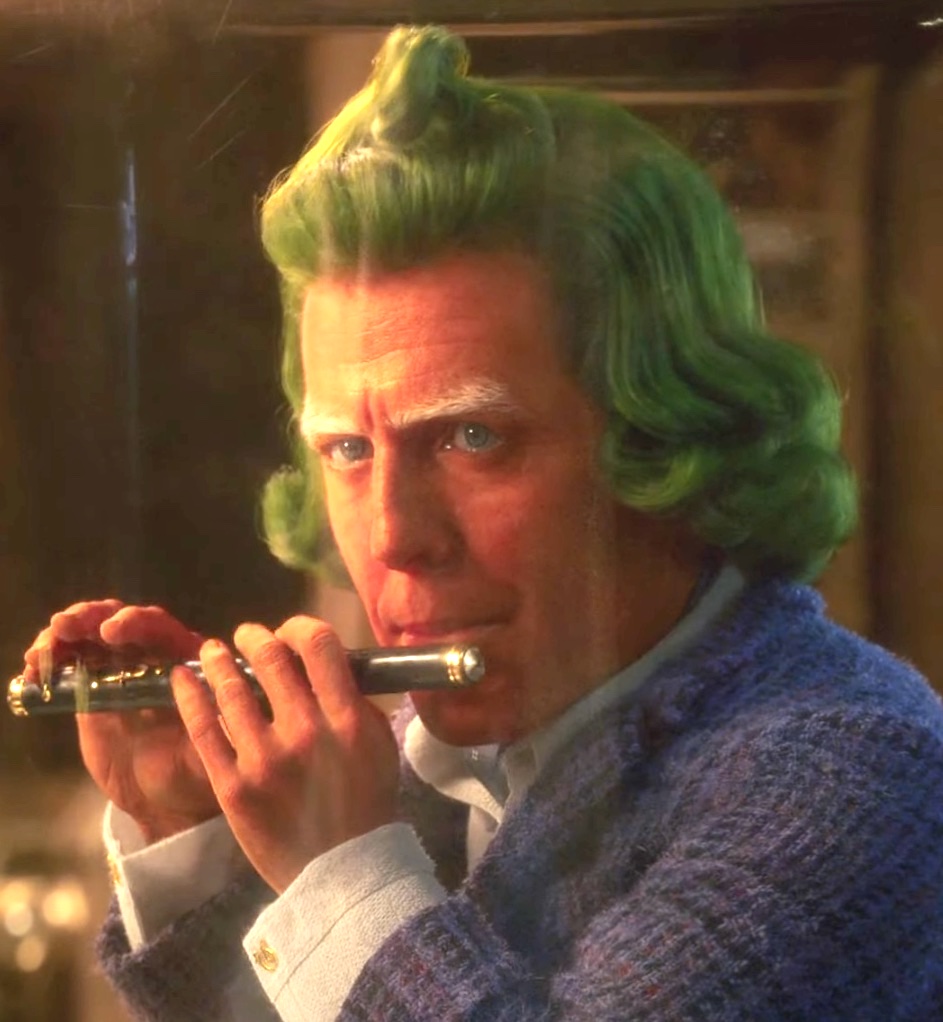
And of course this being a Wonka tale there must be Oompa-Loompas, played here by an orange-skinned, green-haired Hugh Grant, who is wonderfully pompous and self-possessed, yet somehow manages to be quite adorable at the same time. As you might guess, Mr Grant is obliged to dance (again), something he allegedly hates doing. He’s used sparingly through the film but still nearly manages to steal it from under Chalamet’s nimble feet.

All-in-all, Wonka is an enjoyable family film, as bright, glittering and irresistible as a bumper hamper packed with tasty treats. It’s interesting to note, however, that I didn’t come out of this feeling like tucking into some. On the contrary, a scene where Willy and Noodle find themselves drowning in a big vat of molten chocolate actually has me feeling faintly queasy.

Nonetheless, those seeking an enjoyable couple of hours at the cinema, could do a lot worse than buying a ticket for this delightful offering, which will appeal to viewers of all ages.

4.4 stars

Philip Caveney
The Nightmare Before Christmas (30th Anniversary Edition)

03/12/23

Cineworld, Edinburgh

Let’s talk Christmas movies. There are many cinema fans out there who will tell you that It’s a Wonderful Life provides the perfect festive viewing. Others will argue that Love Actually is the real deal. There are even a few diehards who will doggedly insist that the ideal place to spend a couple of seasonal hours is Nakatomi Plaza.

But listen up. The Nightmare Before Christmas is (improbably) thirty years old and has been rereleased in a new digital print. What’s more, it’s currently showing in cinemas across the UK in 4DX. Those looking for a cinematic treat in the run up to the festivities should take the chance to revisit its charms.

The twisted brainchild of Tim Burton, this animated fantasy adventure is more of a team effort than much of his later output. Henry Selick takes up the directorial reins, Michael McDowell and Caroline Thompson handle the screenplay and Danny Elfman composes the score – even handling the vocals for lead character, Jack Skellington (elsewhere voiced by Chris Sarandon).

Jack is the unofficial King of Halloween Town, expending all his efforts on the annual task of providing its creepy inhabitants with all the grisly delights the big night demands. But he’s become jaded with the predictability of it all and longs for something a wee bit different. When he chances upon the festive preparations happening in neighbouring Christmas Town, he spots an opportunity to make a dramatic change for the better. Why can’t his followers get in on the act? They may be a collection of undead horrors but don’t they deserve a little fun?

But of course, even the best of intentions can go awry.

Meanwhile, Jack is unaware that Sally (Catherine O’ Hara), an assembled creature put together by the villainous Doctor Finklestein (William Hickey), worships him from afar and is having terrible premonitions about this new change of direction. She wants – more than anything else – to help Jack but he seems totally focused on his new direction…

Deceptively simple yet virtually bursting at the seams with visual invention, TNBC‘s stop-frame animation provides a constant source of delight and achieves the near-impossible, managing to be simultaneously both deliciously creepy and suitably heartwarming. Indeed, the two different ingredients are juxtaposed with such panache, it’s a constant thrill to see what will happen next. One minute I’m wincing as a child pulls a horrendously unsuitable ‘gift’ from its wrapping, the next I’m sighing with relief as Santa Claus (voiced by Edward Ivory) steps up to the plate to ensure that Christmas comes in as planned. Elfman’s score is memorable and the new 3D print looks absolutely gorgeous.

The 4DX experience, normally reserved for big action blockbusters and violent punch ups, works a treat here, as we are swirled and jolted back and forth along with the frantic onscreen antics. Not sure I’m mad about the sudden stench of ‘Frog’s Breath’ that assails us at one point, but hey, it all contributes to making this a Christmas treat we’re unlikely to forget in a hurry.

Glancing around at this afternoon’s audience, I’m surprised to see that it’s entirely composed of grown-ups, which seems a shame, because kids will adore this quirky alternative to the latest anodyne Disney animation. Big kids like me will surely love it too. Win win.

4.6 stars

Philip Caveney
The Pantomime Adventures of Peter Pan

01/12/23

Festival Theatre, Edinburgh

It’s that time of year again – oh yes, it is. We’re sitting in the Festival Theatre, where there’s a very festive atmosphere. Behind us, two rows of Cubs and Brownies chatter excitedly, waving light-up wands and eating vast amounts of chocolate. Families, including adults, are no less giddy. Christmas outfits are clearly de rigeur: there’s an abundance of baubles and sparkle, from headbands to socks and every item in between. We’re soon caught up in the fun.

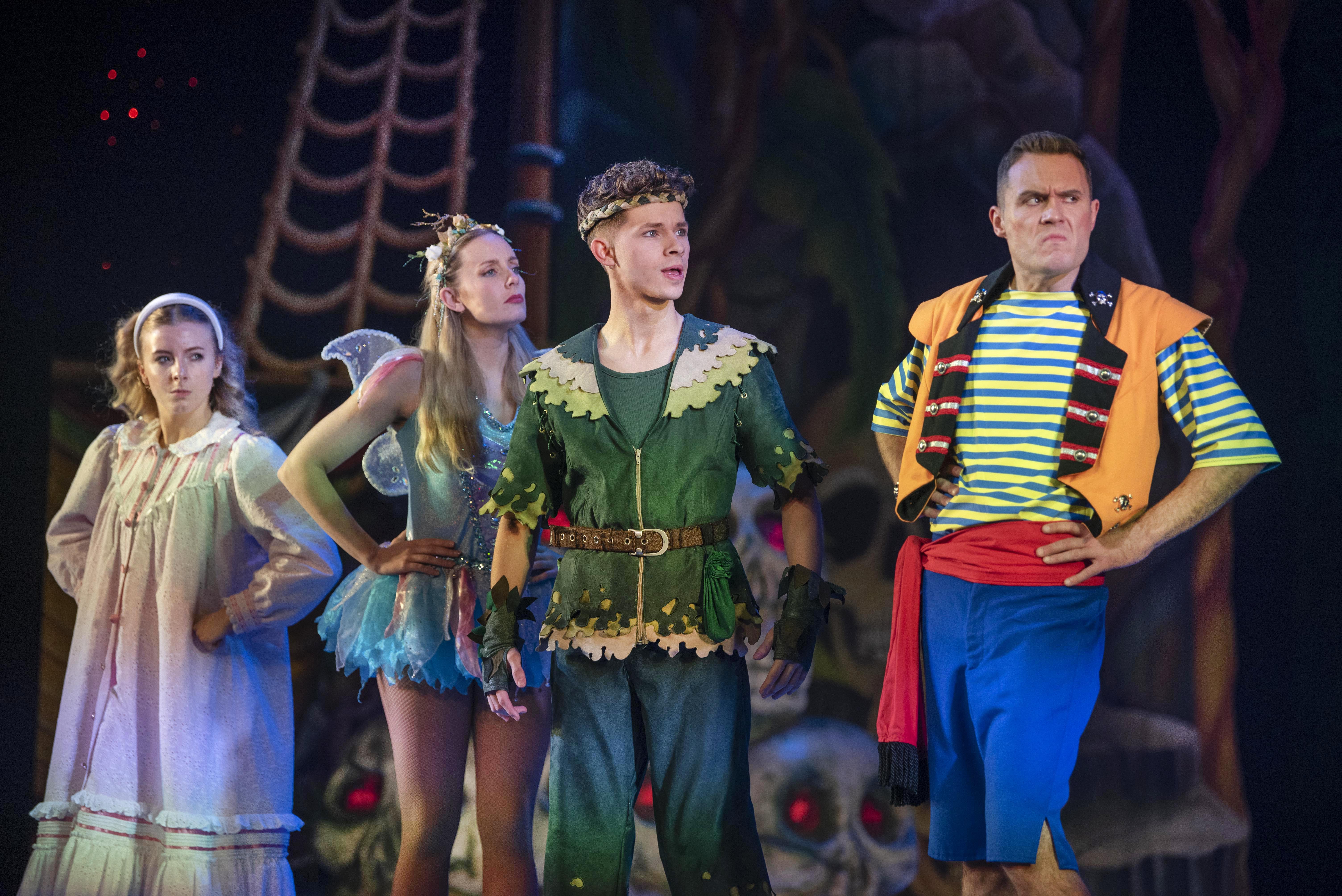
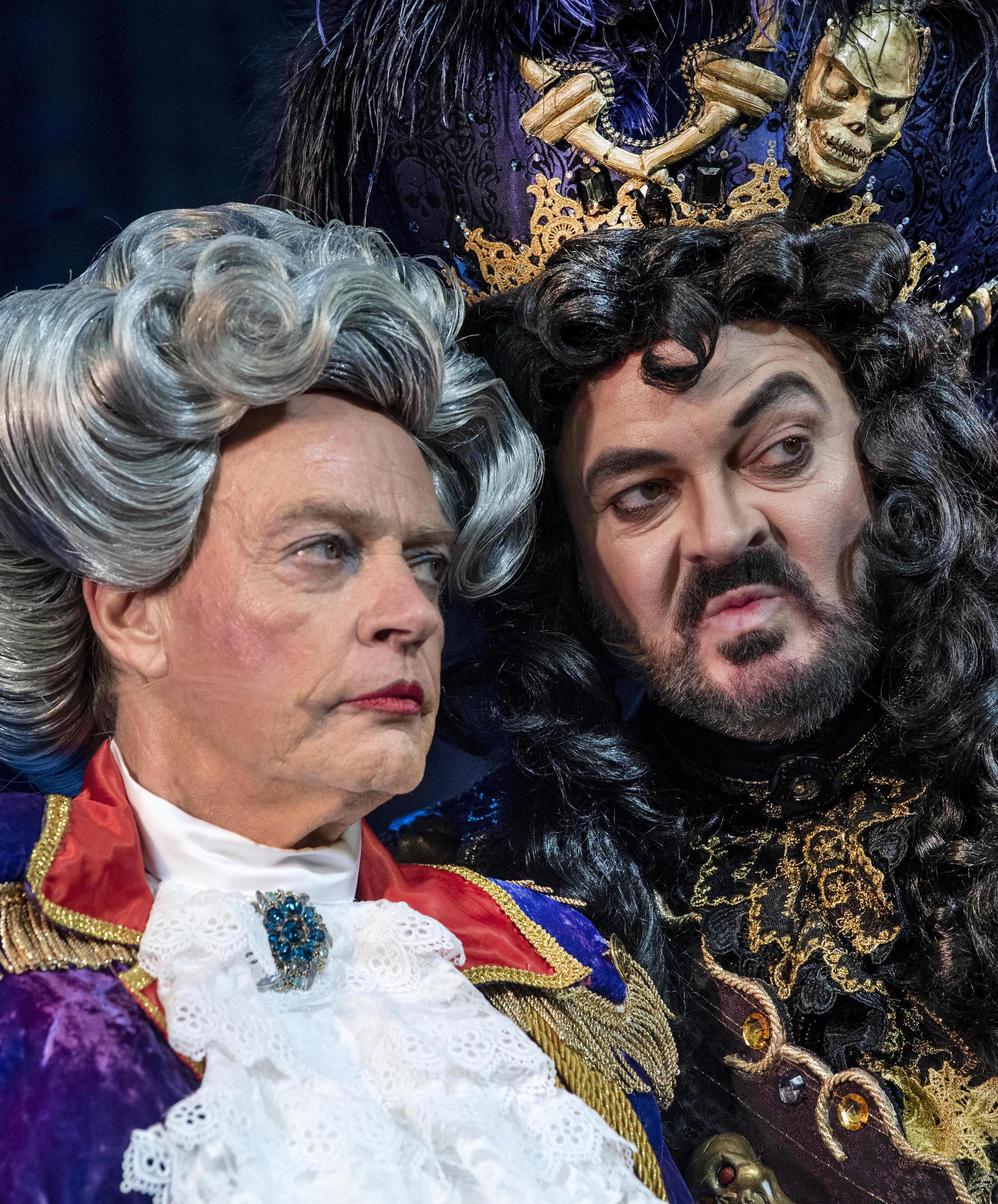
This year’s theme (and it is a theme, rather than a story) is Peter Pan. This version of the tale (written by Harry Michaels and Allan Stewart) takes the form of a sequel to JM Barrie’s original. Even though his old adversary, Captain Hook (Grant Stott) was eaten by Jock the Big Green Croc a long time ago, Peter Pan (Kieran Lynch) is in trouble: the pixie dust that allows him to fly has disappeared from the magic waterfall, leaving him grounded. He sends Tink (Rebecca Stenhouse) to fetch his old friend, Wendy (Robyn Whyte), to see if she can help. It soon transpires that somehow Hook has returned, and that he’s behind the problem… Can he and Starkey (Clare Gray) persuade the erstwhile ship’s cook, May McSmee (Stewart) and her son (Jordan Young), to rejoin his crew?

This Peter Panto is as big and bold a show as we’ve come to expect. Crossroads’ production values are always impressive: the costumes lavish, the props spectacular. The opening sequence sets the standard, with a beautifully animated video-projection that leads us straight into the fantasy. The lighting (by Jack Ryan) is very clever, transforming the same set in an instant from a pretty pastel fairyland into a terrifying red-hued pirate lair. The sound (by Guy Coletta and Andrew Kirkby) is dialled way past eleven, immersing us in Neverland. And there are pyrotechnics a-plenty too.

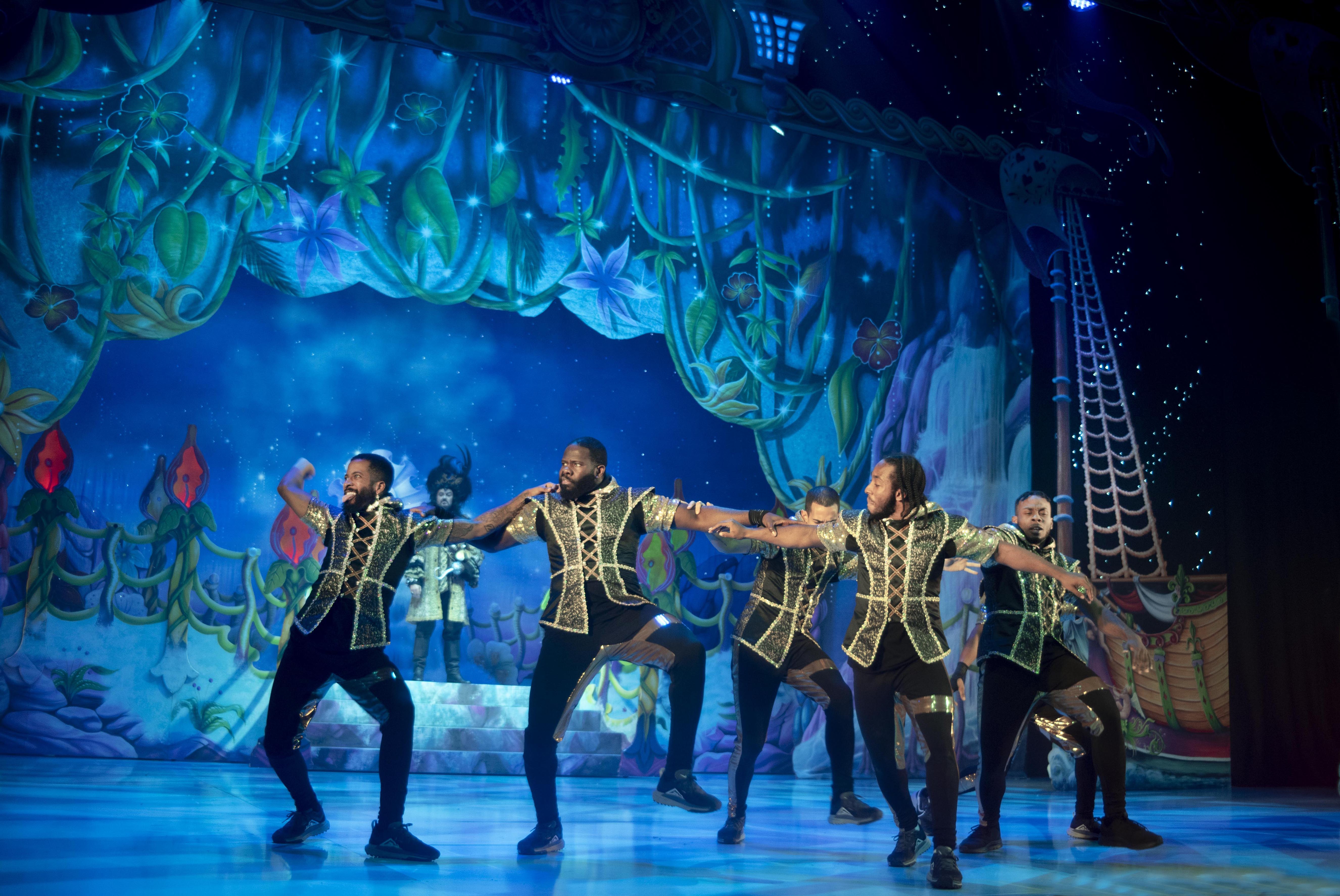
Pantomime survives by being endlessly adaptable, and nowhere is this more apparent than in the casting of Flawless as Hook’s pirate crew. This is a masterstroke, lending the pantomime some real edge, as the street dancers inject a dose of cool into the cheesiness. What seems on paper like an odd marriage, in fact works really well within the piece. It’s not just their awe-inspiring dance moves, but their presence as a kind of Greek chorus, observing the ridiculous antics around them and providing a silent commentary and response.

Stewart and Stott are the lynchpins, and this is a silver panto-versary for both of them. Their onstage rapport is legendary, and it lives up to the hype. They know how to work together to mine the laughs, and always give the impression that they’re having the time of their lives. Stewart is a fabulous Dame – his Aunty May can’t help but dominate every scene she’s in – and Stott clearly relishes his cartoonish villainy. Jordan Young fits in well as the still new-ish number three (following Andy Gray’s sad demise), and his clowning is superb.

There are a couple of negatives. It’s no secret that plot always comes second to tropes in a panto but the balance shifts a little too far here. The storyline gets lost: Peter Pan and Wendy are sidelined and Captain Hook’s redemption doesn’t really register. What’s more, the climactic moment when Peter Pan finally flies again (I’m not counting that as a spoiler – the only surprise would be if he didn’t) just isn’t as impressive as it should be. We’ve already seen Tink take to the air, after all, so it’s a little underwhelming when Peter just follows the same trajectory. I don’t think it helps that the cast look out into the auditorium when they’re wondering where Peter is, so that the audience follow their guidance and look up, prepared to see him appear above our heads; it’s an anticlimax when he simply descends from the flies on strings and flutters across the stage. In any other production, this would be enough, but our expectations have been elevated by the amazing animatronic crocodile and other effects.

But it seems churlish to dwell on these niggles when everything is nigh-on perfect and we’re having so much fun. The Pantomime Adventures of Peter Pan is on until Hogmanay, so grab yourself a ticket, dig out your Santa deeley-boppers and head on down to the Festival Theatre for a few hours of sheer joy.

5 stars

Susan Singfield