
Through the Mud

11/08/24

Summerhall (Main Hall), Edinburgh

Plus ça change, plus c’est la même chose

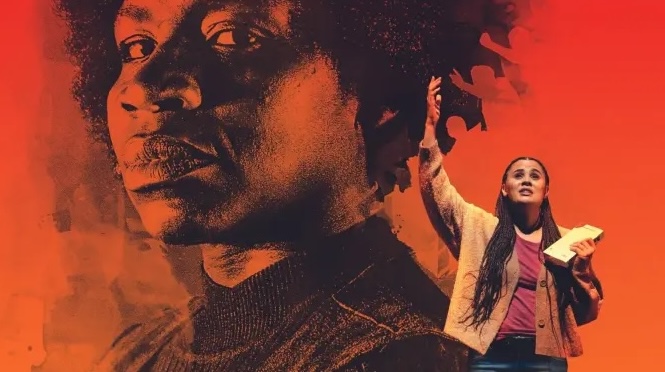
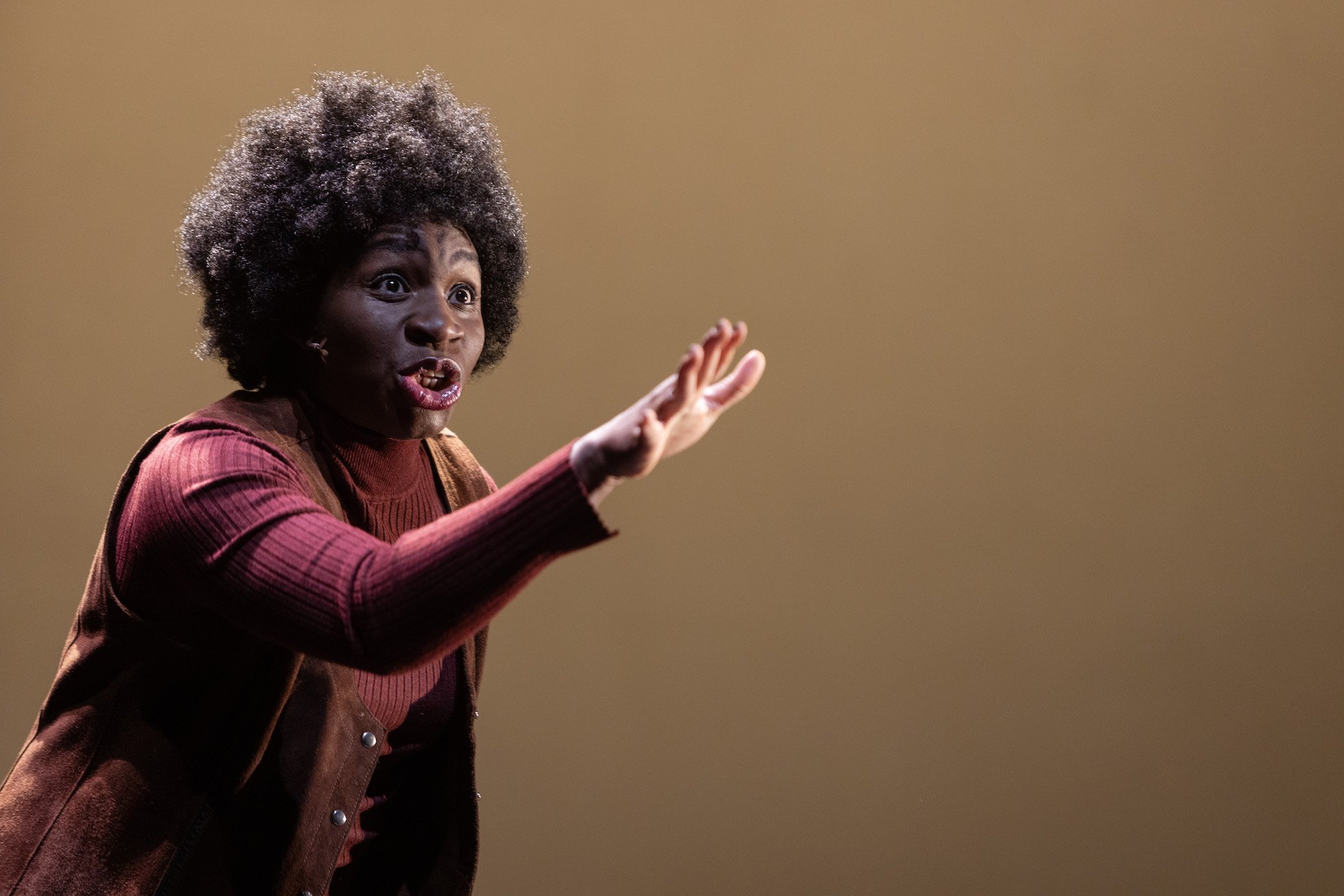
Apphia Campbell’s Through the Mud is a chilling reminder of how little has changed over the years when it comes to Black liberation in America. Campbell plays Assata Shakur, the 1970s civil rights activist, who – convicted of murder – escaped from jail and has been living in exile in Cuba ever since. In a parallel storyline, forty years later, college student Ambrosia Rollins (Tinashe Warikandwa) finds herself caught up in the beginnings of the Black Lives Matter movement.

This is a powerful piece of theatre, as much a call to arms as anything else, and it feels especially apposite as racist riots are breaking out just over the border in England. Of course, Through the Mud pertains specifically to American politics, but bigotry and prejudice aren’t confined to one continent and we have just as much blood on our hands.

Co-produced by Stellar Quines and Edinburgh’s Royal Lyceum Theatre, the production values are as high as you’d expect, and director Caitlin Skinner deftly leads us through the intertwining timelines, allowing the women’s individual stories space to breathe as well as highlighting the connections. The characters contrast and complement one another perfectly: Campbell imbues Assata with a fierce dignity and a fighter’s strength, while Warikandwa’s Ambrosia is altogether sweeter and more naïve – until her first weeks of college coincide with the fatal shooting of Michael Brown by a white police officer, and she can no longer cling to the fair-world fantasy that her parents built for her. 

The sense of outrage at the heart of the play is brought to life by the music, where spirituals and gospel songs give voice to the protest. The women’s vocals are impressive: Campbell deep and powerfully resonant, while Warikandwa’s more plaintive tones offer an enchanting counterpoint. When the two harmonise, the effect is positively thrilling.

In the face of all the awful evidence, it’s to Campbell’s credit that Through the Mud feels somehow hopeful rather than dispiriting. The women’s indefatigable spirits spur us into thinking we ought to act too. 

Not enough has changed – but the fight goes on.

4.5 stars

Susan Singfield
VL

11/08/24

Roundabout at Summerhall, Edinburgh

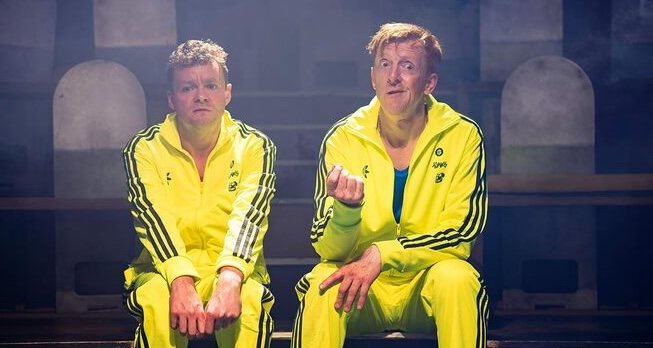
Are you a VL? It stands for ‘Virgin Lips,’ which means you’ve never kissed a lassie (or a laddie, for that matter). Max (Scott Fletcher) belongs in that forsaken category and he’s dreading the approach of the end of term, because that’s when people like him have to endure an embarrassing ordeal at the school disco. Luckily, his best pal, Stevie (Gavin Jon Wright), is on hand to give him some expert guidance. After all, Stevie has managed to achieve that all-important step-up by actually kissing a girl in full view of the rest of his class mates.

Sort of.

This is one of those plays in the Blue Remembered Hills tradition, where adults play kids. Written by Kieran Hurley and Gary McNair, two of Scotland’s finest playwrights, VL is a blisteringly funny account of a couple of hapless boys trying to pick a precarious path through the minefield of their own burgeoning sexuality. We are told about ‘diesel penis’ and the perils of ‘having a pinger.’ It’s an education.

Fletcher stays within the character of Max, bringing out his vulnerability and inner turmoil, a decent lad determined to get things right and to ignore the pressure to stray outside the bounds of decency. Wright plays Stevie with aplomb and also takes on the supporting roles: Wee Coza, a self-styled rap artist, whose enthusiastic but hopeless efforts are hilariously bad; the sleazy guy who Max’s Mum is running around with, happily dispensing toxic advice; and Sheila, the girl who Max has long been in thrall to and who he hopes might be the one to grant him that all-important first kiss.

But first, of course, Max is going to need some practice…

VL is a total delight from start to finish, a whip-smart comedy that also has some incisive things to say about the difficulties of adolescence and the importance of friendship. It explores the powerful pressures that can be heaped upon young men by their peers, that push them to behave in ways that are miles away from their true selves. Hurley and McNair walk their chosen tightrope with considerable skill, exposing the boys’ unwitting misogyny without ever endorsing it.

Cannily directed by Orla O’ Loughlin, VL is that rarest of things, a laugh-out-loud comedy with added depth. Pop it onto your Fringe bucket list without delay; it’s a delight.

5 stars

Philip Caveney

Lost Girl

10/08/24

Underbelly George Square (Wee Coo), Edinburgh

Tracey Emin… stereotype… train wreck. Oops! Sorry. Wrong notes. Let’s try again…

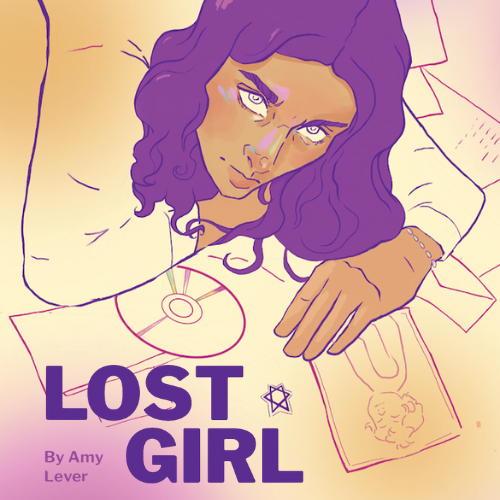
Amy Lever’s Lost Girl is a fascinating monologue, charting nineteen-year-old Birdy’s search for self-acceptance. She’s never been particularly clever (as her A level results confirm); she hasn’t any special talents and she doesn’t know what she wants to do with her life. Until now, none of this has really mattered, because she’s had her best friend Bex by her side, and they’ve been battling the world together. So what if Birdy didn’t make it into uni? Neither did Bex – or Jeremy Clarkson, for that matter – and they’re both doing okay.

But now Bex – resolutely Catholic – has unearthed some hitherto unknown Portuguese Jewish ancestry, which means she can claim an EU passport, and so she’s gone off travelling. Birdy, meanwhile, who is actually Jewish, has no such useful connections. “Hey, Siri,” she asks. “Is Syria in the EU?” Even Siri, who surely hears all sorts, isn’t programmed to deal with this level of ignorance. “Don’t be stupid,” he responds.

So Birdy feels lost. She’s plagued by recurring nightmares and angry with Bex for deserting her. She’s angry with her family too because… well, because they’re her family. Who else is going to bear the brunt of her frustration?

But when Birdy gets a job working in the archives of a local Jewish museum, she begins to unearth some secrets that make her see her relatives in a whole new light…

Lever is an accomplished actor, quickly earning our sympathy with her heartfelt performance. Her depiction of wannabe actor Bex’s disastrous one-woman show is very witty, as is her portrayal of the monosyllabic Sammy Morrison. The writing is good too, often causing us to laugh out loud, as well as giving us plenty to think about.

The simple, unfussy staging is well-suited to the piece, the frame of documents and photographs symbolising both cage and portal, illuminating Birdy’s contradictory impulses for stasis and for flight.

As much a character study as a play, Lost Girl offers a fascinating insight into the mind of a teenager seeking validation and coming to terms with her cultural identity.

4 stars

Susan Singfield

Werewolf

09/08/24

Summerhall (Former Women’s Locker Room), Edinburgh

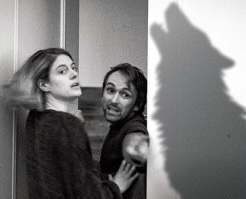
I’m a drama teacher by day (emerging as a theatre critic under a full moon) so I am au fait with the game Werewolf – the teenagers I work with are obsessed with it. For those less familiar with the concept, it’s a role-playing exercise set in a remote village, where the titular lupines feast on one unfortunate inhabitant each night. Every morning, the villagers (who include a doctor, a detective, a chief and – randomly – a Cupid) meet to try to work out who among them is a killer. Think The Traitors or Among Us, depending on your demographic. It’s a little bit like that.

New Zealand’s Binge Culture theatre company brings a heightened version of the game to this year’s Fringe, with extra layers of drama and complexity, and the immersive experience is a lot of fun. Before we’re ushered into Summerhall’s Former Women’s Locker Room, we’re told that we will each find a card on our seats. We should read them and follow the instructions without revealing their contents to anyone else. 

Once we’re seated, three wardens (Joel Baxendale, Hannah Kelly and Stella Reid) inform us that we’re in a containment bunker, and that we need to stay here for seven days to avoid – whisper it – “the contagion.” Post-Covid, this doesn’t actually feel like such a stretch, but things soon start to go awry. Obviously, I can’t give too much away because the element of surprise is key to this production. Suffice to say, the tension steadily mounts…

I love it. The wardens do an excellent job of inhabiting their characters at the same time as managing the narrative, expertly drawing what they need from the participants. The sound design (by Oliver Devlin) is crucial to the piece, creating an unsettling atmosphere and perfectly enhancing the horror elements. Everyone in the room appears committed to the game; we’re all determined to uncover the danger in our midst.

I highly recommend this piece, especially to families with teenagers in tow. If you want something entertaining and immersive, then Werewolf is surely what you’re looking for. It”s an absolute howl.

4.5 stars

Susan Singfield

I’m Almost There

09/08/24

Summerhall (Main Hall), Edinburgh

Todd Almond hails from New York City and I’m Almost There, a song cycle inspired by The Odyssey, begins with him sitting at the piano, his fingers pumping out an urgent and propulsive rhythm – and then his plaintive voice soars over the music as the tale begins.

A friend phones to invite the storyteller to a party in trendy Tribeca, and at first he’s reluctant to venture out from the sanctuary of his apartment block, but his friend is very persistent and eventually he agrees to go. Amongst the ranks of strangers, his friend is nowhere to be found, but the storyteller’s gaze meets the eyes of a man and, almost before he knows it, the two of them have left the party together and are walking through the streets of the city. Eventually they part ways, but the next morning, the storyteller hears his doorbell ring. The stranger is waiting for him below with two cups of coffee and all he needs to do is go downstairs and let him in. But so many things get in the way.

There’s the weird upstairs neighbour who is looking for her lost cat; the odd but sexually-attractive guy across the hall who keeps telling the storyteller that he hates him. And don’t even mention what’s waiting for him down in the basement….

Accompanied by Erin Hill’s distinctive harp and Lucas Macrosson’s slinky bass guitar, Almond weaves an intriguing and compelling tale of urban mystery. It’s a distinctive approach to storytelling and its premise puts me in mind, for some reason, of the short stories of Armistead Maupin, which are themselves so inspired by the author’s adopted city. I’m also thinking of the Australian performer Wil Greenway, who used to be a regular fixture at the Fringe, who is also adept at weaving whimsical tales of everyday existence.

And perhaps too the weird sequence of events is reminiscent of the ways in which authors, chasing that new narrative, find themselves continually distracted by other ideas bubbling to the surface at inopportune moments.

There’s a packed crowd in the Main Hall at Summerhall, hanging on to Almond’s every word and, when the last chord dies away, the applause is heartfelt and appreciative. Those who have yet to experience the talents of this distinctive musical storyteller should grab tickets before they sell out.

4.2 Stars

Philip Caveney

Playfight

08/08/24

Roundabout at Summerhall, Edinburgh

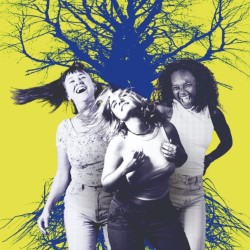
At first, Julia Grogan’s Playfight seems like a pretty straightforward coming-of-age story. The three protagonists, Keira (Sophie Cox), Zainab (Nina Cassells) and Lucy (Lucy Mangan), are fifteen years old, fizzing with adolescent energy and trading wide-eyed misinformation about sex. The characters are nicely delineated and the dialogue is lively and witty. Keira is the bold one, the most sexually aware, proud that she’s lost her virginity before starting sixth form. Lucy is struggling to reconcile her Christianity with her longing for an orgasm, while Zainab is worried about coming out as lesbian. She’s not scared about her friends rejecting her, but she is nervous about revealing exactly who it is she has feelings for. So far, so ground-well-trod.

But there are darker elements at play in Grogan’s script, and – under Emma Callander’s direction – these are gradually revealed. The insouciance with which the girls share news of their sexual exploits and fantasies belies the enormity of some of what they’re saying, the banal and the shocking met with the same innocent acceptance. “It was great,” says Keira about having sex for the first time. “Except for the awkward bit, where he asked to hit me in the face.” My heart aches for these youngsters, whose yearning makes them so vulnerable.

This is nuanced stuff. A movement sequence (choreographed by Aline David) marking the end of their school years recalls The Crucible, as the trio remove their clothes and dance in the woods. Like Abigail Williams and her friends, they are never just victims; they’re also active participants in their own (and others’) destruction. Keira’s lover, Dan, might be eighteen, but he’s as defenceless as she is; Lucy’s masochism is signalled from the start, but does she know enough to give informed consent? If there’s a message here – and I think there is – it’s that we’re failing our young people when it comes to sex education. It’s 2024, but they’re still learning from rumour and porn. Where are the open, frank discussions with well-informed, non-judgmental adults?

Playfight feels authentic. The girls’ home lives exist just out of sight, rarely discussed. What is there to say? They already know each others’ circumstances; of course they’re keener to talk about masturbation – or GCSE results. Still, we glean snippets of information, enough to contextualise their actions. Cox, Cassells and Mangan utterly convince in their portrayal of the kind of all-consuming friendship that means so much when we are young – but often fails to survive into adulthood.

Hazel Low’s simple set design works well: a bright pink ladder surrounded by wood chippings represents the girls’ favourite tree. I like the stylised image, and the connotation of ascension.

Playfight has real emotional heft – and is yet another winner from Roundabout at Summerhall.

4.8 stars

Susan Singfield
Diva: Live from Hell

08/08/24

Underbelly Cowgate (Belly Button), Edinburgh

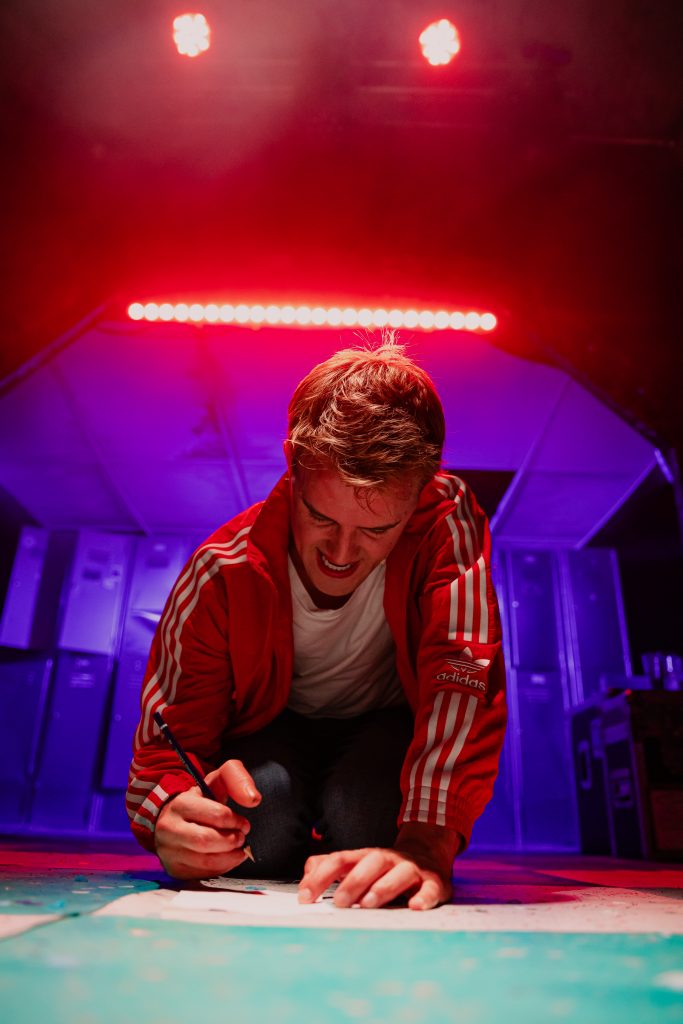
The dank environs of Belly Button somehow make an apt setting for Diva: Live from Hell. If there is a hell, this is surely what the place must look like. It’s here in the Seventh Circle that former high school musical theatre star, Desmond Channing (Luke Bayer), is obliged to re-enact the story of his fall on a nightly basis. Back in the day, Channing was the all-singing, all-dancing star of The Ronald Reagan High School’s drama society. Camp and undeniably talented, he is also the society’s president – something he never lets his co-stars forget.

And then along comes Evan Harris, a new recruit recently transferred from California. Despite his bluff ‘aw shucks’ attitude, everybody seems to like Evan and Desmond dutifully takes him under his wing. Evan soon lands a plump role in the society’s production of Gilbert and Sullivan’s The Pirates of Penzance and, pretty soon, he is making moves on the young actress who Desmond has had his eye on for ages.

Naturally, there’s going to be hell to pay.

Triple-threat Bayer is a tour de force in this supremely entertaining riff on the high school musical genre. There’s just him and three backing musicians (two of whom have to work very hard not to keep laughing out loud at his snarky asides to the audience). Bayer is quite simply astonishing, singing and dancing up a storm, slickly slipping from one character to another with absolute assurance, even delivering a frenetic tap dance routine at one point.

Channing (the name is obviously a reference to Bette Davis in All About Eve) is a delightful character, supremely self-obsessed, deliciously callous and intent on achieving stardom at any cost. The songs by Alexander Sage Oyen are insanely catchy and Nora Brigid Monahan’s script is packed with references to the stars of musical theatre. Given the modest size of the performance space, the presentation is really inventive, a line of metal lockers providing Bayer with costume changes, props and even a mirror in which to check his makeup. A scene involving a death by automobile is simply but ingeniously depicted.

Diva: Live from Hell deserves to be shown on a massive stage with an equally massive production budget, but this is the Fringe, baby and, up in the modest setting of Belly Button, Bayer and his team are creating theatre to die for. Literally.

5 stars

Philip Caveney

Mutant Olive 2.0

08/08/24

Gilded Balloon Patter Hoose (Nip), Edinburgh

Mutant Olive 2.0 is a wild ride of a show. Adam Astra (Mitch Hara) is auditioning for a part in Hamilton Unplugged and he’s determined to stand out from the crowd. Sure, he’s an ex-addict, his headshot is twenty years out of date, and he’s left his props on the kitchen table but, as the audience becomes a room full of directors, producers and casting agents, we are urged not to let any of this cloud our view. He’s going to wow us with a Shakespearean monologue. What could be more appropriate?

Except, would we mind waiting just a minute, because his Dad’s calling? Sorry about that. The problem with his Dad is… “Okay. Puck. I am that merry wanderer of the night…” His phone rings again.

Hara is a kinetic performer, almost sparking with energy. He dazzles with his smile and prowls the small stage, lurching from sly camp to devastating emotion, somehow keeping us with him all the time. The stories of Astra’s childhood – his speed-freak alcoholic mother; his hitman father – seem utterly fantastical, but it turns out they are largely autobiographical, based on Hara’s own experiences. 

The audition, of course, careens out of control, like the seventeen cars Astra has crashed whilst high. And in amongst all of the gloriously riotous, outrageous tales, we see the man emerge, scarred but intact, resolute in his determination to succeed on his own terms.

Directed by Carlyle King, Mutant Olive is a true delight. I’ll certainly be seeking out more of Hara and King’s work, starting with Smothered, their short form series on Amazon Prime. Meanwhile, do yourself a favour and head to the Gilded Balloon for a chance to see a fairy goblin in a whole new light. 

4.6 stars

Susan Singfield

Weer

07/08/24

Traverse Theatre, Edinburgh

Natalie Palamides’ burgeoning reputation has evidently preceded her. Traverse One is packed to the gills with an exuberant crowd, many of whom have clearly seen her Netflix special. I have to admit that thus far her name has eluded me, so I really don’t have the first idea what to expect. But whatever wild imaginings I might have had beforehand are nothing like the slice of unhinged genius that I witness onstage tonight.

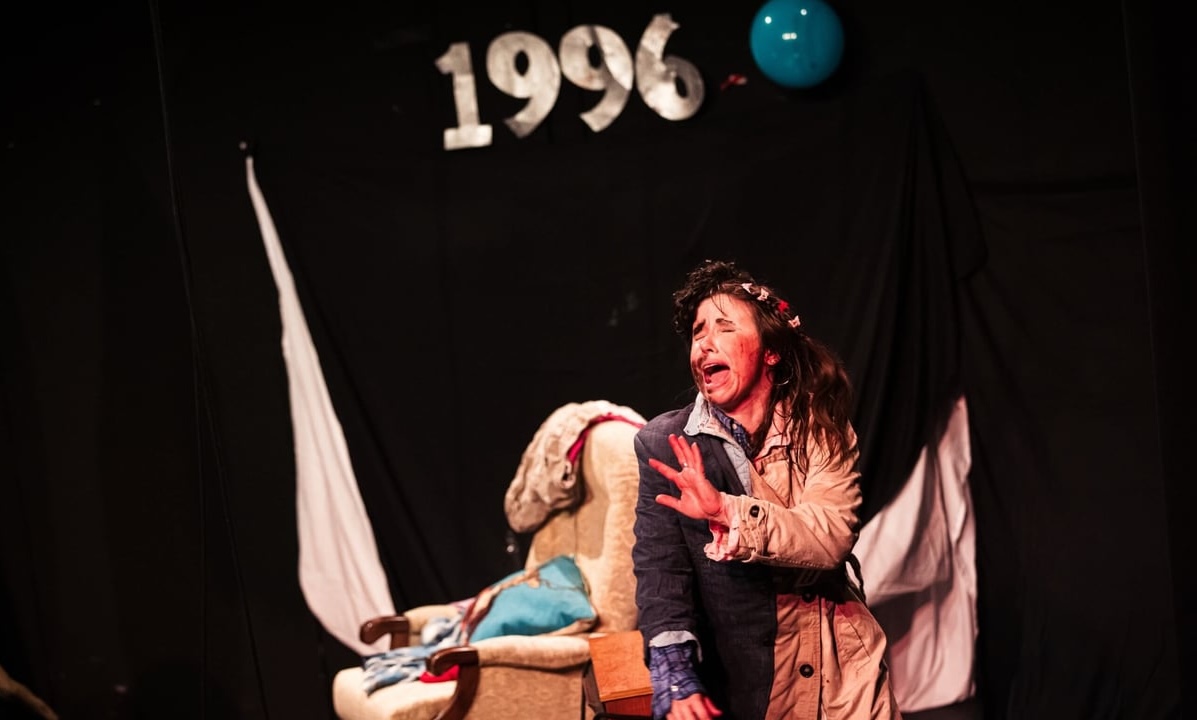
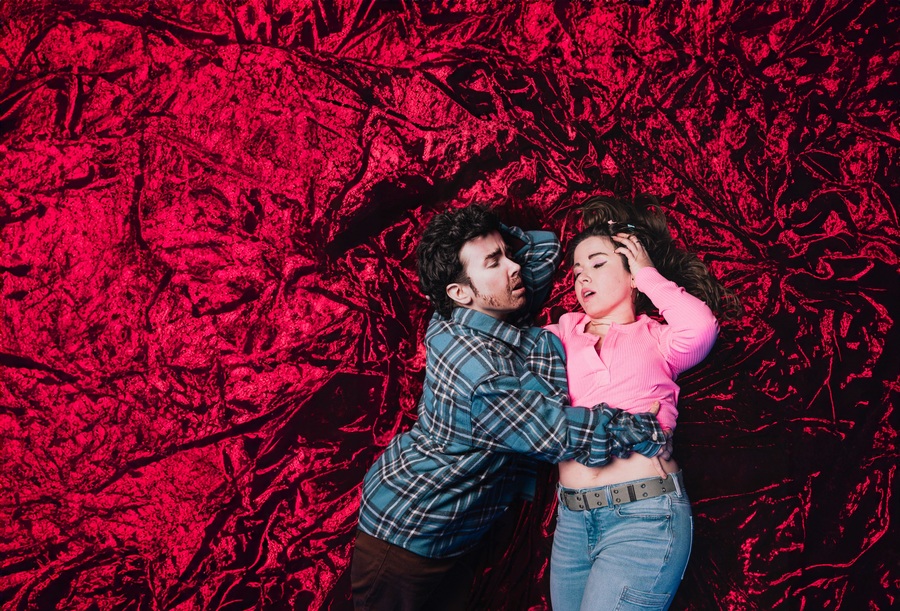
Weer (the name is explained somewhere in the chaos) is the tumultuous tale of Mark and Christina, two star-crossed lovers, who have been falling in and out of lust with each other since 1996. Now it’s New Year’s Eve 1999, the world is poised for the ensuing havoc and the two of them are having a violent altercation, mostly prompted by Mark’s inability to fully commit to Christina. Palamides plays both Mark and Christina, using the old music hall technique of donning a series of bisected costumes, and presenting the resulting interchanges by twisting from side to side. On paper, it sounds a bit hack and it shouldn’t work for a full-length play… and yet, against all the odds, it really does.

The opening events are simply an introduction to a whole series of demented scenes, Palamides racing back and forth across an increasingly cluttered stage, using weird Heath Robinson-like props to help tell the story. There are chases and spills, rampant love making (in an actual shower at one point!). There’s bloodshed and slapstick, a loaded gun with a penchant for discharging bullets – even though it isn’t loaded. There are spurts of bodily fluids, frantic costume changes, audience interaction, meaningful sideways glances, tears, laughter, death – and a great big fucking deer.

I – like most of the others in the theatre – spend large amounts of my time alternately laughing uproariously and staring in wide-eyed astonishment at Palamides’ next unexpected rug pull. Essentially, Weer is a just a great big slice of the absurd, expert clowning performed with such reckless abandon that you can’t help loving it. Palamides is now well and truly on my radar and I’m already looking forward to what she does next.

Meanwhile, those in need of some laughter should get the to The Traverse to see Weer and be grateful that you’re not one of the team of people who have to clean up the stage after the show.

5 Stars

Philip Caveney

Rita Lynn: Life Coach

07/08/24

Pleasance Dome (Ace), Bristo Square, Edinburgh

My suicide note was so good, it made me want to live.

Enter Rita Lynn, life coach extraordinaire. After all, who better to advise the rich and foolish than a woman at rock bottom with a penchant for hard drugs? 

Imogen Wood (Louise Marwood) used to be a dancer, but it turns out no one wants to employ an addict, who disappears for days on end, then turns up drunk, hungover or high. Stuck in a codependent relationship, she can’t see any way out – until a chance encounter with a wealthy worrier sparks an audacious thought and Imogen’s alter ego, Rita Lynn, is born. For just £250 per hour, she’ll counsel ‘Helen’ – and all her well-heeled friends.

Loosely based on Marwood’s own experience with addiction, this is a cleverly crafted tragicomedy. Not only is her performance a real tour de force, the writing is mightily impressive too; Marwood is clearly a talent. 

She’s extraordinarily engaging, one of those actors who seem to carry their own light, and so we’re irresistibly drawn to Imogen despite her bitchiness, able to see beneath the brittle façade she’s constructed to protect herself from her inner demons. We want her to beat her addiction and emerge happy on the other side.

Marwood also plays a raft of supporting characters, including her toxic boyfriend, her therapist, her clients and her best friend, switching from one to the other, sometimes mid-sentence, never leaving us in any doubt about who she’s meant to be. This is a heightened, almost melodramatic piece, the humour emanating from Imogen’s outrageousness, as well as her biting criticism of the way society wants her to behave. She’s caustic and dismissive, bold and fearless – and as fragile as can be. 

At once laugh-out-loud funny and desperately sad, Rita Lynn: Life Coach is a must-see show. Just don’t be tempted to employ her to sort your problems out. 

4.8 stars

Susan Singfield