A Knock on the Roof

14/08/24

Traverse Theatre, Edinburgh

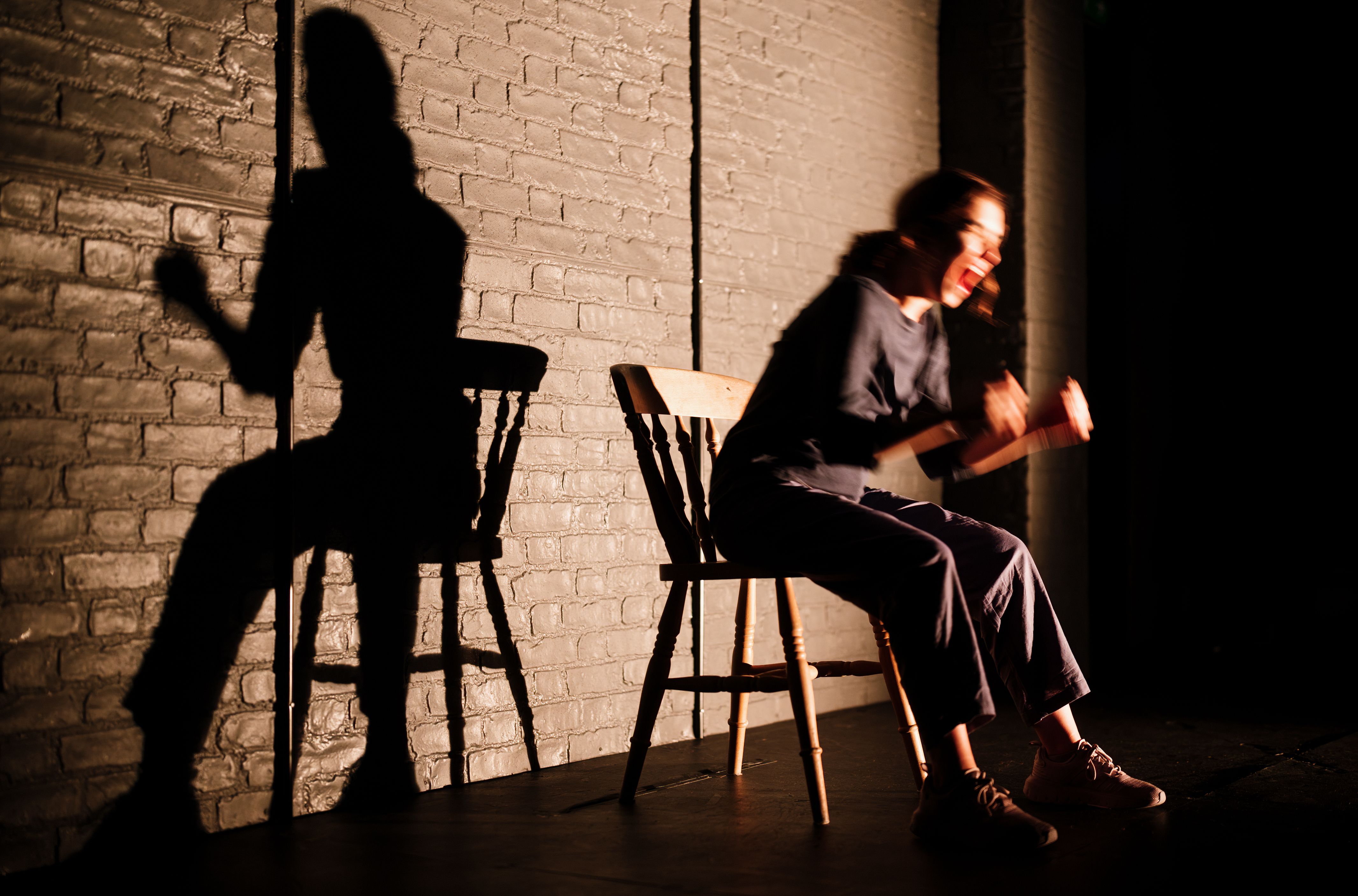
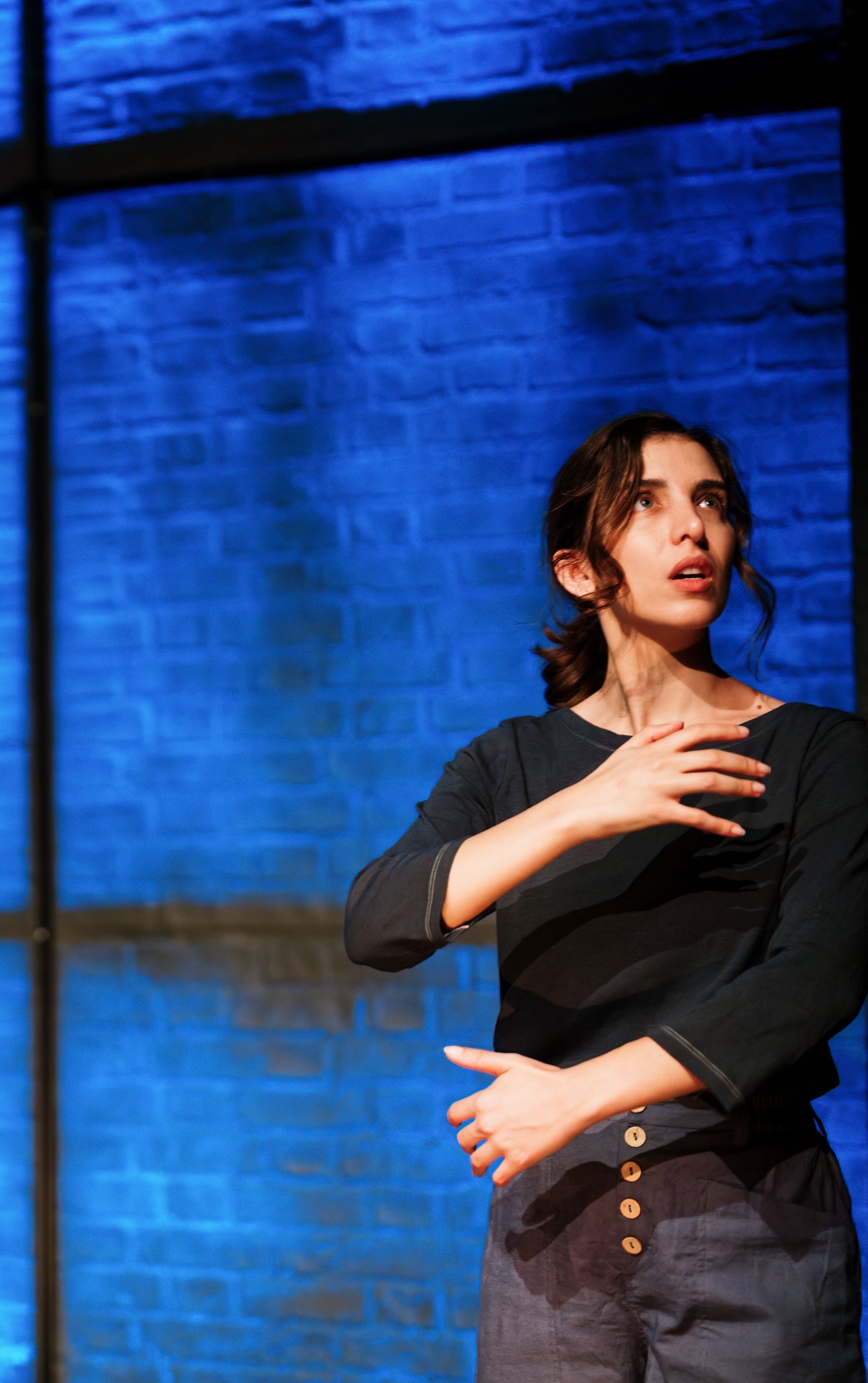
Written and performed by Khawla Ibraheem, A Knock on the Roof is a horrifying illustration of the realities of living under Israeli occupation.

Mariam’s ‘normal’ life sounds bad enough. The electricity supply only works for a few hours each day, so she has to be ready when it comes on – to charge her phone, wash the dishes, take a quick shower. Fresh water is in short supply, and she’s forbidden her son from swimming at the beach because the sea is so polluted.

When war comes – again – things are even worse.

Mariam’s biggest fear is the euphemistic ‘knock on the roof’ – a small bomb dropped on a residential building to give notice that a bigger one is on its way. This is a perverse distortion of the international humanitarian law requiring an effective warning before a civilian target is attacked, and it destroys Mariam’s mental health. Her husband is in England – working on his PhD, trying to forge a better life for them – so she’s on her own, looking after her young son and her elderly mother, and the anxiety is too much to bear.

She begins to practise running, to maximise her chances of fleeing to safety in the five minutes she’ll have when the knock on the roof comes. Director Oliver Butler uses these sprints to make the monologue dynamic, Mariam’s kinetic force conveying her panic. This is further emphasised by the frantic pace of Ibraheem’s vocal delivery. In fact, sometimes she speaks so quickly that it’s hard to catch every word, but the gist is always clear, and it ensures we are in no doubt about how terrified she is.

The staging is almost completely stripped back, with a single chair the only prop. There is only one theatrical flourish in the whole play, and – when it comes – Hana S Kim’s projection is genuinely breathtaking.

If A Knock on the Roof begins to feel repetitive, then I guess that’s the point. This is how Mariam lives, repeating the same routine over and over, like a ritual. If she can get this right, she can save her son. In the end, she begins to wish for the bomb, because waiting for it is killing her…

An intense and heartfelt production with a vital message, A Knock on the Roof is a timely eye-opener, and an important part of Travfest 24.

4 stars

Susan Singfield

Dear Annie, I Hate You

14/08/24

Zoo Playground 2, Edinburgh

When we enter the performance space, we can hardly fail to notice Sam Ipema, lying stretched out on a podium, seemingly fast asleep. She’s surrounded by a series of miniature television screens, upon which random images from her childhood are playing, as if granting us access to her dreams. 

But then she wakes up and starts to tell us her life story, all about a young girl who grows up with her parents. They are present, providing comments from the TV screens. We also hear from her adopted brother who has Downs Syndrome and is very fond of Batman. As Sam grows older, she becomes obsessed with soccer and seizes every opportunity to practice the sport, thinking that perhaps one day she’ll be a star player…

And then Sam’s narrative is rudely interrupted by the arrival of ‘Annie’ (Eleanor House), a bright buzzy young woman clad in a glitzy pink outfit. She’s playing a tuneless rendition of Also Sprach Zarathustra – on a trombone – and she seems intent on wrecking everything that Sam has so carefully set up.

But ‘Annie’ is just the name that Sam has given to her aneurism – the one she discovered years back, quite by accident, the one that she endured surgery on, but which still hides deep within her brain and could prove fatal at any moment…

Dear Annie, I Hate You is a wonderfully inventive and cleverly-assembled slice of true experience, by turns funny, profound and – at one particular point – very challenging. Those of a delicate disposition should note that this show offers the opportunity to literally look inside Ipema’s brain (via a screen, obviously), but I want to stress that those too squeamish to watch it are given ample opportunity to either close their eyes or leave the room until that part is over. I choose to stay and am riveted by what I see.

The performance space at Zoo Playground I is quite compact and I’ve rarely seen such a modest stage used to such great effect. Hats off to director James Meteyard, who manages to have Ipema and House moving through the clutter with ease, interacting, arguing, fighting – even playing a game of table tennis. The simple but utterly practical props work a treat, light cables pulsing and flashing to accentuate the action, and there’s one bit of business – which I won’t spoil – that actually makes me gasp out loud.

Ipema is a confident and relaxed narrator, while House proves the perfect foil, her polar opposite. Watching the two of them interact is both entertaining and affecting.

More than anything else, I’m impressed by Ipema’s courage, the way that she has met the daunting experience of an aneurism full on, turning it into one of the most thought-provoking shows I have seen at this year’s Fringe.

5 stars

Philip Caveney

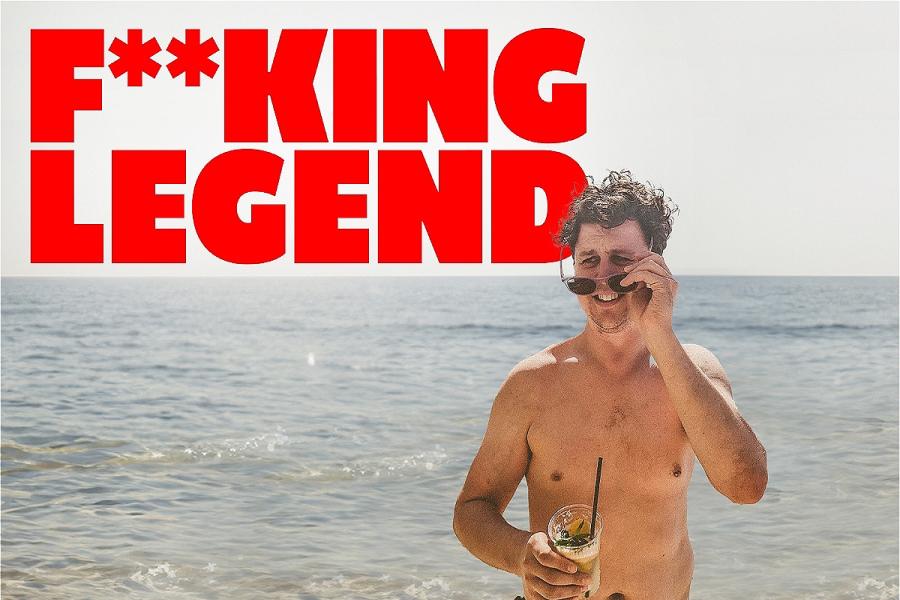
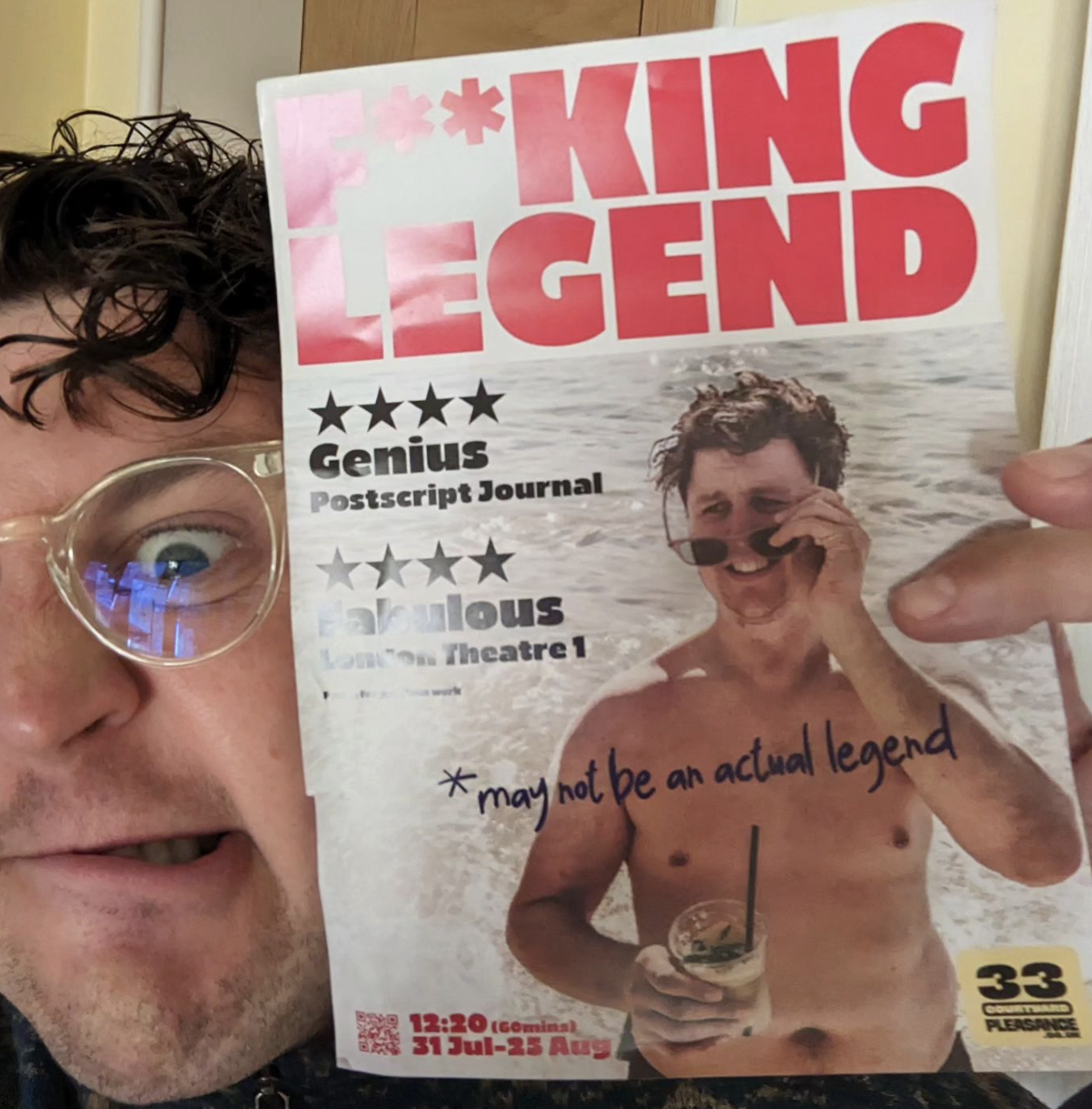
F**king Legend

14/08/24

Pleasance Courtyard (Bunker Two), Edinburgh

Olly Hawes isn’t a bad guy. Okay, so maybe things get a little out of hand on stag dos now and again, but he and his pals are not like those other lads, misbehaving drunkenly in historical European cities. Sure, they go to the same places and drink the same booze, but their raucousness is performative and self-aware. They’re being ironic – and that makes all the difference. Right?

In this one-man show, Hawes veers between biting humour and apocalyptic despair; it is at once a confessional and a call to arms. The affable persona he creates serves as a hook, allowing him to reel us in and bring us face-to-face with our own hypocrisies.

There’s a gulf between the opening scene, where Hawes stands contemplating which socks to wear, and the terrifying ending, where we all stand on the precipice of a climate disaster. But Hawes is an effective guide, leading us from an introspective focus on the daily minutiae to a bird’s eye view of what’s happening just out of shot. If this sounds bleak, it is, but don’t be misled – it’s also very entertaining.

There’s an overt meta-quality to this monologue. Hawes invites us to picture our own lead character. It might be him or it might just be someone a bit like him. It might be us. (It is us. We’re all guilty.) The piece is presented as a screenplay, with Hawes narrating the cues, which works well as a simple means of establishing where we are in time as well as place.

There’s no denying that the ending is frenetic and hyperbolic – but it feels earned. This is clever writing with a relatable protagonist, striking exactly the right tone to keep the audience on board.

And we need to actually do something about climate change, don’t we? The planet’s burning while all us f**king legends look away and party.

4 stars

Susan Singfield
My Blood

13/08/24

theSpaceTriplex (Big), Edinburgh

In the rush and buzz of the Fringe, it’s easy to overlook the fact that there are plenty of amateur productions here, put together and performed by dedicated teams of young (and sometimes old) creatives. One of the best places to see these offerings is at theSpaceTriplex, a venue that offers ‘affordable’ rooms for such projects.

Something about the premise of My Blood captures my attention. A new play based upon Aeschylus’ Oresteia? That would be an ambitious project for a seasoned professional company, so I’m interested to see what this team from Oxford has come up with.

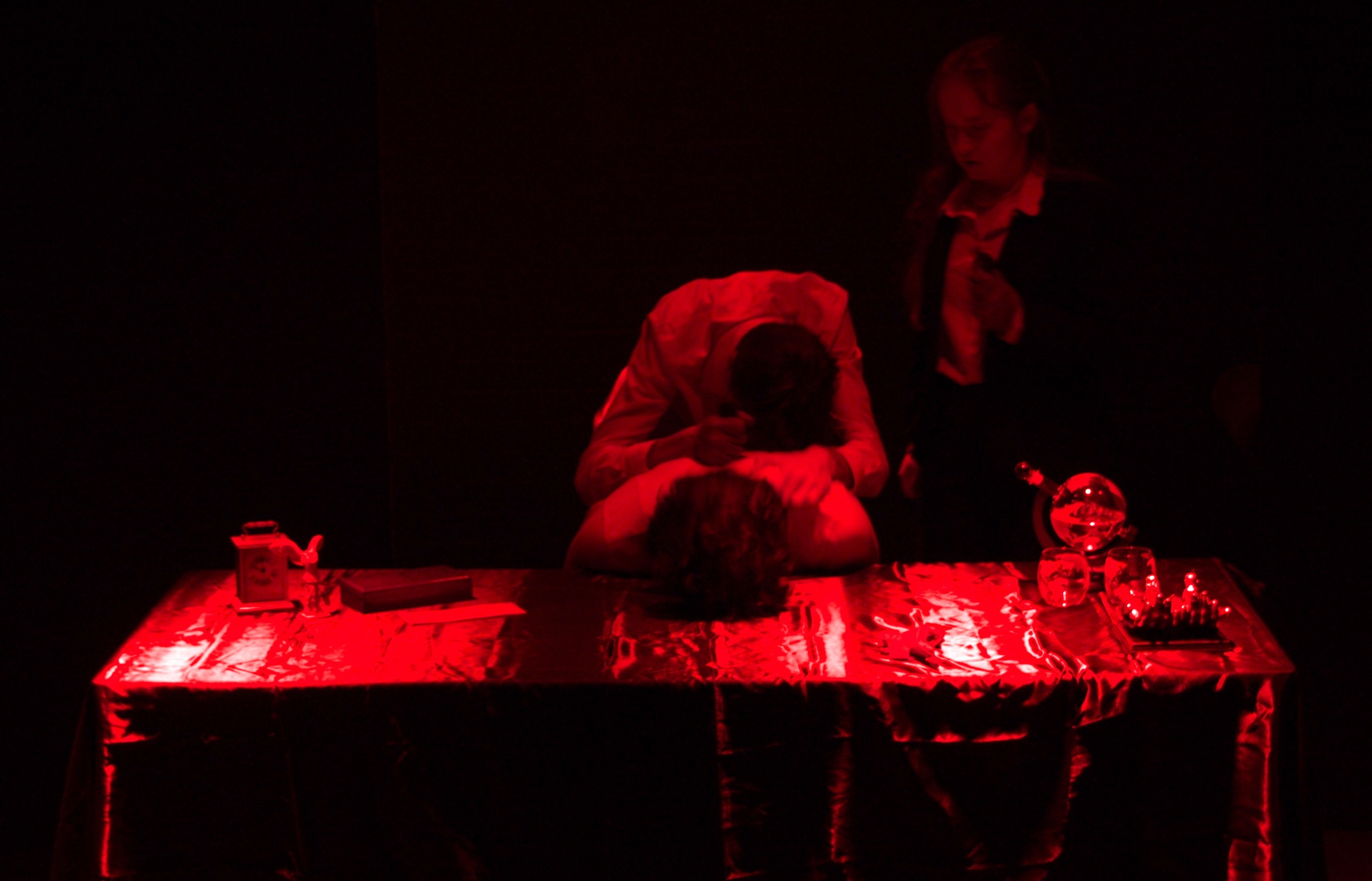
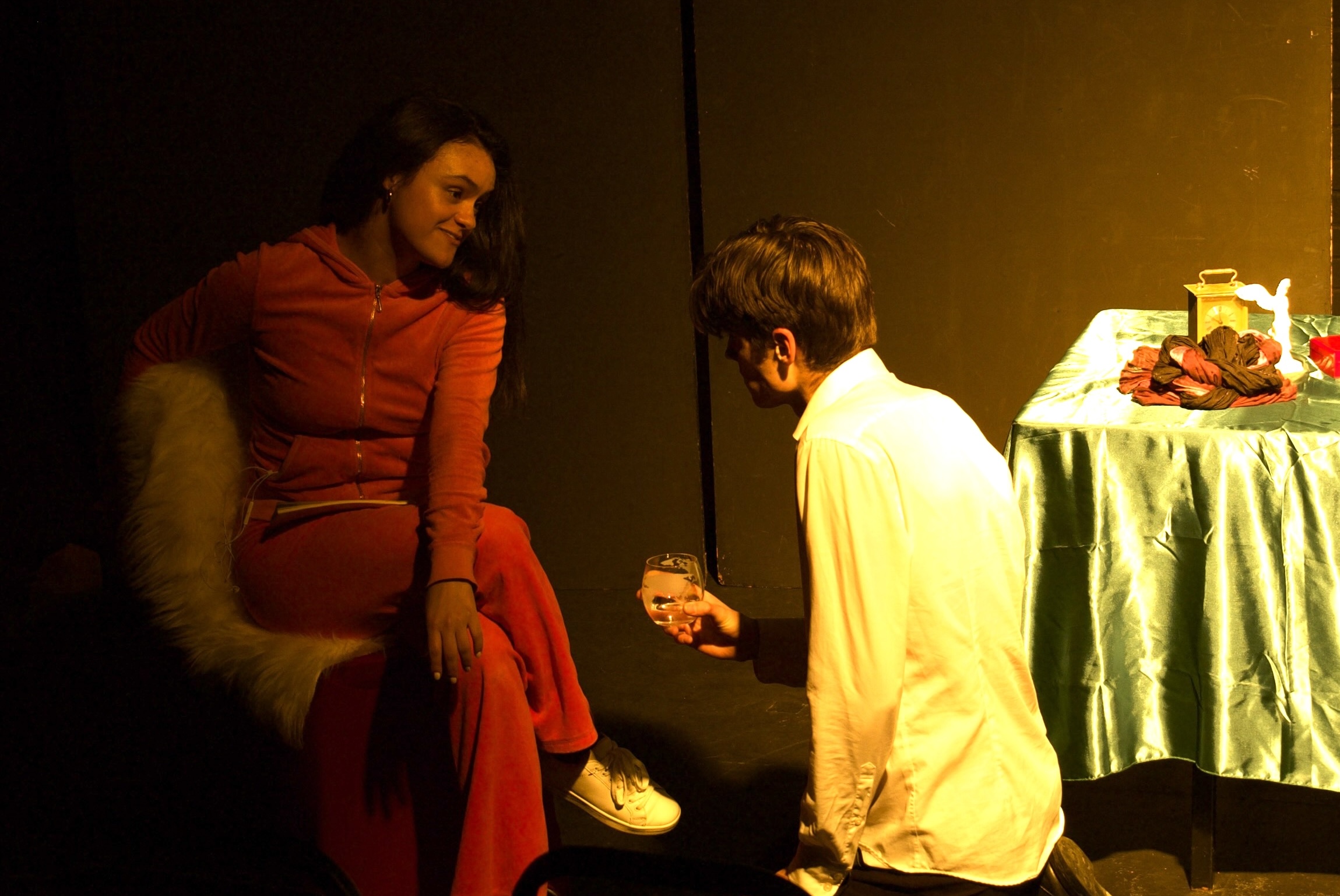
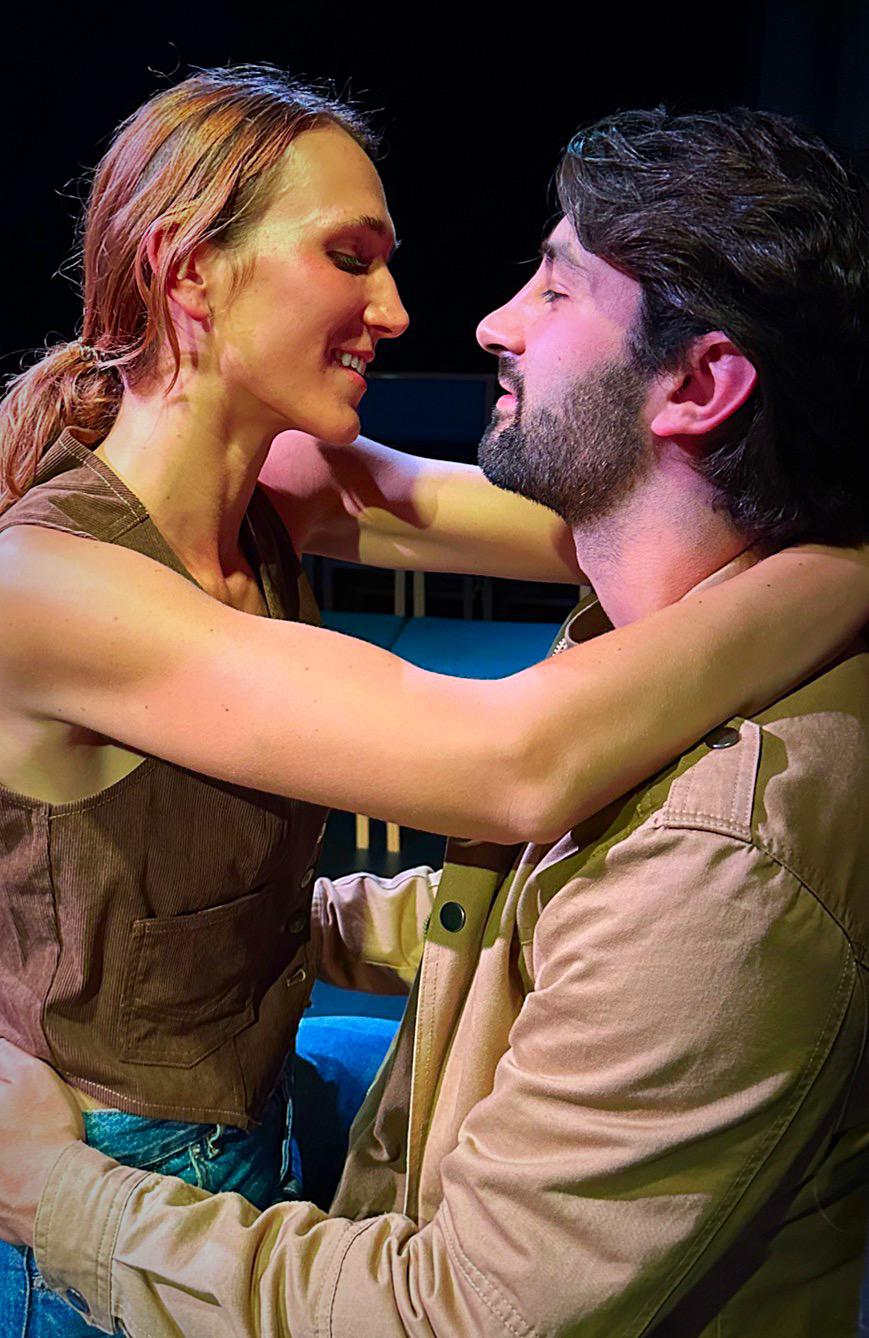
Playwright Leelou Lapteva has clunningly reimagined the old saga as a psychological thriller, set in the aftermath of the 2008 banking crisis. In this version of the story, King Agamemnon becomes Adam Atreides (Gilles McDonald), the CEO of a major bank and the father of Oliver (George Loynes) and Chloe (Victoria Kinne). He’s married to the vitriolic Sandra (Kelsey DeJesus, clearly having a field day with her expletive-littered lines).

But a mysterious cabal has Adam in its grasp and it soon becomes apparent that powerful forces are at work on him, forcing him to go to unspeakable lengths in order to ensure that the Atreides dynasty will survive the financial meltdown and continue to prosper.

But such an outcome comes at a hard price.

I’m impressed by Lapteva’s intriguing concept and there’s some excellent writing here. What’s more, the acting – especially from the sibling duo of Loynes and Kinne – is also pretty impressive, though it’s fair to say that every member of the seven-strong cast gives it their all. And if some of the dialogue occasionally feels a little histrionic… well, look at the source material.

What I’m less keen on in this production is the over-dependence on props. The impetus of the play keeps getting slowed down as the actors are obliged to lug items of furniture back and forth across the stage and there are too many scenes where characters are chair-bound, looking on silently while others speak their lines. Some polystyrene gravestones also seem like an unnecessary encumbrance.

I’d love to see this production stripped back, freed from the shackles of those pesky props, the actors able to prowl the stage as they perform. And could some of the developments in the story be shown through movement rather than dialogue (for example the masked sequence that Oliver describes)?

My Blood is an impressive production, a fresh interpretation of a classic piece of theatre that has plenty of appeal for a modern audience.

3.5 stars

Philip Caveney

Graham Kay: Pete and Me

13/08/24

Gilded Balloon Patter Hoose (Dram), Edinburgh

Before Canadian comedian Graham Kay even enters the room, we’ve learned a lot about him – via PowerPoint. A series of images shows us two boys growing up into men, smiling, striking Spider-Man poses and playing up to the camera. They’re clearly very close.

Kay ambles onto the stage and introduces himself as an affable slacker. He wants to talk to us about his relationship with his autistic brother, Pete. “Do I mock him?” he asks rhetorically, before confirming, “Yes, I do.”

In fact, he doesn’t. Not much. Over the next hour, we learn a lot about Pete: how funny and endearing he is, and how much Kay loves him. We also learn how Kay’s own childhood was affected by having a sibling with additional needs – and the strange mixture of resentment and pride he feels when he considers their shared past.

There are some amusing stories and some heartbreaking ones, some seriously emotional moments and some lessons about love. It’s impossible not to warm to Kay as he looks out frankly into the audience, chuckling self-effacingly or – at one point – tearing up.

If I have a criticism, it’s that I don’t think he goes far enough. He’s somehow too polite, too nice about it all. I’d like to see him mine his anecdotes for their full potential, being a little more transgressive. What he unearths might be difficult or shocking, but it would give this show some extra punch.

Nonetheless, Pete and Me is a gentle and affecting show by a likeable comedian. Hang on until the end for guest appearances by Berserko and Big Boss. “It’s crime fightin’ time!”

3.3 stars

Susan Singfield
Lie Club

13/08/24

Paradise Green (The Club), Edinburgh

We’re at a meeting of Liars Anonymous and Tracey (Rachel DeFontes) is holding forth about her life as a compulsive liar – the many ways in which that compulsion has brought her to the very edge of disaster. But, as she gleefully points out, in a world where Fake News holds sway, where serial fibbers can be elevated to the highest positions in society, can anybody be trusted to supply a straight answer to a simple question? Maybe, she suggests, lying is ultimately inevitable.

There’s a new face at the meeting. Ben (Peter Jeffries) is in a similar predicament to Tracey. His inability to tell the truth has already cost him his marriage and his prestigious job and yet he still feels the need to continue in the same vein. There’s an instant attraction between the two of them, and they soon find themselves entering into an edgy and unpredictable relationship as they probe each other’s lives. But how can there be any sense of trust when neither of them appears to be capable of saying a single true word and when no subject, no matter how sacred, is considered something to come clean about? 

Lie Club is a propulsive, fragmented slice of absurdist theatre, written and performed by DeFontes and Jeffries, a story that twists and spirals in unexpected directions as the lies the couple tell each other begin to spin out of control. 

But which of them will break first?

This is a fresh and compelling narrative, driven by powerful performances by the two actors who are clearly delighting in the absolute mayhem they are creating. Their characters’ actions invoke some bigger questions. Is anything we think we know about ourselves actually real? When is it acceptable to lie about a particular subject? When should you throw up your hands and admit you’re telling a porkie pie? And, perhaps most interestingly, are any scenes in the drama we’re watching to be taken at face value?

Lie Club is a great example of the Fringe at its best – a full-throttle two-hander that provides more questions than answers and has me leaving the theatre with plenty to think about. Luckily my chauffeur is waiting outside to pick me up in a stretch limo and he drives me straight back to my mansion in Murrayfield, where Donald Trump and Kamala Harris are eagerly waiting to hear my advice…

Whoah! I think this lying business might be contagious.

4.3 stars

Philip Caveney

My Grandmother’s Eyepatch

13/08/24

Zoo Playground 1, Edinburgh

Award-winning actor and clown Julia VanderVeen is hosting a memorial service for her beloved grandmother, the improbably-named Mamie Lee Ratliff Finger. It’s time for Julia to deal with her grief head-on, a mere eighteen years after Mamie’s demise.

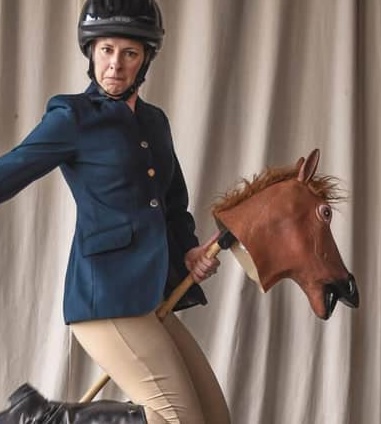
We’re all here to pay our respects to the piratically-attired matriarch, and we’re soon ensconced in VanderVeen’s giddy, absurdist world, our cheeks hurting from laughing, our hands held to our mouths in gestures of oh-God-what-now? A lot of the comedy comes simply from VanderVeen’s exaggerated facial expressions and her tendency to skewer audience members with a scarily intense stare. Sometimes she moves achingly slowly, making us chuckle just to relieve the tension; other times, she capers about the small stage frenetically, or performs a ridiculously elaborate dance, contorting herself into a range of awkward poses. There are props a-plenty littering the stage – a more-is-more approach akin to Natalie Palamides’ in Weer.

Macbeth? Check. Card tricks? Check. Hobby horse? Of course. What else could you possibly ask for?

Perhaps unsurprisingly, the show tells us more about Julia than it does about Mamie, although we do learn quite a lot about her grandmother in the process. It would be a crime to reveal too much here, as it’s the unpredictability that makes it so entertaining; suffice to say, I’m pretty sure you’ve never been to a memorial service quite like this one – and if you have, I hope your therapist is good.

Sly, silly and absolutely hilarious, My Grandmother’s Eyepatch is the funniest show about grief I’ve ever seen.

5 stars

Susan Singfield
Outpatient

13/08/24

Summerhall (Anatomy Lecture Theatre), Edinburgh

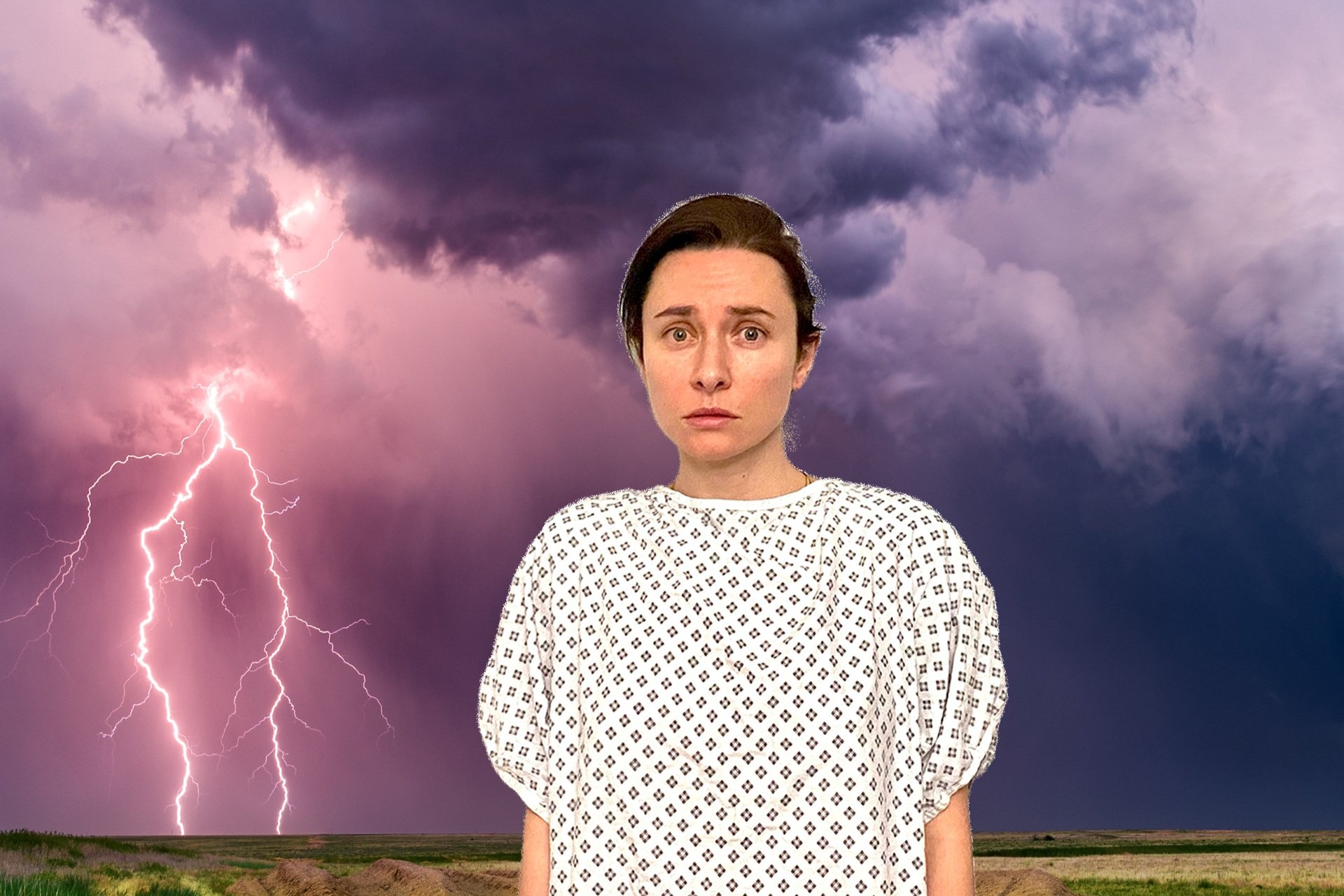
Harriet Madeley’s debut solo show is all about that most popular of subjects… death. I know. Hard sell, right? But when entertainment journalist Olive is searching for the right subject matter for her next big project – you know, the one that will lift her career out of the doldrums and win her the Pulitzer Prize – she keeps returning to that theme. 

But of course, she soon discovers that, although everyone dies, few people are ready to talk about it until the event is imminent. So Olive hits on the idea of booking herself in for a hospital health-check, solely so she can sneak into the palliative care ward and chat to some of the patients. For some inexplicable reason, this doesn’t go down well with the staff. 

Then the results of Olive’s tests come back and, for the first time in her life, she finds herself a lot closer to death than she could ever have anticipated. To say that it puts a different spin on things would be something of an understatement…

Outpatient is a clever, darkly humorous tale, which – it turns out – is based on Madeley’s real life. She relates much of the narrative while pounding along on a running machine or bouncing around on an exercise ball. She explains how the experience makes her reassess everything in her life, leads her (inadvertently) into breaking the law and prompts her to form a new friendship with Evelyn, a woman with a fatal illness. 

If on paper it all sounds a bit grim, don’t be misled. Olive’s narrative is wryly funny, peppered with astute observations about everyday existence and the irony of her unfortunate experience boosting her own chances of literary success. Rather than being a downer, it’s ultimately life-affirming. Madeley’s performance is a delight and the standing ovation she receives at the play’s conclusion is proof that I’m not the only person in the audience with that view.

So live dangerously and go see this play about death. You’ll love it!

4.4 stars

Philip Caveney

I Sell Windows

12/08/24

Assembly George Square (Studio 4), Edinburgh

Actors Daniel Blinkoff and Tamlyn Tomita, founders of LA Theatre Company Outside In, are committed to making a space where diverse voices can be discovered, evolved and shared. With its almost unimaginable variety of shows (more than three thousand, every day), the Edinburgh Fringe is a perfect match for such an endeavour, and Kacie Rogers’ I Sell Windows is an impressive addition to the programme.

Directed by Jaquita Ta’le, Rogers presents a monologue about love, trauma, thwarted ambition – and selling windows. Casement, sash, bay, awning: ‘Kacie’ can make your dreams come true. But first, you have to stop waiting to be ready and really start living…

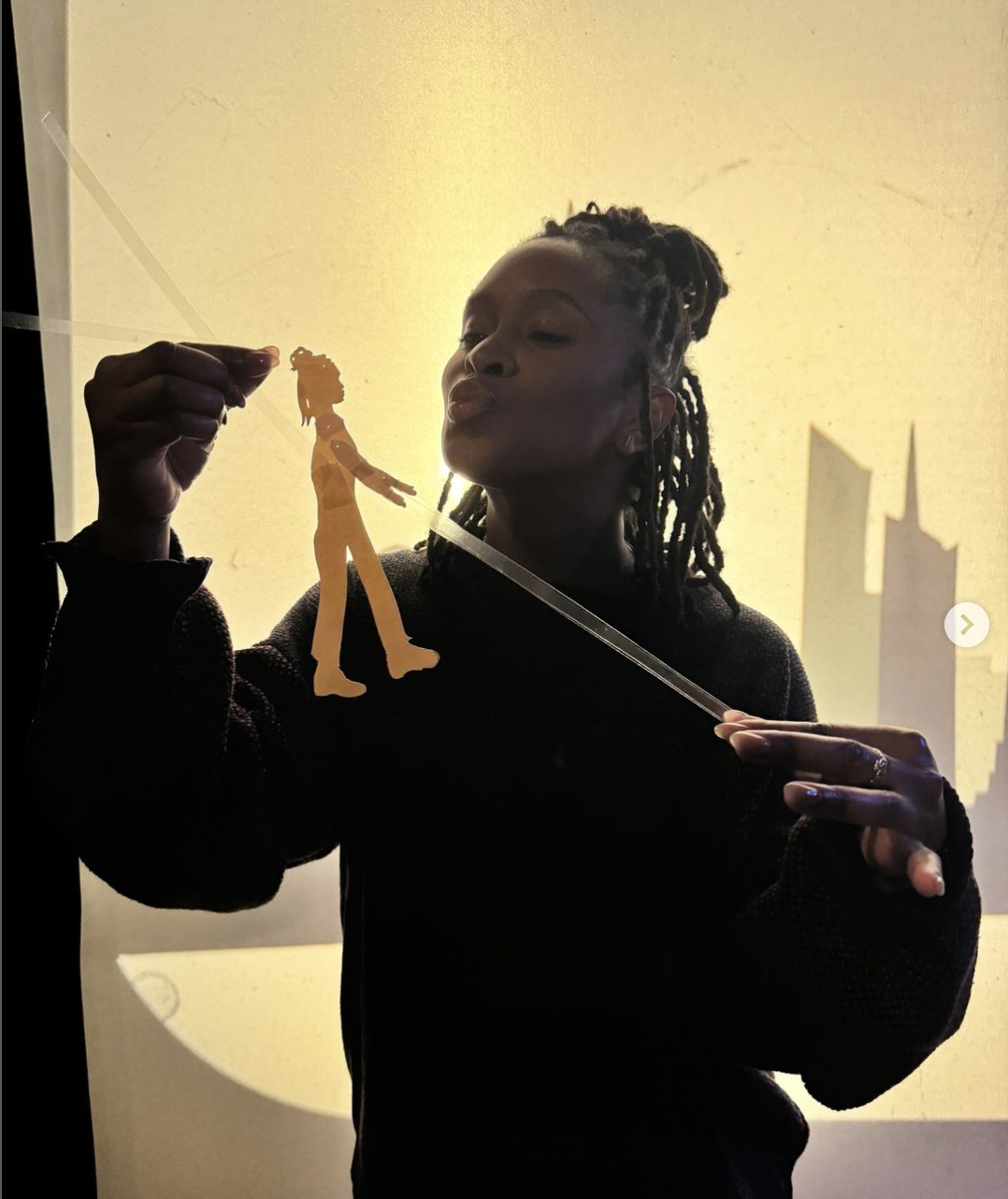
The fragmentary structure of the play reflects Kacie’s uneven mental health, as she struggles to come to terms with the death of her grandfather and the realisation that she may never earn a living as an actor. Reeling from the impact of these twin losses, she begins to implode, jeopardising her relationship and spinning out of control. Her breakdown is beautifully illustrated by the use of intricate shadow puppets (courtesy of Brittaney Talbot and Perry Daniel), as well as a sequence of recurring dreams, lit like the Northern Lights. Along with Rogers’ heartfelt a cappella rendition of Tracy Chapman’s iconic Fast Car, this amounts to both a profound character study and a rumination on the ways in which we are taught to value (and undervalue) ourselves.

Performed with verve, wit and absolute precision, I Sell Windows is a thoughtful play, ostensibly about one young Black woman’s experience, but applicable to every one of us.

4.2 stars

Susan Singfield

One Sugar, Stirred to the Left

12/08/24

theSpace @ Surgeons’ Hall (Grand Theatre), Edinburgh

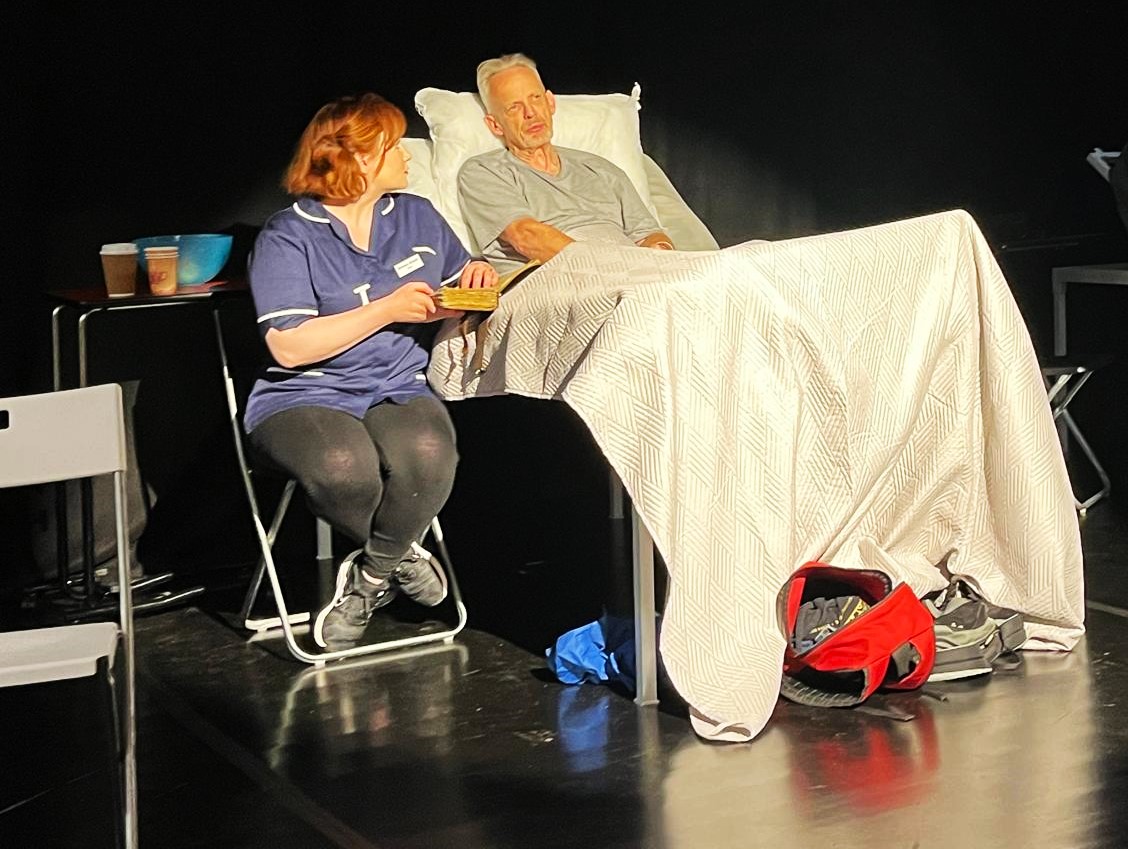
Jon Lawrence’s One Sugar, Stirred to the Left is an affecting drama, set in a hospice. Stephen Corrall plays Henry, an elderly man with terminal cancer, living out his final few months under the tender care of Doctor Choudry (Kareem Nasif), Nurses Carol (Eleanor Healing) and Bronwyn (Anne Yeomans), and tea lady Amala (Jiang). From his death bed, Henry muses on his complex past, his painful present and his ever-shrinking future. He wants to leave something special for his son, Justin (Dom Fraser). And maybe – just maybe – Bronwyn can help.

This ‘play with songs’ has some really interesting things to say about the human need to make peace with ourselves and others before we die. Corrall convincingly portrays Henry’s growing acceptance of his situation and, under David Kettle’s direction, the calm and tranquility of the hospice seems to expand, extending its solicitude to the whole audience. Kettle also provides the guitar accompaniment, while Jiang is the comic relief. But it’s Yeomans who provides the emotional heart of this piece, her plaintive vocals encapsulating a poignant mix of nostalgia, regret and love.

Perhaps some of the plotting is unnecessarily convoluted. It would be simpler and also make more sense if Henry were the one to hear Bronwyn sing, rather than learning second-hand from Justin that she “has a lovely voice.” As it stands, we have to suspend a whole lot of disbelief to accept that anyone would entrust fifty years’ worth of personal writing to someone and ask them to set it to music without knowing anything about their style or ability. I’m also not sure that the sub-plot – about Hamish (Duncan Airlie-James) – has enough space to breathe in this short play. Although Hamish is a well-drawn character and Airlie-James delivers a likeable performance, imbuing the former comic with a roguish charm, this strand feels like it belongs to a longer piece with a wider focus. I can’t help but feel that the large cast and sprawling storyline dilute the message.

On the whole, I like the naturalistic set, the cold, clinical room belying the hospice’s geniality and warmth. However, there are so many props that the space feels cluttered, the stage business sometimes distracting me from what’s being said.

Despite some minor criticisms, there’s no denying the emotional impact of this piece, and I’d be lying if I said I wasn’t crying at the end. Like so many, I’ve witnessed firsthand how important hospices are; I will be forever grateful to the staff at St Kentigern’s in St Asaph, North Wales, who provided so much succour to my parents when my dad was diagnosed with MND.

This production illuminates the importance of affording people dignity at the end of their lives, and of not being afraid to talk about death.

3.2 stars

Susan Singfield